Category Archives: Business & Economy

Conserving Native Varieties of Rice

Kiragavalu village (Malavalli Taluk, Mandya District) , KARNATAKA :

Syed Ghani Khan of Kirgavalu village has been conserving and propagating hundreds of native varieties of rice which are threatened with extinction in the race for high-yielding commercial varieties.

For Syed Ghani Khan of Kirgavalu village in Karnataka, preserving native varieties of rice is a lifetime passion.

This 42-year old has been cultivating virtually hundreds of varieties of rice on his 14-acre farm in the village located 20 kilometres from Mandya in the Cauvery basin. He preserves seeds of nearly a thousand of these varieties in a tiny museum that he has organized at his house in the village.

Walls of his first floor hall display these seeds, held in clusters of panicles neatly pinned on several panels with tags bearing the names of the varieties alongside.

Museum at Home
Son of a farmer and someone who does not fight shy of calling himself a farmer, Ghani Khan holds a degree in Archaeology and Museology from Mysore University.

Pained at the increasing use of chemicals, fertilizers and pesticides and loss of native varieties, Khan took up the task of preserving seeds of these varieties in packets. He would supply the same to local farmers around his village before the arrival of the next monsoon. But he was not satisfied. It needed a little more effort. He conceived the idea of a museum for promoting general awareness together with the supply of seeds. Two halls in the upper floor of his old, tiled house were readied for the purpose. The clustered panicles were arranged on wall panels in a hall, while those in bottles were arranged on shelves in the second one.


Ghani Khan feels that commercialization of farming has led to rejection of traditional varieties of crops, be they cereals, lentils, vegetables or fruits. The farmers were influenced by the publicity to seeds produced by large firms that promised better yield. This has resulted in en masse switching over to hybrid varieties like MTU-1001, IR-64, Jaya etc.

Sustainable
Ghani Khan says conservation of traditional varieties is critical to sustainable agriculture as several of them carry medicinal properties, some give out aroma on cooking, some can withstand drought and yet others can be grown with just one or two showers.

He wanted to conserve these varieties for future generations. So, he began collecting varieties like Ratnachudi, Gandhasalai, Rasakadam, Rajamudi, Ghamgadale, Doddibatta, Doddabyrenellu, Chinna ponni, Mysore Mallige, Zeerge Sanna, Parimalla Sanna, Basumati, Burma Black, Thai Jasmine etc.

Dedicated Zone
He says while agricultural colleges or universities used freezers to preserve seeds, he applied on-field conservation methods which can ensure a life of at least 18 months for the paddy seeds without pesticides. He has dedicated one acre of land in his farm in a demarcated zone where seeds of several varieties are sown in documented segments.

He even wrote to the Chief Minister of Karnataka to initiate measures to preserve and conserve native varieties. But no response has been received from him.

During the last two decades, he has supplied free seeds of native varieties to around ten thousand farmers and received positive responses from them. He keeps a meticulous record of all those who have visited him or sought seeds from him. Shiv Prasad, a farmer from the outskirts of Hyderabad has taken seeds of around 200 varieties from him and forwarded the seeds from the resulting crop to his associates. Krishna from nearby Maddur village has been a constant procurer of seeds from him. Rachanna from Hosamalangi village in T. Narsipur taluk has successfully grown around 25 varieties of rice after having taken from him.

Honours Conferred
A corner of his museum displays several trophies, medals and certificates that were presented to him in recognition of his work for propagation of native varieties. He was conferred Krishi Pandit Prashasti by the Government of Karnataka in 2008. Plant Protection Variety Forum conferred on him National Genome Seed-saver Recognition a year later. Directorate of Rice Research, Hyderabad selected him for Rice Innovative Farmer’s Award for 2011-12. Government of Karnataka chose him for Bio Diversity Award in 2010, while Suvarna TV channel declared him winner of the ‘Man of the Year Award’ in 2017.


According to Ghani Khan, India is home to thousands of varieties of rice and one should not be surprised to find one variety being replaced by another after every forty kilometres. He says several varieties are known for medicinal properties. If Navara of Kerala is good for those who have joint pain, Karigajvilli and Ambe Mohur from Karnataka are said to be good for lactating mothers. Mehdi is held to be good for healing of bone fracture, while Mapillai samba from Tamil Nadu improves virility. Khaima is said to be good for those suffering from piles.


Ghani Khan is a mobile encyclopaedia of knowledge on varieties of rice. He says it is wrong to presume that paddy is an aquatic plant. He refers to several varieties such Doddi Batta, Ghangadale and Biddi Doddi which can be grown in farms that receive just one or two showers. He says Ratnachudi, HMT, NMS-II are high-yielding varieties while Zeerge Sanna, Rasakadam, Gandha Sale, Parimala Sanna and Mugadh Sugandh emit pleasant aroma on cooking.


For the last few years Ghani Khan has taken up conservation of native varieties of mango too and has registered himself with the National Bureau for Plant Genetics, New Delhi. He has trees that have been there with his family farm for the last six to seven generations.

These trees yield native varieties like Mosambi ka Aam (tasting like sweet lime); Seb ka Aam (tastes like apple); Pheeka Aam (for diabetics); Kaale Malghoba, Bada Gola; Mangamari; Manji bi Pasand; Mittmia Pasand. Some of these varieties are procured from him by suppliers attached to Lulu Mall in Dubai.


Syed Ghani Khan can be reached at 99017-13351, email: muhinuha786@gmail.com.

source: http://www.islamicvoice.com / Islamic Voice / Home> Features / by Maqbool Ahmed Siraj / February 15th, 2019


Designing change, one stitch at a time

Bengaluru, KARNATAKA :

Fashion, as we know it, is one of the most influential industries in the world.

Bengaluru : 

Fashion, as we know it, is one of the most influential industries in the world. And when brands not only make top quality products but also come full circle and give back to the community through their choices, they become good influencers of fashion.

Kulsum Shadab Wahab, based in Bengaluru, is a philanthropist recognised by Chime for Change, a global campaign founded by Gucci, which features 25 women activists from around the world working to advance gender equality.

A true fashion enthusiast, she believes in altering the perception of high fashion through inclusivity. Ara Lumiere, an initiative by her Hothur Foundation, works with acid attack survivors in making avant-garde head gears. Worn by the likes of pop star Katy Perry, Ara Lumiere’s head gears have won many international awards. They have also collaborated with Shah Rukh Khan’s Meer Foundation to create awareness on skin banking.

Ara Lumiere X Dhruv Kapoor bucket hat collection

The spring summer ’21 edition of Ara Lumiere, in collaboration with ace designer Dhruv Kapoor (Ara Lumiere X Dhruv Kapoor), which was made out of diligence, love and hope by the survivors, was recently unveiled at the first-ever digital Milan Fashion Week.

Showcased through a short film, the gender neutral collection features embroidered bucket hats in sheer organzas and taffetas, handcrafted and hand embroidered by the brave acid attack survivors. All proceeds have gone into the rehabilitation of the survivors, where fashion has acted as a powerful tool in empowering these women. 

The government’s leather ban in 2015 destroyed jobs for leather work artisans, mainly from marginalised communities. A fight for justice against caste and ostracised communities got artist-activist Sudheer Rajbhar to develop a new recycled material – one that is made from waste but close to leather in its texture and durability – to celebrate and conserve crafts from a banned industry. This is how Mumbai-based Chamar Studio was conceived.

Says Rajbhar, “Chamar was once used as a slur and we have tried to end that. Our brand’s promoters in Germany, the USA and France tell us the name sounds like a mix of ‘Chanel’ and ‘Shalimar’ and associate it with luxury.” These bags, which come in striking bold colours, are high on functionality, design and skilled craftsmanship and proudly stand at par with any global luxury brand. These timeless pieces are waterproof, cruelty free and vegan as well. 

Brands with a cause make us believe that fashion can be something bigger, more than just a style statement. Along with creating high quality products that are recognised globally, fashion also puts out good into the world. Whether it is supporting a cause or sourcing sustainable material, these brands are definitely the game changers of fashion today.

(The writer is a lifestyle consultant and mindful fashion advocate)

source: http://www.newindianexpress.com / The New Indian Express / Home> Cities> Bengaluru / by Sarayu Hegde / Express News Service / October 01st, 2020

Muslim professionals launch India’s first free mentoring and free Crowdfunding platform

Mumbai, MAHARASHTRA :

On Teachers’ Day, Association of Muslim Professionals (AMP), a not-for-profit organisation working in the domains of educational and economic empowerment, has announced the launch of 2 significant initiatives which will benefit the Students’ fraternity. Specially those needing financial assistance for higher education or expert career and professional guidance by professionals.

The 2 new initiatives that have been launched are;

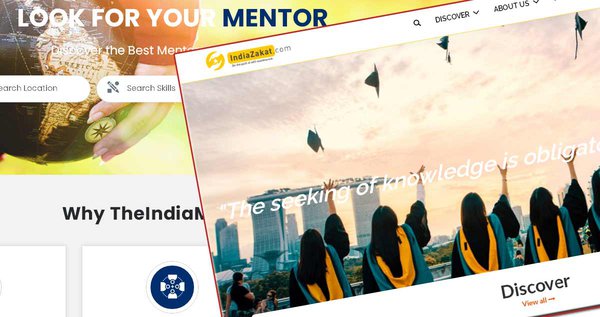
  1. India’s 1st Free Higher Education Scholarship Crowd-Funding platform (IndiaZakat.com/Scholarships) and
  2. Free Mentorship Project for Needy Students requiring guidance (TheIndiaMentors.com)

While speaking at the event Dr. M. Aslam Parvaiz, Former Vice-Chancellor, Maulana Azad National Urdu University (MANUU), based his presentation on the teachings of Holy Quran. He said “the Quran guides us to not just worship the Almighty but also help His creatures in all ways possible”. He went on to say “We should not be slaves of Rituals and Religious practices but understand the actual meaning of the Holy Book and implement the teachings in our lives to advance as a Community.”

Mr. Aamir Edresy, President-AMP, initiated the Webinar and welcomed the participants. He said “it’s a very historic day for AMP as we have finally realized our dream of helping and guiding students through Scholarship funding and Mentorship guidance. The Muslims’ representation in Government, Corporates, Higher Educational Institutions is very low and these initiatives intend to increase these representations.” He went on to say “For a large part of the Muslim Community, due to their socio-economic conditions, basic needs take priority over education. We need to create the awareness of the importance of Education and improve its priority in our lives”.

Prof. Furqan Qamar, Professor, Centre for Management Studies, Jamia Millia Islamia (JMI) went on say that the Community needs to be convinced of not just Higher Education but also basic education itself. More than anything the community needs to get rid of ‘Perceived Barriers’ and that we should always encourage ‘Merit’ to ensure that those who work hard are recognized and promoted.

Speaking form United Kingdom, Mr. Zahid Howladar, Head of Delivery – 1 Million Mentors, said “While the well-educated and well placed are well connected and are able to get access to good education and good guidance, it’s the disadvantaged in our Community who suffer due to the lack of guidance and mentorship. Mentorship is an initiative which will ensure that there are lot less dropouts from Schools and Colleges and also lowers Hate among groups. It is also impactful and transformative in our lives.”

Ms. Naghma Mulla, President & COO-EdelGive Foundation said “The difference between today’s underprivileged and self-sufficient people is the ‘Digital Divide’. People who were digitally more advanced managed the Pandemic situation better and this is the outcome of being more educated.” She went on to say “In today’s Post-#Covid-19 world, where the Governments & Economies are badly affected, it is all the more necessary that Students and their Parents are assisted and supported in the financial as well as career domains. These initiatives of AMP will help the Community in the long run.”

These initiatives were launched at a special Webinar today with the audience attending from all parts of India and Globe.

The Higher Education Scholarship Crowd-Funding will be done on AMP’s (www.indiazakat.com) platform, which is India’s unique digital platform, connecting donors & seekers. Launched just 4 months back, IndiaZakat.com has already raised more than 80 lacs and helped needy people especially in the Education domain.

The Free Mentorship Project (www.theindiamentors.com) being launched today is the culmination of a long dream of AMP for which the seeds were sown in as early as 2012. However, the importance of ‘Mentorship’ in India is quite lacking unlike the Western countries and hence it took a long time for a team to form who could handle and drive the project. TheIndiaMentors.com will guide students for academic as well career or professional issues without any fees by expert professionals of Industry as well as Academia.

The welcome note was given by Mr. Hafeez Iqbal (Ex-director, L&D, Pfizer) and Mr. Shehzad Mukadam and Ms. Humera Kabir hosted the event.

The Webinar was followed by the announcement of 4th AMP National Awards for Excellence in Education 2020 in which 103 Educators were honoured across the Country for helping in nation building.

Association of Muslim Professionals (AMP) is a platform for professionals and volunteers to share their knowledge, intellect, experience and skills for the overall development of not just the community but also the society at large and further empowering underprivileged in the educational, social, political and economic fronts of life.

source: http://www.milligazette.com / The Milli Gazette / Home> News> Education and Careers / by The Milli Gazette Online / September 14th, 2020

Jaffer Bhai, The ‘Biryani King Of Mumbai’, Passes Away

NEW DELHI / Mumbai, MAHARASHTRA :

Jaffer Gulam Mansuri established Delhi Darbar Restaurant in 1973 at Grant road in Mumbai. Fondly call Jafferbhai, he made amazing biryani and could cook every item on the menu. He was ailing for the past few days and was admitted to Breach Candy Hospital in Mumbai. He tested positive for Covid. He was around 80 years old.

______________

Rajdeep Sardesai@sardesairajdeep

He was known as the ‘biryani king’ of Mumbai.. he served the best dabba gosht in Mumbai.. Jaffarbhai of Mumbai’s Delhi durbar has passed away: thank you for many fine meals from college days till now.

https://instagram.com/p/CE85xxpB6Cm/?igshid=1jh151gx48gb7… RIP4:04 PM · Sep 10, 2020

______________

MLA from Bhiwandi (East), Rais Shaikh, tweeted “Jaffer Bhai will always be remembered as the Biryani King of Mumbai. May Allah grant him Jannatul Firdaus.”

Noted TV journalist tweeted: “He was known as the ‘biryani king’ of Mumbai.. he served the best dabba gosht in Mumbai.. Jaffarbhai of Mumbai’s Delhi durbar has passed away: thank you for many fine meals from college days till now.”

Meena Iyer, CEO of Ajay Devgn FFilms and former editor of Bombay Times tweeted: Jaffer Mansoori of the famed Jafferbhai’s Delhi Darbaar, Mahim, Metro and several other areas of Mumbai breathed his last today. He was the Badshah of Mughlai food. RIP Sir. Condolences to his family.

To see his banquet/restaurant please visit: https://goo.gl/maps/AiT3oMhBwrHC3q2b9

source: http://www.milligazette.com / The Milli Gazette / Home> News> Community News / by The Milli Gazette Online / September 10th, 2020

Celebrating the Centenary of “Zinda Tilismath”

Hyderabad, TELANGANA :

In today’s era of social media, people are slowly losing the essence of celebration; rather they prefer to be amused and entertained. Celebration is an active state of expressing reverence and appreciation.

Here’s me celebrating the centennial anniversary of “Zinda Tilismath” and acclaiming their achievements in the field of Unani Medicine.

Unani medicine is popular in South Asian countries and its use is currently growing in other parts of the world. The history of Unani medicine can be traced back to the ancient Greek practitioners Hippocrates and Galen. Over the next few centuries, their principles were soon taken up by the by numerous Arab and Persian scholars. The very famous Ibn Sina, who is also known as Avicenna was an Arab philosopher and physicist, who wrote Kitab-al-shifa (Book of Healing) and the Canon of Medicine. This system, earlier known as “Galenics”, later became to be known as Unani Tibb, (Unani being the Arabic word for “Greek” and Tibb an Arabic word for “medicine”)

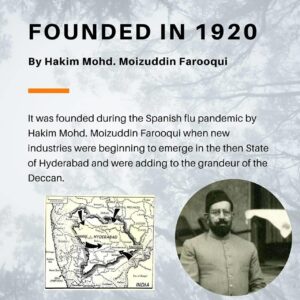
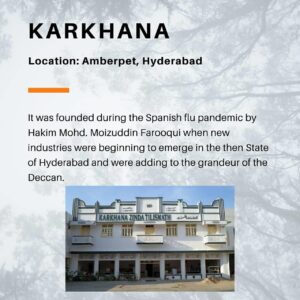
In India Hakeem Mohammed Moizuddin Farooqui founded the factory, Karkhana Zinda Tilismath which is known to produce one of the world’s best products of Unani Medicine.

Karkhana Zinda Tilismath is located in Amberpet, Hyderabad and this year celebrates its centenary. The outset of Karkhana Zinda Tilismath in Hyderabad not only promoted the Unani medicine but also led to an industrial revolution and opened job opportunities for many.

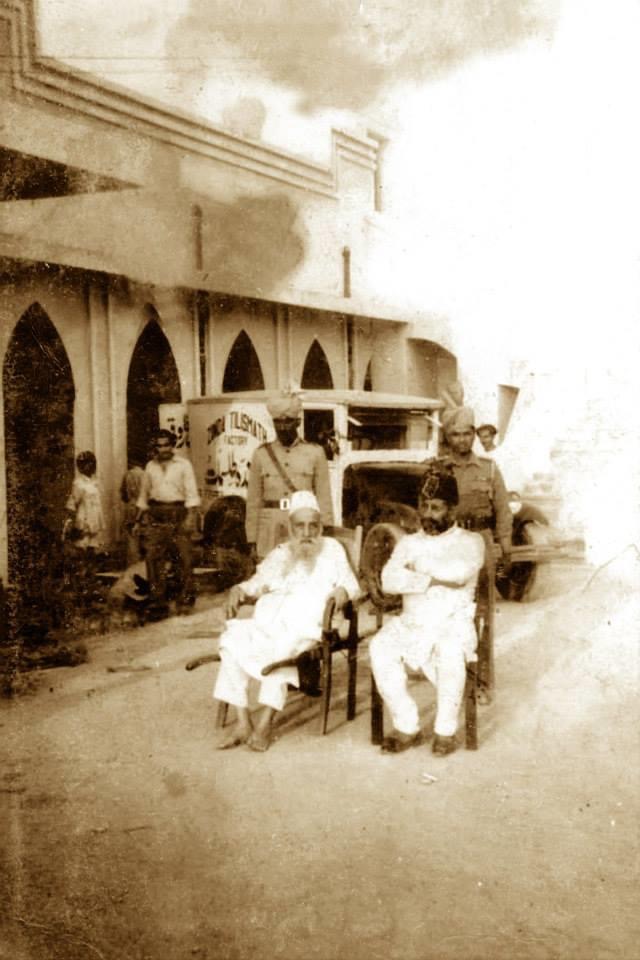
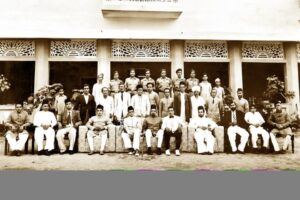
Hakim Mohammed Moizuddin Farooqui with his eldest son Minhajuddin Farooqui and staff members. Labour Welfare Officer of factory, CM Ansari can be seen in this Photo.

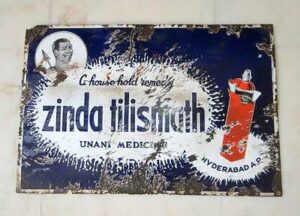
In 1920, Hakeem Mohammed Moizuddin formulated his very first Herbal medicine which was named “Zinda Tilismath” (an Urdu word for living magic). Many Hyderabadis and others who romanticize Unani medicine in India and around the globe pledge that this potion has a magical cure for all ailments. This magic started in 1920 when three hundred thousand vials in the 1950s-60s were made and recently the sales of the potion have shot up to seven hundred thousand bottles.

Zinda Tilismath consists of only five ingredients – eucalyptus, which is the main ingredient at 70 per cent and camphor, menthol, thymol, and ratanjyoth (a bark of a tree to give colour to this medication). This herbal medicine is unusual as it can be applied both externally and can also be consumed by adding few drops in to the milk or other drinks. A laboratory in Pune has confirmed that “Zinda Tilismath” can be used for preventing swine flu.

Apart from the zinda tilismath, there are other products also manufactured by the factory including zinda balm, Faroooky tooth powder and zint (throat lozenges) which had to compete with halls, Vicks and the strepsils throat lozenges.

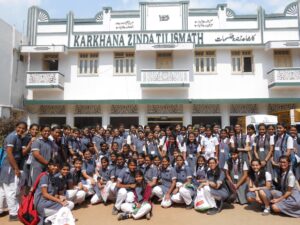
The door of the factory is always open and plays host to school children, exhibiting their benefits of herbal medication. They also allow pharmacy students to conduct their research and studies on their medicine.

Girls of St. George’s Grammar School on an Industrial Visit- November 3, 2015

Currently, the third generation of this prominent Unani Hakeem Mohammed Moizuddin Farooqui is running the company and are striving to maintain their reputed family business.

source: http://www.heritagetimes.in / Heritage Times / Home> Medicine / by Dr. Zareen Fatima / September 03rd, 2020

Indian businessman honoured for his philanthropic work by UAE government

Dubai , UAE :

Indian businessman honoured for his philanthropic work by UAE government

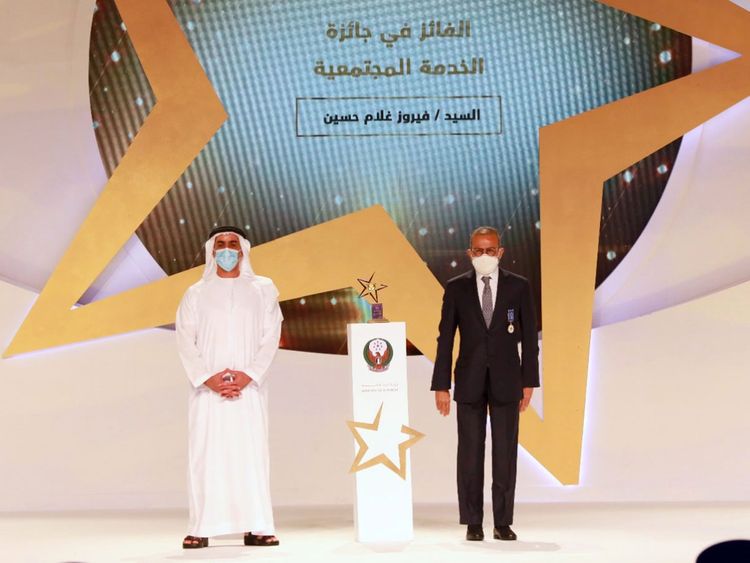
The excellence certificate and citation was handed over to Merchant by Shaikh Saif bin Zayed Al Nahyan, Deputy Prime Minister and Minister of Interior. Image Credit: Supplied

Dubai:

The UAE Ministry of Interior on August 19 honoured Indian businessman Firoz Goulam Merchant for his exemplary community services.

The excellence certificate and citation was handed over to Merchant by Shaikh Saif bin Zayed Al Nahyan, Deputy Prime Minister and Minister of Interior, in the presence of senior police officers and government officials.

Since 2008, Merchant, the proprietor of Pure Gold Jewellers, launched a philanthropic movement called the Forgotten Society. Spearheading this initiative, Merchant worked tirelessly with several correctional institutions in the country to identify debt-ridden prisoners and assisted them in repaying debts to the tune of millions, thereby securing their release and providing free air passage to their respective countries.

A deeply humbled Merchant told Gulf News: “It was a very proud moment for me to be acknowledged by the government of the land. I would like to express my gratitude to the UAE Government for this honourable recognition for my humble efforts to support the community.”

source: http://www.gulfnews.com / Gulf News / Home> UAE / by Staff Report / August 20th, 2020

Hyderabad startup makes devices for labs affordable

Hyderabad, TELANGANA :

Livo develops three products for analysing blood samples

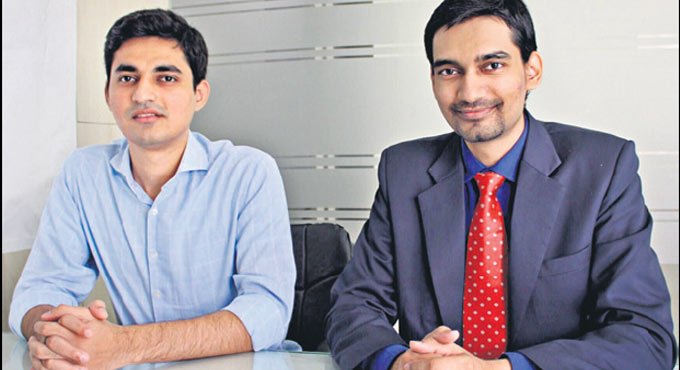
Dr Junaid Shaik (CEO) and Faisal Ahmed Sheikh (CTO) of Livo.

Hyderabad:

To help pathologists get access to high-end devices for their daily blood tests, Hyderabad-based startup Livo has developed three products in this space.

These devices include scanner, smearer and stainer which helps in getting a complete blood picture (CBP). The Livo A-1000 is a pathology scanner that scans the sample and also produces digital reports, thus helping pathologists to work remotely. “The scanner uses machine learning features and super resolution technology and is low priced when compared with the scanners available in the market,” said Dr Junaid Shaik, co-founder, Livo.

In addition, the AutoSmearer (A-700) is a device that is used to collect blood samples and smear to get a morphology report. The other product, Haematology Stainer, helps in staining the sample in to provide microscopy results in 90 seconds.

All the three devices have been developed by the company in-house and have been in the research and development for last two years. “We were planning to launch our product A-700 in April and A-1000 in August. However, due to the pandemic-led lockdown our whole supply chain broke down and we had to postpone our sales. We are getting a lot of interest from doctors and have received 25 pre-orders for A-700 and 11 for A-1000. Recently, we also closed a distribution deal for 800 devices in the South India region,” said Dr Shaik.

The other founders of the company include Faisal Sheikh and Professor Prasanth Kumar, head of mechanical department, IIT-Hyderabad. It recently raised Rs 1 crore from angel investors and industrialists Ravi Reddy, Dr Praveen Kumar and others. It is looking to raise another Rs 5 crore in the coming months which will be used to fund manufacturing of the devices

While moderate rains are very likely to occur at many places, thunderstorm accompanied with lightning will also occur at isolated places.

source: http://www.telanganatoday.com / Telangana Today / Home> Business / by Sruti Venugopal / August 14th, 2020

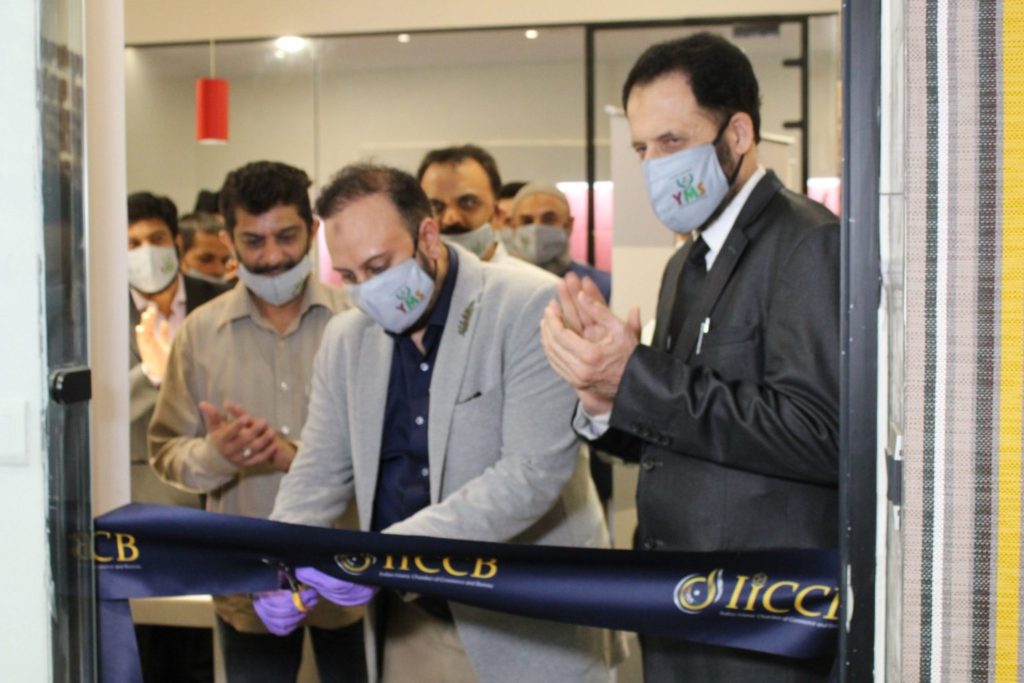
Indian Islamic Chamber of Commerce and Bureau (IICCB) Launched To Provide Opportunities To Muslim Businesses

The Indian Islamic Chamber of Commerce and Bureau (IICCB) was launched on Thursday to provide support to Muslim businesses and entrepreneurs with resources, mentorship, networking and finance.

IICCB is a business chamber registered under The Indian Trust Act and is headquartered in Bangalore, with chapters in multiple states across India and in countries like the US, UK, Saudi Arabia, UAE and Canada.

The chamber aims to create a body of freelancers, SME’s, MSME’s, large corporates, professionals, consultants, start-ups, small entrepreneurs and to offer an industry-wide exchange of business ideas, exchange of opportunities, collaborations/partnerships, trade, investments, exchange of services, project funding, agent sourcing, overseas business expansion, rising funds, provide consultation, freelancing services & other advisory services to its members, according to Mr. K.M. Noorul Ameen, founder and patron the organisation.

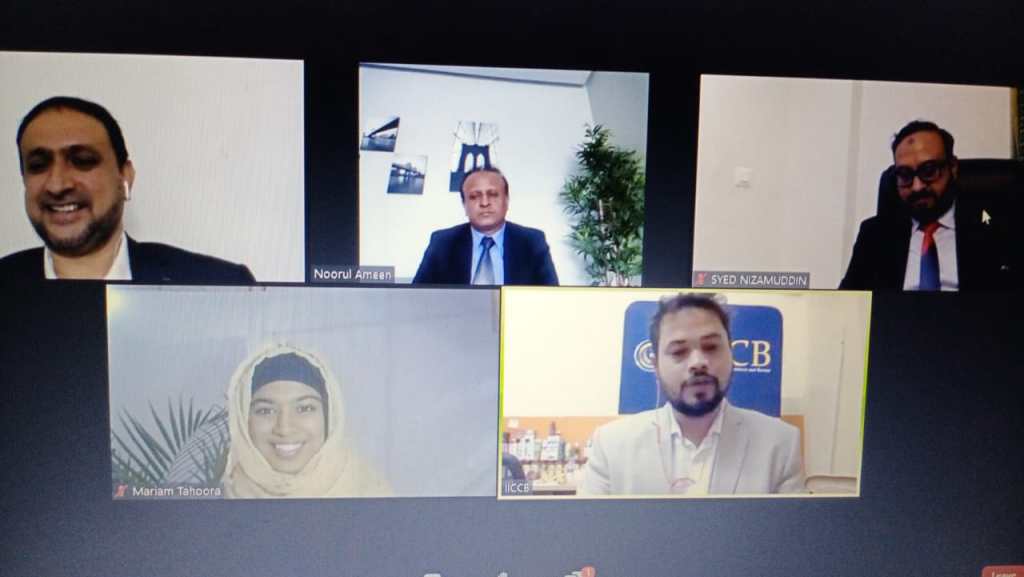
Considering the ongoing coronavirus pandemic, it was a virtual launch with over 400 attendees belonging to different backgrounds ensuring diversity.

The launch was led by Mr. Noorul Ameen who spoke at length about IICCB and its mission.

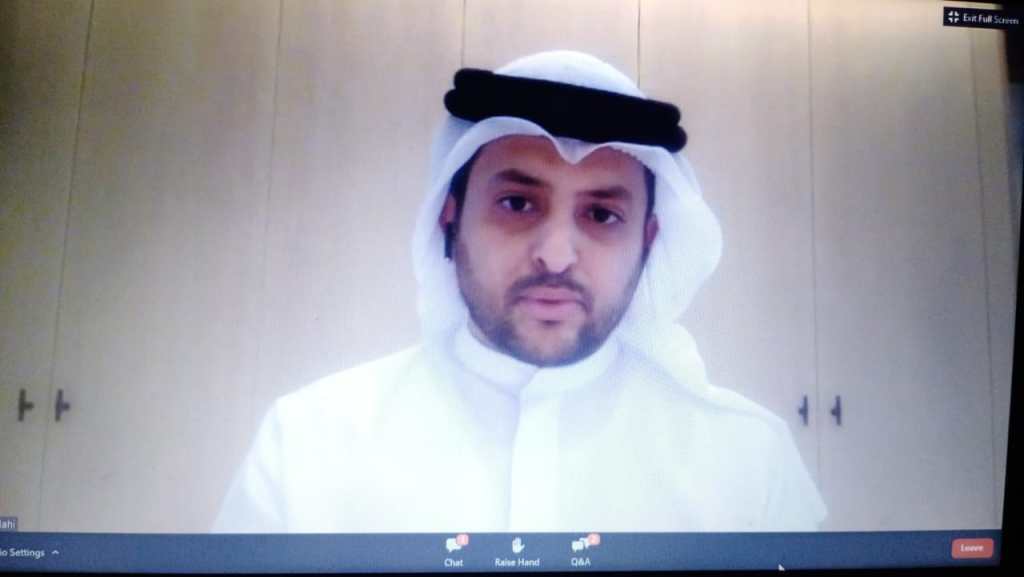
Ahmed Sultan Bin Harib Al Falahi, UAE Commercial Attaché to India.

Ahmad Sultan Bin Harib Alfalahi, UAE’s Commercial Attaché to India was the Guest of Honour for the event who expressed hope that the presence of a business chamber like IICCB in India will further enhance ties between India and UAE.

IICCB also aims to create awareness of business opportunities and promote ideas for national and international collaboration among its members.

The organisation is taking in registrations for new members on its website.

source: http://www.thecognate.com / The Cognate / Home> Business / by The Cognate News Desk / July 30th, 2020

Ahmad Zaidi: A Brilliant Indian-American Success Story

Aligarh, UTTAR PRADESH/ Panipat, HARYANA / California, U.S.A

Ahmad Zaidi

AHMAD ZAIDI, who is originally from Aligarh, Uttar Pradesh, and is a 1985 Electrical Engineering graduate from the Thapar Institute of Technology, Karnal, Haryana, epitomizes a brilliant success story in United States.

Zaidi is currently a vice-President at the world-renowned hi-tech giant, the Intel Corporation in the Silicon Valley in California, US.  He is among the very select band of bright young minds who migrated to US from India looking to contribute to the development of high technology and to making America great and India proud.

Zaidi holds nine patents in the field of microprocessor design and architecture. In US he earned a master’s degree in electrical engineering from Virginia Polytechnic Institute and State University, Blacksburg, Virginia, in 1987.

In 2009, Zaidi was presented an award by the Malaysian minister for setting up the Embedded Silicon Design Center in Penang, Malaysia. In addition, he and his teams have been honored with multiple technical awards, including an Intel Software Quality Award in 2011 and an Intel Achievement Award in 2012.

Ahmad Zaidi is vice president of the Platform Engineering Group and general manager of the Embedded Subsystems and Intellectual Property (IP) Blocks Group at Intel Corporation. He is also responsible for Security Silicon Engineering and manages Security CPU and IP engineering for the Intel Security Group. He leads an organisation that spans sites in the United States, Malaysia, Israel, Poland and India, and is responsible for delivering hardware, software, firmware IP subsystems and soft IP blocks for Intel products across all product segments. His group is chartered with delivering IP in areas such as audio, voice, speech, sensors, security, Input/Output (I/O) technologies and software related to storage, communications and manageability.

Since joining Intel in 1987 as an engineer in the microprocessor unit at Cupertino, CA, Zaidi has progressed rapidly and has held a number of senior technical and management positions in microprocessor design, embedded systems and communications. Before assuming his current position, he was the general manager of the Chipset and System-on-Chip (SoC) IP Group where he was responsible for delivering chipset hardware, firmware and software for Intel’s client platforms in addition to leading the development of reusable IP blocks for Intel products across all segments.

Prior to that, Zaidi was the general manager at Intel Corporation of the Embedded and Communications Silicon Engineering Group, where he led a cross-geography team responsible for delivering SoC and chipset products for the embedded and communications market segment. Earlier in his Intel career, Zaidi served as director of the Silicon Engineering, Infrastructure and Network Processor divisions and as engineering manager on the first Intel® Itanium® processor.

Ahmad Zaidi lives in Cupertino, CA with his wife and two children.  His father was an engineering manager at the Fertilizer Corporation in Paniput, Haryana. As a young man, Zaidi grew up in Paniput.

source: http://www.clarionindia.net/ Clarion India / Home> Indian Muslims / by Kaleem Kawaja, Clarion India / July 18th, 2020

Madurai chef opens school for parotta making

Madurai, TAMIL NADU :

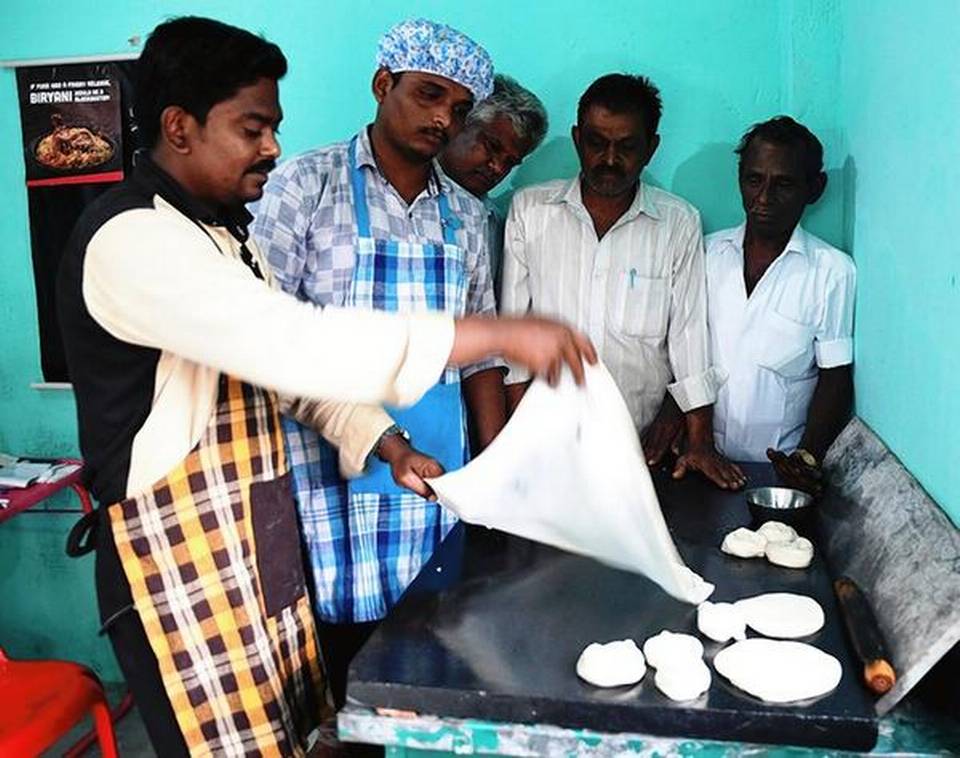
The ‘parotta master’ conducting a class on making the flat bread .   | Photo Credit:  G. Moorthy

Mohammed Khasim conducts a 30-day course and his batch already has 50 students

At 10 a.m. on Thursday, A. Mohammed Khasim’s student is sitting in the first chair, noting down ingredients for parotta in his notebook. Maida, salt, eggs, he writes and looks up. “cheeniyuma master?” (Sugar too, master?).

There is only one student in the morning batch of this parotta school for November, but Mr. Khasim says that A. Rajasekaran, the soon-to-be parotta master, works a day job. The veteran tries to find a way to accommodate his pupil early morning. In the evening though, his parotta school is filled with up to 50 students — some big and burly, others short and young, but all ready to perfect the art of this puffy flat bread. “My students either come with years of experience, waiting to perfect their skill but most others are fresh out of catering colleges, hoping to find good jobs outside the country,” he says.

Mr. Khasim, who began a school for people wanting to learn the art of making the perfect parottas three years ago in Koodal Nagar, says that the dish must be crispy and flaky on the outside but soft and easy to tear. The flat bread should be able to soak Madurai’s preferred gravy- chicken salna- into its layers while holding it all together steadily.

He says that the city’s undying love for the dish has led to a boom as it is now widely popular. It has also created a market in various other districts of Tamil Nadu and locations outside the country including Dubai, Sharjah, Malaysia, Singapore and the Maldives.

“This is why so many young people are waiting to learn how to make parottas. There is a large manpower shortage in the hotel industry as many people are unaware of the perfect way of rolling, shaping and making a parotta. Hoteliers in resorts outside India want to recruit south Indian masters because of our unique way of rolling out the dough without the help of a rolling pin. That is when I decided to open the school three years ago and impart my knowledge,” he says.

How it began

Mr. Khasim is a third-generation hotelier whose family has made parottas for about 70 years now. “My grandfather opened a small shop in Sikkandar Chavadi years ago and I have grown up to take care of the business. In those times, parotta would only be eaten with sambar. People began wanting spicier side dishes. That is why chicken curry and salna began making their way as potential side dishes,” he says.

Although Mr. Khasim says that he was always excellent at making parottas, making the perfect chicken curry was always a problem for him.

“When I tried to ask several masters to teach me, I realised that none of them were willing to. For six months, I worked undercover as a cook in a small hotel in Madurai to learn how to make the curry. During the first four months, the chef would make me do menial tasks when he would make his famous curry as he was paranoid about me taking over. The insecurity of losing one’s job is very prevalent in this field. That is when I decided that nobody else should suffer my fate,” Mr. Khasim says.

Mr. Khasim said that skilled parotta makers receive hefty advances amounting to about ₹50,000 and receive anywhere between ₹800-₹1,600 each day as salary.

He says that several students come to learn to start businesses since there was interest in entrepreneurship here. He says he has helped people set up small shops by taking them through the process of applying for MUDRA loans. “Some people come because they like cooking. I have taught pastors and professors too. Classes are truly interesting,” he says.

Mr. Khasim says he is in talks with Government Polytechnic College in Madurai to begin a certificate course in parotta making. “Though our students are recruited outside, people demand training certificates. The tie-up will help students secure good jobs,” he says and adds that he will be invited to teach on the campus soon.

He is also training women, particularly those who are part of self-help groups, to make good parottas and chapatis. “There is dearth of women in this job. So many of them are already great cooks. This skill will help them find better employment and make a variety of dishes,” he says.

His regular course lasts 30 days and costs ₹5,000 a month.

source: http://www.thehindu.com / The Hindu / Home> Cities> Madurai / by Sanjana Ganesh / Madurai – Novemer 30th, 2019