Category Archives: Business & Economy

Kerala NRI in London converts Old Scotland Yard police HQ into 5-star hotel

KERALA / U.A.E. :

At the helm of this 300 million pounds (over Rs 28,06,09,18,200 roughly) investment is the Kerala born NRI businessman MA Yusuff Ali.

Kerala NRI in London converts Old Scotland Yard police HQ into 5-star hotel

A night stay at the hotel will cost you over Rs 40,000 and lunch over Rs 10,000 | Photo from Twenty14 Holdings website

Once upon a time in London, United Kingdom the address people would have wanted to avoid might be now the place they might aspire to be in – The Great Scotland Yard Hotel.

Better known as the Old Scotland Yard that served as police headquarters, now is a plush 5-start hotel.

At the helm of this 300 million pounds (over Rs 28,06,09,18,200 roughly) investment is the Kerela born NRI businessman, MA Yusuff Ali of Lulu Group’s hospitality arm, Twenty14 Holdings.

Calling it a “dream come true” to transform world’s most historic addresses, Adeeb Ahamed, the managing director of Twenty14 Holdings said, “This building holds more tales than ever told and our approach has been multi-layered, with emphasis on stories that are unheard, the hotel is a tribute to the intrinsic spirit of London.”

Opened to public from the December 5, it was inaugurated by Nicky Morgan, UK secretary of state for digital, culture, media and sport.

Speaking about the “exceptional transformation” that the building has undergone Sir Edward Lister, special advisor to the Prime Minister, said, “It is a place which is right at the heart of the city and the government and the West End of London. It’s just a perfect location for a tourist.”

Event was also attended by the High Commission of India, her excellency Ruchi Ghanshyam amongst other Lords and dignitaries.

It might cost upward of 430 pounds (Rs 40,000 roughly) to stay for a night and 100 pounds (Rs 10,000 roughly) to lunch at the The Great Scotland Yard Hotel that has Trafalgar Square, Whitehall and the West End just round the corner.

Current building at 3-5 Great Scotland Yard has grand five storey Imperial Red brick and stone facade with arched main entrance | Photo from Twenty14 Holdings website

From staff wearing brass hand cuff in their belts to retaining some of the writings on the walls, this dog-friendly hotel endeavours to give its guests an eclectic experience of past and the present.

Shafeena Yousuff Ali, the daughter of Yusuf Ali, the woman behind the art and decor of the hotel said that they have tried to give their guests “a transformational experience that will inspire their souls”.

The operations of the hotel have been handed over to The Unbound Collection by Hyatt.

source: http://www.indiatoday.in / India Today / Home> News> World / by Loveena Tandon / December 06th, 2019

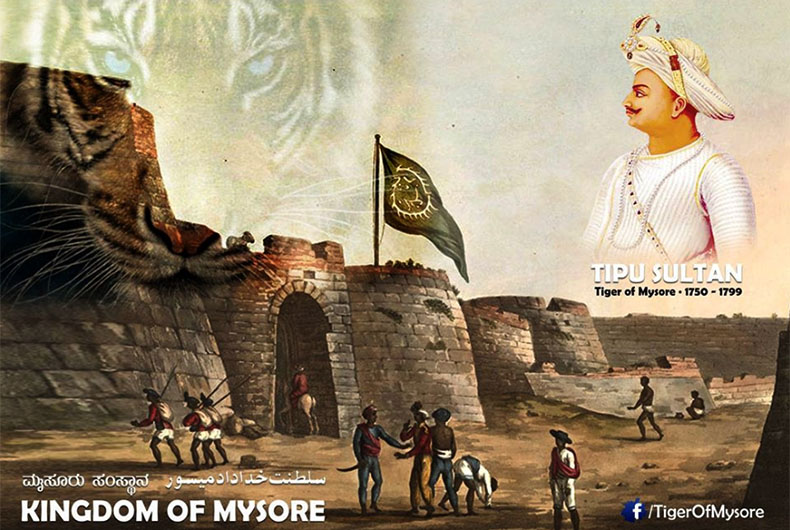
India ‘First to work for Make in India’: Tributes pour in for Tipu Sultan on birth anniv

Tipu Sultan was born on November 20, 1750 and died on May 4, 1799 fighting with the Colonial forces

TipuSultanMPOs30nov2019

New Delhi:

Twitter users on Wednesday paid rich tributes to Tipu Sultan on his birth anniversary, with many posting the quotes of the King of the erstwhile Kingdom of Mysore as also pictures of his prized possessions with hashtags #Tipusultan, #SherEHindTipuSultan, #TipuJayanti and #TigerOfMysore.

As many as 3,143 tweets were posted by Twitterati on Tipu Sultan.

Vanchit Bahujan Aghadi leader Prakash Ambedkar wrote: “Tipu Sultan, the king of Mysore, will always be known for his valour and his continuous resistance against the British rule”.

“A tribute to the first freedom fighter of India on his birth anniversary”, the grandson of Dr BR Ambedkar wrote.

Another Twitter user wrote: “Tipu Sultan was the only Indian ruler who understood the dangers the British posed to India, and fought four wars to oust them from India – in that sense he could be called the first freedom fighter in the subcontinent”.

One user posted a quote attributed to Tipu Sultan: “One day’s life of a lion is preferable to hundred years of a jackal”.

Many Twitter users also hailed his liking for advanced technology.

“Tipu Sultan was fascinated by science & technology, got gun-makers, engineers, clockmakers & other experts from France to Mysore, then set up a manufacturing of bronze cannons, ammunition & muskets to ‘Make in Mysore’. Basically the first who worked for MakeinIndia”, (sic) wrote one user.

Make in India is a type of Swadeshi movement covering 25 sectors of the Indian economy. It was launched by the Government of India on 25 September 2014 to encourage companies to manufacture their products in India and enthuse with dedicated investments into manufacturing.

Tipu Sultan was born on November 20, 1750 and died on May 4, 1799 fighting with the Colonial forces.

source: http://www.ummid.com / Ummid.com / Home> India / by Ummid.com with inputs from IANS / November 20th, 2019

How Oli Aman Jodha from Kerala became India’s first woman farrier

KERALA :

An ardent apiculturist, Jodha was presented with a horse named Aman Chand by her mother Amiya Taj who is also a horse rider.

Oli Aman Jodha
Oli Aman Jodha

Thiruvananthapuram :

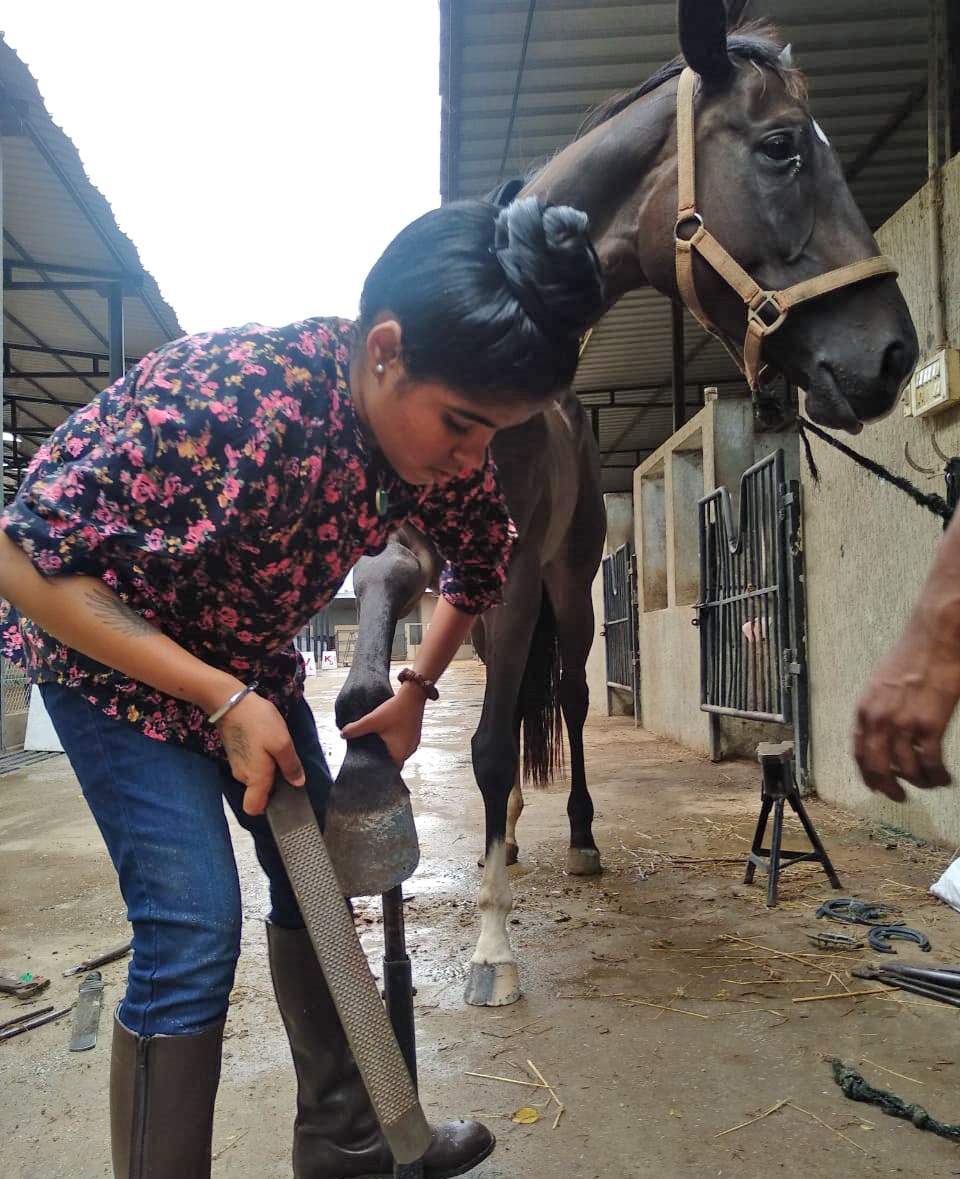
Breaking gender barrier is not uncommon these days. But Oli Aman Jodha has set a new milestone by becoming arguably the first woman farrier in the country. She is just 14. Jodha, who hails from an orthodox Muslim family from North Kerala, has been leading a nomadic life for the past few years because of her love of horses and bees.

An ardent apiculturist, Jodha was presented with a horse named Aman Chand by her mother Amiya Taj who is also a horse rider. Though riding has been her passion, an incident of fixing a horse shoe on Aman by an amateur farrier drew Oli to the profession.

OliAmanJodha02MPOs28nov2019

Right after the farrier from Tamil Nadu fixed the shoe on her horse’s hoof, there was profuse bleeding.
Following this, the next time Aman needed a horseshoe, Oli tried fixing the shoe with the help of family friend Sukumaran, a forest guard at Kallar in Ootty. She was just nine at the time. Later, her mother sent her to Nepal where she trained in fixing horseshoe under the tutelage of farrier Thaj at Kohalpur.

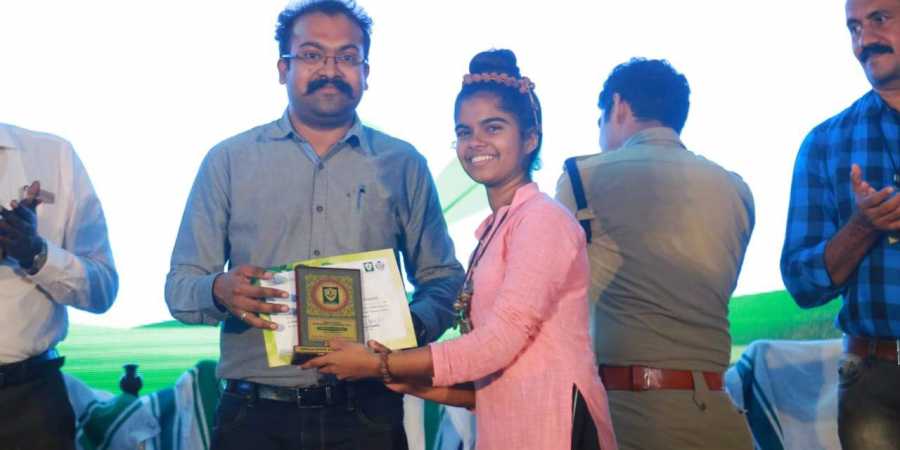
In the meantime, a national award came Oli’s way for her expertise in apiculture and even got an invitation to be the resource person in apiculture at Swaminathan Research Foundation, Wayanad, and National Institute of Rural Development and Panchayati Raj, Hyderabad. Her stay in Hyderabad opened a new vista for her in fixing horse shoes as the place has a plenty of horses.

“In the peak time, I used to fix shoes on around 20 horses a month. I have done this in Tamil Nadu, Karnataka, Gujarat, Andhra Pradesh and Rajasthan. A farrier’s focus would always be on ensuring that the shoe perfectly matches the horse’s hoof,” she said.

It’s not an easy task to prepare a custom-made shoe. The farrier must have a sound knowledge of forging and basics of metallurgy.

OliAmanJodha03MPOs28nov2019

Oli used to shape the metal with the help of an anvil, hammer, nipper, cutter and tongs like a blacksmith. She also has to bear some of the horse’s weight while fixing the shoe. In the case of oxen, the shoeing can be done by holding the animal to the ground, but it is done on horses in standing position. And if the farrier makes a wrong move or is in the wrong place, he/she can get trodden on easily. All the factors make the profession challenging, especially for women.

Oli has had her share of rough life at this young age. She is a class 1 dropout and had to continue her studies till class 8 through open education. Now, she is planning to write her class 10 exams. She is looked after by her mother after her father left the family. She doesn’t even have a permanent house to reside.

Future plans

Oli wants to be an equine veterinarian and is ready to tread an extra mile to achieve the dream. Not many Indian universities offer equine veterinarian course. But she is hopeful of God bringing luck in her life.

source: http://www.newindianexpress.com / The New Indian Express / Home> States> Kerala / by Dhinesh Kulkarni / Express News Service / November 12th, 2019

India’s top 5 revenue generating monuments were all built by Muslim rulers

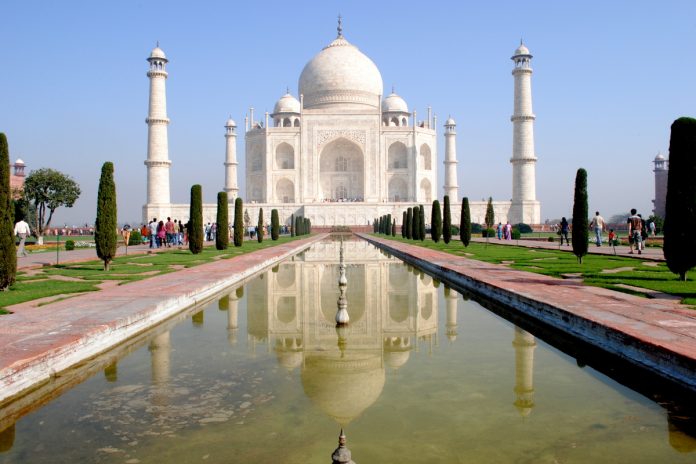
Taj Mahal | Commons
Taj Mahal | Commons

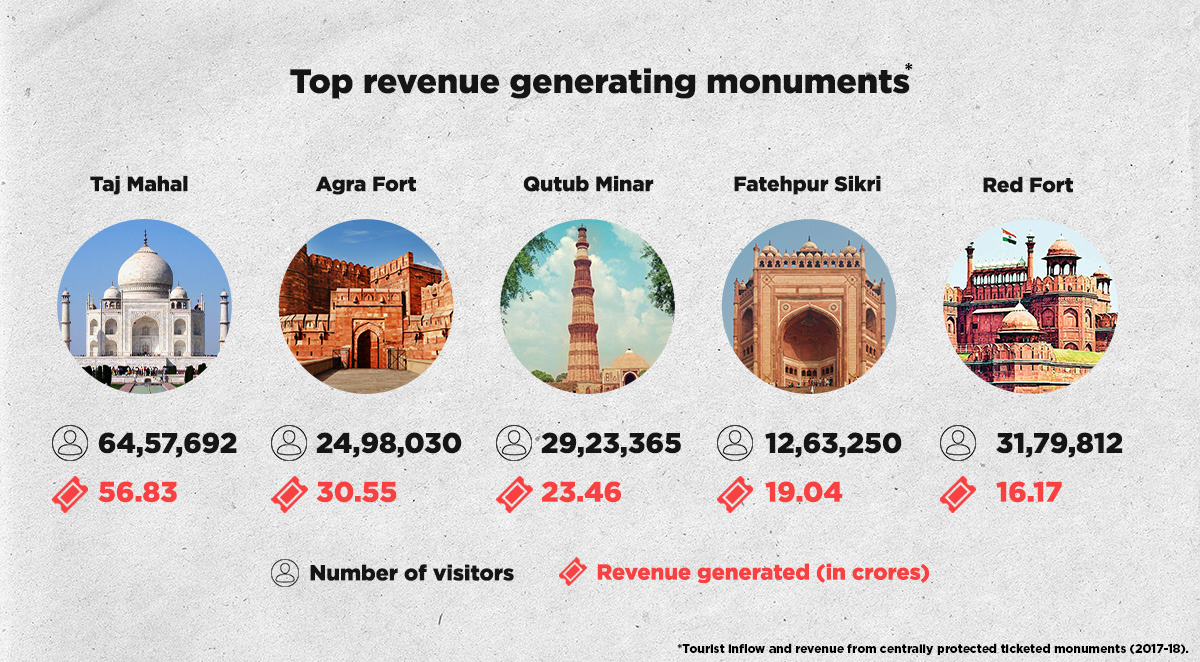
The Taj Mahal and 4 other monuments earned Rs 146.05 crore, more than half the total revenue generated by centrally-protected monuments, in 2017-18.

New Delhi:

 Fringe Hindu groups and even some BJP leaders may have sought to belittle their significance but official data shows that India’s top five revenue generating monuments were all built by Muslim rulers – the Taj Mahal, Agra Fort, Qutub Minar, Fatehpur Sikri and Red Fort.

While Qutub Minar was built by rulers of the Delhi Sultanate, the rest were constructed by the Mughals.

These five monuments together earned the government Rs 146.05 crore in 2017-18, according Archaeological Survey of India (ASI) data. This is more than half the total revenue of Rs 271.8 crore generated by all centrally-protected monuments.

The Print
The Print

The Taj Mahal, which has been in the news for all the wrong reasons in recent years, with the Supreme Court last month pulling up the ASI for its poor maintenance, continued to be the highest earner at Rs 56.83 crore.

While some politicians sparked a controversy last year by arguing that the Mughal-era monument did not represent Indian culture, the number of visitors to it, both Indian and foreign, only increased since 2016-17.

A total of 64.58 lakh people visited the Taj Mahal in 2017-18 compared to 50.66 lakh in 2016-17.

Last year, the UP tourism department had even omitted the Taj Mahal, a UNESCO world heritage site, from a brochure listing the state’s principal attractions.

With total earnings of Rs 30.55 crore, Agra Fort built by Mughal emperor Akbar, another UNESCO world heritage site, was the second highest revenue generator in the last financial year.

While the Konark Sun Temple in Odisha came second after the Taj Mahal in terms of number of visitors (32.3 lakh), it generated only Rs 10.06 crore as revenue. This, officials said, is because the temple is mostly popular only with Indian tourists, with 32.21 lakh domestic visitors making the trip last year.

While Indian tourists are charged Rs 30 per head as entry fee to world heritage monuments across the country, foreign tourists have to pay Rs 500 each.

“It is impossible to communalise the entire Indian population through the meaningless political venom spewed by politicians,” said historian S. Irfan Habib, explaining the increase in visitors to the Taj.

“No matter what they say about the Taj Mahal and Red Fort, Indians will continue going there,” he added.

source: http://www.theprint.in / The Print / Home> India> Governanace / by Sanya Dhingra / June 07th, 2018

Coming! Soybean-based sanitary napkins made by 2 Kerala students

Kadambur (Kannur District) KERALA :

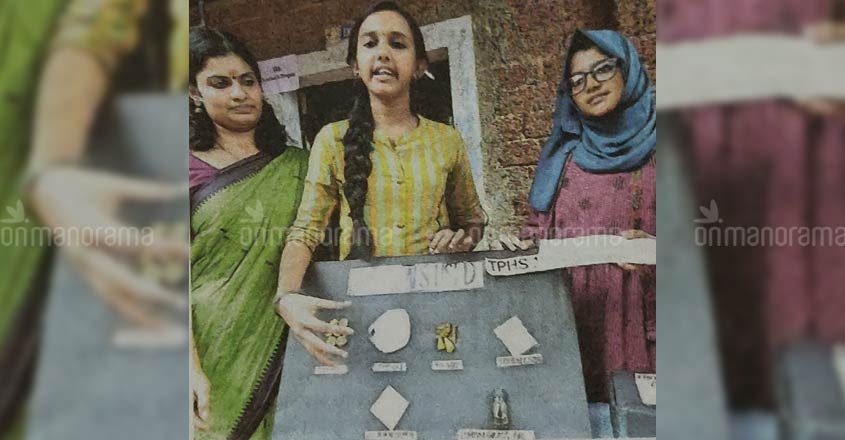
Two Class-10 students, PV Nayana and Fathimathul Nafra, introduced organic sanitary napkin made from soybean

Personal hygiene concerns are behind the recent bids to promote the production and use of affordable sanitary napkins especially among underprivileged women. A 2018 Hindi film named ‘Pad Man’ is even based on a Tamil social activist who introduced low-cost sanitary pads.

At this year’s Kerala School Science Fest, two Class-10 students — PV Nayana and Fathimathul Nafra — impressed spectators with organic sanitary napkin made from soybean.

With soybean as base for the disposable absorbent pad the duo not only introduced a unique method of making organic sanitary napkins but also pledged their commitment to nature.

Nayana and Nafra are students of the Higher Secondary School at Kadambur in Kerala’s Kannur district.

They claim that the organic napkins are safe for use as chemicals are not used in it. Besides, these biodegradable napkins pose absolutely no harm to the nature.

Napkins made using organic and biodegradable materials like coconut fibre, water hyacinth, banana stem and jute are already in the market.

Nayana and Nafra said extensive research done in this field had inspired them.

Soybean’ incredible ability to absorb water made us try out its possibilities, they added.

After making the napkins, they conducted further experiments and tests at SN College, Kannur, and also at a Bengaluru facility. The experiments there proved successful which further motivated the students to present it at this year’s School Science Fest.

Besides soybean, organic materials like beeswax and cotton too are used in this sanitary napkin. Making a single piece of this organic soybean napkin would cost Rs 3. However, the students say that it would only cost Rs 1.5 per piece if the napkins are industrially produced.

Nayana and Nafra were guided by Roshita who is a teacher at their school.

source: http://www.english.manoramaonline.com / OnManorama / Home> News> Campus Reporter / by OnManorama Staff / November 06th, 2019

Vijayapura grapes take part in China’s trade exhibition

Vijayapura, KARNATAKA :

Grapes from Vijayapura will be showcased during the international trade exhibition in Shanghai, China.

International exhibition begins in Shanghai today

Vijayapura district is known for cultivating tasty grapes and producing sweet raisins that are exported to many parts of India and West Asian countries; but now this fruit will be tasted even by the Chinese as one of the grapes and raisins traders of the city is participating in an international export trade exhibition to be held in China between November 5 and 10.

The event, which is being organised by the Ministry of Commerce, Government of India, is being held at Shanghai city of China in association with Agriculture and Processed Food Products Export Development Authority.

The young trader, who has an opportunity to participate and represent Vijayapura, is Aquib Almelkar. He would go to Shanghai to tell the Chinese about the quality and taste of grapes and raisins from the district.

“I am elated to be participating in the exhibition and represent India, and more importantly Vijayapura district, which is known for growing sweet and tasty varieties of grapes and raisins with a great demand in the domestic and international markets. As a representative, my job would be spread awareness among the Chinese about quality of our grape and Chinese to make sure that they show interest in the trade of this fruit”, he said.

He said that a stall has been allotted to him at the exhibition where he would be displaying produce that are packed in a special way that their quality is not affected.

Already, grapes and raisins from Vijayapura are already being exported to England and the West Asian countries. It may be noted that varieties such as Thomson and Super Sonaka are exported.

Grapes are cultivated in around 11,000 hectares of land in the district. Soil and the climatic conditions are considered to be suitable for cultivating grapes.

Meanwhile, the event is being organised to promote and popularise Indian produce with an objective of increasing exports to China.

The exhibition, which is expected to boost trade between the two countries, would be held for six days where 30 delegates of the authority would be participating from India, according to sources.

source: http://www.thehindu.com / The Hindu / Home> News> States> Karnataka / by Special Correspondent / Vijayapura – November 05th, 2019

Breaking bread between neighbours helps bring down barriers

Kolkata, WEST BENGAL / London , UNITED KINGDOM:

AsmaKhanMPOs27oct2019

Interview

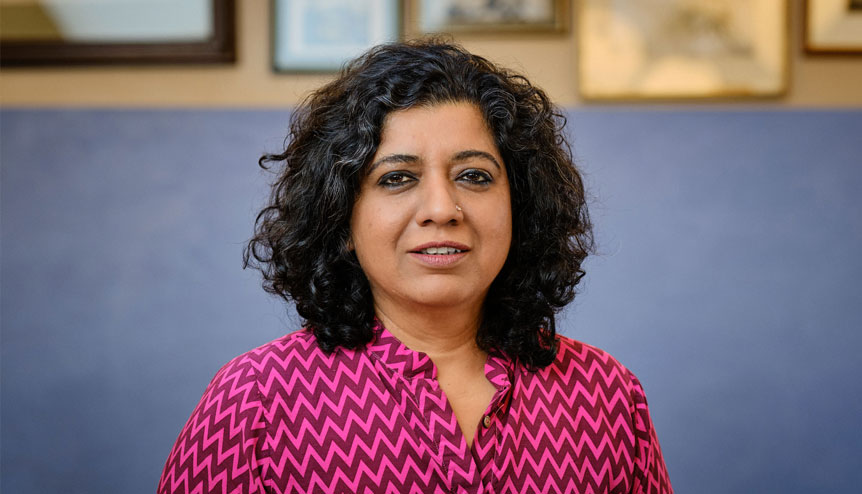
Drawing from her vast knowledge of  Indian cuisine, celebrated British chef Asma Khan dives into how a shared love for food can blur the boundaries of race and gender.

How would you define the soft power of Indian cuisine in the world?

The beauty of food is that you can enjoy and appreciate it without having to understand the language or the intricacies of a culture. It is the first contact many non-Indians have with Indian heritage. Indian food is a doorway to Indian culture and its people. It sparks conversations between people of different ethnicities.

The prevalence of Indian restaurants and food in supermarkets in countries like the UK means that almost every person has a chance to try and taste the country’s food.

What are some transformative business models (and hiring practices) that you feel could harness the potential of Indian food globally

AsmaKhan02MPOs27oct2019

It is important that food from a culture reflects the roots, flavours, and aromas of that cuisine. Given the popularity of street food in big cities around the world, it is one way in which Indian street food can be presented. Street food is complex, but people of all nationalities can be trained to assemble and serve these dishes.

As far as restaurants are concerned, the traditional model of family-owned businesses is deeply under threat as the next generation seldom wants to go into this business. In the UK, this has resulted in the closing down of many restaurants. A radical rethink is required in the way staff are recruited and trained. The first change should be an attempt to increase the number of women working.

Are the nuances of Indian food filtering through alongside its general popularity?

The generic Indian food, which was popular a decade ago, is still favoured by many. There is a greater awareness of regionality of Indian cuisine because of cheap travel to India, and information available on both the internet and television.

Does cuisine have a role to play in wider political debates, such as Brexit?

There isn’t a united cuisine of Europe. The European Union’s biggest role when it came to food was establishing vigorous health and safety regulations for the food industry and for the way we farmed and fished.

In Europe, there is a very strong regional tradition when it comes to food, which was not impacted by the birth and extension of the European Union. There is no doubt that breaking bread between neighbours is helpful, and sharing a meal helps bring down barriers between people.

How would you categorise your vision for gender balance in the workplace?

My vision is one of equality, equality for opportunity and progression in kitchens for men and women. There is an urgent need to establish codes of conduct, which protect the dignity and honour of everyone working in the kitchen. For too long, the dominant position of the head chef, invariably a man, has meant that the culture of a kitchen is very masculine and sometimes toxic and aggressive. This can intimidate and exclude some women working alongside these men. There has to be respect for women in all kitchens.

How can food technology be harnessed to tackle health-related issues such as diabetes?

There is a growth in food items that are low in fat, low in cholesterol, that are targeted to people trying to practice a healthier diet. Additional information in the labelling for diabetics is the way forward as healthy eating is the standard advice given to them. Diabetics do not necessarily need food produced specifically for them as there is already a growth of low sugar, low starch options.

How does being a Global Indian impact your wider worldview?

I have the advantage of being from the east and the west. I feel rooted in two nations. My cultural and culinary heritage is Indian. This is a great advantage in the work I do as I can present the cuisine of my country of origin with a depth and understanding that comes from having lived there for the first 22 years of my life.

Even though I have now lived longer in the UK than in India, I still feel a deep-rooted connection to my motherland. I can, therefore, explain to someone from another heritage who I am, where I come from, and what my country stands for.

source: http://www.indiaincgroup.com / Home> Interviews / October 24 & October 25th, 2019

Food in Indian Muslim households is beyond biryani & kebabs: Recipes are subtle, and include various vegetables

JHARKHAND / NEW DELHI :

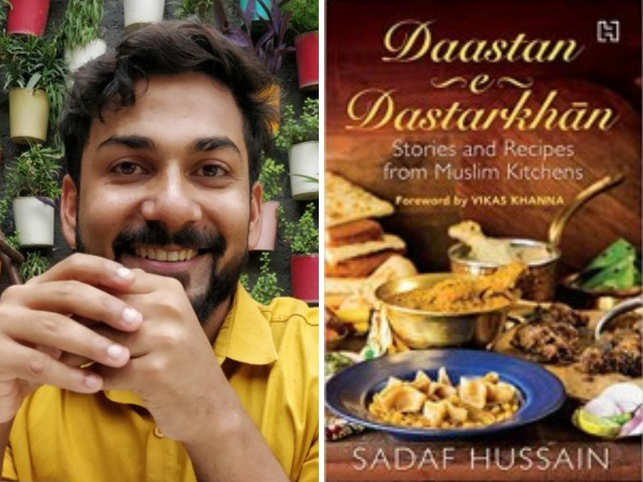
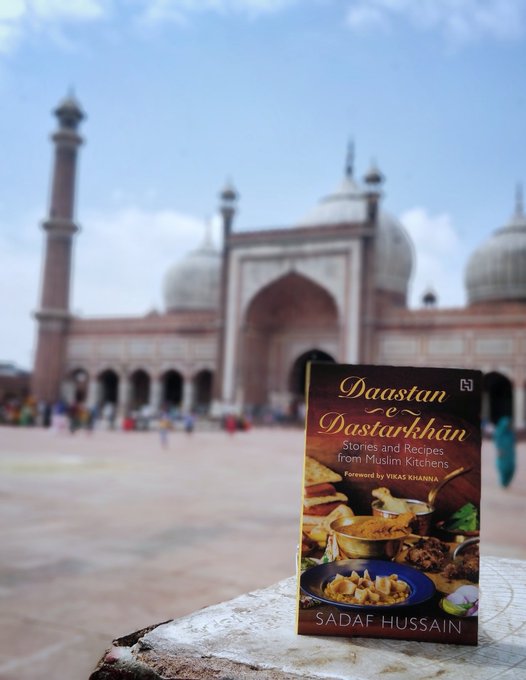
Sadaf Hussain chronicles home-made food in his new book Daastane-Dastarkhan.

​Sadaf Hussain’s charming new, first book Daastane-Dastarkhan​ has been published by Hachette India​.

Sadaf Hussain’s charming new, first book Daastane-Dastarkhan has been published by Hachette India.

Sadaf Hussain’s charming new book Daastane-Dastarkhan starts with the story of a pir who, every Thursday, visited his mother’s family in Sasaram, Bihar. But one day he appeared on a Wednesday, throwing his grandmother into panic because there was no meat for the aloo-gosht she always fed him. She had to be inventive. She used dried figs and poppy seed paste, to make a salan, threw in fried potatoes, balanced it with garam masala and chillies, and served it with rice and besan rotis. The pir was delighted: “May Allah bless you with an abundance of food and may no one ever leave your home hungry.

A recipe like this is not what many would think of as Indian Muslim food. Where is the intense meat focus? Where are the kebabs and biryanis? The problem starts with thinking there is something that can be neatly labelled Indian Muslim food. The fact that people do this might be just another way in which Indian Muslims are diminished by clubbing their many communities into one and ascribing easy stereotypes to them.

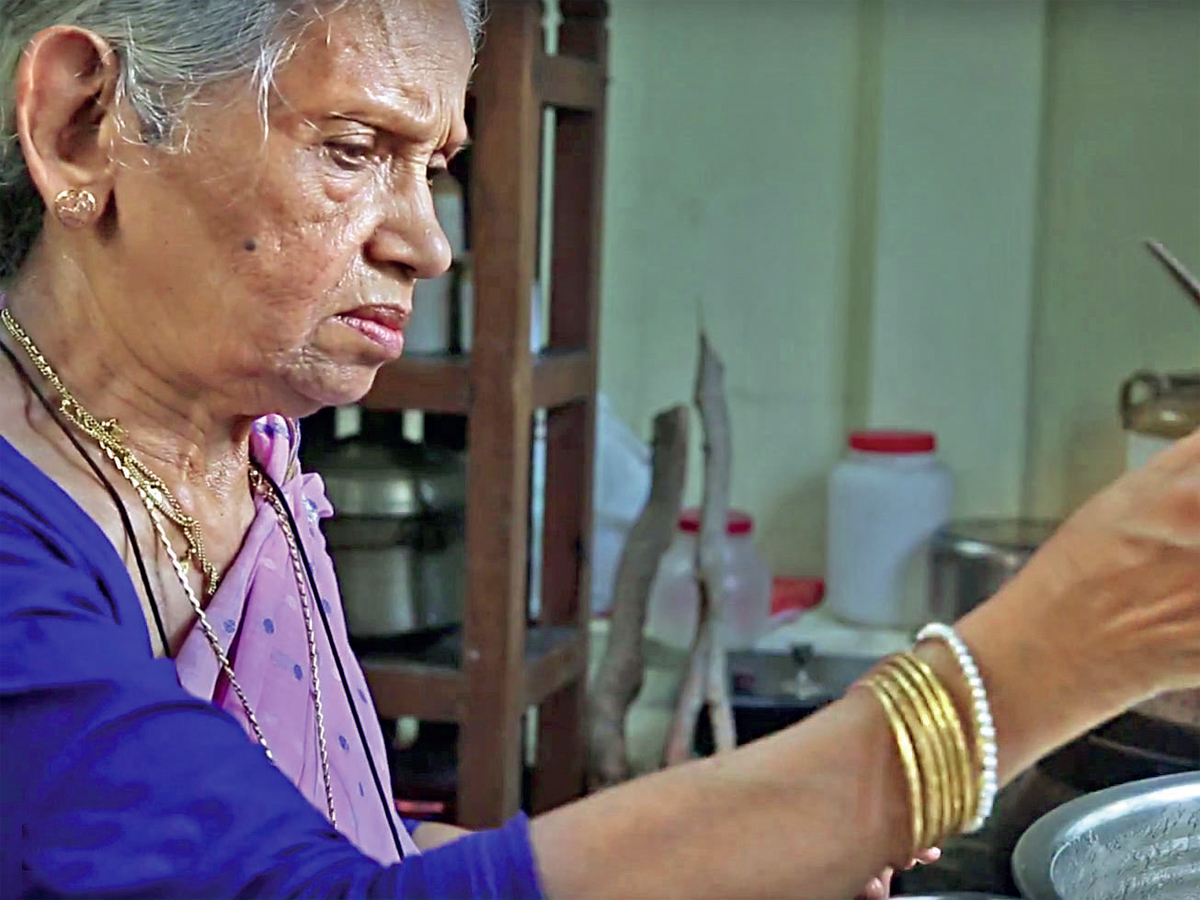
Ummi Abdulla, who has documented the food of Malabar Muslims, makes mutta mala or egg threads.

Part of the problem is that there is a market in catering to such stereotypes. Once a year during Ramzan, many people decide to have an iftar experience and go out — without fasting — to eat the rich food cooked on street sides for the occasion. But this has as little relation to regular home food in Muslim communities across India, as does a Diwali or Christmas feast have for Hindu or Christian home food.

One way people get exposed to home food of different communities is when they share food with neighbours, especially as kids. But as housing becomes increasingly segregated, this is becoming harder.

This lack of knowledge has been compounded by a curious lack of cookbooks from different Indian Muslim communities.

There are cookbooks from cities like Lucknow and Hyderabad where certain types of Muslim food dominate, but what’s presented tends to be street food or special occasion dishes, both mostly made by men. These are important, but it means that the daily, home dishes get left out.

SadafHussainMPOs14oct2019

There have been a few exceptions. Ummi Abdulla made a pioneering contribution by documenting the food of the Malabar Muslim, or Moplah, community, with all its complex interactions between the local ingredients of Kerala and influences from Arab traders.

Bilkees Latif ’s Essential Andhra Cookbook captured similar interactions from Hyderabad. Mumbai’s Inquilab newspaper brought out a collection of booklets, in Urdu and English, on Memon, Kokani, Bohra and Kashmiri food. There were a few other books printed privately or abroad, but little else.

Adil Ahmad’s Tehzeeb chronicles the home food of an upper-class Lucknow family.

Doreen Hassan’s Saffron and Pearls does the same for her husband’s family from Hyderabad, but with roots in both Persia and Uttar Pradesh. Zaiqa e-Kadwai provides a very different perspective. It is a team effort to document the food of a village in Ratnagiri district, where most of the families just happen to be Muslim, but their food is quite typically Konkani. Hazeena Syed’s Ravathur Recipes: With a Pinch of Love shows, in a very impressively produced volume, the food of this Tamil Muslim community.

 These books show the food of these communities to be, as with all communities in a region, primarily dictated by what’s locally available, but with small tweaks. As Hassan’s husband’s family shows, at a more upper-class level there were more likely to be interactions with communities across countries, and recipes travel with daughters-inlaw, who are one of the least acknowledged agents for social change.

 There is certainly a lot of meat eaten in all these communities, but the recipes are much simpler and subtler than what is served up to unthinking eaters as “Muslim” food. Meat is often cooked with vegetables as in the chuqandar gosht, beetroot and mutton; or keema kakdi, cucumbers and mince, given in Tehzeeb. There are inventive egg dishes, like boiled eggs stuffed with mince and then skewered, that Hassan discovers in Hyderabed, or eggs fried in gravy that are a favourite in Kadwai.

Other similarities might be slightly more use of some spices, like star anise, and less of others — hing rarely features since onions are widely used. Chefs will tell you that Muslims in their kitchens are particularly adept at frying, and that copper, with its excellent heat conduction, is the metal of choice for utensils. Many traditional vessels shown in these books are copper, and careful distinctions are made in types of frying: shallow, deep, braising and so on.

Books like these are important because, apart from the problems of unthinking stereotypes, the food of Indian Muslim communities faces another kind of obliterating pressure. Many cooks from the communities have gone to work in the Gulf and have picked up the kind of Lebanese-Arab food that is becoming a standard across the world. It is easy to produce, cheap and tasty enough and has the allure of being modern, rather than old-fashioned, labour-intensive home food. People shouldn’t be faulted for opting for what’s cheap and convenient, but it is important to remember, as these books remind us, that there are also other ways to nourish our roots.

NalliNihariMPOs14oct2019

source: http://www.economictimes.indiatimes.com / The Economic Times / Home> Business News> Magazines> Panache / by Vikram Doctor / ET Bureau / October 13th, 2019

COVER STORY : Travelling in tandem

Bengaluru, KARNATAKA :

Anjum is a self-confessed foodie, and loves cooking. In fact, she recalls, it was this love and talent that led to her meeting Omer at the restaurant: “I used to bake a lot, and market my cakes and pastries to earn my pocket money, to spend on music and clothes”

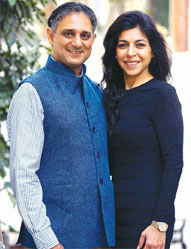
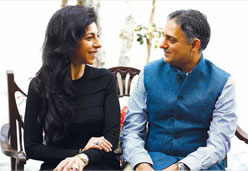
He is a descendant of the royal families of Bhopal, Pataudi and the Paigahs of Hyderabad, she is the sister of the tycoons who run one of Bengaluru’s biggest realty companies. They have now joined hands to raise the level of living in the Prestige Group’s apartments and resorts-she designs and executes the interiors, while he has set up and runs the group’s hospitality vertical
Prestige01MPOs07oct2019

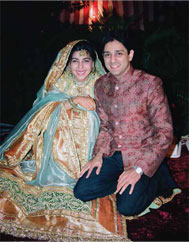
Nawabzada Omer Bin Jung and Anjum Razack met on a blind date. Well, not exactly a blind date, they say: “Actually, we were set up!” says Anjum, and Omer agrees. “But she picked me up!” he adds, with a twinkle in his eye. He is being literal: “I had no car, and used to roam around in buses and auto-rickshaws when I was working with Wipro.” So this young woman whom he had never met came to his office and gave him a lift.

Recalling the incidents of more than a decade ago, husband and wife keep bickering good-naturedly and correcting each other over details. The story that emerges is that a friend of Anjum’s said she wanted to meet her-at Casa Piccola, a restaurant to which Anjum used to supply cakes she baked. “And will you please pick up this guy Omer on the way? I want to meet him too,” she said. So an unsuspecting Anjum drove an equally unsuspecting Omer to the restaurant, where they sat and waited for the friend. When some time passed and she didn’t appear, they realised what had happened.

Was it love at first sight? “I don’t know if it was love, but I knew immediately that this was the guy I was going to marry!” she says. “My mother had always told me: ‘You should know what kind of boy you should bring home to meet me!’-and that afternoon I told her I had met the right man.”

Omer, for his part, “Enjoyed being the hunted, for a change”. They didn’t meet, or talk, for a month; but one day-just before Valentine’s Day, Anjum remembers-she and her friend were driving somewhere, when they spotted Omer walking. “We stopped, said ‘Hi!’ and gave him a lift.”

Things didn’t take very long after that. “My family doesn’t have the time for trivia!” Anjum explains. “I told my mother as soon as I got home that I had met the boy I was going to marry. I mean, we were two eligible young people in the same town. He was not of our caste of traditional business people, which was actually a plus point in his favour! Our families met, and I went through the various shredders his family put me through, then picked up the pieces-and we got engaged, then married in the next eight months.”

“We were two eligible young people in the same town. He was not of our caste of traditional business people, which was actually a plus point in his favour! Our families met, and I went through the various shredders his family put me through, then picked up the pieces−and we got engaged, then married in the next eight months.” − Anjum
Prestige02MPOs07oct2019

A few months before the marriage, they went to see Omer’s grandmother: “That was the first time I took a break from work,” she says. “Morph was still a one-person company, with only a set of carpenters to supervise. When we came back, I was broke, and went straight back to work. Side by side, I set up home and pottered around there, too.”

Anjum, the sister of the Razack brothers who run Bengaluru-based construction major Prestige group, is an entrepreneur in her own right: she set up Morph Design Company (MDC), which she runs as its Managing Director. Omer, who heads Prestige’s recent diversification into the hospitality business, comes from a long line of rulers-from the Paigahs of Hyderabad on his father’s side to a royal pedigree on his mother’s. “I have an interesting and diverse lineage. My maternal grandmother was the ruler of Bhopal with its matriarchal system. She married the Nawab of Pataudi, which was a much smaller kingdom, but both became our family’s houses. My father’s people were Prime Ministers to the Nizam of Hyderabad.” The Paigahs are a family of the senior aristocracy of the erstwhile Hyderabad State, with each of them maintaining his own court, individual palaces and a standing army of 3,000 or 4,000 soldiers.

Anjum, on the other hand, was what she calls ‘a one-woman army’ in a male-dominated business when she joined her brothers in 1993 and set up MDC. That ‘one-woman army’ has grown in 23 years to a Rs. 200-crore, 30-member team; but she continues to work hands-on with every project. “They are a bunch of kids-we are a young, growing office,” she says. “Besides, I love what I do-and I always put in 100 per cent into any assignment, because you always get only what you put in. I am also an obsessive perfectionist and would never deliver to a client what I wouldn’t live in myself.”

She had found, when she finished school, that she was in a ‘strange situation’ with not too many career options for a girl of her background-a Kutchi Memon in a typical business family, but one whose father had believed in education for his daughter as well as his three sons. “My parents have always been very aspirational for all their four children,” she explains. “We were all given education, encouraged to travel and grow-all against the norm in our community.” So after her B Com, she did a course in interiors with paint manufacturer Jenson & Nicholson. She then got a job with an interior designer in the early 1990s before joining the family business. “I jumped into the ocean headlong, without even knowing how to swim!” she says. “It was only the challenge that kept me
Prestige03MPOs07oct2019

MDC, which she established soon after that plunge, not only creates all the interiors in the Prestige Group’s developments, but also offers consultation, comprehensive planning and end-to-end design solutions for a range of other select clients for both their existing structures and new projects. She is also rightfully proud of the fact that her brothers Irfan Razack, Chairman and Managing Director of the Rs. 4,700-crore Prestige Group, and Rezwan Razack, who is Joint MD, never gave her any special privileges in business. “Even though we are a very close-knit family,” she says. “Morph is my very own, Prestige is my client. I charge design and project management fees, and for the furniture and other material I supply from either my own manufacturing units or those from whom I source them.” She does, however, describe working with family as putting her ‘between a rock and a hard place’ very often.

“My big idea was to reach out to the discerning interior design market, be it luxury or aspirational, and provide my clients with a lifestyle that they would enjoy,” is how Anjum how explains the way she approaches her work. “I wanted to introduce discerning customers to living spaces that represent and reflect their individual taste and stay relevant through changing times.” Designing an interior space, she points out, presupposes that “A design metaphor will reveal itself in every object, colour, finish and patina”. Obviously, when the idea finds expression and rhythm in such detail, the natural outcome would be a space made distinctive by its very uniqueness. “That,” she adds, “is why I do not just stop at designing the experience of an interior space, but also construct or create most of the objects that shape the design.”

“I went to boarding school at Sanawar, then Hindu College in Delhi and the London School of Economics. When I came back to India, I decided to move to Bengaluru instead of Hyderabad−it was a new city as compared to Hyderabad, and I could do anything here with its own level of decadence! Besides, my elder brother was here too” − Omer

“Good taste in interiors has come of age. The challenge lies in the fact that often, the notion of interior design stops at the placement of attractive objects in a well-designed room. While that is a mandate we can serve with ease, we challenge ourselves to give our customers much more. This we do by shaping their experience of interior space, through manipulation of spatial volume, as well as surface treatment. So, while apartments today are predicated on the optimal use of space and uniformity, our challenge is to create a unique interior space in a structurally similar landscape,” she says.

“We have also integrated backward to create a super-large vertical, with project management, sourcing and a trading company-and now even furniture manufacturing. We create 90 per cent of all the furniture that is provided in any Prestige construction.”
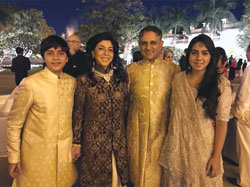
Prestige04MPOs07oct2019

From its beginnings as an in-house interior design subdivision, Morph has morphed into a fully integrated interior design firm that executes and handles projects for external clientele, too. It provides a one-point solution from design, creating a portfolio of work across apartments, villas, clubhouses, spas, resorts and hotels. Hotels, resorts or serviced apartments. “All of these need to be addressed very differently from one another,” Anjum explains. Along the way, the company has worked with globally renowned architecture firms like Dileonardo, Woods Bagot, HBA, MAP and SRSS, and executed projects as large as 2.5 million sq ft (nearly a quarter million sq m). “We have also won a lot of awards, in different areas of our work. My brothers look at me differently now!” she adds.

Describing herself as an entrepreneur at heart, not satisfied with interior design alone, Anjum says this is why she vertically integrated the manufacturing process by setting up state-of-the-art in-house factories over two decades ago, to cater to the different design sensibilities of customers, from traditional, classic to the more contemporary, experimental and eclectic. “Our products are also designed to give our clients great value for money across the entire product spectrum,” she adds.

“From a process perspective, everything from concept, drawings, prototyping, to the final production of each and every piece of furniture that we use in our projects is backward integrated,” she explains. “Our external dependence is minimal and allows us to achieve unmatched quality giving us the ability to create truly bespoke interiors, where each detail is created by us. Having control over customisation and production, we ensure that our design process is a constantly evolving and dynamic one”

“The journey has been tough-but a good tough!” Anjum smiles. “The biggest chip on my shoulder is that I didn’t go to design school. But I love working, and I have been loyal to my work.” She did, however, take a course in designing at Cornell University. “I firmly believe that you must always start from the back operations to be strong. There was a sad lack of originality and quality in the market-that’s why I started my furniture business with visits to China, Italy, Germany, Austria and Burma, getting the best rates at which I could import what I needed for each project.”

With this bottom-up organisational design approach, Anjum has been responsible for business development, strategic planning, diversification, and project management along with all other key executive functions. Her work is inspired by a diverse set of influences, both traditional and contemporary, and she references the Deco and Nouveau period styles as being particularly impactful. Firmly believing in the importance of constant evolution for prolonged success, she doesn’t hesitate to incorporate innovative materials into her projects, work with young artists and experiment with all aspects of execution.

“Some things are non-negotiable! For instance, no phones are allowed at meal time. The kids get a platform to talk to each other and us, about things that would otherwise get buried in their busy lives. There are some ground rules, and they stick to them” – Omer
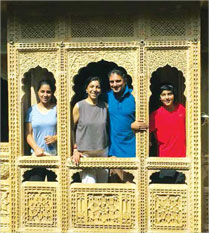
Prestige05MPOs07oct2019

“My two new factories involve a huge investment, which means I will probably be able to break even only two or three years,” says the businesswoman, now 49. “The state-of-the-art factories have been conceived with a lot of mechanisation-manufacturing wooden joineries, handcrafted furniture, modular furniture, wardrobes, windows and kitchen assemblies. MDC also has a unit which specialises in developing soft furnishings.” Today, Anjum can proudly claim that she has nurtured MDC into one of the country’s most respected décor studios with globally recognised clientele and numerous national and international awards to its credit.

Talking of challenges, Anjum says the biggest one has always been the debate between functionality and design and how to marry them: “The aspirational customers have a relatively limited budget and want products that are aesthetically pleasing, have longevity and are easy to maintain. We have strived to address the needs of this particular segment and are happy to say that we have managed to achieve it to a very large extent.”

The other challenge, she says, is to provide aesthetic designs to any area. “Everyone deserves appealing spaces, regardless of its size,” she says. “We, at Morph Design Company, excel in providing just that.” Pointing out that the business also involves effectively executing two opposing areas of demand: the high-volume kitchen and wardrobe assemblies on one side, and the need for personalised and exclusive products that cater to the individual versus the mainstream on the other, she credits the nature of these challenges is what keeps her and her team striving for excellence.

Anjum is a self-confessed foodie, and loves cooking. In fact, it was this love and talent that led to her meeting Omer at the restaurant: “I used to bake a lot, and market my cakes and pastries to earn my pocket money, to spend on music and clothes,” she says. “Casa Piccola was one of my biggest customers. And so, when my friend Goga suggested meeting her there, I didn’t think it was at all strange.”

She also reads voraciously and loves to travel-collecting art and antiques from the places she visits. Her husband shares her interests-and so they pack their bags and heads off to different locales in India and abroad. The couple began with a two-week honeymoon in Africa; and because he loves surprising her, he recently took her on a road trip from Budapest to Prague via Vienna-“He made me drive!” she mock-complains- so that he could treat her to a four-hour meal at a three-star Michelin restaurant on the way.
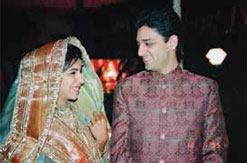
Prestige05MPOs06oct2019

Nawabzada Omer Bin Jung, formally designated Executive Director, Hospitality-Prestige Group, is also the Founding Managing Director of Prestige Leisure Resorts (P) Ltd. With three decades of experience in hospitality, he is currently spearheading the Group’s foray into hospitality. “I went to boarding school at Sanawar, then Hindu College in Delhi (where he was a gold medallist in his BA, Anjum intercedes) and the London School of Economics,” he says. “When I came back to India, I decided to move to Bengaluru instead of Hyderabad-it was a new city as compared to Hyderabad, and I could do anything here with its own level of decadence! Besides, my elder brother was here too.”

After a couple of years in the finance department of Wipro, he joined his brother who has a resort in Bandipur. “Actually, it was a just a Club House; now it has been converted into the Northwest County resort,” he explains. In 1997, three years after he married Anjum, he floated the idea of helping his brothers-in-law take their construction business into resorts. “There has been no looking back since then,” he says. “We also have food courts in malls, we run franchises for Subway, Falafel and others… it’s a good mix.”

Adds his Begum: “It wasn’t an asset class at all – it was Omer’s brainchild.” He explains that because the business was totally in real estate, it had no assets on its balance sheet because all its projects were sold. “Assets are always good to have,” he says. “That’s where the discussion started. And we began to become more asset heavy.”

And so, having established Prestige Leisure Resorts, Omer now aims to set up international spas, city hotels, resorts and food courts all over India in the coming years. He is amply qualified: besides his gold-medal BA and his post-graduate Diploma in Business Studies from LSE, he also has a post-graduate Master’s Degree in Business Administration with a specialisation in Marketing, as well as a Certification in Strategic Management by Cornell University School of Hotel Administration, US.

“To excel in any field, one needs to be a team player. Managing people and ensuring employee and customer satisfaction is an integral part of being a success. We are a service-oriented industry and it is our team’s talent that decides the success of our work” – Anjum

Prestige07MPOs07oct2019

At Prestige, Omer has been instrumental in conceptualising and tying up with Banyan Tree Hotels and Resorts, Singapore, for one of Bengaluru’s most beautiful spa resorts the world-class Angsana Oasis Spa & Resort; the Angsana Oasis City Spas at UB City; Hilton International for the Conrad, Bengaluru; Oakwood Asia Pacific for the Oakwood Premier Serviced Residences at UB City and the Oakwood Residences-Forum Value Mall, Whitefield as well as the 3.4-hectare Sheraton Grand Whitefield Hotel and Convention Center in the group’s Shantiniketan project; the JW Marriott Hotel in Prestige Golfshire below the Nandi Hills and the 23-storey Conrad Hotel overlooking the Ulsoor Lake. He is also the brain behind the Transit food lounge at The Forum, Koramangala.

“We have introduced some of the most reputed international brands in the world to South India, such as the Hilton Group and Marriott International for hotels; the Banyan Tree for resorts: our Angsana Oasis Spa & Resort is managed by Banyan Tree Hotel & Resorts, Singapore. We also have the Oakwood Premier Prestige Serviced Residences in our landmark development, UB City, as well as in Whitefield,” he points out. We launched our hotel, ‘The Aloft’, in Prestige Cessna Business Park in 2014 in association with Starwood Hotels & Resorts Worldwide.”

Anjum also shares some of the secrets for her success: “To excel in any field, one needs to be a team player. Managing people and ensuring employee and customer satisfaction is an integral part of being a success. We are a service-oriented industry and it is our team’s talent that decides the success of our work. Therefore, it is very important to ensure that your team is motivated and happy. Finally, it is crucial to have in depth knowledge of both the industry and the products, which is only possible if you have a genuine passion for your work, as only then will you constantly strive towards perfecting your art.” Apart from this, it is paramount to believe in yourself, your abilities and objectives and have the right conviction. Life is full of complexities. Keeping things simple and using a straightforward approach helps unravel intricacies.

Her role models are her father Razack Sattar, an enterprising entrepreneur who started Prestige Fashions way back in 1956; and after his passing, her three elder brothers Irfan, Rezwan and Noaman have been her mentors, propelling her to success. “They have inspired me to keep pushing myself to achieve greater heights and are a source of constant motivation for me,” she explains. She too wants to carry on this culture of helping others: “I want to create a platform for young interior, product and furniture designers whom I will launch and mentor, to help hone their skills and realise their dreams,” she concludes.

The Jungs’ daughter Zara was born in 1999, and their son Ayaan five years later. “Kids never worried me, I enjoy them at all ages,” Omer says. And Anjum gives him ‘100 per cent for being an outstanding father’, saying: “He handles the children so well. Till date, he puts Ayaan to bed every night. He also takes his just-into-his-teens son on a fishing and hunting trip for two weeks every year.”

How did they manage everything: work, which is often 24×7, parenting- which is 24×7-and getting away for holidays? “We have a very good support system in the family,” Anjum says. “My mother has always been a big help, even though she was looking after my father who fell sick in 1995 soon after our marriage, and never recovered till he passed away in 2004. But I too never thought of multi-tasking-handling work, kids and home-as a problem. Of course, we had good staff: our maid and driver are very devoted to the family.”

Both of them are religious, and practise their faith: “We pray, fast, and go for Haj,” Omer says. Adds Anjum: “My mother was very pragmatic in her approach to Islam, though my father was more ritualistic.” According to Omer, their prayers are more for thankfulness than to ask for something. “We are so blessed,” he points out. “We have been to Arabia few times. So yes, we practise-but at the same time, we question.” Says Anjum, simply: “I like the balance.”

And the children are, fortunately, not yet growing away from their parents: Zara has her own life, but is at the same time totally plugged into the concept of family. “Some things are non-negotiable!” says Omer. “For instance, no phones are allowed at meal time. The kids get a platform to talk to each other and us, about things that would otherwise get buried in their busy lives. There are some ground rules, and they stick to them.” They are not totally happy going away on their own, but can still manage independently all over the place. Zara, for example, went to Oxford on her own for a summer course, Anjum points out. “She organised her own travel, and did very well there too-she came first in her class.”

All four of them spend a lot of time together as a family, even on holidays. “We don’t need to go out and mingle, we are very content by ourselves,” she says. “Three holidays every year are a must. We go away for the summer, Dussehra and Christmas vacations.”
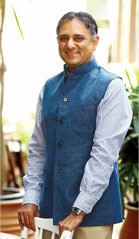
Prestige08MPOs07oct2019

Last year, Ayaan came up with a surprising question: “Why must we always fly abroad? Why don’t we take a holiday in India?” Says Omer: “Both of us had found it very difficult earlier to wrap ourselves around a holiday in India. But after my son asked this question, we decided to go to Rajasthan-it was fun. We like our luxuries-but besides the Michelin restaurants, we also like to eat local food in different places. For example, we had a great meal of daal-bhaat at a truck stop in Rajasthan.” They didn’t of course, exactly rough it out in the desert: his royal connections ensured that they had the best hospitality in the local palaces. “India is brilliant!” Anjum says.

“Even though both of us are busy, we like to invest time in the kids as well as for ourselves together,” Omer says. “Of course, there is always a trade-off, in terms of earning less than we could if we concentrated only on our work or business. The question of what has priority in our lives keeps changing. But health, time with the children, family time, religion-they all take precedence.”

In addition to all this, Omer manages to find time to play cricket-coming as he does from a cricketing family-and golf, besides his angling and hunting which again is a throwback to his family’s traditions. “He is a ‘renowned shot’!” Anjum says with obvious pride. That, he explains, is a qualification that enables him to participate in national shooting championships. He is also interested in football, and took his son to watch Manchester United play a home match on Boxing Day last year: “There must always be an element of surprise in what I do,” he grins. “I had planned the itinerary for that trip with a gap of one day, which the rest of the family were clued in that they didn’t even notice! That was the day I just took off with Ayaan for the match.”

“We have introduced some of the most reputed international brands in the world to South India, such as the Hilton Group and Marriott International for hotels; the Banyan Tree for resorts: our Angsana Oasis Spa & Resort is managed by Banyan Tree Hotel & Resorts, Singapore” — Omer

How have they found the much-vaunted “entrepreneur-friendly” systems introduced by the government, especially that of Karnataka where they operate? “Well,” starts Omer, “When we started the hospitality business, we needed a total of 29 licenses… But today,” he pauses dramatically, and adds: “We need 29 licenses, still. The license raj has not gone away, it is only that we have learned to handle it more gracefully. The pain is still there. But we had the luxury of assets like easy access to loans and, our families.”

Anjum’s story is slightly different. “I started as a woman entrepreneur,” she explains. “That angle worked for me.” She still loves to cook; and, Omer says, “People love to be invited to our home for a meal.”

“We never have the time to get bored,” Anjum says. “We’ve practically grown up together, through our 23-year marriage. Both of us are the same age, so that’s almost half our lives. We have so many things in common; like, we were reading the same translation of the Quran, or The Little Prince, at the same time-but we are still as different as chalk and cheese. Of course, his stupid sense of humour sometimes irritates me, but…” To which her husband grins. And she adds: “I promise you, I wouldn’t want to grow older with anyone else but Omer.”

source: http://www.corporatecitizen.in / Corporate Citizen / Home> Cover Story / by Sekhar Seshan / Vol.3, Issue No. 2 / April 15th, 2017

Meet nonagenarian SM Miskeen, the oldest ever to earn a PhD in Tamil Nadu

Thiruvarur, TAMIL NADU :

Miskeen, who still practices as a chartered accountant in Thiruvarur, did his research on cheque fraud and fines concerning loan repayments.

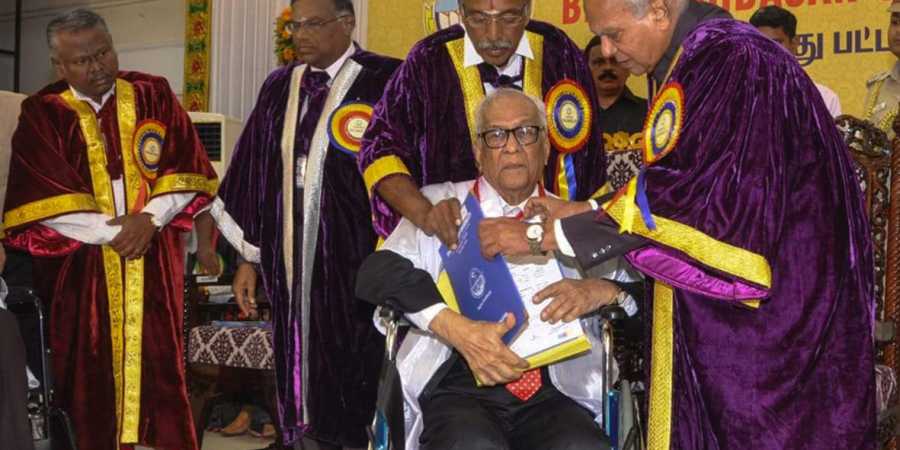
SM Miskeen receiving PhD from the governor of Tamil Nadu on Tuesday (Photo|EPS)

Tiruchi :

With a doctorate at 91, he proved that age is just a number. Nonagenarian SM Miskeen from a village in Thiruvarur village, who earned his PhD on Tuesday, received the certificate from the governor of Tamil Nadu at Bharatidasan University.

Miskeen, who still practices as a chartered accountant in Thiruvarur, did his research on cheque fraud and fines concerning loan repayments.

A chartered accountant with an active clientele, a lifetime Lions Club member who started the first eye hospital in Thiruvarur through the organisation, and an educationalist who brought the first-ever women’s college – all of these show an eventful timeline Miskeen has crafted over the years.

Miskeen was born in the hamlet of Koothanallur in Thiruvarur district in 1928. After finishing primary schooling in his village, Miseek was moved to Madras for secondary schooling. “My father believed that education was very important and moved with me to Chennai where he set up shop,” said Miskeen.

Later he completed his college at Loyola in Chennai in 1950 with a B. Com. This was followed by a three-year stint handling his family business in Vietnam.

Miskeen said he did not want to continue in Vietnam and came back to India to pursue CA, which he completed in 3 years.

In 1960, Lion’s Club International had introduced a scheme to establish eye hospitals to eliminate reversible blindness. Miskeen, who joined the organisation in 1968, gradually became the club’s Multi Council Chairman of South India. He established an eye hospital in Thiruvarur and treated over 10 lakh persons with cataract free of cost. He founded RA College for Women in 1999. At present about 2000 girls, mostly from economically backward backgrounds, are studying in the college.

While speaking about the research, he said: “Many are unaware about the penalty in cheque dishonouring. This research analysis would create awareness about it and prevent such offences among individuals, small firms and even corporates as those involved in cheque bouncing cases may be awarded up to two years in jail and fined twice the amount involved.” He said such cases were in great numbers at many high courts and even the supreme court.

Miskeen studied over 400 check dishonouring cases across India for his analysis. He took up the research in 2014 under the guidance of Dr. Issac Francis Gnanasekar from St. Jospeh’s college.

source: http://www.newindianexpress.com / The New Indian Express / Home> Good News / by Express News Service / Ocotber 01st, 2019