Category Archives: Business & Economy

How this vlogger travels the world, free of cost

Utraula, UTTAR PRADESH / Charummoodu, KERALA :
JinshaVlogger01MPOs26sept2019

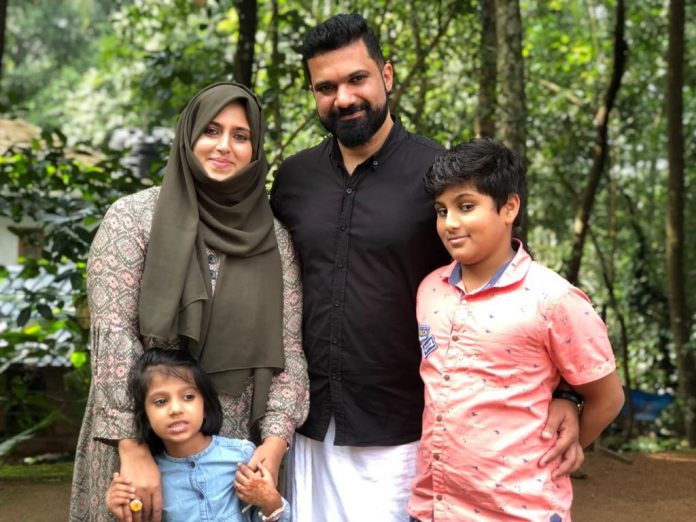
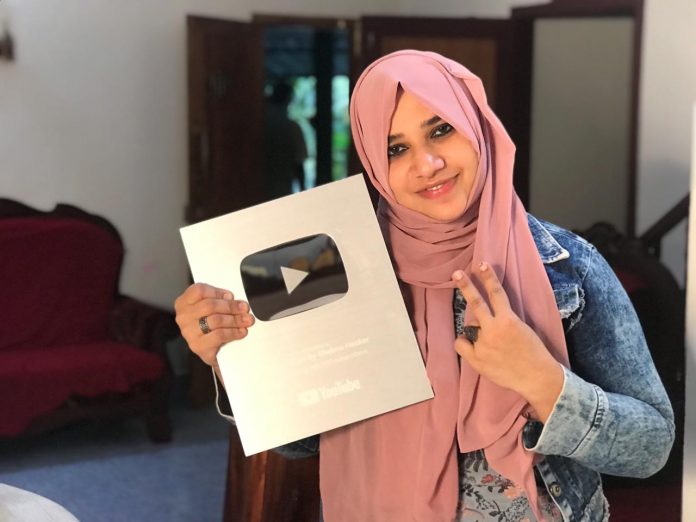
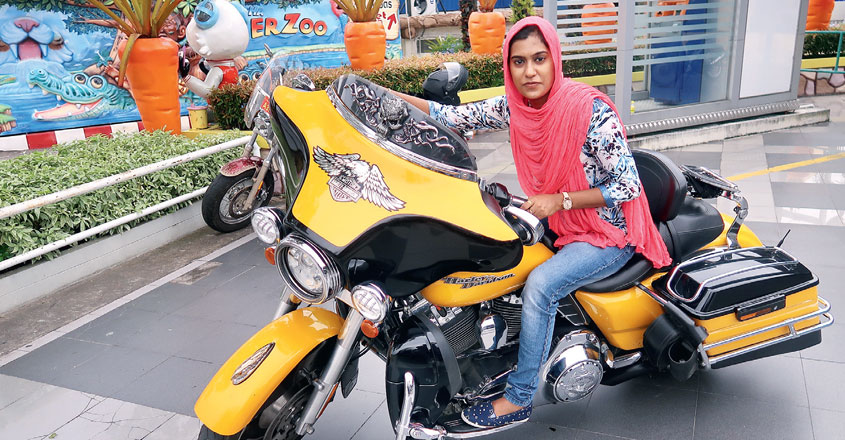
While most of us here find it difficult to save money for an annual vacation tour, vlogger Jinsha Basheer is earning money for every trip she takes. The crossroad of her life was her decision to publish photographs and videos of her own journeys online. When her posts on Facebook crossed 8000  likes, Jinsha was assured. Vlogging is more remunerative than the job of an engineer.”

Jinsha Basheer, who grew up in village of Charummoodu near Thiruvalla has only 11 months of experience in vlogging.  But this 28-year-old has more following than those who had been dabbling on Facebook Facebook for over 10 years. Jinsha became a vlogger by chance soon after landing a job with an IT  firm after completing her engineering. The story goes like this:
JinshaVlogger02MPOs26sept2019

Jinsha and Faisal when refuelling at a petrol bunk near Adoor, happened to witness an altercation involving one of the petrol bunk employees and a biker. The biker claimed that he was given less petrol for the money he had paid. The employee argued that every customer should check the counter to ascertain the quantity of petrol received.

Faisal, deciding to get to the bottom of the issue, enquired with another employee of the petrol bunk who revealed a big secret: Fill petrol for 5 or 10 rupees more than the required quantity.  For example, fill petrol for 110, 220, or 1015 rupees. In such cases petrol will be filled as per the exact amount. He talked about those petrol bunks which manipulated the software and delivered less quantity of petrol for the money paid. To make this event public, Jinsha recorded a video and posted it in Facebook with an advice to fill petrol for 5 or 10 rupees more  than the usual exact amounts like 100, 200, 1000 etc. Their Facebook page, which till then had only Jinsha and Faisal as members, received 5000 likes within a day.

A reply to trolls
JinshaVlogger03MPOs26sept2019

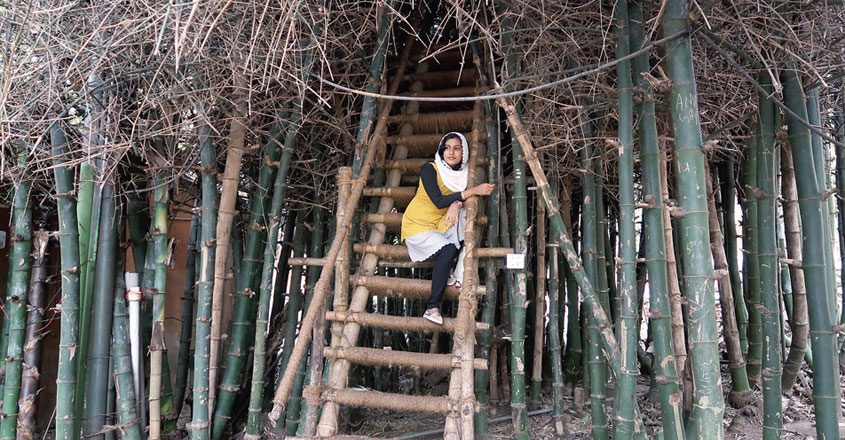
Jinsha was born in Utraula in Uttar Pradesh to Basheer, a military man and Barisha, a nurse, as the  youngest of the three sisters. When she was 8 years old, the family resettled in Charummoodu.  Jinsha loved travelling since her childhood. During her studies, she travelled to Mysore and Madurai. Taj Mahal, Agra and Qutub Minar remained her dream destinations. On the first weekend of getting married to Faisal, they travelled to Vagamon and her passion for travelling was rekindled.

While she was working in an IT firm owned by Faisal (which was also a period of many journeys), she  got an offer for taking up a job of a teacher in Qatar. The school management asked her to send a video depicting a simulation of her teaching the pupils. By the time the school management intimated her of their satisfaction of her teaching video, the ‘petrol bunk’ video had become  ‘viral’ in the Facebook. Jinsha decided to focus on volgging instead of taking up the teaching assignment in Qatar. Faisal, too, supported that decision. The first vlog.trip was made from Masinagudi to Ooty via the Kallatti pass. Another vlog on a journey through the Bandipur forests followed. These videos highlighting the beauty of the forests, too, became viral.

JinshaVlogger04MPOs26sept2019

Attempts were made by some elements to hurl abuses at Jinsha and her father through adverse and offensive comments. Jinsha was appalled but decided not to quit. But both Basheer and Faisal supported her cause. “If you bow down now, it will be akin to accepting total surrender.”

Jinsha took a screenshot of the Facebook page of the person who was vitriolic on her which also had that person’s photograph and posted it on her own Facebook page. Within minutes, the children and nephews/nieces of the person apologized. Soon after that, the Facebook page of the person disappeared.

Making money for and from travelling
JinshaVlogger05MPOs26sept2019

One of the first international vlogs Jinsha Basheer did was in Singapore. Dubai and Thailand followed.  The followers were introduced to the facts that in Singapore, a bottle of water costs Rs 350 and that in Thailand, one could take selfies with tigers, all through her vlogs.

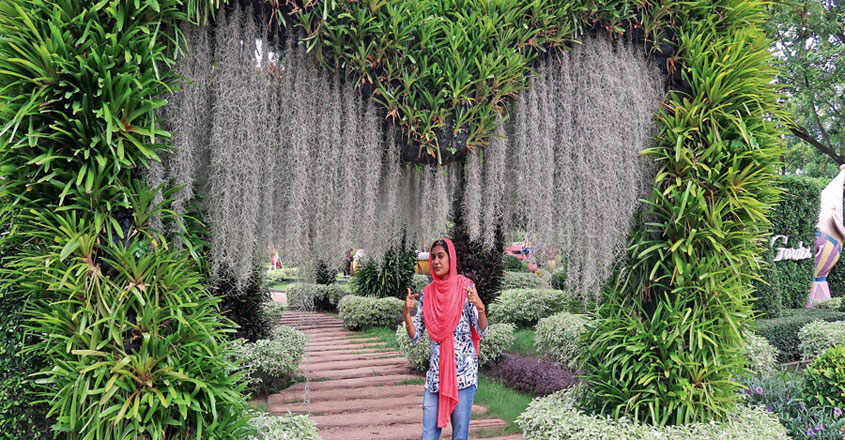
“Rains round the year, gentle sunshine, towering buildings, beautiful landscape…Singapore is a place that must be visited at least once in a lifetime. At the same time, Dubai is a place of Guinness Book of world records. There is a village in Dubai with a rivulet and farming. This village is known as Al Barari Farm.” More than one lakh likes were received for this vlog alone.
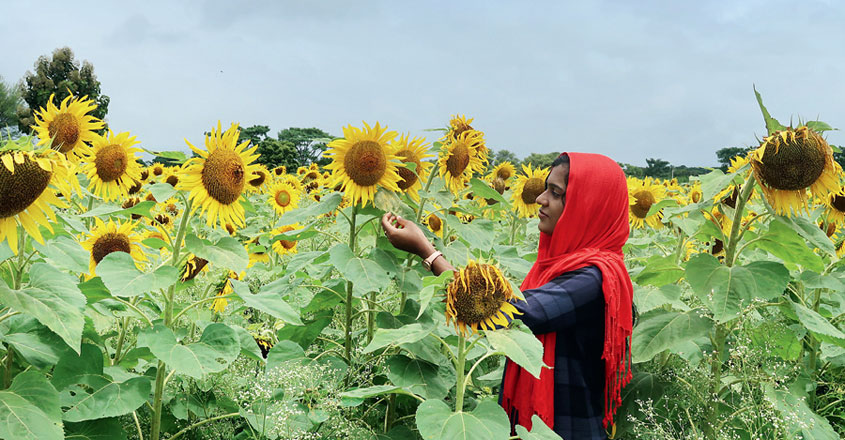
JinshaVlogger06MPOs26sept2019

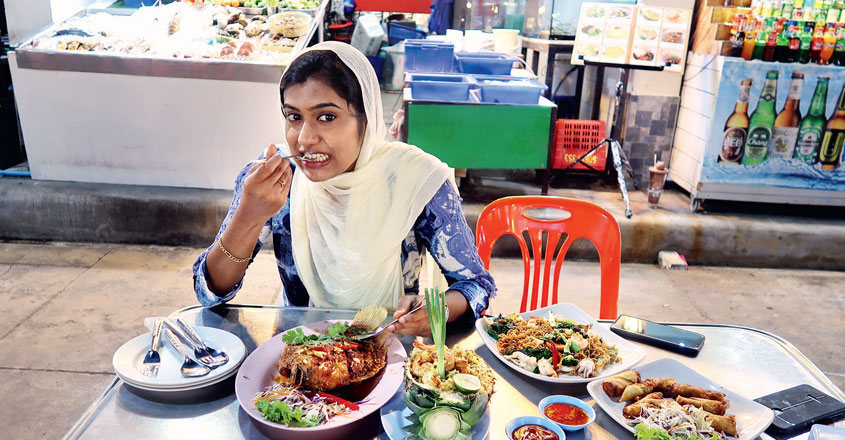
“Thailand is a country of individual freedom. The issue is how that freedom is utilized. There is a zoo housing 200 tigers in Thailand. In the elephant rearing centre, one could play with the elephant calves. Photos can be captured with one riding a crocodile in a lake of about 1000 crocodiles.” These facts were included in Jinsha’s vlog on Thailand.

‘Mariner of the Seas,’ a royal Caribbean cruise liner which berthed in Kochi was visited with special permission. “The vlog relating to this visit to the ship with an interior bigger than the LuLu Mall got instant popularity,” Jinsha explained how she started getting remuneration from Facebook.

The vlogging technique

JinshaVlogger07MPOs26sept2019

Jinsha and Faisal discovered ‘The Earth Lounge’ in Kochi international airport while on their way to Dubai. They entered the lounge to avoid the boredom of waiting for their flight. Two hours in there costs Rs 2000. But if you are holding Visa Platinum, Master Card etc it will cost only Rs 2. With that unlimited food and drinks, bathing area, relaxing area etc are made available to you.  ‘The Earth Lounge’ which the airport runs with the promotion of banks, was immediately videoed by Jinsha. Similar videos with little known facts were released on Jinsha’s Facebook page.  Likes and comments started piling up on such posts. Remuneration flowed from Facebook and You Tube.

“Tour operators approach us. They invite us to film the package tours they conduct. The tour and accommodation facilities would be arranged by the operator. The vlog that is made on the tour should reflect the services provided by the tour operators. The tour operator which took us on their package tour to Thailand saw more number of tourists opting for its services. The income comes through the Facebook posts. If 1000 readers read it, some small amount will come in the account.  You Tube is the best paymaster. If there are 1000 subscribers and 4000 minutes of viewing, an account for transferring remuneration can be created. The more the number of viewers, more is the remuneration. Jinsha explains after going through the statistics after turning a professional vlogger she has 87,000 followers on You Tube.

Offers for international tours are waiting her attention. There is some indecision on where to fly next among the options available. Faisal loves Switzerland. Jinsha has decided that as soon as her Dubai trip is over, she would fly out to Europe.

source: http://www.travel.manoramaonline.com / OnManorama / Home> Travel> Celebrity Travel / by Baiju Govind / May 16th, 2019

From cooking tips to charity: Meet the ‘vlogger family’ from Malappuram

Mallapuram, KERALA :

MalappuramVloggers01MPOs25sept2019

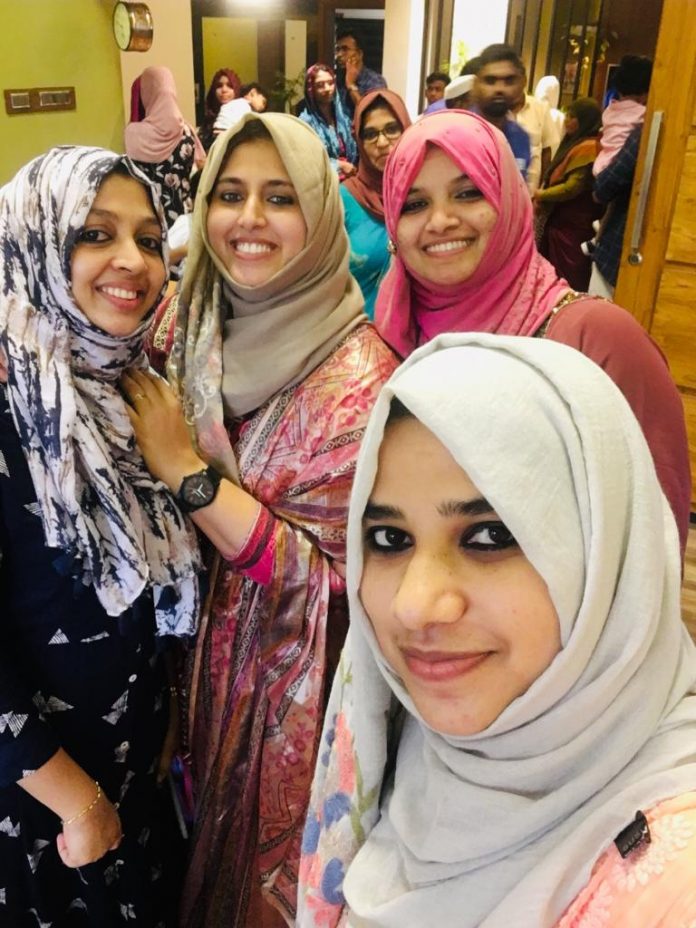
Vlogging or video-blogging is nothing new in this modern age of technology. But there is an interesting vlogger family worth knowing about. Let’s meet four women from a family in Malappuram, who have established their paths in successful vlogging – Shamseera, Femina, Sabeena and Shabna.

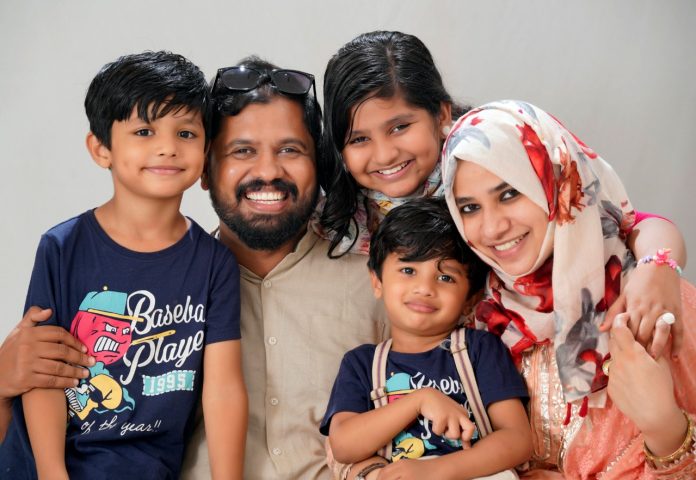
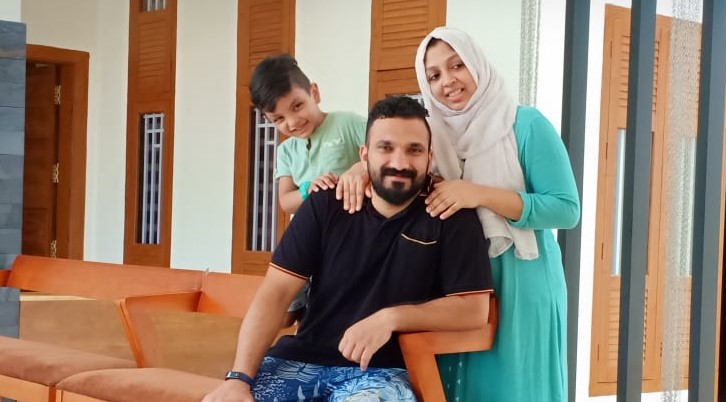
Moyin KP and Khadeeja EC belong to the village of Munduparamb in Malappuram. They have four children – a daughter and three sons. Their daughter Shabna and the three daughters-in-law are into vlogging now. It all began with Shamseera, their eldest daughter-in-law. She grew up in Kerala and Qatar and lived with her husband and kids in Dubai where she too worked for a while. But when they moved to Saudi Arabia in 2014, she found it so different from the places she had been till then – it was hard to go out alone, she couldn’t work as job opportunities were very less for foreign women back then.

Her only solace then lay in her cooking experiments, reading and crafts etc. She even joined her kids’ school as an art teacher but soon realised that ‘teaching itself was art I (she) lacked’. In between, she was also watching videos on YouTube, which gradually brought her to the idea of starting a channel of her own. Shamseera began a YouTube channel in 2016 but had to drop it due to some technical issues. She then began another one in 2017 and uploaded the videos of the previous one in it and thus started the journey again. Since then, she hasn’t turned back from her ‘Momtastic’ channel. (https://m.youtube.com/channel/UCL-LW86fWpQejgKbsoWrQqw#menu). She now has 2.98 lakh subscribers from different parts of the world.


Shamseera Sherin and family

The other three were inspired by Shamseera. Shabna Hasker was the second to enter the field. She began her channel ‘Taste Tours’ (https://www.youtube.com/channel/UCwXXEk9v87KS57cFkpoTgIQ) in May 2018, and soon Sabeena Shemin joined with ‘Sabeena’s Spice Diary’ (https://www.youtube.com/channel/UChiazvVDnNGssDgqshIKGAA) in June 2018. And now, Femina couldn’t stay back. She joined the YouTube journey along with her husband Shajin in October 2018 – ‘Femina & Shajin’ (https://www.youtube.com/channel/UCzfIuOwn17TYHnt9NygsWKg) The topics they have selected are all similar – cooking, cleaning, organizing, gardening, crafts, travel, daily house chores etc. Shamseera chose English as the medium for her vlogs, though she has done one in English, Malayalam and Hindi together. Sabeena and Femina began in English and switched to Malayalam owing to the request of viewers. Shabna uses only Malayalam in her videos.

Femina Shejin and family

All the four ladies manage their YouTube channels along with taking care of their respective families and running their houses. Shamseera, a graduate in commerce, lives in Riyadh with husband and two kids. Femina, an MBA graduate, is in Calicut with her husband and two kids. Sabeena, a Statistical Investigator on leave from government service, lives with husband and a kid in Sharjah. Shabna, a graduate in commerce, lives in Malappuram with husband, three kids and parents-in-law. Speaking to TwoCircles.Net, they said that they wished to upload videos twice or thrice a week in a fixed time but were not able to do so always. Shamseera, Femina and Sabeena shoot their videos and do the related works when their kids are away in school, while Shabna has her youngest child always with her at home and so has to do her works at night after the kids go to sleep. All mentioned the support of their families. Shabna’s channel has more than 1.5 lakh subscribers, while Sabeena’s has 1.01 lakh and Femina’s more than 31,000.

Shabna Hasker and family

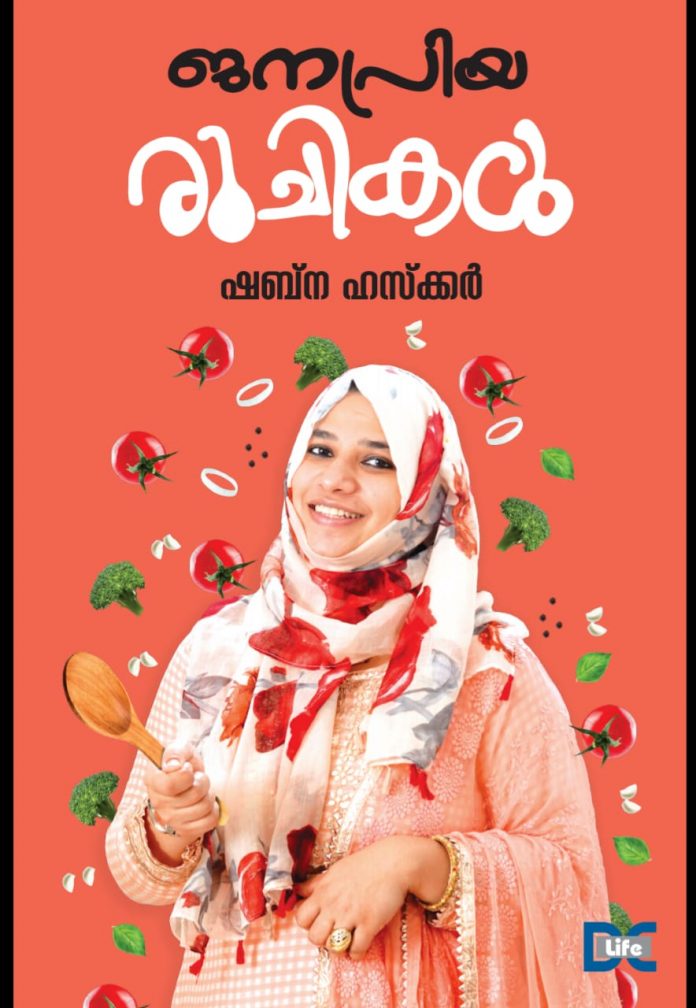
Shabna now has a cookbook to her credit – ‘Janapriya Ruchikal’ by leading publisher DC Books, expected to be released soon. It was her husband Dr Hasker who suggested the idea and pushed her into writing it when she was reluctant. Shamseera has even starred in an advertisement for the famous Lulu Supermarket.

When asked how they managed their private life and public vlog with the camera inside their homes, all four said they were extremely particular that their vlogging shouldn’t affect their private lives. Shabna said, “We do capture our daily life at home but only for a short time. For example, we capture the first few moments of having food and then turn it off. So we have our time too.” Femina owes the lag between her videos to the priority she has kept.

shabna hasker
shabna hasker

While the other three vlog on their own, Femina does it along with her husband. “It is good. We can spend some more time together,” she said. In addition to the usual topics dealt with by all, they also do comedy videos along with their kids. However, there are times when Femina has to do the vlogs alone as Shajin gets busy with work. The daughter of an Army Major, Femina was born in Kerala and grew up in different parts of the country. After completing her graduation in Commerce, she did MBA in HR and worked for a while when they were in Dubai and back in Kerala. Now she is also running a home décor-related business online.

Sabeena Shemin and family

They also try to keep regular contact with their viewers–replying to messages on social media and trying to do videos on request. “Editing and uploading a video is a big task. My eyes get tired, my energy levels fall. But once I publish a video, the comments from my loving viewers are just enough to make my battery level go 100% in a few seconds,” said Shamseera. She recalled an experience she had last month on a trip to Kochi when a lady rode 6-7 kilometers on a scooter with two kids just to meet her.

So, how has YouTube affected their lives? Shamseera confesses she was reserved and shy earlier, but vlogging has made her a more confident person. Life has become busier and more hectic, but now that they are used to it, Femina says it is a beautiful mix. The women are doing their bit for charity too, the latest being during the floods in Kerala. Life has changed for all the four – getting recognized is indeed a matter, but it makes them more responsible too.

MalappuramVloggers07MPOs25sept2019

source: http://www.twocircles.net / TwoCircles.net / Home> TCN Positive> Indian Muslim> Lead Story> Women / by Najiya O – TwoCircles.net / September 16th, 2019
BEADING: Unsung Beadstringers Of Ashoka Road

Mysuru, KARNATAKA :

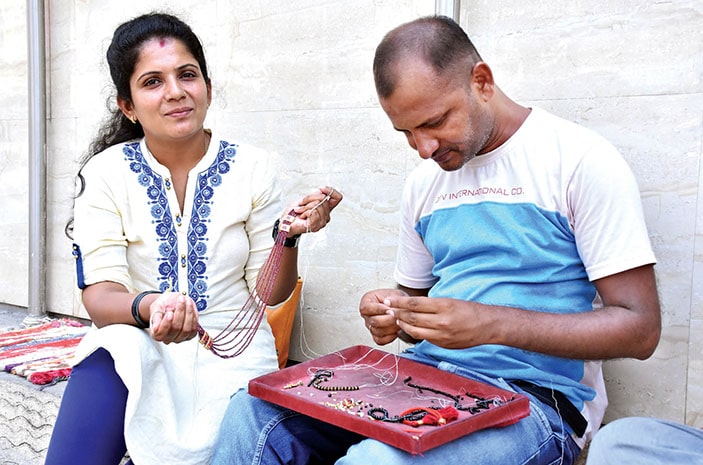
Beads01MPOs20sept2019

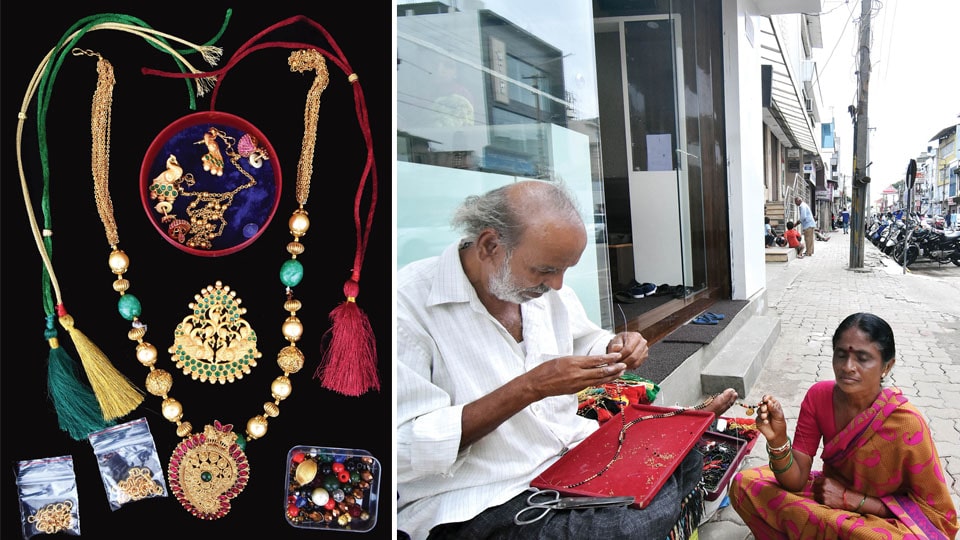
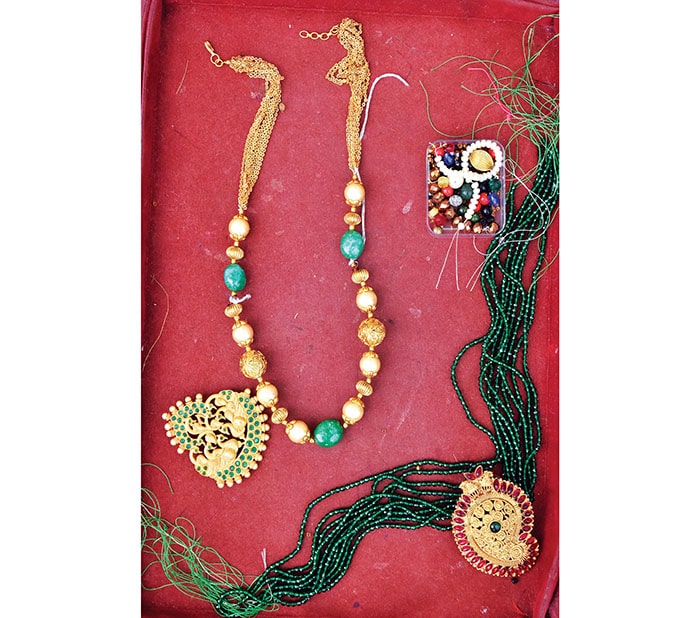
Beadwork is the use of beads in fabric decoration and ornamental design. Beads were used decoratively in ancient Egypt, Greece and Rome and during the Indus Valley civilisation. However, today, the art that is handmade is becoming increasingly hard to find, which is reflected in its price point in the marketplace. Beadwork, with its symmetric or asymmetric patterning, stands out for its intricate and innovative designs. The practice of beading transmutes a jumble of beads into a meaningful whole. This Weekend Star Supplement introduces some of the unsung traditional bead artists on Ashoka Road pavement who have mastered the delicate art and made it their own.

Unsung Beadstringers of Ashoka Road

These  threads full of enchantment have entangled in your caress…

No clue or hint I can fathom, how this knot could be unravelled…

Each shred hums in my body, like a stream from the heaven… 

These are the lyrics of the Hindi hit song “Yeh moh moh ke dhaage…Teri ungliyon se ja uljhe” roughly translated to English.

Beads02MPOs20sept2019

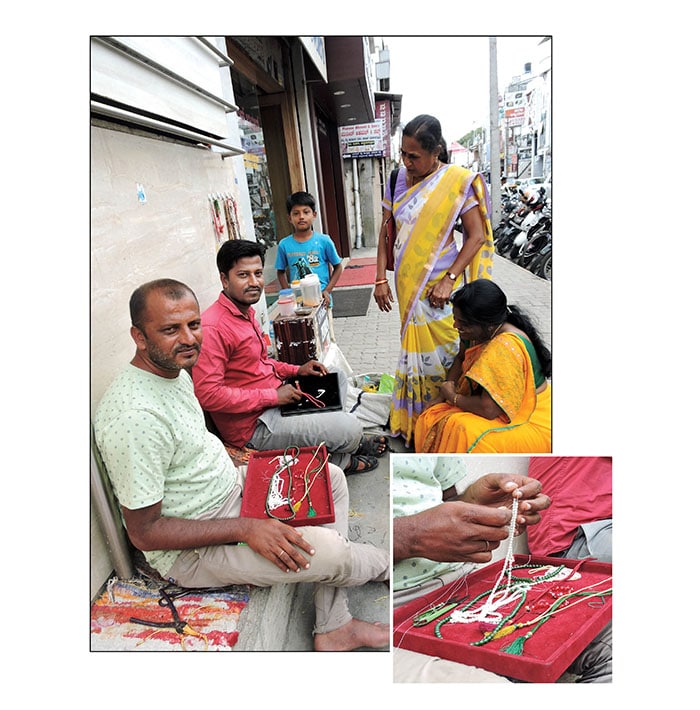
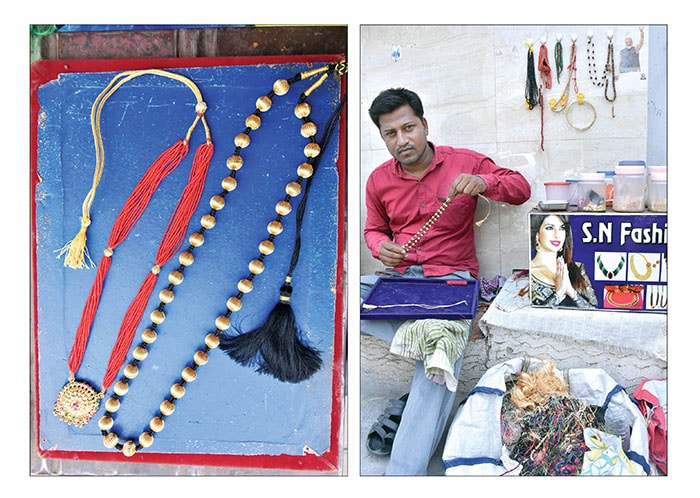
A melange of colours, a dash of design — Craftsmen engrossed with threads and shimmering beads artistically woven around their deft fingers, their tools stacked on the roadside, usually flocked by women, intrigued by their skills on display. One would be forgiven for thinking that these are scenes from a bygone era but this is a common sight on Ashoka Road, if you have the eyes to spot it.

Bead art in India dates back to Indus Valley Civilisation and is said to be 5,000 years old. People during that age made beads out of silver, gold, clay, ivory and even wood. Indian jewellery, made out of various stones, pearls and metals stands out for its uniqueness of design and craftsmanship. As much as we praise the magnificence of jewellery, the toil and talent of the master craftsmen usually escapes into obscurity and these unsung craftsmen are a classic example of hardly being recognised for their talent or effort.

Deeply personal art

Speak to them and each craftsman educates us through the vocabulary of beads. Individual beads act like words, strung together in sentences. Each craftsman on the sidewalk tells the story of beads and what inspiration triggered the design. These beaded objects are deeply personal and the men share bits about themselves, how the art was transferred from their forefathers and how they attentively followed the instructions — though they were tough to follow initially.

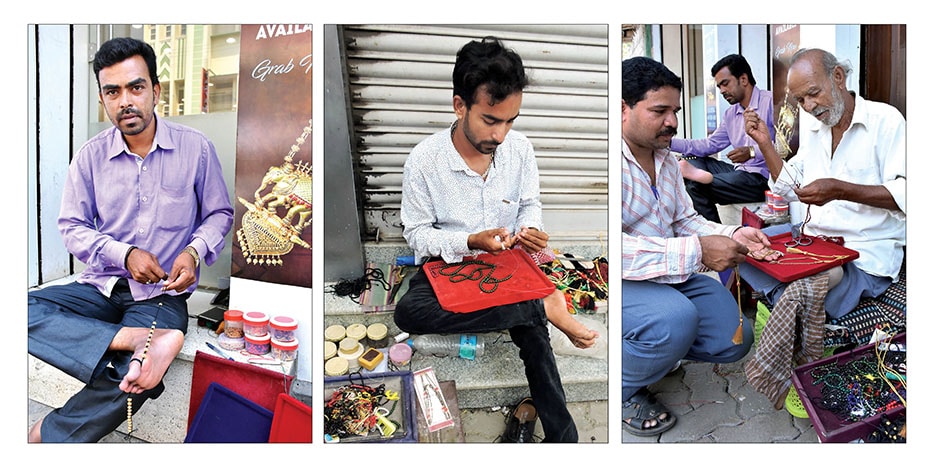
Master-craftsmen string beads for that alluring look: Mohammad Shaukat, Mubarak Pasha and Abdul Wajid display their expertise and dexterity in stringing pearls that adorn the necks of womenfolk, enhancing their beauty.

Nimble hands to the needle

One can actually see how the beads are dexterously moved from their nimble hands to the needle and string to create that exquisite design. These designs become a prized possession of a woman who proudly shares them with the world.

Many cultures have rich beadwork traditions and aesthetics and motifs can vary. Like other traditional craft forms, such as embroidery or weaving, beadwork symbolises visual language and messages that are passed down within a community or family. Their works simultaneously keep their culture’s traditions alive apart from providing them livelihood.

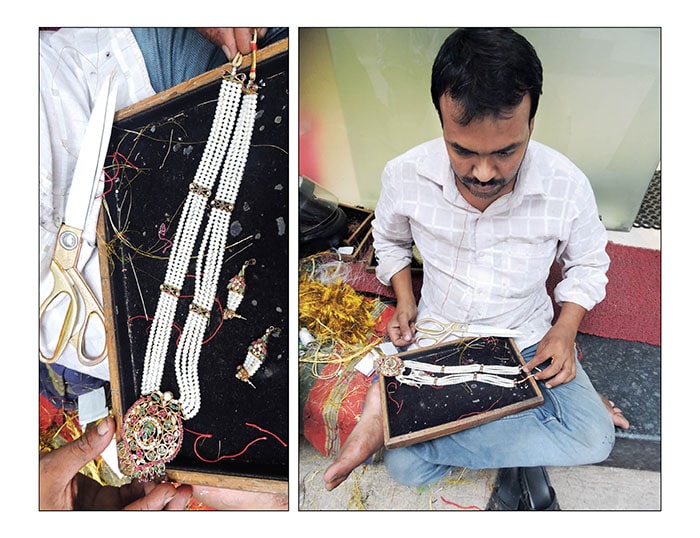
Syed Rafiq, Shahrukh and their pearl work.

Adding beauty to clothing

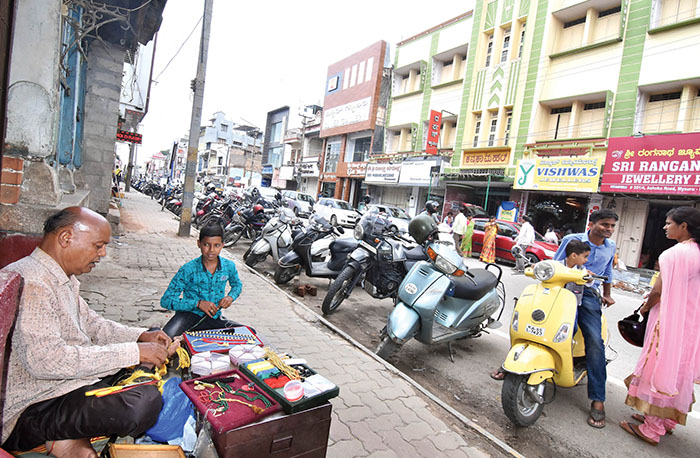
Embroidery has been the art form that adds beauty to clothing to express individual creativity.  Beadwork is respected as a traditional craft and there are amazing bead artists who are blurring the boundaries of art and craft, creating works of art that reflect rich traditions. The craftsmen on Ashoka Road, undeterred by the chaotic traffic and surging pedestrians, are busy threading, stringing and modifying a variety of ornaments as per the demands of their customers. Star of Mysore caught up with these beadwork artisans who are seen with their small silver boxes comprising velvet trays, colourful threads, strings, needles and scissors.

These artisans have been into this profession from generations and have been eking out their living on Ashoka Road, which was known as Jewellery Bazar during the time of erstwhile Maharajas.

Beads05MPOs20sept2019

Replacing threads and strings 

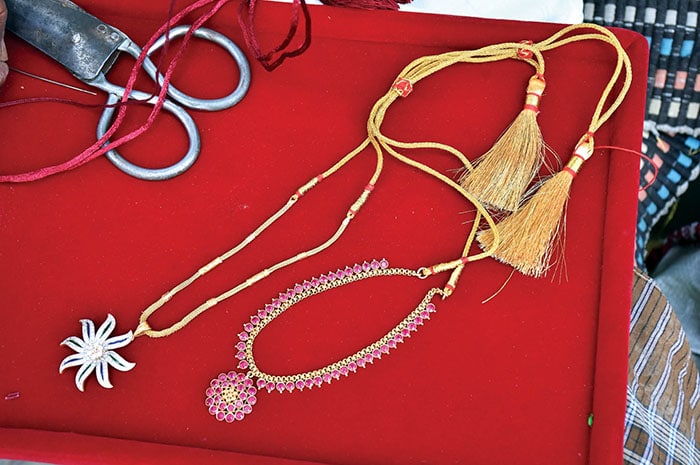
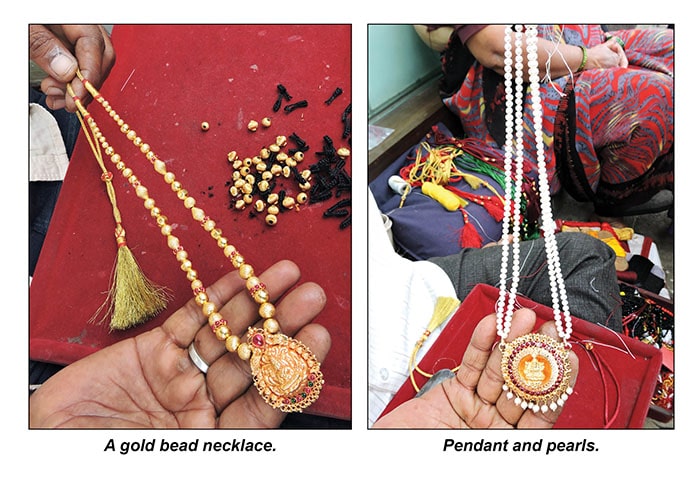
Bead-makers, also called ‘Patvegar’ or ‘Moti Puranewale’ in Hindi and ‘Mani Ponsouru’ in Kannada offer a range of services which include black beads stringing for mangalsutra, jaumala haar, white pearl stringing, kasina sara or galsar (gold coin necklace), lachcha, replacing threads and strings of necklaces, adding gold thread rope for gold necklaces, multiple bead stringing, replacing stones among others.

Various branded jewellery stores across the city also avail their services for stringing beads of precious stones such as emeralds, rubies and also semi-precious stones. Their service charges depend on the pattern, starting from mere Rs.30 and could go up to Rs.800 for real gem stones.

Zabiulla stringing antique real pearls set.

Passed on from forefathers

My forefathers have been into this profession from the past 60 years. I too picked up my beading needle and thread watching them do it since childhood. Our work is related to jewels so we sit near jewellery stores,” quips Syed Rafiq, one of the beadwork artisans with more than 30 years of experience.

He also adds that his father Nisar Ahmed is one of the oldest beadwork artisans and informs that his father had worked as a jewellery artisan even for the royals during those good old days.

ON A BUSY STREET: Abdulla and his assistant at work.

From Royalty to Commoners 

Mubarak Pasha, another bead maker who is into stringing from the past 20 years and also hails from a family of artisans told SOM: “My grandfather and my father got me into this line. I usually get customers who want me to string ‘kasina sara’ and ‘taali sara’. I charge between Rs. 30 and Rs.100.”

He also mentions that his father too had worked on the ornaments like the braid jewellery belonging to the royal family. When asked if he would pass on the craft to his children, he opines: “It is left to them to decide what they want to do”.

Delicate work: A woman waits to get her beads stringed.

Bringing good fortune

Little further away was a father-son duo busy stringing pearls on the same street. Abdul Wajid, who has 56 years of experience in this art says: “This is my livelihood and passion. The variety of beads that I work on not only suffices the aesthetic sense but has also religious angle to it. Genuine pearls were believed to bring in good fortune and were popular with the royals in olden days. Gradually common man took a passion towards them. Black beads are also known to fight negative energy.”

Abdul Wajid also adds that the most special work till date he has worked on is the jewellery belonging to the Palace.  Zabiullah, who was seen sitting opposite to the Arali Mara on Ashoka Road, has an experience of over two decades.

“This is a delicate art and we have to carefully string it, the love for jewellery in Mysuru can be judged from the presence of many jewellery shops. Customers keep me busy all day,” he says as he replaces a string of an antique pearl set.

READY-TO-WEAR: Shahrukh displays a finished ‘Jaumala haar’.

Time and cost saving

As we converse with these talented artisans, we noticed that many customers visit these craftsmen to avail their services. “I have come here to attach a coin pendant to the black beads for the ‘mangalsutra’ for my daughter who is getting married next month. Availing services here saves a lot of time and it is also low on cost,” says Gowramma, a locality resident.

Rehana Afroz reveals her reason for the visit. “The pearl necklace that I had once brought from Hyderabad was broken by my child and I am here to get it stringed again and also to change the back rope ‘Dori’ of my multi-layered beaded necklace.”

“I have purchased the beads and I want to get a ‘jaumala’ done here with knots and I also have to replace a stone in my ring,” says Kavitha, a housewife.

Beads10MPOs20sept2019

These beadstringers are available from 11 in the morning to 8 in the night at their respective spots. We salute these skilled craftsmen who eke out their living by sitting on the pavements beating all odds and help womenfolk enhance their beauty through their delicate and dedicated work.

source: http://www.starofmysore.com / Star of Mysore / Home> Feature Articles / by Shadaan Muneer / September 14th, 2019

Rocking At 72: Doordarshan News Anchor Salma Sultan Graces Ramp

Bhopal, MADHYA PRADESH / NEW DELHI :

SalmaSultanMPOs18sept2019

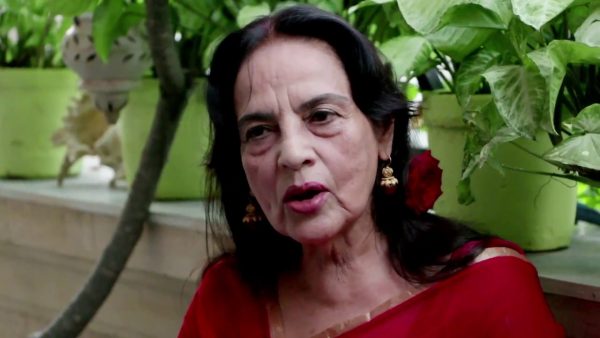
Salma Sultan , the iconic news anchor of the public service broadcaster, Doordarshan graced the ramp at the age of 72. The elegant lady mesmerised the audience with her dance  moves on Bollywood numbers including the R. Rajkumar’s movie song, ‘Saree kay fall sa.’

The event was organised by  Saree Sanskriti  in association with the Fashion Lifestyle Magazine. Celebrities  including Padma Shree awardee Shovana Narayan, graced the event.

Key Takeaways:

  • Iconic Doordarshan news anchor Salma Sultan walks the ramp at 72.
  • Sultan is best known for her news reading and her signature style – “Namaskar! Aaj kay samaachaar iss prakaar hain.
  • The event was organised by Saree Sanskriti in association with the Fashion Lifestyle Magazine.
  • Celebrities including Padma Shree awardee Shovana Narayan, graced the event.

Sultan was wearing a brown bordered saree along with some neatly tucked white flowers on her hair while using ‘jhumkaas’ as the elegant accessory. She managed to get a traditional look with a modern twist.

Saree Sanskriti

Along with being a new anchor, Salma Sultan is also keen on promoting the traditional Indian culture of Saree. She owns a clothing brand with the name, Saree Sanskriti. She herself is very famous for her sartorial style.

“I do not believe millennials have any problem wearing the saree, it is all about ensuring that they have confidence. When confidence is there you can pull off any attire,”

“It is a very happy occasion . Many people have come together to make this a successful event. I do not believe millennials have any problem wearing the saree, it is all about ensuring that they have confidence. When confidence is there you can pull off any attire,” Sultan said at the event.

Her style quotient

“We were our own fashion consultants  back then. Black-and-white TV offered us the facility to wear whichever colours we wanted to, but the onset of colour TV shattered it. A new sari a day I could manage, but matching blouses? No way. It was a pretty tall order. So, the idea of draping a sari over both shoulders came to my rescue and believe me…it works even now.”  said Salma Sultan while conversing with the Verve .

Sultan also gave some details about her style quotient to the Verve. She added, “The day when I plucked a red rose from my garden, I hadn’t the faintest idea that its story would become viral. Can you imagine that even now, the rose fever is unabated? Yes, it did give heartburn to some people helming affairs at that time, who issued memos and warnings but…let’s leave it at that. The important thing is that the rose lives on in the memory of viewers, and I feel grateful and humbled.”

Sultan is best known for her news reading and her signature style – “Namaskar! Aaj kay samaachaar iss prakaar hain.”

News reader par excellence

She worked for Doordarshan for almost three decades  from 1967 to 1997. After her retirement, she moved to directing serials on social topics for Doordarshan under her production house Lensview Private Limited. Some of her serials like Panchtantra Se, Suno Kahani, Swar Mere Tumhare and Jalte Sawal drew attention and indeed became very famous.

Her education

Salma did her schooling  from Sultanpur, Madhya Pradesh and did her graduation from Bhopal. She did her post-graduation in English from Indraprastha College for Women, Delhi. Simultaneously, she also gave the audition for an announcer on Doordarshan at the age of 23. She was born as second child to scholar and secretary in the Ministry of Agriculture Mohammed Asghar Ansari.

Picture credit: You Tube

Udisha Srivastav is an intern with SheThePeople.Tv

source: http://www.shethepeople.tv/ SheThePeople / Home / by Udisha Srivastav / September 18th, 2019

Breaking perceptions around design

Hyderabad, TELANGANA :

Hyderabadi Takbir Fatima is an architect, engineer and educator who is always on the lookout for projects that challenge her.

TakbirFatima01MPOs11sept20`9

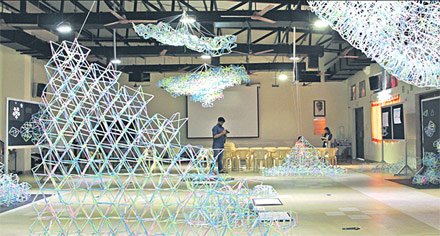
As part of Hyderabad Design Week, Takbir Fatima from Designaware is doing a series of workshops and installations leading up to the event. She is in the city to conduct workshops on design. “We’re experimenting with crowdsourcing the design process to bring together many minds to create something collectively.

Under the theme of Humanizing Design for Hyderabad Design Week, we are crowdsourcing through multiple activations leading up to the event, involving students, young designers, architects and children in designing installations and public art for Hyderabad,” says Takbir, who has completed her BArch from CSIIT School of Architecture & Planning (JNAFAU), Hyderabad, and an MArch (Architecture + Urbanism) from the Design Research Lab at the Architectural Association (AA) School of Architecture in London.

Born in Hyderabad, Takbir was shuttling on and off between Saudi Arabia and Hyderabad. She was inspired by one of the greatest architect in Hyderabad sparking her interest in the profession.

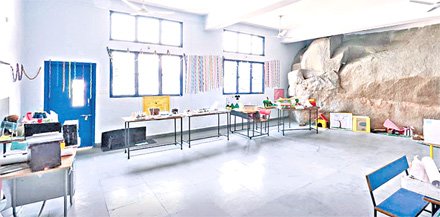
Highly creative, she has handled some challenging projects at a very low cost. One such project was a hilltop school located in Golconda. She explains, “Bright Horizon Academy is a charity school. The challenge was the Golconda fort, which has an outer wall and inner wall, which is a part accessible to the public.

TakbirFatima02MPOs11sept20`9

The outer wall has a very old settlement as old as the fort. All these houses share a common wall. Everything is on a hill, so for this particular site we had to completely sheer rock and boulders. Half of the site was on the upper part of the cliff and half made up the lower part. It was quite challenging to navigate the terrain.

And budget was an issue as it was a charity school. We designed a building which uses low energy as much as possible, and with lot of windows and natural light in the centre. There is sunlight and natural ventilation in every part of the building. It has been awarded the silver rating by the Indian Green Building Council in 2018.”

TakbirFatima03MPOs11sept20`9

For most of her projects here, Takbir follows Vastu in residential and commercial properties. “If the client is not particular, we do recommend the vastu, as the property will have a resale value,” says Takbir who was given the Telangana Young Architect award by the Indian Institute of Architects in 2016 and was also recognised as Emerging Architect of the Year by NDTV Design & Architecture Awards 2016.

Takbir feels that now there is lot of opportunities for design aspirants and she aims to bring design to as many people as possible. She wants to do away with the misconception that design is not affordable and not for common people. Currently, her company is handling a few residential projects, restaurants, series of workshops, etc.

source: http://www.telanganatoday.com / Telangana Today / Home> Personalities / by Madhuri Dasagrandhi / September 11th, 2019

Being Bohra in Chennai

Chennai, TAMIL NADU :

With their presence in the city for over 200 years, more than 1,800 families have found a home here. A walk through George Town reveals the community’s rich cultural stories.

Photos: Ashwin Prasath

Chennai :

Their favourite food is not biryani and they wear burqas in hot pink, forest green, bright blue and every colour one can imagine, except black. Meet the Bohras, a sect of the Shia Muslims whose history in Chennai dates back to more than 200 years.

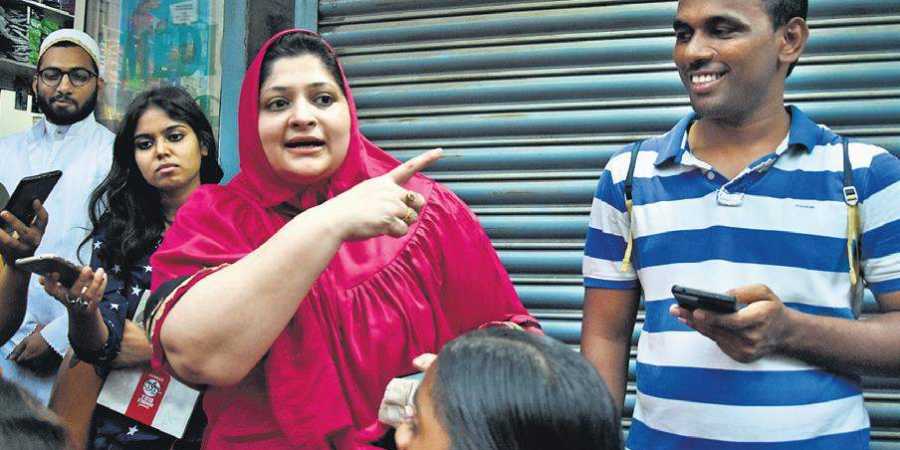
“The Bohra community originated in Yemen and later spread to India and Pakistan. In India, they primarily settled in Gujarat before spreading out to different cities. So, we have Gujarati influence on our food, language and traditions. We speak Gujarati with references from Persian and Arabic,” said Tasneem Kutubuddin dressed in a dark pink burqa or rida, their traditional costume. She was leading a heritage walk — Understanding the Bohras in the city — on Sunday at George Town.While women wear ridas that cover their head and body but not their faces,  Bohra men wear a three-piece white outfit and white cap called a topi with gold embroidery.

Bohri02CF27aug2019

Migrating to Chennai
Mulla Jafferji Ibne Mulla Ismailji was the first Bohra to come to Chennai. He travelled till Arcot in 1790 via the Malabar coast to join his uncle in the bangle business. He later migrated to Chennai in 1793 and set up a garment business in George Town.

“Whenever Bohras migrate to a city, if they are the first ones from their community there, they buy a land for cemetery and prayer. Also, each prayer area has a community hall attached to it where we all dine together. So, this was the first piece of land brought by a Bohra in Chennai,” said Tasneem pointing towards the Mohammedi Masjid in Angappa Naicken Street at George Town.

Chennai has three Dawoodi Bohra mosques — Mohammedi Masjid, Saifee mosque in Moore street, Mannady and the third one at Basin bridge.  Today, more than 1,800 Bohra families are living in the city and are primarily settled in Madhavaram, Royapuram and George Town. The Dawoodi Bohras are followers of the 27th Dai or high priest and can be found in about 40 countries around the world. They have separate administration offices in each city.

The MSB Matriculation Higher Secondary School at Thiruvalluvar Nagar in George Town is set up especially for the children of Bohra community. According to Tasneem, the school follows the Tamil Nadu State Board syllabus along with a Siyat Islamia curriculum.

“About 800-odd children study in this school. For the kids from the community who are studying in other schools, MSB offers a weekend programme to educate them on the history of the community and Quran,” she said.

Communal dining
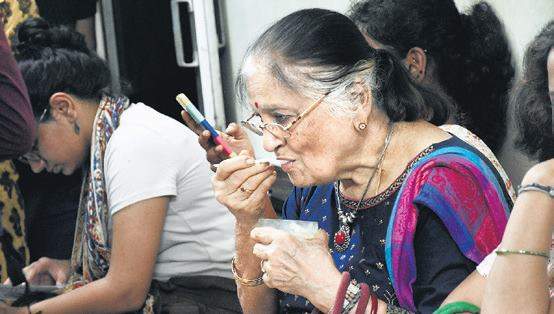
Food plays an integral part of a Bohra’s daily life. Eating from a thal is a tradition that still continues in many families. A thali is a large round metal plate, around which the family sits, helping themselves from the same plate, course-by-course, during every meal of the day. A lot of their dishes are influenced from the Gujarati cuisine.

Apart from non-vegetarian dishes like pulao and kebab, the cuisine boasts some unique vegetarian dishes including a cold baingan bharta made with curd and spring onion, sev ni tarkari in which bhel puri sev is cooked with onions, and their quintessential dal chawal palida, a combination of rice and dal served with a flavourful concoction of drumsticks, bottle gourd and kokum.

Unfortunately, the Bohra community does not have many restaurants serving the savoury dishes. But, to try their traditional sweets, head to Mannady Street to find sweet shops maintained by Bohris including Hatimy’s and Alambaradar.

Try some of their heady sweet treats like malida (a sweet made with wheat and jaggery), lacchka (a cracked wheat halwa, usually made on first day of the year of Bohra calendar), kalamro (a yogurt based rice pudding) and the famous malai khaja which is also called Bohri puff pastry.

An interesting concept among the Bohras are the community kitchens that are attached to the masjid. “The concept is similar to the dabbawalas in Mumbai. Food gets prepared early in the morning, packed in boxes and numbered. People collect their boxes and replace it with an empty box for the next meal. One needs to pay a nominal amount. Usually, the well-to-do families pay for four to five people, so that the poor can get food for free,” said Tasneem.

The concept of community kitchen began around five years ago when their religious head, Syedna Dr Mufaddal Saifuddin said that women must be freed from the kitchen. So, this kitchen makes lunch for the entire Dawoodi Bohra community across Chennai, every day. The rule is applied across every city and every country.

source: http://www.newindianexpress.com / The New Indian Express / Home> Cities> Chennai / by K V Navya / Express News Service / August 26th, 2019

This Kashmiri carpet maker brings Persian rugs to Chennai

Srinagar, JAMMU & KASHMIR / Chennai, TAMIL NADU :

SamiMeerMPOs23aug2019

You can expect Kirmani, Heriz and Isfahani rugs, kilims, and Pashmina shawls at an exhibition by Sami Meer, a third-generation Kashmiri carpet-maker

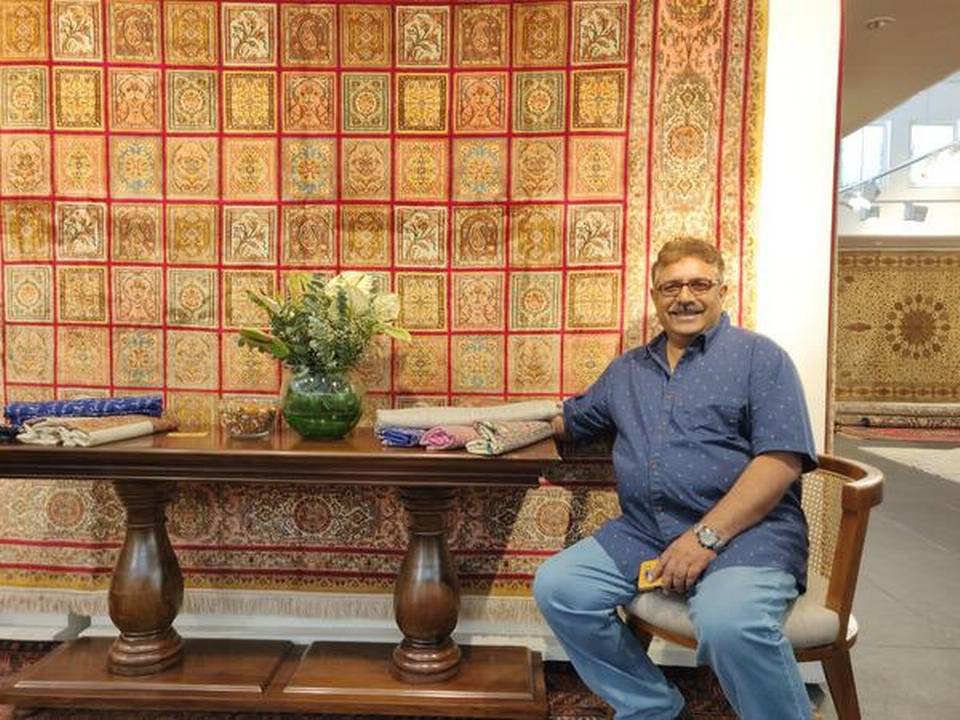
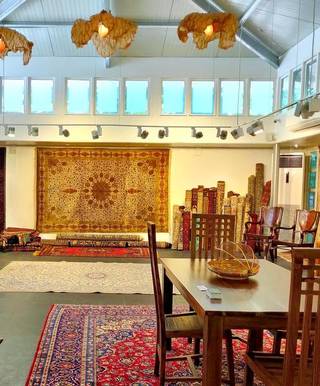
The interior of Folly at Amethyst today is decked up like a bride. Sunlight streaming in from a series of square windows on top bounces off the carpets that cover almost every inch of the space. It is Sami Meer’s, a third-generation Kashmiri carpet maker, exhibition that is on display.

After inviting visitors in with a handful of dry fruits, Sami unrolls a red carpet. “It’s a kilim,” he describes the woollen tapestry, “They are travel rugs, made by the Khanabadosh people; they are nomads who go from mountain to mountain with their sheep and goats.”

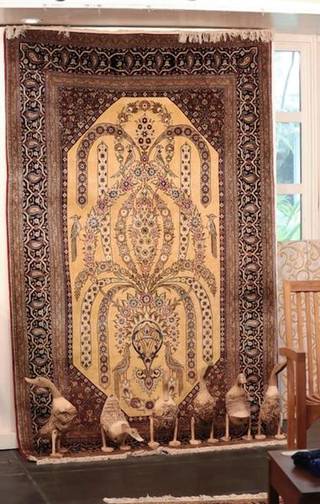
His collection of almost 60 carpets, kilims and pashmina shawls is hung on the walls, rolled into bundles and made to stand in the corners, and some laid out on the floor at Folly. “Those are original Persian rugs,” he points towards one wall. “Then we have Kashmiri silk ones,” he says, running a finger along a soft velvety baby blue carpet. “The Persian weavers who settled in Kashmir imparted their weaving techniques and designs to the Kashmiris,” he says. “The design may be Persian, but the silk workmanship is Kashmiri.”

SamiMeer02MPOs23aug2019

Sami sources his carpets from weavers in Iran, Balochistan in Pakistan, Afghanistan, Morocco and Turkey. All the carpets on display are hand-knotted, he informs us. “The knottage is so unique that a collector can identify which area it is from,” he says, flipping over two carpets to show the different stitches on their underside: “The first is from Isfahan, the second from Heriz.” Similarly, he goes on to show rugs from Kirman and Nain — areas in modern-day Iran.

He not only sources these rugs, but his shop, Virasat in Neelankarai, also offers repairs, servicing and washing options. Most of the servicing is outsourced to workers in Delhi and Srinagar. “I have grown up watching my grandfather and father weave such carpets at our home in Srinagar,” he says. He, however, moved to Chennai  owing to growing tensions in Kashmir in 1992. “We tried going home in 2010, but came back to Chennai in 2016 after the fallout from Burhan Wani’s encounter made it difficult for our shop to stay open.”

SamiMeer03MPOs23aug2019

“The price for each carpet depends on its size and quality; for the Persian ones, it depends on which area they were made in…” he says. The silk on silk Kashmiri rugs start from ₹25,000 and the Persian ones from ₹45,000. Here, in the city, he finds customers in people who are interested in learning about Kashmiri culture, and in collectors of Persian rugs. “I go to Srinagar once or twice a year,” he says. But for now, Chennai is home for Sami, his wife and two children.

Virasat’s exhibition is on today at Folly, Amethyst. To reach out to him, call 7550016911.

source: http://www.thehindu.com / The Hindu / Home> News> Cities> Chennai / by Sweta Akundi / August 14th, 2019

Indian-Australian entrepreneur Aamir Qutub wins esteemed award

Aligarh, UTTAR PRADESH / Geelong ( VICTORIA ) , AUSTRALIA :

siasat.com
siasat.com

Melbourne (Australia):

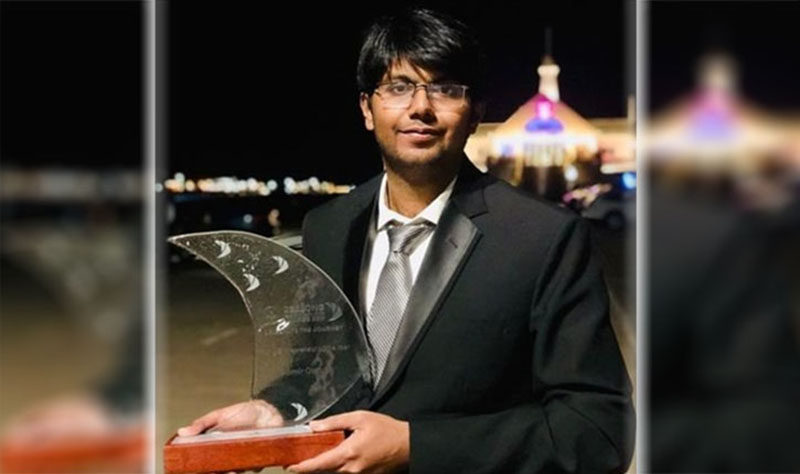
Indian-Australian Entrepreneur and an alumnus of Aligarh Muslim University (AMU), Aamir Qutub, has won the Young Entrepreneur of the Year award in the Business Excellence Awards (GBEA) category in Australia.

According to a press release issued by his firm, established in 1986, and managed by the Geelong Chamber of Commerce, the Business Excellence Awards are the oldest business awards in Australia.

“With a record number of entrants participating in the Geelong Business Excellence Awards, and going through a stringent judging process, the Awards are now more competitive than ever, ” says Ben Flynn, CEO Geelong Chamber of Commerce.

Aamir Qutub is the Founder and CEO of Enterprise Monkey (a digital solutions agency), Tech Investor and Co-Founder in 6 startups. Aamir is also a member of Ministerial Advisory Committee to the Minister for Planning in Australia.

He was appointed as the General Manager of ICT Geelong (local IT Industry Cluster) at the age of 25. He was the founding Secretary of Pivot Summit – Australia’s largest regional tech conference.

Aamir was brought up in Aligarh, Uttar Pradesh. He did his Engineering degree from Aligarh Muslim University (AMU) and immigrated to Australia at the age of 23 to complete MBA from Deakin University.

“I had applied for around 150 office jobs but couldn’t get any due to lack of experience in Australia. I used to work as a cleaner at the Avalon Airport, and distribute newspapers in midnight to pay for my living and fee,” Aamir has reportedly said.

In 2012, Aamir got an internship opportunity with ICT Geelong. Impressed with his performance and passion for digital transformation, he was asked by the board to step up as the General Manager of ICT Geelong at the age of 25.

At AMU, Aamir was elected as Geneneral Secretary of AMU Students’ Union (AMUSU) in 2011. As AMUSU Secretary, Aamir organized the first-ever recruitment drive in the university which resulted in the placement of 2000 students in 30 companies. His passion for technology contributed in the digitization of AMU campus by introduction of free WiFi and Smart Classrooms.

In 2014, Aamir founded Enterprise Monkey – a Web and App solutions company in his brother-in-law’s garage. “I started with $2000 in savings,” says Aamir who led his company to establish in 4 countries with YoY revenue growth of 300% in the first 3 years.

Enterprise Monkey has established itself as a leader in web and app space. It is now growing it’s leadership in Artificial Intelligence (AI), Augmented Reality and Internet of Things (IoT) space. The client list includes NASDAQ listed companies as well as seed stage startups.

source: http://www.siasat.com / The Siasat Daily / Home> News> India / posted by Qayam / August 02nd, 2019

Prof Shahid Ahmed selected as RIS Adjunct Senior Fellow

NEW DELHI :

Prof Shahid Ahmed, Department of Economics, Jamia Millia Islamia (JMI) gets an offer to be affiliated as Adjunct Senior Fellow at RIS, a policy research Institute under the MEA, Government of India.

Image result for images Prof Shahid Ahmed selected as RIS Adjunct Senior Fellow


Prof Shahid Ahmed, Department of Economics, Jamia Millia Islamia(JMI) has been offered to become Adjunct Senior Fellow at Research and Information System for Developing Countries (RIS), New Delhi, in recognition of his research work and contributions in the area of international economics.

About RIS

RIS is an autonomous policy research institute under the Ministry of External Affairs, Government of India. RIS Adjunct Senior Fellows are a select group of experienced scholars who are well recognised nationally and internationally in the area of international economics and development of policies related issues relevant to decision making in the developing world.

More about Prof Shahid Ahmed

Earlier, Prof. Ahmed has served as Senior Economist at United Nations Conference on Trade and Development (UNCTAD).

He has also served as Head, Department of Economics; Director, Centre for Jawaharlal Nehru Studies and Finance Officer of the university.

Prof. Ahmed has so far published 5 books and 93 research articles in national and international journals on several economic issues, particularly on multilateral trade negotiations, regional economic co-operation, South-South cooperation among others.

Prof. Ahmed has been given “Award of Excellence” for sterling achievements in the professional life and outstanding contribution to the society at large by MD University Rohtak in 2012 and AMP National Award for Excellence in Education in 2018 by Association for Muslim Professionals, Mumbai.

About JMI

Jamia Millia Islamia, an institution originally established at Aligarh in United Provinces, India in 1920 became a Central University by an act of the Indian Parliament in 1988. In Urdu language, Jamia means ‘University’, and Millia means ‘National’.

The story of its growth from a small institution in the pre-independence India to a central university located in New Delhi-offering integrated education from nursery to research in specialized areas-is a saga of dedication, conviction and vision of a people who worked against all odds and saw it growing step by step. They “built up the Jamia Millia stone by stone and sacrifice by sacrifice,” said Sarojini Naidu, the nightingale of India.

source: http://www.indiatoday.in / India Today / Home> News> Education Today / by India Today Web Desk  / New Delhi – July 29th, 2019

Dubai-based businessman PA Rahman dies

KERALA / U.A.E :

Rahman founded Mina Jebel Ali Canteen and Catering Services, the flagship firm of the Parco group of companies - supplied photo
Rahman founded Mina Jebel Ali Canteen and Catering Services, the flagship firm of the Parco group of companies – supplied photo

Rahman had been ill for nearly a year and he had flown to India for treatment.

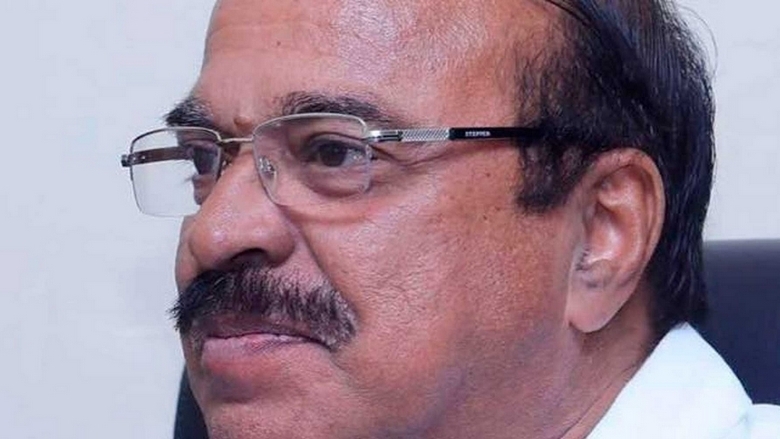
Dubai-based businessman PA Rahman, chairman of Parco Group, died in his hometown in the south Indian state of Kerala on Sunday night. He was 72.

OK Ibrahim, KMCC senior vice-president, told Khaleej Times that Rahman had been ill for nearly a year and he had flown to India for further treatment.

“Relatives and friends who are close to Rahman travelled to India two weeks ago to pay their last respects, as his health continued to deteriorate,” Ibrahim said.

Rahman founded Mina Jebel Ali Canteen and Catering Services, the flagship firm of the Parco group of companies.

Over the last 39 years, he, along with his brothers, built diverse business units with interests in hospitality, retail, manufacturing, real estate, contracting, jewellery, healthcare, restaurants and education, among others.

“These companies are all supported by a large team of dedicated professionals who develop and manage the activities of the group,” said Ibrahim.

He was a successful entrepreneur but, on top of his achievements, people knew him as a community leader who was always willing to help those in need. He did a lot of social work and opened education centres.

He had served as a member of the state council of the Muslim League and a director of the Dubai Middle East Chandrika. He also founded NAM College, Kallikandy, a general degree college located in Kallikkandy, Kannur district, Kerala.

dhanusha@khaleejtime.com

source: http://www.khaleejtimes.com / Khaleej Times / Home> Nation> Dubai / by Staff Reporter, Dubai / July 10th, 2019