Category Archives: Business & Economy

The artist who decided to go abstract in the symmetrical world of ajrakh

Ajrakhpur (Kutch ), GUJARAT :
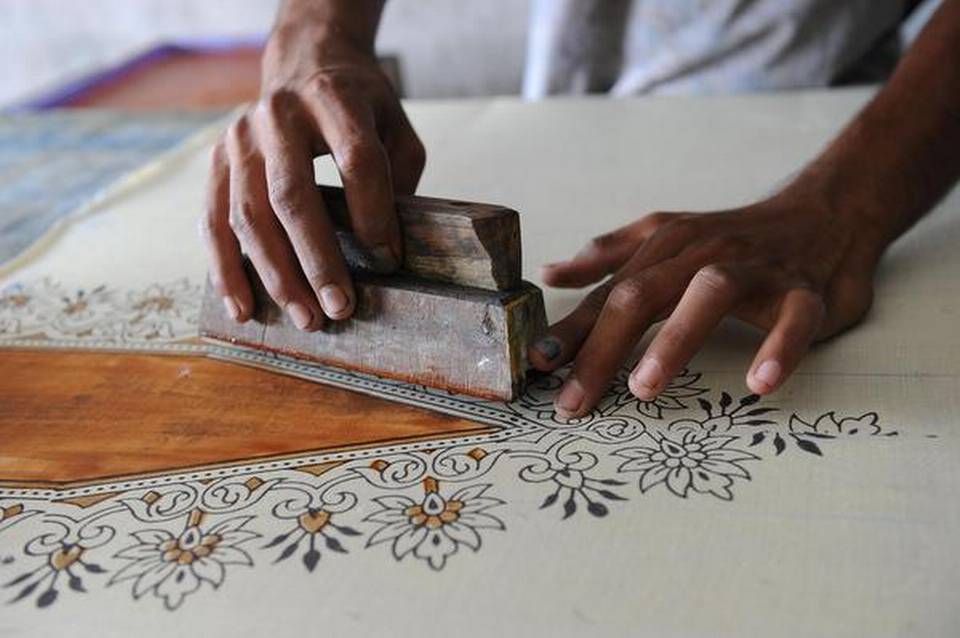
An artisan works on one of Khatri’s unique asymmetrical designs. | Photo Credit: Vijay Soneji

Khalid Amin Khatri’s favourite theme is clouds floating atop mountains

He grew up in a world of symmetry. The perfectly synchronised movement of wooden blocks from a plate of colour onto long stretches of cloth, and the accompanying sound of a regular, dull beat, are deeply ingrained in Khalid Amin Khatri.

This is, after all, Ajrakhpur, in the Kutch region of Gujarat , and he was born the son of generations of ajrakh printers. Khatri, however, was bored by the regularity. He wanted to capture his imagination on a piece of cloth, to bring the clouds and the mountains, shrines and monuments down to his canvas.

So that’s what he did.

Khatri, 26, calls himself an artist — more than an artisan. A step away from the traditional ajrakh block-printing that relies on uniformity of design, Khatri’s work is dominated by asymmetricity. But it’s more than that. “Each of my creations has a theme,” he tells us, as he unfolds piece after piece, each hand crafted, each guided by a theme. Unlike the traditional form that mostly prints floral motifs and geometrical designs, Khatri’s designs are guided by his imagination. His favourite theme, for example, is clouds floating atop mountains.

Different strokes

Showing us one such piece — it has a river, flowers, bushes, and yes, clouds and mountains — Khatri recalls a time, not even 10 years ago, when other artisans in his village would look at him with dismay. “‘Why are you hell-bent on destroying the art form,’ they would ask,” he says, smiling. “But I didn’t care. I always knew if I was going to do Ajrakh, I would do something different.”

Khatri was a child when the 2001 Bhuj earthquake destroyed their village, Dhamadka, and the entire community of artisans moved to Ajrakhpur. Most villagers went back to their craft, but Khatri’s father, Amin Khatri, stopped working on ajrakh and instead opened a grocery shop.

He did not however discourage his son from learning the art form in his uncle’s workshop. But traditional ajrakh could not capture the boy’s interest, and he ran away to Mumbai. He was just a teenager and he had found himself a job as a telemarketer.

“I lasted just six months there,” he smiles sheepishly. “I decided to come back to my world — but to innovate and leave my mark.” In 2010, his uncle, Dr. Ismail Khatri, encouraged him to study textile design at Kala Raksha Vidyalaya.

During the one-year course, one theme caught Khatri’s fancy: concept design. “Concept development was completely new to me. We were taught how to develop a theme; it was aligned to what I wanted to do,” he says.

Dargah on cloth

Khatri’s first finished product as a student was a black stole on which he made mountains and clouds. “A lady from the U.S. had come to see our products and when she saw my creation, she said my talent was qudrati, that I was a natural, like M.F. Husain. I didn’t even know who Husain was then,” he says. The stole sold for ₹50,000.

Since then, Khatri’s visually arresting work has gained widespread popularity, both among Ajrakhpur’s regular customers and new buyers. His work is unusual, for instance, a stole with a vivid image of Mumbai’s Haji Ali Dargah, complete with the half-submerged road leading to it. Or the white Rann of Kutch printed on a scarf. He also does a lot of abstract work, both on silk — modal, mashroo, etc. — and on cotton.

“I spend a lot of time on each piece and make sure it is unique. I take at least two hours to print a two-metre piece of cloth, when traditional ajrakh block-printing would have taken 10 minutes,” he says.

He gets wooden blocks made for every design and theme, and uses paper to cover portions of the cloth in order to break the symmetry; he hand-paints some as well. This means that unlike the traditional six metre long ajrakh prints, he usually does stoles, scarves and dupattas. “But I recently got an order for a cotton sari and I did that,” he says.

Khatri has travelled across the country for exhibitions and his wares are displayed at fashion shows. A lot of his orders come from overseas. “These,” he says, showing a pile of abstract art stoles on his bed at home, “are ready to be shipped to a textile designer and collector in the U.S.”

Khatri’s work was exhibited at the V&A Museum in London. And he is renowned enough for students from design schools like the National Institute of Fashion Technology (NIFT) and M.S. University (Vadodara) to visit him for learning.

Asked about his future plans, Khatri looks up for a second and then smiles. “I don’t think too much about the future. I enjoy doing what I do. Like, right now, I want to work on a piece that celebrates Delhi, its monuments and landmarks,” he says. His father, who now helps him in his workshop, nods approvingly.

The author is a Gujarat-based freelance journalist.

source: http://www.thehindu.com / The Hindu / Home> Sunday Magazine>  Focus> Society / by Azera Parveen Rahman / June 29th, 2019
Dr Tausif Malik: Entrepreneur, maverick, evangelist and artist

Pune, MAHARASHTRA / Chicago,  U.S.A :

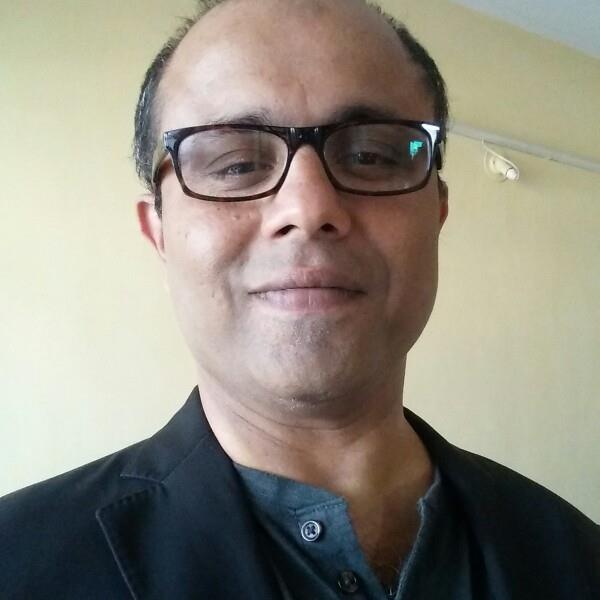
The new treasurer for Democrats Abroad India, Dr Tausif Malik is the founder of America’s largest community-based Spelling Bee competition (muslimspellingbee.com). The Indian-American social entrepreneur brings a tremendous amount of experience and knowledge to the job; he is the pioneer in creating branding through recruitment advertisement of IT clients in the mid-90s. Connected to India engaged with him to know about his journey from Pune to Chicago and back to Pune again. Here are the excerpts:

Dr Tausif Malik - treasurer for Democrats Abroad India.
Dr Tausif Malik – treasurer for Democrats Abroad India.

CtoI: Your LinkedIn profile says you are an entrepreneur, maverick, evangelist and an artist. How do you manage to be good at so many things?

Tausif Malik: According to me, all my personality attributes are interrelated; for example, one has to be a maverick to take the risk to be an entrepreneur, you need to be an artist to create an image about your work and evangelist to promote your work and business.

CtoI: What is your vision as the new Treasurer for Democrats Abroad India?

Tausif Malik: My vision as an elected board member for Democrats Abroad India (Democratic Party USA’s International chapter) is to create awareness amongst Americans living abroad that they can register and vote for city, state and federal elections through a vote by mail option. America is one of the few countries which offers this option to its citizens, so Americans living in any part of the world can participate in elections. Many Americans living abroad are not aware of these rights.

Currently, America is getting affected on a daily basis due to incompetent leadership. My hope is more Americans living abroad get registered and vote by mail and elect competent candidates.

CtoI: Please tell us in detail about your recent ventures; Muslim Spelling Bee, Muslim Science Bee, Muslim Math Bee, Muslim Geography Bee and Muslim History Bee.

Tausif Malik: The Muslim Spelling Bee was started in 2012 with the intention of being the first-ever spelling competition specifically meant for Muslim students. The competition is open to students of all ethnicities and religious denominations. The main impetus for creating the bee was to provide an opportunity for Muslim students between the ages of 8 and 14 to have such a contest.

All other major minority groups in the US have their own spelling bees, but Muslims did not, hence, I decided to go ahead and start one. It was during the month of Ramadan in 2011 that the idea for the spelling bee occurred to me. I started getting the word out with local friends and community leaders in the Chicago area, but soon found that I was being inundated with requests for more information from organisers around the country. This was surprising as I had only sent the information out to a few people in the local area. I really did not anticipate the kind of level and support this idea got from all over the US.

In 2012, the first iteration of the Muslim Spelling Bee was held, with 460 students participating from cities all over the nation. The bee currently takes place in 11 different cities, with some 55 community organisations coordinating their own regional competitions. These competitions are divided into four different groups, labelled A through D, and each one has several winners who rank from 1-3. Each of the groups is of a different age level: 0-7, 8-9, 10-11, and 12-14 years of age. The winners then advance to the championship round in Chicago.

Two contestants in 2013 were even Hindu students from India, a great sign of how widespread the reach and power of the spelling bee really is.

Dr Tausif Malik: Entrepreneur, maverick, evangelist and artist
Photo courtesy: Dr Tausif Malik

CtoI: You had your initial education from Pune, India and then you moved to Chicago, US, and now you are back to Pune. What brought you back to your roots? Please tell us about your journey and experiences.

Tausif Malik: I was born and raised in Pune (Maharashtra) and now I’m based out of Chicago. I did my schooling from Bishop’s School Pune, studied at Poona College (11th to M.Com) and Institute of Management Education, Pune (PGDBA). I did my Doctorate in Business Administration (DBA) from Argosy University, Chicago.

I emigrated to Chicago in 2007 to fulfil the dream of my late father Ata-ur-Rehman Malik, who believed that I can have a great future in the US. I returned to India in 2015 to take care of my ailing mother, during that time I launched various startup festivals, including the All India Muslim Business Startup Network (AIMBSN.com), GCC Startup Fest (GCCStartupFest.com), India Startup Fest (IndiaStartupFest.com), GCCStartup.News (GCCStartup.News) and Schoolpreneur.biz, in an effort to empower individuals to achieve economic liberation and benefit from India’s government initiatives Make in India, Digital India, Skill India, Standup India and Startup India.

CtoI: In a sentence describe your life as an Indian-American.

Tausif Malik: It’s actually a great combo, being part of India, the largest democracy, and America, the oldest democracy. I love both countries because they gave me a great platform to excel personally and professionally. Life is exciting as I am living as an American expat in India and in US, I was living as an Indian expat.

CtoI: Do you think that the xenophobia which has engulfed America, which started during the elections and continues post the election of President Trump, will settle down? Or is this the new America?

Tausif Malik: I don’t know how far this will go and how it will impact in the long term. But it has truly rallied Americans under one banner, and everyone is standing shoulder to shoulder with their fellow Americans. After the Muslim ban, Americans stood with their fellow American-Muslims across US. I have never seen this happening anywhere in the world. This xenophobia, in fact, has pushed many American-Muslims to contest city, state and federal elections and they have got a lot of support from fellow Americans. I also contested for the same reason.

CtoI: You did your doctorate in Chicago. Please share your achievements and experience as an Indian-American.

Tausif Malik: I was the pioneer in creating branding through recruitment advertisement of IT clients in mid-90s. I had developed and executed branded recruitment advertisement campaigns for Infosys, Geometric Software Services, Scala Mindworks, ITB India, Veritas Software India and others. I had co-founded Crossover Software with India’s no #1 pop star Lucky Ali and later moved to Sultanate of Oman and established Oman’s first PR agency SIMPA PR and Press Club of Oman. I was invited to co-author a book Doing Business with Oman, which has been selling since 2002. I headed major advertising agency networks in the Middle East and India. I teach at major MBA and MassComm Institutes, and a speaker at major startup events and mentors startups.

My Achievements:
1.
Nominated and shortlisted for prestigious Ellis Island Medal of Honor, USA 2016.
2. Past Nominated for Sheikh Muhammad Al Makhtoum ruler of Dubai, UAE promoted Prestigious Global Islamic Economy Award – Dubai Government in association with Thompson Reuters.
3. Panellist with The Guardian Newspaper UK.
4. Community Member on Illinois Muslim Council by Governor Pat Quinn.
5. External Review committee member University of Wisconsin School of Architecture.

CtoI: You are inclined towards start-ups. Can you share your ideas on marginal groups (Dalits and Muslims) still lagging behind?

Tausif Malik: Yes, startups help the youth and individuals through empowerment, as it provides employment and a source of income. But nowadays, the way they are established and operated is highIy unprofessional as many are there for the quick money. But consolidation will happen before long and they will change from boys to men.

As per the Indian census, Muslims constitute 13-15 % of the population and they best way to connect them to the mainstream is through the Prime Minister Narendra Modiji’s policies such as Make in India, Digital India, Skill India, Standup India and Startup India.

These programmes can help Muslims in India to earn income, create income and create economic growth. I have hosted two different events in 2016 and we have generated a large business amongst the attendees. Our next event, All India Muslim Business Startup Network (AIMBSN.com), will be hosted in July 2017 in Jaipur. We are also setting up incubators and innovation at minority institutions, so we can inform people about the startup ecosystem, Make in India, Digital India, Skill India, Standup India and Startup India and enrol more Muslim entrepreneurs.

Also, we will be hosting All India Muslim Business Startup Network (AIMBSN.com) at global locations where are sizeable Indian Muslims, such as London, Dubai, New York, Chicago, Singapore and Australia. As many Non-resident Indians (NRIs) Muslims want to establish businesses in India, invest in India and support Indian Startup Ecosystem. Hence, our All India Muslim Business Startup Network (AIMBSN.com) connects the Indian Muslims diaspora with entrepreneurship & Indian Startup Ecosystem.

source: http://www.connectedtoindia.com / Connected To India / Home> News> USA / by Garjma Kapil / April 20th, 2017

Azim Premji to retire as executive chairman and MD of Wipro by end of July

Bengaluru, KARNATAKA :

azimpremjiMPOs06jun2019

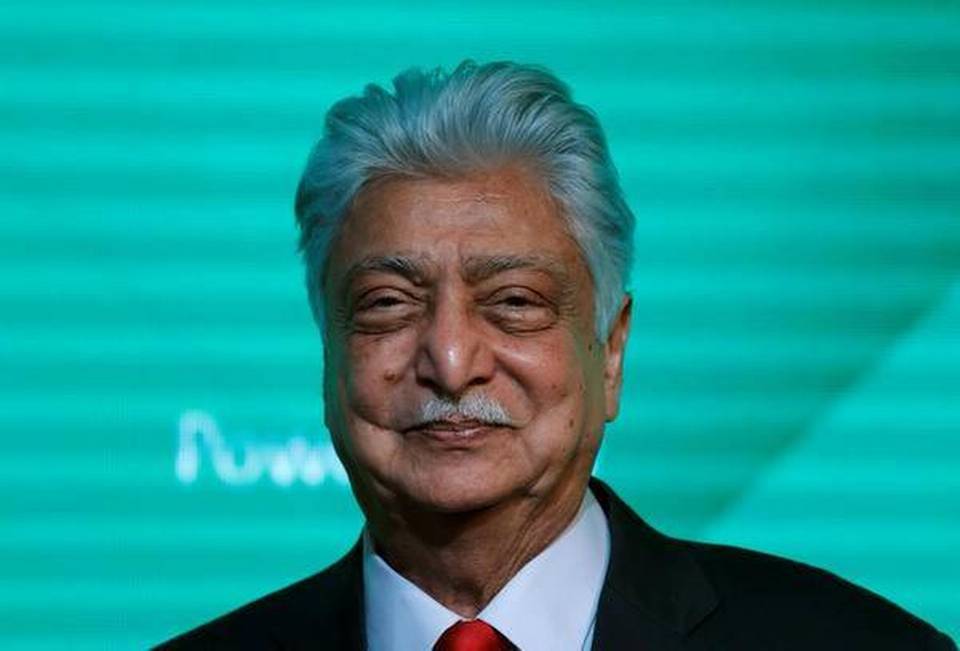
IT major Wipro founder Azim H. Premji, who turned a small maker of vegetable oil into a $8.5 billion software behemoth, will retire as the company head by July-end and handover reins of the firm to his son, Rishad.

Mr. Premji, who turns 74 next month, will retire as executive chairman upon the completion of his current term on July 30, 2019, after having led the company for 53 years, Wipro said in a statement.

He, however, will continue to serve on the board as a non-executive director for five years till July 2024 and has also been conferred the title of founder chairman.

Wipro board also announced that chief executive officer and executive director Abidali Z. Neemuchwala will be re-designated as CEO and managing director, while Rishad Premji will be re-appointed as whole-time director for a period of five years with effect from July 31, 2019, to July 30, 2024. Mr. Rishad Premji will be designated as executive chairman.

These changes will be effective July 31, 2019, subject to shareholders’ approval.

₹52,750 crore for philanthropic activities

A recipient of Padma Bhushan and Padma Vibhushan awards, Mr. Azim Premji now plans to devote more time for philanthropic activities.

He had, in March 2019 gifted an additional ₹52,750 crore of the company’s shares to support philanthropic activities, making it the most generous donation in the nation’s history.

About 34% of shares held by companies controlled by Mr. Azim Premji, India’s second-richest person, were irrevocably renounced and earmarked to the Azim Premji Foundation, taking the total donations to over ₹1.4 lakh crore.

Mr. Azim Premji’s Foundation, which works in the education sector and supports over 150 non-profits serving under-privileged with financial grants, has 67% of economic ownership of Wipro.

‘Pioneers of Indian technology industry’

“Azim Premji, one of the pioneers of the Indian technology industry and founder of Wipro Limited will retire as executive chairman upon the completion of his current term on July 30, 2019 after having led the company for 53 years. However, he will continue to serve on the board as non-executive director and founder chairman,” Wipro said in a statement announcing the top deck changes.

Mr. Azim Premji transformed a small hydrogenated cooking fat firm to a $8.5 billion global tech titan that is counted among India’s top IT exporters and also led the transformation of Wipro Enterprises into a global FMCG, infrastructure engineering and medical devices powerhouse, with revenues of about $2 billion.

He will remain the chairman of Wipro Enterprises and continue to chair the board of Wipro-GE Healthcare, the statement added.

“It has been a long and satisfying journey for me. As I look into the future, I plan to devote more time to focus on our philanthropic activities. I have great confidence and trust in Rishad’s leadership to steer Wipro in its next phase of growth as we move forward,” Mr. Azim Premji said.

‘Unflinching commitment’

Commenting on the changes, chairman designate Mr. Rishad Premji said Wipro has, over the decades, demonstrated that success can built on the foundation of strong values and uncompromising integrity.

“This is a testament to the spirit and dedication of thousands of Wiproites. I am very excited about our future and the opportunity to create value for all our stakeholders in these transformative times for Wipro and the technology industry,” he said.

Ashok S. Ganguly — independent director and chairman, Board Governance, Nomination and Compensation Committee at Wipro — said Mr. Azim Premji’s “unflinching commitment” to values made him an exemplar of how business and ethics can and must go together.

“His exceptional generosity makes him one of the greatest philanthropists of our time,” he added.

Mr. Ganguly further said that Mr. Rishad Premji’s understanding of the global technology industry, strong strategic orientation and diverse leadership experience make him the “right person to guide Wipro”.

“He is also best positioned to represent the interests and fundamental social purpose of the largest shareholder of Wipro,” Mr. Ganguly noted.

source: http://www.thehindu.com  / The Hindu / Home> Business / by  PTI / Bengaluru – June 06th, 2019

Know why this haleem stall is a favourite in Visakhapatnam

Visakhapatnam, ANDHRA PRADESH :

Zubair01MPOs29may2019

Sheikh Zuber and ‘master’ Rasool Bhai describe the Ramzan-special haleem they cook that has earned them considerable fame

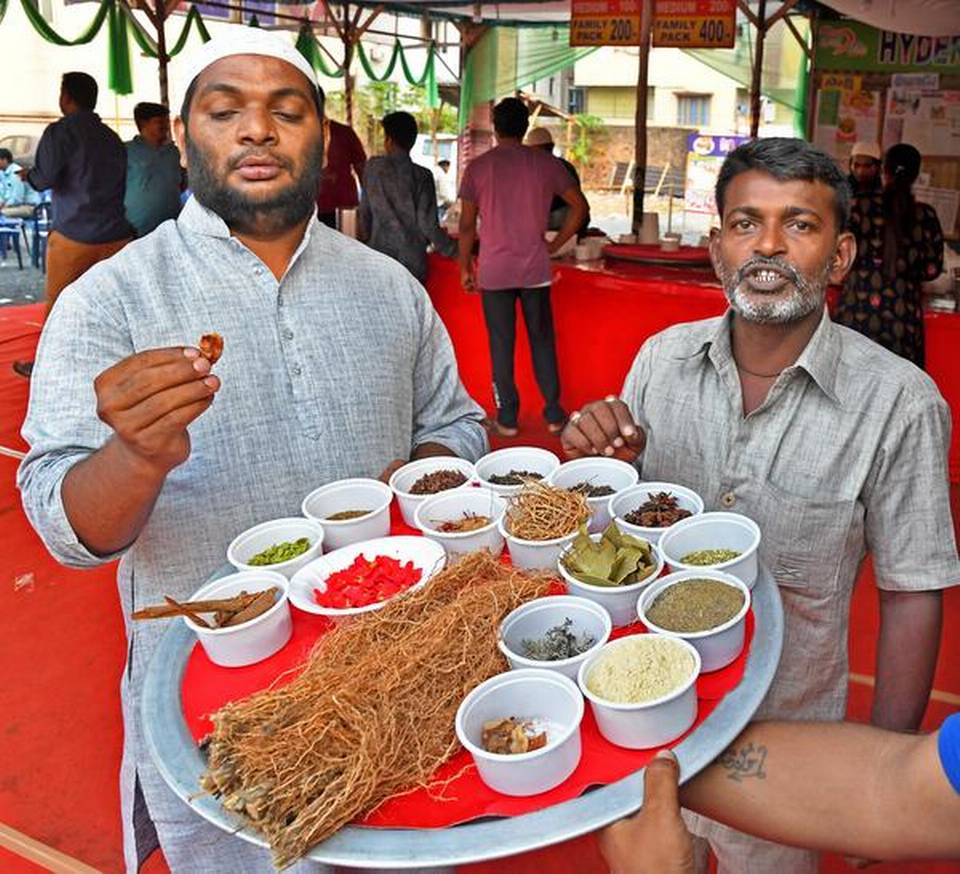
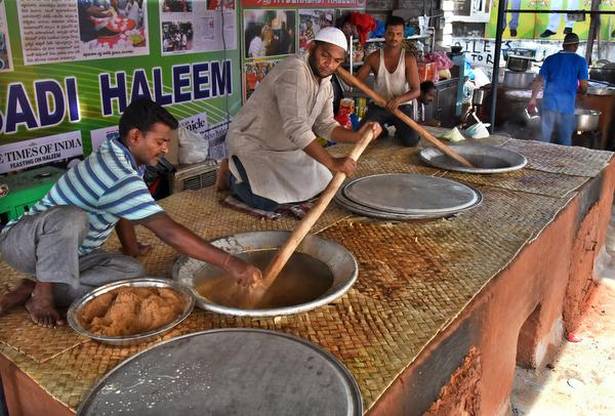
Through the cacophony of Jagadamba Junction one can still hear the call to prayers from the Macca Masjid. I am standing at the ‘Dil Se Hyderabadi Haleem’ stall where Sheikh Zuber and Rasool Bhai with two big wooden ladles stir something aromatic in the two huge cauldrons. It’s the holy month of Ramzan and in less than an hour’s time this stall will be teeming with people, waiting to be served one of the the most sought after haleems in the city.

Zubair02MPOs29may2019

In the 10 years it has been here, the demand for haleem has only gone up, says stall owner Sheikh Zuber. “We make haleem with 25 kilograms of mutton and 70 kilograms of chicken every day,” he says as he prepares to ladle the creamy haleem from the cauldron into small aluminium containers.

The process of making this Ramzan special dish is laborious and time-consuming. It requires physical strength and an ability to tolerate the fiery heat generated by the cooking food .

Zubair03MPOs29may2019

When Sheikh first set up his stall, it was not even half the size of what it is today. He says, when he started, all he wanted was to bring the flavour of the authentic Hyderabadi haleem to Visakhapatnam. In the initial four years, he offered just chicken haleem as it was more economical. “I hardly used more than 20 kilograms of chicken every day. At that time the city had just about a handful of haleem stalls. But over the years more stalls came up,” he says. Today, the bylanes around Jagadamba Junction have a festive feel during Ramzan and the celebrations are centred around this delicacy.

Sheikh attributes the magic of his haleem to haleem master Rasool Bhai who always “wields his magic”. Growing up in Hyderabad, Rasool learnt to perfect this dish from an early age. Even after three decades of experience he is never complacent. His job begins at midnight once the cauldrons are cleaned and prepared for the 28-hour cooking process. Assisting him are two other junior haleem masters and a team of workers who work through the night.

Mutton and chicken, sourced from local vendors, are put to boil with the potlimasala in the cauldrons. “The secret to the best haleem flavour is trapped in this masala,” shares Rasool. Each haleem master has a potli masala, which includes cardamom, black pepper, shah jeera, rose buds and other ingredients.

_________________________

Best flavours in town
  • Dil Se Hyderabadi Haleem – Jagadamba Junction
  • Nawabi Haleem – In front of Macca Masjid and Siripuram (opp. HSBC)
  • Nizam’s Kitchen Haleem – Jagadamba Junction
  • Ramzan Specialities – Hotel Green Park

_________________________

The meat is boiled for about 24 hours and then put on ‘dum’ for a couple of hours. This is accompanied by periodic rounds of breaking up the meat with the wooden ladles. Sheikh and Rasool keep a watchful eye on it and even take turns with the ladles. Once the creamy meat is ready, it is served with a garnish of caramelised onions and cashews. “It is worth all the hard work when we see the satisfied smile on our customer’s face,” says Sheikh. His stall draws people not just from across the city, but even from neighbouring districts. Krishna Chaitanya, an engineering graduate who is a regular at Sheikh’s stall describes it as a “rich and deliciously spicy dish that makes it a great evening snack.” The haleem is served from 4 pm onwards and on most days it is sold out by 7 pm.

Sheikh also serves paya roti in his month-long Ramzan menu and kaddu ka kheer.

(Living Vizag is a weekly column that profiles people who make the city special, and explore it through their eyes.)

source: http://www.thehindu.com / The Hindu / Home> Life & Style> Food / by Nivedita Ganguly / May 15th, 2019

This firm ensures you don’t step into someone else’s shoes

Bengaluru, KARNATAKA :

The startup makes bespoke shoes for customers, offering a wide array of designs to choose from

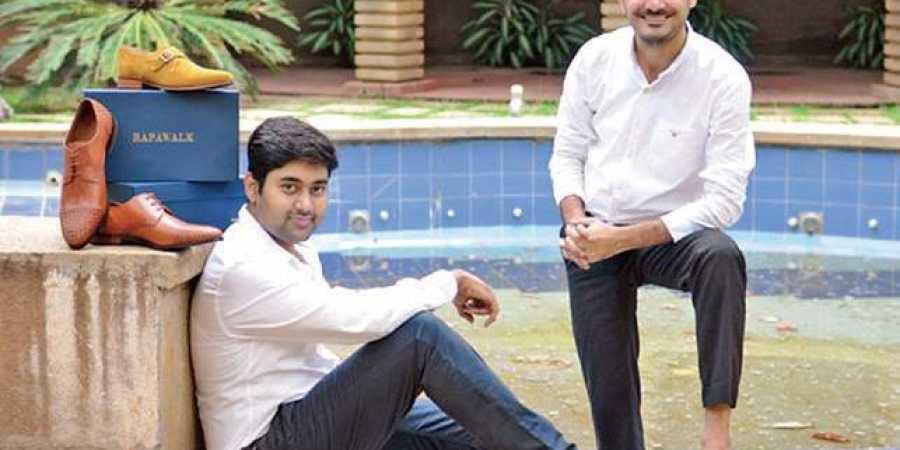
Rapawalk is an one-year-old brand launched by two 29-year-old IIM-A graduates Aravind Maddireddy (left) and Kashif Mohammad

Bengaluru :

Men, if you feel like the choices in a retail footwear store don’t match your taste, you can design your own pair of oxfords, derbys, mocassins, boots or whatever may be your style in a size that fits you perfectly. Rapawalk, a year-old brand launched by two 29-year-old IIM-A graduates Kashif Mohammad and Aravind Maddireddy, is all about giving a buyer a range of designs in shoes to choose from and customise to the required size and fit.

“In India alone, about 10 different foot profiles exist. A standard size cannot fit all,” says Mohammad, who along with Maddireddy, spent 18 months doing research on foot profiles, sizes, designs and fitting to cater to the specific needs of the Indian population. Rapawalk offers two range of shoes: An essential collection, which is priced between `2,000 and `3,500 and a premium range, which is priced above `5,000. They currently outsource material from Italy and Argentina and have set up two manufacturing units in North and South India, the principal one being located in Bengaluru.

A team of designers and artisans run the show with equipment carefully curated and accumulated from around the world. The founders are driven by the idea of providing a seamless fitting mechanism for shoes that are, according to them, an ideal part of every outfit.

“We’ve built a steady base of 1,500 customers who buy from us regularly. The response has been good after we recently launched the casual wear range. Leather sneakers customisation is on the cards next,” added Mohammad.To place your order, book an appointment at www.rapawalk.com.Alternatively, you can place your order online on the website or at Myntra, the e-commerce platform the company has recently partnered with.

Why Rapawalk?

The duo was inspired by the ‘Rapa Nui’ islands in the pacific. These islands are surrounded by many types and forms of crustaceans that change size, form and colour if under threat. Size, form and color customisation is what the brand goes by, thus the name Rapawalk.

source: http://www.newindianexpress.com / The New Indian Express / Home> Cities> Bengaluru / by Eva Mathews / Express News Service / May 28th, 2019

Jahanara Begum: The Forgotten Mughal Princess Who Designed Chandni Chowk

DELHI :

She was one of the most powerful women of medieval India, a Mughal princess like no other. And yet, her extraordinary story remains lost in the pages of history.

In an unassuming part of India’s capital city, amidst winding alleys lined with attar and chadar sellers, lies the 800-year-old dargah of Hazrat Nizamuddin Auliya—one of the most revered saints in Sufism. From dusk to dawn, thousands of devotees throng this bustling complex to pay their respects.

Yet, few know that Delhi’s most famous Sufi shrine is also home to the tomb of one of the most powerful women of medieval India, Jahanara Begum.

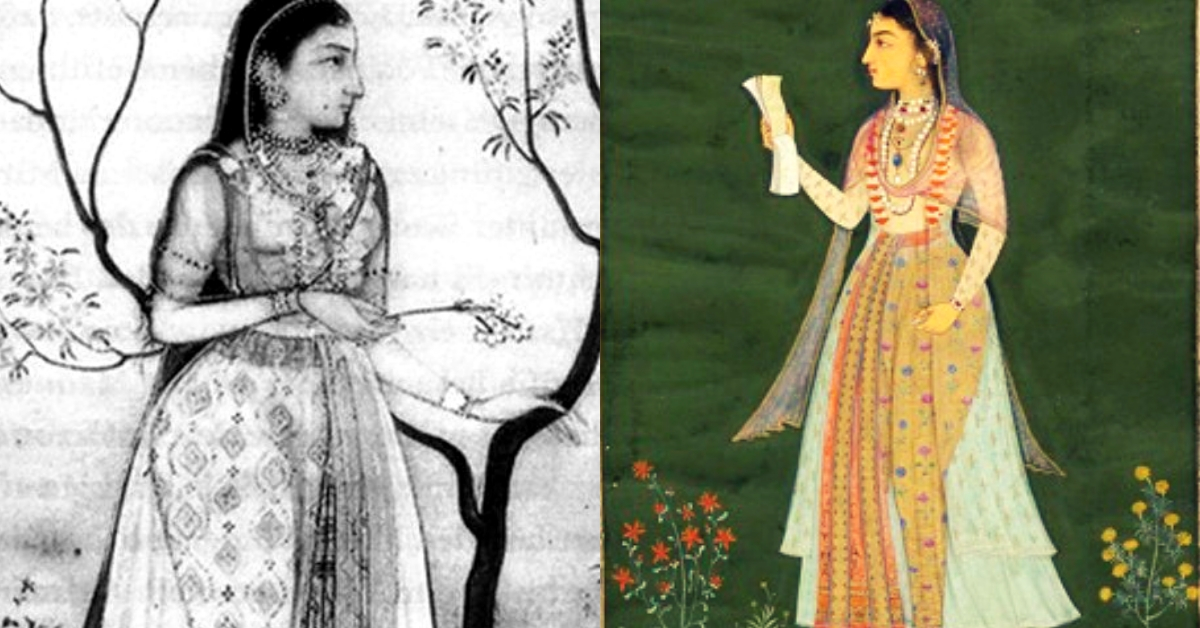
A writer, poet, painter and the architect of Delhi’s famous Chandni Chowk, Jahanara was a Mughal princess like no other.

Portraits of Jahanara Begum. Source: Wikimedia Commons

This is her story.

The eldest child of Emperor Shah Jahan and his favourite wife, Mumtaz Mahal, Jahanara was born in Ajmer in 1614. Growing up in one of the richest and most splendid empires in the world, the young princess spent her childhood in opulent palaces, humming with family feuds, battle intrigues, royal bequests and harem politics.

As such, she was well-versed in statecraft by the time she was a teenager.

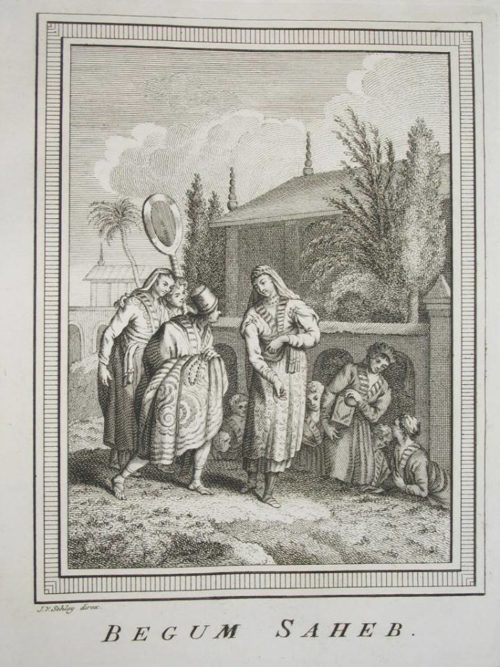
Soon after, Jahanara was appointed Begum Sahib (Princess of Princesses) by her doting parents. She would often spend her evenings playing chess with Shah Jahan, understanding the workings of the royal household, and helping her father plan the reconstruction of other palaces.

As French traveller and physician François Bernier writes in his memoirs, Travels in the Mogul Empire  ,

“Shah Jahan reposed unbounded confidence in his favourite child; she watched over his safety, and so cautiously observant, that no dish was permitted to appear upon the royal table which had not been prepared under her superintendence.”

Jahanara was also especially close to Dara Shikoh, Shah Jahan’s eldest son and her favourite brother. The two shared a love of poetry, painting, classic literature and Sufism.

In fact, she also wrote many books, including a biography of Ajmer’s Sufi saint Khwaja Moinuddin Chishti, displaying her flair for prose.

The Begum Sahib. Source: Royal India Families/Facebook

But tragedy struck the young princess’s life with the untimely demise of her beloved mother, Mumtaz, in 1631. At the tender age of 17, she was entrusted with the charge of the Imperial Seal and made Malika-e-Hindustan Padshah Begum—the First Lady of the Indian Empire—by the shattered Emperor, whose grief kept him away from his royal duties.

It was only on Jahanara’s behest that the inconsolable Shah Jahan came out of mourning.

In the years to follow, she became her father’s closest confidante and advisor. Highly educated and skilled in diplomatic dealings, her word became so powerful that it could change the fortunes of people. Her favour was much sought-after by foreign emissaries.

In 1654, Shah Jahan attacked Raja Prithvichand of Srinagar. Despairing of success in the battle, the Raja sent a plea for mercy to Jahanara. The Princess asked him to send his son, Medini Singh, as a sign of his loyalty to the Mughal Empire, thereby getting him a pardon from the Emperor.

The following year, when Aurangzeb was the viceroy of the Deccan, he was bent on annexing Golconda, ruled by Abdul Qutb Shah. The Golconda ruler wrote an arzdast(royal request) to the Princess, who intervened on his behalf. Qutb Shah was pardoned by Shah Jahan (against Aurangzeb’s wishes) and secured his safety on payment of tax.

Interestingly, Jahanara was also one of the few Mughal women who owned a ship and traded as an independent entity.

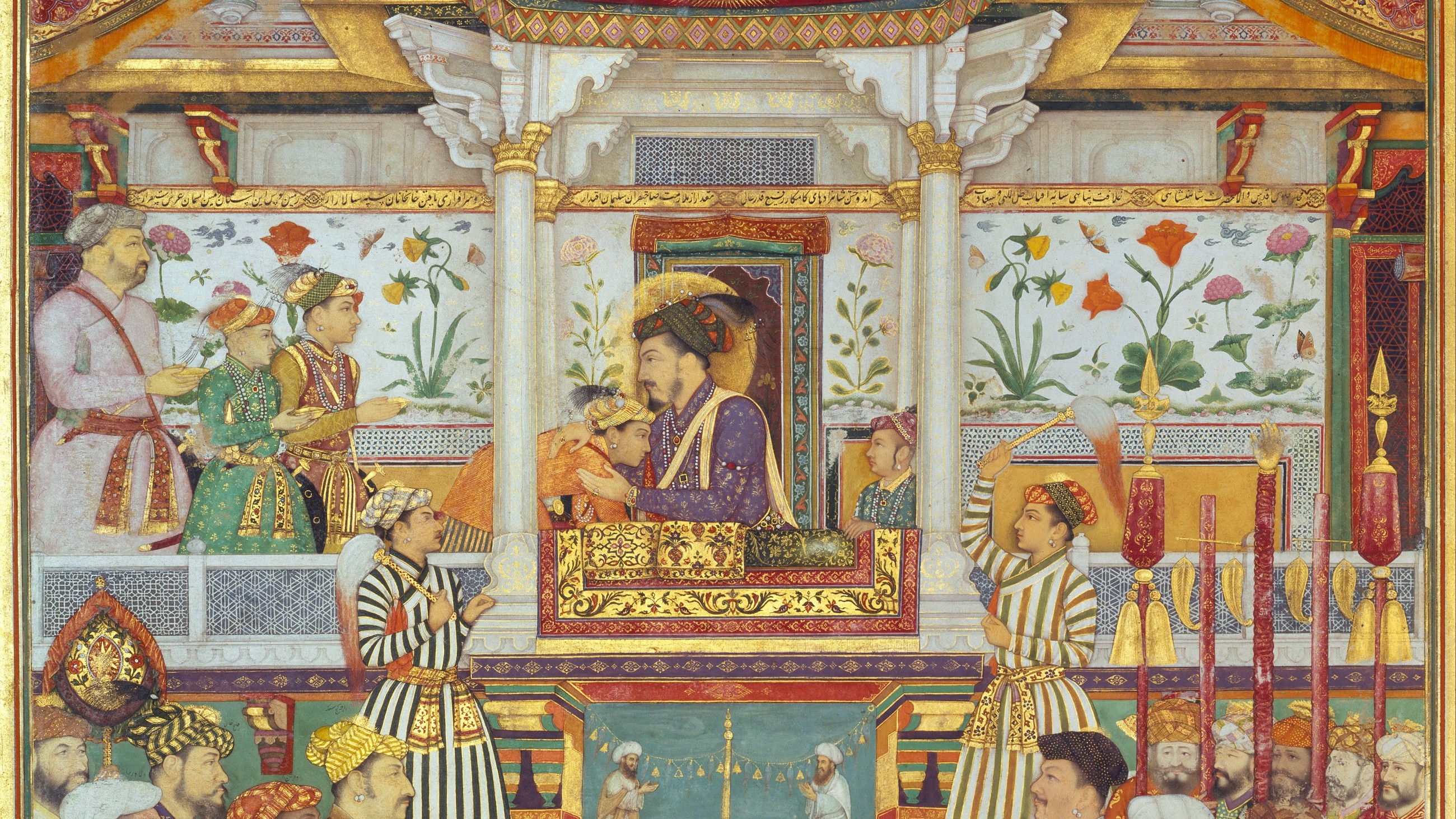
Padshahnama plate 10 : Shah Jahan receives his three eldest sons and Asaf Khan during his accession ceremonies (8 March 1628). Source: Wikimedia Commons

Named ‘Sahibi’ after its owner, Jahanara’s ship would carry the goods made at herkarkhanas (factories) and dock at her very own port in Surat; its revenue and the colossal profits she made via trade significantly boosted her annual income of three million rupees!

In his book Storia Do Mogor, Italian traveller Niccolao Manucci writes, “Jahanara was loved by all, and lived in a state of magnificence.” The book is considered to be one of the most detailed accounts of Shah Jahan’s court.

But Jahanara’s political and economic clout failed to have an impact on the bitter war of succession between her brothers, Dara Shikoh and Aurangzeb. She made several attempts to mediate between them, but as Ira Mukhoty writes in her book Daughters of The Sun , she had “underestimated the corrosive loathing that Aurangzeb has for Dara, whom he blames for his father’s cold criticism throughout his career”.

Aurangzeb ultimately killed Dara Shikoh and placed an ill Shah Jahan under house arrest in Agra Fort’s Muthamman Burj (Jasmine Tower). Faithful to her father, Jahanara set aside her lucrative trade and luxurious lifestyle to accompany him into imprisonment.

A constant presence beside Shah Jahan in his exile, she took care of him for eight years, till he breathed his last in 1666.

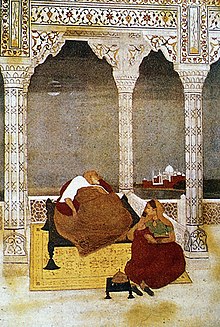
“The Passing of Shah Jahan” (1902), a painting by Abanindranath Tagore. At the foot of the bed is Jahanara Begum, the daughter of Shah Jahan; the Taj Mahal is in the background. Source: Wikimedia Commons

It says much for her stature in the Mughal court that after Shah Jahan’s death, Aurangzeb restored her title of Padshah Begum and gave her a pension along with the new title of Sahibat al-Zamani (Lady of the Age)—befitting for a woman who was ahead of her time.

Unlike other royal Mughal princesses, she was also allowed to live in her own mansion outside the confines of the Agra Fort.

“Jahanara establishes herself in the city as the most influential woman patron[s] of literature and poetry. She collects rare and beautiful book[s], and her library is peerless. She donates money to charity, especially Sufi dargahs, and carries on a genteel diplomacy with minor rajas who come to her with grievances and gifts,” writes Ira Mukhoty in her book.

Spending her last years in the pursuit of her artistic and humanitarian passions, Jahanara passed away in 1681 at the age of 67 but not before she etched her mark in the annals of history in a manner that would have made her father proud.

She commissioned several architectural spectacles, mosques, inns and public gardens across the Mughal empire.

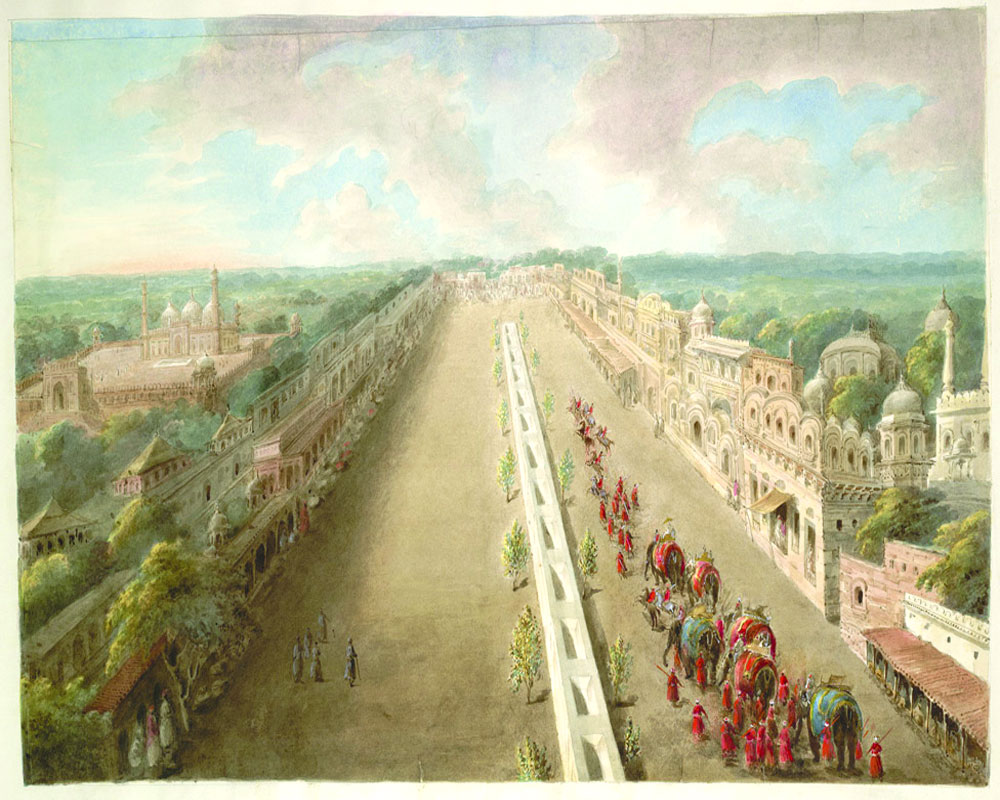
But she is best remembered as the architect of Old Delhi’s legendary bazaar, Chandni Chowk—which translates to ‘Moonlit Intersection’.

Water colour of Chandni Chowk in Delhi from ‘Views by Seeta Ram from Delhi to Tughlikabad Vol. VII’. Source: British Library

In his book  Shahjahanabad : The Soverign City in Mughal India , Stephen Blake writes,

“The chowk was an octagon with sides of one hundred yards and a large pool in its center. To the north, Jahanara built a caravansarai (roadside inn) and a garden and, to the south, a bath. On certain nights, the moonlight reflected pale and silvery from the central pool and gave to the area the name Chandni Chawk (Silver or Moonlight Square). This name slowly displaced all others until the entire bazaar, from the Lahori Gate to the Fatehpuri Masjid, became known as Chandni Chawk.”

Today, many of Chandni Chowk’s ancient buildings have been torn down, as its lanes brim with new shops and colliding crowds. And yet, somehow it manages to invoke the spirit with which Jahanara lived—the same spirit that helped her survive and thrive amidst betrayals and tragedies.

Interestingly, Jahanara’s resting place in the Nizamuddin Dargah is of her own choosing, just like her character.

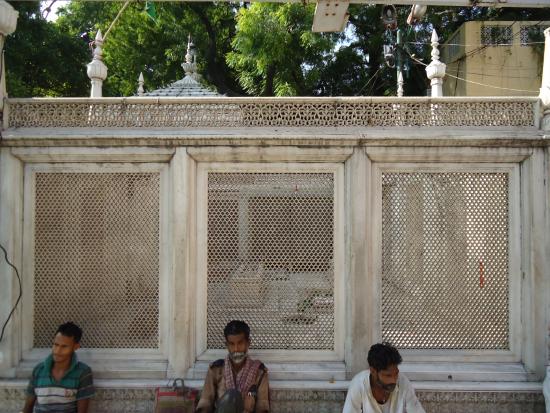
Jahanara’s tomb at the Nizamuddin Dargah. Source

Unlike the giant mausoleums built for her parents, she rests in a simple marble tomb open to the sky, inscribed with her own couplet in Persian:

Baghair subza na poshad kase mazar mara, (Let no one cover my grave except with green grass,)
Ki qabr posh ghariban hamin gayah bas-ast. (For this very grass suffices as a tomb cover for the poor.

Perhaps it is poetic justice that green vines grow on the grave of this extraordinary princess of India.

(Edited by Shruti Singhal)

source: http://www.thebetterindia.com / The Better India / Home> History> Women / by Sanchari Pal / May 24th, 2019

The Karchobi embroiderers of Marehra

Marehra City (Etah District), UTTAR PRADESH :

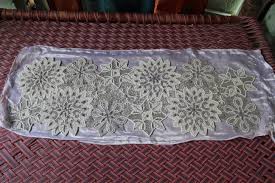
Rifat's Christmas-themed snowflake panel that she embroidered with her sister and with help from two of her nieces.
Rifat’s Christmas-themed snowflake panel that she embroidered with her sister and with help from two of her nieces.

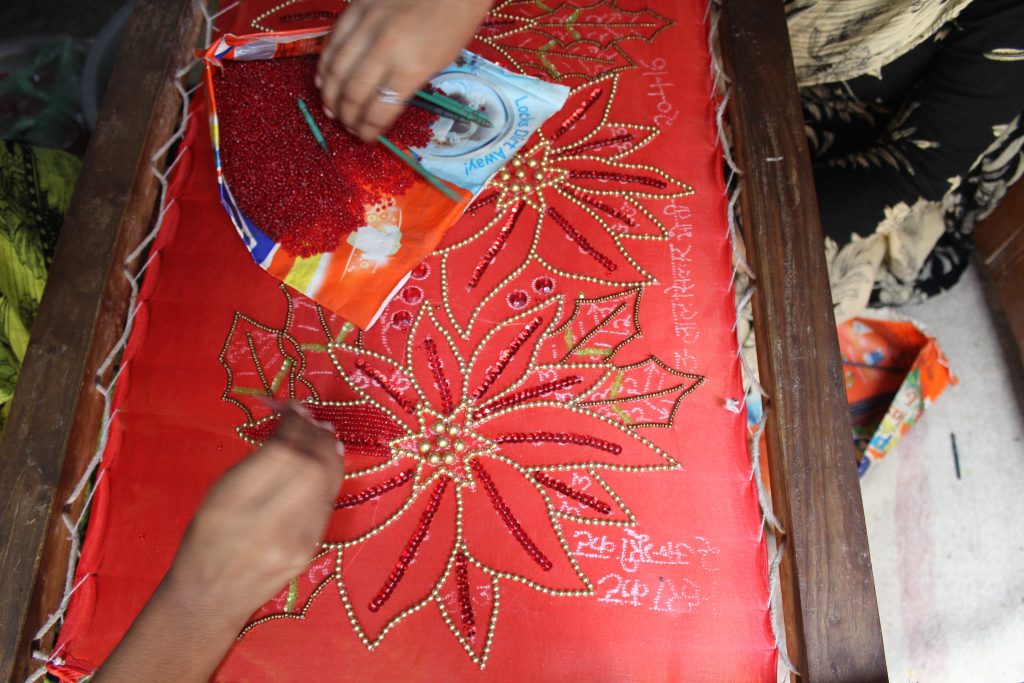
Rifat Bano (30) sits on the brick floor of her home in Marehra, Etah, chatting with her sister Sabina and their two nieces. Between them is a snow-white satin cloth stretched tautly on a rectangular wooden frame.

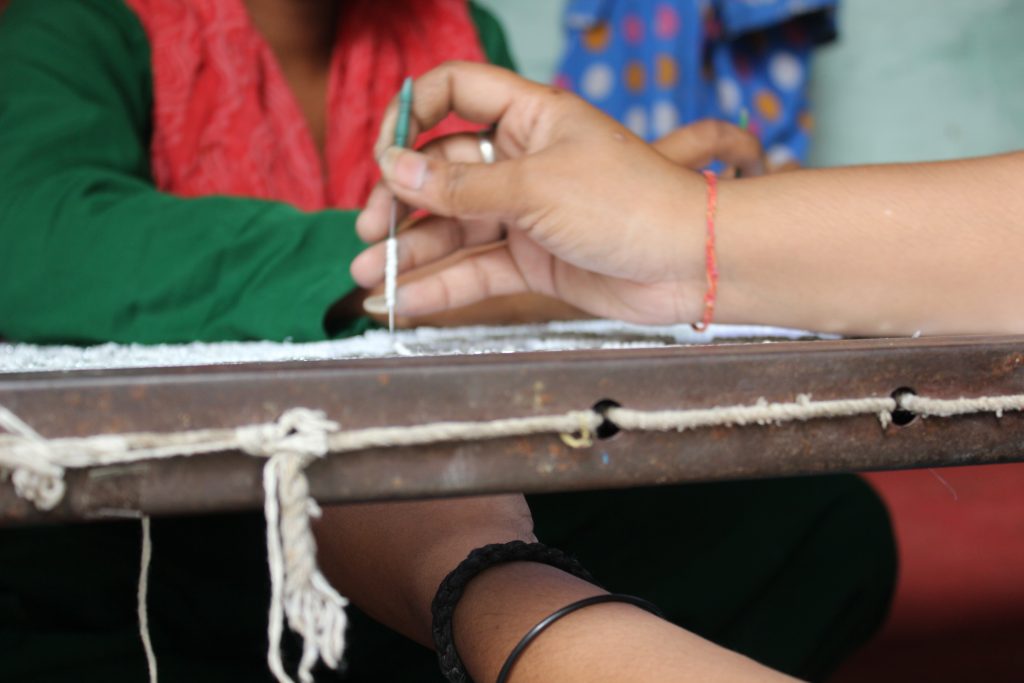
 Her hands move at a habitual pace: one places an index-finger-length hooked needle, filled with white and silver beads, on a specific point in the cloth panel. As the needle goes through the cloth, the hand underneath guides a plastic wire to latch onto the needle’s hooked tip, which pierces the cloth. As the needle withdraws, it stitches the bead onto the cloth.

A single panel is usually embroidered by two or three women who sit around the karchob. Here, Rifat Bano guides the needle through the panel as sister Sabina sits on the opposite side embroidering.

This is Karchobi ka kaam or Karchobi work, a style of beaded embroidery that, according to noted historian Professor Irfan Habib, is an import from Iran that came to India around the 17th century.

 A more commercialized form of this craft was introduced in Marehra about 20-25 years ago by a man named Ajmeri. Embroiderers says that Ajmeri had relatives in Sikandra Rao and learned the work there and then brought it to Marehra, where he was from.

 He first trained his wife, who then trained women in her predominantly Muslim neighbourhood, which is the reason that even today the majority of embroiderers in Marehra are Muslim women.

 About 700-800 women are now employed in the Karchobi industry in Marehra, says Matsyanath Trivedi, the Block Development Officer. It is now more widespread in Marehra than Sikandra Rao, so that Rifat Bano says, “Marehra mein aisa koi ghar nahi milega aap ko jahaan Karchobi ka kaam nahi hota ho – You won’t find a single house in Marehra where Karchobi work is not being done.”

She herself started doing Karchobi embroidery when she was just 9 years old. Her family was against it, as it strains the eyes but she went ahead and learned it, in secret.

 Three years later, when her father, a fruit seller, died, she had to continue this work to support her family, eventually becoming the primary breadwinner. “Pehle shauq tha, phir shauq majboori ban gayee (At first it was my interest but then it became my necessity),” she says.

Setting it up

All embroiderers have to go through a set of preparatory steps before starting on the embroidery process. First, they mount the fabric on the karchob.

 Irfan Habib, in a 1973 paper titled “Indian Textile Industry in the 17th Century”, wrote that in Persian, “kar-chob” refers to “the wooden frame” that holds “the fabric taut, when [it is] being embroidered.”

The more popular Zardozi is also done on a karchob. However, while Zardozi exclusively uses silver or gold thread, Karchobi embroidery also makes use of cotton, wool, and silk threads points out Professor Ishrat Alam at the Department of History in Aligarh Muslim University (AMU), whose research focuses on the textile industry in medieval India.

Noor (21), who has been an embroiderer for the last 4-5 years, says that the quality of the embroidery improves if the cloth panel is stretched as tightly as possible across the frame.

 Next, a paper stencil of the design is placed on top of the mounted fabric and a paste made of chalk powder and kerosene is rubbed on it with a cotton rag.

 The design gets imprinted on the fabric as do the embroidery instructions. These are numbers that correspond to a bead’s colour and tell an embroiderer where to place a particular coloured bead.

 For instance, Noor can be seen embroidering red beads where it says “3”. This means that the number “3” corresponds to red-coloured beads; similarly where it says “2”, she has to embroider golden beads, as in the image below.

The white chalk design tells the embroiderers where the place beads of a specific colour.

A single design usually requires the use of beads of several different colours and an embroiderer has to be careful to use the right-coloured beads, says Khalida Begum. It is only then that the embroidery work begins.

 Rifat Bano says that she is able to embroider about two pieces a day but it also depends on the design. A complex design can take longer, such as the Day of the Dead panel that took sisters Zehra Fatima (21) and Aisha Fatima (23) two days to complete.

 The Day of the Dead  or Dias de los Muertos is a two-day Mexican celebration of remembering deceased family members and is celebrated by people of Mexican heritage throughout the work, including the US.

Their panel used Day of the Dead motifs such as skulls and flowers that required the use of different shades of blue, orange and red beads, totalling 14 different coloured beads.

Wages and health

 Considering the intricate nature of the work, Aisha said that they should be getting paid at least Rs. 200 for this panel, instead of Rs. 140 that they were going to earn: “Kaam ko dekho to kaam ismein ek ek sui ka hai. Hame sasta lag raha hai ye,” (If you look at the work, this requires the use of one needle per stitch. We think the wages are low.)

 It’s not just Aisha; all the embroiderers that I spoke to said that their wages were low and did not reflect the intensity of their labour.

 The state government has not stipulated the minimum wages for Karchobi embroiderers. However, the minimum wage in Uttar Pradesh for the handloom industry, specifically for Zari embroidery is Rs. 5750 for unskilled, Rs. 6325 for semi-skilled, and Rs. 7085 for skilled workers.

 All the embroiderers who this reporter spoke to had been doing this work for at least four years and some had been doing it for over a decade. They were all at least semi-skilled workers. But even in the best-case scenario, where they earned Rs 200 a day, their monthly income did not exceed Rs 6000, which is less than the stipulated monthly minimum wage.

 Khalida Begum has been working as an embroiderer for more than 20 years. She says that in fact, her income has decreased from what she earned seven to eight years ago, as more women have taken up Karchobi work. With a large workforce and limited work, the embroiderers have lost their bargaining power.

 Rifat Bano says, “Agar ham karte hain to theek hain, nahin karte hain to theek hain. Ek hamare band karne se koi pharak bhee nahin padegaIf we do this work, it’s fine, if we don’t do it, that’s also fine. It won’t make a difference if we decide not to do it).

 Karchobi embroidery also takes a toll on the embroiderers’ health.

 Back in Rifat Bano’s home, her and other embroiderers joke about gaining weight around the stomach from sitting all day. One person is especially called out and they burst out laughing.

 They say that their eyes hurt from embroidering. And what about your fingers, I ask. “Gosht laati hai saath mein–(the needle) brings back flesh (when it comes out),” says Noor. Rifat Bano points to deep red bloodstains on the floor next to her where she has shaken off blood from her index finger.

pix 06

Noor, going back to the discussion about weight gain, says that if you leave Marehra, and therefore Karchobi, for 15 days, you can get back to your real size. Her elder sister, Farha, agrees and says that she only lost weight after she got married and moved out of Marehra.

Then Noor announces that she is only going to do Karchobi embroidery for 10 more years.

 Phir kya karegee?–Then what will you do?” asks Rifat Bano.

 Noor retorts: “Kuch na karoongee. Kuch India mein dimagh lagaoongee main to.” (Nothing I’ll do. I’ll give some of my attention to India.)

The names of all the embroiderers have been changed to protect their identities. Some of them specifically requested it. They said that talking about their wages and problems with their work could lead to them being singled out by their communities. This reporter decided to change all their names as a result. The companies too have not been named as she felt that it could pose a threat to these women’s livelihoods.

 All images by the author.

 Meher Ali  is an independent journalist based in Aligarh. She reports on refugee, human rights, and social justice issues. She also blogs about the cultural heritage of Aligarh and its surrounding areas.

source: http://www.twocircles.net / TwoCircles.net / Home> Indian Muslim> Lead Story / by Meher Ali / May 12th, 2019

Pista House to use black rice in haleem

Hyderabad, TELANGANA :

Pista House managing director M.A. Majeed at a press conference in the city on Sunday.

‘Regular consumers will benefit from its health boosters and high nutritional value’

Days ahead of the month of Ramzan, haleem-maker Pista House on Sunday announced that this year, their brand of the scrumptious dish would contain Chakhao – black rice sourced from Manipur.

According to restaurateur and Pista House managing director M.A. Majeed, black rice is healthier and consumed by Chinese royalty on account of its rich nutritional value. The black rice-enriched haleem, considered by many a Ramzan delicacy, is a collaborative effort between Pista House and North East Foundation.

“Black Rice is extremely rich in antioxidants, fibre, iron and vitamin E and has anti-carcinogenic characteristics. Regular consumers will benefit from its health boosters and higher nutritional value,” said Bhanu Pratap Singh, CEO of North East Foundation.

Mr. Majeed said each bowl would be priced at ₹170. This is an increase of ₹10 since last year.

source: http://www.thehindu.com / The Hindu / Home> News> Cities> Hyderabad / by Staff Reporter / Hyderabad – May 05th, 2019

Preparing for the final journey in Kurnool

Kurnool, ANDHRA PRADESH :

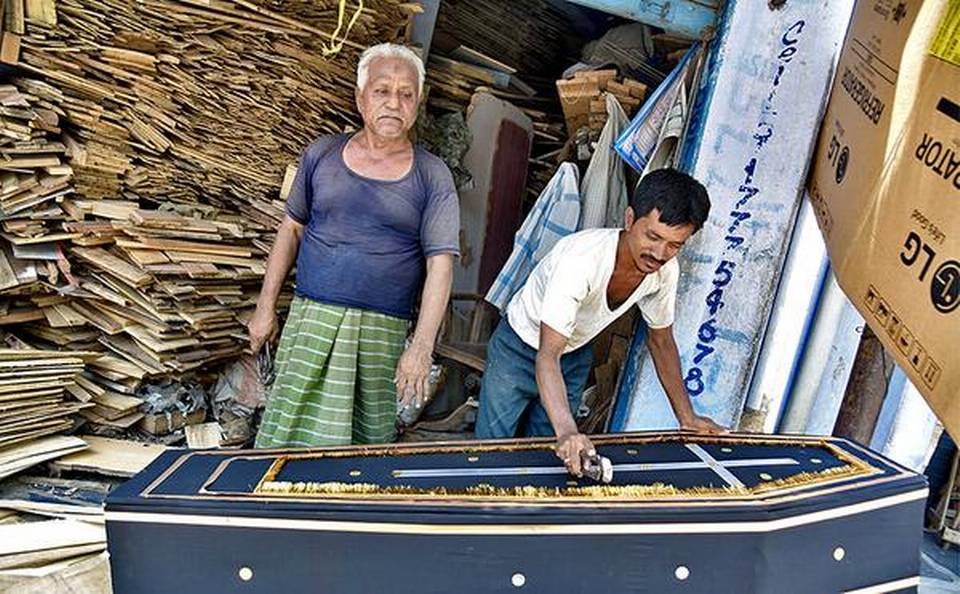
Chand Basha and his son Abdullah working on a coffin at Old Town in Kurnool on Wednesday.

Coffin-makers lend dignity to the dead through family occupation

In a corner of Old Town in Kurnool is located a stretch of six shops, where men in their sixties put finishing touches on coffins both big and small.

While all of the coffin-makers are Muslim, their clientele is almost exclusively comprised of poor Christians.

Making a profit out of their business is not their driving force, given the very nature of the product that they are selling. For them, it is a traditional occupation bequeathed to them by their forefathers, meant to be looked at as a form of service rather than a means of making money.

“The coffins cost between ₹1.200 and ₹1,500 depending on the level of detail. We manage to earn around Rs.200 per coffin, which is just about enough to keep us afloat,” says Chand Basha, a 65-year-old carpenter who inherited the business from his father.

Mr. Basha and his ilk had seen better days, when their business was not restricted to building coffins.

“My father used to build furniture and cabinets for homes, and I used to tag along with him. We did well, until bigger carpentry shops and the plastic industry took over. Now, we are confined to just building coffins,” says the 65-year-old.

Mr. Basha will pass on the baton to Abdullah, the youngest of his three sons, who is physically-challenged.

“We attempt to lend some dignity to the dead through our work,” said another coffin-maker of a neighbouring shop.

source: http://www.thehindu.com / The Hindu / Home> News> States> Andhra Pradesh / by Tadi Vidura / Kurnool – May 02nd, 2019

Rifath Sharook, Mohammed Abdul Kashif Played Lead Role in Designing World’s Lightest Satellite

Karur, TAMIL NADU :

Rifath Sharook (Photo: Rifath’s Facebook profile)

New Delhi :

On January 25, India’s Polar Satellite Launch Vehicle (PSLV-C44) successfully injected Microsat-R and Kalamsat-V2 satellite into their designated orbits. Two young engineers who played lead role in designing and building world’s lightest satellite Kalamsat-V2 are Rifath Sharook and Mohammed Abdul Kashif.

They were part of a 12-members team of Space Kidz India- a group which trains aspiring space students. The group was being led by 18-year-old Sharook who hails from Tamil Nadu. Sharook is the youngest student of the team. Giving the credit of building the satellite, the media called him one-man army.But Sharook rejects to take credit solely.

Apart from Kashif (lead engineer), those who are in his team include Vinay S Bhardwaj (design engineer), Yagna Sai (lead technician) and Gobi Nath (biologist).

They were all working on rocket and space technology under the mentorship of Chennai-based Srimathy Kesan, who is the founder of Space Kidz India.

Sharook who hails from Tamil Nadu’s Karur is Chief Technology Officer (CTO) at Space Kidz India. Sharook’s father, Mohammed Farook, was also scientist. When he was in Class V, his father had left for heavenly abode. He was interested in space since his childhood.

“My dad was also a scientist. He’d do independent research on astronomy. We’d spend hours watching the space through a telescope,” Sharook was quoted by rediff.com as saying.

Talking about the Kalamasat V2, Mohammed Abdul Kashif said “We have produced a new electronic architecture for this satellite that ensured that it was lighter, smaller, more economical and consumed less energy while functioning like any other communication satellite”.

He added “There are a wide variety of uses it can be deployed for. But with this launch, we are only testing the technology and seeing how it operates”.

The satellite was 64 grams, 3.8 centimeter-cube-sized and it is world’s lightest and smallest satellite. It was made through the competition ‘Cubes in Space’ which was a collaboration between NASA and ‘I Doodle Learining’.

Muslim boy Sharook and Kashif played larger role in building the world’s lightest satellite and it was named also after a Muslim scientist A P J Abdul Kalam, who was the president of
India.

source: http://www.caravandaily.com / Caravan Daily / Home> Indian Muslim> Indian Muslims / by Caravan News / February 04th, 2019