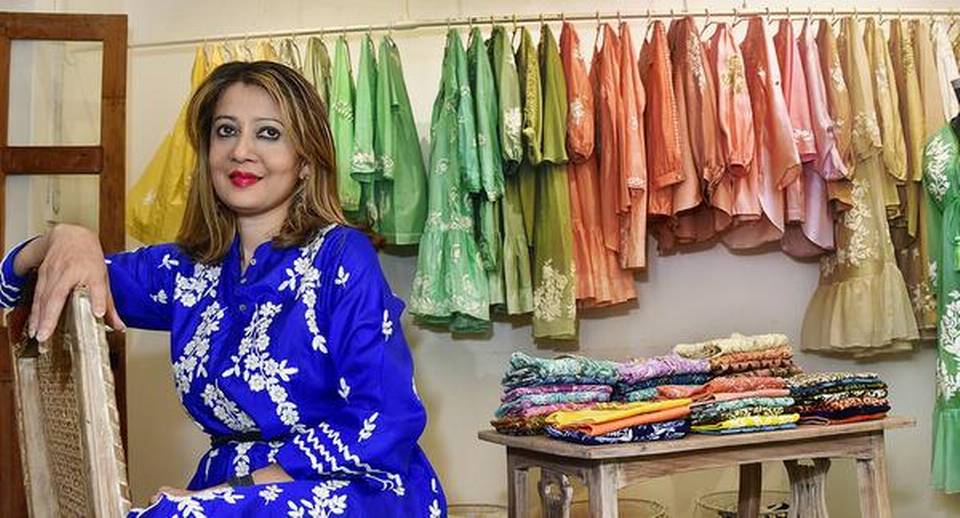
Hues of an art Farha Ansari and her designs / Murali KUmar K
From Hillary Clinton to Alia Bhatt, Ahilaya’s designs have invaded the wardrobes of celebrities
In the Bombay of the 1970s, when his daughters were young, Anwar Ansari started a hand-printed chikankari textile business called First Lucknowi, because he believed he was the first to start such a venture. Chikankari is a traditional embroidery style that originated in Lucknow. Anwar and his partners hired local artisans in Bombay and Lucknow to handcraft these designs on cotton, silk, chiffon and other fabric.
Almost half a century later, First Lucknowi is different yet, essentially, the same. Today, it goes by the name Ahilaya, named after the queen of the 18th Century Malwa kingdom, Rajmata Ahilyadevi Holkar.
Managed by Anwar’s daughters, Farha, Nagma and Sana, the number of employees has grown from 40 to 200 and its customer base has also increased. Many celebrities — Hillary Clinton, Ivanka Trump, Drew Barrymore, Anushka Sharma, Alia Bhatt among others — are among Ahilaya’s customers.
According to Farha, the chief reason for the brand’s longevity and success is, “We do everything and do not outsource anything.” “The materials have to be pure; there should not be any synthetic. We are stringent about that.”
The designs and raw material are couriered to the artisans in Lucknow and Mumbai, who in turn handcraft the clothes, she adds.
Farha, now lives in New York and oversees ‘Leaves of Grass’, an international offshoot of the family-run business. Though her sisters, Nagma and Sana, take care of the Indian affairs, Farha visits the Bengaluru store at least once a year. This visit is ritually followed by a meeting with craftsmen too.
“They feel happy when they learn that the clothes they make are worn by models and celebrities. We sometimes call them for photo shoots, order biryani and have a good time.”
The price range starts at Rs. 4,000. Farha says, exclusively handcrafted wear often costs more. Comparing synthetic and machine-made wear to handmade garments, according to her, “is like differentiating microwaved dinner from gourmet food. We also pay fair wages to our workers. If we reduce the price, we might not be able to do that.”
source: http://www.thehindu.com / The Hindu / Home> Features> MetroPlus / by Praveen Sudevan / April 16th, 2019
A vivid piece of maritime history is hidden in the memories of the cooks and deckhands who once sailed off the Malabar coast
By noon, the sun would heat up the vast blue expanse through which they sailed at great risk to their lives. By evening, when salt and dirt clung to their bodies, the skies would turn crimson, symbolising streaks of revolt. Later, weather permitting, the shimmering stars would give them clues to the voyage that lay ahead through the inky waters of the Arabian Sea, often to the Persian Gulf. On the shore, they would unload the goods they had loaded on to the wooden dhows: timber, bamboo, coconuts, tapioca, tiles, salt, sugar, fertilizers. And sometimes, hidden among the cargo, people .Being smuggled to the far shores.
But even when they returned to their homes in Kerala, none of the deckhands of the dhows wrote about their experiences; in fact they actively strove to forget this tempestuous period in their lives that ended when better transportation facilities arrived. It’s been nearly four decades since these traditional vessels with their distinctive masts set sail from the Malabar coast, either along the coastline or farther afield. But it’s only now that the world has begun to hear the stories of these intrepid men, an integral part of the maritime history of peninsular India.
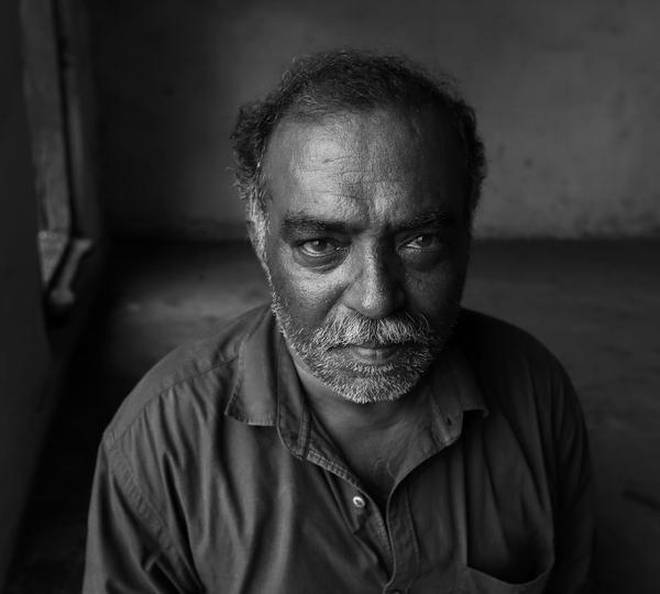
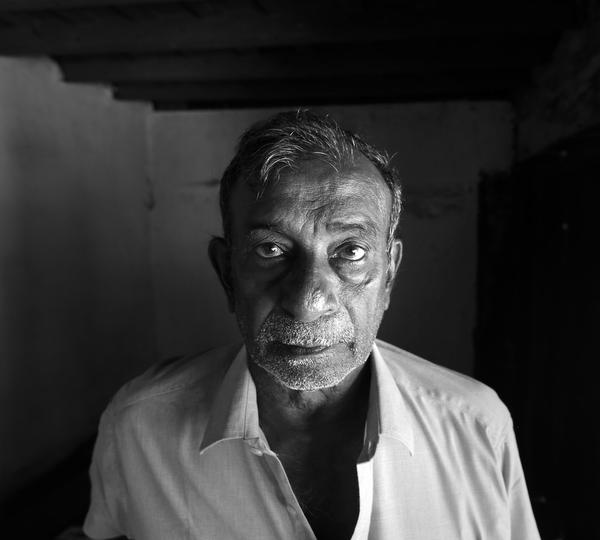
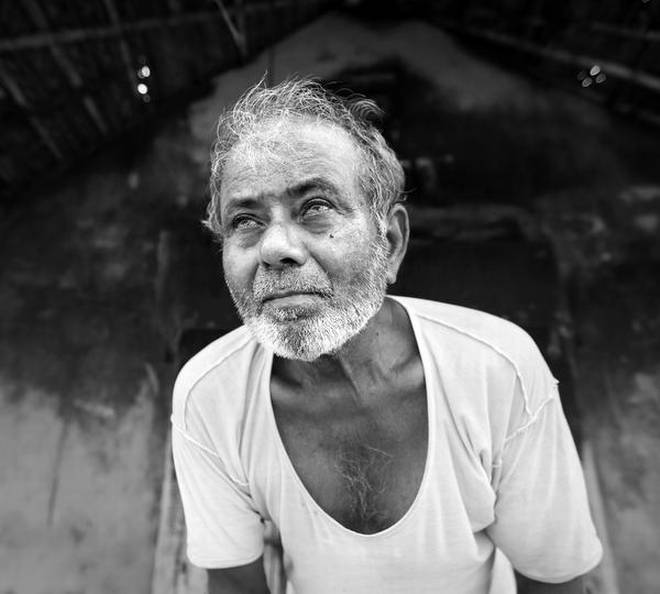
And this is thanks to a photo artist from Kerala’s port town of Kodungallur, around which scholars speculate the ancient Muziris harbour existed until destroyed by the 1341 calamity. K.R. Sunil’s photographs, a series titled ‘Manchukkar — The Seafarers of Malabar’, captures the faces of 34 deckhands. It was on show last month at URU Art Harbour in Kochi. Through them we learn of the misery of people caught in a vortex of exploitation and unshielded from nature’s furies.
Bare frames
The faces are stark, the frames bare. But every black-and-white image tells a story. Of how poverty forced pre-teen boys to pack themselves off in an uru or sailing vessel on long-distance voyages battling rough seas and uncertainty for weeks on end, and then return home — if lucky — only to set off on another strenuous voyage. Years would pass, the boys would turn into middle-aged men. Then, seen as worthy of nothing else, plagued by ill-health, they would be sent home, discarded like boats with rotten hulls.
T. Ibrahim is now 80 and lives an unremarkable life in Ponnani, a fishing town in Malappuram district. He considers himself fortunate to have lived this long. As a youth, he recalls how he once sailed a dhow laden with tiles and a dozen sailors that got caught in a storm on its way to Ratnagiri in Maharashtra. Ibrahim joined his panicked colleagues and began jettisoning cargo. The vessel sank nevertheless. “Some of them managed to get away on a lifeboat. Ibrahim and four others held on to a piece of wood and floated for two days,” says Sunil, recalling his meetings with Ibrahim.
Ibrahim’s …
The youngest in Sunil’s photo series is also called Ibrahim, or simply Umboocha. Now 53, the man from Kasargod, along the Karnataka border, had his final sailing trips on motorised dhows in the 1990s. Memories of manchu, as the boat is called in his part of Malabar, where people also speak Tulu and Kannada, still make him shudder. Their vessel once sank during a cyclone when they were bound for Iran. They roped together emptied cargo barrels and drifted on the improvised float for three days. Rescue came, but they landed in jail: all of them had lost their identity documents.
Siva Sankaran, also from Ponnani, remembers that his first trip on a dhow to Bombay took seven weeks instead of four days. Reason: bad weather. But tempests were just one part of the deckhands’ ordeal, says Sunil. From starvation to sexual exploitation to unhygienic conditions to taxing work hours, the voyages were invariably hellish. “Circus in the seas,” is how Abdul Rahiman, 68, recalls them. “One had to climb 50 feet up on swinging ropes to set the sail. You may have to do it deep in the night, when the boat is violently rolling,” Sunil quotes the sailor as recalling.
The artist’s first trip to Ponnani was in 2014, though it was only two and a half years ago that he turned his focus on these deckhands of yore. “As a child, I had heard a lot about Ponnani. We had country boats with merchandise travelling there from Kodungallur.” The town charmed him on his first visit and inspired several more. The next time he brought his camera along. A photo series from these trips was shown at the 2016 Kochi-Muziris Biennale.
Steeped in pathos
Then, four months before the biennale, Sunil stumbled upon an old man singing a song to his friends. “There was something curious about its lines and the tune steeped in pathos. I thought I should explore more,” he says.
This was T. Ibrahim and this wasn’t the only sailing song he knew. He had learnt several from Rasakh Haji, a merchant of essential oils who owned the boat in which Ibrahim was a deckhand. Haji had a talent for creating songs and had composed one about the dhow. They sailed together from Mumbai to Kerala and “the ditties seeped into Ibrahim too,” says Sunil.
Most deckhands began their careers as cooks (pandari) when they just 11 or 12 and were routinely sexually exploited. Those who moved up the ladder became deckhands or khalasi. The capable among them rose to become captains or srank.
Abdul Lathif thought himself lucky to become a deckhand at 17, but is now repulsed by the memories. “The boat’s woodwork was always infested with roaches and scorpions. You would see them floating even in the drinking water. We were covered with lice. The winter winds gave us mouth ulcers,” he trails off. “After unloading the goods, we would appy a mixture of oil, lime and ghee to the boat’s keel to prevent barnacles. The work was done standing in a slush of mud and human excrement.”
C.M. Ummar was a young man during the 70s when he crewed in dhows carrying people looking for work in West Asia. Illegally. “A couple of hundred job-seekers would be taken aboard along with the cargo. You’d hide them with a tarpaulin. And in the high seas, another boat would come to fetch them,” he recalls. “Sea-sick, they would sometimes plead to be taken back home. Getting them back was equally dangerous.”
Deaths weren’t uncommon — whether from falling from the mast or from disease. Hussain, 64, recalls a friend’s demise: “With a heavy heart we offered prayers, and buried him at sea with a rock tied to his body.”
The primary duty of Muhammad Koya, 81, was to smear kalpath, a mixture of coconut-fibre, cow-dung, sawdust and ghee, on the keel to plug gaps. “It involved holding one’s breath under water for long periods; the job affected Koya’s hearing,” notes Sunil, who is now in the process of making a documentary on this bit of “ignored history”.
Floating bodies
P. Ummar is 20 years younger than Koya, and recalls how armed pirates would sometimes rob their cargo. “Such encounters were common along the Maharashtra coast,” he says. Koran, now an oracle for the traditional Theyyam dance in Kasargod, talks of the dead bodies he saw floating near the Bombay port during his manchu days. He suspects this was from the smuggler-customs encounters.
Kochi, Kerala, 07/02/2019 : K K Khadher, from the series ‘Manchookar – The seafarers of Malabar’ by K R Sunil. Photo: Special arrangement
K.K. Kadar talks of how seasoned sailors would read signs of impending danger in “unusual changes in the colour of seawater, the rising froth, intertwined sea-snakes, dead fish…. they were indicators for the crew to prepare themselves for eventualities,” he says. Today, he is a public worker, and preoccupied with the 80th anniversary of a historic beedi workers’ strike that had once been held in Ponnani.
T.V. Moideenkutty …
For T.V. Moideenkutty, too, life is calmer. The 54-year-old lives on the tranquil shore of Ponnani with his family in a tile-roof house. He started life as a cook in a dhow and then worked as a deckhand for eight years. At least it staved off poverty, he says, smoking a beedi.
Life on the dhow taught him a lesson: the value of drinking water. “I learned the word for water in many languages, especially before hitting ‘Hindistan’ during our Mumbai voyages,” he says, retying his mundu and tucking it in at the waist.
The lighthouse near Moideenkutty’s house stands tall with its gas flasher scanning the ocean. Standing outside URU gallery, I can see the sea dotted with gleaming new-age ships filled with crew and cargo heading out to harbours around the world.
The Delhi-based journalist is a keen follower of Kerala’s traditional performing arts.
source: http://www.thehindu.com / The Hindu> Voyager> Society / by Sreevalsan Thiyyadi / April 13th, 2019
Education has empowered women and endowed them with a courage to move to the centre stage of life and it is reflected positively in every sphere, said Governor P Sathasivam.
TNIE Verve 2019 Award winners Shine Benaven, Fajeena Kareem, Thesnim Azeez, Chitra Gopinath and Vidya Vinod | T P sooraj
Kozhikode :
Education has empowered women and endowed them with a courage to move to the centre stage of life and it is reflected positively in every sphere, said Governor P Sathasivam. He was inaugurating the second edition of The New Indian Express (TNIE) ‘Verve Awards’ in association with Faizal & Shabana Foundation, at Hyson Heritage here on Sunday.
“Yet in the 21st century there are areas where women are still under-represented such as science, technology, engineering, design, social innovation, etc. We have to bridge the present gender divide in innovation and entrepreneurship sector,” he said.
Presenting the 2019 Verve Awards to five women icons of the Malabar region, the Governor said the winners should encourage girls, especially those from weaker sections of society to come forward.
“The theme for this year’s International Women’s Day was Think Equal, Build Smart, Innovate for Change. Undoubtedly, the theme signals the need for equality.But these five women have equaled or even outdone their male counterparts in the field,” he said.
To celebrate the power and outstanding achievements of women, TNIE group launched the Verve Awards in 2018 in connection with the International Women’s Day. The second edition of the awards were conferred to exemplary women who have carved a niche for themselves through their hardwork and perseverance and have become leading entrepreneurs.
The winners of the second edition of the awards were Chitra Gopinath, Managing Director of Edappal Hospitals Pvt Ltd since 1990 (Life Time Achievement Award), Shine Benaven, proprietress and Managing Partner of Kanate Originals (Innovation Award),Thesnim Azeez, Celebrity Chef, entrepreneur-founder of ‘Thesnim’s school of Recipe Plus’ (Inspiring Icon Award), Vidhya Vinod, entrepreneur, educationist, president and CEO of Study World Education Holding Group (Enterprising CEO), and Fajeena Kareem, Co-founder, chief evangelist and creative director of Kiora Amorez, The Diamond Boutique and Luxury Lounge (Emerging Brand Award).
The award distribution function was attended by The New Indian Express Senior Vice President Vignesh Kumar, Resident Editor (Kerala) Kiran Prakash, General Manager (Kerala) P Vishnu Kumar, and Assistant General Manager (Kozhikode) M Chandrasekharan.
The dais was shared by invited dignitaries such as Gokulam Gopalan, Chairman of Gokulam Group of Companies, and Dr Joseph Sebastian, Director of Faizal & Shabana Foundation.
Prominent business personalities and successful entrepreneurs across the state attended the function. Matria exclusive woman and child hospital, NS Payyoli Mixture, Metrends Shoes and Bags associated with TNIE in felicitating the woman achievers.
source: http://www.newindianexpress.com / The New Indian Express / Home> States> Kerala / by Express News Service / April 08th, 2019
Khan, a computer science student was shortlisted in November last year based on his profile on a programming site.
A 21-year-old, non-IIT engineer from Mumbai, bagged a hefty Rs 1.2 core package at Google’s London office. Abdullah Khan, a student of Shree LR Tiwari Engineering College was called for an interview by Google. Following a couple of rounds of interviews, he was asked to appear for final screening at Google’s London office.
Khan, a computer science student was shortlisted in November last year based on his profile on a programming site. His salary is divided into the base salary of Rs 54.5 lakh per annum, 15 per cent bonus and stock options worth Rs 58.9 lakhs.
“I used to participate as it was fun. I did not even know that firms check programmers’ profile on such sites. I showed the email to my friend who knew someone who had received such an email in the past. I’m looking forward to joining their team. It will be an amazing learning experience for me, ” Khan told TOI.
The average salary offered to a non-IIT engineering graduate is 4 lakh per annum.
source: http://www.newindianexpress.com / The New Indian Express / Home> Cities> Mumbai / by Online Desk / March 29th, 2019
A night’s stay in the hotel, which is set to open later this year, might cost up to Rs 8 lakh.
A view of the Great Scotland Yard (Photo | http://www.twenty14holdings.com)
Kochi :
Malayalee billionaire Yusuff Ali, who bought the Great Scotland Yard, which served as headquarters for the Metropolitan police in London, has converted it into a luxurious 5-star hotel. The renovation that cost Rs 685 cr. (£75 Million) was done in 3 years.
The business tycoon, who is chairman of Abu Dhabi-based retail giant LuLu Group had earlier bough the iconic building in 2015 for Rs 1000 crore (£110 Million). The renovated hotel is all set to open later this year and will be managed by the Hyatt Group.
When asked about the property, Yusuff Ali said: “This is a very prestigious project for us as this is one of the most well-known property not just in the UK but around the world. We have not left any stones unturned to make this the most sought-after hotel while retaining the essence of the original building, so that each of our guests get a truly memorable experience”.
Great Scotland Yard has special relevance in UK history as it was chosen by the then Prime Minister Sir Robert Peel as the headquarters for the Met police in 1829. Even after the renovation, the essence of the original building has been preserved.
The hotel will have 153 rooms and the tariff per night is expected to go up to Rs 7,79,842 (10,000 euro). These suites offer guests picturesque views of Nelson’s Column, Westminster Abbey and Buckingham Palace, making it one of the most unique locations in London.
The luxury hotel that is steeped in British political history will include references to the famous criminals of the time gone by. In a secret whisky bar, a decadent chandelier made of glass shards will be a nod to the Forty Elephants, the 19th-century gang of women known for smashing shop windows to steal jewellery. There will also be artwork by prisoners and old military uniforms.
Adeeb Ahamed, Son-in-law of Yusuff Ali and the Managing Director of Twenty14 Holdings, the hospitality arm of Lulu Group said, “Renovating the Great Scotland Yard building and unveiling the UK’s first Unbound Collection hotel will bring a truly individual and world-class hotel to London.
“The Great Scotland Yard is really an important part of the fabric of London and it is a great opportunity for us to be a part of the culture and legacy of this great city and help in its development. The Great Scotland Yard will be an enriching landmark in Westminster as a high-end luxury boutique hotel that recaptures the history, culture and essence of the London of yore.”
source: http://www.newindianexpress.com / The New Indian Express / Home> States> Kerala / by Express News Service / March 26th, 2019
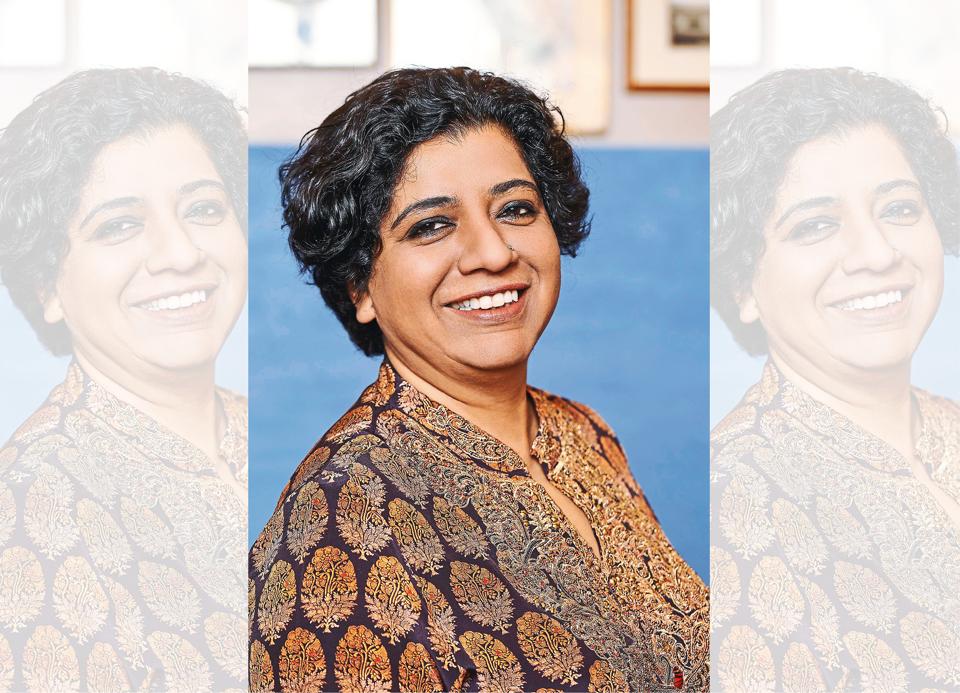
From the desk of Sunday magazine to a celebrated chef now on Netflix’s Chef’s Table, Asma Khan’s story is one of strength, confidence and ambition
The first British chef to make it to Chef’s Table, Asma Khan is also opening all-women kitchens in conflict zones in Syria(Ming Tang-Evans)
It is a funny feeling when a colleague from decades ago becomes a success in a totally different field. And it feels even stranger when you find yourself writing a profile of somebody you once knew as a sub-editor.
In 1990, when I edited Sunday magazine, a young girl came to see me to ask if she could try her hand at journalism. She worked at Lintas, the ad agency, she said, and wanted to do something different but not entirely unrelated.
I hired her on the spot and all of us in the office thought she was very bright and articulate. Then, a few months later, she announced that she was getting married, resigned from her position and went off to live in Cambridge with her new husband.
And that, I thought, was the last I would hear of Asma Khan.
Wrong, very wrong.
A few years ago, she sent me an email. She was now a chef in London, she wrote. Not only did she organise private dinners at home but she was also running a pop-up in a pub in Soho. Why didn’t I drop in and try her food?
I had to search my memory to remember Asma (time to be candid!) and when I asked old colleagues from the Sunday days, they said that they found it hard to believe that she was now a chef.
Then, in 2015, my friend Fay Maschler, London’s most influential critic, wrote about Asma’s pop-up. It was an unqualified rave review and she rated Asma’s little restaurant serving Kosha Mangsho and Kathi rolls ahead of most of London’s fancy Indian places.
The day the review came out, there was a line outside the pub where Asma ran her pop-up. It began raining but the people still continued queuing. Asma and her cooks were stunned. But like good Indians, they felt bad for the crowds. So they made little bowls of rice with dal and distributed them for free to those lining up. The gesture did not go unnoticed and every night after that, the small restaurant was packed. It became the cool place to go for people who wanted real Indian food.
“Fay Maschler changed my life,” says Asma now. And indeed, the changes have been dramatic. A year and a half ago, the owners of Kingly Court, a new development off Carnaby Street in the centre of London, offered her a dream deal on a site for a full-fledged restaurant. The restaurant opened to glowing reviews and became a symbol of the new London. Nigella Lawson came. Sadiq Khan, the Mayor of London, praised it. And Asma appeared on the list of the 100 most influential people in food in the UK.
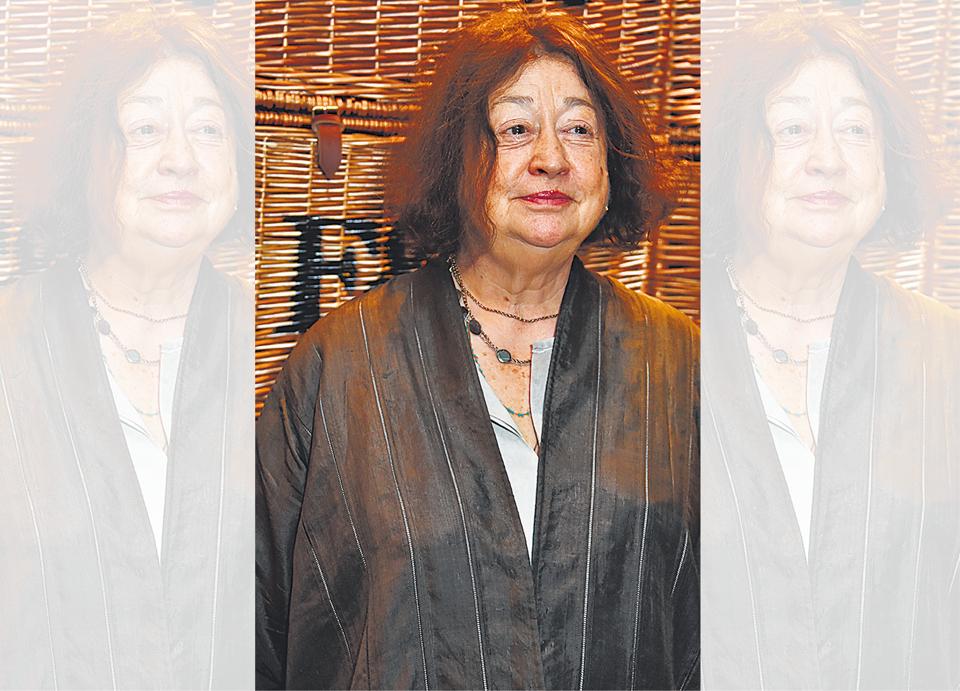
Fay Maschler, London’s most influential critic, discovered Asma
But a few months ago, Asma received her biggest accolade yet. The Netflix series Chef’s Table has featured some of the world’s greatest chefs. It has the power to turn a chef’s life around. Gaggan Anand says that even more than all the honours and awards he has earned (two stars from Michelin, number one restaurant in Asia for an unprecedented four years in a row etc.), it is Chef’s Table that made people from all over the world fly in to Bangkok to eat at his restaurant.
There has been much heartburn in the UK that no British chef has ever made it to Chef’s Table.
So when Netflix announced that it had finally selected a British chef, there was much anticipation. To everyone’s surprise, they chose Asma.
The show airs later this month and as I told Asma, her life will never be the same again. She will soon be one of the world’s most celebrated chefs, the best known Indian chef in the UK and perhaps globally, with the exception of Gaggan.
Chicken samosas served with spicy sesame and red chillies chutney, and tamarind chutney ( Ming Tang-Evans )
As wonderful as all this is, a little voice inside my head kept asking, “How did Asma, the same old Asma from the Sunday desk end up becoming one of the great chefs to be featured on Chef’s Table? Had she been a secret cook all along even as she laboured over copy? Had she worked at some of the world’s best restaurants? Had she reinvented classic Indian dishes?”
The answer: none of the above.
The Asma story is so incredible that if you made a movie with this plot, you would be accused of asking too much of the viewer. Suspension of disbelief is okay, but Asma’s life takes us far beyond that.
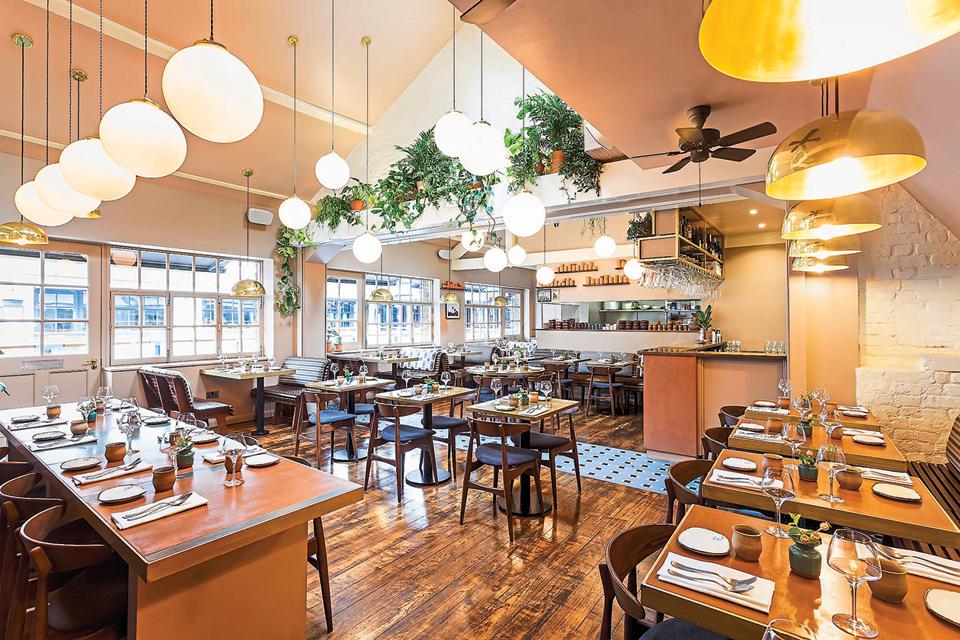
Darjeeling Express started as a dinner for 12 guests at home and is now a hugely successful restaurant ( Ming Tang-Evans )
She was born in Calcutta to a family with roots in nawabi culture (what we would call landed gentry, I guess). She had a standard middle-class upbringing (La Martiniere and Loreto) before going out to work (Lintas and then Sunday). Her parents introduced her to Mushtaq, a brilliant Bangladeshi economist who was a don at Sidney Sussex College in Cambridge. Asma and Mushtaq had, what was for all practical purposes, an arranged marriage and she moved to Cambridge.
Beetroot chops, Bengali spiced croquettes made with British beetroots ( Ming Tang-Evans )
She was miserable. “I thought the Quran had it wrong when it described hell,” she recalls. “Hell was Cambridge.” She hated the cold, the greyness, the drab English environment (especially after the sights, smells and sounds of Calcutta).
Asma’s book, a collection of authentic Indian recipes
Though her mother had run a catering business in Calcutta, Asma did not know how to cook. She could read copy, she could give clever headlines. But she had no kitchen experience. Fortunately Mushtaq had no interest in food.
So she turned to studying. She got a law degree, and then decided to do a PhD in law. By then, Mushtaq had shifted to the School of Oriental and African Studies in London so she applied to King’s College at London University. She talked the dons at King’s into letting her go directly to a doctorate without a Masters.
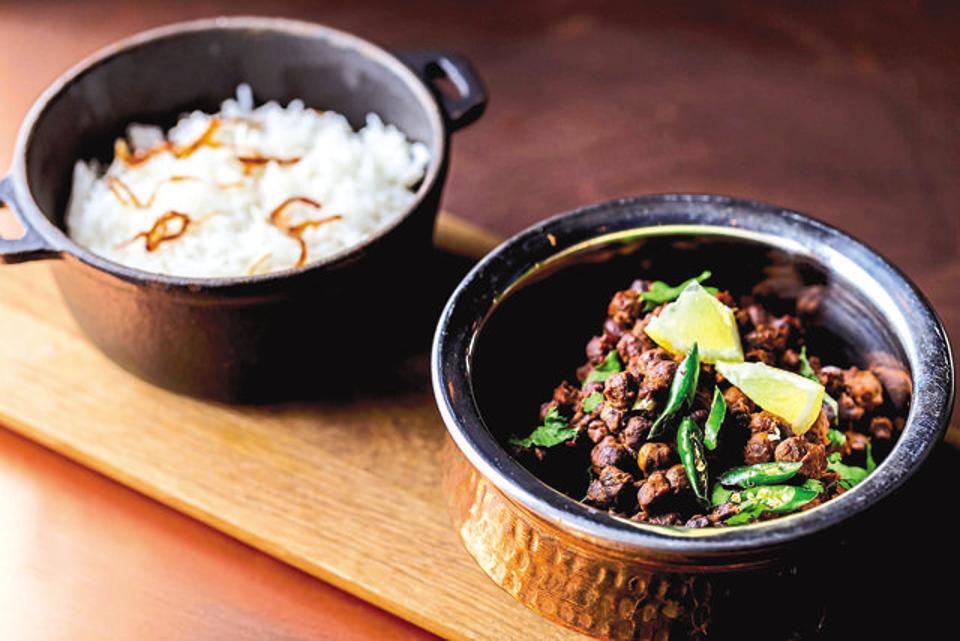
Black chickpeas (kaala channa) cooked with ginger and dried red chilies at Darjeeling Express ( Ming Tang-Evans )
She chose, for her thesis, a subject that was as far removed from Calcutta as possible: how the UK handles the separation of Church and State. But even as she was discussing whether the British monarch should be ‘defender of the faith’, a hitherto undiscovered cooking gene deep inside her reasserted itself.
Chef Vivek Singh offered Asma a pop-up at Cinnamon Club
She began to make the food of her ancestors, going back to old family recipes. Eventually, cooking became such an obsession that she started hosting pop-up dinners. Her husband disapproved of the idea so she cooked the dinners when he was travelling. (“We cleared up the house so well,” she laughs “that usko pata hi nahi chala!”)
But her two children, who were not happy with having the house taken over by strangers, complained to their father and soon the jig was up.
Asma is nothing if not super confident, so she called such famous London chefs as Cyrus Todiwala and Vivek Singh to her house for dinner to try her biryani. Even though none of them knew her, they came anyway. They were kind and encouraging. Vivek Singh was so impressed that he offered her a pop-up at his The Cinnamon Club restaurant. She took her all-women team of cooks and won over the all-male Cinnamon Club kitchen team. (“I will always be grateful to Vivek for that,” she says.)
The all-women kitchen team at Darjeeling Express, London
That gave her the credibility to do a full-time pop-up. Word of her skills got out. Fay discovered her. And the rest is the stuff Chef’s Table episodes are made of.
Now, with the success of Darjeeling Express, Asma is well-known in London. People make much of her nearly all-women team. (My wife, who came to lunch at Darjeeling Express with me, loved the female energy; she was sold on the restaurant even before the first dish arrived.) Asma is overtly political, speaking out about sexual harassment in restaurant kitchens, breaking the conspiracy of silence that women in the business have gone along with and has become a symbol of the success that Asian women can find if they overcome prejudice and their own apprehensions.
But ultimately, I judge chefs by their food not by their stories. And Asma’s was terrific. We had puchkas, Bihari phulkis (like pakoras), Kosha Mangsho, a Calcutta mutton chaap, kaalachanna, chicken samosas, beetroot chops and so much more. None of it was molecular or clever, clever. It was just excellent.
You will hear more about Asma in the months ahead.
After Gaggan, she is Kolkata’s second contribution to the global food world.
And you will hear about her in non-food contexts. She is opening all-women kitchens in conflict zones in Syria. As she says, “I don’t want to be remembered as a great chef. I want women to come to my grave and say ‘she changed my life’; that’s what matters.”
She is not short on confidence and ambition, our Asma. And I have a feeling that she will end up being the most successful person to ever emerge from the offices of Sunday magazine!
From HT Brunch, February 24, 2019 / Follow us on twitter.com/HTBrunch /Connect with us on facebook.com/hindustantimesbrunch
source: http://www.hindustantimes.com / Hindustan Times / Home> Brunch / by Vir Sangvi, Hindustan Times / February 24th, 2019
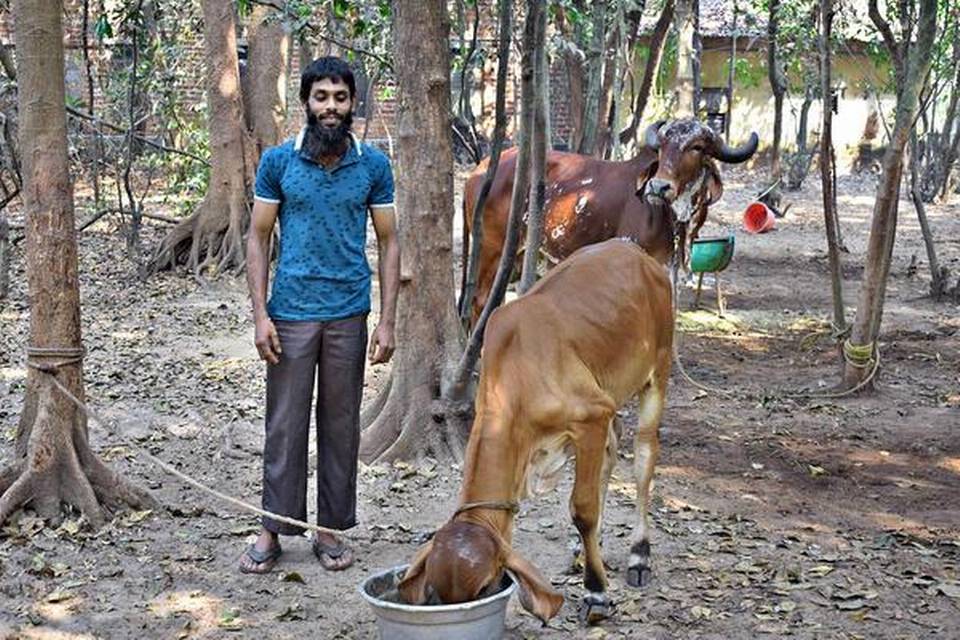
Mohammed Irshad Abideen tending the indigenous breed of cattle in his farm at Uppinakote village in Udupi district.
23 head of cattle are being reared in a farm house near Udupi
Three generations of a family have been conserving and breeding indigenous breeds of cattle here. The family has 23 head of cattle of Gir, Sahiwal, Red Sindhi, and Ongole breeds at Uppinakote village, about 18 km from Udupi. They are being reared in the farm house of 36-year-old Mohammed Irshad Abideen. His younger brothers, Naushad Ahmed, Mumshad Alam, and Sheik Mudassar, are supporting him in running the farm house.
Explaining their love for native breeds of cattle, Mr. Abideen said his grandfather Hanif Shah Saheb used to rear Malnad Gidda. His father, Jainulla Abideen, who used to rear Jersey and HF breeds for some time, later shifted to Malnad Gidda, Punganur, and Sahiwal breeds.
Mr. Abideen was engaged in helping his father ever since he completed his second year pre-university course. However, the family’s interest in indigenous cattle took a leap when Mr. Ahmed, who works as an engineer in Saudi Arabia, had gone to attend a bull show in Brazil about nine years ago.
“Naushad saw that most of the bulls were from India. We then decided to rear and breed only indigenous breeds of cattle,” he said.
More longevity
“The indigenous breeds of cattle are less prone to ailments, have more longevity, and provide better quality of milk,” said Sheik Mudassar.
“A Sahiwal cow gives 16 to 19 litres of milk daily, while a Red Sindhi gives 15 to 16 litres, and a Gir cow 13 to 15 litres of milk. I sell them at ₹70 a litre. Many people come to buy the milk as it is good for health,” said Mr. Abideen.
The breeding of indigenous cattle is lucrative. “We sell a male calf for ₹30,000 and a female for ₹50,000. We make a profit of ₹15 lakh to ₹20 lakh a year,” he said. The family grows corn and grass for their cattle on 2.5 acres of land taken on lease.
Many come to his farm seeking guidance. “We guide them in rearing and breeding of cows. We want our indigenous cattle breeds to thrive,” he said. Sultan, the Ongole bull, reared here, bagged the champion trophy at the Cattle Mela held at Sindhanur in Raichur district in January.
source: http://www.thehindu.com / The Hindu / Home> News> States> Karnataka / by Ganesh Prabhu / Uppinakote (Udupi District) / March 14th, 2019
As a river pilot, Naha’s work is to guide ships from Sagar right up to the Calcutta and Haldia ports through the meandering Hooghly
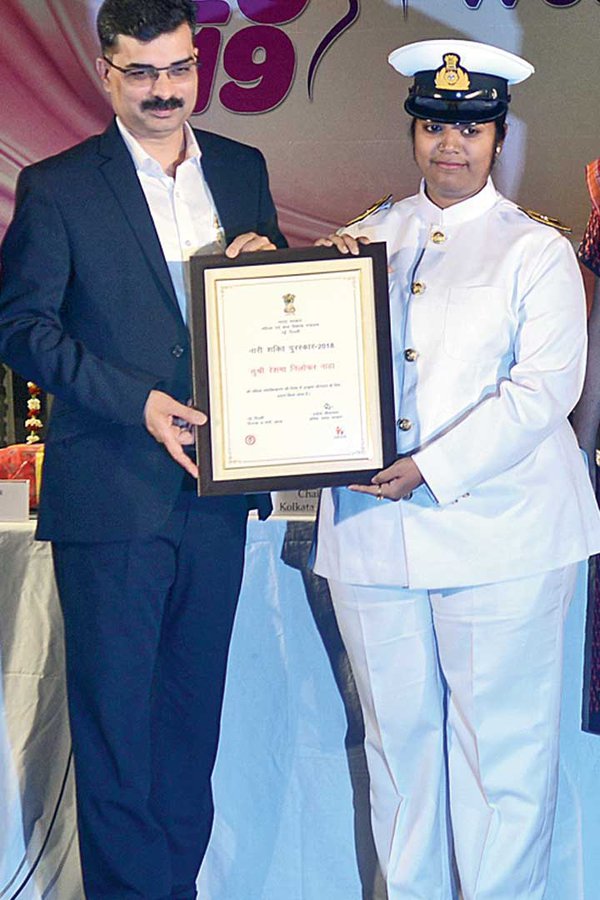
Reshma Nilofer Naha, India’s first woman river pilot, with Vinit Kumar, chairman, Calcutta Port Trust, at ICCR on Monday. Picture Bishwarup Dutta
Reshma Nilofer Naha goes to the high sea on a small boat, climbs on to a large vessel with a rope ladder and enjoys it.
India’s first “river pilot” was felicitated at a women’s day programme hosted by the Calcutta Port Trust on Monday, having returned from Delhi where she received the Nari Shakti Puraskar from President Ram Nath Kovind.
As a river pilot, Naha’s work is to guide ships from Sagar right up to the Calcutta and Haldia ports through the meandering Hooghly, something she has been doing “efficiently and professionally”.
“If you think there are no boundaries then you think everything is possible. There is no glass ceiling. It is just an imaginary concept we all have heard for many many years,” Naha, 30, said during a panel discussion on Challenges: Work and Life.
A BE in marine technology, Naha said she had been keen on an offbeat career ever since she was a child. The Chennai woman joined the Calcutta Port Trust in 2011 as a trainee pilot and qualified as a river pilot in 2018.
“It is a great feeling (to be the only woman river pilot) on one hand but on the other hand I would like to have other female colleagues very soon and I look forward to it. I think my story will inspire more women to get in here,” she said.
Naha said navigating the Hooghly is tough because of “bends and narrow channels” where the depth of the water is a concern. “We have different kinds of ships and each ship behaves differently. The tides are strong here… and all this makes pilotage tough,” she said, recalling how she had to once anchor for four days because of bad weather and strong winds.
“It is a proud moment for the Calcutta Port Trust to have India’s first lady river pilot with us…,” said Vinit Kumar, chairman, Calcutta Port Trust, who felicitated her.
“It is a long treacherous journey she has undertaken. To be a first in anything is always a challenge because the infrastructure, the attitudes, the systems are not very friendly or they are made with keeping only men in mind…. So the struggle of the first person is always more than those who follow,” Kumar said.
source: http://www.telegraphindia.com / The Telegraph, online edition / Home> West Bengal / by Jhinuk Mazumdar and Cordelia Nelson in Calcutta / March 12th, 2019
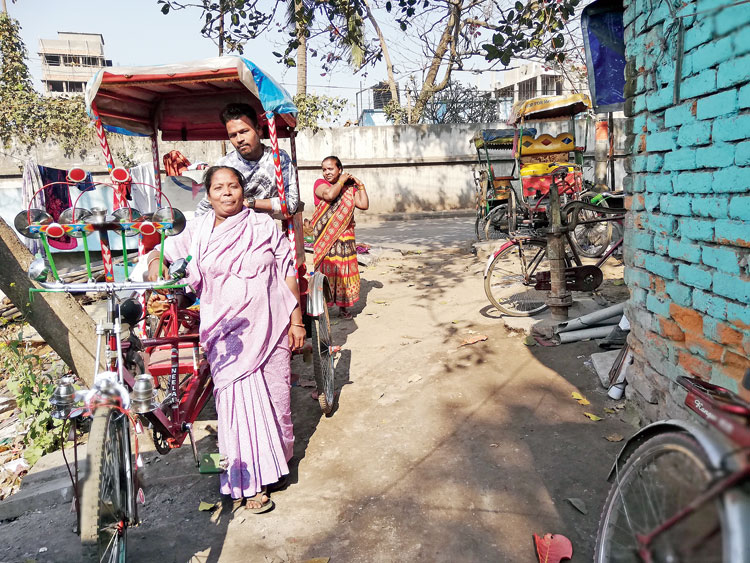
Ajmeri Khatun’s life has been a rags-to-financial security story
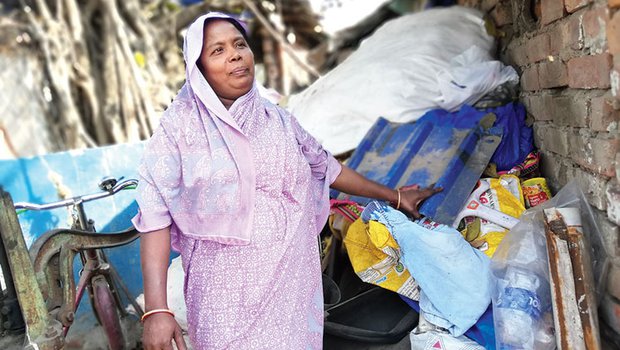
Ajmeri Khatun with her collection of waste / Image: Moumita Chaudhuri
The Topsia Canal Road of south Calcutta is home to 4,000 ragpickers. Forty seven-year-old Ajmeri Khatun is not one of them anymore, strictly speaking. About 10 years ago, she purchased her first rickshaw and today she owns a fleet of 11. But whenever she has some time on her hands she likes to sort waste.
The job of a ragpicker is to sort dry waste, the kind that can be recycled — plastic bottles of shampoo or detergent, glass bottles, tin containers, plastic caps. Ragpickers also look for electrical waste such as regulators of fans, metal changeover switches. “Copper, brass, iron, steel, they all fetch good money. Sometimes we even find silver,” says Ajmeri. Once sorted, these are sold to dealers or the kabadiwallah.
As Ajmeri and I take a walk along Canal Road, we spot some shanties with waste materials heaped in front of them. Some women are sitting on the road with their day’s collection spread out; they are segregating different kinds of waste. Ajmeri explains, “Ragpickers keep things in store for weeks. Only when they collect a biggish heap, do they sell it. Or else there is no money in it.” But before that they have to rummage through a lot of rubbish. She points to the hands and feet of these women, soiled with dirt, their skin rough and coarse from the day’s work.
Ajmeri is not a jaat kachrawali; her father was a rickshaw puller. Once she turned 14, he married her off. She says, “My husband was not employed, but his family owned agricultural land in south Bengal. My parents thought that would guarantee me a good life.” But in time Ajmeri got fed up of her husband’s joblessness. “He would do nothing the whole day. Sometimes he would be out flying kites, sometimes he would lay traps to catch birds, which he would sell at a price. I refused to stay in the village and asked my parents to bring me back to Calcutta,” says Ajmeri.
Back in Calcutta, at first, Ajmeri did not know what to do for a living. She says, “I used to sit at home all day. It was from my neighbours that I got to know that ragpicking could fetch me Rs 80 to Rs 100 a day. It was quite a lot of money in the 1990s.”
When she broached the topic to her family, no one was pleased. “But I was not ashamed of picking up waste,” says Ajmeri, her expression hardening at the memory. It fetched her money enough to pay for her daily expenses and according to her, that is all that mattered.
She continues with a straight face, bereft of any emotions, “The life of a ragpicker is not easy; that dirt will wash but not people’s impression of you. The men are regarded as thieves. And women ragpickers are twice as much despised,” she adds, all the while studying my expression. She keeps talking about how ragpickers get to work very early, often within hours of midnight; she talks about the stiff competition; the suspicious gaze of cops; the stray dogs breaking into a chase; and of course, the unwanted advances.
She narrates an incident wherein a local goon had once attacked her friend. Shehnaz had gone out all by herself one morning. A man whom she had seen earlier in the neighbourhood had followed her with the intention of snatching her silver bangles. There was a tussle and the goon slashed her cheek with a knife.
Says Ajmeri, “Shehnaz is brave girl. She went to the Beniapukur police station [in central Calcutta] bleeding and got her complaint registered. When she came back and told us about the attack, all the ragpickers went to the police station, and gheraoed it until the culprit was arrested and punished.”
She talks about seasonsal challenges too. “In the monsoon months, everything we collect is wet and the kabadiwallah gives us half the money because of this. Also, the waste is far more messier,” she says.
“You have to ignore the smell and the sight of the dirt. You have to put your hand into it to fish out something worthwhile. You have to wade through the rubbish. Nails have pricked my feet through my chappals so many times, I have lost count. Broken glass, rotten tin, sharp objects, there are so many things you have to be careful of,” she goes on.
Ajmeri Khatun with her son and some of the rickshaws she has acquired over the years / Image: Moumita Chaudhuri
Ajmeri has given up ragpicking for some years now. “But it is from the money that I earned as a ragpicker that I have built myself a pucca house,” she says pointing to the room where we are sitting. The room is painted a deep green. It has a double bed, an almirah neatly covered with blue synthetic curtains, a brand new refrigerator, a showcase stacked with crockery and shelves lining the walls, laden with aluminium utensils. There is a small kitchen adjoining this room and two more stand-alone rooms that she has built for her children.
It was in 2006 that Ajmeri came to know of the NGO, Tiljala Society for Human and Educational Development, that works towards improving the lives of ragpickers. Heera Ghosh, who works for the NGO, talks about how ragpickers are being phased out. She points out how the civic body has installed compactor machines in almost every place. Also, there are vans that collect domestic waste from households in the mornings. “So the ragpickers do not get to collect the waste at all, however early they might start,” she adds.
The NGO gave Ajmeri a generous grant. Says she, “I used the first instalment to buy a second-hand rickshaw. After three months, when I got the rest of the grant, I spent it to repair the rickshaw, which was in a poor condition.”
In between, Ajmeri lost her husband. He had been working as a daily wage labourer since they moved to Calcutta, but now with him gone Ajmeri says she felt overwhelmed at the prospect of bringing up four children all by herself. “I put the rickshaw on rent and continued to ragpick,” she says.
In 2009, she bought another rickshaw, and thereafter she bought eight more. “I had also opened a bank account and saved some money. I availed every loan that came my way. I am still paying some of them,” she says chirpily.
Today, she has married off two daughters. Her youngest has read up to Class IX. She now gives tuitions to children and attends Urdu classes herself at the local madrasah. “I have also bought a brand new rickshaw three months ago for my son,” she says and then laughingly adds, “My son did not want to pull a rickshaw. He said it was below his dignity but I told him that no work is low or mean as long as it gives you a respectable living.”
She talks about the changes in the ragpickers’ working conditions. “Now ragpickers have identity cards issued by the Rag Pickers Association of India.” Ajmeri along with 11 other women have started a self-help group. “We are saving Rs 100 per member every month and creating a fund which can be used to generate loans to any member who needs the money. That way, we will not have to depend on moneylenders or banks, we would also earn interest, and our kitty would become stronger and stronger,” she says with a sparkle in her eyes.
Ajmeri has given up ragpicking, but she has not given up working. Currently she works as a domestic help. She tells me how she collects plastic shampoo bottles and other waste from the family she is employed with. She says, “Seeing me recycle things, my employers too have started to recycle products of late, instead of throwing them hither and thither.”
source: http://www.telegraphindia.com / The Telegraph, online edition / Home> People / by Moumita Chaudhuri / March 10th, 2019
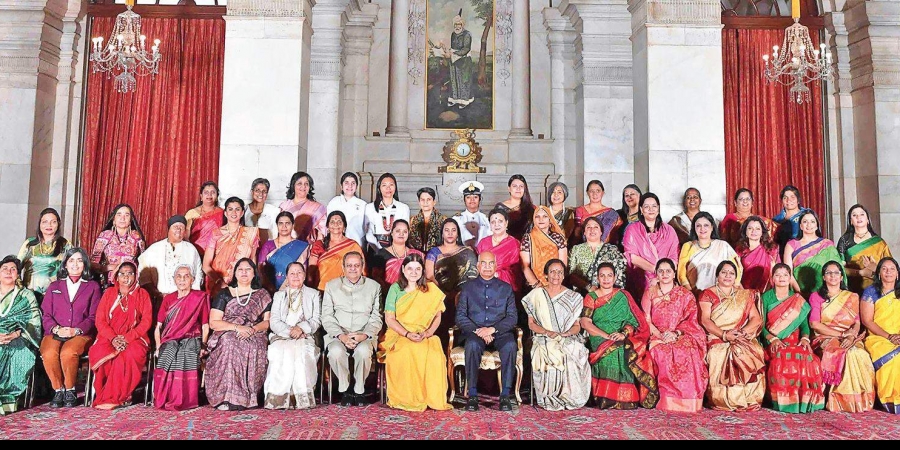
Other awardees included spiritual leader Sister Shivani, commando trainer Seema Rao and the only woman marine pilot in India, Reshma Nilofar Naha.
President Ram Nath Kovind with recipients of ‘Nari Shakti Puraskar-2018’ at Rashtrapati Bhawan in New Delhi on Friday.| PTI
New Delhi :
President Ram Nath Kovind on Friday presented the Nari Shakti Puraskar 2018, the highest civilian honour for women, on the occasion of International Women’s Day.
Among 44 awardees selected out of around 1,000 nominations received by the Women and Child Development Ministry were names such as scientists A Seema and Ipsita Biswas, Doordarshan News anchor Neelum Sharma, acid attack survivor Pragya Prasun, radio music composer Madhuri Barthwal and activist Manju Manikuttan.
Other awardees included spiritual leader Sister Shivani, commando trainer Seema Rao and the only woman marine pilot in India, Reshma Nilofar Naha.
“The awardees are a face of change, reflecting a shift in the status of women, from women development to women-led development,” said WCD Minister Maneka Gandhi adding, “No field has been left untouched, where women have not left their indelible mark, making women the leading force of our development trajectory,” she added.
A statement by the ministry said that while making the selection from the nominations, the nominee’s contributions in empowering vulnerable and marginalised women was taken into account.
source: http://www.newindianexpress.com / The New Indian Express / Home> Nation / by Express News Service / March 09th, 2019