Category Archives: Business & Economy

Mumbai Based Businessman Offers Rs 110 Cr To PM Relief Fund For Pulwama Martyrs

Kota, RAJASHTAN / Mumbai, MAHARASHTRA :

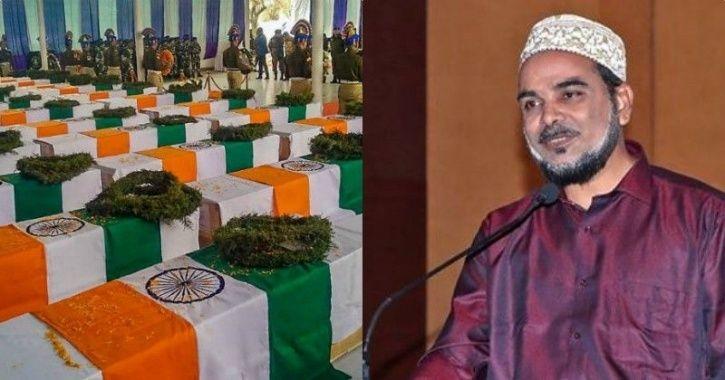
The 44-year-old Murtaza A Hamid, a Mumbai based businessman has offered to donate Rs 110 crore from his taxable income to the PM’s National Relief Fund which gets spent on the welfare of the families of the Pulwama martyrs.

PTI/DAINIK BHASKAR
PTI/DAINIK BHASKAR

The businessman Hamid, who hails from Kota sent an email and  sought an appointment to PM Modi in this regard. Visually impaired by birth, Hamid had graduated from Government Commerce College, Kota and is currently working as a scientist and researcher in Mumbai.

Speaking to TOI over phone Hamid told what inspired him to donate, “The inspiration to help and support those who lay down their lives for our motherland should be in the blood of every citizen of the country.”

ShamimMurtuzaMPOs17mar2019


Hamid also said that he regrets that if the government had recognised his scientific innovation timely, the incident like Pulwama could have been averted. He claimed that he innovated ‘Fuel Burn Radiation Technology’  which helps to trace and to locate any vehicle or object without GPS, camera or any other technical machinery.

He also claimed that he had proposed to government and offered his innovation free of cost to NHAI in September 2016,  but he received the approval two years later in October 2018 and there has been no further development ever since.

(With TOI inputs)

source: http://www.indiatimes.com / India Times / Home> News> India / by Maninder Dabas / March 04th, 2019

Fatima and Fatima

Kolkata, WEST BENGAL :

Two remarkable women from the family of Wajid Ali Shah, the last king of Awadh, are reviving his culinary tradition in Calcutta, the city where he famously introduced potatoes into the biryani!

Last king of Awadh,Wajed Ali Shah,Manzilat Fatima

Manzilat Fatima is a descendent of Wajid Ali Shah, the last Nawab of Awadh who spent 29 years in exile in Metiayaburj, a Calcutta suburb. She launched a pop-up restaurant of Awadhi cuisine in 2014 and a home dining service, Manzilat’s, in 2018 in Calcutta. (Arijit Sen/HT Photo)

What do you do you do if a goose is plump beyond reason, won’t lay eggs and needs too much feed? Cook it, I guess. And that’s what the British Crown did to Wajid Ali Shah, the last king of Awadh, who ascended the throne as a 25-year-old in 1847 and was dethroned nine years later in 1856, a year before the first war of Indian Independence broke out.

The British said this was done because he lived and ate like a king and did little else, thus overlooking his military reforms, his attempts at administration which the East India Company did its best to thwart, and his immense popularity with his subjects.

Packed off to Metiyaburj, about four miles south of Calcutta, the ousted king was joined by his prime minister, some of his wives, musicians and officials. His chefs attended to this displaced court as best as they could. They prepared their master’s banquets with the lavishness of his days as monarch, so that when he sat for his meals, he would remember Lucknow as his great romance and not the painful reality of its passing.

If five kilogrammes of lamb mince was used to make a single kofta when he had been the king, they were not going to scale down, when he was no longer one.

Wajid Ali shah during his days in exile in Metiyaburj, a Calcutta suburb, wearing his trademark kurta with part of his chest exposed. His descendants say it was an expression of his heart being open to his subjects. ( Arijit Sen/HT Photo )

But how do you claim, centuries later, that one of India’s most famous ex-royal is your old man and that you are the sole inheritor of the royal cuisine he helped found? Wajid Ali Shah’s descendants Manzilat Fatima, 51, and Fatima Mirza, 45, of Calcutta are doing that, courtesy the documents of political pensions of their families on the one hand, and by cooking his food, on the other. Team Manzilat and Team Fatima, both say they are the real thing.

***

Family recipes are a cook’s real estate. Wajid Ali Shah’s descendants face the problem of plenty. At the time of his death, the king had 250 wives and 42 children so no ‘family recipe’ matches the other. The British also made sure that after the king’s death in 1887, his days in exile would go undocumented.

On Fatima Mirza’s table: Kachhe Tikia ke Kebab, Mutton biryani, Nargisi Kofta. Mirza is a great-great grandchild of the last king of Awadh. ( Arijit Sen/HT Photo )

“His successors and his subjects were left with nothing,” says Wasif Hussain, the manager of the king’s mausoleum in Metiyaburj. “I’ve heard that in Chartwell House [the country home of a former British premier, Winston Churchill], his kitchen with its tea-kettle, his flour bin, the utensil rack and the weighing machine have been left intact…. It’s a museum….”

A law graduate, Manzilat Fatima, is from the ‘ruling line’. Her father, Kaukub Meerza, a former Reader of the Aligarh Muslim University, is the grandson of Birjis Qadr, the son of Begum Hazrat Mahal and Wajid Ali Shah. Birjis was crowned king by Mughal emperor Bahadur Shah Zafar during 1857 as Wajid Ali Shah was by then in Calcutta. Birjis met his death in 1893 after dinner at a relative’s home in Metiyaburj.

This was not the first time that poisoning had killed an Awadhi royal, Sudipta Mitra, author of Pearl by the River, a book on Wajid Ali Shah’s exile, points out. Royal biographies mention a consort sending the king paan as a token of her love during their better days and the king not putting it past her to lace its leaves with poison when those days were over.

The murder of Birjis and its memory have stayed with the family for over 120 years. It has seeped into Manzilat’s remembrances of her childhood home (“My paternal grandmother would always check the food before it was served to family members”), and explains her impatience with ‘proof’-seekers. Ever since she launched a pop-up restaurant of Awadhi cuisine in 2014 and a home dining service, Manzilat’s, in 2018 in Calcutta, there are some set questions she has had to answer.

“ ‘Do I have monogrammed table-mats from Wajid Ali’s time?’ ‘Did I inherit a recipe book?’ No, I didn’t! Birjis’ murder snapped our links with the other branches of the family. His wife escaped from Metiyaburj to Calcutta…. And besides, my great-great-grandmother, Hazrat Mahal, was a queen who was fighting the British, not writing cookbooks. For a while, I made this my FB status,” says Manzilat cheekily while adding finishing touches to an order of Ghutwaan Kebab (made of mashed meat marinated with papaya) that a delivery man from Swiggy is waiting for her to complete, besides the mandatory biryani.

Manzilat makes a good mutton biryani, but with mustard oil to keep it non-greasy and light; Fatima Mirza, a school principal (she is of the line of Wajid Ali Shah’s principal consort, Khas Mahal) and her husband Shahanshah Mirza (his father Wasif Mirza is another great grandson of Wajid Ali Shah) consider the leaving out of ghee an overturning of the “basic biryani rule-book”. Both families, however, have more in common than they think.

While Manzilat’s cooking displays her control in colour, sense of proportion and spicing so integral to Awadhi cooking, Fatima, too, has considerable domain knowledge. Since 2018, she has been working on a cookbook penning family recipes such as the Kachhe Tikia ke Kebab.

“This is the only Awadhi kebab in which sattu is added and it was a Wajid Ali Shah favourite,” she says. “To neutralise the heat of meat and to make it easily digestible, hakeems advised chefs to add sattu (ground Bengal gram) as the king aged. The trend seems to have been to keep things light and fragrant.”


Shahanshah Mirza, another descendant of Wajid Ali Shah, with a family heirloom – a ceramic bowl. Such bowls were common in royal households. Their contents were checked by food inspectors before they were placed before the nawab. They had a special coating which would ‘crack’ if the food had poison, says Mirza. ( Arijit Sen/HT Photo )

Shahanshah Mirza, a government official and heritage enthusiast, elaborates on the difference between Awadhi and Mughlai cuisine. “Unlike Mughlai, ours has no overdose of mace or cardamom or dry fruits. We say about Urdu, Urdu aap ke zubaan pe hamla nahin karta hai, speaking it, does no assault to your tongue… Likewise, Awadhi food plays on understatement. It is big on presentation though.” Any aspiration to cheffy-ness of the standard of the former royal house of Awadh has to get the food styling right.

Wajid Ali’s descendants also make great allowances for a master chef’s ego. It was not uncommon in the heyday of the king to have his chefs refuse to cook for any other branch of the family. Some of the chefs even announced during the time of seeking employment that they were not going to expand their expertise! That is, the maker of dal would remain a dal specialist throughout his life. A biryani cook would touch nothing else.

***

The Sibtainabad Imambara, the mausoleum of Wajid Ali Shah and his son Birjis Qadr at Metiayaburj. Birjid was declared king in the absence of his father by the sepoys during 1857 and his kingship was acknowledged by the Mughal emperor, Bahadur Shah Zafar. ( Arijit Sen/HT Photo )

In Metiyaburj, Guddu, a grandson of Puttan, a descendant of one of Wajid Ali Shah’s great chefs, drops by at the Shahi Imambara, for a chat. He talks of a dish that has the sound of one made in Awadh’s hoary past. There are few “with the stomach and liver of Wajid Ali Shah” to digest dishes like a meat mutanjan (a rice dish) now, Guddu says. But Nawabi biryani, and yes, with the potato, is everywhere.

Do kings thus prepare the future food of the people? The rich trying out the pleasures that the masses will eventually grasp is something historian Fernand Braudel has elaborated upon in his works. Rows of biryani shops of various prices line the road on either side of the king’s mausoleum. “Jameson Inn, a branch of Shiraz [an old Calcutta eatery], began to make a Murgh Hazrat Mahal in 2011,” informs Hussain, the Imambara manager. But there is a piece of information doing the rounds he would like to correct.

“The potato was added to the biryani because of its exotic value. It was a new vegetable in the market introduced by the Portuguese,” says Hussain. Both Fatimas back this view. According to Abdul Halim Sharar’s Guzishta Lucknow, considered to be the go-to book for any information on Wajid Ali Shah’s exile, the king spent Rs 24,000 on a pair of silk-winged pigeons, Rs 11,000 on a pair of white peacocks and approximately Rs 9,000 a month on food for some animals in his zoo in Metiyaburj.

“If a man could afford so much, he could certainly add more meat to his biryani and not bulk it up with potatoes,” suggests Fatima Mirza. The king would presumably also not risk his social prestige. At the evening concerts in the then resplendent Sultan Khana that had all the splendour of his palaces in Lucknow, when the Calcutta elite would visit, with thumri, there was biryani and it had potatoes. Surely Wajid Ali Shah would not have a dish served that had hard times written all over it.

(L-R) Mohammad Sulaiman Qadr Meerza with his grandfather, Kaukab Meerza, the great grandson of Wajid Ali Shah and Begum Hazrat Mahal, and his father, Kamran Meerza. ( Arijit Sen/HT Photo )

******

Mohammad Sulaiman Qadr Meerza, 9, in a yellow tee and jeans is following the discussion on food and music, and the Awadh royal family closely. When he was six, his father Kamran (Manzilat’s brother), a businessman, disclosed his antecedents. He told his friends in between classes at school that he belonged to a royal family.

His friends asked: “Which one?” Sulaiman said he was the fifth generation of Wajid Ali Shah and Begum Hazrat Mahal. They did not believe him.

Next year, when he is 10, Sulaiman has plans to grow bigger. And then he will try to convince them. He says he must give it one last try.

Kitchen confidential- Nawabi recipes passed down the family
MANZILAT FATIMA’S PINEAPPLE MUTANJAN
INGREDIENTS
  • 1 cup Gobindo Bhog rice soaked for an hour
  • 1 cup sugar
  • 2 cups chopped pineapples
  • 2 1/4 cups boiling hot water (boiled with saffron strands and a pinch of kesariya colour)
  • 1 tbspoon pure ghee
  • 1 cup grated mawa
  • 1 clove; 1 cardamom; almond slivers
METHOD:

Take a heavy-bottom handi, add ghee. When hot, add cloves and the cardamom, then add the whole of the drained rice and saute quickly on medium flame.

Pour the hot water in the handi. Keep the flame high for 2-3 minutes, lower the flame and keep on sim till the rice is 3/4 cooked.

In another handi, scoop out the cooked rice and make a layer; sprinkle 1/2 of the sugar and 1/2 of the chopped pineapples and 1/2 the grated mawa.

Similarly, repeat a second layer, cover the lid and keep the handi on a tawa on sim. Leave for 5-10 minutes till the sugar melts and all ingredients blend well. Switch off the gas.

Before serving lightly mix the layers, serve hot after garnishing with silver leaf and almond slivers.

FATIMA MIRZA’S KACHHE TIKIA KE KEBAB
INGREDIENTS
  • Mince meat 500 gms; salt to taste
  • Bengal gram flour (roasted, powdered) 2 tsp
  • Garam Masala powder -1 teaspoon
  • Paste of nutmeg and mace -1 tsp
  • Onions -2 big ones; ginger-garlic paste -3 tsp; raw papaya paste -2 tsp
  • Green chillies -2; coriander leaves
  • Ghee for frying
METHOD:

Wash the minced meat. Fry the onions till they are golden brown. Mix garam masala, a paste of nutmeg, mace, fried onion and ginger-garlic paste. Sprinkle salt as desired. Add the raw papaya paste. Keep it aside for 10 minutes.

When the mutton turns tender, then mix the chopped coriander leaves and green chillies.

Using the mince mixture make flat round patties (tikia) of even size. Pour ghee into a pan. Heat it on a low flame. When the ghee crackles, start frying the patties till golden brown.

Drain out the excess ghee and serve it hot.

source: http://www.hindustantimes.com / Hindustan Times / Home> India / by Paramita Ghosh / Hindustan Times / February 24th, 2019
 

Ammi’s sass in a bottle

Hyderabad, TELANGANA :

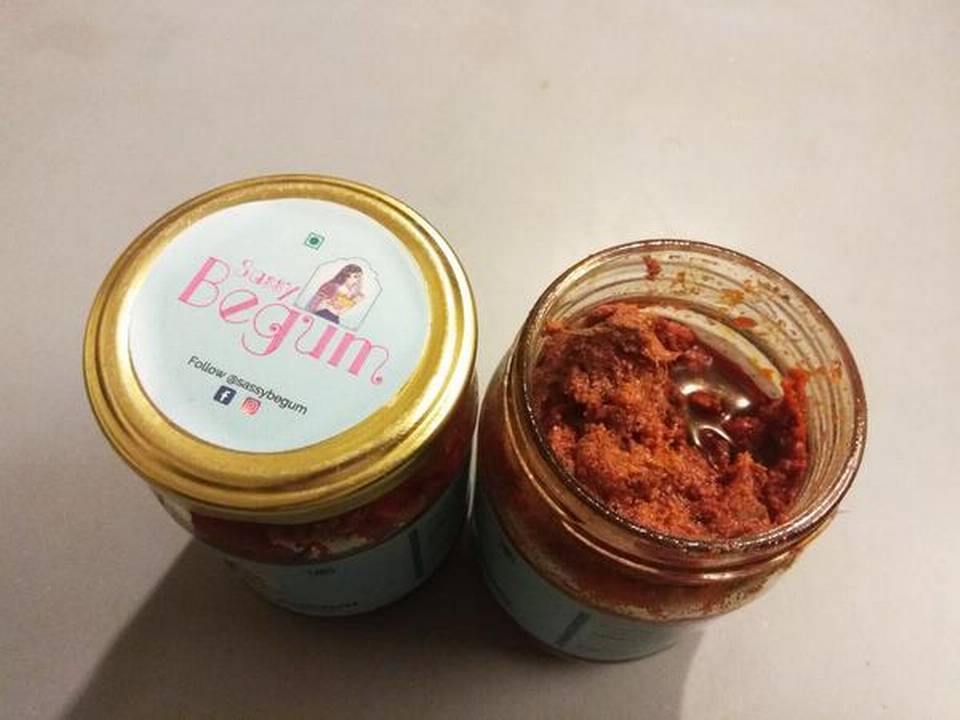
SassyBegumMPOs24feb2019

The heat of the masala, the tart of the mango, and the bite of garlic — a surprise delivery worth writing home about

It all started with a post on Facebook. My friend Amita wrote about a harrowing experience she’d had with an online order of pickles. She was lured by some “mouth-watering pictures of plump veggies glistening with oil, sitting on golden paranthas,” but ended up feeling “foolish and short-changed”. The pickles cost a bomb, but leaked oil when they arrived. The vegetables were still raw, and she was informed that she had to keep the jar out in the sun for several days. No, that was not nice.

Pleasant pickles

I, on the other hand, had a smooth experience with a recent pickle delivery. For one, I had not asked for them, so they came as a pleasant surprise. Two, they were well-packed and leaked no oil. Three, though I could only try out a tiny bit from the two kinds of pickles that had arrived, they were rather good.

The pickles are from Ammi ke Achar, and are being marketed by a young man called Sahil Hassan, who runs a food-delivery system known as Sassy Begum. The Hassan family prepares and sells hot and delicious Hyderabadi pickles prepared with garlic, mango, gongura, tamarind, and lime.

The spicy mango achar in avvakai masala, and the garlic pickle are for ₹375 (for 300g). The raw tamarind thokku chutney (with tamarind, green chillies, fenugreek seeds), nimmakaya (lime), and gongura pickles are for ₹300 (for 300g).

I liked the masala and the tartness of their mango pickle, and the raw, edgy bite of the garlic pickle. The pickle recipes, Sahil tells me, have been in the family for generations. Some of them can be found in Saffron and Pearls, a book written by his mother, Doreen Hassan.

In my house, people have diverse views about pickles. My favourite is gobhi-gajar-shalgam – a sweet and sour pickle of cauliflower, carrots, and turnips. My friend Raj got me some of this recently, and I have been quietly licking my fingers. My wife likes the Bengali sweet pickle prepared with a berry called kul. Our home-manager loves anything that is hot and spicy, so she embraced a prawn pickle that another friend had brought for us last week. And she has been lapping up Ammi ke Achar.

Banarasi chillies

In the last few months, I have ordered pickles online from Delight Foods, and another site called Place of Origin. You get everything here — from the stuffed red chillies of Banaras to sweet lemon pickle, topa kuler achar, and jackfruit pickle.

Products from the best pickle place in Delhi — Harnarain Gokulchand in Khari Baoli — can also be bought online. From an Assamese food site, I ordered some pork pickle which was, however, not very exciting.

But if you want to make your own pickle, you could try this baingan ka achar (eggplant pickle) from Doreen Hassan’s book: Wash, dry, and cube 750g of eggplants. Soak them in salted water for 3-4 hours. Take 1 litre of vinegar. Take 30g red chillies and grind them in some of the vinegar. Grind this to a fine paste, along with 30g green chillies, 2tsp turmeric powder, 1 tsp black pepper, 1/2tsp fenugreek, 1tsp mustard seeds and ½ tbsp cumin seed, using more of the vinegar as needed.

Heat ½ litre of refined groundnut oil; bring to a boil. Add the masala and fry until fragrant. Add 2 sprigs of curry leaves, 3tsp chopped ginger, and 2tsp of chopped garlic. Fry well. Add salt. Add the eggplants and 150g of sugar. Add the remaining vinegar. Cook on slow heat till the eggplants are done and the gravy has thickened. Cool and bottle.

Try it out. You will — pardon the pun — relish it.

For more information, call 9999122999 or log on to sassybegum.com.

source: http://www.thehindu.com / The Hindu / Home> Life & Style> Food / by Rahul Verma / February 23rd, 2019

Dr Najma Heptulla inaugurates National Unani Conference

NEW DELHI :

The National Unani awards were presented on the first day of the two day conference

The National Conference on Unani Medicine kicked off on Monday with much fanfare in the presence of a galaxy of dignitaries.

“Unani Medicine can offer the right solution for many health challenges we are facing due to lack of treatment of many diseases and paucity of resources”, said Dr. Najma Heptulla, Governor of Manipur, inaugurating the two-day conference organized by the Central Council for Research in Unani Medicine (CCRUM). It is a part of the 3rd Unani Day celebrations.  Dr. Heptulla urged the Unani fraternity to progress and evolve with the changing times, adapt to new techniques of health research and contribute new approaches to health management. She said that Manipur has the treasure of over 500 medicinal plants and invited scientists to visit the state for research. 

Addressing the conference themed on ‘Unani Medicine for Public Health’, Minister of State (IC) for AYUSH, Shripad Yesso Naik enlightened the audience on concrete steps taken by the Ministry of AYUSH to promote Unani Medicine.

The Lifetime Achievement Awards were conferred on Prof. Naeem Ahmad Khan, Aligarh Muslim University, Aligarh and Prof. M A Jafri, Jamia Hamdard, New Delhi for Best Academician and Best Researcher in Unani Medicine respectively

“Our efforts are focused to tap the real potential of AYUSH systems in imparting preventive, promotive and holistic healthcare to the people,” he said. Paying tributes to Hakim Ajmal Khan, whose birth anniversary is celebrated as Unani Day on 11thFebruary every year, he described him as a versatile genius.

Highlighting the strengths of Unani Medicine and other AYUSH systems in his address, Union Minister for Minority Affairs Mukhtar Abbas Naqvi said that the AYUSH systems are golden key to health and wellbeing. India is the strongest hub of Traditional Medicine which is one of the reasons medical tourism is flourishing in the country. He stressed on Integration of Unani Medicine in Mainstream Healthcare in line with the government policies and initiatives for mainstreaming of AYUSH in national healthcare.

On this occasion, AYUSH Awards for Unani Medicine were conferred on various Unani scientists and experts in recognition of their contributions for research, teaching and practice of Unani Medicine.

The Best Research Paper Awards were presented to Dr. Arshiya Sultana, Associate Professor, National Institute of Unani Medicine, Bangalore for Clinical Research and Dr. Noman Anwar, Research Officer (Unani), Regional Research Institute of Unani Medicine, Chennai for Drug Research in Unani Medicine. The Young Scientist Awards were conferred on Dr. Jamal Akhtar, Research Officer (Unani) Scientist – III, CCRUM for Clinical Research and Dr. Nasreen Jahan, Associate Professor, National Institute of Unani Medicine, Bangalore for Drug Research in Unani Medicine.

The Best Teacher Awards were presented to Prof. Tanzeel Ahmad, Aligarh Muslim University, Aligarh for Clinical Research, Prof. Mohd Aslam, Jamia Hamdard, New Delhi for Drug Research and Prof. Khalid Zaman Khan, Aligarh Muslim University, Aligarh for Literary Research in Unani Medicine. The Lifetime Achievement Awards were conferred on Prof. Naeem Ahmad Khan, Aligarh Muslim University, Aligarh and Prof. M A Jafri, Jamia Hamdard, New Delhi for Best Academician and Best Researcher in Unani Medicine respectively.

source: http://www.medibulletin.com / MediBulletin / Home> Alt Medicene / by MediBulletin Bureau / February 11th, 2019

Frozen in time

Mumbai, MAHARASHTRA :

AamirIcecreamwala01MPOs19feb2019

Mumbai’s bustling Bhendi Bazaar has an age-old little shop, which has been famous for its hand-churned ice creams since 1887

Taj Ice Cream, situated in the bylanes of Mohammed Ali Road, Mumbai, is a century-old joint known for its hand-churned ice creams.

It dates back to 1887, when Valilji Jalaji from Kutch arrived in Bombay and started selling fruits and milk mixed in an earthen pot. The man, was totally unaware that he was inadvertently laying the foundation for a rock-solid business — Taj Ice Cream would go steady for over a century.

Today, the same place in Bhendi Bazaar, albeit small, still draws a huge crowd on a daily basis. The man at the counter is 29-year-old, soft-spoken, Aamir Hatim Icecreamwala, the sixth generation at the helm of affairs. He says his father Hatim Sharifali Icecreamwala still visits the shop daily.

“The brand got its name from my grandfather’s best friend Tajuddin, who used to come from Kutch to eat our ice creams. My grandfather thought it was to befitting to name the shop after a loyal customer like him,” reveals Aamir. “Even our surname — Icecreamwala — is something conferred upon Valilji, as people referred to him as that.”

The journey

What started off as a means to eke out a living, soon became a passion. Valilji scouted for ice and started making hand-churned ice creams with fresh fruits, full-cream milk and sugar. The response to his dessert was phenomenal, and gradually, his chilled treats grew in popularity.

Aamir shares, “Although the shop was started in 1887, it was only later that ice creams were made. When Valilji started the place, procuring ice was not possible because it was a luxury item and was expensive.”

It runs in the family

For years, the business has been run successfully by family members. In 2016, Hatim Sharifali and his brothers parted ways, leaving Hatim and his son Aamir now solely in charge of Taj Ice Cream.

AamirIcecreamwala02MPOs19feb2019

From just six flavours that were always available, the menu today boasts of 16 varieties, including the popular sitaphal (custard apple), mango, strawberry, litchi and guava. Furthermore, the brand, which was previously low-key, now has an active social media presence. The credit for these changes goes to Aamir, who returned from Dubai after giving up his job to take the family business to the next level in 2016. “Changing with times is important. Hence, I created a logo, brand identity and ensured we are on delivery platforms and active on social media too, as that is the need of the hour,” explains Aamir candidly.

Besides branding and a bit of marketing, Aamir admits they have changed nothing.

“Valilji was a visionary and had everything chalked out meticulously. Even the copper canister or sanchas, in which we churn the ice cream, are from his time. All we have to do is maintain them every year,” says the man with a smile. He adds, “Our staff too is third-generation and are familiar with the quality requirements. The business is almost on an auto-pilot mode.”

The other plus is they use fruits and the ice creams are said to have no softeners, colours, preservatives or additives.

“That is the first thing I learnt from my father. We never compromised on quality. The fruits are purchased personally by one of us and the milk has been coming from the same place for years now, as we are sure of the quality and hygiene,” informs Aamir, who assures us that every batch of ice cream is tasted by him or his father for quality and consistency.

Famous customers

From actors like Madhubala, Suraiya and Johnny Walker to the popular director-duo Abbas-Mustan and politician Farooq Abdullah, Taj Ice Creams has hosted many celebrities over the years.

“Once upon a time, we used to even cater to the prestigious Radio Club during the British era. But my father tells me that the moment the Shah of Iran, when he visited Mumbai, stayed at Taj Mahal Hotel and asked for our ice creams, was the high point in his life,” shares Aamir.

Apart from working on new flavours like jackfruit and tender coconut, Aamir is keen to get an organic and natural certification for his brand. He has also opened a new outlet in Bandra East and hopes to expand further.

For now, it is just another day, when he is busy tasting the next batch of ice creams, before they go out to customers.

In this fortnightly column, we take a peek at some of the country’s most iconic restaurants

source: http://www.thehindu.com / The Hindu / Home> Life & Style> Food – Iconic Restaurants / by Mini Ribeiro / February 07th, 2019

3,000 books in top honcho’s library

Bengaluru, KARNATAKA / Silicon Valley, USA  :

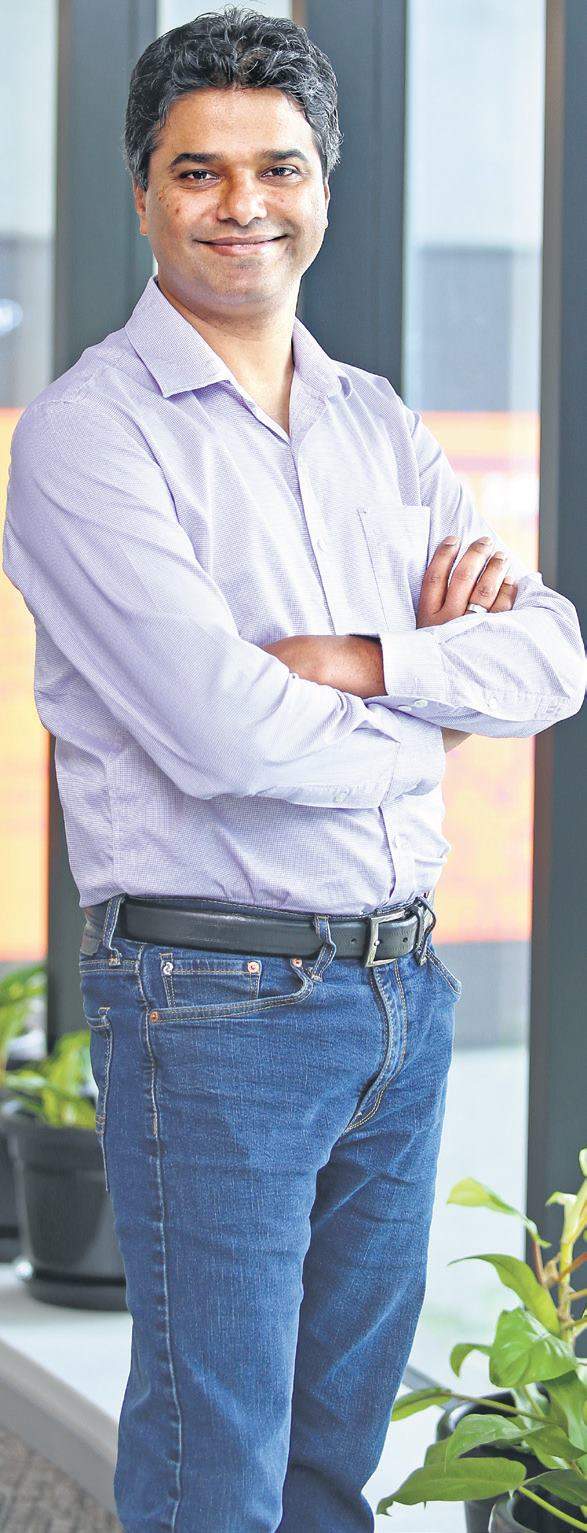
As senior vice-president of SAP, V R Ferose’s job has taken him to as many as 40 countries.

Ferose01MPOs30jan2019

Bengaluru :

As senior vice-president of SAP, V R Ferose’s job has taken him to as many as 40 countries. With back-to-back meetings and tight schedules, Ferose rarely has had any time to explore the places. But the corporate honcho has found a unique way of understanding cultures: Visiting bookstores. In fact, he even planned an entire vacation to visit the world’s largest independent bookstore – Powell’s Bookstore in Portland, USA.

VR Ferose
VR Ferose

As a child, Ferose read magazines such as Reader’s Digest and comics, but his reading habit didn’t really take off until college. “My wife Deepali was a voracious reader, and gifted me Eric Segal’s The Class. That is when I got hooked to reading,” he says.

Today, he has more than 3,000 books in his collection, but Ferose reveals that he doesn’t have a particular way of organising these books. “Currently I am cataloguing my 100 rarest books.

I have always wanted to organise my books properly, but never found the time. Also, I find there is fun in randomness and the hunt for finding a book is a part of the experience,” he says.People may call him crazy for his quirky hobby, but his wife has always been supportive. To an extent. He explains: “I have no more place in my home or office. Sometimes, my wife gets frustrated when books pile up in our wardrobes.”

So in order to strike a balance, Ferose does what most booklovers would find hard to do: “I have started giving away books – every time I buy a book, I give away one!” says the senior corporate professional.
On a visit to the Nobel museum in Stockholm, he found that every chair in the cafeteria was signed by a Nobel Laureate. This then sparked off another idea: to collect books signed by Nobel Laureates.

Over a decade, Ferose managed to expand his collection of such books to 67. This collection includes Geetanjali signed by Tagore, My Experiments with Truth signed by Gandhi, Effects And Self Fertilization In The Vegetable Kingdom signed by Darwin, Where Do We Go From Here signed by Martin Luther King and Profiles In Courage signed by John F Kennedy.

Ferose03MPOs30jan2019

His favourite, however, is Man’s Search for Meaning by Victor Franklyn. “It was hard to get a signed book by him, since he rarely signed books. Getting this copy from a book dealer was a high point,” he explains.

His favourite bookstores are all over the world, from Mystery Pier Books in LA (where every book is a true first edition) to El Ateneo in Buenos Aires (considered to be the most beautiful bookstore in the world) to Bookworm in Bengaluru. Collecting books, however, isn’t just a hobby for Ferose. “It’s also about focus and constant learning. A hobby allows me to stand out in the crowd and it’s something I lean on in good times and bad. As they say, books are uniquely portable magic,” he says.

source: http://www.newindianexpress.com / The New Indian Express / Home> Cities> Bengaluru / by Simran Ahuja / Express News Service / January 08th, 2019

Once Exploited, These Women Chikan Karigars of Lucknow Are Masters of Their Designs Today.

Lucknow, UTTAR PRADESH :

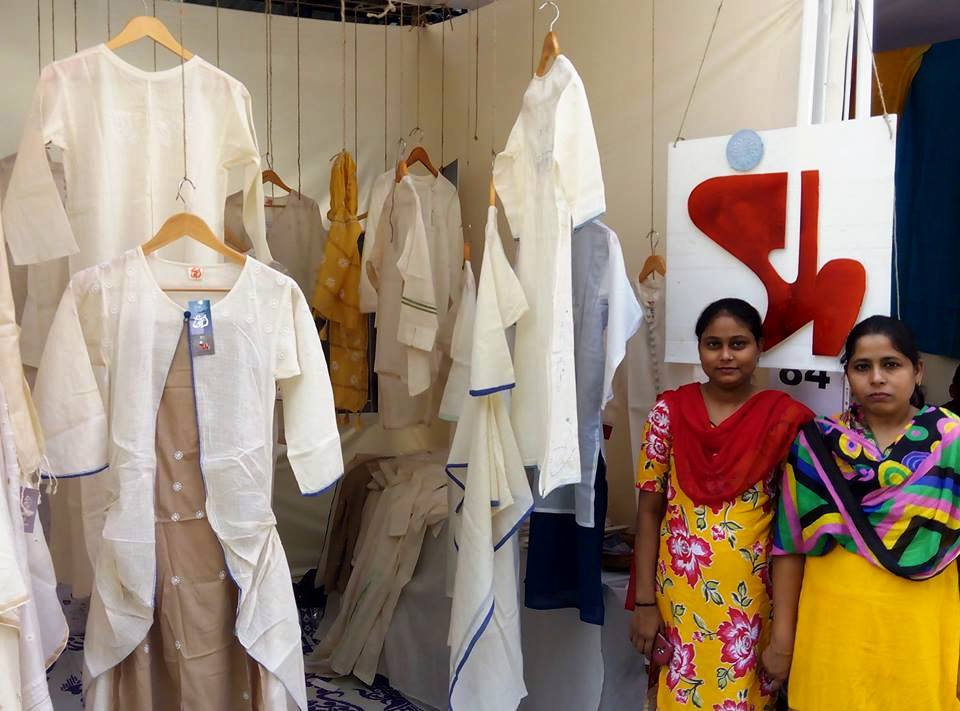
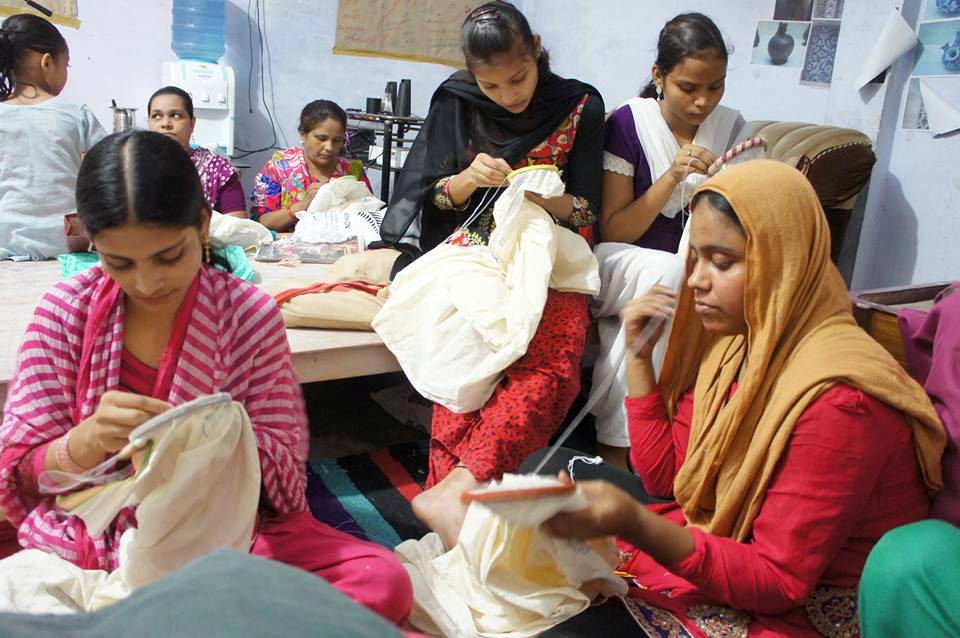
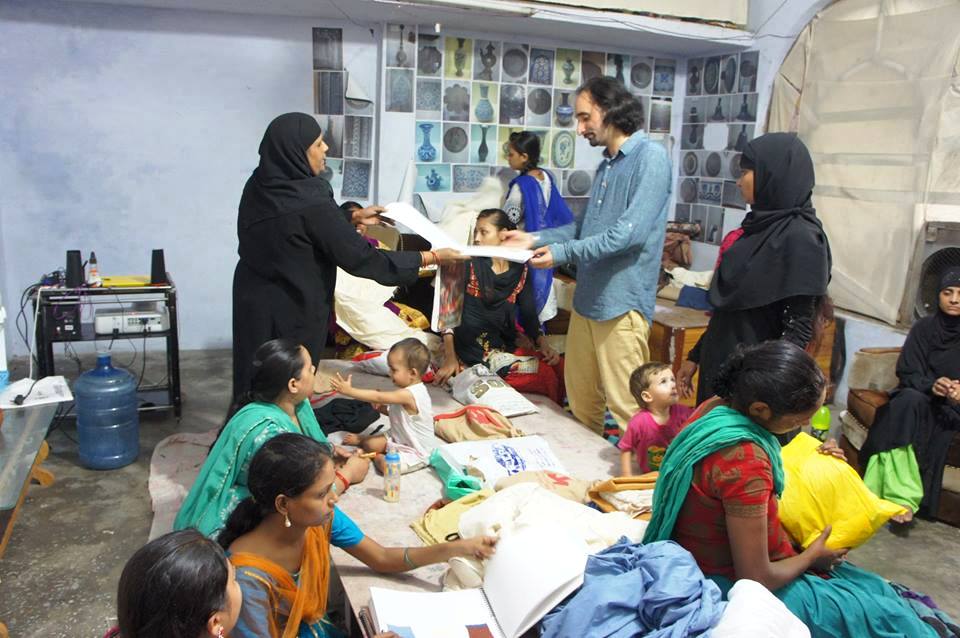
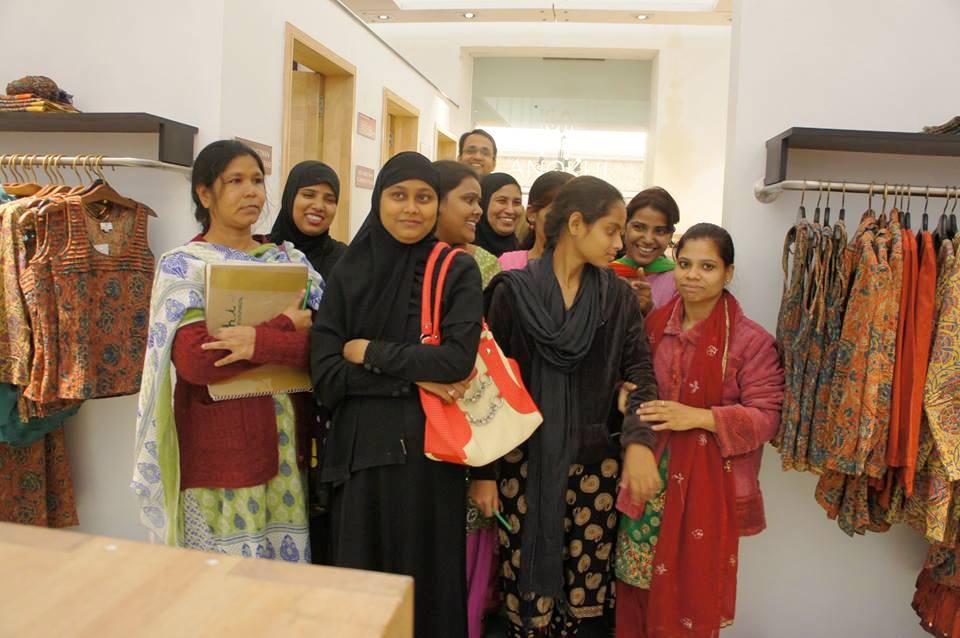
About 11 women in Lucknow are establishing their individual identities as chikankari embroidery artisans – all thanks to an organization that not only trained them but also connects them with buyers through an online platform.

Tabassum Khan, 25, and Sheeba Khan, 26, had wanted to apply for a bank loan once. Under the cover of their full-length black burqa, the two made their way to the branch of the nearest bank, criss-crossing through many narrow lanes in Lucknow’s congested Madegunj Khadra neighbourhood.

Encouraged by the recent sale of their embroidered cloth, the two were excited about the possibility of expanding their work and perhaps even striking out on their own. “We wanted money to buy more cloth. We dreamt of having our own wooden frames, more needles and more thread,’ recalls Tabassum. However, after spending a few minutes with the bank official, they promptly dropped the idea of applying for the Rs. 50,000 loan. “He wanted us to come home and told us that his wife was interested in learning embroidery. I felt he did not really mean what he was saying. I could see his actual intentions,” says Sheeba.

Of course, as they made their way back that day, they would have never imagined that they’d eventually be able to realize their dream of becoming artisan-entrepreneurs and selling clothes embellished with exquisite hand-crafted chikankari embroidery.

Today, Tabassum and Sheeba are part of a group of 11 women chikan karigars, who have broken free from the exploitation that is intrinsic to their line of work, to establish their individual identities as artisans.

The women chikankari artisans participate in various design exhibitions in Lucknow and also independently travel to other cities across India to showcase their craft.

How did they manage to accomplish this seemingly unimaginable feat? Ask Tabassum and she immediately attributes this positive change to Jaspal Kalra, a professor of fashion design, who set up Sangraha, an organisation that not only conducts a ten-month training programme in design for chikankari artisans, but also connects them with prospective buyers through an online platform, apart from encouraging them to participate in design exhibitions across the country. Essentially, Kalra is a teacher and facilitator while the women take their own decisions regarding the kind of orders they want to take on. They even have a certain freedom to create their own designs, keeping in mind the clients’ needs. For women like Tabassum and Sheena, who would otherwise never get to experience this kind of autonomy in their personal or professional lives, this partnership has indeed been liberating.

Married at 16, Tabassum was back at her parents’ home barely a year later. Disheartened with the way things had unfolded for her – she never went to school, was pushed into early marriage and then had to go through the heartbreak of a broken relationship, all in her teens – she took up chikankari with the intention of supporting herself. She learnt the craft under the guidance of Shilpguru Ayub Khan, who taught her everything she knows about this centuries old technique of embroidery on fine cloth. For years she worked magic with her nimble fingers without receiving any real recognition for her skills. Eventually, though she was conferred with a state award for craftsmanship in 2005, her struggle to earn a decent living continued.

Indeed, awards or not, that’s the lived reality of chikan karigars. In and around Lucknow, chikan embroidery provides employment to about 2,50,000 artisans, mostly women, apart from close to a million people who are associated with the trade, as raw material suppliers, contractors, manufacturers and retailers.

Despite being a thriving sector, it is largely informal, which means that the artisans earn wages from sub-contractor or traders, on a per piece rate. Consequently, their bargaining power is non-existent and the earnings poor.

The chikan karigars at Sangraha enjoy camaraderie and kinship that enables them to do well.

Both Tabassum and Sheeba have grown up watching the women of their household sit down to embroider after finishing their chores. This was the only way for Muslim women, in particular, to add to their usually unstable family income. Literacy amongst these families is low and poverty is high and they continue to live in conservative neighbourhoods where women are not encouraged to be seen or heard. So, for the want of any other way to make money without having to step out of their home they readily take whatever amount is offered by the contractors.

There was a time when Naima Arshi’s illiterate mother did not know what lay beyond the boundary of her courtyard. “Ironically, poverty liberated me. When I began to earn some money by doing chikan embroidery my husband did not object. How could he? We were so poor. He welcomed the earnings and I used them to educate both my son and daughter. We are still poor but at least Arshi is a university graduate and that gives me great satisfaction,” she says.

Whereas her mother may consider them to be hand-to-mouth even now, Arshi, 28, does not see herself as either poor or deprived.

For women artisans like Tabassum, Arshi and Sheeba, Jaspal Kalra, who set up Sangraha is a teacher and facilitator.

She’s happy to inform that unlike many girls in her community, she has a bank account. Arshi has followed in her mother’s footsteps in so far as she has taken to doing chikankari for a living. However, her work experiences are very different. Like Tabassum and Sheeba she is attached with Sangraha, an association she greatly cherishes. “Sir has taught us the finer nuances of design and shared the different ways in which we can sell our work. He encourages us to deal directly with customers. While other chikankars get around Rs. 140, at Sangraha we earn Rs. 180 for a day’s work,” says Arshi.

Kalra set up Sangraha in 2015 with an idea to preserve the craft and help artisans gain sustainability and independence. With a mission to empower them with education, market-related services and finance, it started off by providing design education to 11 artisans and encouraging them to participate in various exhibitions in Lucknow and elsewhere, in Delhi, Pune and Jaipur.

“I have been embroidering for as long as I can remember but it is only now that I embroider with a passion I did not know I had,” confesses Tabassum.

Not long ago, she and her fellow ‘karigars’ had travelled to Delhi where customers showered them with praises and orders. At the time, Tabassum informs, she sold embroidered cloth worth more than Rs. 20,000. Mumtaz Jahan, 45, another artisan at Sangraha, happily talks about how she came back from Pune having sold goods worth Rs. 7,000. “All of us came back from exhibitions with loads of orders. We have enough work for the moment and an assured income for several months,” smiles Tabassum, who is a ‘guru’ of sorts to the women. Arshi, Mumtaz and Shabnam acknowledge that they have fine-tuned their stitches under her expert guidance. The women also share that Tabassum is never scared to take up a challenge or to experiment. Fearless and talented, she has a ready wish list, “It’s my dream to own a house, travel around the world with my girl-‘artisan’-friends and would love to see international models walk the runway in Paris clad in clothes designed by me!”

All this will be possible when the women continue to expand the scope of their work and Kalra’s direction will be valuable in this regard.

Whereas the majority of women chikan karigars don’t have the autonomy to either design or negotiate for wages, the ones at Sangraha have become the masters of their own designs and destinies.

———-

“The government has introduced schemes for entrepreneurs but I have yet to explore how these can assist the artisans associated with Sangraha. As I see it now, Make In India is more technology oriented and Stand Up India is targeted at women and SC/ST communities. Essentially, the core problem with many such schemes usually is that they don’t have any provisions for creating market linkages and simply stress on giving loans. And the lack of education and an understanding of the market trends expose the artisan to exploitation at the hands of buyers and customers,” he shares.

Dreaming big and having serious ambitions is never really an option for most women chikan karigars, but this lot has definitely moved on from the days of being exploited to being the masters of their designs and destinies.

Written by Mehru Jaffer for Women’s Feature Service (WFS) and republished here in arrangement with WFS.

source: http://www.thebetterindia.com / The Better India / Home> Art> Women / by Mehru Jaffer / May 02nd, 2016

Turkish traces in India

The emergence of artistic and cultural heritage of a country is a process that extends over centuries. Yet, sometimes, it can just take just a few days for it to vanish irrevocably. Care must be taken to preserve our heritage

Indian civilisation is one of the foremost in the world in terms of cultural wealth and the great works it produced. The indigenous people of India played a major role in the creation of the civilisation. However, people of diverse cultures from outside the peninsula have also doubtlessly contributed to the creation of this tremendous cultural wealth. One among such people are the Turks who led an amiable coexistence alongside the Indian people for decades.

In the first half of the 11th century, a great Turkish Sultanate was founded in northern India and subsequently Turkish influence extended further south. The foundation of this state had a notable impact on the history and culture of India. As a result of this impact, Delhi flourished to the point of competing with Baghdad, Cairo and Istanbul — the leading commercial and cultural centers of the world at that time.

Here onwards, the Turkish-Islamic influence began to shape all cultural areas from architecture and literature to arts and cuisine.  Concrete examples of this impact can still be seen today. The centuries-long co-existence of both Indian and Turkish culture led to the exchange of words between the Turkish and Indian languages despite their vast structural differences. Some Turkish words were directly adopted as they were, while some words were transcribed according to their Indian pronunciations.

The most prominent aspect of the Turkish influence in India, however, is reflected in architectural works, with its myriad examples. One such example is the Quwwat-ul-Islam Mosque that was constructed by Qutab Ud-Din-Aibak, the founder of the Delhi Sultanate. It was the construction of this mosque that laid the foundation of the Indo-Islamic architecture in India. The famous ‘Qutb Minar’ minaret, which was constructed by Qutab Ud-Din-Aibak in 1500, is a 72.6 meter tall tower built of red sandstones, based on the Mamluk architectural style.

Following the Qutb Minar, many castles, palaces, tombs, granaries, bathhouses, ponds, mosques and even cities were built throughout India during the Mughal period. Akbar Shah’s rule was particularly marked by the mixed use of Persian style and Indian/Buddhist style architectural design, thus giving rise to a new and unique type of architecture. Humayun’s Tomb in Delhi, the Fatehpur Sikri Fortress, which was declared the capital of the Mughal Empire by Akbar Shah, and Akbar’s own tomb in Agra are some of the chief examples of this style. And, of course, let us not forget the exceptionally beautiful Taj Mahal.

Although the Indian state is seemingly responsible for the preservation of all these great works, there are examples reflecting the importance of personal initiatives. Esra Birgen Jah, the former princess of Hyderabad, is one such example. Born as the daughter of a family from the Ottoman Dynasty, and the first wife of Barkat Jah, the Nizam of Hyderabad, Esra Birgen Jah successfully restored the Chowmahalla Palace to its former glory after lengthy efforts.

A great many people from diverse disciplines such as architect, textile specialists, conservationists and historians took part in the restoration efforts. The palace, which was turned into a museum housing historical artifacts, costumes and documents, was presented with a UNESCO award.

Whether their origins date back to Turkish or other cultures, all historical monuments in India should be recognised as ‘cultural heritage,’ and provided with the protection they deserve. For this reason, the great works in India, which have seen the rise and fall of the civilisations of the past, witnessed countless major events and developments in the history of humankind, and stood as a testament to ‘history’ itself, needs to be restored and conversed so that the human history can be preserved and passed down to the next generations.

Today, the Turkish heritage on the Indian peninsula is considered India’s own property. Their preservation should be viewed as a key factor that will help reinforce Turkish-Indian relations and friendship, and Turkey should provide the necessary support to the Indian Government in this regard.

The emergence of the artistic and cultural heritage of a country is a process that extends over the course of centuries yet sometimes, it can take just a few days for this cultural heritage to vanish irrevocably. Be it Indian or Turkish, all nations should take good care of the historical works within their domains and consider them as the common heritage of humankind.

Wherever this common heritage may be located in the world, it should be preserved to the utmost from ethnic and religious conflicts, exploitation, negligence and, of course, the destructive forces of time. This will awaken interest in different cultures among nations and render peace. In this way, the Indian and Turkish people, already linked by a historically strong bond of brotherhood, can usher in a new era that will recapture and consolidate the spirit of fraternity.

(The writer is a Turkish author)

source: http://www.dailypioneer.com / The Pioneer / Home> Columnists> OpEd / by Harun Yahya / April 02nd, 2018

Meet India’s only oud maker

Rampur, UTTAR PRADESH :

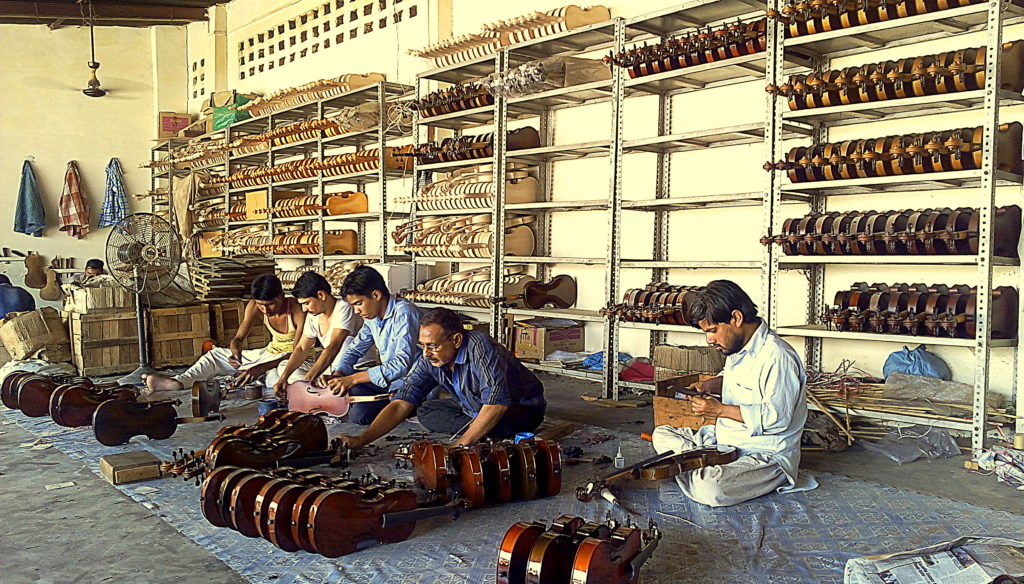
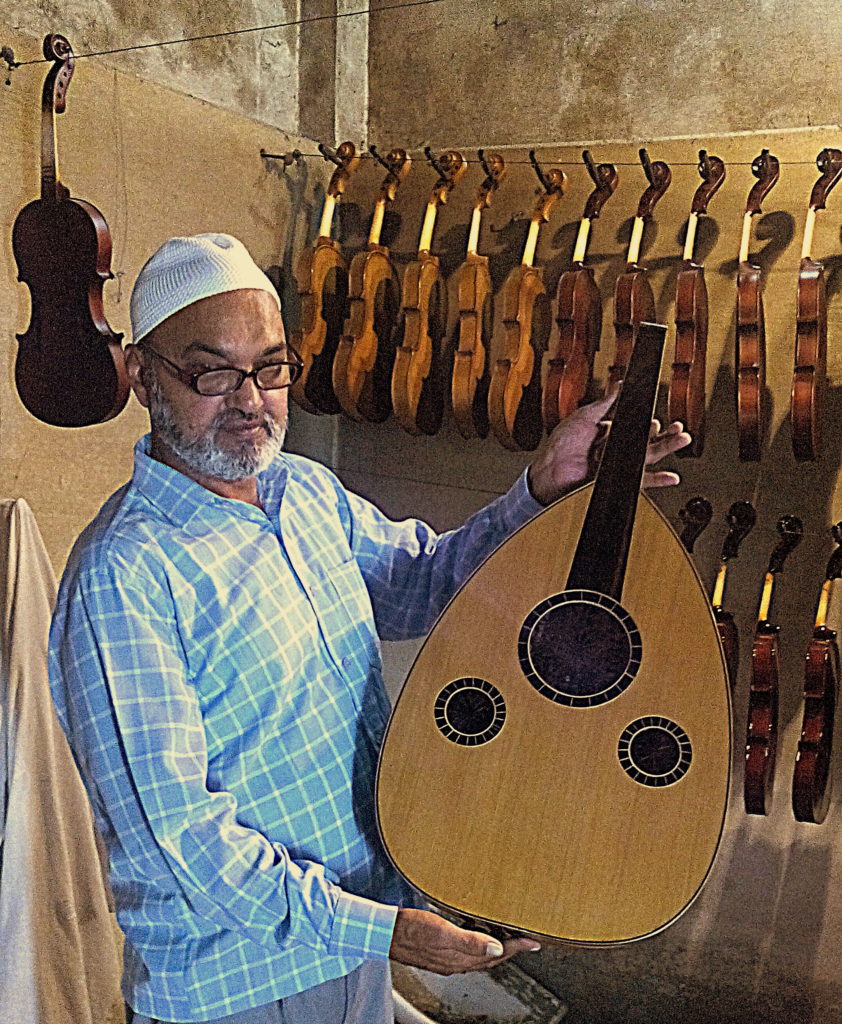
Workers put finishing touches to violins at Zamiruddin's workshop in Rampur, UP. / Credits: Rohit Ghosh/Qrius
Workers put finishing touches to violins at Zamiruddin’s workshop in Rampur, UP. / Credits: Rohit Ghosh/Qrius

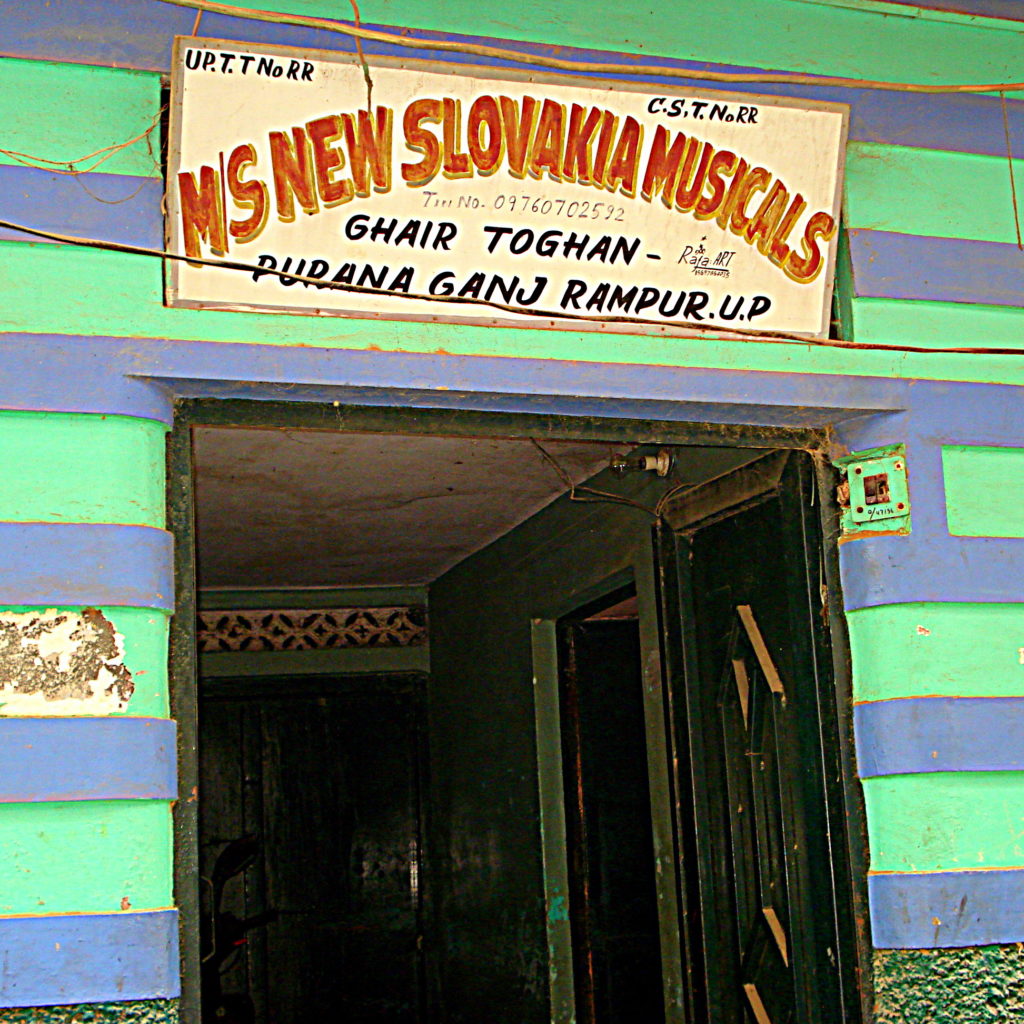
Zamiruddin’s old house in Purana Gunj, Rampur, a town 175 km east of New Delhi, is as nondescript as they come. But enter it and you might just find yourself transported, musically, to ancient Egypt.

Stacked on the shelves and lofts in rooms around the house’s rectangular courtyard are ouds, a musical instrument dating back thousands of years to the time of the Pharaohs.

This is the only place in India where you can buy an oud, a short-necked, pear-shaped stringed instrument that produces a sound similar to that of the sarod. The oud is oft used in Middle Eastern and North African music.

“My father [Haseenuddin] was the first and only person in India to make ouds,” said Zamiruddin, owner of New Slovakia Musicals. “Now, I am the only one…”

How the oud came to India

The oud dates back to ancient Egpyt. When it came to be used in Persia, some 3000 years ago, it was called the barbat, while it was called the al Oud (wood, or specifically thin wood) by the Arabs.

The oud came to India with the spread of Islam. In his book Two Nations and Kashmir (1956), Lord Birdwood notes that it was during the rule of Zain-ul-Abuldin in Kashmir that musicians from the West Asian region came, and brought the lute and the oud with them.

Discovering the instrument: Haseenuddin’s story

Zamiruddin inherited the business from his father Haseenuddin in 1996 and named it New Slovakia Musicals. / Credits: Rohit Ghosh/Qrius

Once a cabinet-maker in Rampur, the lyrical story of how Haseenuddin started making ouds goes back 70-odd years.

“My father and his younger brother Ameeruddin lived together. In 1942, my uncle visited Bombay and bought a violin. He became so engrossed in playing it day in and day out that he completely detached from his surroundings,” recalled Zamiruddin.

One day, Ameeruddin accidentally dropped the violin and it shattered to pieces. Heartbroken, he continued to become more and more miserable as the weeks passed. Unable to see his brother in that state, Haseenuddin then studied the violin that had become a tangled lump of wood and strings, Zamiruddin told me.

“My father was a genius. Using his skills and things available at hand, he made a new violin for my uncle.”

Seeing the joy on Ameeruddin’s face made Haseenuddin realise his latent potential in making the instrument. “Along with chairs, tables, beds, and wardrobes, he started making violins on a large scale. The year was 1947.”

Gradually, the demand for violins soared so high that Haseenuddin gave up making furniture and concentrated only on the instrument, becoming an established violin-maker in India. His violins had a big market in Goa, Kerala, Tamil Nadu and Karnataka, where music was a big part of the school curriculum.

Zamiruddin started assisting his father soon after finishing his graduation.

Then came the oud

Zamiruddin shows an oud crafted at his workshop. / Credits: Rohit Ghosh/Qrius

“Some people visited us with an oud in 1984 and introduced themselves as dealers and exporters of musical instruments. They showed the stringed instrument to my father and asked if he could make it and said that every other craftsman in India had refused to,” said Zamiruddin.

Haseenuddin, who had already made a name for himself by making quality violins, was up to the challenge.

“I advised my father against it, owing to the oud’s complicated design. He, however, chided me and said I should never doubt the skills of a master craftsman. His first oud was a success, after which we started producing them on a large scale—120-odd ouds a month,” reminisced Zamiruddin.

During that time, the ouds were exported to Syria, Iraq, Lebanon, and other Middle Eastern countries. “Ouds are made in the Middle East, but my product is better. India has a variety and better quality of wood compared to the Gulf, which is a desert. Also, my ouds are cheaper. An oud made in Syria may cost Rs 80,000, but mine are Rs 18,000 a piece,” said Zamiruddin, who inherited the business in 1996 after his father passed away.

Yet, despite the many pluses his ouds have, he has no immediate plans to export them to foreign markets, given the low returns.

According to him, no two ouds are the same, neither in dimensions nor the sound they produce. “Ouds are handmade. So, something that has been cut and carved by hand won’t have the precision of machines. Hence, every oud is unique, even if made by the same craftsman.”

Spreading the music

Zamiruddin uses the backyard of his house as his workshop, where 30-odd workmen sit cross-legged on the floor, designing violins and ouds. At any point, he has about 40 ouds ready.

Although the ouds do not sell as much as the other musical instruments, Zamiruddin has found many buyers online. “Connoisseurs of music contact me online. Two months back, I even sold one to a person from Mumbai,” he said.

So, although not as well known as its more famous stringed siblings, the oud may yet find a wider market and fanbase.


Rohit Ghosh is an independent journalist based in Kanpur.

source: http://www.qrius.com / Qrius / Home> Music / by Rohit Ghosh / February 19th, 2002

Mother of two works to change narrative with women’s fitness centre in Kashmir Valley

Srinagar, JAMMU & KASHMIR :

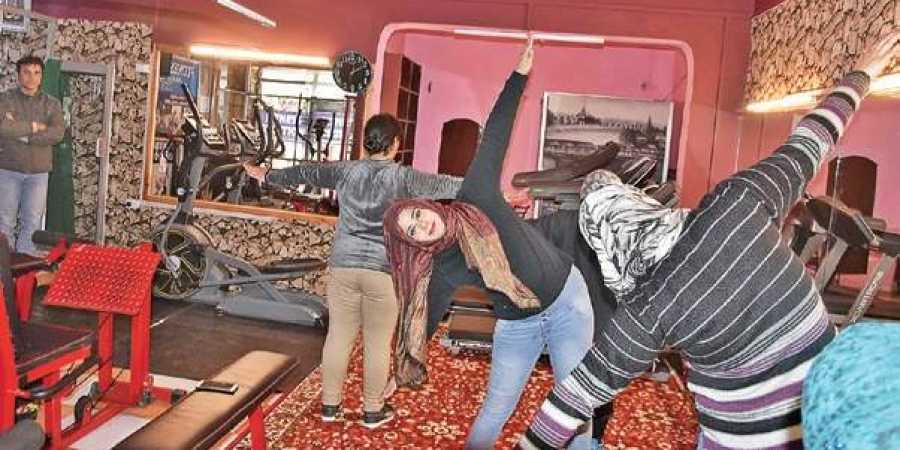
‘Fitness Solution’, located in the Khanyar area which is just a kilometre from the historic Jamia Masjid, an area rife with unrest, is the brainchild of Aaliya Farooq.

Aaliya Farooq (inset pic) said she picks up a lot of fitness tips on her visits to Delhi | ZAHOOR PUNJABI

Srinagar :

In the volatile downtown Srinagar, frequently in the news for protests and incidents of stone-pelting, a mother of two is creating ripples with her gym-cum-fitness centre for women.

‘Fitness Solution’, located in the Khanyar area which is just a kilometre from the historic Jamia Masjid, an area rife with unrest, is the brainchild of Aaliya Farooq. Being a fitness expert herself, Aaliya felt the need for an exclusive health centre for women as they did not go to gyms run by men.

“I took over this gym-cum-health club in 2012 after undergoing physical fitness training in Delhi. It was earlier being run by a male trainer. But after I took over, I trained the women myself,” she says.

Aaliya, who is not just the owner but also trains those who come to the centre, says they find it more comfortable to work out and discuss things with a woman. “They never hesitate in discussing any issue, which they could not have discussed with a male trainer.”

When Aaliya decided to take over the gym and run it for women, she had her family’s wholehearted support. “It has been because of their help that I have been able to run the gym,” says Aaliya, whose husband is also a fitness trainer.

The centre caters to women of every age group. “Young women, including students, office goers, housewives as well as old women have enrolled in my gym,” she said.

source: http://www.newindianexpress.com / The New Indian Express / Home> The Sunday Standard / by Fayaz Wani / December 02nd, 2018