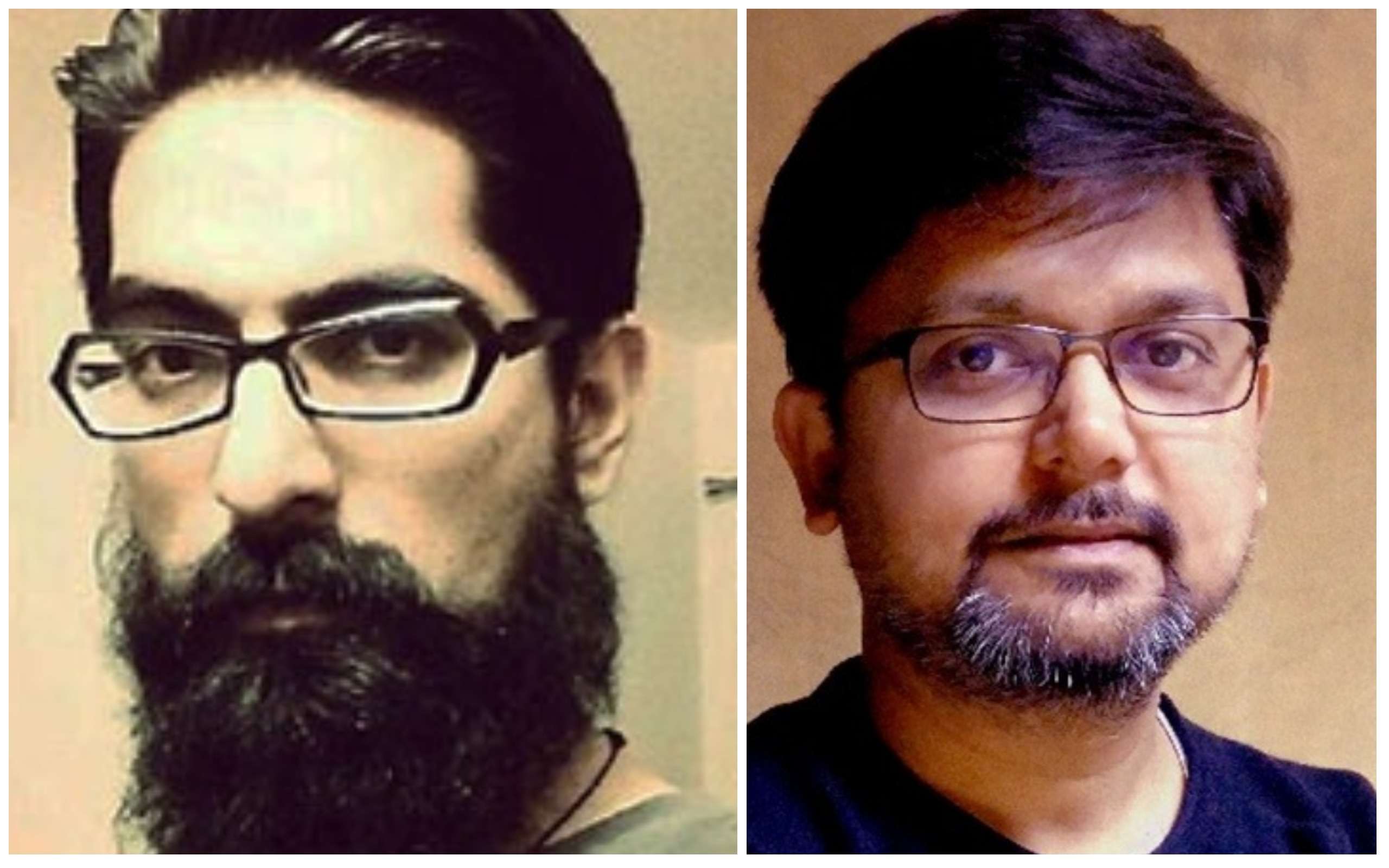
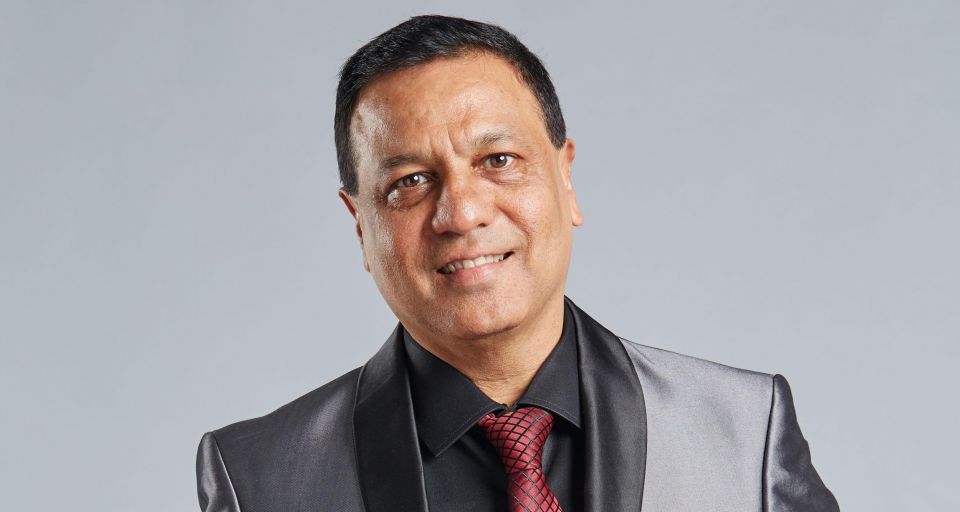
Cheil India has appointed Moosa Khan and Nitin Pradhan in their senior creative leadership. The duo will report to Sagar Mahabaleshwarkar.
Khan joins as head of digital (creative) and Pradhan takes on the role of senior executive creative director.
Speaking on the appointment, Atika Malik, chief operating officer, Cheil WW India, said, “We are the Agency of Now where creativity is inspired by technology. I am extremely happy that Moosa and Nitin will add their digital capability, creativity and energy to Cheil. I look forward to working closely with them to inspire new ideas and solutions for our progressive brands. For 15 years Cheil in India has provided brand solutions across retail, experiential, digital and communication to transform our client’s businesses. They will be a great asset to our creative strength and we welcome them warmly into the Cheil family.”
“I am delighted to welcome Moosa and Nitin to our team. Both of them are exceptional creative talents to have on board. While Moosa has immense understanding of new age digital media, Nitin is a fantastic creative talent with great ability of storytelling. Most importantly, we all have a shared passion for creative excellence and digital innovation. With these beliefs firmly at the heart, Moosa and Nitin will be a tremendous asset to our bold creative ambitions. Wait and watch as magic happens!” added, Sagar Mahabaleshwarkar, chief creative officer, Cheil WW India.
What it takes to build the reputation of a brand
Khan brings with him over 10 years of experience in digital as well as traditional advertising. He has worked across agencies such as Dentsu Webchutney, Madison, TBWA and Jack in the Box Worldwide.
Pradhan, a known name among the advertising fraternity, has 17 years of experience working with– Ogilvy, JWT, McCann, Leo Burnett and the likes.
source: http://www.brandequity.economictimes.indiatimes.com / ET Brand Equity / Home> The People Report / June 02nd, 2018
South African Indian cinema doyen Moosa Moosa has passed away. He was 75. Moosa succumbed to a heart attack on Sunday after undergoing surgery.
He was buried in Johannesburg on Monday according to Muslim rites.
Moosa had earned the title of being the longest-serving cinema group executive in the world, adding to the company’s reputation of having the longest relationship with Hollywood production house 20th Century Fox for almost eight decades now.
In 2007, Moosa received the South African Film and Television Industry Lifetime Achievement Award.
Tributes from all across the world continued to pour in for Moosa as the news of his demise spread.
Family and friends recalled how Moosa had taken over the family cinema business of the Avalon Group, started by his father 79 years ago as the first and still only Indian-owned cinema group in South Africa, after most of the 18 cinemas in the group were shut down by the draconian apartheid-era laws restricting property ownership in city centres to the minority white community.
Undeterred by this as the Avalon Group continued with just one cinema in an area designated for Indians in Durban, Moosa took on the seemingly impossible task of challenging the monopolies of white-owned major national cinema chains and won legal battles in the new democratic South Africa headed by President Nelson Mandela.
Moosa then started rebuilding the business as his son Aboobaker, popularly known as AB, also joined the business as the chief executive officer.
Currently they have cinemas in three major South African cities where new Bollywood releases play alongside Hollywood titles every week.
“My father showed tenacity and strength in keeping alive the Avalon dream through the tough times,” AB Moosa said in paying tribute to his father.
“When many had already begun to write the company’s obituary, my father’s resolve never wavered,” he added.
Many community leaders also paid tribute to Moosa for his support of community initiatives.
“He was always willing to support a variety of important social justice issues and always availed Avalon cinema venues for such events at no charge,” said Lubna Nadvi, from the University of KwaZulu Natal’s School of Social Science.
“Moosa will be justly remembered as a courageous and articulate businessman who was determined in his challenge of white monopolies in the 1980’s,” businessman Nirode Bramdaw recalled.
source: http://www.thehindu.com / The Hindu / Home> News> International / by PTI / June 26th, 2018
Do you know how it feels to stay cooped up inside your room for five months with shattered window panes reminding you of the constant presence of violence? Nousheen Baba, 21 Science student, Government College for Women, Nawakadal | Photo Credit: V. V. KRISHNAN
It is one step at a time for these Kashmiri women as they break away from traditional strangleholds and dare to dream differently, reports Peerzada Ashiq
Srinagar’s sprawling Eidgah ground is teeming with people. Despite the onset of Chillai Kalan, the harsh 40-day winter spell, there is a hubbub. Some are playing cricket, the rest looking on. Soldiers from the Central Reserve Police Force (CRPF) in mobile bunkers stand guard on the boundary wall; fingers locked on the trigger which, at the hint of any trouble, can spray pellets or tear gas. Three newly dug graves in the ‘Martyrs Graveyard’ bear testimony to the violent and troubled times of 2016.
Just metres away from the graveyard, Nousheen Baba and her sister Iqra Baba recall how they could not hold themselves back from watching the funeral procession of 12-year-old Junaid Ahmad on October 9. Security forces allegedly emptied an entire pellet cartridge from close range at Ahmad and the Valley exploded in anger and sadness at the loss of a young life. “Do you know how it feels to stay cooped up inside your room for five months with shattered window panes reminding you of the constant presence of violence,” asks Nousheen, a second-year science student of Government College for Women, Nawakadal and aspiring chartered accountant. The windows of the Baba household bore the brunt of the clashes which erupted between security forces and protesters.
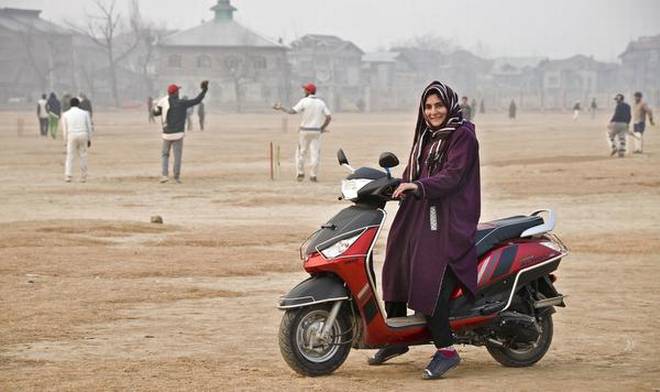
But Nousheen is eager to put the painful year behind her and even manages a shy smile. As a warren of houses in the highly congested Narwara locality in downtown Srinagar greets the eye, a tiny silhouette in a shiny grey cover makes its presence felt in the small courtyard of the Babas. Beneath the cover is the family’s first motor-driven two-wheeler. Courtesy Iqra, a Bachelor of Commerce student at the same college her elder sister goes to, who was rewarded by the State government for securing 85 per cent marks in her Class XII exam. “It’s our first scooter in the family. We are all learning to drive it,” says Iqra’s father Mushtaq Baba, a weaver. The Scooty is Nousheen’s constant companion too ever since Iqra brought it home nearly two months ago. From college to market, to visiting her friends, it is her lifeline to a future she dreams about.
Dreams on wheels
In the first phase of the two-wheeler scheme, Chief Minister Mehbooba Mufti handed over the keys to 450 scooters to graduation-level students of Government College for Women, Nawakadal and Government Women’s College, Baramulla on November 6. Only meritorious students whose family income is under Rs.4 lakh per annum are eligible for the scheme, which is being extended to all degree colleges of the State. In Jammu, 300 scooters were handed over to eligible students.
Mufti sees the Scooty as a game changer in improving the education of girl children who come from economically weaker sections. “I have lived a common man’s life and gone to college on a bus. I know the difficulties women face while using public transport. You feel it is safe sitting next to an old man, till he starts nudging you in the elbow; the unwelcome attention can be harrowing for any woman,” says Mufti, explaining the rationale behind her scheme. She recalls a young woman she spotted riding a scooter in Srinagar earlier this year while on her way to the State Assembly. “This girl was short and slim but it was her confidence that was striking. The idea took shape right there. We took the decision to bear 50 per cent of the cost of the bike,” she says.
The government has dovetailed many Central schemes meant for women empowerment to provide these scooters. “I wish I had one and could ride it freely. A girl who owns a Scooty now will never have to request her brother or father to go places. The two-wheelers give women a sense of control of things,” says the Chief Minister, adding, “Women are the first casualty of violence. Investments must be made to empower women.”
Iqra, for one, feels empowered, never mind the taunts of the local boys as she drives past: “The two-wheeler has earned me azadi (freedom) enough to go to tuitions late in the evening.” Five km away from the Baba household, Nargis Rasool, the eldest of four sisters and a brother, borrowed money to avail the Scooty scheme. “My father treats me like my brother’s equal now since I started driving the Scooty. It is like taking part in a revolution. Though many elders did object to my driving saying ‘how can a girl ride a Scooty on the street?’, my parents supported me,” says Nargis, a final-year Arts student of Government College for Women, Maulana Azad Road. Her 90-plus percentage in the Class XII exam helped this civil services aspirant to bring the first-ever vehicle to the Rasool household, a family of shawl weavers. Nargis has become an inspiration for the extended family, including six female cousins. “Their parents are now forcing them to study hard to secure a Scooty on merit,” she says.
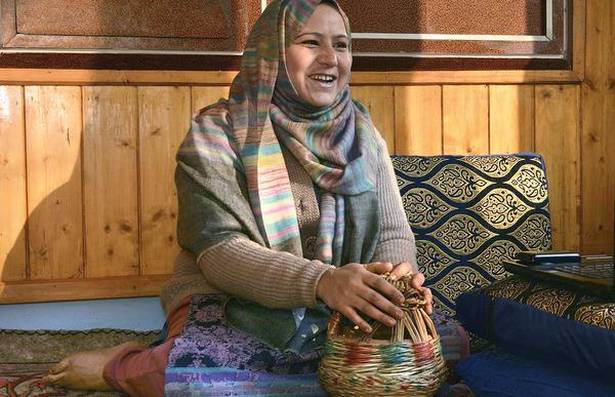
I am rooted in Kashmiri art and culture. I want wages and artworks of women to shift to a competitive level. Arifa Jan, 31 Owner, carpet manufacturing unit | Photo Credit: V. V. KRISHNAN
Reviving an old craft
Namda, a carpet made through the process of felting by hand, needs both muscle and money. For Arifa Jan, 31, who completed in 2010 her Craft Management Entrepreneurs’ Leadership Programme from the Craft Development Institute, Srinagar, the challenge was to turn around the fortune of this dying craft at a time when exports of the once-world-famous Kashmiri carpet had plummeted. According to a government survey, the total production of handicrafts rose to Rs.1,614.59 crore by 2008 against Rs.200 crore in 1990-91 but Namda exports had gone down 97 per cent and amounted to less than Rs.40 lakh annually.
“The use of cancer-causing dyes and poor cotton mix pushed Namda to the verge of extinction,” says Arifa. She infused science and healthy processes back into the craft to make it market-friendly. In 2010, she had to brave prolonged curfew spells to reach her unit to weave the first-ever assignment of 300 Namdas, meant for an exhibition in New Delhi by Dastkar, an NGO working with craftspeople across India.
“Eight-five per cent of my Namdas were sold. I still remember the taunts of a German buyer who kept saying we were producing fake Namdas,” says Arifa, who credits an unknown buyer from Delhi for her first brush with success. The buyer later turned out to be Gulshan Nanda of the Crafts Council of India. Nanda reposed faith in Arifa and the money flowed. “Ms. Nanda would come to me and ask serious questions about the craft,” says Arifa.
In 2013, the Crafts Council of India selected Arifa for a trip to Kyrgyzstan to study their processes of carpet-making. Back home, she scouted for an Australian merino sheep hybrid that was introduced in the Valley in the 1960s. “Its wool is what goes into exquisite Namdas,” she says.
For the first time, Arifa introduced pre-processes to weed out hazardous particulates from the wool and ensured no cancer-causing dyes make their way into it. “Even artisans who’d make chain stitches on the carpet used to complain of chest pain earlier due to the use of synthetic ingredients,” she says.
The daughter of a retired State Road Transport Corporation employee, Arifa is now eyeing business opportunities in the U.S. even as her stable has expanded to 27 artisans, 17 of them women. “I am rooted in Kashmiri art and culture. I want wages and artworks of women to shift to a competitive level. Artisans have suffered a lot in Kashmir — we have to bring them on a par with sellers,” she says.
A girl from Kashmir, counting one lakh rupees and all the men around looking in awe at her… A strange feeling seeped in. Shaeena Akhtar, 31 Owner of a shawl loom | Photo Credit: V. V. KRISHNAN
Weaving a new formula
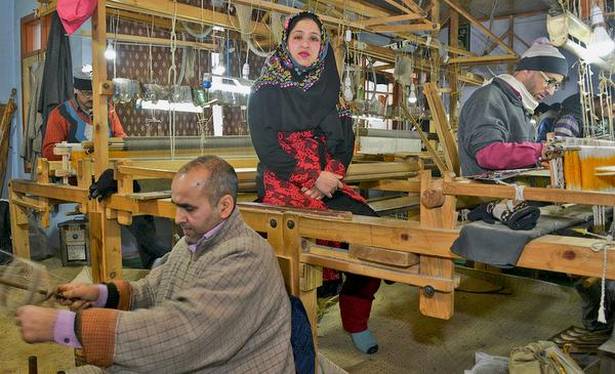
It’s 4.30 p.m. The rolling wooden bobbins with multi-coloured fine threads and the neatly thrown over-and-under shuttles meant for woofs and warps are showing no signs of the day’s tiredness. Bollywood music from the 1980s breaks the monotony of the shuttles at work. It’s the first loom in Kashmir where a woman is at the helm, and an attempt is underway to replicate the famous floating garden on Dal lake, Char Chinari, as a design relief from traditional motifs in Kani shawls, a fine handwoven mix of pashmina and shahtoosh wools. “We have developed a new formula for shawls. No one can steal it. It’s original and a major departure from the past. My work drives my clients to my loom — I have requests pending from many exporters,” says Shaheena Akhtar, 31. Like Arifa, Shaheena, a resident of Srinagar’s Nowshera area, too comes from a humble weavers’ family, but in just five years, she is being credited with giving a new identity to the Kani shawl, picking up the State’s Best Entrepreneur award along the way three years ago.
Shaheena’s journey to finding acceptability in markets in Italy, Germany and Dubai has been anything but easy. “Not everyone treats you as a daughter or a sister when you start something like a shawl business. My character was questioned because I used to meet officials. I struggled to have bank guarantors because my father was just a small-time weaver. It was not easy to raise money,” she recalls.
Following a training stint at the Entrepreneurship Development Institute, Pampore, in 2011, Shaheena was able to start with an initial investment of Rs.8 lakh. In a year she counted her first one lakh rupees in earnings. “My father had never counted Rs.1 lakh at a time. I am good at counting money. But that Rs.1 lakh was something I could not count for a while. A girl from Kashmir, counting money, and all the men around looking in awe. A strange feeling seeped in,” she recalls. As business grew, she enlisted her brothers’ help. “Of the 18 workers at the loom, 12 are relatives. I am proud that in such a short span I have a turnover of Rs.1 crore,” she says.
Roh-i-Kashmir (Soul of Kashmir), Shaheena’s company, has tie-ups with six major exporters for the 60-70 shawls her loom produces annually. “My thrust is quality. My shawl sells for Rs.4.5 lakh in the international market for its intricate and exquisite work. It takes more than nine months and two labourers to finish one intricately woven Kani shawl,” Shaheena adds.
Every time I watch a fisherwoman of Srinagar, I can see her making her own rules as she negotiates her space and life. Roohi Nazki, around 40 Owner, Chai Jai | Photo Credit: V. V. KRISHNAN
An English tea room in Srinagar
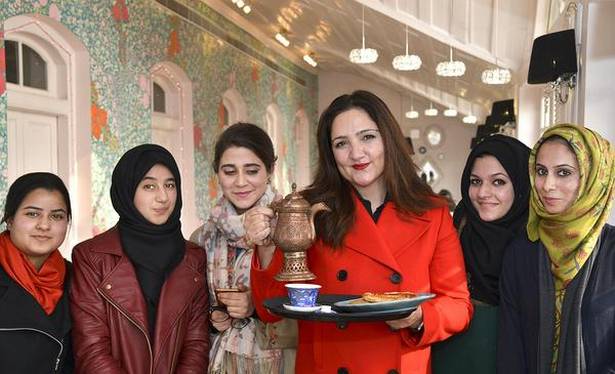
Historically, Kashmir has drawn its taste buds from Central Asia, including the famous kahwah (a traditional green tea preparation) and multi-cuisine wazwan. Roohi Nazki, a former employee with Tata Interactive Systems, is trying to get Kashmiris hooked on something very different: the tea room. It’s been worth the effort, if increasing footfalls at her small joint, Chai Jai — modelled after tea rooms in England — are anything to go by.
It was a solo holiday trip to England in 2013 that changed Roohi’s life and introduced her to the niceties of tea rooms. In the Cotswolds villages of south-central England she saw mirror images of the Kashmir Valley. Moving back to the Valley after living in Mumbai for 22 years, Roohi’s parents initially persuaded her to stay on in a corporate job, but she just knew what she wanted to do next.
As one walks down the British-era manicured embankment of the Jhelum river in Srinagar’s Polo View area, Roohi’s ‘little England’, complete with castle-room interiors and cobblestone floors, is hard to miss in the age-old Mahatta Building.
Launched in July this year, Roohi is reviving teas from bygone times like Daam Tyooth (a herbal tea), Bunafshan tea (flower tea), Qadri tea (a herbal tea with sugar mix), Nettle tea and Gulkand kahwah (mix of saffron and sun-dried rose petals). “I have 28 varieties as of now and I am working on a collection of 200 varieties,” she says.
Small steps to giant strides
While it is too early to see these women as enduring successes, having a woman Chief Minister at the helm seems to have given a fresh impetus to a more inclusive society in a State which has primarily been in the news this year for its mind-numbing violence. A slew of measures initiated by Chief Minister Mufti — including reservation of 10 per cent land in industrial estates for women entrepreneurs, the Ladli Beti scheme aimed at the economically poor, an all-woman entrepreneurs’ market, all-woman buses and all-woman police stations — are aimed at women.
The opposition National Conference spokesperson Sarah Hayat Shah acknowledges that every step towards empowerment of women is always appreciable, but simultaneously points out the troubled ground reality in Kashmir where even young girls have been killed or blinded in the wave of protests since July. “I am afraid the scooters may not be able to heal the wounds,” she says.
Ultimately, beyond the overhang of violence, a lot of the contestations with patriarchy are essentially atomic. “Every time I watch a fisherwoman of Srinagar, I can see her making her own rules as she negotiates her space and life,” says Roohi, now in her 40s.
Just like she fights her own little everyday battles, such as taking trolls — who were ‘outraged’ at her bringing a feel of Christmas to Chai Jai with cakes and candies from Mumbai — off her Twitter feed, one resolute click at a time.
source: http://www.thehindu.com / The Hindu / Home> News> National> Ground Zero / by Peerzada Ashiq / December 31st, 2016
Margoob Hussain has taken over as General Manager, Rail Wheel Factory. Prior to this, he was holding the post of Director General, Research Designs and Standards Organisation (RDSO), Lucknow.
Hussain joined Indian Railway Service of Electrical Engineers (IRSEE) in 1980 after graduating from IIT. He has a strong technical background and has expertise in various facets of Railway working.
Vast experience
In his 37 years of service, he has worked in various capacities. He has exposure to foreign railways such as Denmark, Germany, South Korea, Sweden and the US.
Hussain was instrumental in establishing various systems in Delhi and Kolkata metros. He has contributed immensely to various research and development programmes in the field of electric traction. He also has administrative experience of working as DRM, Hyderabad, and has been instrumental in the electrification of Barabanki–Gorakhpur–Chapra sections.
He is well-known for introducing various administrative reforms, including simplifying procedures and establishing new technical benchmarks on Indian Railways.
source: http://www.thehindubusinessline.com / Business Line / Home / by The Hindu Bureau / Bengaluru – September 21st, 2018
Kamla Devi, Pankaj Kumar, Geeta Devi and Sanjay Singh, all Hindus, share one thing in common. Their lives have been transformed through “interest-free” loans provided by a Muslim cooperative credit society in Bihar, yet another example how integrated Indian society has always been at the grassroot level.
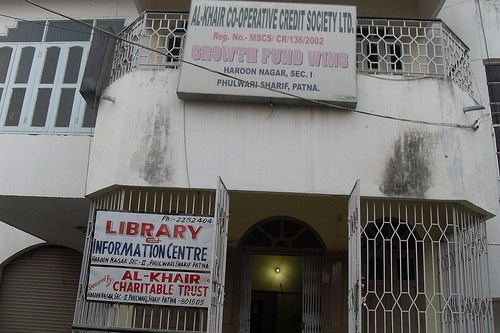
They are four of nearly 9,000 Hindus — mostly vendors, small traders, roadside shopkeepers, marginal farmers and women — who got rid of exploitative moneylenders thanks to interest-free loans by the Al-Khair Cooperative Credit Society Ltd that is based here.
“I used to sell potatoes and onions in a small roadside shop. I was often exploited by moneylenders for a small amount of Rs 2,000 to Rs 5,000 that I needed for my business. But a few years ago, I was surprised when someone informed me of interest-free loans from Al-Khair Society,” Kamla, in her mid 40s, told IANS at her shop in Mirshikar Toli here.
She first took a Rs 10,000 loan to run her shop, followed by loans of Rs 20,000 to Rs 50, 000.
“It helped me expand my business from a vendor to a wholesale trader,” she said.
Now doing financially well, Kamla managed to fund the education of her two sons, with one getting admission in an engineering college and the other in a B.Ed. college.
Based on the Islamic principle of prohibiting interest, Al Khair Society has provided interest-free loans of more than Rs 50 crore to nearly 20,000 people, mostly those struggling for survival, in the last one decade of its existence.
About half of these beneficiaries are Hindus. Regardless of religion and any other considerations, Al Khair Society has opened new vistas for large sections of marginalised people, skilled and unskilled, from unorganised sectors.
Geeta Devi not only turned her small roadside vegetable shop into a big one; she has opened another vegetable shop for her son.
“Our life has changed after I came into contact with Al Khair Society. It helped us live a life of dignity. For poor people like us, interest-free loans are God’s gift and, unlike in regular banks, there are no uncertainties about getting the loan,” she said.
Manju Devi, another beneficiary, has been taking a loan of Rs 20,000 to pay the annual school fee of her children for the last five years. Her husband runs a roadside shop.
“I also deposit my daily earnings with Al-Khair Society and repay the loan amount without paying any interest,” Kamla said.
Sanjay Singh, another beneficiary of the interest-free loans, said banks have no time for vendors like him and they have no interest in giving out small loans.
“Banks charge interest and there is a lot of paper work involved that only discourages and frustrates the poor,” said Sanjay, who used to sell garments on a bicycle. He now owns a small garment shop run by his wife even as he continues to sell clothes on his bicycle.
What attracts people, many of whom are not literate, to Al Khair Society’s door is that it involves minimal paper work and a poor-friendly perspective.
“Interest-free loans may be a concept associated with Muslims as Islam prohibits interest as it terms it unjust, but it has a universal appeal and can benefit all, not just Muslims,” said Shamim Rizvi, a retired bank officer closely associated with Al Khair Society for nearly a decade.
Unable to get help from banks, these loans help people free themselves from the clutches of moneylenders who charge high interest rates.
Nayiar Fatmi, managing director of Al Khair Society, told IANS that interest-free loans are gaining popularity.
“Even a small amount of five to ten thousand is significant for people who don’t have access to banks. Nearly 50 percent of the beneficiaries of interest free loans are Hindus. Most of them use the money for earning livelihoods that empower them,” Fatmi said.
Al Khair Society has 13 branches spread across the states of Bihar, Jharkhand, Uttar Pradesh and Delhi.
“We are planning to open new branches in Kishanganj in Bihar and Ranchi in Jharkhand to reach out to more such people,” Fatmi said.
Al Khair Society is a successful example of interest-free microfinance that has brought smiles on faces of thousands of people. It started with merely a small fund and two employees at a small office in Patna. Today it has 100 employees.
The organisation charges a nominal service charge from those who take interest-free loans to pay salaries of its employees, rent of office and other expenditure.
Started by a group of educated Muslims in early 2000 as a small step to help ordinary people, the organisation has seen a tremendous response from all sections of society, irrespective of religion, caste or creed.
(The weekly feature series is part of a positive-journalism project of IANS and the Frank Islam Foundation. Imran Khan can be reached at imran.k@ians.in )
source: http://www.siasat.com / The Siasat Daily / Home> Breaking News> Featured News> News> Top Stories / by Imran Khan / April 18th, 2018
[SPONSORED CONTENT] Dr Shafi Ul Mulk had an idea that grew into a vision for change. Today, that vision is a reality, having grown his multiple dual concept diagnostic centres into a leading healthcare brand in the region
Through his healthcare services, Dr Mulk touches millions of people from around the world and has been celebrated on many prestigious forums. He has also added significant feathers to his illustrious cap, being honoured with Forbes magazine’s Top 100 Indian Entrepreneurs and Leaders in the Middle East two years in a row.
HUMBLE BEGINNINGS
The origins of Global Hawk were not unlike some world-renowned companies of today. Dr Mulk started with a personal staff of only two, working in Hamriya free zone, Sharjah. Dr Mulk created his company – the internationally acclaimed Global Hawk chain of diagnostic centres (that utilizes Global Hawk’s innovative technology in telemedicine and teleradiology).
THE START OF SUCCESS
The company grew quite rapidly, expanding across the globe and into a world-renowned healthcare empire worth more than US$200 million. The phenomenal success of the establishment can be directly attributed to the visionary leadership of Dr Mulk, who is widely considered the pioneer of teleradiology in the region.
His brainchild, Global Hawk Telemedicine/Teleradiology with IT solutions including RIS, Mulk Digitizers and Mulk Viewers products installed globally in major hospitals and medical centres have revolutionized the healthcare industry. In fact, the runaway success of Global Hawk Telemedicine encouraged him to start the chain of Global Hawk Imaging and diagnostic centres (GHID) which eventually led him to a number of accolades and international awards.
FAST RISE TO THE TOP
From a single branch in Deira, GHID has grown rapidly with many centres across multiple locations all with state of the art radiological technology, all the main imaging modalities – including open and closed MRI, CT scan, CBCT, 2D, 3D/4D Ultrasound, Digital Mammography, Bone Densitometer as well as top rated clinical laboratory diagnostic devices, all under one roof.
The centres are today considered as one of the best in terms of state-of-the-art, high-quality diagnostic imaging services and patient-centred care. With its goal of becoming a dedicated healthcare provider and imaging resource and research centre across the globe, GHID serves as a gateway to international expert standards diagnostic opinions – while also streamlining management and investigative recommendations. Today, this is a vital requisite in the current medical environment.
THE NEXT STEP: MORE GROWTH
Dr Mulk’s company has spearheaded an AED250 million expansion plan, which includes a chain of Global Hawk Diagnostic Centres with dedicated PET-CT / MRI and Cyclotron unites across the GCC, India and Eastern Europe, and a chain of Global Hawk multi-speciality Polyclinics and Medical Centres. The group is also looking to start a 50 bed Mulk oncology charity hospital in India, as well as Mulk speciality hospitals in the UAE.
BACKGROUND IN EDUCATION
Dr Mulk’s passion for innovation and medical technology can trace its roots from his impressive educational experience. A prominent neurovascular radiologist in the UAE, his formative medical education began at Kurnool Medical College, Andhra. He also has completeld fellowships at Michigan, USA and Multon Keynes, UK.
Being a passionate teacher, he freely shares his knowledge by teaching university students and mentoring junior radiologists. Dr Mulk has been consistently invited to speak at major international forums of radiology and imaging, as well as healthcare entrepreneur platforms. He was honoured as a guest speaker by the Arab Health Committee and International Health Organisations for his overall contribution to the Healthcare Sector, resulting from his wealth of experience in Radiology for two decades.
THE MAN BEHIND THE BUSINESS
Dr Mulk’s zeal and enthusiasm for success doesn’t limit itself to the professional fields, but also in his love for sports. A former national Bandminton player, he was named a ‘young Hopeful of India’ by a leading Indian Sportstar magazine at the age of 13. An ardent supporter of Badminton Associations of the region and sponsor of major Badminton tournaments, he is one of the top ranked players in the UAE, with winning accolades in the Masters Men event of the UAE Open Championship of 2016 and 2017.
But one of the most essential characteristics of his personality is his compassionate outlook towards the community. Dr Mulk is a well-respected member of various social and Islamic organizations in India and the UAE, and he actively engages in various charitable activities focusing on building a better tomorrow.
A true believer in strenghth of the family unit, Dr Mulk candidly acknowledges that the support he receives from his soulmate, Dr Yasmeen Ul Mulk, and their sons Zoheb Ul Mulk and Zain Ul Mulk is what most encourages him to follow his passion.
INTERNATIONAL RECOGNITION
Dr Mulk scored a double win at the Annual Health Awards in the UAE this year, winning the Distinguished Achiever award in Healthcare and Innovative Technology. These accolades add to his illustrious list of accolades and awards in 2017 alone; including being honoured with the World Healthcare Innovative Entrepreneuier of the year 2017, by the Global Association of Physicians of Indian Origin and the Indian Business Exceppent Awards – IBPC 2016 and 2017 – from H.H. Sheikh Nahyan Bin Mubarak Al Nahyan.
He has also received the Star Quality Award in Geneva 2014, The World Inspirational Company USA awards in 2015, as well as the International Medical Quality Award May 2016, which was held in Monte Carlo, Monaco.
Dr Mulk and his company have also been honoured and lauded with the ‘World’s Greatest Brands’ and ‘World’s Greatest Leader’ awards in 2017.
source: http://www.arabianbusiness.com / Arabian Business / Home> CEO> Business / by Global Hawk / July 23rd, 2017
This sleepy and now maligned town on the Karnataka coast boasts of a unique cuisine embracing Konkan and Middle-Eastern influences
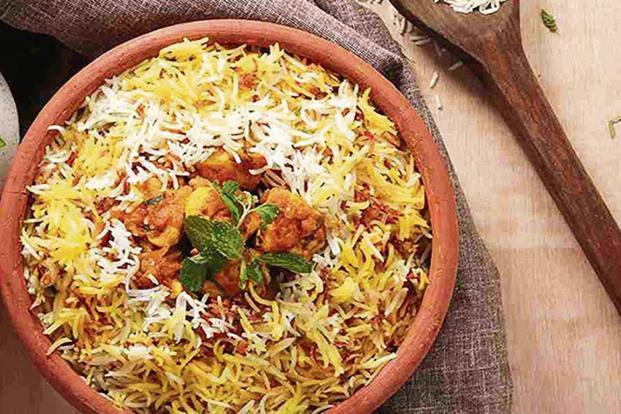
Bhatkali biryani is topped with fried onions, curry or mint leaves.
Bhatkal is a small port town on the Arabian Sea, near Mangaluru. Between the 8th and 15th centuries, it was one of the chief ports on the western coast, specializing in the trade of rice, sugar, spices and horses. Yemeni horses would be brought from the port of Hormuz in Iran to Bhatkal, and traded across the country. Over the centuries, traders from Iraq, Iran and Yemen settled in Bhatkal and formed the Navayath (newcomers) community. Some of them intermarried with the locals, many of whom belonged to the Jain community, and were influenced by their customs, languages and culture. This, in turn, led to a unique and multicultural food practice.
In recent times, however, whenever Bhatkal shows up in the news, it is with reference to radical Islamist elements and polarization between religious communities. As a result, the spotlight is rarely turned on this unique cuisine. Other than the Bhatkali biryani, little else is known and even less represented in mainstream restaurants, even in its home state of Karnataka.
The Alibaba Cafe and Restaurant on Bengaluru’s busy MM Road in Fraser Town is one of the few places that is changing this trend. The décor seems straight out of an Arabian Nights tale. Coloured glass lanterns hang from the ceiling and the mud-plastered walls are reminiscent of a Yemeni village home. There are Indian references too. The restaurant’s heavy wooden door has a lotus motif and large copper cooking pots in the corner look curiously Mangalurean. Shaad Hassan Damudi, the owner, greets visitors while taking orders on the phone in rapid-fire Konkani.
Damudi is from the Navayath community and his restaurant’s menu reflects his heritage. “What you see on the menu here is centuries of cultural amalgamation between the various communities, resulting in a very unique cuisine,” Damudi explains. The meat-heaviness is also reflected in the star dish on the menu—the Shaiyyo biryani, made from vermicelli (shaiyyo) instead of rice. The vermicelli adds a uniquely Konkani touch to the distinctly Middle-Eastern flavours of the dish, featuring layers of delicately spiced meat and a generous helping of browned onions. Shaiyyo is sun-dried in vast quantities in early summer, so it can be prepared and enjoyed throughout the long west-coast monsoon. “Navayath cuisine tends to have milder flavours than traditional south Indian coastal cuisine,” says Damudi. “We use local Byadagi red chillies, known for their bright red colour and slightly sweeter taste.”
Any conversation about Bhatkali food always turns to Bhatkali biryani, made with basmati rice flavoured with saffron and whole garam masala. Tender pieces of mutton, chicken, fish or prawns are cooked separately with spices. Some even describe it as a korma and rice dish which is assembled in layers and finally topped with fried onions, curry or mint leaves.
Seafood is a staple of Bhatkali cuisine. Fish, prawns, mussels, clams, oysters and squid, available in plenty along the Konkan coast, are combined with local spices to create preparations like the laun miriya mhaure, where sliced fish (typically seer) are cooked in a traditional salt and red chilli paste, or shinonya nevri, steamed mussels stuffed with a spicy rice and coconut mixture.
Aftab Husain Kola, a Bhatkal native and a food and travel writer, says that although modern influences have crept into traditional Navayath cuisine, many of the old traditions of seasonal food have been preserved. He also throws light on some of the other Navayath home specialities like haldi pana nevri, rice pancakes steamed in turmeric leaves, and mudkuley, tiny steamed rice-flour balls in a delicately spiced curry. The community also gets together during weddings and festivals, for dawats or feasts which celebrate Navayath fare.
The wide range of Bhatkali desserts reflects the cultural intermingling of communities. Shaufa pana (dill leaves) feature in a variety of desserts, from poli (bread) to appo (pancakes), even puddings. Saat padra navariyo, a baked, layered dessert, reminiscent of Goa’s bebinca, and tariye khawras, a semolina, coconut and cashew pudding, are unique to the region. Some of the desserts have interestingly Middle-Eastern hybrid names too. Al basra poliand aflatoon poli are two such delicious concoctions—baked pancakes made with combinations of milk, coconut, egg and sugar. The Bhatkal version of kheer is godan—it has various manifestations, but the base always comprises coconut milk and jaggery.
The culinary diversity of this little coastal town is quite mind-boggling and more conversations about this and other aspects of Bhatkal’s rich culture could present an alternative narrative to those of terror and violence.
Aflatoon poli
Serves 4
Ingredients
2 tbsp refined flour
2 cups milk
4 eggs, beaten
1-2 tbsp sugar
1 tbsp broken cashews
1 cup coconut milk
K cup condensed milk
2 tbsp ‘ghee’
Method
Add the refined flour to the milk and stir over a low flame until it thickens. Leave aside to cool. Add in eggs, sugar, nuts, coconut milk and condensed milk, and mix thoroughly.
Grease a baking tin with ‘ghee’ and pour the mixture into it. Bake at 160 degrees Celsius for about 20 minutes. Check if it is done by inserting a toothpick into the pancake; it should come out clean. Remove from the baking tin and serve warm.
source: http://www.livemint.com / LiveMint / Home> Leisure / by Sriram Aravamudan / September 02nd, 2018
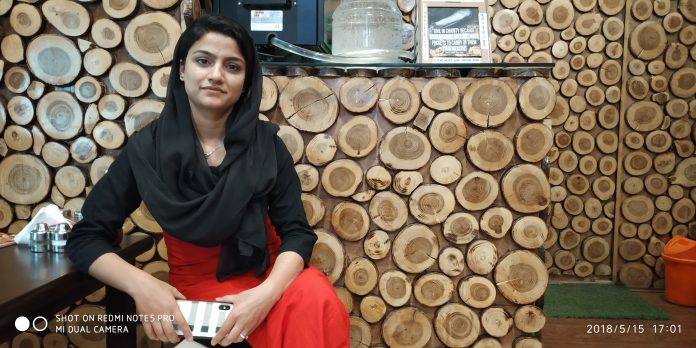
In a patriarchal society like Kashmir where all avenues of employment are dominated by men, a 25-year-old girl from Srinagar has started her own café as the idea of a male-dominated business sector doesn’t go well with this lawyer-turned businesswomen.
Mehvish Mehraj Zargar, a resident of Lal Bazar area of the old city, has set up her own café and given it a beautiful name – ME’n’U Café. Located in Bemina area of Srinagar City, the Café can cater to around 50 people at a time.p
The café opened in the month of February this year but had to stay shut most times due to the current turmoil.
She did her bachelor’s in Law from the Central University of Kashmir but her dream of being an independent woman and her interest in business pulled her to set up her own venture.
She lost her father due to cancer when she was just seven; she always wanted to do something for her mother and to support her family.
When Mehvish shared the idea of opening her own venture with her family, they appreciated her and supported her to set-up her dream café.
“My mom and brother supported my financially and emotionally, this was not possible without them, and especially in a place where the society is too conservative,” says Mehvish.
View of the Me n U café that can cater to about 50 people
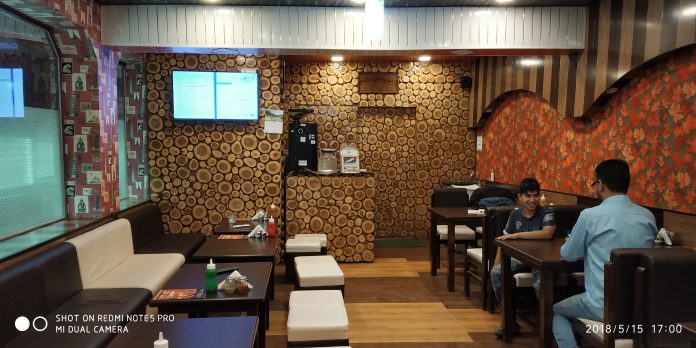
The café is equipped with all the modern facilities, good ambience and a retro look for the people of all age groups. The café offers a perfect atmosphere to hang out and get together.
The café has become an ideal place for teens and young adults to unwind and be themselves. Not that the adults and middle-aged don’t frequent its outlets, but that in no way diminishes its appeal among the youth. Not only is it the freewheeling atmosphere and a happy go lucky culture of the café that attracts the youth towards it but the wide variety of eatables and beverages it offers within the range of their pocket money is other major attraction.
She says the target audience includes the students since the café is close to Degree College Bemina and the prices are pretty much in their range.
“You can order just a cup of coffee,” says Mehvish, “and sit there for hours and read and write and talk. Nobody is going to disturb you,” she adds.
The layout of the café is quite trendy and appealing. The outlet is aesthetically designed and the colour combination and furniture is pleasing to the eye. The front side of the café is designed with wooden logs and it has become a focal point in this café.
The café, according to its owners, serves Pizza, Rice, Pasta, Soups, Chicken, coffee, Hot and cold beverages, Kababs, Rolls and much more.
Mehvish believes that in today’s world, a lady should be financially and emotionally independent. “An independent woman is someone who knows her identity and has figured it out completely. Being an independent woman, and a happy one at that, is the most important person you can be,’ she says.
She says an independent woman takes care of herself and her family as well. “She is capable of so much. By being independent, you set an example for your children to follow just as my mother did. If you ask me about the society, you will face a number of critics which I don’t even think matter,” she adds.
Talking about her initial days into the venture, Mehvish says, “I faced a lot of opposition in the beginning but I paid no attention to them and kept myself oriented towards my goals.”
“People used to stare at me and I used to get strange looks from them. But now everything is fine as I have stopped taking these things seriously,” she adds.
Mehvish says she is trying to break-up the stereotype that a girl can’t do well in business. “I just want to be independent and business was my dream, I am ready I have to be strong, women will be criticised in any way when the idea of starting this venture came to my mind, I was aware that I will be criticized, So I prepared myself for that,” she explains.
Mehvish also understands how her business model is supposed to work out. “In the beginning, one cannot chase profits as you have to invest for your business so that it is on solid footing. Right now, I am satisfied as there is no loss no profit,” she asserts.
“My message for the girls of the valley would be: Take your decisions and follow it. People will judge you anyway but you have to follow your dreams and fight back” Mehvish suggested to the female folk of the Kashmir.
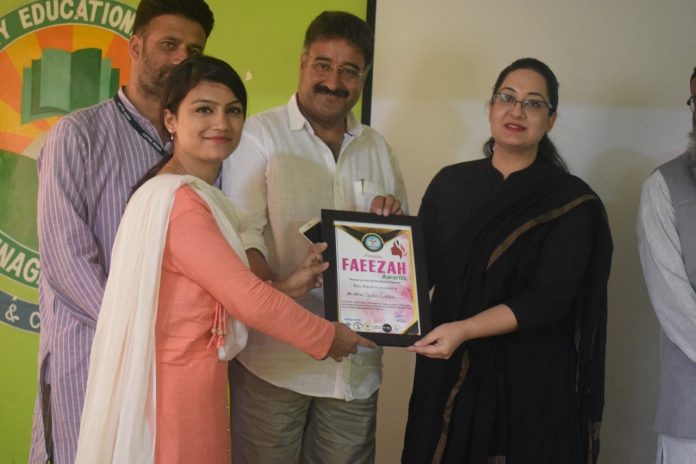
She also receives Faeezah award for her contribution to “being an asset of the society and the agent of the positive change”. She dedicated the award to her family.
Mehvish receiving Faeezah award for her contribution to “being an asset of the society and the agent of the positive change
She also understands the need to employ a local workforce and working with contingency plans. “In Kashmir, shutdowns and strikes are common it is a part of our daily life and I have kept myself ready for that,” she says. Keeping the current situation in mind, she didn’t hire chefs from outside the state and has recruited local chefs only.
“By hiring local chefs, you are providing employment to your own people and at the time of strikes they are still available here and can call them any time,” she says.
source: http://www.twocircles.net / TwoCircles.net / Home> Indian Muslim> Lead Story> TCN Positive> Youth / by Auqib Javeed – TwoCircles.net / August 17th, 2018
Bengaluru-based designer has collaborated with fashion guru Prasad Bidapa and a top-knotch IT company and has created a fashion collection.
City models sporting a piece from Tahera’s latest collection.
Indeed, collective effort is what brings about a herculean change. But, there’s also no denying how it is those little acts of thoughtfulness and kindness that go on to make a world of difference. For, Bengaluru designer Tahera Peeran, landing a lofty yet creatively fulfilling collaboration with two tech companies and Prasad Bidapa is what has kept her busy and beaming in the recent past. Her latest collection oozes sparks of sustainability and the bespoke aura of all things handmade while focusing on an ingenious ink innovation by Dell. In a candid chat, she shares the inside track…
“I believe corporate social responsibility and giving back to the community improves the quality of our lives, creates sustainability and promotes a better and brighter future,” begins Tahera, who describes her collection best as, ‘Handmade, environment friendly.’ It’s done specifically to promote anti-air pollution, and to promote handmade, hand-looms and hand-weaves. Speaking of which, she elucidates, “I have worked with pure handlooms and Khadi to create a Japanese minimalist look with classic, relaxed and layered silhouettes.”
But team effort is what takes the cake.” This has been a collaboration of many people from varied strata. It was amazing to see how it came together and everybody contributed and the end results were remarkable,” shares the 37 year old.
The NIFT graduate, who’s label mixes quirky and contemporary designs with comfort and functionality, didn’t always knew this was her calling. “I dont think I always wanted to become a designer. It took me a while and the support of my family to help me zero in on design as a professional pursuit. I wanted to become a writer, so I grew up reading a lot of books. I was always interested in art. And, from there, I got interested in design — graphics, architecture. I remember sketching a lot of girls in my notebooks, with dresses and different clothes.”
She loves to juggle too many things at a time, so it doesn’t come as much of a surprise to see her indulge in a tonne of activities whenever time permits. On how her typical day looks like, she says, “I love to go out for a way. I need that time in the morning, I like to spend time around greenery. It leaves me feeling energized. I have a little daughter, and we get into the DIY projects. I also love watching old English movies and world cinema as well. Right now, I’m reading Rupi Kaur.”
The current collaboration is yet to become commercial. But, Tahera has all her hopes pinned on its success. “It’s a great step towards being sustainable, it needs to be developed further. I see a lot of potential in it. I’m hoping it will be commercial and accessible soon. It’s a way to move forward. People need to get together more and do collaborations like this. It takes a group of people to come together and work an idea like.That aside, I’ll be flaunting my free fall collection next. It’s a black and white line. I’m excited for the time ahead.”
source: http://www.asianage.com / The Asian Age / Home> Life> Fashion / The Asian Age / Pooja Prabban / July 23rd, 2018
Dr. Shaik received business leadership icon award and was honored by Indian Business Professionals Council, Dubai – the award was given by His Excellency Dr. Thani Ahmed A l Zeyoudi, Minister of Climate Change & Environment and other Senior dignitaries from Indian Consulate.
For every hundred reasons, the world presented for women to sit behind without a dream, there came a thousand reasons as to why they must chase it. Dr. Nowhera Shaik, left no stones unturned whenever she got an opportunity to contribute her bit to the progress of civilization. However, what is commendable is that it was she who created these opportunities that acted as the stepping ladder to the top-shelf of empowerment, humanity and the ever-changing corporate world. Over time, she expanded her horizons and built herself a forte in several different paths of life. She is a businesswoman to look up to, founder and CEO of Heera Group, The National President of the All India Mahila Empowerment Party, an entrepreneur and most importantly a selfless philanthropist, who wakes up every day with the vision of progressing in the world of civilisation & learning to make a difference in the life of another individual.
Some of the awards and achievements of Dr. Nowhera Shaik:
1. Extraordinaire – Powerful Women Achiever by NexBrands – Brand Vision Summit 2017-2018
2. Stardust Achievers Award 2017
3. Gulfood Award – Best New Comer Brand 2016
4. Woman of Integrity and Purpose Award 2016
5. Fastest Growing Indian Company Excellence Award 2013
She also won the honorary award for ‘Best Transfer for Heera Gold Charted from UAE.’ Further, she grabbed the Antony Gold Bullion Company Limited U.K. award and the Tajir Gold Dust and Bar Ghana Limited award.
She was the proud receiver of several awards that were an evident reflection of her expertise in the world of business and her undying passion to help the people in need. With the kind of integration of knowledge and hard work, she put across, the growth of the firm was obvious.
Her selfless service to the society and her urge to ascend the ladders of corporate success and empowerment has led her to carve a path for several young women along with serving her own purpose.
About Dr. Nowhera Shaik
Ms. Shaik was born to Shaik Nanne Saheb and Shaik Bilkis in 1973. Ms. Shaikh has followed her father’s footstep from a very early age by supporting him in his business activities even during her school days. Mr. Shaikh Kolkar Madaar Saheb, grandfather of Ms. Shaikh was a successful businessman who started S.N.S. Transports in 1920 and found success in the wholesale business of vegetables, fruits, and textile products across the entire country. The high spiritual and religious cultural and business background was inherited by Ms. Nowhera Shaikh. In 1998, Ms. Shaik Nowhera started an Islamic School for girls at Tirupati Town in the name of ‘Madrasa Niswan’ (under a society registered with the Registration of Societies Act, AP, India, No: 386), with around 150 Students. Most of the students were very poor and could not even afford to buy books and uniform. She gave such poor children free education with lodging and boarding facilities.
An inspiration to many and the reason for several newfound smiles, Dr. Nowhera Shaik believes she’s only beginning her journey and that there is a long way to go before she sees the peak of it.
source: http://www.businesswireindia.com / Business Wire India / Home> New Detail / June 28th, 2018