Category Archives: Business & Economy

Lord Noon: Labour Peer and ‘curry king’ dies aged 79

Lord Noon was brought up in Mumbai before setting up the hugely successful Noon Products
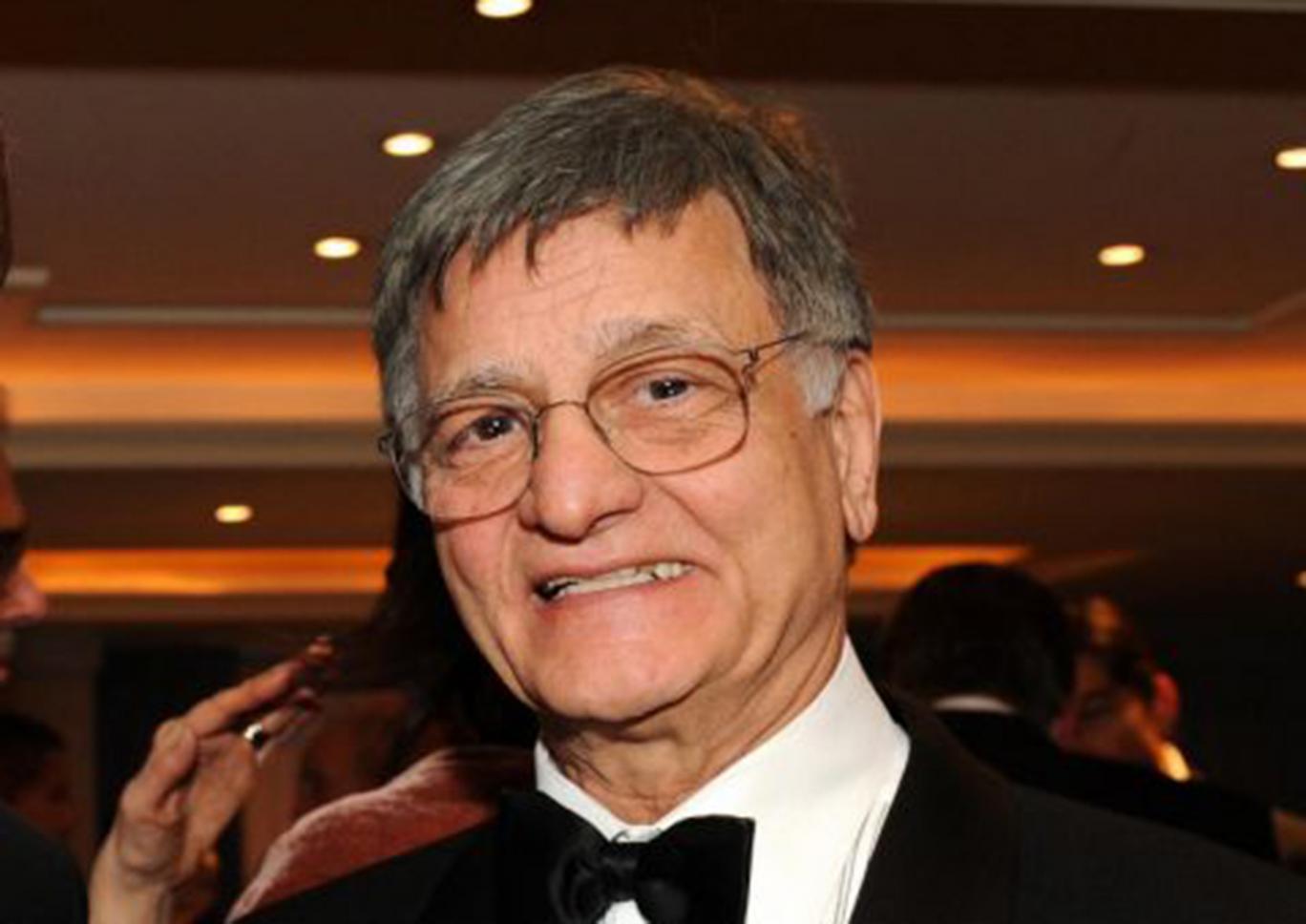
Sir Gulam Noon, who was known as the curry king, has died aged 79 PA

Labour peer Gulam Noon, who was known as the curry king, has died aged 79, it has been announced.

The prominent entrepreneur made his fortune selling Indian food and was a significant party donor.

He became caught up in the cash for honours scandal after making a significant contribution to Labour coffers.

Tony Blair led tributes to “great character” who he said would be “deeply mourned” while senior Labour MP Keith Vaz said the Asian community had “lost one of its greatest stars”.

Mr Blair said: “Gulam was a great character, brilliant businessman and above all someone dedicated to our country and its future. He was devoted to getting those of different religious faiths working together and was a wonderful role model in the Muslim community. He will be deeply mourned.”

____________________________________________________________________

“Our community has lost one of its greatest stars”

____________________________________________________________________

Lord Noon was born in a single-room house on Mumbai’s crowded Mohammed Ali Road and lived in it along with eight others. He later made his way to the UK where he set up his sweet stall Bombay Halwa in Southall, west London, in 1972 and Noon Products 17 years later.

In 2006 amid claims that financial support was being rewarded with honours, the tycoon joined other donors in asking for his nomination for a seat in the House of Lords to be withdrawn saying he had been left in an “invidious position”. He was made a life peer in 2011.

The decision to award him a knighthood in 2002 sparked criticism by current Labour leader Jeremy Corbyn, who said at the time he was “very disturbed” about the move.

But the businessman said he believed that he had received the honour on merit.

Mr Vaz said: “Today we have lost a giant, not only of the British Asian community, but also of British entrepreneurship. A decent, honourable and generous man, who was dedicated to his family, but also to his country, the United Kingdom.

“Rightly known as Britain’s first curry king, he brought curry to the high street. There are thousands of people in Britain, in India and throughout the world who have benefited from his enterprise, jobs he created, and his big heart. The world of cricket will also miss one of its most devoted followers.

“He was the epitome of everything a first generation immigrant can achieve, someone who literally came with nothing, but was also grateful to Britain for giving him the life chances to prove what an extraordinary man he was, whilst never forgetting his roots in India.

“Our community has lost one of its greatest stars.”

source: http://www.independent.co.uk / Independent / Home> News> UK> UK Politics / by Sam Lister / October 28th, 2015
Honour for Attinad Software

Thiruvananthapuram  :

Attinad Software, a leader in SMACT (Social, Mobile, Analytics, Cloud and IoT) space  announced that it has been named as ‘Vendor to Watch’ in the  upcoming product space of Rapid Mobile Application Development.  Attinad Software’s flagship product called Cantiz Mobility platform  has been featured in the Gartner report.

Attinad Software CEO, Mohammed Rijas, credits this acknowledgement by worlds  renowned IT research firm to its award winning products in the SMACT space.  He said, “I dedicate this fabulous recognition to the entire team at Attinad Software and thank them for the hard work and dedication which has got us this recognition.”

Attinad Software has been on a fast track growth path over the years aiming at being the preferred SMACT partner for enterprises across  the globe. Attinad Software has a strong footprint in verticals such as  Oil n Gas, Education, Media and Entertainment, Healthcare and  Logistics.

Attinad, had won numerous international awards including the  prestigious Deloitte Technology Fast 50, Red Herring Top 100 Global  Award. “Cantiz Mobility platform has created immense value for number of  leading enterprises,” said Shafeer Badharudeen,  CTO, Attinad Software.

source: http://www.newindianexpress.com / The New  Indian Express / Home> Cities> Thiruvananthapuram / by Express Features / October 17th, 2015

Tipu’s legacy endures…

The 216th death anniversary of Tipu Sultan was commemorated on Monday.— Photo: M.A. Sriram / The Hindu

The expansion of sericulture in Mysuru region has been credited to Tipu Sultan

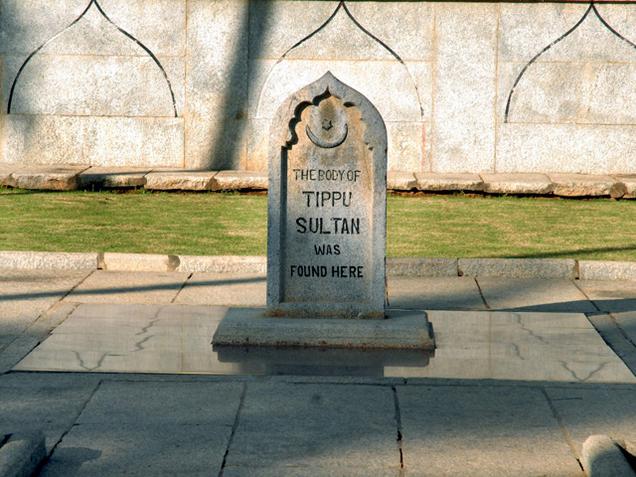
The death of Tipu Sultan on May 4, 1799, brought to close a fascinating chapter in Indian history; but his legacy continues to endure notwithstanding the controversy surrounding him in the present times.

Though it has been 216 years since the death of Tipu Sultan, historians are unanimous in pointing out that his initiatives in the socio-economic fields have continued to endure, though these were fast fading from public memory.

The expansion of sericulture in the Mysuru region has been credited to Tipu Sultan. The Mysore Gazetteer notes that Tipu secured the know-how from Bengal and introduced mulberry cultivation in 21 centres. In what could be described as a step to encourage local industry, he banned the export of cotton to ensure that local weavers were not denied the raw material.

The introduction of sugarcane on a large scale has also been attributed to Tipu Sultan for which he secured the assistance of Chinese experts, according to the Gazetteer, which notes that quality sugar and candy were produced with their assistance.

During the pause between the various wars he fought, Tipu Sultan took some reformatory measures including a ban on alcohol. Cattle being closely linked to agriculture, Tipu Sultan encouraged livestock breeding. Hallikar and Amrit Mahal breeds are believed to be products of this initiative.

Rocket technology

Modern day historians also credit Hyder Ali and Tipu Sultan with an elementary knowledge of missile or rocket technology, which is considered to be the prototype of present-day missiles and rockets. They were put to full use during the wars with the British. Some of these have been preserved at the Royal Artillery Museum in England. The paintings at Dariya Daulat, the summer palace of Tipu Sultan at Srirangapatana, are a clear indicator of the use of these missiles in wars.

A courtyard within the ruins of the Srirangapatana Fort was identified by archaeologists as the possible spot from where the missiles were launched. Scientists from DRDO have also visited the spot on many occasions in a bid to ensure better maintenance. Plans for a ‘missile museum’ are yet to materialise.

The expansion of sericulture in Mysuru region has been credited to Tipu Sultan

source: http://www.thehindu.com / The Hindu / Home> National> Karnataka / by R. Krishna Kumar  /  Mysuru, May 05th, 2015

Laham Mandi tickles city palate

Hyderabad :

The traditional Hyderabadi dastarkhwan has a new entrant: Laham Mandi.

From the exotic desert peninsula, the simple dish of rice and tender mutton has taken the city by storm. And nothing could explain the success that it has found as it enjoys a place alongside zafrani biryani, a delicacy Hyderabadis swear by.

But how did Laham Mandi make inroads into the Hyderabadi dastarkhwan that denizens are so fiercely protective of? Experts point out that it is the Hyderabadi diaspora, spread across Arabian countries, which has imported Mandi and its variants to the city.

“There was an import of culture as soon as Indians set foot in the Middle East. Though shawarma came to India before Laham Mandi, the latter became a huge hit with the youngsters. They want something different. The trend, particularly with wedding feasts is about two years old,” says Chef Taha Mohammed Quadri from Feast Express, a company that specialises in Arabian cuisine. “Now, bridegrooms are insisting that Mandi be on the dulhe ka dastar along with biryani,” he adds.

Ask Mohammed Abdul Rasheed, an engineer who recently tied the knot, why Mandi was on the menu and pat comes the reply, “All my friends love gorging on Mandi. Also, it is something different from the tried and tested affair.”

Traditional bawarchis say that the dish itself is simple to make. The meat is boiled in water till the time it is succulent and the rice is cooked separately. However, others, like seasoned chef Mir Asif Ali Khan from Arabian Nights argue that Laham Mandi is a madfoon dish, meaning that it is cooked in a cavity in the earth. He has lost count of the number of Hyderabadi weddings in which he has served Laham Mandi, he claims. While listing the traditional Hyderabadi fare on a dastarkhwan, he says, “The traditional dastarkhwan cannot go without lukhmi, qubani ka meetha, double ka meetha and of course, biryani. The introduction of Mandi is a fad.”

Khan explains that affordability and its large portions have led to its popularity. “The quantity of rice per person is huge, so much so that as many as three people can share it. Not just that, the average quantity of meat per portion is around 300 grams, for just Rs 240. What else would a youngster want,” he asks.

Others like Mohammed Moinuddin from Moghal Caterers says that for those who are not too keen on having Laham Mandi at weddings, the dish has found its place in pre-wedding parties. “Sanchak and Mehendi rituals are examples,” he says.

Experts say that restaurants in Toli Chowki like Four Seasons were one of the first to introduce the dish in the city about a decade ago. But, it was around three years ago that it started to gain popularity -courtesy the Arab tribals residing in Barkas, an Old City suburb. According to sources, of the 50-odd restaurants and cafes in the area, almost a third of them serve Mandi.

“The Yemeni tribes in Barkas used it to their advantage. They exploited their exotic lineage, made Mandi affordable and experimented with it by offering chicken and fish Mandi,” says Waseem Khan, a Mandi lover. The ambience in these restaurants is exotic, he adds. “You sit cross legged on the floor and people eat from the same large plate. Portraits of Arab rulers hang from the walls and there is calligraphy. All this adds to the exoticism,” he explains. Restaurants in Toli Chowki with Arabic names have mushroomed. Others like Spice 6 and All Seasons have made Laham Mandi a fine dining experience, he adds.

source: http://www.timesofindia.indiatimes.com / The Times of India / News Home> City> Hyderabad / TNN / September 28th, 2015

An industry with a humble beginning

Cashew Export Promotion Council of India celebrating diamond jubilee

The cashew processing industry in the country worked its way up from humble beginnings in Kollam to eventually become the global citadel of cashew processing. All cashew kernels available in the domestic and foreign markets were for a long time only those processed from Kollam.

Cashew also moved forward to become a major foreign exchange earner. But now when the Cashew Export Promotion Council of India (CEPCI) is celebrating its diamond jubilee in Kochi, cashew export from the country is facing serious challenges in the international markets.

Processing of cashew on a commercial basis was introduced in Kollam during the mid-1920s by a Sri Lankan national, Roche Victoria. Later, W.T. Anderson of the U.S. settled in Kollam and started processing on a large scale by opening a factory. All kernels were exported to the U.S.

Cottage industry

CEPCI chairman T.K. Shahal Hassan Musaliar said soon cashew processing became a flourishing cottage industry in Kollam. The export of kernels had increased from 45 tonnes in 1923 to 1,350 tonnes by 1939. During the initial years of commercial processing, raw nuts were sourced from the country itself.

Import of raw nuts from Africa began in the 1930s.

Mr. Musaliar said during 1940-41, about 28,000 tonnes of raw nuts were imported from Africa and the export of kernels touched 40,000 tonnes by 1941. World War-11 saw a fall in exports. Processors like Thangal Kunju Musaliar, Vendor Krishna Pillai, Poyilakada Parameshwaran Pillai, Kidangil Kunnju Raman and the company Pierce Leslie took cashew processing in Kollam to new heights after the war.

Mr. Musaliar recalls that when the industry faced a crisis in 1955 due to which exports suffered, the then Union Minister of Finance, T.T. Krishnamachari, intervened and called a meeting of cashew exporters in Kotttayam during his Kerala visit. Mr. Krishnamachari felt that the industry seriously needed some guidance in promoting exports and this led to the formation of the CEPCI that year, Mr. Musaliar said.

Major market

He said the U.S. was the major buyer of kernels till 1955. In 1956, the erstwhile Soviet Union began purchasing kernels from Kollam and became the top buyer of kernels from 1969.

New international markets also began developing. Today, the U.S. is back as the biggest importer of cashew from India. During the 2013-14 fiscal, the country imported 33,898 tonnes of cashew kernels from India. More than 25 countries import kernels from India now, he said.

source: http://www.thehindu.com / The Hindu / Home> National> Kerala / by Ignatius Pereira / Kollam – September 30th, 2015

OFF RADAR – When APJ Abdul Kalam charmed his way into Boeing’s nerve centre

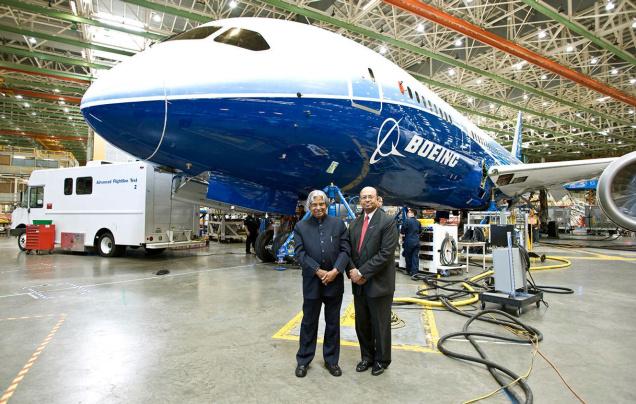
Nostalgia: APJ Abdul Kalam with Dinesh Keskar during his 2009 visit to Boeing's Seattle plant - PICTURE COURTESY: BOEING
Nostalgia: APJ Abdul Kalam with Dinesh Keskar during his 2009 visit to Boeing’s Seattle plant – PICTURE COURTESY: BOEING

Aircraft manufacturer’s Dinesh Keskar recalls the late President’s visit to Seattle in 2009

The sudden demise of former President APJ Abdul Kalam on July 27, left people mourning in India. Over 12,000km away in Seattle too, a pall of gloom descend on Boeing’s manufacturing plant, where the former President had charmed and impressed the employees during his visit in 2009. Later Dinesh Keskar, Senior Vice-President, Asia-Pacific and India, Boeing Aeroplanes called Kalam “a friend of a lot of people, including Boeing.”

During the 2009 visit, the former President had shown an interest in meeting Joe Sutter, the man who designed the double-decker aircraft, the Boeing 747, which is popularly known as the Jumbo Jet. “The former President knew of him (Sutter) and wanted to meet him,” recalls Keskar.

The 2009 visit to the Seattle plant was Kalam’s first to the Boeing’s manufacturing facility. The 88-year-old Sutter, often called the Father of the 747, was there. The two had a 20-minute meeting which Keskar too attended. “The former President wondered how Sutter had come up with the idea of the upper deck. Kalam also asked Sutter about the support he had in designing the Boeing 747,” Keskar recalled. Perhaps Kalam, who was involved with the Light Combat Aircraft project, was hoping to replicate the same in India. The Missile Man also gave a lecture to an audience that included scientists and top technologists during the Seattle visit. Kalam, however, was not just interested in the Jumbo Jet. During his visit he also got a first-hand feel of the first Boeing 787 aircraft, the long-range, wide-body, twin-engine jet airliner . The 787 aircraft that Kalam saw in Seattle was the first of the 27 aircraft that are joining the Air India fleet.

Kalam was impressed with the aircraft, particularly its wings. The crystal model of an aeroplane that Boeing presented Kalam to commemorate the visit is still displayed in Delhi.

Bengaluru days

Kalam’s relationship with Boeing did not end at Seattle. He also visited the Boeing research centre in Bengaluru. Keskar says that the former President spent over three hours talking to the 15 people present, inquiring about their work. Many of the people were picked from the National Aeronautics Lab, where Kalam was the Chairman of the organisation’s research council.

It was during this visit that Kalam said that one of the things Boeing must do is to get India into the aeroplane market. “He was obviously very interested in getting Boeing to do something in India in terms of building an aeroplane in India. We are still working on smaller pieces of that. We have not gone to the stage of the aeroplane but that was his vision,” Keskar added.

source: http://www.thehindubusinessline.com / Business Line / Home> Specials> Flight Plan> Off Radar / by Ashwinin Phadnis / August 25th, 2015

Finding fish to make ends meet

How an adversity turned into an opportunity for Rajasthan’s Meo community farmers

They were never fisherfolk and had no idea how a net was cast. Living for generations in the landlocked Kaman block of Rajasthan, the farmers of Jeeraheda village only knew how to sow and harvest their grain. So, when in the late 1980s, water from the Gurgaon canal, which runs through Haryana and Rajasthan, began to slowly seep into their agricultural land and cause serious water-logging, they threw up their hands in despair.

The 240 families of the Meo Muslim community, which has its homes and farms along the canal adjoining the Haryana border, knew that growing a crop on these tracts was no longer possible. “We tried in vain for many years to make use of this land, but nothing at all would sprout. It would get inundated with water,” recalls 53-year-old farmer Aas Mohammad.

The flooding also meant the farmers had less acreage to cultivate and were unable to meet their food needs, leave alone store grain for a rainy day or sell it. Already left outside the mainstream of development and traditionally backward, the community found the going tough.

Teach a village to fish Aas Mohammad and his family draw in their fish catch at their field-turned-pond. Some of the fish will be sold to markets and some transferred to another farmer’s pond as fish seed KAMAL NARANG

All of a sudden, however, their fortunes turned for the better. “In the last 15 years there has been a lot of change. Our luck began when we introduced fish seed into the gram panchayat talab (large pond) and found it yielding good results. It grew into good-sized adult fish,” says farmer Khurshid, who is now the President of the Gram Vikas Samiti. Lupin Human Welfare and Research Foundation, which has been working on development projects here, advised the farmers to dig up the water-logged fields, transform them into talabs and introduce fish species for sale in cities.

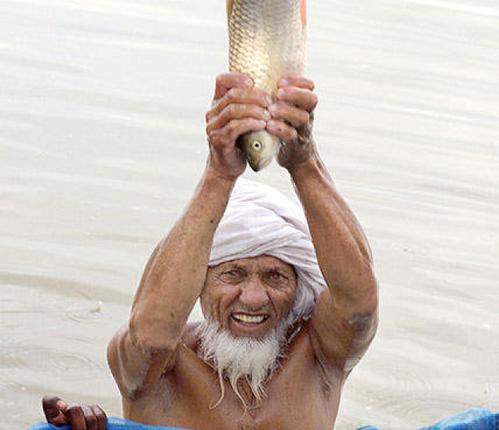
There was no looking back after that. Khurshid says his village today has 55 such talabs in the 40-50 acres that is unfit for cultivation. Dull-blue waters and bright-blue fishing nets have become a part of the landscape, interspersed with green fields. “Our fish harvest brings us returns every day,” he says, naming the popular sweet-water species Rohu and Katla as the mainstay of their business along with the smaller mirgal, and common and grass carb.

Every day, 2-3 vehicles arrive in Jeeraheda village to cart away 5-6 quintals of fish each for markets across the State border in Gurgaon and Delhi. “We don’t have to go anywhere, our market comes to us… we do brisk business from 6-9am. We weigh the catch, fix the price and sell to the best buyer. This happens across all the four villages along the canal that have taken up fisheries,” says a satisfied Mohammad.

Kaman block alone has around 200 ponds with fish rearing. “Bharatpur district, of which we are a part, is producing 1,500 tonnes of fish and provides livelihood to 2,000 fish-farmers,” says Tarachand, Lupin’s Kaman block co-ordinator. He provides a back-of-the-envelope calculation of the profits earned by the farmers. “They spend around ?50,000 annually on seed, feed, cleaning, nutrition and so on for atalab the size of an acre. The output is about 40 quintals of fish. Per hectare, they earn ?3.5 lakh a year.”

“A problem was turned into a potential,” explains Dr Swati Samvatsar, Lupin’s Chief Programme Manager. To keep fish-farming alive and encourage the farmers, the organisation started a fish-seed hatchery in the Nineties with a capacity of one crore fry seeds; it supplied various fish species to the farmers at a no-profit, no-loss basis.

The houses are now concrete and every family has accident insurance

“Today, some farmers make their own seeds and provide them to others,” says Samvatsar. The results are there for all to see. The houses are now concrete and every family has accident insurance.

Unfortunately, however, prosperity and food security have not erased overwhelming social and cultural problems. Only a few girls go to school. “Women have their own role to play. They do not help in the fishery business. Instead they tend to the buffaloes, the home, the children… and to themselves,” Khurshid argues vehemently.

The good fortune has also meant that young boys in the village have become more complacent. Only a few have attempted to secure college degrees or turn to other professions. “The younger generation is more adept at swimming, fishing and growing the fisheries business,” admits Samvatsar.

SHER MOHAMMAD Fish-farmer in Kaman block. Even the youngsters in the village know each and every detail about fish cultivation

Says 74-year-old Sher Mohammad, obviously proud of the training the young ones have been given, “They know each and every detail about fish cultivation.”

Fourteen-year-old Rahees sums it up as he plunges joyfully into the blue water to join the others in retrieving the submerged fishing net, “We study when we feel like it.”

(The writer travelled to Rajasthan at the invitation of Lupin Human Welfare and Research Foundation)

source: http://www.thehindubusinessline.com / Business Line / Home> Specials> India Interiors / by Preeti Mehra / September 11th, 2015

A cooperative wholesale store has come a long way

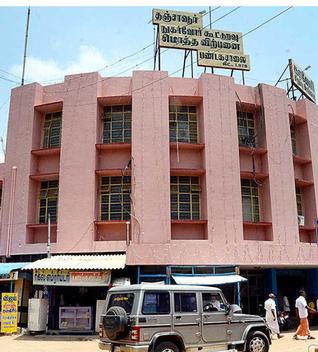
MAKING RAPID STRIDES: A view of Thanjavur Consumers Cooperative Wholesale Stores in Thanjavur.— Photo: R.M. Rajarathinam

Thanjavur Consumers Cooperative Wholesale Stores celebrating platinum jubilee

The Thanjavur Consumers Cooperative Wholesale Stores (TCCWS), a cooperative institution that has impacted the daily life of all sections of society here for the past 75 years, is celebrating its platinum jubilee anniversary by firming up a five-year plan to shore up its finances.

Registered on April 20, 1940, it commenced its commercial operations on May, 1940 with 16 members with a share capital of Rs. 390. Now, it has 2,634 members with a share capital of Rs. 41.14 lakh.

Under its control, there are 70 fair price shops in urban areas of the city through which the premier cooperative institution is channelising 1,137 tonnes of rice, 144 tonnes of sugar, 39 tonnes of wheat, 54 tonnes of toor dhal and 57,000 litres of palm oil every month to the attached 72,636 family cards.

Besides, there are six kerosene bunks in the city limits in its fold through which 29,444 family card holders were getting 75,870 litre of kerosene a month.

Serving as the lead society, the TCCWS has been facilitating supply of essential commodities to 2,00,315 family card holders attached to 467 fair price shops functioning under the aegis of 126 primary agricultural cooperative credit societies in Thanjavur, Orathanad, Pattukkottai, Peravurani and Tiruvaiyaru taluks, the TCCWS Managing Director M. Mohamed Rafi told The Hindu here.

The self-service section functioning in the main TCCWS complex has been doing a brisk sale of Rs. 15 lakh a month while the cooperative medical shop within the complex is extending 12 per cent discount for medicines and five per cent rebate for food items besides providing free door delivery facility to buyers on demand. Medicines and food items sale touches Rs. 5 lakh a month. The stationery section was recently refurbished to lure more customers and is doing a sales turnover of Rs. 2 lakh a month, Mr. Rafi said.

There are 119 employees against the sanctioned cadre strength of 133 and a democratically elected Board of Directors in administering the TCCWS.

One future plans, he says six new fair price shops were ready for opening in urban limits of the city while it was planning to carve out four new full-time fair price shops to serve specific area customers better.

Though the TCCWS has run up a cumulative loss of Rs. 6.24 crore up to the audited period of 2011-12, it has drafted an ambitious five-year plan to wipe off the deficit and turn the corner. Already, during 2012-13, the TCCWS earned a profit of 8.15 lakh due to efficient functioning and Mr. Rafi hoped to build on that performance in the years to come.

source: http://www.thehindu.com / The Hindu / Home> National> Tamil Nadu / by L. Renganathan / Thanjavur – May 02nd, 2015

Here come the heroes

The winners of the Big Real Hero awards

Hyderabad’s ‘real heroes’ were honoured by 92.7 Big FM

It is not easy to initiate a change. But, the best way to bring a change is by paving a new path. While most of us complain at the way society turns a blind eye to the problems and situations, there are a few who do not complain, instead take things in their hands and set an example. To felicitate their efforts and set them as role models to society, 92.7 Big FM invited these heroes as part of their ‘Big Real Hero Awards’ campaign.

As we celebrate the 69th year of independence the change makers of our society become the real heroes to fight for various forms of independence in our independent society. These heroes are silent and are making a difference without talking about it.

As part of their campaign, Big FM in their breakfast show asked people to share the names of heroes they have seen working for society. After an overwhelming response some of them were even featured in their breakfast show ‘Salaam Telangana’ hosted by RJ Shekar and Swapna.

In an event on Friday, the channel felicitated the six heroes namely—Bal Gangadhar Tilak, Sharif, Rajeshwra Rao, Bhagya Lakshmi, Yadigiri and M. Vijay Ram Kumar. The awardees come from different walks of life and serve society in different ways and means. They, in their own right have been working for a change. Bal Gangadhar, a retired railways employee has used his pension to fill more than 1100 potholes in the city. He took the initiative when he witnessed several incidents caused by the bad state of roads. In Bal Gangadhar’s absence his brother Bhimesh Shankar was present. He established shramadaan.org

Sharif is the founder of Friends2support.org. F2S is a group founded by five friends to help people meet the emergency blood requirement for free. F2S claims to be India’s largest blood donor database. The organisation has won several national and international awards. Rajeshwar Rao is the founder of Satya Harishchandra foundation. They cremate unclaimed and unidentified dead bodies. Bhagya Lakshmi from ‘Manchi Pustakam’ is a small initiative taken to publish, encourage and promote Telugu books. Yadigiri is a chef and he donates food from his restaurant—Ulavacharu to orphans everyday and M. Vijay Ram Kumar of Emerald sweets has been working for a green society. The awards were given away by Somesh Kumar, Commissioner GHMC and actor Manchu Lakshmi.

source: http://www.thehindu.com / The Hindu / Home> Features> MetroPlus / by Prabalika M. Borah / Hyderabad – August 14th, 2015

Secret Recipe On a Roll

Mirza Faqib
Mirza Faqib

Unassuming man, humble beginnings and simple food ethics—that’s life for Mirza Faqib, owner of Al-Bake restaurant. Unlike other restaurants, wherein successors inherit business, Faqib has merely joined in as an extra hand. He says, he could never in his lifetime, overtake his parents in any respect—business or otherwise.

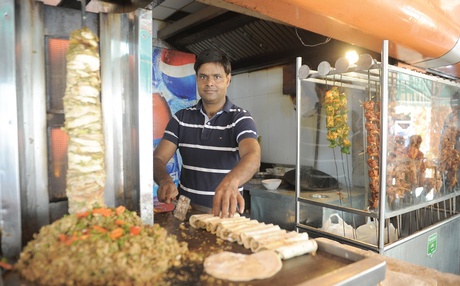
His parents, Mirza Ziauddin Beg and Ishrat Ara, who came from Saudi Arabia, left much of their possessions there but for one thing—their penchant for cooking. “When they came to India many years ago, they had few resources, but abundant enthusiasm to make life work here,” says Faqib. It was with that idea that Al-Bake, which literally means all-baked, a restaurant that serves only baked dishes, started. “We have many dishes on our menu, but nothing sells like our shawarmas—vegetarian and non-vegetarian. To be honest, ours is an adaptation of the Lebanese shawarma and we had to improvise because people here wouldn’t have cared for the authentic recipe,” he says.

Having roots in a royal mughal family, father’s inherent interest in food helped Faqib a lot in the process of re-developing the dish. When in Saudi Arabia, he was introduced to many cuisines but the one dish he liked the most was shawarma. “You have to see the queues outside our restaurant. They’re self-explanatory. We knew that people would like what we had to offer but to this extent, we hadn’t fathomed,” says Faqib.

This family is certainly not part of the hoity toity brigade of new-age restaurateurs who prefer to not get their hands dirty. An engineer by profession, Faqib cooks and cleans along with his parents everyday at their restaurant. “Actually, we cannot afford not to. Our recipe is our bread and butter. As clichéd as it may sound, it’s top secret and I cannot even let you in on one single ingredient. We have to preserve this and maintain quality of food that goes off the kitchen counters. We have good chefs, but at the end of the day, being present in the kitchen is what helps,” he says, adding, “Another thing. Working alongside other chefs has many perks, one of them being unlimited gorging on our favourite food. You know which one I’m talking about.”

source: http://www.newindianexpress.com / The New Indian Express / Home> The Sunday Standard / by Ayesha Singh / July 26th, 2015