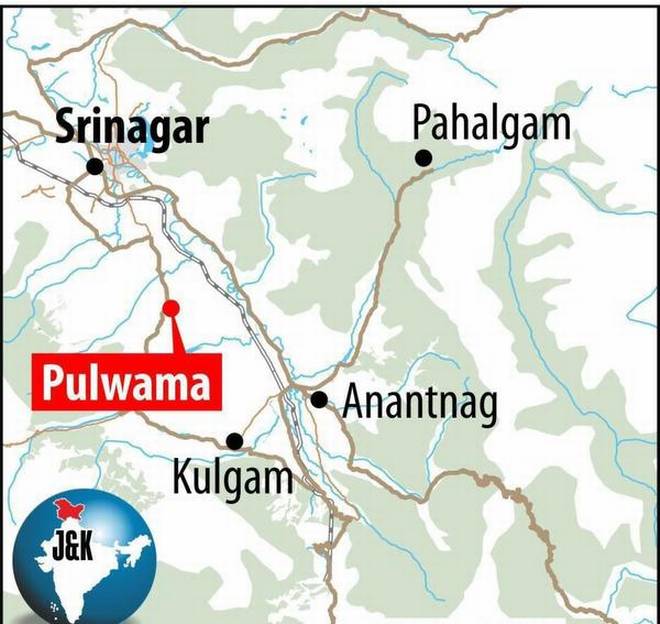
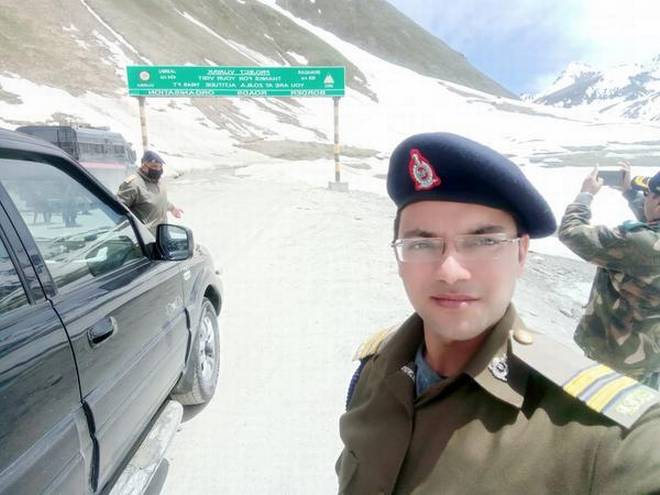
Suspected militants killed a policeman, his wife and daughter in Pulwama’s Awantipora area on Sunday night.
The police said militants barged into the house of Special Police Officer (SPO) Fayaz Ahmad at Hariparigam area of Awantipora and opened indiscriminate fire on Sunday night.
“In the firing, Ahmad along with his wife, Raja Bano, and daughter, Rafia Jan, received bullet wounds. Later, the couple succumbed to their injuries in the hospital,” the police said.
Jan, 24, also succumbed to her injuries on Monday morning in a Srinagar hospital.
Earlier this month, militants killed two off-duty policemen in Srinagar in two separate attacks, including an inspector of the Criminal Investigation Department.
“I strongly condemn brutal terrorist attack on SPO Ahmad and his family at Awantipora. This is an act of cowardice and perpetrators of violence will be brought to justice very soon,” Lieutenant Governor Manoj Sinha said.
source: http://www.thehindu.com / The Hindu / Home> News> States> Other States / by Special Correspondent / Srinagar – June 28th, 2021
The Maulavi of Faizabad managed to keep the city free from British rule for almost a year until his death at the hands of British agents on June 5, 1858.
Faizabad (Ayodhya District), UTTAR PRADESH :
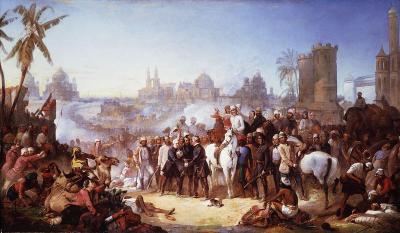
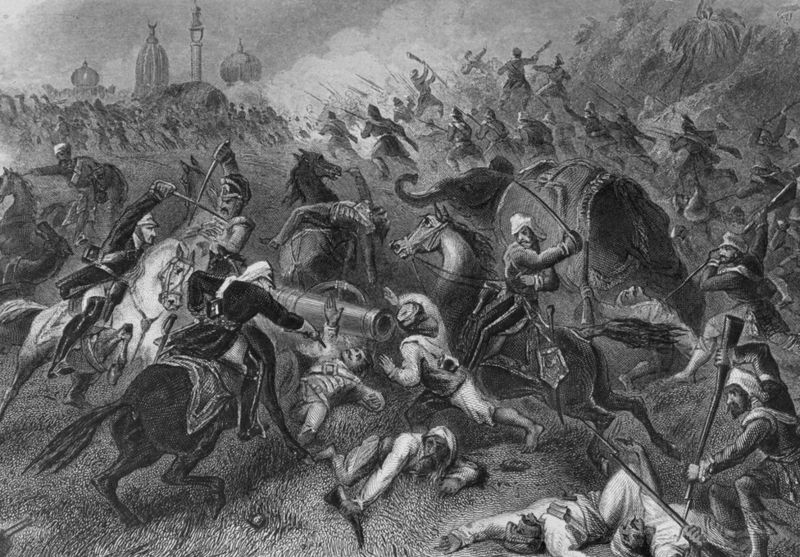
The Relief of Lucknow, 1857, by Thomas Jon Barker. Photo: Wikimedia Commons
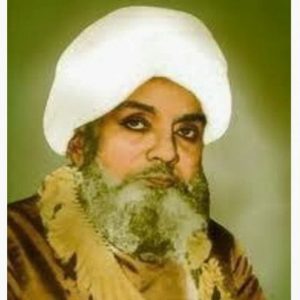
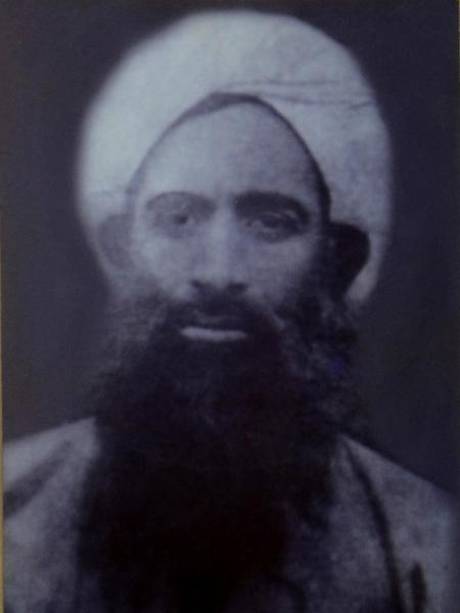
Ahmadullah Shah, born in 1787, more famously known as Maulavi of Faizabad, was one of the leading figures of the great Indian revolt of 1857. In the Awadh region, Maulavi Ahmadullah Shah was known as the ‘Lighthouse of Rebellion’. Hailing from a noble warrior family of Awadh in Faizabad, he grew up to be a political leader committed to armed revolutionary insurrection against British rule in India.
During the freedom struggle, Maulavi made Faizabad the centre and launched revolts in all of the Awadh region. He made the local mosque Masjid Sarai located in Chowk area of Faizabad his headquarters. As he liberated Faizabad and the larger part of Awadh region, he used the premises of this mosque to hold meetings with rebellion leaders.
Maulavi Ahmadullah Shah kept Faizabad free from British rule for almost one year, until his death at the hands of British agents on June 5, 1858.
According to researcher and historian Ram Shankar Tripathi, “With being a practicing Muslim, he was also the epitome of religious unity and Ganga-Jamuna culture of Faizabad. In the revolt of 1857, royalties like Nana Sahib of Kanpur, Kunwar Singh of Arrah fought alongside Maulavi Ahmadullah Shah. Maulavi’s 22nd Infantry Regiment was commanded by Subedar Ghamandi Singh and Subedar Umrao Singh in the famous Battle of Chinhat.”
Tripathi narrates, “Maulavi wanted Raja Jagannath Singh of Pawayan, a zamindar in district Shahjahanpur of Uttar Pradesh, to join the anti-colonial war. On June 5, 1858, with prior appointment, he went to meet Raja Jagannath Singh in his fortress-like house. On arriving at the gate, he was greeted with a volley of gunshots from Jagannath Singh’s brother and retainers. The Maulavi breathed his last on the spot.”
“The martyr’s head was severed and carried in a piece of cloth with blood still oozing from it to the district magistrate, Shahjahanpur, by the zamindar. The district magistrate was at lunch with his friends. But the depraved feudal lord rushed in and presented the severed head of the hero on the dining table of the district magistrate. With a reward of Rs 50,000, he returned home, flying atop the flag of loyalty.”
According to another historian Roshan Taqui, “Maulavi use to bring out revolutionary pamphlets mobilising the masses to do ‘Jihad’ against the British. Maulavi was arrested by the British in January 1857 and was held captive in Faizabad, but three months before the revolt broke out in Lucknow on June 3, he escaped and launched a war against the British in Awadh region including Faizabad, Lucknow and Shahjahanpur.”
“During the revolt, the revolutionaries appointed him as chief of 22nd Infantry Regiment that fought the famous battle of Chinhat in Ismailganj of Lucknow on June 30, 1857, against British forces led by Henry Lawrence. Britishers were badly defeated in this war,” informed Roshan Taqui.
British officers like George Bruce Malleson and Thomas Seaton have made mentions about courage, valour, personal and organisational capabilities of Maulavi Ahmadullah Shah. Malleson has repeatedly mentioned Ahmadullah in the History of Indian Mutiny, a book written in six volumes covering the revolt of 1857.
source: http://www.thewire.in / The Wire / Home> History / by Arshad Afzal Khan / June 05th, 2018
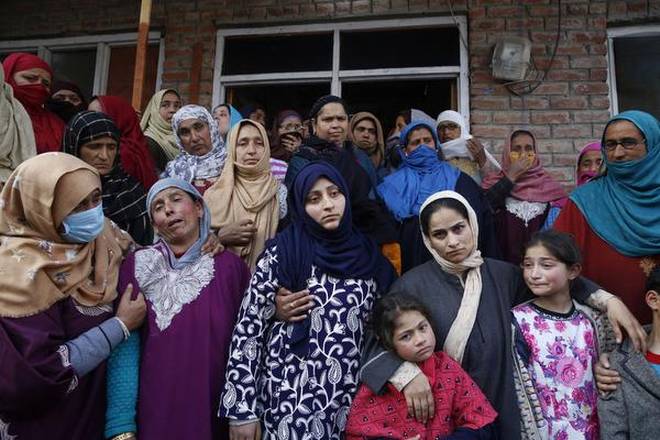
Family members mourn as people carry the body of Riyaz Ahmad a Block development Council ( BDC) member who was killed in a militant attack, during his funeral procession, in Sopore, Jammu and Kashmir on Monday, 29 March 2021. Another municipal councillor, Shams-ud-Din Peer, who was injured in a militant attack on Monday in north Kashmir’s Sopore succumbed to his injuries on Tuesday. | Photo Credit: NISSAR AHMAD
So far, two councillors and a policeman have died in the incident
A municipal councillor injured in a militant attack on Monday in north Kashmir’s Sophore succumbed to his injuries on Tuesday, taking the toll to three.
Meanwhile, Inspector General of Police (IGP) Vijay Kumar said the policemen guarding the councillors “failed to retaliate to the fire of militants”.
The councillor, Shams-ud-Din Peer, who had suffered multiple bullet wounds, succumbed to his injuries at the Shri Maharaja Hari Singh hospital in Srinagar during the night, officials said.
Apart from Mr. Peer, another councillor and a policeman have been killed in the Sopore attack.
Meanwhile, Mr. Kumar admitted that the four personal security officers (PSOs) guarding the councillors “failed to timely retaliate and foil the attack”.
“There has been a security lapse. Had the four PSOs retaliated, the militants would not have succeeded in their efforts,” he said.
Four suspended
All the four policemen have been suspended after the incident.
He said there was no additional deployment made because the Municipal Committee chairman, Sopore, “had not informed about the meeting”, targeted by the militants later.
The IGP said an overground worker of the militants had been arrested. “The arrested youth has revealed that the attack was planned by a local Lashkar-e-Taiba and a foreign militant,” he said.
Mr. Kumar has asked all vehicles plying in J&K with non-J&K registration plates to register within 15 days with the transport authority of the Union Territory. “Militants were using such vehicles to target the security forces,” he added.
source: http://www.thehindu.com / The Hindu / Home> News> National / by Peerzada Ashiq / Srinagar – March 30th, 2021
Missing engineer Subhan Ali. | Photo Credit: Special Arrangement
Subhan Ali’s vehicle fell off the road and plunged into the Drass river that flows into Pakistan last June, but the process of matching his DNA with those of his parents is far from over.
The wait for the family of Subhan Ali, a 27-year-old civil engineer posted with the Border Roads Organisation (BRO) who went missing after an accident on the Zozila-Kargil-Leh road last June, just got longer.
Son of a tailor from Balrampur in Uttar Pradesh, the Indian Engineering Service (IES) officer had been posted in Ladakh as part of the General Reserve Engineering Force (GREF) of the BRO when his vehicle fell off the road and plunged into the Drass river that flows into Pakistan.
Though the Pakistani side had recovered an unidentified body on Shingo river close to the Line of Control (LoC) on 27 June, the process of matching the DNA with Mr. Ali’s parents is far from over.
Lok Sabha member and Bahujan Samaj Party (BSP) leader Kunwar Danish Ali had taken up the case with Defence Minister Rajnath Singh in July last year.
Now, eight months later, Mr. Singh informed his Lok Sabha colleague that the DNA matching process would need more time as “the sample is in a queue”.
“It is learnt that DNA matching analysis at FSL [Forensic Science Laboratory], Chandigarh, is in queue and it may take 3-6 months before the report is received. Further action will be taken on receipt of report from FSL, Chandigarh,” Mr. Singh said in his letter dated February 11.
On June 22 last year, Mr. Ali, along with his driver, Palwinder Singh, went missing after their vehicle fell into the Drass and got swept away by the fast flowing river.
While the Gypsy and the driver’s body were recovered from the river, the engineer’s body remained untraceable.
Five days later, Pakistani authorities reported the finding of an unidentified body from Shingo river close to the LoC on 27 June. Following up the lead, the Army Headquarters coordinated with Pakistani authorities to collect the DNA samples of the unidentified body.
The DNA samples of the unidentified body were received by Kargil police at Tangdhar on August 22, 2020. Two months later, the DNA samples of his parents were also collected on October 28, 2020 and was forwarded to the FSL, Chandigarh.
“But since then, it has been a long wait for the family. They have been waiting for a sense of closure to this tragic chapter. Even now, they may have to wait for another six months. I would request the government to speed up the process of DNA sample matching and provide them some relief,” the BSP MP told The Hindu on Sunday.
source: http://www.thehindu.com / The Hindu / Home> News> National /by Sandeep Phukan / New Delhi – February 28th, 2021
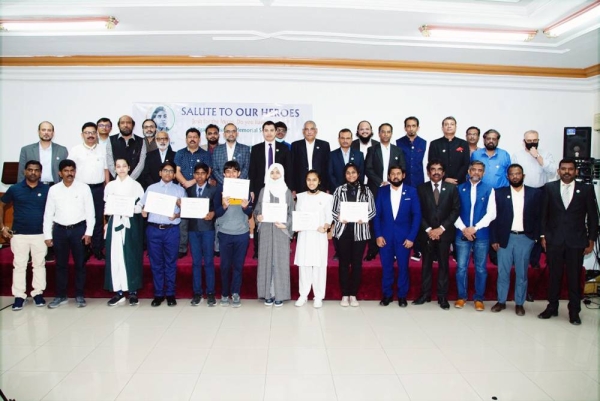
Acting Indian Consul General Y.Sabir poses for photos with winners of Brig. Usman Storytelling Contest and Organizers of the event at Indian Consulate in Jeddah
Jeddah :
Members of the Indian Community in Jeddah gave a big salute to the patriotic valor and great sacrifice of Brig. Mohammed Usman, who laid his life defending the honor of his great nation. Brig. Usman, who at a young age, declined the offer to assume the highest military rank of another country and instead preferred to defeat them in a crucial war by sacrificing his precious life on the war front and thus becoming the highest-ranking Indian Army officer to be martyred in the war.
This great Indian war hero, nicknamed as the “Lion of Nowshera,” was remembered recently during the community’s celebration of the Indian Army Day, which falls on Jan. 15, and that marked paying rich tribute to members of the Indian Armed Forces.
Acting Indian Consul General Y. Sabir was the chief guest of the event, titled “Salute to our heroes,” held in the presence of prominent community members at the conference hall of the Jeddah Consulate in which several highly decorated officers of the Indian Army joined virtually to speak about their experiences right from the field with great enthusiasm and passion.
The most distinguished among them was the keynote speaker Lt. Gen. Bhupinder Singh, former lieutenant governor of Andaman and Nicobar Islands. The younger generation of the community also were part of the celebration and posthumous honoring of the great Indian war hero with their participation in the “Brig. Usman Memorial Storytelling Contest.”
In his speech, Sabir shared with the audience how an Indian Army soldier goes through tough and arduous training that enables him to achieve all round personality development as a true role model of an Indian citizen.
“An Indian Army soldier is the epitome of courage and determination to his duty, and his role and responsibilities are not limited only to warfronts but rather cover much wider areas of serving the entire nation and people,” he said, while calling on the younger generation to come forward to take up a brilliant career in the Indian Armed Forces.
Sabir also lauded the efforts of Indian community for holding a unique event in honoring Brig. Usman, coinciding with the Army Day.
President of India Forum Mir Ferozuddin, who hails from the bloodline of Brig. Usman, spoke about the ‘josh’ of the soldiers that is more ferocious than the roar of a lion. “It is this josh that made the “Sher of Nowshera” reject the offer to become the Chief of Army of the neighboring country and continued to command his country’s army until he became a martyr on the soil of his own beloved country,” he said.
Ferozuddin invited Kargil war veteran Capt. Yashika Tyagi to join the session virtually to give a brief biography of Brig. Usman and insights into his heroic martyrdom.
She began her speech with the remarks of “Shera Shera Nowshera” feeling of pride of belonging to the banner of the great Brigadier. Tyagi described the courage and determination of Brig. Usman in recapturing Jhangar village in Kashmir. “In all senses of the word, Brig. Usman was a great warrior, who faced each set back in his life head-long and defeated each setback with the strength of his character.”
Capt. Tyagi, the first lady officer to be posted in extreme cold weather, also spoke eloquently about how a woman, a mother of a toddler and four-month pregnant, fought bravely to safeguard India’s borders. She motivated Indian girls and boys to join the Indian Armed Forces, with a promise to train them personally.
In his keynote address, Lt. Gen. Bhupinder Singh recalled: “Brig. Usman continued to remain an inspiring war hero all throughout my military and civil life ever since my joining of the Indian Army at the age of 19. Brig. Usman was among my heroes about whom I have been mentioning in all my writings,” he observed and lauded the family of Mir Ferozuddin as a fine example of true patriots.”
The event also saw a virtual CatFit deliberations to mark the Army Day. CatFit, a pioneer of M.A.S.T.S (Military Application and Special Forces Tactics for Students), covers all domains of psychological, mental, physical and emotional development and thereby ensuring that students achieve their optimum potential. Global Head of CatFit Arpan Dixit introduced the speakers.
Maj. D.P. Singh, a distinguished military officer who fought in the Kargil war and sustained serious injuries, spoke about the sheer determination of a soldier. Singh talked about the kind of soldiers the Indian Armed Forces develop with tough trainings. He showed his journey from 1999 when he got injured by a mortar bomb in Kargil to being the first blade runner of India.
Defense expert Brig. Anjum Shahab, who has over three decades of services in Indian Army, addressed the young generation and motivated them to join the Armed Forces and showed direction on how they can join. On his part, Maj. Mohammed Ali Shah drew attention to various TED (Technology, Entertainment and Design) Talks, giving full of inspiration and well connected with the young generation. Shah started off as an actor and then joined the Indian Armed Forces where he served for five years.
The Squadron Leader Meena Arora narrated her stories from the war field. She mentioned the use of technology in the Air Force and how it is influenced in winning a war. Arora talked about the strength of the Indian Air Force and mentioned the fight of Wing Commander Abhinandan Vardhaman, who landed in the enemy area but showed bravery in the face of death.
Zakaria Biladi, a prominent Indian community leader, was mainly behind organizing this unique event with the core objective of creating awareness among the younger generation about picking their brilliant career path in the Indian Defense Forces. In his speech Biladi said: “There is a dire need to ignite the passion for such services in the Indian youth living in Saudi Arabia particularly because they are not exposed to seeing the activities of Indian Army as much as the youth living in India are.”
Earlier, the event began with a welcome speech by Asim Zeeshan, the master of ceremonies, while Mohammed Hyder proposed the vote of thanks. The organizers of the event also included M. Siraj, Mohsin Sharif, KTA Muneer, and Imran Kausar.
Acting Consul General Y. Sabir gave away prizes to winners of the Brig. Usman Memorial Story telling contest. The winners are the following: Junior Category (7-9 classes) — Kavin Adhitiya & Ms. Danhushri Subramanyan (first); Syeda Umamah Qadri (second); and Ashwin Karuppasamy & Ms. Aishwarya Jayasankar (third). Senior Category (10-12 classes): Rimy Tomy (first); Marial Aranha (second) and Sana Ferozuddin (third).
Speaking to Saudi Gazette, Biladi said that the competition has been instrumental in inculcating a huge amount of patriotism and passion among the Indian students as well as to instill in them high esteem to the great sacrifices of Brig. Usman in defending the homeland.
Brig. Usman was the highest ranking officer of the Indian Army killed in action during the Indo-Pakistan War, immediately after the partition of the subcontinent in 1947. At the time of the partition, he, along with many other Muslim officers, declined to move to the Pakistan Army and even turned down the offer to become the first Chief of Army of the new state of Pakistan, and thus becoming a great symbol of India’s inclusive secularism.
It was during the defense of Jhangar in Jammu and Kashmir Usman was killed on July 3, 1948, by an enemy 25-pounder shell. He was then 12 days short of his 36th birthday. His last words were “I am dying but let not the territory we were fighting for fall for the enemy.”
For his inspiring leadership and great courage, he was awarded posthumously with the second highest military decoration for gallantry in the face of enemy, the Maha Vir Chakra. India’s first Prime Minister Jawaharlal Nehru and his Cabinet colleagues attended the funeral of Brig. Usman, who was buried in a grave in the Butla House near the Jamia Millia Islamia campus in New Delhi.
source: http://www.saudigazette.com.sa / Saudi Gazette / Home> Saudi Arabia / by Hassan Cheruppa, Saudi Gazette / January 25th, 2021
₹8 crore project for ‘one of its kind’ Azad Gallery will tell the story of revolutionaries in the Indian freedom movement.
From the spirit of the Ghadarites to the sacrifice of Durga ‘Bhabhi’, a section of historians and the political class feel that the contribution of revolutionaries to the Indian freedom movement has not been well-documented. In a bid to strike a balance, the Allahabad Museum is in the process of creating a “one of its kind” Azad Gallery, where the story of the revolutionary struggle of the Indian freedom movement would be told through artefacts and interactive displays.
Named after Chandra Shekhar Azad, who attained martyrdom at about 300 metres from the museum, the gallery is expected to be complete by July 23, 2021, the 115th birth anniversary of the revolutionary.
Backed by the Ministry of Culture and the National Council of Science Museums (NCSM), the infrastructure for the “multi-pronged project is being developed with a budget of around ₹8 crore in 7,500 sq. ft. of space where the revolutionary struggle will be specially depicted, starting with 1857’s First War of Independence to the Azad Hind Fauj,” said Sunil Gupta, Director in-charge of the museum.
Dr. Gupta, who has spent three decades at the museum in different capacities, said the story of this struggle had not been comprehensively told through curatorial display and was being done for the first time by the Allahabad Museum.
Promising a “world-class experience”, Dr. Gupta said the infrastructure would be ready by January and the NCSM would then take over to implement the design.
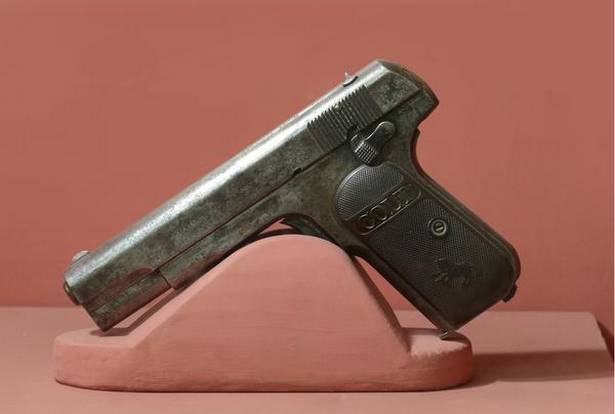
One of the highlights of the museum has been the .32 caliber Colt pistol which belonged to Azad. It is showcased in a bulletproof case and is guarded by U.P. police personnel. “As per our records, the pistol is said to have been received from John Knott Bower, the police officer who led the encounter against Azad,” said Dr. Gupta.
One of the highlights of the museum has been the .32 caliber Colt pistol which belonged to Chandra Shekhar Azad. It is showcased in a bulletproof case and is guarded by U.P. police personnel. | Photo Credit: Special Arrangement
On the theory that although the Colt could have belonged to Azad, it was a Mauser he used during the shoot out, Dr. Gupta said the records of Azad’s associates were being looked into. “Revolutionary Manmath Nath Gupta, in his book They Lived Dangerously, has recounted an incident in which a Mauser pistol owned by Azad went off accidentally. Gupta [the author] also recounted that Azad was also loading other pistols and revolvers that he had with him,” Dr. Gupta said.
Dr. Gupta recalled Durga (Devi Vohra) ‘Bhabhi’, who assumed the identity of Bhagat Singh’s wife to help him escape from Lahore after Saunders’ assassination, grew up in Kaushambi near Allahabad before being married to revolutionary Bhagwati Charan Vohra. “She was no less than Bhagat Singh. A day after Bhagat Singh and his associates were sentenced to death, she fired at a British police officer and his wife from a moving car in Bombay,” he said.
Dr. Gupta argued it was not that she was not celebrated at all but that she was never made an icon. “She almost remained incognito till she died in 1999. She ran a small school in Lucknow and we are in the process of acquiring documents related to her,” he said.
Liaquat Ali | Photo Credit: Special Arrangement
The museum also has a kurta–pyjama and sword of Maulvi Liaquat Ali, who was the leader of revolutionaries in 1857 in Allahabad. “Under him, Allahabad was liberated for at least 10-15 days. His headquarters was the historic Khusro Bagh, where he unfurled the flag of the Mughal emperor,” recounted Dr. Gupta.
In the arms and armoury gallery of the museum, there is a submachine gun of the First World War, “the kind which would have been used by Ghadar revolutionaries in 1915 had the rebellion not been thwarted because of international conspiracies,” Dr. Gupta said.
There are a number of welcome addresses as well which were “gifted to Pandit Nehru when he visited Singapore, Malaya and Burma in 1937-38 before the Second World War. They were given by Indian-origin merchants, who a few years later funded the INA (Indian National Army),” said Dr. Gupta.
There is also an original letter by Vishnu Sharan Dublish, an accused in the Kakori case.
World over, Dr. Gupta said, artefacts are backed by virtual experiences. “It excites children and helps fill the gaps in the narrative. Seven short films made by the Satyajit Ray Film and Television Institute will be on show,” he said.
On the ideological slant of the gallery, Dr Gupta said, “We already have galleries devoted to Gandhi and Nehru. As a student of history, I could say the revolutionaries have been horribly sidelined and in some cases, such as Durga ‘Bhabhi’, I would say it was consciously done. However, we were clear the museum is not just about the freedom struggle and have not parted with the [museum’s] Central Hall. We are located in the middle of the Gangetic civilisation and our sculpture collection is amazing. We are sending six-seven of them [sculptures] for an exhibition in the Metropolitan Museum, London.”
source: http://www.thehindu.com / The Hindu / Home> News> National / by Anuj Kumar / Prayagraj – January 03rd, 2021
Allah Baksh Sumroo, a premier of Sindh province—equivalent to the current post of a chief minister—was a committed patriot, whom the Muslim League hated to the extreme. Sumroo’s story directly challenges the ongoing communal and divisive rhetoric where Muslims are projected as a comprador class that was wholeheartedly behind the Muslim League’s two-nation theory.
______________________________
The narrative that all Muslims got together to seek India’s partition on the basis of the two-nation theory is now a few decades old. It has acquired salience again, with some hyperventilating neo-nationalists reiterating that all Muslims are traitors as they joined Muhammad Ali Jinnah and his Muslim League to divide India. These people forget that a large number of Muslims, who consciously decided to stay back, had a choice—either to leave and be Pakistanis or stay back in India and choose their homeland. Many opted for the latter. A similar choice was made by many Hindus who decided to stay back in Pakistan. However, staying back in a democratic, secular and plural India was different from opting for a regressive and sectarian Islamist Pakistan. The future of both, who stayed behind, has proved that so tellingly.
Unfortunate political developments and the prevalent communal rhetoric in India has forced me to go back to the history afresh. There is a concerted campaign to malign all Indian Muslims as leftover Pakistanis, who are enemies within the country; the narrative is that these fifth columnists should be shunted out to Pakistan in the so-called national interest. But merely indicting all Muslims for the sake of petty majoritarian politics goes against the facts of history.
We are a nation obsessed with history, more often concerned with correcting the presumed historical wrongs than learning anything from the past. With this compulsive preoccupation, some of us live perpetually in the past. Even so, most people believe that Maulana Azad, an Independence-era leader, fought a lone battle for a united India, while a majority of Indian Muslims vouched for Muhammad Ali Jinnah, the founder of Pakistan, and his Muslim League. This has no factual basis and any extent of living in the past will help unravel actual facts.
To put the record straight, some unsung heroes from our recent history should be talked about. There are many historical characters that were crucial to countering the politics of hate and division of the country around the time of partition. Among them was Allah Baksh Sumroo, who served as a premier of the Sindh province—equivalent to the current post of a chief minister—for two terms between 1938 and 1942. Sumroo was a committed patriot, whom the Muslim League hated to the extreme. He belonged to a feudal Sindhi family but was known for a frugal living and commitment to democratic values. Sumroo wore khadi even as a young man of twenty. We hear about using flags as a power symbol so often these days, but he never used a flag on his official car even in those feudal and colonial times.
What is important to remember today is his commitment to undivided India. Sumroo emerged as a major challenge to the divisive politics of communalists of all hues, particularly the Muslim League. Azad was undoubtedly a national face, espousing composite nationalism, but he actually derived strength from such regional but powerful voices like Sumroo.
To go into the details of his massive anti-Muslim League politics would require a much longer discussion. Let me just refer to one of the most important episodes in the history of our sad partition of the country. The Muslim League passed a resolution recommending the creation of an independent state of Muslims on 23 March 1940 at Lahore. Soon, Sumroo organised a huge conference of patriotic Muslims between 27 and 30 April 1940 in Delhi, called the Azad Muslim Conference. According to some estimates, there were not less than seventy-five thousand people who gathered from all over India to condemn the Muslim League for its divisive politics.
Most of these people came from a large number of political and social organisations, largely representing the backward and artisanal sections of the Muslim society. This representation at the conference was an indicator that the Muslim League spoke for the ashraf, or the privileged sections of the Muslim society while the majority of Muslims—the ajlaf, or the backward sections—remained almost untouched by the League’s rhetoric. The British identified a collaborative section of the Muslim community, helped in forming the Muslim League but this section largely represented the affluent—the zamindars, and business and professional classes. The leadership that emerged in the League had little clue to the highly differentiated Muslim society they claimed to represent. Azad could see this early. Referring to Indian Muslims at the time, he wrote in his weekly Urdu language newspaper, Al Hilal, in 1912:
The most unfortunate part of their life is that they have a section of elite who are in the forefront and leading them. Those are the self-proclaimed leaders of the community. They have put the crown on their own head, with their own hands, instead of the masses doing the same. They indulged in all sorts of exhibitionism of power and the worst is show of their wealth. And by so doing they had converted the millat [class] of downtrodden men in their community as their slaves and camp followers. And now if anyone tries to question their validity as leaders or defy them, they are successfully suppressed and annihilated by those selfish leaders; as they have the power of money.
Sumroo’s presidential address at the Azad Muslim Conference in April 1940 also exposed the misplaced arguments of the League, particularly in the name of religion and culture. All through his speech he spoke extensively on the shared history and heritage, stressed on the compositeness of Indian nation and nationalism and emphasised that the compact between diverse communities cannot be severed. Strongly condemning the two-nation theory exponents, The Sunday Statesman of 28 April 1940 quoted him saying in his speech:
A majority of the 90,000,000 Indian Muslims who are descendants of the earlier inhabitants of India are in no sense other than the sons of the soil with the Dravidian and the Aryan and have as much right to be reckoned among the earliest settlers of this common land. The nationals of different countries cannot divest themselves of their nationality merely by embracing one or another faith. In its universal sweep Islam, the faith, can run in and out of as many nationalities and regional cultures as may be found in world.
He underlined the long history of shared heritage of Hindus and Muslims, as mentioned in a Hindustan Times report on the same day:
It is a vicious fallacy for Hindu, Muslim and other inhabitants of India to arrogate to themselves an exclusively proprietary right over either the whole or any particular part of India. The country as an indivisible whole and as one federated and composite unit belongs to all the inhabitants of the country alike and is as much the inalienable and imprescriptible heritage of the Indian Muslim as of other Indians.
Sumroo made these detailed references to the shared history and intermixing of Hindu and Muslim cultures over the centuries to counter both the League as well as those who were arguing for Hindutva majoritarianism. He was aware, like Azad, of the forces which threatened the future of united composite India. Sumroo needs to be talked about today more seriously to counter all those who threaten fellow Muslim citizens to go to Pakistan.
In his address, Sumroo provided a counter for another argument put forth by neo-nationalists today—that Muslims asked for Pakistan and once it was granted by dividing the country, all of them should have moved there. This would have settled the issue forever. All those who make such insinuations today need to know what popular Muslim leaders like Sumroo said of the creation of Pakistan:
It was based on false understanding that India is inhabited by two nations, Hindu and Muslim. It is much more to the point to say that all Indian Mussalmans are proud to be Indian nationals and they are equally proud that their spiritual level and creedal realm is Islam. As Indian nationals—Muslims and Hindus and others, inhabit the land and share every inch of the motherland and all its material and cultural treasures alike according to the measures of their just and fair rights and requirements as the proud sons of the soil.
Azad, too, sent a message of support to the Azad Muslim conference as he was not able to attend it. He expressed his solidarity with the conference and wished that the deliberations would be fruitful for the great cause of the freedom of the country and the Muslims.
This fight for composite and inclusive Indian nationalism, which looks so alarming and threatening today, is more than few decades old. Azad and Sumroo challenged these regressive and divisive forces in the 1930s and 1940s. They almost took the battle to the enemy’s camp by organising a huge conference in Delhi, which unnerved the Muslim League leadership. Sumroo was assassinated in 1943. It was suspected to be the League’s handiwork.
We can comprehend his stature and the sense of loss on his death by reading some of the reactions in contemporary press and also the pain expressed by several nationalist leaders. The Hindustan Times described him as follows:
… finest of Sindhis, one of the truest of Musalmans, one of the noblest sons of India who loved his peasants for he loved the land; and he used to wear khaddar even in the twenties, for he loved the poor. Both the Hindus and Muslims looked up to him as a leader … He had an all-India mind and in the midst of division and strife, pinned his faith on an independent united India, and dreamt the dream of the united State of Asia in the years to come …
His murder was seen as a national calamity by several papers. The Amrita Bazar Patrika called him “one of the most vigorous personalities, endowed with a high sense of duty and rare courage of conviction, who easily commanded the respect and admiration of all, even of those who differed from him on some or the other public questions.” Commenting on his death, the newspaper added, “A life so full of promise has been cut short. And India is much poorer today by the death of the young man of 42 whose sturdy patriotism and devotion to duty would be cherished long after the present unhappy situation has ended and India has come into her own.”
The right wing in India often says that Subhas Chandra Bose, a leader of the anticolonial struggle, did not find his rightful place in Indian history. I find it politically motivated and not really a sincere observation. It is people like Sumroo, who seem to be lost in our history records, even in the writings of the so-called liberal and Marxist historians, except for a chapter in a book by Shamshul Islam titled Muslims Against Partition of India.
Another prominent Muslim voice from the past, who can rightfully represent our composite nationalist ethos is Saifuddin Kitchlew, a Kashmiri freedom fighter whose family moved to Punjab. It was his arrest along with Dr Satyapal, a political leader, that triggered the protests leading to the Jallianwala Bagh massacre in 1919. Most of us are oblivious to his contributions as well. Kitchlew had also mourned the loss of Sumroo saying:
At this critical period of the freedom movement in the country the death of a man like Mr Allah Baksh is a thundering blow to the forces of nationalism. Mr Allah Baksh was a thorough going nationalist. Mr Allah Baksh is dead but his work will remain.
It is necessary to know about such men and women from our past as their profiles directly challenge the ongoing communal and divisive rhetoric where Muslims are projected as a comprador class that was wholeheartedly behind the League’s two-nation theory. Azad was surely the prime political figure, an Islamic scholar, who stressed on the composite nationalism. However, he was not fighting a lone battle against the Muslim League, as Jinnah wanted the British and the Muslims to believe. He was hated and derided as a show boy of the Congress party, precisely to show that most of the other Muslims and their leaders were with the idea of Pakistan. This falsehood needs to be exposed, particularly in the midst of the ongoing divisive politics.
S IRFAN HABIB is a historian and author. He was earlier the Maulana Azad Chair at the National University of Educational Planning and Administration, New Delhi.
source: http://www.caravanmagazine.in / The Caravan / Home> Commentary – History / by S Irfan Habib / July 28th, 2020
An old woman wearing green clothes, which fully covered her body (Burqa), carrying sword and gun, and riding a horse used to exhort the residents of Delhi to fight against the British forces during the summers of 1857. This old woman used to gather civilians behind her and attack the British forces stationed at ridge and Kashmiri Gate. People could never know her whereabouts. Out of nowhere, she used to appear on a horse and after the attack would disappear.
In a letter dated, 29th July, 1857, Lieutenant Hudson wrote to Deputy Commissioner of Ambala that this Muslim woman was very dangerous. The woman was weird and incited the Delhites to revolt against the British. She led the people into the skirmishes and was an able commander, who could manage untrained civilians into war against the trained British army. Hudson further noticed that she was excellent at fighting with swords and shooting with guns. She killed many British soldiers during the different skirmishes.
Hudson paid a tribute to the bravery of this woman by comparing her with Joan of Arc of France. He contended that the courage, leadership and valour of this green wearing Muslim woman was no less than Joan of Arc.
During one of the battles at the ridge in Delhi she fell from the horseback and was captured. Army General, looking at an old Muslim woman, felt unthreatened and ordered her release when Hudson intervened. Hudson told the General that this woman was the actual commander of the Indians and hence really dangerous. Afterwards, it was decided that the old woman would be shifted to a prison in Ambala.
This brave old woman was shifted to Ambala in July, 1857. Neither we know her name nor we have any idea of what happened to her in Ambala but surely this old Muslim woman clad in a green burqa is one of those unsung heroes of the 1857 who ignited a flame which later liberated India from the foreign rule.
source: http://www.heritagetimes.com / Heritage Times / Home> / by Saqib Salim / October 07th, 2020
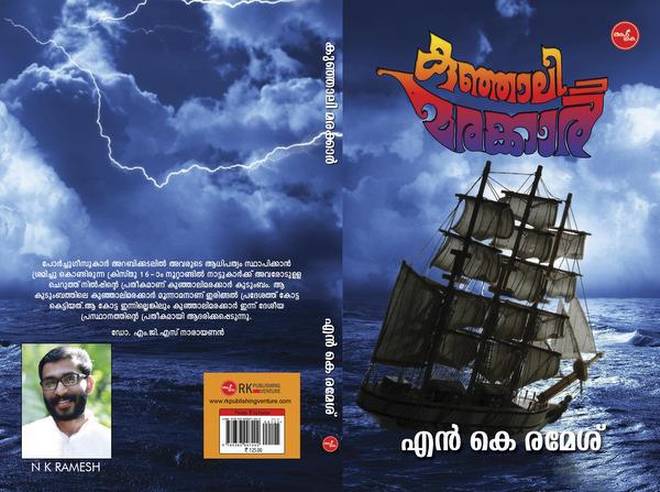
Illustrated book on legendary hero Kunjali Marakkar brought out for children
The popular witticism – when the going gets tough, the tough get going – has literally set off a young anthropologist- cum- archaeologist to author a book for children on Kunjali Marakkar, the legendary hero of the 16th century.
For N.K. Ramesh, a guide at the Kunjali Marakkar Memorial Museum at Vadakara, it was an opportunity to trace the history of the four Kunjali Marakkars, when his contract was terminated after the museum was closed to the public from March.
“Certainly a difference existed between writing for children and for adults. So I put down a simple narration and included illustrations based on important events during the period of Kunjali Marakkar and also a picture of a mural painting of a sea war,” he says.
Kunjali Marakkar was a honorific title given to the Muslim naval chief of the erstwhile Zamorin of Calicut. “The four Kunjali Marakkars who were the naval commanders of Zamorin fought against the Portuguese from 1507 to 1600. In fact, the Kunjali Marakkars were maritime merchants and supporters of Arab trade who lived in the coastal regions of Kayalpattinam, Kilakarai, Thoothukudi, and Karaikal. But they shifted their trade to Kochi and then migrated to Ponnani after Portuguese trade interference,” Mr. Ramesh says.
He took about four months to pen the book with 104 pages. The book has already hit the stands although the official launch has been deferred in view of the COVID-19 protocol.
Historian M.G.S. Narayanan has given an introduction to the book on Kunjali Marakkar, whose battles against the Portuguese were portrayed as a symbolic national movement.
The book also delves into the objective of the construction of a fort by Pattu Marakkar, the third Kunjali Marakkar, at Iringal (Kottakkal) in 1571 and the political dispute between his nephew Mohammed Marakkar, who became the fourth Kunjali Marakkar, and the Zamorin.
Later, the Zamorin joined hands with the Portuguese to defeat the last Kunjali Marakkar. The fort was also demolished and Kunjali executed by the Portuguese. The decline of Kunjali Marakkar, he says, led to establishment of Dutch Dominion and later British rule in India.
Mr. Ramesh, who holds a postgraduate degree in anthropology from Kannur university and Post M.Sc. Diploma in Museology from Aligarh Muslim University, has been credited with numerous discoveries, including the unearthing of Palaeolithic tools from north Malabar.
For a living, the 34-year-old is now engaged in de-husking at farms and odd jobs at Nadapuram and adjoining areas.
source: http://www.thehindu.com / The Hindu / Home> News> States> Kerala / by Biju Govind / Kozhikode – September 15th, 2020
“To live like a TIGER for a day is far better than to live like a jackal for a hundred years.” – Tipu Sultan
Today marks the 221th death anniversary of Sultan Fateh Ali Khan Tipu, better known as Tipu Sultan the Muslim warrior-king of Mysore, who died fighting the British today, May 4th 1799. Tipu ruled the kingdom of Mysore, which he inherited from his father Haidar Ali. His bravery, valour and skills were so talked about that French commander-in-chief Napolean Bonaparte once sought an alliance with the ruler of Mysore.
Tipu Sultan was born as Sultan Fateh Ali Sahab Tipu on November 10, 1750 in Devanahalli, present-day Bangalore. He was born to Fatima Fakhr-un-Nisa and Hyder Ali, the Sultan of Mysore. Tipu Sultan succeeded his father in 1782. The 18th-century ruler is popularly known as the Tiger of Mysore and Tipu Sahib.
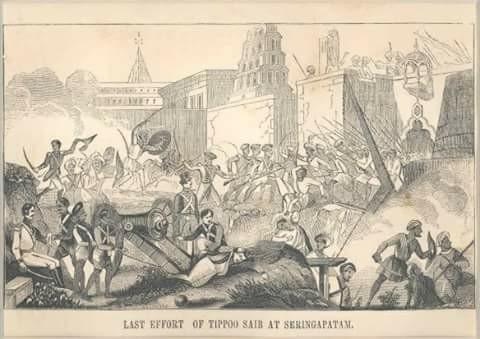
We, as a citizen of India pay heartfelt tribute to Tipu Sultan, the Tiger of Mysore on his 221th death anniversary and salute his valour against the British forces. He was considered to be the first Indian freedom fighter, was a great patriot of India, who fought whole life against the British occupation and colonialism. He was glorified as India’s original Missile man by Ex-President of India A.P.J. Abdul Kamal. Tipu Sultan is revered as a pioneer in the use of rocket artillery. Sultan’s rockets were the first iron-cased rockets successfully deployed for military use. He deployed the rockets against advances of British forces and their allies during the Anglo-Mysore Wars. The rockets used during the Battle of Pollilur in 1780 and Siege of Seringapatam in 1799 were said to be more advanced than the British had previously seen.
Tipu’s portrait is in a NASA facility. It shows his passion and willingness towards scientific and technological advancements as well as innovations. It is said that Tipu was fascinated by western science and technology.
Admired by Abdul Kalam, Ex-President of India
After becoming President, in 2006, Kalam sent a top Defence scientist to Srirangapatana in Karnataka to study Tipu Sultan’s efforts to use rockets against the British over 200 years previously.
At the end of his visit to various sites associated with Tipu Sultan’s rocket launching activities at Srirangapatna, then Chief Controller of Research and Development at Defence Research and Development Organisation (DRDO), A Sivathanu Pillai declared, “There is no doubt that this is the birthplace of rocketry.”
“Now, I will report to the President what I have seen here (Srirangapatna). He (Kalam) is a rocket scientist. Naturally, he is interested to know,” Pillai had said.
After this visit, Pillai said he would recommend President Kalam to build consensus in the community of rocket scientists that Srirangapatna was the birthplace of rocketry by holding seminars and other initiatives.(courtesy: The Quint)
Tipu’s startup hubs and rockets
“Tipu Sultan was perhaps the first ruler to understand that there was a marked difference between Europe of the 1700s and 1790s, thanks to scientific innovations,“ says aerospace scientist Roddam Narasimha, who has been studying Tipu’s rockets for many years now. “He realised the power of technology , combined with discipline, and set up four innovation hubs (like modern-day tech parks) in Bengaluru, Chitradurga, Srirangapatna and Bidanur. He called them Taramandalpets.”(courtesy: The Economics Times)
He was the only Indian ruler who understood the dangers the British posed to India, and fought four wars to oust them from India – in that sense, he could be called the first freedom fighter in the subcontinent. He fought four wars against British colonialism with heroism, valour, and bravery, moreover to the last. He sacrificed his life for the nation and martyred a historical and brave death.
Tipu was a generous patron of several Hindu temples, including the Sri Ranganatha temple near his main palace at Srirangapattana, and the Sringeri Math, whose swami he respected and called Jagadguru. The Editor of Mysore Gazetteer Prof. Srikantaiah has listed 156 temples to which Tipu’s regularly paid annual grants. His progressive measures in the administration were equally commendable.
His reign is remembered for many technological and administrative innovations. Among them was introduction of new coin denominations and new coin types. He also introduced a luni-solar calendar. During his rule, he introduced a land revenue system which gave a boost to the Mysore silk industry and helped in establishing Mysore as a major economic power.
In the Fourth Anglo-Mysore War between 1798-99, he was defeated when the forces of the British East India Company, the Marathas and the Nizam of Hyderabad came together. He was killed on May 4, 1799, while defending his fort of Srirangapatna, present-day Mandya in Karnataka.
Md Irshad Ayub, Founding English Editor at Millat Times
http://www.heritagetimes.in / Heritage Times / Home / by Team HT / May 02nd, 2020