Tag Archives: Revolt of 1857

The Rajas who shaped Indian history: The legacy of Prof Mahmudabad’s family

UTTAR PRADESH :

The family of Ali Khan Mahmudabad, the Ashoka University professor whose social media post on Operation Sindoor set off a storm, footprint on Indian history stretches back to the medieval period.
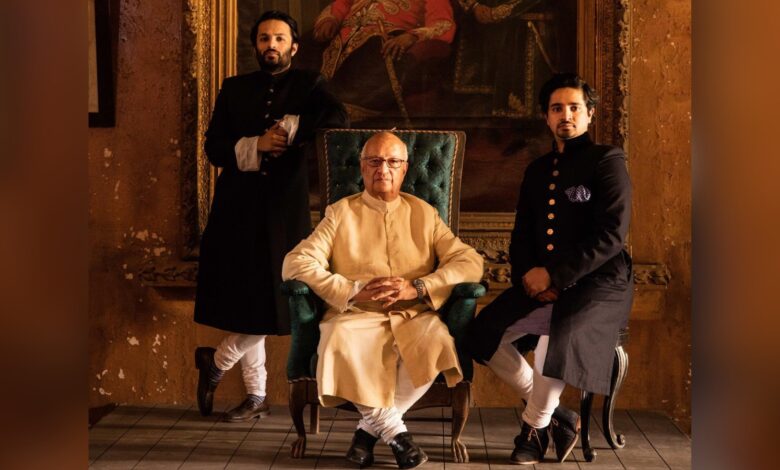
 Prof Ali Khan Mahmudabad, his father Raja Mohd Amir Mohd Khan (centre) and brother Rajkumar Amir Hasan Khan. Image courtesy: Mahmudabad Estate

The Supreme Court on March 16 closed the case against Prof Ali Khan Mahmudabad, the Ashoka University historian and columnist, after the Haryana government declined to grant sanction for his prosecution for his social media post on Operation Sindoor, a decision the court had itself nudged the state towards in an earlier order. 

A Division Bench comprising Chief Justice of India (CJI) Suryakant and Justice Joymalya Bagchi had, in its order of January 6, asked the Haryana government to consider refusing sanction as a “one-time magnanimity.” The state obliged, bringing to an end a case that had drawn global attention to questions of free speech and academic freedom in India. 

The matter had originated in a social media post made by Prof Mahmudabad in connection with Operation Sindoor of 2025. It snowballed rapidly after he received summons from the Haryana State Women’s Commission on May 12, 2025. The Supreme Court had granted him interim bail on May 21. 

The man behind the case

Prof Mahmudabad holds a doctorate and a master’s degree from the University of Cambridge and teaches history and political science at Ashoka University. Also known by his courtesy title “Raja of Mahmudabad,” he is the latest in a long and storied line – a family whose footprint on Indian history stretches back to the medieval period. 

During the Nawabi rule in Awadh and later under the British, the Rajas of Mahmudabad were among the largest Taluqdars, or feudal landholders, of the region, controlling over 400 villages and extensive urban properties across Lucknow, Sitapur, Lakhimpur Kheri and Nainital. 

The family’s most visible legacy is the Mahmudabad Fort in Sitapur, a 19th century structure built in the Indo-Saracenic style that counts among the largest private residences in the world. It has hosted royalty, diplomats, political leaders and intellectuals from across the globe. Its library holds thousands of rare books and manuscripts in English, Hindi, Urdu, Sanskrit, Persian and Arabic – including handwritten copies of the Quran, the Bhagavad Gita and the Mahabharata, some dating to the 16th century. 
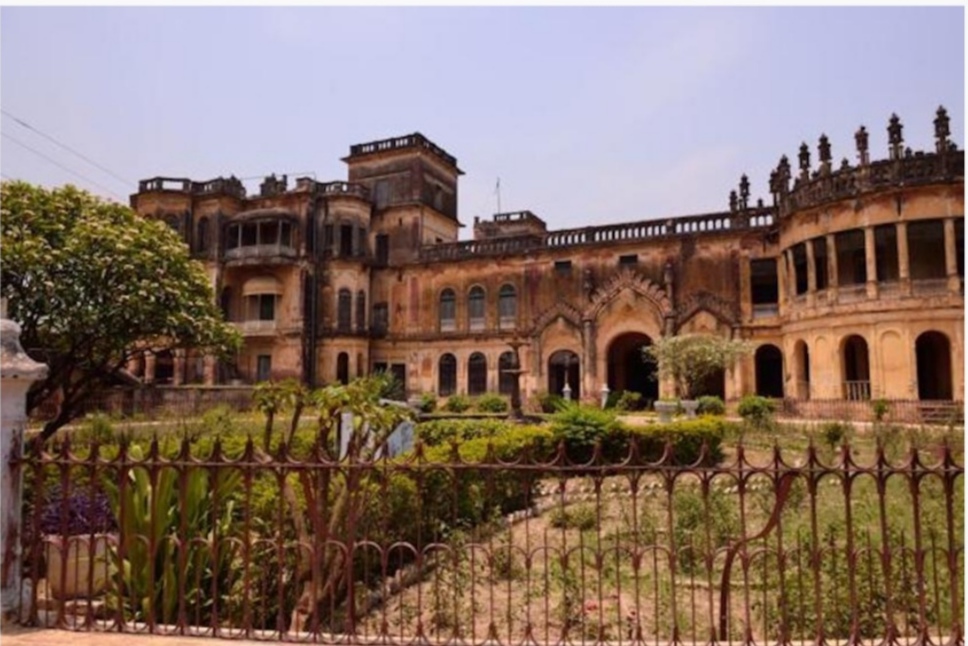
Mahmudabad Fort. Image courtesy: Mahmudabad Estate

The fort’s kitchens, too, have kept alive culinary traditions that have largely disappeared elsewhere. The original mud fort on the site was set ablaze by the British during the Revolt of 1857 and later rebuilt. 

The family’s syncretic character runs deep. Its charitable endowments include temples, one gifted to the Udasin Sect founded by Sri Chand, son of Guru Nanak, replicas of the Muslim shrines of Najaf and Karbala in Iraq and a caravanserai built to shelter travellers. 

Revolt of 1857 and after

The family’s political legacy is equally significant. During the Revolt of 1857, Muqim-ud-Daula Raja Nawab Ali Khan commanded several thousand rebel troops before being killed by British forces – the same forces that burned down his 16th century fort. His role has been documented in historical accounts of the period and in the Urdu novel “Aghaz-e-Sahar” by Khan Mahbub Tarzi, translated into English by Prof Mahmudabad himself under the title “The Break of Dawn.” 

His son, Amir-ud-Daula Raja Sir Mohammad Amir Hasan Khan, served on the Legislative Council of the Lieutenant Governor of the North Western Provinces. Lucknow’s Amir-ud-Daula Public Library and Amir-ud-Daula Islamia Degree College are named after him. 
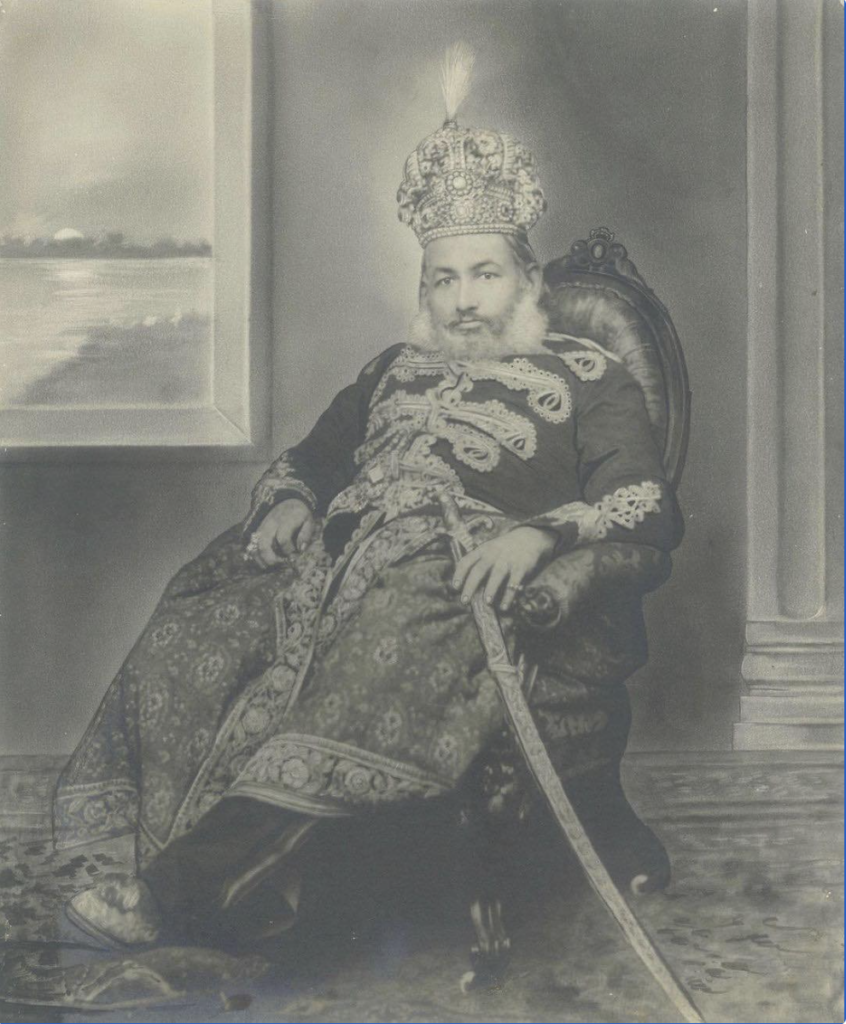
Amir-ud-Daula Raja Sir Mohd Amir Hasan Khan. Image courtesy: Mahmudabad Estate

His son, Prof Mahmudabad’s great-grandfather Maharaja Sir Mohammad Ali Mohammad Khan was a pioneer of education who played a central role in establishing both Lucknow University and the Aligarh Muslim University, serving as the latter’s first Vice-Chancellor from 1920 to 1923. A residential hostel, Mahmudabad House, in Aligarh Muslim University’s Sir Shah Sulaiman Hall is named after him. He also served as the Home Member of the Governor of UP’s Executive Council.
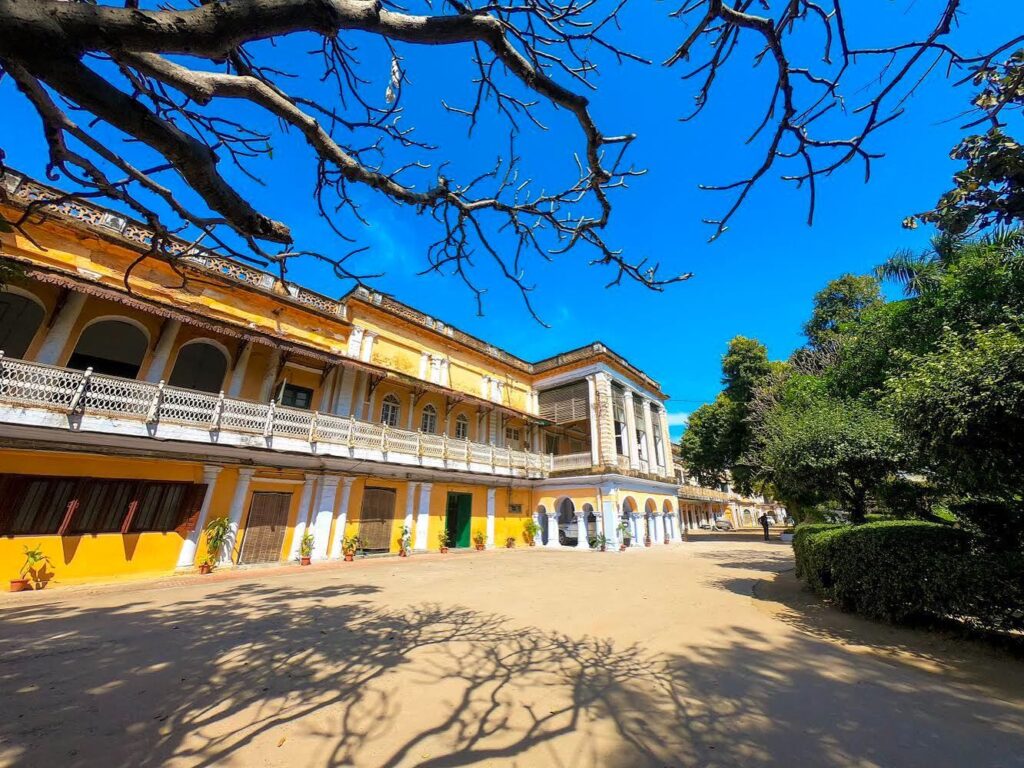
Mahmudabad House in Lucknow. Image courtesy: Mahmudabad Estate

A close friend of Motilal Nehru, he was instrumental in the signing of the Lucknow Pact of 1916 and served on the Imperial Legislative Council, the Council of State and the United Provinces Legislative Council. Lucknow’s Butler Palace, named after former UP Governor Sir Spencer Harcourt Butler, was built by him. 
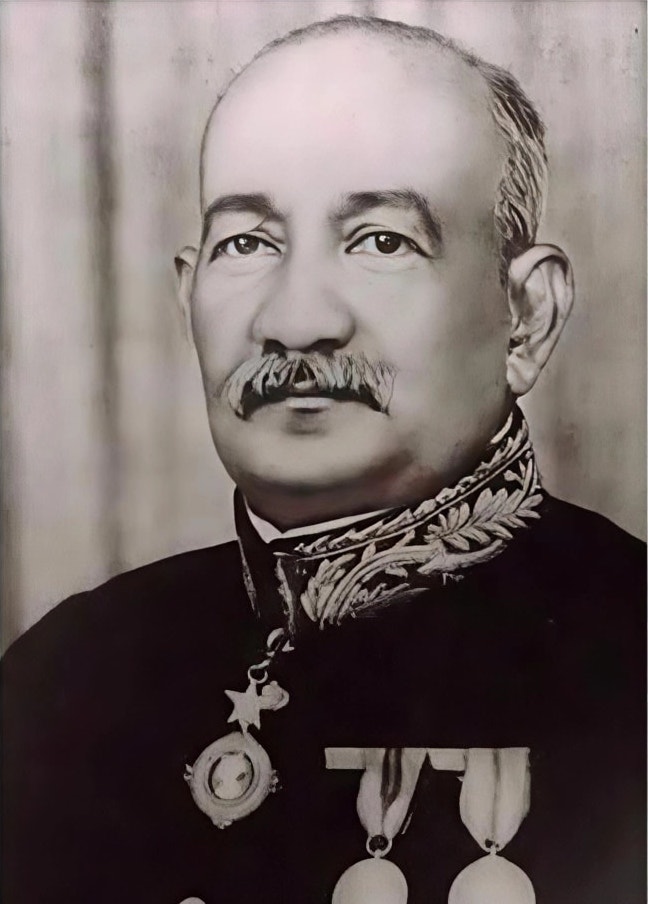
Maharaja Sir Mohammad Ali Mohammad Khan

Prof Mahmudabad’s father, Raja Mohammad Amir Mohammad Khan, was also a Cambridge graduate and an occasional professor of astrophysics at Imperial College London and the Institute of Astronomy at Cambridge. He was elected twice to the UP Legislative Assembly on a Congress ticket, in 1985 and 1989. 

When he passed away in October 2023, thousands joined his funeral procession across religious lines, and schools, markets and commercial establishments across the area shut down in mourning. 

A vindication, and a reminder

Prof Mahmudabad’s Lucknow home, Mahmudabad House – part of the historic Qaiserbagh Palace complex – continues to serve as a gathering place for intellectual and cultural exchange, much as the family’s spaces have for centuries. 

The closure of his case, then, is more than a personal reprieve. Coming at a time of heightened scrutiny over free expression in India, it is being seen as a reaffirmation, however fragile, of the right to speak, question and dissent. 

(Aman Alam is a student Barrister at the University of London and an Advocate in the
Supreme Court. He has been a former Law Clerk-cum-Research Associate to a Supreme Court judge. He is also a Fellow of the Royal Asiatic Society of Great Britain and Ireland)

source: http://www.siasat.com / The Siasat Daily / Home> Featured News / by Aman Alam, Guest Contributor March 27th, 2026
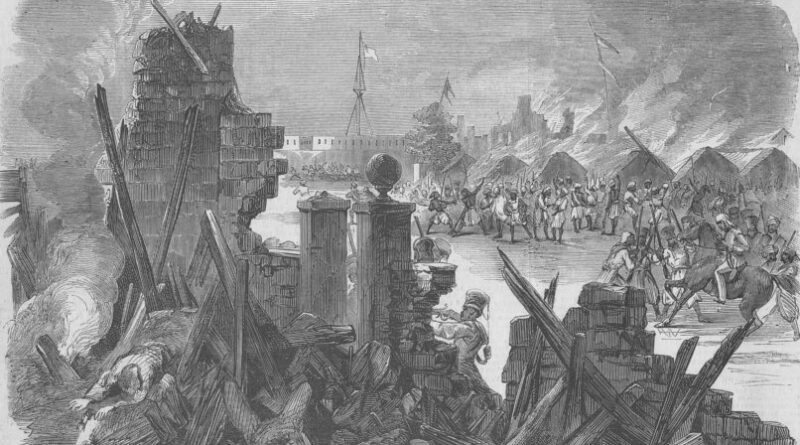
These 85 soldiers started the 1857 Revolt

On 24 April, 1857, Colonel G.M.C Smith of 3rd Regiment, Light Cavalry, at Meerut asked his troops to load the cartridges in Enfield rifles. 85 out of the 90 Indian troops of the Regiment declined receiving the cartridges on account of usage of beef or pig fat in those. All the 85 Indians were sentenced to prison and their case was forwarded to Major General Hewit.

We are publishing the name of all these 85 Indian sepoys who defied the English command and thus triggered the first national war of Independence from Meerut.

  1. Mataa-Deen (Havildar)

Naiks:

  1. Sheikh Peer Ali
  2. Ameer Qudrat Ali
  3. Sheikh Hasan ud-Deen
  4. Sheikh Noor Muhammad 

Sepoys:

  1. Sheetal Singh
  2. Jehangir Khan 
  3. Meer Mosim Ali
  4. Ali Noor Khan
  5. Meer Husain Bakhsh
  6. Muttra Singh
  7. Narain Singh
  8. Lal Singh
  9. Sewdeen Singh
  10. Sheikh Husain Bakhsh
  11. Sahibdad Khan
  12. Bishan Singh
  13. Baldeo Singh
  14. Sheikh Nandoo
  15. Nawab Khan
  16. Sheikh Ramzan Ali
  17. Ali Mohammad Khan
  18. Makhan Singh 
  19. Durga Singh 
  20. Nasurullah Begh
  21. Meerahib Khan 
  22. Durga Singh (2nd)
  23. Nabi Bakhsh Khan
  24. Jurakhan Singh 
  25. Nadju Khan
  26. Jurakhan Singh (2nd)
  27. Abdullah Khan
  28. Ehsan Khan
  29. Zabardast Khan
  30. Murtaza Khan 
  31. Burjuar Singh
  32. Azimullah Khan 
  33. Azimullah Khan (2nd)
  34. Kalla Khan 
  35. Sheikh Sadullah
  36. Salar Bakhsh Khan
  37. Sheikh Rahat Ali
  38. Dwarka Singh 
  39. Kalka Singh 
  40. Raghubir Singh
  41. Baldeo Singh 
  42. Darshan Singh 
  43. Imdad Husain 
  44. Peer Khan 
  45. Moti Singh 
  46. Sheikh Fazal Imam
  47. Sewa Singh 
  48. Heera Singh 
  49. Murad Sher Khan
  50. Sheikh Aram Ali
  51. Kashi Singh 
  52. Ashraf Ali Khan 
  53. Qadardad Khan
  54. Sheikh Rustam
  55. Bhagwan Singh 
  56. Meer Imdad Ali
  57. Shiv Baksh Singh 
  58. Lakshman Singh
  59. Sheikh Imam Bakhsh
  60. Usman Khan 
  61. Maqsood Ali Khan
  62. Sheikh Ghazi Bakhsh
  63. Sheikh Ommaid Ali
  64. Abdul Wahab Khan
  65. Ram Sahai Singh
  66. Parna Ali Khan 
  67. Lakshman Dubey
  68. Ramswaran Singh
  69. Sheikh Azad Ali
  70. Shiv Singh
  71. Sheetal Singh
  72. Mohan Singh 
  73. Vilayat Ali Khan 
  74. Sheikh Muhammad Ewaz
  75. Indar Singh 
  76. Fateh Khan 
  77. Maiku Singh 
  78. Sheikh Qasim Ali
  79. Ramcharan Singh 
  80. Daryao Singh 
  • The list is an indication of Hindu Muslim unity during the war of Independence. 

source: http://www.heritagetimes.in /Heritage Times / Home> Featured Posts> Freedom Movement / by Mahino Fatima / July 30th, 2021

The Revolt of 1857: Maulavi Ahmadullah Shah, the Rebel Saint of Faizabad

The Maulavi of Faizabad managed to keep the city free from British rule for almost a year until his death at the hands of British agents on June 5, 1858.

Faizabad (Ayodhya District), UTTAR PRADESH :

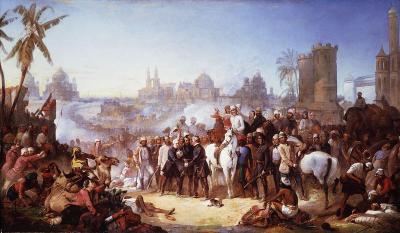
The Relief of Lucknow, 1857, by Thomas Jon Barker. Photo: Wikimedia Commons

Ahmadullah Shah, born in 1787, more famously known as Maulavi of Faizabad, was one of the leading figures of the great Indian revolt of 1857. In the Awadh region, Maulavi Ahmadullah Shah was known as the ‘Lighthouse of Rebellion’. Hailing from a noble warrior family of Awadh in Faizabad, he grew up to be a political leader committed to armed revolutionary insurrection against British rule in India.

Maulavi Ahmadullah Shah. Credit: YouTube screengrab

During the freedom struggle, Maulavi made Faizabad the centre and launched revolts in all of the Awadh region. He made the local mosque Masjid Sarai located in Chowk area of Faizabad his headquarters. As he liberated Faizabad and the larger part of Awadh region, he used the premises of this mosque to hold meetings with rebellion leaders.

Maulavi Ahmadullah Shah kept Faizabad free from British rule for almost one year, until his death at the hands of British agents on June 5, 1858.

According to researcher and historian Ram Shankar Tripathi, “With being a practicing Muslim, he was also the epitome of religious unity and Ganga-Jamuna culture of Faizabad. In the revolt of 1857, royalties like Nana Sahib of Kanpur, Kunwar Singh of Arrah fought alongside Maulavi Ahmadullah Shah. Maulavi’s 22nd Infantry Regiment was commanded by Subedar Ghamandi Singh and Subedar Umrao Singh in the famous Battle of Chinhat.”

Tripathi narrates, “Maulavi wanted Raja Jagannath Singh of Pawayan, a zamindar in district Shahjahanpur of Uttar Pradesh, to join the anti-colonial war. On June 5, 1858, with prior appointment, he went to meet Raja Jagannath Singh in his fortress-like house. On arriving at the gate, he was greeted with a volley of gunshots from Jagannath Singh’s brother and retainers. The Maulavi breathed his last on the spot.”

“The martyr’s head was severed and carried in a piece of cloth with blood still oozing from it to the district magistrate, Shahjahanpur, by the zamindar. The district magistrate was at lunch with his friends. But the depraved feudal lord rushed in and presented the severed head of the hero on the dining table of the district magistrate. With a reward of Rs 50,000, he returned home, flying atop the flag of loyalty.”

According to another historian Roshan Taqui, “Maulavi use to bring out revolutionary pamphlets mobilising the masses to do ‘Jihad’ against the British. Maulavi was arrested by the British in January 1857 and was held captive in Faizabad, but three months before the revolt broke out in Lucknow on June 3,  he escaped and launched a war against the British in Awadh region including Faizabad, Lucknow and Shahjahanpur.”

“During the revolt, the revolutionaries appointed him as chief of 22nd Infantry Regiment that fought the famous battle of Chinhat in Ismailganj of Lucknow on June 30, 1857, against British forces led by Henry Lawrence. Britishers were badly defeated in this war,” informed Roshan Taqui.

British officers like George Bruce Malleson and Thomas Seaton have made mentions about courage, valour, personal and organisational capabilities of Maulavi Ahmadullah Shah. Malleson has repeatedly mentioned Ahmadullah in the History of Indian Mutiny, a book written in six volumes covering the revolt of 1857.

source: http://www.thewire.in / The Wire / Home> History / by Arshad Afzal Khan / June 05th, 2018