Category Archives: Science & Technology

These young Turks are on a Kerala start-up fastrack

Kochi, KERALA / Dubai, UAE :

The task at hand is to spot the Unicorns or billion-dollar valuation startups from Kerala. 

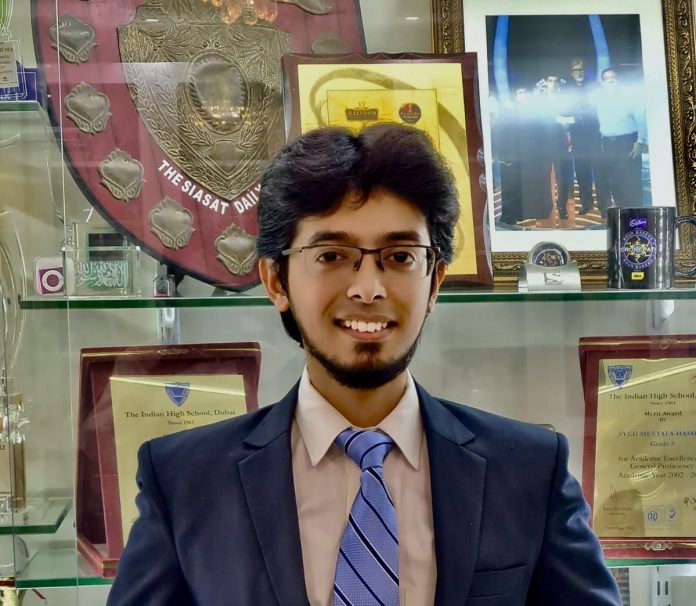
Azhan Musthafa Backer and Zahan Musthafa Backer.

Kochi :

Though there are many successful Malayali-founded startups including the likes of Byjus, Fresh-to-Home and ID Fresh Food, there are hardly any startups that have attained that level of success from Kerala. Now, two Ivy League-graduated Dubai-based siblings with roots in Thalassery, are on a mission to identify and guide high-potential Kerala-based startups to navigate through regulatory blindspots, and handhold them from seed capital level to accessing the public markets through an IPO. The task at hand is to spot the Unicorns or billion-dollar valuation startups from Kerala.  

Meet Azhan Musthafa Backer and his younger sibling Zahan Musthafa Backer, founders of Backer Ventures, a firm that not only helps founders access seed funding but also assists them to wade through the regulatory and legal maze so that the founders can stay focused on the core business. To begin with, Backer Ventures will start a liaison office in Kochi to assist the startups based out of Kerala.

“The entrepreneur eco-system here is ‘let’s startup here and scale-up somewhere else’. The good thing that Covid has brought about is, it allowed people to work, network and access funds over Zoom,” says Azhan, co-founder of Backer Ventures. The post-Covid changes that allowed people to work and access markets sitting anywhere in the world will help the Kerala startup ecosystem immensely, believes Azhan, who did his undergrad from Warwick University, UK and LLM from Cornell University, New York.

Zahan, the co-founder of Backer Ventures, who accompanied his elder brother Azhan on a four-day trip to Kerala, says they have met with some ‘interesting startups’ in Kerala in the fintech, healthcare and AI (artificial intelligence) space during the trip.  While Azhan is CEO & Director (Projects & Deals) at Musthafa & Almana, a Dubai-headquartered international law firm, Zahan is director, technology and innovation at the law firm. The law firm is founded by Kerala couple Musthafa Zafeer OV and Almana Zafeeer.

Backer Ventures will help provide $150,000 to $300,000 to early-stage founders, who are going to be trailblazers in the emerging markets.  “Operating at the intersection of law, tech and entrepreneurship, we are long-term allies that provide startups with the necessary tools to breakthrough in emerging venture markets,” explains Zahan, who also did his undergrad from Warwick University and LLM from Cornell University. 

“Globally speaking, the money is easily available. Startups coming out with a half-decent idea and half-decent founders can easily attract funds now. Investors like us as competing. We are telling founders to allow us into your cap table, please allow us to invest in your company,” says Azhan.

Backer Ventures, he says, provide a “differentiated venture platform that demystifies a niche corner for founders that partner with us”.

Will the young Turks succeed? “We are pretty confident. And hopefully, we will have some figures to back it in the next 12-18 months”, says Azhan.

source: http://www.newindianexpress.com / The New Indian Express / Home> Cities> Kochi / by Rajesh Abraham, Express News Service / November 17th, 2021

Indian doctor helped a ‘critical’ Rizwan recover in time for semi-final

Thiruvananthapuram, KERALA / Dubai, UAE :

Dr Saheer Sainalabdeen posing with Mohammad Rizwan’s jersey. (Special Arrangement, Twitter/ShoaibAkhtar)

The attending pulmonologist, Dr Saheer Sainalabdeen, originally from Thiruvananthapuram, said Mohammad Rizwan was critical at the time he was admitted in Dubai’s Medeor Hospital.

It was a race against time. Two days before his team’s T20 World Cup semifinal against Australia, Pakistan’s wicket-keeper opener Mohammad Rizwan, after complaining of severe chest pain, was in the ICU unit of Medeor Hospital near Burjuman in Dubai.

The attending pulmonologist, Dr Saheer Sainalabdeen, originally from Thiruvananthapuram, says Rizwan was critical at the time he was admitted. Under the Indian doctor’s care, Pakistan’s key player recovered in time for the game.

He didn’t just make it to the playing XI, he also made a gritty 67, helping his team post a formidable score in the match that Australia narrowly won. Despite the heartbreaking loss, Rizwan, 29, remembered to acknowledge the efforts put in by the good doctor. As a token of gratitude, he sent across a team shirt, autographed by the Pakistan players.

Speaking to The Sunday Express at his chambers, Dr Saheer credited the quick recovery to Rizwan’s “willpower”.

In ICU for 35 hours

“He was in the ICU for 35 hours. He had a fever for three-four days, but he was Covid negative. Then (two days before the match), he had severe chest pain, enough to make him gasp,” Dr Saheer said.

The 40-year-old doctor said he initially suspected a heart problem, but tests ruled that out. “Actually, due to infection, spasms had blocked Rizwan’s esophagus (food pipe) and trachea (windpipe), resulting in chest pain. His condition was critical.”

Going into the match, Rizwan was not 100%, but managed to score 67 in 52 balls, getting out only in the 18th over of the Pakistan innings. He returned to keep the wickets and took a sharp catch of the in-form Australian opener David Warner, who seemed to be running away with the game.

During a break in the game, Pakistan’s batting coach, former Aussie batsman Mathew Hayden, had revealed to the host broadcaster that Rizwan had been in hospital a day earlier.

“I am a big fan of this batting line-up, they have performed superbly right through with the bat all along, and tonight is no exception. Rizwan was in hospital a night ago, suffering from a bronchitis condition, but this is a warrior… He has great courage, so has Babar (Azam), fantastic to see them combine so well,” Hayden said.

Among those who applauded Rizwan’s drive and commitment was Indian off-spinner Ravichandran Ashwin . “Can you imagine this guy played for his country today & gave his best. He was in the hospital last two days. Massive respect @iMRizwanPak. Hero,” posted Pakistan great Shoaib Akhtar.

Dr Saheer recalled Rizwan was desperate to play. “Whenever we spoke, he told me, ‘Play I must, I have to be with the team’. He was given an injection before leaving the hospital (a day before the game) and then, two hours before the start of the match, he took medicines. I allowed him to play only because he was medically fit to play,” the doctor said.

Dr Saheer said, Rizwan and his Pakistani teammates wanted to visit him personally to thank him, but biosecurity protocol didn’t allow them to do so. “He said, ‘Ek shirt bhej rahe hain aapko (Sending you an autographed team shirt)’.”

While happy at the gift, Dr Saheer said he was happier at Rizwan’s recovery. “It was down to his willpower. I have never seen a person with such strong willpower. He was weak but his willpower trumped the illness.”

Recalling the challenge, he added: “An illness that usually takes about a week to heal was taken care of inside two days… He had a big game coming up, so it was my duty to walk the extra mile, leave no stone unturned and then see how it goes. When he was admitted to the ICU, I never thought it would be possible. But he responded very well to the treatment, followed our advice in toto and pulled off something unreal.”

source: http://www.indianexpress.com / The Indian Express / Home> Sports> Cricket / by Shamik Chakrabarty, Dubai / November 14th, 2021

Aster Hospitals to offer free surgery for 100 underprivileged children

Dubai, UAE / Kerala / Bengaluru, KARNATAKA :

The ‘Second Life – Because Little Lives Matter’ initiative was launched in Bengaluru on November 15 by Dr. Nitish Shetty, Regional Director, Karnataka and Maharashtra Cluster; Farhan Yasin, Regional Director, Kerala and Oman Cluster; and Devanand K.T., Regional CEO, Telangana and Andhra Pradesh Cluster

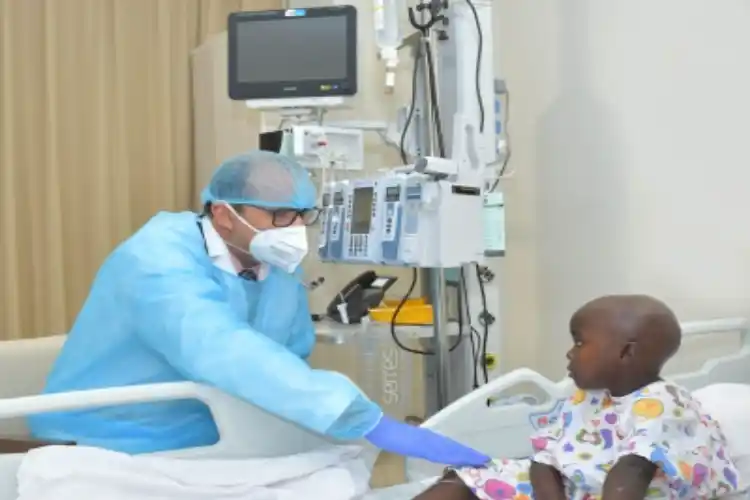
A 24X7 multi-lingual helpline has been set up to manage enquiries

To mark Children’s Day, Aster Hospitals in India launched the ‘Second Life – Because Little Lives Matter’ initiative.

The year-long initiative is aimed at supporting the medical treatment of disadvantaged children. The aim is to facilitate free paediatric surgery for at least 100 children below the age of 12 years.

Throught this initiative of Aster Volunteers Global CSR, the company wants to extend help to deserving children who are being treated across Aster Hospitals based in five States in India. This includes common childhood illnesses, such as appendicitis, intussusception, empyema and paediatric urology surgery, as well as complex clinical surgeries, including bone marrow transplant, liver transplant and heart surgery.

The initiative was launched in Bengaluru on November 15 by Dr. Nitish Shetty, Regional Director, Karnataka and Maharashtra Cluster; Farhan Yasin, Regional Director, Kerala and Oman Cluster; and Devanand K.T., Regional CEO, Telangana and Andhra Pradesh Cluster.

The treatment will be funded either by Aster DM Foundation, philanthropists or NGOs.

The foundation has established the criteria to identify eligible cases for the program. Applications will be assessed on the socio-economic status, BPL category, medical outcome of the child prior to commencement of selection and subsequent treatment.

A 24X7 multi-lingual helpline (+91 9633620660) has been set up in Kozhikode in Kerala to manage enquiries.

Junior doctor takes healthcare to the doorsteps of poor people in West Bengal’s Burdwan

Mohabbatpur Village (Malda), WEST BENGAL :

The young doctor arranges transport for those living in remote areas, holds regular health camps, reports Pranab Mondal.pix

West Bengal : 

As a junior doctor at Burdwan Medical College and Hospital, Dr Golam Ahmed Kibria became overwhelmed by the heart-wrenching ordeals of the underprivileged patients admitted here. “After joining the service, I saw how the poor had to suffer after a nationwide lockdown was announced last year to reach the state-run hospital in Burdwan. Many failed to turn up at the hospital because they couldn’t arrange for vehicles,” said Dr Kibria.

Witnessing these unfortunate circumstances reminded him of a line from the customary oath that medical students take: “I solemnly pledge myself to consecrate my life to the service of humanity.” So Dr Kibria decided to start doorstep healthcare services for the marginalised. After his duty hours, he would organise free health camps in remote pockets of the district and even distribute free medicines.

“In a camp at Memari held on last October 4, I saw a three-and-a-half-year-old child suffering from frequent convulsions and his illiterate parents were helpless. I immediately made all arrangements to get the child admitted to Burdwan Medical College and Hospital where it was detected that he was suffering from Sturge-Weber Syndrome, a rare congenital neurological and skin disorder.” The child was discharged after he recovered.

Dr Golam Ahmed Kibria (in white tee) with underprivileged patients.

In another camp, a woman in her early 60s turned up. “She was not in a position to move because of severe orthopaedic disease. Her family said they had gone door-to-door of rural hospitals but none could cure her. The orthopaedic surgeons at our hospitals identified the exact problem and gave her proper treatment,” he said.

Dr Kibria hails from Mohabbatpur village, Malda, which means a ‘hamlet/town of love’. His act of serving the poor reflects the meaning of his ancestral village’s name. He is the first male in his village to have cracked the medical entrance examination. “Treating patients with different ailments is not possible as a junior doctor. But I ensure their transport to the district hospital with the help of my colleagues, so that needy patients get speedy treatment and necessary pathological tests done,” said Dr Kibria, who organises two free health camps every month.

Realising he needs more man-power to serve the poor, Dr Kibria recently set up a welfare organisation called Prayas. It has 163 members and over 160 doctors. “We also provide rations and financial support to get daughters of poor families married off. Helping every poor person is beyond our capacity. But we try to reach the families who are in deep distress. We have already spent over `11 lakh for this purpose,” he said.

The 26-year-old doctor and his team even reached the areas ravaged by Cyclone Yash in West Bengal. “We held many camps in the affected areas and distributed free medicines. I do it all for the people of my country as my duty,” Dr Kibria signs off.

source: http://www.newindianexpress.com / The New Indian Express / Home> Good News / by Pranab Mondal, Express News Service / November 07th, 2021

Six daughters and all of them doctors: A heart-warming story from Kerala’s Kozhikode

Nadapuram (Kozhikode District) , KERALA :

Interestingly, the spouses of Fathima, Hajra, Ayesha, and Faiza are also doctors. Kumhamed Kutty and his wife were also against dowry.

Zaina (third from right) flanked by her doctor family. (Photo | Special Arrangement)

Sometimes fact is stranger than fiction. This is true in the case of Ahamed Kunhamed Kutty and his wife Zaina Ahmed of Nadapuram in Kozhikode district of Kerala.

When Zaina Ahamed gave birth to six daughters, Ahamed and his wife didn’t despair. Rather they were happy. Ahamed was a progressive thinker. He envisioned a life for his daughters in which they would serve society better and be role models for others. 

His wish did not take long to turn into reality. All the six daughters of the couple did well in their studies and would go on to be doctors. Wait, we are getting ahead of ourselves.

Four daughters namely, Fathima Ahamed 39, Hajra Ahamed 33,  Ayesha Ahamed 30, and Faiza Ahamed are already practicing doctors. Raihana Ahamed 23 is doing her final year MBBS in Chennai while the youngest Ameera Ahamed is in the first year of her MBBS course in Mangalore.

Interestingly, the spouses of Fathima, Hajra, Ayesha, and Faiza, namely, Dr Rishad Rasheed, Dr Ajnas Mohammed Ali, Dr Abdurahman Padiyath Manapat, and Dr Ajas Haroon respectively are also doctors.

Zaina was only 12 years old when she was married off to her cousin Ahamed. At the time, he was running a business in Chennai. After the birth of their first daughter, Ahamed went to Qatar with his wife and daughter where he was employed in a refinery. 

Hajra, who did a BDS course while all the others opted for MBBS, recalls the evenings in Qatar when their parents used to infuse them with the importance of doing well in their studies and serving society.

Once they returned from school, there used to be a family gathering when their parents chatted with their daughters about several things, particularly their studies and future.

Ahamed Kunhamed Kutty and his wife Zaina Ahmed

My Uppa liked medicine. When he couldn’t become a doctor he dreamt of making his brother a doctor. But his brother went on to become a teacher and he’s known as Soofi teacher in our place,” Hajra said.

So, naturally, Ahamed wished that one of his daughters would fulfill his dreams. Fathima opted for MBBS and she took to the course like a duck to water. The positive feedback from Fathima inspired her other sisters also to go in for medicine. Behind it, all was the advice of their parents. 

In fact, one of the sisters, Ayesha was interested in doing law. But her parents told her she can pursue it after completing her MBBS course.

Similarly, when it came to the marriage of their daughters, Ahamed and his wife were specific that their daughters should marry someone from the same profession so that it would help the young couple understand each other better. They were also against the practice of dowry. They didn’t want to “sell off” their daughters but marry them off to a person who understood and loved them. 

After working in Qatar for nearly 35 years, the couple with their daughters returned to Kerala. About two years later, Ahamed suffered chest pain and passed away. At the time, only two of the daughters were married off. Thereafter, Zaina encouraged and inspired her daughters to pursue their courses and married off two other daughters.

Fathima is presently working in a military hospital in Abu Dhabi. Hajra said she had returned from abroad and is planning to do her PG course.

Ayesha is serving in a hospital in Kodungallur while Faiza and her husband work in Kochi.

This story would read like a dream. But, as they say, Rome was not built in a day. The six women doctors and their mother would testify. 

The sisters don’t have a photograph taken together with their Uppa. They carry an image of him in their hearts. 

source: http://www.newindianexpress.com / The New Indian Express / Home> Good News / by Gladwin Emmanuel, Online Desk / October 20th, 2021

Fathima Asla — specially-abled doctor from Kerala winning wheels of life

Kozhikode, KERALA :

Kozhikode-native Dr Fathima Asla is fearless in her persuit. Battling disability, she became a doctor, and she found a groom in Firoz Nediyath, who gave her a wheelchair as wedding gift

Dr Fathima Asla and Firoz Nediyath

Kochi : 

For the past couple of years, dowry and dowry-related atrocioties has been the topic of discussion in Kerala. The fact that women are to be valued more than the gold and money their family can shell out, is being addressed on a large scale. This is why the wedding of Dr Fathima Asla and Firoz Nediyath is relevant at this point.

Kozhikode native Fathima has been struggling with brittle bone disease since she was a kid. For her wedding, her husband Firoz gave her a wheelchair as wedding gift — a gesture that would go a long way in terms of empowering those who dare to dream above their disabilities. 

For Fathima, Paathu as she is lovingly called, the battle began just three days after she was born. However, being diagnosed with Osteogenesis Imperfecta or brittle bone disease didn’t stop her. Her parents, though financially struggling, encouraged her to study and helped her become a doctor.

“I was fascinated with doctors because they have helped me since I was a kid. I wanted to be like them, help those like me,” says the house surgen at ANSS Homeo Medical College hospital, Kottayam. Fathima is 65 per cent disable, and had undergone six surgeries as a kid. She can walk very short distances now with the help of a walker. She also penned a book ‘Nilavupole Chirikkunna Penkutty’, an autobiography that discusses her life as a differently abled person. 

Fathima met Firoz — a digital artist and MFA student at Fine Arts college, Thiruvananthapuram who hails from Lakshadweep — last year through a mutual friend. They fell head over heels for each other. “Our parents were very supportive of the relationship too, which was delightful. Everyone wants to feel loved and respected by their partners. Firoz doesn’t treat me with pity or sympathy. Rather, he sees me as an equal, someone who can dream and do things just like him. Wahtever little insecurity I was harbouring about myself before meeting Firoz is gone now. I want to go on an all-India trip with my new authomatic wheel chair,” quips Fathima.

The couple’s love bloomed during Covid. Firoz adds how the wedding was also a message to the society. “I want to tell everyone to be that person supporting specially disabled people to live their life to the fullest. It is not about sympathising with them, but enabling and encouraging them,” says the youngster. 

Firoz also also talks about how travelling with Fathima has made him realise how our public spaces are non-disabled friendly. “We boarded a bus from Nilambur to Kozhikode. The bus’s foot board was not disabled friendly. When I was carrying her into the halted bus, other vehicles would honk loudly behind the bus. I doubt how many of educational institutions and tourist locations have disabled-friendly toilets and ramps.

Lack of these spaces makes specially-abled people isolate themselves,” he says. Fathima adds that her vision in life is to address these issues and make Malayalis more sensitive to these aspects. “We have launched a new YouTube channel ‘Kadalum Nilavum’ which will feature our travel vlogs and thoughts about making our society disabled friendly,” signs off Fathima.  

source: http://www.newindianexpress.com / The New Indian Express / Home> Good News / by Arya LK, Express News Service / Octobter 22nd, 2021

Muslim youth invents flying car, a schoolboy e-Cycle

Chennai, TAMILNADU / Aurangabad, MAHARASHTRA :

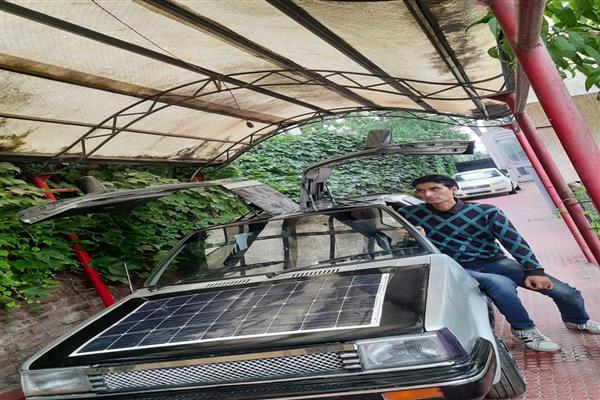
A youth from Chennai has invented a flying car, while a schoolboy from Aurangabad has invented an e-Cycle

Chennai: 

Indian Muslims are silently making their efforts for innovative development in the country. A youth from Chennai has invented a flying car, while a schoolboy from Aurangabad has invented an e-Cycle. Their achievements tell the story that Muslims are second to none in the innovative development of the country.

Muhammad Furkan Shoaib, an aeronautical engineer, has fulfilled the dream of million Indians of riding a flying car in the sky. He along with his technical team has innovated India’s first flying car. Furkan Shoaib is a certified UAV pilot and the Chief Technology Officer at VINITA – an Aero-mobility company in Chennai.

The model of this flying car was shown at the London Helitech Exposition on October 5, 2021. Many of India’s news channels showed the car launch in their news coverage. They gave credit for this innovation to the “Make in India” project and failed to mention the promising young engineer’s contribution to this innovation.

The gap was filled by a US website called ‘Future Flight’ that gave coverage to this innovation and also appreciated Muhammad Furqan’s abilities for his stellar contribution to the field of aviation.

Undoubtedly Muhammad Furqan has made the whole country proud. His innovation is a morale booster and inspiration for the youth, especially the Muslim youth, who too want to be on such work of innovation in the country.

Aurangabad :

“e-Cycle”

The second story is of a talented high-school boy Mohammad Faizan from Aurangabad in Maharashtra. Faizan is making waves in social media for his innovation of an e-bike that has made people rushing for a glimpse of him and his invention. Its video is available on YouTube.

Faizan, the tech-savvy student of 8th grade, has transformed a paddle bike into electric one. He actually has transformed the common paddle bike into a motorbike. Attached to the bike are a self-starter switch, accelerator, clutch, breaks, and other features.

Watch Video: Faizan’s e-bike

https://www.youtube.com/watch?v=qRG_QfntzC4&feature=emb_imp_woyt

The bike is powered by an electrical motor. Faizan has connected the motor with a rechargeable battery that takes two hours to get fully charged. A single charge lasts for about 50 kilometers and there is a digital indicator that displays remaining battery levels. The speedo-meter tells the speed of the bike. The innovator claims that the top speed of the bike is 30 kilometers per hour.

These two positive stories from the much-maligned Muslim community show mirror to those who accuse, the 14 percent Muslim minority community of a drag on 84 percent Hindu population.

The negative stereotyping of the Muslims likes “puncher chaap” or “love jihadi” are corona jihadi are dutifully circulated in the media, while the story of these two characters has never been told even though they inspire a whole generation of youth of the country.

[Syed Ali Mujtaba is a journalist based in Chennai. He can be contacted at syedalimujtaba2007@gmail.com.]

source: http://www.ummid.com / Ummid.com / Home> Science & Technology / by Syed Ali Mujtaba / October 18th, 2021

BENFA: Changing Lives

Bengaluru, KARNATAKA :

Bengaluru-based BENFA helping poor people.

Bengaluru :

AS they say – think individually, act globally – BENFA is doing just that. BENFA (Bengaluru Friends Alliance) was born with the common goal and the collective efforts of a group of doctors to help the underprivileged section of society. The organization extends financial help to the poor and helps them overcome their financial hurdles in education and healthcare.

Talking about the organization Dr. Saleem Mehkri, Vice President and Trustee, said, “We were already into helping poor Muslim population with their education and health issues.

Then, it was planned by Dr. Suhel Pasha to establish an umbrella organization to facilitate their charity works on a large scale. The organization primarily addresses a large number of poor Muslims and deserving non-Muslims, too.”

Dr. Suhel Pasha, President, BENFA, said, “Twenty percent of the city’s population lives in slums with the lowest standard of education, inefficient healthcare, lack of necessities, and most importantly low standard of living. Even today, one-third of the slum dwellers fall below the poverty line with an income of less than Rs. 2500 per month. So, to help these poor populations, BENFA was established in October 2020.”

BENFA is a registered charitable trust focusing on education, healthcare, and socio-economic empowerment of underprivileged parts of society. How BENFA assists in empowering the disadvantaged? Answered Abdul Mateen, BENFA General Secretary, “We have recently launched a micro-credit scheme to provide loans to the deserving women and men to start their small trades. The loans we give are free of interest. So, they have to return only the principal loan amount without any interest.”

Dr. Saleem informed, “We have launched schemes not only to empower poor men and women financially, but we also aim to empower them through adult education schemes. We provide education and training to unemployed youngsters/adults as per their skills and help them get government or private jobs. We have helped students to pay their fees and paid hospital bills too.”

According to Dr. Saleem, around five people are benefitted every week through their microcredit scheme. So, how does the organization arrange its finances? Replied Dr. Saleem, “We have around 500 members, including 400 male members and 100 female members, who voluntarily contribute and help run the organization successfully. Nobody is forced to contribute.”

Besides these programmes, BENFA actively distributes rations during Eid-Ul-Fitr, performs Qurbani/sacrifices during Eid-Al-Adha, and distributes meat amongst low-income families. Furthermore, BENFA has several groups focusing on different areas, namely-BEEP for education, BHCP for healthcare, BSSP for socio-economic support, BMCS for microcredit schemes, and BALP for adult learning programs.

That is not all. BENFA is slowly and steadily adding more to its activities for the betterment of society. Lately, in collaboration with the field experts, BENFA has organized several webinars related to health and education topics. Pointed out to Dr. Suhel, “We organized webinars to educate people on several issues that focus on health, education, amongst others. We also organize career counselling for youth. We invite experts to address the relevant topics.”

BENFA also played an active role amidst the raging COVID 19 by supplying oxygen to the patients. As Dr. Pasha said, “We supplied oxygen cylinders during COVID 19 and spread awareness regarding the vaccine and also organized a webinar to help people prepare themselves during COVID crisis.”

Dr. Saleem urged people to join the organization as members to extend help to a large number of underprivileged people.

source: http://www.indiatomorrow.net / India Tomorrow / Home> Development> Features / by Rashida Bakait / October 16th, 2021

Benevolent Kerala parliamentarian is beacon of light for poor tribal pupils

KERALA / Dubai, UAE :

P.V. Abdul Wahab, the IUML leader, successfully implements Indian government’s development plan in Malappuram district.

It’s a dawn of a new era for a group of poor tribal pupils amid these unprecedented viral times at Nilambur taluka — a cluster of villages — in north Kerala’s Malappuram district.

They are back to learning and continuing their school education, which have been suspended since March 2020, when the Covid-19 pandemic struck and resulted in the closure of schools.

Many of the pupils had virtually forgotten in-classroom teaching.

To make matters worse, they were cut off from the rest of the world because of the unavailability of Internet connectivity and lack of smartphones.

P.V. Abdul Wahab, a sitting member of the Rajya Sabha (RS) — the Upper House of Indian Parliament — and a non-resident Indian (NRI), who has been living in the UAE for the past four decades, told that their education suffered since March 2020.

“Some of them could barely remember the names of their schools because the prolonged break had almost wiped out their memories of the campus,” he said.

Wahab, who belongs to the Indian Union Muslim League (IUML), which is a potent political force in the district, has arranged for the distribution of Internet-enabled tablets for the tribal pupils under the Indian government’s Jan Shikshan Sansthan (JSS) initiative.

He has been a three-term RS MP and heads the JSS initiative in the district.

So far, around 150 tablets have been given to the tribal pupils, who are overjoyed at being able to reconnect the world at large and continue with their education.

Wahab has been involved with the tribal villages of Karulai gram panchayat as part of the Indian government’s Saansad Adarsh Grama Yojnna, a developmental scheme, and has adopted four villages in the district.

“They live in the middle of the forest in small houses and most of them are unemployed,” Wahab said.

“The only source of economic sustenance is the forest produce that the male tribals collect and sell. Healthcare facilities are abysmal and most of them lack basic amenities such as access to electricity or even telephones,” he added.

The tribal villages are neither well-connected with other parts of the district or the southernmost Indian state and a majority of the locals don’t want to venture out for jobs.

The tribals of Nilambur are a rare exception to Kerala, whose ambitious and enterprising people have been heading out to other parts of India, Arabian Gulf or across the world for better financial prospects.

“But we’re trying to provide employment opportunities for them through specialised training in the hospitality, plumbing and electrical industries,” said Wahab, who has four-decade-long experience in the Middle East, and enjoys a filial bond with Nilambur.

In the UAE, he established the Bridgeway group of companies and along several other firms in his native India; his sons now look after the businesses.

He said the boost on the telecom and education fronts in these tribal villages because of the JSS, which helped instal over 10 basic towers to ensure 5 GHz wireless connectivity to the settlements. “The project aims to create a sustainable social and economic ecosystem for tribal people through a high-speed internet connection,” said Wahab. “It offers a total solution for the digital affairs of the inhabitants of the colonies. This allows them to interact directly with stakeholders and other public servants,” he added.

In the pre-Covid-19-pandemic era, tribal pupils only had access to single-teacher primary schools. The teacher taught all subjects and took four classes simultaneously.

After Grade IV, the tribal pupils would drop out because they were reluctant travel outside their native village.

To make matters worse, the devastating Kerala floods in 2018 and 2019 also destroyed half a dozen computers, a printer and a projector in the school.

The natural disaster was followed by the contagion, which struck a rude jolt as it denied poor tribal pupils’ basic education.

However, the sufferings appear to be a thing of the past, as the poor tribal children can look to a better and prosperous future, thanks to Wahab’s initiative to make the government’s scheme a roaring success.

source: http://www.khaleejtimes.com / Khaleej Times / Home> World> Rest of Asia / by Nithin Belle, Pune / August 26th, 2021

JMI student Kaif Ali wins Commonwealth Secretary-General Innovation Award for Sustainable Development

NEW DELHI :

Emerging innovator Kaif Ali, a student of the Faculty of Architecture & Ekistics, Jamia Millia Islamia(JMI) won the prestigious Commonwealth Secretary-General Innovation Award for Sustainable Development-2021.

He is the only Indian amongst 15 awardees from 54 Commonwealth countries to win the prestigious award for his contribution towards Covid19, refugee shelter crisis, and climate change.


Each winner of the award received a trophy, 3,000 pounds (3,00,000 INR approx.) in prize money and the opportunity to scale up their innovations in collaboration with partners and mentors across the Commonwealth.


Kaif has invented low-cost portable housing for Covid-19 quarantine and shelter from extreme weather conditions like earthquakes and flooding.

His design has been recognised by the UN under the top 11 emerging innovation start-ups solving climate challenges.


JMI Vice Chancellor Prof. Najma Akhtar congratulated Kaif for the achievement and said that the university is proud of him. “We expect that it will motivate other students of the university to work hard, think out of the box to get noticed and contribute in nation building”, Prof. Akhtar said.


During the pandemic, Kaif researched how architecture could prevent the spread of disease. He designed a prefabricated sustainable shelter, SpaceEra, that would not only help reduce transmission of the virus but could also house refugees worldwide in the future.


“Winning the Commonwealth Innovation Award lifts my confidence to a greater level and motivates me to work even harder than yesterday and innovate unprecedented solutions toachieve a sustainable future. I pledge to become the voice of the youth transforming the Commonwealth and to Be the Change!”, Kaif said.

source: http://www.jmi.ac.in / Jamia Millia Islamia / Public Relations Office, JMI / September 30th, 2021