Bengaluru, KARNATAKA / La Jolla California, U.S.A :
Nasir is the man behind Discrete Cosine Transform – the technology which makes it possible to share photos & videos.
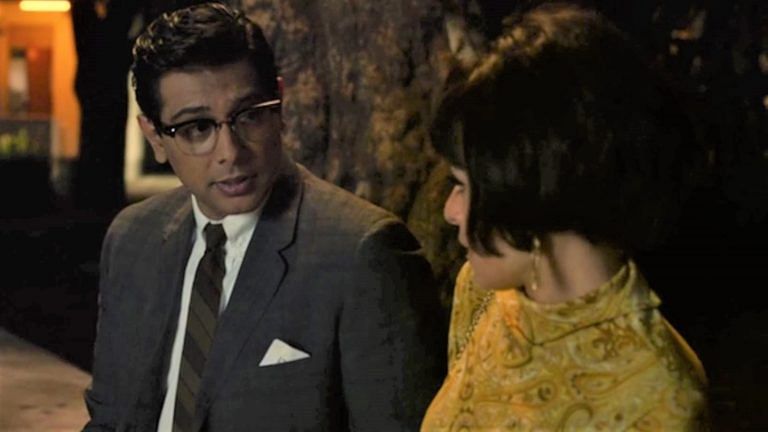
If you’ve been following the Pearson family closely, you must have watched episode 8 from the fifth season of ‘This is Us’ introducing two new characters to the show – Nasir and Esther Ahmed.
The first time we see the pair, it’s circa 1963 in Albuquerque, New Mexico, where a man introduces himself as “I’m Nasir from India” as a young Esther is seen walking up to him, asking for a light.
The next time we see the couple, Nasir is cradling their son in his arms. Shortly after, another scene reveals their relevance.
As Esther is seen getting annoyed at Nasir for having returned late from work, Nasir replies, “When your mother wants a picture of you, what do we have to do? What if instead of waiting for the mail, she could see it instantly? They will be able to share images… Imagine if you could talk to someone on the screen but with a video.”
These lines from the show piece the puzzle together as viewers learn by the end of the episode that Nasir is the man behind the video-calling technology we use today. He’s the reason the Pearsons are able to stay connected using FaceTime amid the raging coronavirus pandemic .
From Bengaluru to USA
Nasir Ahmed hails from the southern city of Bengaluru, in India. He was born in 1940, and subsequently completed his schooling from Bishop Cotton Boys School. He earned his Bachelors in electrical engineering from the University College of Engineering in Bengaluru in 1961. Thereafter, he moved to the US for his higher studies and pursued both his MS and Ph.D at the University of New Mexico in Albuquerque.
After his graduation, Ahmed worked as the Principal Research Engineer at Honeywell in St Paul, Minnesota from 1966 to 1968. He then took on the role of a professor at the Kansas State University and taught there till 1983, following which he joined the University of New Mexico and retired in 2001. He is currently Professor Emeritus of electrical and computer engineering at the University of New Mexico.
What is DCT?
In the 1970s, Nasir led a research team that developed the Discrete Cosine Transform (DCT), which makes it possible to share photos and videos.
In a paper on how he built the technology, Nasir says he had written a proposal to the National Science Foundation to study the cosine transform using two distinct polynomials. “Much to my disappointment, NSF did not fund the proposal,” he lamented, adding that a reviewer had deemed his proposal “too simple”. Not one to give up, Nasir kept at it through his P.hD until he finally cracked the DCT.
Today, Nasir and his team’s work on DCT is used in high-definition digital TVs, teleconferencing, and other image-sharing platforms, among numerous other commercial applications.
He is also credited with having invented the .jpg file format for photos, according to Bustle.
Finding Love
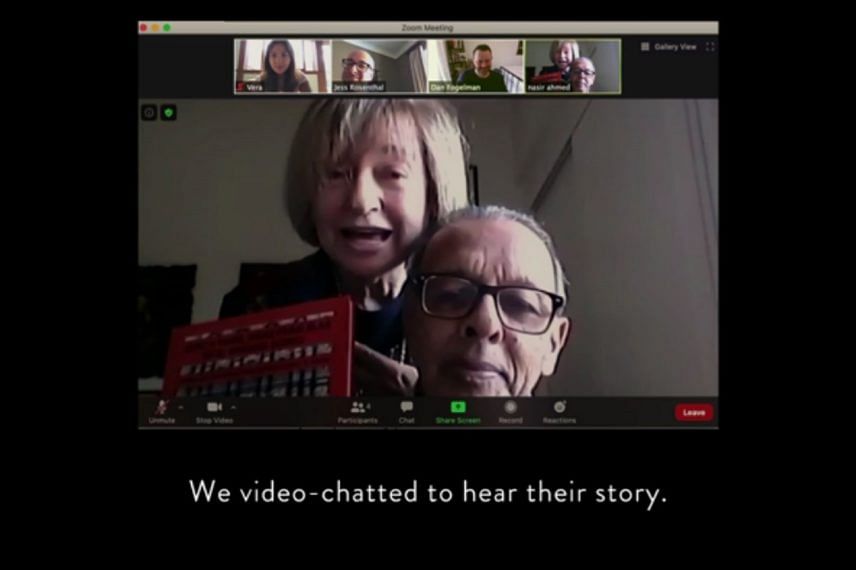
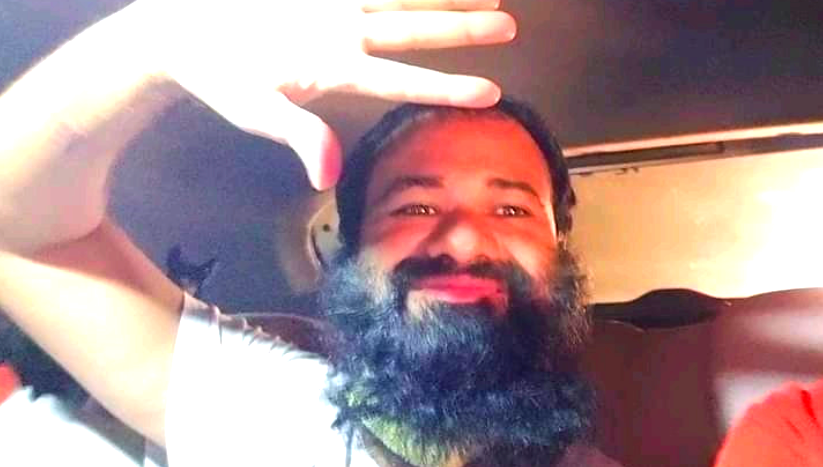
The real Nasir and Esther. /(Photo Courtesy: A still from the episode) /Esther and Nasir Ahmed video conferencing with This Is Us show creator Dan Fogelman and executive producers Vera Herbert and Jess Rosenthal in August of 2020. NBC
Nasir met Esther Pariente, an Argentinian, at the University of New Mexico. According to the College of Graduates in Economic Sciences of Tucumán, Esther holds a master’s degree in English from Kansas State University and a Ph.D in Spanish and Latin American Literature. Their son, Michael Pariente, is a well-known criminal defence attorney based in Las Vegas.
The makers of ‘This is Us’ caught up with the couple over a video chat to know their story, before paying a fitting tribute to the couple in the eighth episode.
According to Bustle, Nasir and his wife Esther released a limited-edition book about their lives called Parallel Lives In Curved Space in 2018. The couple celebrated their 56th anniversary recently.
source: http://www.thequint.com / The Quint / Home> The Indian American / by Rinki Sanyal / February 19th, 2021
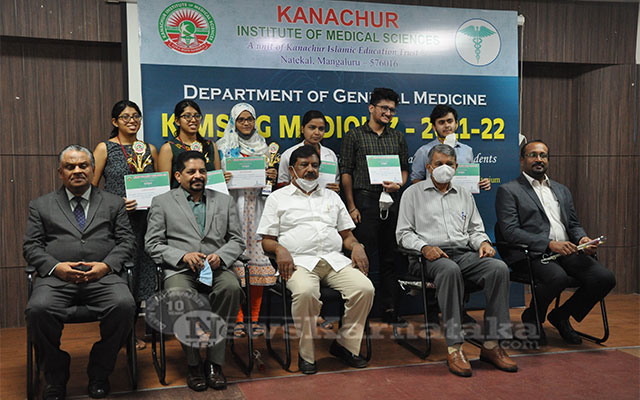
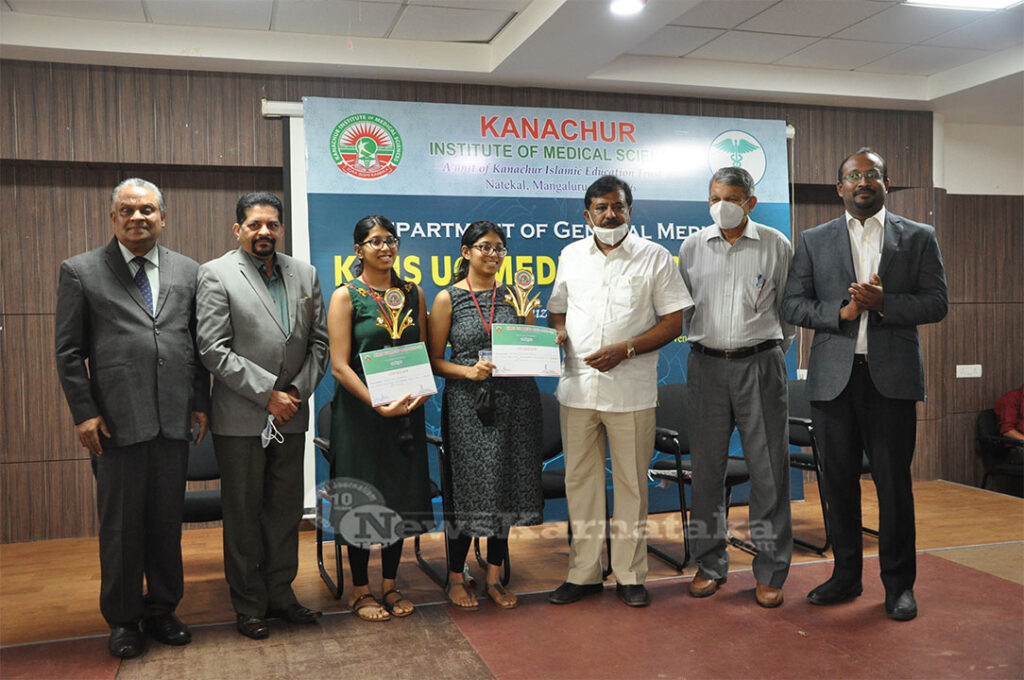
K.V.G. Medical College Sullia duo team comprising of Akshitha Anand and Ankitha Anand emerged as winners and clinched the glittering Medi Quiz – 2021 Trophy. The competition witnessed a very exciting close finish as they faced stiff competition from the rival team Kanachur Institute of Medical Sciences comprising of Nusaiba Farheen and Nithya G.S. who had to settle for Second Place.
The Dept. of General Medicine Kanachur Institute of Medical Sciences conducted their Annual State level Inter Medical Collegiate Quiz Contest “Mediquiz – 2021” exclusively for the M.B.B.S undergraduate Students on Dec 4 in their conference hall. The Quiz was exclusively on Medical subjects.
College President Haji U.K. Monu graced the occasion as Chief Guest and awarded the glittering Trophy, Merit Certificates to the Winners and Runners up and congratulated them on their exemplary achievements.
Medical Superintendent Dr Devidas Shetty, Vice Principal K.G. Kiran, Chief Administrative Officer Dr Rohan Monis were the guests of honour. HOD of Medicine Dr Devdas Rai was the Quiz Master.
The contest drew participants from different Medical Colleges comprising 37 teams.
Dr Preethika Welcomed, Dr Narashimha Murthy proposed a vote of thanks, Dr Pooja Shekar compeered the program.
source: http://www.newskarnataka.com / News Karnataka / Home> Features / December 04th, 2021
The book is a harrowing tale of a doctor’s ordeal and gives a compelling account of the tragic deaths of several children and the disturbing events that ensued.
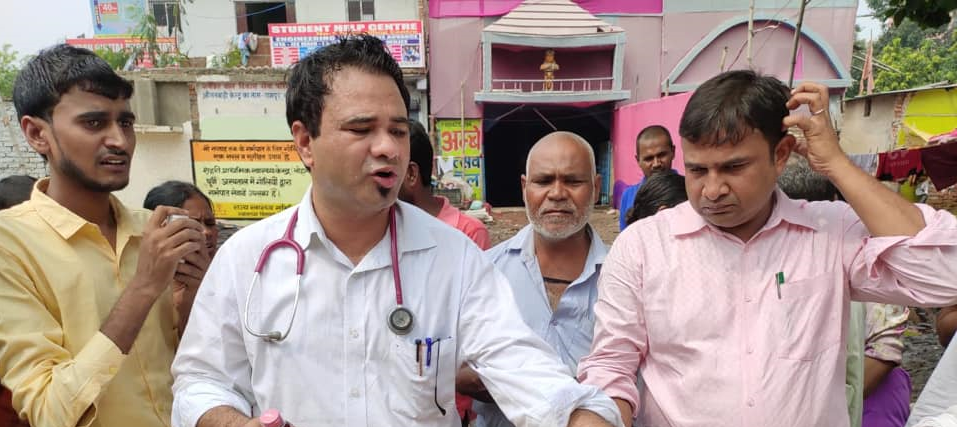
Dr Kafeel Khan at a medical camp. Photo: Facebook/drkafeelkhanofficial
Gorakhpur:
The 2017 oxygen shortage tragedy at Gorakhpur’s BRD Medical College that led to the deaths of more than a hundred children was not a random accident but the outcome of the administration’s apathetic and insensitive attitude towards government hospitals. The aftermath of the incident also exposed how the government machinery, instead of learning from such horrific accidents, works to suppress the truth, protect the culprits and punish those who try to expose the reality.
The reportage on the oxygen fiasco meanwhile rendered it synonymous with the identity of Dr Kafeel Khan, who was then an assistant professor in the hospital’s Department of Paediatrics. The incident and the ensuing fate of Khan was widely reported in the media.
But what actually happened and who were the real culprits? Were they shielded by the powers that be? Those who knew the truth have either kept mum on the issue or have sided with the government’s narrative. The government has made claims like, “The hospital did have an oxygen crisis but that’s not what killed the children”, “The children died because they were gravely ill”, “Children die of encephalitis in July and August every year” and that the government and its ministers or senior officials cannot to be blamed for the deaths as the college administration was negligent. Khan, the government said, was solely responsible because he failed to inform his seniors about the oxygen crisis and had committed medical negligence and used to practice privately.
Khan was sacked last month , four years following the incident. Two doctors and four employees of BRD Medical College, who were also accused of negligence, have been reinstated. R.K. Mishra, who was the principal of the college at the time of the deaths, and Ppharmacist Gajanand Jaiswal have retired after being reinstated. Little is known of the whereabouts of Manish Bhandari, the owner of Pushpa Sales, the oxygen supplier, ever since he was released from jail.
The government did not compensate the families of the children who died in the tragedy, claiming that their deaths were not caused by oxygen shortage.
The terrible incident is no longer talked about, except when it is brought up in conjunction with news related to Dr Kafeel Khan.
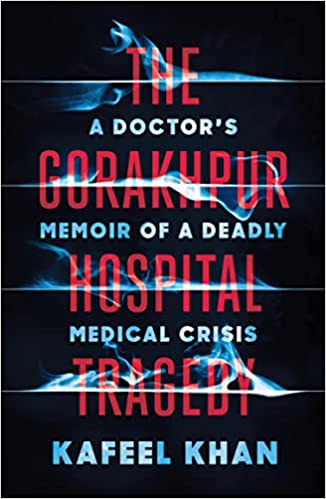
Kafeel Khan The Gorakhpur Hospital Tragedy: A Doctor’s Memoir of a Deadly Medical Crisis Pan Macmillan (December 2021)
Recently, Khan’s 300-page book titled The Gorakhpur Hospital Tragedy: A Doctor’s Memoir of a Deadly Medical Crisis was published by Pan Macmillan India, reinvigatoring a discussion on the deaths.
In the book, Khan describes a series of incidents beginning on the dreadful night when the hospital ran out of oxygen to the day of his arrest, subsequent imprisonment and his dismissal from service more than four years later. The book not only weaves together the scattered strands of information surrounding the oxygen shortage tragedy of the BRD Medical College on August 10, 2017 but also brings to the fore many new facts which remained unknown till now.
The oxygen fiasco was reported in both national and international media. While it is true that the incident remained in the news a long time afterwards, most of these speculations only went on to further mystify and blur the facts instead of providing clarity. The book tries to blow the lid off the attempts to conceal the truth behind the incident in a ‘calculated manner’ and uncovers the system’s attempts to make a doctor the scapegoat to cover up its failure.
The book also highlights various aspects of Khan’s personal life. We come to know that his father was an engineer in the irrigation department. Kafeel Khan was brought up in an open-minded atmosphere and spent his early days in a locality where residents hailed from different religious backgrounds. They celebrated Holi as zealously as Eid. On Diwali, he narrates, his family received many sweets from their Hindu neighbours which he would carry in his school tiffin for an entire week.
From his family, the story quickly progresses to the events of August 10, 2017. On the fateful night, Khan received a WhatsApp message on his mobile about depleting oxygen levels in the encephalitis ward. He was on leave that day as his sister was visiting the family from Oman and he wanted to spend time with her. But when he received the message, he decided to immediately go to the hospital. On his way, he kept calling his superiors at the medical college. While most of his calls went unanswered, those who did pick up failed to grasp the gravity of the situation and tried to pass the buck.
In his book, Khan gives telling details of the situation he witnessed in the ward that night and how he handled it. He describes the wailing and pleading parents while their children battled for life and the utter helplessness of the doctors, nurses and ward boys. There were 313 children admitted in the hospital’s pediatric and neonatal intensive care units that night. At 7:30 pm, the oxygen plant had run out of oxygen and the ventilators began sounding the warning beeps. As a contingency arrangement, 52 jumbo cylinders kept in the hospital reserve were installed, which were exhausted within four hours and the oxygen supply was completely cut off to the wards, including the encephalitis ward. By the time Khan reached the hospital, eight children had already died.
He and his colleagues immediately started giving oxygen from Ambu bags to the children on ventilator support. The condition of all the children in the ward was assessed and oxygen from Ambu bags was given to those who needed oxygen the most. A three-year-old girl’s condition deteriorated and despite the staff’s best efforts, could not be saved. The NICU witnessed similar chaotic scenes. The relatives of the patients, who had been informed about the lack of oxygen, were either yelling at the hospital staff or begging them to save their children.
Meanwhile Khan was faced with the dual challenge of treating the deteriorating condition of the children, on one hand, and arranging for oxygen cylinders on the other. A truck carrying a jumbo cylinder was on its way from Imperial Gas Limited in Faizabad but there was no sign of it until 1 am. Till then, no senior officer of the BRD Medical College had reached the hospital. In their absence, Khan decided to fetch three jumbo cylinders from a nearby hospital in his private vehicle. He then approached eight more hospitals for help, ferried as many cylinders as he could arrange and tried to replenish the oxygen supply. But it was not enough. The encephalitis ward was consuming 16 jumbo cylinders every 45 minutes. The truck that arrived from IGL Faizabad at 2 am brought only 50 cylinders. Kafeel arranged for a truck with the help of central oxygen operator Balwant, and sent an outsourced worker to the Khalilabad plant paying Rs 20,000 from his own pocket. The oxygen plant had agreed to supply jumbo cylinders at Rs 350 per cylinder.
Despite being informed of the urgent need for oxygen, a plant in Gida refused to supply oxygen saying that its contract with the college had been terminated and handed over to IGL Faizabad. It would supply oxygen only after the contract has been renewed, the plant said.
Despite Khan and his team’s night-long efforts to save the children and arrange cylinders, 23 children in the PICU and NICU and 18 adult patients in the medicine ward had succumbed by 10 am the next day.
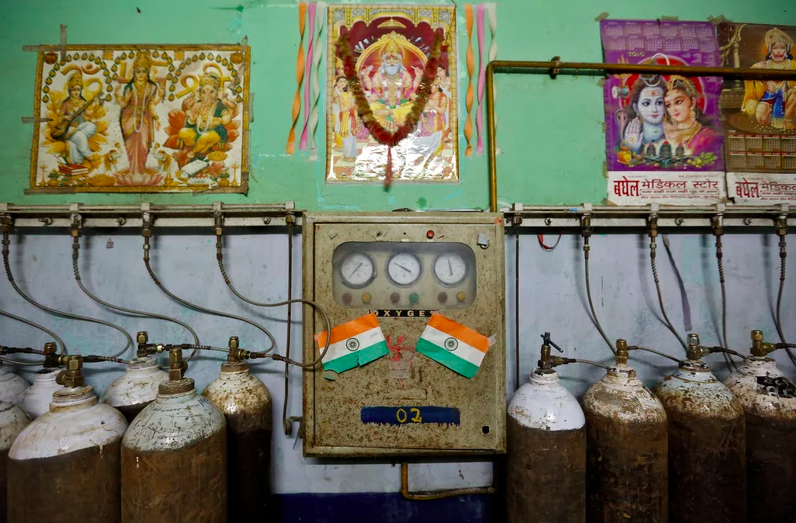
A room containing oxygen tanks is seen in the BRD Medical College and Hospital in Gorakhpur. Photo: Reuters
When there was a shortage of vehicles to cart the jumbo cylinders, Khan reached out to the Sashastra Seema Bal (SSB) stationed in the Fertilizer Campus on the morning of August 11 and contacted the DIG to provide a truck and cylinders. The SSB did not have jumbo cylinders, but they provided a truck and 12 jawans so that cylinders could be swiftly transported from the plant to the medical college.
According to the details in the book, on the afternoon of August 11, the then district magistrate Rajiv Rautela contacted Khan and after being apprised of the whole situation assured that oxygen would be provided. He asked the Gida plant, which had earlier refused to entertain Kafeel’s request, to supply oxygen. Later, 50 jumbo cylinders arrived from IGL Faizabad in two trips. Kafeel also contacted the chief medical officer and the additional director (health), urging them to help solve the crisis. One said he was in a meeting and the other asked Khan to contact the chief medical superintendent regarding the arrangement of cylinders. One of these officers later became part of the committee that was formed to investigate the tragedy.
In the afternoon, a professor from the Department of Paediatrics reached the ward followed by the head of the department and the chief medical superintendent of the Nehru Hospital. Together, they wrote a letter to the principal of the BRD Medical College, urging him to arrange medical oxygen.
By the evening of August 11, the news of children dying due to oxygen shortage had spread like wildfire and media persons began pouring in at the BRD Medical College. By then, a few local journalists and photographers had already reached the College and began reporting on the crisis. The district magistrate issued the first official statement about the incident in a press conference at 7:30 pm that day and announced the formation of a committee to investigate the deaths. This committee was asked to submit its report within 24 hours.
Initially, the reports in media and on social media hailed Kafeel as a hero for his efforts to muster up oxygen cylinders using his personal resources and save the lives of children. On August 12, the state health minister Siddharth Nath Singh and medical education minister Ashutosh Tandon reached the college. Singh, in a press conference, denied the death of any child due to lack of oxygen and made the insensitive ‘children die every year in August‘ remark. The statement was widely condemned.
On August 13, a tanker of liquid oxygen arrived at the hospital at 1 am and the supply was restored. Kafeel, who had tirelessly spent 48 hours on rigorous duty since August 10, finally returned home only to wake up to a fresh twist the next morning. A new tale had been spun and a fresh narrative was played out in the media.
In the morning, J.P. Nadda and chief minister Yogi Adityanath arrived at the BRD Medical College and Khan was summoned. He reached the hospital hoping to receive a pat on the back for his efforts but he was in for a rude shock and suddenly found himself in the crosshairs.
According to Khan, the moment he appeared before the chief minister, he said in a reprimanding tone, “Tu hai Dr Kafeel Khan?” (So, you are Dr Kafeel Khan?)
“Yes, Sir.”
“Tune cylinder ka arrangement kiya tha?” (Are you the one who arranged cylinders?)
“Yes, Sir.”
“Ye 4-5 cylinder la kar tu ne kitni jaan bacha li? Tu sochta hai cylinders ki vyvastha kar ke tu bohot bara hero ban gaya; dekhta hoon tujhe.” (How many lives did you save with a few cylinders? Do you think by arranging cylinders you became a hero? I will take care of you.)”
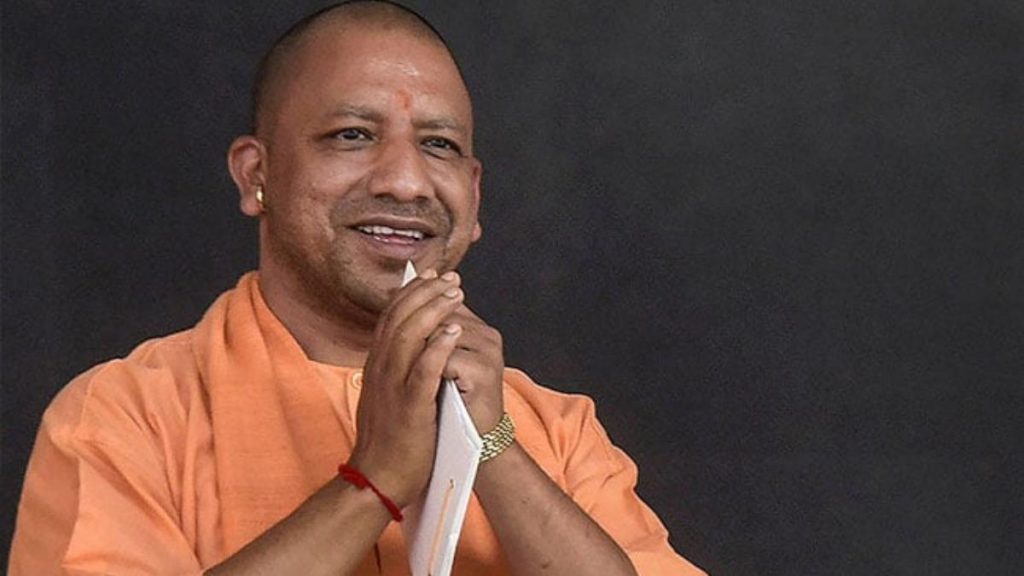
Uttar Pradesh chief minister Yogi Adityanath. Photo: PTI
Khan was suddenly the villain, accused of leaking the news of oxygen shortage to the media. However, when he tried to speak up and provide a clarification, senior officers stopped him from doing so.
In the press conference, the chief minister dismissed the claim that the children died owing to a dearth of oxygen. He announced the formation of a committee headed by the chief secretary to probe the incident and said that its report would be submitted in a week.
As soon as the press conference was over, media persons flocked the hospital of Khan’s wife. A mob also attacked the hospital and a showroom owned by Khan’s brother, pelting stones and vandalising them. On social media, Khan was vilified as an ‘oxygen thief’, and a ‘pawn of the opposition leaders’. The TV news channels began referring to him as the head of the paediatric department, the deputy principal, the superintendent of the hospital, blaming him entirely for the disaster.
Khan was advised to take leave until the turmoil subsided. On August 16, the report of the committee constituted by the DM was submitted, which did not fix the responsibility on Khan but also failed to mention, let alone laud Khan’s efforts to arrange oxygen cylinders at such a critical time.
Finally, on August 21, the report of the committee headed by the chief secretary came out and an FIR was lodged against nine people, including Khan and everyone was gradually arrested.
The police began raiding his house daily, making searches and harassing the family members. His sister’s house in Lucknow was also raided and his brother was taken into custody. He decided to surrender and finally did so at the Special Task Force office in Lucknow. The STF brought him to Gorakhpur and handed him over to the Gorakhpur police, who put him in jail.
The next few pages of the book record a horrendous account of Khan’s seven-month long stay in jail – an 800-prisoner facility with 1,897 prisoners in it.
In jail, he met several high-profile prisoners – Kaka, D. Ram, V. Singh, Shailesh, Vishwa and also ‘Mantriji’ who is serving a life sentence for the murder of a poetess. Most of them showed Khan kindness. Despite all the media propaganda, they treated him with respect for being a good Samaritan and responsible doctor who tried to save the lives of children. Khan writes that most of the undertrial prisoners spend long periods in jail in the hope of being freed or granted bail but 99% of them are met with disappointment as cases remain in limbo for years.
Khan also details a first-hand account of corruption inside the prison walls. Any prisoner can avail the facilities that he can afford. Under this covert system, rates are fixed for kachchi baithki and pakki baithki – levels of evading laborious chores in jail. Then there are rates of bidi, cigarette, vegetables, eggs, bottled water as well as meeting with relatives. To avail such luxuries, one has to keep one’s mouth shut – besides abiding by the other rules. Based on hierarchy of caste, religion, connections and nature of crime, the dark underbelly of the prison is governed by a handful prisoners.
While awaiting bail, Khan tried to piece together the episodes of the oxygen tragedy. From jail, he contacted everyone including Manish Bhandari, the director of Pushpa Sales, the college principal Mishra, and Dr Satish. Finally, he saw the whole picture. He learnt that both the Gida gas plant, which had refused to supply oxygen to the hospital despite being aware of the deaths of children, as well as IGL Faizabad with which the hospital had signed a contract in 2017, had close relations with the ruling party leaders. Also, Khan claims, Pushpa Sales had not only failed to pay the dues to the top officials of health and administration but also to line the pockets of various ministers, a matter which was brought up in several official meetings. Hence, the authorities behaved in a lackadaisical manner while the children were gasping for breath. Later, a hunt was launched for ‘a neck to fit the noose’ and a communal government found Khan as the perfect scapegoat, he says.
Dr Kafeel Khan, after his release from jail. Photo: @Saurabhsherry/Irfan Ghazi.
The final section of the book describes Khan’s ordeal after his release from jail, various charges levelled against him and his re-arrest. He was arrested from the Bahraich district hospital, where he had gone to investigate the death of children admitted for encephalitis. Later, charges under the National Security Act were slapped on him for a speech he had delivered during an anti-CAA-NRC protest at the Aligarh Muslim University. He was released after the Allahabad high court quashed the NSA charges.
However, despite getting a clean chit on two key charges in the departmental inquiry of the oxygen shortage incident, he was sacked. The book has several more details. An entire chapter is dedicated to his rural health campaign, under which he organised medical camps, especially creating awareness about encephalitis, locally known as chamki fever, in various flood-affected parts of Bihar and Assam.
source: http://www.thewire.in / The Wire / Home> Book> Rights / by Manoj Singh / December 19th, 2021
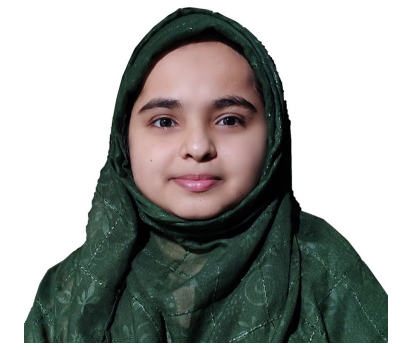
It is a matter of great pride for the Jamia Millia Islamia (JMI) that Ms Rubina, a PhD research scholar from the Department of Electrical Engineering has been selected for the coveted Prime Minister Research Fellowship (PMRF) under the Direct Entry category for May-2021 drive.
JMI Vice Chancellor Prof. Najma Akhtar congratulated the scholar for this award and hoped she will justify the fellowship with quality research outcome.
Prof. Munna Khan, HOD, Department of Electrical Engineering said that she will receive a monthly fellowship of Rs 70, 000 for first two years, Rs 75,000 for 3rd year, Rs.80,000 for the 4th year and the 5th year respectively. In addition to this, the scholar is also eligible for a research grant of Rs. 2 lakhs per year (Rs 10 Lakhs for five years) under the scheme.
Ms Rubina’s research will be based on “Development of Smart Capacitive Sensors for Condition Monitoring of Electrical Apparatus in Smart Grids”.
The main objective is to fabricate capacitive sensors with superior static and dynamic characteristics for real time online health monitoring of key electrical apparatus such as transformers, and gas insulated switchgears (GIS). The capacitive sensors are extensively used for sensing applications but mostly parallel plate and planar interdigital capacitive sensors with nanostructure sensing films. Although nanostructure materials are nowadays widely used for sensing applications and the stability of the nanomaterials is an important issue for real time applications.
Researchers mostly pay attention to the sensitivity which can be easily addressed with modern advanced IC devices but degradation of sensor performance due to stability is difficult to address by the ICs.
Ms Rubina, is pursuing PhD under the supervision of Prof. Tariqul Islam in the Electrical Engineering Department, JMI.
She will work on “Design, Modelling and Fabrication of High Performance Capacitive Sensors for Non-contact Measurement of Some Important Parameters in Smart Grids”. The sensors for smart grids need to face adverse conditions such as high temperature corrosive environment with electromagnetic noise interference.
The research work will pave a way for the development of novel capacitive sensors which will be cost effective, easy to install and fulfil the application needs.
Rubina thanked Prof. A. Q. Ansari, the coordinator PMRF scheme, HOD, Dean F/O Engg. & Technology, the supervisor and other members of the department who supported her for this achievement.
It is worth mentioning that under the Lateral Entry Scheme of the December 2020 drive, six research scholars of JMI were selected for PMRF. Five out of six are girl students.
The main motivation for this attractive fellowship scheme is to attract the best talent into research thereby realizing the vision of development through innovation. The scheme was announced in the Budget 2018-19.
source: http://www.jim.ac.in / JMI / by Public Relations Office, JMI / December 04th, 2021
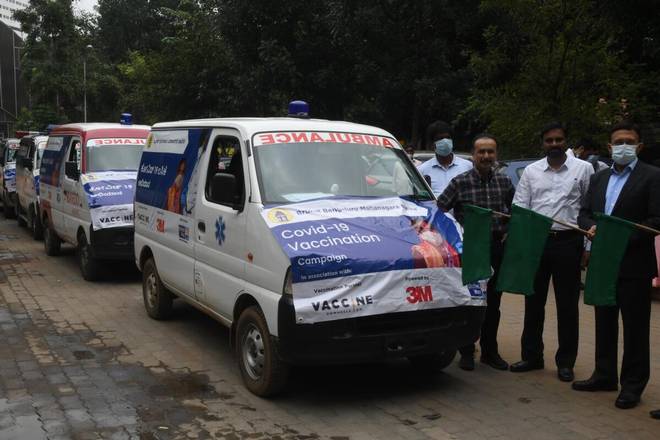
Chief Commissioner Gaurav Gupta flags off a Covid-19 vaccination vehicle at the BBMP head office in Bengaluru on December 15, 2021. | Photo Credit: Sudhakara Jain
To cover 110 million people in 25 States by June 2022’
Salesforce, a customer relationship management player, and Azim Premji Foundation have entered into a collaboration to introduce VaxIT, an app to help accelerate Covid-19 vaccination in India.
The programme would use VaxIT across 25 States to cover a population of 110 million (11 crore) across over 3,500 Primary Healthcare Centres (PHCs) by June 2022.
The VaxIT app, developed on the Salesforce platform for Azim Premji Foundation and its partners, would capture the status of vaccination to help individuals plan and stay updated on their progress in the healthcare programme.
VaxIT is available on the Android app store and offers multi-lingual, and offline capabilities.
Anurag Behar, CEO, Azim Premji Foundation, said, “Throughout the Covid-19 pandemic, we have organised ourselves to provide a comprehensive response to the situation – addressing healthcare and humanitarian needs.”
Arundhati Bhattacharya, CEO, and Chairperson, Salesforce India, said, “As we race to deliver one of the largest mass vaccination campaigns in human history, we believe our collaboration with Azim Premji Foundation will help with the safe and equitable distribution of Covid-19 vaccines across India.”
source: http://www.thehindu.com / The Hindu / Home> News> Cities> Bengaluru / by Special Correspondent / Bengaluru – December 22nd, 2021
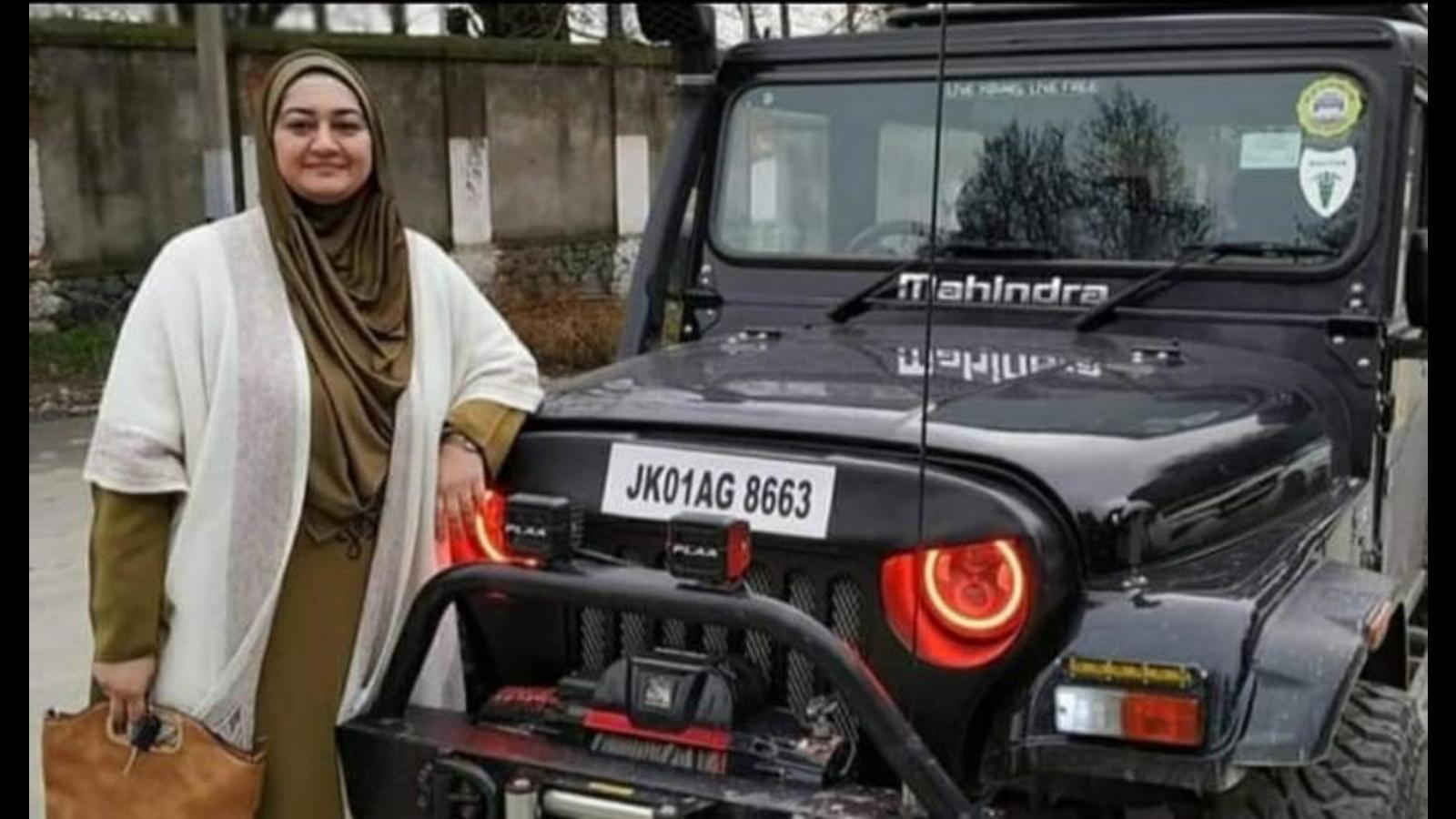
Dr Sharmeen Mushtaq Nizami is a J&K-based philanthropist and adventure trekker who helps cancer patients, widows and orphans. (Waseem Andrabi)
Dr Sharmeen Mushtaq Nizami, a J&K-based philanthropist and adventure trekker, feels that a girl can do big things in life when her parents support her; she has set up a charity trust that helps cancer patients, widows and orphans.
Whatever life throws at Dr Sharmeen Mushtaq Nizami, she takes it as a challenge, overcomes it and moves on. She believes one’s life should be an inspiration for others.
Dr Nizami, in her early 40s, works at a Srinagar hospital and runs a trust for cancer patients besides pursuing her hobby of being an extreme mountain trail motor-sport traveller. Since childhood, she has pursued her passion whether it was studying medicine in the 1990s when militancy was at its peak in Jammu and Kashmir or her love for jeeps.
Her biggest challenge in life came when her husband was diagnosed with cancer and died in 2007 within six years of their marriage, leaving her to bring up their two children, a three-year-old son and a year-old daughter.
“It was a traumatic phase. I struggled but my parents supported me. Initially, being a single parent appeared tough but gradually I came to terms with reality,” she says.
As time went by, she decided not to remarry and moved back to her ancestral home in Srinagar from her husband’s house in Jammu.
Dr Nizami, who is now the medical officer in-charge at a Srinagar hospital and on Covid duties, says that her experience during her husband’s illness pushed her towards helping patients and the needy.
“Though we were relatively well off, we had to go outside for treatment as he was suffering from pancreatic cancer. We realised that the treatment is expensive and drains most families’ savings,” she says.
Even before her husband’s death, she would collect money from attendants using charity boxes outside OPDs. Later, friends and colleagues asked her to setup a trust with a separate account where people could donate money. “We get a lot of donations during Ramazan, which are primarily used to help cancer patients and those needing a kidney transplant. The trust also helps widows and orphans who have no source of income,” she says.
Nizami, the eldest of four siblings, says that her parents Mushtaq Nizami, a military contractor, and Shahida Parveen, a homemaker, have been her strength. “Any girl can do big things in life when her parents support her,” she says.
Ask her what got her interested in jeeps, and she says, “I have imbibed my father’s passion for driving jeeps. In 2018, I came upon some videos of the Kashmir off-road club which organises competitive events and overland expeditions, and decided to participate in a snow-race event (Frozen Rush) at Gulmarg.”
Nizami, who always wears a hijab, was the only woman to participate in the adventure sport and created quite a buzz on social media. “I hadn’t realised that I was breaking stereotypes , until I saw people’s reactions,” says Nizami, who has since participated in dangerous events like mud race and river crossing.
“Some people tried to dissuade me saying it was risky, but I remained unafraid,” says Nizami, adding that she gets a lot of messages from young girls who admire her.
She says her faith in the Almighty has never wavered despite the many challenges in her life. “Not just driving, but life in general throws a lot of challenges at us. We have to accept the challenges and move forward,” she says.
source: http://www.hindustantimes.com / Hindustan Times / Home> Cities> Others / by Ashiq Hussain, Srinagar / September 16th, 2021
Diabetic people with foot sores, fearing limb amputations can heave a sigh of relief as a team of Aligarh Muslim University (AMU) scientists lead by Prof Asad Ullah Khan of the Interdisciplinary Biotechnology Unit has developed a novel ‘Nano-Composite based Photo-Dynamic Therapeutic Approach to treat Chronic Diabetic Foot Ulcers’.
Their remarkable patented study, data and work accepted for publication in the peer-reviewed ‘Scientific Report’ of the Nature Publishing Group has been successful on animal models. The technology successfully treated foot ulcers in diabetic rats.
“Anatomical and physiological similarities prompted us to investigate a large range of mechanisms for assessing this new treatment therapy on animal models with no toxicity before applying it to humans. We are content to have successfully treated foot ulcers in diabetic rats which were not treated by any available antibiotics due to the multi-drug resistant strain mediated infection”, said Prof Asad.
According to him the animal models were cured in a span of 14 days through the newly developed technology.
“Our team has been involved in proving the efficacy of the treatment for the last two years. The study is on its way for human trials”, added Prof Asad.
He pointed out: “Independent studies reveal that across the world, a limb is amputated every few minutes and this actuality becomes even more unsparing when you learn that most of these amputations are the result of diabetic foot ulcers. Therefore, it is of paramount importance to come up with a pertinent treatment for saving limbs and lives”.
“It is hoped that this novel technology will become the final finding for the pursuit of the much awaited treatment for diabetic foot ulcers. We are longing for the world to find out that there is more to the prevention of this infection than just offloading wounds, removing dead skin and tissue, applying dressings and checking blood glucose and other health issues”, said Prof Asad.
source: http://www.amu.ac.in / AMU, Aligarh Muslim University / Home> AMU News / Public Relations Office / Aligarh, December 13th, 2021
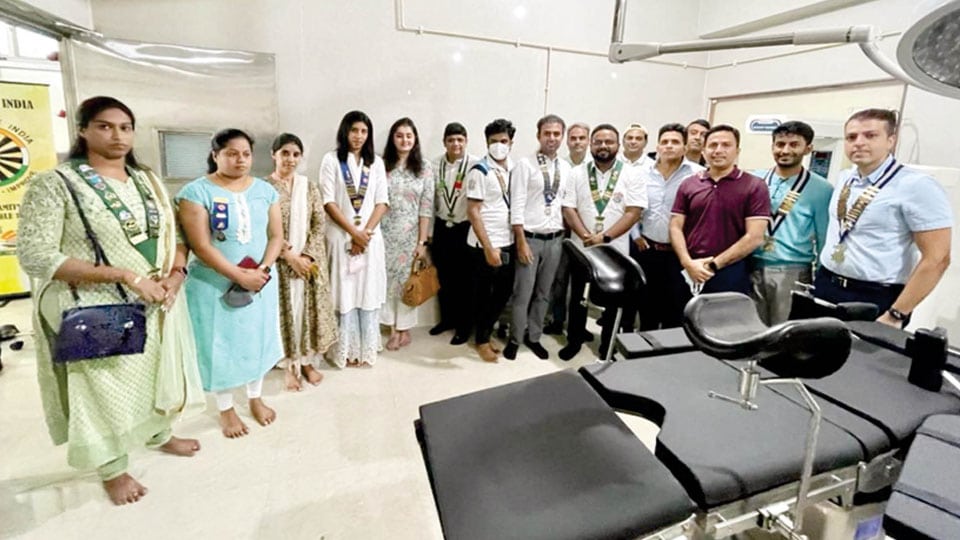
Mysore Amity Round Table-156, in association with Pyramid Timber Pvt. Ltd., Round Table Luxemburg and Mysore Amity Ladies Circle-108 donated critical Operation Theatre equipment to MMA Hospital in Rajivnagar, Mysuru.
RTI Area 13 Chairman T.R. Vinay inaugurated the event in the presence of Area 13 Vice- Chairman H.H. Ram, MART-156 Chairman Hussain Vagh, MALC- 108 Chairperson Swathi Vagh, Area 13 Chairperson Sapna Kushal, floor tablers, President of MMA Hospital Khadeer Ahmed and Secretary Khaleem Ahmed.
MMA Hospital is run by a non-profit Charitable Trust and has 30 beds. The hospital had a need of critical equipment in their operation theatre and Mysore Amity Round Table-156 was able to support by providing OT table, OT light and anaesthesia machine, worth a total of Rs. 5 lakh to meet the needs of the hospital.
Speaking on the occasion, Hussain Vagh, said “Good quality equipment is critical at hospitals. We at Mysore Amity Round Table-156 raise funds to be given where there is a need.”
Over the past 15 years, Mysore Amity Round Table- 156 has constructed over 30 classrooms and 20 toilet blocks at Government-aided schools. Further, several medical treatments for patients and equipment and consumables to hospitals have been provided through various initiatives.
source: http://www.starofmysore.com / Star of Mysore / Home> News / November 27th, 2021
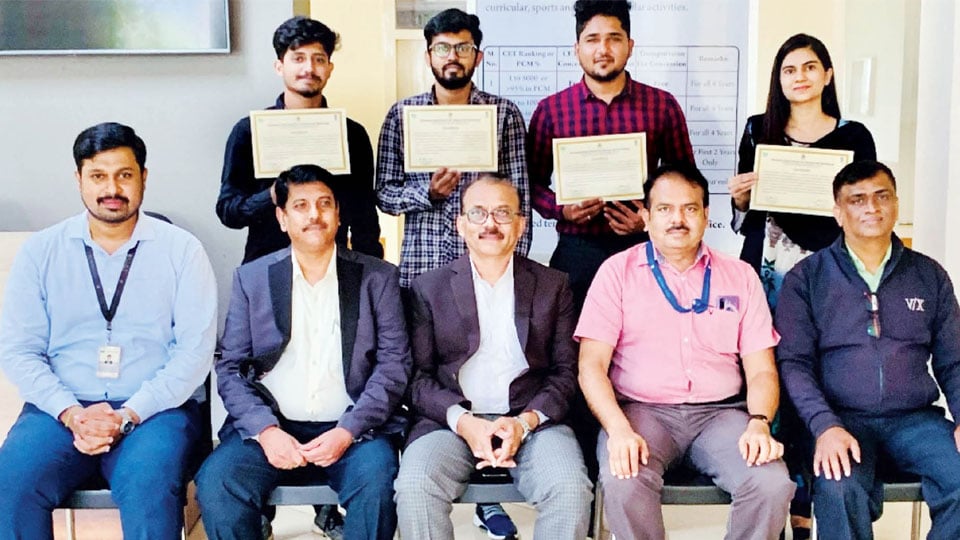
The students of ATME College of Engineering have won Best Project of the Year Award in Electrical and Electronics Engineering Stream in the 44th Series Student Project Programme held under Karnataka State Council for Science and Technology, Smart Personal Protective Equipment for Healthcare Workers to Combat COVID-19.
Seen are (standing from left) Team members Mohammed Huzaif, Haseebulla Baig, Syed Rawoofur Rahman, Simrah Fathima with (sitting from left) R. Shreeshayana, Assistant Professor and Project Guide, Department of EEE, Dr. L. Parthasarathy, Professor and Head, Department of EEE, Dr. L. Basavaraj, Principal, ATMECE, Dr. Sachidanandamurthy, Administrative Officer and Dr. G. Rathnakar, Dean – Student Affairs.
source: http://www.starofmysore.com / Star of Mysore / Home> Photo News / December 02nd, 2021
Five students from University of Kashmir have invented an automatic rice cooker. Apart from working automatically, the rice cooker also sucks out starch from the rice.
The group of inventors said, “Rice cookers accessible these days are giving us undesirable food. They prepare food without expelling the destructive material like starch which can cause medical issues among some people.”
The main goal of this invention is to suck out the starch from the rice which is unhealthy for the diabetic patients.
Earlier, the people who used to cook rice in cooking pots, used to drain out starch from the rice manually which avoided health problems like diabetes, obesity etc. It was researched by innovators that diabetic patients were advised by doctors not to consume rice made in rice cookers as it doesn’t drain out starch.
“The cooker is designed as such that it prompts the user whether to suck out the starch from rice or not because healthy people need starch for their body,” said Jehangir Hameed, a member of the group, who is currently pursuing M. Tech.
The rice cooker will cook food with a single text message sent by a user through the mobile phone. It will monitor the starch status of the rice being cooked. It will consistently screen the starch status and will expel when it is being discharged out of the rice.
Working of the project
It has inbuilt rice bowl and water tank which are controlled utilizing controllers and hence no physical intervention is required while cooking or keeping the prepared food warm.
The device is fully automatic as it is controlled by GSM and IoT based technology. The rice cooker is programmed and configured to receive a command from a mobile phone to cook rice for people ranging from 1 to 12.
With predetermined chambers for water and rice, it will automatically put the rice and water for cooking. At every stage of cooking, the device will send an alert to the user about the number of people for whom rice is cooked. When the food is cooked, it will again send a message to the user that the food is ready.
Jehangir said, “It’s good for everyone. People who work outside, or a student who lives in a hostel, people coming from outings and sports activities after being exhausted, have no capacity to prepare food. With a single text from a mobile phone or other source, it will accomplish the cooking work itself.”
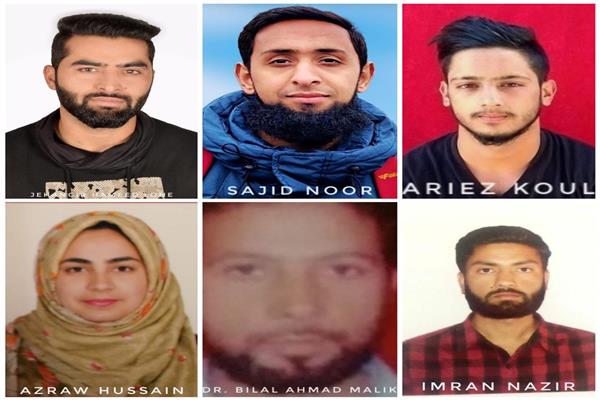
Apart from Jehangir, Azraw Hussain, Sajid Noor, Ariez Koul and Imran Nazir are part of the project along with Dr. Bilal Ahmad Malik, the Scientific Officer from University of Kashmir.
The patent authority of India has accepted and published the details of their patent on the invention.
The innovators want support from government or private companies in order to convert their prototype into a marketable product.
source: http://www.risingkashmir.com / Rising Kashmir / Home / by Insha Latief Khan / November 03rd, 2021