The Coimbatore Medical College and Hospital has performed 100 cochlear transplant surgeries in the last two years, becoming the first government hospital to reach this number.
Coimbatore :
The Coimbatore Medical College and Hospital (CMCH) has performed 100 cochlear transplant surgeries in the last two years, becoming the first government hospital to reach this number.
All the surgeries had been performed under the chief minister’s comprehensive health insurance scheme, said doctors.
The CMCH is the only other government hospital, besides Madras Medical College, approved to perform cochlear transplants under the Tamil Nadu Health Systems Project.
Doctors said they performed their first cochlear transplant surgery on August 10, 2013 and performed the 100th surgery on October 1 this year.
“All the surgeries were successful and all the children operated have recovered and are doing extremely well,” said professor and head of the ENT department Dr V Aravindhan.
The insurance scheme makes cochlear transplant surgeries free for children between 0 to 6 years of age.
“Cochlear transplants are usually done on stone deaf children or those who are severely hard of hearing,” said ENT professor Dr Ali Sultana.
“But since the implant is something that stimulates an auditory nerve in the brain, and later fills the auditory cortex with sounds and information, children learn to use it and benefit better,” he said. “Thus they can speak on the phone and have face to face like conversations like normal people.”
Earlier cochlear transplants were being done only at private hospitals because of the implant was expensive—Rs 5.1 lakh even for the basic low-end one. Now since the scheme allots Rs 7 lakh for the surgery, government hospitals have now begun performing the surgery.
“This includes pre-surgery screenings tests, the surgery, implants, post-surgery complications and a one-year rehabilitation program for the children,” said Dr Aravindhan.
The CMCH has tied up a private institute called “Hearing Aid Centre” to provide the one-year rehabilitation post-surgery.
“They with a team of audiologists and speech therapists provide audio verbal therapy to children, who will start filling their memory cortex with sounds and noises, and slowly start repeating them as part of speech processing. Within the first three months, they start speaking simple words,” said Dr Sultana. `
While cochlear implant surgeries are being done under the state comprehensive health insurance scheme in private hospitals too, other screening and post-surgery costs start piling up, say patients.
source: http://www.timesofindia.indiatimes.com / The Times of India / News Home> City> Chennai / by Pratiksha Ramkumar, TNN / October 05th, 2015
A workshop-cum-exhibition on digitization of palm leaf manuscripts was organised at Sadakkathullah Appa College here on Tuesday.
Students from various colleges visited the exhibition which had a good number of palm leaf manuscripts on display.
Since most of the palm leaf manuscripts, carrying rare medical remedies with herbal plants for a range of human and domestic animal ailments, are so fragile, efforts are on to digitize them.
A relative of Tamil scholar U.Ve.Sa. handed over a bunch of palm leaf manuscripts to Sadakkathullah Appa College’s managing committee member Pallaakku Lebbai for the digitization project.
Palm leaf manuscript scholar Sankaranarayanan, faculty of Government Siddha Medical College, Palayamkottai, Subhash Chandran, Assistant Director of the Department of Archaeology Chandravaanan, Principal of the college Mohamed Sathik and others spoke on rare information found in the palm leaf manuscripts.
source: http://www.thehindu.com / The Hindu / Home> National> TamilNadu / by Special Correspondent / Tirunelvelli – September 30th, 2015
Manjeri native 17-year-old Aflah Madasseri adores Thomas Alva Edison and dreams to become like him one day. But to become an entrepreneur, his High School teacher Nasar was the inspiration. Seeing his English teacher takes his classes with his inner sight, Aflah always wanted to do something for him to help him as he was blind.
His thoughts have finally become the product, Blind Torch which got second prize in the contest held as part of the YES CAN 2015 event to find out innovative ideas.
Blind Torch is a device for guiding a blind person. The device has ultrasonic wave emitters which senses the obstacles in front of users and gives velocity information of obstacles to analyse the route and helps to walk safely.
Aflah has completed plus two from the Government School in Manjeri and wants to pursue mechanical engineering.
“Blind Torch is a device with only the size of a mobile phone. Blind people can carry it and can walk safely even without a white cane. The device can be made for Rs 500. I have applied for a patent for Blind Torch,” Aflah said.
He is also looking at funding options for the product. “I want to concentrate on entrepreneurship and studies together,” he adds.
Aflah, who came to receive the award with his father Ummer Madasseri and mother Sajida, wants to become an entrepreneur.
source: http://www.newindianexpress.com / The New Indian Express / Home> Cities> Kochi / by Express News Service / September 13th, 2015
The national level Homeopathy convention organizing by Global Homeopathy Foundation in association with the Department of Ayush in Kozhikode on September 13 will witness eminent scientists and experts presenting various topics ranging from homeopathy medicines to treat HIV, Hepatitis B and Ebola.
Dr A R Khuda Bukhsh, an eminent molecular biologist who have demonstrated anti-cancer effects of homeopathy in cell line studies will present his recent studies related to his field and homeopathy.
Dr S Praveen Kumar of JSPS Government Homeo Medical College will present papers on research work he has done on action of Crotalus Horridus in Homeopathic dilution of 30 potency on reverse transcriptase enzyme involved in multiplication of HIV, Ebola and Hepatitis B viruses .
Dr E S Rajendran, Director, Vinayaka Mission’s Homeopathic Medical college, Salem will present paper on nano-studies of new drugs and the basics of nanoscience and also incorporate ideas regarding the biological action of drug potencies.
Dr Rajesh Shah, eminent homeopathic doctor and researcher, will present his latest research on HIV and Hepatitis C infections.
Dr. Upama Bagai, Immunologist will deliver a talk on efficacy of homeopathic medicines on chloroquine resistant and CQ sensitive strain of human malaria parasite, their cytotoxic studies on human cell lines and results in in-vitro antileishmanial activity against human.
Dr Eswara Das, consultant advisor in homeopathy to Government of India will deliver a lecture on schemes by the AYUSH Department which can be used by potential professionals to develop homeopathy.
source: http://www.timesofindia.indiatimes.com / The Times of India / News Home> City> Kozhikode / by Sreedevi Chithranjan, TNN / September 12th, 2015
Swiss-engineering major ABB on Wednesday appointed its India managing director Bazmi Husain as its global Chief Technology Officer (CTO) with effect from January 1, 2016.
India-born Husain, an expert in power and automation who has been with ABB for more than 30 years, will report to CEO Ulrich Spiesshofer, says the statement issued by the company. In his new role, he will be based in Bengaluru with an office in Switzerland.
As CTO, Husain will be responsible for overseeing all aspects of ABB’s global R&D, which serves the entire company, its scientists and engineers, and for the R&D activities within ABB’s divisions.
Reporting to him will be the heads of R&D at group and division level as well as ABB’s venture capital arm, ABB Technology Ventures. With locations in seven countries, ABB’s corporate research centres bring together an international team of highly-skilled scientists across a variety of disciplines. ABB spends $1.5 billion annually on R&D and employs some 8,500 technologists.
“Bazmi Husain’s unrivalled know-how will drive technological innovation across multiple disciplines to support our profitable growth ambitions and the paradigm shifts in power and automation,” said CEO Spiesshofer.
source: http://www.deccanherald.com / Deccan Herald / Home> Business / DHNS / Bengaluru – September 03rd, 2015
Winners of the first edition of Siddha and Camellia Group present ABP Ananda’s Sera Bangali, Kalker Sera Ajke, 2015, at GD Birla Sabhagar on Thursday
(From left) Artist Pitambar Khan, International Junior Science Olympiad winner Debaditya Pramanik, shooter Ayonika Paul, actor Riddhi Sen, writer Ritika Nath and singer Lagnajita Chakraborty. The award salutes talented young Bengalis in the field of science, art and culture. Picture by Pradip Sanyal
source: http://www.telegraphindia.com / The Telegraph, Calcutta,India / Front Page> Calcutta> Story / Friday – August 21st, 2015
It is a proud moment for Perminder and Sadiq, the two youngsters. Following the scooping of the award by them they are getting praises from their school and others.
Principal of D.A.V. Jasola Vihar Dr. V.K. Barthawal congratulated the winners and wished them luck.
Earlier, the school announced: “Students of D.A.V. Jasola Vihar bagged third position at the Kailash Confluence that was organised by D.A.V. Kailash Hills on August 18.
The young scientist of D.A.V. Jasola Vihar competed with the students from 18 schools. With their excellent performance, the dynamic duo cleared all the three rounds enthusiastically.”
source: http://www.okhlatimes.com / Okhla Times / Home> Local> Okhla Times Reporter, Okhla / OT Aug 20th, 2015
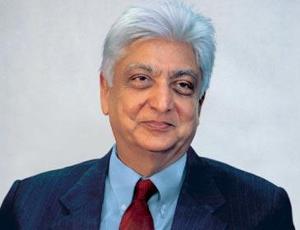
Wipro founder Azim Premji makes it to the tech billionaire’s list
Washington :
Two Indian tech tycoons,Wipro chairman AzimPremji and HCL co-founder Shiv Nadar are in the Forbes’ first-ever list of the 100 richest people in the technology field, dominated by Americans with Microsoft founder Bill Gates at the top.
Two Indian-Americans tech czars, Romesh Wadhwani, CEO and chairman of Symphony Technology Group, and Bharat Desai, co-founder of IT consulting and outsourcing company Syntel also figure on the list released last week.
Premji, 70, with a net worth of $17.4 billion is ranked 13th on the list followed by Shiv Nadar, 70, in the 14th spot with $14.4 billion.
Wadhwani, 67, is ranked 73rd with a net worth of $2.8 billion while Desai, 62, with $2.5 billion is in the 82nd spot.
Premji’s Wipro, India’s third-largest outsourcer, reported a 10 percent rise in revenues to $1.9 billion in the last quarter, on the back of new business from clients such as ABB and Philip Morris, the magazine noted.
Nadar, Forbes noted, has diversified into healthcare with HCL Avitas, a new firm in partnership with John Hopkins Medicine International, which has opened 10 clinics in Delhi.
Wadhwani has a degree in electrical engineering from the Indian Institute of Technology and a PhD from Carnegie Mellon. His Symphony Technology Group is a collection of 20 companies spanning big data, analytics and software.
Syntel, co-founded by Desai and his wife Neerja Sethi, now generates over $900 million in revenue, has a market cap of over $3 billion and more than 24,500 employees across the globe.
While 51 American billionaires are on the list, tech barons from Asia made a strong showing as well, with 33 people hailing from that region. Forty of the 100 live in California.
Bill Gates, who’s also the world’s richest man, ranks number one among tech tycoons, with a net worth of $79.6 billion.
Number two on the list is Larry Ellison, founder of database software firm Oracle, with a net worth estimated at $50 billion.
The third richest on the list is Jeff Bezos with a net worth of $47.8 billion followed by Facebook founder Mark Zuckerberg in the fourth place with $41.2 billion.
Google co-founders Larry Page and Sergey Brin are ranked fifth and sixth respectively.
Altogether, the world’s 100 richest tech billionaires are worth $842.9 billion.
Just seven women made the list, the wealthiest of whom is Laurene Powell Jobs, the widow of Steve Jobs, with an estimated net worth of $21.4 billion.
Nearly all of the 100 are self-made billionaires: 94 made their own luck, 3 inherited their fortunes, and 3 have inherited fortunes but have been actively expanding them.
source : http://www.timesofindia.indiatimes.com / The Times of India / News Home> NRI> US & Canada News / IANS / August 13th, 2015
Syed Usman Taqui of Mysuru has been awarded Erasmus Mundus Fellowship amounting to 1,29,900 Euros (almost equivalent to rupees one crore) to pursue his Doctoral Programme in Membrane Engineering for a period of three years beginning November 2015.
He is the youngest to top the Global Ranking List. The Erasmus Mundus doctorate in Membrane Engineering (EUDIME) is a prestigious European Fellowship programme designed to implement at international level — excellence, innovation, mobility and multidisciplinary in investigation approaches related to membrane science and technology. The consortium includes six leading partner institutions from Portugal, Netherlands, Czech Republic, France, Belgium and Italy.
Syed Usman Taqui pursued his Master Degree in Membrane Engineering under the Erasmus Mundus Master’s Scholarship amounting to 48,000 euros (rupees thirty-four lakh) during 2012-14, then the youngest to be selected among fourteen from all over the world.
Usman’s elder brother Syed Raihan Taqui was the youngest and one among the three from Asia to be awarded Erasmus Mundus Scholarship from European Union to pursue his Master’s Degree majoring in Education Management in 2007.
Usman Taqui is the son of Ayesha Nasreen and Prof. Syed Akheel Ahmed, former VC of Yenepoya University and former Dean and Syndicate Member of University of Mysore.
Usman carried out his project at the Department of Chemical Engineering Technology (IIT), Mumbai, during his undergraduate days. He has bagged numerous prizes and awards from the institutions he studied.
source: http://www.starofmysore.com / Star of Mysore / Home> General News / Saturday – August 08th, 2015
Here we publish the full text of the convocation address delivered by Dr. A.P.J. Abdul Kalam, the then Scientific Adviser to Raksha Mantri and Secretary, Department of Defence, Research & Development, at the 75th Convocation of University of Mysore on Feb. 25, 1995. — Ed.
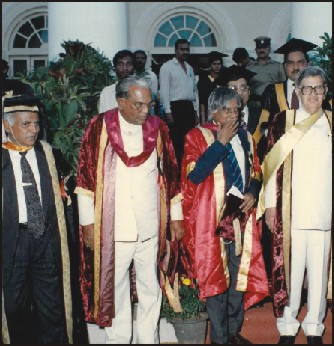
Dr. A.P.J Abdul Kalam (second from right) seen with the then Governor-Chancellor Khurshed Alam Khan, the then Higher Education Minister and Pro-Chancellor D. Manjunath and the then Vice-Chancellor Prof. M. Madaiah during the 75th Convocation of University of Mysore on Feb.25, 1995.
by Dr. A.P.J Abdul Kalam
Dare to Dream: I am indeed delighted and honoured to participate in this 75th Convocation of University of Mysore. I have been thinking about what to share with you on this important occasion when you are entering the most eventful phase of your life after years of learning. I know that for the past twenty-years or so you have been continuously taught various aspects by teachers. I am, therefore, not going to extend this process. Instead, I would like to share with you a few of my experiences, one at a place very close to you and others at Trivandrum and Hyderabad.
These are the experiences where people have dared to dream and met with success. Of course, we have to recognise that success is always the result of sweat of individuals and also coupled with many failures. The place close to you is the site of pilgrimage not only for me but for every one who practices rocketry in our country. Let me first tell you something about this.
First War Rocket: When I was studying in school and college, Srirangapatna interested me for two reasons — the place was the scene of battle against foreign rule and also there was a reference to a new weapon introduced. In 1960, when I visited Srirangapatna with my friends, we were thrilled to walk around this historical town. We searched for the Turukhan-hally Fort built during Hyder Ali – Tipu Sultan times and used for making rockets, way back in 1794. I had a tremendous disappointment when I did not see any permanent evidence or historical recordings in Srirangapatna regarding creation or development of first war rocket in the world.
Later, in 1963, I was at Wallop’s Island, the rocket launch facility of NASA in USA, in connection with a collaborative programme of launching of sounding meteorological rockets for research of upper atmosphere. In the lobby of their command-control centre, I saw a prominently displayed picture. The war dress and the colour of the soldiers’ skin attracted my attention. Some dark complexioned soldiers were firing rockets on their white skinned opponents. The label on the painting read, “The world’s first war rocket.” It was indeed a great pleasure to see an Indian feat acknowledged on the other side of the planet. I felt excited with happiness.
I started reading the history of rockets. I had a dream I must see Tipu’s rockets. Time continued to pass. Rocket technology engulfed me and India’s first Satellite Launch Vehicle SLV-3 was launched. In 1980, we had an opportunity to visit London. There, I saw two of the war rockets captured by British at Srirangapatna, displayed at Museum of Artillery at Woolwich in London with the heading “India’s War Rocket.” Probably, Europe learnt rocketry from our Srirangapatna rocket in the eighteenth century! It was a great thrill to see an Indian innovation on a foreign soil, well-preserved and with facts not distorted.
I got the performance of these 2 kg rockets, 50 mm in dia. and about 250 mm in length analysed by our designers. What a simple and elegant design, effectively used in war ! Surely, Hyder – Tipu Sultan would have had talented men who could look at propulsion, material, ignition and build rockets and fly them for war operations. In fact, when we look back to eighteenth century ambience, it is a technology marvel.
I would like to declare today that this land is the birth place of war rockets in the world and offer it my reverence and respect. The tradition continues.
Prof. Vikram Sarabhai – Man of Vision: Nations advance along the course charted by great dreamers. Let me narrate to you an incidence which occurred in 1968. We were working on the configuration of India’s satellite launch vehicle in Thumba. One day, Prof. Vikram Sarabhai, the then Chairman, Indian Space Research Organisation (ISRO), brought Prof. Curien, President, CNES, France, to our laboratory. France was developing Diamont satellite launch vehicles at that time. After focussing on our planned efforts, as an almost spontaneous reaction, Prof. Sarabhai proposed that we should fly India’s fourth stage of SLV-3 as the Diamont’s fourth stage. We had not flown even a meteorological rocket by that time, but Prof. Sarabhai was aware of the possibilities and trusted the capabilities of his team. His dream of SLV-3 fourth stage getting into a French launch vehicle finally came true in the form of apogee boost motor for APPLE satellite, flown by ARI
ANE, the European launch vehicle. This is the vision ! He gave us a 15-year jump in our efforts. With three experimental Indian Remote Sensing (IRS) Satellites in orbit and their images being received in the USA, Satellite Ground Stations with Indian Satellite Launch Vehicle PSLV launching our own satellite from our own land, his dream visualised in 1965 has taken form through the people born at different times. Nations are thus built by men of vision who dream and prepare ground for the coming generations.
Super Computer and Parallel Processing: In 1986, Dr. V.S. Arunachalam and myself went to US to buy a Super Computer with 400 mega flop speed. The Deputy Secretary in the Department of Defence at Pentagon first put us into long series of technical discussions and then regretted the sale on the pretext that we will use it to develop long range missiles detrimental to the security interests of the world. Travelling back disappointed, Dr. Arunachalam said, “Let us make our own Super Computer.” Today, India has a 32 node 1000 M Flops PACE SPARC 10 machine available for other countries to buy. Once we decide, we work and realise even tough dreams. That is what India expects from you.
A team of young scientists and engineers under the leadership of Dr.G.Venkataraman formed ANURAG, that is, Advanced Numerical Research and Analysis Group, to develop a parallel processing computer specially for aircraft design. At that time, AGNI also was taking shape. The payload of AGNI would re-enter the atmosphere at 15 times the speed of sound. Even at this speed, we had to keep the vehicle under control and while the payload outer temperature goes to 3000 degrees centigrade, inside of payload the ambient has to be less than 30 degrees centigrade. We have in India supersonic wind tunnel. We needed hypersonic wind tunnel for designing the AGNI payload. Various wind tunnel data could provide the loads experienced during the re-entry phase of the system. There were tunnels abroad but once they knew the application, they were refused.
This time our high-tech academic institutions rose to the occasion. Prof. S.M. Deshpande of Indian Institute of Science (IISc.) with five young bright fresh scientists from DRDL with background of mathematics and fluid dynamics, developed Computational Fluid Dynamics Software for Hypersonic Regimes in just six months. This software is the original contribution with minimum computational facility available in the world. No country would have given us this type of software. But it was done through optimum partitioning, sequencing and paralleling the task. This software solution has established that brain-power excels man-made machines, even super-computers.
I have seen that India can build her own super-computer; India can fly its own rocket system within and outside the country. Both the dreams have come out of visions. This convocation ambience, where hundreds of young graduates are entering their professional lives, is ideal for thinking about the need of visions for the next two decades. What could they be?
Vision for the Nation: With the growing population, increasing unemployment, unaffordable medical care and changing value system, our society is going through certain turbulent situation. The society looks forward to prosperity. In a decade or two, prosperity and good life is possible if the nation has the vision. Vision generates progress. As an example, we can study the period between 1857 and 1947; it was the vision of freedom which not only got us independence but during the same period in India, vision of independence generated many leaders of excellence in politics, philosophy, history, science and technology and industry. Again, can we dream for a vision to make this nation great — a nation with prosperity and peace?
Enlightened Citizens: The vision of “Enlightened Citizens” calls for a mission of integrating education, occupation and health care as one single entity. For development of self, society and nation, it is essential that hundreds of clusters of villages are divided into multiple blocks of 20,000 families. And each block can be considered as a progress group with certain number of hospitals, schools and agriculture farms which could be growing cash crops, aromatic plants or fish farms.
The experience in Kerala and Tamil Nadu indicates that integration of education and occupation resulted in small families, in addition to promoting self- sustained good life. This enlightened citizen package can be extended to the whole country.
Networking of Major Rivers: We recently conducted a workshop on the subject based on Dr. K.L. Rao’s report “National Water Grid” and Capt. Dastur’s proposal of “Garland Canal.” This has all the dimensions of becoming an important vision for the nation. Nation can aim at linking multiple rivers resulting in water distribution, flood and drought control, navigation and power generation.
Above all, this will bring together the country as it happened during the independence movement, with potential revolution in agricultural output and employment generation. Experts have indicated that this is the right time to take this as a major programme as technology exists today and the country has the capability to finance such a programme.
Today we have: satellite mapping of water resources and river flow aspects; capability to use nuclear energy for large tunnelling in mountains to direct the river flows and technological strength in mechanical, civil and communication engineering. It may be a 20-year programme for the nation.
Energy Everywhere: Similarly, the third area is “Energy Everywhere.” We believe by year 2000-plus, we will have to generate almost 50% more power. Probably, we will have to look for environment clean power. In addition to hydro and thermal energy, the non-conventional energy and nuclear energy has to contribute to power generation for which technological innovation is essential. Even hydro and thermal energy would need newer technologies so that they can provide affordable electrical energy.
Conclusion: Friends! Vision for the nation is in front of you. These dreams are bigger than the individual or group of people. Great things do not just occur; you have to dream about them and work to realise them. You can be a partner to the visions for the country and begin to experience dreams coming true. What you are is God’s gift to you. What you make out of yourself will be your gift to God. I wish you a challenging profession in your respective fields and recall the famous lines:
“The chances have just begun
The best jobs haven’t been started,
the best work hasn’t been done.”
source: http://www.starofmysore.com / Star of Mysore / Home> Feature Articles / Saturday – August 01st, 2015