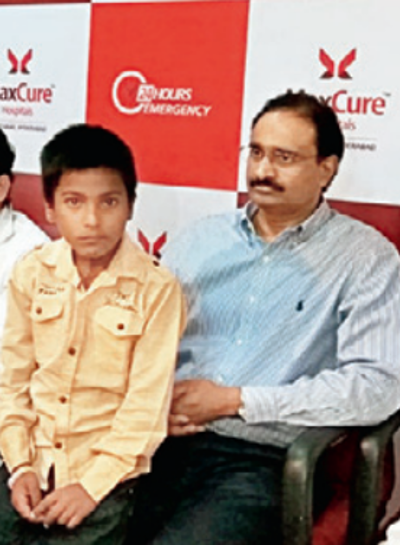
A nine-year-old boy born with a rare spinal chord development defect got a new lease of life after doctors at a city hospital performed a first-of-its-kind procedure on him.
According to doctors at MaxCure Hospital, Nizar was brought in with complains of breathing difficulty. Investigation revealed that he had developed two swellings -one in the neck and the other in the chest – that were compressing his oesophagus (food pipe) and trachea (windpipe), causing breathlessness.
“While this kind of a spinal cord defect is common in the lower spine, it is very rare in the neck region (which was the case with the young boy). So far no such case has been successfully treated anywhere in the world,” claimed Dr Ratnakar, consultant neurosurgeon at MaxCure. He said Nizar had breathlessness since his childhood.
Doctors had to perform the surgery in three sittings, to address the complication.”This is a rare case because a thoracic (chest) component was different (it was a remnant of gut or extra gut) from the neck component, which accumulated fluid and was increasing in size and compressing important structures,” said Dr Krishna Prasad, the director and the chief cardio thoracic surgeon at the hospital.
He said, “Removal of this (swellings) could be fatal. We managed it with two-staged operations and drained the fluid completely without any damage to chest structures.”The total cost of the treatment was around Rs 10 lakh. While the hospital bore most of the expenses, Aarogyasri dispensed Rs 1.6 lakh towards the procedure.
source: http://www.timeofindia.indiatimes.com / The Times of India / Home> News> City News> Hyderabad News / TNN / February 16th, 2017
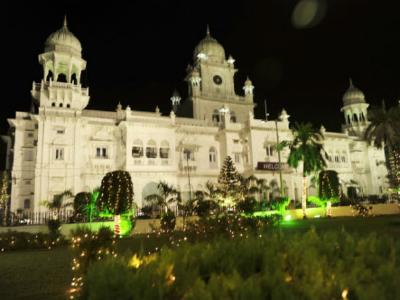
A number of graduates who received gold medal at the 12th convocation of King George’s Medical University on Sunday would prefer to work in government sector-academics or practice to help the under privileged.
“Millions die every year for lack of proper treatment of neurological disorders, so I look forward to help those in need,” said Imran Rizvi, who bagged the Dr A M Kar centenary Gold Medal for best performance in DM (Neurology).
Recipient of the highest honour, Mohammad Tabish too wants to work in his home district comprising villages of Muzaffarnagar. Resident of Basti, BDS topper Abhishek Kumar Gupta said he ultimately wanted to open a clinic in Basti and serve in his home town. Similarly, Chancellor’s gold and university honours medal winner Avinash D Gautam too wants to serve the poor.
Sharing the dream of going abroad, Harsha A H and Shiva Rajan wish to work for the welfare of the society. “I wish to make discoveries and invent technologies that would help treat patients,” said Harsha, who received the ‘Sursari Dayal Memorial Gold Medal’.
The gold medal in the name of Vice Chancellor Prof Ravi Kant was conferred on Himanshu Yadav who believes in healing patients, rather than treating them. “I want to put in whatever I have learnt till date in serving impecunious,” added Yadav.
One of the gold medallists said she took up medical studies only to relieve the poverty-stricken. Vikram Holla, who will soon be joining as an assistant professor in a government medical college, said, “I am ready to work with any organisation that works ethically, and prioritises needs of the under- privileged.”
There was a good number of passouts who wanted to work in the government sector but Madhusudan Patodia, recipient of Prof T C Goel Gold medal said he would like to work in a private hospital since they are technologically more advanced. Patodia’s field of specialisation is kidney transplant.
source: http://www.timesofindia.indiatimes.com / The Times of India / News> City News> Lucknow News / TNN / January 30th, 2017
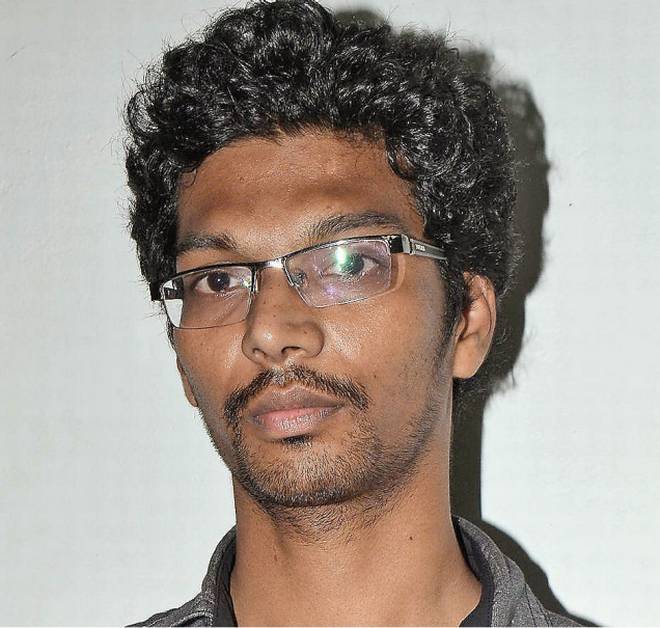
Shabuddin Shaik, research scholar, department of Zoology, Acharya Nagarjuna University, has been conferred with young scientist award by Dr. K.V Rao Scientific Society in the stream of biological sciences.
Mr. Shaik’s paper ‘Enigmatic Indian Cave Biodiversity,’ under the guidance of Professor Emeritus, Y. Ranga Reddy, won him the award, a citation and a cash award of Rs.10,000.
He received the award from the Director, National Institute for Interdisciplinary Science and Technology, Thiruvananthapuram at the 16th Annual Science Awards function at B.M Birla Science Centre, Hyderabad on June 11.
source: http://www.thehindu.com / The Hindu / Home> News> States> Andhra Pradesh / by Staff Reporter / Guntur – June 14th, 2016
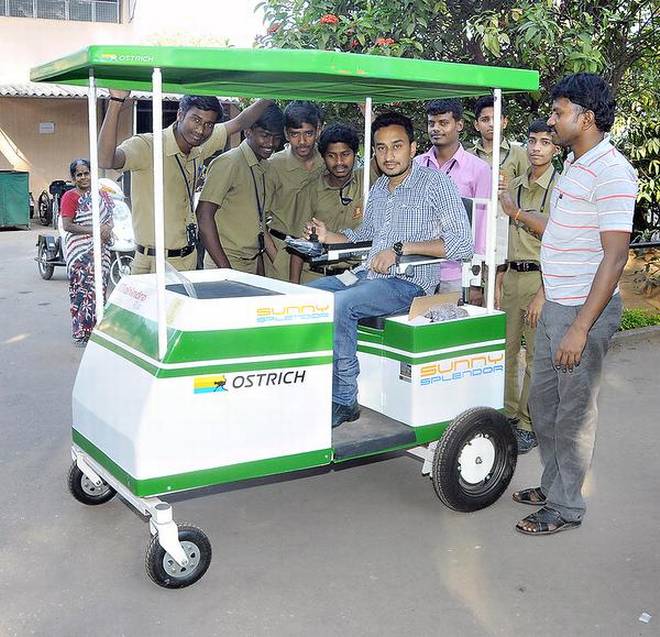
The battery-operated kiosk, Sunny Splendor, is a boon to persons with disabilities. —Photo: Sampath Kumar G.P. | Photo Credit: G_P_Sampath Kumar
Three years ago, Umesh, a lorry driver, lost his legs in a road accident. To make ends meet, he decided to sell tea on a two-wheeler, but the new venture threw up many challenges.
Dejected but not defeated, he approached an automobile firm for help. The firm, along with a wheelchair manufacturer, came up with a design for a disabled-friendly mobile kiosk to help people with disabilities earn a livelihood as part of a CSR initiative. The company approached the Association of People with Disabilities (APD), which funded the project. By 2015-end, Umesh had a prototype of the mobile kiosk.
APD rolled out three such mobile kiosks in the city in December last year to enable people with locomotive impairment and cerebral palsy start a business. The kiosk or electric vehicle named Sunny Splendor can also be charged on solar power.
Calling it ‘office on wheels’, C.N. Gopinath, executive board member of APD, said: “It plays a pivotal role in creating a perfect livelihood option for the physically challenged, who at times are constrained by financial circumstances and lack of qualification.”
Mansoor Ahmed, one of the fund raisers of the project, said the kiosk is environment and disabled-friendly. “We replaced the steering wheel with a joystick and the tires have increased brake efficiency”.
“I want to start a cosmetics and beverages business and my target audience comprises those working in tech parks. With this vehicle, I can commute to different tech parks,” said Basheer Ahmed, who is affected by polio. For Mahesh, who has been repairing mobile phones from home, the vehicle will help him broaden his customer base. “I want to run the business outside a government office. I am also planning to buy a typewriter, so I can help officials in their work”.
Four kiosks in Bengaluru
There are four such kiosks in Bengaluru. Beneficiaries can approach APD if they wish to become entrepreneurs, and have to go through a selection process before they can get their own mobile kiosk.
APD charges 10 per cent of the ₹1 lakh that costs to make a unit. “We believe they have the right to stake a claim in our ventures. This would not be possible if we operated on a charity model, which is is why we accept 10 per cent monetary contribution from them, though we do not insist this from those who cannot afford,” Mr. Mansoor Ahmed added.
source: http://www.thehindu.com / The Hindu / Home> News> States> Karnataka / by Shilpa Ramaswamy / Bengaluru – January 03rd, 2016
Researchers hope the government will act to protect the cannon at Gulbarga Fort
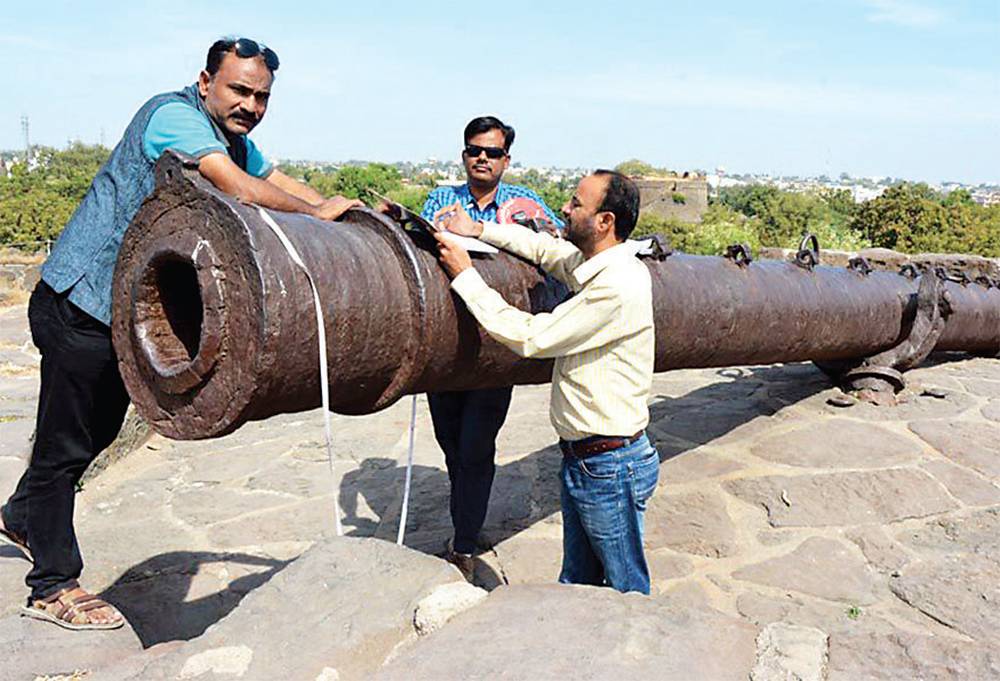
Mohammed Ayazuddin Patel, Dr Rehaman Patel and Mohammed Ismail measuring the Bara Gazi Toph
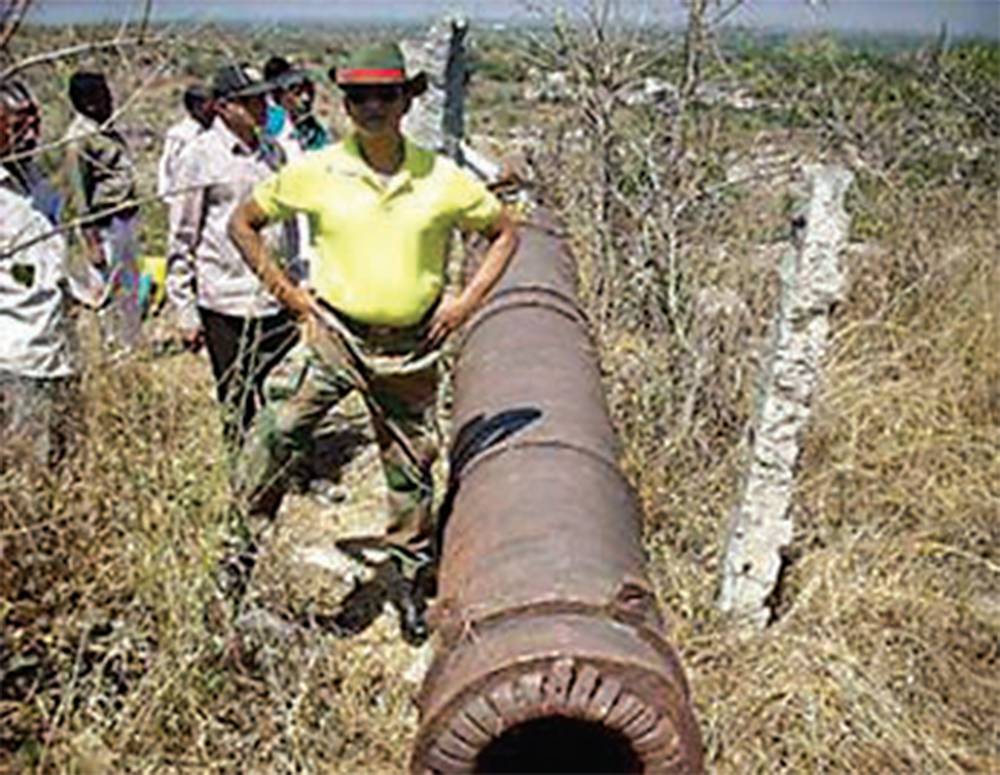
The three researchers, Mohammed Ayazuddin Patel, the national award winner, artist and photographer, Dr Rehaman Patel, artist and researcher at Indo-Islamic Art, Kalaburagi, and Mohammed Ismail, Bahmani researcher and coin collector who recently discovered a cannon in a fort in Kalaburagi, which they say is the longest in the world, are worried over its preservation.
It was their visit to Gulbarga Fort in search of the name of the first Bahmani sultan, Alauddin Hasan Bahaman Shah among the Persian inscriptions on the Jama Masjid that led to its discovery. Speaking of the cannon to Bangalore Mirror, Mohammed Ayazuddin Patel said, “Since 2010, I have been researching on the subject. The existing world record is in the name of Tsar Cannon that is 17.5 feet long and was built in the 15th century in Russia. The cannon has been named in Guinness Book of World Records, when the fact remains that the top three longest cannons exist in India. It is a matter of pride for the people of Kalaburagi and the Hyderabad-Karnataka region that the longest cannon in the world is located in Bahmani Fort and was manufactured during the reign of Bahmani Empire in the 14th century. It is made of the alloy Panch dhatu.”
The cannon is known as Bara Gazi Toph and measures about 29 feet in length. Its circumference is 7.6 feet and diameter 2 feet. The barrel is 7-inch thick. In India, the largest recorded cannon is about 23 feet long and is located in Koulas Fort in Nizamabad district of Andhra Pradesh. Asaf Jah-1 (first Nizam) granted the Koulas Fort to the Rajput king Raja Kunwar Gopal Singh Gaur in 1724 AD for his bravery in the battle of Balapur and Shakkar Keda. The biggest cannon on wheels, built by Raja Mansingh, is in Jaipur and measures 20.6 feet in length.
“The Jaipur cannon weighs about 50 tonnes. We assume that the weight of the Kalaburagi cannon could be around 70-75 tonnes. While, the firing range of the Jaipur cannon is about 35 kilometres, that of Bara Gazi Toph could be 50-55 kilometres,” Ayazuddin Patel said.
The Bahmani monarchs, who ruled from the present Kalaburagi (Ahasnabad), stand out among other rulers for their contribution to the city. The founder Alauddin Hasan Bahaman Shah (1347-1422) made Gulbarga the capital and before his death he became the master of a vast empire. Even as they extended their territory, the rulers made significant contribution to the fields of art, architecture and literature.
The Bahmani sultanate was the first independent Islamic state of the Deccan in South India and one of the larger medieval Indian kingdoms. They ruled for 191 years (1347-1538 AD). Their other capital was Bidar.
The Gulbarga Fort was significantly expanded in 1347 by Alauddin Hasan Bahmani after he cut off ties with the Delhi sultanate. Islamic monuments such as mosques,
palaces, tombs, and other structures were also built later within the refurbished fort. The Jama Masjid built within the fort in 1367, is a unique structure of Persian architectural. It is fully enclosed, and has elegant domes and arched columns, which is unlike any other mosque in India.
The biggest challenge about historic monuments in the state is their protection, a fact not going to be any easy with the region being a backward area. “The Archaeologi-cal Survey of India and state archaeology department should take steps to protect the cannon at the Bahmani Fort and it should be included in the world record list. It should be fenced. The cannon is filled with sand and pebbles, so should be properly cleaned. Also, a signboard stating its details as the longest cannon in the world is a must. The fort and Jama Masjid must be declared heritage centres,” added Ayazuddin.
The team submitted a memorandum with their pleas to the district in-charge minister Sharan-prakash Patil, the deputy commissioner, regional commissioner, as well as the departments concerned.
GIGANTIC CANNONS OF THE WORLD
Jagadamba Bhavani Tope: Located at the historic Koulas Fort in Andhra Pradesh is believed to be the largest cannon in the world. The cannon (left), which is 23 feet in length and weighs 70 tonnes, is predominantly made of iron. It has a 16-inch calibre with an explosive head of 150 kg.
Jaivana: Recorded as the world’s largest cannon on wheels, Jaivana was manufactured during the reign of Maharaja Sawai Jai Singh II (1699–1743) at a foundry in Jaipur, Rajasthan. Jaivana’s barrel measures 20.19 feet in length and 11 inches in diameter. The 50-tonne cannon is mounted on four wheels. The rear wheels are mounted on roller pin bearings, to turn it 360° and fire in any direction. It was designed to fire a 50 kg cannon ball to a distance of 35 km. This cannon was never used in any battle as the Rajput rulers of Amber had friendly relations with the Mughals.
source: http://www.bangaloremirror.indiatimes.com / Bangalore Mirror / Home> News> State / by Deepthi Sanjiv, Bangalore Mirror Bureau / December 28th, 2016
For any hardcore Harry Potter fan, the Sorting Hat, and the medieval wizard Godric Gryffindor is basic knowledge. Three entomologists, who stumbled upon a new species of spider have decided to pay tribute to the character by naming it after him. Though the arachnid bears resemblance to the ‘Sorting Hat’ of Hogwarts School of Witchcraft and Wizardry, it would be hard to spot it if you are trekking in the Western Ghats.
Eriovixia gryffindori, is the new spider species discovered, details of which was published in the recent edition of Indian Journal of Arachnology.
The discovery of the arachnid was made at ‘Kans’ forestland of Central Western Ghats at Hosanagara taluk of Shivamogga district, by Javed Ahmed, Rajashree Khalap and Sumukha J N.
While Javed and Rajashree hail from Mumbai, Sumukha is from Shivamogga.
Describing the etymology of the spider, the scientists write that naming it after Gryffindor – after whom one of the four houses in Hogwarts School of Witchcraft and Wizardry is named and who once owned the Sorting Hat – was, “An ode from the authors, for magic lost, and found, in an effort to draw attention to the fascinating, but oft overlooked world of invertebrates, and their secret lives.”
Prior to it, they express their fondness of J K Rowling, author of the Harry Potter series as a ‘wordsmith extraordinaire’.
“This uniquely shaped spider derives its name from the fabulous, sentient magical artifact, the sorting hat, owned by the (fictitious) medieval wizard Godric Gryffindor, one of the four founders of Hogwarts School of Witchcraft and Wizardry, and stemming from the powerful imagination of Ms. J K Rowling….” they wrote.
While the team found a female specimen of the Gryffindor spider, they are yet to describe the holotype of a typical male of the species. The paper notes that the particular species of spider is known to be distributed only from Shivamogga district, as of now.
The spider mimics dry foliage, making it ideal for it to reside almost undetected on the forest floor.
source: http://www.newindianexpress.com / The New Indian Express / Home> Cities> Bengaluru / by Express News Service / December 13th, 2016
Soon after graduating from the National Institute of Design (NID), Syed Fawaz Ahmed and Nikhil Joshi started Digital Jalebi. One will wonder what the second name Jalebi is doing.
“It was Nikhil’s idea to name the company ‘Digital Jalebi’. Nikhil hails from Delhi where Jalebi is a famous sweet dish, and whenever Jalebi is prepared, it represents a joyful occasion like a festival, marriage or any other celebration. So, Jalebi represents a joy factor and whatever projects we do, it has a factor of joy in it. Hence, we thought the name would be appropriate. And also, the name was quite Indian. Hence, we kept the name as Digital Jalebi,” Ahmed tells DH.
The company, which embarked on its journey in September 2012, is engaged in designing interactive installations and software for spaces like museums, exhibitions and planetariums. With varied background of design, software engineering, electronics and multimedia, Digital Jalebi offers end-to-end delivery starting from research, conceptualisation and story-boarding; to content generation, graphic design, animation, 3D modelling; to development, fabrication and installation.
“The first project that we did was for Visvesvaraya Industrial and Technological Museum Bangalore. It was an exhibition based on the life of the great mathematician Srinivas Ramanujan. Digital Jalebi designed and developed the entire exhibition. That was our starting point,” Ahmed says.
“The journey has been exciting. We have learnt a lot of things. With every project we realise importance and need of good technology-aided design in India. Setting benchmark for quality has been a core pillar of Digital Jalebi’s belief, hence most of the clients who work with us, come back to us with more projects. We have made a place for ourselves in industry as a leading interactive studio,” he adds.
Till date, the firm has completed over 60 projects and its repeated customer base is around 20. In the next two years, Digital Jalebi plans to have an annual turnover of Rs 50 crore.
“Last year, our revenues were Rs 2 crore, and this year, we are touching around Rs 5 crore, and in the next two years, we are planning to scale up our operations and we are starting VRchef to get volume work from outside India, especially from the US and the UK. We are planning to start outsourcing model for VR (virtual reality) and AR (augmented reality). Hence, we are trying to scale up operations in terms of space and the number of people,” Ahmed added.
When asked as to how different the firm is from others, Ahmed explains, “We describe ourselves as a new media installation company. We are neither a core game development company, nor a traditional software development company. We aren’t bound to a single stream like virtual reality or augmented reality. We try to tag ourselves to the bigger umbrella which is new media, and that covers all these things. Hence, we feel that our services are quite diverse.”
source: http://www.deccanherald.com / Deccan Herald / Home> Supplements> Economy & Business / by Umesh M Avvannavar / DHNS – December 12th, 2016
Dropped calls are a big issue in Okhla. Experts attribute it to high-rise buildings and lack of tower in the locality. The issue is such that many residents feel privileged to get right signal in Batla House, Shaheen Bagh and other areas of this locality.
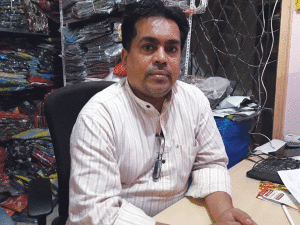
The issue of poor networking can be addressed, as claimed by Md Firoz Alam, who before starting his own business from his flat in Nai Basti was employed in Dubai’s Government Company as Telecom Engineer.
He told OKHLATIMES.COM that despite drop calls being a major issue in the locality it is not a big one as a device prepared by his company can give network solution, providing no dropped calls.
“See we are into mobile signal booster. It helps in ending call drop and also provide clean network. People do come to us complaining that they don’t get signals and despite having a mobile they are marooned. The booster is imported from Japan and China and we sell it at a competitive price starting from Rs 9,995,” said Alam, who completed his BE Electronics and Communication from Jamia Millia Islamia in 2008. And since then he has not looked back.
With more than 12 years’ experience in his field and work experience at India’s leading companies like Reliance, Ericsson, Vodafone and other companies, Alam also runs other businesses.
After coming from Dubai, he floated a e-commerce portal where he claims to offer women’s clothing, artificial jewellery, water purifier and sales and service.
The historic tank has been revived with water from the Krishna river
Brimming with water, with women washing clothes at the edge while children swim in the fresh water, it is hard to believe that just a month ago, the Begum Talab, spread across over 234 acres, was a barren wasteland, with few small pools of water.
The ancient tank, built during the rule of Mohammad Adil Shah in 1651, has not seen such water levels for the past five decades. But under an ambitious project of the Water Resources Ministry to rejuvenate and replenish tanks, water from the Krishna river has been drawn to fill the tank and recharge ground water. Over the past year, a 50 km pipeline was laid from the river to the tank. The tank was among seven revived in the district at a cost of Rs 190 crore.
Crucial water source
According to historian Abdulghani Imaratwale, Adil Shah built the tank in the name of one his queens; Jahan Begum. The construction was supervised his commander Afzal Khan to provide drinking water to Bijapur city which then had the population of around nine lakh.
Dr. Imaratwale said the water was not only used for the palaces or prominent places of the kingdom, but also for public consumption as the city did not have other drinking water sources.
The tank, located on the southern part of the city, used to supply water through the earthen pipes to many ganjs (overhead stone tanks). It was the second major water source for the city after the Ramalinga tank. Unfortunately the ganjs and the old pipes have fallen into disrepair,
Expressing elation over the government decision to refill the tank, Dr Imaratwale termed the project a significant step in restoring the history of the city.
“ It is heartening to know that Water Resources Ministry led by M. B. Patil is showing concern to restore and revive the ancient tank which had once served a major water source. The tank still has the same capacity if the water is stored and used,” he said.
source: http://www.thehindu.com / The Hindu / Home> National> Karnataka / by Firoz Rozindar / Vijayapura, October 10th, 2016
A woman from Dakshina Kannada district got an international certificate in transactional analysis psychotherapy. She is reportedly the third Muslim woman in the world to achieve this feat.
Forty-two-year-old Haseena Abdulla, daughter of K Abdulla Parkala of Manipal , received the certificate by the International Transactional Analysis Assoication at the conference hosted by SAATA – a South Asian Association in September. Transactional analysts from many countries witnessed the event and examiners were from Germany, UK, Japan, South Africa, US, and India. This award is an appreciation for her eight years of effort in exploring the world of psychotherapy.
P K Saru, the former president of SAATA and founder director, ASHA Counselling and Training Centre, Coimbatore and Fuson, provisional teaching supervising transactional analyst from Turkey are the only two Muslim women, to have got this certificate before Haseena Abdulla.
Haseena said she is very passionate in discovering the frames of relationship and initiating empowerment efforts for many. “As an ardent learner of human behaviour, my journey of seeking knowledge led me into the world of transactional analysis.
It was a road less travelled for Muslim women, and I am the third Muslim woman transactional analyst in the world, and second in the country to earn this certificate,” she said proudly.
Haseena, who was trained under P K Saru, is a post graduate in psychology and sociology. She has also been trained in hypnotherapy, gestalt therapy and psychodrama. She is a master practitioner in NLP trained by Dr. Richard Mc Hugh, USA. Currently she is a practising psychotherapist and has a clinic in Manipal. She is also a visiting practitioner at Calicut, Kerala.
“Transactional analysis is a most advanced discipline in psychotherapy arena, which empowers the patients with awareness and the power to heal. It has a strong evidence based, effective diagnosis and participatory treatment plan for patients with psychiatric problems. Consulting a psychologist is still a stigma in the community and labelling the client as psychotic, sometimes even by the practitioners caused this unfortunate situation. Discovering the unknown part of the self is essential in completion of a healing process. Transactional analysis psychotherapist helps the client to achieve this by not being labelled,” Haseena said.
“The concepts in transactional analysis could be readily applied in our lives from the moment we are exposed to them. It believes that the power to cure and heal is in the patient. Therapist is just a facilitator to the patient to think and decide. Application of TA has also been instrumental in organizational success and educational excellence,” she added.
source: http://www.timesofindia.indiatimes.com / The Times of India / News Home> City News> Mangalore / Vinobha KT / TNN / October 05th, 2016