Category Archives: Science & Technology

US media highlights Kalam’s role in India’s nuclear programme

Washington:

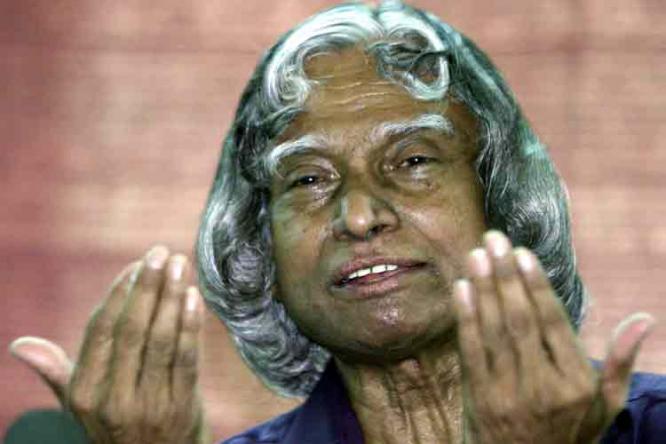
Describing him as one of the most “exuberant boosters” of India’s nuclear capabilities, the US media on Tuesday highlighted the contribution of ‘missile man’ A P J Abdul Kalam to the country’s atomic and space programme.

Kalam, who would have turned 84 in October died after suffering a massive cardiac arrest during a lecture at the IIM Shillong on Monday, plunging his country into overwhelming grief.

Describing him as one of the most "exuberant boosters" of India's nuclear capabilities, the US media on Tuesday highlighted the contribution of 'missile man' A P J Abdul Kalam to the country's atomic and space programme.
Describing him as one of the most “exuberant boosters” of India’s nuclear capabilities, the US media on Tuesday highlighted the contribution of ‘missile man’ A P J Abdul Kalam to the country’s atomic and space programme.

“He was one of the most exuberant boosters of the country’s nuclear program,” The New York Times wrote in a rare obituary for Kalam.

“He used the spotlight to urge India to build up its military strength and to free itself from the threat of domination by outside forces,” the daily said.

The Times said that Kalam spent little time outside India. “For him, it was a point of pride that India had developed its bomb without much help from foreign powers. And he described himself as thoroughly Indian,” it said.

Kalam has been credited with helping develop his country’s first space satellites. In the 1980s, he helped design the nuclear-capable ‘Prithvi’ and ‘Agni’ ballistic missiles, The Washington Post said.

“He played a crucial role when India tested its nuclear weapons in 1998. The test resulted in sanctions against the country but helped elevate Mr Kalam to the status of folk hero in his country,” the Post said in its obituary.

The Wall Street Journal reported that Kalam, who was born into a poor Muslim family in Tamil Nadu, was at the forefront of the country’s efforts to develop a space programme and a strong advocate for India’s self-reliance in defence technologies.

“He encouraged the development of India’s first indigenous satellite launch vehicle that brought the country into an elite club of space-faring nations and guided India’s missile-development programme,” the daily said.

“Dr. Kalam also played a key role in boosting India’s nuclear capabilities, leading to nuclear tests in 1998, a technological achievement seen as pivotal in asserting the country’s place in global politics,” the WSJ said.

“He was the first scientist to hold the office, and was widely viewed as an apolitical figure,” the CNN said.

source:  http://www.ibnlive.com / IBN LIVE / IBN Live> World / Press Trust of India / July 28th, 2015

At last, Tipu armoury in ASI care

At this non-descript place hidden in the chaotic Kalasipalyam, Mysore ruler Tipu Sultan had stacked his ammunition cache. The 200-year-old armoury of Tipu Sultan behind Bangalore Medical College, which till now was treated like nobody’s baby, will soon be taken over by the Archaeological Survey of India (ASI) and declared a protected monument.

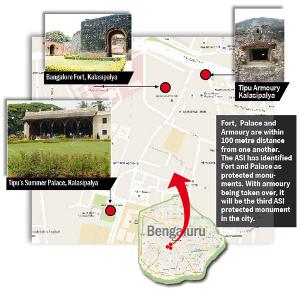
Fort,  Palace and Armoury are within 100 metre distance from one another.  The ASI has identified Fort and Palace as protected monuments. With armoury being taken over, it will be the third ASI protected monument in the city
Fort, Palace and Armoury are within 100 metre distance from one another. The ASI has identified Fort and Palace as protected monuments. With armoury being taken over, it will be the third ASI protected monument in the city

It will be the third ASI-listed protected monument in the city after Tipu’s Palace and Tipu’s Fort, all situated near KR Market.

The three monuments – armoury, palace and fort – are situated within a 100 metres of each other. Commissioner, state department of archaeology, museums and heritage, C G Betsurmath wrote to ASI approving the takeover about three weeks ago.

For several years now, the armoury has been in news, albeit for wrong reasons. Lack of upkeep resulting in condition of the structure deteriorating; the unkempt place turning into a gamblers’ den; the state archaeology department and BBMP passing on the buck of responsibility to each other, and so on. Only in 2002, it was, that the 18th century armoury saw some conservation by Indian National Trust for Art and Cultural Heritage (Intach), Bangalore Chapter. The not-for-profit non-governmental organisation shifted a retaining wall and exposed the original steps leading to the monument after removing the compound wall. A toilet illegally built on the southern wall of the structure was also removed.

Of the recent development, Arun Raj T, superintending archaeologist, ASI, Bengaluru circle told Bangalore Mirror: “The state government wrote to us saying they have no objections in ASI taking over Tipu’s Armoury. It is good news and a result of continuous effort of Intach. This is the first step and we have a process to follow. We will have to write to our Delhi office and complete some formalities with the Bruhut Bengaluru Mahanagara Palike. Given the historical importance, it is necessary to protect the armoury and connect the three monuments (fort, palace and armoury) as these three are remnants in the city that date back to Tipu’s period.”

However, there is a small hitch – a school building adjacent to the armoury. ASI and BBMP will have to conduct a joint survey of the place and find a solution. “The school almost abuts the armoury and once the armoury is declared a protected area, the school will have to be vacated considering that a buffer has to be maintained around our monuments. In that case, we would need BBMP’s help in relocating the school,” added Arun Raj.

Intach, Bangalore Chapter, which has campaigned for the armoury is overjoyed. In fact, a month ago, Intach had written to BBMP suggesting that they hand over the armoury to ASI. “ Once it is declared a protected monument, there will be no threat to the armoury in terms of encroachment and will be well maintained. We have been pushing for this for a long time and finally, the move has come through,” said Meera Iyer, co-convener of Intach.

History has it that this armoury was built below the ground level to store ammunition and the structure style is so relevant that it still being followed by the army. Armoury also called magazine is always built below the ground level, has just one entrance and is not exposed to the outside world by growing grass on the exteriors.

According to historian Suresh Moona who has chronicled the city’s history, this armoury in Kalasipalyam housed missiles and ammunitions and in a nearby area, Taramandalpet, rockets were experimented. Taramandalpet is close to Jumma Masjid Road near Raja Market where Tipu’s missile manufacturing unit functioned. Every night, rockets would be fired, which looked like a cluster of stars in the sky – hence the name Taramandalpet.

Pride of the city

» Under ASI Bangalore Circle of ASI, there are 207 monuments.

» In Bengaluru, there are two ASI-listed monuments – Tipu Fort and Tipu Palace; Bengaluru district houses six monuments including the fort at Devanahalli and Hunting Lodge on Nandi Hills.

» Monuments in Hampi are the most well-known; Tipu’s properties in Srirangapatna have also become popular tourist attractions.

source:  http://www.bangaloremirror.com / Bangalore Mirror / Home> Bangalore> Others / by Kushala S, Bangalore Mirror Bureau / July 30th, 2015

1st woman to undergo bypass in India enters 40th yr after surgery

Chennai :

On April 23, 1976, when Daisy D’Costa was wheeled into the operation theatre she didn’t know she would be the first woman in the country to undergo a bypass surgery. “No one told me. I just vaguely recall someone in surgical scrubs telling my husband, ‘She will live’,” said the octogenarian, 39 years later.

While Daisy was being prepared for the surgery, the mood in the operation theatre was equally tense as the team was about to wield the scalpel for a procedure they had done just once before. “The facilities back then were nothing like what we have now. We had no cath lab (examination room with diagnostic imaging equipment), no cardiologist or cardio-anesthetist. No one in the team had done a bypass surgery before,” said Dr K M Cherian, the doctor in the surgical scrubs who assured Daisy’s husband.

Daisy had been brought to the Railway Hospital in Perambur the previous evening with total blockage in an artery. “I had skipped going to the cinema with my husband as I was really tired. All of a sudden, I couldn’t breathe normally and I felt a tightness in my chest. My son, who was at home, rushed me to the nearest hospital,” recalled Daisy. “The doctors managed to resuscitate me. In my haze, I heard someone say, ‘We need to cut her open’, and I blacked out again.”

Daisy needed a coronary artery bypass surgery. The procedure entailed restoring the blood flow to the heart muscle by diverting the blood around the blocked section by using a harvested vein from the leg. Although the first such surgery was performed in the US in the 60′s, the concept was new in India. In June 1975, Kajah Mohideen, a 42-year-old engineer from Integral Coach Factory, became the first in the country to undergo the surgery.

“The procedure on Daisy was no different from Kajah’s, but Daisy’s veins in her legs were thinner and harder to reach because of the fat. Besides that, we followed the same process. I still remember every conversation and the mood in the theatre,” says Dr Cherian, who had also operated on Kajah. “We didn’t even have a process of magnifying the blood vessels, which is mandatory now. I used my eyes to find the vessels that are 1.5 to 2mm. I was young back then,” said Dr Cherian, chuckling. The procedure took a little more than three hours.

Daisy woke up to find shutterbugs queuing to interview her. “That’s when I realised I was the first woman,” she said, smiling and showing a sepia-tinted newspaper showing a younger version of her. Although through the years she has had minor chest problems, she didn’t have to go under the scalpel again.

source: http://www.timesofindia.indiatimes.com / The Times of India / Home> City> Chennai / by Ekatha Ann John, TNN / July 09th, 2015

AMU Scholar awarded ‘Young Scientist Research Fellowship’

DrNuzhatMPOs09jul2015

Aligarh,  UP :

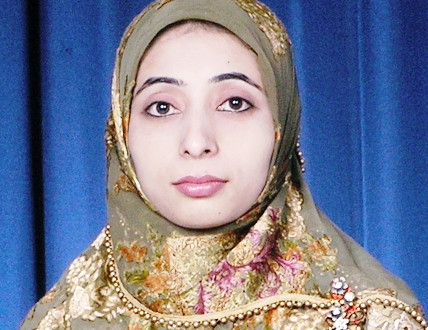
Aligarh Muslim University Scholar, Dr Nuzhat Parveen has received ‘Young Scientist Research Fellowship’ with a research grant of Rs 32, 79,000 awarded by Science and Engineering Research Board (SERB), Ministry of Science and Technology, Govt. of India.

She will work on Nanotoxicology at Cytogenetics and Molecular Toxicology Laboratory, Section of Genetics, Department of Zoology, AMU, Aligarh.

Dr Parveen was awarded PhD and M phill degrees from AMU on topics entitled ‘Mitigation of the genomic instability caused by iron induced free radicals through some antioxidants in vivo’ and ‘Genotoxic effects of anti-malarial drugs on human chromosomes in vitro’ respectively under the supervision of Dr G G H A Shadab, Section of Genetics, Department of Zoology.

Earlier, Dr Parveen was awarded ‘Young Scientist Fellowship,’ by Council of Science and Technology, U P (CST-UP) with a research grant of Rs 10, 80,000.

She has participated in 26 National and International conferences and presented 9 papers (3 oral and 6 posters). She has also attended several workshops and hand-on trainings on several latest aspects related with her research. She has published 13 research papers in the peer-reviewed journals of National and International repute and 5 chapters in book.

Dr Parveen is also a life member of Indian Society of Cell Biology and Indian Science Congress Association.

source: http://www.aapkatimes.com / Aapka Times , News Express of India / by Admin / July 03rd, 2015

AMU Alumnus Wins Blavatnik National Award for Young Scientists

Alumnus of the Aligarh Muslim University, Syed Ali Jafar wins Blavatnik National Award for Young Scientists

Aligarh, UP:

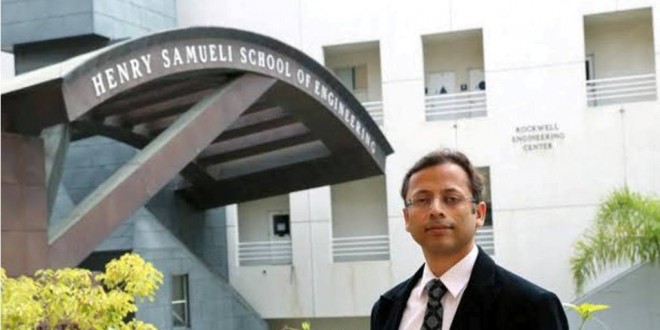
AMU Alumnus Wins Blavatnik National Award for Young Scientists on 4th July, 2015. An alumnus of the Aligarh Muslim University, Syed Ali Jafar, a computer scientist at the University of California Irvine (UCI), USA, who has changed the world’s understanding of the capacity of wireless networks, has won the 2015 Blavatnik National Award for Young Scientists in physical sciences and engineering. One of the three winners chosen from amongst 300 candidates from highly ranked American universities and research institutions, Jafar will receive a $250,000 unrestricted cash prize and a medal in September at New York’s Museum of Natural History.

“I am incredibly honored and humbled to be recognized on the national stage – from such an amazing cohort of extremely accomplished finalists – by such an illustrious jury of the nation’s most distinguished scientists,” Jafar said. “I am deeply indebted to my brilliant students and collaborators, who are my true miracle workers. It is my hope that this recognition will lead to broader exposure to and appreciation of both the beauty of information theory and the tremendous impact it has on our lives. It’s also a ‘shot in the arm’ for me to continue taking on challenging problems in our research group.”

A professor of electrical engineering & computer science, Jafar explores the fundamental performance limits of wireless communication networks. Determining network capacity – the maximum data rates that can be reliably supported – is the holy grail of network information theory, according to Jafar and others. And with the rapid growth of wireless communication networks, the quest has taken on unprecedented urgency. Jafar’s research group has gained worldwide recognition for its numerous seminal contributions to this topic, including its groundbreaking work on interference alignment in wireless networks. This research found that data rates are not limited by the number of devices sharing the radio frequency spectrum, a discovery that changed the thinking about how wireless networks should be designed.

“Syed Jafar revolutionized our understanding of the capacity limits of wireless networks. He demonstrated that each user in a wireless network can access half the spectrum without interference from other users, regardless of how many are sharing the spectrum,” said one of the judges, Paul Horn, senior vice provost for research at New York University. “This is a truly remarkable result that has a tremendous impact on both information theory and the design of wireless networks.”

Jafar became interested in science in high school. “Einstein’s E=mc2 captured my imagination,” he said. The equation made him wonder about how something so profound could be so simple and beautiful – and it became his lifelong dream to pursue beauty through science. As a graduate student studying information theory at the California Institute of Technology, Jafar found similar elegance in the formula describing the capacity of an information channel. He realized that much about the capacity of communication networks was still unknown and made it his life’s work to solve the mystery.

The Blavatnik National Awards for Young Scientists program, established by the Blavatnik Family Foundation with the guidance of the New York Academy of Sciences, recognizes America’s most innovative and promising young faculty scientists and engineers. The organization’s judges include Nobel laureates, National Academy of Sciences members and National Medal of Science recipients. They select three laureates annually, one each in life sciences, chemistry, and physical sciences & engineering.

Jafar earned a B.Tech. at the Indian Institute of Technology in Delhi, an M.S. at Caltech and a Ph.D. at Stanford University, all in electrical engineering. He’s a fellow of the Institute of Electrical & Electronics Engineers, and he recently received the UCI Academic Senate’s Distinguished Mid-Career Faculty Award for Research. Jafar was also recognized as a Thomson Reuters Highly Cited Researcher and included by ScienceWatch among the World’s Most Influential Scientific Minds in 2014.

Syed Jafar grew up in Aligarh, a city that is home to the Aligarh Muslim University. His father, late Prof. Syed Jafar Raza Zaidi and mother, Dr. Shabnam Zaidi, were both university professors, in the departments of Hindi and English at the AMU, respectively. Syed Jafar finished his secondary school examination at AMU’s STS High School (Minto Circle) in 1991, and the senior secondary exam in 1993. As the University topper in AMU’s senior secondary exam he received the University Gold Medal.

The University of California, Irvine is currently celebrating its 50th anniversary. UCI is the youngest member of the prestigious Association of American Universities. The campus has produced three Nobel laureates and is known for its academic achievement, premier research, innovation and anteater mascot. Led by Chancellor Howard Gillman, UCI has more than 30,000 students and offers 192 degree programs.

source: http://www.educationanalysis.in / Education News & Analysis / Home> Events / Aligarh, U.P. / July 06th, 2015

Four doctors scoop prestigious William Harvey Award

ProfSayeedMPOs08jul2015

Professor Sayeedul Hasan Arif, Department of Pathology, J N Medical College with his colleagues, Dr Kafeel Akhtar, Associate professor Department of Pathology and Senior Residents Dr Shagufta Qadri and Dr Suhailur Rahman has been conferred prestigious William Harvey Award 2015 in Haematology for his paper published in The Journal of Haematology.

The research has a rare case study of Haemaglobinopathy in Aligarh. The paper shows a seven-year-old male child suffering from Haemoglobin C (Hb C) trait.

The case study patient is suffering from Mixed Type of Nutritional Anaemia but despite the treatment, the anaemia is not corrected so the electrophoresis was advised and final diagnosis was made.

Hb C disease is common in West African and Mediterranean countries and big parts of North America. It is so far, rare in Indian subcontinent and Asia.

Prof Arif’s journal is published by Photon Foundation along with other journals of ‘Medical Specialty’ and ‘Super Specialty’ from USA.

After completing MD in pathology in 1991, Prof Arif joined the Department of Pathology, J N Medical College as demonstrator. In 1995, Prof Arif was appointed Lecturer in the Department of Pathology. He was promoted to the post of a Reader in 2004, joining as an Associate Professor in 2007. Since 2010, Prof Arif has been working as a Professor in the Department of Pathology.

Prof Arif also holds the posts of Blood Bank and Central Investigation Laboratory In-Charge. He was member of Medical Education Unit in Faculty of Medicine from 2009 to 2014 and served J N Medical College and Hospital in the capacity of DMS from 2011 to 2013.

Dr Arif’s subordinate in his award winning paper, Dr Kafil Akhtar, Associate Professor; Department of Pathology has special interests in Cytopathology, Hematology and Blood Banking subdivisions of Pathology. He has teaching experience of over 13 years in various topics of the subject. He is a regular contributor to journals of National and International repute.

While, Dr Shagufta Qadri who has also worked with Dr Arif  on the award winning paper is a MBBS and MD in Pathology from J N Medical College. She is currently working as a Senior Resident in the Department of Pathology. With her focus on ‘Surgical pathology,’ she has special interest in Oncopathology. She is also experienced in various other subdivision of pathology as Cytopathology, Transfusion Medicine and Clinical pathology.

Another subordinate in the award winning paper, Dr Suhailur Rehman did his MBBS and MD Pathology from J N Medical College and is currently working as a Senior Resident in the Department of Pathology. With work experience in different fields of Histopathology, Cytopathology, Hematology, Transfusion Medicine, and Clinical Pathology, Dr Rehman has also gained experience of teaching Undergraduate and Postgraduate students.

source: http://www.okhlatimes.com / Okhla Times / Home> Dispatches /  OTNS-AMU / July 08th, 2015

Dubai: Thumbay Group, SNTTA sign MoU to boost medical tourism

Dubai :

“Dubai has a well-deserved reputation for excellence and professional practice and we want to contribute our mite to the vision, mission and goals of the UAE health authorities,” says Akbar Moideen Thumbay, director healthcare and retail, Thumbay group UAE.
ThumbayCT06jul2015

“There are so many issues relating to medical tourism and because the area is developing so quickly it’s becoming essential that hospitals, insurers and policy makers, to name a few work together closely to streamline processes to cater to this market. UAE has tremendous potential to come up as the most important medical-tourism destination for the people of this region,” he added.

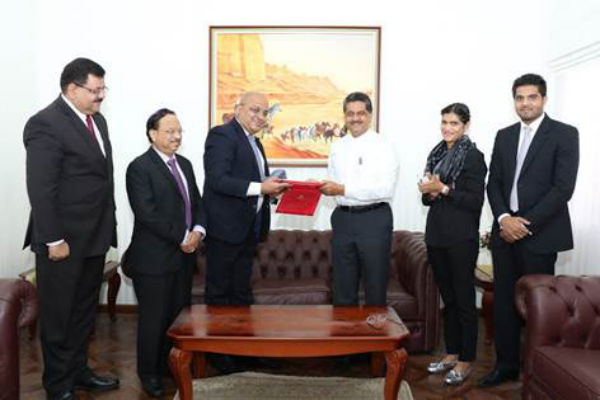
Founder president of Thumbay Group UAE, Thumbay Moideen and T L S Iyer, general manager of SNTTA signed a memorandum of understanding to offer advanced services for medical and health tourists. Akbar Moideen Thumbay, director healthcare and retail, Thumbay Group UAE, Dr Benazir Ameer Ali, director Thumbay International Medical and Health Tourism Department, Valsala Kumar, group general manager (finance and administration) and Vishal Sood, general manager SNTTA were present on the occasion.

Thumbay Hospitals and SNTTA have strategically partnered to assist and offer world-class services at affordable prices to international patients and guests and to look after all their needs whilst in the UAE. We understand the changing dynamics medical tourism and we are learning to adapt, says Dr Benazir Ameer Ali, director Thumbay medical and health tourism department.

The partnership will help Thumbay Hospital to extend its reach and market worldwide to prospective patients. This partnership will leave Thumbay Hospital to concentrate on its commitment of providing world class healthcare at affordable prices. SNTTA will look after the travel, accommodation and other logistics for Thumbay Hospital’s international patients and increase their client base which is a win-win situation for both and create an all-inclusive package for international patients including air flights, hotel accommodation, visa and excursion facilities.

SNTTA will be venturing in medical tourism for the first time and will be able to offer healthcare services to its ever growing number of tourists said T L S Iyer, general manager of SNTTA. SNTTA tourists will now have a preferred healthcare provider in Thumbay Hospitals to take care of their tourists 24X7 in the UAE.

“As part of the strategic plans, Thumbay Group is planning to open representative offices in 20 countries to educate people about medical facilities and services at all Thumbay Hospitals in UAE. We expect to have about 1000 patients as medical tourists per day in the next 5 – 6 years. It is ambitious but achievable,” says an optimistic Akbar Moideen Thumbay.

Medical tourism is now perceived as one of the fastest growing segments in healthcare. The recent trend is for patients to travel from developed countries to third world countries for medical treatment because of cost consideration, waiting time, privacy, and confidentiality, though the traditional pattern still continues. Technology will lead the way in future medical tourism. Along with that we can expect extremely personalized services, niche specialist centers, wider network of partnerships, increased number of accreditation, certifications and industry specific associations said Dr Benazir. To offer our personalized services, we are the first medical tourism provider to have opened a counter in Sharjah International Airport and we are planning to open one in Dubai International Airport soon, she added.

“Thumbay Hospitals have been at the forefront of developing the necessary infrastructure to attract medical tourists. We have a department here establishing this,” Akbar Moideen said. The international medical tourism department of Thumbay Hospitals aims to cater to an extensive number of patients and be known as the preferred hospital for medical tourism in UAE. Currently, Thumbay Hospitals receive inquiries from a wide range of clientele including hospitals, medical practitioners, partnered agents, and various inquiry forwarding websites from across the globe.

Thumbay Hospitals is aligning itself with Dubai’s Vision 2020 for medical tourism. Along with Dubai, the other Emirates of UAE are gearing up to attract more medical tourists in the near future. This would mean increasing patient requirements, higher demand for facilities and larger calls for personalization.

Looking at the current and future trends in medical tourism, Thumbay Hospital has developed enhanced facilities, maintaining highest standards of quality and offering packages with a wide range of personalization options. The medical tourism industry is going through an exciting phase where international and intra-regional activities are taking place within this sector of the health market.

source: http://www.daijiworld.com / DaijiWorld / Home> Gulf / Media Release / Dubai – July 06th, 2015
Call to use digital lockers to secure documents online

Deputy Commissioner Meer Anees Ahammed has said people should make use of digital locker system launched by the government to securely store documents online. 

Speaking at a programme organised as a part of Digital India organised by the department Electronics and Information Technology, at Madikeri on Saturday, he said that with the advance in science and technology, facilities are available online.

With digital locker facility, paper-less system will be created in the future. There is a need to create awareness on the same.

The users can store their documents such as school certificate, passport and other documents in the digital format.

Zilla Panchayat  Chief Executive Officer M Kurma Rao said one can avail postal, airlines, train, bus, banking services through online. This will help in checking the intervention of middlemen.

Additional DC M Sathish Kumar said efforts will be made for Aadhaar registration in schools, colleges and hostels in the future.

Lead Bank Manager K A Devaiah said Digital India depends on connectiovity.

The digital India will be a success with the effective connectivity system by the telecom operators. Banking system has been computerised.

Biometric system will be introduced in place of ATM to withdraw and deposit money in the future. Kushalnagar Engineering College lecturer Prof Vani also spoke.

Winners

Prizes were distributed to the winners of essay, elocution and painting competition held as a part of Digital India week in Kodagu district. The winners in painting Jeen Salong, St Michael School (I), Meghana, St Jospeh School (II) in Madikeri taluk; Brijesh of Fathima School (I), Tejaswini of Kanbail Government High SChool (II) in Somwarpet taluk; Dilip (I) of Heggala Government High School and Venisha (II) of  St Annamma School in Virajpet taluk.

Essay contest winners are— Chaitanya of St Michael School (I), Rasheela Deeksha of St Jospeh School (II) in Madikeri taluk; Tejasri N R (I) of Hudikeri Janata School and Prajna P V of Gonikoppa  High School (II) in Virajpet taluk and Hemanth Kumar (I) of Morarji School and Cinchana M D of St Joseph School (II) in Somwarpet taluk.

Elocution contest winners are —Sathish R S of Madikeri Junior College (I), Nireeksha  of St Joseoh School (II) in Madikeri taluk; Leena K L of Srimangala Junior College (I) and Dhanya of St Anns High School (II) in Virajpet taluk and Chinmay of Aloor Siddapura School (I) and Akshatha Bhat of ST Joseph School (II) in Somwarpet taluk.

source: http://www.deccanherald.com / Deccan Herald / Home> District / DHNS, Madikeri – July 04th, 2015

Pruning is prudent: This mango orchard is richer than all others

Lucknow :

It is believed that good things are difficult to get.

Perhaps that’s why every mango grower lives with the fact that his mango orchard will follow the accepted alternate bearing pattern. This pattern, common to mango and several other fruit crops, means that the yield of fruit will not be the same year after year. A heavy yield one year could be followed by a dismal one another year and vice versa.

However, if you pass through Kunwarpur village on Sitapur Road, there will be one mango orchard outshining all others. Here, unlike others, each tree is laden with the king of fruits, waiting to be plucked. This delighting yield is no freak of nature but a result of a well-researched technique and years of hard work.

City-based mango grower Kunwar Raghavendra Singh introduced the canopy management technique in his orchard over a decade ago.

Under this, trees are pruned regularly to turn the upper part of the tree to look like an inverted umbrella, instead of a canopy. Using this technique, Raghavendra has turned his barren land into a 100% productive mango orchard, producing varieties of mangoes including dussehri, langda and chausa.

Even when the weather was playing havoc with all kinds of crops and subsequently with the fate of farmers, Raghavendra was not worried.

His more than 3,500 mango trees were safe from the untimely rain and thunderstorms. “The most harmful factor for any mango tree is the canopy shape. It can have good flowering but not good fruiting. Apart from the fact that it hardly bears any fruit, this form limits the penetration of sunlight in the tree. This affects photosynthesis and the health of the tree,” says Raghavendra. The central shoots are the fastest growing in any tree and draw most of the nutrition and hormones. When the central shoots are removed, the nutrition flows side ways to lateral branches. This results in better size of the fruit, he explains.

Efforts must also be made to see that trees are gradually brought down to a maximum height of 22 feet-a manageable height which makes spraying pesticides easier, he adds.

Ready to extend a helping hand to other mango growers and also to the state horticulture department, Raghavendra claims that unlike a dense mango orchard, an open one reduces the cost of management and results in optimum flowering and fructification even in inclement weather.

The inverted umbrella structure allows free movement of air thus facilitating cross pollination. After untimely rain, the free movement of air helps evaporate moisture, the most devastating factor in the growth and spread of fungal infections.

Dr Mansoor Hasan, a city-based cardiologist, has also implemented this technique in his orchard in Manikpur, near Unchahar since 2011, with the help of his son Aly Hasan.

Happy with his produce, Dr Hasan says, “I have observed that fruits of a well-managed tree are also bigger in size and qualitatively better as compared to a taller tree. Even trees which were not giving any fruit for past many years have gradually started bearing fruit once they were pruned,” he adds.

In the case of mango trees, it seems, bigger is not better.

source: http://www.timesofindia.indiatimes.com / The Times of India / Home> City> Lucknow / by Uzma Talha, TNN / June 28th, 2015

India’s only double coconut tree artificially pollinated

The palm species bears largest seed known to science

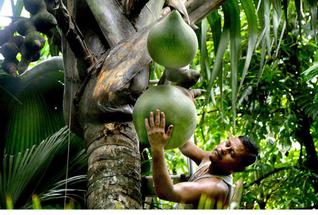
A double coconut tree stands at the Indian Botanical garden at Shibpur in Howrah district.— Photo: Sanjoy Ghosh

 Scientists at the Indian Botanical Garden in West Bengal’s Howrah district have carried out artificial pollination of the only double coconut tree in India, which bears the largest seed known to science.

One of the rare and globally threatened species of palm, the double coconut ( Lodoicea maldivica ) tree was planted at the botanical garden in 1894 and the artificial pollination is a result of decades of work by scientists of the Botanical Survey of India (BSI).

“The tree took almost a hundred years to mature and when it started flowering, we started looking for this particular palm species in this part of world. We collected some pollen from palms from Sri Lanka but could not successfully pollinate it. Finally, with the help of pollen from another tree in Thailand, the pollination process was successful,” BSI Director Paramjit Singh told The Hindu .

Longest surviving palm

The Double Coconut tree not only bears the largest seed known to science — weighing around 25 kg — but this unique species is also the longest surviving palm which can live for as long as 1,000 years, he says. The palm tree also bears the largest leaf among palms and one leaf can thatch a small hut.

“Successful pollination means that we can have another Lodoicea maldivica in the country. In fact we have two fruits and it might take them another couple of years to mature,” said S.S. Hameed, BSI scientist who has been working on the pollination project since 2006.

This species of palm is diecious (where male and female flowers are borne on different plants). “Fortunately at the Botanical Garden, we had the female plant which can fruit and produce seeds,” Mr. Hameed said. The Indian Botanical Garden which serves as the repository 12,000 trees from 1,400 different species is careful in nurturing the palm.

The palm tree is located in the large palm house of the Botanical Garden which has the largest collection of palms in South East Asia with around 110 palm species.

This rare tree can be found in only two of the 115 Seychelles islands and is also called Coco de Mer (coconut of the sea), says Mr. Hameed

Legend

Legend bestows the seed with the power to bring good fortune to its owners. “There has also been a tradition of making kamandals [drinking vessels] from the double coconut by bisecting the shell. It was believed that those who consume water from these kamandals will be protected from poisoning,” Mr. Hameed said. Subsequently, sadhus started using Kamandals and it got its place in religious rituals.

source: http://www.timesofindia.indiatimes.com / The Times of India / Home> National / by Shiv Sahay Singh / Kolkata – June 13th, 2015