Category Archives: Science & Technology

‘Explore BioTechnology to Enhance Quality Silk Production’

Says Dr. Mohammad Aslam, Advisor, Dept. of Bio-technology
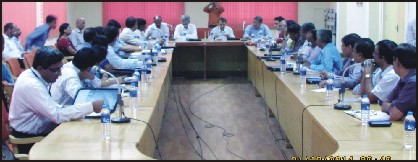
 A section of delegates at the Brain-storming Session on Mulberry and Silkworm at CSR&TI.
A section of delegates at the Brain-storming Session on Mulberry and Silkworm at CSR&TI.

 Mysuru :

“Explore networking technology to enhance quality silk production,” said Dr. Mohammad Aslam, Advisor, Department of Bio-technology (DBT), New Delhi.

He was speaking during the one-day Brain-storming Session on Mulberry and Silkworm sponsored by DBT and organised at the Central Sericultural Research and Training Institute, (CSR&TI), Mysuru, on Oct. 31.

He recalled the 20-year association of DBT with CSB in this area. He informed that during this period, DBT has organised a series of brainstorming sessions at different places across the country including North – Eastern States.

Speaking about the major objectives, he said application of biotechnology for increasing the productivity, improving the host plants, enhancing the silk quality, productivity utilisation and developing areas like silkworm seeds should be focused.

“The expert group had decided to have a separate session on silkworm and mulberry to develop the road map for the next 3-5 years and review the research outcome generated so far,” he informed and hoped to develop some transgenic network programmes in both on silkworm and mulberry.

He further added that DBT has taken up collaborative work with CSR&TI in this area. He appreciated Dr. Sivaprasad, Director, CSR&TI, Mysuru, for his initiative to organise this session.

Dr. L. Shashidhara of IISER, Pune, in his address, felt that research goals have already taken an in road in agriculture and now, it is the turn of sericulture to join and explore the possibilities of utilising it by working together with other institutes for the betterment of the industry.

Mentioning about the brisk technology activities of the world, he evinced keen interest in the collaborative studies in the field of sericulture.

Appreciating the phenomenal growth of silk industry, Dr. M. Uday Kumar, UAS, Bengaluru, spoke about few major constraints like irrigation and yield gap. He said that there is a need for genetic enhancement to improve the quality and the productivity. “The transgenic technology could be of immense use in this area,” he felt.

Dr. Sivaprasad, Dr. Mohd.Aslam, Prof. L. Shashidhara, Prof. Paramjit Khurana, UDSC, New Delhi, Prof. M. Udaya Kumar, UAS, Dr. S.K. Ashwath, CSR&TI, Mysuru, Dr. K.P. Arun Kumar, CDFD, Hyderabad, Dr. A.K. Awasthi, SBRL, Bengaluru, Dr. V. Satyavathi, CDFD, Hyderabad, Dr. P.J. Raju, APSSRDI, Hindupur, Dr. Nataraja Karaba, UAS, Bengaluru, Dr. Girishi Naik, CSR&TI, Mysuru, Dr. Jhansi Lakshmi, CSB, Dr. M.S. Sheshashayee, UAS, Bengaluru, Dr. B. Rita, CSB, Dr. T. Mogili, V.Kota, Dr. Rajashekar, CSR&TI, Mysuru were the invited speakers on the subject.

Various areas of networking and its applications in sericulture were discussed and the vital areas to be focused for the improvement of silk industry were earmarked in the session.

Eminent scientists from DBT, New Delhi, IISER Pune, CCMB, Hyderabad, CDFD, Hyderabad, UAS, Bengaluru and several Universities, R&D Institutes of Central Silk Board and State Governments participated.

Dr. Thippeswamy, Dr. Girish Naik and Dr. Ashwath co-coordinated the programme.

source: http://www.starofmysore.com / Star of Mysore / Home> General News / Tuesday, November 04th, 2014
Medical tourism explored in first forum

Quality care stepping stone for medical tourism

Dubai:

The Dubai Health Authority (DHA) has rolled out the first phase of the medical tourism pacakges which caters to the domestic market.

UAE residents and those already in the country such as delegates to the conference can avail of discounts of up to 70 per cent in areas such as wellness, weight loss, dentistry, orthopaedics, breast cancer screening and fertility treatments. The domestic packages do not offer visa and hotel stay.

Delegates from around the globe attended the first day of a two-day inaugural health regulation conference in Dubai which looked at major efforts by Dubai to become a medical tourism hub.

Medical tourism packages aimed at tourists will be rolled out soon, marking the second phase. A host of partners such as DHA, Dubai Tourism and Commerce Marketing (DTCM), and members of the private health-care and hospitality sector, among others, are working in tandem to make this possible shortly. These packages will be made available to DTCM-approved tour operators who will be allowed to market these.

According to Dr Layla Marzouqi, acting head of DHA’s health regulation committee, everything has been worked out and the second phase of the medical tourism packages will become a reality in the coming months.

One of the ideas explored was plans by Dubai health authorities to rate hospitals similar to the hotel industry which bases gradings on customer service and satisfaction.

Public-private partnerships are also seen as key to unifying efforts to draw investment to new projects that will attract those interested in medical travel, said experts examining the issues in panels and workshops.

Eisa Al Maidour, DHA Director-General, inaugurated the conference which has drawn more than 1,000 professionals from the field of health regulation and medical tourism and key stakeholders in the public and private health care sector.

Other stakeholders such as pharmaceutical companies and health care providers are also attending.

Enhancing the quality of health care to augment medical tourism was discussed, said the director-general in his inaugural speech.

“Health regulation is fundamental to achieve quality health services and protect patient safety; a strong health regulatory system leads to sustained growth of the health sector which in itself is a catalyst for medical tourism. This conference provides an opportunity for stakeholders to discuss the latest advances as well as share their experiences in the field of health regulation and medical tourism,” he said.

How public private partnerships could promote investment and take medical tourism to the next level is key, he added.

Dr Layla said, “Public private partnerships (PPP) are a very important concept in medical tourism in all the countries that have a robust health sector. In India, for example, it is the private sector which is partnering with the government to strengthen the infrastructure while the government is ensuring quality control, thus complementing each other. In the UAE we are very aware of this as more than 70 per cent of our hospitals are in the private sector. In Dubai, out of the 20 hospitals we have only four are government. Of the 2.700 health-care facilities in the emirate, only 17 are government. We want the private sector to collaborate with us, come forward with investments and take medical tourism to the next level.”

Dr Layla said that DHA’s health regulation department was in the process of creating a grading protocol for hospitals where hospitals would have hotel-like gradings beginning from five-star based on certain criteria.

“The most important criteria is that of quality health care. This will cover the quality of doctors and other health-care professionals at the hospital, the number of surgeries carried out, the incidence of surgical errors and the number of customer complaints. The next criteria was of ambience which will take into account patient care, the presence of a translator, food and nutrition facility to support the needs of the patient, among other things,” she said.

“The focus of medical tourism is good quality and reasonable pricing. The regulation department will work closely with the funding department to determine the prices that graded hospitals can charge and we will make sure we freeze those. If a hospital is found lowering its standards, it will not be able to increase its prices and that will create healthy competition among such facilities,” she said.

Dr Azad Moopen, Chairman and Managing Director of Aster and DM Healthcare, said his group was keen to take up PPP projects and added that the private sector needed to raise the bar on quality health care and make investments in good doctors to attract medical tourists.

His organisation, he said, was ready to work with DHA to bring those standards to the emirates.

“There are three main reasons why people around the world seek medical travel. They are looking for expertise that is available, the cost of the procedure and the turnaround time to carry out the procedure. If we can provide them with high-quality medical care at reasonable costs and within a short period of time, it will attract people from around the world.” He recommended that the private sector needed to focus on further increasing the number of hospitals, specialist medical centres, hospital beds, diagnostic centres and pharmacies, state-of-the-art surgical and trauma care facilities, wellness and cosmetic care centres along with introduction of cutting-edge medical technologies.

Dr Jameel Ahmad, Managing Director of Prime Healthcare Group, felt PPP was a welcome move, benefiting both the public and private sector. “We are ready for this kind of a collaboration as we tie in the concept of hospital and hospitality very well, being situated next to two major hotels and the Dubai airport. We are in a position to offer medical tourism packages in the area of orthopaedics, sports medicine, dentistry and cosmetic surgery,” he said.

source: http://www.gulfnews.com /  Gulf News / Home> UAE> Health / by Suchitra Bajpai Chaudhry, Senior Reporter / October 22nd, 2014

Go live on radio, make a difference

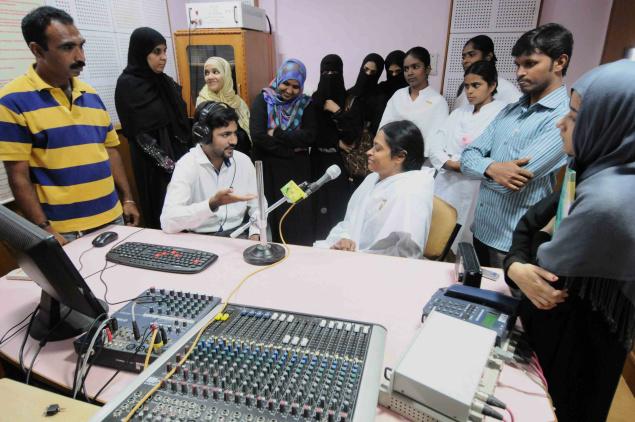
Deccan Radio station manager Zahed Farooqui providing a live interview experience to Radio Jockey trainees at the Siasat daily's office. - Photo: Mohammed Yousuf
Deccan Radio station manager Zahed Farooqui providing a live interview experience to Radio Jockey trainees at the Siasat daily’s office. – Photo: Mohammed Yousuf

Community station Deccan Radio 107.8 FM runs eight-hour social programmes

While we tune in to FM radio stations to listen to our favourite songs and talk shows, the concept of community radios is something that is yet to catch up in the city. And to encourage it and give ordinary people a platform to discuss social issues, Deccan Radio 107.8 FM has begun providing free training to its first batch of students from Monday.

“There is no age bar or qualification required for those interested in enrolling for the training programme. It will benefit those who are interested in participating in social activities,” said Zahed Farooqui, station manager of Deccan Radio 107.8 FM. The programme covers recording, editing, interview techniques and also provides an opportunity to go live on radio.

With a frequency spread across a radius of one kilometre, the radio station also encourages the contribution of local community members. Presently, the station runs eight-hour social programmes, comprising different types of radio shows everyday from 8 a.m. to 12 p.m. and from 4 p.m. to 8 p.m. daily.

“Last time, we conducted a programme for only journalism students, but this time it’s open for everyone,” he mentioned, and further stated that the batch would consist of 50 students. “If more people come forward, we will start more batches. Also, after the course, if we think the students are competent enough to work with us, we hire them,” he added.

source: http://www.thehindu.com / The Hindu / Home> News> Cities> Hyderabad / by Yunus Y. Lasania / Hyderabad – October 28th, 2014

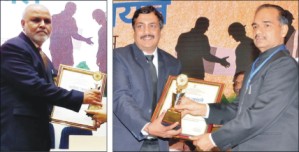
Two Mysoreans Awarded Brand Ambassadors of Vocational Training

Seen in the pictures are A. Syed Amanulla and H.R. Nagendra Rao, receiving the Brand Ambassador awards from Alok Kumar, Director General of Employment and Training, Ministry of Labour and Employment, at Vigyan Bhavan, New Delhi recently .

Mysore :

City’s A. Syed Amanulla, Principal and Deputy Director, Govt. ITI, Srirangapatna, a resident of Rajivnagar and H.R. Nagendra Rao, Managing Director, DMS Technology Pvt. Ltd., Belavadi Industrial Area and a resident of Vasu Layout in city were awarded with ‘Brand Ambassador of Vocational Training-2014’ by Ministry of Labour and Employment at a function held at Vigyan Bhavan in New Delhi recently.

While, Syed Amanulla received the award in Salaried Employee category, Nagendra Rao received the award in Entrepreneurship category. Amanulla, passed ITI in Fitter Trade at Kolar Gold Fields, Diploma in Mechanical Engineering through correspondence and B.E from SJCE Evening College, Mysore. Nagendra Rao passed Mechanical Draughtsmanship from NIE ITI, Mysore and runs his own unit which provides jobs to ITI passed candidates.

Among hundreds of applications, a total of 25 candidates from all over India were selected for the award under the programme ‘Pandit Deendayal Upadhyay Shramev Jayate Karyakram’. The awardees were honoured by Prime Minister Narendra Modi.

source: http://www.starofmysore.com / Star of Mysore / Home> General News / Sunday ,  October 19th, 2014

Ismail Ali Khan to Head TSERC

Hyderabad :

Ismail Ali Khan has been  appointed as the chairman of the newly created Electricity Regulatory Commission of Telangana state here on Tuesday. L Manohar Reddy and H Srinivasulu have been made other members of the ERC.

Ali Khan, who hails from Asifabad in Adilabad district, is presently member of the Bihar State Electricity Regulatory Commission. He earlier worked as member of the Planning Commission.

source: http://www.newindianexpress.com / The New Indian Express / Home> States> Telangana / by Express News Service / October 22nd, 2014

A smile worth a crore, but she’s worth it

Ranchi :

It costs over Rs 1.2 crore a year to keep her healthy, a sum her petty plywood trader father in Kantatoli can’t imagine.

Ranchi girl Sadaf Naaz (19), who suffers from Gaucher’s disease that strikes one in 100,000 people, is getting a sponsor for the enzymes she needs six years after her diagnosis.

UK-based Shire Pharmaceuticals Limited has started sponsoring expenses incurred on her enzymes and medicines that will annually cost over USD 200,000 (around Rs 1.2 crore). Sadaf got the first dose at AIIMS, New Delhi, on October 1 and second on October 15. They have called her again after a fortnight.

Like any rare disease, Gaucher can fox experts. It occurs when a lipid, glucosylceramide, accumulates in the bone marrow, lungs, spleen, liver and sometimes the brain.

In layman terms, it means Sadaf has lived with liver malfunction for as long as she can recall. Gaucher’s disease also causes patients to bruise and break bones very easily. Lungs don’t function well, too.

Sadaf was diagnosed with Gaucher’s disease at Christian Medical College (CMC) in Vellore in 2008. Before this, she underwent a liver operation at AIIMS, but her disease was undetected. That wasn’t surprising, considering that the genetic enzyme disorder occurs mostly among Jewish children of Eastern European descent.

Once her disease was diagnosed, Sadaf’s parents Muzib Quraishi and Shabnam were faced with the spectre of sponsorships. Regular enzyme replacement being the only treatment, it was soon clear to the parents that only movie stars and industrialists could afford it.

Ranchi-born Brooklyn paediatrician Jamil Akhtar offered to appear before the medical board at AIIMS to explain her case and find sponsors in the US. But, he wasn’t called. The Gaucher Foundation, US, apparently didn’t show much interest. Neither did the Indian government.

Time ticked by, making her parents desperate. This February 28, Muzib and Shabnam stormed a meet on the disease at NIMHANS, Bangalore, where eminent doctors and pharma companies from across the world had come.

“We threatened to immolate ourselves before them if our daughter was left doomed to die a painful death. Seeing our child suffering made us desperate. That’s when AIIMS doctors Neerja Gupta and Madhulika Kabra heard us out,” said mother Shabnam.

The AIIMS doctor duo spoke to representatives of UK-based Shire about Sadaf. “Things looked up,” she said.

Father Muzib added that when the UK pharma firm decided to sponsor Sadaf’s treatment, they gifted her a new life. “Special thanks to The Telegraph for its coverage. The news reports played a crucial role,” he smiled.

source: http://www.telegraphindia.com / The Telegraph, Calcutta / Front Page> Story / by Sudhir Kumar Mishra / Ranchi – October 21st, 2014

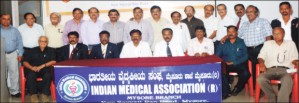
Dr.M.S. Kempegowda is IMA Mysore President

IMAbf19oct2014

Mysore :

The Annual General Body Meeting (AGM)of Indian Medical Association (IMA), Mysore Branch, was held recently at I.M.A House on New Sayyaji Rao Road here.

The following office-bearers were unanimously elected for the year 2014-2015:

Dr. M.S. Kempegowda, President; Dr. G. Marulasiddappa, President – Election (2015-16); Dr. P. Puttaswamy and Dr. S.B. Prakash, Vice-Presidents; Dr. B.N. Ananda Ravi, Hon. Secretary; Dr. M. Shivanna, Joint Secretary; Dr. Suresh Rudrappa, Treasurer.

Executive Committee Members are: Dr. Dhananjaya, Dr. Sujatha S. Rao, Dr. Y.M. Shiva Kumar, Dr. Chandrasekhar Sosale, Dr. M.R. Shashi Kumar, Dr. Suleman Shamshad Mohammed, Dr. D. Parameshwara Naik, Dr. T.K. Rangaswamy and Dr. N. Chandrabhan Singh.

State Council Members are: Dr. C. Rajan, Dr. N. Chandrashekar, Dr. S.P. Yoganna, Dr. K.B. Gurumurthy, Dr. P. Sathya, Dr. H. Vasudev Naik, Dr. K.H. Basavaraj, Dr. G.R. Jagannatha Babu, Dr. Zakir Ali Khan, Dr. B.R. Anand, Dr. C. Mahadevu and Dr. Murthy.

Central Council Members are: Dr. B.V. Rajagopal, Dr. S. Prasanna Shankar, Dr. B. Ramananda Kumar, Dr. L. Devegowda, Dr. Capt. G.S. Venkatesh, Dr. S.M. Prabhulingaswamy and Dr. A. H. Hareesh, according to a press release from Dr.B.N. Ananda Ravi, Hon.Secretary, IM A, Mysore Branch.

source: http://www.starofmysore.com / Star of Mysore / Home>General  News / Monday ,  October 13th, 2014

Thankful for His Teachers

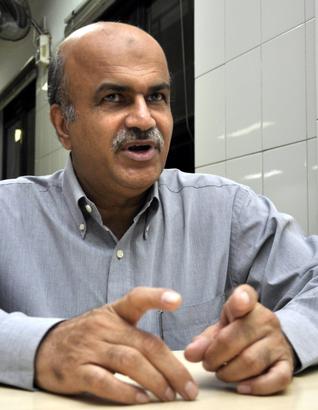
A volley ball enthusiast, ever-learning photographer, avid reader of science-related articles, ardent blogger and a passionate father would be too few words to describe Syed Maqbool Ahmed, who is presently heading the Central Instrumentation Laboratory of the University of Hyderabad, where he oversees the day-to-day functionings.

Perhaps the description that instantly draws eyeballs to him would be of his association with India’s successful Mars Orbiter Mission, Mangalyaan. Ahmed is the person who developed a quadrupole-based mass spectrometer, CHACE (Chandra’s Altitudinal Composition Explorer), which was used in India’s mission to the moon, Chandrayaan-1, which discovered water there. An upgraded variant of CHACE, named MENCA (Mars Enospheric Neutral Composition Analyser), is aboard Mangalyaan.

The 53-year old Principal Scientific Officer is known for his passion for science. Having worked at NASA’s Jet Propulsion Laboratory in the US earlier (1994-96) and with ISRO’s Chandrayaan-1 project, Ahmed is a content and accomplished scientist who acknowledges the role of destiny and his teachers in his success.

Ahmed was the project manager of the team of scientists who, as part of the Moon Impact Probe (MIP) mission, developed an indigenous science payload called CHACE, which detected the presence of water on the Moon in November 2008.

Hailing from a middle class family in the remote village Alampur in Mahabubnagar district of Telangana, Ahmed went to Hyderabad for higher studies after completing his schooling in the Telugu medium. “My family, comprising five brothers and three sisters, wanted me to become an Engineer due to obvious reasons of poverty. I gave the EAMCET entrance test thrice and failed each time. That was a big jolt in life, but my aspirations were alive,” says Ahmed.

Back then, he had no passion for Science. After BSc Honours from New Science College in the city, the biggest turnaround happened in his life when he gave the interview for MSc Physics at University of Hyderabad in 1982. “Out of the 30 faculty members in the Physics department, 28 were US returned. In the interview, I could barely understand the questions due to the complex language,” recalls Ahmed.

“AK Kapur sir in the panel understood my difficulty and started asking me questions in Hindi and translated others’ questions too. The panel was happy and I got through. Had he not done that, I would neither have got through nor have realised my passion for Science. Such teachers of exceptionally high standards are hard to find,” says Ahmed.

Soon after his postgraduation, while his parents wanted him to go to the Gulf to earn a living, he decided to join Physical Research Laboratory (PRL), Ahmedabad for a PhD in 1985. “I had to literally fight with my siblings to pursue my PhD and I had to choose PRL over two IITs because of a few hundred rupees extra I would receive towards fellowship,” quips the scientist.

He went on to complete his PhD in Simulation of Planetary Atmosphere or Laboratory Astrophysics in 1990 and joined the Institute for Plasma Research (IPR), Gandhinagar, in 1992 and continued to work as Associate Professor, till 2004. During a sabbatical in 2001-02, he was engaged with the Swiss Federal Institute in Switzerland.

Ahmed joined ISRO’s Chandrayaan project in 2005 and developed a quadrupole-based mass spectrometer, CHACE, which worked successfully in India’s Moon mission. He left ISRO at the age of 46 when he found about a mysterious disease that had infected his daughter. The same year, he joined Central Instruments Laboratory of University of Hyderabad as Principal Scientific Officer.

For him, life has been driven by serendipity. “ISRO happened to me by chance. It was a coincidence when I met Prof R Sridharan, Director of Space Physics Lab (SPL). He took me to the Chief, Madhavan Nair, who handpicked me from Department of Atomic Energy (IPR comes under this department) to Department of Space. This was incredible,” recollects Ahmed.

Acknowledging the contributions of his teachers in his life, Ahmed, presently, apart from heading CIL, holds regular talks on Indian space programmes and also conducts training sessions for Science teachers.

“Schools have to ensure Science is taught with passion. The introduction of the subject is very important. It is very difficult to capture students’ attention for more than half an hour. I try to link the subject to day-to-day activities,” he points out.

He believes a bit of Psychology and sequencing of dosage where teachers ensure students understand the basics first before moving on to bigger things too is important in teaching.

“Students today are much aware of things around them. When they ask me well-prepared questions, I am forced to say I don’t know,” says Ahmed, who believes teachers need to be honest and prepared to bring their experiences and observations from life into the classroom.

According to him, India has failed to attract the best minds into research. “The reason US prospers in Science and research is because they have attracted the best minds and are providing incentives. Our people are doing programming at the same time,” he laughs.

On the CHACE-turned-MENCA, he offers, “It is a very sensitive instrument and I am confident that we will be the first to locate water on Mars,” says the proud scientist, who has been blogging about Mangalyaan for the past 18 months.

Rahul.v@newindianexpress.com

source: http://www.newindianexpress.com / The New Indian Express / Home> Education> Edex / by Rahul V. Pisharody / Hyderabad – October 13th, 2014

Surgical cure for ‘silent fracture’

Kolkata :

An alarming 45 to 50% Kolkatans in the age group of 55 to 70 suffer from osteoporosis or some form of bone disorder, mentions a survey done by orthopaedics.

For about half of them, the disorder results from loss of bone density and it cripples them within two years.

“Silent fracture” of the vertebral column induced by osteoporosis is a common manifestation of bone disorder that now affects thousands in the city and 25 million across the country.

However, there is some ray of hope as a new form of treatment has emerged over the last few years to treat bone compression fractures effectively, say experts.

Balloon kyphoplasty is a technique that involves repairing a fractured and compressed bone with a balloon that’s inserted into the vertebral fracture.

It helps to restore the bone in its original position, thereby curing the resultant stoop caused by a curved spine.

The effect, according to doctors, is a long-lasting one and has helped patients improve their quality of life.

“Bone degeneration starts from the age of 45 and it gets very acute in some people. Loss of bone density leads to osteoporosis, often resulting in fracture of the spine. Once that happens, the spine gets curved, leading to a stoop that restricts movement. Balloon kyphoplasty is the only way of repairing a fracture-induced curve. But, it is used only in those who are in intense pain and have a severe stoop,” said Abrar Ahmed, orthopaedic surgeon at Apollo Gleneagles Hospital.

The surgical procedure is a simple one and the recovery time is just about two hours.

A small hole is drilled on the skin near the position of the vertebral fracture. A needle with the balloon is inserted into the fracture to lift up the bone to its normal height, thereby restoring the curve.

The balloon is then taken out with the needle and the gap is filled up with a fluid. The patient can walk within two hours of the surgery. Balloon kyphoplasty is also effective in trauma-induced spinal fractures.

“It works well for trauma patients with spinal fractures,” said Sisir Mandal, another rorthopaedic surgeon.

Experts said a simple bone mass density (BMD) test could help prevent bone compression and spinal fractures. “Those above 50 years of age, people who have been taking steroids for a long time and those with a history of bone injury or illness should undergo the test. BMD helps assess bone health and works as an alert for making pharmacological and lifestyle interventions to restore it timely. It could help to curb at least half of the spinal disorders including fractures. But, very few undergo the test on time,” said Ahmed.

The surgery is expensive, though. It costs Rs 2 lakh and is recommended only when all other forms of treatment are ruled out.

A healthy diet and a regular, active lifestyle help to slow down bone degeneration, said experts.

“Over the last decade, we have seen a major shift in lifestyle and food habits that has affected bone health. Sadly, awareness about bone diseases is among the lowest. This is probably why we have seen a spurt in the number of osteoporosis patients,” said Debashish Basu, preventive medicine expert.

Ahmed said balloon kyphoplasty was among the “safest and most advanced surgeries” of modern times.

source: http://www.timesofindia.indiatimes.com / The Times of India / Home> City> Kolkata / TNN / October 13th, 2014

New Urdu booklet makes a case for low salt intake


Abid Moiz / PHOTO:G_RAMAKRISHNA / The Hindu
It is dubbed a silent killer. But many tend to take the doctor’s advice with a pinch of salt. Literally. Studies show that Indians consume twice the recommended salt intake, exposing themselves to high health risks. While there is enough literature on the dangers of high salt diet in English, the same is not the case with vernacular languages.

Urdu readers can now heave a sigh of relief. For the first time perhaps, a good Urdu booklet on the need for reducing salt intake has hit the market. Abid Moiz explains the deleterious effects of excessive salt consumption in a telling manner in his book Namak Ka Istemal Kam Karein. Through charts and tables, the 35-page booklet lists the risks involved and the care to be taken.

Dr. Moiz talks about salt in a gripping manner, adopting a narrative style. In easy to understand language, he traces the history of salt and how it was earlier used as a preservative to store meat and other food. Salt is made up of 40 per cent sodium and 60 per cent chloride. “It might add to the flavour of food, but its overuse impacts the kidney and heart, says Dr. Moiz.

He also establishes a link between the excessive use of salt and high rate of calcium excretion. “Cutting down on salt is also necessary to prevent bones from becoming brittle,” he writes.

In the coming days, Dr. Moiz plans to bring out health series on different subjects such as low consumption of sugar, choosing the right of type of cooking oil, excessive use of fruits and vegetables.

Another interesting book recently penned by Dr. Moiz in Urdu is about medical tests – Aam Tibbi Muaine. It is quite informative as it talks in depth about different types of tests such as stool, body fluids tests, mammography, endoscopy, imaging and prenatal tests. There is also a chapter about unnecessary tests being prescribed by doctors these days. ‘Defensive medicine’ as it is called, is intended to avert future possibility of malpractice. Such tests are primarily to avoid liability rather than benefit the patient, says Dr. Moiz.

source: http://www.thehindu.com / The Hindu / Home> News> Cities> Hyderabad / by J. S. Ifthekhar / Hyderabad – October 13th, 2014