Category Archives: Science & Technology

Syed Mushtaq Geelani passes away

Srinagar: 

 Prominent businessman and President of J&K Chemists and Druggists Association Syed Mushtaq Geelani passed away last evening due to a massive heart attack. He was 74.

Geelani suffered attack at his residence in Sheikhpora (Budgam) and was shifted to Budgam hospital. However, he breathed his last within minutes. He was later buried in his ancestral grave yard in Khankahi Mu’alla.

Fourth day (Rasm-e-Chaharum) will be observed on September 20 (Saturday) at 10.30 AM at Khankahi Mu’alla and later a condolence meeting will be held at their residence- Fitrat Abad Sheikhpora (Budgam).

He was brother-in-law of noted writer and poet Farooq Nazki and uncle of IGP (Crime) Syed Javaid Mujtaba Geelani. Rising Kashmir extends solidarity with Geelanis and Nazki’s over this loss.

source: http://www.risingkashmir.com / Rising Kashmir / Home> RK News / Srinagar – Thursday,  September 18th, 2014

Clubs help Chennai schools get green energy

Clubs belonging to Lions District 324A1 have installed solar power plants at 35 schools run by the State government and Chennai Corporation. / Photo: M. Srinath / The Hindu

The Government Hobart Higher Secondary School for Muslim Girls, Royapettah, recently got a 1.5 KV solar power plant. Students of classes VII, VIII and IX will benefit from the plant that can power 10 lights and seven ceiling fans.

Imtiaz Fathima Wadood, president of the parent-teachers association of the school, said the supply from the plant could also be used to power the examination hall, which has a seating capacity of 100 students, when tests are conducted.

“We have to thank the Lions Club of Periamet for providing the facility worth Rs. 2.5 lakh to the school, which has 300 children from poor families from Triplicane and Royapettah studying,” she said. The Club will maintain the facility for five years.

Clubs belonging to Lions District 324A1 have also installed solar power plants at 35 schools run by Chennai Corporation and the State government.

According to G. Ahmed Sharif, advisor, district 324A1, who is also the project chairman, said a total of 19 government and 11 Corporation schools had been covered under the project this year. “It is the suggestion of the district governor D. Balachandra Reddy that all the clubs are following. The district provides Rs. 50,000 per plant and the clubs have to bear the rest of the cost. Many classrooms are poorly lit and need such solar plants. In the long run, it will also help reduce the schools’ power bills,” he said, adding that more clubs were coming forward to install such plants.

source: http://www.thehindu.com / The Hindu / Home> News> Cities> Chennai / by Special Correspondent / Chennai – December 26th, 2013

Muslim Doctor Took Care of Bal Thackeray

In one of the nicest ironies in Shiv Sena supremo and `Hindutva’ champion Bal Thackeray’s life, the doctor who treated him for the past five years and was with him in his last hours was a Muslim.

Dr Jalil Parkar, well known Pulmonologist from Lilavati hospital who had been Thackeray’s trusted physician for the last five years, made the announcement of Sena chief’s death last evening with tears in his eyes before the crowd of party workers and mediapersons here.

Dr Parkar, a Muslim, earned the faith of Thackeray family after he successfully treated the Sena patriarch’s chronic obstructive pulmonary disease (COPD), a lung disease that makes breathing difficult, some years ago.

From thereon, everytime Thackeray developed health complications, Dr Parkar was called in. He became so close to the family that in the recent years he was spotted on the dais with other VIPs at the annual Dussehra rally of Shiv Sena.

Dr Parkar is credited with saving Thackeray’s life five times in five years. When senior Thackeray needed a second heart intervention in 2009 (the first was needed in 1996), it was Dr Parkar who prescribed the treatment which was readily accepted by the Sena chief.

When Uddhav Thackeray, his son and Shiv Sena executive president, needed a heart surgery some months ago, it was again Dr Parkar who led the medical team which treated him.

Though there was some commentary in political circles about Thackeray’s personal doctor being a Muslim, Dr Parkar never commented on this aspect. All he would say was the Sena Chief had been very kind to him.

source: http://www.outlookindia.com / Outlook / Home> Mumbai – November 18th, 2012

G.B. Pant University honors U.S. Chief Agricultural Negotiator Ambassador Islam A. Siddiqui

The G. B. Pant University of Agriculture and Technology in Pantnagar, Uttarakhand, today honored its former student, United States Chief Agricultural Negotiator Ambassador Islam A. Siddiqui, with an honorary degree of Doctor of Science. The degree was conferred upon Ambassador Siddiqui in recognition of his contributions to agricultural research and development, as well as agricultural trade policy development and his work’s influence on world agriculture.

“I feel humbled and honored at the same time to be receiving this honorary degree of Doctor of Science. Thousands of agricultural scientists, engineers, and veterinarians graduating from Pantnagar and sister universities provided the foot soldiers to make the Green Revolution a reality. This massive technology transfer of modern agricultural practices – combining education, research, and extension — turned India from a net food importing country to a food exporting nation. As a student of the first batch of this great institution when it opened its doors 51 years ago, I had not imagined in my wildest dreams that one day I would receive this prestigious award.”

Ambassador Siddiqui was born in Haldwani, Uttar Pradesh and attended G.B. Pant University before taking a scholarship at the University of Illinois in the United States. Throughout his career, he has advocated for international cooperation, technology transfer, capacity building, and new technology development to achieve food security in the 21st century.

source: http://www.newdelhi.usembassy.gov / Embassy of the United States, New Delhi, India / Home> News & Events> Press Releases / New Delhi – May 20th, 2011

A brand ambassador for palliative care

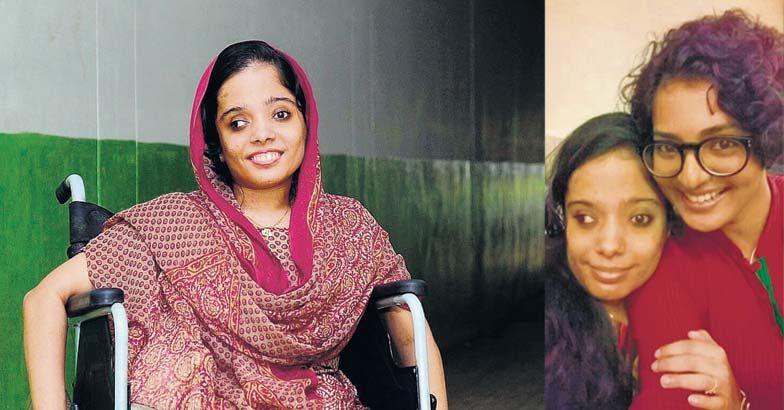
Wheelchair-bound Baby Fatima is the inspiration behind Saira of 'Bangalore Days'. Insert : Fathima with Parvathy (R)
Wheelchair-bound Baby Fatima is the inspiration behind Saira of ‘Bangalore Days’. Insert : Fathima with Parvathy (R)

Remember Saira of ‘Bangalore Days’? The character of Saira, who vanquishes the handicaps of the body using sheer willpower, is based on a real life character who caught Anjali Menon’s attention at a ward in the Kozhikode Medical College. Baby Fatima, a wheelchair-bound young girl who went to each patient, made them smile and consoled them, was the real life inspiration behind Saira.

Baby Fatima, like Saira, is also fast becoming a rage in the campuses. Fatima is visiting campuses to garner support of the students for the palliative care work in connection with the ‘Becoz I Care’ campaign jointly conducted by the Institute of Palliative Medicine and Students in Palliative Care.

Even though not a radio jockey like Saira in ‘Bangalore Days’, Fatima, too, has the gift of gab. The palliative care workers contend that once Fatima speak a few words to them, any patient will be able to forget their woes. Ask Fatima how she came to possess such boundless positive energy, and she will wax eloquent about her family and her childhood.

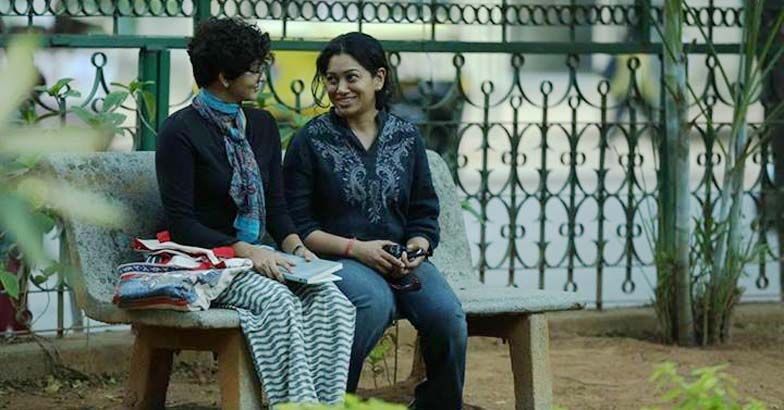
Parvathy (L) with Anjali Menon (R) during the making of the movie, 'Bangalore Days'
Parvathy (L) with Anjali Menon (R) during the making of the movie, ‘Bangalore Days’

Fatima grew up with her ‘moothumma’ Malappuram Kottappadiyil Kiliyamannil Mumtaz Usman’s family as the pampered lone sister of moothumma’s four sons. It was not as a handicapped child that the family treated her. Having been raised in such a way as to instill confidence in her, proved to be her strength, according to Fatima.

Fathima is a second year BSW student now, though she has not gone to school or college for studies. She studied from home. It was as part of the ‘Becoz I Care’ campaign that Fathima had her first glimpse of a campus, giving her immense joy.

BSW was a natural choice for her as social service is her ambition in life. Soon after completing Class 10, Fathima took the lead to meet up with palliative care workers and became part of their activities.

Apart from all these activities, the entrepreneur in Fatima has launched a designer clothes boutique in her own home. Fatima’s muthumma Jamal Ayesha accompanies her to the Medical College every morning, where patients await the girl, who has been a regular presence there for the past five years with a beaming smile and soothing words of care.

Life +ve Becoz I Care campaign is about each student reaching the brochures and registration forms of palliative care to ten households. The goal is to make the kind-hearted souls who are willing to set aside Rs 3 daily (Rs 1000 annually) as members in the ‘Tracks We Live’ project. The palliative care workers will then be able to deliver one time painkillers to one patient at Rs 3. The project aims at alleviating the pain of a patient using one person’s donation.

For registration form visit: www.instituteofpalliativemedicine.org
Phone: 82816 64752

source: http://www.english.manoramaonline.com / OnManorama / Home> Lifestyle> Health / by Kapil Raj / Friday – July 25th, 2014

Kalam Stresses on Importance of Family in Nation Building

New Delhi :

Economic growth or military strength alone won’t make India strong, a truly sustainable society, at the heart of which is the family, is very much necessary, argues former President A P J Abdul Kalam in his new book.

Kalam and celebrated Jain thinker late Acharya Mahapragya in the book “The Family and the Nation” say that only a strong and happy family can lead to a strong and noble nation.

In writing the book, the ideas of the two authors were shaped by their interaction during the past few decades with millions of countrymen hailing from different walks of life.

“Each interaction enhanced our experience and added to our understanding of the development of a noble family, a noble society and a noble nation,” they write.

While embarking on this journey of writing a book, we realised the magnitude of connectivities involved and the extent of our society’s evolution during the last few centuries,” they say.

“It is true that all of us realise that today’s world is a connected one. Technology and travel have nearly made the world a global village. The world has to become a federation of nations.

A nation is a federation of states, social groups, families and individuals. So what is needed is a situation of live and let live.

“One’s needs, aspirations, accomplishments are all important. But there has to be a concept of a noble nation, where the welfare of the whole nation as a whole is ingrained in the thinking and actions of its people.

This is the need of the hour. How do we achieve this idea of a noble nation,” the authors ask.             According to them, their visualisation of a noble nation is two-fold.

“One is internal, concerned with the individual and encompassing the family, community and society. Another concerns enterprise and covers the issues of livelihood, business, distribution of wealth and respect for individual property and rights,” they say.

The authors do not offer any new theory or postulate any new concept but draw from the heritage of our civilization.

“The bottom line is that a citizen with a value system respects the family, respects society, and thereby respects the nation. Furthermore, the person is conscious that he or she is a part of the world family.

“The operational line is the prosperity of people with adequate earning capacity. We call such a nation a developed nation. Economic prosperity and an embedded value system would promote a peaceful and prosperous society and thereby the evolution of a happy nation,” they write.

The book, published by HarperCollins India, stresses on the values that make for a truly sustainable society, at the heart of which is the family. For it is not economic growth or military strength alone that will make India strong.

Sustainable success comes from values, and these can sustain a society and a nation even in times of hardship. The book expresses an ideal by which Indian society may prosper and speaks of how spirituality can help create a noble nation and a better world. It provides a valuable counterpoint to the modern-day emphasis on consumerism and the philosophy of more is better, highlighting the sanctity of the natural world and its great power to evoke human creativity and love.

The two writers bring their vast experience to bear on this important subject. As the authors put it, it’s only a strong and happy family that will lead to a noble nation, one that can be a true fulfilment of 5,000 years of India’s civilization.

source: http://www.newindianexpress.com / The New Indian Express / Home> Nation / by PTI / August 26th, 2014

‘DIET’ Develops Multimedia Based Smart Learning System for Schools

Vellore :

The District Institute of Education and Training (DIET) centre at Ranipet has come out with a first of its kind ‘Smart Learning System’(SLS) for the benefit of middle school students.

The multi-media based learning system packed in DVDs contains vivid explanations of lessons, add-on information and questions and answers as supplementary information for class 6, 7 and 8 textbooks, for the trimesters.

DIET principal A Basheer Ahmed told Express that a group of 25 teachers from government schools had prepared the SLS under the guidance of the DIET.

The purpose of the SLS is to make use of multi-media devices such as laptop and LCD projectors provided by the  State, while motivating teachers to make use of digital support, to explain the lessons to students better,  Basheer Ahmed said adding, “The SLS aims at overall development of students and teachers as well,” he added.

Around 20 to 28 lessons for English, Tamil, Maths, Science and Social Science subjects for classes 6, 7, 8 for one trimester are packed in four DVDs. Pictures, videos, animations and additional explanations for each lessons would enhance the grasping capability of students, Basheer Ahmed added.

The DIET would also prepare audio lessons for the visually-challenged children. We are in the process of handing over the DVD set to schools through the chief educational officer attached to the ‘Sarva Siksha Abyan’ Basheer Ahmed said while making a presentation of the DVDs to the CEO (SSA) on Monday. The CEO Anitha said, the distribution of DVDs to schools would begin soon after the nod from the government.

source: http://www.newindianexpress.com / The New Indian Express / Home> States> Tamil Nadu / by V. NarayanaMurthi / August 27th, 2014

Touch to reach Kashmir

She is the first Kashmiri to develop an app and is now popularly known as the ‘Android girl’

MehvishMPOs24aug2014

Mehvish Mushtaq (23) Founder of projectDial Kashmir
A . If there is paradise on earth, it is here, it is here, it is here…said Amir Khusrow, Sufi musician, poet and scholar about Kashmir.

Eons ago Kashmir conjured up images of beauty — Dal Lake, boat houses and snow capped mountains. But now, Kashmir has become synonymous with turmoil.

That’s why Mehvish Mushtaq is like a breath of fresh air. She is the first Kashmiri to develop an Android app — Dial Kashmir, which has become an almost mandatory application to have on one’s smartphone in Kashmir that has a population of around five million. She says she created the app with an aim to facilitate communication processes within the Kashmiri society.
Is there a lane that leads to your house that is water logged because a pipe burst, and you are clueless as to how to get in touch with the local municipal department? There’s a fire that needs to be put out? You need to contact a hospital or a newspaper office or get a gas cylinder delivered? These might seem like simple tasks in a city like Bangalore. But in a conflict-ridden Kashmir such problems take on a different hue. Step in Dial Kashmir, which is now into its fifth version, with Mushtaq working on the sixth.
Mushtaq who graduated in Engineering (Computer Science) describes herself as a tech savvy person. “Technology has always fascinated me.” In the winter of 2013, she did an online course on Android application development. As a part of the course, she was supposed to make an app. “I decided to develop something that would be useful to the local people,” she says. “The fact that whenever someone needed a contact number of a particular service, the process to obtain the information was not easy; sometimes the official sites were broken and sometimes you couldn’t find the number at all. All this motivated me to create the app.”
Dial Kashmir (a name suggested by her best friend) caters specifically to the Kashmir region. It gives users extensive information such as addresses, phone numbers and email ids of essential and commercial services in various sectors. In addition to that it also includes features such as prayer timings, railway timings, a flashlight, pin codes, ISD code etc. The app first become operational on February 28, 2013.
Mushtaq, now known as the Android girl, has been getting “appreciative” mails from all over the country. She says the app has not contributed much “materially. But the success gave me confidence and made me more outspoken.” And a new beginning and something to rejoice — for everyone who is bombarded with news about a troubled Kashmir at the other end.

source: http://www.bangaloremirror.com / Bangalore Mirror / Home> Columns> Work / by Sudha Pillai, Bangalore Mirror Bureau / August 22nd, 2014

ANU student designs baby rescue unit

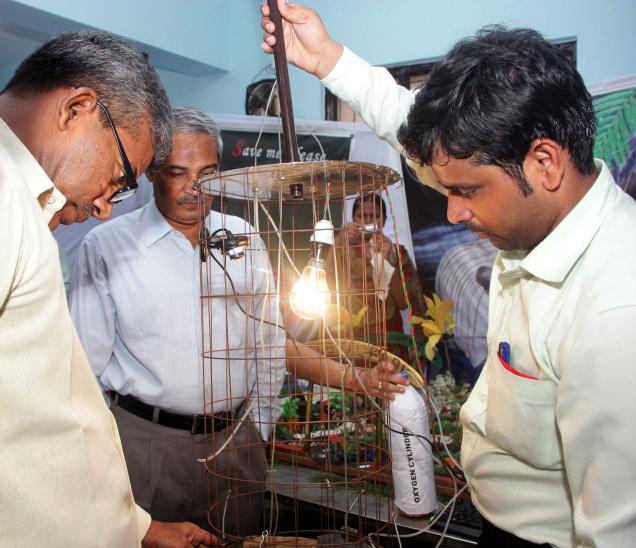
Hassan, an M.Sc (Biochemistry) student, explains working of a baby rescue unit designed by him to ANU Vice-Chancellor K. Viyanna Rao at the academic exhibition held in Guntur on Friday. Photo: T. Vijaya Kuma / The Hindu

An indigenous baby rescue unit to extricate children who accidentally fall into borewells in countryside has been designed by a student of Acharya Nagarjuna University (ANU) here.

Hassan, a first year student of M.Sc. (Biochemistry), has designed a simple baby rescue unit, which he says, can be used to safely extricate babies from borewell pits, which sometimes are well over 100 ft deep.

His exhibit at the ongoing academic exhibition being held on Civil & Mechanical Engineering block has been catching the attention of viewers. ANU Vice-Chancellor K. Viyanna Rao asked the student to further modify the design and added that the university would support further research and development of the model.

Consisting of a cylindrical iron netted structure, the rescue unit has a bulb, a web camera and an oxygen cylinder tube attached to it. The structure is funnelled through the earth soil through extra pipes till it reaches the spot where the baby is located. Using the pictures beamed by the camera, the operator can use the trays at the bottom of the structure to extricate the baby with the soil. The continuous supply of oxygen with the tube helps the baby in staying alive during the operation.

“Conventional method of digging a parallel pit along with borewell consumes a lot of time and poses a risk to the life of baby. With the baby rescue unit designed by me, the whole operation gets completed within 2-3 hours and the precious lives of children can be saved,’’ Hassan told The Hindu.

Dean, College Development Council and Coordinator of academic exhibition, G.V. Chalam said that the exhibition featured innovative solutions including, solar based appliances, national disaster prevention mechanisms, NSS extension activities etc. The 10 science departments, professional colleges and University college of Pharmaceutical Sciences took part in the exhibition.

source: http://www.thehindu.com / The Hindu / Home> News> National> Andhra Pradesh / by P. Samuel Jonathan / Guntur – August 23rd, 2014

Cupping therapy eyes its niche in city

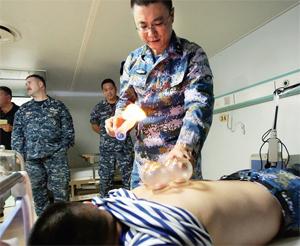
Cupping therapy in progress

Alternative form of medicine with Chinese origins gets its own association for promotion

Cupping therapy, an alternative form of medicine with Chinese origins, is trying to find its space in the city. The International Cupping Association of India was officially inaugurated on Tuesday, and Dr Badruzzama Nadeem, a practising Unani physician who is the moving force behind it, has plans to take it to Chennai, Bhubaneswar, and Patna by the end of next month.

Cupping is an ancient practice where heated cup-like devices are used to create suctions on the skin. These suctions are believed by practitioners to not only detox the body but also help relieve pain in the spinal cord, neck, and shoulder region.

Dr Nadeem explained, “When suction is applied, blood from a radius of three centimetres from where the cup is placed is sucked into the bump.” Practitioners believe that ‘impure blood’ gets collected in one place and blood circulation gets better once the cup is released. They also hold that the method detoxifies the body.

Cupping can be broadly classified into two types — dry and wet. While dry cupping is practised using suction cups made of silicone, rubber, or fibre where the air is sucked out, wet cupping follows the same process except for the little incision made in the bump for ‘impure blood’ to trickle out — a procedure known as controlled bleeding.

A third form of cupping is fire cupping. Here, a cotton ball is soaked in 70 percent alcohol which is then held by a pair of forceps and lit. The lit cotton ball is then placed into the cup and removed as soon as it is placed. Practitioners say the process removes oxygen from inside the cup. It is then placed on the skin quickly to create a small amount of suction as the hot air inside the cup cools.

Dr. Nadeem founded the association, which was inaugurated by Health Minister UT Khader, in a bid to increase awareness. “At the moment there are not more than 65 practitioners in Bangalore,” he said.

INEXPENSIVE, AND HOT

Cupping as an alternate form of therapy is yet to catch on in Bangalore, despite being inexpensive. Treatments can range anywhere from Rs 100 to Rs 500 for dry cupping. “Since wet cupping requires experts, it can range from Rs 200 to Rs 1,500. At the moment we get six to seven patients a day, most of them due to word of mouth,” explained Dr Nadeem.

source: http://www.bangaloremirror.com / Bangalore Mirror / Home> Bangalore> Others / by Tapasya Mitra Mazumder, Bangalore Mirror Bureau / August 20th, 2014