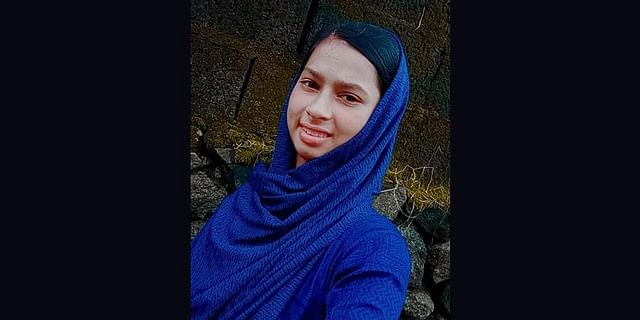
Soha bags fourth title of the season at AITA women’s tennis event
Bengaluru:
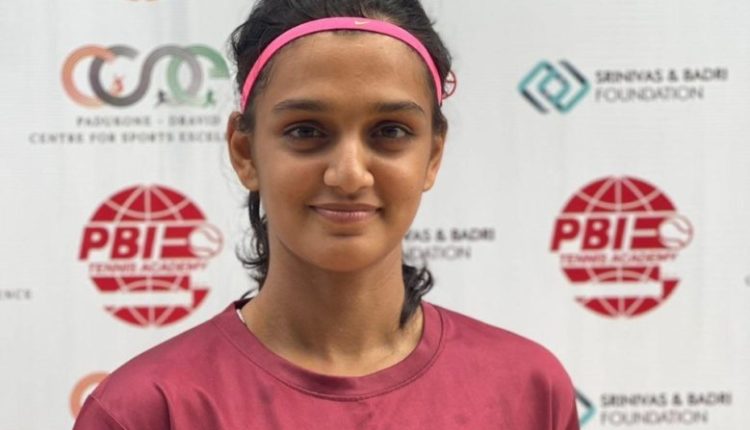
Soha Sadiq came back from a set down to beat Akanksha Nitture of Maharashtra in the final as she bagged her third singles crown of the season at the AITA women’s tennis tournament played under the aegis of KSLTA here on Saturday.
The top seed from Karnataka beat Akanksha 4-6, 6-3, 6-1 to end the tournament with a fine double. Overall, this was Soha’s fourth title of the season as she and Akanksha had won the doubles crown on Friday.
After heavy rains had delayed the start of the final by more than two hours, the 23-year-old Soha dominated the proceedings from the start and was soon 4-1 up. However, she lost the momentum which was quickly grabbed by her opponent as third seed Akanksha went on to win five games on the trot to take the first set, according to information reaching here.
The second set saw both the rivals fight hard for each point until the sixth game with the scores being level. It was then that Soha stepped up on the gas and closed out the set at 6-3.
Soha, after a 2-1 lead, broke Akanksha’s serve in the fourth game of the decider which saw both of them reach deuce five times before the latter succumbed. There was no stopping Soha from that point as she just marched away with the set and the match.
“I am happy to win my third singles title of the season. I didn’t expect it to be a three-setter but luckily I found my rhythm when I needed it most,” Soha, who has just graduated in Commerce from Mount Carmel’s College, was quoted as saying by the KSLTA in a release.
Results (Seedings in pre-fix, States in brackets) Women’s Singles (Final): 1-Soha Sadiq (KAR) bt 3-Akanksha Nitture (MAH) 4-6, 6-3, 6-1.
(IANS)
source: http://www.ommcomnews.com / Ommcom News / Home> Sports / by Ommcom News / October 09th, 2021
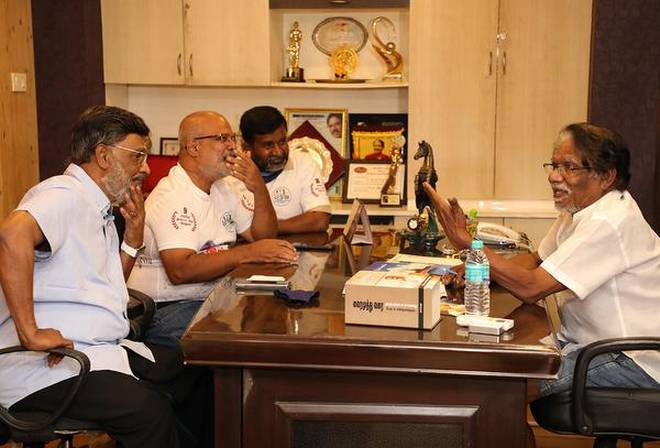
Shades of life (Clockwise from far left) Late Jabaramma in a still from Insha Allah; Director Bhaskaran with directors Bharathiraja and Bhagyaraj and Abdul Salam in a still from the film / Special Arrangement
SPP Bhaskaran’s film Insha Allah set in Coimbatore, releases in theatres on October 15
“It was a special moment,” says director SPP Bhaskaran about receiving praise from his mentors, director Bharathiraja and K Bhagyaraj, for his first feature film, Insha Allah .
He arranged a private screening for the veteran filmmakers in Chennai recently. “They had positive things to say about the film, location, cinematography which was done by T S Prasanna of Blue Ocean Film and Television Academy and recording of live sounds.
But what took them by complete surprise is the performances of poet Vikramathithan and his wife Bhagavathi Ammal who play an old couple in the film. Vikramathithan has played character roles in director Bala’s award-winning films like Naan Kadavul .”
After doing the festival circuit (it made to the official selection at 32 film festivals and won nine awards at international film festivals), the film gears up for a theatrical release in Tamil Nadu, on October 15. Bhaskaran shot the film at Pillyarpuram village in Coimbatore where hundreds of families from different religious communities live in perfect harmony.
The 84-minute film narrates the story of a middle-class Muslim society and is partly inspired by short stories by Thoppil Mohammed Meeran and Firdous Rajakumaran.
He chose death as a central theme and the script touches upon the five tenets of Islam that includes daily prayers, alms giving ( zakat ), fasting during Ramadan, pilgrimage to Mecca (Haj) and the profession of faith.
The protagonist is an ambulance driver played by Mogly K Mohan (who has been part of films like Kirumi , Bakrid and Master ).
Abdul Salam from Thanjavur who is related to Kamala amma, wife of late actor Sivaji Ganesan plays an important role in the film. “He converted to Islam many years ago and Sivaji Ganesan’s family stood by his decision and supported him. He plays the role of an elderly man who saves money to do Haj but gives it away to support a needy girl’s marriage.”
The film also has footage that shows the Cheraman Juma Masjid, believed to be the first mosque in the country, located at Kodungalloor in Kerala and the 800-year-old mosque at Keeranur, near Palani.
Insha Allah is produced by Shahul Hameed, under his banner Nesam Entertainment Private Limited. “To learn more about the community, I shifted my residence to Karumbukadai, a Muslim-dominated locality in Coimbatore, and lived there for six months,” says Bhaskaran, whose first short film Naanudaimai won recognition at online short film festivals. Insha Allah , he says, sheds light on the philosophy behind the Islamic way of life.
The film is dedicated to the late Jabaramma,who ran a mess at Pillyarpuram. “She served us all three meals during our 30-day shoot there. I wrote a character based on her during my stay there and nudged her to play the role. Though shy to face the camera, she learned acting at a workshop done by late Arunmozhi and his team during our shoot and performed confidently. Her role in the film showcases how looks become banal in a relationship bound by love.”
source: http://www.thehindu.com / The Hindu / Home> Features> Metro Plus / by K Jeshi / October 08th, 2021
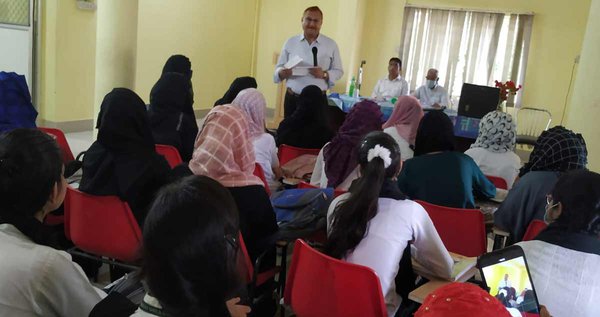
M.W. Ansari, former Director General of Police, Chhattisgarh speaking
Patna:
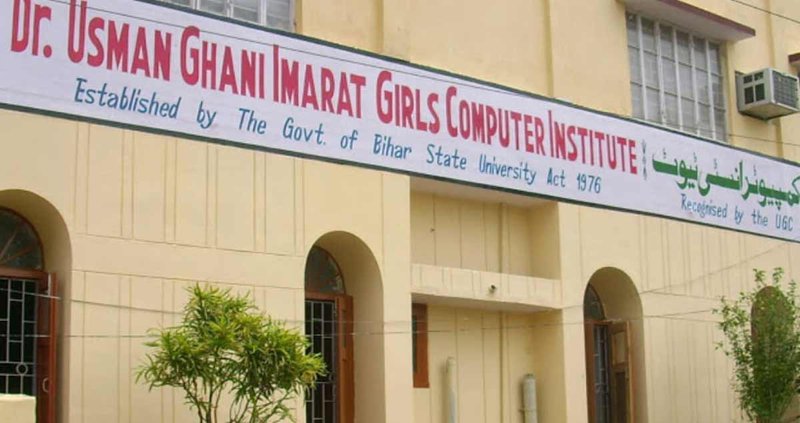
A career awareness program on civil services was held at Dr. Usman Ghani Imarat Girls’ Institute in Patna on 26 September 2021.
The program started with recitation of the Holy Quran.
While talking on ‘What is Civil Services’, Mohammad Naushad Ansari, Hon’y vice chairman of the Institute, through a power-point presentation, elaborated details on the profession of civil services, the rewards and challenges of being in civil services. He emphasised that all graduates are eligible to appear in this exam. They can definitely crack and get a good rank provided they plan their preparation under good guidance and work very hard. It is seen that a good number of candidates qualifying in civil services exams come from lower strata of the society. “Civil Servants of different services are the officers behind implementation of government development plans. They are the people who keep law and order, and work as a link between the public and the government”, he stated.
The chief guest, Mr. M W Ansari, former Director General of Police, Chhattisgarh spoke on the topic ‘Career in Civil Services: Criteria, roles and opportunities’. He stated that the prestige, power and the status that one acquires after entering civil services is immense and unparalleled. Besides, this service provides opportunity to serve the society and the nation at a larger scale. More than 10 lakh students apply for this exam each year. The number of aspirants is increasing every year. This year 761 students have cracked this prestigious exam, out of which only 31 students are from the Muslim community. It is too low considering their population. We require good number of quality institutions, proper guidance and good mentors so that chances of success brighten considerably. In particular, he pointed out that the proportion of Muslim women in these services is negligible. The community cannot prosper without bringing quality education among their women. He also appreciated the contribution of Dr. Usman Ghani Imarat Girls’ Institute in imparting education to the weaker sections of the society with limited resources. In the question and answer session he advised the students that the preparation for Civil Services exam should start from tenth class itself. Bihar had been contributing a good number of Civil Servants every year and this year’s topper in the exam is from Bihar only.
Mr. Khurshid Anwar Arfi, Senior journalist, renowned author of many books and Hon’y chairman of the institute, in his presidential address, emphasised that the community must focus on quality education which should enable new generation to successfully face the modern challenges. The other area of attention should be job-oriented courses and professional educational.
This institute offers various courses viz., BCA, BBA, B Lib. Sc, DCA, Diploma in Dress Designing etc which gives immense opportunity to girls to gain access into good professions and earnings.
He informed that the institute has a plan to organise similar career guidance programs and will be providing all the assistance needed to the Civil Services aspirants for state as well as for UPSC exams.
He thanked all the honorary members of the institute including Mr. Enam Khan, Secretary of the institute, for dedicating his time and energy for the institution’s development.
He also thanked all the teachers and, in particular, Mrs. Ruby Nishat, for offering her services to the institute voluntarily for over two years.
He acknowledged and offered dua for Late Maulana Wali Rahmani who worked hard for development of Institute’s building and infrastructure.
The program was attended by a large number of students, teachers and others. The welcome address was delivered by Mrs. Rupa Sharma, Principal of the Institute and vote of thanks was given by Mrs. Nuzhat Ghousiya . The girls put forward various questions and got enlightened. They noted down details of study plan for the exam and also felt ignited to write this exam.
Dr. Usman Ghani Imarat Girls’ Institute, Patna was established and run by Imarat-e-Shariah Educational & Welfare Trust, Bihar. It is one of the Knowledge Resource Centre of Maulana Mazharul Haque Arabic & Persian University, Bihar.
Union Public Service Commission (UPSC) is India’s premier central recruiting agency for central government public servants.
source: http://www.milligazette.com / The Milli Gazette / Home> News> Education & Careers / TheMilli Gazette Online / September 27th, 2021
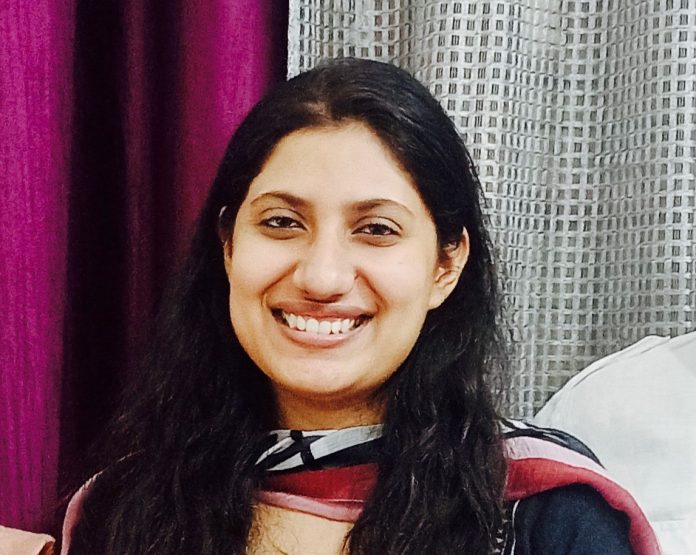
Roorkee girl Sadaf Chaudhary secured the 23rd rank in the UPSC exams.
UPSC topper among Muslim aspirants, Sadaf Chaudhary of Roorkee uttarakhand, who secured the overall 23rd rank, is of firm opinion that improvement in the education of girls in India will bring great social change and calls for the society to provide special attention to the education of girls.
The ambience at Sadaf Chaudhary’s home at Roorkee, Uttarakhand is of glee. There is a continuous rush of local people at her home at Green Park Colony who are visiting to congratulate Sadaf. Sadaf’s pictures are being shared on social media. In the last few days, Sadaf has seen a change in her life. Cell phones of her family members are ringing continuously. No one in Sadaf’s family was able to sleep in the last three days owing to celebrations at their home.
Twenty-seven-year old Sadaf is the eldest daughter of Israr Ahmed and Shahbaz Bano of Roorkee. Her father Israr Ahmed was a former manager at Gramin Bank at the Deoband branch. In the recently announced UPSC 2020 results, Sadaf has secured all over India 23rd rank. She has got the highest rank among the Muslim aspirants.
Talking to TwoCircles.net, Sadaf said that she wants to become an Indian Foreign Service (IFS) officer like IFS Sneha Dubey.
Considering her 23rd rank and OBC quota, Sadaf has a good chance of getting into IFS.
Sadaf said that she chose International Relations as her subject in UPSC as she is “interested in foreign service.”
“I was getting a good salary at an MNC where I used to work. I left that job and worked hard for two years to clear UPSC,” she said.
Sadaf said that “one of the daughters of the country IFS Sneha Dubey is being praised all over the country, I want to follow in Sneha Dubey’s footsteps.”
She said that if the country that she can do a better job as an IAS officer, “I will be mentally prepared for that as well.”
On the day when UPSC results were announced, Sadaf’s mother was praying all day.
Recalling the tense atmosphere at their home before the announcement of the result, Sadaf’s younger brother Mohammad Shad said, “Last year Baji (Sadaf) missed cracking the exams by a few numbers so this year the atmosphere at the home was tense.”
Sadaf said that her UPSC result is beyond her expectations. “I was sure that I will qualify this year.”
To her credit, Sadaf didn’t take any coaching for her UPSC exam. “I have been preparing for last twenty years,” she said.
Recalling her childhood, Sadaf said that as a kid she would go to her grandfather’s house (in Saharanpur, Uttar Pradesh) with her mother during summer vacations. “He had a school there and during the summer vacations I would study everything,” she said, adding, “I got the benefit of regular studies.”
Talking about her strategy of cracking UPSC, Sadaf said she “actually had none.” She said after having breakfast in the morning, she would sit down to study as long as she could. “I would review and assess my preparations once a week.”
She said that she would always try to understand the toppers and what they read as she is fond of reading. “Everyone thinks I enjoy reading, That’s alright, I enjoyed the books, I love them. Books are like friends to me. Reading is my hobby and that has made me successful without coaching,” she said.
The passion for civil services runs through the family. Sadaf’s younger sister Fatima is also preparing for UPSC. “You will have to come here once again because Saima is also very talented and is preparing for UPSC under the guidance of Sadaf,” Sadaf’s brother Sikander Ali told TwoCircles.net. “Fatima is more talented than me and always tops the class,” quips Sadaf.
Sadaf’s mother Shehbaz Bano said that Sadaf is very diplomatic and applies diplomacy at home. Sadaf laughs. “I just get my work done. That’s what diplomacy is,” she said.
Talking about her mother, Sadaf said that she herself admitted her mother to college. Her mother had gotten married after higher secondary. “I would always check if Ammi is reading her books,” she said.
“I realized that Ammi wants to study but couldn’t as she was a mother. I persuaded her to study. So, when I took admission in College, Ammi also took admission in BA. As I completed my Chemical engineering from Jalandhar, Ammi also completed her BA,” Sadaf said.
Sadaf credits her success to a good environment for studies at her home. “We all like to study. My brother recently got a 96.5 per cent and he is not happy with that,” she said.
Sadaf said the assessment done by the schools during the Corona period was not totally correct. “I think studies should be done diligently and there should be a clean competitive environment at home,” she added.
Speaking on Sadaf’s success, her uncle Nadeem Pradhan is full of pride, saying, “Those people and relatives who said girls shouldn’t be sent outside to study are saying now that our daughter has done wonders.”
Pradhan said successful stories always change the mindset of society.
“Today only 40 per cent of girls are able to study. If this number increases, a great social change will take place,” Sadaf said, adding, “We have to give special attention to the education of girls.”
source: http://www.twocircles.net / TwoCircles.net / Home> Lead Story / by Aas Mohammad Kaif, TwoCircles.net / September 27th, 2021
Juxtaposing the life of Begum Hazrat Mahal, who worked behind the scenes, with one of the most well-known heroes of the time, Rani Lakshmibai
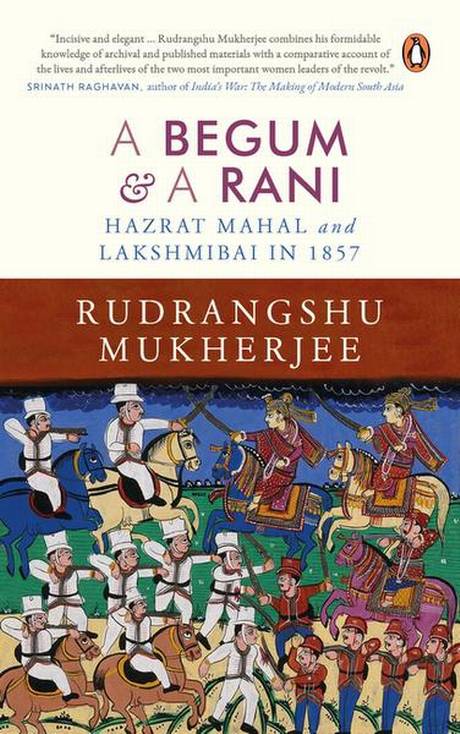
The villain in Rudrangshu Mukherjee’s A Begum & A Rani: Hazrat Mahal and Lakshmibai in 1857 is certainly the British, but it is also time and memory. Mukherjee places Begum Hazrat Mahal, an obscure figure who was integral to the mobilisation of the 1857 revolt — taught to students as “India’s first war of independence” — alongside Rani Lakshmibai, whose life has spurred not just biographies but hagiographies, calcified by myth and movies, the 2019 Kangana Ranaut shriek-historical, Manikarnika: The Queen of Jhansi, notwithstanding.
The book, divided into four parts — Origins, Rebellion, Leadership, Afterlife — is attempting two important correctives.
The first is to give Begum Hazrat Mahal of Awadh her rightful place in history. Daughter of an African slave, she was briefly married to Awadh’s king Wajid Ali Shah, then divorced and left behind in Awadh, as Shah moved to Calcutta after the British annexed Awadh in 1856. She helped mobilise the military and administration of Awadh, which became the war theatre’s centrepiece after Delhi was vanquished by the British. This story is also important to counter the narrative that the 1857 revolt was a pastiche of mindless and uncoordinated violence, because it was meticulously planned. Mukherjee quotes generously, indulgently, with page-long historical anecdotes which could have been paraphrased or woven into the narrative. There are too many anecdotal jolts for a seamless read.
Eventual move
The second objective is to inject some history into the hagiography of Rani Lakshmibai. Mukherjee notes how she wasn’t the ready rebel we think of today. That she even wrote to British officials asking for help, declaring her support to their regime, and it was only when she was pushed against circumstances that she eventually took to the battlefield with vigour, dying in it, memorialised by it.
This is a clever framing here that Mukherjee employs, because there isn’t enough information on Hazrat Mahal to carry an entire book by itself. There isn’t even an available description of how she looked. Her role in the rebellion is behind-the-scenes, and her obscurity is thus, double.
To resurrect her, by pairing her with the most coveted figure of the rebellion — Rani Lakshmibai — is thus necessary, because Mukherjee gets to not just tell their stories, demystified or dusted, but to speak to the larger villainy of historic memory — who gets written about and why?
Putting it in context
Mukherjee is a master of context, providing a sense of the time, even as he is hazy on the details of main events, recounting them as historical facts and not narrations, preferring a depth of detailing around the event over the grip of a historical plot. That said, a map would have been helpful to make sense of the geographic dump of names.
It must be noted, though, that Lakshmibai and Hazrat Mahal never met, and in the 140-page book, their paths, and the paths of their rebellion also don’t cross, as if they were happening in different times, different places.
Sometimes, as a result, the book feels disjointed — that the only reason for having these two stories together is not that they will tangle, but that through comparison, each one’s story deepens, darkens.
Placing these figures side by side, the urge to compare them comes but naturally. Mukherjee’s insistence on Hazrat Mahal’s oblivion comes short of calling her more important and interesting than Rani Lakshmibai. That Rani Lakshmibai fought on the battlefield while Hazrat Mahal fled to Nepal is enough to deify the former, and forget the latter, he finds unfair. That Lakshmibai and her son were receiving pensions from the British government, while Hazrat Mahal who died in obscurity and her son, both refused it, he finds telling. That history is besotted with blood, he finds tragic. That historians can puncture history’s myopia, he finds hopeful. Thus, this book.
A Begum & A Rani: Hazrat Mahal and Lakshmibai in 1857; Rudrangshu Mukherjee, Penguin Random House India, ₹699.
The writer is a critic with a weekly online newsletter titled prathyush.substack.com
source: http://www.thehindu.com / The Hindu / Home> Books> History> Reviews / by Prathyush Parsuraman / October 02nd, 2021
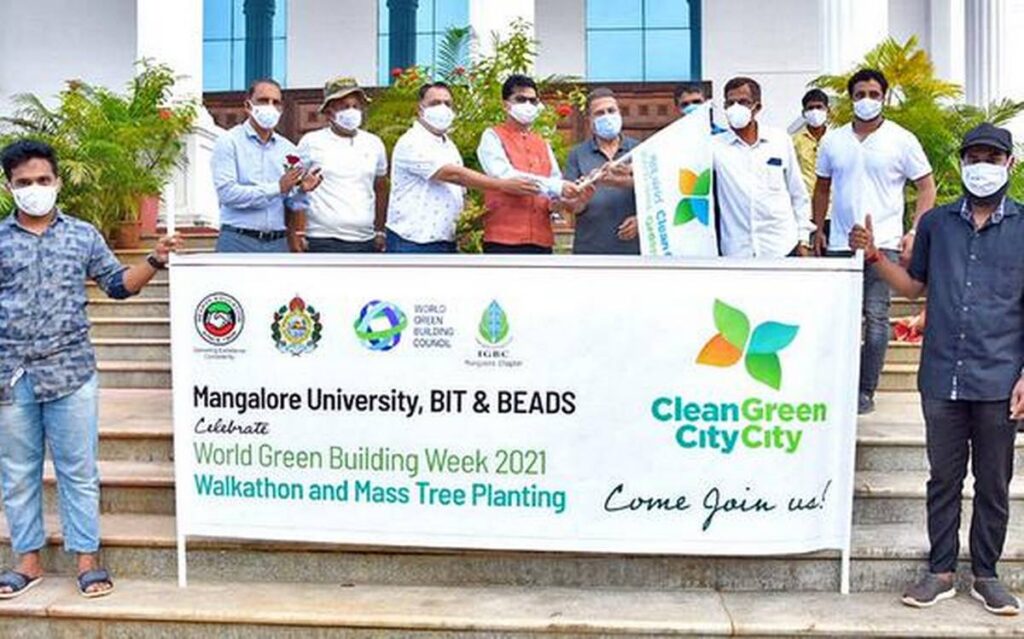
The ‘Green Walkathon – 2021’ organized by Beary’s Group was initiated in front of Mangala Auditorium of Mangalore University on Saturday September 25 morning.
The Green Walkathon, which is a part of the International Green Week – 2021 that started from in front of the university’s Mangala Auditorium moved towards Beary’s Turning Point at Deralakatte.
Mangalore University vice-chancellor, Dr P Subrahmanya Yadapadithaya, said that the environment will automatically become clean if our minds are clean. “We are following the policy of keeping our lives ahead of nature. For our lives to be saved, nature is very important. Therefore, we should join hands to conserve nature,” he stated.
Speaking after presiding over the programme, Beary’s Group president, Syed Muhammad Beary, felt that there is a need to create awareness to encourage a clean and green city. “Nature offers us several gifts. But it is important what we give in return to nature. We cut down many trees when constructing a house or building but we do not take care to plant a tree. Nature becomes green only if we keep planting the saplings. The walkathon is aimed at creating awareness about love of nature and clean environment,” he stated.
Syed Muhammad Beary said that environment in the world keeps on changing and it has cast grave influence on the hman beings. “Therefore, the humans have to strive to protect our earth. We are nothing in front of nature. We are not bigger than nature. We will survive only if we preserve nature,” he stated.
BIT principal, Dr S I Manzoor Pasha, welcomed, BEADS principal A R Ashok Mendonca, Dr Azuz Mustafa, Venkatesh Pai, Santosh D’Souza, BIT – ECE head of the department, Dr Abdulla Gubbi and others were present.
source: http://www.daijiworld.com / Daijiworld.com / Home> Top Stories / by Mohan Kuthar, Daijiworld Media Network – Mangaluru (SP) / September 25th, 2021
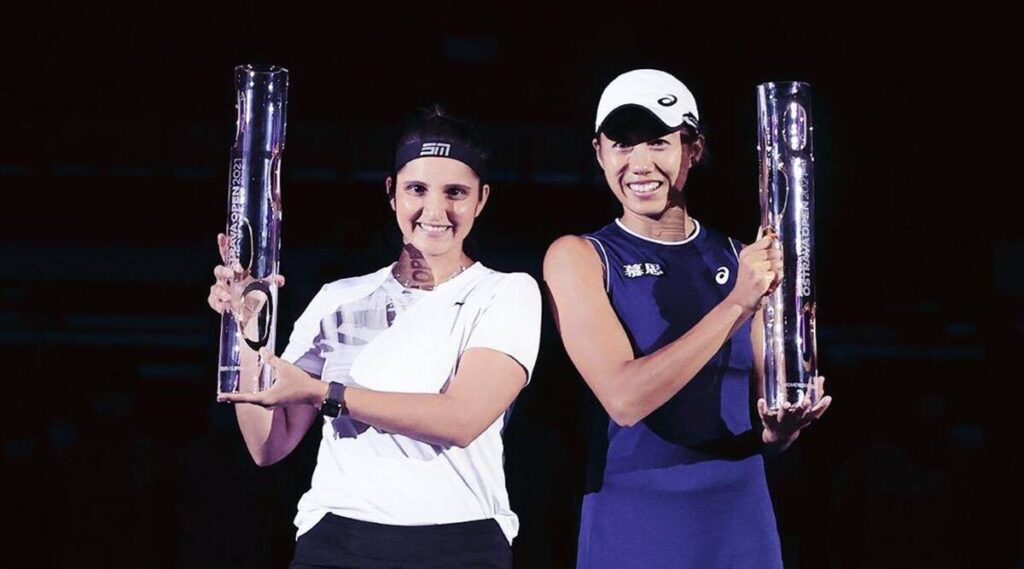
Sania Mirza won her first title of the season as she and her Chinese partner Shuai Zhang (Source: Sania Mirza / Twitter)
Sania Mirza won her first title of the season as she and her Chinese partner Shuai Zhang beat the pair of Kaitlyn Christian and Erin Routliffe in the women’s doubles final of the Ostrava Open on Sunday.
The second seeded Indo-Chinese duo defeated the third seeded pair of American Christian and New Zealander Routliffe 6-3 6-2 in the summit clash in one hour and four minutes.
The 34-year-old Sania and Zhang had defeated the Japanese pair 6-2 7-5 in the semifinals of the WTA 500 event.
It was Sania’s second final of the season, following a runner-up finish at the WTA 250 Cleveland event in the USA last month with Chirstina Mchale.
source: http://www.indianexpress.com / The Indian Express / Home> Sports> Tennis / by PTI / September 27th, 2021
In 2019, 42 Muslims had cracked the exam whereas in 2018 just 27 Muslims had made it to the final result.
UPSC Civil Services Result 2020:
A total of 31 Muslims have cracked the Civil Services Exam (CSE), also known as IAS exam, the result of which was declared late in the night Friday.
This is another dismal performance of Muslim candidates when just 31 Muslims have made to the final list of candidates who will join the civil services cadre.
In 2019, 42 Muslims had cracked the exam whereas in 2018 just 27 Muslims had made it to the final result.
Among the 31 Muslims who cracked the UPSC Civil Services Exam this year 03 – Sadaf Choudhary (rank 23), Faizan Ahmed (rank 58) and Dheenah Dastageer (rank 63), are in top 100 the list of which was released on the official website upsc.gov.in in PDF.
Also among the UPSC toppers are Ria Dabi, sister of 2018 UPSC Civil Service topper, Tina Dabi. Ria Dabi has secured 15th rank in the UPSC 2020 exams.
The Union Public Service Commission (UPSC) on Friday declared the results of exams held in 2020. A total of 761 candidates have been recommended by the Union Public Service Commission for appointment in the bureaucracy of the country.
Shubham Kumar, a resident of Katihar district of Bihar, has emerged as the UPSC 2020 topper. Kumar has done civil engineering from IIT Bombay and hails from Katihar in Bihar.
Apart from Shubham, Jagriti Awasthi and Ankita Jain have secured the second and third positions respectively in the Civil Services Examination.
“UPSC 2020 List of Muslim Candidates”
1) Sadaf Choudhary (Rank 23)
2) Faizan Ahmed (Rank 58)
3) Dheenah Dastageer ((Rank 63)
4) Md Manzar Hussain (Rank 125)
5) Shahid Ahmed (Rank 129)
6) Shahansah K S (Rank 142)
7) Mohammad Aaquib (Rank 203)
8) Shahnaz I (Rank 217)
9) Waseem Ahmad Bhat (Rank 225)
10) Bushara Bano (Rank 234)
11) Md Haris Sumair (Rank 270)
12) Altamash Ghazi (Rank 282)
13) Ahmed H.Choudhury (Rank 283)
14 ) Sara Ashraf (Rank 316)
15 ) Mohibullah Ansari (Rank 389)
16) Aneez S (Rank 403)
17) Zeba Khan (Rank 423)
18) Faisal Raza (Rank 447)
19) S Mohammed Yakub (Rank 450)
20) Sabeel Poovakundil (Rank 470)
21) Rehan Khatri (Rank 478)
22) Mohd Javed A (Rank 493)
23) Altap Mahd. Shaikh (Rank 545)
24) Khan Aasim Kifayat (Rank 558)
25) Syed Zahed Ali (Rank 569)
26) Shakeerahmed Tondikhan (Rank 583)
27) Mohamed Riswin (Rank 589)
28) Muhammad Sahid (Rank 597)
29) Iqbal Rasool Dar (Rank 611)
30) Amir Bashir (Rank 625)
31) Majid Iqbal Khan (Rank 738)
source: http://www.ummid.com / Ummid.com / Home> India> Education & Career / by Ummid.com News Network / September 25th, 2021
Fish, which usually was found on the table during the dinner or lunch of coastal people has now been presented in the form of a crispy eatable which can become a regular item along with tea. The fish chakkuli (chakli) made by four women has succeeded in winning over the hearts of the fish lovers.
Savitri H S, Shaheeda Begum, Naseema an Harishiya, members of Samagra Sanjeevini self-help group of Layila, Beltangady taluk, have sold about 45 kg fish chakkuli during the last 18 days. They sell four varieties of fish chakkuli, i.e. Palak, pepper, Khara and ordinary (saada). Shaheeda Begum and Naseema said they have prepared products like Koduble, Happalam, Sandige and other products by using fish.
Speaking to Daijiworld.com, Savithri said, “We underwent training from August 23 to 28 at Fisheries College. NABARD, Fisheries College, Bharathiya Vikas Trust, Manipal helped us a lot to take up the manufacturing of fish snacks. From September 1, we started with an investment of Rs 25,000. So far, in the last 22 days, we have prepared around 60 kg fish snacks.”
Savitri said that this value added product can be kept for 45 to 50 days and they do not spoil.
Customers who have purchased the fish snacks said that the chakkuli gives the taste of eating the fish itself.
source: http://www.daijiworld.com / Daijiworld.com / Home> Top Stories / by Daijiworld Media Network – Mangaluru (SP) / September 24th, 2021
Around 30 children from outside Kerala are now learning Malayalam at the centre that was initiated by Samagra Shiksha Kerala (SSK) during the pandemic.
Arshi Salim
Kochi:
Arshi Salim, who hails from the Saharanpur district in Uttar Pradesh, is now voluntarily teaching kids of migrant workers at a special training centre functioning under the Block Resource Centre, Kothamangalam. Around 30 children from outside Kerala are now learning Malayalam at the centre that was initiated by Samagra Shiksha Kerala (SSK) during the pandemic.
As many as 41 such special training centres are functioning in the district and aim to educate schoolchildren who do not have access to online classes. Kids of migrant workers and those hailing from tribal areas are largely attending classes at the centres, said Usha Manatt, SSK district in charge.
Arshi, who reached Kerala when she was a Class IV student, learnt Malayalam at Government High School, Nellikuzhi. She bagged A+ in both her Malayalam papers in Class X.
“I wanted to learn and speak Malayalam like Malayalis. So, I approached my teachers in school and they helped me a lot. I could understand the difficulties of a non-Malayali student trying to get an education in Kerala, where the medium of instruction is largely Malayalam. So, I decided to be part of this centre,” Arshi said.
There are two centres functioning under BRC, Kothamangalam where the largest group of migrant children is getting training in the district to converse in Malayalam. Apart from students who come from UP, there are also students from Assam receiving special classes under Arshi. She is currently studying at a computer centre after finishing Class 12.
source: http://www.newindianexpress.com / The New Indian Express / Home> Good News / by Express News Service / September 17th, 2021