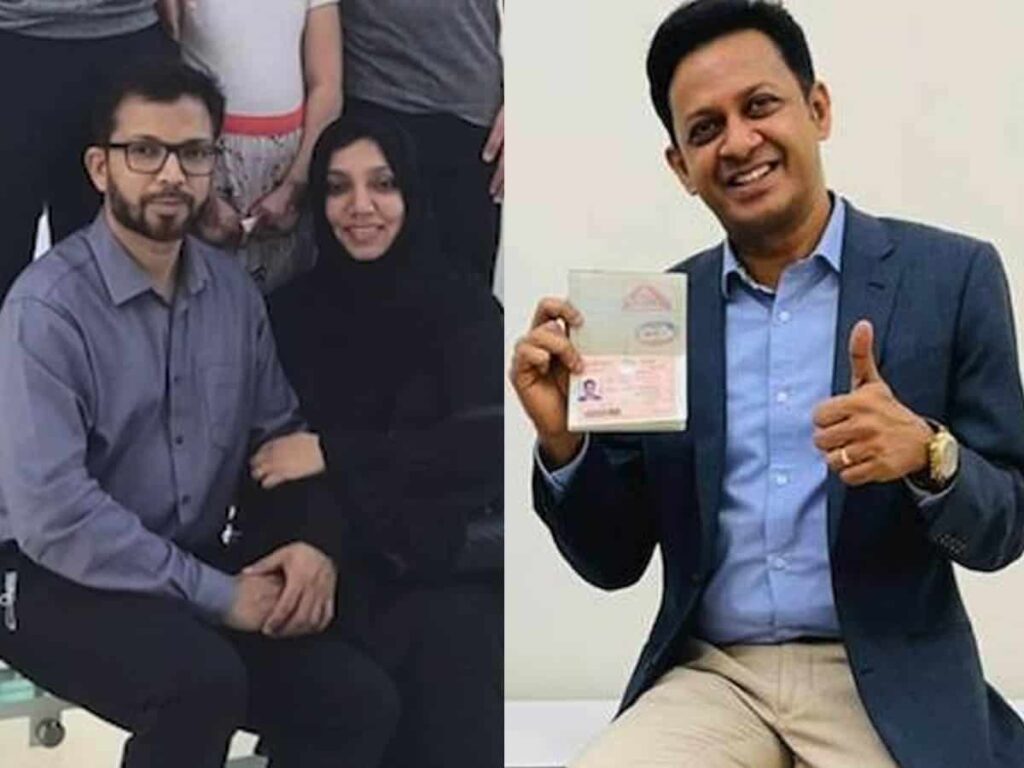
Left Dr Jasna Jamal with family. Right Dr Shyam Vishwanathan
Abu Dhabi:
Two Ayurveda doctors, who are originally from India’s Kerala state and now based in the United Arab Emirates (UAE), have received the Gulf nation’s coveted Golden Visa, according to a media report on Saturday.
A Golden Visa enables foreigners to live, work and study in the country without the need of a national sponsor and with 100 per cent ownership of their business on the UAE mainland.
They are issued for five or 10 years and are renewed automatically.
Both Shyam Vishwanathan Pillai and Jasna Jamal were granted the Golden Visas by the UAE’s Federal Authority for Identity and Citizenship (ICA).
Vishwanathan, CEO of Vaidyashala at the Burjeel Day Surgery Centre in Abu Dhabi, received it under the medical professionals and doctors category on June 17, the Khaleej Times report said.
“My sincere gratitude to the rulers and policymakers of UAE for the kind support to Ayurveda and Ayurveda practitioners,” Shyam, from Kollam, told the newspaper.
“I truly appreciate their vision in integrating the Ayurveda for the wellbeing of UAE residents and at the same time keeping in place strong measures to ensure the quality delivery of Ayurveda practice,” he added.
Shyam came to Dubai in 2002.
A resident of Al Mamzar in Dubai, Jamal, from Thrissur, was given the Golden Visa on June 24.
She moved to the UAE 12 years ago soon after getting married.
With over 16 years of experience in Ayurveda, Jamal established her own Ayurveda clinic in Al Mamzar.
source: http://www.siasat.com / The Siasat Daily / Home> News> Middle East / by IANS/ June 26th, 2021
his is the first part of the series called-Scientist Says-where we would be presenting research works of young scientists in various fields.
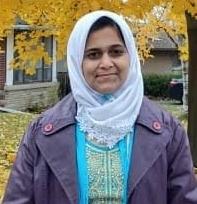
Khadija Kanwal Khanum has done her PhD and Postdoctoral fellow from Indian Institute of Science (IISc), Bengaluru, India (2010-2018). Presently, she is a postdoctoral fellow at the University of Waterloo, Waterloo, Canada. She shares with Rashida Bakait of India Tomorrow, her significant studies and research on “Solar Cells’’.
Q. What was the topic of your research at IISc and a brief explanation about the same?
Ans. The broad topic of my doctoral and postdoctoral research at Indian Institute of science, Bengaluru, was fabrication, characterization and analyses of organic and hybrid photovoltaics (solar cells) to enhance the solar cell’s device performances. Specifically, the title of my doctoral thesis was “Morphological Architecturing of electroactive materials in organic electronics”. In this research, organic and organic-inorganic (hybrid) semiconductor/electroactive materials are used, instead of inorganic semiconductor materials/silicon to fabricate the solar cells. The organic and hybrid materials compare to the inorganic materials/ silicon counterparts are lab synthesized materials with ability to easily tailor the band gap (as semiconductors), and require less energy during their solar cell fabrication hence cost-effective. However, these organic and hybrid solar cells have till now reported, less power conversion efficiency, PCE (>25%) and are less stable in environment and therefore, require extensive research before their wide commercialization.
Q. What was the aim behind your research?
Ans. In this research, a different fabrication procedure was used called Electro-spinning, in order to enhance the light absorption as well as increase the charge (electron-hole) separation in the solar device, thereby increasing its PCE.
Q. What kind of new aspects were highlighted in your research?
Ans. The highlighting parts of the research were 1).The active layer of the solar cell which is generally in a thin film form was modified to fiber and various other forms such as network (Khanum and Ramamurthy, 2016), photonic (Khanum et al., 2017), two and three-dimensional triangles (Khanum and Ramamurthy, 2018) and spike-spheres (Khanum et al., 2015) structures using electrospinning/ electrospraying method. 2). The modified active layers assisted in improving the solar devices’ light absorption by 19 – 31% and PCE by 23 – 68%.
Q. When did you begin and complete your research?
Ans. I joined IISc as a doctoral student, in Aug 2010 and subsequently took few advance and elective courses in polymer science and technology, nanotechnology, vacuum systems, sensors and material characterization for one year, in order to gain knowledge and understanding of the above subjects, which helped me in my research. I started my research sometime around June 2011, submitted my doctoral thesis in July 2015, defended the thesis in July 2016, and continued the research as research associate and postdoctoral fellow till Mar 2018.
Q. What kind of challenges you faced?
Ans. Since organic electroactive materials used in this research are conjugated small molecules and polymers possessing, low molecular weight than conventional polymers hence, fiber formation using electrospinning was difficult. Therefore, lot of optimization of the electrospinning process parameters and modifications of the organic and hybrid materials used such as; preparation time, concentration and solvent used had to be meticulously carried out, during solar cells fabrication. Additionally, maintaining inert atmosphere both, during fabrication and characterization of solar cells required lot of patience and cautions, making this study iterative and time-consuming. For instance, it took almost two years in this study, to obtain first few successful solar cell devices.
Q. Any scholarships or awards for research?
Ans. For my PhD and postdoctoral research, major part of the funding was received as scholarship from Ministry of Human Resource Development (MHRD) and Institute (IISC) research associate fund while during last 15 months; I received scholarship from my Ph.D and Postdoctoral advisor from his project grant. I received few awards and grants to present the research work in various international conferences; Manish Narayan memorial award from Department of Materials Engineering, IISc in 2014, Indian Institute of Science support and grant in 2014 and 2015, Department of Science and Technology (DST) young scientist in 2016 and International Workshop on Advanced Materials (IWAM), Ras Al Khaimah, UAE travel grant in 2016 and 2018.
Q. How do you think your research would be beneficial to industry/ society?
Ans. Energy from sun that strikes the earth in a year is enormous, precisely equals to 3 x 1024 J, or about 10, 000 times more than current global energy consumption. Covering 0.1% of the earth’s surface with 10% efficiency solar cells would suffice the energy demand of the whole world (Siddiki et al., 2010). Therefore, my research of improving the light absorption and PCE of organic and hybrid solar cells through morphological architecturing would be one of the smart tools that can be used to trap and utilize the renewable and sustainable energy resource (solar energy).
Q. What was the conclusion of your research?
Ans. In conclusion, in this research `Electrospinning Processing Technique’ is evaluated as one of the novel processing techniques for morphology patterning, leading to improvements in structural, optical and opto-electrical properties of organic and hybrid electroactive materials. Further these electroactive materials based on morphological patterning were also evaluated as organic solar cells with 19 – 31% increment in light/ optical absorption and 23 – 68% enhancement in PCE (Khanum and Ramamurthy, 2016; Khanum et al., 2017; Khanum and Ramamurthy, 2018).
Q. How do you think your research can be carried forward?
Ans. The research could be extended in studying the life stability and field performance of these solar cells. The research could also be extended by using electrospinning processing technique to generate more morphological structures than studied in this research (mentioned in Q3’s reply) and evaluate their properties in the field of photovoltaics/solar devices. The already generated morphological structures such as network, photonic, two and three-dimensional triangles and spike-spheres structures are made up of organic electroactive materials and can be explored in the field of sensors and medical applications as in drug delivery and as tissue scaffolds, therefore the feasibility in these areas could also be one of the future direction.
Q. Can you brief us about your current research?
Ans. Yes, my research at University of Waterloo, Canada is on nanocomposites materials employed in power industry. As the World’s energy demand seems to be all time high and increasing, the focus of research is now more on renewable and sustainable energy. The power industry needless to mention, acts as a bridge between all types of energy generation and the consumers. In my present work, the importance of nanocomposites materials and its processing with respect to power industry are researched. Nanocomposites are remarkable class of materials, consisting of various types of nanofillers which act as reinforcement in the matrix and thus enhance the desired properties. These nanomaterials have to be dispersed homogeneously in the matrix to gain optimized effects and therefore require special processing tools. Therefore, in this research, processing of various polymer nanocomposites of silicone filled with Silica and Alumina fillers are studied.
Q. Apart from your main research topic, would you like to list any other work you collaborated and worked on?
Ans. Yes, besides fabrication, characterization and analyses of organic and hybrid solar cells, I collaborated and worked on few other interesting topics such as– Developed silk and melanin nanofibers mats for the bio-application such as scaffolds for tissue engineering, evaluated the effectiveness of non-water based cleaning mechanisms for photovoltaic (PV) systems. Studied the influence of dust density and composition on performance of PV systems using Infrared (IR) radiation and assessed magnetic materials and their integration in fibre reinforced polymer composites for structural applications.
source: http://www.indiatomorrow.net / India Tomorrow / Home> Education / by Rashida Bakhait, India Tomorrow / March 17th, 2021
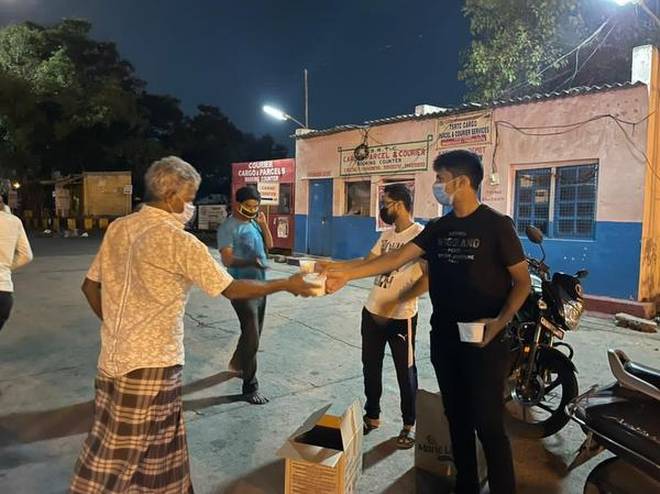
Volunteers distributing food | Photo Credit: special arrangement
Mohd. Abdul Yousuf and his team of volunteers networked across the nation to help tackle the second wave of the pandemic
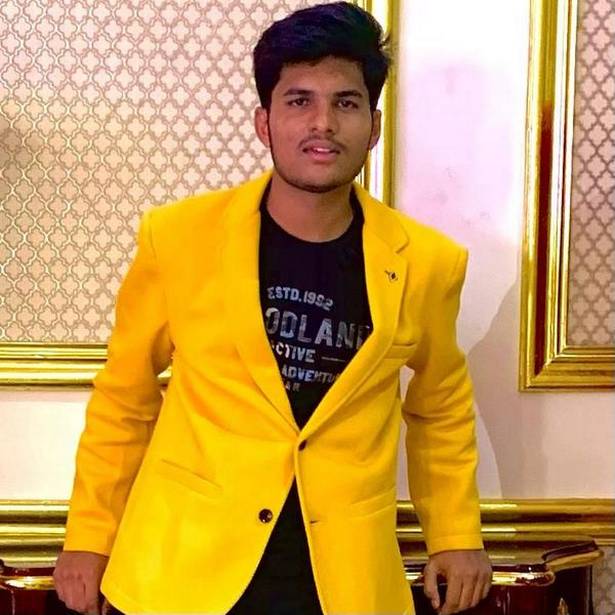
When Hyderabad-based Mohd. Abdul Yousuf, a fourth-year student of Symbiosis Law School in Hyderabad and his friends wanted to feed the needy hit by COVID-19, they could not afford to hire a chef at ₹1,200 per day to prepare a meal with 25 kilograms of rice. Undeterred, the boys watched cookery channels to learn to prepare it themselves. Now, the team of volunteers of Helping Humans Hyderabad founded by Abdul, packs 400 dinner boxes and distributes them at Tadbun, Charminar, Government Maternity Hospital in Afzal Gunj, Mahatma Gandhi Bus Station, Osmania General Hospital, Hyderabad Railway Station at Nampally, Public Gardens, MNJ̥ Cancer Hospital and Niloufer Hospital. “We make kaju, lemon and jeera rice and even made chicken biriyani sponsored by a friend,” says Abdul.
Mohd. Abdul Yousuf | Photo Credit: special arrangement
Helping Humans Hyderabad is among several voluntary organisations helmed by youngsters to verify leads, identify and share information on hospital resources and medical supplies to help tackle the second wave of the pandemic. However, Abdul’s organisation reached out beyond Hyderabad to Bengaluru, Gujarat, Delhi, Patna and Kerala as he networked from his contacts across India.
It started when Abdul posted a friend’s plasma request on his Instagram account. Buoyed by the response and backed by his associates: Lamya Hussaini, Molshree Totla and Ismail Zabiullah, he launched Helping Humans on April 16, his birthday, to amplify appeals for help. “We launched the page at 9 pm and at 1.30 am, we got a request for an oxygen cylinder,” he recalls.
Abdul and four core members of Helping Humans pooled ₹20,000 from their pockets to steer the network. With friends across India, he created a network of individuals to provide info from their cities; volunteers then verified the leads and updated the information on a Google spreadsheet. ‘If you are sitting idle at home, give your time to us,’ was their message on social media, inviting volunteers to be part of the initiative which had more than 200 members from across India. The office of Kavitha Kalvakuntla responded to their tweets for hospital resources; which not only helped in closing the requests, but also airlifting a passenger from Bihar to Hyderabad.
“Oxygen shortage was a major one during those dreadful two months,” shares Abdul, adding that his phone has not stopped ringing since April. Most of the 400 to 500 calls used to be for oxygen cylinders. The team purchased these cylinders for ₹60,000 from their own pockets. “Now the calls for cylinders have reduced to 50; and enquiries now are for oxygen concentrators.”
Abdul hopes to find more sponsors for their free food distribution programme. “We are glad we were able to make at least a small difference,” he concludes.
source: http://www.thehindu.com / The Hindu / Home> Society – Relief Work / by Neerja Murthy / Hyderabad – June 18th, 2021
Besides Razia Sultana, 03 other Muslims have also qualified the coveted exam to become Deputy Superintendent of Police (DSP) in Bihar Police
Patna:
Razia Sultana has become the first Muslim female from Bihar to become Deputy Superintendent of Police (DSP) in the state police department.
Razia Sultana, 27, cracked the Bihar Public Service Commission (BPSC) 64th Combined Competitive Exam (CCE) in her first attempt and was recommended for the post of Deputy Superintendent of Police (DSP).
Raziya Sultana originally hails from Gopalganj district of Bihar. Daughter of Mohammad Aslam Ansari, a stenographer at Bokaro Steel Plant who died in 2016, Razia Sultana completed her education from Bokaro in Jharkhand and Rajasthan.
A total of 1,454 candidates have qualified Bihar Public Service Commission (BPSC) 64th Combined Competitive Exam (CCE) result of which was declared on Sunday June 6, 2021.
“04 Muslims become DSP”
Of them a total of 28 candidates have been selected for Bihar Administrative Service, 40 for Bihar Police Service, 10 for Bihar Finance Service (Commercial Tax Officer), 02 for Jail Superintendent and 8 for Sub Registrar/Joint Sub Registrar.
Besides Raziya Sultana, 03 other Muslims have also qualified the coveted exam to become Deputy Superintendent of Police (DSP) in Bihar Police. They are: Mohammed Adil Belal, Faisal Raza and Mohammad Shahnawaz Akhtar.
“No Gender Discrimination”
While preparing for the Bihar Public Service Commission (BPSC) exam, Razia Sultana was working as Assistant Engineer at local electricity department.
Razia had passed the 12th board exams from Bokaro and later graduated from Jodhpur in Rajasthan and earned a degree in Electrical Engineering.
“Besides other things, there was no gender discrimination vis-à-vis education and learning in my family. This is why my mother had no objection when I got admission in a Jodhpur college to complete my graduation”, Razia said while sharing her success mantra.
source: http://www.ummid.com / Ummid.com / Home> India> Education & Career / by ummid.com News Network / June 09th, 2021
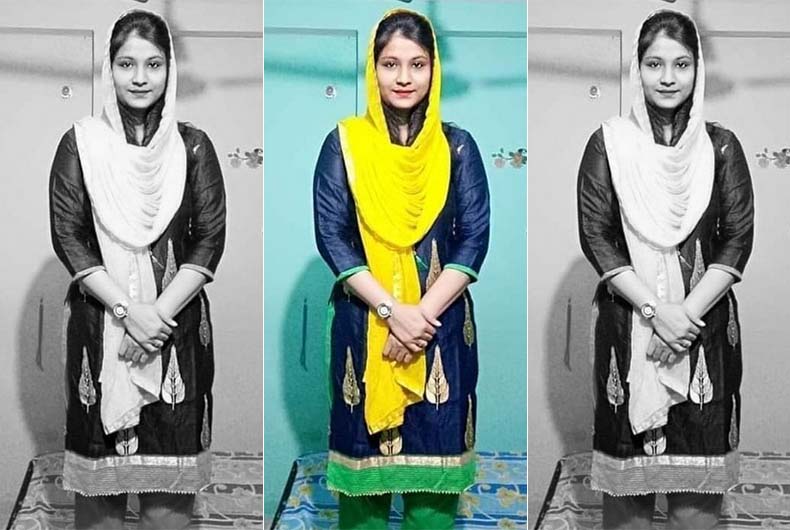
The world is in chaos. The pandemic happened when none of us were expecting it. It has been one of the most disastrous and depressing things throughout history. It wasn’t in our plans, but it happened. People have lost their jobs and their loved ones. Moreover, people are losing their will to live. The lower class of society is struggling. They are even lacking the necessities needed to survive. However, the pandemic has given rise to people who have come forward to help poor, needy, and unarmed people to fight the pandemic. These people are the warriors of the nation and Sofia Khan is one such warrior.
Sofia Khan cleared School Service Commission in 2009 and was the topper of her zone as well. Then, she was appointed as a government school teacher. However, she is also a social activist, chairman, and founder of the ‘Sufi Humanity Foundation,’ a no cash or fund transfer NGO. She is a very active participant in the improvement of our society. She has been given the post of secretary in the NGO named ‘Udaan Empowering Women’ in the year 2016 and then in the Rotary Club of Kolkata in 2018. Her performance was remarkable in the two organisations. She then joined the TMC Minority Cell, West Bengal, as a general secretary.
Sofia Khan has organized various literacy awareness campaigns in different states of the country as she is the president of the Sarparast Literacy Awareness Movement in West Bengal. She has also participated in many debates in national media as a panelist from the TMC. She conducted campaigns and rallies for TMC during the 2021 West Bengal elections. She has continuously been a keen supporter of girls, always ready to support and empower them. She helped the girls of the Milli Al-Ameen College for Girls by joining their protest against injustice to the college students. These girls were not being allowed to sit for their exams due to the college’s internal disputes. Sofia fought for them and got them justice.
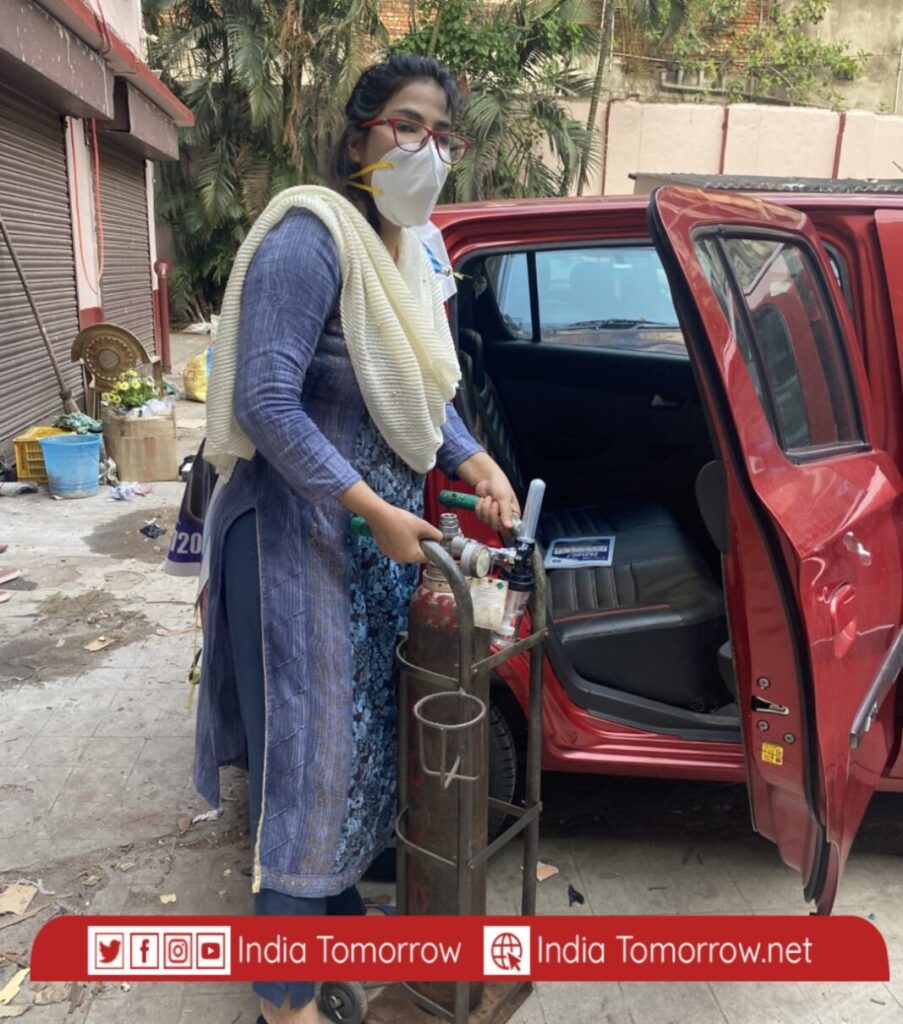
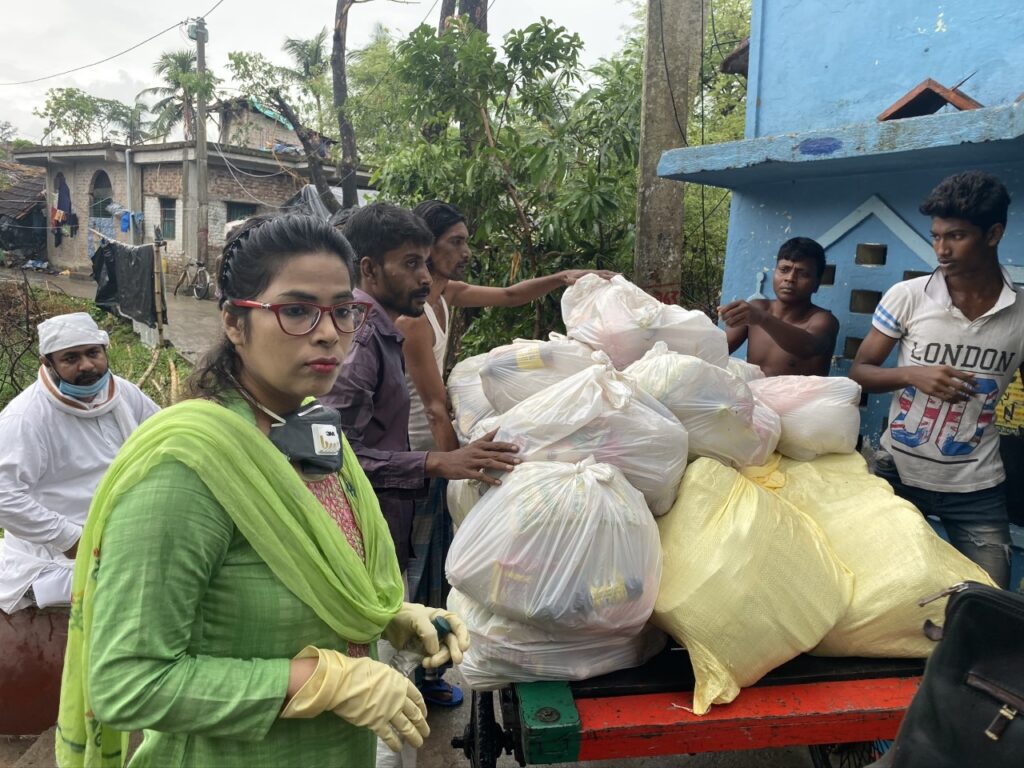
It’s commendable and worth mentioning how she did not waver from her motive of helping the people even in lockdown. Sofia Khan has helped many people by providing them food amidst the lockdown. She sent back numerous migrant labourers to their native places during the first phase of the lockdown in 2020. This year when second wave was on its peak and people were dying without oxygen she was there to help people across West Bengal with free oxygen cylinders. She later extended the help and converted four cars into free ambulance service with oxygen cylinders for Covid patients. When the state was hit by a deadly tropical cyclone called the ‘Amphan’, Sofia Khan, along with her team distributed tarpaulins and ration to almost a thousand families. She also showed her support during the Yaas cyclone. She sent relief materials like biscuits, cakes, drinking water containers each of 20 litres, clothes, etc. to the affected families. Her works and contributions have also been recognized by the Sanmarg Hindi daily, Echo of India, Awami News, etc.
Life has been tougher than usual for all of us but that doesn’t stop some of us from being an inspiration to others. While our nation and the world are fighting against the pandemic, it is important that we stay alert and be responsible for each other. We need to support and help those who are unable to survive on their own. Warriors like Sofia Khan do not wait for a chance rather they create the opportunity to help others because they realize that ‘Warriors are not born, but self-made’.
(The author of the article is a freelance journalist).
source: http://www.indiatomorrow.net / India Tomorrow / Home> Featured> National Interest / by Meer Faisal / June 18th, 2021
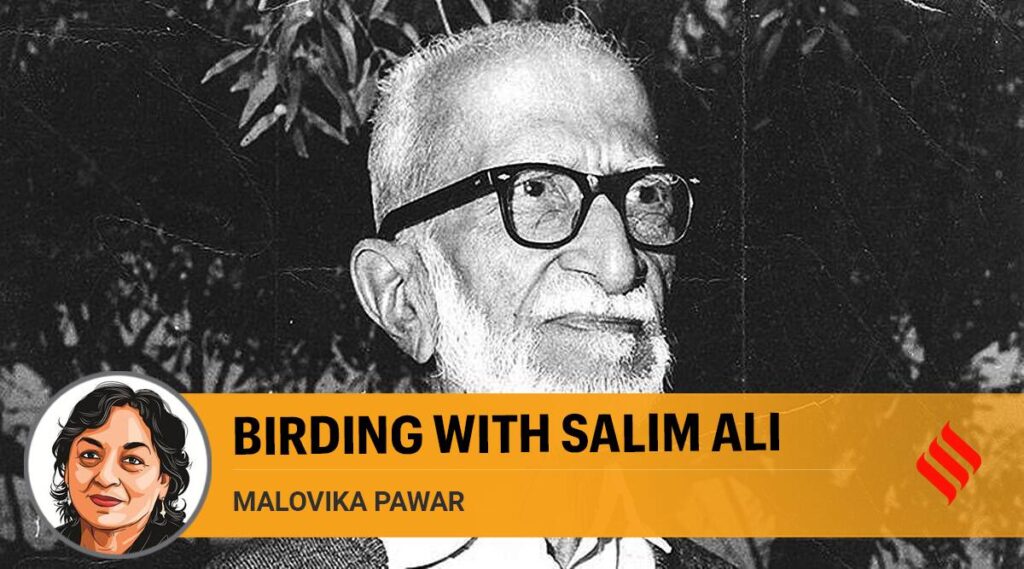
Glossier, more attractive birding books have been published in the 80 years since Ali’s guide first appeared, but it remains indispensable.
The first edition of Salim Ali’s book appeared in 1941. (Source: Wikimedia Commons)
It is a small book, my copy of Salim Ali’s The Book of Indian Birds — a hardcover version, bound in green, a mere 187 pages. I have the 1979 edition. The cover is long gone, leaving behind a few tatters of the original, but I am hard put to think of a book I have treasured and used as much. The book and an old pair of Bushnell binoculars acquired some 20 years ago are a part of my essential travelling kit, as essential as a toothbrush and comb.
The first edition of the book appeared in 1941. Jawaharlal Nehru , a keen nature lover, gifted a copy to his daughter while lodged in Dehradun jail.
Ali was quite matter-of-fact in his autobiography, The Fall of a Sparrow. According to him, the book was “acknowledged as largely responsible for creating and fostering much of the interest in birds and birdwatching seen in the country today”. Indeed, for people of a certain generation, no other guide has been valued and loved in the same way, and even among Ali’s other classic works, it is this book that has iconic status among Indian birdwatchers. While setting off on a birding trip, we would ask each other: “Have you taken your Salim Ali?” Or: “Oh, no, I forgot my Salim Ali.” It was always the small green book that we were talking of. It is the essential — the foundational — field guide for Indian birders. It is now in its 13th edition. No other book can take its place.
I came to birdwatching by serendipity. No one on either side of my family was even remotely interested in birds. By a throw of the dice, I was allotted Bharatpur for my district training in the IAS. The Keoladeo Ghana National Park beckoned. I was hooked. Ali, who had done more than anyone alive to create this “Garden of God” out of a Maharaja’s private wetlands reserve, was still alive, and visited a few times while I was there. Two bird guides, Sohan Lal and Bholu Khan, still active today, were being trained by him and other naturalists. They were to mature into fine birding guides, much in demand.
The Book of Indian Birds is where we learned our basic vocabulary of birdwatching. For instance, we learned that “pied” meant black and white, that “rufous” meant reddish-brown as in rust or oxidised iron, and that “fulvous” indicated tawny. Every carefully chosen word signified something. The clarity and the precision of expression meant that in a short half-page entry, we would have all the necessary information about a species. Each write-up was organised around five or six points — size, field characters or appearance, distribution, habits, food, call and nesting. Size was always charmingly described as myna plus, or house crow minus, or with reference to a sparrow, a bulbul or other common bird. Under “field characters”, Ali beautifully and accurately described the appearance: Colour of the feathers, the shape of the bill, silhouette in flight. A crimson-breasted barbet was “heavy-billed”, a blue-throated barbet “a gaudily coloured, dumpy green, arboreal bird” and the common grey hornbill a “clumsy brownish-grey bird”. Birds are described variously as handsome, squat, soft-plumaged, lively, dapper, dainty, spruce, slim, perky, well-groomed. The common roller or blue jay (neelkanth) is described as a “striking, Oxford and Cambridge blue bird”.
People who have always noticed the easy readability of the prose might not be aware that Ali himself gave credit to his wife, Tehmina, for ironing out the “stilted passages” and for “moderating the language”. He did not fail to praise her “remarkable feeling for colloquial English prose style”.
My Salim Ali bears the marks of the trajectory of my life, where I went, what I did. It is not merely well-worn and well-thumbed, with an unravelling spine and precarious binding; it also bears the added signs of pickle stains and tick marks in ink and pencil. Like me, it has seen better days. I know that many bird guides have been subsequently published with much better production values and better colour plates. I am aware that many of the illustrations in the Salim Ali book are decidedly not true to life. For instance, never did a rosy pastor look as pink in real life as it does in the book. But this is mere quibbling. The core and kernel of the book is that it communicates to us so successfully the magical universe of the birds of India.
The international jury which selected Ali for the J Paul Getty Wildlife Conservation Prize of the World Wildlife Fund in 1975 said in its citation: “Your message has gone high and low across the land and we are sure that weaver birds weave your initials in their nests, and swifts perform parabolas in the sky in your honour.”
On his 34th death anniversary on June 20, it is time to remember the book that Ali gave us, which took us on this magical journey to the birds.
This column first appeared in the print edition on June 19, 2021 under the title ‘Birding with Salim Ali’. The writer is a former IAS officer.
source: http://www.indianexpress.com / The Indian Express / Home> Opinion> Columns / by Malovika Pawar / June 19th, 2021
The award is given by a US-based non-profit entity Sir Syed Education Society of North America (SSESNA)
Aligarh:
Twenty-eight students from various departments of Aligarh Muslim University students (AMU) have been selected for the prestigious Sir Syed Global Scholar Award (SSGSA) for the academic session 2021-22.
The award is given by a US-based non-profit entity Sir Syed Education Society of North America (SSESNA).
Announcing the award, Salman Bin Kashif, Chair, SSGSA Programme and a past beneficiary of the programme, said:
“The quality of applications continues to improve each year. In the coming years, it will serve the students well if they go the extra mile in building their overall profiles through projects and internships while being diligent in learning the fundamental concepts of their respective subjects. We will continue to strive for expanding our programme”.
He said a record number of applications were received from the faculties of Arts, Commerce, Humanities, Science, Medicine, Life Sciences and Engineering and Technology.
“Experts from each discipline evaluated the applications independently and the shortlisted students were invited for an online interview as a part of a rigorous selection process”, he said.
Kashif said that several faculty members from prestigious universities in the US, who were on the interview panels this year included Dr Farhan Ahmad (Honeywell International Inc), Prof Abrar Alam (Arkansas State University), Prof Nawab Ali (University of Arkansas), Prof Asim Ansari (Columbia University), Dr Ruchi Dana (Dana Corporation), Dr Shabih Hasan (Delos), Prof Syed Hashsham (Michigan State University), Prof Shakir Husain (Youngstown State University), Dr Afzal Hussain (Aligarh Muslim University), Prof Asad Ullah Khan (Aligarh Muslim University), Dr Sayeed Mohammad (Fractionation Research Inc), Dr Ahsan Munir (Vertex Pharmaceuticals, Inc), Prof Sultana Nahar (Ohio State University), Prof Bushra Sabri (Johns Hopkins University), Prof Yasmin Saikia (Arizona State University) and Prof Samina Salim (University of Houston).
“SSGSA Merit List”
Kashif said that the Final Merit List was compiled by taking into account various evaluation criteria like the CGPA, projects, internships and extracurricular activities.
“All the selected SSGSA scholars will be provided personalized mentorship, financial aid for the required standardized tests (GRE/GMAT, TOEFL/IELTS), and university application fees for up to five universities. The applicants who could not make it to the final list will be offered mentorship and guidance by the organization so that they can also continue with their academic goals”, he said.
“List of Past SSGSA Scholars”
Kashif said that the list of more than 120 past SSGSA scholars is also available on the SSGSA website: “www.ssgsa.us“. Many of the SSGSA alumni have successfully graduated with Masters and PhD degrees and are professionally placed across the globe, and some of them are currently volunteering for the SSGSA programme.
The selected SSGSA scholars are Aafiya (Physics), Ayush Agrawal (Mechanical Engineering), Sehrish Akhtar (Physics), Danish Alam (Physics), Ayesha Nasir Alavi (Law), Mohammad Anas (Computer Engineering), Bushra Ansari (Biochemistry), Mohd Mushfique Javed Ansari (Architecture), Samina Irshad Ansari (Psychology), Heena Aslam (Electrical Engineering), Mohd Abdul Baseer (Physics), Mohammad Fahad (Electrical Engineering), Aqib Faraz (Commerce), Ifrah Farid (Biochemistry), Harshul Gupta (Physics), Arsalan Hameed (Computer Engineering), Saman Jafri (Biotechnology), Faisal Jamal (Biochemistry), Faraha Javed (Medicine), Shahrukh Khan (Electrical Engineering), Tayyibah Khanam (Electrical Engineering), Yusra Meraj (Electronics Engineering), Madiha Noman (English), Kunwar Muhammed Saaim (Computer Engineering), Saba Sarwar (Computer Science), Md Showgat Jahan Shourave (Economics), Mohd Talha (Physics) and Amber Tanweer (Law).
The SSGSA core team, consisting of the present Chair Salman Bin Kashif (Clemson, South Carolina, USA), founding members Syed Ali Rizvi (Boston, Massachusetts, USA), Dr Saif Sheikh (Chicago, Illinois, USA), Dr Rehan Baqri (Boston, Massachusetts, USA), Dr Shaida Andrabi (Srinagar, Kashmir, India), and former chairs Dr Mohsin Khan (Providence, Rhode Island, USA), Ali Muzaffar (Atlanta, Georgia, USA), and Dr Wasikul Islam (Geneva, Switzerland), expressed gratitude to Prof Asad U Khan, Prof M M Sufyan Beg and Omar Peerzada for their help to SSGSA activities on campus.
source: http://www.ummid.com / Ummid.com / Home> Education & Career / by Ummid.com News Network / June 11th, 2021
Relief organizations of Hyderabad, run by Muslims, have come to the rescue of the state and offered help to fight the shortage of Oxygen.
A TCN Ground Report features some of them.
Amid a surge in Covid-19 cases in Hyderabad in the southern Indian state of Telangana and rise in deaths due to the virus, the severe shortage of oxygen, ventilators and beds in both the government and private-run hospitals exposed the shortfalls of the healthcare system of the state.
Reports said that many patients were turned away from the hospitals due to a shortage of beds and died in their homes. Those admitted to the hospitals died due to lack of oxygen supply and delay in oxygen tankers reaching them. This lead to hundreds of deaths in Hyderabad alone.
Reports also said that hospitals were overcharging Covid-19 patients. These factors contributed to many people choosing to opt for home treatment.
It was then that the relief organizations of the state, run by Muslims, came to the rescue and offered help to fight the shortage of Oxygen.
Talking to TwoCircles.net, Shiba Minai, an activist said, “I make at least 50 to 60 calls to get a bed for a patient”.
Shiba helps people by connecting them with groups, hospitals and organizations that have been helping patients with beds and oxygen facilities.
Shiba has been doing relief work since the first wave of the Covid-19 pandemic by providing food for the homeless, migrants, poor people in the slums. She has also helped with the funeral services of the victims.
She said that a lot of people reach out to her during crisis time. To help these desperate families, she would seek financial help from friends and family members.
“I get calls from people who are unable to find a bed or oxygen if they are already in the hospital or are under home treatment. Then, I call up hospitals and once I get the right hospital, I then connect the patient or the attendant to that hospital,” she said.
Shiba said the work she does is exhausting. “Making several calls to hospitals that want to know how much can the patient be able to pay and meanwhile handling calls from attendants of patients is taxing,”.
Talking about an incident wherein a 45-year-old woman whose saturation levels dipped low and her family could not find a hospital with a bed, Shiba said that she tried her best but “the hospitals refused to admit her after coming to know that her oxygen levels were quite low and she had fewer chances of survival.”
The family of the patient roamed to 6 hospitals, who earlier had assured of the availability of bed refused to admit her once they saw the saturation levels. The woman was taken home where she later succumbed.
“I tried to help this lady from 9 p.m. till the wee hours of the morning when it was time for Suhoor (early morning meal during the Muslim month of Ramadan). Sadly, she could not be saved,” Shiba said in a sad tone.
Although Shiba has helped sixty persons with beds with oxygen facilities, what makes her sad is that the “number of patients who I could not help is higher than the ones I helped.”
Shiba is not alone in doing Covid-19 relief work. Like her, several organizations have helped Hyderabad overcome the Covid-19 crisis from the last year. This year too they have come forward to battle the oxygen shortage in the state.
‘Oxygen on Wheels’
Mohammed Asif Hussain Sohail, the chairperson of Sakina Foundation, who is popularly known as the ‘Hyderabad Hunger Warrior’ for feeding the hungry for more than 10 years, has been receiving close to 200 calls every day from patients who are being treated at home. He also gets calls from hospitals especially Osmania and Gandhi General Hospitals requesting him for oxygen facilities.
“The price of oxygen cylinders is quite high at Rs 30,000 and the cost of refilling has gone up to Rs 2500 which a common man cannot afford,” Sohail said.
Md Asif Hussain Sohail of Sakina Foundation
Sohail said that as hospitals are running out of oxygen and due to black marketing, he has to verify if the patient needs oxygen or not before helping.
“Sometimes, they don’t need oxygen and we have to counsel and advise them not to give in to their fear and explain to them that a needier person requires it more,” he explained.
Sohail claims that he has “spent more than Rs 10 lakhs from his pocket to buy cylinders and send them to the homes of the needy.”
“Every day, in Hyderabad itself, my Foundation has provided more than 200 free cylinders. We have reached out to at least 2000 people so far,” he said.
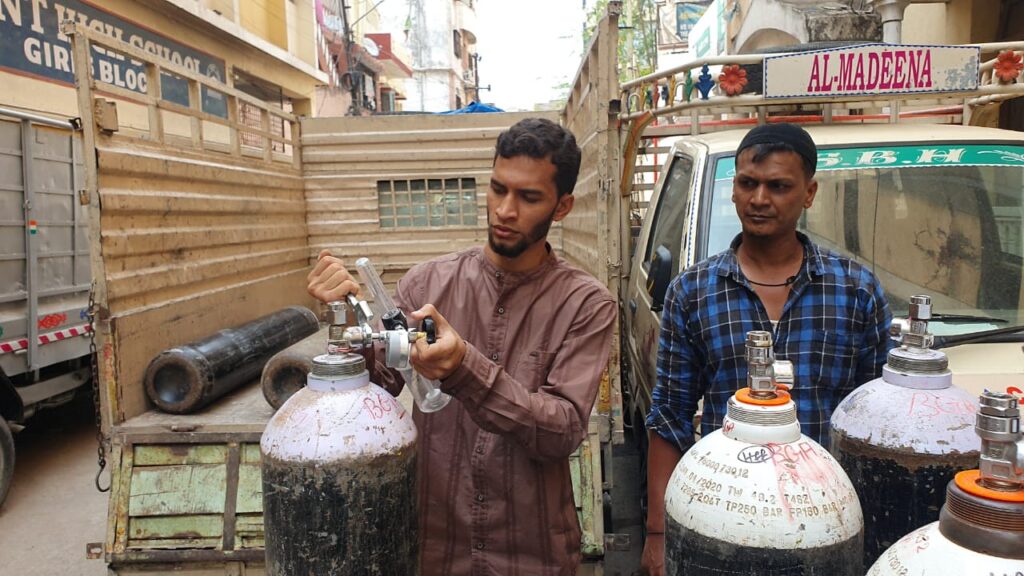
Oxygen on Wheels is another initiative of the Sakina Foundation. As part of this initiative, oxygen cylinders are provided to patients who are on their way to the city for treatment from their towns and villages.
“Many people were dying on the way to Hyderabad. Not being able to get proper treatment in their villages they would travel to advanced hospitals in the city. The patients would only be saved if they arrived on time and if the hospital had oxygen,” he said.
“I wanted to save lives so I came up with this idea to provide emergency oxygen cylinders on the highway,” Sohail said.
As soon as they receive an SOS call, his volunteers drive to the spot where the patient is and help him/her with the oxygen.
Sohail said that they have driven up to 200 kilometers to provide oxygen to a patient on the highway.
“Patients were coming not just from the districts of Telangana state but also from Bhopal, Maharashtra, Karnataka. We met them all on the highway and immediately helped them with the oxygen if their saturation levels were low,” Sohail said, adding, “Nearly 150 persons were helped on the highway.”
Sohail said that “love and compassion are necessities, not luxuries.” “Without it, humanity cannot survive,” he added.
700 people given oxygen aid by Helping Hand Foundation
With the oxygen crisis in the state, volunteers of the relief organization Helping Hand Foundation (HHF), headed by Mujtaba Aksari, have been at the forefront.
The group distributed a flyer with their contact numbers for people to seek help in cases of Covid-19 emergency. The group also provide help with giving decent funeral services to Covid-19 victims deaths irrespective of religion.
Mohammed Fareedullah, who heads the project told TwoCircles.net, “When we receive a call for help, our doctors consult them online and based on the doctor’s recommendation, if the patient needs oxygen, we advise the attendant to come to our godown and take the oxygen cylinder without paying any advance or rent.
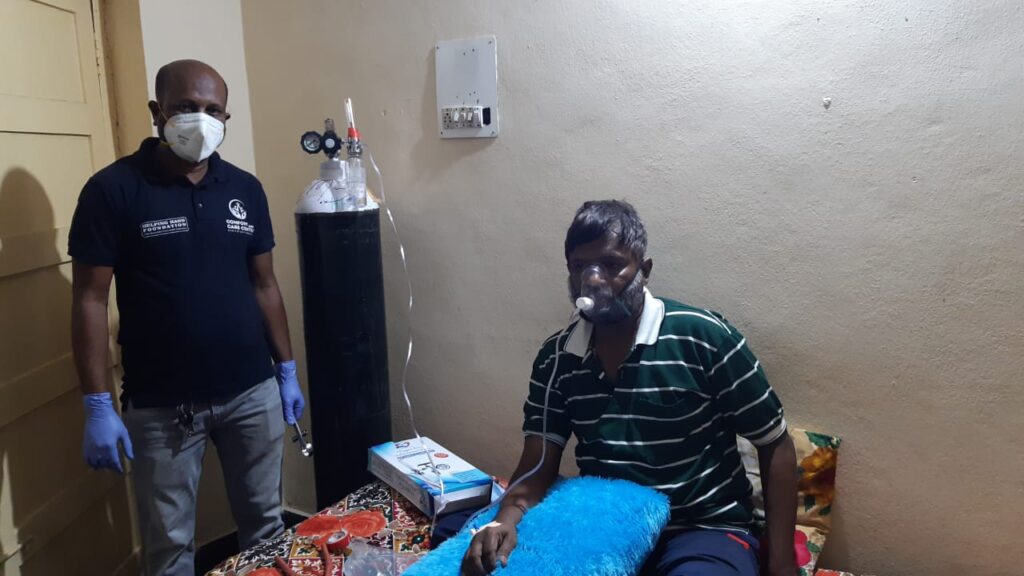
A patient receiving oxygen help from HHF | Photo by HHF
Fareedullah said that the families of the patients just have “to pay the refilling charges.”
“The plant where we get the cylinders refilled have begun to charge double of what they used to charge earlier. But we charge the people a nominal amount,” he said.
“The cylinders provided by HHF are usually for home patients but if the patient develops complications and their saturation level drops despite the oxygen therapy then we help them reach the hospital where again our counsellors in the hospital help them with other needs. When the patient recovers and is discharged we ferry them home in HHF ambulances. If they do not recover the volunteers help the family with the last rites too,” explained Fareedullah.
Helping Hands Foundation owns about 15 ambulances which are free for all patients. The group has 100 cylinders and a luggage trolley to transport the cylinders to the houses of people who cannot come to their go down.
To date, HHF claims to have helped more than 700 people covering the entire old city and many other localities.
Humanity First Foundation: from feeding hungry to procuring Oxygen
Mohammed Shujatullah,founder of relief organization Humanity First Foundation has been feeding patients and their attendants at three government hospitals for the last 5 years.
One day when Shujatallah received a call requesting help with oxygen, he decided to buy cylinders and give them for free to patients and then refill the empty ones and help whoever needed them. “Prices had doubled for both the oxygen cylinders and for refilling but through donations to Humanity First, I continued helping people every day with the 110 cylinders we have,” he said.
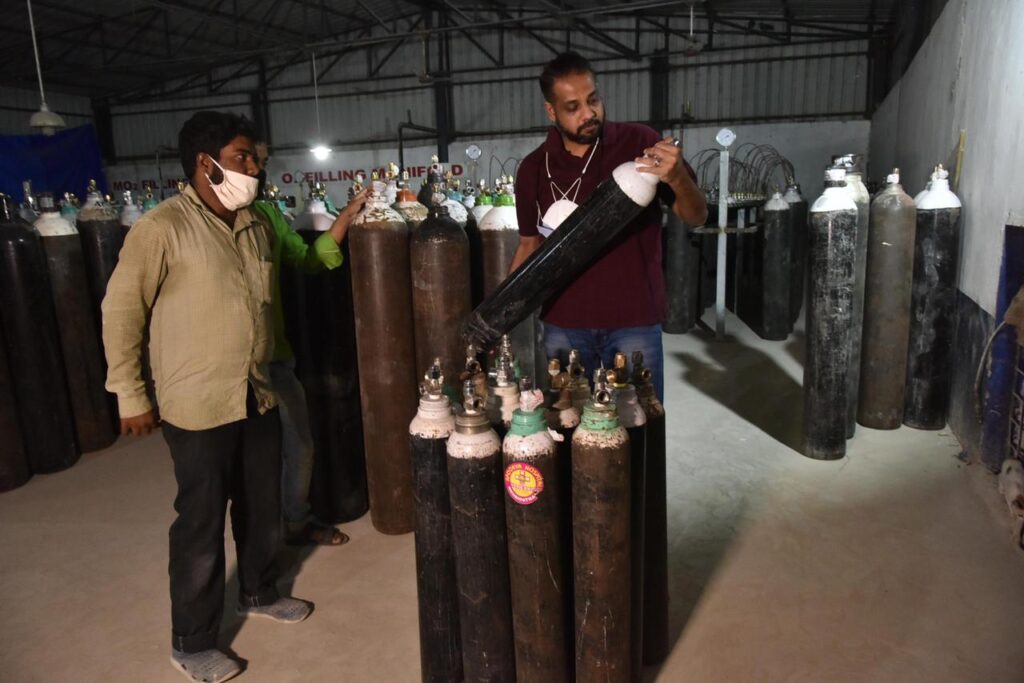
Md Shujatullah of Humanity First Foundation checking oxygen cylinders | Photo by HFF
His organization has an ambulance, which carries the oxygen cylinders to hospitals and homes of patients.
In the month of Ramadan, Shujatallah said that his foundation received good donations and he managed to help as many people as was possible for him.
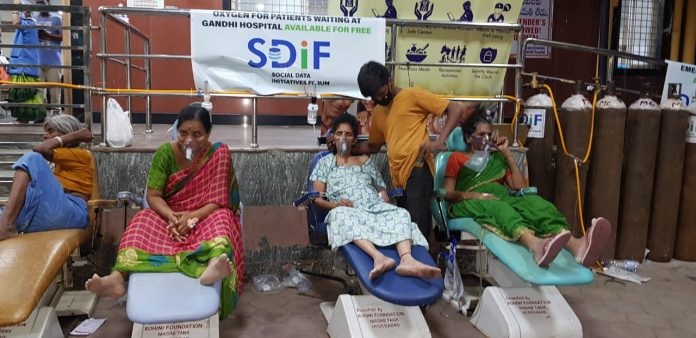
Patients at the gate of a hospital supported by SDIF | Picture: SDIF
‘Our motive to save lives keeps us going’
Another local initiative known as Social Data Initiative Forum (SDIF)founded by Azam Khan and Khalid Saifullah started oxygen services during the first wave of the pandemic with their stock of 15 cylinders.
During the second wave, as the oxygen crisis has only gone worse, the group has been adding to their stockpile of oxygen cylinders.
The founders said that they had to pay more than the normal price for both purchasing and refilling the cylinders.
“Our services are not restricted to just providing oxygen cylinders. We also set up an oxygen bank at Government notified Covid-19 hospitals where usually the poorest of the poor come to access health care. People from the rural parts come to Hyderabad with hopes of quality treatment and they face a lot of hurdles waiting to get admitted after already having travelled a long distance,” Azam Khan said.
“The waiting period at the hospital and the travel time further delays the process of the treatment, which is why we opted to help in the government hospitals,” he clarified.
In Gandhi Hospital alone, which is the largest Covid-19 hospital of Hyderabad, Azam Khan said they have “20 oxygen cylinders in circulation which are serving at least 400 patients per day.”
“This supply of oxygen is crucial to their recovery,” Khalid added.
Apart from the 20 cylinders, they have 100 more cylinders at the other two government-run Covid-19 hospitals of Hyderabad.
They said they have helped more than 100 people so far.
Azam Khan narrated an experience that made them realise the significance of their work.
The King Kothi Government hospital had requested SDIF to set up an oxygen bank.
“I felt we had to start the work immediately and even though it was Sunday, our team went to the hospital. As soon as we reached the hospital, we saw four dead bodies being carried away. We were told the hospital had run out of oxygen causing the death of these four persons. We immediately set up our oxygen cylinders. Later the doctors informed us that our timely help had saved three persons who were critical and would not have survived had we not reached on time. This experience both saddened us and also made us feel happy that we could at least save the lives of other three persons,” he said.
“Our motive to save lives keeps us going,” the duo said.
The SDIF is helped by two other charity organizations from Hyderabad namely Safa Baitul Maal and Access Foundation, who work in close collaboration with them.
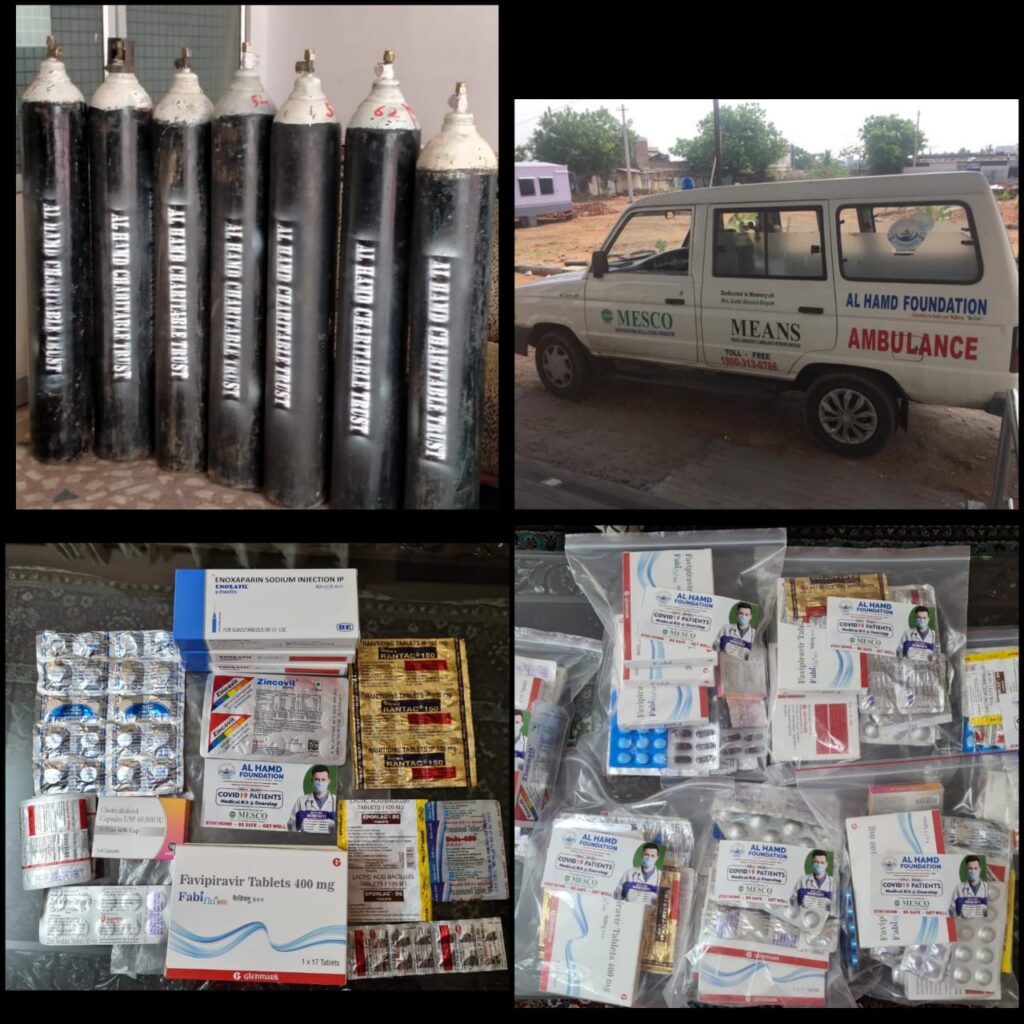
Pre and post-Covid care given by Al Hamd Foundation
Al Hamd Foundation, a charitable trust that helps widows, students and the poor, took up Covid-19 relief operations during the last year’s lockdown.
Amid the ongoing second wave, the foundation is continuing with online consultations of patients with doctors.
When patients contact them online, they are connected to doctors who advise home treatment keeping in view the severe crunch in the hospitals and also the fact that many cases can be treated at home with proper medications and care.
Al Hamd Foundation Covid relief services
The foundation has provided home treatment to fifty-two patients, who had reported low oxygen levels.
The founder of Al Hamd Abdul Azeem Mohammed told TwoCircles.net that the treatment cost they incurred for each patient would have run up to Rs. 7 to 8 lakhs had they been treated in a hospital.
“The team of AL Hamd ensures that the patient does not panic and develops a strong will to fight the disease and survive. The team also helps with the oxygen cylinders, the medicines and regular monitoring by the doctor who visits the patient. At times when the patients are poor and the team notices that they need provisions apart from the medical assistance, Al Hamd provides the family members with rations as well,” Azeem said.
Al Hamd has given 300 oxygen cylinders and 6 oxygen concentrators to other organizations that are helping people affected with Covid-19.
They have four oxygen hubs and seven ambulances in Hyderabad-Secunderabad and a fifth one is coming up soon.
“We have ordered 25 oxygen concentrators from the UK which is likely to arrive by in the last week of May. Each oxygen concentrator of 5-6 litres costs around Rs 46,000. We have also ordered 5 C PAP machines that cure respiratory disorders. And since we are not a hospital, we intend to donate these C PAP machines to the hospitals where there are facilities to treat patient with respiratory disorders that are linked to Covid” explained Azeem.
“We also give post-Covid care by giving immunity-boosting drugs and foodstuff,” he added.
Al Hamd is run with funds from family and close friends.
50-bed oxygen therapy centre set up by Jamaat-e-Islami Hind
Well-known socio-religious organization Jamaat-e-Islami Hind (JIH) Telangana has also set up a 50-bed oxygen therapy centre in Wadi-e-Huda near Shaheen Nagar, Hyderabad. JIH’s sister concern Students Islamic Organisation (SIO) supports recycling the cylinders, rifling them, coordinating with other organisations for availability.
Post Script
To support Helping Hand Foundation, you can make a GooglePay donation here: 8125203286
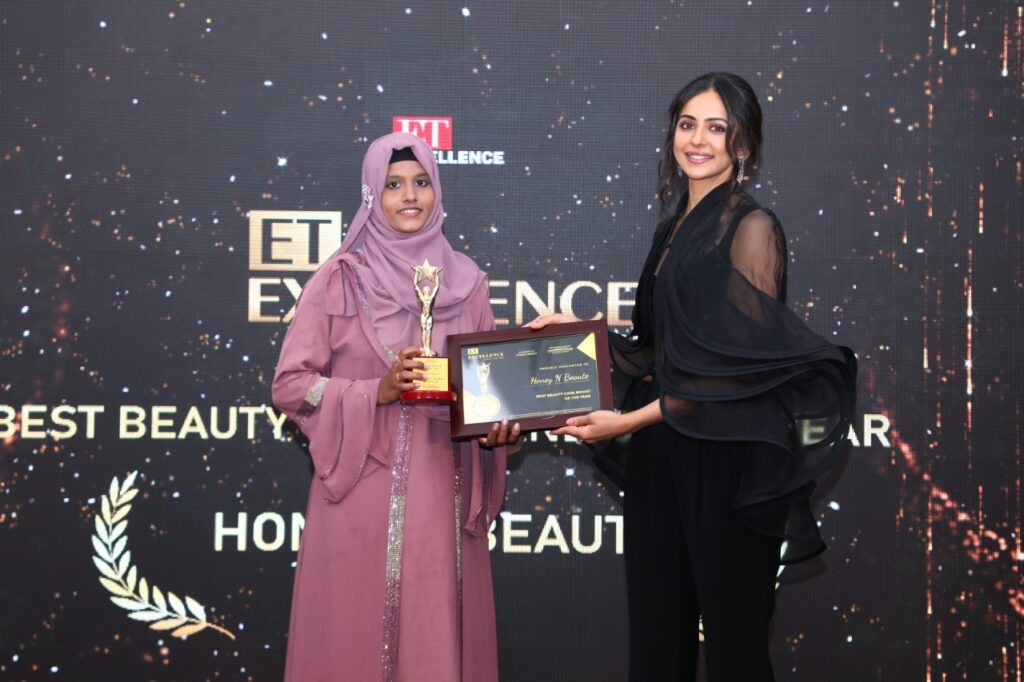
Umaira Habib: The Young Visionary, Versatile, Decisive Entrepreneur setting new benchmarks for the industry to follow with her startup “Honey n Beaute”.
Mother of two kids Umaira Habib who has made a remarkable name for herself and her firm “Honey n Beaute” in the the beauty and personal care industry.
The young gritty talk of the town entrepreneur gaining tremendous popularity in recent time is Umaira Habib.
This millennial businesswoman rising from all the clutches and clutter of challenges that life had thrown at her, she raised to eventually become a successful entrepreneur and the most popular name for umpteen others to talk and follow about.
This determined and go-getter individual is mother of 2 kids, and now owns a successful company under her kitty “Honey n Beaute”.
Honey n Beaute is now home to millions of women who want to look and fell better about them.
The very discrete and unique product list of Honey n Beaute includes various herbal shampoos, soaps, body lotions etc that touch upon millions of lives across the country and provide the necessary momentum to boost about their confidence and energy.
Umaira’s company not only provides these products to look better but in turn enables them to feel good about hem, being happy about how they carry themselves thereby ingesting super confidence in the modern-day women.
Umaira Habib, born in a small town of Kattu Pava near Pudhukkottai, Tamil Nadu didn’t race the roads of success that easily.
Coming from a middle-class family she had to face many challenges to rise in life. Language barrier was also a concern for her, but her meticulous efforts in learning other languages and studying hard took her to many places.
Umaira pursued a course in beauty and personal care management from Kolkata to eventually learn the tips and tricks of the trade industry and finally setting up the firm “Honey n Beaute”.
Managing work life balance, content with her professional work but striving hard to make her company attain global recognition, Umaira has turned every stone to success. Honey n Beaute now caters to more than 25,000 customers pan India. Who would have ever thought that a firm coined in March 2019 would ever make it so large in relatively short period of time? But Umaira and her dedicated team has made sure that their dreams are a reality today.
Honey n Beaute signature product is their Hair oil with herbal ingredients which is the most selling product for the firm, Henna Body lotions which does wonders for skin tan removal, 24k gold serum with 25 herbs and many more. The exciting range of products enthralls the customers all across the country and is penetrating more and more in upcoming and potential markets.
Honey n Beaute also caters to the cream of the crowd list, with celebrities like Rashmika Mandanna, Ishwarya Menon, Janani Iyer, Aalya Manasa, Youtuber Ahmed Meeran and many others who are proud customers of her firm. Umaira Habib has also been adjudged as Best Young Entrepreneur of the Year 2020 and is continuing her dream run.
We wish Umair and Honey n Beaute to keep continuing their good work and touch upon millions of lives ahead in their journey.
source: http://www.timebulletin.com / Time Bulletin / Home> News> Business / by Derek Robbin / May 2021
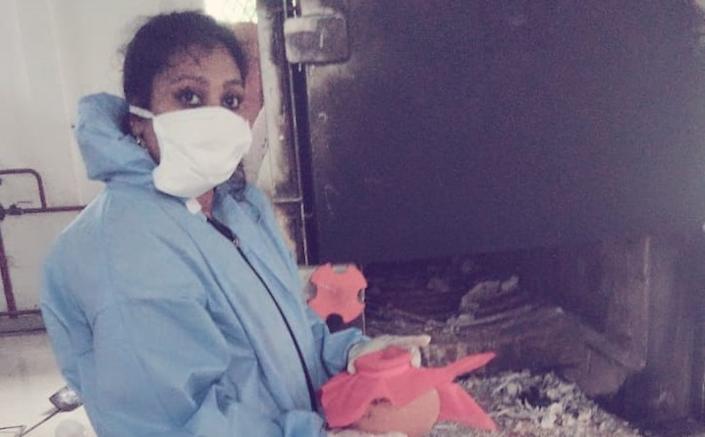
Subeena Rahman has been supervising funerals at an electric crematorium run by the SNBS Samajam at Irinjalakuda in Kerala’s Thrissur, since the last two and a half years. Amid the devastating wave of the coronavirus, the 29-year-old cremator along with her male coworker Sunil has been cremating almost 10 COVID dead bodies daily from Hindu and Christian communities.
The crematorium is run by the Hindu minority Ezhava community. She informs that if higher authorities permit, they could even perform cremations at night in view of the piling number of COVID-dead.
What prompted Rahman to take up a job at a crematorium? “Financial burden is the main reason for entering into such a job,” she informs. “Since my son was little at that time, I took up work at this crematorium as it’s near my house. This way I manage both my work and my child. I also save on food, travel and other expenses.”
But, being a funeral director is an unusual career choice for a woman. “Initially, I was ashamed to tell people that I work at a crematorium,” says Rahman. People had several questions for her and their own biases. Among handful women in a male-dominated bastion, Rahman stands true to her duty in managing after-death rituals in India, a profession that also intersects with her own identity as a minority Muslim woman.
Hindu funeral rites are officiated by the Brahmanical priestly class, and age-old tradition has prescribed against the presence of women at a funeral site making the space a preserve of men and patriarchy. But, at a time when COVID-19 is taking a devastating toll on people in the state, and families, friends and priests have turned their face away from the dead, Rahman’s role of overseeing the funeral passage of Hindu and Christian communities assumes greater significance. She has not only broken the gender divide but also that of religion when it comes to performing Hindu upper-caste last rites. While she and her colleague would only cremate the dead of the Ezhava earlier, the pandemic and its ensuing strain on human resources has only meant they now cremate bodies irrespective of caste.
Taking pride in her work, Rahman serves as a frontline worker attending to the dead; giving them dignity at a time when the dead are merely statistics, or bodies wrapped in plastic bags. Her work is as much technical as much as it stems from a space of empathy.
So, how does it work? Well, Rahman has to lay a dead body inside the crematorium to cremate. Booking for the next cremation is accepted only after a gap of one and a half hours, the time taken to cremate a body. The presence of just two chambers allows only two bodies to be cremated at a time.
During the first wave, there were only one to two COVID-related cremations. “But since the second wave hit, it has been challenging to manage the amount of work with just the two of us but we are somehow dealing with it,” says Rahman.
Rahman was initially designated as an office staff for duties pertaining to accounting and paperwork. A male coworker was responsible for cremation duties. “As I used to sit alone, I started accompanying him and soon my interest shifted to that work. It’s been two and a half years and I am still doing this work,” she informs.
Reflecting on her role, Rahman is quick to remind that gender equality is not about big ideas but groundwork and self-mobilisation as a response to one’s immediate surroundings. She asks, “Is there differentiation between a man and a woman’s work? If we have the guts, we can do any work. Women are doing all kinds of work from climbing coconut trees to driving trucks, so this differentiation should change. If we can climb coconut trees; why can’t we cremate?”
(Subeena Rahman’s quotes translated from Malayalam by Apurva P.)
(Edited by Amrita Ghosh)
source: http://www.in.makers.yahoo.com / Makers India – Yahoo / Home> Makers / by Sanhati Banerjee and Apurva P / May 20th, 2021