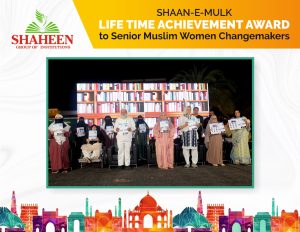
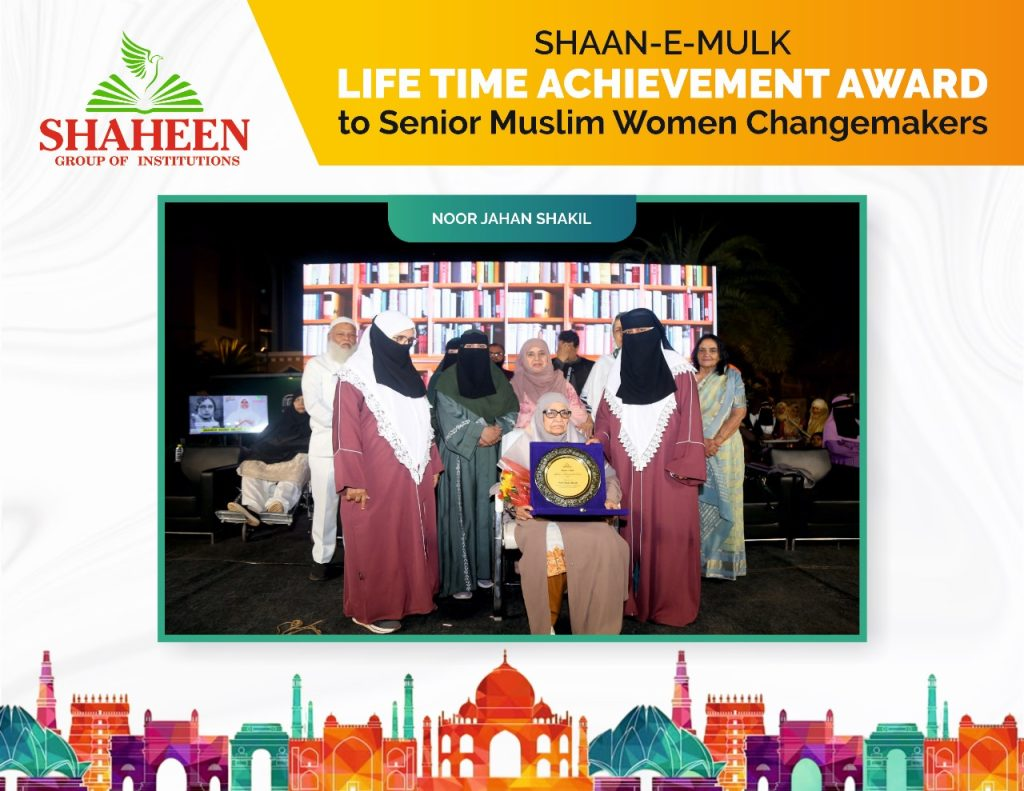
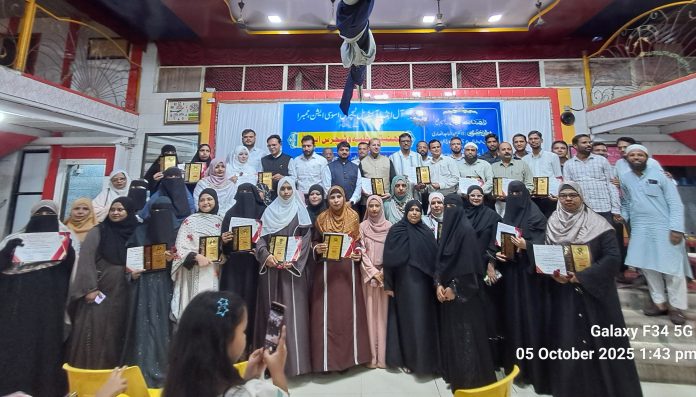
On India’s 76th Republic Day, Shaheen Group of Institutions, Bidar, organized the “Shaan-e-Mulk” Lifetime Achievement Award to honor five distinguished women for their contributions to education, business, humanitarian services, and healthcare.
Dr. Abdul Qadeer, Chairman of Shaheen Group, emphasized the vital role of women in society, stating, “Women are the backbone of families and communities, yet their contributions often go unrecognized. It is crucial to celebrate their achievements and inspire future generations.
Honorees
The award was presented to:
Ms. Shaukat Begum (Institutional Development)
Ms. Noor Jahan Shakeel (Humanitarian Services)
Dr. Rana Noor Siddiqui (Education & Research)
Ms. Uzma Naheed (Entrepreneurship)
Dr. Noor Jahan Sagheer (Healthcare)
The event, attended by thousands of female students, showcased academic performances and aimed to challenge stereotypes, inspire young women, and foster community pride.
Key attendees included Managing Director Abdul Haseeb, Academic Director Abdul Muqeet, and directors Shaista, Wafa, Zakia, Meher Sultana, Afra Naaz, and Munir Deshmukh.
source: http://www.thehindustangazette.com / The Hindustan Gazette / Home> Education / by The Hindustan Gazette / January 29th, 2025
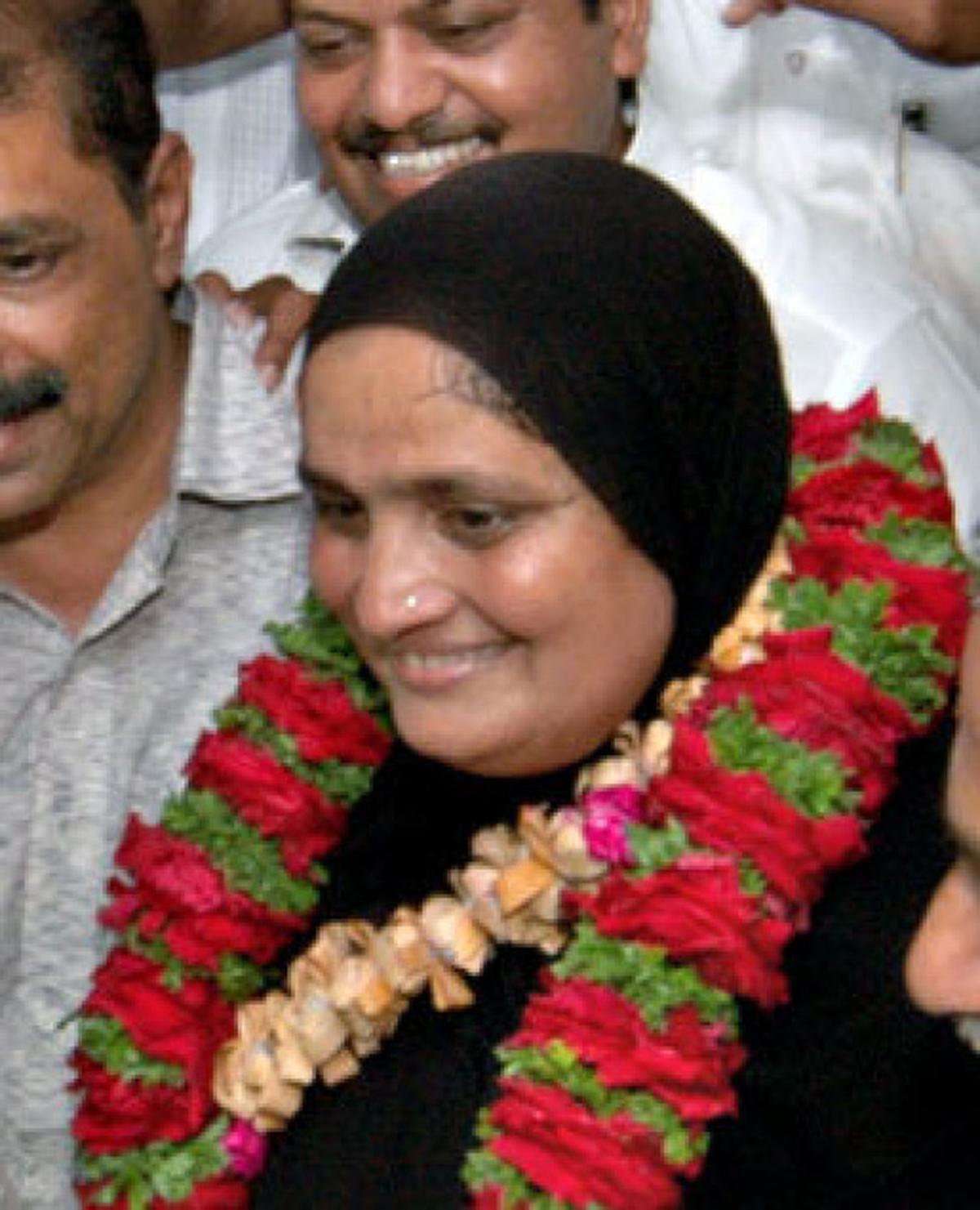
Gulzaar Banu of Congress being offer a bouquet by B.Ramanath Rai, MLA (second left) and Vijayakumar shetty fomer MLA (second right) after she was elected unopposed as the new Mayor of Mangalore City Corporation surrounded and greeted by Congress councillors and and supporters in Mangalore on March 07, 2012. Photo: R.Eswarraj
The ruling Bharatiya Janata Party (BJP) in the council of Mangalore City Corporation faced an embarrassment on Wednesday as a councillor from the Opposition Congress was elected Mayor unopposed.
Rejection of the nomination papers of the official nominee from the BJP led to this fiasco. However, a BJP candidate was elected Deputy Mayor.
M. V. Jayanthi, Regional Commissioner, Mysore, who was the Election Officer, rejected the nomination papers of the BJP candidate Roopa D. Bangera on the grounds that she had not submitted her caste certificate in the prescribed format within the given time. There was no dummy candidate of the BJP in the fray. Hence, the Opposition Congress candidate Gulzaar Banu (49) was declared unopposed.
Ms. Banu became the first Muslim Mayor of Mangalore.
The Government had reserved the post of Mayor to a woman councillor from Backward Caste 2 A category.
In the 60-member House, the BJP 35 councillors, the Congress 21, the Janata Dal (Secular) and the Communist Party of India (Marxists) one each. There are two Independent councillors.
Thus, the BJP had 36 votes (including Mangalore South MLA N. Yogish Bhat) on Wednesday. But it could not get its candidate elected against the Congress which had 21 votes. After the Election Officer announced that Ms. Banu had been elected unopposed as the Mayor, Mr. Bhat left the council hall while the other BJP councillors continued to participate in the meeting. Ms. Bangera’s ward (Kadri North) falls under the limits of Mangalore City South Assembly constituency represented by Mr. Bhat. In the election held for the post of Deputy Mayor later, Amitakala of the BJP defeated S. Appi of the Congress by a margin of 14 votes. Ms. Amitakala secured 35 votes and Ms. Appi 21 votes.
The Election Officer conducted the election to four standing committees of the council which went on smoothly.
After the election process was completed by about 5 p.m. all BJP councillors, including the Deputy Mayor, and officials walked out of the meeting presided by the new Mayor. Only one official was present at the meeting.
The Congress councillors alleged that outgoing the Mayor Praveen did not hand over the Mayor’s gown to Ms. Banu. Independent councillor Mariyamma Thomas, an advocate, told The Hindu that there was no provision in the Karnataka Municipal Corporations Act, 1976, to move a no-confidence motion against the Mayor. Hence the BJP could not overthrow the new Mayor.
source: http://www.thehindu.com / The Hindu / Home> News> Cities> Mangaluru / March 08th, 2012
Bombay High Court rejects discrimination by medical boards in landmark disability rights verdict; it rules that certified disabled students cannot be repeatedly questioned on their eligibility
New Delhi :
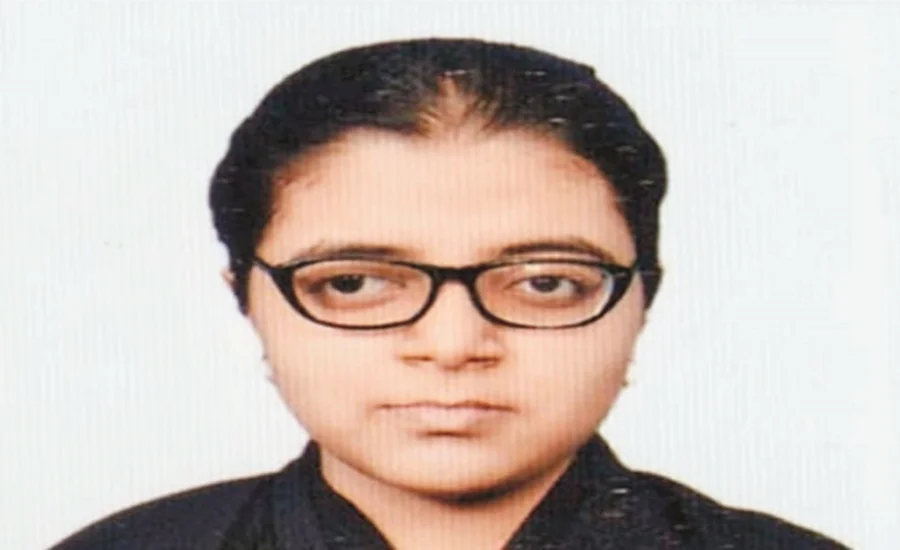
In a powerful judgment that reaffirmed the fundamental right to education for all, the Bombay High Court has ruled in favour of Uzma Rashid Khan, a blind Muslim student from Jogeshwari West in Mumbai, who was unjustly denied admission to an MBBS course under the disability quota.
This week (October 8), the court declared that a certified person with a disability cannot be forced to repeatedly prove eligibility before different medical boards. The verdict allows Uzma to participate in the third round of NEET UG 2025 counselling under the PwBD (Persons with Benchmark Disabilities) category.
Delivering the order under the Rights of Persons with Disabilities Act, 2016, the court stated that no educational institution has the right to deny admission on the basis of disability. The judgment described the disability category as a legal right, not a special concession.
Uzma Khan, who has a 40% visual disability certificate and a Unique Disability ID (UDID) card, had earlier been declared ineligible for the PwD quota by the medical boards of AIIMS Nagpur and Grant Medical College JJ Hospital in Mumbai. The rejection came despite her official disability certification.
Determined not to surrender, Uzma fought back. Guided by Advocate Rahul Bajaj, she filed a petition in the Bombay High Court, challenging what she called a “deeply unfair and humiliating decision.”
In a detailed order, the court held that since Uzma already possessed a valid certificate confirming her disability, she could not be made to undergo multiple verifications. The judgment further recognised her as fully capable of pursuing medical education and directed authorities to include her in the third round of NEET counselling.
The timing of the judgment is extraordinary. The third round of NEET counselling was nearing its final stage and the portal for filling preferences had already closed. However, in what many called an “unprecedented act of fairness,” the court ordered the reopening of the admission portal for half an hour exclusively for Uzma so that she could submit her form.
The decision not only secured Uzma’s admission but also became a milestone in the struggle for equal educational opportunities for disabled students across India.
“This is not just my victory,” Uzma told local media after hearing the verdict. “It is the victory of every disabled student who dreams of becoming something in life despite physical challenges. I thank Allah and the court for doing justice.”
Uzma’s father, speaking to reporters with visible emotion, recalled the family’s struggle:
“One day, while studying for NEET, Uzma suddenly cried that her vision had become blurry. It was the most painful moment of our lives,” he said. “We went from one hospital to another, losing precious time. Later, she was certified as 40% blind, and we got her UDID card made.”
He added, “Uzma prepared hard for NEET 2025 and scored 286 marks. She was confident of getting admission in a government medical college under the disability quota. But during verification, she was declared ineligible. It felt like the world collapsed around us.”
After being rejected, the family turned to Khidmat Trust, which guided them to Advocate Bajaj. “He stood by us, filed the petition, and kept our hope alive,” Uzma’s father said. “By God’s grace, the court’s decision proved that truth always wins.”
The news of Uzma’s victory spread rapidly in her neighbourhood. Teachers, schoolmates, and local residents celebrated what they called “a triumph of justice and faith.”
The principal of Al-Ittihad Urdu School, where Uzma completed her schooling, praised her resilience: “She was one of our brightest students. Even after losing her sight, she never gave up. This decision is a reminder that disability should never define a person’s potential.”
Her teachers remembered her as a hardworking and humble student who always inspired others. “Uzma’s story will motivate many children facing similar challenges,” said a teacher, adding that “she has set an example for the entire community.”
Legal experts believe the judgment has far-reaching implications. It reaffirms that persons with disabilities must be treated with dignity and that bureaucratic obstacles cannot override constitutional and human rights.
Advocate Rahul Bajaj, who represented Uzma, said, “This verdict has clarified that once a person is certified as disabled, they should not be made to undergo endless scrutiny. The system must trust official certification and respect the law.”
The Rights of Persons with Disabilities Act, 2016, ensures that individuals with disabilities enjoy equality and non-discrimination in education, employment, and public life. Yet, as Uzma’s case shows, many still face unnecessary hurdles.
“This judgment will hopefully make institutions more sensitive,” Bajaj said. “It’s a reminder that education is a right, not a privilege, and disability should never become a reason for exclusion.”
For Uzma and her family, this moment represents years of struggle, sleepless nights, and unwavering faith. As her father put it, “We prayed every day for justice. Today, we feel proud that our daughter has shown what courage really means.”
Her story, now celebrated by students and activists alike, stands as a beacon of hope — not only for disabled learners but also for every Indian Muslim family that values education as both a right and a duty.
In the words of Uzma herself: “I want to become a doctor to serve those who suffer, just as I did. Disability can’t stop dreams — only doubt can.”
source: http://www.clarionindia.net / Clarion India / Home> Editor’s Pick> India> Indian Muslim / by Team Clarion / October 13th, 2025
Education Today / Times of India Oct 08, 2025 / 208 Views
In a modest karate training hall inside Nagpada Neighbourhood House NGO in Mumbai, one teenager’s sharp punches and swift footwork command immediate attention. Akku Sarah Shabbir, a 15-year-old karate student and Class 11 commerce student at Maharashtra College, has become a symbol of pride for her community after winning gold medals at both the District Sports Organisation (DSO) competition and the Asia Cup held at Andheri Sports Complex.
Organised by the Asian Shito-Ryu Sports Karate-Do Association, the Asia Cup saw participation from countries like India, Sri Lanka, Nepal, and Malaysia. Sarah clinched her gold by defeating a tough Sri Lankan opponent—solidifying her status as a rising star in the sport.
A Champion in the Making
Sarah’s achievements have made her a mini-celebrity not just in her karate club, but also in her college and in the Mumbai Central neighbourhood, where she lives with her family. Despite following a traditional lifestyle—wearing a hijab like most girls in her community when outdoors—Sarah is clear-eyed and focused about her sporting ambitions.
“My family, friends, and neighbours are happy I got gold medals in back-to-back competitions,” said Sarah, modest about her success but aware of its growing significance.
Her father, Shabbir Akku, a perfumer by profession, has supported her from the beginning. “We are religious, but I didn’t stop Sarah when she said she wanted to join a karate club,” he said, highlighting a shift in perception among parents in conservative communities.
Breaking Stereotypes and Inspiring Change
Sarah’s achievement has stirred conversations and pride within her community and beyond. Congress MLA Amin Patel, who recently felicitated her, emphasised the broader social impact:
“Muslims are often blamed for not encouraging their daughters to go out and make a career in games and sports. Sarah’s success punctures this stereotype. We will do whatever we can to encourage such budding sporting talents.”
For many community leaders, Sarah’s story is about more than just sport. Asif Farooqui, Congress general secretary and a court member at Aligarh Muslim University and Jamia Millia Islamia, expressed how symbolic her victory is:
“This young girl from Mumbai Central has made us all proud with her achievement in Karate. Her dedication and spirit are truly inspiring. The world is changing fast—our girls see everything happening around them and are becoming more aware, strong, and determined. It’s wonderful to see this new confidence, especially among Muslim girls, who are proving that with opportunity and encouragement, they can shine in every sphere.”
The Coach Behind the Confidence
Sarah’s journey wouldn’t be possible without the guidance of her coach, Salahuddin Khan, who has been instrumental in training hundreds of students—many of them girls—from 25 different schools across the city.
Khan sees Sarah as part of a larger transformation happening in traditionally conservative pockets:
“I train students at 25 schools and the majority of my students are Muslim girls. I see a positive change in the attitude of parents. They are increasingly aware of the benefits of Karate and why girls need to learn it.”
He also credited Shama Taraporewala, the former principal of an Anjuman-I-Islam school, for supporting and encouraging students to take up martial arts and other empowering activities.
Karate as a Tool for Empowerment
For Sarah, karate isn’t just about medals—it’s about self-confidence and safety. “Earlier, I was a bit timid and shy to converse with strangers. Now, I am confident of tackling anyone who tries to misbehave with me,” she shared, showing just how transformative the discipline has been in her life.
Her words reflect a growing realisation among girls and their families about the practical benefits of martial arts, especially in urban settings where issues of safety and harassment are real concerns.
Looking Ahead
With gold medals already to her name and community support backing her, Sarah’s future looks promising—not just as an athlete, but as a role model for young girls across India. Her journey from a shy teenager to an Asia Cup champion is a story of resilience, cultural balance, and empowerment through sport. As more girls like Sarah step onto the mat and into the limelight, they are not just winning matches—they are shattering outdated narratives, proving that faith, tradition, and ambition can coexist, and that every girl deserves the chance to dream—and fight—for her future.
The 18-year-old girl, who memorised the Qur’an alongside her studies, has won ten medals, including two golds, making her community proud
Mumbai :
In the crowded locality of Madanpura, where dreams often battle circumstances, a young Muslim girl has emerged as a symbol of grit and grace. Hafiza Louiza Khan Ziauddin, a student of Maharashtra College, has made her community proud by winning the silver medal in the Under-18 category at the Asian Open Karate Championship held recently at Andheri Sports Complex, Mumbai.
Louiza, who has memorised the noble Qur’an, secured second position in the continental tournament. The first prize went to a participant from Sri Lanka, but Louiza’s performance, marked by determination and skill, drew applause from coaches and spectators alike.
“I thank Allah for this success,” Louiza told Clarion India with a modest smile. “It was my mother’s wish that I memorise the Qur’an, and I completed my Hifz in 2019. Along with that, I wanted to learn self-defence to become strong and confident.’
Louiza’s journey began during her school days at Anjuman Islam Begum Sharifa Kalsekar English High School, Byculla. When her school arranged a visit to Budkonn Foundation’s karate class in Nagpada, she was deeply inspired by a demonstration by coach Khan Salahuddin. “His words about discipline and self-defence stayed with me,” she recalled. “That day I decided to learn karate seriously.”
Since then, there has been no looking back. From interschool and district competitions to state and national levels, Louiza has collected ten medals, including two golds. She has also completed a karate referee course, for which she is now preparing for the final examination.
“Louiza is one of the most disciplined and focused students I have ever trained,” said coach Khan Salahuddin, who runs the Budkonn Foundation karate classes. “She proves that with faith, discipline, and hard work, nothing is impossible for our girls.”
Her mother, visibly proud, expressed her joy with moist eyes. “When my daughter decided to memorise the Qur’an, I prayed she should also gain strength to protect herself and inspire others. Today, she has done both.”
Louiza’s success carries deep meaning for the Muslim community, often stereotyped and overlooked in sports achievements. Her story breaks barriers and challenges social norms that limit girls’ participation in martial arts.
Now, with her eyes set on the World Karate Championship, Louiza continues her training with greater passion. “I want to represent India at the international level and show that Muslim girls can excel in every field,” she said firmly.
In a society where religious education and modern learning are often seen as opposites, Louiza’s example bridges the gap. She stands as a living reminder that faith and ambition can coexist beautifully — and that the strength of a Muslim woman lies not only in her devotion but also in her courage.
“Every girl should learn self-defence,” Louiza added. “It gives you confidence, and it teaches you patience, respect, and balance — just like Islam does.”
Her journey from Madanpura’s by-lanes to an Asian championship podium is more than a story of medals; it’s a story of belief — in herself, in her religion, and in the boundless power of perseverance.
source: http://www.clarionindia.net / Clarion India / Home> Editor’s Pick> India> Indian Muslim / by Team Clarion / October 13th, 2025
Remembering the fearless freedom fighter, who led thousands of women in civil protests, championed Urdu and education, and defied social evils
Patna :
In the midst of the ongoing Bihar Assembly election campaigns, the state pauses to honour a remarkable figure in its history: Anees Fatima, Bihar’s first Muslim woman MLA, a freedom fighter, teacher, and social reformer whose courage and vision continue to inspire generations.
Born in Patna in 1901, Anees Fatima’s early years were marked by a sharp mind and fearless disposition, qualities that distinguished her in a time when women’s education and participation in public life were extremely limited. She completed her primary education at the Badshah Nawaz Rizvi School, also known as Madrasa Islamia, setting the stage for a life devoted to public service and national freedom.
“From childhood, she was determined not to remain silent,” said historian Dr Meena Sharma. “Her courage and intellect made her stand out, and she carried these traits into the freedom struggle, inspiring countless others.”
Anees Fatima’s commitment to India’s freedom movement was evident from her active participation in the Non-Cooperation Movement launched by Mahatma Gandhi in 1920. She fearlessly led protests against liquor shops in Patna, an audacious move for a woman at the time. During the 1930 Civil Disobedience Movement, she and fellow activist Gauri Das led a procession of more than 3,000 women in Patna. When fined ₹201 by the British government for her activism, she refused to pay.
She had to go to jail for her boldness but she neither accepted defeat in front of the British nor did she weaken in front of the cruelty of the British.
Her remarkable leadership earned her national recognition, with the Indian National Congress including her in the delegation sent to England to protest the Montagu-Chelmsford Reforms.
In 1937, Anees Fatima made history as Bihar’s first woman MLA, contesting and winning the election as an independent candidate. Her oratory skills were so compelling that she was awarded the title of “Lady Imam.” She was also an active member of Anjuman Tehreek-e-Urdu, campaigning for Urdu to be recognised as Bihar’s second language.
“Her election was more than a political victory,” said educationist Prof Arif Khan. “It was a statement that women, and especially Muslim women, could lead and shape society.”
Beyond politics, she dedicated her post-independence years to promoting education in Bihar, remaining associated with the Khuda Baksh Oriental Public Library, and advocating against social evils like child marriage and strict purdah practices.
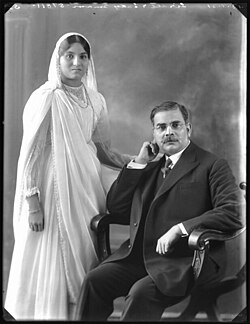
Anees Fatima’s life reflects a deep commitment to service, courage, and women’s empowerment. Married to Sir Syed Ali Imam, she helped lay the foundations for what is considered “Jadid Bihar,” or New Bihar, through her tireless efforts in education, social reform, and public service.
“Anees Fatima showed that courage and dedication know no gender,” remarked local activist Fatima Rizvi. “She not only fought for the nation’s independence but also for the rights of girls and women in society. Her legacy continues to guide us.”
As Bihar celebrates its electoral processes, remembering pioneers like Anees Fatima offers a reminder that true leadership is measured not by position but by service, bravery, and commitment to equality and justice.
source: http://www.clarionindia.net / Clarion India / Home> Editor’s Pick> India> Indian Muslim / by Team Clarion / October 16th, 2025
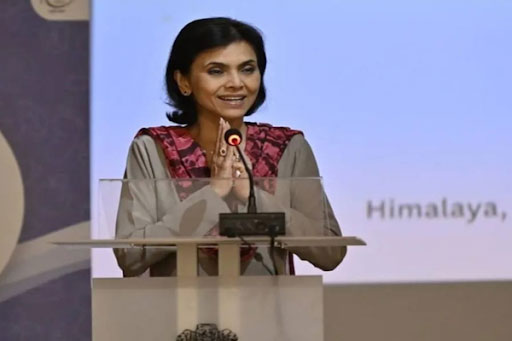
Veteran diplomat and Kasargod native Nagma Mohamed Malik has been appointed as India’s Ambassador to Japan, marking a notable new chapter in her three-decade career in the Indian Foreign Service (IFS).
She currently serves as India’s Ambassador to Poland and will now assume one of the country’s most strategically important diplomatic roles in East Asia.
Though she spent much of her childhood and education in New Delhi, Nagma traces her roots to Fort Road in Kasargod. She often says that “no matter where I go in the world, I always introduce myself as someone from Kasargod. It is my identity, and I wear it with pride.”
She is the daughter of Mohamed Habeebullah and Julubanu, and the daughter-in-law of the noted Kannada author Sara Abubakar, who is credited with pioneering a literary movement through her writings in Kasargod and Dakshina Kannada.
Nagma comes from a distinguished family with a strong tradition of public service and sacrifice. Her uncle, Lieutenant P. Mohamed Hashim, was martyred in the 1965 Indo-Pakistan war at the age of just 23. To honour his sacrifice, a street in Thalangara bears his name, and a memorial pillar known as Pulikkunnil Stupa has been erected. Her grandfather, Ahmad, was among the first Muslim lawyers to practise in the Kasargod Court between 1930 and 1970, leaving behind a lasting legacy of legal excellence in the region.
After joining the Indian Foreign Service in 1991, Nagma earned the distinction of becoming India’s first woman deputy chief of protocol (ceremonial). She began her diplomatic career in Paris, where she worked at the Indian Embassy and at UNESCO. Later, she served with the Prime Minister’s Office under I K Gujral, managing the Western Europe desk.
Over the years, her overseas postings have included roles as first secretary and counsellor in Nepal and Sri Lanka, deputy chief of mission in Thailand (2010–2012), ambassador to Tunisia (2012–2015), high commissioner to Brunei Darussalam (2015–2018), and ambassador to Poland (2021–2024).
Back home in India, she has held several strategic positions within the ministry of external affairs, such as deputy spokesperson; director of the Eurasia division; head of the Policy Planning & Research Division (2019–2020); and additional secretary (Africa), overseeing India’s relations with East and Southern African nations.
Nagma holds a bachelor’s degree in English Literature and a masters in Sociology, and she is fluent in English, French, Hindi, Urdu, and Malayalam — skills that have served her well across her global appointments. Beyond diplomacy, she has a deep interest in Indian classical dance, music, and literature.
On the personal front, she is married to Farid Inam Malik, a lawyer based in New Delhi, and the couple has a son and a daughter.
With her appointment to Tokyo coming at a critical moment for India–Japan relations, Nagma Mohamed Malik is expected to strengthen bilateral ties. Her journey from the lanes of Kasargod to the corridors of global diplomacy is not just a personal triumph but also an inspiration to aspiring diplomats across the nation.
source: http://www.daijiworld.com / Daijiworld.com / Home>Top Stories / by Daijiworld Media Network – Tokyo / October 17th, 2025
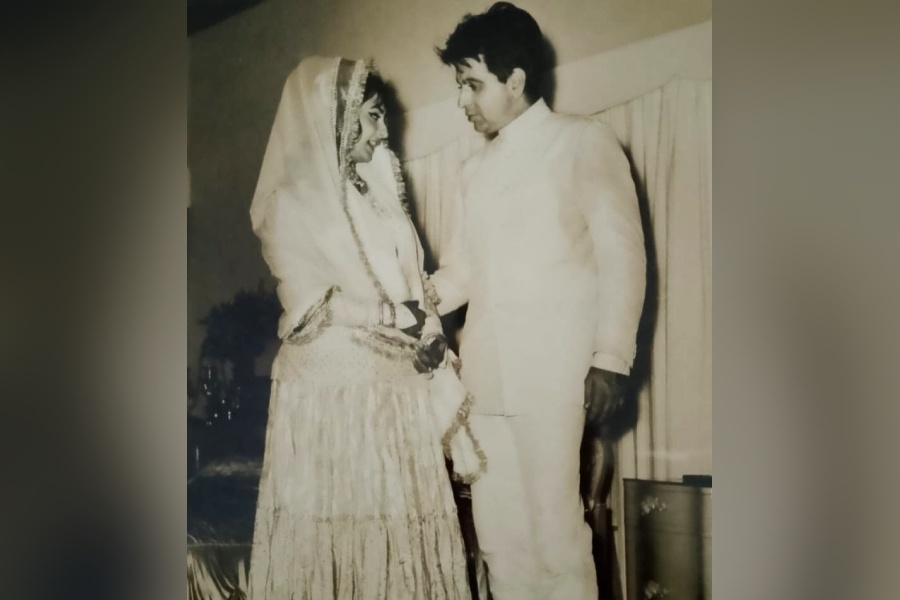
Banu had tied the knot with the late Dilip Kumar on October 11, 1966
Saira Banu and Dilip Kumar on their wedding day / Instagram
Bollywood veteran Saira Banu’s wedding with the late Dilip Kumar on October 11, 1966, was ‘dreamlike, unscripted and full of delightful chaos’, the actress recalled on her 59th marriage anniversary on Saturday.
In a long note on Instagram, Banu noted that her wedding was not extravagant. Instead, it was marked by ‘simplicity, hurried excitement and heartfelt emotion’. Though Banu and Kumar were to tie the knot in November, Kumar insisted on an early nikkah. The couple tied the knot in an ‘unscripted’ ceremony, nine days after their engagement on October 2 that year.
Banu hardly had any time for preparation. Her bridal ensemble was stitched by a local tailor and she got married without any printed cards or detailed plans.
“The song Do Sitaron Ka Zameen Par Hai Milan Aaj Ki Raat floated through the air like a blessing that wouldn’t fade. It played all night long, echoing the joy in my heart, and I remember thinking that if someone told me I could truly fly that evening, I would have believed them. That’s how unreal, how dreamlike it all felt,” wrote the 81-year-old actress, alongside pictures from the ceremony.
“Nothing about that day was extravagant, yet it was perfect in its simplicity. My wedding joda was lovingly stitched by our local tailor; there were no grand designers, no detailed plans, no printed cards, just hurried excitement and heartfelt emotion. The Nikaah was meant for November, but destiny had other plans. I can still hear Sahib’s gentle but firm voice over the telephone from Calcutta saying, “Aap ek Maulvi ko bulaiye aur Nikaah karwa dijiye!” And just like that, the most important day of my life unfolded before I could even blink,” she continued.
Reflecting on her wedding day and the crowd of Kumar’s admirers who had gathered outside her house to witness their special day, Banu wrote, “The wedding itself was full of delightful chaos. Sahib and I lived close by, and when his Baraat came down the lane, the Ghodi descended a small slope, the umbrella brushing against his Sehra, a sight so charming that it still makes me smile. In no time, word spread that Dilip Kumar was getting married, and hundreds of admirers found their way into my home. The house was overflowing with laughter, noise, and strangers who felt like family.”
Banu recalled that the sheer number of guests left them short of food. “The crowd was so large that we even ran short of food, people began pocketing tiny souvenirs, a fork here, a spoon there as if they were collecting tokens from a fairytale,” she wrote.
“Oh, what a day that was. Unscripted, imperfect, and yet filled with a kind of joy that words can never truly capture. That night remains etched in my heart a memory that still glows softly, even after all these years,” the actress concluded.
Banu, who made her Bollywood debut opposite Shammi Kapoor in the 1961 film Junglee, starred alongside her husband in films like Gopi (1970), Sagina Mahato (1971) and Jwaar Bhata (1973). Kumar passed away on July 7, 2021, at the age of 98.
source: http://www.telegraphindia.com / The Telegraph Online / Home> Entertainment / by Entertainment Web Desk / October 12th, 2025
The Maulana Afzal Hussain Ideal Teachers Award 2025 and Students’ Felicitation Programme were held here Sunday to celebrate dedicated educators and outstanding students.
Teachers play a pivotal role in shaping a nation’s future, and societies that honour their teachers set a benchmark for others to follow.
Reflecting this spirit, the All India Ideal Teachers Association (AIITA), which has been active in Mumbra since 2019, organised the event to recognise exemplary teachers for their service and commitment to education.
The award is named in the memory of Maulana Afzal Hussain, a distinguished educationist and author of several books. This year, the AIITA Mumbra Award Committee selected 26 teachers from various institutions for the honour. The awards, presented annually on World Teachers’ Day, cover multiple categories including Primary, Secondary, and Headmaster levels, from schools in Mumbra, Thane, and Mumbai Municipal Corporation areas.
The Award recipients at the level of private educational institutions included Khan Safia (Al-Ehsan School), Altaf Patel (Abdullah Patel School), Lubna Khot (Central Public School), Khan Sadaf (Rafiqah School), Qazi Alia (Dr. Asadullah School), Syed Rizwana (Mumbra Public School), Syed Feroza (National School), Sheikh Zaheer (Nice School), Zahida Chotani (Patel School), Ansari Nasreen (Sameeya English School), Rukhsanda Khan (Saadia School), Shabana Azmi (Shoaib School), and Sadiqa Sheikh (Saadia Primary School).
In the Mumbai Category, the Award recipients included Arshia Shah (Vakola Municipal School), Mehboob Makandar (Vanoba Bhave School), and Ismail Bagwan (Anjuman Khair-ul-Islam School),
In the Thane Municipal Corporation Category, the Award recipients included Fatima Naz (TMC 116), Halima Qazi (TMC 117), Tabassum Khan (TMC 124), Syed Sameena (TMC 125), and Sufyan Ansari (TMC 40),
Thane Headmaster Category, the Award recipients included Mansoori Tehzeeb (Sameeya School), Ansari Tasneem (TMC 13), Syed Sana (Leader School), and Sheikh Khairul-Nisa (Abdullah Patel School).
A posthumous award was also conferred upon Late Naheed Fatima Zainuddin Jamali Sahiba of Abdullah Patel School in recognition of her lifelong contribution to education.
The event was presided over by Advocate Jasim Sheikh, with Dr. Abdul Majid Ansari serving as the Chief Guest. Distinguished guests included Professor Javed Sheikh (JIH Local Ameer of Mumbra), Khan Najma (President, GIO Mumbra), and Ansari Nasir of Khidmat Khalq Trust.
In addition to teacher awards, students from 24 schools were felicitated for their academic achievements in the 10th and 12th board examinations.
The event, held at Sania Hall, witnessed an enthusiastic turnout of teachers, students, and community members. Members of AIITA Mumbra and the Markazi Talimi Board Mumbra played a key role in organising and ensuring the success of the programme.
source: http://www.radiancenews.com / Radiance News / Home> Pride of the Nation> Awards> Latest News / by Radiance News Bureau / October 07th, 2025
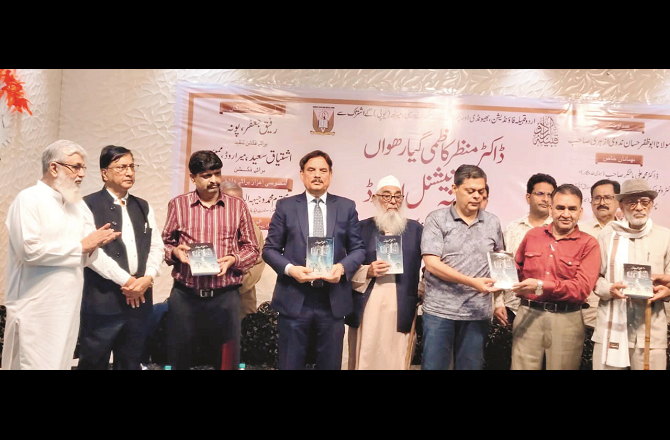
Renowned Urdu author Shama Akhtar Kazmi launched her latest works, “Aitraf Nama” and “Naqosh Pindar”, during the Dr. Manzar Kazmi National Award Function. The event was jointly organized by the Urdu Qabeela Foundation and the Department of Urdu at Chaudhary Charan Singh University.
The books were released by Dr. Vinod Kumar Tripathi (IRS), who served as the chief guest. The ceremony was presided over by Maulana Abu Zafar Hassan Nadvi Azhari and attended by distinguished literary figures including Prof. Aslam Jamshedpuri, Rafi Jafar, Darraj Kamankar, Mohammad Wajihuddin, Fayyaz Ahmed Faizi, Shakeel Rashid, Akhtar Kazmi, and Irfan Arif.
The event celebrated Shama Akhtar Kazmi’s enduring contributions to Urdu literature, highlighting her ability to blend personal reflection with literary insight. Both books were described as a reflection of Kazmi’s literary depth and engagement with Urdu heritage, showcasing her skill in addressing contemporary themes while maintaining classical literary elegance.
Speakers emphasized the importance of initiatives that preserve and promote Urdu literary traditions, noting that events like these strengthen cultural continuity and encourage younger generations to engage with Urdu literature. The launch also served as a platform for scholars and enthusiasts to discuss the evolving role of Urdu writing in modern India.
Through her work, Kazmi has reinforced the relevance of Urdu as a medium for both intellectual discourse and creative expression. The successful launch of “Aitraf Nama” and “Naqosh Pindar” demonstrates the continued vitality of Urdu literary culture and the role of dedicated authors in sustaining its prominence.
source: http://www.radiancenews.com / Radiance News / Home> Latest News / by Radiance News Bureau / October 11th, 2025