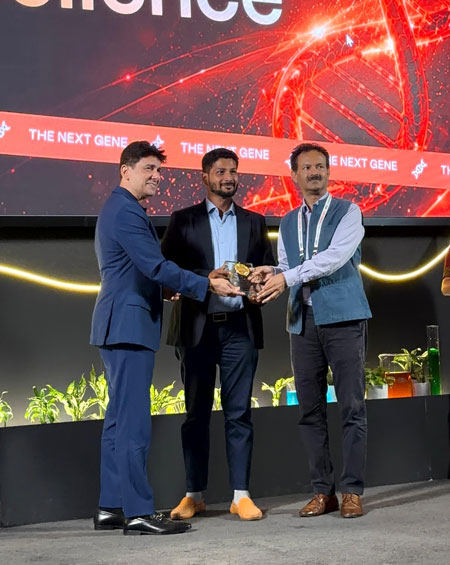
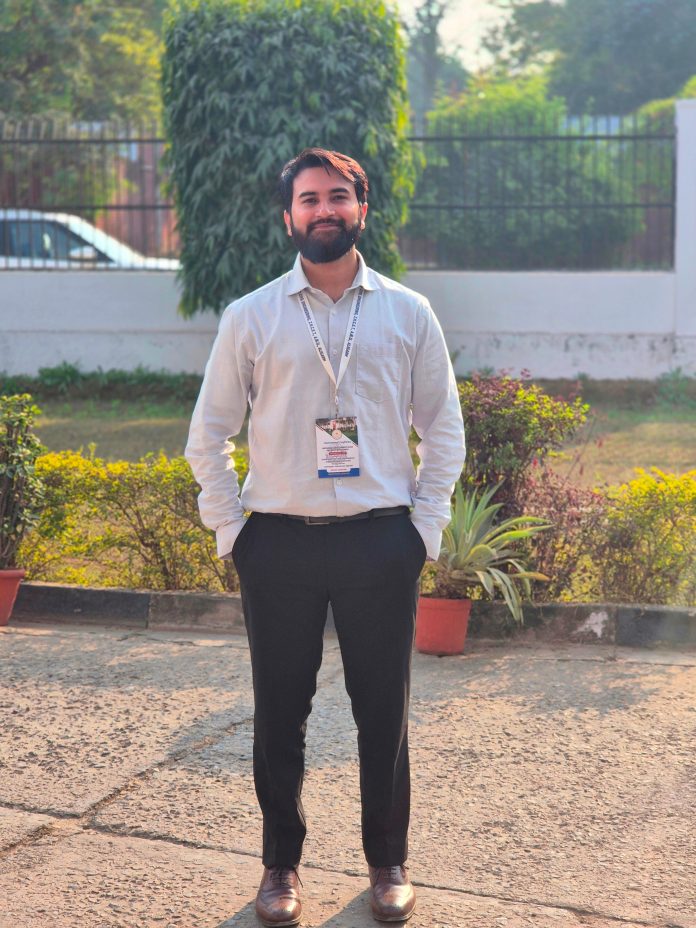
Dr Inamul Hasan Madar of Yenepoya (Deemed to be University), has been conferred the Kalam Medal of Excellence in Translational Innovation at the NEXT GENE Bioscience Summit 2026 held in New Delhi on September 19.
The award was presented by noted cardiac surgeon and healthcare innovator Dr Shriram Nene in recognition of Dr Madar’s contributions to precision medicine, multi-omics, cancer research and translational healthcare.
His research integrates genomics, proteomics, bioinformatics and artificial intelligence for biomarker discovery and personalised medicine, with a focus on translating advances in biomedical science into practical healthcare applications.
Dr Madar has a strong record of scientific publications and patents and continues to work in biomedical research aimed at developing innovative approaches to diagnosis and personalised treatment.
source: http://www.daijiworld.com / Daijiworld / Home> Karnataka / by Daijiworld Media Network / September 21st, 2026
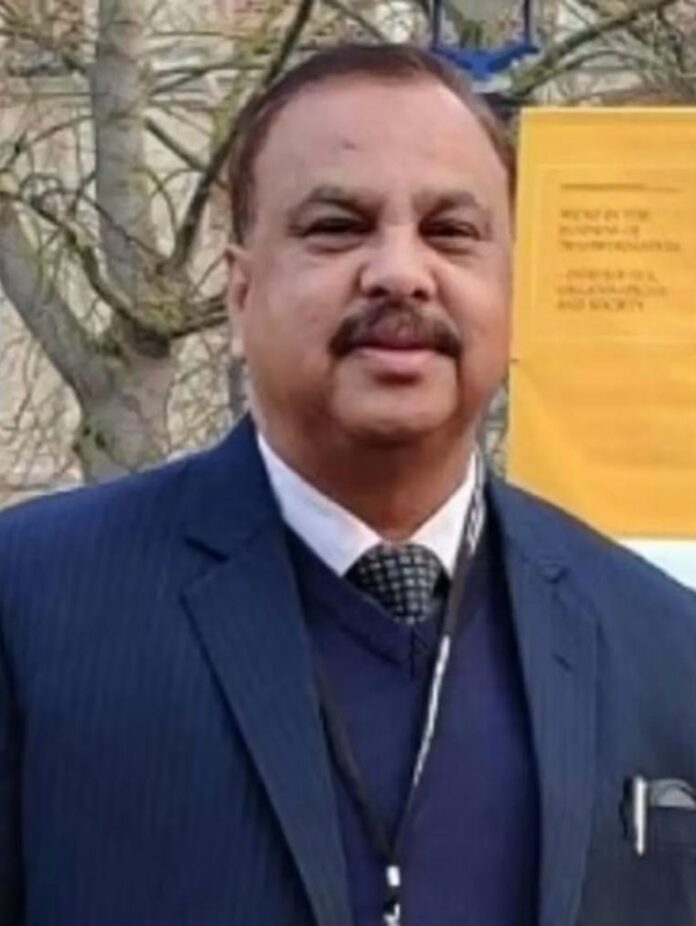
Professor Mohammad Mobin, Department of Applied Chemistry, Faculty of Engineering and Technology, Aligarh Muslim University (AMU), has been conferred the prestigious Professor B.P. Verma Memorial Award for 2025 by the Indian Chemical Society (ICS), recognising his contributions to research, development and innovation in Chemical Sciences and Engineering.
The honour marks a significant achievement in Professor Mobin’s academic career and reflects his sustained efforts towards advancing scientific research and translating innovation into meaningful technological and societal applications.
In a communication dated August 14, 2026, Prof. G. D. Yadav, President, Indian Chemical Society, conveyed the Society’s appreciation of Professor Mobin’s distinguished professional accomplishments, which have enhanced the stature of Chemical Sciences and Engineering and contributed to the advancement of Indian chemical and allied industries and society.
As part of the recognition, Professor Mobin has been invited to deliver the Professor B.P. Verma Memorial Award Endowment Lecture at the 63rd Annual Convention of Chemists (ACC 2026) of the Indian Chemical Society from December 14–16 at Graphic Era University, Dehradun.
Professor Mobin is presently serving as Vice Chancellor of Cluster University of Srinagar on deputation from AMU. His academic and research contributions span Chemical Sciences and Engineering, with particular emphasis on Materials and Corrosion, research innovation and technological development.
The Indian Chemical Society, one of India’s leading professional bodies in chemical sciences, has played a vital role in promoting chemical research, technology and industry while fostering collaboration among academia, research institutions and industry.
The Professor B.P. Verma Memorial Award adds another distinguished recognition to Professor Mobin’s achievements and brings pride to AMU and the wider academic and scientific community.
source: http://www.indiaeducationdiary.in / India Education Diary / Home> Educational News> University News / by iednewsdesk / August 17th, 2026
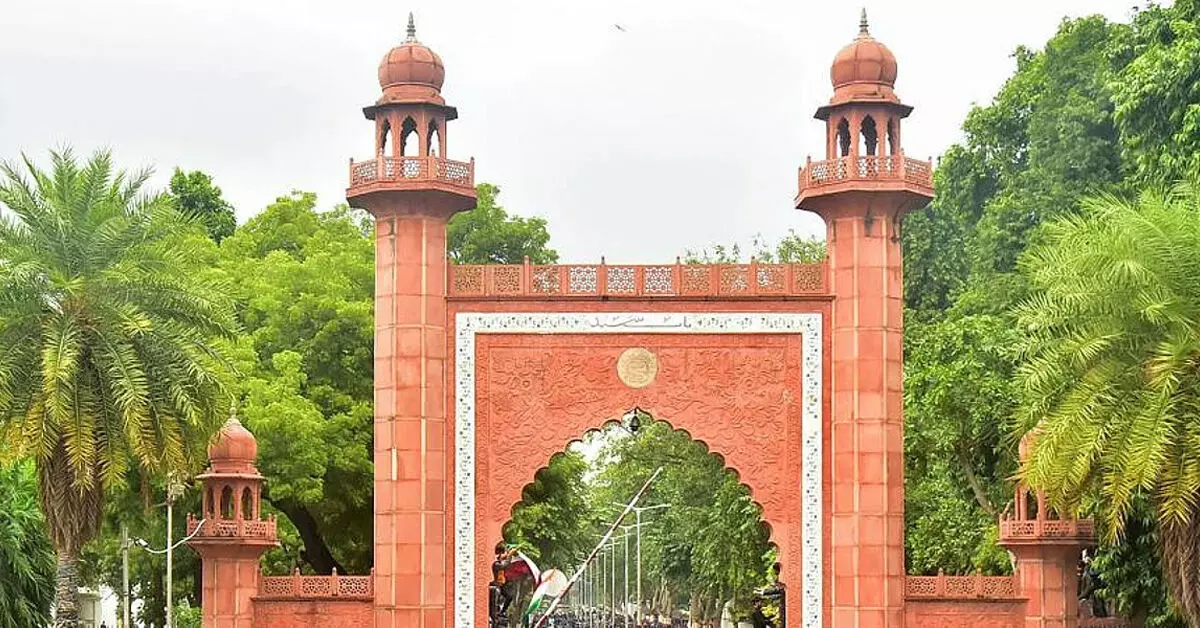
Researchers at the Interdisciplinary Biotechnology Unit of Aligarh Muslim University have identified a new multidrug-resistant bacterial genome in wastewater flowing through Aligarh city, raising concerns over the growing threat of antibiotic resistance in densely populated urban areas.
The findings, published in the April edition of the scientific journal ‘Molecular Biology Reports’, are based on a long-term study by a team of scientists led by Asad Ullah Khan, Shamsi Khalid and Absar Talat, who have been tracking the evolution of antibiotic resistance genes (ARGs) for over a decade.
According to the study, genome sequencing of a bacterial isolate, identified as ‘AK 633’ from a major city drain revealed the presence of a rare “mosaic plasmid” carrying the NDM-7 gene, which is associated with resistance to multiple antibiotics.
In microbiology, plasmids are small DNA molecules inside bacteria that can transfer genetic material, including drug-resistance traits, from one bacterium to another. A “mosaic plasmid” refers to a plasmid formed through genetic recombination, enabling it to carry resistance traits from different bacterial sources.
The researchers said the NDM-7 gene belongs to the New Delhi Metallo-beta-lactamase (NDM) family of resistance genes, which make bacteria resistant even to “last-resort antibiotics” such as carbapenems that are often used when other antibiotics fail.
The study noted that the sequencing of AK 633 pointed to the role of the plasmid ‘p1550’ in the possible global spread of high-risk antibiotic-resistant bacterial clones.
Talking to PTI, researcher Asad Ullah Khan said the findings underscore the urgent need for a wider national surveillance and awareness programme to monitor and contain the growing menace of drug-resistant bacterial genomes.
He said antibiotic resistance has emerged as a major public health challenge worldwide and pointed to untreated waste disposal, particularly hospital waste, and poor drainage management as important contributing factors.
Khan also stressed the need for vigilance during drain-cleaning operations in urban areas.
“Very often after drains are cleaned, the sludge is left on the roadside for long periods instead of being immediately removed. Such practices can contribute to the spread of resistant organisms,” he said.
According to the researchers, genotypic analysis — the study of the genetic composition of bacterial isolates — is essential to understand how resistance genes spread between bacteria in community and hospital settings.
Khan said at least 94 variants of NDM genes have so far been identified globally, many of which are increasingly being found both in hospitals and in the community.
“These are among the main causes of resistance against last-resort antibiotics,” he said.
The researchers noted that while similar work is being carried out in a limited number of laboratories in India, a much larger scientific and public health effort is needed to combat the growing threat posed by multidrug-resistant bacterial genomes.
source: http://www.english.varthabharati.in / Vartha Bharati / Home> India / by Musthafa / May 20th, 2026
The Council of Science and Technology, Uttar Pradesh honoured Dr. Riaz Ahmad, Lecturer at Department of Zoology, Aligarh Muslim University (AMU), with ‘Young Scientist Award’ yesterday. The award has been given to Dr. Ahmad in recognition of his contributions in the area of Biochemical and Molecular Genetics. Besides cash prize of Rs. 25,000/, award carries a certificate, memento and a shawl.
The award was presented to Dr. Riaz Ahmad by Mr. Abdul Mannan, the State Minister for Science and Technology at the Vigyan Samaroh at Sir C.V. Raman Auditorium in Lucknow.
Dr. Ahmad is also a recipient of prestigious Dr. D. S. Kothari Post Doctoral Fellowship from UGC, Young Scientist Project of DST and Scientist of the Year Award-2009 given by the National Environmental Science Academy.
He has a number of research papers to his name published in various scientific journals of national and international repute.
source: http://www.twocircles.net / TwoCircles.net / Home> Indian Muslim / by TCN News / March 30th, 2010
Jamia Millia Islamia Assistant Professor at Department of Chemistry, Dr. Ufana Riaz has been awarded “Sir CV Raman Young Scientist Award 2021” along with cash money of Rs 25,000 in recognition of her outstanding contribution in the field of Materials Chemistry by the St. Peters Institute of Higher Education and Research, Avadi Chennai. The award and citation were presented to her at the 12th convocation of the Institute.
Dr. Ufana Riaz has published more than 140 research papers in the field of conducting polymers, co-authored 3 books and 25 book chapters. Her research work has been published in renowned and highly reputed international journals.
Dr Riaz holds membership of the prestigious National Academy of Science (NASI) Allahabad, International Union of Pure and Applied Chemistry (IUPAC) and Royal Society of Chemistry (RSC).
Dr. Ufana Riaz has been the recipient of the International Research Excellence Award in Green Chemistry by Center for Professional Advancement and Continuing Education (CPACE), Senior Scientist Award by Environment & Social Development Association (ESDA), Green Technology Innovation Award by National Environmental Science Academy (NESA), National Education Excellence Award in Materials Chemistry by International Multidisciplinary Research Foundation (IMRF), and Outstanding Performance Award by Novel Research foundation.
source: http://www.siasat.com / The Siasat Daily / Home> News> India / by Mohammed Hussain Ahmed / February 05th, 2022
Joygram Village (North 24 Parganas District), WEST BENGAL :
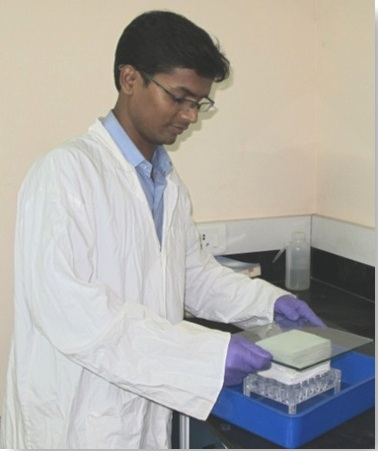
Kutubuddin Ali Molla in research lab
Kolkata:
A young researcher from West Bengal beat poverty to bag the Young Scientist Award 2013-14 of India. The Young Botanist Kutubuddin Ali Molla, who hails from a very poor family in North 24 Parganas district received the honour for his research on “Development of Transgenic Rice Plants for Sheath Blight Resistance”.
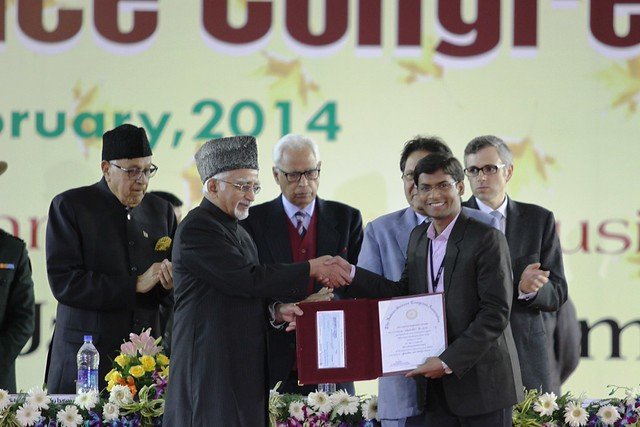
The young scientist was felicitated on February 7, 2014 at Jammu University by Vice President of India Hamid Ansari with a cheque of Rs 25000 and an Award Certificate in the field of Agriculture and Forestry Sciences.
Chief Minister of Jammu & Kashmir Omar Abdullah and Governor of Jammu Kashmir N N Vhora, Former CM of J&K Dr. Farooq Abdullah were also present in this award ceremony.
Kutubuddin is currently posted as a scientist trainee at National Academy of Agricultural Research Management in Hyderabad.
Originally from a remote village of Joygram in North 24 Parganas, Kutubuddin Ali Molla, his father Illias Molla is a farmer and Grandfather Nasim Molla was a Maulana and social worker.
With only three Bighaa of agricultural land in a joint family, Illias Molla was not able to fulfill all the needs of the family; his eldest brother Yusuf Molla, however, financially supported his bright nephew in times of economic-crunch.
Kutubuddin Ali Molla taking award from VP Hamid Ansari at Jammu University.
As a young boy, he Kutubuddin also helped his father in the agricultural fields and learnt several things about paddy cultivation that developed his interest for becoming an agricultural scientist. Stricken by poverty, his father told him, he will not stop him from studying, but he is not in a condition to financially support him and hence he would need to manage the expenses from somewhere.
After completing his senior secondary from Joygram JN High School, Kutub took admission at City College in Kolkata in B.Sc (Honours) in Botany. As the college was about 60 KM from his village, he shifted to a hostel near the college on a nominal fees of Rs 50.
Kutub is very grateful to his Professor in college Dr Argha Hait, who helped in several ways. After graduating with first class, he took admission for post-graduation in Calcutta University, which he completed with first class and ranked third.
All these while, he gave private tuitions to support the expenses of his study and staying in Kolkata. Meanwhile, he also cleared the Junior Research Fellowship (JRF) of the Council of Scientific and Industrial Research (CSIR), GATE, ICAR (NET) and ARS tests.
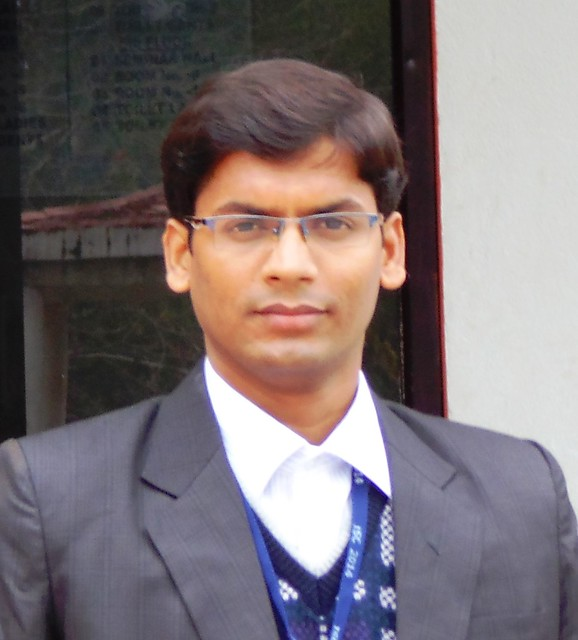
Kutubuddin Ali Molla
He took admission in Phd under the Dr Karabi Dutta in 2009 in Plant Molecular Biology and Plant Biotechnology. He did his PhD research (PhD award still awaited) on transgenic rice and published a research article in a Research Journal of the British Society on `Molecular Plant Pathology’ in 2013 that attracted the attention of the agricultural scientists in the country.
He then participated in All India Young Scientist Award Competition and was selected for the Best Young Scientist Award of India in the field of agriculture for 2013-14.
Speaking to TCN over phone from Hyderabad, Kutubuddin thanked the Almighty Allah for the honour and hoped that his research in agricultural yields good result in paddy cultivation.
source: http://www.twocircles.net / TwoCircles.net / Home> Indian Muslim / by Zaidul Haque, TwoCircles.net / March 19th, 2014
It was a cold day in February 2016. A woman from a small town of Uttar Pradesh received her Ph.D. at the 63rd Annual Convocation of Aligarh Muslim University (AMU), Aligarh. She was the first from her clan to have taken admission to AMU in 2003. Her parents never attended college; her four brothers took up family businesses at a younger age. The woman in the discussion is me. I am Mahino Fatima, a Muslim girl from a backward caste who became a scientist against all odds.
pix: heritagetimes.in / Dr. Mahino Fatima
Friends, relatives, and peers celebrated my becoming a scientist as a consequence of my hard work and perseverance. In my heart of hearts, I knew this day has not come only because of me; I was grateful for the privilege of education that I was born with.
Most importantly, I should not forget Fatima Sheikh. If not for her, I would never have become a scientist. Lakhs of women who are successful because of education would have remained illiterate but for Fatima Sheikh’s pioneering work.
How can I, a woman, forget that my foremothers were not allowed to learn how to write? How can I, a backward caste woman, forget that my forefathers were not allowed to receive an education? Today, when we look at our curriculum, we find that women scientists, economists, philosophers, and intellectuals are negligible in comparison to men. Famous philosopher, Jaques Derrida, once remarked that no woman was a philosopher. His observation was true, but he did not delve into the reason. How can a woman become a philosopher when men for centuries controlled the development of her intellectual capacities in the name of culture?
In our society, men would not let women learn the art of writing for the fear that if literate these women would communicate to ‘lovers’ through letters. Bibi Ashraf, a late 19th-century educationist, recalled how she was not allowed to learn reading and writing like male members of her family. She secretly learned to write. The secret came out when during the revolt of 1857; she had to write a letter to her father and uncle. Instead of receiving accolades, she was abhorred by men in her family. Her uncle was furious and made her take an oath that she would never write a letter to a man. Similar was the story of Rassundari Devi, who secretly learned writing by stealing books from her son. How do we expect women scientists in such a society? Still, a large section of our society would not let women study more than what is needed in the ‘marriage market’.
In this society, Fatima Sheikh, along with Savitribai Phule, started a school for girls in 1848. Yes, 1848. 26 years before Sheikh Abdullah, who later founded a women’s college at Aligarh, and 32 years before Begum Rukaiya Sakhawat, doyen of women education, were born, Fatima had started a girls’ school and taught herself. Today, that small classroom of 9 girls has prepared lakhs of educated women.
Today women are asking for gender parity in opportunities and pay scales. Thanks to Fatima, women today are educated to understand their worth and assert their rights.
Fatima was a pioneer; she was followed by Begum Rukaiya, Begum Wahid, Muhammadi Begum. A revolution starts with an idea. Fatima’s was the idea that put women of India in general and Muslim women in particular, on the march to empowerment through education.
Today, I thank Fatima for making me a scientist. Nobody knows how many bright women before 1848 had been deprived of education and were not allowed to dream of becoming a scientist. But, we surely know that after 1848, women have slowly entered different fields through education and are today competing with men to have their rightful place in the books, laboratories, and society.
(Author is a neurobiologist with her major research on depression and Alzheimer’s)
source: http://www.awazthevoice.in / Awaz, The Voice / Home> Stories / by Mahino Fatima / Saquib Salim / January 09th, 2022
Mohd Zeeshan, a PMRF and doctoral researcher at Department of Chemistry, AMU, has earned national recognition as one of the Top 40 PMRF scholars across India for his exemplary contributions to cutting-edge research in CO₂ fixation
Aligarh:
Mohd Zeeshan, a Prime Minister’s Research Fellow (PMRF) and doctoral researcher at the Department of Chemistry, Aligarh Muslim University (AMU), has earned national recognition as one of the Top 40 PMRF scholars across India for his exemplary contributions to cutting-edge research in carbon dioxide (CO₂) fixation.
Zeeshan’s research is centred on the development of heteroatom-functionalised linkers and metal–organic framework (MOF)-based materials for CO₂ capture and wastewater remediation. The selection was based on the national impact of his work, which combines experimental innovation with real-world applicability, addressing pressing environmental challenges.
His research has been conducted under the mentorship of Dr. M. Shahid, a noted scientist with over 170 publications.
Zeeshan acknowledged the constant academic and moral support of Professor Zeba N. Siddiqui, Chairperson of the Department of Chemistry, who congratulated him on receiving this prestigious honour. He also thanked Professor Aasim Zafar, PMRF Coordinator at AMU, for his dedicated mentorship, proactive engagement, and seamless coordination.
Zeeshan has authored 13 peer-reviewed research papers published in leading international journals, including Dalton Transactions and CrystEngComm (Royal Society of Chemistry), and Coordination Chemistry Reviews (Elsevier), with impact factors reaching up to 20.3. He has also contributed two book chapters, holds a granted patent, and has received multiple accolades for best poster and oral presentations at national and international conferences.
In recognition of his achievements, Zeeshan has been invited by the Ministry of Education, Government of India, for a high-level interaction with senior officials, where he will represent AMU and share insights on enhancing the PMRF scheme.
source: http://www.radiancenews.com / Radiance News / Home> Latest News / by Radiance News Bureau / June 21st, 2025
It is the story of a young boy who once wanted to take his parents to the moon. However, for Sabir Alam, the journey from a small village in Bihar to the one in which he was associated with ISRO’s Chandrayan Mission 3, Moon was a destiny chiselled with grit.
Sabir Ali’s story began in the Chhoghra village in Katihar district, 350 km from Patna, Bihar. Son of a primary school teacher from Seemanchal – one of India’s most underdeveloped regions – this young boy turned his limitations into challenges and life happened to him.
Sabir’s father, Harun Rashid, knew the value of a good education but often wondered how to make his son rise in life with his meagre earnings. “With my limited earnings and the struggle to secure quality education for him, it was a challenging journey,” Harun says.
Sabir Alam having chai
Sabir joined his father’s school, where learning was born from passion rather than resources.
When Sabir cracked the Jawahar Navodaya Vidyalaya (JNV) entrance exam, it was a monumental moment. JNV was a lifeline, offering free education to talented students from rural areas.
He joined the JNV in Kolasi, Katihar, and after his 10th-grade exams in 2012, he shifted to JNV, Puducherry.
Sabir also enrolled in a coaching program run by Avanti, an NGO in collaboration with Tata Motors, to prepare students for competitive exams like IIT–JEE, the gateway to some of India’s most prestigious engineering institutions.
He graduated with a B.Tech in aerospace engineering from the Indian Institute of Space Science and Technology (IIST) in 2018 and then joined the Indian Space Research Organisation (ISRO) at the Vikram Sarabhai Space Centre, Thiruvananthapuram, Kerala.
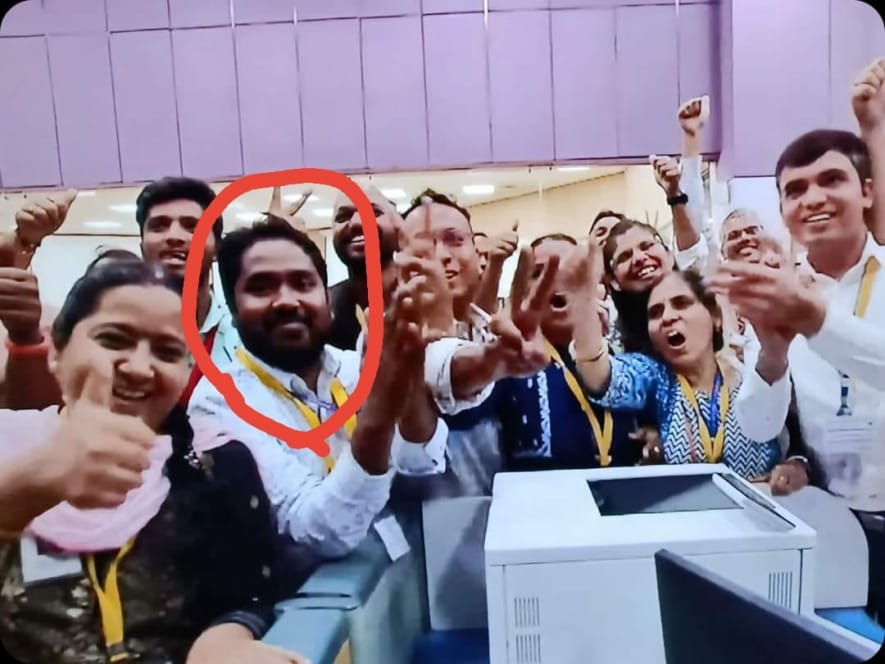
Sabir Alam with fellow scientists celebrating the launch of Chandrayaan-3
Then came the day that would forever etch Sabir’s name in history. On August 23, 2023, when India made its historic landing on the moon’s South Pole as part of the Chandrayaan-3 mission, Sabir stood among the brightest minds who made it possible.
The moment was both joyous and emotional for his family.
“It was like Eid for us,” says Harun Rashid. “People gathered at our house to congratulate us and shower blessings. It felt natural as a young man from a region often associated with poverty and underdevelopment contributed to the country’s successful lunar mission,” he says with palpable pride and happiness.
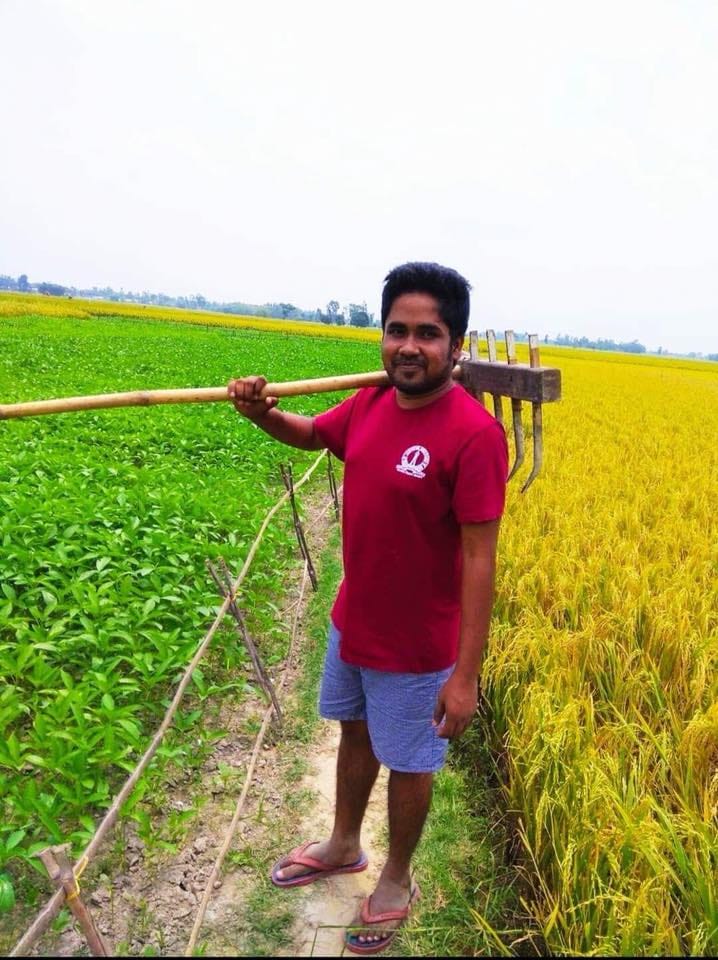
Son of the soil : Sabir Alam in his field in the village
Though his mother, a homemaker, may not fully grasp the enormity of the achievement, she stood in quiet pride, holding back her tears. “As a mother, I cannot put my emotions into words. All I know is that my son has made not just Seemanchal but the entire country proud,” she says, her voice trembling with love and joy.
For the family, Sabir’s rise was not about wealth. “There was no financial investment in his schooling,” his mother said.
Sabir’s education was sustained by the values of hard work, sacrifice, and scholarships. The JNV provided the crucial foundation, and scholarships allowed Sabir to scale the mountain that seemed insurmountable to so many.
Did Sabir’s mother ever imagine he would join ISRO or contribute to such a prestigious national mission? I asked her. “I always knew he would succeed,” she said. “He often joked during his visits home that he would take us to the moon one day.”
Sabir Alam showing a model of the lander at the surface of the moon to his son at ISRO center
Mumtaz Naiyer, a scientist based in the United Kingdom, shares a unique bond with Sabir. Hailing from the same region, he always acknowledged Sabir’s abilities. “Sabir has always been extraordinary. He stands out from other youth in Seemanchal because of his approach, temperament, and determination to learn and succeed. Thanks to Sabir, we, the Surjapuri-speaking (local dialect of the region) people, Seemanchalis and Biharis, are now part of history,” Naiyer says.
“This will certainly inspire the youth of this underdeveloped region to dream big,” Naiyer adds. “I also want to thank Sabir’s parents, as their son has brought immense pride to Seemanchal.”
Yet, despite all his achievements, Sabir has never seen himself as someone extraordinary. In a post on Facebook’s page ‘Humans of Seemanchal’ he wrote, “Honestly, I do not feel that I have achieved anything extraordinary or made any significant breakthrough in my field. I do not need to talk much about Seemanchal – its literacy rate already tells its story. I was just fortunate to find a way around the high cost of education.”
For Sabir, it was never about the prestige of joining ISRO. It is simply a milestone. “There are numerous challenges for those from backward areas, but with dedication, hard work, willpower, and, most importantly, awareness, you can overcome them,” he advises.
source: http://www.awazthevoice.in / Awaz, The Voice / Home> Stories / by Tarique Anwar, New Delhi / February 13th, 2025
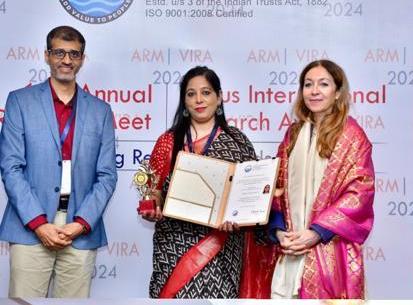
Dr Nishat Afroz receives the international award for research and innovation in medical sciences
Aligarh:
Dr Nishat Afroz, Professor, Department of Pathology, JN Medical College, Aligarh Muslim University (AMU) has been honoured with the award of “Distinguished Researcher in Histopathology” for her contribution and achievement in the discipline of Health and Medical Sciences by the Venus International Foundation.
The award was bestowed upon her at the 10th Annual Research Meet – ARM 2024 on the theme “Diverse Approach to Address Societal Challenges and Deliver Novel Solutions”, organised by the Centre for Research and Innovation – Venus International Foundation at Chennai.
Earlier, Dr Nishat Afroz attended the Pathology Conferences at Subharti Medical College Meerut, Narayana hospital & RN Tagore Medical College, Kolkata and SMS Medical College, Jaipur as guest speaker and workshop convener.
source: http://www.radiancenews.com / Radiance News / Home> Pride of the Nation. Awards> Focus / by Radiance News Bureau / December 12th, 2024