Category Archives: Women/Girls(since May26-2021)

Faiz-e-Aam Trust: A journey of 40 years in helping the helpless; but miles to go before one sleeps

Hyderabad, TELANGANA:
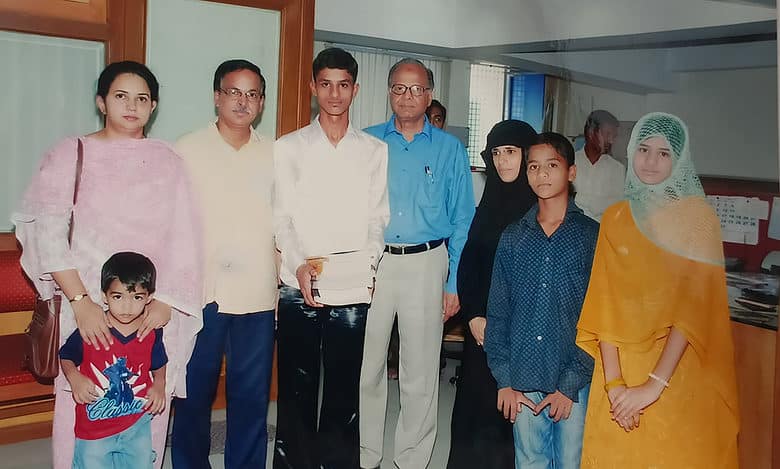
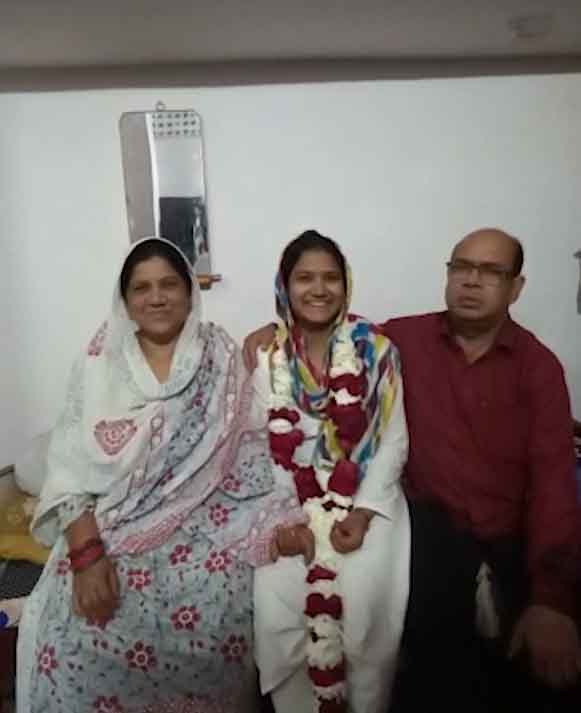
Syed Husain and Saba Begum with the Faiz team

Hyderabad: 

Everything begins with an idea. But sometimes a moment of indifference could be the trigger. It was so in the case of Zulfequar Hussain, former Director of Bombay Mercantile Cooperative Bank. One day he was sitting in his office in Aurangabad and a dilapidated house collapsed right in front of his eyes in Loha Bazar, Chowk area. Those present there were touched by the tragedy which claimed the lives of two earning members and left their five children to fend for themselves. More than the misfortune, what troubled Hussain was the crass indifference of people who merely expressed sympathy and left. He was moved in a different way and wanted to do something for the bereaved children beyond lip sympathy.
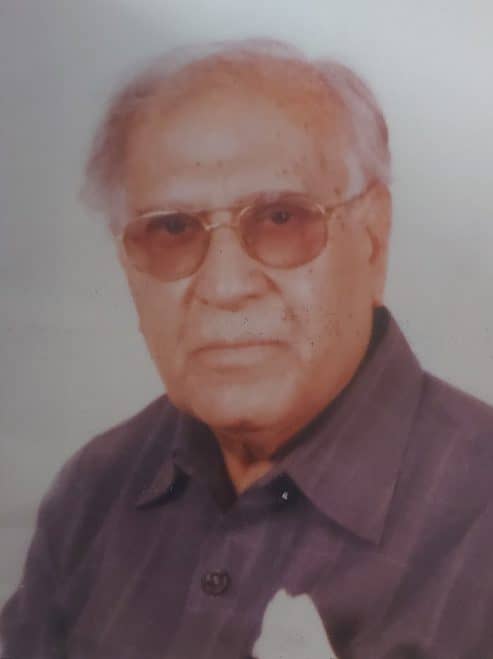
Zulfequar Hussain

And the idea of Faiz-e-Aam Trust took birth. Soon poor and destitute found in it a helping hand and a shoulder to cry on. That was the year 1982. Two years later the Trust opened its branch in Hyderabad. There has been no turning back since then. As the name suggests, its ‘faiz’ (munificence) has spread far and wide to all and sundry.

As he looks back on Faiz’s journey in the last four decades, Iftekhar Husain Fida Ali, Hon. Secretary of its Hyderabad branch, is pleased with the work done and the achievements made. But he doesn’t want to rest on laurels. “I have miles to go before I sleep,” he repeats a line from a famous poem.
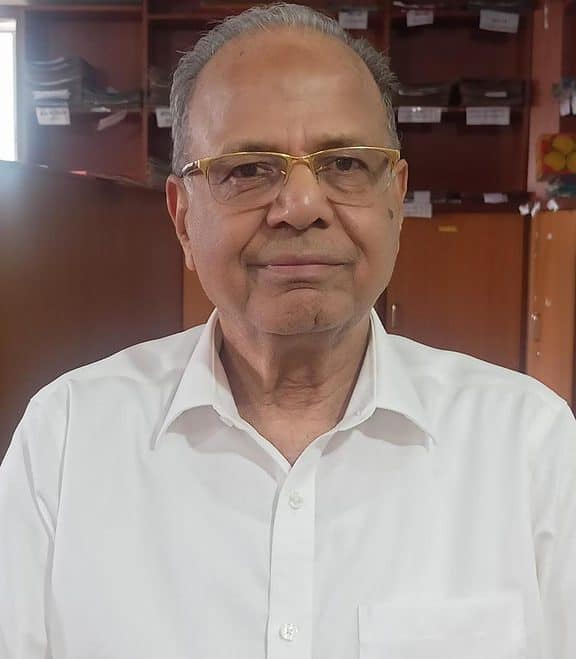
Iftekhar Husain, Faiz-e Aam Secretary

On Monday evening Husain will take a walk down the memory lane at the programme being organised at the Salar Jung Museum and outline the vision statement for the coming years. The Faiz teams, both in Aurangabad and Hyderabad, have their job cut out: create more opportunities for students who have the calibre to study but can’t afford the expenses, render medicare to more underprivileged persons and rehabilitate the lower strata of society by helping them set up small businesses.

If statistics are something to go by, Faiz has impressive numbers of providing succour and relief to the needy: 10,000 plus education beneficiaries and 8000 plus medical beneficiaries. The Zulfeqar Husain Memorial Hospital at Kagzipura in Aurangabad has treated 3.80 lakh patients at a cost of Rs. 1 crore. This selfless service has drawn the appreciation of one and all, including Mother Teresa, the famed nun known for her charitable work.

Unlike other welfare organisations, Faiz doesn’t believe in merely adopting a child. It goes a step ahead and ensures that other children in the family are also taken care of so that the entire family is uplifted economically. Its volunteers look out for deserving destitute in vulnerable areas who want to study but have no means to do so. Over the years it has transformed the lives of many poor children by providing assistance for education and now they are in a position to help others. Helping others grow is the secret of Faiz’s growth.

On the education front Faiz has done extremely well. It has spent a total of Rs. 8.78 crore to help 3341 students from 1982 to 2022. Of these the female beneficiaries account for 2,080. This apart, Faiz has churned out more than 3000 nurses in partnership with the Bibi Amena Hospital in Hyderabad. Each one of them was provided with financial assistance of Rs. 1000 per month. In association with other charitable trusts too, Faiz has been extending aid to families based on their needs.

This is not all. Faiz has also helped many realise their dreams. Take the case of Mohammed Yousuf, a polio affected boy from the old city of Hyderabad. To his misfortune a pair of crutches became an inseparable part of his body. But his fortune turned for the better when he came into contact with Husain and the late Abid Ali Khan, the founder Editor of Siasat. Looking at his interest in education, they extended financial assistance. He passed B.E (Electronics and Communications) in the first division. Faiz helped him fulfil his American dream too. Yousuf landed a job in General Motors and did extremely well. Now he has set up the Equally Able Foundation in the US and helps differently able persons. In 2019 he spent more than Rs. 2.40 lakh through his Foundation on 101 students back home.
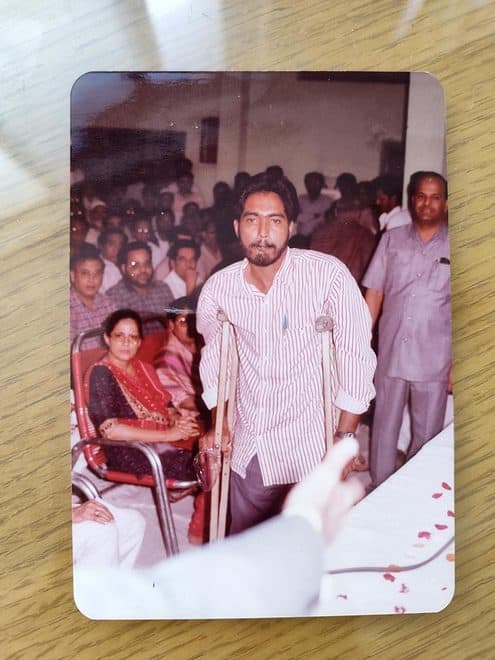
Mohd Yousuf, the polio affected boy, now helping others

Likewise, Syed Hasan of Mir Alam Tank and his sister, Saba Begum, have realised their dream of becoming doctors. Faiz adopted him right from the first standard and funded his education till he completed his MBBS. Now he is working in the Owaisi Hospital as a doctor in General Medicine. His sister too has cleared MBBS with the financial assistance of Faiz. “Now I want to do my bit for the community and guide others”, says a grateful Dr Hasan.

The case of Mohd Jameel Husain’s children is also quite interesting. Faiz adopted all his 12 children and helped them come up in life. The eldest daughter, Ayesha Jabeen, has completed MBBS and is pursuing M.D while her younger sister, Atufa Jabeen, has passed out B Pharmacy. The other siblings Adeeba Jabeen, Aafiya Jabeen, Arshiya Jabeen, Mohd Muzammil are all pursuing different courses. They couldn’t have come this far without the timely help rendered by Faiz.

In the same way, Faiz has helped the children of Mahmooda, a widow, who was struggling to raise her children through tailoring. Besides extending financial assistance towards ration, house rent and medical treatment, Faiz adopted her three children – Syeda Fayeq, Syeda Asma and Syeda Tabassum. While the first one is pursuing B.Ed, the second one has completed B.Sc and the third sibling is doing B. Pharma.

Another major thrust area of Faiz is imparting technical skills through its four Skill Development Centres in the old city. Through the Ayesha Effendi and Siasat centres computer skills are being imparted to the students.

Apart from education and medical care, Faiz has been helping out people in association with the Siasat Daily. The Kapda Bank set up by them has benefitted more than 50,000 persons. Similarly the two organisations have rendered help to Delhi riot victims and rehabilitated the affected families thanks to the generous contribution received from donors. While the COVID pandemic and the resultant lockdown left thousands of people sick, unemployed and struggling, Faiz pitched in to render relief. It fed more than 7000 families at a whopping cost of Rs. 24 lakh.

Among the many beneficiaries is also Syeda Salwa Fatima, the first woman pilot from Hyderabad. Her success shows how Faiz and Siasat Daily gave her not just the wings but also the landing gear. As its motto goes, Faiz believes in helping the helpless.

source: http://www.siasat.com / The Siasat Daily / Home> Featured News / by JS Ifthekhar / December 25th, 2022
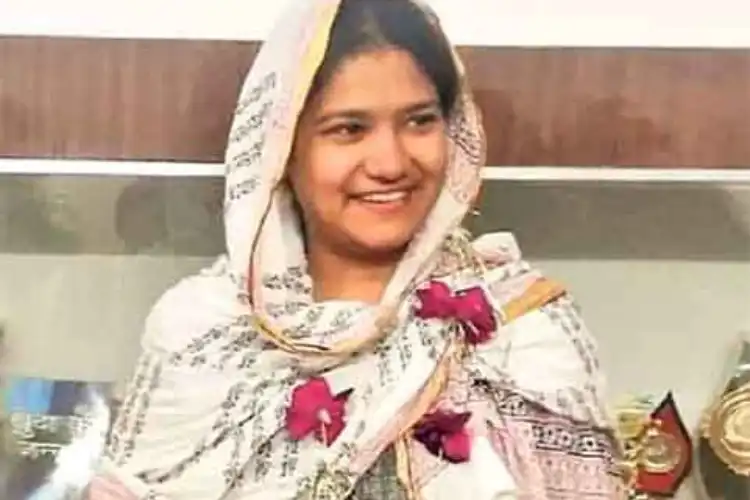
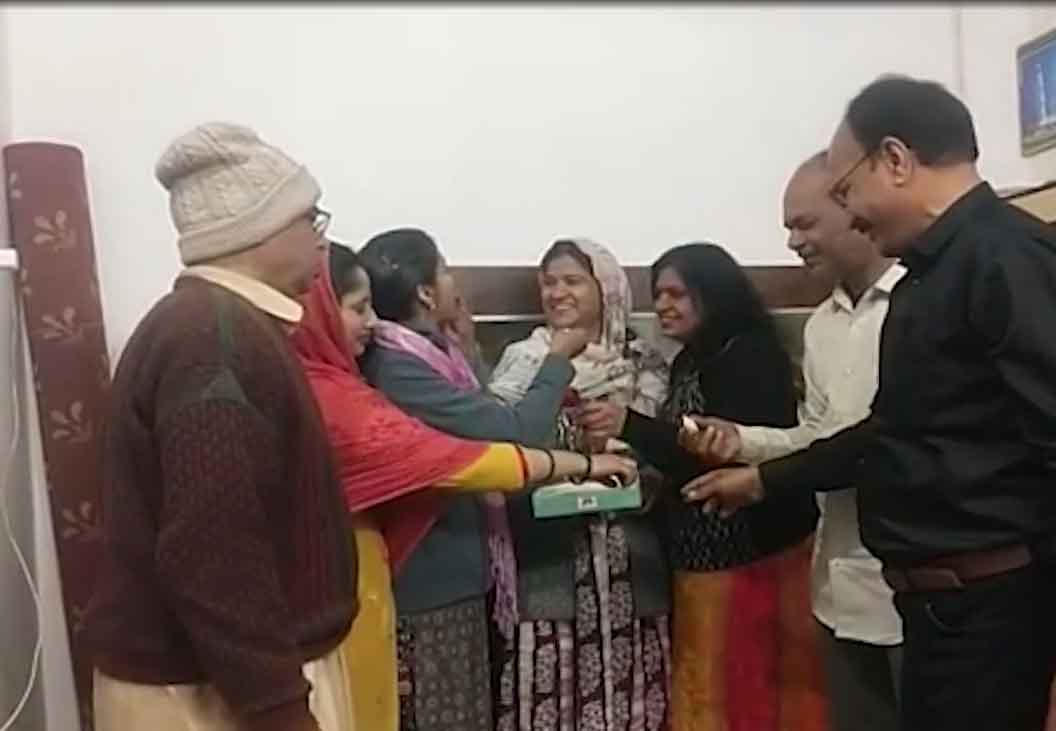
Why CM Shivraj Chouhan is calling Sana Ali an inspiration

MADHYA PRADESH:

Sana Ali
Sana Ali

New Delhi:

When Sana Ali of Vidisha, a town in the state of Madhya Pradesh received her appointment letter for the job of technical assistant in the Indian Space Research Organization (ISRO), it turned out to be a celebration of the human spirit and opportunities that the country offers to hardworking youth.

Chief Minister Shivraj Singh Chouhan congratulated Sana Ali and her family. He called her “Daughter of Vidisha.” Chief Minister Chouhan also belongs to Vidhisha.

In his message posted on Twitter, the chief minister said

“Hearty congratulations to Sana Ali, daughter of Vidisha, on being selected as Technical Assistant at ISRO’s Satish Dhawan Space Center. Congrats! Ladies like you are making Madhya Pradesh proud and revealing the potential of daughters. I wish you all the best for your happy, successful, and bright future ahead.”

Even central minister Jyotiraje Scindia, who hails from Madhya Pradesh congratulated  Sana. He complimented Sana for rising above her adverse circumstances to reach this position and become an inspiration to others.

Sana’s achievement has to be seen in the context of her social and economic backdrop. Considering that Sana Ali’s father was a bus driver in the engineering college where she completed her B.tech and later M.Tech degrees, Sana’s achievement is great.

Her father and family had to raise funds for her education by mortgaging family jewelry and eliciting snide comments from relatives.

Sana’s father Sajid Ali used to be employed as a bus driver in the same college from where Sana completed her engineering studies. Sana Ali completed her master’s degree from Samrat Ashoka Technology Institute (SATI) of Vidisha.

https://www.hindi.awazthevoice.in/upload/news/167369148401_Sana_Ali_Khan_ISRO_Driver's_daughter_Sana_Ali_Khan_will_now_fly_ISRO's_rocket_2.jpg
Sana Ali’s family celebrating her appointment i ISRO

However, later Sajid was promoted to the position of a laboratory assistant in the same college.

While Sana was completing her Master’s degree, Sajid Ali faced a severe financial crisis. He had to borrow money and pawn his wife’s jewelry to pay for his daughter’s education.

As the family made efforts to raise money for their daughter’s higher education, they also faced taunts from extended family and others. People around them disapproved of the family’s obsession with making a daughter go for higher studies when they didn’t have enough resources.

They brazenly asked Sajid why he choose to take a loan for his daughter’s studies as she will have to leave his home one day after her marriage and he would be left to repay the loan.

However, Sajid ignored them and kept supporting his daughter’s education.

Today a proud father Sajid says, “I worked hard to educate my daughter. Despite all the financial constraints, we continued her studies. I told my daughter that she has to complete her studies at any cost and achieve her goal. My daughter also worked hard and reached this point. We are very happy. I pray that my daughter progresses all through her life.

https://www.hindi.awazthevoice.in/upload/news/167369150701_Sana_Ali_Khan_ISRO_Driver's_daughter_Sana_Ali_Khan_will_now_fly_ISRO's_rocket_1.jpg
Sana Ali with her parents

After completing her M.Tech course, Sana started preparing for the competition. Sana will be joining the Satish Dhawan Space Center (SDSC) at Sriharikota in the Tirupati district of Andhra Pradesh.This center of ISRO is a rocket launcher center, where rockets with state-of-the-art technology are sent into the space.

Sana told the local media, “I belong to a middle-class family. I want to give a message to all women that they must strive to get an education at any cost. Make all efforts to achieve the goal which you have set in your life. You need to work hard and don’t get discouraged by the failures that come your way.”

Significantly, Sana not only worked hard in her studies but also gave tuition to young children to meet the expenses related to her education.

source: http://www.awazthevoice.in / Awaz, The Voice / Home> India / by awazthevoice.in / January 15th, 2023

Shahnaz Parveen: first Ladakhi woman to win Taekwondo gold at national meet

Ladakh UT :

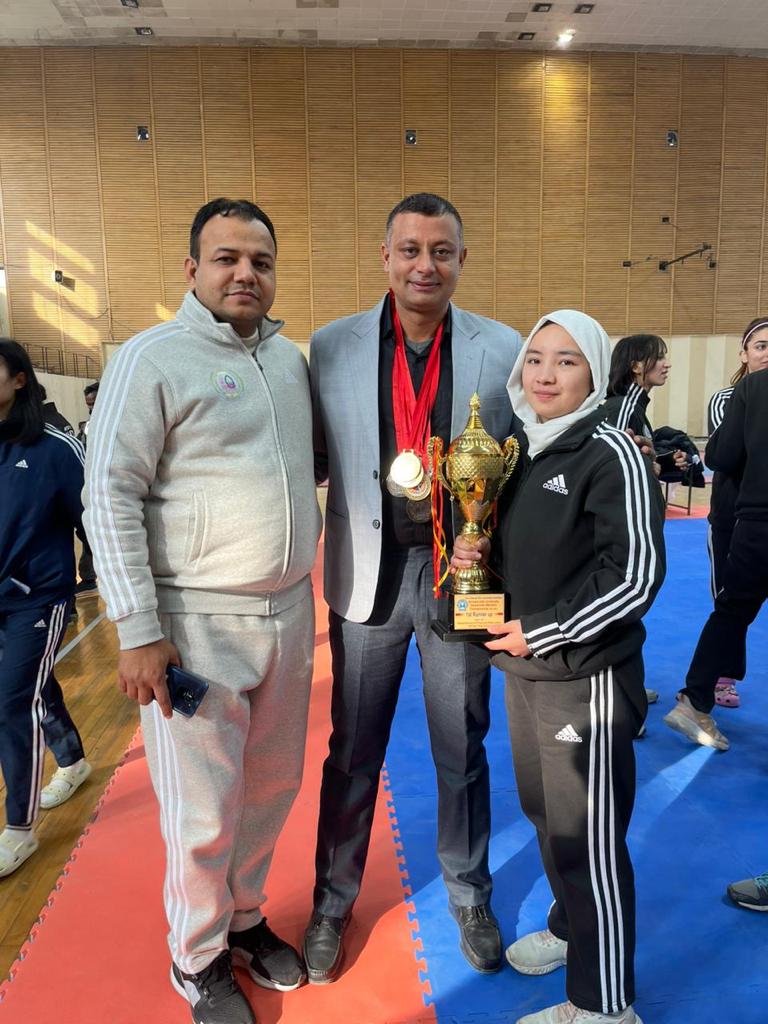
Shahnaz Parveen with her gold medal and trophy

Kargil:

Shahnaz Parveen, who hails from the far-flung village of Checheysna Sankoo in Kargil-Ladakh, became the first woman athlete from Ladakh to win a gold medal in a national Taekwando event.

She won the gold in Group Poomsae under 30 at the National University Games held in Punjab. Shahnaz represented Maharshi Dayanand University, Rohtak, at the games, which were participated by 146 universities from across India.

Another Taekwando player from Ladakh Tashi Tundup who hails from Fokar, Kargil, also won a gold medal at the University Games recently.

Chairperson of the Ladakh Autonomous Hill developmental Council, Kargil, Feroz Ahmad Khan congratulated Shahnaz Parveen on winning the gold medal.

He said Kargil has produced several top athletes in Taekwondo who have made a mark not only at state-level events but also at national and international events. “Shahnaz Parveen is a role model for future generations as sports has a bright future in UT Ladakh.”

Shahnaz Parveen with her coach

He asked youngsters to devote time to sports and pursue excellence in sports disciplines at a different level.

He also congratulated Ladakh Taekwondo Association and urged all sports associations to come on a common platform to make Ladakh a sporting hub in the country.

President of Ladakh Taekwondo Association, Gulzar Hussain Munshi congratulated Shahnaz Parveen on winning the gold medal at a national event.

He urged the University of Ladakh to start professional coaching for sportspersons to cobble a team for the university. He said there are several talented young sportspersons and urged the UT Administration to help the association with infrastructure to ensure that more athletes can receive the required support and prepare for various events.

Shahnaz Parveen thanked her coach Atul Pangotra for her achievement. She added that he is the best coach in India for Taekwondo who works on the strength of the player.

She also thanked the Ladakh Taekwondo Association, her parents, and people of Kargil who remains a source of inspiration for her.

source: http://www.awazthevoice.in / Awaz, The Voice / Home> Women / by awazthevoice.in / January 14th, 2023

Udupi’s Areej Ahmed awarded best outgoing student at Manipal College of Health Professions

Udupi, KARNATAKA :

Udupi:

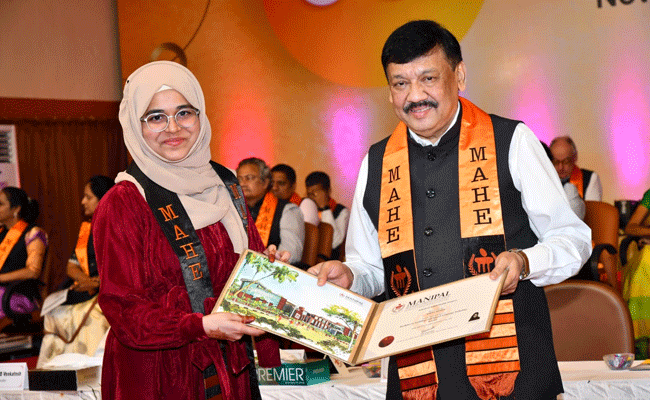
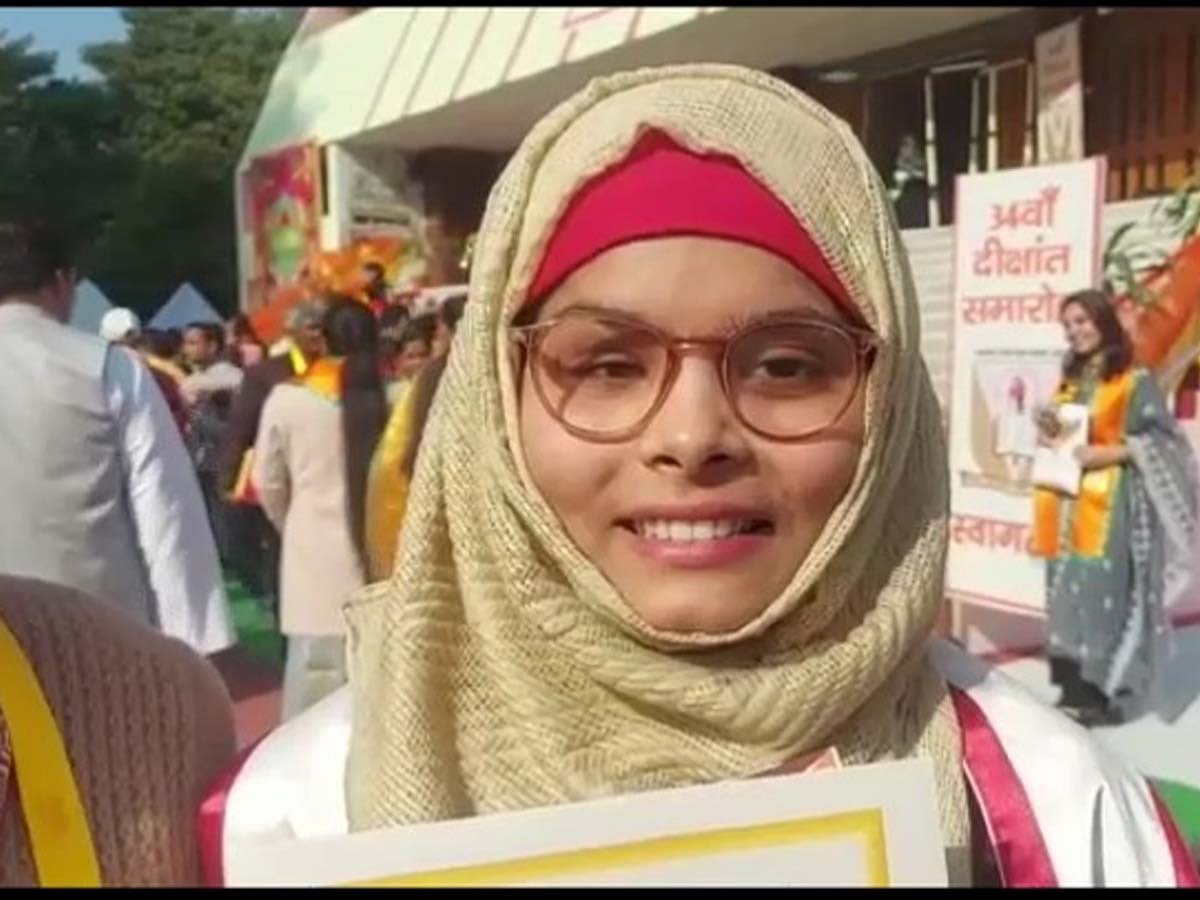
Areej Ahmed, a resident of Udupi was awarded the best outgoing student for the year 2021 at the 23rd Annual and Awards day at the Manipal College of Health Professions.

Areej, completed her Bachelor’s degree in Audiology and Speech Language Pathology (BASLP) with distinction. She is the daughter of Udupi’s Khaleel Ahmed and Zeenath.

Areej received the award of best outgoing student of the BASLP batch from Manipal and Mangalore campuses.

source: http://www.english.varthabharati.in / Vartha Bharati / Home> Karavali / by Vartha Bharati / January 12th, 2023

Karnataka Sahitya Akademi winning writer Sara Abubakar dies at 86

Kasargod, KERALA / Mangaluru, KARNATAKA :

She was one of the first girls in her community of Muslim families in Kasargod to be educated, graduating from a local Kannada school. 

Renowned Kannada novelist, essayist, and translator Sara Abubakar.

Mangaluru :

Renowned Kannada novelist, essayist, and translator Sara Abubakar passed away on Tuesday. She was 86. She died around 1 pm at a private hospital due to illness.

Some of her noted works include Chandragiriya Theeradalli, Hottu Kanthuva Munna, and more. Her novels deal with trials and tribulations in Muslims’ lives as well as women’s empowerment.

Sara was born in a Malayalam-speaking family from Kasaragod to advocate P Ahmad and Zainabi on June 30, 1936. She was one of the first girls in her community of Muslim families in Kasargod to be educated, graduating from a local Kannada school.

She bid goodbye to her studies after her marriage with Abu Bakar, an engineer. But Sara was always interested in reading and addicted to the writings of Shivaram Karantaru, Inamdar, Bhairappa, Ananthamurthy and Vaikom Basheer.

Sara had once stated that her desire to pursue her education was constrained by community norms that restricted female access to higher education.

Her mortal remains will be kept for public viewing at her residence at Hathill in Mangaluru and final rites will be held at 8 pm today.

Many dignitaries have mourned the death of Sara Abubakar, including leader of the opposition party, Siddaramaiah who tweeted about the death of the veteran writer.

Sara has won several awards, including the Karnataka Sahitya Akademi award of honour, the Karnataka Rajyotsava award, and the Daana Chintamani Attimabbe award from the Karnataka Government.

She is survived by four sons and many relatives.

(With inputs from Online Desk)

source: http://www.newindianexpress.com / The New Indian Express / Home> States> Karnataka / by Divya Coutinho / Express News Service / January 10th, 2023

Rickshaw-puller’s daughter awarded gold for topping varsity

Bulandshahr, UTTAR PRADESH :

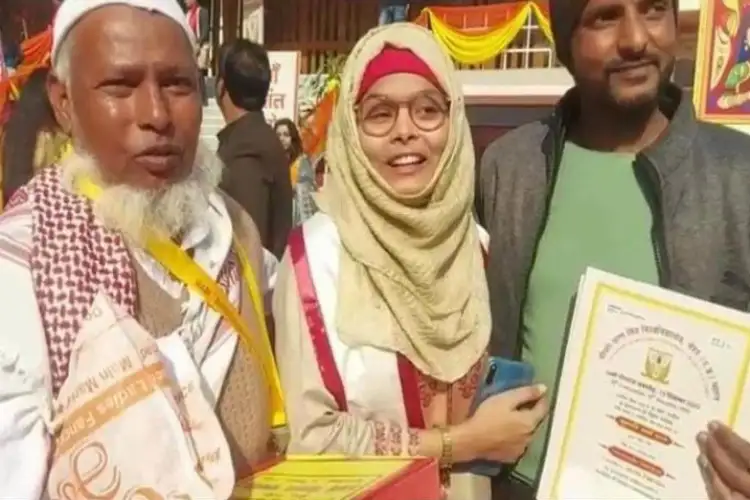
Shama Parveen with her father Yanoon Khan and a relative after she received a gold medalfor topping Mathematics in B.Sc course

When Governor Anandiben conferred the gold medal on the university topper in B.Sc Mathematics at the convocation, tears rolled down the cheeks of Shama Parveen. The tears were of joy and gratitude for making it through challenges both financial and personal.

Shama hails from Bulandshahr, Uttar Pradesh, and she topped in B.Sc Mathematics at Chaudhary Charan Singh University, Meerut with 89.80% marks in the subject in the final examination.

Shama Parveen turned emotional in memory of her tough life as the daughter of a rickshaw puller who, with his small income, could barely make ends meet.

However, her father Yunoon Khan cut corners to ensure that his daughter goes to school and later college. The daughter too didn’t disappoint him.

Shama Parveen says that her father taught her to work hard and honestly. “He mortgaged his belongings to raise money to pay my fees. My father had pinned high hopes on me. Today, I have been able to live up to his expectations,’ she told local media persons.

However, Shama’s achievement also came despite her physical disability. She has no sight in one of her eyes.

Due to her physical problem, people generally were not kind to the child. Her father Yunoon Khan says that when she was one year old, suddenly, the vision in her one eye started fading and as she grew up, it further declined.

Shama Parveen holding her medal and a certificate

He says that neighbours and relatives taunted his daughter and made uncharitable comments about her. They even taunted Yunoon Khan about his daughter’s condition.

He says: “I never paid attention to them and also taught my daughter to do the same. On the contrary.” On the contrary, he encouraged Shama to pursue higher education.

Shama cleared the 12th standard with good marks. Unlike others in the neighbourhood who confined their daughters to home, Shama got admission to B.Sc Mathematics at Chaudhary Charan Singh University, Meerut.

Her father did everything possible to support her and Shama’s success was a beautiful culmination of Yunoon Khan’s mission.

Shama Parveen has topped examinations at the district level many times. She now wants to become an IAS officer.

However, being the eldest of her siblings, she says right now she wants to support her father financially as she feels responsible towards her siblings.

Shama says that every parent should provide higher education to their daughters. Education is the only weapon that can make one live life with respect.

source: http://www.awazthevoice.in / Awaz, The Voice / Home> Youth / by Onika Maheshwari, New Delhi / January 08th, 2023

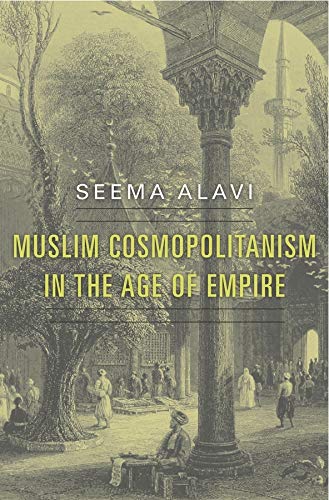
Book Review: Muslim Cosmopolitanism in the Age of Empire by Seema Alavi

INDIA :

Seema Alavi’s narrative is about the little known stories of five Islamic men of learning who played key roles in the 1857 rebellion against the British, fled India and made their way to west Asia, notes Dr Asiya Alam.

Book: Muslim Cosmopolitanism in the Age of Empire 
Author: Seema Alavi 
Publisher: Harvard University Press 
Pages: 504
Price: Rs 495

In Muslim Cosmopolitanism in the Age of Empire, Seema Alavi makes an admirable and successful attempt to rethink some key assumptions of South Asian and global history. Specifically, the book inserts into history five important Muslim men of religion, including Sayyid Fadl, Rahmatullah Kairanwi, Haji Imdadullah Makki, Nawab Siddiq Hasan Khan and Maulana Jafer Thanesri, who were hounded by the British government for their role in 1857 and fled India to seek their fortunes in different cities of the Ottoman Empire.

Alavi’s broader aim is to challenge the paradigms of empire-based, global history. The “contours of global history need to be redrawn at the porous intersection of the British and Ottoman Empires” she argues. By focusing on Indian Muslims instead of Britons as key players, she offers new insights into the understanding of imperialism. Located at the cusp of British and Ottoman empires, these men became significant actors in trans-Asia politics of the 19th century involving the British, Arab polities, Ottomans and the Russian Empire.

Alavi skilfully demonstrates how Mughal pathways of trade and Sufi networks along with later British and Ottoman imperial connections and technological innovations in print, communications and shipping enabled these men to flee in the aftermath of 1857 and travel across the Indian Ocean.

To contextualise the lives of these five men, Alavi hypothesizes the emergence of a ‘Muslim cosmopolis’ in the 19th century, characterized by an intellectual sensibility as well as global networks that allowed these men to navigate imperial boundaries. The cosmopolitan sensibility constituted the eclecticism and compromised of Delhi Naqshbandi Sufi Shah Waliullah reflecting the social diversity of India; proficiency in Arabic, Persian and Urdu that aided these men to access both Indo-Persian society and Middle Eastern Arabic world; and support for Ottoman reforms that advocated ideas of science, reason and rationality. Alavi writes that the Muslim cosmopolis provided a ‘perfect global canvas’ for Ottoman Caliph Abd-al Hamid II to execute his reforms. Muslim emigres, in turn, brought back their cosmopolitanism to India, creating global interconnectedness between Middle-Eastern and South Asian societies.

Alavi also adds new discoveries to South Asian history. The multilingualism of these religious scholars isn’t accidental but an outcome of the Arabicist cultural and intellectual grid that emerged in South Asia in the late 18th and early 19th century. Exemplified by Shah Waliullah, Alavi argues it was based on compromise between the “more liberal Sufi saint Ibn-i Arabi and the conservative Naqshbandi Sufi sheikh Ahmad Sirhindi” which “produced an India-specific Arabic tradition with its stress on the individual, scriptures and social leveling” so that “religious knowledge was slowly disembodied from its hitherto inaccessible encasings: the person of the king, the body of the Sufi saint and single-copy Persian manuscripts”. Alavi attributes this gradual transition to the larger Mughal crisis, its disintegration in the late 18th century.

After laying out this rich, historical backdrop, Alavi foregrounds the individual, devoting a separate chapter to each of the five men, who have their own brand of Muslim cosmopolitanism. The life of Sayyid Fadl highlights the large presence of Arabs — immigrant and Deccan born — in Hyderabad, and signifies ethnic ambiguity and territorial connections of the ‘Indian Arab’, a category coined by the British. Rahmatullah Kairanwi’s life suggests a concern with cosmopolitan education. He started a madrasa in Mecca to combine religious and scientific learning offering a critique of the intellectual environment of the Hijaz that would later become a model for the Deoband seminary.

Haji Imdadullah Makki’s career suggests a vibrant culture of Muslim cosmopolitanism in Mecca, blending different Sufi orders, Naqshbandi reformism and a middle ground on religious issues. Nawab Siddiq Hasan Khan was based in Bhopal and his political career and publications indicate his use of imperial networks and print technologies to further his ideas and connections with the Ottoman world.

Finally, Maulana Jafer Thanesri’s writings highlight a notion of ‘mulk’ or ‘felt community’ and his ideas of ‘Hind’ produced a proto-nationalist critique of British discrimination. In each of these lives, Alavi questions a pan-Islamic approach and repeatedly shows that they weren’t only motivated by religion but operated within imperial rivalries and opportunistically pushed their careers, ambitions and desires.

This excellent book subverts dominant frameworks of our past and should be necessary reading for anyone interested in South Asian and global history.

(Dr Asiya Alam is an Islamic Studies scholar at Nirmala Niketan College.)

source: http://www.dnaindia.com / DNA / Home> Lifestyle / by Asiya Aslam / December 05th, 2017

Anhad’s founder Shabnam Hashmi given Woman of the Decade award by the Women Economic Forum

INDIA :

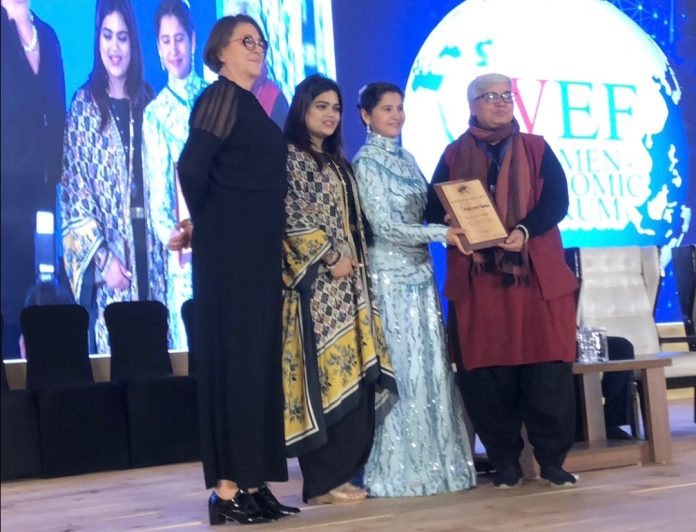
Anhad’s founder Shabnam Hashmi receiving Woman of the Decade award 

84th Global Edition of Annual Women Economic Forum 2022 (WEF) – G100 Meetings in Delhi, India was inaugurated on 27th and the deliberations will continue till 31st December 2022 at JW Marriott Hotel, New Delhi Aerocity. India.

The summit coincides with the Presidency of India at the G20.

Shabnam Hashmi , a well known social activist and founder of Anhad was invited to speak in the Plenary session on the second day of the summit on human rights .

Dr. Harbeen Arora Rai, Founder & President, G100 ,  ALL Ladies League (ALL) | Women Economic Forum (WEF), WICCI, Women’s Indian Chamber of Commerce and Industry conferred on Shabnam Hashmi the  “Woman of the Decade” award.*

The WEF together with participants hopes to influence and shape global policies in order to extend more support for women in all walks of life globally.

Presented by Women’s Indian Chamber of Commerce and Industry (WICCI), and held along with the G100 India meetings, the theme for this edition of the Women Economic Forum (WEF) is “Bridge the Gap: Agenda for G20.”

As an outcome, it will launch 100 recommendations that will be presented to the G20 leaders, UN bodies, governments and stakeholders globally to make gender equality a priority for all in this decade.

G100 is a group of influential global women leaders including Nobel Laureates and Heads of States who have come together with the purpose to make gender equality a reality in this decade and fulfil the vision of the UN SDGs by 2030. G100 is supported by the G100 Denim Club, group of leading 100 He for She champions from across the world who are supporting this epic endeavour.

The G100 is holding 100 global meetings worldwide. G100 missions have taken place in Switzerland (UN), Netherlands, Belgium, USA (UN-NY), UAE, UK, Spain, Romania, Malta, Portugal, Sweden, Malaysia, Indonesia, Singapore, Thailand and continue in 8 Balkan Countries, Ivy Leagues-USA, Turkey, France, Bangladesh, Egypt and the gala event in India.

source: http://www.muslimmirror.com / Muslim Mirror / Home> Indian Muslim> Positive Story / by Muslim Mirror Network / December 28th, 2022

Jamia Millia Islamia: 12 Research Scholars Selected For Prime Minister Research Fellowship

NEW DELHI :

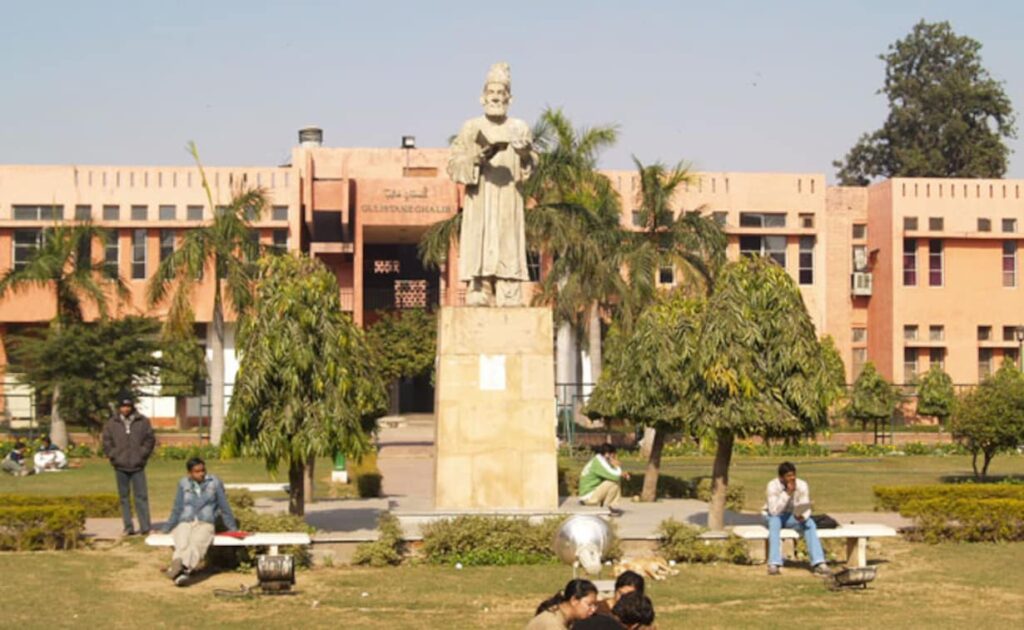
Jamia Millia Islamia(JMI) expressed its pride in being awarded the Prime Minister Research Fellowship (PMRF) of 12 research scholars of the university under the Lateral Entry Scheme of the May 2022 drive.

New Delhi:

Jamia Millia Islamia(JMI) expressed its pride in being awarded the Prime Minister Research Fellowship (PMRF) of 12 research scholars of the university under the Lateral Entry Scheme of the May 2022 drive.

According to the PMRF Coordinator, JMI Professor Abdul Quaiyum Ansari, the researchers will individually get a fellowship of Rs 70,000 for the first two years, Rs 75,000 for third year, Rs.80,000 for the fourth and fifth year respectively. Apart from this, each fellow will get a research grant of Rs. 2 Lakhs per year (a total of Rs 10 Lakhs for five years) under the PMRF.

The JMI has improved its performance significantly as in 2021 six research scholars were selected for the PMRF under the Lateral Entry Scheme of the December 2020 drive. The university has also shared the name of students, their recommender and the Department/Centres selected for Lateral Entry Scheme of the May 2022 drive

1.Nadeem Ahmad recommended by Professor Quamrul Hasan – Civil Engineering

2. Mohammad Ariz recommended by Professor Tarikul Islam – Electrical Engineering

3. Mohammad Masood recommended by Professor Mohammad Mahfuzul Haque – Biotechnology

4. Gulnaz Tabassum recommended by Dr Kapil Dev – Biotechnology

5. Ayesha Aiman recommended by Professor Seemi Farhat Basir – Biosciences

6. Sakeena Masrat recommended by Dr Rafiq Ahmad – CNN

7. Mudasir Younis Sofi recommended by Dr Mohd. Ajmal Khan – Physics

8. Shah Masheerul Alam recommended by Dr Javed Ali – Physics

9. Shelly Bhardwaj recommended by Dr Amit Kumar – Chemistry

10. Sneha Shukla recommended by Professor Saif A. Chaudhry – Chemistry

11. Abdus Samad recommended by Dr Shama Parveen – CIRBSc

12. Nuha Abeer Khan recommended by Dr Mohan C. Joshi – MCARS

While conveying best wishes to the successful candidates of the university, JMI Vice-Chancellor Professor Najma Akhtar said: “JMI stands for excellence and strives hard to provide its students every possible support to achieve great heights. This performance reflects university’s focus on high quality research and I am particularly happy that six out of the twelve students are girls. I hope that it would inspire other students particularly girl students of the university to do well in science and engineering research.”

source: http://www.ndtv.com / NDTV / Home> Education / by Adarsh Srivastava / October 26th, 2022

Karnataka has highest number of top scorers in CLAT-2023 UG and PG

KARNATAKA :

Two candidates, one each from Maharashtra and Uttar Pradesh, secured 100 percentile and emerged as all India toppers.

Eight students from Karnataka, the highest for any State, have emerged as top scorers in Common Law Admission Test (CLAT-2023) results for undergraduate and postgraduate streams declared by the Consortium of National Law Universities on December 23, Friday.

Two candidates, one each from Maharashtra and Uttar Pradesh, secured 100 percentile and emerged as all India toppers. One candidate from Karnataka secured a percentile of 99.97, two secured 99.96 and one each secured a percentile of 99.95, 99.94, 99.93 and 99.92 in CLAT UG from Karnataka.

Kshitika Tyagi

Kshitika Tyagi of Bengaluru got an All India Rank (AIR) of 12 with 106.75 score and a percentile of 99.97 in CLAT-2023 UG. Speaking to The Hindu, she said she started preparing for the exam and found the subject very interesting. “I want to join the National Law School of India University, Bengaluru,” she said. 

Ayesha Khan

Another topper from Karnataka, Ayesha Khan, AIR 17 with 105.75 score and 99.96 percentile, said her dream had come true. “From a very young age, I always wanted to be a lawyer, and I will be one now,” she said. 

The CLAT-2023 was conducted at 127 centres in 23 States and two Union Territories. A total of 94.87% of the candidates who enrolled appeared for the examination, of which 56% are females 44% are males and 2 are transgenders.

The duration of the CLAT 2023 UG test was 120 minutes. The test had five sections, with a total of 150 questions. One question was withdrawn in the final answer key. The highest mark secured in CLAT 2023 UG is 116.75. CLAT 2023 PG had one section comprising 120 questions and the highest mark secured is 95.25.

source: http://www.thehindu.com / The Hindu / Home> News> India> Karnataka / by The Hindu Bureau / December 23rd, 2022