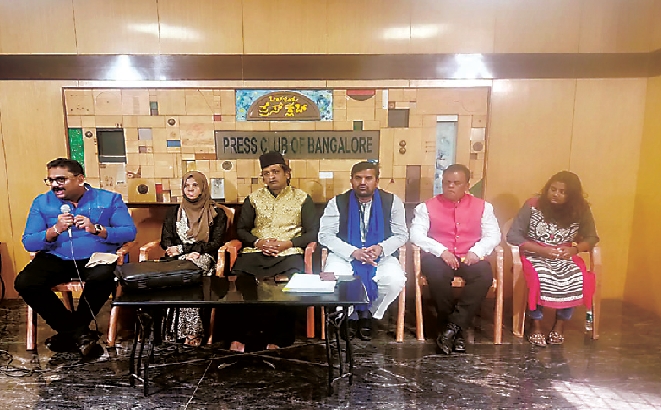
Jamaat-e-Islami Hind (JIH) Women’s Wing Secretary Rahamathunnissa has asserted that the Constitution of India assures justice, equality, liberty and fraternity to its citizens irrespective of gender, but Indian women are yet to get their constitutional rights.
Mrs.Rahamathunnissa was delivering the inaugural address in a JIH Women’s Wing’s special programme on the ‘Constitution at 74 – Challenges and Possibilities for Indian Women’ on the occasion of the 74th Republic Day of India. Stressing on the need for a strict implementation of the constitutional provisions given to women in order to uplift them and ensure their equal status in society, she said, “we can feel proud that it is one of the best framed constitutions in the world with so much emphasis on equal rights for women.
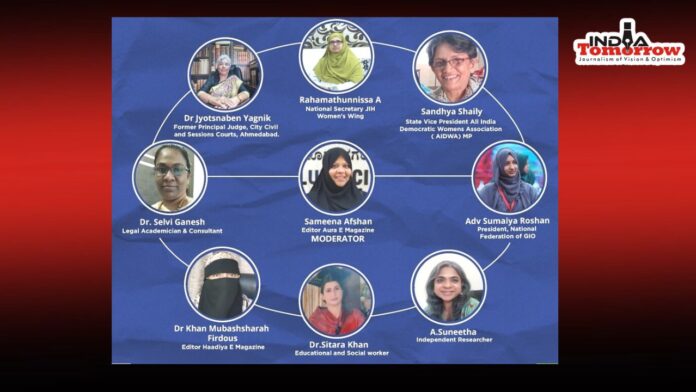
A panel discussion featuring noted women activists and scholars, followed with Ms.Sameena Afshan, Editor Aura E Magazine as moderator. The expert panelists on board articulated their opinions on the wide gap between what the framers of the constitution envisaged and the practical reality in the country.
One of the panelists Dr. Selvi Ganesh, a legal academician and consultant said, “We have a constitution but we lack constitutionalism because the concept of gender equality is not in the general consciousness of the masses.” She voiced concern about the plight of women in conflict zones, migrant labourers and abandoned widows in the country who are still unaware of their constitutional rights.
Dr Jyotsnaben Yagnik, former Principal Judge at the Civil and Sessions courts of Ahmedabad mentioned that the average Indian women do not consider themselves as equal citizens because of their mindset and nothing would ever change without changing the societal mindset.
Ms. Sandhya Shaily, State Vice President, AIDWA of Madhya Pradesh commented that the Indian constitution safeguarded the rights of women more than the constitution of other countries that secured their independence at the same time, but they got fever opportunities.
Expressing her concerns regarding the huge gap between rights given in the constitution and their implementations, Adv. Sumaiya Roshan, President of National federation of GIO said that the Hijab issue in Karnataka curbed the right to education not only for Muslim girls but affected the other marginalized communities as well.
Dr. Sitara Khan, Educationist and Social Worker has stressed that education alone can empower women and saw it as a strong weapon against crimes faced by women in India.
Observing that several studies place India on the top position in crime against women, Dr. Khan Mubashsharah Firdous, Editor of the Haadiya E Magazine, in her concluding address, lamented that domestic violence, forced labour and forced marriages were rampant in the country. She reiterated the dire need for an organized fight against the violence.
Ms Nada Khazia, Ms Sajida Falahi and Ms Fakhira Tabassum also spoke on the occasion while Ms Hina Farhan controlled the proceedings.
source: http://www.indiatomorrow.net / India Tomorrow / Home> Law / January 29th, 2023
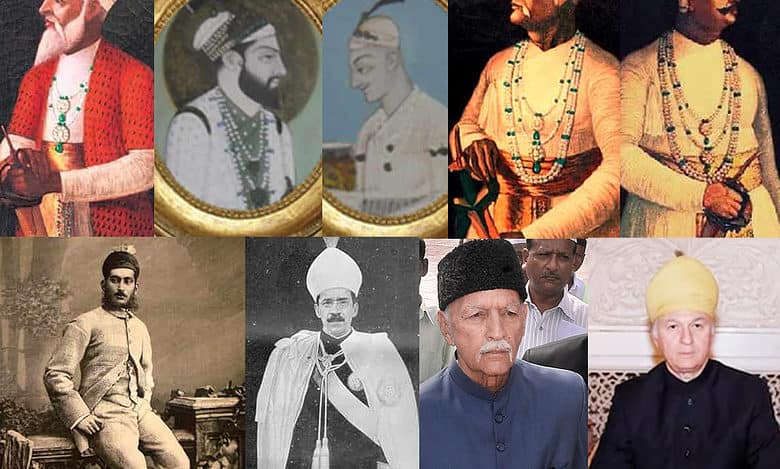
Ever since the death of Prince Mukarram Jah on 14th January 2023, who was considered the last and titular Nizam, Hyderabad’s Nizams, the rulers of the Asaf Jahi dynasty are in the news on every tabloid, newspaper and news channel. A lot is being debated about the Nizams from their lineage to titles to connections to inheritance.
Let us understand their lineage and the use of the title Nizam-ul-Mulk Asaf Jah. Basing my views on Henry George Briggs book The Nizam: His History and Relations with the British Empire published in 1861 and Roper Lethbridge’s book The Golden Book of India: A Genealogical and Biographical Dictionary of the Ruling Princes, Chiefs, Nobles, and Other Personages, Titled or Decorated, of the Indian Empire, with an appendix for Ceylon, published in 1893, when we look at the remote ancestry of the Nizams, their lineage is traced to two lines of descent.
The first line of descent is from Shaikh Shah Abudin Suharwardi, a lineal descendent of Caliph Abu Bakr, the father-in-law, of Prophet Muhammad. Shaikh Shah Abudin Suharwardi who lived in Persia was a contemporary of the Persian poet Sadi and finds reference in his thirteenth century poetic composition, Bostan, as his murshad or spiritual guide. It is believed that some of the immediate descendants of the shaikh settled in Turkey and also some of them travelled to Samarqand, and became ulema there. The popular ulema from this line were Khwaja Ismail, his son Khwaja Abid who later on was designated as Qazi and Shaikh-ul-Islam.
The second lineage of the Nizams of Hyderabad’s ancestry is traced to the family of Tartars and claim descent from Bahauddin who was the founder of the Naqshbandi Sufi silsilah. Most Naqshbandis prefix the word Khwaja to their names to imply an honourable position of a learned person. Bahauddin was a contemporary of the Turko-Mongol conqueror Timur and his descendent was Khwaja Abid who was the first from the family to visit India. He travelled from Samarqand to Delhi during Mughal emperor Shah Jahan’s reign. Whichever lineage is looked at, we see that Khwaja Abid ultimately travelled to India.
Khwaja Abid was given the title of Sadr-us-Sadr by the Mughal emperor Aurangzeb for his services rendered and was also made the Subedar of Multan. Soon, he was awarded more titles of Azeem Khan and Qillich Khan. Qillich also spelt as Kulij or Qulij in Turkish and Qillich in Persian denoted shamsher, a sword in both languages. Qillich Khan also led campaigns into Bijapur and Golconda during which he was injured badly on his right arm and eventually after battling for his life, he died. He was well-known for his military exploits and was buried at Attapur near Hyderabad in 1686.
Qillich Khan left behind a son, Mir Shahabuddin, born in 1644, who was also later employed by the Mughals. Like his father, he too exhibited exceptional bravery and was awarded by Aurangzeb with the title of Ghaziuddin as he was one of the greatest of the generals of Aurangzeb. For his military and administrative services rendered in the Deccan, he received another title Feroz Jung and Aurangzeb even referred to him as Ghaziuddin Bahadur Feroz Jung Farzand Arjumand meaning dear son.
When Aurangzeb died in 1707, Ghaziuddin was the subedar of Berar and Elichpur. The next Mughal successor, Bahadur Shah, made him the Subedar of Gujarat before the latter died in 1711. Ghaziuddin had married the daughter of Saadaullah Khan, a minister of Shah Jahan, in Delhi and a son had been born to them in 1671 who was named Mir Qamaruddin who came to be known in Deccan’s history as Asaf Jah I.
In 1699, Mir Qamaruddin had received the title of Chin Qilich Khan commanding the imperial troops at Bagul Kota.
He then became Faujdar of the Carnatak at Bijapur and also the Subedar of Bijapur. He was given one of Aurangzeb’s own horses on the battle field in one of the campaigns he led in the Deccan. He remained loyal to Prince Azam but eventually differences arose and they went separate ways. But under Bahadur Shah, he was again invited to the Mughal court and was conferred the Subedari of Oudh and Faujdari of Lucknow with the title Khan-e-Dowran, but soon he was disgusted with the politics at the court and retired by relinquishing all his appointments he was holding under the Mughals.
Next, when Farrukh Siyyar started contesting for the Mughal throne, Chin Qilich Khan was roped in once again and he started to fight on the side of Farrukh Siyyar. He was rewarded in 1713 by Farrukh Siyyar with the title of Nizam-ul-Mulk Asaf Jah and Viceroy of the Imperial Dominions in the Deccan and as Faujdar of Carnatak. He continued to fight against the Marathas for the Mughals. There were a series of rapid developments and conflict with the Syed brothers who had emerged as the king makers to the Mughal throne. This finally led to his independently laying the foundation of his own administration in the Deccan with the battle of Shaker Kheda near Aurangabad in 1724.
Asaf Jah had won battles east, west, north and south, dealt effectively with the kingmaker Syed brothers and successfully established his authority over a vast region that came to be called the Asaf Jahi or Asafiya state.
The title of Asaf Jah was named after the rank of Asaf who was supposed to be a minister of Solomon, the Hebrew king. The title of Asaf was not new; the Mughals had used it many a time earlier. The name Asaf was conferred in Mughal India on Nurjahan’s brother and Mumtaz Mahal’s father and in other instances. It was but natural that the Mughal titles were retained by the nobles of the Deccan. These titles were conferred in ascending order of Jung, Daula, Mulk, Umara or Jah. The British equivalent of Jah or Umara was the English Dukes and Marquesses, Mulk was equivalent to Earl, Daula was equivalent to Viscount, and Jung was like a baron. All the successors of the Nizams have the word Jah appended to their name. The only officer or Prime Minister on whom the title of Jah was conferred was Arastu Jah.
Until the Nizams started ruling independently of the Mughals in the Deccan, they were known as Subedars of the Deccan showing their allegiance to higher authority in Delhi. While the British referred to them out of respect as Nawabs of Hyderabad or Bundagan-e-alee meaning slaves of the highest rank.
Professor Salma Ahmed Farooqui is Director at the H.K.Sherwani Centre for Deccan Studies, Maulana Azad National Urdu University, Hyderabad.
source: http://www.siasat.com / The Siasat Daily / Home> Featured News / by Salma Ahmed Farooqui / January 23rd, 2023
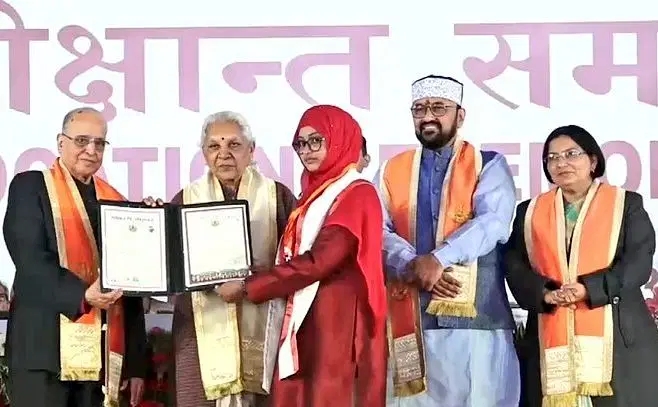
Iqra Rizwan Warsi won 3 Gold Medals at Lucknow University.
Iqra has been awarded Dr. Radha Kumud Mukherjee Gold Medal, Pandit Devi Sahay Mishra Gold Medal and Smt. Shyam Kumari Hukku Memorial Gold Medal. Iqra has secured 84.05 percent marks in BA.
Iqra has also been awarded the Best Student Award Bronze Medal in the year 2021.
Rizwan, the father of Iqra Rizwan Warsi was a painter who used to do spray painting earlier. He lost his job during Covid, when he started selling masks near hospitals. The expenses of the house go on with these earnings.
According to Iqra, mother Tarannum Warsi is a homemaker who always boosted morale.
Iqra said that “The financial condition of the house is not good. The situation was even more difficult during the Covid period. Mother used to stitch masks. My Father Rizwan used to sell them outside hospitals. Even now the situation has not changed much.”
We are four siblings, in which I am the eldest. Three siblings are younger than me. I am pursuing masters, my parents have supported me a lot. My Parents struggled in every way and studied and today i am gold medalist.
Iqra’s father said that, “I sell masks and sometimes other items by hawking to make arrangements for the livelihood of the children. Now the son has also started doing a private job, which earns him Rs 4,000 a month.” Somehow, two-time livelihood and children’s education fees are arranged.”
Translated from Hindi Webportal Themooknayak.com
source: http://www.thehindustangazette.com / The Hindustan Gazette / Home> News> Education / by Ayesha Mastoor / headline and text edited / January 25th, 2023
Heena clocked 38.57 seconds to improve on Karnataka sprinter Unnati Aiyyappa’s earlier national mark of 40.11 seconds.
pix: indianathletics.in
Rezoana Mallick Heena of West Bengal set U-16 national record in girls 300m race at the National Junior Athletics Champions here on Saturday. Heena clocked 38.57 seconds to improve on Karnataka sprinter Unnati Aiyyappa’s earlier national mark of 40.11 seconds set last year.
Uttar Pradesh high jumper Khyati Mathur was another athlete who broke a meet record, winning the girls U-18 event with a clearance of 1.79m to improve on M Jishna’s mark of 1.77m in Mangalagiri in 2019.
In the track events, Deepak Rohilla (Haryana) and Priya H Mohan (Karnataka) emerged the fastest in the Under-20 men and women’s 400m sprints. Deepak Rohilla won in 47.50 seconds while Priya Mohan was home in 53.94 seconds.
Odisha’s Lalu Prasad Bhoi and Dondapati Mruty Jayaram took the titles of the fastest men in the Under-20 and Under-18 sections, with timings of 10.71 seconds and 10.83 seconds respectively.
Bhawna (Haryana) and S Megha (Kerala) were the champions in the women’s Under-20 and Under-18 100m races.
source: http://www.thebridge.in / The Bridge / Home> Athletics / by PTI / pix edited: by indianathletics.in / November 13th, 2022
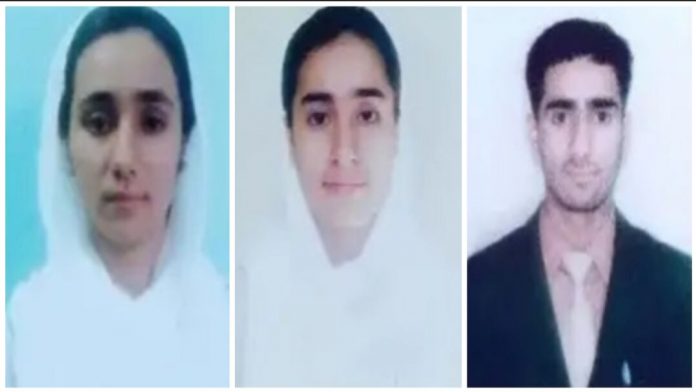
Huma Anjum Wani, Ifra Anjum Wani and their brother, Suhail Ahmad Wani
Jammu :
Three siblings, two sisters and their brother belonging to Doda district have qualified the J&K administrative service (JKAS) exam. The results were declared on Thursday.
Two sisters — Huma Anjum Wani, Ifra Anjum Wani and their brother, Suhail Ahmad Wani — belonging to far off Kahi Trankhal village of Bhaleesa area in J&K’s Doda district have qualified the JKAS exam.
The family has now settled in Jammu city.
Suhail, the youngest of the three siblings has secured 111th rank while Huma secured 117th and Ifra 143th rank among the 187 successful candidates.
Munir Ahmad Wani, father of these three candidates, is proud of the exemplary success of his children. He said his children have achieved success without joining any coaching centre.
“My children don’t have a mobile phone even today. Whenever they wanted to connect to the Internet, they would use their mother’s phone,” the father said.
Father attributes the success of his children to their hard work and focused study.
“They used to study for 12 hours a day for the last several years. Right after passing their Class 12 exam, they were determined to pass the civil service exam,” he said.
While Ifra did her masters in physics, Huma and Suhail have taken their masters degree in political science. — IANS
source: http://www.muslimmirror.com / Muslim Mirror / Home> Education> Indian Muslim / by IANS / January 20th, 2023
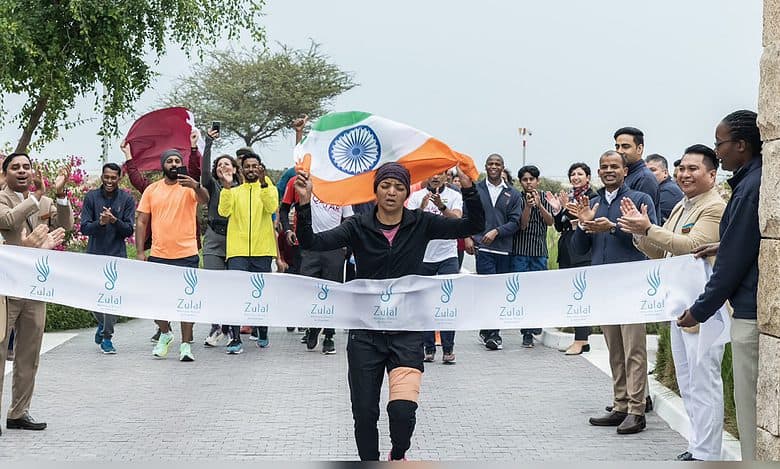
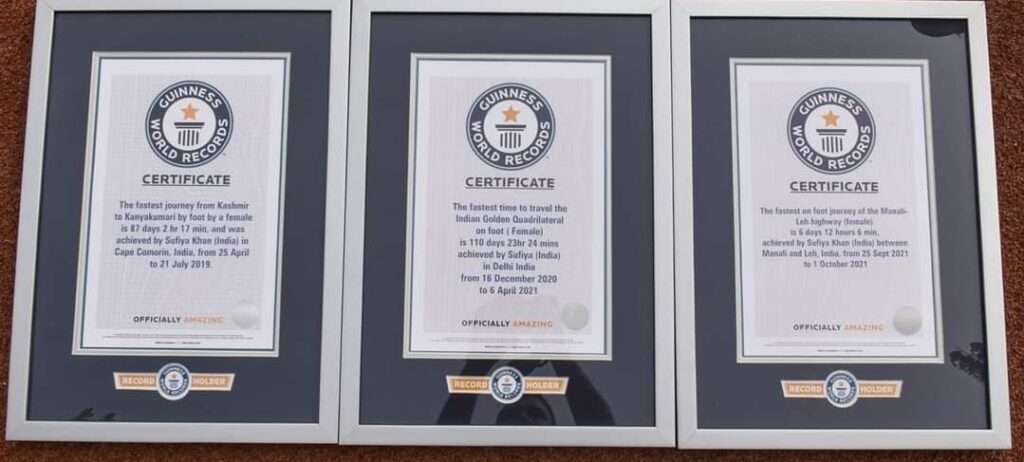
Sufiya Khan completed her first international expedition, ‘Run Across Qatar’ — 200 kilometer south to north in 30 hours and 34 minutes.
Ultramarathoner Sufiya Khan (Photo: Twitter)
Doha:
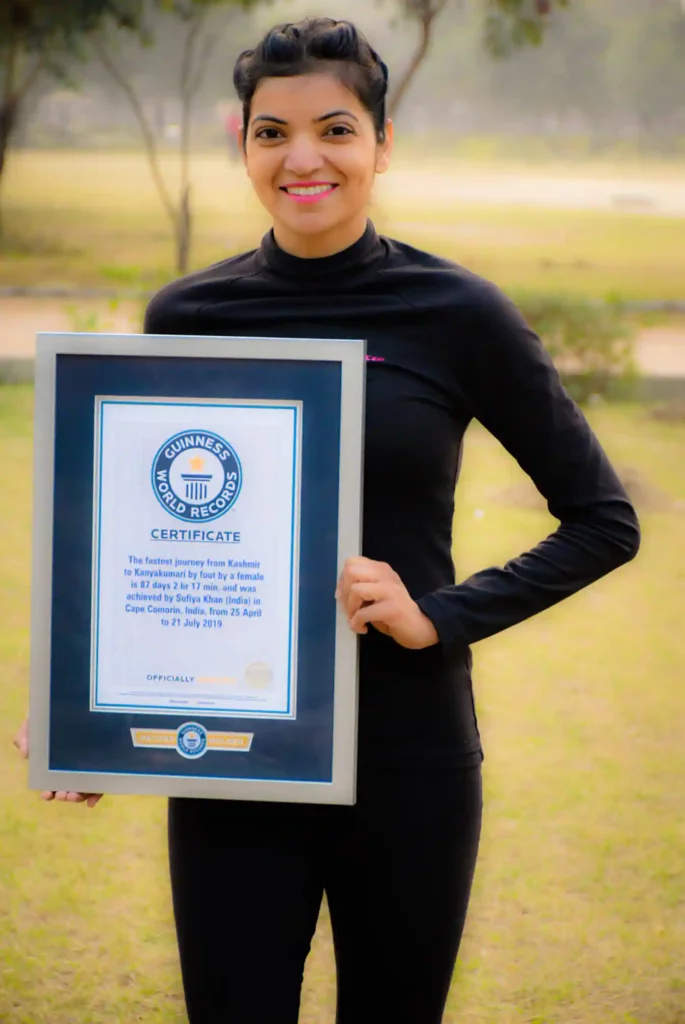
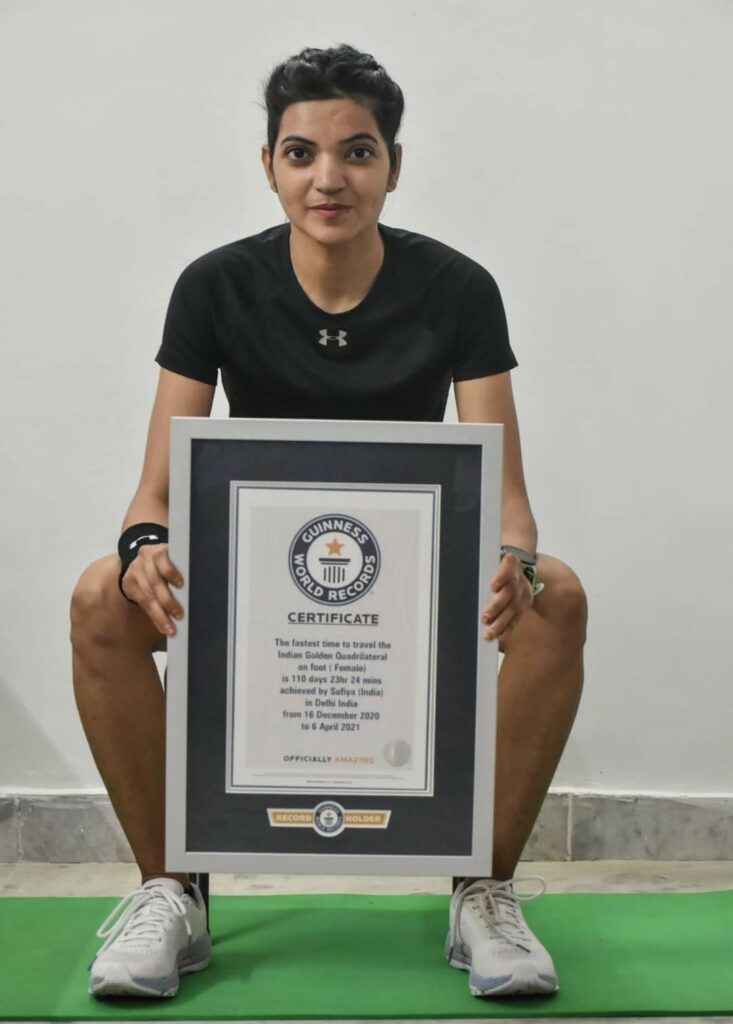
Indian ultramarathoner Sufiya Sufi Khan, a three-time Guinness World Record holder has achieved another feat as the fastest runner to run across Qatar.
Sufiya Khan completed her first international expedition, ‘Run Across Qatar’ — 200 kilometres south to north in 30 hours and 34 minutes.
In a Fastest Known Time (FKT) Guinness World Record attempt, Sufi started her run from Abu Samra on Thursday, January 12, at 6 am and finished at Zulal Wellness Resort in Al Ruwais on Friday, January 13.
The Indian embassy in Doha congratulated Safiya Sufi Khan on her achievement.
Before starting the campaign, she met the Indian Ambassador to Qatar Deepak Mittal.
Sufi Khan tweeted, “Honored to meet The Indian Ambassador to Qatar H.E. DR. DEEPAK MITTAL at @IndEmbDoha before the run. Had a fruitful conversation about the Run, Fitness community in Qatar and India and got his blessings for the World record attempt. @MEAIndia @PMOIndia @narendramodi.”
About Sufiya Khan
An increasing number of people are leaving their 9 to 5 jobs today! In fact, most of them take a career break to do something completely outside the box. It may seem scary at first, but it could be one of the best decisions you’ve ever made! And today we have a brilliant example of a woman who quit her job and chose a completely different profession. Here meet Sufiya Khan.
Photo: Sufiya Khan/Facebook
37-year-old Sufiya Khan was born and raised in Ajmer, Rajasthan. She worked in the aviation industry for almost a decade, but the turning point in her life came when she decided to run her first half marathon in Delhi in 2017.
In 2018, Sufiya quit her airline job and started running as a way to unwind and relax. She participated in several marathons and races. In the year 2018, she broke a national record by running the Golden Triangle — 720 km — in 16 days.
In 2019, she set the record for the fastest time by a female runner in the “Kashmir to Kanyakumari” category and in April 2021, she became the fastest woman to run along “The Indian Golden Quadrilateral Road”.
Sufiya currently holds several world records and continues to explore what her body is capable of.
In 2021, she undertook the Tribute Run to salute the sacrifices of Kargil War Heroes.
Photo: Sufiya Khan/Facebook
source: http://www.siasat.com / The Siasat Daily / Home> News> India> Qatar / by Sakina Fatima / January 18th, 2023
HAMD HOME PRODUCTS IS BUSINESS VENTURE OF TWO MANGALURU BUSINESSWOMEN HOPING TO ‘HEALTHIFY’ HOMES
Hamd Home Products is business ventrue of two Mangaluru Businesswomen hoping to ‘Healthify’ Homes.
Mangaluru:
A business endeavor of two Mangaluru women achieved the milestone of inaugurating their first store in the city on Monday when the first Hamd Home Products store was inaugurated here at Millennium Towers near Highland Hospital in the city.
Dr. Maryam Anjum Iftekhar, Gynaecological Oncologist at the Zulekha Yenepoya Institute of Oncology Mangalore inaugurated the store.
Dr. Maryam congratulated the women entrepreneurs on their successful inauguration of the store and hoped the business would grow multifold in the years to come.
Dr. Disha Ajila, Gynecologist & Obstetrician, Shehnaz M, Editor Anupama Women’s Monthly, Saira Lobo, Entrepreneur, Shabina Akhtar of Asare Women’s Foundation and Samshad Aboobakkar, Corporator MCC were present as Chief Guests during the inauguration event.
Two Mangaluru Women Entrepreneurs Shahida and Shahira began Hamd Home Products in 2018 as a small venture with 20 home products. The duo used to deliver the products themselves before inaugurating the store in the city on Monday.
The company manufactures a variety of fresh food ingredients ranging from various spices powders to the stone ground paste. Standing true to its motto ‘Healthy food, Healthy Life’, Hamd Home Products offers taste and interesting platters which are organic, natural, chemical-free, and preservative-free.
“Hamd has been delivering fresh food to our customers for about 5 years now, only to find ourselves opening our first ever outlet with more than 75 products today. Our motto hasn’t changed much ever since, if something has changed it’s our products which only got better, and our kitchen, bigger.” The co-founders said after the inauguration of their first store.
“It didn’t take long for us to realize that our products were running out of storage sooner than before and hence we decided to upgrade Hamd Home Products to Hamd Home Store, filling out the shelves with a variety of products not just from our company but other similar organic products companies too. For more transparency and to develop trust, we have now opened the Hamd Home Store, wherein we have made it easy for the customers to see the products before buying them, to rid of uneasiness often faced during online shopping.
“When you pick up a packet of Hamd products, you choose food made in a homely atmosphere, with immense care and hygiene. Products weighed and sealed are fresh, nutritious & delicious. Additionally, our products are produced and packed in a small range to preserve freshness. We make sure it has no contaminants, or any damages all the way from our kitchen to your table.” They added.
Nasuha recited verses from the holy Quran while Aisha Ayat welcomed the guests. Ayesha Hassan, Sadiq Hassan, and others were present.
source: http://english.varthabharati.in / Vartha Bharati / Home >Karavali / January 16th, 2023
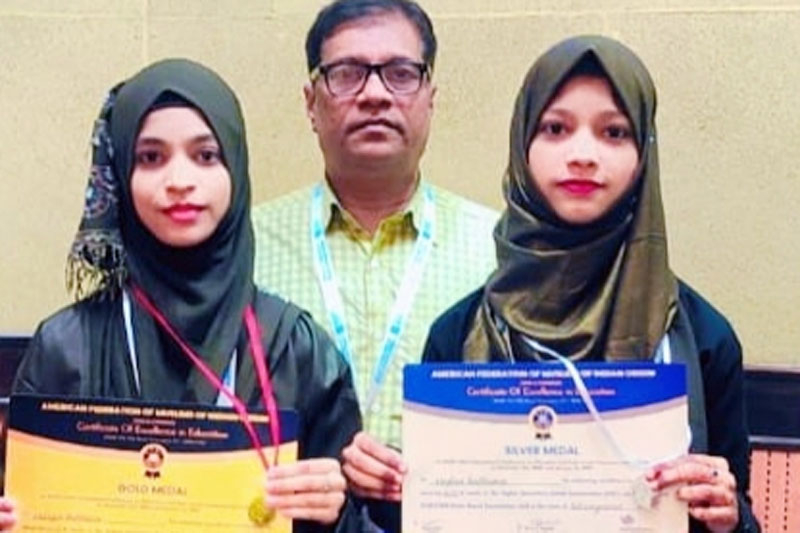
Two sisters of Telangana Minority Residential College in Uppal, Hyderabad, were awarded gold medals and silver medals in Delhi. Nargis Sultana daughter of Mohammed Abdul Saleem scored 95 per cent and was awarded gold medal while her sister Nafees Sultana scored 93 per cent in 12th grade and bagged a silver medal. Nargis wants to be a doctor and is preparing for NEET. Nafees is pursuing a bachelor’s degree in pharmacy in Telangana.
The awards were presented at the 32nd Convention of the American Federation of Muslims of Indian Origin (AFMI) in New Delhi.
Hyderabad: Two sisters of Telangana Minority Residential College in Uppal, Hyderabad, were awarded gold medals and silver medals in Delhi. Nargis Sultana daughter of Mohammed Abdul Saleem scored 95 per cent and was awarded gold medal while her sister Nafees Sultana scored 93 per cent in 12th grade and bagged a silver medal. Nargis wants to be a doctor and is preparing for NEET. Nafees is pursuing a bachelor’s degree in pharmacy in Telangana.
The awards were presented at the 32nd Convention of the American Federation of Muslims of Indian Origin (AFMI) in New Delhi.
Founded in Detroit, United States in 1989, AFMI recognises the country’s top student achievers. It has recognised over 4,000 students so far from over 400 districts in India.
source: http://www.munsifdaily.com / The Munsif Daily / Home> Education / by Rasia Hashmi / January 02nd, 2023
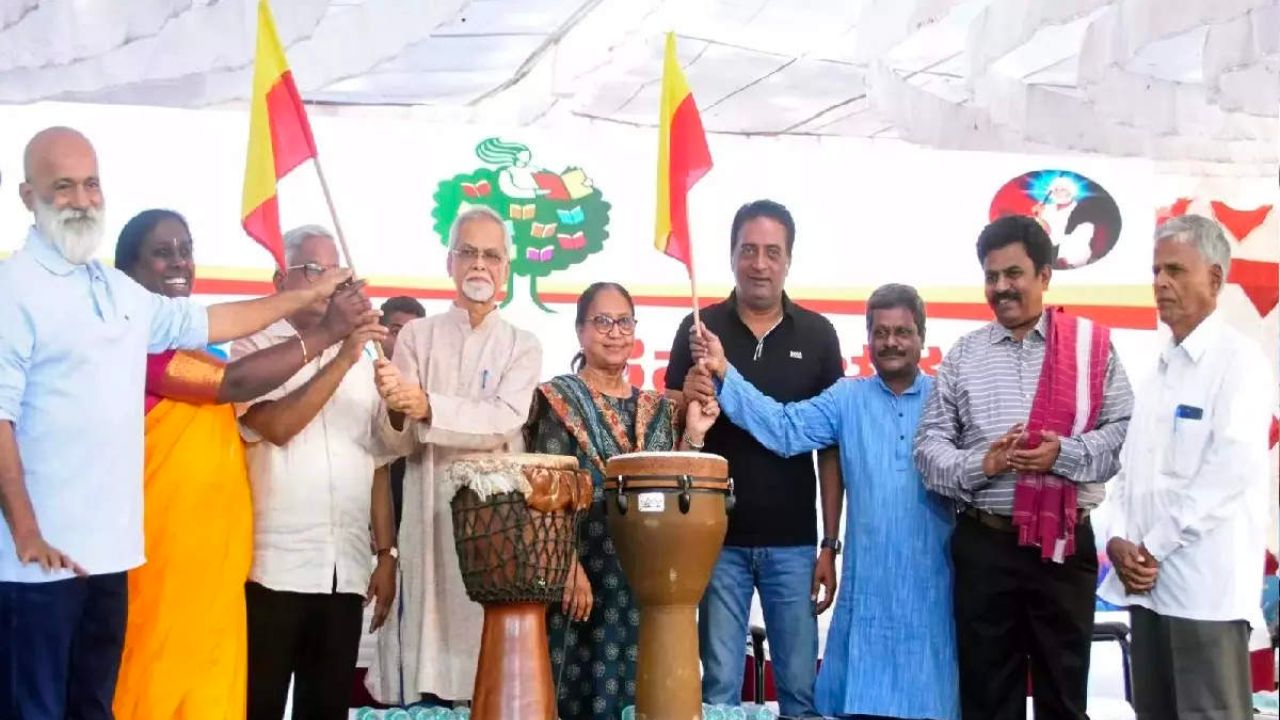
A parallel literary conference was held in Bengaluru on January 8, 2023, in response to the alleged exclusion of Muslim writers from the Kannada Sahitya Sammelana organised by the Kannada Sahitya Parishat, a non-profit organisation, funded by the Karnataka government.
Activists and writers in Karnataka expressed their disappointment at the lack of diversity at the Kannada Sahitya Sammelana, leading a group of them to organise a more inclusive event, the ‘Jana Sahitya Sammelana’. Banu Mushtaq and Dr. Mudnakudu Chinnaswamy were the chief guests at the Jana Sahitya Sammelana.
Dalit writer and Sahitya Akademi award winner Mudnakudu Chinnaswamy highlighted the threat of the imposition of Hindi on classical languages such as Tamil, Kannada, Telugu, and Odia. He also spoke about the attempts to erase Mahatma Gandhi’s legacy, and the exclusion of Muslims from every sphere of public life. “The exclusion of Muslim writers from the literary fest in Haveri was part of a wider agenda of pushing out Muslims from the mainstream,” he said.
Purushottama Bilimale, a prominent Kannada scholar, criticised Kannada writers and representative organisations for their lack of action in addressing the various crises facing the Kannada language and the state of Karnataka. Bilimale specifically mentioned the attacks on syncretic culture as a crisis that needs attention. He pointed out the lack of proper platforms for discussing these issues and expressed disappointment towards the Kannada Sahitya Sammelana for not addressing them. He suggests the organization of conventions like the Janasahitya Sammelana in various regions of the state of Karnataka to help address these issues.
The conference featured poetry, speeches, and panel discussions that focused on resistance and inclusion.
The Jana Sahitya Sammelana was put together by members of various organisations such as Samudaya, Democratic Youth Federation of India, AIDWA, Dalita Sangharsha Samiti, Ondede, Journalist Study Centre, and many others. Actors and activists like Prakash Raj and Dr. Akkai Padmashali were also present as guests and speakers at the conference. The conference was held at the Alumni Hall of the University of Visvesvaraya College of Engineering.
source: http://www.thecognate.com / The Cognate / Home> News / by The Cognate News Desk / January 12th, 2023
Tipu descendant Rahimunissa and husband Mansoor Ali (second and third from left)
Bengaluru:
In the backdrop of the dissolution of the Tipu Sultan Waqf Estate (TSWE) which was chaired by Congress MLA Tanveer Sait, descendants of Tipu Sultan suggested that the new committee should rehabilitate all of them using revenue generated from said properties.
They added that they should especially get some monetary benefit from the properties for essential matters like health care and education. They also demanded establishment of a library and a research centre, which would deal with Tipu’s history.
They also said that historical structures could do with better upkeep, for which at least four of them be made members of the new committee when it is formed. Mansoor Ali, who is married to Rahimunissa, a descendant of the 18th century sultan from one of his younger sons, said that he was thankful to the Waqf Tribunal for its judgement, which was favourable to them. “We will approach the government and demand rehabilitation of the entire family,” he said.
“Instead of asking votes in the name of Tipu Sultan, at least give minimum help by way of medical and educational help to the family of Tipu Sultan who are in difficulty. We are not demanding palaces, nor are we demanding properties.
We are saying that we be included in the managing committee, which deals with the upkeep of places like Masjide-Aalaa and religious activities,” he added. Mansoor said that the earlier committee hadn’t been following waqf by-laws. “We had approached the High Court who referred the matter to the Waqf Tribunal. In 2021, Rahimunissa told the court that the committee (TSWE) has not been made according to the by-laws.
As per the rules, the committee should not have a chairman for more than two terms. It ought not to have two vice chairmen. The Secretary should be an ex-official. There should be an audit report every 11 months. There should be a meeting every month because they are heritage properties. There should have been a research centre and a library.
“Despite these deficiencies, he (Sait) used his political influence, as an MLA, as a Waqf Board member to violate by-laws and misused his power. However, we got justice from the judiciary. When he claimed that we were not real descendants, we produced documents to prove that as well,” he said.
source: http://www.newstrailindia.com / News Trail / Home / by NT Correspondent / January 14th, 2023