After a near-death experience, Badrunissa Irfan, wife of Irfan Razack, CMD of Prestige Group, has put paintbrush to paper, expressing all that she’s been through.
Bengaluru :
11 years ago, Badrunissa Irfan was in a comatose state for almost a month. Doctors had lost hope but Irfan pulled along.
Today, over a decade after the incident, Irfan is sharing what she experienced for the first time, through her art works. Titled ‘Freedom of the Soul’, 35 paintings of Irfan will be on display at Sublime Galleria in UB City through the month of June.
Picking up her acrylic paints after a 20-year break, Irfan questions what a soul is through her paintings. “I had a near-death experience where I was in a state of coma for 23 days and was declared clinically dead twice. But I came back to life and what I witnessed during those days is what I have painted now. I want to convey the message I received from the Almighty through my art.”
While she took to art at a young age, her passion took a backseat when life and responsibilities took over. “It was my daughter Uzma [Uzma Irfan, director of Prestige Group], who encouraged me to pick up the brushes again. When I told her that my body cannot do what it used to before, she sent her daughter (my granddaughter) Alayna Zaid (who is also an artist) to sit with me while working,” she says, adding that she started work on her paintings in January this year.
Talking about her paintings, Irfan says, “You’ll find that most of my paintings are of open skies, mountains, gushing streams, animals and birds.”
Starting at `75,000 and going up to `1,40,000, all proceeds from this show will be donated to charity. She recalls how she couldn’t hear anyone except her daughter reading verses from the Quran every day.
“In my unconscious state, there was a scenario where I felt like I was looking at my own body from the outside,” she says. Every experience that she went through during that period comes to life in this series. “The colours that I use depend completely on my mood. I spend about two hours in the afternoon and another two in the evening and finish one painting within two days. It might take a little longer if it’s a bigger one,” Irfan adds.
Irfan believes she ‘came back to life’ to share what she has seen and witnessed. “I personally feel more connected with nature, animals, birds, flowers and fruits. I feel humans are hypocrites and so I use my art to share the beauty I believe in,” says Irfan, who is also the author of cookbook Duniya-e-Ziyafat.
(Freedom of the Soul will be showcased from June 1 to 30 at Sublime Galleria. All proceeds from this show will be donated to charity)
source: http://www.newindianexpress.com / The New Indian Express / Home> Cities> Bengaluru / by Anila Kurian , Express News Service / May 31st, 2022
The couple decided to donate its 28-cent ancestral land to LIFE Mission, the Kerala government’s flagship housing scheme for the landless.
Haj (Photo | PTI)
Pathanamthitta :
Aranmula residents Jasmine and Haneefa were making arrangements for their long-cherished dream of going on haj and were prepared to sell their land to raise funds for the trip when they had second thoughts.
Instead, the couple, married for over three decades, decided to donate its 28-cent ancestral land to LIFE Mission, the State government’s flagship housing scheme for the landless.
The couple’s decision came after it saw the plight of a neighbour-family living on a rented premises and found it difficult to cremate the body of a family member who died recently.
“We were planning to sell our property and use the funds for haj pilgrimage. But, in the past couple of months, we saw some incidents in which certain families find it difficult to cremate their family members as they don’t own a property. Such incidents made us rethink our Haj plans,” Haneefa told PTI.
He said recently, a person passed away in his locality and a community leader donated his four cents of land to that family to conduct last rites and cremation.
“After that incident, we decided to make use of the land to help the needy instead of going for haj,” Haneefa said.
Local Self-Government Minister M V Govindan hailed the decision of the couple and said it was an inspiration to society.
Minister Govindan said the couple was an inspiration to the forward journey of society which needs to embrace every human being.
“People like Haneefa and Jasmine have set an example of humanity and are role models for society,” Govindan said.
Health Minister Veena George on Sunday visited the house of 57-year-old Haneefa and received the agreement to hand over the property for the Life Mission from the couple on behalf of the Aranmula Grama panchayat.
The land, owned by 48-year-old Jasmine, was received under the ‘manasodithiri mannu’ campaign of the Left government, Govindan said.
“Till now, the government has received 926.75 cents of land in 13 locations for the Life Mission scheme. Also in 30 locations, 830.8 cents of land have been assured for the Life Mission. The project has also received a sponsorship of Rs 25 crore to construct 1,000 houses,” the Minister said.
Govindan said he hopes more people would come forward to help the poor and draw inspiration from the couple.
The Left government has till now handed over 2,95,006 houses to beneficiaries under the Life Mission scheme, he said.
He also added that 34,374 houses are currently under construction.
There are 27 housing complexes that are also under construction, he said.
source: http://www.newindianexpress.com / The New Indian Express / Home> Good News / by PTI / May 29th, 2022
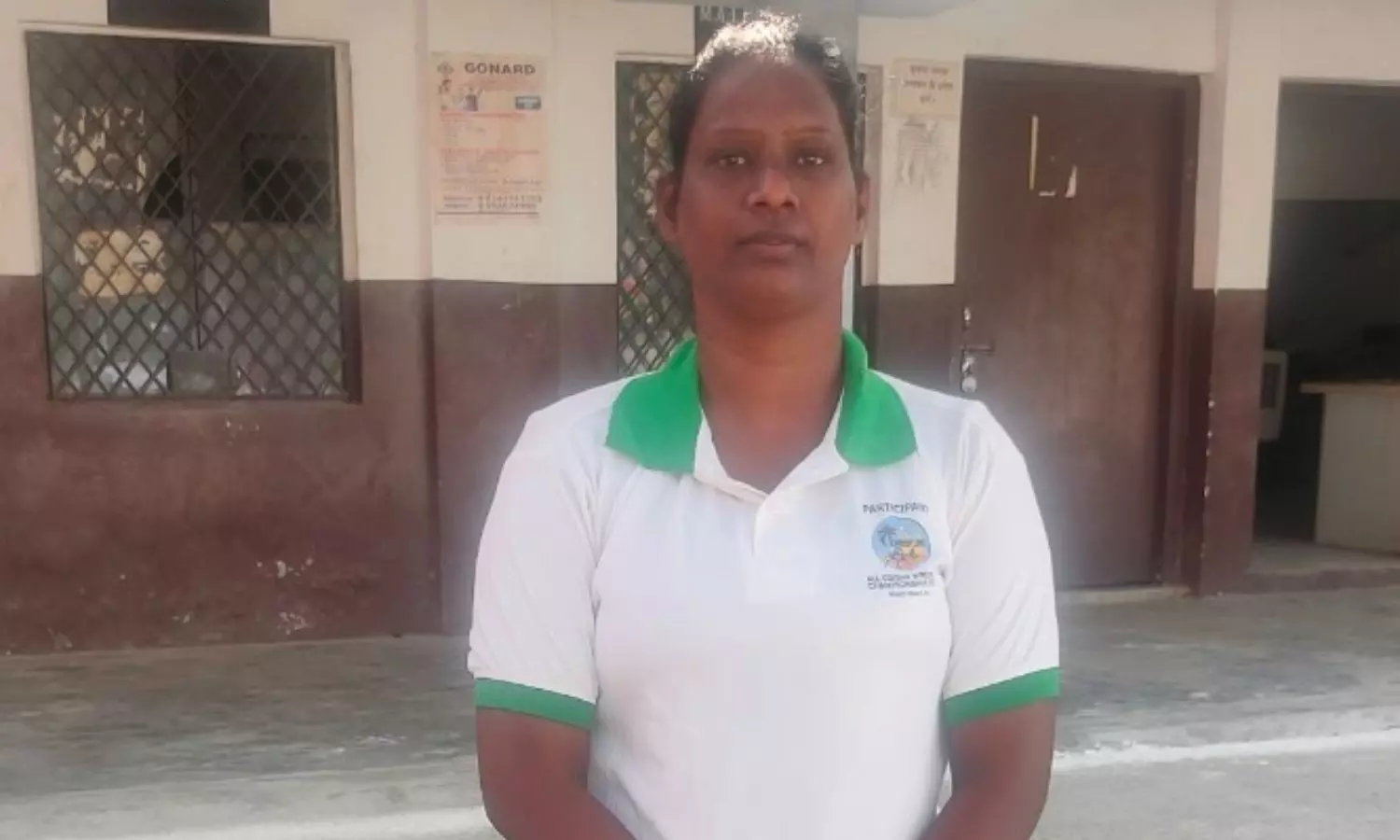
Coming from a Muslim family in a state where wrestling is not popular, Tahera knew that the path would be full of obstacles, but her perseverance and determination have kept her going.
Indian wrestler Tahera Khatun (Source: Amanpreet Singh/Twitter)
Odisha grappler Tahera Khatun was told to embrace the burqa and shun the wrestling singlet but she made the tough choice of upholding her “dharma” as well as pursuing her passion simultaneously.
Coming from a Muslim family in a state where wrestling is not popular, Tahera knew that the path was going to be full of obstacles, but her perseverance and determination have kept her going.
Undefeated in her state thus far, the 28-year-old Tahera has struggled to make a mark at the national level. She neither has strong sparring partners at her club in Cuttack to become a better wrestler nor has rich dietary support to become strong. But she does not regret the lack of success at the big stage since stepping onto the mat is a source of happiness for her.
“I am wedded to wrestling,” Tahera told PTI with a spark in her eyes. “If I get married, I will be told to leave wrestling since it is difficult for Muslim girls to continue in such a contact sport after marriage, and I am not willing to do it. Three of my batch-mates got married and now they can’t play because of family pressure, I don’t want something like that happening to me. I already faced difficulties since taking up this sport. The relatives and neighbours were never appreciative of me playing this game. They just wanted me to stay inside the house but my mother, Sohra Bibi, supported me,” explained Tahera, who lost her father, S K Ahmed, when she was only 10.
Whatever little support Tahera gets, it is from her brothers (one is auto driver and the other a painter) and coach Rajkishore Sahu. “Wrestling gives me happiness. So what if I don’t do well at the Nationals, at least I am getting to compete. Merely getting on to the mat fills me with happiness,” she said.
Tahera recently competed at the National championship in Gonda in Uttar Pradesh but made a first-round exit in the 65kg category. She used to play table tennis to overcome depression caused by her father’s death before wrestling coach Rihana convinced her to make a switch. Rihana trained her for a month and took her to ‘Khurda Pehla’ for a district championship, where she emerged champion and the love of sport struck her.
“People tell me ‘wrestling has not given you anything’. There are no facilities, no job. But my mother told me that I must pursue it if I like it,” said Tahera. While Tahera wants to pursue her passion she did not wish to disappoint her community and find a way to keep the people happy.
“When I enter Cuttack, I wear ‘burqa’. I need to save both, my sporting career as well as my religion. When I come out to play I wear whatever is required but I don’t disrespect my elders. ‘Dharam bhi chahiye, karam bhi’. In 2018, I lost my mother. Till she was alive, I had to think about her. I did not want her to listen to taunts but now I don’t care, I live my life my way now. I will definitely wear burqa once I am done with my career. Now things are changing. Lot of people wished me all the best before I left for Nationals.”
However, the other struggle continues for her. The little support she gets from her coach and brothers is not enough. She knows her career is as good as over, but she wants to initiate her nieces into the sport and for that to happen, she needs financial stability.
“I wish I had got a job. At least a home guard job. I manage my expenses by giving Yoga home tuition and help people who require physiotherapy. I learnt it by myself by attending training camps and talking to wrestlers. For how long my brothers would support me, I need a job. All I earn is 4-5 thousand a month.”
Tahera cannot afford to take protein or dry fruits. All she can afford is rice and vegetable as of now. Because of the lack of rich diet, she now has low level of calcium and hemoglobin. Her body is giving the signal that she can’t continue in the sport but she is all about grit. She competed at the Nationals with high blood pressure and against the advice of the doctor. Her coach Rajkishore Sahu also shared the plight of her ward.
“No one has offered Tahera even a glass of water, leave aside providing support and facilities. The wrestlers in the state of Odisha are a deprived lot,” said Sahu, who retired from the Food Corporation of India (FCI) six years ago.
source: http://www.thebridge.in / The Bridge / Home> Wrestling / by PTI / November 22nd, 2021
A 26-year-old Hijabi girl who was inspired by Kalpana Chawla’s story, recently secured a commercial pilot’s license. She became Maharashtra’s first Shia girl to get the license.
The girl, Mohaddesa Jafri, daughter of Maulana Sher Mohammed Jafri and Aalema Farah Jafri recently returned from South Africa where she had undergone the training.
How did she become fan of Kalpana Chawla?
Mohaddesa Jafri was seven-year-old when Indian American astronaut Kalpana Chawla died in the Space Shuttle Columbia disaster in February 2003.
After Chawla’s demise, posters and banners were seen at multiple places in the country. When Jafri went out of home along with her father saw the posters and asked him about the astronaut.
Her father narrated Kalpana Chawla’s story and explained how brave she was. After listening to the astronaut’s story, Mohadddesa became a fan of Chawla.
After reading many articles on Chawla and watching her videos, Jafri informed her parents that she want to join the aviation industry.
Finally, in 2020, she joined a flying school in Johannesburg, South Africa. However, her relatives were not happy with her parent’s decision to send her for pilot training. The relatives commented that despite being Maulana and Alema, they sent their daughter for pilot training.
Ignoring the remarks against the decision, they allowed their daughter to continue pilot training as they were sure that it is not irreligious.
Who was Kalpana Chawla?
Kalpana Chawla was the first woman of Indian origin who went to space. She who was a Mechanical engineer had gone to space thrice.
The first two missions were successful. Her third flight which was on Space Shuttle Columbia in 2003 was not successful as the spacecraft disintegrated during its re-entry into the Earth’s atmosphere.
Apart from Chawla, six other crew members died in the disaster.
source: http://www.siasat.com / The Siasat Daily / Home> News> India / by Sameer / May 29th, 2022
The Imperial Sweet House in Hyderabad’s Sultanpur area was started by Nafees and her daughter-in-law Nasreen Hussaini in the 1960s. Over the years, they’ve expanded their business across India and the world.
A paradise for food lovers, history geeks and street shopaholics, the Charminar city of Hyderabad has a special place for everyone. Being the soul of Hyderabad, Nawabi dawats (delicacies) like Biryani, Qubani ka Meetha and Kaddu ki Kheer are certain to tickle the taste buds of tourists and locals alike.
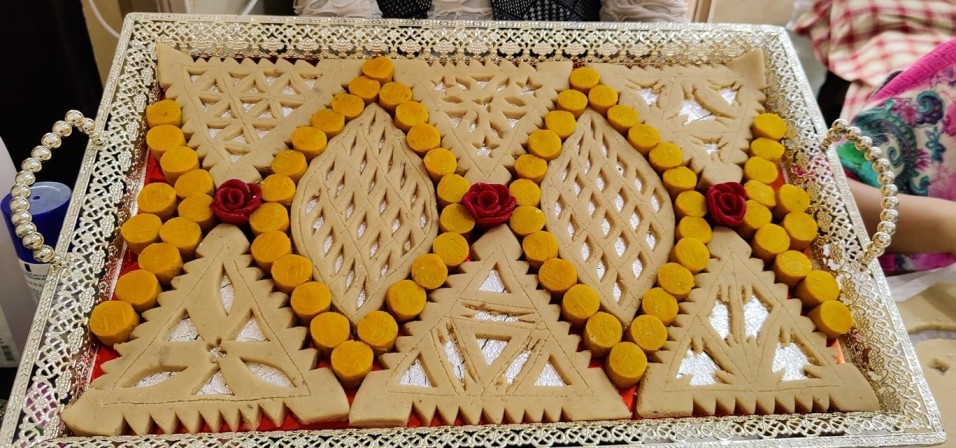
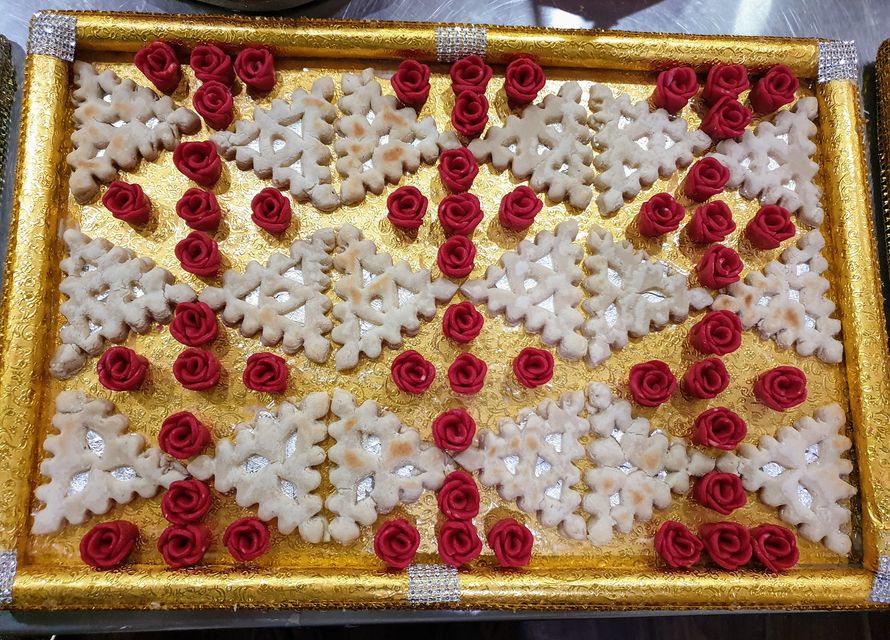
But among the popular dishes, there is a lesser-known sweet dish called ‘Badam ki Jali’ that often goes undetected by foodies. Primarily made with almonds, cashews and sugar, the recipe of this confection is known to have been passed on from one generation to another.
However, according to reports, there are only a handful of families left in the city that serve Badam ki Jali, which originated in the old Madras and Acrot areas of Tamil Nadu. It travelled to Hyderabad through inter-community marriages, where brides also had their closely guarded recipes in their elaborate wedding trousseau.
One of the few remaining families that make this dish in its authentic form is the Hussaini. As per the family’s accounts, Syeda Aijaz Fatima brought the recipe with her when her family moved to Hyderabad 60 years ago. She passed her recipie to her daughter-in-law, Nafees.
She would make the dish during family gatherings, festivals and weddings but she never considered selling them or making a business out of it.
Cut to 2022, the women of the house run a successful store, ‘Imperial Sweet House’, in the Sultanpur area near Noorkhan Bazar. With an average daily turnover of Rs 20,000, the family supplies their best seller Badam ki Jali and other sweets not just across India but the world.
A Woman’s World
The Hussaini matriarch turned into homepreneurs in the ’60s when their community and the society was reluctant to see women of the house earning money.
It was with the entry of Nafees’ daughter-in-law, Nasreen, that they decided to sell the sweets during festivals. They converted the ground floor of their house into a store to save money on rent. This also ensured they were able to manage both household work and sweet making.
Recalling the early days of their business, Nafees says, “It is a Nawabi mithai that we made accessible to everyone. Initially, we started with a few orders of 1-2 kg and gradually increased to 10 [kg]. I still remember that cashews were priced at Rs 8 per kg and almonds were Rs 10 when we started. The help we hired 50 years ago is still with us. But nowadays there are grinders to grind almonds and cashews but back then it was a tedious process.”
Now 87, Nafees credits her husband, Syed Mohammed, who supported her dream to expand the store’s business.
“Whether it was completing an order of 52 trays of Badam ki Jali, delivering the sweets on his way back from work or working overnight while streaming movies on VCDs [to accompany the sweetmakers], he always helped,” she adds.
As part of their expansion plan, Nasreen introduced new colours, shapes and sizes like stars, betel leaves, flowers and fruits, to the recipe with help from her husband, Mansoor. Meanwhile, Nafees added an ‘ashrafi’ design, which is achieved by pressing the dough between two Nizami coins to get their inscriptions.
Explaining the process of preparing Badam ki Jali without revealing much, she says, “We soak almonds in hot water and then dry it. Cashews and almonds are then ground into flour and then made into dough with sugar. The mould is then given different shapes and kept for baking. The whole process takes around 4-5 hours. The texture of the sweet is like cookies but the taste is similar to Kaju Katli.”
Nafees passed down the recipe to her daughter-in-law Nasreen who then taught her daughter-in-law, Aisha. Under the late Nasreen, the orders multiplied and she was the one to get new machines like grinders for easing the cooking process.
To ensure the quality of the ingredients, Nasreen and Nafees would themselves visit the Begum market to taste cashews and almonds.
When Aisha, the fourth-generation entrant, took over six years ago, she expanded the deliveries outside the city and country. She used online platforms like Whatsapp and social media for marketing. She was also instrumental in customising trays to get special shapes.
“Currently, our selling capacity is 300-400 kg per month. We also make Puran Poli, Gajar Halwa and other sweets. Every dish is made fresh and if there is an exhibition in the city, we do not sell in bulk and make fresh sweets if they get over. Although the shelf-life of this sweet is four to five days if covered in butter paper and packed properly. In case a customer is unhappy with the quality, we replace the entire order. We care about our reputation and family legacy more than anything,” says Aisha, who is a software engineer.
Over the years many competitors have arrived who make the same dish but the Husaainis are not worried.
“We prefer forgoing profits over compromising on taste and consistency. My grandmother, Nafees taught us this. It is due to these principles that we have a global footprint. Even actor Dia Mirza Rekhi had ordered our Badam ki Jali for her wedding last year,” says Ali, Aisha’s husband.
Both Aisha and Ali left their respective jobs in Dubai to continue the family’s legacy.
“The women of this house have a business acumen without having any business-related degrees. They hold magic in their hands to be able to make thousands of people smile with delight with their Badam ki Jali. So leaving a job abroad was totally worth it. We hope our next generation continues the family tradition,” he adds.
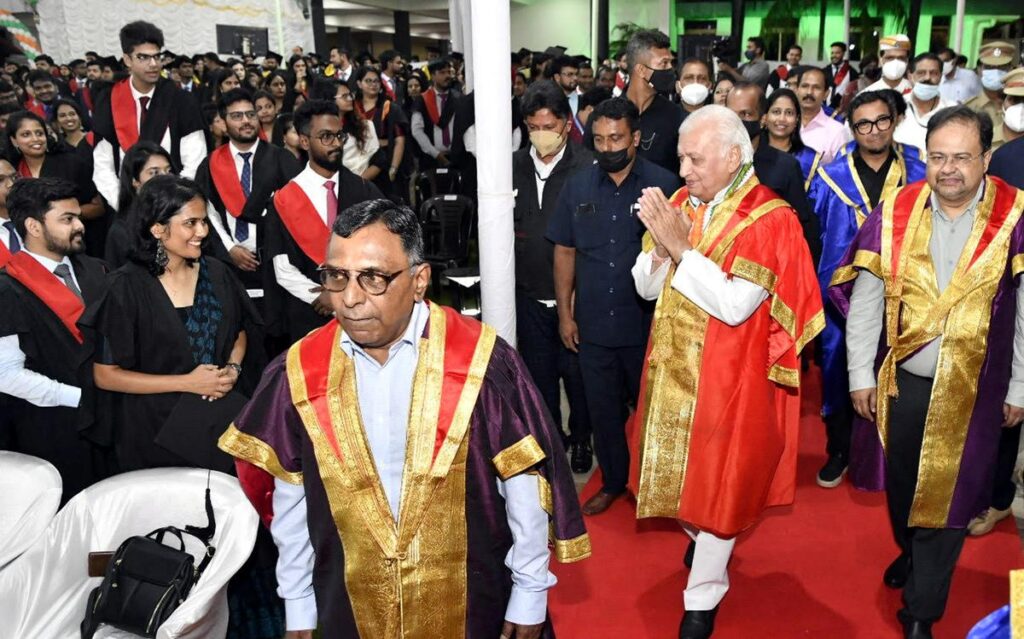
Governor Mohammed Arif Khan being welcomed to the IIM-K campus for the 24th convocation address on Saturday. A. Vellayan, Chairperson of the Board of Governors and IIM-K Director Debashis Chatterjee are also seen.
Institute hosts 24th convocation ceremony
Kozhikode :
The Indian Institute of Management-Kozhikode (IIM-K) hosted its 24 th convocation ceremony on the campus at Kunnamnagalam on Saturday. A total of 962 students graduated from the prestigious institute by receiving their titles and degrees.
Delivering the convocation address, Governor Arif Mohammed Khan stressed the role the higher education institutions should play in preparing for knowledge dissemination that an uncertain future might require. “Institutions are marketplaces of ideas that train young minds through robust experience and prepare students for the journey ahead in pursuit of excellence, guided by reason and informed choice,” he observed.
Gender diversity
A. Vellayan, Chairperson of the IIM-K Board of Governors, explained the significant changes and developments taken place at the institution in the past years. In his address, IIM-K Director Debashis Chatterjee expressed his gratitude to the Central and State governments for their continued support for ensuring the growth of the institution. While listing out the achievements and the laurels gained by the institute, he said IIM-K would continue to be a pioneer in gender diversity with significant woman representation.
Among the newly graduates, 11 were those who completed the doctoral programme in management (PhD). There were 468 students who completed the flagship postgraduate programme (PGP). The executive post graduate programme in management had 343 students. There were 60 for the PGP in business leadership and 40 each for the PGP-finance and PGP in Liberal studies and management.
The toppers in each programme were awarded their gold medals. Devesh Bansal, Pooja Goel, Shubham Sharma, Rakesh Pendyala, Ayushi Puri, Saksham Mehrotra, Kritika Vijay Kumar, and Aijaz Fatima were the gold medal winners in different categories.
The 24 th annual convocation also marked the grand culmination of the IIM-K’s silver jubilee celebrations. A series of programmes had been hosted online and offline to celebrate the silver jubilee fete on the campus.
source: http://www.thehindu.com / The Hindu / Home> News> National> Kerala / by Staff Reporter / April 09th, 2022
Consistent efforts and unstinting support from their family were what toppers from Bengaluru City University, who will be awarded with gold medals and cash prizes during the first convocation on Monday, credited their success to.
Leading the rank list is Purva N. Gandhi, a commerce student of Sri Bhagwan Mahaveer Jain Evening College. She has bagged three gold medals. “I am both surprised and happy. I had to prepare for chartered accountancy as well as B.Com examinations. I invested a lot of time in solving model question papers,” she said.
Taqiya Khanum A., a BBA graduate from SSMRV College, has bagged two gold medals. She is currently pursuing an MBA degree. Asked about her secret to success, she said: “I have always been very focused and dedicated towards studies. I used to spend most of my time studying.”
Toppers have also credited their success to their parents who motivated and supported them during the course of the pandemic when online classes took a toll on these students. “It wasn’t smooth sailing for our batch owing to the pandemic. Despite the online hurdles, the college staff made sure we fared well,” said Duvvuru Alekhya, an MBA student of Reva Institute of Science and Management, who has bagged two gold medals.
Being interested in cancer biology and molecular biology, Niveditha B.S. from the Department of Biochemistry, Bengaluru City University, who has won two gold medals, is working on joining premier research institutions like Indian Institute of Science or National Institute of Mental Health and Neuro Sciences. She has already cleared GATE, apart from publishing two research papers. “My seniors and teachers guided me. I used to prepare for competitive exams as well as college exams, and learnt to spend time wisely,” she said.
Ann Mary Sebastian from M.S. Ramaiah College A.S.C, who has bagged two gold medals in microbiology, told The Hindu that she couldn’t wait to go back home and celebrate with her parents.
For Aneeta Karen Pareira, who has won two gold medals for her performance in M.A. (French), success came after a lot of hard work. Determined to succeed, she said she was now planning on turning her passion for teaching into her profession. She is currently teaching French at a private school in the city.
source: http://www.thehindu.com / The Hindu / Home> News> National> Karnataka / by Shrabani Chakraborty / Bengaluru – April 09th, 2022
Sattihalli Village, Gullampete (Chikkamagaluru District) , KARNATAKA :
Proud Umme Sarah receives gold medals from Karnataka Governor Thawar Chand Gehlot on Wednesday
Bengaluru :
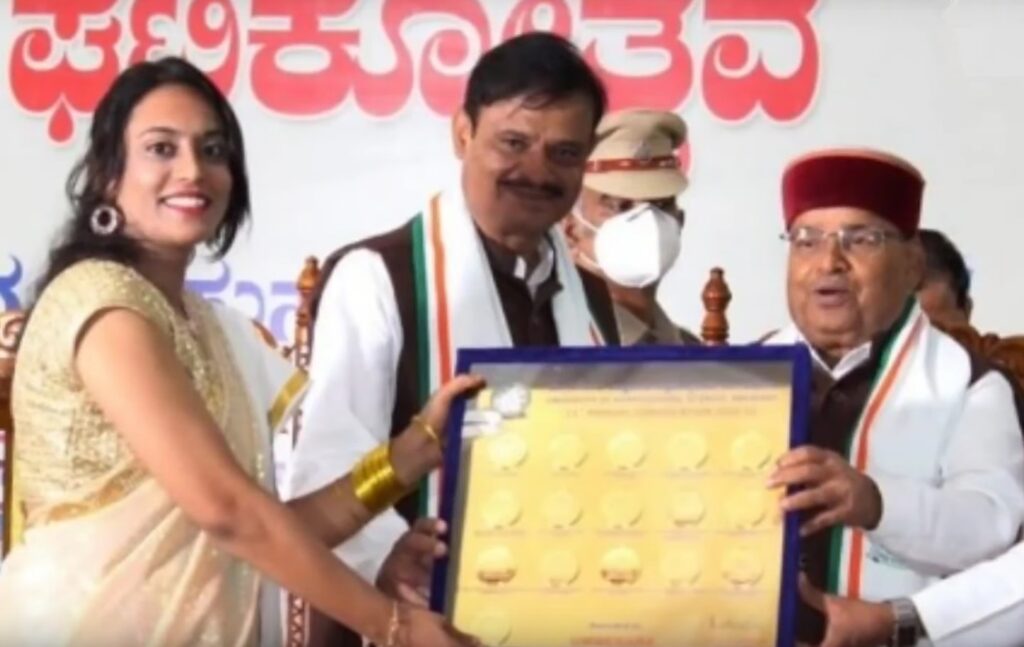
A girl student from Chikkamagalur district, bagged 16 gold medals at the 11th convocation of the University of Horticulture Science at Bagalkot on Wednesday. As many as 34 students received 77 gold medals during the convocation.
Karnataka Governor Thwar Chand Gehlot gave away the medals to Umme Sarah, daughter of Asmat Ali, a farmer from Gullampete.
Hailing from an agriculture-based family, Umme Sarah came to the horticulture sector inspired by her father’s farming. She studied hard with a government scholarship. Her father grows coffee on four acres of land. He had taken a loan of Rs 1 lakh from the bank for his daughter’s education. Umme Sarah’s mother is a homemaker.
Congratulating the winners, governor Thawar Chand Gehlot said, ““Our country is still agriculture oriented and agriculture graduates have to look out for wall and terrace garden horticulture,” he said.
Umme Sarah said, “There was no compromise when it came to studies since my childhood. My parents always encouraged me.”
I obtained a seat in the university after passing the CET,’ Sarah said.
She also said that she aims to work towards the betterment of Indian farmers and wants to pursue MSc from the university of Padua in Italy for that.
A Master’s Degree will cost anywhere between Rs. 15 lakh and Rs. 20 lakh abroad. Umme Sarah and her parents are expecting a helping hand for loans through banks, government scholarships, and donors.
source: http://www.newstrailindia.com / News Trail / Home / May 27th, 2022
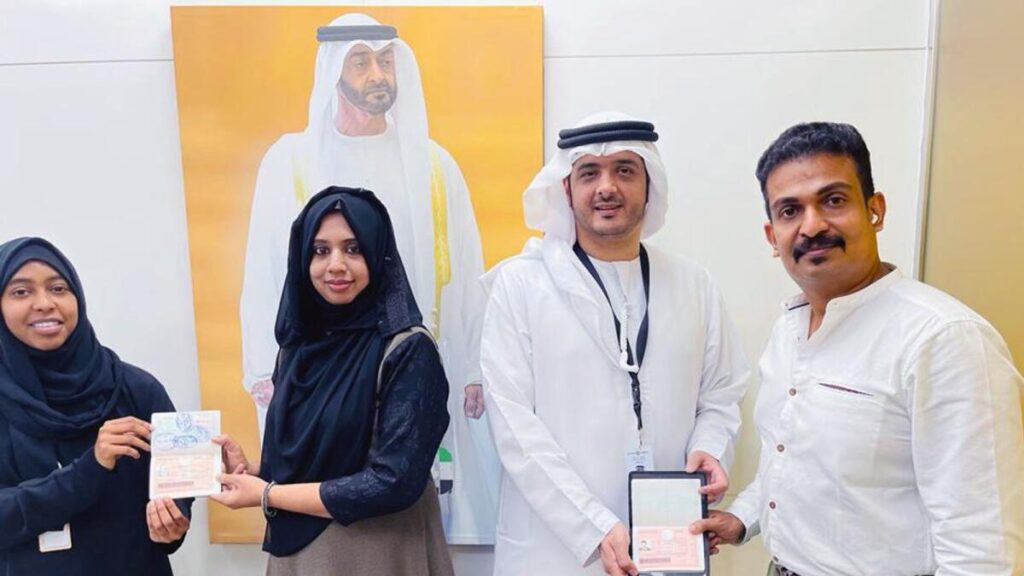
Abu Dhabi-based dentist couple Abdul Rahiman Nizar and Simi are the latest recipients of the 10-year UAE Golden Visa.
Abu Dhabi :
Abdul Rahiman Nizar gained popularity for amassing a rare collection of all the teeth extracted so far in his career.
Abu Dhabi-based dentist couple Abdul Rahiman Nizar and Simi are the latest recipients of the 10-year UAE Golden Visa.
Dr Nizar has served in Abu Dhabi for 20 years, including 18 years at Ahalia Group. However, the Indian doctor gained popularity for amassing a rare collection of all the teeth extracted so far in his career.
“Teeth are the strongest part of your body. I have always liked teeth. And once into my job, I started collecting it. Soon, it became a hobby. And I began to have a varied collection, which has been helping students in their dental studies,” said Dr Nizar, who is from Kerala, India.
“Over the years, I have collected nearly 15,000 teeth. I clean each tooth with antimicrobial hydrogen peroxide and then treat it with disinfectant. Once dried, I preserve them in a box. I am aiming to see my name in record books,” said the general practitioner dentist.
Dr Nizar urges people to take care of their teeth and visit a dentist every six months.
“Early detection of any tooth decay will help to avert a situation of tooth extraction. I always try to save a tooth and opt for extraction only as a last resort,” he said.
Dr Simi, who works at Al Mafraq Medical Centre in Baniyas, has also been collecting teeth.
“We are very excited to have bagged the Golden Visa. During this pandemic, both of us served the community, sacrificing our off days,” Dr Simi said.
The couple have four daughters: Grade 12 student Neha, Naila in Grade 8, Naima in Grade 3 and Naira is eight months old.
Dr Nizar, who also holds a 10-year US visa, added: “We plan to spend the rest of our lives in the service of Abu Dhabi. I thank the leadership for this honour and our hospital for the support in building our careers.”
source: http://www.khaleejtimes.com / Khaleej Times / Home / by Ashwani Kumar / September 29th, 2021
By directly procuring ingredients such as wheat, raggi, millets and almonds needed for products directly from farmers, Shamila ensures a profit for them as well.
Shamila with her husband Muhammed Shahabaz
Ernakulam : :
With adulterated food posing a serious hazard, staying healthy now depends as much on trustworthy sources as on a balanced diet. Worried parents face a difficult time trying to get their children to eat nutritious food.
Doctor-turned-entrepreneur Shamila Shahabaz, 30, is aiming to make life easier for such parents. ‘Mama Papa Zay’, Shamila’s venture, aims to provide a variety of fully homemade and preservative-free products for children, right from eight months old. By procuring ingredients like wheat, ragi, millets and almonds directly from the farmers, the venture is earning profits for them as well.
“The idea struck me when I became a mother,” said Shamila, who is also a certified child nutritionist.
“People, generally, don’t have the habit of reading labels and ingredients before buying a product. This should change. You will stop buying so many products just by reading the ingredients list such as added sugar, artificial flavours and preservatives. It shocked me too and I wondered what to feed my baby. When I started sharing my recipes on social media after my pregnancy, people asked me whether I could make the products myself on a larger scale. Now we are getting orders from all over the world.”
Local farmers are benefiting greatly from Shamila’s initiative. “Kannankaya is the key ingredient used to make banana powder. We have a few local farmers cultivating it, and we directly deal with them. Shops charge Rs 35-40 per kg for the fruit. We pay Rs 20-25 directly to the farmers, who thus get a better deal than selling their produce in the market. Millets, ragi, nuts and other ingredients are similarly sourced from farmers in Salem and Mysuru,” said Mohammed Shahabaz, Shamila’s husband.
“We are playing a small part in trying to transform our society’s health as a whole, by cultivating healthy food habits. This is just a small step, we hope to be known as a trustworthy source of nutritional food for children. Young mothers should never find themselves in the quandary I was in, to identify unadulterated baby food,” said Shamila.
source: http://www.newindianexpress.com / The New Indian Express / Home> Good News / by Anuja Susan Varghese, Express News Service / May 22nd, 2022