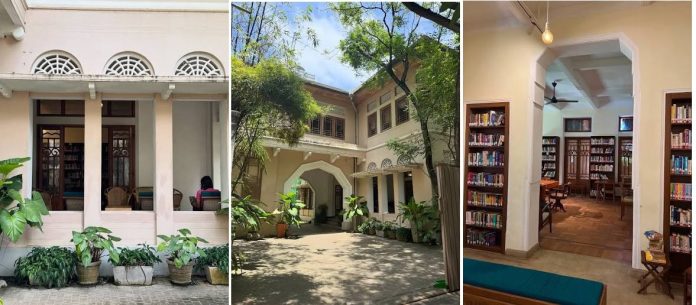
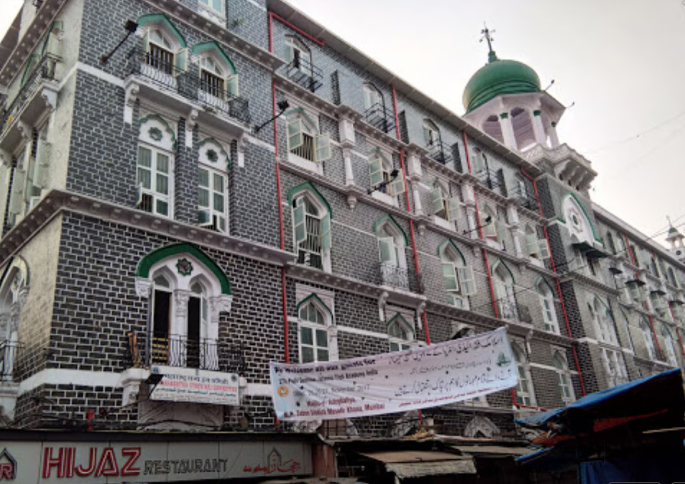
Inside a century-old building overlooking the streets of south Mumbai, a quiet effort is underway to save rare Persian and Urdu translations of Indian scriptures, the last surviving records of the country’s multi-cultural past.
The Karimi Library, housed within the 152-year-old Anjuman-I-Islam institute near the iconic Chhatrapati Shivaji Maharaj Terminus, has launched a restoration drive to rescue more than 32 sacred Hindu texts. These include the Mahabharat, Ramayan, Bhagavad Gita, and Shiv Puran, all printed between 1867 and 1896.
The library was established in 1898 after merchant Kazi Abdul Karimi Porbandari donated 4,500 valuable texts, and it was named after him. Padma Shri Dr Zahir Kazi, president of Anjuman-I-Islam, founded by Badruddin Tyabji in 1874, shared this history while speaking about the ongoing project.
The archive holds books, manuscripts, and newspapers in Sanskrit, English, Urdu, Persian, Marathi, Pashto, and Arabic, covering history, philosophy, theology, literature, and geography. It also features rare newspapers dating back to 1875, including the Jaipur Gazette, Ambala Gazette, and Cairo’s Al Kaira, alongside royal decrees from Mughal Emperor Aurangzeb.
“The books have become old and pages brittle. They need to be treated with special chemicals to weed out fungus and pests. Books that are not in good shape are pasted with special paper for preservation,” Kazi said.
A team of experts is handling the digitisation process, with pages being uploaded to Anjuman-I-Islam’s cloud account.
“These books reflect so much of tolerance. It is an eye-opener for Indians that the country’s heritage is very much there in this library,” Kazi said.
Library in-charge Mohammad Ghalib Mulla confirmed that more than 100,000 book pages and 70,000 pages from newspapers and periodicals have been digitised, leaving only 2,250 pages to complete the archiving project.
“The newspapers give details about the initial days of the freedom struggle, the social and political situation of those times, how journalism was, pro and anti-British,” Mulla said.
Several freedom fighters were part of Anjuman-I-Islam’s management, and the library witnessed many of their meetings, according to Kazi.
The library building is also undergoing renovation, with efforts to retain its original look and feel. “We intend to reopen the restored library by October 2, subject to completion of work. We also plan to host many national and international events in this library,” Kazi said.
source: http://www.radiancenews.com / Radiance News / Home> Uncategorized / by Radiance News Bureau / August 31st, 2026
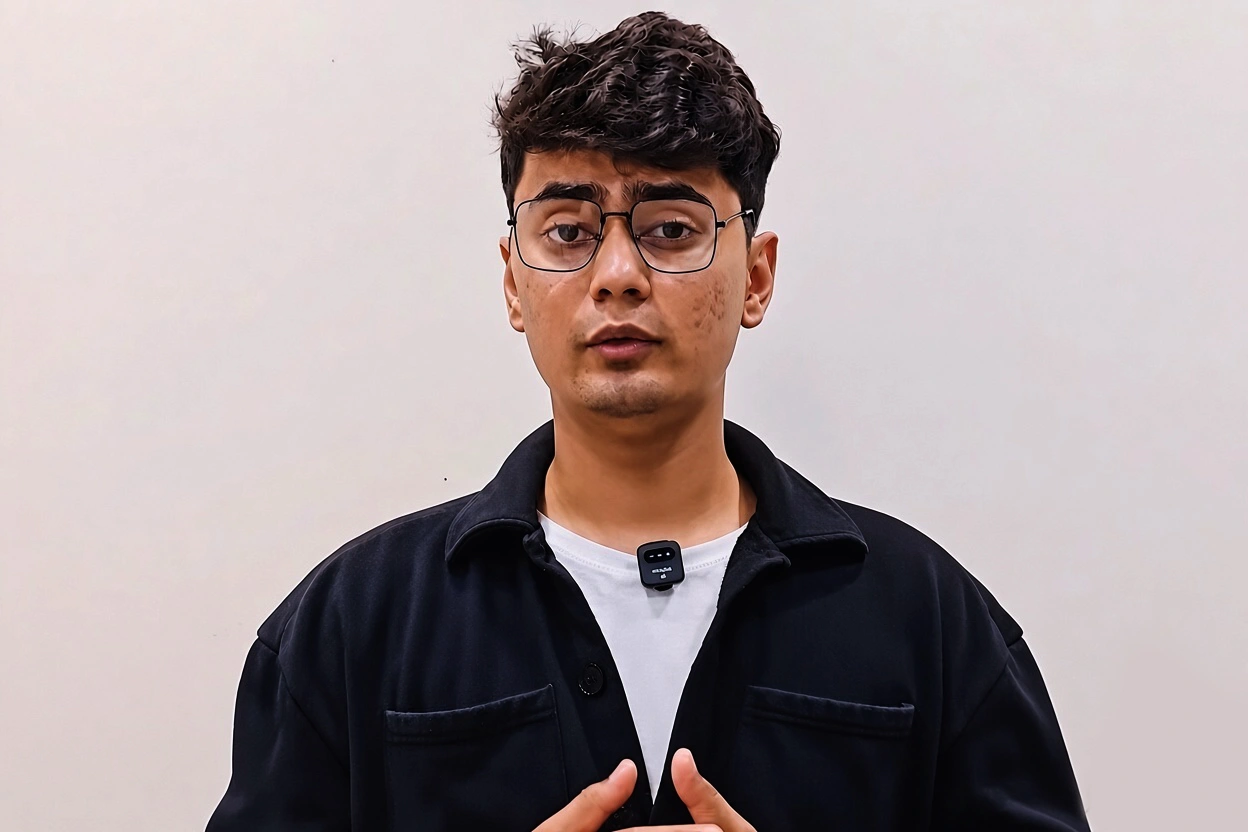
In an exclusive interview, Political Science and International Relations Graduate Affan Ansari discusses his journey from studying Science in India to pursuing Higher Education in Turkey and Europe, the realities of studying abroad, scholarships and financial planning, community engagement, and his ambition to build a career in peacebuilding, conflict resolution and international security.
Q.1. Affan, please introduce yourself. Tell us about your educational background and your journey so far.
Affan Ansari: My name is Affan Ansari. I come from a middle-class family in Mumbai and living my dream to study abroad. I am a graduate in Political Science & International Relations from Turkey, and Research fellow at the Social Sciences Lab MENA, which is situated in Estonia, Europe (SSL-MENA).
I completed my schooling at Anza High School, Byculla and then my Junior College education at Maharashtra College of Arts, Science and Commerce.
After Junior College, I took a different path. I moved to Turkey and completed my Bachelor’s degree in Political Science and International Relations from Istanbul Sabahattin Zaim University. During my undergraduate studies, I also got the opportunity to spend a semester at the University of Wrocław in Poland through the Erasmus exchange programme.
My journey was not simply about obtaining a foreign degree. For me, it was about stepping outside my city and comfort zone, meeting people from different cultures and understanding the world more closely.
Today, I have received Master’s offers from two highly ranked universities in the UK, a leading university in Poland, public universities in Germany, as well as two universities in Turkey.
Q.2. Students who take Science in India generally move towards Engineering or Medicine. Why did you choose Political Science and International Relations?
Affan: The irony is that I studied Science, but it was a virus that made me realise my real interest was in the world beyond Science.
For me, the journey from Science to Social Science was a struggle between social expectations and my own interests and ambitions. In India, when a student performs well in Science, there is naturally a push towards Engineering or Medicine. I too chose Science largely because of family and social expectations.
But the two years of the COVID lockdown became a turning point. I began to understand what globalisation really meant. A virus that emerged in China could affect almost every country in the world. I became fascinated by the role of the WHO, how different governments responded to the crisis, and how decisions taken in one part of the world could have consequences far beyond its borders. It changed the way I looked at the world, from a local perspective to a global one.
That was when I realised that my real interests lay in Political Science, International Relations, geopolitics, and understanding different societies and political systems around the world. So, moving from Science to Social Science was not really a change of direction. It was a realisation of the direction I actually wanted to take.
Q.3. Students generally target the USA, UK, Canada or Australia. Why did you choose Turkey?
Affan: Turkey was primarily a combination of affordability and opportunity for me.
My parents had wanted me to study in Turkey after Class 9 because of the scholarship opportunities available there. At that time, I was not ready to move abroad, so I completed my Junior College education in India.
Later, we came to know about the Turkish Government’s Türkiye Scholarships programme. I applied, but because of the intense competition, I was not selected for the government scholarship.
However, I did not give up. I independently applied to Turkish universities and received a 50 per cent scholarship from Istanbul Sabahattin Zaim University. For my family, this made the cost of my education financially manageable.
The university’s Erasmus students exchange and scholarship programme was another important factor. Through Erasmus, I got the opportunity to spend a semester in Europe and study in Poland.
My message to students is simple: do not choose a country simply because it is popular. Look at the university, tuition fees, living costs, scholarships, visa rules, course quality, post-study opportunities and, most importantly, your own career goals and family budget.
Q.4. Many parents believe that studying abroad is very expensive and only highly intelligent or wealthy students can afford it. What would you say?
Affan: Studying abroad is not only for the rich or exceptionally brilliant; with the right information, early planning and the right choice of country and university, it can be achievable for many students.
I think one of the biggest barriers is not always money, but a lack of information. Many families assume that studying abroad means going to the UK, USA, Canada or Australia, where costs can be very high. But there are also comparatively affordable options across Europe, including public universities in Germany and opportunities in countries such as Italy, France, Poland and Czech Republic.
Of course, costs, admission rules and scholarships vary by university and programme, so students should always verify information through official sources.
My most important advice is: do not wait until Class 11 or 12 to start thinking about studying abroad. Planning can begin much earlier, even at school level. If a student starts planning three or four years in advance, there is enough time to prepare for language requirements, entrance tests, scholarships and finances.
Q.5. If a middle-class family wants to send its child abroad, how should it plan?
Affan: If you want to study abroad tomorrow, start building your profile today, because your CV begins in school, not after graduation.
I look at it in three stages.
First, school: Build strong English skills and, if possible, learn a foreign language. Participate in Olympiads, sports, cultural activities and competitions, and keep a record of your achievements and certificates.
Second, Junior College: Maintain a strong academic record and start understanding requirements such as IELTS, TOEFL, SAT or programme-specific entrance tests. Also get involved in volunteering and community work. Universities look beyond marks.
Third, graduation: If you are planning a Master’s abroad, identify your target programmes early and prepare for requirements such as IELTS, TOEFL, GRE, GMAT or other relevant assessments. If Germany is your target, check the exact requirements of each programme, including whether an additional assessment is required.
Most importantly, do not think of your profile as marks alone. Internships, volunteering, research, competitions, leadership and meaningful extracurricular activities can all make a difference.
So my advice is simple: start early, explore your interests and build a profile that tells universities who you are, not just what your marks are.
Q.6. Are very high marks necessary for studying abroad?
Affan: Your marks may decide which doors open first, but they do not decide how far you can go.
High marks certainly provide an advantage, especially for competitive scholarships, but marks are not everything. Every university has a different admission system. Some focus heavily on academic grades, while others also consider entrance tests, motivation letters, work experience, extracurricular activities and the overall profile of the student.
So, if a student has average marks, they should not assume that studying abroad is out of reach.
Average marks do not mean average ambition.
The key is to understand your strengths, research universities carefully and apply to programmes where your overall profile gives you a realistic chance of admission.
Q.7. Which fields currently offer better scholarship and career opportunities abroad?
Affan: Don’t choose a career because the world says it has jobs; choose where your interest, ability and future opportunity meet.
The fields offering scholarships and career opportunities change with countries and economies, so I would not advise students to blindly follow one particular trend.
Technology-related fields such as AI, cybersecurity, data science and software, along with engineering and renewable energy, continue to offer opportunities. Healthcare is another major sector, not only for doctors but also for nurses, physiotherapists, laboratory professionals and other specialists.
However, students also need to consider licensing, qualification recognition and language requirements in their chosen country.
So instead of asking only, “Which field has the most jobs?”, students should ask three questions: What am I interested in? What am I good at? And what opportunities will this field offer in the future?
When interest, ability and opportunity come together, you are much more likely to build a career that lasts.
Q.8. What would you say about scholarships and education loans?
Affan: The biggest scholarship advantage is not just good marks, it is starting early and knowing where to look.
There are merit-based, need-based and government-funded scholarships. Some of the most generous opportunities I know include TürkiyeBurslari Scholarships, DAAD in Germany and Erasmus Mundus in Europe, along with Eiffel Scholarships in France, Stipendium Hungaricum in Hungary and Swedish Institute scholarships.
In Telangana, the Chief Minister’s Overseas Scholarship Scheme for Minorities also provides substantial financial assistance to eligible students.
My advice is to start researching scholarships early and look beyond marks. Academic performance, extracurricular activities, volunteering, leadership and your overall profile can all matter.
A full scholarship is ideal, but even a partial scholarship can make a big difference. In my case, a 50% university scholarship helped make my education in Turkey financially possible.
And if you consider an education loan, calculate the total cost and repayment burden carefully. Studying abroad should not put a family under unsustainable financial pressure.
Q.9. Can students work part-time abroad and manage their expenses?
Affan: Yes, you can work part-time abroad, but you should never go abroad depending on a part-time job to fund your education.
Many countries allow international students to work part-time, but the rules vary by country, visa and programme and can change over time. So students should always check the official rules applicable to their visa.
From my own experience, I would strongly recommend having a realistic financial plan for tuition and initial living expenses before going abroad. Part-time work should be additional support, not the primary source of funding.
At the same time, working part-time can provide financial independence, discipline and valuable international work experience.
So, work part-time to support your education, not to make your education possible.
Q.10. What has been the biggest challenge for you as a student abroad?
Affan: The hardest part of studying abroad was not being away from home, it was learning how to stand on my own when home was thousands of kilometres away.
Living abroad meant managing academics, finances, a new culture and everyday decisions on my own. There were moments of loneliness and stress, but the most difficult moment was the earthquake in Istanbul. I was afraid, I felt very alone, and suddenly lectures and exams moved online. Everything felt completely upside down.
But that experience also changed me. I gathered the courage to step outside myself and started volunteering with NGOs. It taught me that when life becomes difficult, you can either withdraw or find a way to contribute.
Later, studying in Turkey and spending a semester in Poland exposed me to students from different countries and completely different perspectives. I travelled across 10 EU countries, met young people from many cultures and learned to navigate the world independently.
Looking back, the biggest lesson was that studying abroad did not just educate me academically. It taught me how to be independent, resilient and comfortable even when I was far away from home.
Q.11. Affan, what is your dream? What do you want to do in the future?
Affan: I don’t just want a job at the United Nations. I want to be part of the global conversations that can prevent wars and build peace.
My dream is to become an International Civil Servant, specialising in Peacebuilding, Conflict Resolution and International Security, and eventually work with the United Nations.
We live in a world of wars, geopolitical tensions and changing alliances. At the same time, the Global South is demanding a stronger voice in global decision-making. As an Indian, I want to be part of that change.
There is a saying in politics and diplomacy: “If you are not at the table, you are on the menu.” I want to be at the table.
I want to use my education and career not simply for a prestigious position, but to contribute to peace, diplomacy and solutions for people affected by conflict and instability.
For me, an international career is not about having a title. It is about having a voice where decisions that shape our world are made.
Q.12. What is your final message to middle-class students and parents in Mumbai and India?
Affan: Foreign education does not begin at the airport. It begins with a dream, a plan and a decision your family can afford.
To parents, I would say: don’t push your children into a field simply because society considers it successful. Look at their ability, interests and future opportunities together.
And to students: don’t choose foreign education because of the glamorous life you see on Instagram. Going abroad is not a holiday. It is a responsibility.
If you genuinely want to study abroad, start early. Explore scholarships and affordable universities, prepare for language and entrance requirements, understand visa rules and, most importantly, make sure the decision is financially sustainable for your family.
An ordinary student from a middle-class family in Mumbai or anywhere in India can begin an extraordinary journey.
Dream big, but calculate carefully. Plan early, verify everything and never let your financial circumstances stop you from exploring your possibilities.
Because the first step towards foreign education is not the airport. It is planning.
Q.13. You are studying abroad yourself. What are you doing for your community in Mumbai?
Affan: For me, education is meaningful only when you can use what you learn to make someone else’s journey easier.
Since 2021, I have been associated with Kawish’s Community Education & Student Mentorship Programme and Madni High School. Whenever I return to Mumbai, I spend time mentoring students, helping them with English and academics, and guiding those who aspire to study abroad.
After completing my graduation, I also spent time in Mumbai working with my father and uncle during the Special Intensive Revision (SIR) of electoral rolls, helping with voter mapping and assisting people with their SIR forms. That experience gave me a very different kind of understanding of how democracy works at the grassroots level.
I have also volunteered with the IHH Humanitarian Foundation, including relief work following the 2023 earthquake in Turkey, and was involved in COVID-19 and leprosy relief activities in 2020.
I know how difficult it can be to find the right information and guidance. If I have gained knowledge through my own journey, I believe I have a responsibility to share it.
These experiences have taught me one simple lesson:
Education should not only change your own life. It should give you the ability and responsibility to contribute to your community and society.
[Falak Ather Faizee is an Intern at ummid.com.]
source: http://www.ummid.com / Ummid.com / Home> Education & Career / by Falak Ather Faizee / August 22nd, 2026
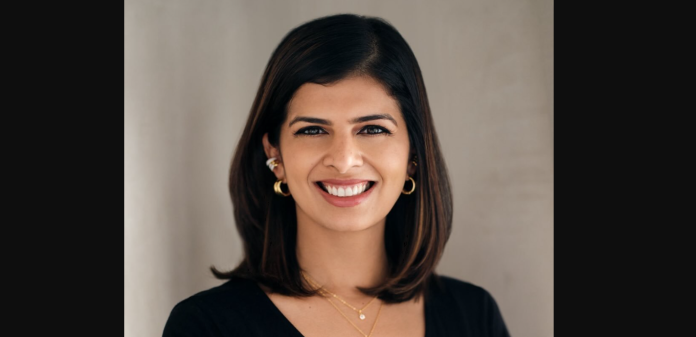
Sarah Sham, a fourth-generation Muslim entrepreneur from Mumbai and co-founder of Dubai-based luxury interior design firm Jea, has sparked widespread praise after sharing how she enforces strict work-life boundaries at her company, even at the cost of losing clients.
Sham, whose family business Essajees traces its roots back 130 years to her great-grandfather Abdul Kadir Essajee Sham, a trader of fine Iranian art tapestries, took to LinkedIn to outline the firm rules she applies across her design operations spanning 18 cities.
“We start at nine and close by six, five days a week. No weekend calls. No Sunday deadlines,” she wrote. “When a project runs behind, I hire another designer instead of asking my team to give up their weekend.”
Sham, a graduate of Art History from Duke and Oxford universities, admitted she once believed that good design required working through the night. Over time, she changed her approach after noticing that the best creative output came from well-rested designers, not exhausted ones.
“I started comparing creativity to a well instead of a tap,” she wrote. “Push too hard without rest, and it runs dry, no matter how skilled the person is.”
She acknowledged that the policy carried a real financial cost. Several clients left her firm in favour of teams willing to answer calls on weekends or work late nights. Sham chose to let them go rather than compromise her team’s working conditions.
“A tired designer does not run out of ideas all at once. The work slowly gets less interesting, and nobody notices until a client points it out,” she added.
Sham comes from a storied Muslim business family. Her ancestor Abdul Kadir Essajee Sham opened his Mumbai store in 1890, building a clientele that included Maharajas and royal families from India, Qatar, the UAE, Oman, Kuwait and Saudi Arabia. Today, Essajees serves a new generation of buyers including venture capitalists, consultants and young couples.
Her LinkedIn post drew strong responses from professionals across industries. Many praised her for holding firm on boundaries when revenue was on the line, calling her approach a model for sustainable creative work.
Sham co-founded Jea after serving as principal designer at Essajees Atelier for 12 years, carrying forward a family legacy built on craftsmanship, honesty and respect for the people behind the work.
source: http://www.radiancenews.com / Radiance News / Home> Features / by Radiance News Bureau / August 11th, 2026
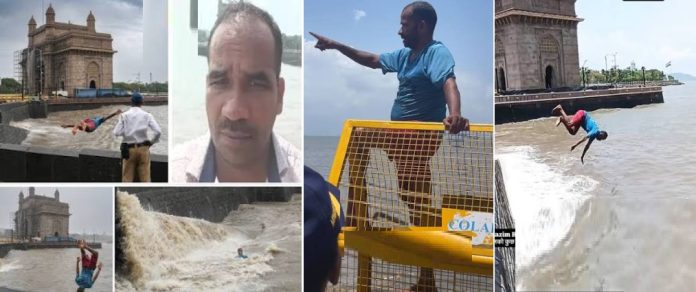
For thousands of visitors who gather along the waterfront near the Gateway of India, Mohammad Nazim Shaikh is an ordinary pav seller. For people caught in the powerful tides of the Arabian Sea, he has become a lifesaver whose courage has saved hundreds of lives over the past three decades.
Nazim, 51, spends his mornings selling pav in Colaba to support his family. Once his work ends around noon, his attention shifts to the sea. Whenever the tide rises, he remains alert, watching tourists and local visitors who often venture dangerously close to the water. According to Nazim, many people underestimate the force of the waves until it is too late.
He says he began rescuing people at the age of 16 and has continued the mission ever since. Over the years, he estimates that he has saved more than 300 people from drowning and recovered between 25 and 30 bodies, most of them men. His long experience has exposed him to accidents during festivals, risky behaviour by thrill-seekers and emergency situations requiring immediate action.
One of his most memorable rescues took place in 1996 when he swam across floodwaters during high tide, an effort that earned him recognition as “Best Swimmer.” In 2022, he rescued two men during the Ganpati immersion celebrations, adding another chapter to his long record of service. He also assisted rescue operations following the 2003 Gateway blast by helping recover bodies from the site.
People working around the Gateway of India describe Nazim as the first person they contact whenever someone falls into the sea. Hawkers, photographers and local workers say he responds immediately, often reaching the victim before emergency services arrive. Many believe his presence has prevented numerous tragedies at one of Mumbai’s busiest tourist destinations.
Despite his decades of public service, Nazim says he has received little official recognition. He revealed that he had written to the Prime Minister and Maharashtra Chief Minister seeking acknowledgement of his work, although no formal action followed. Adding to his disappointment, many certificates and newspaper clippings documenting his rescues were lost during renovations at his home.
Senior Police Inspector Pramod Bhovte of Colaba Police acknowledged Nazim’s contribution, describing him as an active and dependable lifeguard whose assistance has proved invaluable in numerous rescue operations. Police officials said they remain grateful for his commitment and bravery.
Nazim remains humble about his role. He says he does not fear the sea and believes God has given him the strength to help others. While crowds continue to gather along Mumbai’s famous waterfront every day, the city’s quiet guardian stands ready whenever another life needs saving.
source: http://www.radiancenews.com / Radiance News / Home> Latest News> Pride of the Nation> Markers of Excellence> Personality> Social Service> Report / by Radiance News Bureau/ July 08th, 2026
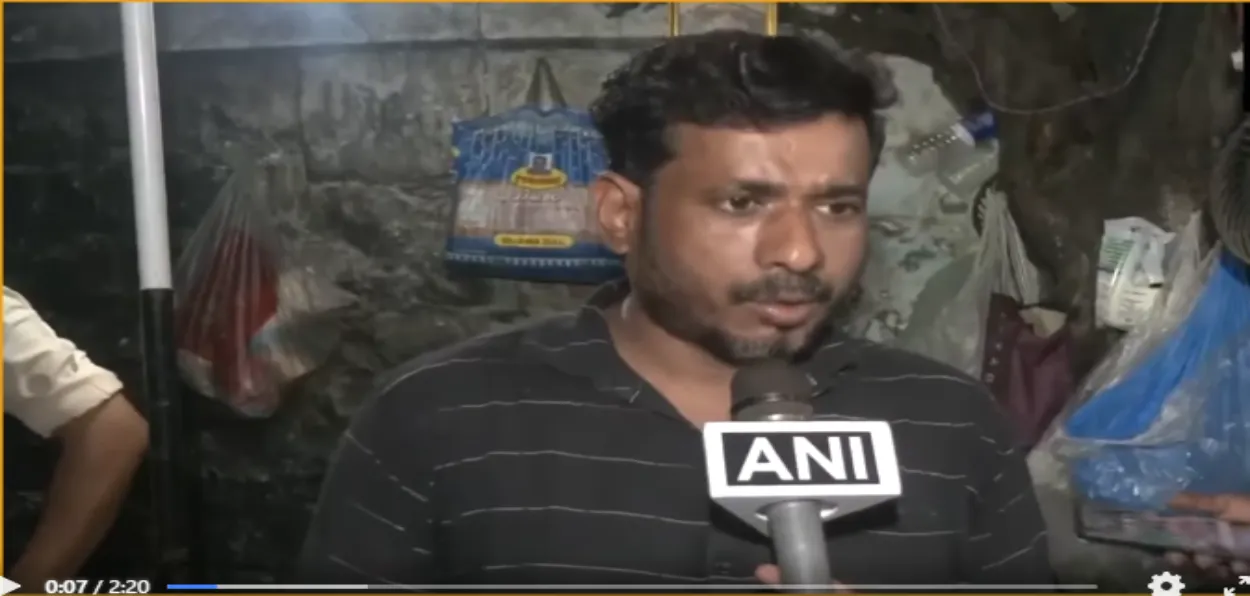
Mohammad Toufiq (Picture grabbed from ANI’s video posted on X)
When Pakistani terrorists targeted Nariman House, Cama Hospital, Taj Hotel, Oberoi Hotel, Chhatrapati Shivaji Terminus, and Leopold Cafe on 11 November, 20 16 years ago, killing 166 people, Mohammad Taufiq Sheikh was one of the lucky persons to have narrowly missed the terrorists’ bullet.
Now famous as Chotu Chaiwala, as he continues to sell tea in front of St. George Hospital, he gets into a pensive mood at the mention of Tahawwur Rana, one of the key planners of the attack who has been extradited to India from the US to face trial.
Toufiq saved many lives as he was present at the Railway station on that fateful day.
Recently, on knowing that Tahawvur Rana was brought to India after 16 years, he said, “He should not be given any relief; instead, hang him.”
Taufiq Mohammad, an eyewitness to the 26/11 attack, looked upset. He said, “The government should not him any facility as he is the main culprit of 26/11. He is not a hero; he is a beast. In the attack, someone’s mother, sister, brother, or father was killed. He should not be shown mercy and should be lodged in a separate cell, the government should take strict action against him. The government should hang this terrorist within 15 days.”
Taufiq said, “The government should make a separate law to take action against terrorists. Pakistan still gives shelter to terrorists as a result the common people also suffer. Punish Rana so severely that the rest of the terrorists start trembling with fear.”
A terrorist has no caste or religion. He should only be called a terrorist, Taufiq says.
“Rana and I have the same religion. Rana, in the name of religion, helped those people who fired bullets at innocent people. Islam does not teach to kill anyone. Islam gives the message of peace and love. Shedding blood in the name of religion is not the teaching of religion. We are proud to be Indian Muslims. Every terrorist should get severe punishment.”
Pakistani terrorists were killing people mercilessly. The entire station was silent. People were saving their lives. No one was there to help them. Talking about that time, Taufiq says, “Seeing the guns with them, I first thought they were commandos. But they were killing people mercilessly. They were not humans, they were monsters. One of them (Kasab) was coming towards me. He abused me. I thought I would be killed too.”
He further says, “The glass of doors and windows were broken due to the firing. The entire station was filled with blood. People were struggling to save their lives. Many people were injured. I wanted to save the injured people. I put the injured people on a cart and took them to St. George Hospital and Byculla Railway Hospital. In this way, many people’s lives were saved.”
This incident was terrifying, but Taufiq handled the situation with courage. Keeping humanity at the top, he saved people’s lives without looking at caste or religion. For this, he was given 27 rewards and some financial help.
Taufiq says, “On the night of 26/11, I went to the railway station to collect money for tea. There were more than 4000 people there. There was a rush to buy tickets, so the ticket master asked me to collect the money after a while. I stood outside the station. I still remember, that day a cricket match between India and England was going on. After a while, suddenly I heard a loud firecracker-like sound from inside the station.”Toufiq continues to sell chai at the same place.
source: http://www.awazthevoice.in / Awaz, The Voice / Home> Success-Story / by Fazal Pathan, Mumbai / April 16th, 2025
Barrister Mohammed Yaseen Nurie who served as a Minister in B.G. Kher’s cabinet
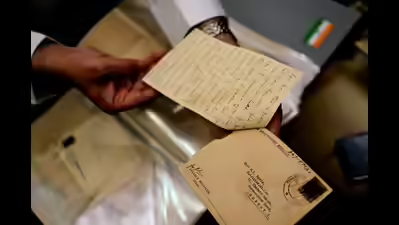
The lane leading from the iconic Mahim Dargah to Mahim police station has an important address: Nurie Villa. But you may never know it unless you enter the haveli-like home and meet its owner Owais Shakir Nurie. At the house’s delightfully decorated drawing room, Owais, 54, pores over a heap of old letters carefully kept in folders.
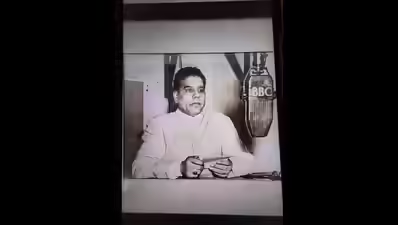
Look carefully as these letters, mostly typed but many handwritten too, reveal a lot about what Owais calls “the unsung hero, the forgotten freedom fighter who took Pakistan founder Muhammed Ali Jinnah head on.” These letters are addressed to Barrister Mohammed Yaseen (M Y) Nurie (1895-1971), Owais’s grandfather who lies forgotten in the saga of freedom struggle.
If our freedom movement, especially the years after Quit India Movement leading to Independence pockmarked by partition, was strikingly eventful, Nurie must occupy the place of an important player. Educated at Mohammedan Anglo-Oriental College (Aligarh Muslim University since 1920), Barrister from England, incarcerated for two years during Quit India Movement (1942), opposed Jinnah so much that he called Nurie “my fiercest competitor”, elected MLA from Ahmedabad in the 1937 provincial elections for the Bombay province which included Gujarat, made minister of public works in the B G Kher cabinet, Nurie played multiple roles and yet remains largely unsung.
Letters written to him by luminaries like Jawaharlal Nehru, Sardar Vallabhbhai Patel, Lal Bahadur Shastri, Morarji Desai, Syed Mahmud (External Affairs Minister), V K Krishna Menon (Defence Minister), S K Patil (Transport and Communications Minister), testify to Nurie’s importance in national and Maharashtra’s politics.
Yet, if Nurie does not figure immediately in the national imagination created and promoted, post-Independence, through careful curation and diligent deletion, blame it on the “syndicate” within the Congress party which suffered Indira Gandhi’s wrath for opposing her politics.
“Since my grandfather was in the syndicate led by the likes of K Kamraj and Morarji Desai, he too was denied positions in the 1960s and a place in the government-backed history projects,” says Owais, a govt contractor. “My father (Shakir Nurie) had seen how his father and the family suffered for siding with the Syndicate.”
The family was evicted from its rented Colaba home. “Nobody knew that there existed a tranche of letters, photographs and other documents related to my grandfather’s role in the freedom struggle and his interactions with so many important leaders till I opened the cloth bundle dumped at our Bewar (Rajasthan) haveli,” says Owais.
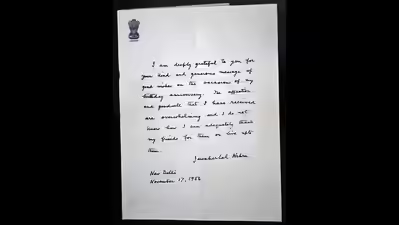
In his handwritten letter (November 17, 1956), Nehru profusely thanks Nurie for his birthday wishes. Through a 31st July, 1954 letter from Istanbul (Turkey), a director friend informs Nurie how Mehboob Khan-directed, Dilip Kumar-starrer Aan (1952) was a huge success in Egypt and he wants to show it in Turkey too.
Among the Nurie papers is a detailed protest letter Nurie lodged against a proposal to turn the historic Khilafat House in Byculla into a musafirkhana for Haj pilgrims. “It was due to his protest that the Khilafat House did not become the Haj House (it came up much later near Crawford Market). Nurie sahab had served the Khilafat Movement and knew its importance in our national life,” observes Khilafat House’s trustee Rauf Pathan, currently engaged in the redevelopment of this iconic building.
Owais thanks his friend Sunil Bhatia who drew his attention to the blog created by the Ministry of Culture as part of its initiative on “unsung heroes” under the Azadi Ka Amrit Mahotsav. Ministry officials jumped with excitement when they saw some of the letters and requested Owais to collect and add more credible information to the project on Nurie’s life.
At a meeting in 2018 in Ahmedabad, held by businessman Zafar Sareshwala, a Hindu businessman felicitated Owais after he learnt he carried the Nurie legacy, the freedom fighter who opposed Jinnah and, as PWD minister (1937-39), must have overseen work on Queen’s Necklace , Marine Drive.
source: http://www.timesofindia.indiatimes.com / The Times of India / Home> News> City News> Mumbai News / by Mohammed Wajihuddin / May 24th, 2026
Can a stable and just democracy flourish on foundations of wilful amnesia and erasure?
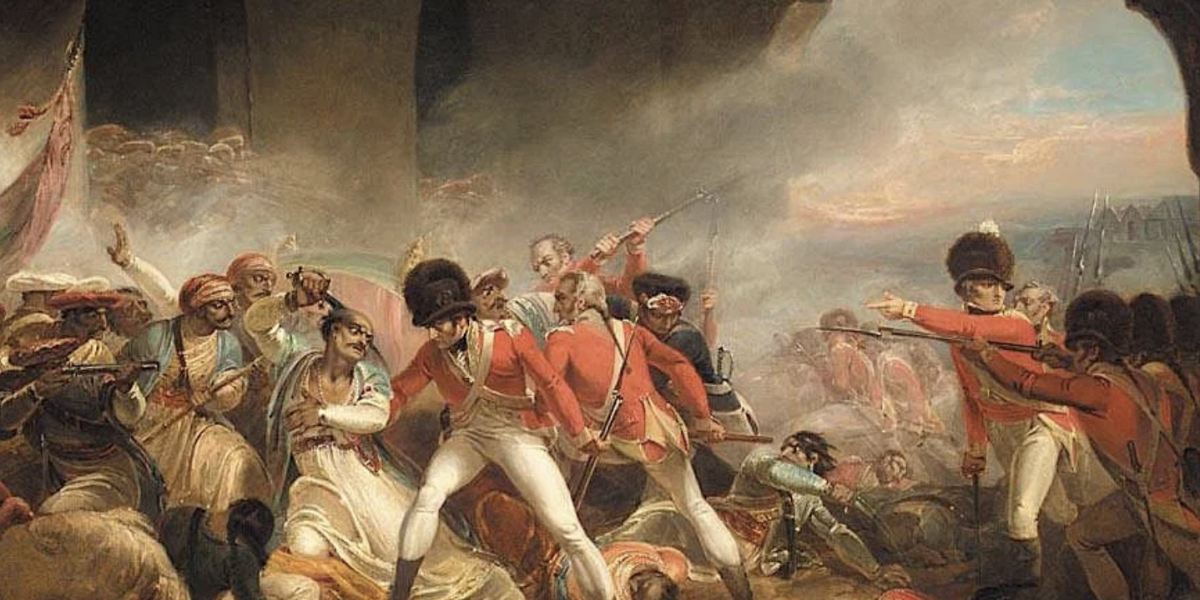
A c. 1800 painting showing the last stand of Tipu Sultan, ruler of Mysore in 1799 at the end of the Anglo-Mysore Wars with the East India Company. Photo: Henry Singleton/Public domain.
Many will ask why a book about Muslims who fought for India’s freedom? There’s no answer to such questions except another question. Had we been better memory keepers as a nation, could we have avoided the peak disinformation and stupidity which normalises reviling ordinary Muslims as outsiders, infiltrator and insurgents?
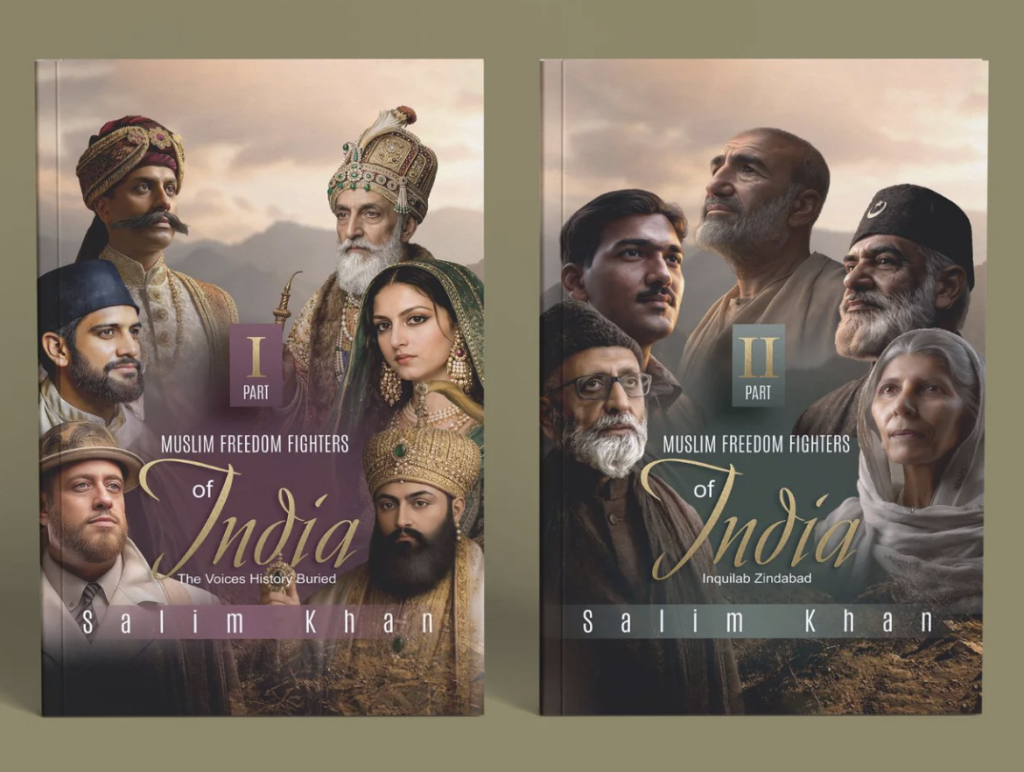
Muslim Freedom Fighters of India is a two-volume biographical compilation by Salim Khan on less-known, mostly forgotten and hardly known Muslim figures. The books aim to clear the fog around Muslim freedom fighters whose names are heard of without them being extensively known and this requires us to understand why this fog exists. Written in an extremely readable and accessible format, these biographical accounts embed the historical figures in the context of their times, responding to unprecedented events with foresight, clarity and conviction that sealed their fate and shaped and the nation’s destiny.
Whether we are reading about Generals of 1857 – Bakht Khan and Khan Bahadur Khan – or the Cambridge-educated Rampur scion Mohammad Ali Juahar of Khilafat moment and his fiery mother Bi Amma, the larger questions seething beneath the stories keep rising to surface. Who does a society and nation choose to remember and celebrate? Whose memories are deemed worthy of preserving? History is always shaped by those who control archives, narratives and memorialisation and hence memory.
Reading about Tipu’s dazzling reign through the three Anglo Mysore wars where he proved superior to British forces, I was reminded of the controversy sparked by the late Girish Karnad’s suggestion of naming the Bengaluru airport after Tipu Sultan. Karnad had said, “It is true that Tipu Sultan was not born in Bengaluru, but he was a son of this soil and a freedom fighter. Had Tipu been a Hindu, he would have achieved the status of Shivaji, and the airport would have been named after him.” I recalled Karnad because his play Dreams of Tipu Sultan echoes the same theme that this two-volume tribute to erased, obscured and deliberately unremembered historical figures echoes: that when politics lays down who should be forgotten, remembering the erased becomes a duty, an affirmation and a political act.
It is important to clarify that this is not a compilation of eulogies but well-researched fact based account of people who had the uncommon clarity to resist colonial domination even before the nationalistic narratives took shape. That they happened to be Muslims is important today because of the distortions that have obscured and erased them. But back then when they fought and resisted, they were simply rallying for the cause of their soil and their watan. From the earliest times they understood that freedom from foreign domination required Hindus and Muslims to put up a united front as in the war of 1857, the Khilafat movement, and the period between 1919 and 1924. Back then too, traitors cut across religious lines – Jagat Seth, Mir Jafar, and Ilahi Baksh.
Muslim Freedom Fighters of India: Part 1 and Part 2’, Salim Khan, Qalam Aur Kaagaz Books.
From Siraj ud Daulah to Tipu to Shahzada Firoz Shah, the book shows how the fog around these personalities is not accidental but meticulously designed – initially by the colonial mind, then picked up by early nationalists and woven into simplistic narratives. The macabre dance of history further stifled Muslim voices. Cataclysmic events like the ‘end’ of the Mughal Dynasty in 1857 and the Partition in 1947 sundered clans, erased family histories, legacies crumbled with no one is around to defend and uphold them. Today, even people who don’t know history have heard of Lakshmi Bai, but many who read history may not have heard about Shahzada Firoz Shah, the Mughal Emperor’s grandson who in August 1857, led a band of armed soldiers to rally the rebels in Rohilkhand and Malwa and who fought alongside Tatia Tope and called for a united Hindu-Muslim front against the Company.
The British understood the dangerous potential of popular memory and subverted any potential for memorialisation of hugely influential figures. No one knows if Shahzada Firoz died in battle or escaped to West Asia. The Maulavi Ahmadulla of Faizabad whose authority and fearlessness scared the British so much that they kept a reward on his head, was likewise interred in an unmarked grave. Knowing that even his memory could become a node to unite the rebels, the British saw to it that no commemoration was permitted or possible. Zafar, the last Mughal was exiled to Rangoon for the same reasons.
In her book, India, 5,000 years of history on the subcontinent, Audrey Truschke, elucidates how Muslim rulers like Nawab Siraj ud Daulah and Tipu Sultan to Zafar felt a responsibility for their subjects no matter what their religion. For example, Siraj ud Daulah actively intervened in times of famines and drought in Bengal. But after the British took over they did nothing to alleviate human suffering, so that 20% of Bengal’s population died in the famine of 1768 and the small-pox epidemic of 1769-70 following it. This had never happened during earlier episodes of failed harvests. Truschke says, British historians initiated the custom of categorising Indian rulers as tyrannical, effete and incompetent, reducing them to their religion and writing in terms of Hindu rulers and Muslim rulers. The British needed to demonise Muslim rulers who were their immediate predecessors in subcontinent so that they might look good by comparison, Truschke notes. It was a part of the colonial propaganda.
Another pattern Salim Khan’s compilation brings out is that from mid-18th century onwards, the first responders and the most committed crusaders resisting colonial domination – the kings, queens, princes, preachers, noblemen – were Muslims. Not only because the British had wrested from them the power they had wielded for centuries (howsoever fragmented or diluted it may have become); but also, because they were looked upon as leaders. In Awadh, for example, the Shia elite took it as their moral-ethical duty (see Chapter 7, volume I: Shia Ullema and Noblemen of Awadh)
Even in the 20th century, Muslim freedom fighters like Hasrat Mohani of the Inquilaab Zindabad fame and Asfaqullah Khan of the Kakori conspiracy who was an icon for Bhagat Singh, remain in the shadows, seen only in a hazy half-light. Were their contributions any less or only less remembered? One of the most important projects post-Independence should have been to restore memory and affirmation to those whom the British put on the wrong side of history, no matter what their religion or caste. But we know this is not what happened.
Since the arrival of the political controversy over Tipu Sultan, we have entered in an era of deliberate distortion of history. The larger question that these accounts refrain from asking but that jumps to any thinking person’s mind is this: can a stable and just democracy flourish on foundations of wilful amnesia and erasure? Should the memory of Muslim freedom fighters be kept only by the Muslims? The heritage and memory of Indian Muslims needs to be reclaimed by them. But equally, these volumes are required reading for the casually miseducated, hopelessly disinformed or simply ignorant Hindus who have been stupefied into denying and distorting their composite history.
Varsha Tiwary is a Delhi-based writer and translator. She has recently published 1990, Aramganj a translation of the best-selling Hindi novel Rambhakt Rangbaz.
The book reads more like a collection of anecdotes
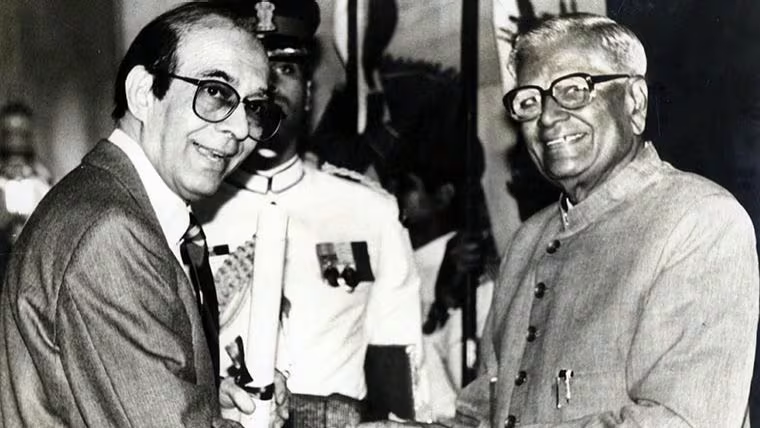
Nation’s pride: Talat Mahmood receiving Padma Bhushan from president R. Venkataraman in 1992 | P. Musthafa
To encapsulate the life of a man often described the ‘King of Ghazals’, though he was much more than that, is no easy task. Just for attempting that, Sahar Zaman deserves applause.
” Mahmood’s musical life was a rich amalgamation of traditions and languages “
Talat Mahmood, born in Lucknow and trained at what was then the Marris College of Music (now Bhatkhande Sanskriti Vishwavidyalaya) was a singer unlike any other. His natural velvet voice bore a slight quiver. It is a quiver which singers take years to cultivate. Musically termed vibrato, this quick and subtle change of voice between notes which are pitched very closely conveys emotions more powerfully than lyrics. When used without dedicated cultivation, a vibrato sounds contrived and the unevenness of breath can be made out by the trained ear; but when it comes naturally, it is as smooth as the wax and wane of emotion. Yet, in his early years in Mumbai, Mahmood strove to hide this unique quality, attempting often to sing in the nasal tones of his idol K.L. Saigal. This would not last long as Anil Biswas, a composer he had worked with for long, angrily walked out of a recording studio asking Mahmood to return only when the real Talat was found.
Ghazals came first to Mahmood because of his affinity with Urdu, and also because of the cultural bearings at home. His father, Manzoor Mahmood, who was a member of the Indian Medical Mission to Ottoman, would often sing to pep up his fellow travellers, while his sisters were flawless renderers of the nath (songs in praise of the Prophet), and his elder brother, Kamal, too, had a rich singing voice. While everyone in the family had strong voices with good throws, Mahmood’s was tuned differently. It was far gentler, almost like a dewdrop caressing a rosebud. It was the kind of voice that could dull the impact of the unkindest of blows. In the 2022 release Gangubai Kathiawadi, for instance, when the lead character learns of being sold to a brothel by her boyfriend, there is a snippet of a song that plays in the background. Mahmood’s voice is like a gentle nuzzle that softens the harsh truth.
Pathos was the most marked emotion of Mahmood’s voice. It was the embodiment of a disembodied, deep sadness. No wonder then that ‘Tragedy King’Dilip Kumar spoke of him as the ‘true musical speaker of my soul’.
Mahmood’s musical life was a rich amalgamation of traditions and languages. Under the name Tapan Kumar, he was a leading voice of the modern Bengal Music movement in which lyrics became as important as the music. He sang in 16 languages including Malayalam, Tamil and Kannada. And while you can close your eyes and imagine him most readily as a dejected Dilip Kumar pictured behind gauzy, fluttering curtains singing ‘Shaam-e-Gham ki qasam’ (On the promise of this sadness soaked evening), close them for some more time and you will just as easily picture him as a boyish Raj Kapoor singing ‘Main dil hun ek armaan bhara’ (I am a heart full of desires), a song that lends itself most readily to the waltz.
As a singer he had many firsts to his name, including being the pioneer of world tours. His pleasant face (which incidentally is also the meaning of Talat) made him a singing-actor and he also dabbled in composition. To audiences in the USA, he was introduced as the Frank Sinatra of India. He became a recognised voice, courtesy All India Radio, at just the age of 16. The book records a delightful incident in which the young Mahmood was accosted by a group of girls in Lucknow to sing as he cycled his way to his music college. Among that gaggle of fans was Qurratulain Hyder, who would go on to become a famed Urdu writer.
He was also a man deeply devoted to the larger cause of his art. He raised his voice for the payment of royalties to singers and also became a part of programmes to raise funds for senior, out-of-work artists. He joyfully gave away songs to Mukesh when he was going through a rough patch. His delight in singing for troops and in encouraging new talent all made him a perfect gentleman, a word often used in the book to describe him.
Biographies can never be divorced from the times that their subjects lived in. Thus, we read in bits about the decline of the film industry in Kolkata after the partition of Bengal, the government’s press for the Bhoodan movement, for which Mahmood sang; the start of recordings in sound-proof rooms; the introduction of multi-instrument orchestra for playback singing; and the rise of version songs. We also read of how the Partition tore apart Mahmood’s family. In a particularly poignant recollection, his father asked his elder son who would water the plants in the courtyard if he left for Pakistan (he did anyway).
The book at places digresses from a linear telling of Mahmood’s story and moves to talking about other stars of the time. This could appear jarring to some, but it is perhaps inevitable given that Mahmood’s journey was intertwined with those of others. One example being that of the actor Shyam, whose death resulting from an accident on a film set is talked about in some detail, to later merge it with the fact that his last three songs, sung by Mahmood, became ‘locked’in his voice.
If you are looking for a book which offers an undeviating narrative of Mahmood’s life, this perhaps is not it. This book reads more like a collection of anecdotes―some known, some not so well known. His gentleness is a quality emphasised throughout the book. He earned it perhaps from spending his formative years with his paternal aunt Mahlaqa Begum. We also come to know that he was a keeper of his words―both to friends and the girlfriend he left in Kolkata.
To those who have known the music of Mahmood, this book is a ready reckoner of his songs and will send you to listen to those you have loved and search for those you have forgotten. To those who do not know the music of Mahmood, take this as a befitting introduction to a singing genius. To do both in under 500 pages, in easy language, peppered with countless photos of the handsome Mahmood, is Zaman’s biggest achievement.
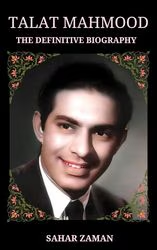
TALAT MAHMOOD: THE DEFINITIVE BIOGRAPHY / Author:Sahar Zaman / Pages: 480
source: http://www.theweek.in / The Week / Home> TheWeek / by Puja Awasthi / February 11th, 2024
Infrastructure of Compassion: A Forgotten Chapter of Bombay’s Past A story of faith, service, and a legacy that still lives
Bombay, at the turn of the 20th century, was a city in motion. Ships lined its docks, trains poured into its stations, and its markets drew traders from across the region. But alongside this restless movement of commerce was another, quieter stream of people – men and women who arrived not for trade, but for a journey of faith. They had come for Hajj.
From distant towns and villages across India, pilgrims travelled for days to reach the city. Many had never stepped beyond their regions before. They arrived with hope, with savings gathered over years, and with a deep sense of purpose. Yet, what awaited them in Bombay was not ease, but uncertainty.
By the early 20th century – around 1909, when the Musafirkhana was being conceived – Bombay had already become a major departure point for Indian pilgrims. Steamships operated by the British India Steam Navigation Company regularly carried Haj pilgrims from Bombay to Jeddah. Yet, despite the growing frequency of these voyages, space on ships was limited and uncertain. Pilgrims often had to wait in the city for days or weeks before securing passage, turning Bombay into a place of anxious waiting before a sacred journey.
Unlike today, when a pilgrim can contact an agent, arrange a visa, book accommodation, and board a flight directly to Jeddah or Madinah, the journey in those days began with waiting. There were no confirmed departures, no fixed schedules. Pilgrims first had to reach Bombay and then remain there – sometimes for days, often for weeks – until a ship became available.
In the crowded lanes near the docks, around Crawford Market and the Mandvi belt, they gathered in large numbers. Some found temporary shelter; many didn’t. Pathways became resting places. Open spaces turned into sleeping grounds. The city moved around them, but for them, time seemed to pause.
Contemporary accounts from the period speak of steamers departing from Bombay’s docks, carrying hundreds of pilgrims at a time – ships that symbolised both hope and uncertainty, as not everyone who arrived in the city could board them immediately.
Among them were the well-to-do, but also the poor, the elderly, and the vulnerable. Some had spent years saving for this journey. Others had come with the support of family and community. But once they reached Bombay, their differences faded. All of them shared the same uncertainty as well as hope.
In the language of faith, these pilgrims were known as ضیوف الرحمٰن — the Guests of Allah. Serving them was considered an honour, a noble act that carried both spiritual and social meaning. Yet here they were, waiting in conditions that did not reflect that dignity.
It was in these very streets that a man began to notice them. He was a businessman, part of Bombay’s vibrant trading world. Every day, he passed through these lanes on his way to work. At first, the sight may have seemed like a part of the city’s routine. But over time, it stayed with him – the faces, the waiting, the quiet endurance.
This was Mohammed Haji Saboo Siddique. He belonged to a family originally from Kutch, part of the Gujarati Memon community – widely known for its deep engagement in trade and its long-standing tradition of philanthropy. Like many from this community, his family had migrated to Bombay in search of opportunity, becoming part of the city’s growing commercial life while remaining rooted in a culture of giving. What he saw was not just a crowd. It was a need.
In the ethical framework of Islam, service to people is not seen as an optional virtue, but as a responsibility. The Prophet Muhammad ﷺ is reported to have said, “The best of people are those who are most beneficial to others.” This simple teaching has shaped generations of quiet, often unseen acts of service across communities.
For Saboo Siddique, the condition of these pilgrims was not just a social concern; it was a moral call. These were ضیوف الرحمٰن. To ease their hardship was not merely an act of kindness; it was a duty. And so, he chose to act.
In the early years of the 20th century, he set aside a large sum – five lakh rupees, a remarkable amount for that time – to build a facility that would offer pilgrims what they lacked: dignity. The land he selected was not by chance. Located near Crawford Market, close to railway routes and within reach of Bombay Port, it stood at the very point where the pilgrims’ journey paused.
On that land Saboo Siddique built a four-storey structure – the Haji Mohammed Saboo Siddique Musafirkhana. It was not built for grandeur. It was built for purpose.
The Musafirkhana provided rooms, basic facilities, and a place to pray. For pilgrims who had spent days in uncertainty, it offered relief. It allowed them to rest, gather themselves, and prepare for the journey ahead. Over time, it became known quietly as a gateway – a place from where many took their final step towards Makkah.
But what gave this institution its strength was not only its structure. It was the spirit with which it was built.
Rooted in sincerity – Ikhlas – the Musafirkhana continued to serve pilgrims year after year, decade after decade. Long after its founder had passed, it remained a place of care. It witnessed the journeys of thousands, and over time, countless pilgrims who passed through its doors.
Saboo Siddique’s vision, however, did not end with pilgrims. He understood that service must reach beyond a single moment. It must touch different stages of life. Alongside shelter, he invested in education – establishing what would later become the M.H. Saboo Siddik Technical Institute, where young people could gain skills and build their futures.
He also turned his attention to healthcare. Historical records connected to his legacy note that he built six maternity homes across Bombay to serve poor women who had little access to medical care. At a time when safe childbirth facilities were limited, especially for the poor, this was a deeply significant intervention. It reflected a broader understanding of social responsibility – one that included not only travellers and students, but also mothers, families, and the most vulnerable.
Over time, these maternity homes became part of the city’s public health system. They were taken over and managed by the Bombay Municipal Corporation, and records continue to reflect this legacy. One such institution, the Haji Mohammad Haji Saboo Siddiqui Maternity Home, remains listed in municipal records in Prabhadevi. Another, at Imamwada, later developed into the M.H. Saboo Siddique Maternity & General Hospital, continuing to serve the public.
This continuity gives his work a rare depth. The same man who cared for pilgrims on their way to a sacred journey also cared for mothers bringing new life into the world. The same vision that built a shelter also built pathways for education and health.
As the years passed, the nature of travel changed. Ships gave way to flights. Systems became organised. Pilgrims no longer needed to wait in the same way. The long pauses that once defined the journey disappeared.
The Musafirkhana, in its original role, was no longer essential. But it did not fade away. The sincerity with which it had been built gave it a new life. The same building that once sheltered pilgrims began to host students – young men who had come to the city in search of education. Their journey was different, but their need was just as real.
In this transformation lies the true strength of Saboo Siddique’s legacy. He did not build for a moment. He built with intention.
Very little is known about his personal life. His family, his private world, remain largely absent from public records. But perhaps that absence is itself meaningful. It reflects a time when people were remembered not for what they owned, but for what they gave.
His institutions became his story. In a city where land was valuable and opportunity abundant, he chose to create something that would serve others – quietly, consistently, and without expectation.
The journeys have changed. The waiting has ended. But the intention remains. And it continues to serve.
source: http://www.radiancenews.com / Radiance News / Home> Focus / by Mohammed Talha Siddi Bapa / May 04th, 2026
Banner image: Images courtesy of Parveen Shaikh/Whitley Award.
Scientist Parveen Shaikh has been awarded a 2026 Whitley Award by the UK charity Whitley Fund for Nature, recognising her efforts to protect the endangered Indian skimmer along India’s rivers. The award comes with funding to expand her community-led conservation model from Chambal river to Prayagraj, where the Ganga and Yamuna rivers converge.
The Indian skimmer is identified by its vivid orange bill and its habit of flying low over water, skimming the surface to catch fish. India holds over 90% of the world’s population of the bird, with roughly 3,000 individuals, making the country critical to the species’ survival. The birds breed on seasonal sandbars and mid-river islands, making their nests vulnerable to changes in river flow, predators, and human disturbance.
When Shaikh, who works with the Bombay Natural History Society, began her “Guardians of the Skimmer” initiative on the Chambal river, the local Indian skimmer population stood at around 400 individuals in 2017. As of 2025, the population has grown to approximately 1,000. Nest survival has nearly doubled, rising from 14 percent to 27 percent, a direct result of community involvement and scientific monitoring.
“Local guardians help identify new sandbars, monitor nests, and prevent disturbance during the breeding season. Some now proudly refer to the skimmers as “our birds,” which reflects a growing sense of ownership,” says Shaikh.
With the Whitley Award funding, her team will now expand to Prayagraj in Uttar Pradash, a place of cultural significance and also home to breeding populations of Indian skimmers, river lapwings, and little terns. The challenges here include heavy boat traffic, fishing activity, religious practices along the riverbank, and urban pollution all increase pressure on nesting colonies. The team plans to appoint new local guardians, install predator-proof fencing, and use GPS mapping for real-time nest monitoring.
The Whitley Award, also known as the Green Oscars, is given annually to those achieving exceptional success in grassroots community-led protection for threatened species and habitats.
This year, the award includes two Indians among the six winners. In addition to Shaikh, the other winner from India is Barkha Subba who is leading the first grassroots movement to protect the Himalayan salamander and its fragile wetland habitat in the Darjeeling Himalaya, West Bengal.
Read about Parveen Shaikh’s work in Chambal river and the community champions that she works with in this 2021 story on Jagdish, one of the nest guardians.
source: http://www.india.mongabay.com / Mongabay / Home> Global> Beyond Protected Areas / April 30th, 2026