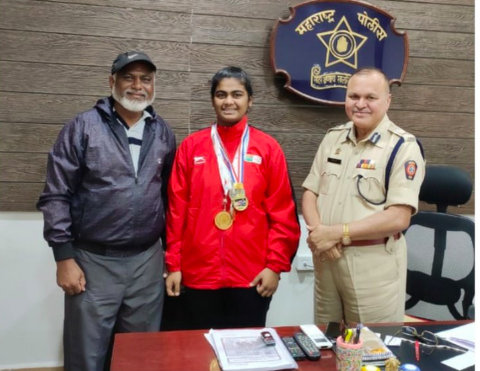
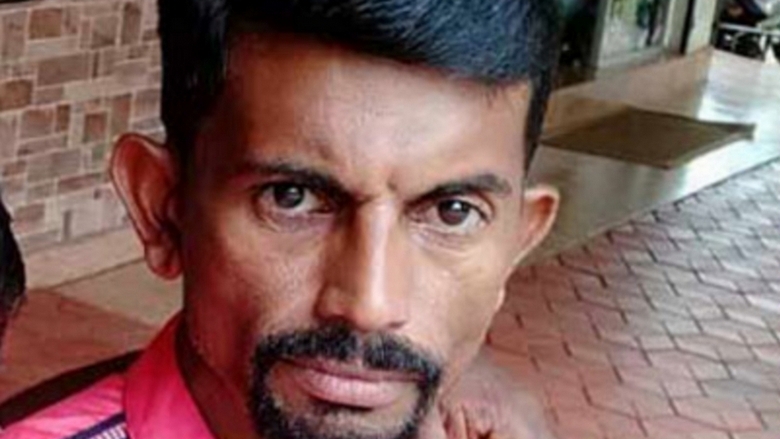
Akram Khan, Alfiya Khan along with Joint Commissioner of Police Ravindra Kadam
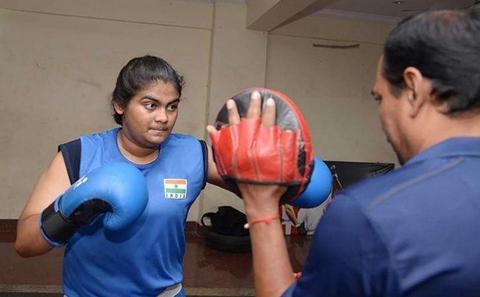
Nagpur Police constable Akram Khan’s 16-year-old daughter Alfiya Khan Pathan won the bronze medal in the ongoing 80+ kg category at the 3rd Nations Cup International Boxing Championship.
City’s only international boxer, Alfiya had earlier won a silver medal in the previous edition. The championship took place in Serbia on Sunday night. . Alifiya defeated Russian boxer Vorontsova Valeriia and clinched the third spot.
Alfiya Khan Pathan (Photo source: facebook)
The Indian team won four gold, four silver and four bronze medals and clinched the runners-up trophy. Also, Tamanna (48kg), Ambeshori Devi (57kg), Preeti Dahiya (60kg) Priyanka (66kg) bagged the gold medals.
In 2018, the international boxer during the Khelo India games had created history in Nagpur division after bagging the top spot.
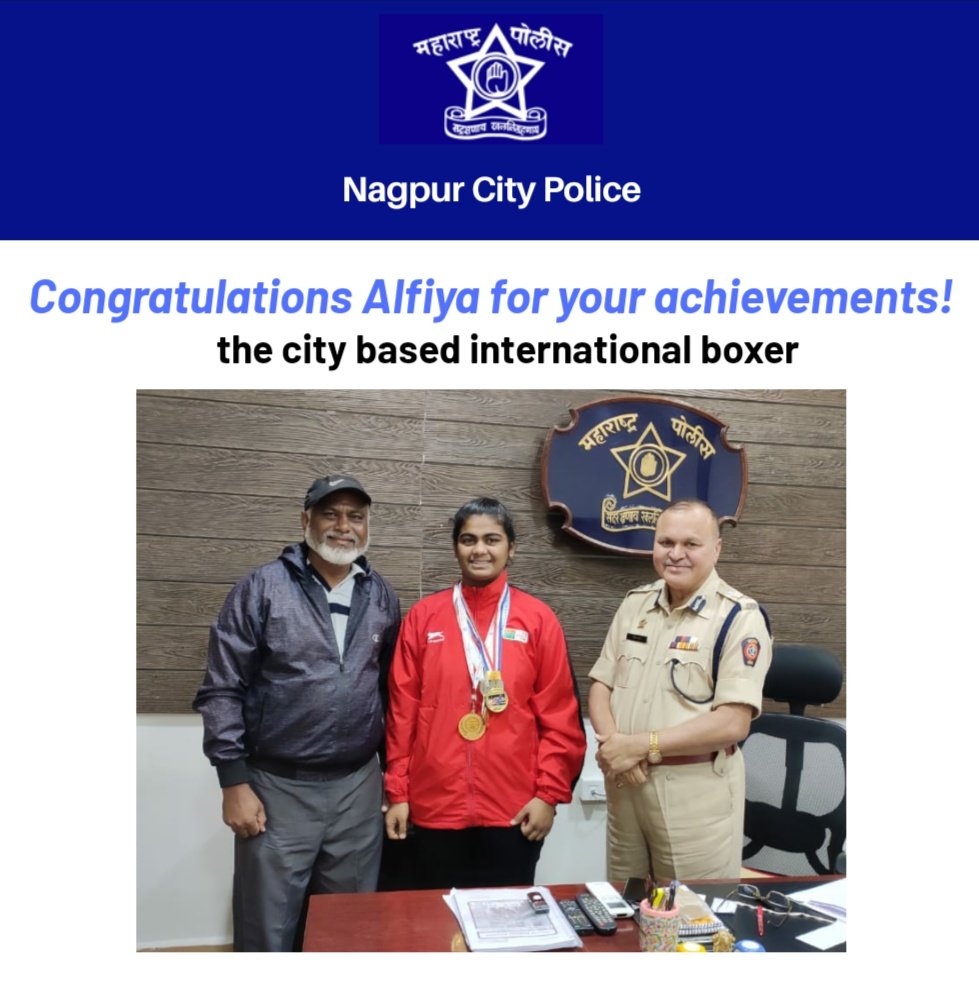
Nagpur Police on its official Twitter handle posted,”At 16, Alfiya Khan Pathan, daughter of Police Constable Akram Khan Pathan, is leaving everyone in awe, with her commendable performance in the boxing ring. Nagpur Police congratulates Alfiya for her achievements.”
Nagpur City Police
✔@NagpurPolice
At 16, Alfiya Khan Pathan, daughter of Police Constable Akram Khan Pathan, is leaving everyone in awe, with her commendable performance in the boxing ring.
How two rulers with a common name left a rich history and culture for its people but one is more renowned than the other.
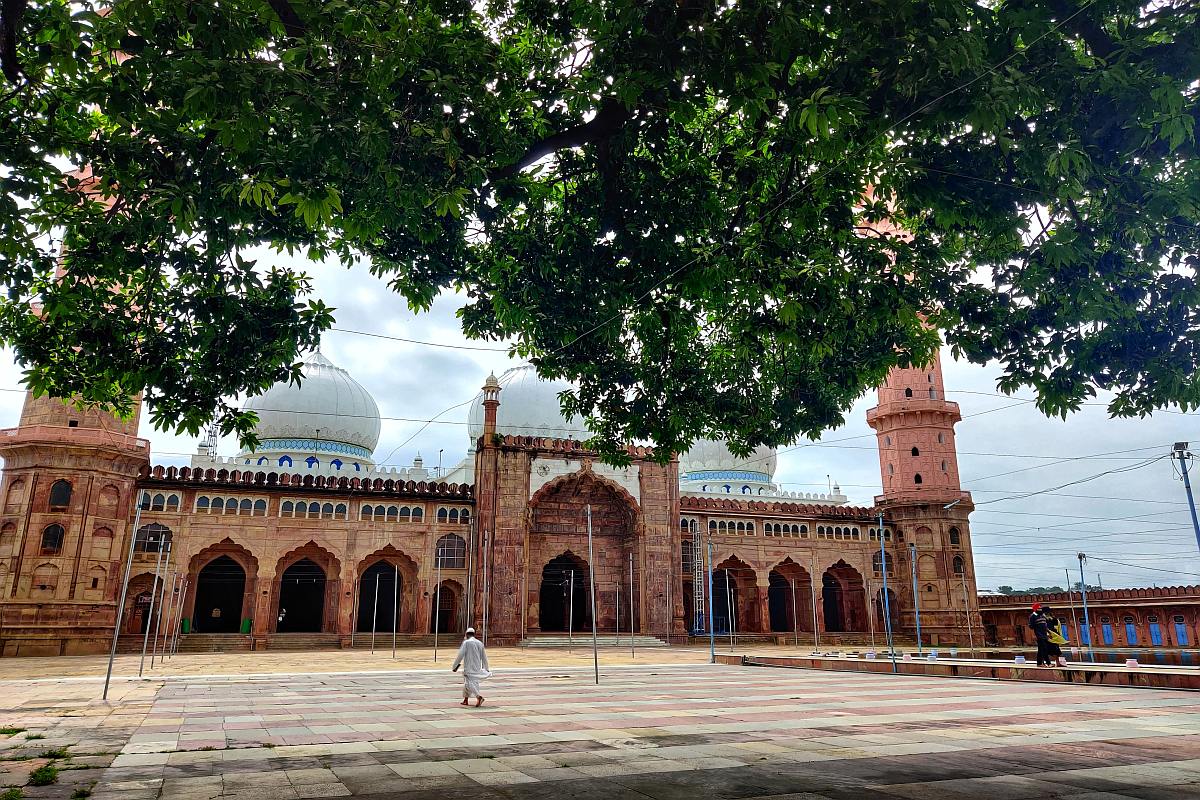
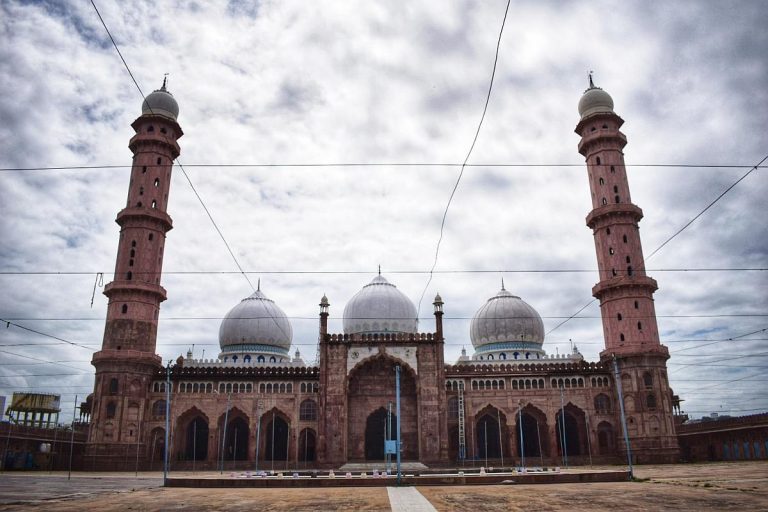
Taj-ul-Masajid, Bhopal (Photo: SNS/Aena Thakur)
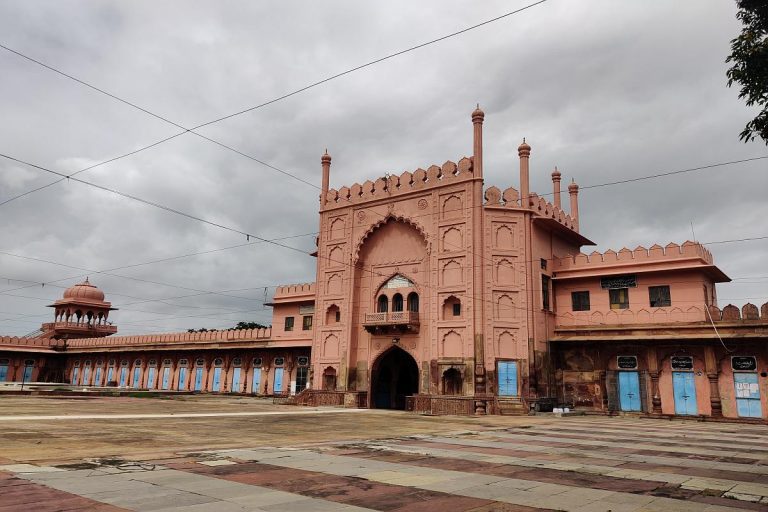
In the heart of Madhya Pradesh’s capital city, Bhopal, resides Taj-ul-Masajid which literally translates to the ‘crown of mosques’. The mosque was intended to be the largest mosque in the country and was based on the design of Delhi’s Jama Masjid. In a town called Woking in England stands a mosque called Shah Jahan.
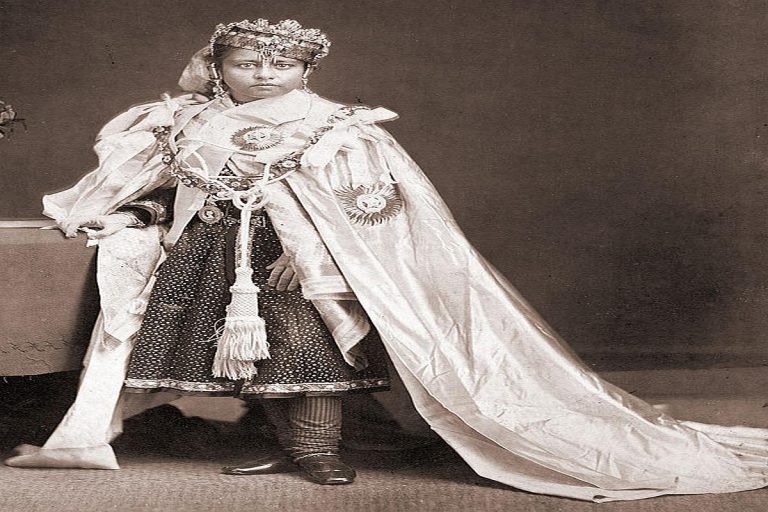
The common denominator between these three mosques is the name Shah Jahan. The fifth Mughal emperor Shah Jahan built the Jama Masjid in Delhi and the third female ruler of Bhopal, Shah Jahan Begum built Taj-ul-Masajid of Bhopal. The Bhopal’s matriarch went a step ahead as she also funded the construction of England’s first Mosque in 1889.
Taj-ul-Masajid (Image: SNS/Aena Thakur)
In the 19th century when India was a British colony, the princely state of Bhopal had a string of female rulers for roughly 107 years. The city was founded in 1707 by Afghan ruler Dost Muhammad Khan. Surrounded by Rajputs in Rajasthan and Marathas in Maharashtra, Bhopal was a vulnerable state yet the female rulers with their loyal allegiance to the British rule survived the turbulent times.
The female dynasty of Bhopal started with the death of young Nawab Nazar Muhammad Khan. His 18-year-old wife Qudsia Begum decided that the legacy of her family shall continue and declared her 15-month-old daughter Sikandar as the rightful heir of the state. In 1819, Qudsia Begum became the first Muslim female who defied the veil and became the ruler of Bhopal. Her rule was legitimised by the British and the clergy.
Both Qudsia (1819-37) and Sikandar (1847-68) were known to be tough rulers who strengthened Bhopal’s military and trained themselves to fight. However, it was the third matriarch of Bhopal, Shah Jahan Begum who brought in the period of flourishing art and culture just like her male Mughal namesake.
Unlike Qudsia and Sikandar, Shah Jahan was not known for her tough training for battles. Shah Jahan followed the system of veil and was more interested in literature, poetry, and arts.
Shah Jahan Begam of Bhopal (Image: Wikimedia Commons)
Interested in Urdu and Persian poetry, Shah Jahan Begum also offered state pensions to poets like Amir Minai, a contemporary of Mirza Ghalib.
Shah Jahan Begum ordered that a dictionary of select terms in Hindustani, Persian, Arabic, Sanskrit, English, and Turkish was compiled to facilitate translation of literature between these languages. A poet herself, Shah Jahan Begum also patronized a group of female poets. According to Siobhan Lambert-Hurley’s book Muslim women, Reform and PrincelyPatronage, these gifted women included “Hasanara Begam ‘Namkeen,’ author of a diwan and two prose publications, Munawwar Jahan Begam and Musharraf Jahan Begam, the daughters of Nawab Mustafa Khan ‘Shefta,’ and several others.”
In her book, Siobhan Lambert-Hurley also mentions, “Shah Jahan’s interest in this area was so great that she charged a male poet at her court, Abul Qasim ‘Muhtasham’, to devote himself to collecting an anthology of female poets writing in Persian. Entitled Akhtar-i-taban, it publicized the work of 81 poetesses when it was printed in Bhopal in 1881 in dedication to the ruling Begam.”
Her ambitions for grand architecture is evident from the fact that her daughter Sultan Begum in her biography mentioned that she has lost count of the number of palaces and buildings, her mother made. Some of the prominent buildings that still remain are Taj-ul-Masajid, Taj Mahal, Ali Manzil, and Benazir.
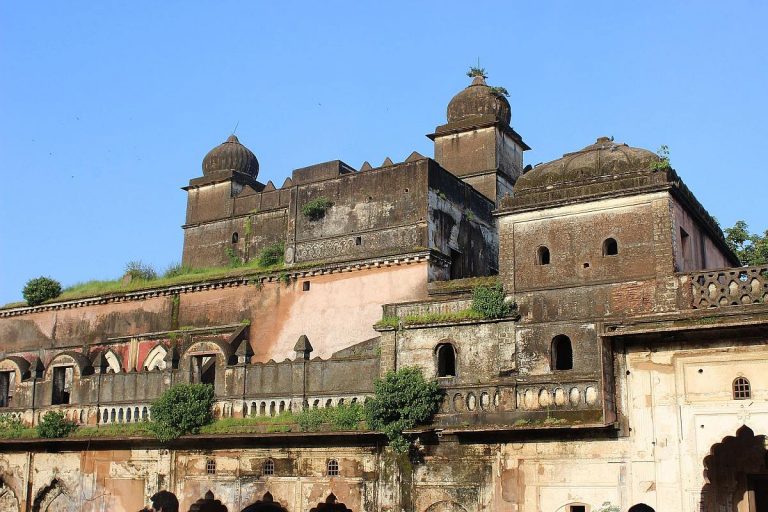
Taj Mahal, Bhopal (Image: Wikimedia Commons)
Unlike Mughal emperor, Shah Jahan’s Taj Mahal which is a tomb, Bhopal’s Taj Mahal was a palace for the Begum. Shah Jahan Begum also helped orientalist and scholar Dr Gottlieb Wilhelm Leitner in constructing England’s first mosque which is also called the Shah Jahan mosque.
The similarities do not stop here. Just like the Mughal emperor built a planned city named Shahjahanabad, the Begum too built a neighbourhood with the same name. Hurley mentions in her book, “Shah Jahan was also responsible for building an entirely new neighbourhood of homes and offices within her capital that was predictably named Shahjahanabad. Unlike the version at Delhi, however, it was laid out on a uniform plan in-keeping with the latest ideas of town planning in Britain.”
Taj-ul-Masajid, Bhopal (Image: SNS/Aena Thakur)
Shah Jahan Begum of Bhopal encouraged female participation in education, religion, and culture. She was responsible for setting up institutions for female education, she reserved areas in mosques for veiled women to pray on special occasions, she also constructed a Pakka bazaar exclusively for women.
Shah Jahan Begum’s daughter Sultan Jahan Begum was the last Begum of Bhopal whose reign ended in 1926. The reign of female rulers in Bhopal broke stereotypes and brought in various reforms in the princely state. Even though women still continue to fight for their rights it should not be forgotten that the Begums did assert their authority in the 19th century and it can be done again.
source: http://www.thestatesman.com / The Statesman / Home> Features / by Aena Thakur, New Delhi / August 20th, 2019
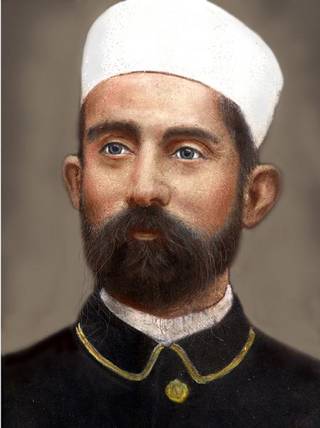
Torch bearer Syed Husain Bilgrami, Special arrangement
Apart from holding high ranking positions in Nizam’s dominion, Syed Husain Bilgrami was also made a member of the Secretary of State’s Council, in London.
Nawab Imad-ul Mulk is a familiar name in the annals of Hyderabad’s 19th century history. He was a noted educationalist, civil servant, prominent administrator and a noted scholar in the Nizam’s dominions. He was private secretary to Salar Jung I, the then Prime Minister of Hyderabad State; also a tutor and conscience keeper of the Nizam — Mahboob Ali Pasha — whose government he served with great distinction. For his dedication for work, strength of character and extraordinary mastery over English language and literature, the British government also utilised his services on many occasions. He had the rare honour of having served as member in the Secretary of State’s Council .He also had the distinction of having met along with Salar Jung I, Queen Victoria at Buckingham Palace in London.
Nawab Imad ul Mulk was the title that the Nizam bestowed in recognition of the services he rendered, with which he was well known in Hyderabadi circles; but his actual name was Syed Husain Bilgrami.
Syed Husain Bilgrami was born in 1844 at Gaya, where his father held high position under the East India Company administration. He was educated at the Presidency College, Calcutta from where he graduated in English literature. In 1868 he became a Professor at the Canning College in Lucknow before joining the service of the Nizam of Hyderabad in 1873. It was the time when Salar Jung I the Prime Minister of Hyderabad state was looking for English educated young men to be appointed in Hyderabad to modernise the administration and to improve educational facilities in the dominions. In 1872, Salar Jung while on a visit to Lucknow, met young Syed and was attracted to his intelligence and demeanour. He was invited to join the Hyderabad service, which he did the next year. For his impeccable English, both spoken and written, Syed Husain was taken as the private secretary to Salar Jung. The rest of his long career was irrevocably bound with Hyderabad.
The story goes that when Salar Jung asked Syed where his family originally hailed from, he answered, ‘Bilgrami’ (in the then United Provinces). The Prime Minister in a lighter vein suggested that Bilgrami could as well be added to his name and thus he became Syed Husain Bilgrami.
Bilgrami’s rise to prominence in Hyderabad was due to his sheer work as an educationalist. As the first Director of Public Instruction (1875- 1902) he initiated several reforms to improve the educational set up in the state. He was instrumental in the establishment of the Nizam College with English medium, with Dr Aghoranath Chattopadhyay, (father of Sarojini Naidu) as its first Principal. It is said that Bilgrami was the person who discovered the genius in Chattopadhyay, the first Indian to obtain D. Sc in Biochemistry from Edinburgh University. The College was affiliated to Madras University as there was no University in the Hyderabad dominions by then. Bilgrami was for some years taken by the government of India, as a member of the Universities Commission, a forerunner of the present UGC. In Hyderabad, he established Madarsa- i- Aizza, a school exclusively for the children of the nobles with a view to make them cultured and more responsible towards society. A crowning achievement of Bilgrami in the furthering of education in Hyderabad was the establishment of a girls school in 1885 with his personal funds. This was hailed as one of its kind in the country as the girls were taught besides usual subjects, needle work, household duties etc. English, besides Urdu and Arabic, was made the medium of instruction. To make girls from traditional families attend school, bullock carts with curtains were arranged to fetch them to school and back home.
In Hyderabad state, with a view to foster industrial growth, Bilgrami established three Industrial Schools at three important towns in the state, Aurangabad, Warangal and Hyderabad, which later grew to be Engineering Colleges. The State Central Library in Hyderabad also owes its establishment to the untiring efforts of Syed Husain Bilgrami.
Bilgrami was also a prolific writer in English and his books include Historical and Descriptive Sketches of His Highness, the Nizam’s Dominions, in 2 volumes, and A Memoir of Sir Salar Jung I. Besides, he had also composed several poems.
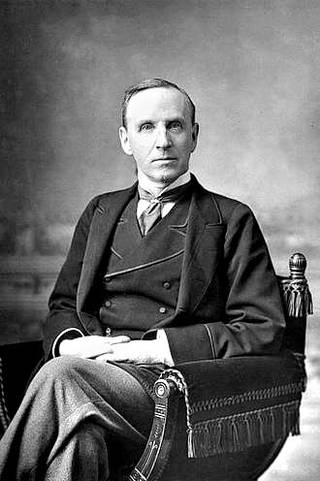
Lord Morely, the Secretary of State for India, who took Bilgrami as a member of his council.
The career graph of Syed Husain Bilgrami reached its zenith when he was made a member of the Secretary of State’s Council, in London. After the Liberal Party came to power in Great Britain in 1906, the new Secretary of State for India, Lord Morley, along with Lord Minto, the Viceroy of India wanted to initiate certain administrative and legislative reforms which ultimately resulted in the passing of India Councils Act of 1909 ( popularly known as Morley-Minto Reforms). For the task of formulating the reforms, Morley took two Indians as members to his council. The first was Syed Husain Bilgrami, who from the days of his first visit to England accompanying Salar Jung way back in 1876, had maintained friendship with several high ranking British political leaders of his time like Disraeli, Lord Salisbury, Gladstone etc. The other Indian appointed to the council by Morley was Krishna G Gupta, a senior ICS officer. Bilgrami thus played a key role in the passing of the first ever Constitutional Act of 1909.
Indian ayahs
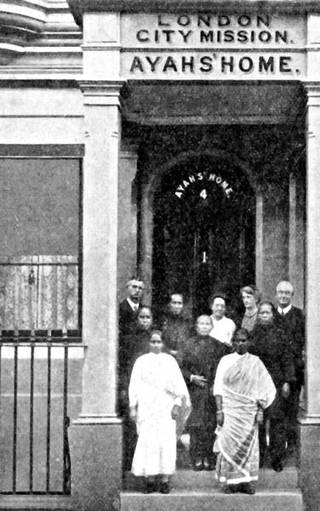
As a member of the Council of the Secretary of State for India, Bilgrami once made history by protesting the pitiable and callous attitude to Indian ayahs and other caretaker women who had been abandoned by their British employers. Many British officials in those days, employed Indian ayahs to look after their children on the long voyage from India to Britain and the employer was to provide for their passage home. But many a time those ayahs were dismissed once they reach Britain and left to fend for themselves. Such conditions led even to the founding of a ‘Ayahs Home in East London’, where such abandoned destitute ayahs were temporarily provided with food and shelter.
Ayas House / special arrangement
In May 1908, an Indian ayah Meera Sayal from Bombay arrived in London with a British family that was returning home. But she was abandoned by the family on the busy Kings Cross road in Central London, with a mere one pound in hand. The matter was brought to the notice of the India Office in London by the manager at Ayahs Home. The British authorities were of the opinion that Indian ayahs had no legal remedy in the absence of any written agreements that they would be taken back to India and quoted a precedent when the India Office in London in a similar case in 1890 had declined to take any action.
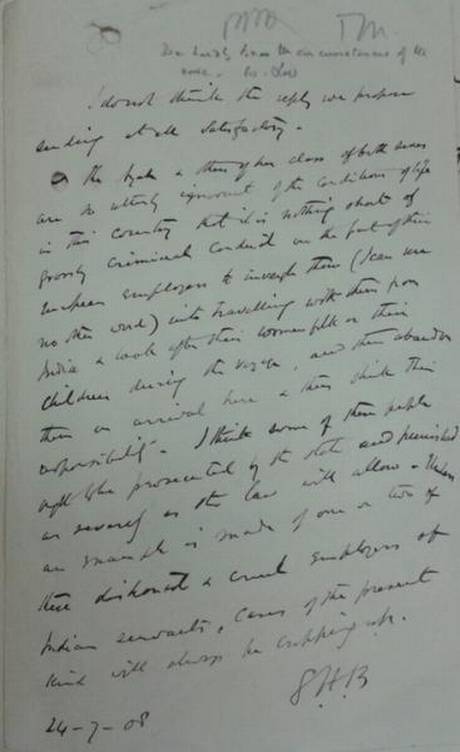
The protest note Bilgrami wrote as a member of the council of Secretary of State for India.
But Syed Husain Bilgrami, as a member of the Secretary of State’s Council felt hugely outraged and immediately wrote a strongly worded resentment on “the dishonest and cruel European employers inveighing Indian servants to travel with them and abandoning them on arrival in Britain”. This bold stand of Syed Husain Bilgrami reflected how he was a man of lofty principles and high ideals with a strong sense of duty and impeccable uprightness. This letter dated July 14, 1908, had been quoted in many future complaints of the Asian caretakers against British employers that ultimately led to the betterment of Indian ayahs going with British families to London.
After returning from England in 1909, Bilgrami spent his retirement in Hyderabad in a villa on the slopes of the iconic Naubath Pahad, overlooking the waters of Hussain Sagar and died in 1926, aged 82. Bilgrami had four sons and all of them were brilliant as they excelled in their different chosen fields. Nawab Sir Mehdi Yar Jung Bahadur, the Education and Finance member in Nizam’s administration and who led a delegation to the Round Table Conference in London in 1930 -31, as a representative of the Nizam, was one of Bilgrami’s sons. Yar Jung as the Vice-Chancellor of Osmania University, had hosted the 5th session of the Indian History Congress (IHC) in 1941. Today Bilgrami’s progeny has a network that is spread across all the continents. Prof. Akeel Bilgrami, the California=based renowned academic intellectual, is one among the high-profile, large Bilgrami family.
source: http://www.thehindu.com / The Hindu / Home> Society> History & Culture> Hyderabad Heritage / by K S S Seshan / August 19th, 2019
The award will be conferred on him by the President of India on August 29
In 2018, Mirza won two silver medals at the Asian Games in Jakarta
Bengaluru :
Bengaluru’s Fouaad Mirza is currently on cloud nine. After having brought laurels to the country with two silver medals in the 2018 Asian Games, the equestrian has now made it to the list of Arjuna awardees this year. The award will be conferred on him by the President of India on August 29. Speaking to CE, the 27-year-old expressed his elation, saying, “I did not believe it at first, it took some time for me to wrap my head around it. This is a true honour.” A dedicated sportsman, Mirza, who is in Germany, said his current focus is on training but upon returning to the country, his focus will be on the award.
In 2018, Mirza ended the country’s 36-year long wait for an equestrian win by bagging two silver medals at the Asian Games in Jakarta. “A lot of hard work went into achieving this feat. One has to be physically prepared, especially for a lot of hours on the saddle and in training. We started training for the Asian Games a year in advance in order to ensure smooth execution,” he recounted.
Taking us back to where it all began, Mirza recalled his childhood as the time when things began to take shape. An avid animal lover, Mirza would spend ample time with dogs, cats and other four-legged creatures. His father, Dr Hasneyn Mirza, who is a veterinarian and specialises in horses, had a great impact on him. At the age of five, Mirza started to ride at The Embassy Riding School as a hobby but little did he know that this hobby would lead to a competitive calling.
The biggest difference over the years, however, has been the upgrade in the infrastructure of training facilities and on the young talent in the field.Talking about his next big challenge, Mirza says he has blinkers on and is focused on the 2020 Tokyo Olympics, where he aims to qualify and represent the country.
source: http://www.newindianexpress.com / The New Indian Express / Home> Cities> Bengaluru / by Muneef Khan / Express News Service / August 20th, 2019
A member of India’s Davis Cup teams from the late 1950s to the mid 1960s, Ali holds an enviable 9-2 win-loss record in the tourney – rated as the World Cup of the sport.
Akhtar Ali (R) at a club event in Kolkata. (Photo | Twitter)
Kolkata :
Notwithstanding his failing health and advanced age, India’s celebrated tennis player and legendary coach Akhtar Ali still keeps a keen eye on the courts of the eastern metropolis to spot and guide budding talent. Now a 80-plus veteran, Ali leads a simple life, spending time with his grandchildren and has little hesitation in saying: “I have no regrets”.
A member of India’s Davis Cup teams from the late 1950s to the mid 1960s, Ali holds an enviable 9-2 win-loss record in the tourney – rated as the World Cup of the sport. Proficient in both singles and doubles, he has played alongside the country’s legends like Ramanathan Krishnan, Naresh Kumar, Premjit Lall and Jaidip Mukerjea.
Later, as a coach, he guided the creme de la creme of Indian tennis — Ramesh Krishnan, Vijay Amritraj, Anand Amritraj and Leander Paes. Even Sania Mirza once publicly expressed her indebtedness to Ali for having set her on the right track during her formative years.
As a player, Ali grabbed the limelight in 1955, when he first claimed the Junior national title, and continued his wonderful show to reach the semi-finals of the Junior Wimbledon.
The Davis Cup stints till bring tears to his eyes as Ali turns emotional and nostalgic.
“In 1964, I went to Lahore to play the Davis Cup. Myself, S.P. Misra and Gaurav Misra. Four matches we won, one match could not be completed due to bad weather,” he recalled during an interview with IANS.
But it is India’s 3-2 victory over Brazil in 1966 on his South Club home ground that Ali cherishes the most, though he did not get to play any of the matches.
“The Davis Cup was a big thing in those days. I was a member of the Davis Cup squad. When India beat Brazil, that was a big moment and that is the lasting memory I have. That was the first big tie we won and we reached the final,” he said.
The Brazil victory and his son Zeeshan Ali’s success as both a tennis player and coach keeps coming back as one converses with him.
“I have no regrets. I am very attached with the 1966 Brazil win. My son is also a national champion and Davis Cup coach. There is no other family in the world which has a father-son duo to have played and also coached Davis Cup teams”.
In fact, the International Tennis Federation confirmed this in 2013.
Talking about his success as a coach, Ali said: “I enjoy coaching and I work hard. I have produced the maximum national champions and Davis Cup players. I also coached Belgium and Malaysia. I went to the best coaches to learn,” said Ali, who got the coveted Arjuna Award in 2000.
He leads a disciplined and routine life in a nicely done-up South Kolkata flat.
“After I wake up, I do my namaaz. Then I go to the club (South Club). I go to the Saturday Club also. Then I come home, have my lunch and if there is bank work, I do that.
“I lead a simple life. I go to South Club again and help the players. I am not coaching anybody at the moment because I am not well. But I help BTA (Bengal Tennis Association) in finding promising players. That keeps me busy. I love coaching. I enjoy it.
“I go to bed early. Sometimes my grandchildren come over and I spend time with them. It’s good fun,” he recalled, satisfaction ringing in his voice.
However, notwithstanding his high spirits, Ali has recently had his bouts of illness.
“I had lost eight kilos. My hand was shaking and it was tough for me. I took a lot of medicine. I saw the doctor. Doctor told me this was due to old age.
“I am much better now. I am pulling on. I am fit. I train light and can run a little bit” he said.
India’s recent performance in Davis Cup, a tournament in which the country finished runners-up thrice in the past, may not be that noteworthy, but Ali is optimistic.
“We have talented youngsters, but they have to work very hard,” he maintained.
source: http://www.newindianexpress.com / The New Indian Express / Home> Sport> Tennis / by IANS / August 18th, 2019
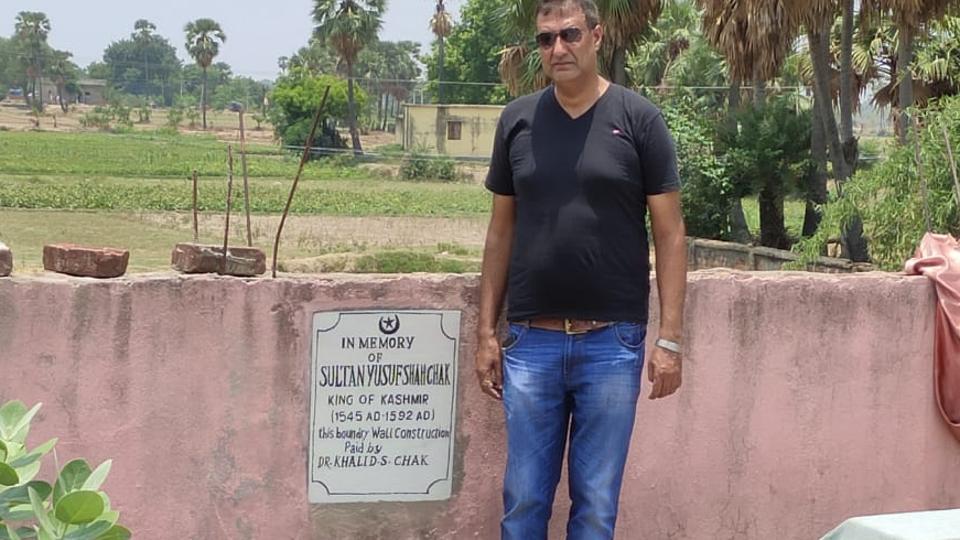
Yusuf Shah Chak, the last independent Muslim Ruler of Kashmir Valley, is buried in Nalanda and his tomb is in disrepair and unprotected.
Yasir Iqbal, a descendant of Yusuf Shah Chak, at the tomb of Kashmir’s last Muslim ruler’s grave in Nalanda. (HT Photo )
With the Centre revoking Article 370 which gave special status to J&K, the Kashmir Valley is once again in focus. But Yusuf Shah Chak. the last independent Muslim ruler of the Valley, has remained obscured and unknown for a long time.
Chak is buried in Nalanda and his tomb is in disrepair and unprotected.
Chak was exiled to Bihar by the Mughal emperor Akbar. The area where he had settled along with his family and relatives in Biswak village in Nalanda and also maintained a cavalry force of 500 horses, was later known as Kashmiri Chak. Though the exiled Kashmiri ruler died in Odisha in 1592, his body was brought to Bihar and has been lying buried along with the tombs of his wife, sons and other relatives at the graveyard at Biswak near Kashmiri Chak.
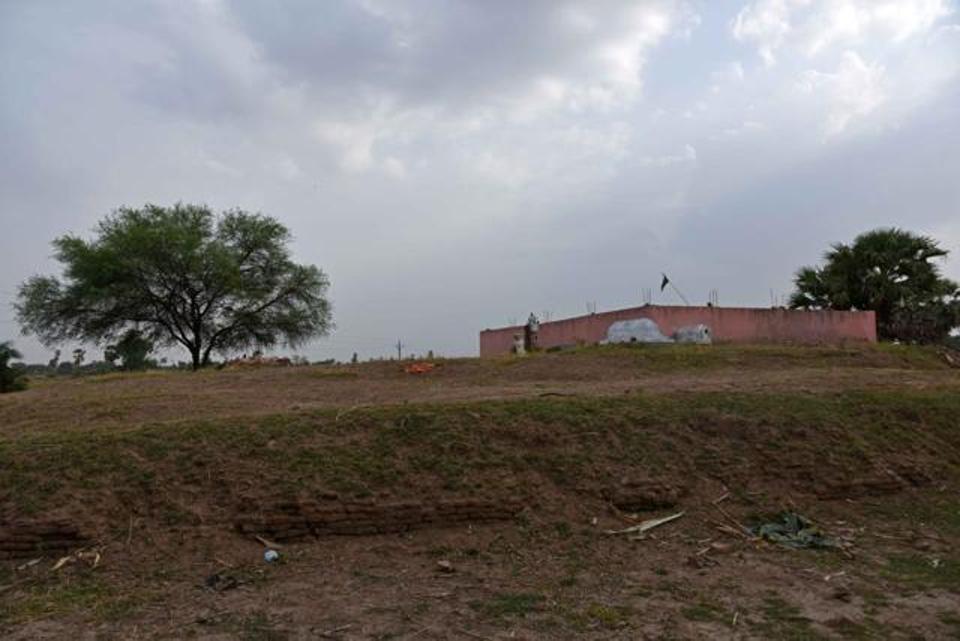
Though his Mazaar is encircled with boundary wall, the land outside this wall at the cemetery is open and has remained prone to encroachments in the past. Some concrete structures and thatched roof hutments too have come up around its periphery.
Earlier, some locals erected a boundary wall around his Mazaar, but the entire area of the cemetery outside this wall is open to encroachment.
A view of the ‘mazar’ of Yusuf Shah Chak, the last Muslim ruler of Kashmir Valley. ( HT Photo )
Recently, Yasir Iqbal, a descendant of the Chak ruler’s relative, wrote a letter to the Minority Welfare Department, Bihar, drawing the attention towards the increasing threats of encroachments at the site of the cemetery .
He has made an appeal to take steps to stop encroachment and has also requested for the boundary wall at the cemetery. In the letter, Iqbal also made requests to preserve this piece of history and to take initiatives to tap tourism potential of the site.
“The minority welfare department has forwarded the request letter to the department concerned which is responsible for creating the boundary walls at graveyards and has directed to take actions as necessary,” SI Faisal, special secretary cum director, minority welfare department, said.
The site has a great tourism potential and it can be tapped. “But it’s the domain of the tourism department. They should take initiatives in this direction and should develop it,” he said.
Yasir Iqbal said many Kashmiris have been eager to come here to pay tribute to their last ruler. “Many intellectuals have also been coming here, but the place lack even basic infrastructure. Even the road to Kashmiri Chak village was developed in 1977 when Sheikh Abdulla, the prominent leader of Kashmir had arrived to witness Yusuf Shah’s tomb” he said. There is also no place at the village to stay. “You have to find the accommodation whether at Islampur or at Rajgir,” he said.
However, the biggest concern has been encroachment of the land. “The cemetery is spread over five acre land area at Biswak and over one acre land at Kashmiri Chak. But the tombs of Yusuf Shah, his wife and sons for decades remained unknown. There was almost a jungle around it and the tombs were hardly visible. Then we got it constructed a few years ago. But the area outside is still open and is being encroached inch by inch. Some concrete structures and thatched roof hutments have also come up on its border areas,” he said.
Yusuf Shah Chak ruled Kashmir from 1579 to 1586. In 1579 he was deceitfully imprisoned by the Mughal emperor Akbar, but was later released and was exiled to Biswak area of Bihar.
“He had a Mansabdaari of 500 horses. In fact, his love and knowledge of art and literature had impressed Mughal Badshaah and that became the reason for his release. He had married Habba Khatoon, the legendary poetess whose verses are still sung by the locals in Kashmir,” he said.
source: http://www.hindustantimes.com / Hindustan Times / Home> India> Cities> Patna / by Reena Sipan, Hindustan Times, Patna / August 07th, 2019
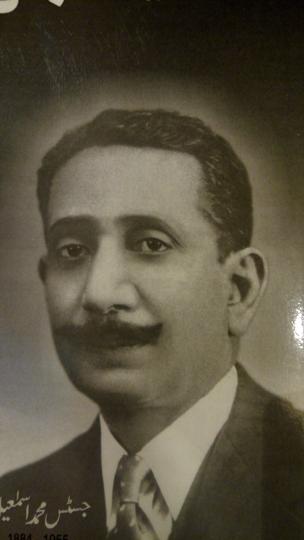
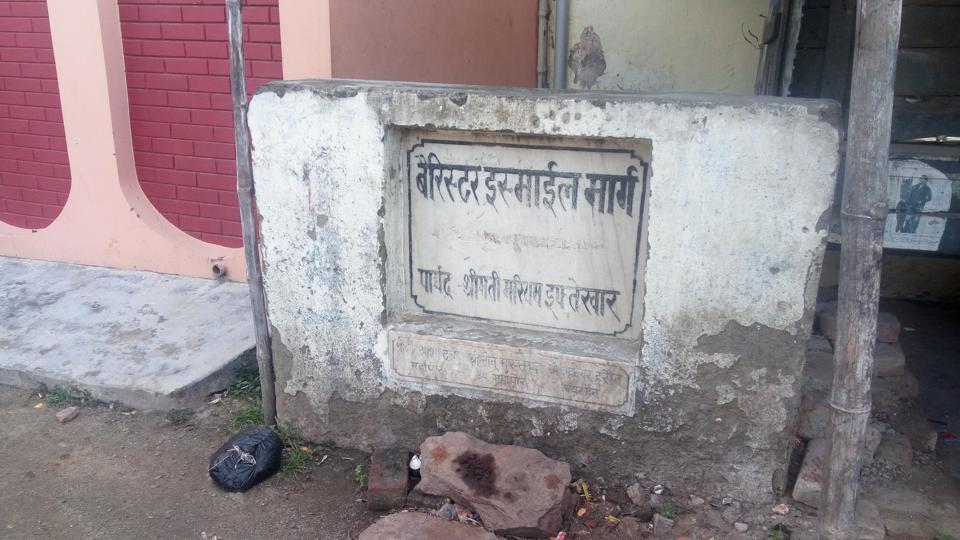
An old, white building located in Unchwa area and a road named after him are just a few markers left to remind posterity of justice Mohammad Ismail, who agreed to serve as Pakistan’s first high commissioner in India but on the condition that he would discharge his duties as an Indian citizen.
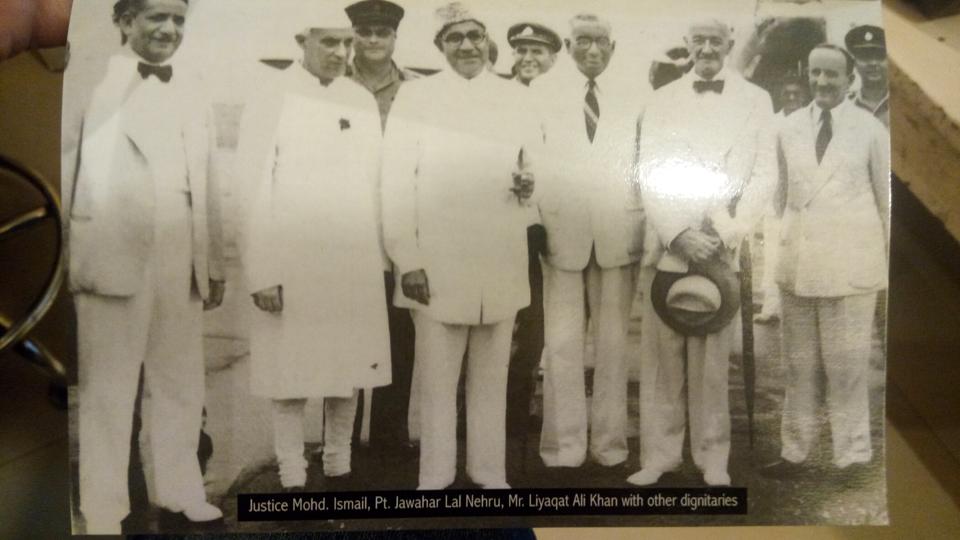
Pakistan PM Liaquat Ali Khan insisted that justice Ismail serve as high commissioner but the offer was only accepted when Indian PM Jawahar Lal Nehru and his Pakistan counterpart agreed to accept the condition, which showed the immense love of justice Ismail towards his country.
Born in Gorakhpur in 1844, justice Ismail, also held several eminent posts including Chairman of Gorakhpur Municipal Board between 1915 to 1932, besides acting as government pleader.
“Yes, justice Ismail was the first High commissioner of Pakistan in India. Those days, instead of embassies there were offices of the high commissioner in all Commonwealth countries,” explained DDU Gorakhpur University Modern History professor Chandra Bhushan Ankur.
The road named after justice Ismail
Justice Ismail’s nephew and city-based physician, Aziz, who has preserved rare photographs of justice Ismail with dignitaries including Nehru, Sarojni Naidu, and others, said “Since Ismail was well known to leaders of both countries, the Pakistan government approached him to take charge as Pakistan’s high commissioner in Delhi. Considering the prevailing situation in the subcontinent after partition, he agreed to function as their high commissioner on condition that he shall not relinquish his Indian citizenship and the proposal was accepted by both countries and he remained the sole example in international diplomatic history to have acted as High commissioner of one country while being the citizen of another.
“It’s important to note that after his tenure came to end, Pakistan further proposed his name as its representative in the United Nations but justice Ismail declined the offer as it would again require him accept Pakistani citizenship, which he didn’t like. He loved his motherland so he declined the offer and came back to Gorakhpur in 1953. He died in Unnao and was buried in Gorakhpur.”
Justice Imail , Pt Jawahar Lal Nehru and Pakistan PM Liaquat Ali Khan
Aziz further said: “It was then during this period that Ismail managed the affairs of refugees for the safe passage and was instrumental in bringing together the PMs of both countries to pen the Nehru-Liaquat Pact, a bilateral treaty which allowed refugees to return and dispose of their property, abducted women and looted property to be returned and most importantly guaranteeing the rights of minorities.
In 1922, during the freedom movement, when Nehru was arrested from Gorakhpur, justice Ismail as government prosecutor politely refused to pursue the case against the latter, citing his close relationship with the Nehru family. Years later, when Nehru Became PM, he proposed to name Lal Diggi Park after justice Ismail but that couldn’t happen.
Justice Ismail completed his graduation from Anglo Oriental College, which later become Aligarh Muslim University, before moving to England to earn a degree of Barrister from Lincoln’s Inc. On returning to India around 1915, he started practising in court and later rose to become government advocate in the Allahabad high court and then acted as Chief Judge in central India with headquarters in Raigarh.
source: http://www.hindustantimes.com / HindustanTimes / Home> India> Cities / by Abdul Jadid / August 14th, 2019
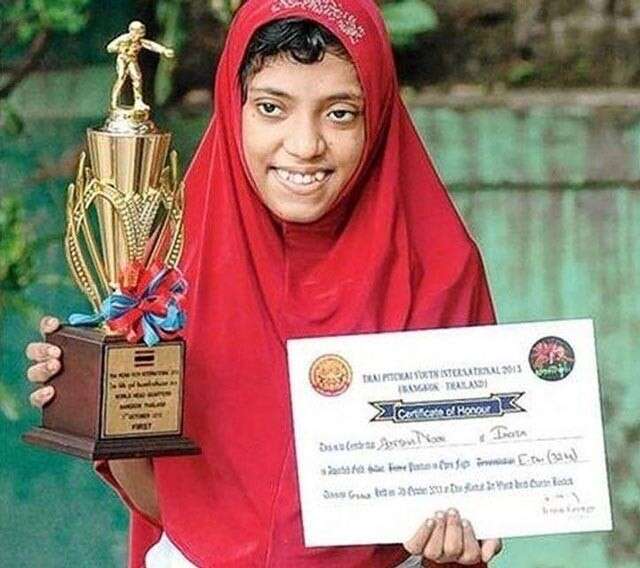
Ayesha Noor, a 21-year-old Karate champion from the slums of Kolkata, will be representing India in an upcoming international sports meet, which is to be held in Thailand. Her story is nothing but inspirational and heartening.
The 21-year-old’s journey witnesses a lot of suffering; Ayesha was afflicted with epileptic seizures from the time of birth. She lost her father in 2010, and her mother Shakila Begum had to make ends meet by sewing clothes from home.
A ray of hope for young Ayesha while she was living in the slums of Beniakupur in Kolkata, coach M. A. Ali saw potential and took her under his wing, grooming her to be a solid contender in Karate.
The young karate champion has won three gold medals for India, making her a fierce force to be reckoned with. Her first win was in 2010, followed by winning gold again in Bangkok in 2013 and 2015. Ayesha Noor was honoured by the United States of America as the ‘Hero of Gender Equality’ in 2017, at a function held at the American Center in New Delhi. She was also awarded the ‘Times Women Heroes Award’ on 7th June, by the Times of India. At such a young age, Ayesha Noor has now become a great influence for many.
A documentary film has also been made which depicts her journey from the slums of Kolkata to winning gold in karate at the international level, despite her health condition and financial struggle. The story of this young karate champ is nothing but inspirational. We can’t wait to watch her slay at the international sports meet in Thailand. More power to you, Ayesha!
source: http://www.femina.in / Femina / Home> Trending> Achievers / by Eden Noronha / August 10th, 2019
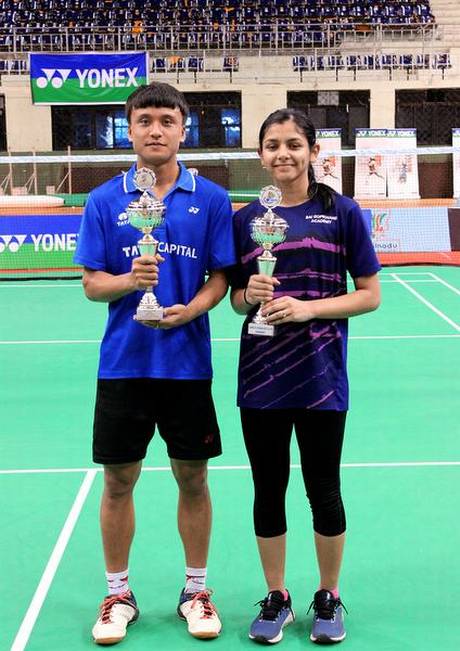
Future bright: Their innate talent and recent run of results hark well for Maisnam Meiraba and Samiya Farooqui.
Duo says the tag motivates and spurs them on
For the 16-year-old shuttler Maisnam Meiraba (singles player), this year has been phenomenal in terms of overall performance.
Following the recent bronze medal in the Bulgarian junior International, he’s now in Panchkula playing a junior ranking tournament which is also a selection tournament for the upcoming World juniors. There will be another in Bengaluru that he will play as well.
“We have a lot of shuttlers now. The popularity of and interest for the sport has been on the rise,” he says over phone, referring to his home State Manipur that people mostly associate with football.
Boxer Mary Kom and Weightlifter Mirabhai Chanu are a couple of other sportspersons who’ve made their name from the region.
Now Meiraba, though it’s too early, is observed by experts as a potential star player for the future.
Four-in-a-row
Since January, he notably has won four consecutive junior (u-19) ranking tournaments in Bengaluru, Vijayawada, Chennai and Trivandrum, reached the quarterfinals in the German junior International, won bronze in the Yonex-Roza Bty junior International in Thailand, won gold in the White Nights junior International in Russia.
While Meiraba shuttles between Imphal and Bengaluru where he’s been training at the Prakash Padukone Badmintorn Academy, Samiya Farooqui (16), who won the girls’ singles gold in Bulgaria and is considered as another potential star in the making, hails from and trains in Hyderabad.
She won her maiden junior (u-19) ranking tournament in Chennai early this year. “I would say Meiraba’s is power game, while Samiya’s is an all-round game,” says the junior National coach Sanjay Mishra.
“Meiraba’s strengths are his speed, power, and accuracy. He has to work on fitness; improve his stamina. For instance, to reach the final of, say, a five-day tournament, you need to win four or five matches in a tight schedule.
“Samiya, I think, has to work on power. She’s very good with half smashes; deception, in general. Also, she’s a fighter; doesn’t give up easily, ” he adds.
Meiraba responds saying he’s always been working on his fitness and agrees that he might be found lacking when compared to the other Asian players, especially from China and Indonesia. “They are physically dominating,” he says.
He says he’s particularly been working on his smash and forecourt play for now.
Reducing errors
Samiya, on the other hand, believes she has to work on reducing committing unforced errors.
Samiya, who has been juggling a lot between the junior and senior circuits, will not be available for the World juniors, for she will be focussing on the upcoming senior tournaments in Myanmar and Nepal.
Asked if it’s extra pressure to live up to the big expectation — being considered as potential future stars — both of them say it motivates them and makes them want to maximise their potential. Samiya is even being touted the next Saina Nehwal!
source: http://www.thehindu.com / The Hindu / Home> Sports> Other Sports / by S. Prasanna Venkatesan / Chennai – August 15th, 2019
He couldn’t come out of the water as there was a strong undercurrent.
Flood in the Indian state of Kerala has claimed life of a Dubai expat. Razak Akkiparambil, a support staff of a school in Dubai, died after rescuing two children, including his son, who were caught in flood water.
The incident happened on Tuesday afternoon, Razak’s brother-in-law Shareef, said over the phone from Malappuram district, which is among the worst-hit regions.
“Razak had come to Kerala for his daughter’s marriage, which was held on August 4. The family had come to my home. The incident happened around 2.30 pm (IST). He saw these kids walk down to the water-filled paddy fields. It’s now filled up to the height of two people and soon these kids were in deep. As soon as Razak saw the kids were in danger, he rushed and jumped into the water to save them. He managed to hand over two kids safely to another person. But he couldn’t come out as there was a strong undercurrent. He is just 42 years but couldn’t cope with the sudden rush of water and collapsed. And as everyone was focusing on kids, no one noticed Razak drowning. He was pulled out of the water only after 15 minutes. We rushed him to a hospital but the doctor said he passed away before reaching there,” said Shareef, who works at Our Own English High School.
“We both work in the same school. Razak is there for some 10 years now. We had travelled together to Kerala for the marriage.”
Razak, a father of three, is survived by his family. They are devastated with the news of his untimely death.
“They were already affected by flood last year. They had somehow managed to renovate their house for the wedding. But again were hit by floods from last week. Luckily the wedding went well. It was his big dream. Now he is no more. The cremation will be tomorrow.”
ashwani@kjhaleejtimes.com
source: http://www.khaleejtimes.com / Khaleej Times / Home> UAE> Dubai / by Ashwani Kumar, Dubai / August 14th, 2019