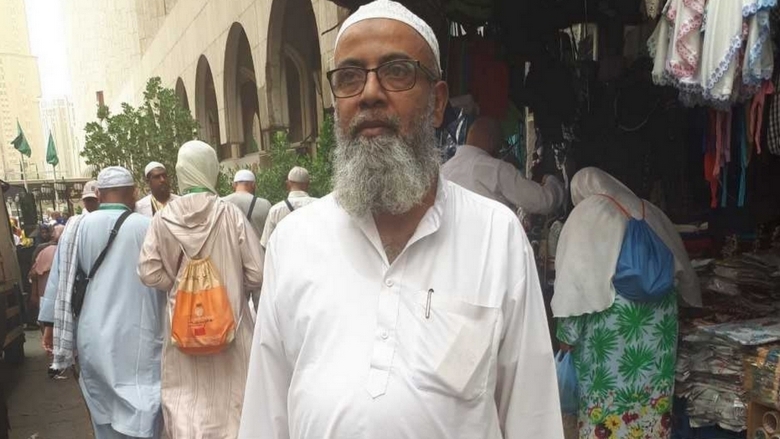
Taqiullah Khan leads at least five Umrah groups to the holy city every year (Photograph: Sahim Salim / Khaleej Times )
62-year-old Taqiullah Khan has also performed Umrah an epic 126 times.
Indian national Taqiullah Khan performed Haj for the first time in 1994. The Bengaluru resident, now 62, has undertaken the journey 25 times in as many years ever since.
Khan is now back in Makkah to perform his 26th Haj.
Khan has also performed the lesser pilgrimage, Umrah, an epic 126 times!
For most Muslims, the holy journey is a once-in-a-lifetime experience due to the costs, difficulties and sacrifices involved. For Khan, it’s an annual affair, thanks to his tours and travels company.
“I have been coming here so many times that I know Makkah and Madina better than Bengaluru,” he quipped.
The first Haj
Interestingly, Khan’s mother had “predicted” that Haj would become an annual journey for him.
A year before he went for his first Haj, he had sent his parents for the journey in 1993.
“I requested that they pray for me to be able to visit the blessed land. When my mother came back, she told she had made this particular dua (supplication) so much that she believed I would perform Haj every year.”
Just like his mother predicted, Khan’s journey began in 1994. “I went as a Haji (pilgrim) like any other Muslim back then. I went back again the next year with my wife.”
He founded Tawakkul Tours and Travels in 1996 and applied for the Haj quota. He has been coming as a Haj guide ever since.
The father of three doesn’t necessarily have to come to the holy city along with the groups that his firm is responsible for. “For me, this is an honour from Allah and I wouldn’t miss it for the world. Most people consider themselves lucky if they are able to undertake the journey once in their lifetime. Allah has blessed me to perform Haj every year.”
Khan also leads at least five Umrah groups to the holy city every year.
He holds something called the Munazzam licence, which is granted to Haj organisers. “So you see, Allah has blessed me so much that this is actually my bread and butter, too.”
The Indian’s wife and two of their three children are Hajis as well.
The ‘missed’ Haj
Khan has just missed the Haj of 1999 since 1994. He had suffered a motorbike accident and his doctor asked him to avoid undertaking the arduous journey.
“But I have still performed Haj 25 times in 25 Gregorian years because I was lucky enough to get two pilgrimages in 1996.”
That year, Dhul Hijjah – the Islamic calendar month in which the journey is undertaken – came twice in 1996: January and December.
Preparations
Khan’s company gets a quota of 100 pilgrims every year. “This time, our quota increased by seven, Alhamdulillah.”
Khan said he starts preparing for the Haj season as soon the fasting month of Ramadan ends. “That’s when the government of India announces the Haj quotas.”
Khan’s biggest strength is his family. “They have been very supportive of my endeavours. Not once have they asked me to depute someone else to lead the groups since they, too, believe that this is an honour.”
Safety guaranteed
Khan is most impressed with the way the annual pilgrimage is organised.
“In the 25 years I have been leading Haj groups, not once have I heard a Haja (female pilgrim) complain about harassment. Not once has anyone complained about robberies or any serious crimes.
“It is amazing how the government manages to organise all this so efficiently year after year despite receiving in excess of two million pilgrims.”
Most memorable Haj
Though Khan maintained that each of his 25 pilgrimages was special, his first Haj in 1994 is the “most memorable”. “Haj season fell in the month of May. It was very hot then. But it remains the most special Haj for me. I remember every single aspect of that maiden trip. I enjoyed it.”
During the Haj of 1997, when a massive fire broke out in the tent city of Mina, Khan and his group of 60 Hajis were just 500 metres away from the tent in which a cylinder exploded. The tragedy had claimed over 200 lives.
“The police evacuated us and we managed to escape. We came back to the holy city. Thanks to the government’s efficiency, we were able to go back to Mina the very next day. That’s another Haj memory that will always remain with me.”
When asked how long he plans to continue the annual journey, pat comes the reply: “As long as my health permits, I don’t plan to give this up.”
1. Photo ban lifted: According to Takiullah Khan, photography was banned in the holy sanctuary till about a decade ago.
2. End of ‘rocket stretchers’: In the 90s, elderly or disabled pilgrims would be taken for circumambulation on a stretcher by four men, who would “speed through the crowds”. “It was a very dangerous practice and people would just move out of the way as they were afraid of getting hurt. Thank God, we have wheelchairs now,” said Khan.
3. Drinking Zamzam from the source: Till about five years ago, pilgrims could descend to the Zamzam well and drink the holy water from its source.
4. Just two ‘mataf’ areas: Masjid Al Haram has four Mataf (areas to circumambulate the Holy Kaabah) floors today. It used to be just two when Khan first went for Haj.
5. Ascending Mount Safa: Pilgrims could previously ascend the Mount Safa and look at the Holy Kaabah while praying. Today, it stands behind a glass enclosure.
source: http://www.khaleejtimes.com / Khaleej Times / Home> Region> Saudi Arabia / by Sahim Salim (reporting from Makkah) / August 08th, 2019
Shahbaz Nadeem played two of the three games and had three ‘five-for’ in four innings, finishing with 15 wickets in the series.
HIGHLIGHTS
India A won the unofficial 3-match Test series 2-0 after a drawn last Test
Shahbaz Nadeem took his third five-for in four innings
Earlier, Shubman Gill hit a double hundred as India posted 365
West Indies A top-order put up a gutsy show to force a draw despite another five-wicket haul by left-arm spinner Shahbaz Nadeem as India A won the unofficial three-‘Test’ series 2-0.
Chasing a stiff target of 373, West Indies A started the day at 37 for no loss needing another 336 runs on the fourth day but only reached as far as 314 for 6 in the end.
Opener Jeremy Solozano’s dogged 92 off 252 balls along with No 3 Brandon King’s attacking 77 off 84 balls and senior international Sunil Ambris’ 69 off 142 helped the home team earn a draw after losing the first two ‘Tests’.
For India, Nadeem turned out to be the best bowler once again with figures of 5 for 103 in 41 overs.
The Jharkhand orthodox left-arm, one of the most consistent bowlers in the Indian domestic circuit, played two of the three games and had three ‘five-for’ in four innings, finishing with 15 wickets in the series.
The series was a good one for the Paras Mhambrey coached A side which was dominant for the better part.
Test specialists like skipper Hanuma Vihari (224 runs, 1 ton, 1 fifty), Wriddhiman Saha (137 runs, 2 fifties) and Mayank Agarwal (123 runs, 1 fifty) got quality game time before the Test series starting at the end of this month.
Umesh Yadav also got overs under his belt — 30 of them including both innings with a couple of wickets.
The biggest gain has to be Shubman Gill’s double hundred under pressure, which is an indication enough that the Punjab lad is ready for the next level.
Mumbai’s Shivam Dube (180 runs and 5 wickets) looked like a better prospect as a seam bowling all-rounder than Tamil Nadu’s Vijay Shankar.
On the final day, the West Indies opening pair Montcin Hodge (25 off 82 balls) and Solozano batted the opening hour before Nadeem drew first blood with 68 on the board.
However, King, who came in at one down was in a mood to smash it all around hitting 10 fours and three sixes during the 99-run stand in only 17.5 overs with Solozano before rival skipper Hanuma Vihari dismissed him caught by Mayank Agarwal.
The match as a contest was effectively over when Ambris and Solozano added another 60 runs for the third wicket in 21.1 overs.
This was the partnership that went a long way in dashing India A’s hopes of a clean sweep.
Ambris, who recently played in the ICC World Cup, then had a couple of small but significant partnerships with Jermaine Blackwood and Jahmar Hamilton which ate up crucial overs.
By the time Nadeem bowled to Ambris to get his fifth scalp, the players were waiting for the mandatory overs to finish.
Brief Scores: India A 201 and 365/4.
West Indies A 194 and 314/6 (Jeremy Solozano 92, Brandon King 77, Sunil Ambris 69, Shahbaz Nadeem 5/103). Match Drawn.
source: http://www.indiatoday.in / India Today / Home> News> Sports> Cricket / by Press Trust of India – Tarouba / August 10th, 2019
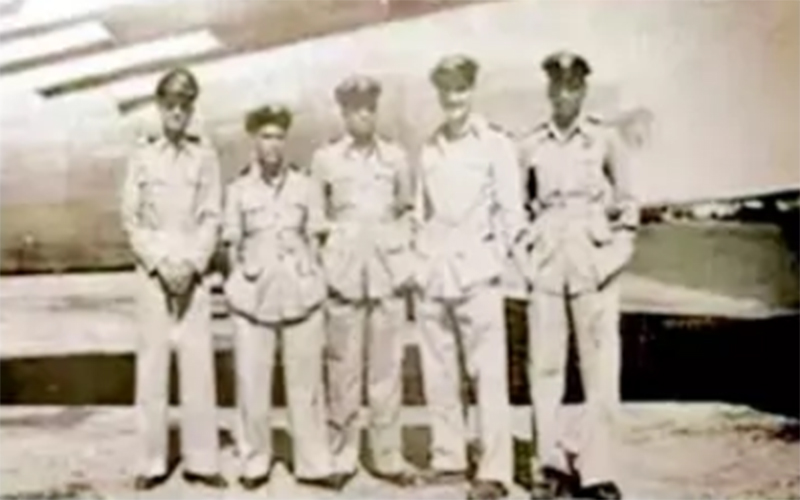
India’s first flight carrying Haj pilgrims took off from Hyderabad On 22nd October 1946. Earlier, pilgrims used to travel by a sea route for performing Haj.
According to the report published in Times of India , the first flight carried 18 Haj pilgrims. Two Deccan Airways Dakota aircrafts took off from the old airport of Hyderabad located at Begumpet in 1946 amid slogans “Allah-u-Akbar”. Khan Bahadur Nawab Ahmed Nawaz Jung was also traveling on that flight.
It may be noted that at that time, there was no flight from other Indian cities to Jeddah.
The name of the pilot who took off the first flight was Captain Cox and his junior was Munshi. The technical support was provided by Nasir, Radio Officer and Lord, Flight Engineer.
It may be mentioned that Deccan Airways was the leading airlines at that time. In 1948, the flights of Deccan Airways were discontinued due to uncertain political situation in erstwhile Hyderabad State. It was again started in 1949 after the Police Action.
source: http://www.siasat.com / The Siasat Daily / Home> News> Hyderabad / posted by Sameer / August 08th, 2019
Aligarh, UTTAR PRADESH / Geelong ( VICTORIA ) , AUSTRALIA :
siasat.com
Melbourne (Australia):
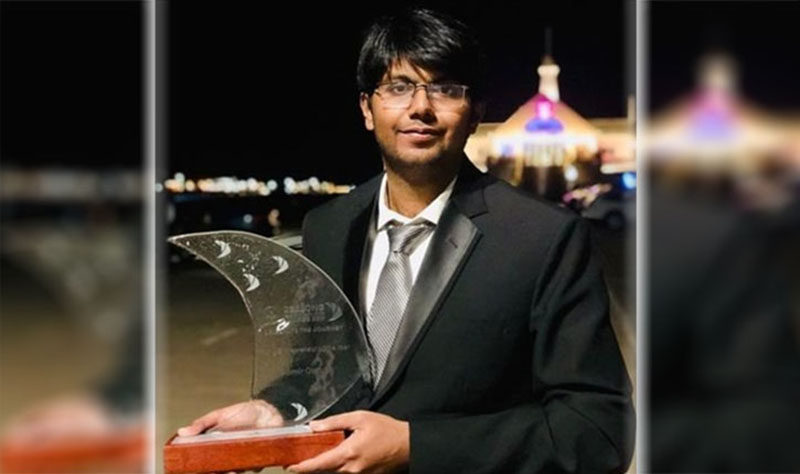
Indian-Australian Entrepreneur and an alumnus of Aligarh Muslim University (AMU), Aamir Qutub, has won the Young Entrepreneur of the Year award in the Business Excellence Awards (GBEA) category in Australia.
According to a press release issued by his firm, established in 1986, and managed by the Geelong Chamber of Commerce, the Business Excellence Awards are the oldest business awards in Australia.
“With a record number of entrants participating in the Geelong Business Excellence Awards, and going through a stringent judging process, the Awards are now more competitive than ever, ” says Ben Flynn, CEO Geelong Chamber of Commerce.
Aamir Qutub is the Founder and CEO of Enterprise Monkey (a digital solutions agency), Tech Investor and Co-Founder in 6 startups. Aamir is also a member of Ministerial Advisory Committee to the Minister for Planning in Australia.
He was appointed as the General Manager of ICT Geelong (local IT Industry Cluster) at the age of 25. He was the founding Secretary of Pivot Summit – Australia’s largest regional tech conference.
Aamir was brought up in Aligarh, Uttar Pradesh. He did his Engineering degree from Aligarh Muslim University (AMU) and immigrated to Australia at the age of 23 to complete MBA from Deakin University.
“I had applied for around 150 office jobs but couldn’t get any due to lack of experience in Australia. I used to work as a cleaner at the Avalon Airport, and distribute newspapers in midnight to pay for my living and fee,” Aamir has reportedly said.
In 2012, Aamir got an internship opportunity with ICT Geelong. Impressed with his performance and passion for digital transformation, he was asked by the board to step up as the General Manager of ICT Geelong at the age of 25.
At AMU, Aamir was elected as Geneneral Secretary of AMU Students’ Union (AMUSU) in 2011. As AMUSU Secretary, Aamir organized the first-ever recruitment drive in the university which resulted in the placement of 2000 students in 30 companies. His passion for technology contributed in the digitization of AMU campus by introduction of free WiFi and Smart Classrooms.
In 2014, Aamir founded Enterprise Monkey – a Web and App solutions company in his brother-in-law’s garage. “I started with $2000 in savings,” says Aamir who led his company to establish in 4 countries with YoY revenue growth of 300% in the first 3 years.
Enterprise Monkey has established itself as a leader in web and app space. It is now growing it’s leadership in Artificial Intelligence (AI), Augmented Reality and Internet of Things (IoT) space. The client list includes NASDAQ listed companies as well as seed stage startups.
source: http://www.siasat.com / The Siasat Daily / Home> News> India / posted by Qayam / August 02nd, 2019
Karnataka’s BJP govt has cancelled Tipu Jayanti, celebrating a ruler once hailed for his bravery and genius, but seen by the right wing as a bigot. We must reexamine Tipu Sultan.
The BJP government in Karnataka has done away with Tipu Sultan celebrations. But, as it is vital to remember Tipu Sultan, in this first-part series, I lead you into the life of Tipu Sultan, the ruler of Mysore.
The recent efforts of the Hindu right to project him as a Muslim bigot show that their political stakes in him have changed.
Any opinion on the rule of Tipu Sultan in Mysore will in fact be incomplete without mention of the political situation prevailing in and around Mysore towards the end of the 18th century. Mysore, which had emerged from the ruins of the Vijayanagar empire, was moulded into a small but dynamic Hindu state primarily during the rule of Chikka Devaraja Wodeyar in the early decades of the 18th century.
The Wodiyar kings, who had been ruling Mysore for over 300 years, were only nominal rulers by then — the actual power was wielded by their prime ministers or ‘dalavai’.
Tipu’s father, Haider Ali, began his career in Mysore around 1749, as a soldier under one of these powerful ministers.
He used his tact and bravery to stave off Maratha raids into Mysore, fought against the British and expanded Mysore’s territory down south to the coast of wealthy Calicut. He thus eased himself into the title of the ‘sarvadhikari’ or ‘regent of the kingdom’ in 1760.
After Haider’s death in 1782, Tipu took over his father’s position, keeping the Wodeyar king as a proxy but publicly continuing to put on a show of respect. Tipu’s appropriation of this position would not have been possible without the assistance of some of Haider’s closest friends and advisors as well as the acquiescence of the local populace, who had by then come to see a stronger and more prosperous Mysore under Haider and the young Tipu.
From Madras, the British were cautiously observing the rise of Mysore — and resented Haider’s and Tipu’s push into Malabar.
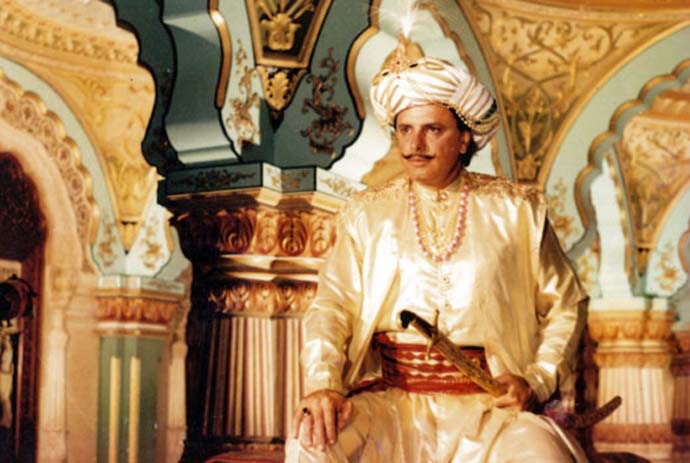
Tipu Sultan took over Mysore in 1782: He remains its most iconic ruler. (Still from The Sword of Tipu Sultan: Via Author)
A 17-year-old Tipu had given the British a fright by galloping with his army into the East India Company’s garden house near the beach in Madras.
He rattled them so much that the governor there fled offshore in a small boat. A series of four Anglo-Mysore Wars started in 1767. These propelled the hitherto unknown Kingdom of Mysore into the powder rooms of Europe and America.
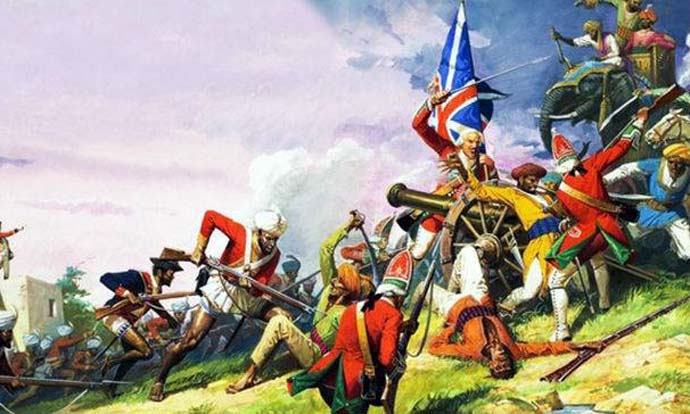
The first war saw Mysore dictating terms to England at the gates of Madras; the second war was Tipu’s brightest moment. At the battle of Pollilur (1780), the sun-and-tiger-stripes banner of Tipu’s Mysore oversaw the worst disaster that ever befell an English army in India — out of 3,000 men in the British army, only about 400 survived.
With these two victories, the mood in England began to change — and a vicious propaganda and diplomatic campaign against Mysore began.
By 1785, one in seven Englishmen in India was imprisoned by Tipu. By this time, the British had won in Plassey and Buxar; the whole of India except the Punjab and the Marathas had capitulated to them. Tipu’s Mysore stood as a bulwark against the British. What rankled the British even more was that here was a native ruler — or ‘despot’, as they branded all of them — who was different from the others.
He did not while away his time in pleasure orgies, nor leave the management of state to some palace coterie; and not once did he ask the British for help against his neighbours. He created an army which, in the words of his nemesis, Arthur Wellesley (later Duke of Wellington), was “the best fighting force in the whole of India”.
He took advantage of the enmities being played out in Europe, recruited the French as willing allies and drilled his army in modern European manoeuvres.
Giving It Back: Unlike several other princely states, Tipu Sultan took the British head-on in ferocious battles. (Picture: India Today)
Mysore was the first state to demonstrate the efficacy of rockets in war by modifying what was until then a mere firecracker into something that could carry a sword or wooden blade with it. Tipu even sent back French weapons with a letter stating they were substandard compared to the ones in his arsenal.
Working almost 18 hours a day, he kept meticulous records of revenue and personnel across his kingdom. He created a set of revenue regulations that rationalised land taxes — and even offered subsidies to farmers if they farmed more land. Landowners and temple trusts with excess landholding were asked to hand it over to landless or tenant farmers. He created a navy that sent ships with his diplomats to meet the Ottoman sultan in Constantinople and the French emperor in Paris. He built a powerful navy, consisting of 20 battleships of 72 cannons and 20 frigates of 62 cannons.
A separate board of admiralty was established in September 1786 and massive dockyards at Jamalabad, Wajidabad and Majidabad were constructed on the west coast to build 40 warships and a number of transport ships to strengthen the naval power. The 200-odd forts under Tipu’s reign were mostly named on Hindu script ions.
An elite group of Brahmin civil servants was nurtured during his early rule to make sure that revenue was properly collected. His forts were among the strongest in south India and his currency so beautifully minted that the Mughal emperor apparently felt slighted at receiving coins more beautiful than his own — he even minted coins with Hindu deities on them.
Deep in the midst of war, he wrote of receiving silkworms to create the silk factories of Mysore.
Sugar and paper factories were established for the first time under him. Sword blades and gunpowder were manufactured locally. He was also liberal with gifts to Hindu religious establishments in Mysore and Malabar after subduing it.
A Visionary Leader: Tipu Sultan was an extraordinary mix of courage, skill and heart. (Still from The Sword of Tipu Sultan: Via Author)
The third Anglo-Mysore war in 1792, with Cornwallis at the helm of the British army, did not go well for Tipu.
He was hard-pressed by the British-Maratha-Nizam allied powers to surrender half his kingdom, submit to a war indemnity of ₹3.3 crore — and deliver two of his sons as hostages to the British. Thanks to his financial prudence, he managed to pay the British their ransom and have his sons released a year earlier than the stipulated three years.
This period between 1792 and the fourth Mysore war in 1799 was one of great tribulation for Mysore — rebellions raged and finances were tight on account of the indemnity paid. However, it is to Tipu’s credit that not once during his rule, in the midst of almost incessant war, did his subjects suffer from famine or pestilence.
At the same time in British Bengal, millions of Indians perished in a famine…
(To be continued).
source: http://www.dailyo.in / DailyO / Home> Open To Opinion> Politics / by Sanjay Khan / August 03rd, 2019
Booklet with profiles of the women also launched on the occasion
The travelling exhibition of path-breaking Muslim women achievers of the 20th Century rolled into the city on Saturday.
Called ‘Pathbreakers’, the invitation for the event had the enigmatic photograph of Tyeba Khedive Jung who was born in 1873 in Hyderabad. Moving away from Hyderabad, she became the first woman from the city who received university education graduating from University of Madras in 1894. Tyeba Khedive Jung wrote Anwari Begum in 1905 and she even presided over the annual conference of Brahmo Samaj.
“I stumbled upon the book Anwari Begum in my mother’s library. Then I realised I have to do something to tell the story about Muslim women who came onto their own at a time when the stereotype was that of a conservative society with many problems,” said Syeda Hameed of Muslim Women’s Forum, the brain behind the exhibition. A small booklet with the profiles of the women was also launched on the occasion.
Defying stereotypes
The exhibition had a captive audience as students from the Telangana Minority Residential School students as well as students from other government schools trooped in to listen to the stories of women who defied stereotypes. “We want the children to be inspired by these women. It will give them confidence that even they can achieve anything they want. We are giving them books with stories of these women to inspire them,” said A.K. Khan advisor on Minorities Welfare, Telangana Government.
One of the inspiring stories is that of Zehra Ali Yavar Jung who studied at Mahbubia Girls School and later started the Society for Clean Cities much before Swacch Bharat Abhiyaan.
“Hyderabad is a city of Hayat Bakshi Begum. It is a city of Mah Laqa Bai Chanda who donated Rs. 1 crore to the Nizam Sikander Jah for educating women. It is great to have this exhibition of these inspiring women in the city,” said Oudesh Rani Bawa, who spoke about other women from the city who worked for women’s emancipation.
The exhibition at Salar Jung Museum will continue till August 7 between 10 a.m. and 4.30 p.m.
source: http://www.thehindu.com / The Hindu / Home> News> Cities> Hyderabad / by Special Correspondent / Hyderabad – August 04th, 2019
The court said the Nawab of Rampur was a ruler only in name and cannot be immune to Muslim personal laws.
Via Royals of the Rampur Dynasty Facebook page.
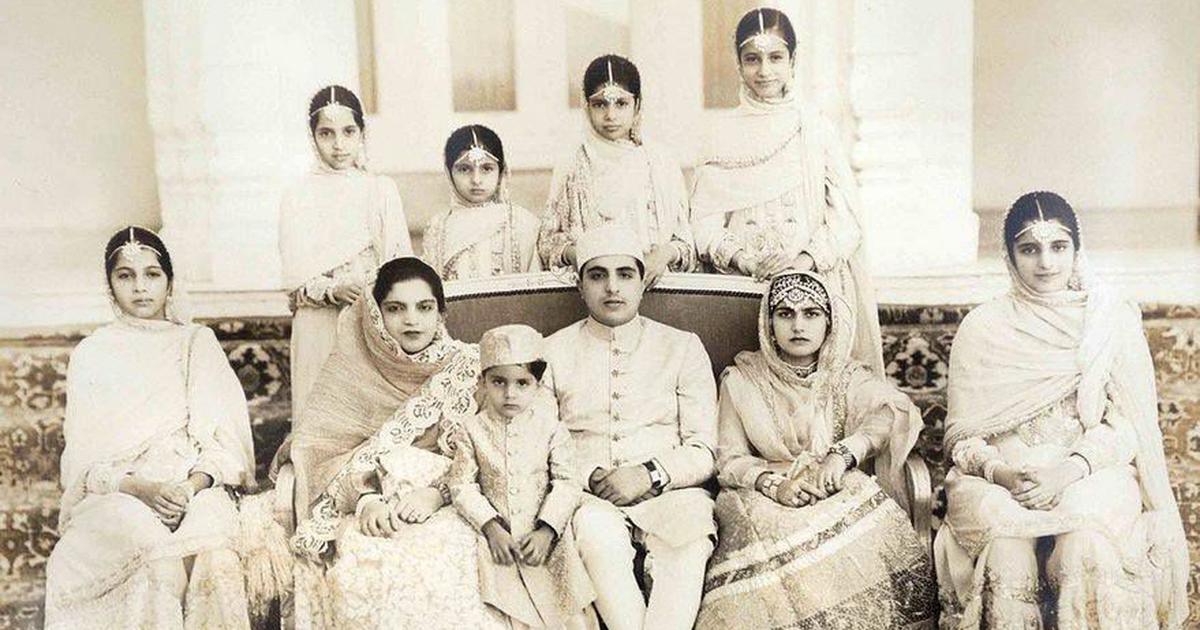
Rampur state came into existence on October 7, 1774. Ruled by the Nawabs of Rampur, it stayed under the British protection till Independence and became the first princely state to accede to India in 1949.
The Nawabs were known for many things, including their patronage of music and arts, especially the Hindustani classical music form of khyal. One member of the family, Ahmad Ali Khan, bred the Rampur Greyhound, a mix of the Afghan Tazi and the English Greyhound, characterised by its speed and endurance.
There’s another thing for which the Rampur family is noted: it was involved in one of India’s longest-running civil suits in the country, which the Supreme Court finally brought to a close this week after 47 years.
The case related to the legacy of Raza Ali Khan, the Nawab who decided to accede to the Indian union in 1949. In return, the Indian government, through the instrument of accession, bestowed two key rights to the Nawab. He was entitled to the full ownership, use and enjoyment of all private properties belonging to him on the date of the accession. Second, the government guaranteed succession to the gaddi or rulership of the state based on the customary law, which gave exclusive property rights to the eldest son. Former royal families that had acceded to India also received a payment from the government known as the privy purse.
When Raza Ali Khan died in 1966, he had three wives, three sons and six daughters. His eldest son Murtaza Ali Khan succeeded him as head of the state, as per custom. The government recognised him as the sole inheritor of all his father’s private properties and issued a certificate to this effect.
But his brother challenged this in the civil court. Thus began a royal property dispute in which the courts were asked to decide if inheritance should be based on Muslim personal law or the unique gaddi system the royal family followed before joining the Indian Union.
After 47 years, the Supreme Court on July 31 decided in favour of the Muslim personal law or the Shariat. This means the women of the family are also entitled to a share of the inheritance. One of them is Begum Noor Bano, who was elected to the Lok Sabha member on a Congress ticket in 1999.
The case
After Murtaza Ali Khan took charge as Nawab in April 1966 his brother Zulfiquar Ali Khan challenged the certificate of inheritance issued by the government. He was joined in the litigation by three of his sisters. In December 1969, the Delhi High Court quashed the certificate. Murtaza Ali Khan challenged this decision in the Supreme Court, which refused to intervene.
In the meantime, using the Delhi High Court judgement, Talat Fatima Hasan, the daughter of one of Raza Ali Khan’s daughters, moved a petition in a civil court in Rampur in 1970 asking for the properties to be divided. The court issued an interim order that the assets should neither be transferred nor disposed.
But the family squabble ran into an unexpected event: in December 1971, Prime Minister Indira Gandhi amended the Constitution and abolished privy purses. Murtaza Ali Khan, who was receiving Rs 7 lakh annually as a privy purse from the Indian government as the Nawab of Rampur, lost his income, with his wealth stuck in litigation.
For over 20 years, the suit to partition the properties stayed pending before the civil court. Then in 1995, the Allahabad High Court withdrew the suit from the civil court and placed it before itself. By then, Murtaza Ali Khan had died.
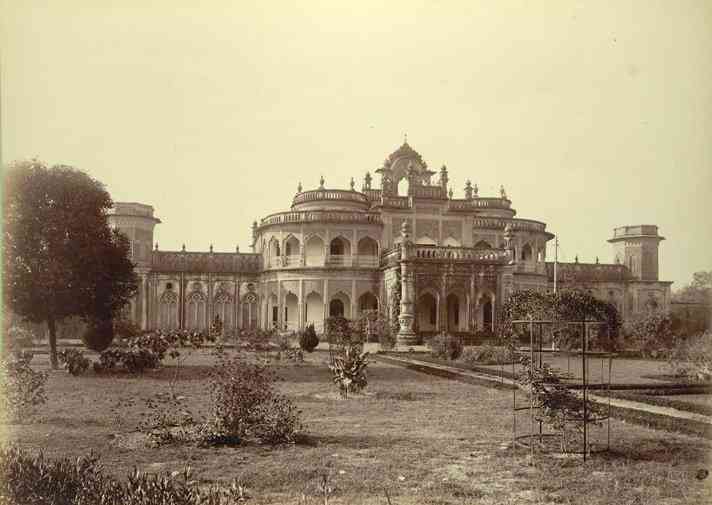
A royal building in Rampur. Credit: Royals of the Rampur Dynasty
In the High Court, his descendants argued that two palaces – Khas Bagh Palace and the Sahbad Castle – had been recognised by the government of India in 1954 as the official residence of the ruler of Rampur. These palaces, along with their furniture, fixtures, equipment, pictures, motor garage, water works plant, dhobi-ghat, land and gardens were adjuncts of the ruler and could not be the subject matter of a suit, the argument went.
The High Court accepted this reasoning and dismissed the suits for partition in 1997. Talat Fatima Hasan then moved the Supreme Court.
Shariat or Gaddi?
The Nawabs are Shia Muslims. The central dispute in the civil suits was whether as Shia Muslims, the Muslim Personal Law (Shariat) Application Act would apply to the inheritance or the gaddi system that the family practiced before Independence. Murtaza Ali Khan wanted the gaddi system whereas the Talat Fatima Hasan pressed for the Muslim personal law.
The instrument of accession made a distinction between the Rampur state’s public properties, which became vested in the government of India, and the Nawab’s private properties, which formed his inheritance.
Lawyers for Murtaza Ali Khan and his legal heirs argued that private properties of the ruler were not entirely private – they were attached to the gaddi or the rulership. And so they stayed with the person declared the Nawab.
But the Supreme Court refused to accept this argument. In the judgement, the bench said following their accession to the Indian union in 1949 and with the Constitution of India being enforced in 1950, the Nawabs were merely titular rulers who enjoyed certain privileges and privy purses. They neither had territory nor subjects. With sovereignty lost, the gaddi system had ceased to exist. The court said:
“When they were actual sovereigns, their entire State was attached to the Gaddi and not any particular property. There are no specific properties which can be attached to the Gaddi. It has to be the entire ‘State’ or nothing.
Since, we have held that they were rulers only as a matter of courtesy, to protect their erstwhile titles, the properties which were declared to be their personal properties had to be treated as their personal properties and could not be treated as properties attached to the Gaddi.”
Therefore, the court ruled that properties of the Nawab have to be divided according to the Shariat, which means that not only will male members of the family be entitled to a share, the women will also inherit a part of the estate.
Among them is Begum Noor Bano, the wife of Zulfiquar Ali Khan, who set the ball rolling in the courts when he challenged his brother, the Nawab’s oldest son, Murtaza Ali Khan, 47 years ago. And also Talat Fatima Hasan, the granddaughter of Raza Ali Khan, who took the battle further.
source: http://www.scroll.in / Scroll.in / Home> Matter of the Law / by Sruthisagar Yamunan / August 02nd, 2019
Shafiq ur Rahman Khan has been chosen as the winner of the coveted “Grinnell prize” for the year 2019. Notably, he is also the first Indian to receive this award in recognition of his exemplary dedication in working to safeguard the rights of vulnerable women and children.
The Grinnell College Innovator for Social Justice Prize (the Grinnell Prize) honours individuals who have demonstrated innovative leadership in their respective fields and who show creativity, commitment and extraordinary accomplishment in effecting positive social change.
Shafiq R Khan has been honoured with the Grinnell prize for his outstanding contribution in working to eradicate the Indian bride trafficking trade (the selling of women into often multiple forced marriages) and further empowering the agency and leadership of survivors. He has risen above the norm and worked single-mindedly for the cause of rescuing girls who fall victim to “bride trafficking.” His humility and passion for social welfare is worth the commendation from the Global community.
Shafiq R Khan, 35 years, hails from Gaya, Bihar. His foray in activism began at a tender age of 15 when he joined a communist party with the hope of working for the well-being of the poor. He witnessed the sorrowful plight of people entrenched in poverty and bonded labour, and the power equations that worked to ensure the divide between the rich and poor remained wide and after around four years of work, he moved away from the party because he felt called to do more and do it differently.
In 2004, he moved to Delhi to explore different ways of tackling oppression and to understand the various dynamics more keenly. He joined the Bonded labour liberation front which was at the time working against sex-selective abortions where he became part of the back office team for ‘Multipath march against Female foeticide’. Shafiq especially noted the power dynamics with regard to gender and realised how a lot of the entrenched ‘societal values’ were actually ‘enemies of women.’
He began to study the movement of feminism which helped him understand the systemic nature of women’s oppression and thus the importance of land rights for women. He took up Bachelor of Social Work (BSW) for graduation in 2006 and it was during these days, that an event set him off on his unique path that he continues to walk 13 years on, even today.
Shafiq organised a 300 km long March against Female Foeticide in 2006 with a group of friends as part of a social mobilization campaign, where he met a trafficked bride who talked about her helpless plight and asked for his help. Due to the insistence of his co-travellers to focus on the March, he continued onward unable to do much at the time. Her story and plea though remained with Shafiq and he returned a month later only to find that she had been sold off and moved forward to another man. Upon further enquiry, no trace of the woman was found. She had disappeared. It came about as a shock for him to discover how men were uninhibitedly dealing in the sale and purchase of women in broad daylight and disposing of them once their needs were met.
Seeing someone suffer at the hands of others, seeing girl children being killed in the womb, seeing girls getting sold for less than a hundred bucks and living the life of slaves—all of these instances were a good enough reason for him to sharpen his focus on the issue of human trafficking and gender inequality. This incident served as a turning point in Shafiq’s life and he returned to Delhi with a decision to do something about it. He began chalking out a plan for bringing about a much-needed change while he continued advocating for the rights of women and applied for a fellowship to further his work. Notably, he became the first male fellow of Jagori, a prominent feminist organization in Delhi.
Shafiq founded an organisation by the name of ‘EMPOWER PEOPLE’ in 2006 with an initial aim to provide alternatives to women trafficked in the name of marriage. The organisation soon began working also on the factors contributing to Bride trafficking.
While Empower People began with the support of its founding members, it began generating funds from various individuals as well as community-based organizations. This phenomenon served to shape the organisation’s unique multi-pronged approach which involved spreading awareness among people about the menace of bride trafficking and the different ways they could engage with the work thus leading them to eventually become lifelong supporters of the cause.
EMPOWER PEOPLE is based out of New Delhi, India and operates in many regions across North and East India, most notably in Haryana and Assam. Today, the organization works to support law enforcement agencies and families of trafficked brides by locating and rescuing missing girls and women. The organization carries out due follow-up through an intensive rehabilitation and tracking process that aims to ensure that the women and their ostracized children live safer, more equitable lives and do not fall prey to trafficking again.
It may happen at times that the survivors do not wish to be repatriated to their families. Some women prefer to remain where they were brought to, and for such families, EMPOWER PEOPLE develops local communities of support and solidarity among trafficked brides. Led by the trafficked women themselves and supported by EMPOWER PEOPLE, these “communes” provide trafficked brides and their children with the education, resources and the skills they need to gain independence, to access justice, to avoid future trafficking, and to encourage men to accept new ideas about equality and ways of behaving.
In addition to being CEO of EMPOWER PEOPLE, Shafiq also works to recruit male allies to the causes the organization promotes. Shafiq acknowledges that being a male places him in a privileged position to challenge patriarchy. He works to convince men of the importance of granting women power and agency and in order to change minds, behaviours and systems of oppression, Shafiq regularly organizes informal discussions with groups of village men and religious leaders to talk about issues of justice, gender equality, education, land rights, domestic violence, honour crimes, issues related to dowry, “share of daughters” in inheritance, and rights of women in general.
Shafiq with his inspiring personality stands by his concept of making people the real instrument of change through awareness and participation. He believes in developing a holistic understanding of issues related to Violence against Women and addressing the problem at its root instead of working in project-wise schemes with a limited focus. He plans to have a mass movement and an ideological campaign within the society against female foeticide and gender-based exploitation.
He organizes Marches against Bride Trafficking for awareness generation and sensitization which serve as a platform for people’s participation and as an interface between the Government/NGO/NPO officials and vulnerable communities. In 2012, he carried out a 4400 km long March covering 2 Indian States while in 2018, he carried out a 14000 km long March covering 10 Indian States- an ambitious achievement to connect various dots across the breadth of the country and to gain an understanding of cross-State ground realities. He plans to conduct more Marches across the length of the country as well. His consistent curiosity to know the pulse on the ground and his willingness to modify and strengthen his approach based on new information gathered makes him a true innovator and a change-maker to watch out for and reckon with.
The Trustees of Grinnell College have recognised Shafiq to be thoroughly deserving of the honour of being a recipient of the Grinnell College Innovator for Social Justice Prize (the Grinnell Prize) for the year for his incredibly worthy work of about 20 years. The honour will include conferring of a prize amount of $50,000 for the organisation and $50,000 for his personal use. The Grinnell Prize ceremony is scheduled to be conducted in the first week of October and will be accompanied by a series of workshops conducted by Shafiq R Khan in collaboration with the University.
source: http://www.beyoundheadlines.in / Beyound Headlines / Home> India / by Beyond Headlines News Desk / July 30th, 2019
Prof Shahid Ahmed, Department of Economics, Jamia Millia Islamia (JMI) gets an offer to be affiliated as Adjunct Senior Fellow at RIS, a policy research Institute under the MEA, Government of India.
Prof Shahid Ahmed, Department of Economics, Jamia Millia Islamia(JMI) has been offered to become Adjunct Senior Fellow at Research and Information System for Developing Countries (RIS), New Delhi, in recognition of his research work and contributions in the area of international economics.
About RIS
RIS is an autonomous policy research institute under the Ministry of External Affairs, Government of India. RIS Adjunct Senior Fellows are a select group of experienced scholars who are well recognised nationally and internationally in the area of international economics and development of policies related issues relevant to decision making in the developing world.
More about Prof Shahid Ahmed
Earlier, Prof. Ahmed has served as Senior Economist at United Nations Conference on Trade and Development (UNCTAD).
He has also served as Head, Department of Economics; Director, Centre for Jawaharlal Nehru Studies and Finance Officer of the university.
Prof. Ahmed has so far published 5 books and 93 research articles in national and international journals on several economic issues, particularly on multilateral trade negotiations, regional economic co-operation, South-South cooperation among others.
Prof. Ahmed has been given “Award of Excellence” for sterling achievements in the professional life and outstanding contribution to the society at large by MD University Rohtak in 2012 and AMP National Award for Excellence in Education in 2018 by Association for Muslim Professionals, Mumbai.
About JMI
Jamia Millia Islamia, an institution originally established at Aligarh in United Provinces, India in 1920 became a Central University by an act of the Indian Parliament in 1988. In Urdu language, Jamia means ‘University’, and Millia means ‘National’.
The story of its growth from a small institution in the pre-independence India to a central university located in New Delhi-offering integrated education from nursery to research in specialized areas-is a saga of dedication, conviction and vision of a people who worked against all odds and saw it growing step by step. They “built up the Jamia Millia stone by stone and sacrifice by sacrifice,” said Sarojini Naidu, the nightingale of India.
source: http://www.indiatoday.in / India Today / Home> News> Education Today / by India Today Web Desk / New Delhi – July 29th, 2019
A mostly forgotten population has been living as refugees in the Kashmir Valley for 60 years.
A Tibetan exile woman carries her child wrapped in woolen blankets on a cold day in Srinagar, Kashmir, India, Jan. 10, 2012. Image Credit: AP Photo/Mukhtar Khan
SRINAGAR, INDIAN-ADMINISTERED KASHMIR — 63-year-old Tibetan Muslim Amanullah Kharmohra has preserved his travel permit like a holy relic. Laminated crisply inside a sheet of transparent polyethylene, the dog-eared permit carries photos of 6-year-old Kharmohra, his parents, and two siblings. It was this document that ensured the safe entry of Kharmohra and his family into India following a failed uprising against Chinese rule by Tibetans in 1959.
In March 1959, an uprising led by the region’s overwhelmingly Buddhist population invited a brutal crackdown from the Chinese government. The crackdown also led to the exile of the most prominent Tibetan Buddhist spiritual leader, the 14th Dalai Lama, to India. Fearing persecution by the Chinese authorities, thousands of Buddhists followed their spiritual leader’s footsteps and settled in India.
“But we chose [to settle in] Kashmir, because that’s where from our forefathers are,” Amanullah Kharmohra told The Diplomat from his government-allotted two-room quarter in Srinagar, the summer capital city of Indian-administered Kashmir.
Kharmohra’s family was among the 129 Tibetan Muslim families allowed by the Chinese government in Tibet to return to India. The permission came following tense deliberations between the Indian consulate in Tibet and the Chinese government.
A note given by the Ministry of External Affairs in New Delhi, to the Embassy of China in India on September 24, 1959 reads:
…persons whose permanent domicile remained in the State of Jammu & Kashmir and who visited India from time to time and whose parents or one of whose grandparents were born in undivided India, are potential citizens of India. It is this group of persons, who have stated repeatedly to the Chinese authorities that they were Indian citizens. They have apparently submitted applications in writing for registration as Indian citizens and are entitled to claim the benefits of Indian nationality in accordance with the provisions laid down under the Constitution and the Citizenship Act.
Once they were allowed entry to India, the families spent some time in Kalimpong district of West Bengal, following which they made their way to Kashmir Valley.
“We were initially settled under makeshifts tents inside Eidgah ground in Srinagar. However, once the winter set in, we were shifted to a government accommodation by the authorities,” Kharmohra recalled.
Kashmiris in Tibet
Experts argue that Tibetan Muslims, who formed a minority in Tibet, trace their origins to four main regions surrounding Tibet: Kashmir, Ladakh, China, and Nepal.
“Before 1959, there were approximately 3,000 Tibetan Muslims living in Central Tibet. They were the descendants of Muslim merchants who came to Tibet from Kashmir, Ladakh, Nepal and China, mostly between the fourteenth and seventeenth centuries, married Tibetan women, and settled there. They spoke Tibetan and followed most Tibetan customs,” writes Dr. Alexander Berzin, a Buddhist teacher and translator, in an article on the history of Tibetan Muslims.
According to Kharmohra, Kashmiri-origin Muslims in Tibet were known as Kachee Yul by local Tibetans. In native Tibetan language, Kachee means Kashmiri and Yul means country. Another distinctive character of Tibetan Muslims was their Kashmiri caste names like Lone, Mir, Ganaie, and Butt.
A Slice of Tibet in Kashmir
Today, Kashmir Valley is home to more than 1,500 Tibetan Muslims. Living in government-allotted quarters and houses constructed on leased land, these families are particularly concentrated in Srinagar’s old city.
Even though the Tibetan Muslim community in Kashmir has been asserting their Kashmiri roots, it has not translated into permanent citizenship of the state of Jammu and Kashmir for them. This effectively disqualifies the community from applying for government jobs and owning immovable property. Under the Indian constitution, only the Jammu and Kashmir state legislature has the power to define “permanent residents” of the state and confer on them special rights like government jobs, acquisition of property, and scholarships.
That’s the primary reason, community leaders assert, that the state has prevented the economic uplift of the Tibetan Muslim community. “None of us have a government job nor can we buy property. Most of us work in low-paying private jobs or start our own businesses,” said Hafeez Ahmad, a community member in Srinagar.
In such a situation, the traditional cuisine of Tibetans and cloth work has come handy. Even though their population is not so significant, the impact of Tibetan culture and cuisine is visible across the valley. For example, restaurants selling Tibetan food are a common sight. Similarly, Tibetan embroidery, locally known as Bota Tilla, is an essential part of Kashmiri fashion and a must have for newlywed brides.
“During the first three years, I struggled a lot. There’s no concept of Tibetan food in Kashmir. But slowly, it picked up,” said 42-year-old Hamid Butt, owner of one of the oldest and most popular Tibetan restaurants in Srinagar.
It was in 2005 when Butt decided to give up on embroidery work and try something new. “My parents knew the cooking of Tibetan traditional food, so we gave it a try. Today, three Tibetan families derive their livelihood from this venture,” Butt explained.
Born in Srinagar, Butt has picked up almost every aspect of local Kashmiri culture. He speaks fluent Kashmiri and sits with his customers and asks about their well-being in local style. Like most of the Tibetan families, Butt even prefers local Kashmiri cuisine at home. “I am Tibetan only by my appearance. Otherwise, I am pure Kashmiri… We eat rice like Kashmiris do and also have nun-chai (salt tea),” he said.
Still, this doesn’t mean Butt has no love for Tibet. His restaurant is adorned with the landscape portraits of Lhasa and iconic Potala palace. “We also hold Dalai Lama in huge respect as he’s the King of Tibet. It was Dalai Lama who had given Kashmiri Muslims land in Tibet to settle there centuries ago,” he said.
Cultural Assimilation
Decades of sharing their home in Kashmir has seen Tibetan Muslims drifting closer to the culture of local Kashmiri society. During Kashmiri weddings, a multi-course meal, locally known as Waazwan, is served to guests. Tibetan Muslims have also taken up the meal to celebrate weddings – although with a caveat.
“While around 8-10 dishes are prepared in local Kashmiri weddings, we have strictly established a code of not preparing more than four dishes,” said 73-year-old Abdul Rehman Lone, a community elder.
When it comes to dress, there’s hardly any difference between the locals and Tibetan Muslims. The Tibetan community’s traditional dress, the chuba, an ankle-length robe, is worn only during the weddings.
The Tibetan government in exile in Dharmsala, India, has also shown some interest in the issues concerning the Tibetan Muslim community in Kashmir. For example, the Dalai Lama himself lent financial help to build the infrastructure of the Tibetan public school in Srinagar. A community health center in Srinagar is also aided by the department of health of the Central Tibetan Administration (CTA).
“Around 680 children are enrolled in the school but more than 85 percent of them are local Kashmiris. Even though the Dalai Lama helped us a lot, the school is being run by the Tibetan Muslim Youth Federation, a nongovernment organization run by local Tibetan Muslim youth,” explained Masood Butt, the administrator in charge of the school.
According to sociologist Dr. Adfer Rashid Shah at New Delhi’s Jamia Millia Islamia University, the community has culturally assimilated in the Kashmiri society but not “psychologically.”
“Kashmiris have accepted them and in the last six decades they have lived here, there has been no friction between local Kashmiris and them. They have mixed with the local community but there’s still a gap. They think they are distinct; that’s why they are distinct. Otherwise, total cultural assimilation is possible in such a time,” Shah, who has studied the community closely, told The Diplomat.
One indication of that gap finally being bridged is the increasing trend of cross marriages between local Kashmiris and Tibetan Muslims. According to the community members, more than half a dozen such marriages have taken place in recent years.
No Scope for Growth
With no prospects of getting a government job and the lack of private sector in disputed Jammu and Kashmir, the community is witnessing increased migration by educated youth to mainland Indian cities like Delhi as well as Gulf countries. More often than not, they end up taking grueling call-center jobs to support themselves and take up further studies.
Every year, 26-year-old Moin Ahmad Sheikh spends five months in India’s capital city of New Delhi to sell jackets. During the rest of the year, Sheikh works at his father’s embroidery shop in the Eidgah area of Srinagar. After passing his Class 10 examinations, Sheikh quit his studies to support his family.
“I am the only son of my parents and my father was not able to handle the shop like before. Initially, I took up a job as a salesman but eventually I learned embroidery work. Life wouldn’t have been different even if I studied further because I am not eligible to get a job here,” Sheikh explained.
This realization is not lost on the parents of the Tibetan Muslim youngsters. 40-year-old Salma is anxious about her son’s future. Working as a cook at a local Tibetan restaurant, Salma and her husband eked out enough to sustain themselves and their only child, Ehtisham.
“Now, he’s in his 12th class. We are planning to send him to Delhi to take up some private job and continue his studies,” Salma rued, adding she has “no other option.”
Shah believes the conflict in Indian-administered Kashmir has overshadowed the problems faced by Tibetan Muslims in Kashmir and prevented solutions. “Kashmir is a war-zone where uncertainty about everything looms large. In a scenario where the majority population of the region is treated as second- or third-class citizens, the expectation that someone will speak about the plight of Tibetan Muslims is laughable,” according to Shah.
“The main issue in Kashmir is conflict and all the other issues are automatically sidelined,” he said, adding “their issues will remain unaddressed.”
But while the political uncertainty in the region forms the larger discourse in the valley, Shah argues that there’s also an “academic apathy and scholarly disinterest” about the community within Kashmir.
Broken Families
73-year-old Aisha was just 13 when her family left Tibet for India. Her father, Haji Abdul Qadir Jami, was one of the several Tibetan Muslim leaders who had risen up against the Chinese government to demand their rights. At the time of their migration, the Chinese government kept Jami in detention along with four other Muslim leaders.
“Chinese authorities told us to leave and assured us that my father will join us near the Tibet border. I along with my mother and four sisters waited for a week but our father didn’t turn up. Once we reached Kalimpong in West Bengal, we waited there as well. That wait stretched to seven years. Finally, we moved to Kashmir. My father never came and we didn’t know what happened to him,” Aisha recalled.
Aisha’s not an isolated story. Almost every other family of the community has some relatives still living in Tibet. The members have little avenues to hear about their family members’ condition or even to know if they are still alive. Over the years, strict censorship and tedious travel permit processes have meant little or no connection between the divided families.
“My deceased elder brother’s two sons came to see us in the mid-80s but since then, there has been no contact with them. Even though I know I have my brother’s family and relatives there, [it’s as though] they simply don’t exist,” said 73-year-old Abullah Jami, a community elder in Hawal Srinagar.
Safwat Zargar is a journalist from Srinagar whose work has appeared in Scroll.in, The Indian Express, and ScoopWhoop.
source: http://www.thediplomat.com / The Diplomat / Home> Features / by Safwat Zargar / July 31st, 2019