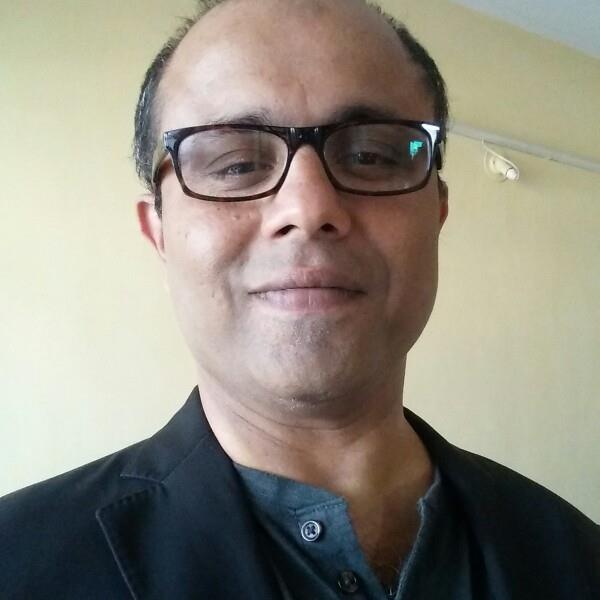
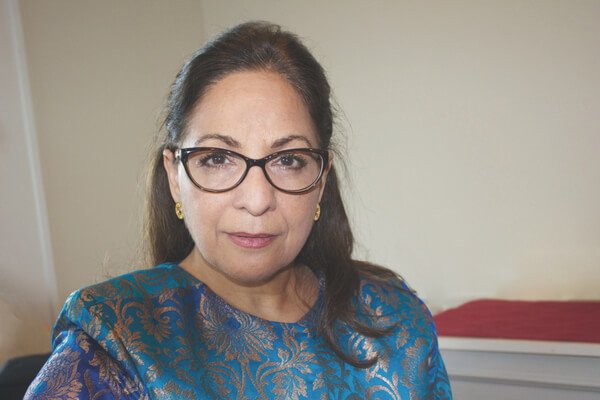
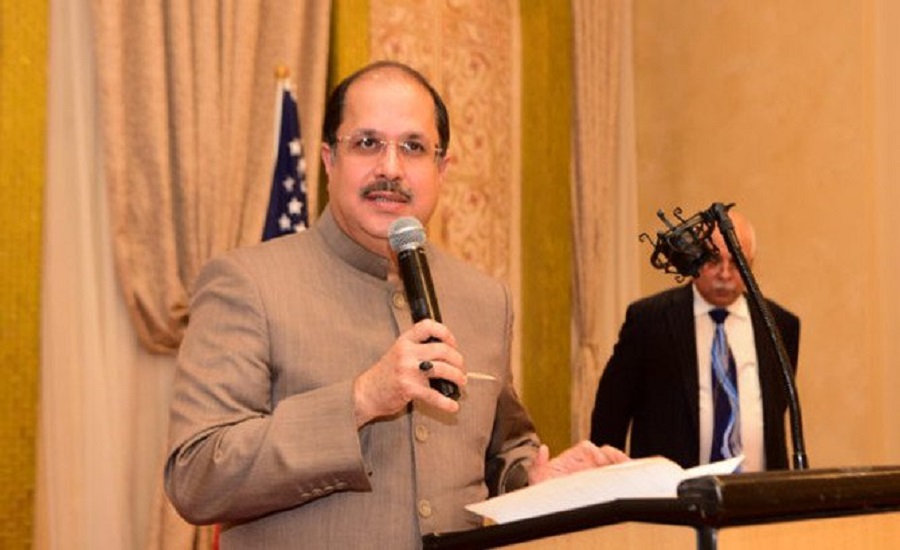
State Sen. Mujtaba Mohammed (D) says Asian Americans should look to the example of African Americans and the civil rights movement.
ILLUSTRATION: DAMON DAHLEN/HUFFPOST; PHOTOS: MUJTABA MOHAMMED / “The African American community is a huge example of inspiration for people of color, for immigrants, to stake your claim for this country, that your voice matters,” says North Carolina state Sen. Mujtaba Mohammed (D).
Every week during May’s Asian Pacific American Heritage Month , HuffPost’s #UpNext Series will highlight Asian Americans who are on the rise in public service. This is part one.
Not every elected official jokes about disappointing their parents “because I ended up becoming a lawyer” or shares what they’ve learned from “Asian uncles,” but North Carolina state Sen. Mujtaba Mohammed does.
“Every Asian uncle talks about how they came with, like, $20 in their wallet,” the Democratic lawmaker told HuffPost, referring to how children of immigrants often grow up hearing their parents and family friends recount the hardships of adapting to the U.S. “My dad has that same stereotypical story that most Asian parents always tell their kids.”
At 33, Mohammed is North Carolina’s youngest state senator, representing parts of Charlotte in a region often seen as a monolith, yet home to the fastest growing Asian-American population in the U.S.
Elected last year after ousting an incumbent in the Democratic primary, Mohammed — like many of the record number of people of color who ran for office in 2018 — saw the election of President Donald Trump as “a huge motivating factor,” he said.
“Donald Trump came along in 2016, and I felt like I needed to step up and do more for our community. A lot of folks, at least in my age group and other kids I grew up around, they ended up becoming doctors and engineers. Political activism is something that’s not very important, unfortunately, sometimes in our community,” he said.
Born in Ohio to parents from Hyderabad, India, Mohammed grew up in Greenville, South Carolina, and Charlotte. His dad worked in retail while his mom raised him and his siblings.
Though his parents pushed him toward medicine and engineering, seeing those fields as markers of success, Mohammed credits their focus on family and community as inspiration for his career in public service.
He noted that in many Asian cultures, “it’s never about you, as opposed to the American individualism that we have,” he said. “It’s always about a team, it’s always about your family. You oftentimes have to make your own personal sacrifices for the good of the family. And that’s kind of how I’ve always, at least as an adult, tried to live my life. It’s part of the reason why I decided to run for office.”
Initially a biology major at the University of North Carolina at Charlotte, Mohammed switched to history and political science before going on to law school.
In diverging from the career paths of many of his doctor/engineer peers, he also saw similarities, envisioning “lawyers as social engineers,” he said. “You get to use the Constitution to protect some of the most vulnerable communities.”
Get involved, because nobody else is going to do it, because there’s not that many of us.”State Sen. Mujtaba Mohammed (D-N.C.)
Mohammed became an attorney at the Council for Children’s Rights in Charlotte, which provides legal services and representation for children, before working as an assistant public defender in Mecklenburg County’s Public Defender’s Office.
He served on the boards of some community nonprofits and as the vice chair of the Mecklenburg County Democratic Party, but he never really thought about running for public office until Trump’s election, when it all “ended up happening really fast.”
Reflecting on Trump’s presidency, he said it has been encouraging to see “so many people stepping up to run for office that look a lot like the people they represent, which is huge.”
Mohammed believes Asian Americans wanting to become more engaged in public service and activism should look to the example that African Americans set during the civil rights movement.
“They never immigrated here. They were forcefully brought to this country, and they had to fight for themselves,” he said. “The African American community is a huge example of inspiration for people of color, for immigrants, to stake your claim for this country, that your voice matters.”
In all fields where Asian Americans are underrepresented, it’s crucial for them “to be at the table” and “begin to write our own narrative,” Mohammed said, advising Asians “to get involved, because nobody else is going to do it, because there’s not that many of us.”
“It’s so important for our young people and our children to think outside of the box and, you know, practice law, go into journalism, get into acting or comedy, because we still don’t have people on television that look like us,” he said. “Don’t expect somebody else to come write your story for you.”
source: http://www.huffingtonpost.in / HuffPost / Home> Edition IN> News> Asian Voices / by Marina Fang, HuffPost / May 08th, 2019
The new treasurer for Democrats Abroad India, Dr Tausif Malik is the founder of America’s largest community-based Spelling Bee competition (muslimspellingbee.com). The Indian-American social entrepreneur brings a tremendous amount of experience and knowledge to the job; he is the pioneer in creating branding through recruitment advertisement of IT clients in the mid-90s. Connected to India engaged with him to know about his journey from Pune to Chicago and back to Pune again. Here are the excerpts:
Dr Tausif Malik – treasurer for Democrats Abroad India.
CtoI:Your LinkedIn profile says you are an entrepreneur, maverick, evangelist and an artist. How do you manage to be good at so many things?
Tausif Malik: According to me, all my personality attributes are interrelated; for example, one has to be a maverick to take the risk to be an entrepreneur, you need to be an artist to create an image about your work and evangelist to promote your work and business.
CtoI:What is your vision as the new Treasurer for Democrats Abroad India?
Tausif Malik: My vision as an elected board member for Democrats Abroad India (Democratic Party USA’s International chapter) is to create awareness amongst Americans living abroad that they can register and vote for city, state and federal elections through a vote by mail option. America is one of the few countries which offers this option to its citizens, so Americans living in any part of the world can participate in elections. Many Americans living abroad are not aware of these rights.
Currently, America is getting affected on a daily basis due to incompetent leadership. My hope is more Americans living abroad get registered and vote by mail and elect competent candidates.
CtoI: Please tell us in detail about your recent ventures; Muslim Spelling Bee, Muslim Science Bee, Muslim Math Bee, Muslim Geography Bee and Muslim History Bee.
Tausif Malik: The Muslim Spelling Bee was started in 2012 with the intention of being the first-ever spelling competition specifically meant for Muslim students. The competition is open to students of all ethnicities and religious denominations. The main impetus for creating the bee was to provide an opportunity for Muslim students between the ages of 8 and 14 to have such a contest.
All other major minority groups in the US have their own spelling bees, but Muslims did not, hence, I decided to go ahead and start one. It was during the month of Ramadan in 2011 that the idea for the spelling bee occurred to me. I started getting the word out with local friends and community leaders in the Chicago area, but soon found that I was being inundated with requests for more information from organisers around the country. This was surprising as I had only sent the information out to a few people in the local area. I really did not anticipate the kind of level and support this idea got from all over the US.
In 2012, the first iteration of the Muslim Spelling Bee was held, with 460 students participating from cities all over the nation. The bee currently takes place in 11 different cities, with some 55 community organisations coordinating their own regional competitions. These competitions are divided into four different groups, labelled A through D, and each one has several winners who rank from 1-3. Each of the groups is of a different age level: 0-7, 8-9, 10-11, and 12-14 years of age. The winners then advance to the championship round in Chicago.
Two contestants in 2013 were even Hindu students from India, a great sign of how widespread the reach and power of the spelling bee really is.
Photo courtesy: Dr Tausif Malik
CtoI: You had your initial education from Pune, India and then you moved to Chicago, US, and now you are back to Pune. What brought you back to your roots? Please tell us about your journey and experiences.
Tausif Malik: I was born and raised in Pune (Maharashtra) and now I’m based out of Chicago. I did my schooling from Bishop’s School Pune, studied at Poona College (11th to M.Com) and Institute of Management Education, Pune (PGDBA). I did my Doctorate in Business Administration (DBA) from Argosy University, Chicago.
I emigrated to Chicago in 2007 to fulfil the dream of my late father Ata-ur-Rehman Malik, who believed that I can have a great future in the US. I returned to India in 2015 to take care of my ailing mother, during that time I launched various startup festivals, including the All India Muslim Business Startup Network (AIMBSN.com), GCC Startup Fest (GCCStartupFest.com), India Startup Fest (IndiaStartupFest.com), GCCStartup.News (GCCStartup.News) and Schoolpreneur.biz, in an effort to empower individuals to achieve economic liberation and benefit from India’s government initiatives Make in India, Digital India, Skill India, Standup India and Startup India.
CtoI:In a sentence describe your life as an Indian-American.
Tausif Malik: It’s actually a great combo, being part of India, the largest democracy, and America, the oldest democracy. I love both countries because they gave me a great platform to excel personally and professionally. Life is exciting as I am living as an American expat in India and in US, I was living as an Indian expat.
CtoI: Do you think that the xenophobia which has engulfed America, which started during the elections and continues post the election of President Trump, will settle down? Or is this the new America?
Tausif Malik: I don’t know how far this will go and how it will impact in the long term. But it has truly rallied Americans under one banner, and everyone is standing shoulder to shoulder with their fellow Americans. After the Muslim ban, Americans stood with their fellow American-Muslims across US. I have never seen this happening anywhere in the world. This xenophobia, in fact, has pushed many American-Muslims to contest city, state and federal elections and they have got a lot of support from fellow Americans. I also contested for the same reason.
CtoI:You did your doctorate in Chicago. Please share your achievements and experience as an Indian-American.
Tausif Malik: I was the pioneer in creating branding through recruitment advertisement of IT clients in mid-90s. I had developed and executed branded recruitment advertisement campaigns for Infosys, Geometric Software Services, Scala Mindworks, ITB India, Veritas Software India and others. I had co-founded Crossover Software with India’s no #1 pop star Lucky Ali and later moved to Sultanate of Oman and established Oman’s first PR agency SIMPA PR and Press Club of Oman. I was invited to co-author a book Doing Business with Oman, which has been selling since 2002. I headed major advertising agency networks in the Middle East and India. I teach at major MBA and MassComm Institutes, and a speaker at major startup events and mentors startups.
My Achievements:
1.Nominated and shortlisted for prestigious Ellis Island Medal of Honor, USA 2016. 2. Past Nominated for Sheikh Muhammad Al Makhtoum ruler of Dubai, UAE promoted Prestigious Global Islamic Economy Award – Dubai Government in association with Thompson Reuters. 3. Panellist with The Guardian Newspaper UK. 4. Community Member on Illinois Muslim Council by Governor Pat Quinn. 5. External Review committee member University of Wisconsin School of Architecture.
CtoI:You are inclined towards start-ups. Can you share your ideas on marginal groups (Dalits and Muslims) still lagging behind?
Tausif Malik: Yes, startups help the youth and individuals through empowerment, as it provides employment and a source of income. But nowadays, the way they are established and operated is highIy unprofessional as many are there for the quick money. But consolidation will happen before long and they will change from boys to men.
As per the Indian census, Muslims constitute 13-15 % of the population and they best way to connect them to the mainstream is through the Prime Minister Narendra Modiji’s policies such as Make in India, Digital India, Skill India, Standup India and Startup India.
These programmes can help Muslims in India to earn income, create income and create economic growth. I have hosted two different events in 2016 and we have generated a large business amongst the attendees. Our next event, All India Muslim Business Startup Network (AIMBSN.com), will be hosted in July 2017 in Jaipur. We are also setting up incubators and innovation at minority institutions, so we can inform people about the startup ecosystem, Make in India, Digital India, Skill India, Standup India and Startup India and enrol more Muslim entrepreneurs.
Also, we will be hosting All India Muslim Business Startup Network (AIMBSN.com) at global locations where are sizeable Indian Muslims, such as London, Dubai, New York, Chicago, Singapore and Australia. As many Non-resident Indians (NRIs) Muslims want to establish businesses in India, invest in India and support Indian Startup Ecosystem. Hence, our All India Muslim Business Startup Network (AIMBSN.com) connects the Indian Muslims diaspora with entrepreneurship & Indian Startup Ecosystem.
source: http://www.connectedtoindia.com / Connected To India / Home> News> USA / by Garjma Kapil / April 20th, 2017
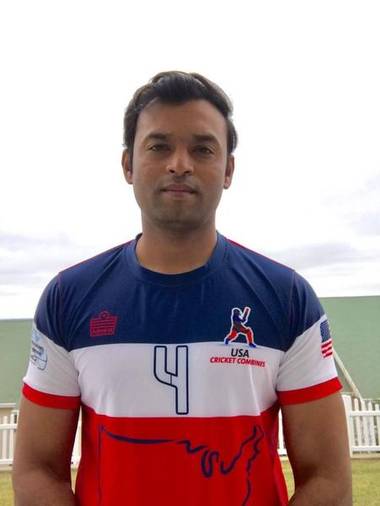
A couple of days back, the ICC Americas has named an 18-member squad for the ICC World Cricket League Division Three, and, quite surprisingly, the list features the wicketkeeper-batsman from Hyderabad — Ibrahim Khaleel !
“It is just the first step. I am not absolutely sure whether I will make it to the final 14. It would be cleared once the ICC Americas approves my citizenship process,” says Ibrahim Khaleel. – SPECIAL ARRANGEMENT
For the last four years, neither his friends in Hyderabad nor his team-mates, who played with him in the Ranji Trophy, knew anything about Ibrahim Khaleel’s whereabouts. All they knew was, he had shifted base to the U.S., to try something new.
But now, his friends and colleagues would be in for a surprise.
A couple of days back, the ICC Americas has named an 18-member squad for the ICC World Cricket League Division Three, and, quite surprisingly, the list features the wicketkeeper-batsman from Hyderabad — Ibrahim Khaleel!
On Monday evening as Khaleel spoke to Sportstar from Chicago, he sounded emotional. “It is just the first step. I am not absolutely sure whether I will make it to the final 14. It would be cleared once the ICC approves my citizenship process,” he said.
Khaleel sounded happy to be back in the groove. A couple of weeks ago, he was called for a trial in Houston. The selectors and the team’s chief coach Pubudu Dassanayake, took trials of all the players and shortlisted 18. “It was a rigorous training programme. It went on well, and I was quite confident of making the cut,” he said.
But then, Khaleel, who has played 57 first-class matches for Hyderabad, was a bit cautious. And that’s because of his citizenship.
Even though he shifted base to Chicago four years ago, he is yet to acquire a full-term U.S. citizenship. “My papers have been processed, and I am waiting for a final clearance. It should not be a problem, but then…” the 34-year-old paused.
It was only last month that the U.S. President, Donald Trump, had revised the policies, blocking immigration from seven predominantly Muslim countries. But that isn’t bothering Khaleel, who moved to Chicago to be with his wife — a doctor by profession and a U.S. citizen. “I don’t have much idea about the recent immigration order. I had applied a long time back. Hopefully, things will go my way,” he said.
After moving to the U.S., Khaleel initially played for a local club in Chicago. “There was a friend from Hyderabad, who would play for the club. He only asked me to play there.”
That’s how, Khaleel started making his mark in the U.S. Last year, there was a Regional combined camp organised by the ICC Americas, where eight overseas players were asked to be present. And, from the group, Khaleel was chosen for the final trials. “When they called me, I was not too sure about the prospect. But I just wanted to be associated with cricket,” he said.
____________________________
‘I can only keep my fingers crossed. My cricketing days in India have taught me not to
expect too much’
_____________________________
Coming from a family of cricketers (his father, M. A. Khaleel, played for Railways in the Ranji Trophy in the early 1980s), Khaleel started his career under the watchful eyes of Arshad Ayub. “It all started in Hyderabad. Slowly, I made it to the State team and left my mark in the domestic tournaments. But then, I had to take the tough call of leaving the country. The scopes were less there,” a rather dejected Khaleel said.
Even after moving to the U.S. in 2013, Khaleel continued playing for Hyderabad in the 2014-15 season. “But after that, it was not possible to hop between India and the U.S… I had to set my priorities right,” he said.
Was it just the priorities that made him move to the U.S., or was it something else?
Khaleel smiled and politely answered: “I have no regrets. I have thoroughly enjoyed my game.”
Not the best of choices
While Khaleel said he had no regrets in life, some of his former team-mates in Hyderabad indicated that the stumper had taken a couple of wrong decisions, which affected his career. In 2007, he left the Hyderabad Ranji Trophy side and joined the Hyderabad Heroes side in the Indian Cricket League (ICL). That affected his career.
Later, when the BCCI brought back the ICL players in the mainstream, Khaleel was bought by the Mumbai Indians in the Indian Premier League (IPL). However, he had to warm the benches. “I was looking for an opportunity, but that never came my way,” he said.
In 2011, Khaleel created a world record in wicket-keeping for any first-class game with a tally of 14 victims in a Ranji Trophy Plate Group B match against Assam.
But even after that his career never really took off, and that prompted him to move overseas. “I was not too happy with a few things in Hyderabad cricket. And then I decided to move out,” he said, adding: “I have lost touch with most of my team-mates.”
Reserved person
Ever since leaving Hyderabad, Khaleel seems to have gone incommunicado. While he doesn’t have a social media account, the cricketer did not even use WhatsApp till a year ago. “I am a reserved person, and don’t enjoy talking to too many people. I had to install WhatsApp only after my parents and my sister persuaded,” he said with a smile.
Perhaps, that’s why most of his old friends and team-mates can’t even reach him despite repeated attempts. “That’s how I am,” he laughed.
With the USA side set to begin its campaign at the World Cricket League on May 23, Khaleel hopes to be in the final team. “I can only keep my fingers crossed. My cricketing days in India have taught me not to expect too much,” a rather cautious Khaleel said.
After all, there is many a slip, between the cup and the lip!
source: http://www.sportstar.thehindu.com / Sportstar / Home> International / by Sharan Acharya / March 27th, 2017
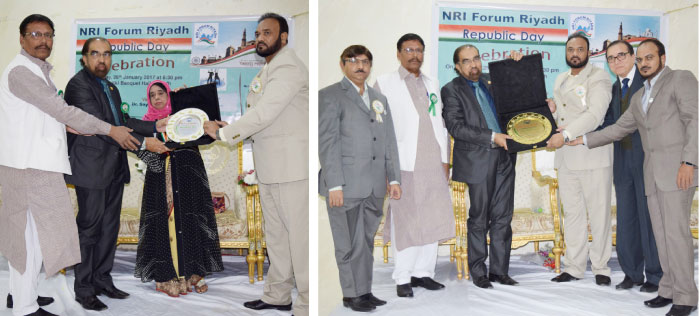
The NRI Forum (NRIF) Riyadh celebrated the 68th Republic Day of India with fanfare here. Patriotic songs and popular Bollywood numbers by eminent singers and the felicitation of Pravasi Bharatiya Sammam and Pravasi Excellence Award winners marked the celebration.
Mrs. Zeenat Jafri was felicitated by NRIF for her latest accomplishment of receiving the Pravasi Bharatiya Samman Award by Indian President Pranab Mukharjee in India. Terming her as the torch-bearer of knowledge and education in the Kingdom, Vice President NRI Forum Dr. Sayeed Mohiuddin said, “Selfless service and utmost dedication are the words that truly describe her.”
“At the time when expatriate community in the capital did not have any educational facility for children of Indian expatriates, Mrs. Jafri ventured into this field by making a small beginning. An educationist herself, she started a school for Indian children at her home. The school, which was established with the blessings and permission of Mrs. Indira Gandhi, groomed by Mrs. Jafri is now known as International Indian School Riyadh (IISR) and is one of the prominent Indian community schools in Saudi Arabia. She was the principal of the girls section of IISR from Aug 1982 to May 2014,” Mohiuddin said.
After receiving the memento of appreciation from eminent community leaders Mohammed Abdulrahman Saleem, Mohammed Quaiser and Syed Akram Mohiuddin, Mrs. Jafri thanked NRIF for the honor and Indian Embassy officials for recommending her name to the Indian government for the prestigious award. She highlighted the importance of education and stressed on the necessity for all to gain knowledge and education. She appreciated the activities of NRIF and assured her support in all possible ways.
Chief Guest Mohammed Abdulrahman Saleem, president Hindustani Bazm-e-Urdu Riyadh, was felicitated by NRIF for receiving the Pravasi Excellence Award by the Confederation of Telangana Associations (COTA) in Hyderabad. A memento of appreciation and floral garland was presented to him. COTA conferred on him this award in recognition of his continuous services spread over four decades.
He founded different professional and cultural organizations and worked for the promotion of Urdu language and literature. An ardent lover of Urdu language and literature, his passion is to keep Deccani Tahzeeb alive and see it flourish.
Saleem thanked the NRIF and highlighted his activities and accomplishments during his long stay in the Kingdom.
Guest of Honor, President Tanzeem Hum Hindustani Mohammed Quaiser congratulated Mrs. Zeenat Jafri and Abdulrahman Saleem for achieving eminent awards.
President NRIF Syed Akram Mohiuddin highlighted the activities of NRIF and said the forum is involved in various activities since its inception, including educational, sports, cultural, religious and other social activities. The memorable ghazal nite by Zulfiqar Ali Khan was a grand success and was very much applauded by the expatriates in the Kingdom.
Eminent Singers of “NRI Melody Makers” — Rahmat Ali Khan, Abdul Qadeer Ali Alvi, Syed Riyaz, Muneer Ahmed and Miss Shreeja Janardhan presented melodious songs to make the evening memorable.
A young student of Al Yara International School Aswin Siva Prasad addressed the gathering on the Republic Day of India and its importance.
General Secretary Nooruddin Jahangeer and Vice President Cultural Affairs Shakeel Mah handled the overall arrangements.
source: http://www.saudigazette.com.sa / Saudi Gazette / Home / February 14th, 2017
Daisy Khan was just 3 when she put on a pair of red boxing gloves and walked to the front yard of her family home in Kashmir. She had been bullied by a bigger child the day before and her father wanted to teach her how to throw a punch in order to stand up for herself. In those gloves, young Daisy saw the need to not physically fight a bully but to become someone else, someone who fights for what she believes in. And ever since that day in the yard, Daisy has never set down her boxing gloves.
As Founder and Executive Director at the Women’s Islamic Initiative in Spirituality and Equality (WISE) – a women-led organisation committed to peacebuilding, equality and justice for Muslims around the globe – she continues to don her gloves and shows up to the world’s arena every single day.
“It is a moral imperative for people of all faiths to speak out against injustices committed in the name of their religion, because ‘a crime committed in the name of religion is a crime against religion.”
Daisy Khan founded WISE in 2005 to address the propagation of gender inequality in the name of Islam. “Every religion has seen the oppression as well as the emancipation of women. It is a moral imperative for people of all faiths to speak out against injustices committed in the name of their religion, because ‘a crime committed in the name of religion is a crime against religion.’ ” asserts Khan. Among its many successful programmes and actions, WISE partnered with an Afghani WISE woman to conduct the Imam Training Programme to End Violence Against Women (ITP) in 2010 in Afghanistan.
Communities in Afghanistan deeply trust and respect Imams – even the Taliban. With the aim to clarify distorted patriarchal misinterpretations of the Quran, WISE spread the message about girls’ education through 50 of the most respected Imams in Jalalabad and Kabul. Wary at first, the Imams soon embraced the programme as it spoke of women’s rights within an Islamic framework with no ulterior agenda. Daisy emphasises this role of Muslim men who can wield power openly or behind the scenes – whether they reside in conservative, traditional or secular societies – to restore the God-given rights of women. This is reflected in Prophet Muhammed, who honoured his wife Khadijah, gave property rights to women, abolished the pre-Islamic practice of female infanticide, scrupulously helped with chores, respected his daughters and sought his wife’s advice on community affairs. The Prophet, in his last sermon, even emphasised this point by saying “treat your women well and be kind to them for they are your partners and committed helpers.”
Daisy Khan believes that “an essential part of women’s struggle is the demand that their voices be at the forefront of the debates about their roles, responsibilities and status.”
Daisy Khan believes that “an essential part of women’s struggle is the demand that their voices be at the forefront of the debates about their roles, responsibilities and status.” The author and reformer maintains that women advocates who recognise and appreciate the importance of religion in the day to day lives of Muslim women , and who speak with a humane voice – the Islamic voice – are effectively challenging the religious legitimacy of people who use Islam to disadvantage women and girls. “Muslim women activists who tend to avoid Islam altogether suffer from an absence of religious legitimacy which in turn fails to speak to most Muslims,” explains Khan.
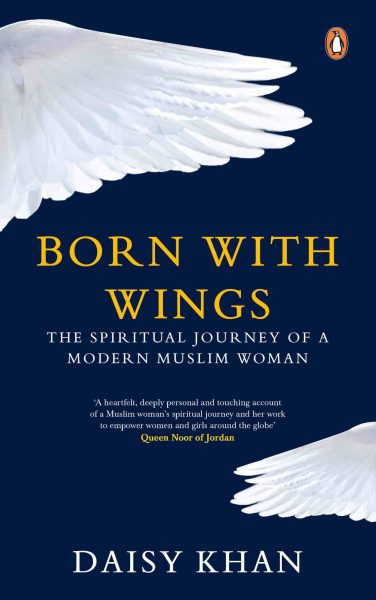
Image Credit: Penguin Random House India
WISE established the first Global Muslim Women’s Shura Council to examine issues that Muslim women of all sects were facing worldwide. Its 30 members included women from different nationalities with divergent views and comprised of scholars who were well versed in Islamic law, as well as activists with comprehensive knowledge of contemporary issues faced by Muslim women. The Council has mitigated any criticism because its position papers on FGM, child marriage, domestic violence, adoption and women’s leadership are thoroughly researched, evidence-based and grounded in scripture. The Council discussed how, wherever obstructions have been encountered by women, it has not been by Islam the faith, but by local traditions and customs and interpretations mandated by men in the name of faith. With the support of this council, women would no longer have to rely on the interpretation of male scholars with outdated attitudes toward women.
One woman challenged Daisy Khan. She asked the author – who gave you the authority to create a Muslim women’s shura council? Daisy’s answer was to point to the sky.
However, everyone did not agree. One woman challenged Daisy Khan. She asked the author – who gave you the authority to create a Muslim women’s shura council? Daisy’s answer was to point to the sky. She cited the Quran 42:38–39: “Those who respond to their Lord, and establish regular prayer, whose affairs are conducted by mutual consultation [shura] among themselves, and from what we have provided them, they spend, and who, whenever tyranny afflicts them, defend themselves.”
Khan also shared that there were shura councils dominated by men all over the world and that there were no barriers to women creating one for themselves. It took a number of years to create an effective working structure for the shura council. “I attribute the success of the Council to one key factor – by bringing a religious dimension to Muslim women’s advocacy, we were able to prove that Muslim women’s rights are embedded in Islam,” states Daisy.
Daisy Khan believes that it is important to engage in serious dialogue with people of other faiths, distinctly when religious and ethnic differences become powerful tools that tear the social fabric of society
Daisy Khan believes that it is important to engage in serious dialogue with people of other faiths, distinctly when religious and ethnic differences become powerful tools that tear the social fabric of society. Prior to setting up WISE, Khan co-founded the American Society for Muslim Advancement (now the Cordoba House), with her husband Imam Feisal Abdul Rauf, where she led interfaith collaborative events such as the theatre productions Same Difference and the Cordoba Bread Fest Banquet which saw Christians, Jews and Muslims come together on stage. “If we look at things with human eyes, we see a multitude of perspectives; but with sincere interfaith dialogue, we can step into a space where we see one another as God’s creatures, bound by one compact, by one set of ethical and moral values. In that space, we see with God’s eyes, we see with no astigmatism,” expresses Khan.
The author observes that a vast majority of Muslims reject violence as they continually struggle to divorce themselves from extremism. American Muslims are peaceful and patriotic members of their communities who proactively condemn terrorism – yet, one terrorist attack is used to condemn an entire faith community. “The branding of all Muslims as a national security threat may be popular today, but in reality, it is offensive and counter-productive; it burns bridges, brings in a rhetoric of ignorance on the world stage and allows extremists on both sides to divide us by playing on our worst fears. Now, more than ever, is the time for unity – unity of purpose and unity of achievement. This is a practical unity – one that we can use to build a better future,” emphasises Daisy Khan.
Feature Image Credit: Penguin Random House India
Born With Wings: The Spiritual Journey of a Modern Muslim Woman, by Daisy Khan, has been published in Viking by Penguin Random House India. It is priced at Rs. 599, and is available online and in bookstores.
source: http://www.shethepeople.com / She The People / Home / by Jessica Xalxo / June 19th, 2019
Dr Ausaf Sayeed’s last posting in the Kingdom was as the consul general in Jeddah from August 2004 to July 2008. — File photo
Exclusive Interview
HYDERABAD-based Dr Sayeed served in Saudi Arabia thrice in different capacities – first, as the Consul (Haj) in Jeddah in 1995-96, then as the Second/First Secretary in Riyadh from 1996-98 and as Consul General of India in Jeddah from 2004-2008. He has earlier served as the Consul General of India in Chicago (for mid-west US) and as the Ambassador of India to Seychelles before assuming charge as the subcontinent’s Ambassador to Saudi Arabia. Dr Ausaf Sayeed hails from a literary family. His father Awaz Sayeed is a literary figure in Hyderabad.
“The bilateral relations between India and Saudi Arabia are at an all-time high”, believes the newly appointed Indian Ambassador to the country Dr Ausaf Sayeed. Crediting the step up to the recently concluded ‘highly successful’ first state visit of the Saudi Crown Prince Mohammed Bin Salman, the Indian Ambassador discusses the benefit of Saudi investments in India, problems of the Indian Diaspora and plans to adopt a pro-people approach in this exclusive first interview with Syed Khalid Shahbaz, after his appointment as the Ambassador of India to Saudi Arabia.
Following are the excerpts of the interview:
How do you perceive returning to Saudi Arabia this time as an Ambassador?
I have served in the Kingdom of Saudi Arabia thrice before in various capacities – first as Consul (Haj) in Jeddah in 1995 to 1996, then as Second/First Secretary in Riyadh from 1996 to 1998 and as Consul General of India in Jeddah from 2004-2008. However, I regard my current assignment as Ambassador of India to Saudi Arabia as one of my most important and prestigious postings. It also comes at a time when the bilateral relations between India and Saudi Arabia are at an all-time high with the recently concluded highly successful first State visit of His Royal Highness Crown Prince Mohammed bin Salman bin Abdul Aziz Al Saud, Deputy Prime Minister and Minister of Defence of the Kingdom of Saudi Arabia to India from 19-20 February 2019.
What according to you are issues faced by Indians in Saudi Arabia?
We have a large Indian Diaspora comprising of 27 lakhs individuals who are working in different sectors of the Saudi economy and contributing meaningfully to the development of the Kingdom. The Indian workers generally enjoy a very good reputation in all the Gulf Countries, including Saudi Arabia and are much sought after for their sincerity, dedication and hard work. Over the years, the Ministry of Labor and Social Development of Saudi Arabia and the Protectorate of Emigrants and other official bodies in India have evolved a healthy mechanism of early resolution of common issues affecting the Indian workers. The Community Welfare wings of the Indian Embassy and the Consulate General of India are very proactive and are rendering real-time assistance to the Indians in need. Typically, the issues related to service conditions, payment of dues, etc. Those Indian community members with children going to high school are also faced with the challenge of higher education for their children for which opportunities are limited for expatriate children in the Kingdom.
Your service as the Haj Council and Consul General is perceived as remarkable by many. What is the reason behind this success?
I have been fortunate to work closely with people in my various assignments starting from the Regional Passport Officer in Hyderabad (May 1993- January 1995) and later as a diplomat in different countries. I had always made myself accessible to people, who could reach out to me very easily through email, phone or social media to discuss anything of concern to them. This also enabled me to understand the pulse of the people and helped me in dealing with issues in a practical and fair manner.
The bilateral relations between India and Saudi are strong. As an Ambassador to Saudi Arabia, what role will you be playing to help bilateral relations become even more formidable?
India and Saudi Arabia enjoy cordial and friendly relations reflecting the centuries-old economic and socio-cultural ties. Both countries have decided to work together closely in different fields such as oil & gas, trade & commerce, investments, security and strategic cooperation and to jointly counter the menace of international terrorism which is threatening global peace.
Saudi Arabia is a major source of energy for India, as we import about 20% of our crude oil requirement from the Kingdom. As you are aware India is the third largest consumer of crude in the world after the US and China.
Saudi Arabia is India’s fourth-largest trading partner, after China, USA and the UAE. India’s bilateral trade with Saudi Arabia is worth the US $27.48 billion. More than 420 Indian companies operate in the Kingdom through joint ventures or with 100 per cent ownership.
Recently, the Kingdom of Saudi Arabia has announced its decision to invest around US $100 billion in India in the areas of energy, refining, petrochemicals, infrastructure, agriculture, minerals and mining, manufacturing, education and health care. This includes Saudi Aramco’s proposed investment in the world’s biggest oil refinery and petrochemical complex to be set up on the West Coast of India.
My endeavour would be to closely follow-up on the various Agreements signed and other important decisions taken during the recent high-level visits between the two countries so that the bilateral political, strategic, economic and people-to-people relations are consolidated and strengthened further.
A significant proportion of Indians are returning to India from Saudi Arabia? What can be done to prevent further fallback and offer them employment in Saudi Arabia?
The migration of Indian workers to the Gulf Countries is robust and dynamic and depends on the demand and supply in these countries. Despite the nationalization of jobs in many countries, a large number of Indians continued to go to the Gulf Countries seeking newer job opportunities. We have 33 lakh Indians working in the UAE and 27 lakhs in Saudi Arabia. There were special measures put in place for Indian workers to mitigate the effects of nationalization and minimize the impact. The governments of India and Saudi Arabia have started working on integrating the migration platforms of both the countries viz., e-Migrate and e-Tawtheeq to create a robust migration environment.
Saudi Arabia is investing one billion dollars in India. Can these NRIs who are returning home be accommodated in new and proposed projects for their employment in any way?
The proposed investments from the Kingdom of Saudi Arabia in India cover diverse sectors of the economy and are expected to create growth and dynamism in these sectors which would be very good for the overall economic growth.
During your previous terms, you have proactively promoted and propagated the use of Urdu language, culture, and related traditions but the activities were not continued after your departure. Does your return to Saudi Arabia hint at its revival?
I had always encouraged cultural diplomacy and greater people-to-people engagement as an effective way of creating understanding between civilizations. During my previous stint in Jeddah, I have organized the first India Festival, the First Asian Festival the First Asian Film Festival in Saudi Arabia. I was also closely involved with the formation of the Saudi-India Friendship Society under the patronage of the Saudi Ministry of Information and Culture and the Saudi-India Civil Society Dialogue. Certainly, I would do everything possible to encourage all such constructive activities.
What is your opinion about organizing a global Urdu conference in Riyadh / Jeddah?
A large section of the Indian Diaspora in the Kingdom is Urdu speaking. I had encouraged the introduction of external Urdu examinations of MANUU in Saudi Arabia for the benefit of Non-resident Indians (NRIs). However, due to unavoidable circumstances, these examinations had to be discontinued. I was also instrumental in introducing an Annual Urdu Mushaira in Jeddah since 1995. This has become one of the most sought-after literary events in Saudi Arabia with Mushairas and other literary events being held in Riyadh and other cities too. An International Urdu Conference was also organized in Jeddah under the umbrella of the Consulate in 2008 in coordination with MAANU and several socio-cultural organizations in Jeddah. Certainly, all literary and cultural activities would be given due encouragement.
What are goals and targets during your tenure as an ambassador in Saudi Arabia?
Once I settle down I will focus on each of the areas of bilateral importance to both countries.
Your message for the NRIs?
I wish to complement all members of the Indian Diaspora for their hard-work, sincerity and dedication and for creating strong bridges of understanding between India and Saudi Arabia. I would like to assure everyone that both the Embassy of India in Riyadh and the Consulate General of India in Jeddah would adopt a pro-people approach and work closely for the welfare of the Indian community.
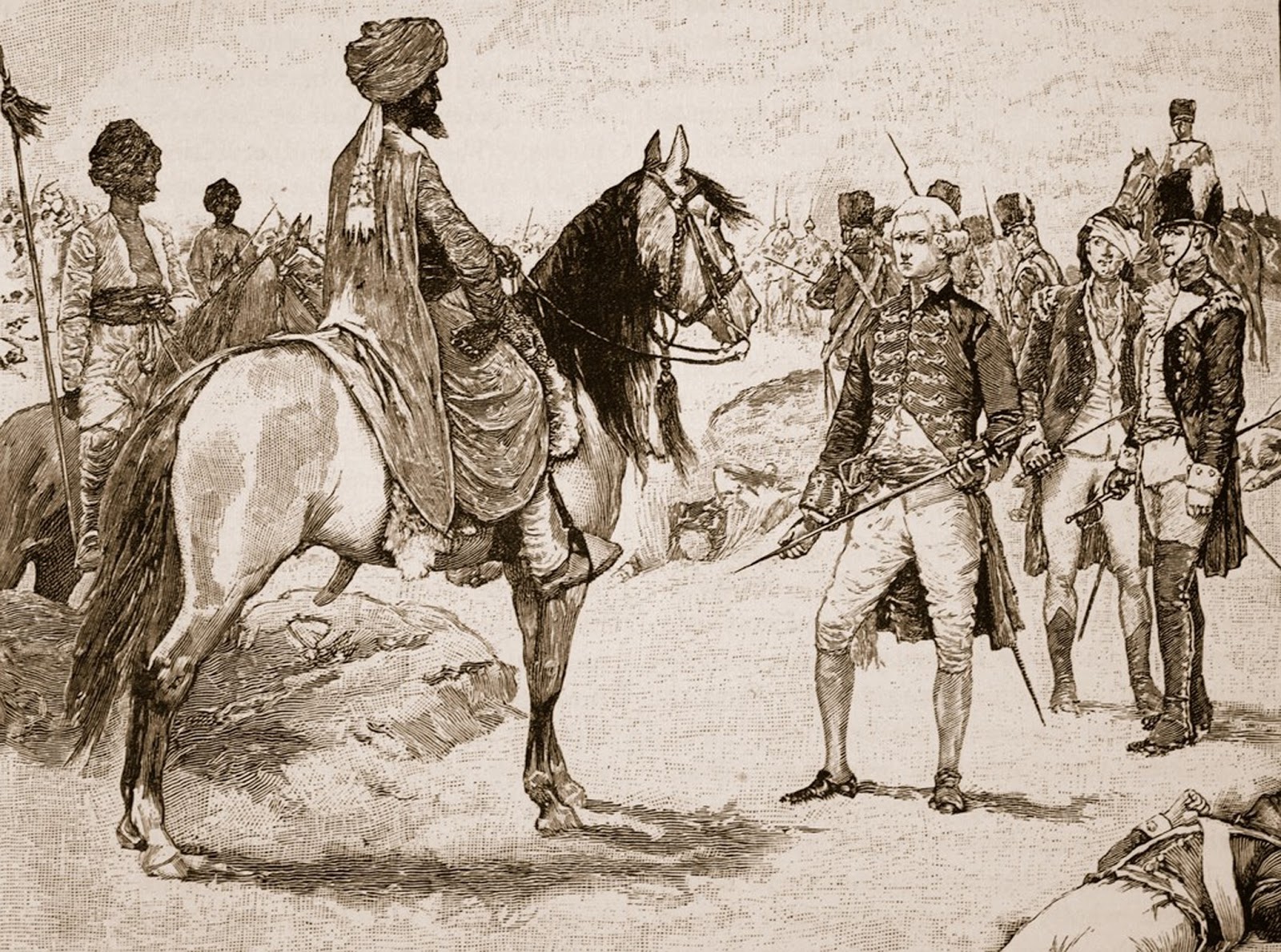
Surrender of Baillie to Hyder Ali, 1780, illustration from ‘Cassell’s Illustrated History of England’ (20th century) 1780
It was 1765 and a Duke in faraway England known for breeding race horses named his foal Hyder Ally. A few years later in 1782, and many more thousand miles away at the other end of the world, a single mast ship named Hyder Ally gave the fledgling navy of United States of America one of its greatest victories. How are these two events related and what connection did they have with the people of the erstwhile Kingdom of Mysore, the precursor to modern day Karnataka state, India?
In 1749 a 27-year old youth Haidar Ali (Hyder Ally as the British spelled his name), born at Budikote in modern day Kolar district, Karnataka put his military skills in action for the Mysore Army during the nine month siege of Devanahally Fort against a Poligor. Poligars (or Palegaras in Kannada language) were the local strong men, each controlling a few fortified settlements prior to the British rule. In early 1750s Haidar was also part of the action between the French and English in their struggle to install a person of their choice as Nawab of Arcot in which the Mysore Army sided with the English. Haidar Ali increased his stature among the military circles of the Mysore Army and was elevated asFaujdar of Dindigul in 1755. He successfully led Mysorean resistance to the Maratha invasion in 1759 and was consequently elevated as the Chief Commander of its army. Haidar’s perseverance in fighting his political foes paid off and in 1761 he was the lone survivor around the utterly weak Mysore King of the Wodeyar dynasty. He proclaimed himself a Nawab soon and found himself the de-facto ruler of Mysore Kingdom, being the most successful in protecting it from invasions by both other Indian kingdoms as well as Europeans 1. By then the British East India Company had its eyes set firmly on peninsular India having taken control of Bengal in 1757 as a consequent of the Battle of Plassey.
Back in England, Peregrine Bertie was the 3rd Duke of Ancaster in England having succeeded his father in Jan 1742 2. He raised a regiment of foot for the King of England during the rebellion in Scotland in 1745 3. He was subsequently promoted to the rank of a General in the Army in 1755 and later as a Lieut. Gen., in 1759 4. Peregrine was a leading horse racer who started a number of famous racing lines 5. He was appointed Master of the Horse to Queen Charlotte, Queen of Great Britain and Ireland in 1765. Peregrine as a military administrator was probably aware of the military and political happenings in India. In fact he was transferred in a year from the post of the Master of the Horse to the Queen to that of the King, where he was ‘responsible for overall management of all the royal stables, horses, carriages’. This transfer was due to the changes affected by the stock-holders of East India (EI) Company in England. The stock-holders were apparently alarmed by the acts of the English Prime Minister Lord Chatham to curb the influence of EI Company which by then controlled huge resources and land across in India. Given this background Peregrine was probably informed of the meteoric rise of Haidar Ali in south India’s political and military theatre. Indeed in 1760 an overconfident English Army detachment under Major Moore tasted its first defeat at the hands of Mysoreans under Haidar Ali at Trivadi near Pondicherry. And through that decade Haidar continued to spoil the political, economic and military aims of East India Company in Peninsular India with ramifications beyond this country given the global nature of the company’s trade. Did the military acumen of this Mysorean soldier play a role in Peregrine in naming his foal Hyder Ally in 1765 6,7? This may not be surprising as another race horse breeder in England named a foal Tippoo Saib in 1769 8, 9. Just a couple of years ago in June 1767, 17-year old Tipu Sultan (or Tippoo Saib as the British preferred to call him), heading a small force of the Mysore Army, stormed East India Company’s HQ in south India at Madras and nearly imprisoned the Madras councillors who threw themselves into the sea and escaped in a dingy. A year later Tipu recovered Mangalore from the British who fled the fort leaving behind their sick and wounded 10. The military and political deeds of this father-son seem to have left an impression on the British psyche.
US Navy’s tryst with Hyder Ally
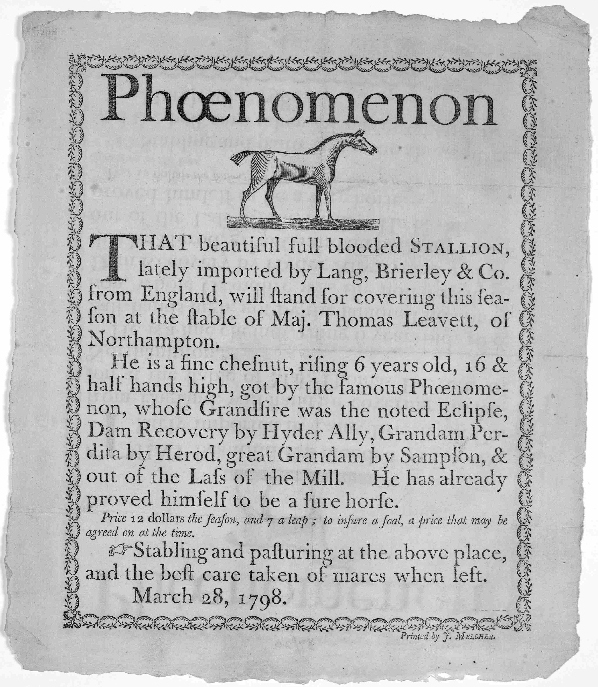
Chance a race horse imported into USA by Col. Tayloe was a line of Peregrine’s Hyder Ally 8,11. Interestingly foals within America were also being named Hyder Ally (and Tippoo Saib) in 1770s.
A pamphlet advertisement for a stallion of Hyder Ally’s line published in the city of Portsmouth, USA in 1798. Accessed from Library of Congress, USA on November 5, 2017 from this link.
The first Hyder Ally to be foaled in America was in 1777 and four other foals were recorded with the name in 18th century 12, 13. But something very interesting was recorded in eye witness accounts of America’s history in 1770s. An upheaval overtook the country in 1775 as ordinary Americans rose against the Government of Great Britain, declared independence and flew their own flag 14, 15. Apparently the first flag of the Union, now the US national flag- the Stars and Stripes, sent to the state of Maryland was hosted on a sailboat by teenaged Joshua Barney at Baltimore in October 1775 who served the US Navy since then.
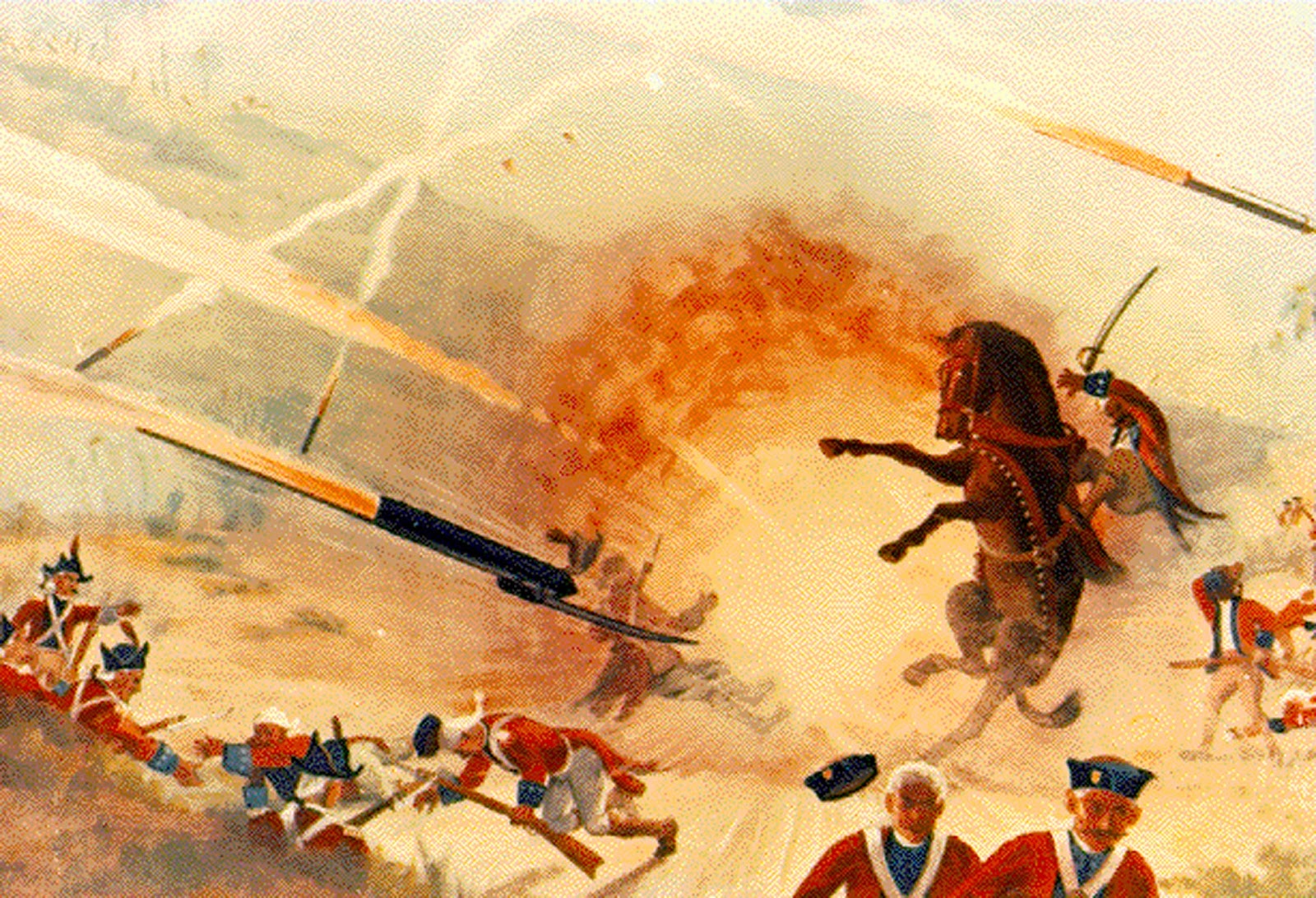
‘Rocket Warfare’, by Charles H. Hubbell (1898–1971) captures the humiliation of British at the Battle of Pollilur (Sep. 1780) by Mysorean war rockets
In 1780, in far-away Mysore Kingdom, America’s ally against the British through the French, the East India Company was suffering one of its worst reverses in its military history. The reverberations of the humiliation of British at Battle of Pollilur in September 1780 inspired the Americans who received the news 16 on 23 August 1781. On 19 October 1781, the British land force led by Charles Cornwallis (who later led EI Company’s army and its Indian allies to defeat Haidar Ali’s son Tipu Sultan in the 3rd Anglo Mysore War) surrendered to the Americans led by George Washington. Nine days later Cornwallis’ surrender was celebrated at Trenton, New Jersey with the town being decorated with American colours. The town’s who’s who along with inhabitants attended a service at the Presbyterian Church, where a discourse highlighting the occasion was delivered by a Reverend. In the afternoon the gathering drank 13 toasts accompanied with a discharge of artillery one of which was for ‘The great and heroic Hyder Ali, raised up by Providence to avenge the numberless cruelties perpetrated by the English on his unoffending countrymen, and to check the insolence and reduce the power of Britain in the East Indies’.
In October 1781, the British land force led by Charles Cornwallis surrendered to the Americans led by George Washington (Incidentally a decade later Cornwallis gave EI Company and its Indian allies victory over Haidar Ali’s son Tipu Sultan in the 3rd Anglo Mysore War in India). But America was far from being an independent nation. The British still ruled the seas. They kept a keen watch on the ships entering and exiting the ports of north east USA, often capturing the vessels and looting goods 17.
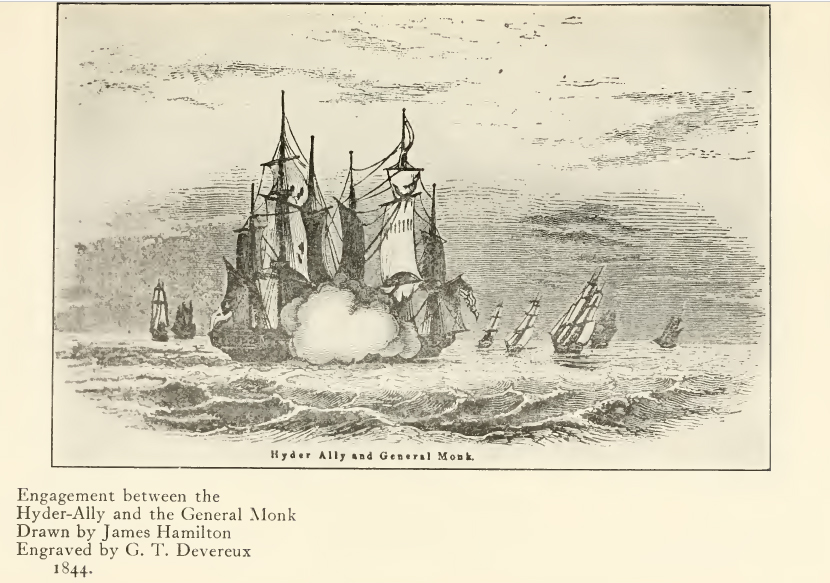
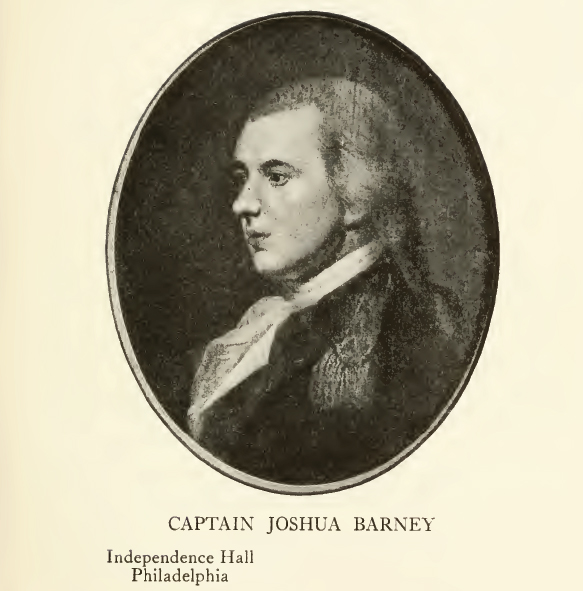
General Washington an American sloop-of-war was captured by Admiral Arbuthnot, and placed in the king’s service under a new name The General Monk, which was then used to pirate American ships. By 1782 the commerce of Philadelphia City as well as the ordinary life of the residents of the coast and nearby streams was deteriorating. As the fledgling American Union was not in a position to protect the affected vessels the State of Pennsylvania, at its own expense, fitted a number of armed vessels that operated in waters leading to Philadelphia. The state purchased Hyder Ally, a small sloop (single mast ship) equipped it with sixteen six-pounder guns to help protect the American vessels. 23-year old Lieutenant Joshua Barney, now in the US navy, arrived at Philadelphia where he was honoured with the command of Hyder Ally17. Assigned with recruiting men, Barney used a poem penned by Philip Morin Freneau18 to attract young American men to the ship. The poem exalted Haidar Ali’s bravery against the British with the following lines:
Come, all ye lads who know no fear,
To wealth and honour with me steer
In the Hyder Ali privateer,
Commanded by brave Barney.
From an eastern prince she takes her name,
Who, smit with freedom’s sacred flame,
Usurping Britons brought to shame,
His country’s wrongs avenging;
Come, all ye lads that know no fear.
With hand and heart united all
Prepared to conqueror to fall.
Attend, my lads! to honor’s call —
Embark in our Hyder-Ally!
And soon Barney led a force of a hundred and ten men. On April 8, 1872, he received instructions to protect a fleet of merchantmen to the Capes just before the sea, at the entrance of Delaware Bay. Dropping the convoy at Cape May road he was awaiting a fair wind to take the merchant ship to sea when he saw three ships19 which he realised were waiting to plunder the convoy. Barney immediately turned the convoy back into the bay, using Hyder Ally to cover the retreat. Soon the bigger General Monk under the command of Captain Rogers of the Royal Navy nearly double his own force of metal, and nearly one-fourth superior in number of men caught up with Hyder Ally. Despite being fired upon, Barney held Hyder Ally’s fire till within pistol shot when both the two vessels got entangled. A desperate fight, lasting for only 26 minutes though, resulted in the lowering of flags by General Monk indicating her surrender. Both vessels arrived at Philadelphia a few hours after the action, bearing their respective dead. The Hyder Ally had four men killed and eleven wounded. The General Monk lost twenty men killed and had thirty-three wounded including Captain Rogers himself, and every officer on board, except one midshipman!20
Source: ‘Life of Commodore Joshua Barney, Hero of the US Navy (1776-1812), 1912
A hero is celebrated
Philadelphia burst in celebrations. Ballads were made upon this brilliant victory and sung through the streets of the city! And echoing with Barney’s name was that of Hyder Ally. Here are some lines 14:
And fortune still, that crowns the brave
Shall guard us o’er the gloomy wave —
A fearful heart betrays a knave!
Success to the Hyder-Ally!
While the roaring Hyder-Ally
Cover’do’er his decks with dead !
When from their tops, their dead men tumbled
And the streams of blood did flow,
Then their proudest hopes were humbled
By their brave inferior foe.
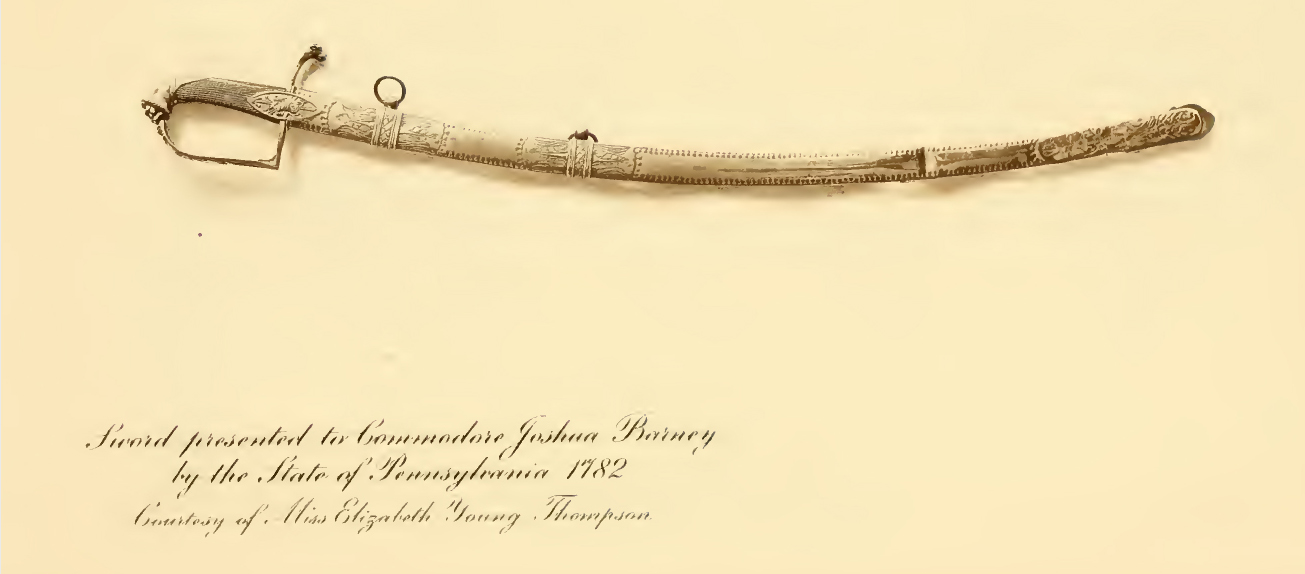
In 1782 the Legislature of Pennsylvania passed a vote of thanks to Captain Barney and ordered a gold-hilted sword to be prepared, which was afterwards presented to him in the name of the state by Governor Dickinson. It was a small sword with mountings of chased gold- the guard of which on the one side had a representation of the Hyder Ally, and on the other the General Monk 14. Barney was the last officer to quit the Union’s service, in July, 1784, having been for many months before the only officer retained by the United States.
Source: ‘Life of Commodore Joshua Barney, Hero of the US Navy (1776-1812), 1912
Barney was sent by the American Government to Paris. A reception was given in France him as a hero of dashing naval exploits during the Revolutionary War 21. A painting representing the action between the two shipswas executed in 1802 by L. P. Crepin in Paris by order of Barney, while in the service of the French Republic. The same was presented by him on his return to the United States, to Robert Smith, Esquire, then secretary of the navy 22. The painting is now in the United States Naval Academy, Annapolis, Maryland 14. Barney was an intimate friend of Count Bertrand, one of Napoleon’s generals 15. Napolean incidentally had an alliance against the British with Haidar Ali’s son Tipu Sultan, during the latter’s life time 23.
Barney was appointed a Captain in the Flotilla Service, US Navy on 1814 April 25 24. He took part in seventeen battles during the Revolutionary War and in nine battles during the War of 1812. A British Musket-ball lodged inside his body in battle at Bladensburg, Maryland in August 1814 25. He passed away on December 1, 1818, aged 60.
70 years after Hyder Ally’s victory over General Monk, James Cooper wrote “This action has been justly deemed one of the most brilliant that ever occurred under the American Flag. It was fought in the presence of a vastly superior force that was not engaged, and the ship taken was in every essential respect superior to her conqueror.”17
The world today is considered a global village thanks to the scaling down of boundaries between nation states and individuals alike. But it may surprise us even in the 18th century seemingly local political events and humans made an impact on lands and societies far away. The name Haidar Ali, after an adventurer from an obscure place in the erstwhile Kingdom of Mysore who gave many a lesson in military and political strategies to global colonial powers of England and France, echoing across the proverbial seven seas in distant North America for nearly a century is testament of this 26, 27.
Painting of Commodore Joshua Barney at Independence Hall, Philadelphia, ‘Life of Commodore Joshua Barney, Hero of the US Navy (1776-1812), 1912
Sources/ Notes:
Col. Mark Wilks, Historical Sketches of the South of India, Volume 1 of 3, 1810. Wilks traces the origins and political lives of Mysore Kingdom’s rulers and provides an insight into their military campaigns.
The New Peerage, or Present state of the Nobility of England, Vol. 1 of 4, 1784
The Gentleman’s Magazine, Vol.78, Part 1, 1808
George Cokayne, Complete peerage of England, Scotland, Ireland, Great Britain and the United Kingdom, 1887
Allan Chivers, The Berties of Grimsthorpe Castle, 2010. Peregrine established the racing lines of Blank, Paymaster and Pacolet which were well-known in England. Their foals went to establish themselves in the US.
Blank was one of his favourite horses and he named a foal sired by it as Hyder Ally.
Hyder Ally was later sold by Bertie to C.Blake who then sold it to Richard Vernon. The later, in Oct. 1773, raced it at New Market, considered the birthplace and global centre of thoroughbred horse racing. Many of this horse’s progeny were imported into America and entered racing.
allbreedpedigree.com Online database on Pedigree horses. Downloaded Oct. 10, 2017.
It is interesting that it was not uncommon for race horses to have names originating in the east. Such names in 1700s included Mumtaz Mahal and Salim7. But Pergerine’s only horse named after a human was Hyder Ally.
Prof. B Sheikh Ali, Tipu Sultan – A Crusader for Change
American Turf Register and Sporting Magazine, Vol. 2, 1831
J.H.Wallace, American Stud Book, Vol. 1, 1867
Other books that document Hyder Ally foals and sires are William Pick and R.Johnson’s The Turf Register, and Sportsman & Breeder’s Stud-Book (1803) and Patrick Nisbett Edgar’s The American Race-turf Register, Sportsman’s Herald, and General Stud Book, Vol. 1 of 2 (1833)
A biographical memoir of the late Commodore Joshua Barney (1832) by Mary Barney sister of Joshua Barney provides in-depth information of the latter’s personal and military life.Born on July 6, 1759, 13-year old young Philadelphia Joshua Barney set sail on his maiden merchant ship journey to Ireland in 1771 with his brother in law Captain Thomas Drysdale. He sailed back home the following year and made trips to ports in Europe again. He set sail for Nice, France in December 1774 during which journey Captain Drysdale died. He took control of the ship which needed urgent repairs and therefore docked at Gibraltar, Spain instead. In a few months he sailed to Algiers, Algeria from Alicant, Spain to deliver Spanish troops during which he witnessed the annihilation of these troops by the Algerians which made him return to Alicant soon. He immediately set sail across the vast Atlantic Ocean for Baltimore, USA. As he entered the Chesapeake Bay on 1st October he was surprised by the British Sloop of war Kingfisher. An officer searched his ship and informed him that Americans had rebelled and that battles were being fought. He was fortunate enough to escape detention. Returning to Philadelphia he was determined to serve the Americans fight against British. At that time a couple of small vessels were under at Baltimore ready to join the small squadron of ships stationed then at Philadelphia and commanded by Commodore Hopkins. Barney offered his services to the commander the sloop Hornet, one of these vessels. He was made the master’s-mate, the sloop’s second in command. A new American Flag, the first ‘ Star-spangled Banner’ in the State of Maryland, sent by Commodore Hopkins for the service of the ten gun Hornet, arrived from Philadelphia. At the next sunrise, Barney unfurled it in all pomp and glory. In 1776, Robert Morris, President of the Marine Committee of the Congress offered him a letter of Appointment as a Lieutenant in the Navy of the United States in recognition of his efforts during a naval battle engagement in Delaware.
A summary of Mary Barney’s book14 is well recapped with notes in William Frederick Adams’ Commodore Joshua Barney: many interesting facts connected with the life of Commodore Joshua Barney, hero of the United States navy, 1776-1812 (1912).
Frank Moore, ‘Diary of the American Revolution’, Volume 2, 1860
James Fenimore Cooper in History of the Navy of the United States of America (1853)
‘The sailor’s invitation’, Freneau’s Poems written and published during the American Revolutionary War (1809)
Two ships and a brig- a sailing vessel with two masts
As explained by Barney himself in his painting of this war commissioned later
A. Bowen, The Naval Monument,1815, Concord, Massachusetts, U. S. A. gives an account of the reception received by Barney in France
The painting was accompanied by a description, in the hand-writing of Commodore Barney, which is reproduced in Mary Barney’s book
Record of Service, Bureau of Navigation, Navy Department, United States Navy
The conduct of Commodore Barney, at the battle of Bladensburgh, was appreciated by his military opponents as well. He was wounded in the engagement and was taken prisoner by General Ross and Admiral Cockburn but paroled on the spot. At the time of his death in 1818, the ball was extracted and given to his eldest son. For the valuable services of her husband, Congress granted Mrs. Barney a pension for life.
William Goold, Portland in the past, 1886 has information of at least one more well-known ship named Hyder Ally built in the US in 1800s after the one described in this story. This ship, like many other US ships, resorted to pirating British ships in the Indian Ocean all the way up to the island of Sumatra and around the Cape of Good Hope in South Africa in the run up to the British-American War of 1812.27. Corbett’s Annual register (1802) documents the ship ‘Tippoo Saib’ registered in Savannah, Georgia, the southern most of the 13 colonies that declared independence from the British in 1776 and formed the original ‘United States of America’.
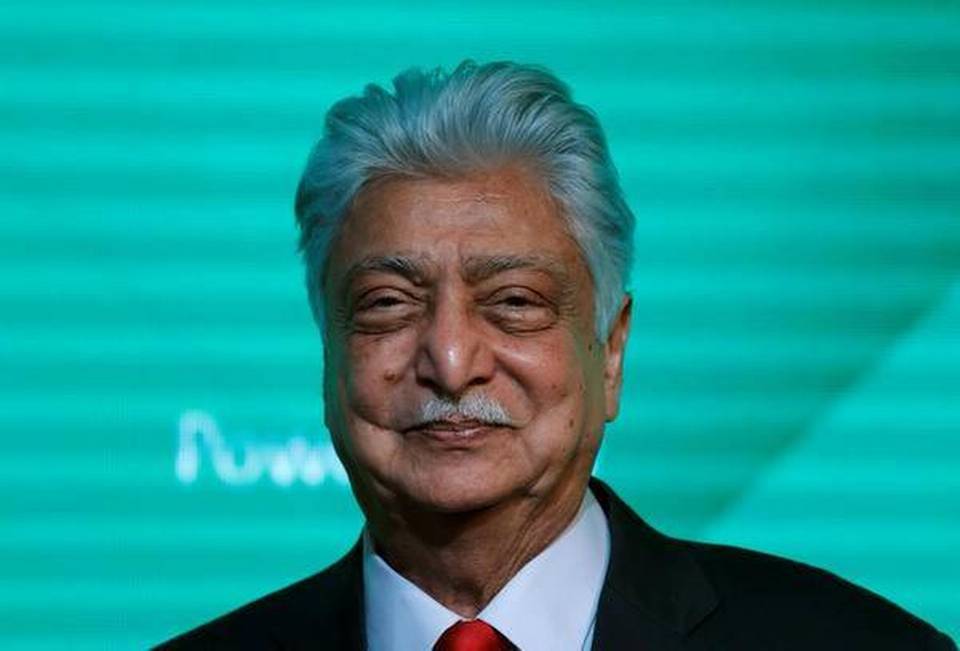
IT major Wipro founder Azim H. Premji, who turned a small maker of vegetable oil into a $8.5 billion software behemoth, will retire as the company head by July-end and handover reins of the firm to his son, Rishad.
Mr. Premji, who turns 74 next month, will retire as executive chairman upon the completion of his current term on July 30, 2019, after having led the company for 53 years, Wipro said in a statement.
He, however, will continue to serve on the board as a non-executive director for five years till July 2024 and has also been conferred the title of founder chairman.
Wipro board also announced that chief executive officer and executive director Abidali Z. Neemuchwala will be re-designated as CEO and managing director, while Rishad Premji will be re-appointed as whole-time director for a period of five years with effect from July 31, 2019, to July 30, 2024. Mr. Rishad Premji will be designated as executive chairman.
These changes will be effective July 31, 2019, subject to shareholders’ approval.
₹52,750 crore for philanthropic activities
A recipient of Padma Bhushan and Padma Vibhushan awards, Mr. Azim Premji now plans to devote more time for philanthropic activities.
He had, in March 2019 gifted an additional ₹52,750 crore of the company’s shares to support philanthropic activities, making it the most generous donation in the nation’s history.
About 34% of shares held by companies controlled by Mr. Azim Premji, India’s second-richest person, were irrevocably renounced and earmarked to the Azim Premji Foundation, taking the total donations to over ₹1.4 lakh crore.
Mr. Azim Premji’s Foundation, which works in the education sector and supports over 150 non-profits serving under-privileged with financial grants, has 67% of economic ownership of Wipro.
‘Pioneers of Indian technology industry’
“Azim Premji, one of the pioneers of the Indian technology industry and founder of Wipro Limited will retire as executive chairman upon the completion of his current term on July 30, 2019 after having led the company for 53 years. However, he will continue to serve on the board as non-executive director and founder chairman,” Wipro said in a statement announcing the top deck changes.
Mr. Azim Premji transformed a small hydrogenated cooking fat firm to a $8.5 billion global tech titan that is counted among India’s top IT exporters and also led the transformation of Wipro Enterprises into a global FMCG, infrastructure engineering and medical devices powerhouse, with revenues of about $2 billion.
He will remain the chairman of Wipro Enterprises and continue to chair the board of Wipro-GE Healthcare, the statement added.
“It has been a long and satisfying journey for me. As I look into the future, I plan to devote more time to focus on our philanthropic activities. I have great confidence and trust in Rishad’s leadership to steer Wipro in its next phase of growth as we move forward,” Mr. Azim Premji said.
‘Unflinching commitment’
Commenting on the changes, chairman designate Mr. Rishad Premji said Wipro has, over the decades, demonstrated that success can built on the foundation of strong values and uncompromising integrity.
“This is a testament to the spirit and dedication of thousands of Wiproites. I am very excited about our future and the opportunity to create value for all our stakeholders in these transformative times for Wipro and the technology industry,” he said.
Ashok S. Ganguly — independent director and chairman, Board Governance, Nomination and Compensation Committee at Wipro — said Mr. Azim Premji’s “unflinching commitment” to values made him an exemplar of how business and ethics can and must go together.
“His exceptional generosity makes him one of the greatest philanthropists of our time,” he added.
Mr. Ganguly further said that Mr. Rishad Premji’s understanding of the global technology industry, strong strategic orientation and diverse leadership experience make him the “right person to guide Wipro”.
“He is also best positioned to represent the interests and fundamental social purpose of the largest shareholder of Wipro,” Mr. Ganguly noted.
source: http://www.thehindu.com / The Hindu / Home> Business / by PTI / Bengaluru – June 06th, 2019
These women embodied feminism long before it became a part of the zeitgeist.
The heiress apparent to the throne of Bhopal, Abida Sultan, wore her hair short, played the saxophone, had her own band, sped around in a Daimler, and when her husband announced that he’ll assume custody of their son, threatened to kill him with the pistol she kept in her pocket. All the while, she remained pious and committed to Islam.
Abida Sultan’s autobiography, Memoirs of a Rebel Princess, was unabashed and far from removed from the stereotypical picture of an oppressed Muslim woman. In the book, she wrote frankly about her conjugal life and her inability to be the good, dutiful wife. But could one expect any less from the child of a feminist royal lineage?
This matrilineal reign, which began in 1819, lasted more than a hundred years, with the lone interruption in 1926, when Sultan Jahan Begum abdicated in favour of Nawab Hamidullah Khan. Hamidullah Khan’s daughter Abida Sultan was to succeed to the throne, but when she chose to leave for Pakistan after the Partition of India, her younger sister Sajida became the Begum of Bhopal.
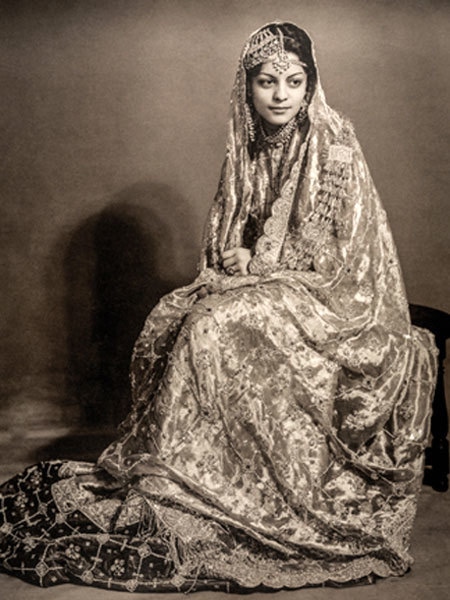
Sajida Sultan. — Unknown/Wikimedia Commons
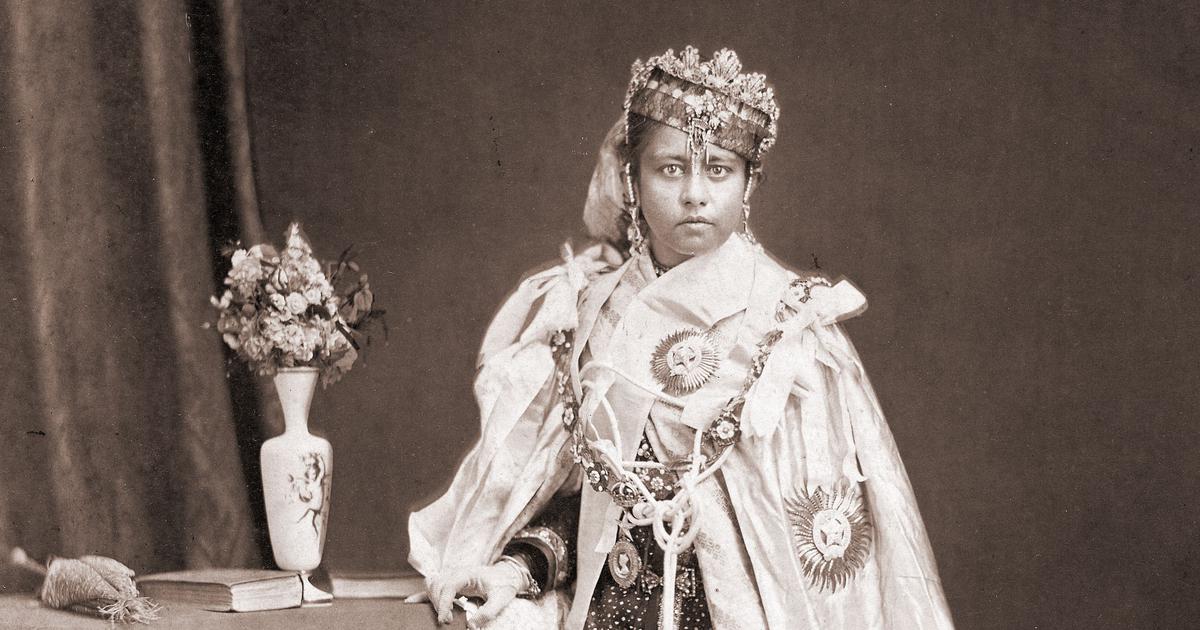
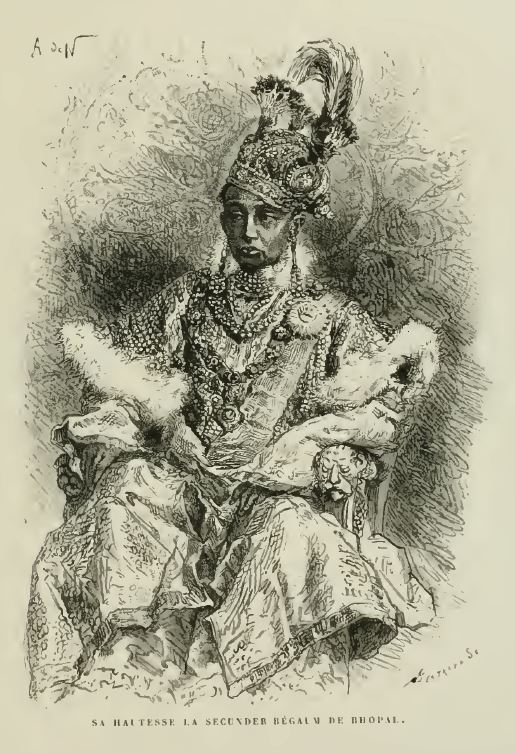
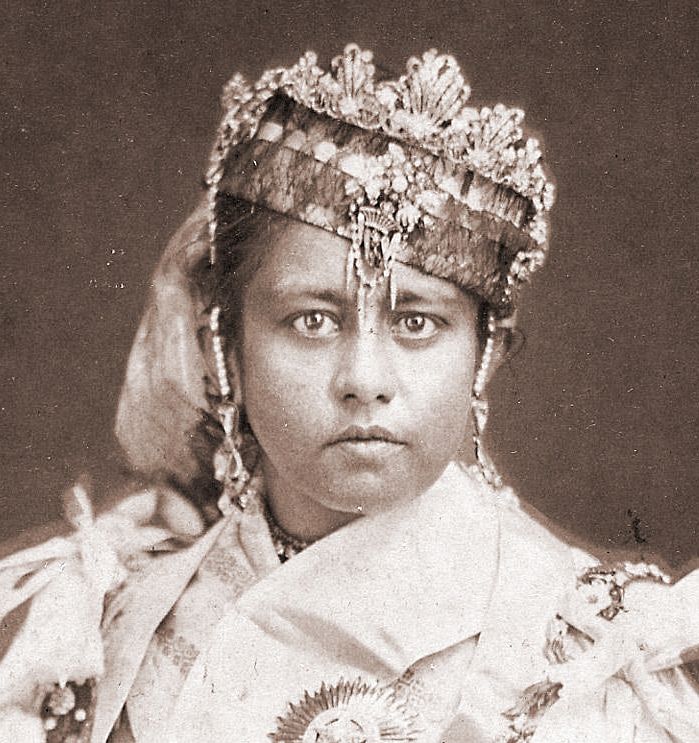
Unlike the Queen-Regent of Travancore, whose brief radical rule ran only till her son came of age, these women ruled for unexpectedly long periods, facilitated by the absence or death of male contenders to the throne, and through sheer grit. A photograph taken in 1872 of Nawab Shah Jahan Begum, Abida Begum’s great-grandmother, shows a booted woman staring straight at the camera, much in the manner of a Vogue cover shoot. The Begums of Bhopal practised feminism much before it gained prominence. They were interesting, headstrong and opinionated, but their wars weren’t fought on the battlefield.
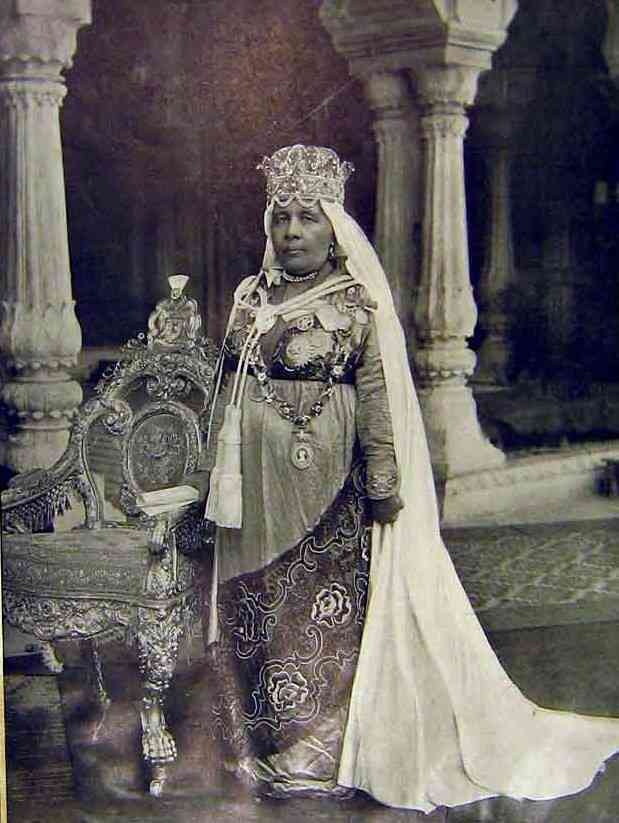
Archival records are filled with the Begums exhibiting their commitment to Islam: donating money to build a mosque in Basra, Iraq, funding the Muslim University at Aligarh, and opening a school for girls in Delhi in the early 1920s. At the time, it was unusual to have a ruler devote time and money to women’s education — even a progressive thinker like Syed Ahmad Khan was focused on Muslim men getting Western education — but to do so outside their state was truly remarkable. So much so that when Lord Edwin Montagu, the British Secretary of State for India, met Begum Sultan Jahan in 1917, he noted in his diary that she was “frightfully keen on education, and jabbered about nothing else”.
Sultan Jahan Begum. — Wikimedia Commons
Fringes of history
Women and their assumption of political power have always been sidelined in Islamic history, though there is reason to believe that Aisha, the Prophet’s wife, had a role to play in the establishment of the first Islamic state. Razia Sultana’s brief reign as the Sultanah of Delhi in the 1200s and her killing demonstrated the near impossibility and legitimacy of a Muslim women ruler.
Nothing changed over the centuries. Though it was a young woman, Queen Victoria, who reigned over the hundreds of Indian monarchs at the start of the Paramountcy, assuring them gently of their territorial sovereignty, this mattered little in India. Indian monarchies have been patrilineal and patriarchal, guarding the male and natural right to ascend the throne.
Against this background, to have four Muslim women successively rule a state is unprecedented in world history. But what makes it all the more remarkable is that these women administered a state dominated by feudal warlords accustomed to male privilege over the throne.
The modern city of Bhopal was founded in the early 18th century by Dost Mohammad Khan, an Orakzai Pathan from Afghanistan, and it soon became the second-most important Muslim princely state after Hyderabad. Its geographical location — in Central India — was vital for the suppression of the 1858 War of Independence.
Dost Mohammad Khan. — Wikimedia Commons
In North India, there were several Muslim princely states — such as Bahawalpur, Mahmudabad, Tonk, Pataudi and Rampur — which were supported by the British under the Paramountcy. Under this policy, while nearly 500 princely states were autonomous and maintained internal sovereignty, their foreign policy and right to wage wars was controlled by the British.
The reign of the Begums began in Bhopal in 1819, when the ruling Nawab, Mohammad Khan, died without an heir and the British decided to crown his young wife Qudsia till her daughter Sikandar came of age. Sikandar Begum’s husband too died in 1844, and she proved to be a competent ruler and a worthy ally to the British, playing a vital role in the First War of Independence in 1857-1858. This compelled the British to make a provision that the Begum was a sovereign in her own right. Three years later, in 1861, she was invested with the Exalted Order of the Star of India, making her, at the time, the only female knight in the British Empire besides Queen Victoria. She was succeeded by her daughter Shah Jahan Begum and then by Sultan Jahan Begum.
Sultan Jahan Begum went on to have a 25-year-long reign, marked by a commitment to progress, education and women’s health reforms. She was the last Begum of Bhopal as the heiress apparent, Abida Sultan, abdicated the throne in 1948.
Sikandar Begum. — Louis Rousselet/Wikimedia Commons
‘Magical island’
The first and foremost among them, Qudsia Begum, set the template of the ideal ruler. Spartan, and shunning jewellery, she refused to take loans and made sure that any money spent would be solely for education and philanthropy. As the British agent Lancelot Wilkinson in Bhopal noted: “She rides and walks about in public, and betrays her determination to maintain herself in power by learning the use of the spear and other manly accomplishments. At times she became quite frantic; and as one of the soldiers observed, more terrible to approach than a tigress.”
This “magical island”, as at least one commentator called it, was as rare as it was difficult to create. Like all figures of power, the Begums too attracted people who wanted to manipulate them — and in their case, this meant both the British and the ruling clan.
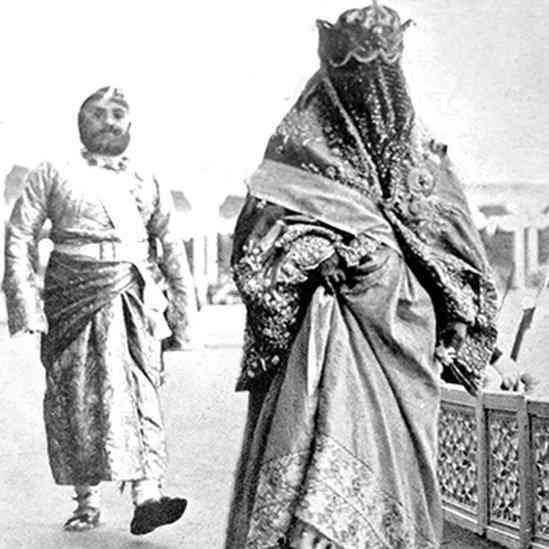
Qudsia Begum and her daughter, early inheritors of an uneasy throne, responded to the tugs and pulls by quickly learning traditional masculine skills like fencing and hunting. Shah Jahan Begum embraced the Purdah, asserting notions of orthodox Islamic femininity. She withdrew from public life into strict seclusion and refused to meet the British Viceroy in 1875. Her daughter would later recount in her autobiography that “even as a young girl, she preferred to meet with other girls of her age to discuss ‘a thousand little points of household duties and of domestic management than to perform outdoor activities’.” None of this though got in the way of being a good ruler, and she proved that a veiled woman could rule as competently as anybody else.
Shah Jahan Begum. — Louis Rousselet/Wikimedia Commons
Balance of power
The Begums carefully navigated the multiple demands of power by ingeniously playing around with tradition and modernity. They would sometimes opt to let go of the burkha and at times wear it to demonstrate a different modernity. In their writings, the Begums constantly acknowledged their mothers and grandmothers, paying obeisance to the strong women who shaped their lives and characters.
Their commitment to austerity and Islam set them apart from the wasted royal lives that were given to overindulgence and dissipation. They constantly drew upon the Quran and respected Islamic scholars, reinforcing the idea that Islam speaks of equity between the sexes. Their spartan lives struck Mahatma Gandhi too, when he visited the state in the late 1920s, on invitation. He was suspicious that the Begum’s cotton clothes and thin mattress had been “put on as a show”, till his travelling companion Sarojini Naidu assured him otherwise.
The Begums of Bhopal, who styled themselves as “Nawab Begums”, were radical and unconventional (the term ‘Nawab Begum’ itself was ingenious as there is no word for queen in the Islamic political imagination). Nonetheless, with consummate ease and success, they proved they were no less. Keeping in line with the Islamic tradition of maintaining a diary, like the founder of their state used to, the Begums invested much energy in maintaining records — of the state and of themselves.
Sultan Jahan Begum. — The Graphic/Wikimedia Commons
Shah Jahan Begum, the third in the line, established a History Office, along with a system for retrieving and maintaining records of important characters in her family. Abida Sultan’s son, Shahryar Khan, a former career diplomat in Pakistan, has carried on this family tradition by writing an authoritative account of the dynasty, The Begums of Bhopal.
Like a host of other wealthy Muslim ashraf women, the Begums travelled to Europe and to West Asia as part of the obligatory hajj. And despite the seriousness of the occasion, they never failed to display flashes of their chutzpah. There are anecdotes of Sikandar Begum not disembarking from the ship to Europe without her bottles of pickle. And upon reaching London, she mistakenly wore a dressing gown to meet King George V and Queen Mary, a realisation made only owing to the headlines in the newspapers the next morning.
Many princesses have ascended to power in democratic India by contesting and winning parliamentary elections. The Begums of Bhopal, however, are remarkable for sustaining a determined succession of women monarchs, despite hostility to their gender ruling — the very first Begum, Qudsia, had declared that her infant daughter would succeed after her. Despite the religious and political odds against them, their reign was marked by benevolence and modernity, a radical openness to change, like women’s education and medicine, while maintaining a steadfast commitment to the tenets of Islam. The Begums are icons for women, Muslim or otherwise.
This piece was originally published on Scroll and has been reproduced with permission.
source: http://www.dawn.com / Dawn / Home> Prism / by Priya Mirza / June 04th, 2019
The paintings by Zayn al-Din were commissioned by Mary Impey, an English natural historian and patron of the arts in Bengal
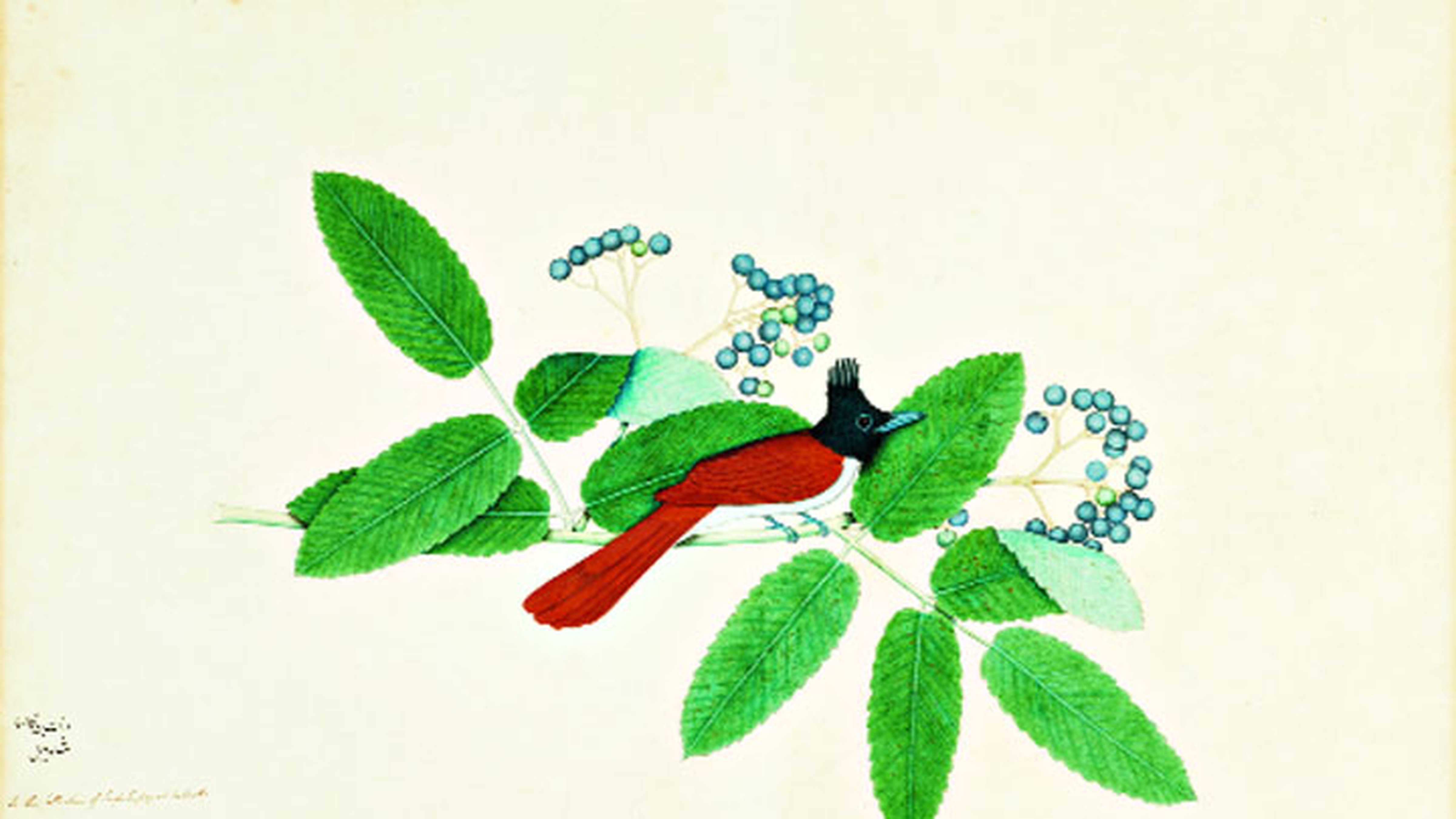
Falsa Tree with King’s Nightingale was painted on a 53.5cm x 75cm canvas by Zayn al-Din in 1782 . / Picture courtesy: Stockholm Auction House
Two watercolour and pencil-on-paper artworks painted in Calcutta in the late 18th century by one of the most famous exponents of the Company School of Art will go under the hammer at the world’s oldest auction house in Sweden on June 12.
The paintings by Zayn al-Din were commissioned by Mary Impey (March 2, 1749 -February 20, 1818), an English natural historian and patron of the arts in Bengal. She was the wife of Elijah Impey, the first chief justice of the Supreme Court at Calcutta (1774-82), who had infamously sent Maharaja Nandakumar — a highly-placed officer in the nawabi administration — to the gallows on charges of perjury.
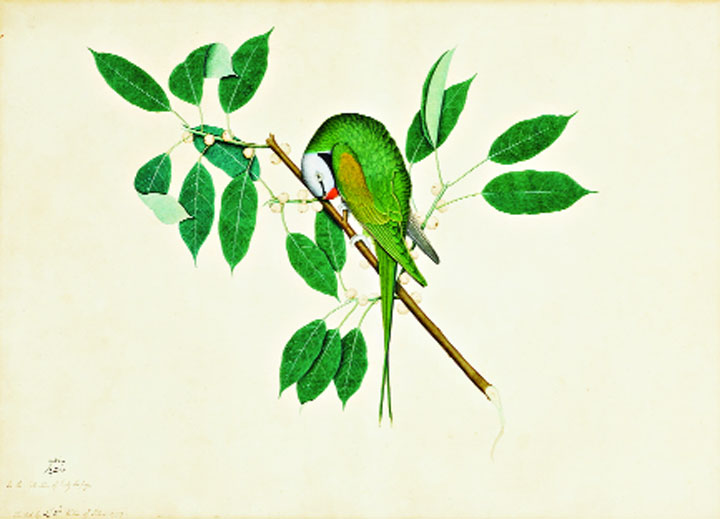
Falsa Tree with King’s Nightingale, dated 1782, and Parrot in a Parkar Tree, dated 1779, have been in the possession of a Swedish family for long.
“We are immensely proud to present these rare artworks. We are not sure how they reached Sweden. They have been in the same Swedish family for a long time and this is the first time that they reach the market,” Victoria Svederberg Bojsen, a specialist in classic and modern art at the Stockholms Auktionsverk (Stockholm Auction House), founded in 1674, told Metro over phone from Stockholm.
“The estimate price is Euro 51,000 (Rs 40 lakh) to 61,500 (Rs 48 lakh). However, we believe they will reach an even higher price. Our hope is naturally that they will now be returned to India where they originated,” she said.
Birds are the subjects of both the paintings. Falsa Tree with King’s Nightingale is a 53.5cm x 75cm canvas.
The inscriptions on both pictures read: In the Collection of Lady Impey of Calcutta. Painted by Zayn al-Din Native of Patna 1782.
“Both paintings include a description of the subject in Persian — Darakht ban falsa, Shah Bulbul in the first and Madna Tota, Darkaht Pakar in the other. The artist’s name is also written in Persian,” said Nandini Chatterjee, associate professor of history at the University of Exeter in the UK.
The painting (right), titled Parrot in a Parkar Tree, is signed and dated 1779. The inscriptions on both artworks read: “In the Collection of Lady Impey of Calcutta. Painted by Zayn al-Din Native of Patna 1782”. / Picture courtesy: Stockholm Auction House
Metro had sent the images to Chatterjee, who is part of a research on two sets of natural history drawings produced between the late 18th and early 19th centuries in Calcutta. The drawings are held at the Victoria Memorial Hall and the Royal Albert Memorial Museum & Art Gallery in Exeter.
The Impeys moved to India in 1773 after Elijah Impey was made the chief justice of Bengal. They set up a menagerie at their house in Calcutta’s Middleton Row. When they shifted to Fort William two years later, they started a collection of native birds and animals on the extensive gardens of the estate.
Mary Impey commissioned several local artists to paint the fauna and flora they had collected. Her three principal artists were Sheikh Zayn al-Din, and brothers Bhawani Das and Ram Das. All three had come from Patna.
Together, Zayn al-Din and the Das brothers painted more than 300 artworks, half of them of birds. The collection, often known as the Impey Album, is an important example of Company style painting.
“With the decline of the Mughal courts, the artists sought the patronage of Europeans. These artists had to change their traditional techniques to suit their new masters. These revisions included a more accurate representation of the subject and a change in perspectives,” said Jayanta Sengupta, the curator of the Victoria Memorial.
Little is known of Zayn al-Din, the artist whose works will be auctioned in Sweden next month. He is known for his extraordinarily detailed paintings for the Impey Album. His drawings of mountain rats, hanging bats, parrots and storks serve as interesting zoological studies and are now preserved at the Ashmolean Museum in Oxford.
“The artworks from the Impey Album rarely reach the international market and the few that have been sold previously at Christies, Sothebys and Bonhams have fetched between $80,000 (Rs 55.5 lakh) and $140 000 (Rs 97.7 lakh),” Bojsen said.
The real study of the Indian subcontinent’s natural history is said to have started with the Mughals. Baburnama — the memoirs of the first Mughal ruler — has beautiful illustrations of birds and animals. Shah Jahan also took a keen interest in the flora and fauna.
With the fall of the Mughals, the artists sought the patronage of Europeans. Calcutta became a thriving centre of the (East India) Company school of painting.
“India was an unknown land for Europeans and along with its indigenous archaeology and history, they also wanted to explore its abundant flora and fauna. Imperial documentation differs from its Mughal predecessor in scale and systematic approach,” Sengupta said.
“Mary Impey was part of a circuit of Europeans who commissioned paintings of Indian natural history. Apart from the pictorial documentation of flora and fauna, the extensive notes kept by her about their habitat and behaviour were of great use to later biologists,” he said.
The collection went to England with the Impeys in 1783 and were sold at a London auction in 1810. Several pieces are in various museums, including the Metropolitan Museum of Art in New York and the Victoria and Albert Museum in London.
“The style of inscription, and the handwriting is identical to other paintings all around the world. I do not believe Zayn al-Din’s name is in his own handwriting. It was probably written by a British collector, maybe Lady Impey herself. Many such British Orientalists (and perhaps some of their spouses) knew Persian,” Chatterjee said.
Some of Zayn al-Din’s works are at the Royal Albert Memorial Museum too. “But those have his name written in English and Bengali, perhaps by a collector who was interested more in the vernacular language, than Persian, which was the Mughal language of administration and courtly culture,” Chatterjee said.
source: http://www.telegraphindia.com / The Telegraph, online edition / Home> West Bengal / by Debraj Mitra in Calcutta / May 28th, 2019