Category Archives: World Opinion

Businessman from Assam wins ASEAN award

Hojai, ASSAM / LAO PDR  :

Guwahati :

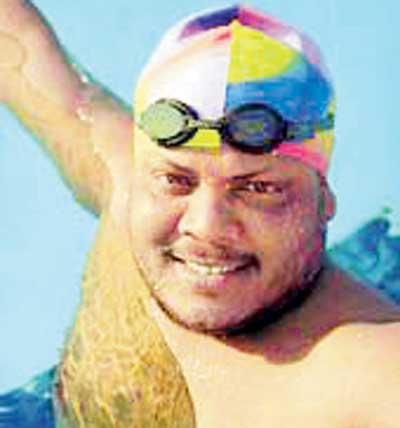
State-based businessman Habib Mohammad Chowdhury has won the ASEAN-India Emerging Entrepreneur award in Malaysia at the ASEAN-India Conference.

To commemorate its 25th anniversary, the ASEAN-India Business Council (AIBC) organized the ASEAN-India BizTech Expo and Conference in collaboration with the Federation of the Indian Chamber of Commerce and Industry (FICCI). The conference was held in Kuala Lumpur in Malaysia with the theme ‘Bridging Borders Through Business’.

“I feel exceptionally blessed. Receiving this award has only made me more determined and motivated to accomplish my set goals,” said Chowdhury, who was born and brought up in Assam’s Hojai.

Chowdhury is now settled in Laos. He is the founder-chairman of the HSMM Group of Companies in Laos, which has emerged as the largest agarwood and agar-based product’s company in southeast Asia.

Over the years, the governments of ASEAN and India have taken concrete measures to strengthen economic relations, especially the establishment of the ASEAN-India Free Trade Area.

source: http://www.timesofindia.indiatimes.com / The Times of India / Home> News> City News> Guwahati News / by Abdul Gani  / TNN / June 20th, 2017

Mohammed Yunus (1916-2001): The Migrant from Pakistan

PUNJAB / JAMMU & KASHMIR / NEW DELHI :

Independence and partition of India brought massive transfer of populations. Movements of refuges were on predictable, communal lines. There were just a few cases where the communal movements were in the ‘wrong’ direction. To that microscopic group of mavericks belonged Mohammed Yunus who, forsaking wealth and family prestige, left his ‘native Pakistan’ for India and turned out to be of much help to the Indian Muslims.

Yunus is so intimately identified with the erstwhile North West Frontier Province or the NWFP – now Khyber Pakhtun Khwa that it may come as a surprise to many that he was not a Pathan! Born in 1916 in Abbobtabad, his father Haji Ghulam Samdani was an extremely wealthy man owning rights over vast tracts of forest and agricultural lands in Punjab, Kashmir and NWFP. One of the biggest government contractors of his time, he owned most of the legendary ‘Qissakhwani Bazar’, the nerve center of Peshawar.

Samdani was a Mughal whose great-grandfather had migrated and settled down in Baramula, Kashmir in the latter half of the eighteenth century. One of the first from among Muslims of the region to have received western education, Samdani settled in Peshawar as a military contractor in the 1880s and never looked back. He was personally contacted by Sir Syed Ahmad Khan to bail out the MAO College after the institution was in the financial doldrums following a huge defalcation by Shyam Bihari Lal, a confidante of the founder. Apart from emerging as the wealthiest man of the NWFP, Samdani struck roots in the Pashtun area through his philanthropy and marriages including in the famous Charsadda family of the ‘frontier Gandhi’ Khan Abdul Ghaffar Khan. Indeed Yunus was the son of that mother and thus a ‘maternal Pathan’. Some space has been devoted to the family details as this has a bearing on what Yunus made of his future life.

MohammedYunusMPOs03may2018

Mohammed Yunus

After an early education in Peshawar in an opulent but deeply religious atmosphere Yunus was dispatched to Aligarh to study in ‘Minto Circle’, more correctly the AMU Boys High School from where he passed the High School examination in 1932. He thereafter joined the Islamia College on a suggestion of its former Principal H. Martin (who was then Pro Vice Chancellor of the Aligarh Muslim University and is remembered as the coauthor of the famous “English Grammar and Composition” by Wren and Martin). Martin had astutely sensed that Yunus with had the right background to play a major role in the public affairs of that province at a future date. Even in his teens in Aligarh he was witty and quick with repartee which lasted a lifetime. Thus when Gandhiji visited the University in 1931, Yunus somehow clambered up the stage of the Students’ Union with an autograph book in hand. The Mahatma with a frown asked him why he was not wearing khadi to which the Peshawar lad replied without batting an eyelid that he was wearing his school uniform and obtained the coveted signature. What the young Peshawari had not disclosed was that there was no objection to the uniform being made of khadi!

Freedom struggle

He passed B.A from Islamia College, Peshawar. During the college days he was associated with the khudai khidmatgar (God’s servants) movement of the ‘frontier Gandhi’ with its emphasis on non violent resistance to the Raj, its emphasis on service of he poor and social reform. Soon after College he emerged as a prominent political activist and main spokesman of the movement who was an informal representative of Ghaffar Khan with whom he had become related (in the ‘oriental fashion’) with the marriage in 1935 of his elder brother Yahya with the only daughter of the great man. Yunus emerged as a major face of NWFP in rest of the country representing the province in Congress forums and espousing the cause of its economic development. He hosted Jawaharlal Nehru, Indira Gandhi and Mohammed Ali Jinnah during their tour of the area and was equally active in Pashto-speaking areas across the Durand line i.e. in South Afghanistan.

He also fought shoulder to shoulder with the National Conference in the Kashmir valley for involvement of people in governance. Yunus was incarcerated in the Quit India movement (1942) and was released only three years later. His reminiscences of prisons were later published in Urdu as Qaidi ke Khat (letters of Prisoners). Following his release he worked zealously against the Muslim League and its demand for Pakistan. In 1946 elections an overwhelmingly Muslim electorate elected a Congress government in the province under ‘Doctor Khan Sahib’ the elder brother of the frontier Gandhi (NWFP was the only province where the dominant community, whether Hindu or Muslim, had voted against the sentiments of the relevant community elsewhere). The government did not survive for long as the aristocrats of the province engineered large scale defections.

Yunus decided to move over to Kashmir to be at the forefront of the agitation against the Maharaja.

Independent India

On the eve of the independence, disgusted with the volte face of the ‘blue blood’ of his community and the communal frenzy he heeded the advice of Nehru and his daughter (with whom he had grown so close as to be almost a member of the family) and decided to make the ‘divided India’ his home. In doing so he was foregoing considerable a fortune – the estate of Haji Ghulam Samdani, which despite its devolution to more than a dozen offspring, was substantial. Nehru offered him appointment in the Indian Foreign Service keeping in view the fact that his proclivity to call a spade a spade would not take him high in politics. Over the years he was envoy in Turkey, Indonesia, Iraq, Spain and Algeria and served twice in the Ministry of External Affairs. In 1971 he was appointed Commerce Secretary – a position he held with great distinction till his retirement in 1974.

After his retirement he was the founder-Chairman of the Trade Fair Authority of India, a position he held till 1977 and again from 1980 till 1985 when he was nominated as Member of the Rajya Sabha for a period of six years. In 1974 when the Muslims of India were restive about the restoration of the ‘minority character’ of the Aligarh Muslim University and the then Education Minister, Prof. Nurul Hasan had made it a ‘progressive’ versus reactionary’ affair Mrs. Indira Gandhi nominated him on the Executive Council of the University where he articulated the aspirations and views of the majority of Aligarh community. It is not intended here to give a ‘low down’ on his professional achievements but mention must be made of the great institution that he built in the form of Pragati Maidan – not only a landmark in the heart of Delhi but clearly among the worlds most prolific and efficient organizers of industry specific fares. The layout, the design of the halls, the infrastructure, carefully planned trees and shrubs all bear a testimony to his loving planning and eye for details. Above all, the initial team of personnel that he handpicked turned out to be a coordinated, well-oiled machine of highly motivated professionals. The traditions and operating procedures laid down by him and his pioneer associates survive to this day and make the ITPO – the rechristened version of the TFI – a vibrant institution. Following a setback in his health Mohammed Yunus lived an increasingly sheltered life with increasingly limited mobility finally succumbing to the inevitable in 2001.

The curious reader could well ask whether what has been stated is all there is to his life or there is something special that earns him the right to be remembered a decade after his death and perpetuate his memory beyond his immediate family. The questions are natural and they deserve an answer – the answers are all in the affirmative.

There are three main reasons why Yunus deserves to be remembered by the country generally while the Indian Muslims need to be particularly aware of his life and time. These ‘reasons’ have to do with his specific achievements and traits and are: An extraordinarily forthright and brutally honest personality, standing by the Muslim community without any political agenda or ulterior motive and a great institution-builder. His ‘baby’ presently called the India Trade Promotion Organization having already been briefly referred, the rest of this piece is devoted to the first two feathers to his cap.

Personality

Yunus had a unique personality which cannot be forgotten by anyone who came in contact with him. He was quite ‘direct’ in his conversations, something which Asians generally lack. This can be illustrated with a few anecdotes. In his autobiography Persons, Passions and Politics (1980, Vikas) he recounts the time he was Joint Secretary in the Ministry of External Affairs and had to deal with the local (British) representative of the Commonwealth Graves Commission and his Boss a pompous ex Brigadier of the British Army who had arrived from London ostensibly to inspect the various war cemeteries run by the Commission but really to express displeasure about Yunus’s refusal to accede to some unreasonable request of the local representative. The Brigadier, a typical ‘Colonel Blimp’ was an arrogant foul-mouthed character still carrying hallucinations of ‘Pax Britannica’ with a disdain for the former ‘subject races’. In any case, the senior officer showed his displeasure to Yunus and asked him not to repeat ‘senseless arguments’ and added to good measure that India was being ‘more mulishly unreasonable’ than Germany and Italy were during the last war. Yunus calmly heard the man and politely asked, “is there anything further you gentlemen wish to add before I give my final response’. The imperious ‘Colonel Blimp’ responded with disdain, “I am not interested in your last responses; I want the bloody thing done by tomorrow morning before I leave for home”. Our man than spoke, “You bunch of grave-diggers, how dare you compare my country to the fascists! Leave this very instant, or I will throw both of you out of this window!” He writes, “they made themselves scarce in no time; I started to laugh, and laughed uncontrollably”.

This author knows of a similar episode on the authority of a very eminent personage (a very venerable civil servant, now in his 80s who in the best tradition of the bureaucracy is loathe to be identified; for the initiated, the narrator was then a Joint Secretary in the Prime Minister’s Secretariat). In early 1975 the Prime Minister called a meeting to discuss the ongoing agitation against amendments made in the AMU Act 1n 1965 and for declaring the University a minority institution. The meeting was briefed by the Education Minister who explained that the agitation was being fomented by ‘reactionary elements’ within the University academics who did not wish the ‘progressive forces’ to lead the institution up the path of ‘growth and academic excellence’. Yunus, one of the invitees, interjected to ask the Minister to explain who the ‘reactionaries’ were. The reply was that they were the ones who ‘raised the bogey of Islam’. Yunus abruptly cut short the Minister and said “and Prime Minister, progressives are those who eat and drink during the month of Ramadan, do not offer Namaz and drink alcohol in the evenings in the privacy of their houses while discussing how best to further the agenda of the Minister!”. There was startled silence in the room with the Prime Minister barely stifling a smile started to furiously doodle on a pad.

Yunus increasingly acted as behind the scene spokesman of Muslims in the corridors of power with no personal ambition or even projecting himself in the public. His role in highlighting indiscriminate demolitions of houses of Muslims in the name of ‘slum clearance’ in old Delhi is not too well known but is acknowledged by, of all the persons, the ‘bulldozer man’ Jagmohan in his Rebuilding Shahjahanbad . This author is personally aware of cases where he took victims of police atrocities to the Prime Minister at a time when doing so (during the emergency) ran the risk of detention without trial. His vigorous espousing the cause of Aligarh academics and students for restructuring the governance charter of the AMU is not fully appreciated. Many who were active those days now concede that with a champion like Yunus they knew they had someone from the ‘establishment’ on their side and this prevented them from developing a negative attitude towards the secular Indian State. What is more, his transparent sympathy – and empathy – made the members of Muslim middle classes look to him as the honest broker faithfully projecting their grievances without any personal vested interest. This resulted in many a simmering discontent to escalate into public agitations.

A handsome man, not very tall but an overpowering presence, he could be assertive and polite at the same time; Yunus had an endearing personality with a propensity to laugh at himself. His fund of jokes and funny anecdotes was virtually inexhaustible. He was a great motivator of men and a good judge of character. He bore personal losses with great courage and fortitude (as was evident when his only offspring Adil Shaharyar died suddenly). The personality of Yunus can be summed up by narrating a personal experience of this author. In a function of the Delhi AMU Old Boys Association both he and Yunus arrived late and occupied the last row as the proceedings were well under way. The Organizers ran to escort Yunus to the front with our man saying that he should not move for three reasons: First seeing him people will get up and disturb the speaker, Prof Moonis Raza (VC Delhi University); Second as a late comer he was in the right place, the last row, and; (turning to me) yeh bechara bhee late aya hai soche ga mujhe saza milee or Yunus ko jaza yanee aage jagah milee!! (The sentence is not very easy to translate, but it should run something like “This poor chap (the author) is a late comer, too, if I shift to the front he will think that while he is punished Yunus is being rewarded for being late – the real pun lies in the rhyming of the words ‘saza’, ‘jaza’, and ‘jagah’ which cannot be translated).

source: http://www.twocircles.net / TwoCirlces.net / Home> Articles> Indian Muslim / by Naveed Masood for TwoCircles.net / June 09th, 2011

Kashmir’s kayaking star Bilquis Mir is India’s only water sports judge at the Asian Games

JAMMU & KASHMIR :

BilquisMirMPOs02may2018

Bilquis Mir, the first water sports coach from the Valley, is the only Indian among 20 Asians to get the position.

New Delhi:

Kashmir’s kayaking star Bilquis Mir has been selected as a water sports judge for the Asian Games to be held in Indonesia later this year.

“I will be one of the judges for the water tournaments in the games. This is a very important post,” 32-year-old Mir told ThePrint.

Mir, the first water sports coach from the Valley, is the only Indian among 20 Asians picked up by the Asian Canoe Federation team for this post.

However, her journey has been one of overcoming serious obstacles. From practising water sports in the world-famous Dal Lake in Srinagar to rowing through the wild waters of Europe, Mir has overcome every challenge to bust the myth that “girls can’t play sports”.

“There was a time when I had no one to support. We are three sisters and people here prefer boys to girls. From day one, I wanted to prove them wrong,” she said.

“They also said girls can’t play sports, it is not their thing…I struggled more because water sports were not even recognised in India,” Mir added.

The 18th Asian Games will be held from 18 August to 2 September.

Mir was the coach of the Indian kayaking and canoeing team from 2010 to 2015. She also went to Japan with her team but could not qualify for the Olympics. She is determined to reach the Olympics stage soon.

“People would tell my parents that their kids are pursuing civil services with pride. When my parents would say, I am a coach, I was looked down upon,” she said.

“People said it was a waste of time. Not many understood sports, mainly water sports but I did not give up…I was the only girl to take up this sport in the Valley,” Mir added.

Mir, who has a coaching diploma from Budapest, Hungary, started kayaking and canoeing in 1996. She has represented Jammu and Kashmir for 10 years in the national water sports games.

In 2009, she became the first woman participant from India in “MOL ICF Sprint Racing World Cup” in kayaking and canoeing in Hungary.

Mir said that the popularity of water sports, particularly kayaking and canoeing, is growing in India. “They were introduced a few years ago. They have a huge scope in the country, especially in Kashmir,” she said.

Mir is currently training 300 students, half of them girls from Kashmir Valley. “I started from Dal Lake…we have natural water resources and children have natural talent. Our team has got 56 medals in national level tournaments,” she said.

Her dream is to see maximum representation of players (paddlers) from the Valley in international tournaments. She says the state government is promoting the sports and has provided world-class equipment in schools.

source: http://www.theprint.in / The Print / Home> Governanace / by Rahiba R. Parveen / April 26th, 2018

Life lessons learnt from a gaming console

Hyderabad, TELANGANA :

Passion and dedication is the key towards success. Whatever you choose to do, you must do it wholeheartedly. Winning or losing is secondary, what matters is participation.

habeebullahKhanGamerMPOs01may2018

Bengaluru :

Passion and dedication is the key towards success. Whatever you choose to do, you must do it wholeheartedly. Winning or losing is secondary, what matters is participation. This is what gaming has taught me,” says the 21-year-old Habeeb Ullah Khan from Hyderabad.

He started gaming full-time in 2014. He had to cope with studies, career and gaming simultaneously. He says, “I was part of a boot camp in Delhi without any kind of financial support. I’m glad I have made it so far.”

After he finished his B.Com, he realised that it was time to follow his passion. “My cousin used to play national tournaments. I always had a competitive spirit within me, but didn’t know how to nurture it. With help from my cousin, I ventured into professional gaming,” says Habeeb.

He started playing Counter Strike Global Offensive initially, but later chose DOTA-2.

Over the past three years he developed a team — Wipeout, which includes four other members.

He has participated in 30-40 national tournaments. He won six tournaments last year, such as Taiwan Excellence Gaming and The Indian E-Sports Championship.
He is known as ‘CLown (K)’ in the virtual world and practices 14 hours a day. Team Wipeout also practices every day whenever they are free. They maintain separate schedules for gaming and other activities.

He says, “Gaming is similar to outdoor sports. The more you practice, the more skilled you become. It involves coordination and quick thinking. E- Sports (electronic sports) is a great community where you grow as a person. There is no hectic schedule, unlike other professions.” He has learned patience, focus and anger management.

He suggests that the aspiring gamers should not get de-motivated by failures. He cites his own example and says, “My journey in the gaming world has been a roller coaster ride. I have failed numerous times, but I never stopped learning. I’m successful today because of my failures.”

Talking about the gaming field in India he says that gaming is still not considered as a career. He says, “The youth should be encouraged to take up gaming as a profession. One should not think about losing. Winning and losing is a part of life. You will always gain valuable experience. Although E-Sports does not have adequate resources right now, over the next few years it will gain momentum. It has wide scope and rewards well.”

source: http://www.newindianexpress.com / The New Indian Express / Home> Lifestyle> Tech / by Ivy Chatterjee / Express News Service / April 13th, 2018

Boxing: Fit-again Nikhat Zareen, Sumit Sangwan clinch gold in Belgrade International

Nizamabad District, TELANGANA  :

Himanshu Sharma bagged the other gold medal in the 49 kg.

Twitter/Nikhat Zareen

Returning to action after a long injury-lay off, Sumit Sangwan (91kg) and Nikhat Zareen (51kg) were among the three gold-medallists in India’s stupendous campaign at the 56th Belgrade International Boxing Tournament in Serbia.

India ended the tournament with three gold, five silver and five bronze medals in all.

Continuing his fine comeback from a wrist injury, Sumit, an Asian silver-medallist, defeated Ecuador’s Castillo Torres in a unanimous 5-0 verdict to claim the top honours on Saturday night.

Former junior world champion Nikhat, also returning to action after recovering from a shoulder injury, notched up a 5-0 win over Greece’s Koutsoeorgopoulou Aikaterini to pick up a morale-boosting gold.

Also claiming a gold was Himanshu Sharma (49kg), who defeated Algeria’s Mohammed Touareg 5-0 in his final bout.

Signing off with silver medals among women were Jamuna Boro (54kg) and Ralte Lalfakmawii (+81kg). While Jamuna lost to local favourite Andjela Brankovic 1-4, Lalfakmawii went down 2-3 to Turkey’s Demir Sennur.

In the men’s draw, Laldinmawia (52kg), Varinder Singh (56kg) and Pawan Kumar (69kg) had to be content with silver medals.

Laldinmawia was beaten 0-5 by Korea’s Kim Inkyn, Varinder lost 2-3 to Brazillian Arilson Goncalves.

Pawan was also defeated in a split verdict, going down 1-4 to Croatia’s Petar Cetinic.

Earlier, Narender (+91kg) had fetched a bronze in the men’s competition. In the women’s competition, Rajesh Narwal (48kg), Priyanka Thakur (60kg), Rumi Gogoi (75kg) and Nirmala Rawat (81kg) had settled for bronze medals.

source: http://www.scroll.in / Scroll.in / Home> The Field> Indian Sport / Press Trust of India / April 29th, 2018

Ansari wins

TAMIL NADU / South Carolina,  U.S.A :

AzizAnsari26apr2018

Indian-origin star Aziz Ansari became the first man of Asian origin to bag the title of best actor in a TV series (musical/comedy) at the Golden Globes.

The 34-year-old won the trophy for his role in Master of None .

“I genuinely didn’t think I would win as all the websites said I was gonna lose,” Ansari said.

He was up against Anthony Anderson of ( Black-ish ), Kevin Bacon ( I Love Dick ), William H. Macy ( Shameless ) and Eric McCormack ( Will and Grace ).

source: http://www.thehindu.com / The Hindu / Home> Life / PTI / January 07th, 2018

ISSF World Cup: Shahzar Rizvi clinches India’s first medal in 10m air pistol event

Meerut, UTTAR PRADESH :

Shahzar Rizvi bagged the silver medal in the intriguing contest, scoring 239.8. Image courtesy: Twitter @IndiaSports

Changwon (South Korea) :

Shahzar Rizvi on Tuesday clinched India’s first medal at the ongoing ISSF World Cup, winning a silver in the 10m air pistol event.

Rizvi, who had won the gold medal in his first appearance in the ISSF World Cup in Guadalajara, Mexico in March, fell short by just 0.2 points this time. He bagged the silver medal in the intriguing contest, scoring 239.8.

Russia’s Artem Chernousov clinched the gold medal with a final score of 240 while the bronze went to Bulgaria’s Samuil Donkov who shot a total score of 217.1.

After Indian shooters drew a blank on the first two days, the onus was on Rizvi and Commonwealth Games medallists Jitu Rai and Om Prakash Mitharval to end the country’s medal drought.

Rizvi qualified for the final as the sixth best shooter with a score of 582.

However, it was disappointment for both Mitharval and Rai as both of them failed to make it to the final round.

While Mitharval finished 11th with a score of 581, Rai was further behind on the 38th spot with a disappointing score of 575.

source: http://www.firstpost.com / FirstPost / Home> Latest News> Sports News / PTI / April 24th, 2018

‘Everyone was in pain’: Meet the two Indians who won Pulitzers for photographing the Rohingya crisis

NEW DELHI  /  Mumbai, MAHARASHTRA   :

Danish Siddiqui and Adnan Abidi were part of the Reuters team that won the 2018 Pulitzer Prize for Feature Photography announced on Monday.

A Rohingya refugee after crossing the Bay of Bengal. | Danish Siddiqui/Reuters

A sun-burnt woman sinks to her knees on the shore, fatigued and forlorn. In the distance, a group of men unload the meagre belongings that they have carried with them in a small boat as they have made their way across the Bay of Bengal from their homes in Myanmar to the safety of Bangladesh.

This striking picture is the work of Danish Siddiqui, one of two Indians in the seven-member Reuters team that won the 2018 Pulitzer Prize for feature photography for their series documenting the violence faced by Myanmar’s minority Rohingya community and their mass exodus to Bangladesh starting from August 2017. The prestigious awards, given out by Columbia University in New York, were announced on Monday.

“A photo should draw people and tell them the whole story without being loud,” Siddiqui told Scroll.in. “You can see the helplessness and the exhaustion of the woman, paired with the action that is happening in the background with the smoke. This was the frame I wanted to show the world.”

Adnan Abidi was the other Indian in the team that won the prize. The other members of the Reuters team were Mohammad Ponir Hossain, Soe Zeya Tun, Hannah McKay, Damir Sagolj and Cathal McNaughton.

The Rohingyas, who are mainly Muslim, have been fleeing their homes in Rakhine state for several years, alleging that they are being discriminated against by the government of Buddhist-majority Myanmar. Myanmar maintains that the Rohingyas are illegal migrants from neighbouring Bangladesh.

The exodus in August was prompted by an intense campaign of violence in Rakhine. Myanmar’s military said that it had launched “clearance operations” against Rohingya militants. It denied that civilians had been targetted.

Smoke is seen on the Myanmar border as Rohingya refugees walk on the shore after crossing the Bangladesh-Myanmar border by boat through the Bay of Bengal, in Shah Porir Dwip, Bangladesh, in September 2017. Photo: Danish Siddiqui/Reuters

Complete chaos

Siddiqui was one of the first international photographers to be sent to the field at the outset of the crisis. The photographer had been on vacation in August when he saw the crisis unfold on the news channels. “I told my editors that I wanted to cover the story and within 48 hours I was on the first flight from Mumbai to Dhaka and then to Cox’s Bazar in Bangladesh,” Siddiqui said. “Since I was one of the first wave of journalists to land up there, there weren’t many restrictions, and I was permitted to even click pictures in no man’s land.”

Siddiqui spent around three weeks in the coastal villages of Bangladesh and in refugee camps. “It was completely chaotic,” he recalled. “Fishermen were carrying the refugees illegally from Myanmar to Bangladesh. The boats off coast were not going on the jetty and were landing in the middle of nowhere. Since the waves were really high, the boats were toppling and some people even died. Most of them were so traumatised. What they told me was that nobody should witness these kinds of things in their lives. For them, the first priority was to get food and water for their family.”

Adnan Abidi said that the situation was frantic. “Everybody was in pain,” he said. “We knew it was our job to shoot, but I did not want to randomly go in and click pictures. So I spoke to them and then started shooting. Everybody has lost everything and were living in a 10 by 6 plastic sheet for shelter.”

Abidi spent about 15 days in Bangladesh between late October and early November. “I have worked at Reuters for over 14 years now, but this is the most challenging story I have done till now, including the Nepal earthquake” of 2015, he said.

Rohingya refugees scramble for aid at a camp in Cox's Bazar, Bangladesh September 24, 2017. REUTERS/Cathal McNaughton
Rohingya refugees scramble for aid at a camp in Cox’s Bazar, Bangladesh September 24, 2017. REUTERS/Cathal McNaughton

Right place at the right time

Each of the 16 photographs in the series portray a different aspect of the vast human tragedy. A great news photograph, says Siddiqui, the result of both knowledge and chance. “You have to be at the right place at the right time,” he said. “It is also important to know the history and culture behind a place. You need to also know the history of the conflict. And in cases like these you have to do research on the monsoon waves. But again, news photography does not involve too much planning. We must think of what the readers want to see.”

Behind Abidi’s picture of a young boy bearing a scar, there is a Rohingya translator’s presence of mind, the photographer said. “I was very tired that particular day and was having tea at a small dhaba in the camp when my translator Mohammad Farooq noticed that this kid had a scar,” Abidi said. “I quickly went to them and spent some time with them. The father explained that the seven-year-old boy had been shot on his chest.”

The picture speaks volumes. “I decided that I did not want to show the face of the kid and instead show just his chest and the father’s hands because that image says everything,” Abidi said.

Mohammed Shoaib, 7, who was shot in his chest before crossing the border from Myanmar in August, is held by his father outside a medical centre near Cox's Bazar, Bangladesh November 5, 2017. REUTERS/Adnan Abidi.
Mohammed Shoaib, 7, who was shot in his chest before crossing the border from Myanmar in August, is held by his father outside a medical centre near Cox’s Bazar, Bangladesh November 5, 2017. REUTERS/Adnan Abidi.

A story to tell

But not everything can ride solely on coincidence, the two photographers noted. When Abidi was in Palong Khali, near Cox’s Bazar, there was an influx of more than 3,000 refugees across the Naf river on November 1. Covering such sudden events needs quick thinking, Abidi said. “We could see a thin line of people crossing the river from around 2 km away from a village,” Abidi said. “So we walked to the river and when we reached there the light was really good. But there was a guard standing at the bank of the river who did not let us go inside to shoot. We pleaded with him to not send us back. He finally let us in and we kept shooting till 11 in the night.”

For Siddiqui, the biggest challenge was physical. “We had to sometimes walk hours to get to a point,” he said. “One day I had to a climb a mountain and walk for six hours barefoot, with leeches on my leg. But you could see that the refugees are also coming from the same side. As a journalist you want to be strong in front of them because I had to tell their story. They should feel that connection with me. If they see me walking by with a bottle of water before them, it will not be nice. You have to be like them.”

Rohingya siblings cross the Naf River along the Bangladesh-Myanmar border in Palong Khali, near Cox's Bazar, Bangladesh, on November 1, 2017. Photo: Adnan Abidi/Reuters
Rohingya siblings cross the Naf River along the Bangladesh-Myanmar border in Palong Khali, near Cox’s Bazar, Bangladesh, on November 1, 2017. Photo: Adnan Abidi/Reuters

The seven members of the Reuters team each spent about two weeks in Bangladesh on rotation. “We had photographers from different language backgrounds from Bangaldesh, India, Northern Ireland, Britain and Bosnia,” Siddiqui said. “We had a complete story. We also had pictures from the other side in Myanmar as well, which many don’t. Also as a [news] agency, we are very fast and work on getting raw emotions in a photo.”

The rotations helped the photographers cope with emotional exhaustion, Abidi said. “I followed around this kid who had lost his father and was living with his mother and eight siblings,” he recalled. “This kid was taking care of his family. There were people from NGOs and religious communities who were distributing food and money at certain camps. This kid used to follow them for many kilometers and knew where to find them just to get supplies for his family. A week of following the boy broke me down and I then decided that I could not shoot after that.”

Rohingya refugees are reflected in rain water along an embankment next to paddy fields after fleeing from Myanmar into Palang Khali, near Cox's Bazar, Bangladesh November 2, 2017. REUTERS/Hannah McKay
Rohingya refugees are reflected in rain water along an embankment next to paddy fields after fleeing from Myanmar into Palang Khali, near Cox’s Bazar, Bangladesh November 2, 2017. REUTERS/Hannah McKay

Finding new eyes

Siddiqui hopes that the Pulitzer Prize will attract new attention to the tragedy. “I just hope that this award makes a positive difference in the lives of these refugees,” he said. “I hope through these pictures and recognition, more people would get to know about the problem. Because it is not over yet. The crisis is not over yet. These makeshift camps are built on muddy hills which are prone to landslides when the heavy monsoon starts.”

Adnan Abidi (left) and Danish Siddiqui.

Siddiqui added that his field experience had opened up his mind to the various narratives about the Rohingya community and its displacement. In August 2017, the Indian government announced that it was planning to deport all 40,000 Rohingya refugees living in the country, telling the Supreme Court in an affidavit in September that the refugees posed a “serious national security ramifications and threats”. The Supreme Court did not allow any deportations.

“How the narative in India is played out is totally different from what I saw on the ground,” Siddiqui said. “You do not know what is happening unless you are on the ground. Another big takeaway was how too much nationalism can destroy a community of more than one million people. The narrative in Myanmar is totally different. When I went there I could see how helpless people were. They had to fight for a bottle of water. Reading news reports on the crisis was completely different from being on the field and experiencing it first hand.”

source: http://www.scroll.in / Scroll.in / Home> PhotoJournalism / by Sruthi Ganapathy Raman / April 18th, 2018

Posting clothes for the needy

Thiruvananthapuram, KERALA :

The box named ‘Aashrayam’, kept for people who want to donate clothes, at the Poojappura junction in Thiruvananthapuram.

‘Aashrayam’ is the brainchild of a few youngsters.

One morning in January this year, passersby noticed a sky blue box, almost like a letter box but much bigger than it, by the side of the road near the Poojappura junction.

On the box was written an appeal to the public to deposit clothes for the needy. Before long, the box began filling up with clothes.

Word of mouth spread, so much so that those who put it up had to come frequently to clear the collection.

The box named ‘Aashrayam’ is the brainchild of a few youngsters who thought of contributing something for society, when they completed their studies.

UAE touch

“This idea of a cloth bank was put to us by Fazil Musthafa, an NRI, whom we had met through Facebook. He and his friends had put up a few such boxes in the UAE. He helped us put this box at Poojappura. The response from the public in the first few months has been overwhelming,” says Siddique, one of the five persons behind the initiative, who passed out of the Kerala Institute of Tourism and Travel Studies recently.

Public could drop their old or new clothes, washed and ironed.

All of the five members of the collective live outside the city, around Parassala and Neyyattinkara.

Weekends

They collect the clothes usually on weekends, to distribute it to orphanages and tribal villages.

“The owner of a textile shop and that of a tea shop near the box have the spare keys to the box, in case the box is filled up or if someone leaves the clothes outside the box.

A majority of people have contributed clothes in good condition, although there have been a few instances of people dropping waste clothes. The collected clothes are sorted according to age and size and later distributed at appropriate places.

This month end, we are planning to distribute clothes at a few villages in Attapady,” says Mr. Siddique.

source: http://www.thehindu.com / The Hindu / Home> News> States> Kerala / by S. R. Praveen / Thiruvananthapuram , April 22nd, 2018

Naiyer Masud: Fragments of Consciousness

Lucknow, UTTAR PRADESH :

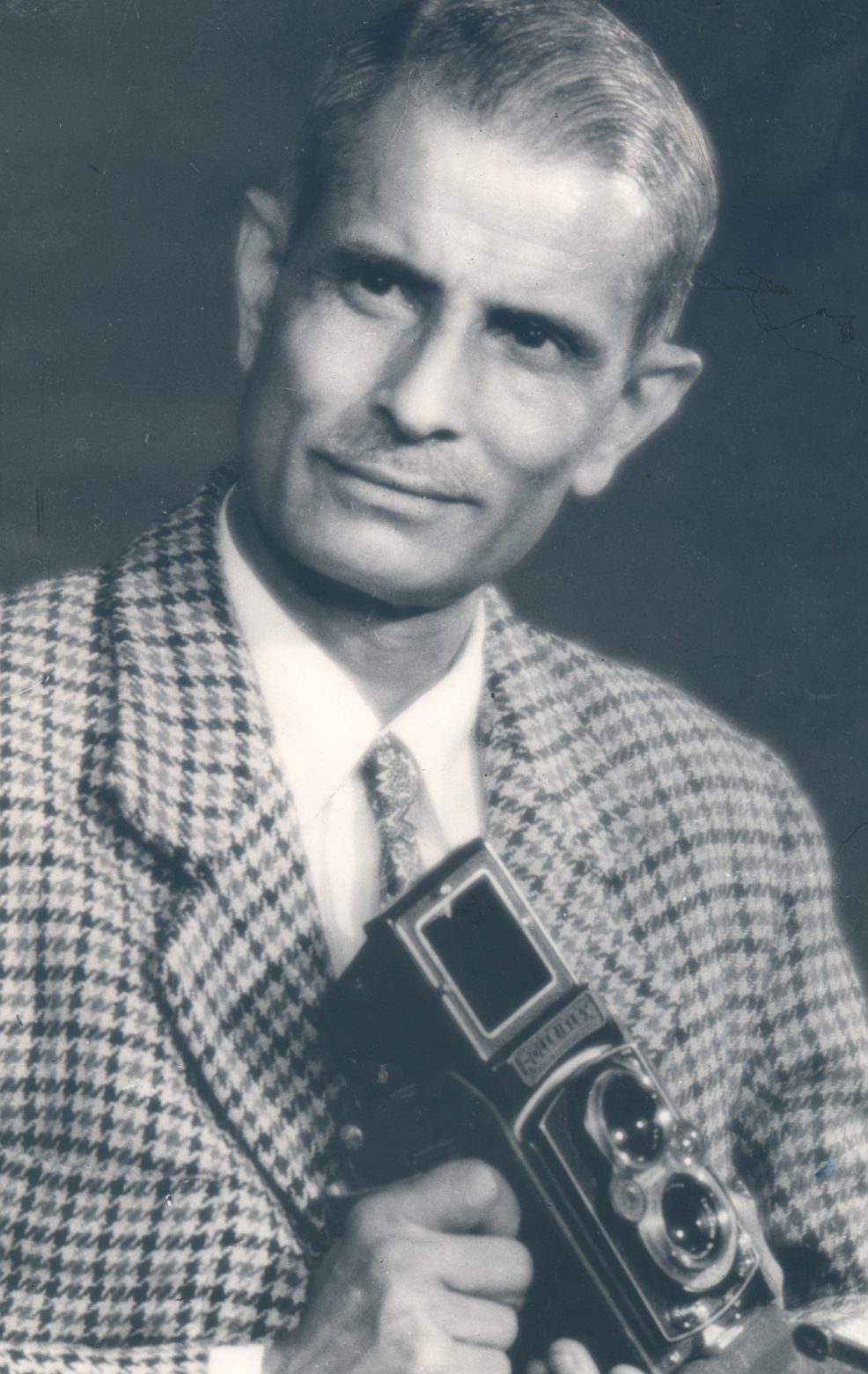
Naiyer Masud. Photos courtesy of Muhammad Umar Memon
Muhammad Umar Memon, who has translated Naiyer Masud’s stories, on the labyrinth of his fictional universe.
Naiyer Masud (1936-2017), who passed away in Lucknow on July 24 at the age of 81 after protracted illness, was one of the greatest Urdu short story writers who has been extensively translated into several languages, including English, Finnish, French and Spanish.
Masud was born on November 16, 1936 in Lucknow. His parents came from families of physicians (hakims). His father, Syed Masud Hasan Rizvi Adeeb, was a professor of Persian at Lucknow University and a famed scholar of dastaan. He was the elder brother of noted Urdu satirist Azhar Masud. In 1965, Masud joined Lucknow University as a professor of Persian where he remained till his retirement in 1996.
Masud’s four books of short stories — Seemiya (The Occult), Itr-e-Kafoor (Essence of Camphor), Taus Chaman ki Maina (The Myna of Peacock Garden) and Ganjifa (Card) — cemented his reputation as the master of the unsaid who created a maze, a labyrinth in his stories that held the reader captive to their narrative wizardry, their illusory spell.
Masud also translated a few short stories of Kafka as well as some Persian stories into Urdu. He also wrote critical and biographical accounts of Mir Babar Ali Anees (1803-1874), Yagana Changezi (1884-1956) and Mirza Ghalib (1797-1869). He was awarded the Padma Shri for Literature and Education in 1970. He was also honoured with the Sahitya Akademi Award for Urdu in 2001 and the Saraswati Samman in 2007.
In this interview, critic and short story writer Muhammad Umar Memon, professor emeritus of Urdu literature and Islamic studies at the University of Wisconsin, Madison, who has translated Masud’s stories into English — (The Occult, Penguin Books, 2013) and Naiyer Masud: Collected Stories (Penguin Random House, 2015) — talks about Masud’s enchanting fictional landscape. “His fiction invites you to enjoy the labyrinth for what it is and, if possible, become it — something like the complete fusion or identity of the observing subject and the observed object,” says Memon. Excerpts from an interview:
 
SHIREEN QUADRI: In Naiyer Masud: Collected Stories (Penguin Random House, 2015), you mention about your first encounter with Naiyer Masud’s fiction in the late 1980s and how you were stunned by Seemiya, his first collection. You talk about his stories as “fragments of consciousness suggestive in their fractured imagery of some presence somewhere in the beyond”. Could you share your initial impression of this encounter and how it has evolved over the years?
MUHAMMAD UMAR MEMON: That first impression, which I perhaps share with most of his readers, persists.Take, for example, some images that occur with rare economy of description in most of the stories of Seemiya, but only in fragments, revealing a little of themselves at each occurrence, such as the ubiquitous lone fragment of the mysterious cloud, the curios mentioned in passing in the opening story, “Obscure Domains of Fear and Desire”, and then repeated with additional details in practically all the others, with their relatively detailed treatment in the third story, “Snake Catcher”; or the young woman fleeing from the sexual advances of the narrator which is touched upon lightly in the first story, then again in the third, but occupying a substantial part of the fourth and eponymous story of the collection where her flight ends in drowning. More tellingly, however, it is the opening paragraph of “Obscure Domains of Fear and Desire” and its verbatim retrieval as the closing part of the last story, “Resting Place.”All this creates an overwhelming impression of some sort of inherent interconnectedness and of what lies in between as somehow being an organic part of a continuum. Yet all five stories of the collection preserve their autonomy. While they do not yield any sense of spatial or chronological continuity, or closure, they do leave the reader with two dominant impressions: that (1) the author is dealing with a continuum, and (2) it can be viewed only in fragments.
What stunned me was the deliberate attempt of the author to suppress the links that would — or, might — have restored the fragments to their logical place in the continuum. The resulting jolting effect makes it difficult to grasp the ultimate meaning of the work; perhaps the reason why one is hard pressed to articulate for oneself or explain to others with any degree of confidence and precision what a given story is about — what it means.
Nor can one dismiss these stories as so much mumbo jumbo and move on. They just don’t let you move on. They haunt you. You are hooked. Nothing like this arresting quality is seen anywhere in Urdu fiction, where you are completely taken, without knowing, ironically, what has taken you.
SHIREEN QUADRI: Masud’s four collections of stories — Seemiya, Itr-e-Kafoor, Taus Chaman Ki Mayna and Ganjifa — establish his reputation as possibly the greatest Urdu short story writer. He has been variously described as a “realist of the strange” (by Amit Chaudhuri) and as a “poet’s storyteller” (by Agha Shahid Ali). What place do you think he occupies in the legions of Urdu writers whose works have been embraced and appreciated by the wider world?
MUHAMMAD UMAR MEMON: I’m not sure about the perimeters of this “wider world”. Do you mean the territories of South Asia or the whole world? Frankly, I don’t think too many Urdu fiction writers have received much recognition outside the South Asian subcontinent. They became known mostly on university campuses with departments of South Asian Studies after some of their work became available in translation, but not among mainstream Western readers. I think Saadat Hasan Manto and Naiyer Masud are comparatively better known outside South Asia. Essence of Camphor, one of the two books of Masud’s stories I published in the US, received many good comments in Kirkus ReviewsThe Boston GlobeThe Los Angeles Times and numerous other US newspapers and magazines, and was later translated into Finnish, French and Spanish. But I doubt it sold more than a couple of hundred copies in the US. As for within South Asia, Masud is generally considered the finest Urdu fiction writer today, without progenitor or progeny.
The Vice President, Mohammad Hamid Ansari presenting the Saraswati Samman Award 2006-07 to Dr. Naiyar Masud at a award function organized by K.K Birla Foundation, in New Delhi on March 05, 2008.
SHIREEN QUADRI: Seemiya, a collection of five interlinked stories, which you translated into English (The Occult, Penguin Books, 2013), is more like a novel in stories. They have no discernible plots, their terrains are unidentifiable, the characters that inhabit them have no names. While these stories are autonomous, they coalesce in unexpected ways, with certain images recurring in more than one story. Tell us about your understanding and appreciation of his first collection which, in many ways, cemented Masud’s reputation as a master of the form?
 
MUHAMMAD UMAR MEMON: I have already given some idea of both my appreciation and the tenaciously illusive nature of The Occult in the answer to one of your previous questions. However, let me add a little more: The jolts that throw the reader in a vortex of incomprehensibility are the result of paring down to as much as one-tenth the draft of a work from its original length. Why does he do that? Two examples, in his own words:
“(1) Once a thing is brought into existence, it continues to live in some form or fashion even when it is removed from the scene. For example, you are sitting on this sofa; you then decide to get up and leave. You are not on it anymore, and yet your presence will be felt, to some extent at least, however obscurely or intangibly. But that other sofa, just brought in from the store, on which no one has yet sat, cannot be the same as the one you had sat on. It is necessarily different. One cannot describe this difference in words, but one can feel it, subliminally.
(2) There was this woman who was an accomplished cook. A certain dish that required only four ounces of ghee she’d cook with two-and-a-half pounds of ghee, removing the extra when it was done. But the dish tasted very special and retained the flavour, the essence of the finest dish from the table of the nobility.”
What he tries to do, then, is to retain the aura of the excised portions in those that he does keep. Never mind the suppression of details pertaining to the event being described, something reminiscent of their erstwhile existence will be felt in the retained parts. His job is to craft a language which will convey this veritable existence in its equally veritable absence. He elaborates it further: “Take, for example, the phrase ‘nisvānī badan kī khushbū’ [scent of a woman’s body] or ‘qadmoñ kī āhat’ [the sound of footfalls suggestive of a presence]. They occur once or twice in my work at most, yet nonetheless seem to pervade it.”
Muhammad Umar Memon
Muhammad Umar Memon
SHIREEN QUADRI: Masud’s fictional landscape is like a labyrinth. In the introduction to Collected Stories, you write that his stories seem to pull the readers into the centre of a vortex — at once provocative and inaccessible. You wrote: “Even while failing to understand his stories, one is unable to walk away from their haunting ambit. Somehow they seem to retrieve for the reader a part of their memory buried deep in the liminal folds of consciousness otherwise preoccupied with the more immediate problems of mundane existence.” For a reader, what is the best way to approach Masud’s stories?
MUHAMMAD UMAR MEMON: The “best way” is also indicated in the continuation of the passage you have quoted, viz., “It is a part that needs to be discovered, patiently, more through feeling and introspection than by reason. The moment reason is engaged, what it sees is a formidable scrambling of logical coordinates, always leading back to the same labyrinth, never reconstituting into a discernible [and complete] entity.”
You see, although one could say, everything, however ineffable and vague, carries a sub-stratum of “meaning”, meaning ultimately has to do with “ego”, the desire to grasp and be done with the claustrophobic labyrinth, not to dangle permanently in a worrisome state of incomprehension. But what is the meaning of an object d’art, a painting, a symphony, a nocturne? Why can’t we enjoy it for its own sake? Let it generate its diverse epiphanies in the reader’s imagination. For it is emblematic of nothing beyond itself, and so is Naiyer Masud’s fiction. If we continue the quest for meaning, it would be like the attempt to get out of the labyrinth, while his fiction invites you to enjoy the labyrinth for what it is and, if possible, become it — something like the complete fusion or identity of the observing subject and the observed object. I might also add here that it is the limitation of any grouping of written words with their inevitable consecutiveness that raises our expectation, the necessity for it to have meaning. If somehow a story such as “The Colour of Nothingness” could be converted into a painting, with all its events simultaneously present on the surface of canvas, would we still approach it with the same expectation of meaning as we would in its written form?
 
SHIREEN QUADRI: What is your mental portrait of Masud based on your interactions with him over the years? Could you trace for us the world Masud came from and how it influenced his fictional landscape?
MUHAMMAD UMAR MEMON: I’ve met him only once, by accident, in Delhi, for a few hours, in the company of his friends. It was difficult to talk to him much, certainly not about his work. My only contact with him was through correspondence and occasional telephone calls. I have no mental image of him except when I think of him during the last half a dozen years of his illness, the painful image of a bedridden, frail man who had gradually severed his contact with the world sails through the mind. He had stopped writing altogether during this period, whether due to physical inability (the stroke had more-or-less paralysed his right side) or, even if he could write, he was determined not to. I do have a theory about it, but it is difficult to articulate it with clarity. Perhaps a kind of affront to his pride compelled him to deny the world all those scintillating gems he could have given it, to get even with Providence in as incomprehensible a way as unfolds in his fiction. He was a very gentle person, a paragon of rare subtlety and what we call “sha’istagi” in Urdu, who hurt no one, extremely reserved, immensely confident but least demonstrative of it.
That said, what I have gathered of his background is common knowledge. He grew up among books and in a cultured family. An extremely well-read man who was keenly aware of the sophistication and achievements of his native Awadh, in arts, in sports, and everything in between. Bygone Lucknow — once palpably real — was now a place in memory. Even in stories which are not time-and-place-specific, their locales nevertheless are redolent of the aura of Lucknow — in the dilapidated wall of a building, in a crumbling mihrab.
NaiyerMasud04MPOs24apr2018
SHIREEN QUADRI: How were Masud’s stories received by the Urdu world and his contemporaries?
MUHAMMAD UMAR MEMON: He was writing already from his early years, but he didn’t publish anything until 1970s. “Nusrat” was his first published story. It came out in his friend S.R. Faruqi’s literary magazine Shab-Khoon. Interestingly, when he gave it to him to look at, he didn’t say he wrote it. He said he had translated it. I do not recall Urduwallahs taking much notice of or getting excited about his stories initially. Once I asked S.R. Faruqi what he thought of Masud’s work, his reply left me dumfounded. “They don’t go anywhere,” he said. (In a way, it was a very intelligent, indeed a very perceptive remark: not going anywhere yet making the pursuit worthy of every effort was precisely the point).
All this changed with the publication of his first collection (Seemiya). Now everyone in Pakistan and India was talking about him, I mean the Urduwallahs. Critics, such as Muhammad Salim-ur-Rahman, Muzaffar Ali Syed, and Safdar Mir praised his work in newspaper columns, but they didn’t venture a formal critical assessment. It appears they were smitten by his style. Anyway, today he ranks as the foremost author of Urdu short stories. Without a doubt, his is the most original voice in Urdu letters.
SHIREEN QUADRI: Masud is among a clutch of writers who broke away from the conventions of Urdu short fiction — the linear development of the story and the sequential structure of the plot — and charted a new path: the abstract. The social realism of Progressives (Manto, Chughtai, Krishan Chandar, Rajinder Singh Bedi et al) and the symbolism of Modernists (Surinder Prakash, Balraj Manra, Ghyas Ahmad Gaddi, Joginder Paul, Balraj Komal et al) gave way to mimetic realism, the new way of capturing the multi-faceted reality which reflected that post-1970 Urdu writers had a more nuanced, complex notion of reality. Kafka, whom he also translated into Urdu, had a great influence on Masud. Could you talk about what possibly shaped his fiction and gave it a new direction?
MUHAMMAD UMAR MEMON: While one’s background and milieu may play a part in shaping the character of his writing to some degree, style, ultimately, is the result of an innate element of one’s personality. The circumstances of Ghalib’s life are well-known. Could someone else have with identical circumstances produced Ghalib’s kind of poetry? Background and milieu cannot account for the imaginal world and ways of a writer, nor could this illusive “element” be explained rationally.
A man of undemonstrative feelings, Masud had deep roots in and intimate knowledge of the vanished culture of Lucknow, most clearly visible in his story “The Myna from Peacock Garden”. But even in stories where the locale and time is deliberately obscured, the details and ambience betray his intimacy with that culture. This is as much as one can say. What, however, unfolds within the confines of this knowledge is pure imagination, a working out of one’s unique personality and illusions and what have you.
However, in his several dozen letters to me, he often names Ghulam Abbas as his main influence, while many others (Azim Beg Chughtai, Rafiq Husain, Kafka, Poe, Emile Brontë, Dostoevsky) may have worked only as models. Kafka’s influence on him has been often grossly overrated. Although he thinks that Kafka and Poe have a lot to give, he is not sure whether he has consciously come under their influence. Let’s just say that Masud has consciously followed Ghulam Abbas and creatively assimilated Kafka. Whatever he learned from these writers helped him craft a style uniquely his —a style which is as deceptively simple as it is hard to imitate.
SHIREEN QUADRI: You also wrote somewhere that Masud’s narratives work as a reminder against completion and closure. In a very interesting analysis of his stories, you wrote once that in Masud’s stories “one experiences things in dynamic movement, not as objects with fixed perimeters, in a state of repose or quiescence. So one cannot be done with them and move on. Circularity has no terminus. Finishing one of his stories does not bring the expected comprehension and completion. What it does bring is a continual engagement with the unsaid and the ineffable, preserved in memory. It is like walking into a well-maintained living room, but no one greets you. You wait for hours, but no one appears. And you cannot leave because you vaguely feel a presence that you cannot see or name.” Are Masud’s narratives also a reminder against the quest for meaning? How deeply are they also enmeshed in dreams and disillusionment?
 
MUHAMMAD UMAR MEMON: Dreams — yes; disillusionment — with qualification. In fact, his very first published story “Nusrat”, according to his admission, is a transcription of a dream he had. Disillusionment is a fact of life, any life. So, to that extent, it is there in his stories. But it has nothing to do with the author’s disposition or pathology. Masud is mature enough to not allow disillusionment to become a dirge of what once was and is no more. When the word “morbidity” or “decadence” is used to characterise his work, he vehemently takes exception to it. He knows how good that culture was and it is a shame it didn’t last, but he also knows that one must move on to the future and its teeming possibilities. Thus, a fictional recapitulation of that culture is merely a recording and not an act of mourning.
As for completion and closure, answering just this question in an interview, he expressed his dislike of the dramatic ending, adding,
“Even as a child I found it repulsive. A story’s end shouldn’t be dramatic. Which means the story should not give the impression that it has ended, that all is finished and done with, that nothing remains. The other reason could be that even after I’ve finalised a story, I seem to want to continue writing it, or if not it per se, then a fresh one along much the same lines. […] I do intend for my story to give the feeling that it has not ended, that rather what has ended is the specific episode around which it is woven. Although the short stories in Seemiyā were not written in the sequence in which they appear in the book, they illustrate my point well. You will notice a particular connectedness, a certain coherence and affinity flowing through all of them.”
 NaiyerMasud05MPOs24apr2018
SHIREEN QUADRI: Your contribution to the promotion of Urdu works has been immense. A professor emeritus of Urdu literature and Islamic studies at the University of Wisconsin, Madison, you have translated numerous works of Urdu fiction, including the works of Masud. You also served as editor of the Annual of Urdu Studies (1993-2014). Tell us about your association with Urdu literature. Who are some figures of Urdu literature you admire?
 
MUHAMMAD UMAR MEMON: Well, as a Memon from Rajkot, my mother tongue is Memoni and/or Gujarati, but I was born in Aligarh, where my father was a professor at the university, and grew up among Urdu speakers. I always loved Urdu, but I wasn’t thinking of a profession in Urdu. I did my graduate and post-graduate work in Arabic and Islamic Studies. After a Ph. D., I was offered a joint appointment in two separate departments at the University of Wisconsin to teach Arabic in one and Persian in the other. A year later, I was offered to take over Urdu as well and move to one department. I gave up teaching Arabic. Since then I have worked only in Urdu, but I have taught courses on Islamic religion and culture, literatures of Muslim Societies, and Sufism throughout.
Who do I admire? In fiction, surely some of the writers I have translated. In criticism: first and foremost, Muhammad Hasan Askari, next, S.R. Faruqi, and, finally, Muhammad Salim-ur-Rahman.
 
SHIREEN QUADRI: What memories do you have of Aligarh, where you were born, and Karachi, where your family moved to in 1954? Tell us about some of your early literary influences.
MUHAMMAD UMAR MEMON: Plenty. And the memories of Aligarh seem to be more real than those of the ten years I spent in Karachi. The funny thing is: whenever the image of Aligarh flashes across my mind, the place seems to exist in its own independent space, without even a tentacle stretching into India or Pakistan. In a way, it is more real than the two countries. It is my “Toba Tek Singh.” I haven’t been to Aligarh since 1954 and I’m dying to visit it before my time is up. But politics has a way of thwarting even the most innocent wishes. Even though I’m a US citizen for over 30 years now, I couldn’t get the Indian visa.
Anyway, being the youngest of six children, five of whom having already left Aligarh, I grew up with a father half a century older than myself and always absorbed in some book, I went through a lonely and uneventful childhood and always carried a vague feeling of some unnamed sadness, which has dogged me throughout my life. I did have some friends though. I played the games then common among Indian boys (cricket and gilli danda), stole mangoes, guava and other fruit from university orchards on the way back from school, and enjoyed swimming. So, it was just another ordinary life. I went through many of the same boyhood and adolescent experiences as
other boys.
Out of my entire fifteen years in Aligarh — excluding a few summers which we spent in our ancestral hometown Rajkot in Kathiawar, Suarashtra (the same place where, I believe, during the waning days of the British Raj, the Ali Brothers spent some time in jail on sedition charges), where my parents owned a house — the nights of 1947 stand out in memory. Partition took place while we were summering in Rajkot. When the time came for us to return to Aligarh, my mother stayed behind because of a scheduled minor foot surgery. On the way back, Father left my sister and me at the Delhi railway station and went to attend a meeting in the city which had been planned earlier and Abul Kalam Azad had insisted that he attend it. My father thought a railway station would be safer. My sister and I rode a rollercoaster of veritable fear during those two or three hours alone on the railway platform.
Later we took the train to Aligarh which arrived safely, but we subsequently learnt that the next one did experience some trouble and a few lives were lost. I said, “the nights of 1947”. Although communal incidents were relatively few in the university area, our neighbourhood on the fringe of it lived in constant fear of a sudden attack and had therefore mounted a big searchlight atop the roof of Manzur Sahib’s house, which is where we were to gather in case of an assault. One morning we were awakened in the wee hours and rushed to Manzur Sahib’s. It was a brutally chilly night. I recall I was shivering down to my bones. There was no time to put on anything warm. An overcoat was just hurriedly thrown over my sleeping clothes and off we went, with me still in my slippers. Luckily the night passed without any incident.
As for my early literary influences, well, none, or if there were any, I was not conscious of them. In Aligarh, I enjoyed reading children’s magazines, Khilona and Phulwari and, later, detective novels, such as Ibn-e-Safi’s monthly Jasoosi Duniya and Imran series. Reading of literature didn’t begin until we moved to Pakistan. I did read a lot of books and even wrote some stories, the idea of becoming a professional writer was far from my mind.
NaiyerMasud06MPOs24apr2018
SHIREEN QUADRI: Your latest translated work, The Greatest Urdu Stories Ever Told (Aleph, 2017) brings together the works of 25 Urdu writers who are masters of the form, including Abdullah Hussein, Asad Muhammad Khan, Munshi Premchand, Saadat Hasan Manto, Intizar Husain, Ismat Chughtai, Qurratulain Hyder, Rajinder Singh Bedi and many others. In your wonderful introduction, you mention that their stories carried within them “the embryo of some of the future developments of the form”. What triggered this collection and what were your overriding concerns behind their selection?
 
MUHAMMAD UMAR MEMON: You seem to think that the book was planned, that there was a conscious design behind the selection. At the risk of disappointing you, the story is far simpler. Selection, while it may appear to be the result of a conscious act, is, for me at any rate, merely a reflection of who one is, and it takes a while to evolve into one “who one is”. From that point forward, selection is merely following a course predetermine by one’s nature and personality. It just happens. You don’t have to be conscious of it. I never translated a story that I didn’t like, and I never translated a work to meet the demands of a definite publishing project. I didn’t care whether a translation ever got published. This is the reason why I find it difficult to design a book according to the demands of a publisher. The credit for The Greatest Urdu Stories Ever Told really goes to Simar Puneet, my editor at Aleph. It was her idea and gentle persuasion that made it possible, with my part in it being very little. I only selected stories from my published work and revised them.
SHIREEN QUADRI: What are you working on next?
 
MUHAMMAD UMAR MEMON: There is no next, not in English anyway. After retirement in 2008, I decided to stop further translation into English. Half a century in the US had slowly affected my ability to write proper Urdu. Henceforward I will do all my work in Urdu, I told myself. I have since written very little in English, except for a few columns for the Karachi-based newspaper Dawn. When R. Sivapriya, a former editor at Penguin, asked me to translate Manto, I remember my initial reluctance to accept her offer. She persisted, I gave in.
In the past nine years, I have translated into Urdu a variety of writing from Arabic, but mostly from English: about a dozen novels, a few short stories, a work on Sufi metaphysics, articles on the nature of Islamic culture in al-Andalus, Islamic philosophy, etc. Currently I’m collaborating with a friend on translating a book about the nature and myths surrounding the transmission of Greek science and philosophy into Islamic civilisation and Islamic contribution — grudgingly acknowledged, if at all — to the making of the European renaissance. The work is proving to be quite arduous as it involves advanced mathematics and astronomy. So my courtship with English now appears to have effectively ended, although I might revise some earlier work and reprint it.
SHIREEN QUADRI: Who are some of the contemporary writers in Urdu (poets, novelists and short story writers) we must watch out for?
MUHAMMAD UMAR MEMON: This is a difficult question. I really haven’t kept up with the Urdu fictional production in the past two or three decades. There are, of course, many new writers, but I haven’t read their work critically to make any predictions about their promise. Although among the older contemporaries Ikramullah, Asad Muhammad Khan, and Muhammad Salim-ur-Rahman are quite well-known to Urdu readership; their work needs to be introduced to a much wider reading public. In poetry, however, I will mention two names: Asif Raza and Riyaz Latif. Their work breaks new ground and is indicative of an entirely fresh poetic sensibility in Urdu. The former lives in the US and the latter was also here until recently. I know them personally and have enjoyed reading their poems immensely. Luckily, Asif and Riyaz write enviably good English and have translated their poems into English. I hope they will be published soon.
source: http://www.thepunchmagazine.com / The Punch Magazine / Home> Interview – Profile / by Shireen Quadri / July 31st, 2017