Category Archives: World Opinion

Abu Dhabi-based doctor wins Indian award for expatriates

KERALA / SAUDI ARABIA / UAE  (Arabian Gulf)  :

Three Gulf expats among 13 NRI winners of the ‘Pravasi Bharatiya Samman’ award

Three Indian expatriates in the Gulf, including an Abu Dhabi-based doctor, have been conferred with an award for Indians living abroad by the government in New Delhi.

Indian President Pranab Mukherjee has conferred the Pravasi Bharatiya Samman Award to 13 non-resident Indians, PIOs and organisations for their contributions to the country of their residence as well as to India in different spheres of activity.
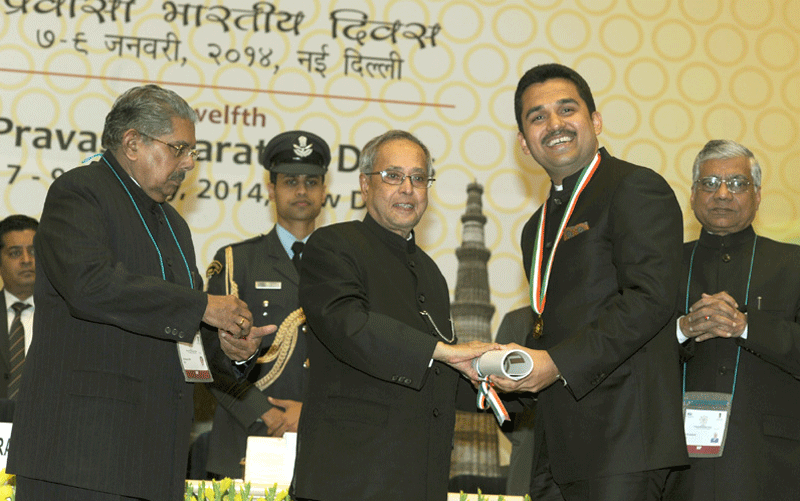
Dr. Shamsheer Vayalil Parambath receiving the 'Pravasi Bharatiya Samman' Award from Indian President Pranab Mukherjee in New Delhi.
Dr. Shamsheer Vayalil Parambath receiving the ‘Pravasi Bharatiya Samman’ Award from Indian President Pranab Mukherjee in New Delhi.

Dr. Shamsheer Vayalil Parambath, founder and managing director of Life Line Healthcare Group of Abu Dhabi, won the annual award for his role in developing a major healthcare business in the UAE and in promoting UAE-India ties.

Dr Shamsheer’s healthcare business now covers India, Oman and the UAE and the group has undertaken humanitarian projects like giving free heart surgery to poor children and offering jobs to relatives of the Mangalore air crash victims. He is the youngest entrepreneur to receive this award.

A postgraduate in radiology, Dr Shamsheer was trained in Boston before joining Sheikh Khalifa Medical City in Abu Dhabi. Starting with a small hospital in 2007 in Abu Dhabi, he now has nine hospitals.

Shihabudeen Vava Kunju, an Indian social worker from Saudi Arabia, is another recipient of the award from the Gulf this year. He won the award for social service and in fostering good relations between India and Saudi Arabia.
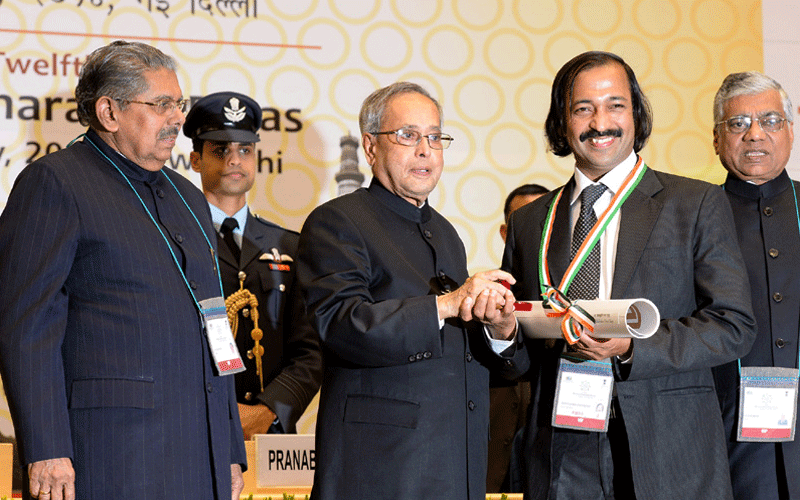
Shihabudeen Kottukad of Saudi Arabia receiving the 'Pravasi Bharatiya Samman' Award from Indian President Pranab Mukherjee in New Delhi.
Shihabudeen Kottukad of Saudi Arabia receiving the ‘Pravasi Bharatiya Samman’ Award from Indian President Pranab Mukherjee in New Delhi.

The third Gulf winner of the award this year is Shihabudeen Kottukad of Saudi Arabia. He won the Pravasi Bharatiya Samman Award for his social service for Indian expatriates in the kingdom.

Ms Lisa Maria Singh (Australia), Kurian Varghese (Bahrain), Vasdev Chanchlani (Canada), Satnarainsing Rabin Baldewsingh (Netherlands), Bikas Chandra Sanyal (France), Sasindran Muthuvel (Papua New Guinea), Ms. Ela Gandhi (South Africa), Shailesh Lakhman Vara (Britain), Dr. Parthasarathy Chiramel Pillai and Ms. Renu Khator (USA) are the other prominent NRIs who have been given the award this year. Ramakrishna Mission (Fiji) is also in the winners list for its humanitarian and community services on the Pacific Ocean island.

source: http://www.emirates247.com / Emirates 24X7 News /  Home> News> Emirates / by Staff Reporter / Tuesday – January 14th, 2014
Bengal awaits the return of two Everesters

Ichhapur (Barrackpore subdivision of North 24 Parganas District), WEST BENGAL :

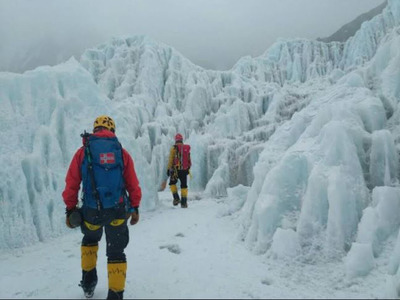
Kuntal and Sahabuddin during the Everest expedition

KOLKATA:

Forty eight hours after they had scaled Mount Everest on Sunday, Shaikh Sahabuddin and Kuntal Karar were flown off to Kathmandu. Families of both of them are now praying hard for the speedy recovery of Karar whose tryst with the mountains has left him battling serious frostbite. However, Karar has assured his family that all is well and he would be back soon to savour home-cooked ‘doi chicken’ with naan.

Sahabuddin, who works in the Metal & Steel Factory of Ichhapur, has become a big hero for his colleagues. “Having scaled many mountains, my husband was always a hero in office. But with the Everest mission, he has become a bigger hero. His office colleagues and bosses are in Kathmandu to receive and congratulate him. Even my father is hoping to come down on May 28 from Kashmir to wish him,” said Sahabuddin’s wife Ruksana, who hails from Kashmir.

SahabuddinEverest02MPOs15dec2017

His younger brother, Shaikh Salauddin, works as a heating ventilation air conditioning engineer and is proud of his sibling’s achievement. Apparently, two months before the expedition, Sahabuddin underwent a surgery. Yet, nothing could stop him from wanting to reach the Everest. Salauddin is waiting to begin the celebrations back home once he returns. “Whatever happens, we were always sure that he would make the summit,” said Salauddin, who also dreams of scaling the Everest one day.

The family has been told that Sahabuddin is perhaps the first Indian Muslim mountaineer to have scaled the Everest. “We have been living in Ichhapur for 30 years. For us, divisions based on religion, caste or creed don’t matter,” he said.

Sahabuddin’s two-and-a-half-year-old son Shaikh Uzair is excited. He keeps on telling everyone he meets about his father having reached the top of the world. “On Tuesday morning, my husband made a video call at 8.30am. Both of us started crying. There were tears of happiness. He kept on saying that it was our collective good wishes that had helped him reach the Everest. My son was asleep when the first call came. When he later called at 11 am from Kathmandu, the entire family spoke to him,” Ruksana added.

 Initial euphoria of having reached the summit died down when the Karar family heard about Kuntal’s frostbite. On Monday evening, the family got tense after news trickled in about Kuntal being seriously ill. “We couldn’t sleep the whole of Monday night. In the morning, we were thinking of organising funds so that we could reach Kathamandu. But thankfully, he called up at 8.30 in the morning and assured us that he is fine. He even sent us photos from the hospital,” said Kuntal’s sister-in-law Mamomi from their Howrah residence.

Mountaineering has been an addiction for Kuntal. After completing his diploma in engineering, he took up a job before shifting to his own business. “Kuntal’s teacher Anol Das had died in the mountains. A year later, Kuntal had rescued his body. However no amount of persuasion could dissuade him from being smitten by the mountaineering bug,” said his brother, Kanchan.

While at the summit, Kuntal had wanted to use a satellite phone to speak to his family. “But a fellow-mountaineer who had the phone was too exhausted. Kuntal couldn’t ask him to lend the satellite phone so that he could speak to us from there. That’s his only regret,” she said.

source: http://www.timesofindia.indiatimes.com / The Times of India / News> City News> Kolkata News / by Priyanka Dasgupta / TNN / May 23rd, 2017

Battle of Patparganj to Bahadur Shah Zafar’s trial: Delhi’s journey since 1803, at the click of a mouse

NEW DELHI :

A 100-member team of archivists is digitising over 10 crore documents to prevent further loss. The first phase of the project is expected to be completed in two years.

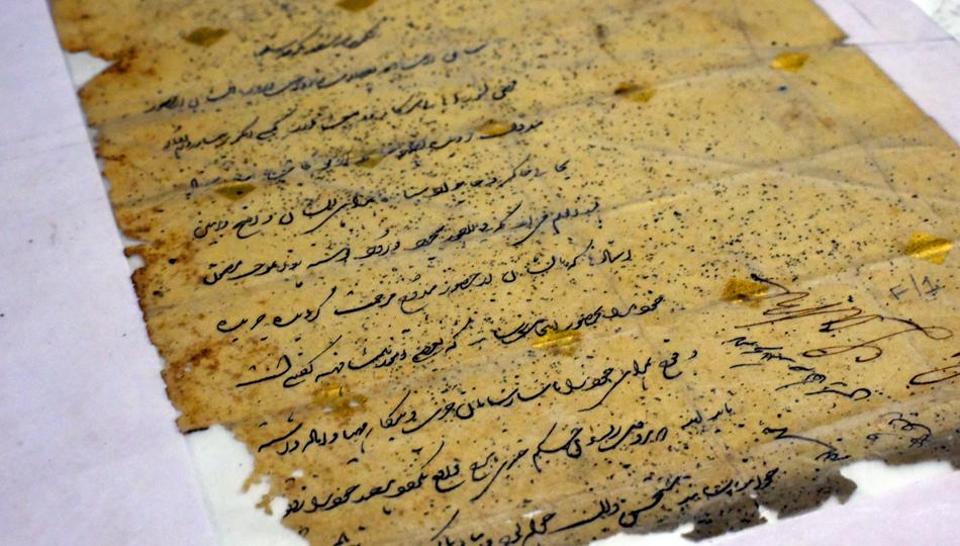
A letter from General Lake Sahib to Zaibun Nisa Baigum dated 8 October 1802 at Delhi archives.(Vipin Kumar/HT PHOTO)

On March 9, 1858, a British court declared Delhi’s last king, Bahadur Shah Zafar, guilty of rebellion, treason and murder before exiling him to Rangoon in the then British-controlled Burma. The trial was approved and confirmed a month later by N Penny, major general commanding, Meerut division.

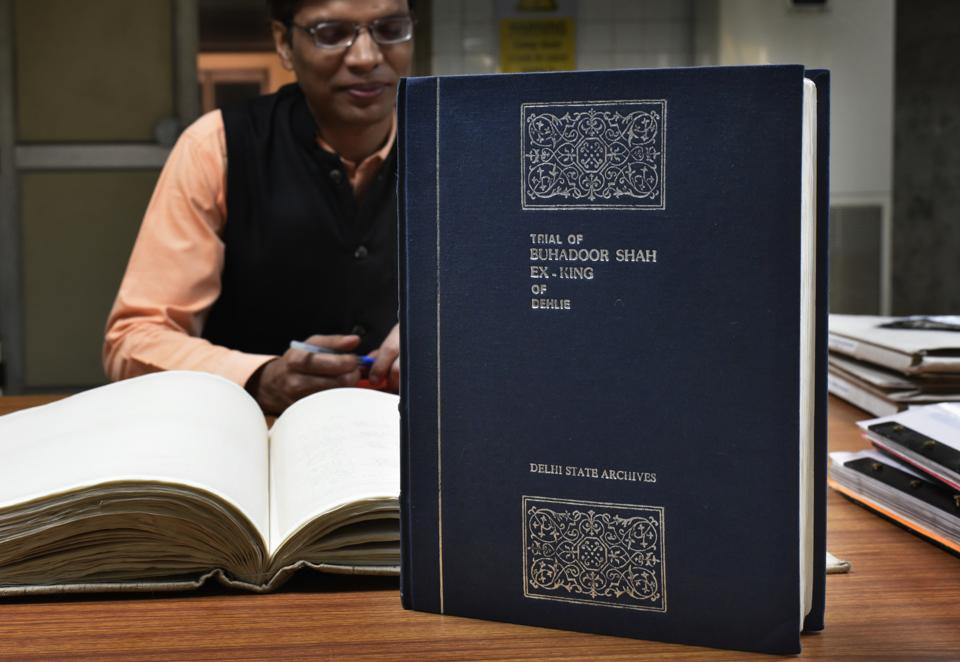
One hundred and fifty nine years later, the 42-day trial conducted at Diwan-e-Khaas of the Red Fort by British prosecutor Major F Harriott lies preserved word for word at the Delhi archives in the form of a hardbound book comprising 262-pages.

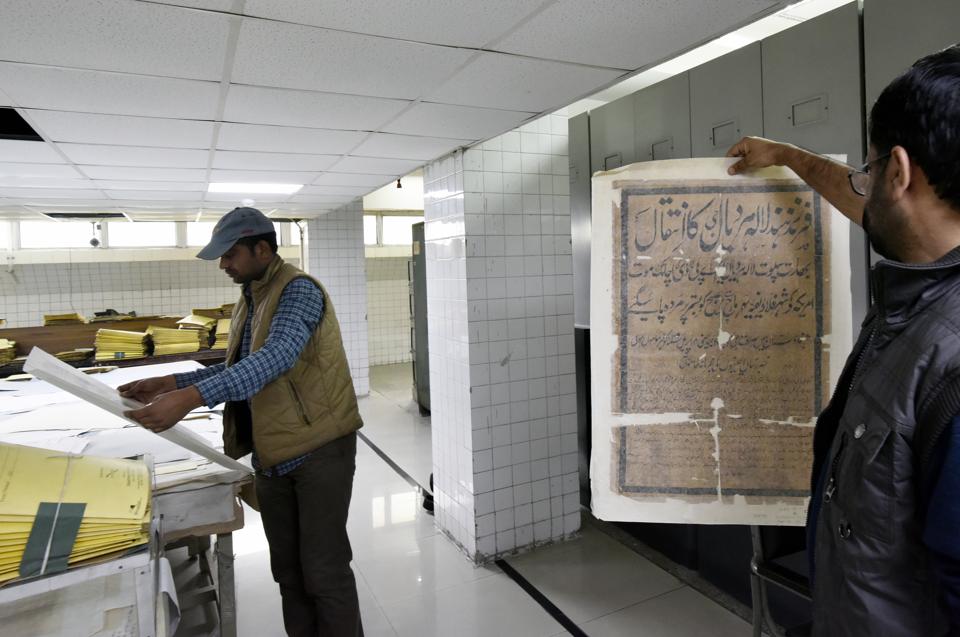
Apart from the handwritten trial papers, the Delhi archives is a repository of over 10 crore rare documents comprising Mughal firmans (imperial orders), maps, land acquisition award statements, jail records, manuscripts and government orders narrating the historical and political journey of Delhi since 1803.

So far accessible to only researchers, the treasure trove will soon be just a click away for those interested in the history of the national capital. An ambitious ‘digitisation and microfilming of archival records’ project started by Delhi government is underway with the target of converting 4 crore documents in the first phase by 2020.

An official with a copy of the trial of Bahadur Shah Zafar. (Vipin Kumar/HT PHOTO)

“Some of the records are so old that they might get damaged. So, it is required to preserve them in digital and microfilm formats for posterity,” said Sanjay Garg, the chief archivist of the archives. The Delhi Archives is city’s second repository of records from early 19th century after the National Archives of India.

Mughal firmans to land acquisition for Lutyens Delhi

In September 1803 East India Company’s forces under general Gerard Lake fought the Marathas in what is popular as Battle of Delhi, or Battle of Patparganj — named after the area now in east Delhi.The earliest documents at the Delhi Archives relate to this battle. Thought the British emerged victorious, they allowed Shah Alam II — the blind emperor of Delhi — to issue firmans in Persian language, many of which are also preserved at the archives.

“There are different sizes of royal seals in Persian language depending on the hierarchy in the Mughal courts on the firman with gold marks,” said Ashutosh Kumar Jha, assistant archivist pointing at ‘A letter from General Lake Sahib to Zaib-un-Nisa Baigum’ dating October 8, 1802.

The transfer of power to the British crown in 1958 followed setting up of a new administration and eventually the construction of the new capital, Delhi, in 1912. The Archives also have records of land acquisition during this historic shift of the national capital from Kolkata to Delhi.

“From photographs to award statements of land acquired from the owners, we have rare documents that bear testimony to how the present day Delhi came up,” said Sandeep Singh, assistant archivist. In one of the records dating March 1913, an individual named Ram Das was awarded a compensation of Rs 172, two paisa and nine annas for his 285.38 acre of land acquired by the government in Khanpur. The deal was signed by Kamruddin, revenue assistant, Delhi province.

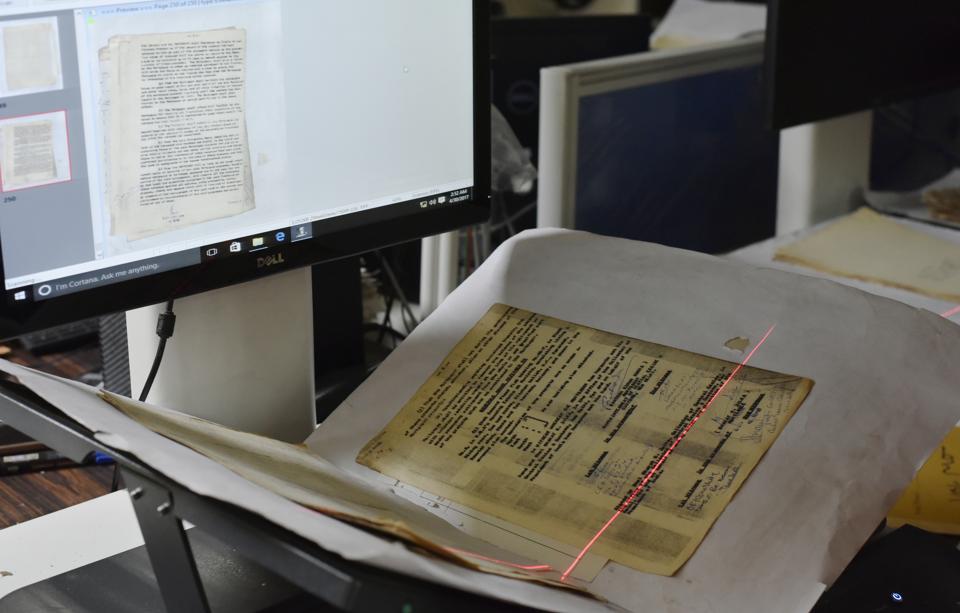
Documents being scanned for digitisation at Delhi archives. (Vipin Kumar/HT PHOTO)

Photographs, titles awarded jail documents, student activism

The repository at the archives includes pictures of construction of historical buildings housing Parliament and Rashtrapati House in early 20th century. Originally called House of Parliament, the Sansad Bhawan was designed by the British architect Edwin Lutyens and Herbert Baker in 1912-1913 and was constructed between 1921 and 1927.

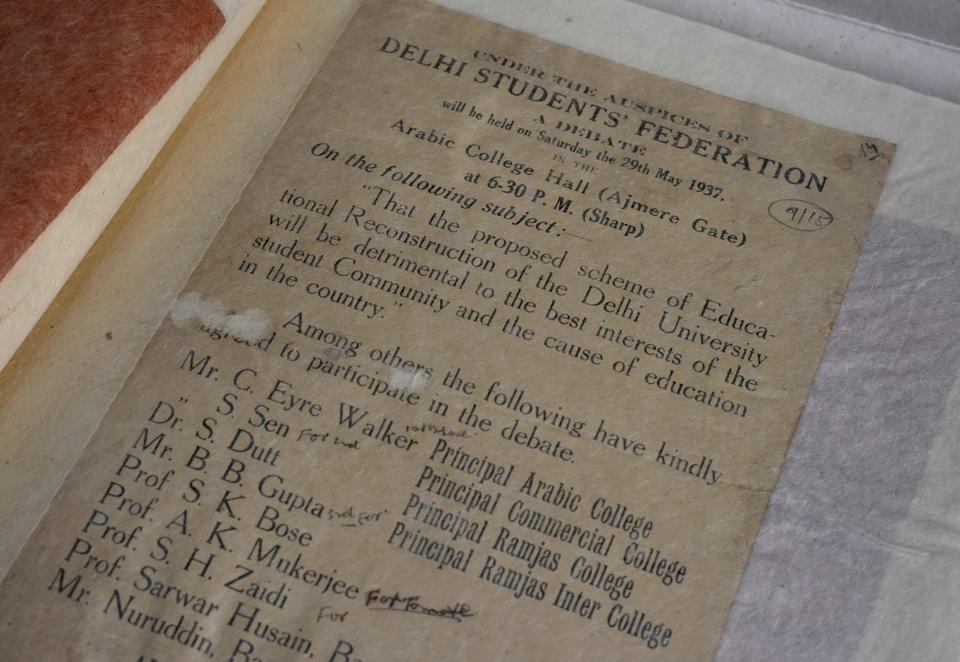
A poster of a debate being organised by Delhi Students’ Federation on May 29, 1937 at Arabic College Hall (Ajmeri Gate) is in the section of rare documents showing how teachers would support students’ concerns. The debate on why “the proposed scheme of educational reconstruction of Delhi University will be detrimental to the best interest of the students’ community and the cause of education in the country”, had C Eyre Walker, principal Arabic college, S Dutt, principal Ramjas College, and BB Gupta, principal Ramjas inter college among speakers.

A rare document dated April 7, 1912 is testimony to how ‘Khan Bahadur’ title was awarded to one Chaudhari Nabi Ahmed on the occasion of ‘His Majesty, the King- Emperor’s Birthday’.

The Delhi archives is a repository of over 10 crore rare documents comprising Mughal firmans, maps land acquisition statements, jail records, manuscripts and government orders. (Vipin Kumar/HT PHOTO)

Digitising 10 crore rare documents

The project, billed as the largest in Asia, envisages digitisation of 10 crore records stored in the four specially constructed floors of the Delhi Archives building in Qutub Institutional Area. In the first phase, four crore records are expected to be ready and uploaded on the website of the Delhi archives over a span of 30 months at a cost of Rs 25.4 crore.

The project was fist conceived in 2011 but was taken up by the incumbent government on August 31 this year. Led by Garg, a 100-member team of archivists, scholars and employers are busy with the digitisation task using computers and high-end German-made scanners.

“We have got eight scanners for now. We digitise about 50,000 pages each day,” Garg said

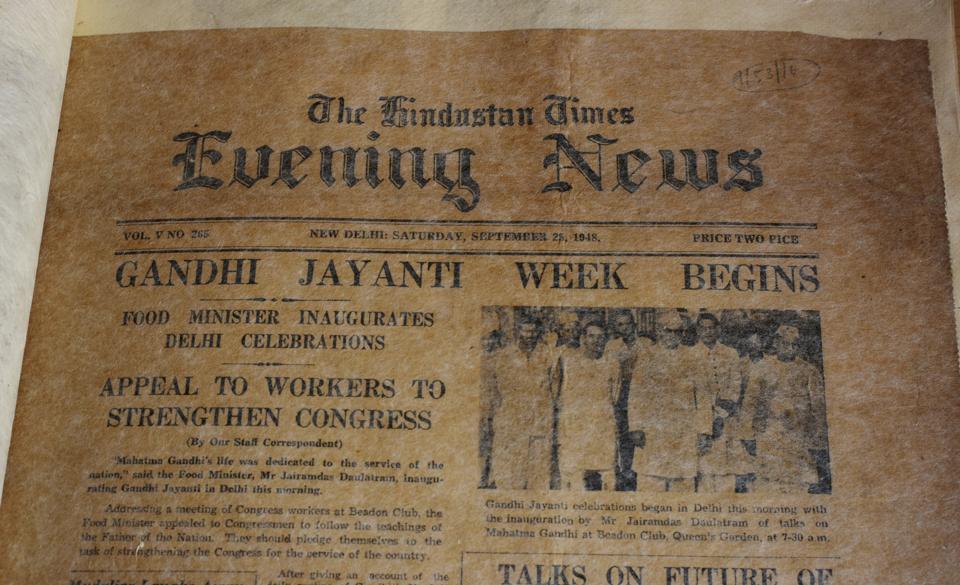
A collection of old newspapers at the archives includes a copy of Hindustan Times, Evening News, published on September 25, 1948. (Vipin Kumar/HT PHOTO)

Once digitised, the records would be transformed into microfilms.

“The thumbnails of the records with some information would be available on the website. For higher resolutions, one has to pay,” Garg said

A welcome move

“It’s a welcome move to preserve and digitise records particularly Bahadur Shah Zafar’s trial. The public will know who sided with British and who was with revolutionaries in the first war if Independence,” said historian Rana Safvi, who has translated Zahir Dehlvi’s Dastan-e-Ghadar which comprises eyewitness account of the 1857 uprising against the British

An old invite of Delhi Student Federation, now DUSU (Delhi University Student Union), at Delhi archives. (Vipin Kumar/HT PHOTO)

Established in 1972, the Delhi archives is a repository of non-current records of Delhi government under the department of art and culture. It is responsible for preservation of the archives and making them available research and references.

“We are committed to make knowledge more accessible to the common people. This is an important step towards preserving our precious heritage. While digitisation will ensure preservation of documents, making them available to a larger audience through a website and outreach events will play a key role in dissemination,” said Manish Sisodia, the minister of Art, Culture and Languages.

source: http://www.hindustantimes.com / Hindustan Times / Home> Cities / by Gulam Jeelani, Hindustan Times / December 14th, 2017

Selected for robotic meet in the USA

Hyderabad, TELANGANA :

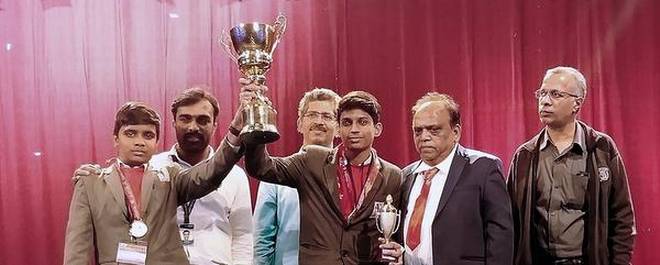
Students of Paramita High School in Karimnagar who have been selected to participate in international competitions in the USA. | Photo Credit: Byarrangement

Two students of Paramita High School to fly in May 2018

Two students of Paramita High School (IIT) in Mankammathota of Karimnagar town have been selected to participate in the international robotic presentation which would be organized jointly by Lawrence Technologies, Michigan and RILE university, West Florida in the USA in May 2018.

Class IX students K. Aneesh and Md. Aziz, who participated in the National-level Robo Making Challenge and its functioning analysis organized by Novatech Robo Institute in Bengaluru at Christ University from December 7 to 9, have bagged the first prize in the competition in which more than 300 students from reputed schools across the country participated.

Incidentally, another set of students from the school — Meghana and Nikitha — participated in the International Science and Engineering Fair (ISEF) in Arizona in USA in May 2016.

Two students of the school Paramita Schools chairman E. Prasada Rao said that the Atal Tinkering Lab set up by the Union government in their school in 2016 had come in handy for the students to have hands on experience in the robotic designing and participate in the national and international competitions.

source: http://www.thehindu.com / The Hindu / Home> News> Cities> Hyderabad / by Special Correspondent / Karimnagar – December 12th, 2017

Bird named after Salim Ali

Mumbai, MAHARASHTRA :

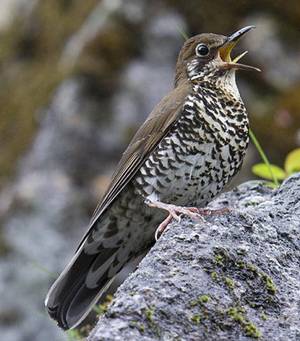
The bird has been described from northeastern India

Twenty-nine years after the demise Dr. Salim Ali, the birdman of India, an international group of ornithologists named a newly discovered species after him, thus paying homage to the man who shaped generations of ornithologists and also contributed to the better understanding of birds.

Himalayan Forest Thrush, Zoothera salimalii, thus goes the name of the species, which has been described from northeastern India and adjacent parts. The research team that identified the species included scientists from Sweden, India, China, the U.S., and Russia.

Earlier, a bat species — Salim Ali’s fruit bat — that was first collected from Western Ghats region of Theni district, Tamil Nadu, was named after the legendary ornithologist.

The present study was initiated in June 2009 by Per Alström of Uppsala University, Sweden and Shashank Dalvi of the Alumnus of the Post Graduate Program, Wildlife Conservation Society- National Centre for Biological Sciences, Bangalore, while studying birds at high elevations of Western Arunachal Pradesh. The researchers had discovered that there were two species of Plain-backed Thrush breeding in sympathy in Arunachal Pradesh, India. These were completely “segregated by elevation and habitat, one occurring in mostly coniferous forest up to the upper tree limit and the other in alpine habitats above the tree limit. Their songs were strikingly different, although no definite morphological differences were detected in the field.”

The research findings were published in Avian Research.

According to the researchers, “it was realised that what was considered as a single species, the Plain-backed Thrush Zoothera mollissima, was in fact two different species in northeastern India. While the Plain-backed Thrush in the coniferous and mixed forest had a rather musical song, those individuals found in the same region, but on bare rocky habitats above the tree-line had a much harsher, scratchier, unmusical song.”

The studies of “specimens from 15 museums in seven countries revealed consistent differences in plumage and structure between birds from these two populations. It was confirmed that the species breeding in the forests of the eastern Himalayas had no scientific name. Later, the new species was named as Himalayan Forest Thrush Zoothera salimalii. The high-elevation Plain-backed Thrush is now renamed as Alpine Thrush while it retains the scientific name of Zoothera mollissima,” said a communication.

The analysis of plumage, structure, song, DNA and ecology from throughout the range of the Plain-backed Thrush revealed that a third species was present in central China, which was already known. This was treated as a subspecies of Plain-backed Thrush and was called as Sichuan Forest Thrush. The song of the Sichuan Forest Thrush was found to be even more musical than the song of the Himalayan Forest Thrush, the communication said.

source: http://www.thehindu.com / The Hindu / Home>  Sci-Tech / by K. S. Sudhi / January 24th, 2016

Critics’ Choice Awards 2018 Nominations: Indian American Actor Aziz Ansari Wins One, Kumail Nanjiani Racks Up Three

Columbai, South Carolina, U S A :

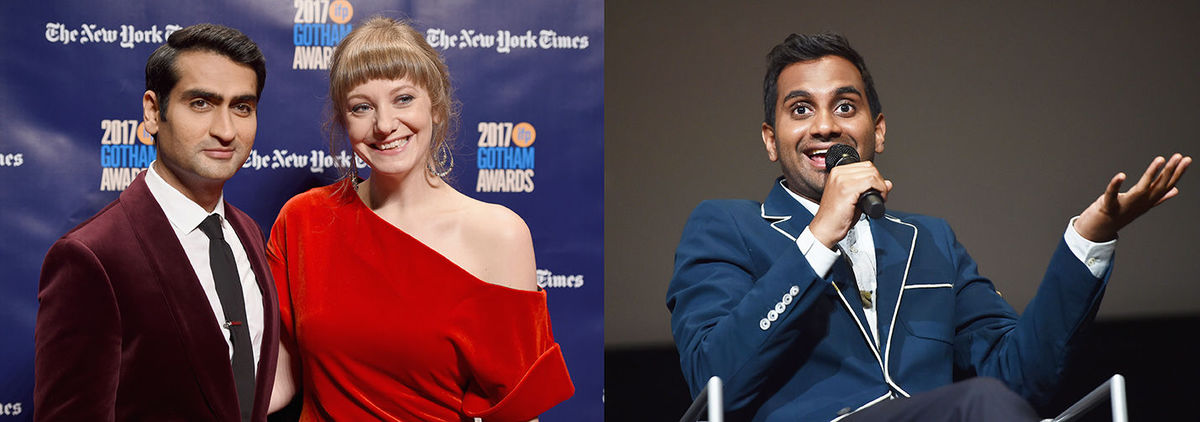
Kumail Nanjiani has scored three nominations for the 23rd annual Critics’ Choice Awards: ‘Best Original Screenplay’ alongside wife Emily V. Gordon, and ‘Best Actor in a Comedy,’ both for “The Big Sick,” and ‘Best Supporting Actor in a Comedy Series’ for HBO’s “Silicon Valley.” Indian American actor Aziz Ansari has been nominated in the ‘Best Actor in a Comedy Series’ category for his role in “Master of None.” (Dimitrios Kambouris/Getty Images for IFP; Alberto E. Rodriguez/Getty Images for Netflix)

As Hollywood begins to embrace diversity and move away from offering stereotypical roles, a few Asian actors are having breakout career moments. And now as the award season nears, it’s bringing cheer for some.

Indian American actor Aziz Ansari and Pakistani American actor Kumail Nanjiani have scored nominations for the 23rd annual Critics’ Choice Awards. For both these actors, being the contenders for this prestigious award, which some say is a barometer for predicting the Oscars, is the best way to cap a pretty successful 2017.

Ansari, who has in the past got the critics’ nod for his Netflix comedy series, “Master of None,” is back in the race owing to the second season of the series, which was lapped by the fans. He has been nominated in the ‘Best Actor in a Comedy Series’ category for his role in the Netflix drama.

Nanjiani, a critically acclaimed actor, writer and comedian, recently starred in and co-wrote “The Big Sick” with his wife, Emily V. Gordon. The film, a romantic comedy story, which was released by Amazon Studios/Lionsgate, wowed critics and audiences alike. Nanjiani, also known for his co-starring role as Dinesh in the award-winning HBO comedy series, “Silicon Valley,” has collected multiple nominations, for his work on both “The Big Sick” and “Silicon Valley.”

He is eligible for both film and television honors this year. Nanjiani is up for ‘Best Original Screenplay’ alongside wife Emily V. Gordon, and ‘Best Actor in a Comedy’ for “The Big Sick,” as well as ‘Best Supporting Actor in a Comedy Series’ for “Silicon Valley.” “The Big Sick” is also contending for the ‘Best Picture’ and the ‘Best Comedy’ awards.

CBS’ “The Big Bang Theory,” which stars Indian American actor Kunal Nayyar, is competing for the ‘Best Comedy Series’ award.

Netflix leads the television honors with 20 nominations, followed by HBO with 15, FX with 13, and ABC with 12.

The Critics’ Choice Awards are bestowed annually by the Broadcast Film Critics Association and Broadcast Television Journalists Association to honor the finest in cinematic and television achievement.  The BFCA is the largest film critics’ organization in the U.S. and Canada, representing more than 300 television, radio and online critics.  BTJA is the collective voice of journalists who regularly cover television for TV viewers, radio listeners and online audiences.

The winners will be revealed at the star-studded Critics’ Choice Awards gala to be held Jan. 11, 2018 at the Barker Hangar in Santa Monica, Calif. The awards show will air on The CW Network and will be broadcast live from 8 p.m. to 10 p.m. ET.

source: http://www.indiawest.com / India West / Home> Featured / by Reena Rathore , India-West Staff Reporter / Decembe 08th, 2017

The Tibetan Muslims who have made Kashmir their home

JAMMU & KASHMIR :

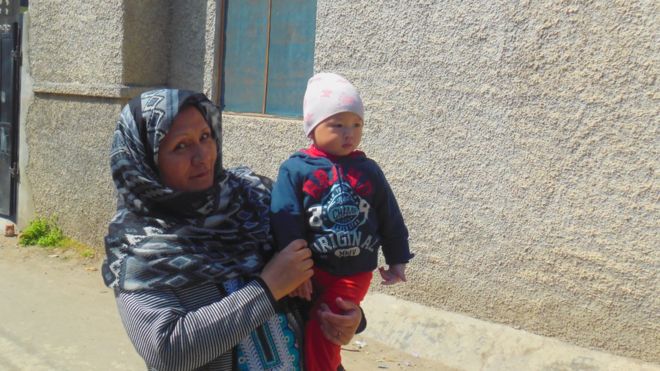
A small community of Tibetan Muslims have returned to Srinagarv/ Photo: Andrew Whitehead

On his latest visit to Srinagar, the capital of Indian-administered Kashmir, Andrew Whitehead came across a little-known community which has returned home after centuries away.

Sometimes when you think you know a place, you come across a fresh aspect of it, which reminds you how little you know.

I’ve been visiting Kashmir fairly regularly for more than twenty years. I have been to Hari Parbat fort, the magnificent Mughal-era monument which dominates the Srinagar skyline. But I had never before come across the small, quiet, community that nestles in its shadow.

Two thousand or more Tibetans have made their home in Srinagar. These are Tibetan Muslims. A few Muslim families remain in the Tibetan capital, Lhasa; some live in border hill towns; but most of them have now settled in Indian Kashmir.

Because they are, or were, Kashmiris.

Yet, their story says so much about the old trading links which once gave Kashmir its wealth – about the way those links have been thrown out of joint by the rise of rival nation states – and about the complex issues of identity which ricochet across the Himalayas.

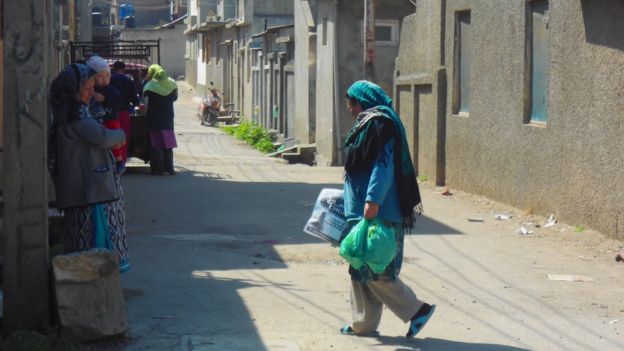
By chance, I heard mention of what locals call the “Tibet-ian colony”, close to the almond gardens and just within Srinagar’s old city walls. I knew I was on the right track when I found a food stall selling Tibetan-style dumplings. In a back street I came across groups of women gossiping – old men ambling along to the mosque – all distinctively Tibetan in appearance.

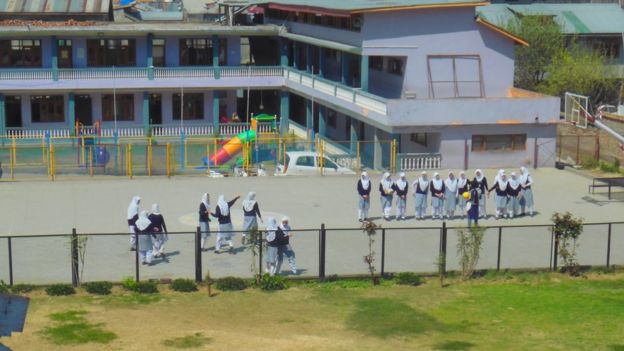
Around the corner stood the centrepiece of the community – the modern, imposing, Tibetan Public School.

In Tibet, they were called "Khache," which means Kashmiris / Photo: Andrew Whitehead
In Tibet, they were called “Khache,” which means Kashmiris / Photo: Andrew Whitehead

Nasir Qazi, a successful young businessman, showed me around. He’s the head of the Tibetan Muslim Youth Federation, which oversees what is clearly a well-run school that reaches well beyond the community it was established to serve. “I feel proud,” Mr Qazi told me, “that this school is something we have offered to our Kashmiri brothers and sisters.”

In the corridors, photos of the Dalai Lama’s visit are on prominent display. Tibetan Muslims don’t regard the Dalai Lama as their religious leader. “But we do honour and respect him,” Mr Qazi said, “and he loves us a lot.”

The community traces its origin to merchants who travelled along the old silk routes. They were Muslim traders from Kashmir and the adjoining area of Ladakh. Four hundred or so years ago, the then Dalai Lama granted them land in the Tibetan capital.

Over time, they married Tibetan women, mastered the Tibetan language and took up Tibetan cuisine. They became a distinct community in Lhasa, with their own mosque: prosperous, well-regarded and noted practitioners of Tibetan music.

‘Khache’

But they were never seen in Tibet as Tibetans. They were called “Khache” – meaning Kashmiris. It is a term that came to be a catch-all for Tibet’s Muslims, wherever they hailed from.

After a failed uprising against Chinese Communist rule, the Dalai Lama and thousands of his Buddhist devotees fled across the Himalayas in 1959. Then, Tibet’s Muslim community also felt restive.

They were seen by some Tibetans as collaborators with the new Chinese rulers. After a lot of diplomatic push-and-pull, in which the Indian government took an interest, Muslims were allowed to leave Tibet. Most exercised that option.

Once on Indian soil, these Muslims were regarded not as stateless refugees, but as returning Indians. For once being a “Khache” gave the community status. They were from Kashmir, they told the Indian authorities, and they were adamant about going back to their homeland.

Today, most of them work in Srinagar, but not as traders – the old routes are now sealed by impermeable modern borders. Instead, they work in much less remunerative jobs, embroidering burqas and adding the finishing touches to T-shirts sold to tourists.

Mr Qazi told me that a few decades back, when tensions between India and China eased briefly, his mother had at last been able to make a return visit to Lhasa. Mr Qazi has cousins there, but he’s never been able to meet them, or even set foot in the place that gives him his identity.

The community traces its roots back to merchants who travelled along the old silk routes / Photo: Andrew Whitehead

“We belong to this soil, Kashmir’s soil,” Mr Qazi insisted. Yet the community’s status is ambiguous. In Indian-administered Kashmir, only those who can demonstrate that their forebears are from the state can own land and have full rights. That’s tricky for the Tibetans – their Kashmiri lineage is too distant for this purpose.

In a region where not belonging, or being seen as outsiders, can be perilous, the community keeps a low profile. They seem content in Kashmir. But they are bound to reflect on a painful paradox.

In Tibet, they are Kashmiris. In Kashmir, they are Tibetans. There’s nowhere where they are simply themselves.

source: http://www.bbcnews.com / BBC News / Home> Asia> India / by Andrew Whitehead / December 02nd, 2017

Watch: Sharjah boy, 14, flies plane

Nagpur, MAHARASHTRA / Ujjain, MAHDYA PRADESH / Sharjah, UAE :

Indian expat flies solo after record time of 25 hours training

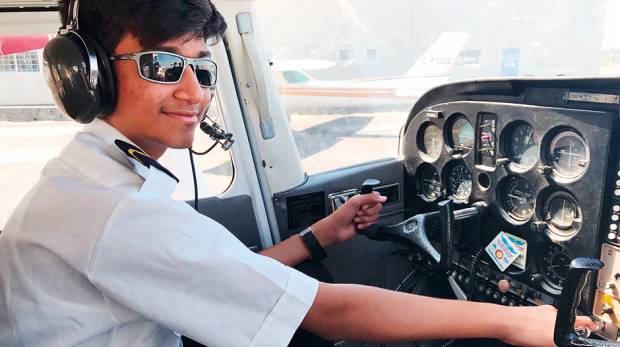
Mansoor Anis took off and landed from Langley Regional Airport in Canada to accomplish his first solo flight./ Image Credit: supplied

Sharjah:

At just 14 years old, a Sharjah teenager has become one of the youngest pilots to fly a single-engine aircraft.

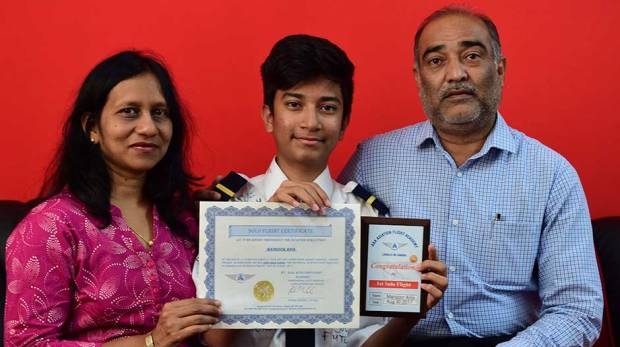
Indian expat Mansour Anis, a Grade 9 student at Delhi Private School in Sharjah, received a certificate for his first solo flight from an aviation academy in Canada last week.

Back in the UAE after his achievement, Mansour claimed that he had also set a record of being the youngest pilot to fly solo with the least number of training hours.

“He broke the previous record of a 15-year-old German pilot and a 14-year-old US pilot who took 34 hours of training. Mansour flew solo just after 25 hours of training,” Mansour’s father Ali Asgar Anis told Gulf News on Wednesday.

Summer training

Ali, a civil engineer heading the engineering department at Zulekha Hospital, said he had sent his son along with his wife Munira, a chemistry teacher with Wesgreen International School, to Canada for the training session during the summer holidays.

In some countries, like the US and UK, a person has to be at least 16 years old before taking to the air on their own. In the UAE and India, the pilot has to be at least 18 to be eligible to fly. However, in Canada, 14 is the minimum age for student pilots to join the course and try flying after meeting the requirements.

“Since he turned 14 in June, we decided to take him to Canada for setting this record,” said Munira.

Mansoor, with his parents Munira and Ali Asgar, displays the certificate he earned from an aviation academy / Image Credit: Atiq ur Rehman/Gulf News

She said her brother Qaid Faizy, a pilot with Jet Airways in Inida, has been an inspiration for Mansour since his childhood.

Fascinated about flying

“I got fascinated about flying the plane because of my uncle. He has been my inspiration and he has envisioned me to become a commercial pilot after I turn 18,” said Mansour.

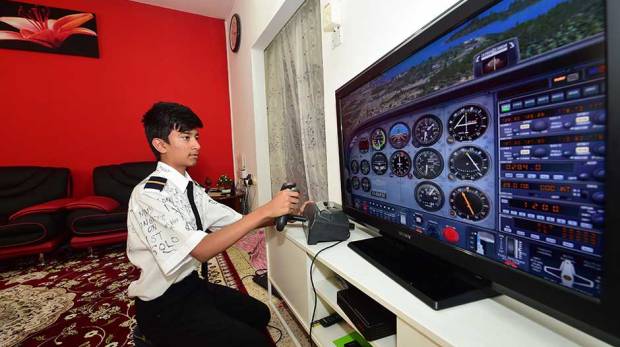
When he was about eight years, Mansour received a flight simulator as a gift from his uncle. “I learnt some basic lessons using that. My uncle has also given me and my sister the chance to visit the cockpit of an aircraft in which we flew once.”

His uncle also allowed Mansour to sit with his sister Mariya, a medicine student in Mauritius, when she once flew a Cessna aircraft at an aviation school in India, where the former used to teach, around four years ago.

Apart from the flying test, he has also passed a radio communication test / .Image Credit: Atiq ur Rehman/Gulf News

Mansour, who also flew a Cessna 152 aircraft during his solo flight, now has a student pilot permit. Apart from the flying test, he has also passed a radio communication test and scored 96 per cent in the PSTAR Test, an eligibility test for Transport Canada.

It was chief flying instructor at the AAA Academy Robert Wickins who trained Mansour during his course.

“He used to brief me about how the plane works. He taught me how to turn the aircraft. Then we went for some exercises like stall, spin, spiral dive etc. I was scared at first… but then it was fun. Also he had assured me nothing would go wrong and we can control the aircraft.”

Mansour’s solo flight was about 10-minutes long, during which he taxied the aircraft from the parking bay to the runway, took off for a flight of about five minutes and landed back.

Light aircraft

“The aircraft was really light because the instructor’s weight was not there. The plane was in the air a bit faster. I was excited and a little nervous.

“After I took off, I concentrated on flying how I did with the instructor. Everything happened very quickly,” said Mansour, who is now on cloud nine about his achievement.

“I am planning to go again to Canada next year to continue flying. If I don’t continue I will forget everything. At 16 years, I will take a recreational pilot permit. At 17, I will take private pilot license and at 18, I will take a commercial pilot license,” said the boy for whom the sky is not the limit.

source: http://www.gulfnews.com / Gulf News / Home> Society / by Sajila Saseedran, Senior Reporter / September 06th, 2017


Valley Baseball Player Selected for Dubai Cup, 2017

Srinagar, JAMMU & KASHMIR :

Tournament is scheduled to be held from 8 Dec

Srinagar (KNS):

BasketballMPOs04dec2017

Jammu & Kashmir Baseball Association achieved new heights got selection by it’s senior player namely Tahir Shabnum of district Srinagar and General Secretary, J&K Baseball Association Fida Hussain Fidvi appointed as official in Indian squad for the fourth coming “Dubai Cup” India-Pakistan International Baseball series, 2017 scheduled to be held at Sharjah Stadium in United Arab Emirates.

After participated in selection trials at Chandigarh and coaching camp held at Patiala organised by the Amateur Baseball Federation of India.

The said tournament is scheduled to be held from 8th December, 2017 organised by the Pakistan Federation Baseball (PFB) under the auspices of Baseball Federation of Asia (BFA) and World Baseball Softball Confederation WBSC.

Tahir represented the state number of times in Senior National Baseball Championships at different states of the country and also represented the Kashmir University in All India Inter University Baseball Championship.
Presently Tahir is in final coaching camp which is under way at Patiala and will leave for Dubai on 6th December, 2017.
Meanwhile the Secretary, J&K State Sports Council Waheed Ur Rahman Para appreciated the Association for great efforts of promoting the game in the state of J&K and selected player / official who birth’s in Indian squad and hope they will bring laurels for the country.
Besides President, JKBA, MM Gazanfar congratulated the Association for selection of it’s senior player in Indian Baseball contingent for prestigious International tournament at Dubai. (KNS)

source: http://www.knskashmir.com / Kashmir News Service / Home / Srinagar – December 03rd, 2017

Delhiwale: How many Sultanate kings can you name? Here’s the full list of 32

NEW DELHI :

For 320 years, Delhi was the city of sultans. Here is the list of the 32 rulers and where they rest now.

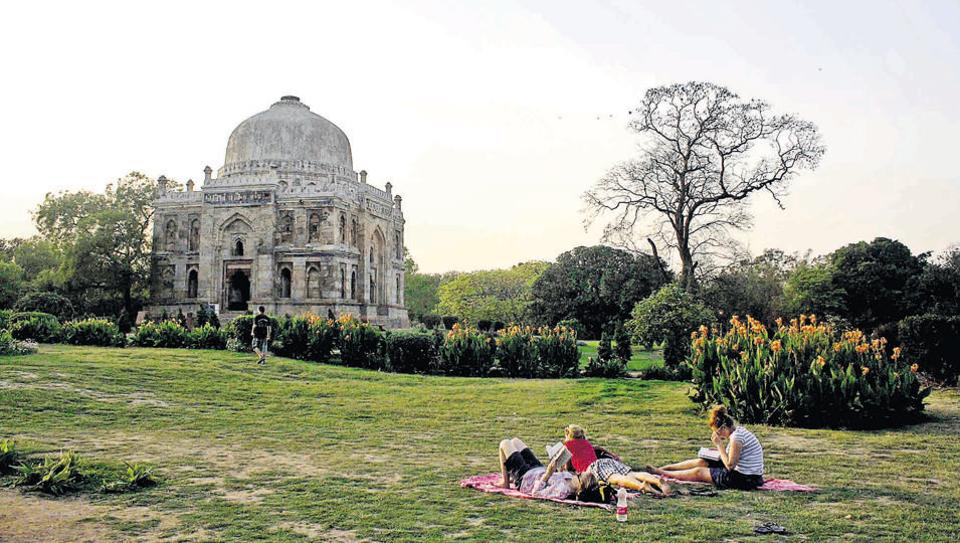
Sheesh Gumbad in Lodhi Gardens.(Mayank Austen Soofi / HT Photo)

The other day, while driving past an obscure monument, a friend demanded to know its name. We had no idea so we bluffed, “Ah, that’s a Lodhi-era tomb!”

The truth is we can’t even list all the Lodhi kings.

In any case, the Lodhi dynasty was part of the more elaborate Delhi Sultanate (not to be confused with ‘Delhi Sultanate’, a so-named member of The Sky Vengers music band). The Delhi Sultanate we are talking about spanned five dynasties, 32 rulers and 320 years. It lasted from 1206 to 1526. Today we give you the names of all the rulers of the Sultanate — one of whom was India’s first woman ruler, while the last was vanquished by Babur, the founder of the Mughal dynasty.

Sultan02MPOs03dec2017

We also used this list to hunt the graves of these Sultanate royals — right here in our city. Of course, it’s not possible to access every king’s tombstone. Quite a few of them were killed in small and big wars, at times far from Delhi. Frustratingly, history books leave no solid evidence of their burial spots.

Some others of these important men turned out to be so insignificant in the long run that their graves have been forgotten, making it impossible to trace them today. Here’s a list of all the rulers, and the graves of those we were able to locate.

SLAVE DYNASTY

Qutbuddin Aibak (1206–1210), buried in Lahore, Pakistan

Aram Shah (1210–1211), killed near Delhi, grave not known

Shams ud din Iltutmish (1211–1236), buried in Qutub Minar Complex, Mehrauli

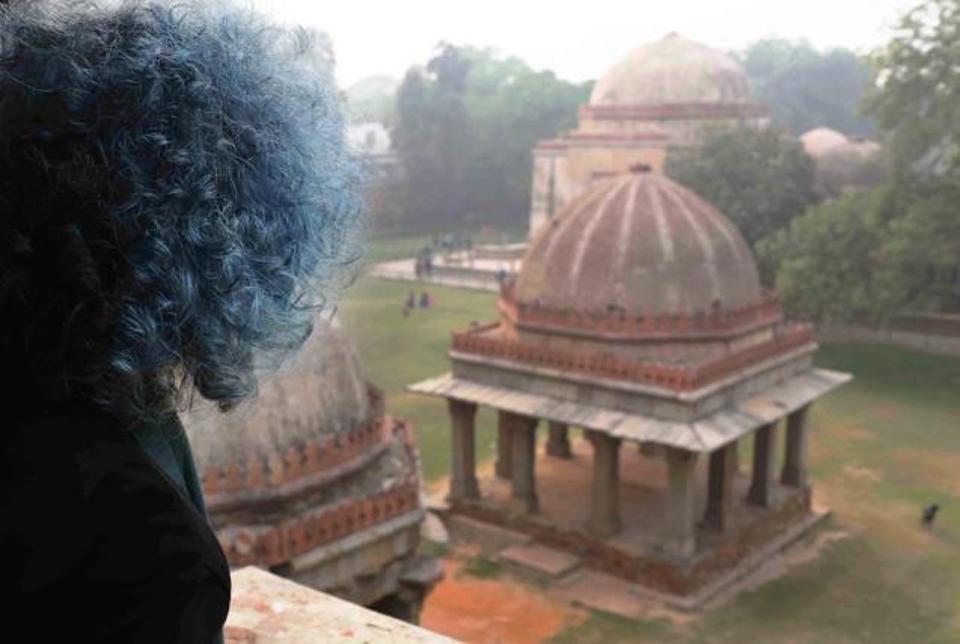
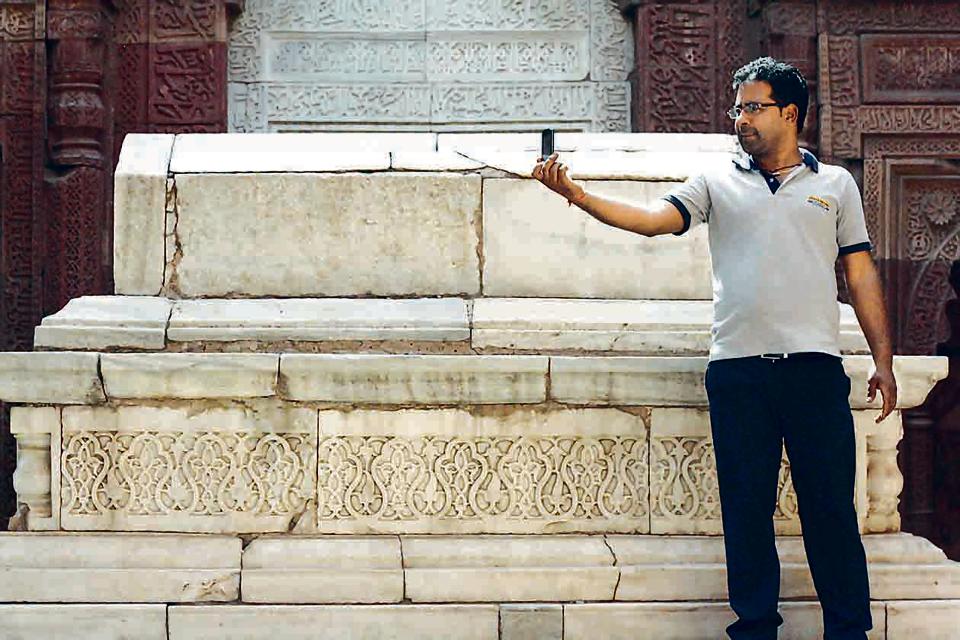
Illtutmish’s tomb in Qutub Minar complex. (Mayank Austen Soofi)

Rukn uddin Firuz (1236), believed to be buried in Sultan Ghari, near Mehrauli

Raziyat ud din Sultana (1236–1240), buried in Bulbuli Khana, Old Delhi

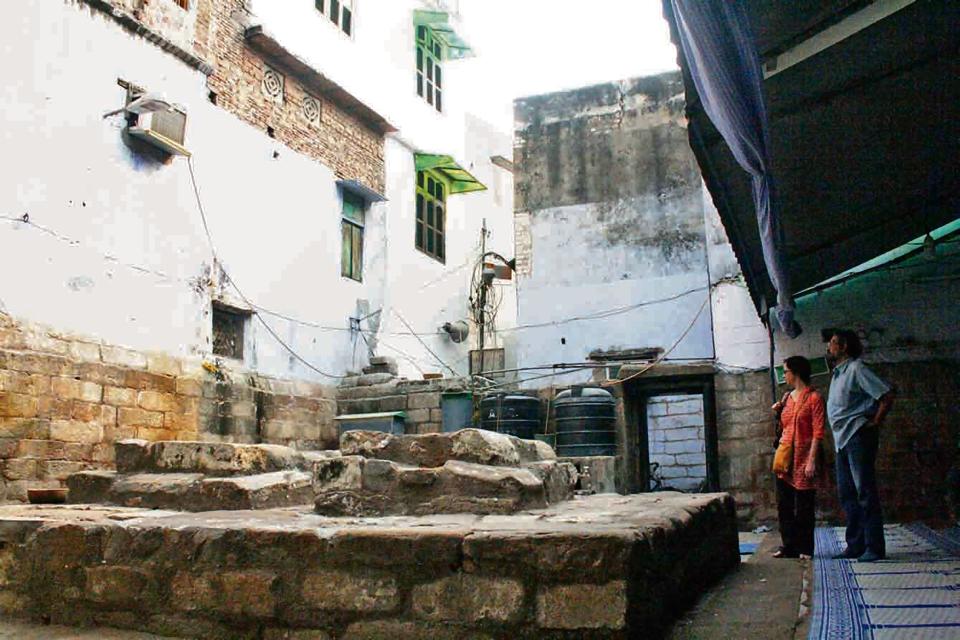
Raziya Sultan’s tomb in Bulbuli Khana, Old Delhi. (Mayank Austen Soofi)

Muiz uddin Bahram (1240–1242), grave not known

Ala uddin Masud (1242–1246), grave not known

Nasir uddin Mahmud (1246–1266), grave not known

Ghiyas uddin Balban (1266–1286), Buried in Mehrauli Archaeological Complex, near Jamali Kamali mosque

A tomb outside Jamali Kamali complex in Mehrauli. (Mayank Austen Soofi)

Muiz uddin Qaiqabad (1286–1290), grave not known

Kayumars (1290), grave not known

KHILJI DYNASTY

Jalal ud din Firuz Khilji (1290–1296), buried in Delhi but “disappeared “according to HC Fanshaw’e book Delhi, Past and Present

Alauddin Khilji (1296–1316), buried in Qutub Minar Complex, Mehrauli

Qutb uddin Mubarak Shah (1316–1320), grave not known

TUGHLAQ DYNASTY

Ghiyath al-Din Tughluq (1321–1325), buried in Tughlakabad

Muhammad bin Tughluq (1325–1351), buried in Tughlakabad

Mahmud Ibn Muhammad (1351), buried in Tughlakabad

Firuz Shah Tughlaq (1351–1388), buried in Hauz Khas Village

Ghiyas-ud-Din Tughluq II (1388–1389), grave not known

Abu Bakr Shah (1389–1390), grave not known

Nasir uddin Muhammad Shah III (1390–1393), grave not known

Ala-ud-Din Sikandar Shah I (1393), grave not known

Mahmud Nasir uddin (1393–1394), grave not known

Nusrat Shah (1394–1399), grave not known

Nasiruddin Mahmud Shah (1399–1413), not known, Timur invade Delhi in his reign

SAYYID DYNASTY

Khizr Khan (1414–1421), grave not known

Mubarak Shah (1421–1434), buried in Kotla Mubarakpur village

Muhammad Shah (1434–1445), buried in Lodhi Garden

The plaque at Mohammed Shah’s tomb in Lodhi Garden. (Mayank Austen Soofi)

Alam Shah (1445–1451), grave not known, perhaps in Badayun where he died

LODHI DYNASTY

Bahlol Lodhi (1451–1489), Chirag Dilli

Sikander Lodhi (1489–1517), Lodhi Gardens

Ibrahim Lodhi (1517–1526), buried in Panipat, Haryana

source: http://www.hindustantimes.com / Hindustan Times / Home> Cities> Delhi / by Mayank Austen Soofi, Hindustan Times /  December 02nd, 2017