Mysuru, KARNATAKA :
Category Archives: World Opinion
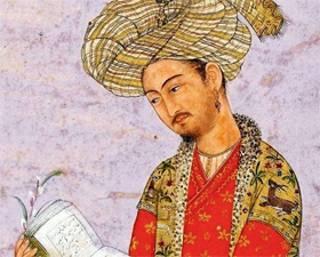
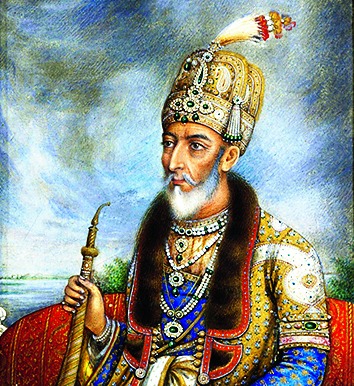
Aslam Parvez brings to life the time and poetry of Bahadur Shah Zafar in new book
NEW DELHI :
First published in Urdu in 1986, the book highlights the life and poetry of Zafar (1775 to 1862), whose reign marked a crucial period in the Indian history.

A new book brings alive the life and poetry of the last Mughal Emperor Bahadur Shah Zafar as author Aslam Parvez weaves together the strands of the political, the personal, the cultural and the literary aspects of a bygone era.
Publisher Hay House describes The Life and Poetry of Bahadur Shah Zafar as an absorbing, authentic and exemplary chronicle — studded with rare nuggets of information and enthralling anecdotes — of one of the most tragic figures of history who was witness to the end of a glorious dynasty.
First published in Urdu in 1986, this book brings alive the life and poetry of Zafar (1775 to 1862), who presided over a crucial period in Indian history when the country was subjugated and became a colony of the fast-expanding British Empire.
This work is as much about the 1857 Rebellion as it is about Zafar, the reluctant leader of the rebels. The pages also evoke the captivating ambience of a period when formidable poets such as Mirza Ghalib, Sheikh Muhammad Ibrahim Zauq and Momin Khan Momin, apart from Zafar himself, came up with one creative gem after another.
The author also provides a vivid picture of Delhi during the last days of its cultural and literary splendour as the Mughal capital and as a custodian of Urdu literature and poetry.
Finally, he recounts, in a touching manner, how Zafar spent his last days in Rangoon (where he had been exiled by the British) — a lonely and forgotten individual — far away from his beloved Delhi and from the trappings of empire.
source: http://www.hindustantimes.com / Hindustan Times / Home> Books / PTI, New Delhi / April 25th, 2017
Aamir Khan gifted Maulana Azad’s speech to sister
Pune, MAHARASHTRA :

For her elder sister Nikhat’s 50th birthday, Aamir Khan gifted her five speeches of Moulana Abul Kalam Azad.
Aamir Khan’s sister, Nikhat celebrated her 50th birthday on Saturday and the entire Khan-daan was in Pune celebrating her birthday with lot of fanfare.
Aamir Khan had been thinking since a really long time of a special birthday gift for his sister. The entire family had been pitching in ideas for gifts to give to Nikhat. Everyone in the family had given him several options.
However, our perfectionist Khan wanted to look for the most perfect birthday gift for his sister. He especially wanted the gift to be extremely special, as it was Nikhat’s 50th birthday.
After a long brainstorming session Aamir Khan did the unbelievable. “He sourced and got the copy of five speeches of Maulana Abul Kalam Azad, the great Indian freedom fighter and Aamir Khan’s great grand uncle”, says a source. “At the get-together in Pune, everyone in the family heard all the speeches together and was teary eyed at the end of the session”.
“As it was much before their time and way back in history, no one from the family had ever heard Maulana Abul Kalam Azad’s voice ever before including Aamir, his sisters, bothers and cousins”, adds the source.
Aamir Khan and Kiran’s son Azad Rao Khan has been named after Maulana Abul Kalam Azad.
2012 has been Aamir Khan’s busiest year ever. Aamir is known for doing one project at a time. This is the first time in his career that he has been juggling between his magnanimous TV show Satyamev Jayate, Talaash and Dhoom 3 all in the same breath. Hence Aamir Khan hasn’t been able to spend quality time with his family.
source: http://www.http://www.timesofindia.indiatimes.com / The Times of India / News> Entertainment> Hindi> Bollywood> News / TNN / August 07th, 2012
The Begum and the Mutiny
Kotwara, UTTAR PRADESH / FRANCE :

Hyderabad :
In the story of Begum Hazrat Mahal, Kenize Mourad found a story that belied misplaced notions of Muslim women of yore
Kenize Mourad, while researching for her book ‘In the City of Gold and Silver’, came across references to Begum Hazrat Mahal in documents written by the British. They referred to her as the ‘soul of the 1857 War of Independence’. “It is unfortunate and unfair that she has been forgotten in India,” says Kenize Mourad, in Hyderabad to launch her book ‘In The City of Gold and Silver – The Story of Begum Hazrat Mahal’ (Full Circle publications; Rs. 350).
Speaking to us in an interview, the author says, “Rani of Jhansi, Lakshmi Bai, is remembered because she died on the battlefield. She fought for about four or five months. Begum Hazrat Mahal fought the British for two years. It took the British nine months to gain control over Lucknow. The Begum continued her fight for a year after this.”
Kenize Mourad is of Turkish and Indian descent, Awadh to be precise. “I first visited Lucknow when I was 21 and heard about Begum Hazrat Mahal and her valour from my father (Raja Syed Sajid Husain Ali of Kotwara). Years later, I remembered the story and felt the Begum’s story had to be told,” says Kenize.
The author pored over documents and books in libraries of London, New Delhi and Lucknow. “It took me three years to find enough information. In Lucknow, I spoke to families whose ancestors had fought in the battle along with the Begum. Quite a bit of history in India follows an oral tradition,” explains Kenize.
She scouted libraries in London and came across six volumes of ‘Mutiny Papers’ documented by the British. An 1858 edition of The Times had stated ‘The Begum of Awadh shows greater strategic sense and courage than all her generals put together’. Kenize wanted to write about the Begum and dispel notions about Muslim women of yore. “The book is relevant in this time when Islam is misrepresented. The majority of Muslims, 95 to 98 per cent, is also being put in the same bracket as extremists, which is unfair. And these normal people are the first ones to suffer due to extremists,” says Kenize. “I wanted to show how a Muslim woman was strong enough to lead an army. The Begum was an intelligent woman who enforced justice and waived taxes on food for the poor,” says Kenize.
Kenize takes pride in raising her voice for underdogs all through her career as a journalist in France. “I’ve felt like a fighter for justice all my life. In my books, I have often written about the misrepresentation of the Quran,” says Kenize. History, she says, has intriguing accounts of women Muslim rulers. “There are instances of Turkish women holding important positions on their own right, not because they are mothers, sisters of wives of important men.”
Though Kenize was keen to present accurate historical facts in ‘In The City of Gold and Silver’, she took the liberty of weaving in a love story between the Begum and a dashing Hindu Raja. “I felt people will absorb an interesting historical novel than a dry book full of facts. Keeping the sociology of people in that era, I tried to recreate Awadh of those times,” says the author.
Kenize wrote the book in French. “In France, the book sold more than 70,000 copies. The pocket-friendly (abridged) version sold even more copies,” she says. The book has been translated in English by Anne Mathai and Marie-Louise Naville.
Talking about her roots in Lucknow, Kenize says, “During my first visit to Lucknow as a student, I was amused and spent six months there. Had it been a bigger city like Delhi or Mumbai, I might have stayed on. Opportunities for work were limited. And I wasn’t willing to sit at home and get ready to be married off,” she says. The topic of marriage reminds her of Hyderabad. “I was almost married off to a well-known Hyderabadi,” she says. “Through my cousin, Princess Niloufer, I happened to meet a gentleman from the Nizam’s family. He told Niloufer that he hoped for my hand in marriage. I found it odd that he hadn’t asked me directly. I was given to understand that I would be a ‘bird in a golden cage’. I turned down the proposal.”
This is Kenize’s first visit to Hyderabad. “I never visited this city thinking I may not be welcome here since I turned down the marriage proposal,” she laughs.
Next, Kenize wants to write about present-day Pakistan. “The country, as it exists today, is a tragedy. I want to write about Pakistan through fiction. It will take at least three to four years to work on the book,” she signs off.
source: http://www.thehindu.com / The Hindu / Home> Books / by Sangeetha Devi Dundoo / Hyderabad – January 17th, 2013
Armaan Ebrahim Steps Up To Pro Class Of Lamborghini Super Trofeo Asia Series
Chennai, TAMIL NADU :
Indian racer Armaan Ebrahim has progressed to the highly competitive Pro Class of the Lamborghini Super Trofeo Asia Championship for the 2017 season. After two successful seasons in the Pro-Am class of the championship, the promotion is a major push for the Indian racer’s career and his dream of competing in the FIA World Endurance Championship. Armaan joined team FFF Racing and will partner with UK’s Jack Bartholomew in the race spec Lamborghini Huracan. FFF Racing will also have a second Huracan in the championship that will be piloted by teammates Carrie Schreiner and Richard ‘Spike’ Goaddard.
The 2017 Lamborghini Super Trofeo Asia series is a five round championship and commences this weekend on 7th April at Sepang, Malaysia. The next three rounds of the championship will be held at the Buriram circuit, Thailand; followed by Suzuka and Fuji tracks in Japan. The final race for this season will be held in Imola, Italy.
Armaan won the 2016 Lamborghini Super Trofeo Asia series in Pro-Am class
For Armaan, the step up to the Pro-Class was only logical after winning the Pro-Am class in the Lamborghini Super Trofeo Asia series last year. The Indian driver along with Sri-Lankan partner Dilantha Malagamuwa managed to win 7 of 12 races in the 2016 season.
Speaking on his progress to the Pro-Class in the championship, Armaan said, “After winning the title last year, it was natural for me to get into the Pro Class. I have a good teammate and I am looking forward to making 2017 a grand one.”
Speaking on having Armaan on board, FFF Racing Team owner, Sean Fu Songyang said, “We are delighted to have Armaan in our Super Trofeo Asia programme. He is a proven race winner and, along with Jack, will be the car to beat”
Before making it big in the Lamborghini Super Trofeo Asia Championship, Armaan started his racing career winning the Formula LGB championship as a 16-year-old, and went on to race in Formula BMW Asia, Formula V6, GP2 Asia and A1GP. Armaan also raced in three season of Formula 2 before heading to the Super Trofeo Asia series in 2015.
source: http://www.auto.ndtv.com / NDTV.com / Home> CarandBike> Home> News / by Sameer Contractor / April 05th, 2017
Lulu Group commits 3 crores for girls hostel at JMI
DUBAI / KERALA / NEW DELHI :
Gulf-based Lulu Group has committed 3 crore rupees to construct a school girls hostel in Jamia Millia Islamia.
The commitment was made by the group chairman Yusuf Ali during JMI Vice Chancellor Prof. Talat Ahmad’s UAE visit as Chief Guest of an event organised on 2 February by the UAE chapter of the JMI alumni. During this event Lulu Group chairman announced this commitment.

I am also thankful to all my near and dear Jamia fraternity in UAE who actively participated with hand-in-hand for the overall program.
Effort and sincerity with the highest level of commitment of Alumni organzing members Syed Nadeem Zaidi, Nadeem Hassan, Imtiyaz Ahmad, Ahmad Khan, Kashif Zamman, Riyaz Ahmad Khan, Shah Shams Alam, Muslim Ghayur, Salahuddin Ansari, Abdul Khaliq, Shamim Ahmad, Jalal Ahmad, Amjad Iqbal Khan etc were at par excellence and hope to have similar energy and synergy in future too Insha Allah. (Parvez Akram Siddiqui)
source: http://www.milligazette.com / The Milli Gazette / Home> Special Reports / Print Issue: 16-29 February 16th – Online Aprl 04th, 2016
The Riyasat Of Raja Mehmoodabad
Mehmoodabad (Sitapur District), UTTAR PRADESH :
It is a formidable lineage. And the huge responsibility must wear heavy on the elegant shoulders of the suave and articulate, Cambridge educated Raja of Mehmoodabad. Farzana Behram Contractor comes away a fan of the Raja – Amir Mohammad Khan, Suleiman to friends.
We all have days in our lives we count as memorable. Spending a day in the life of the Raja of Mehmoodabad is one such in mine. It was special because I saw a part of life so removed from the ordinary, yet so similar because of the simplicity and warmth lent to it by a human being who is nothing if not extraordinary.
I suppose all the questions I asked– and I asked questions all day long, sent the Raja of Mehmoodabad on a trip to nostalgia. He spoke non-stop, till he was hoarse by nightfall. It was for him, an emotional journey. Let me recount it for you.
I was chatting with all the chefs, while at breakfast at The Sahib Cafe of the beautiful Taj Residency where I was staying. I had already received the message from the Reception – the Raja had called to say ‘he would be five minutes late, please bear with him.’ Five minutes! And he called to say that!
Within minutes I heard a gentle, soft-spot spoken, enquiring voice, “You are Farzana.” I looked up and he continued, “I am Suleiman, sorry I got a bit late.” Flustered, I sprang to my feet. I was expecting the chauffeur to come fetch me, not the Raja himself! Talk about the Lucknow tehzeeb. It’s so humbling. As we walked to his jeep he said smilingly that he had done his ‘due diligence’ on me. Checked me up on the net and therefore recognized me in the restaurant. Phew, long live the internet.
We started to drive towards Mehmoodabad, the Raja’s erstwhile principality. We were going to eat lunch at his mahal, which I was really looking forward to. I had heard that there were none better than the khansamas at his palace. Cruising along rural Lucknow was new to me. And I found the sights rather pleasant. It was already so relaxing.
“Tell me about your family…” I began, and the first thing the Raja said, rather strangely, was, “My father was fond of itr(attar), though within limits. We had our own itr unit, never ever bought any from the market except occasionally some which was made in Mehmoodabad. There is a special method of processing it, so as not to lose its scent. Silver pot, silver ladle.” And he went quiet for a while. I got the feeling he began to speak about his father in association with fragrance because he may have got a whiff of him in his mind. Happens you know, when you are very close to someone, you remember their personal smell, long after they are gone.
His father, Raja Amir Ahmad Khan was a special man, to his son as well as to a multitude of people. He was known as Raja Sahib of Mehmoodabad. He was born in 1914 and was educated in Lucknow and later in England. Raja Sahib’s father Maharaja Sir Mohammad Ali Mohammad Khan (1877-1931), was a great landowner of Uttar Pradesh and a trusted friend of Mohammad Ali Jinnah.
Raja Sahib succeeded to the estate of Mehmoodabad on March 23, 1931, on his father’s death. At that time Mehmoodabad was one of the richest estates of the Awadh. He was keenly interested in the Muslim renaissance and associated himself with the Muslim League at an early age. He was at one time the youngest member of the Working Committee of the All-India Muslim League. In 1937, he formed the All-India Muslim Students Federation, which mobilized the Muslim Youth for the cause of Islam. It soon became the vanguard of the Pakistan Movement.
Raja Amir Ahmad Khan also served as Honorary Treasurer of the League for several years. He was a puritan and ascetic in personal life and placed all his wealth and ancestral estate at the disposal of Muslim League.
Disillusioned by the political turmoil in the country in the wake of the Independence struggle, he migrated to Iraq. From there, much after Independence, he went to live in Pakistan. Subsequently he settled in London where he remained Director of the Islamic Culture Centre until he died on October 14, 1973 in London. He was buried at Mashhad in Iran.
“The late Raja of Mehmoodabad, Raja Amir Ahmad Khan, was a worthy member of the long line of Maharajas of Mehmoodabad. The family took part in the uprising of 1857 for which it was punished with confiscation of a large part of its estate.” This is what Indira Gandhi had to say about his father in 1984 in a book entitled The Life and Times of Raja Sahib of Mehmoodabad by Syed Ishtiaq Hussain. In 1965, the same fate was to recur.
A very rich ancestry for the present Raja. “Yes, I feel humbled by my ancestors. They were at the highest levels of civilization. They were poets, writers, educationists, men of letters who possessed a strong spirit of enquiry. The responsibility is enormous. Especially the moral legacy,” pondered the Raja. And then continued, mysteriously smiling at some thoughts that went through his mind, “My father was wonderful. He studied at La Martiniere and then had private tuitions. He was like a son to Jinnah, who told him, ‘I will be your university’. It was my grandfather who conducted the marriage of Jinnah and Ruttie. One, an Isnasari, the other a Parsi. They went to Metropole for their honeymoon!” Metropole, incidentally is a hotel in Nainital owned by the Mehmoodabad royals.
“Father was deeply involved in Pakistan’s struggle. Nehru and our family go back to Motilal days when my father, 22 years old and an idealist, became a member of the National Party. He was committed to the Islamic Cause, but was getting disillusioned by and by. He was shattered when the great slaughter took place and realized how mistaken they were in their assessments. He was saddened seeing the lust for money, property and power which were destroying human values. In 1945 when he exiled himself to Iraq, he took his family, cooks, servants and the library and built himself a house and stayed on till 1957 when he shifted to Pakistan. He was a real scholar, a poet, a writer, both secular and religious. He spoke Urdu, Arabic, Persian, Hindi, Sanskrit and French.”
Speaking of his own involvement in politics, the Raja said, “I wanted to serve the country. Rajiv Gandhi chose me to stand from Mehmoodabad. I won the election in ’85 when the Congress came to power and again in ’89 when it did not. But when they wanted me to stand for a third term I declined. I was unhappy. I did not leave the party, just faded away, so to say. To be religious which I am, is not a bad thing. But to use it as an instrument to attain political power is not what I stand for. It involves lies, corruption. By ’91, I saw no more proof was needed, catastrophe in the country was imminent. There was communalisation of politics, criminalisation of politics, commercialisation of politics. Politics became a transaction! When I was an MLA, I toured a lot in the state and I see no quantum difference between ’85 and now. There is destruction of environment, all this monstrosity, who is responsible for it? Where is the prosperity in rural life, it is hardly noticeable.” He turned to the driver and enquired, “Kya farkh hua hai?” “Koi nahi, Sahib,” the driver replied, earnestly.
The Raja looked visibly disturbed. We know how the political system works in our country; ‘enrich our own selves’, ‘exploit caste’, ‘play the communal card’, I could hardly visualise someone with his kind of sensibility surviving it. I quickly changed the subject, “What about your mother?” “Oh!” exclaimed. “She was a gem. A very moral lady, she passed away in ’91. My wife Vijaya (the pretty daughter of Former Foreign Secretary, Jagat Mehta), was very close to her. She was a Rani in her own right. Rani Kaniz Abib of Belahra. She had no brothers and so succeeded her father. She was in purdah, but highly educated and she was very interested in my education. She always said, ‘Nothing will remain except education. That will be with you, forever in this transient life’,” he trailed off.
We were now approaching Mehmoodabad. And I was happy we were stopped by the red light at the railway crossing. It’s been a while since I had a chance to see the signal drop, watch a train pass by. I hopped out of the air-conditioned comfort to feel the warm air outside, walk on mud, look at the local people, shoot some pictures, hear the whistle blow, to know it was all clear and we could drive on through the metal gates. The small, forgotten pleasures of childhood come alive in such places.
Well, soon we entered the town of Mehmoodabad. Driving through the straight but narrow and crowded lane I saw people fold their hands together in a namaste when they saw the Raja’s vehicle. Some bowed in greeting, some raised their hands to their foreheads, yet others placed them on their heart. And in response the Raja kept doing an aadaab, nodding ever so slightly. It was touching. To them he is still their king. When I was foolish enough to make a passing comment about them being subjects once upon a time, he retorted, “We are all subjects of God, how dare we call them our subjects. And we are not subjects; we are all children of God.”
And so we discussed the subject of God and nature. “There is so much you take in faith. Though science is a deterministic theory it does not have all the answers related to life. Solace, grief, love. Two people look at the same thing differently. The beauty of the world is in its difference. Look at the diversity in nature, it’s beautiful. Look at the rainforest, each lives in its own niche.” I let him carry on, it was nice listening to him.“Love of God is first love of man. From there you go stage by stage. In every suffering God suffers with you, although you are his creature. He has a resonance. There is no answer to that. It transcends human rationality. Humari taqleef mein Allah ki tasbi hai. He is one whose name is itself a curative and whose remembrance itself cures one…” When I asked him if he prayed regularly, he answered, “Subject to my communication with God, that day. Sometimes I have a fight with him, like a child sticking his tongue at his mother, I sulk. But it’s a constant remembrance not of God only but of Him through his creations.
The gates of the palace were now in front of us. Nothing spectacular, on either side vendors had usurped the space. One of them was selling beautiful earthen pots, surais they are called. We drove through the vast driveway which had old mango trees spread out over the grounds. There was no pomp, no ceremony. It was apparent to me by now that the Raja, a tech-savvy, reserved, low profile man, is an intellectual who lives in the real world in an unfussy manner. He is someone who can stand in a queue for movie tickets, can and even does earn a living the honest way. He is an occasional professor of astrophysics at Imperial College, London, and the Instituteof Astronomy at Cambridge University, from where he had earlier done his mathematical tripos. “Mathematics,” he said to me, “is a language. There is such beauty in it.” I didn’t dare tell him at the time that I knew zilch about math and hated it the most at school.
But here I was now, admiring beauty of another kind. The architectural one. The first thought that hit me as I stood watching the palace in front of me was: What a shame that all this was snatched away from the rightful owners and kept locked away for the longest period of time! I felt a surge of anger that such a monumental place was kept in a state of neglect, that it was allowed to go to seed! It is common knowledge that a vast amount of property owned by the royal family was impounded in 1965 by the government, as ‘Custodian Enemy Property’ – all because his father lived in Pakistan at the time.
After a tour of the entire place (the Library has thousands and thousands of rare books), I requested the Raja to tell me about the horrible truth and his feelings now that he had won the 32 year long legal battle and got back all his properties spread over not just Mehmoodabad, but Lucknow, Sitapur, Lakhimpur Kheri and Barabanki districts in UP and Nainital in Uttarakhand: the impressive Butler Palace and the Metropole, among others. “In 1965 when the war with Pakistan began, overnight they took over all our property. Surrounded it and sealed it. I was at Cambridge, at Pemberly then, and I was shattered. News didn’t get through so easily in those days. There were seals on every lock. When the Qila (that’s how he refers to the palace) was opened after one and a half years and conditional access was given to us, it was found that things were missing. A hundred quintals of silver, crystal, what not. My mother’s embroidered clothes were burnt just to extract the silver and gold embroidered in them. There was deep sadness in the family. We continued to battle, struggling against anger and depression. Eventually and only recently, we got all our properties back. But it will be a long haul before we sort out the complicated affair, for many properties have passed on to the third and fourth line of owners. What can I say; my friends had warned me that it was going to be a can of worms. But I felt that it was a can worth opening.”
I couldn’t agree more. It will baffle the reader to know that this property we are talking about is valued at thousands of crores of rupees. Half of the prime structures in upscale Hazratganj and Jopling Road which include Butler Palace and its lake are part of his ancestral property. When you view this injustice and unfair play against the backdrop of what this family has contributed, it is all the more disturbing. His great, great grandfather Raja Nawab Ali Khan-Muqeem ud Daula’s contribution to the first war of independence is recorded even in Surendranath Sen’s official history of the uprising brought out by the Information and Broadcasting Ministry during the centenary year in 1957. His grandfather was the first Vice-Chancellor of Aligarh Muslim University, an institution he helped set up.
“My family contributed so much to the country – Lucknow University, King George Medical College, Amir Daula Library and so many premier educational institutions. In fact, my great grandfather set up a school in Mehmoodabad way back in 1885. And here I was struggling year after year to fight a mindset which saw us as traitors,” said the Raja and added with a sigh, “But finally it is all over now.
Lunch was announced. We walked through many halls to reach the dining room. Restoration work is an ongoing task, and beneath all the dust lay much beauty. I couldn’t help thinking what a beautiful hotel this Qila would make. The Raja makes only occasional visits here. But always during Moharram and Ramzan, to perform the many religious rituals that take place every year.
At lunch we discussed food. “Raja Sahib, my father, was very aware of the hunger and poverty around him and he was influenced by the finer teachings of the Caliphs. He was governed by, ‘no morsel you take is free from the hunger of another person’. But while he was always conscious of that fact, he was also gifted with discerning taste buds. He could and did appreciate the quality, fragrance and delicacy of the food cooked at home. But he could also deny himself the pleasures and often did.”
“We had a battery of cooks, all male. I remember three names, Hazari, Behraiji and Rasheed. Under them were many younger ones. Some from their families are still serving us. None of my ancestors drank, but served wines and liqueurs, with great finesse.They were not bigots, but would also make sure they did not affect the sensibilities of the orthodox. I personally never paid much attention to food. It was an ordeal to get through. One couldn’t eat what one wanted and vice versa. But everything was always cooked at home, including the breads. Kulcha, sheermal, taftane… Describing how food would be sent to his father wherever he was, he said, “Food was prepared and placed in a large octagonal container, with a seenee over it and then covered with shaal baat, a red cloth. The chamberlain would put his stamp on it and then send it to wherever my father was. It was carried on a khasa, on the server’s head. Ah, what a ceremony. At other times there would be a takht, a dwasterkhan, where the chamberlain would sit in the middle of the takht and pass things around, asking for comments!”
If the chamberlain was still around I would have thumped him on the back, the food I ate at the Qila was so exquisite. In his absence, I went looking for the cooks, found them in the kitchen with the last of the dying embers in the log and brick stoves and told them “Shabash, bahut acha pakaya aap sab ne, shukriya.” It went down well, but not enough for them to part with the mutanjan recipe I wanted. Instead very courteously they invited me to come again! “Phir zaroor aaye,” they said to me respectfully, not looking up.
Soon it was time to leave, but not for Lucknow. We were first going to drive around the Raja’s fields. Just 300 acres! And we were not doing it for my sake as much as to listen to the tales of woe of his people and to check what was happening on his land. So we went and visited a group of cowherds and then walked alongside one of the 37 fish tanks (not your aquarium variety, but massive ones where his staff is breeding fish), we checked out a ‘party spot’ where marquees had been set up many decades ago, when the servants of the house wished to give the young Raja a farewell treat when he was going away to school (they made pastries which he was so fond of), and lastly we landed up at a field where mustard was being threshed. This was a historic moment of sorts. It was the first crop grown in over 35 years since the Government take over. The Raja of Mehmoodabad emotionally said a dua over the small wicker daliya full of tiny mustard seeds that the farmers presented to him. Later he chewed on a few of these tiny seeds and declared, “The mustard doesn’t taste so good, but it will improve.” He is like that – honest and egoless.
We were now driving back, but via Belahra, in memory of his mother. Her palace was charming. Looking at it and with my usual forthrightness, I blurted “This will make an even better hotel; there is so much character here.” The Raja merely smiled, but I got the feeling it may just about happen. His sons Ali and Amir may do so.
Our last halt was Dewa Sharif. A sufi durgah. We stopped to pay our respects. The smell of roses at the shrine was so dominant. My parents often used to visit this shrine and I have a faint recollection of being taken there as a child. I remember distinctly, the mitti ke bartan – tiny mud utensils we used to play with on our holidays in Lucknow. They were a speciality of this place. Meandering through the lane that leads to the durgah, I chanced upon a shop selling these. I was so delighted. Life always comes full circle.
The Raja of Mehmoodabad, Amir Mohammad Khan, who was now Suleiman to me, thanked me for a nice day as he dropped me back at the Taj, before driving off to Mehmoodabad House in Qaiserbagh, his home in Lucknow. It is I who would like to thank him. For a peek into history, for an insight into his private life and for showing me what grace and graciousness and true old world charm are all about. replica cartier, replica cartier watches, , womens cartier watches.
source: http://www.uppercrustindia.com / Upper Crust / Home / by Farzana Behram Contractor / July-Sept 2015 issue
Suleiman, After Vanvas
Mehmoodabad (Sitapur District), UTTAR PRADESH :
Awadh. Princes always return to reclaim lost kingdoms here. Epic repeats itself—it’s a long-fought victory in Mahmudabad.
The modern age is replete with tales of kingdoms and empires lost. So when the erstwhile ruler of a state in Awadh suddenly regains the splendid accoutrements of his princely past, it’s a tale with a deliciously ironic twist. But since this is a modern fairy tale, it was a judicial decision—and not a magic wand—that restored to the Raja of Mahmudabad his vast properties and land holdings in Uttar Pradesh.
The Mahmudabad properties were confiscated as “enemy property” under the Defence of India Rules in 1962, when the then raja migrated to Pakistan, leaving his wife and young son behind in India.
From Little Champs North East to Indian Idol Junior, Nahid Afrin’s musical journey has been fascinating
Indian Idol Junior runner-up Nahid Afrin is unstoppable at 16.
ASSAM :
Nahid Afrin, the teenage sensation, who shot to fame with Indian Idol Junior, is in news after an alleged fatwa was issues against her by muslim clerics, asking her to stop singing (as it was against the Sharia). The 16-year-old who hails from Tejpur, Assam is unfazed though after getting support from Assam’s chief minister and other singers from the industry. “I won’t quit singing till I die,” she said.
With long hair, dusky complexion, beautiful eyes and a soulful voice, Nahid also has an admirable courage for her age. She is also honest enough to admit that she thought of giving up singing for a moment after receiving the so-called fatwa, but is now sure about her decision.
As for Nahid, she is already an achiever at 16. After wining various competitions back home, and becoming the Little Champs North-East grand finalist, the talented singer became the runner-up of Indian Idol Junior, and a popular name.
Here are few things that you must know about her:
-
The eldest daughter of Fatema Ansari and Anowar Ansari, Nahid earned a lot of accolades performing at various singing competitions in Assam. She can sing in as many as three languages–Assamese, Hindi and Bengali.
-
Nahid studied music at Bhatkhande Kala Kendra in Assam.
-
A student of Little Star High School, Nahid Afrin was born in Tejpur Assam; her hometown is Biswanath Chariali.
-
Nahid comes from a modest background as her father works in DRDA as a Junior Engineer. She has a younger brother called Faiz Anwer (Golu).
-
Tarun Gogoi, the chief minister of Assam is said to be her fan.
-
Nahid made her Bollywood singing debut with Sonakshi Sinha’s Akira.
source: http://www.indiatoday.intoday.in / IndiaToday.in / Home> News> Television> Top Stories / by Parmita Uniyal / March 16th, 2017
Dr. Rubina Heptulla works on a cure for a disease that hits close to home
Mumbai, MAHARASHTRA /New York, USA :
When Dr. Rubina Heptulla, a pediatric endocrinologist who was just awarded a $1.1 million grant to study a possible new use of a diabetes drug, isn’t doing research or treating patients, she can be found scuba diving off the coast of India or eating calamari at the Mamaroneck Diner.
The 46-year-old Rye resident leads the pediatric endocrinology program at the Children’s Hospital of Montefiore Medical Center in the Bronx. She was awarded a grant from the National Institutes of Health to figure out if the drug Januvia can help people with a less common form of diabetes.
The drug is now used for people with the most common form of diabetes, Type 2. Heptulla’s research is trying to determine if the medication can also help people with the more rare form of the disease, Type 1, control blood sugar levels after a meal. The once-a-day medication would be taken in addition to insulin by study participants to see if helps prevent blood sugar levels from rising.
Heptulla has had an interest in treating Type 1 diabetes – an autoimmune disease that can’t be prevented or cured – since childhood because her father had the disease. Unlike Type 2 diabetes, the illness is not related to diet or lifestyle and most often develops when a person is young.
The Westchester resident grew up in Mumbai and attended medical school there, completing her training in Rhode Island, Boston and at Yale. Heptulla was living in Houston with her husband, a geneticist, and their two children when she was recruited to lead the pediatric endocrinology program at Montefiore.
She is chief of the division of pediatric endocrinology and diabetes at the Children’s Hospital at Montefiore and Albert Einstein College of Medicine of Yeshiva University. She is also professor of pediatrics and medicine at Einstein.
As part of the job, she oversees six pediatric endocrinology and diabetes clinics that treat 200 patients each week, including one in Eastchester and one on Central Park Avenue in Yonkers.
When she’s not taking care of her young patients or doing research, Heptulla can be found at home engaging in one of her favorite pastimes, painting landscape portraits.
Ten things you didn’t know about Dr. Rubina Heptulla:
1.
She has a 17-year-old son and a 15-year-old daughter, both students at Rye Neck High School.
2.
Her favorite restaurant is the Mamaroneck Diner, where she often orders calamari – along with a salad.
3.
She manages to sneak away to her native India at least once a year, where she enjoys shopping for the latest in both contemporary and traditional clothing.
4.
Heptulla is a certified scuba diver and when she’s in India she likes to go to Lakshadweep, a series of islands off the southwestern coast known for its diving.
5.
When she was a child she wanted to be an artist.
6.
She still loves to paint and is now experimenting with acrylics. Her home overlooks the Marshlands Conservancy and she has set up an easel on a staircase landing that gives her a good view of the changing landscape.
7.
She belongs to a book club and not long ago hosted a talk at her home with author Rebecca Lewis about her novel “Jacob’s Folly.”
8.
Heptulla spends a lot of time at the Rye YMCA, where she takes classes in Zumba, yoga and swims.
9.
She likes Lady Gaga.
10.
Her favorite author is Bryce Courtenay. a South African-born Australian best known for his novel, “The Power of One.”
Twitter:
JaneLernerNY
Participants are needed for Dr. Heptulla’s research into the use of Januvia in people with Type 1 diabetes. To be eligible a person must:
Be between the ages of 13 and 30.
Have Type 1 diabetes.
Have no other medical condition except for hypothyroidism.
For more information, contact:
Jeniece Trast at 718-741-2542 or jtrast@montefiore.org
Venkat Renukuntla, at 718-920-7004 or ven kat.renukuntla@ein stein.yu.edu
source: http://www.lohud.com / Lohud.com / Home> USA Today / by Jane Lerner / January 04th, 2014