First woman tennis player from India to be top-seeded in Wimbledon
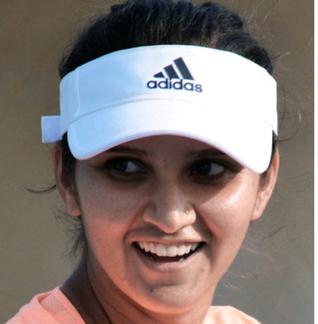
Twenty-eight-year-old Sania Mirza has become the first woman tennis player from India to be top-seeded in the ongoing Wimbledon or for that matter, any Grand Slam championship.
“It’s a great honour to be the top-seed in what is considered to be the ‘home of tennis’,” said Sania from London, before leaving for practice on Friday, ahead of the next match.
“It’s a proud moment and is an official acknowledgement of Sania’s sustained, consistent performances at the highest level,” said her father, Imran Mirza.
Ms. Mirza, incidentally, is playing her 15th year at Wimbledon. She won her first major title there in 2003 at the first junior Grand Slam, in the girls’ doubles category. Sania’s best at Wimbledon in women’s doubles has been the semi-final appearance with partner, Vesnina. It also means she is now a member of the ‘Last-four Club’ in Wimbledon and enjoys certain privileges for a lifetime, including use of a special locker etc.
“No matter how many times you’ve been here, it is still really exciting. I have several beautiful memories associated with the ‘BIG W’,” said Mr. Mirza. His daughter’s performances at Wimbledon have been memorable, including the three-setter in singles, which she lost to the then reigning US Open champion, Svetlana Kuznetsova, playing for the first time on the famed Centre Court, besides beating Japan’s Akiko Morigami.
The only Indians top-seeded in a Grand Slam earlier were Leander Paes and Mahesh Bhupathi in the 1999 French Open edition men’s doubles. Ms. Sania Mirza, a three-time Grand Slam winner, is determined to complete a career Grand Slam, having won the mixed doubles titles in the Australian, French and the US Opens earlier.
Becomes the first woman tennis player from India to be top-seeded in the ongoing Wimbledon
source: http://www.thehindu.com / The Hindu / Home> News> Cities> Hyderabad / by V.V. Subrahmanyam / Hyderabad – July 03rd, 2015
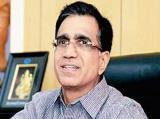
Kalyan Jewellers’ chairman and managing director T S Kalayanaraman, is the wealthiest jeweller in India with a personal fortune of USD 1.3 billion, says Wealth-X report.
Kalayanaraman opened his first jewellery shop in Thrissur City in 1993 with only USD 100,000 capital, and his business has now expanded to 32 showrooms across South India. His personal fortune is worth USD 1.3 billion.
Nirav Modi was ranked second on the Wealth-X list of India’s wealthiest jewellers with an estimated net worth of USD 1.1 billion.
“Born into a family of Indian diamantaires, Modi left the family business in 1999 and launched his own company, Firestar Diamonds. In 2007, Firestar Diamonds acquired New York-based Sandberg & Sikorski,” it said.
The third on the list is M P Ahammed, with a personal fortune of USD 1 billion. Ahammed had opened the first Malabar Gold & Diamond showroom with only USD 70,000.
Others on the list include, Bhima Jewellers’ B Govindan with a personal wealth of USD 620 million, Kiran Gems’ Vallabhbhai S Patel (USD 590 million), Laxmi Diamond’s Vasant Gajera (USD 580 million), Dharmanandan Diamonds’ Laljibhai Patel (USD 480 million), Kiran Gems’ Babubhai Lakhani (USD 470 million), Kiran Gems’ Mavji Bhai Patel (USD 410 million) and Rajesh Exports’ Rajesh Mehta (USD 310 million).
Wealth-X provides insight into the ultra wealthy with the world’s largest collection of curated research on ultra high net worth individuals.
“The gems and jewellery industry is among India’s fastest growing sectors fuelled by UHNWs affinity for jewellery and the fact that they view it as an important store of value. For India’s ultra wealthy jewellers, all that glitters is gold!,” Sahil Mehta, director, Indian subcontinent at Wealth–X said.
source: http://www.deccanherald.com / Deccan Herald / Home> National / PTI / Singapore – July 01st, 2015
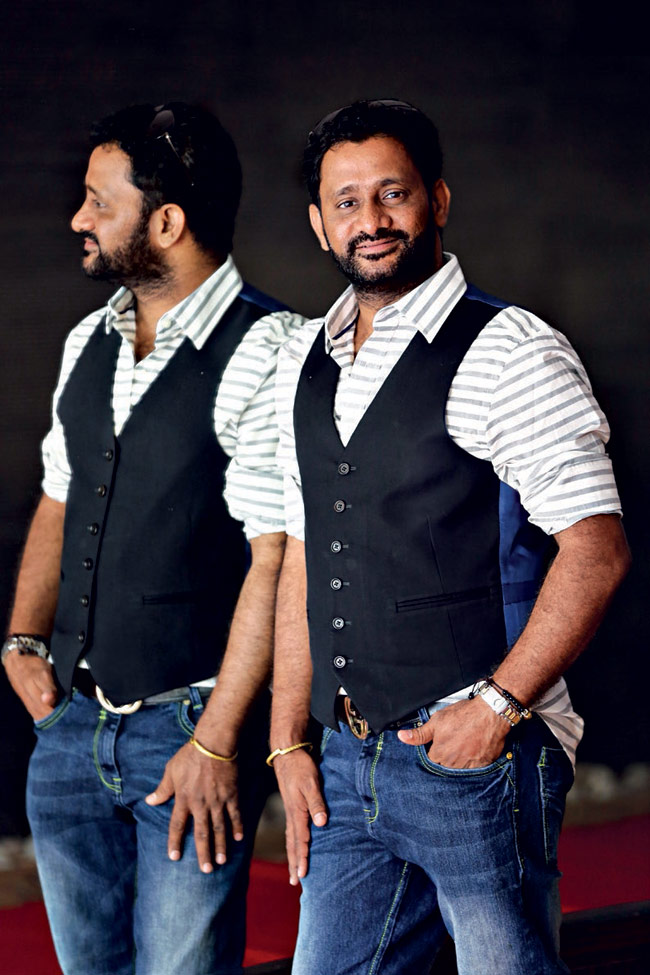
Oscar-winning sound designer Resul Pookutty of Slumdog Millionaire fame says musical elements define his idea of space and time.
He wanted to be a physicist and win the Nobel Prize. Instead, he became a sound designer and won an Oscar. “Not a mean achievement for a boy who walked miles to school in Kerala and studied under a kerosene lamp. Maybe superconductivity was not really for me,” says the 43-year-old Resul Pookutty, who along with Richard Pryke and Ian Tapp, won the Academy Award for Best Sound Mixing for Slumdog Millionaire in 2009.
Pookutty, who has co-produced and designed sound for the Hindi film, Nanak Shah Fakir, based on the life of Guru Nanak Dev, insists that the experience of working for the movie was nothing short of spiritual. “Before signing, I saw 40 minutes of the footage and was spellbound. It was sheer visual poetry. Nothing like that has ever been attempted in mainstream cinema before. When I met the director, Harwinder Sikka, a man who had no experience in the film industry but was guided by a dream to make this film, I instantly decided to become a part of his journey,” says the sound designer, who received the Padma Shri honour in 2010.
Pookutty, who shot to fame after designing the sound for Sanjay Leela Bhansali’s Black, says little or no importance is given to sound designing in India. “We are a 5000-year-old civilisation. As a culture, we have transferred knowledge through memory and not just the written texts. Sound was knowledge. Is it not surprising that we still underestimate the power and magic of sound,” says Pookutty. He recorded the sound of vacuum and Shimla’s ambient sounds in a shankh, then extracted out living elements to produce what you heard in Black.
A Film and Television Institute of India (FTII), Pune graduate, who failed the interview round the first time he appeared for it, Pookutty believes that formal training in arts is indispensable to broaden an artiste’s horizons. “You become organised. Then begins the process of personal reinvention influenced by exposure to works of masters and thought processes of fellow students. One is taught the history of the art form, which not only helps in the understanding of the art’s evolution but also, aids your own,” he says. Looking 14 years back, when the industry did not use even good microphones, Pookutty, who has been making a ‘sound library’ for more than a decade now, says, “I could have settled and worked in the anywhere in Europe, but the whole metaphor of my art is right here and I have always striven to make sound as realistic as possible, and also showcase that at times silence can be most deafening.”
Attributing his success to wife Shadia, who, he says, keeps him sane and has always allowed him to follow his dreams, the sound designer, who suggested A.R. Rahman’s name to director Danny Boyle for Slumdog Millionaire, is always open to working in the regional industry including Punjabi. “I don’t see the script in terms of the language but the magic it is capable of producing. I was supposed to work on the 3-D Punjabi animation film Chaar Sahibzaade but could not because of time constraints. Give me something that will completely bowl me over, and I am in,” he says.
source: http://www.indiatoday.intoday.in / IndiaToday.in / Home> News> Archive> Supplements> Simply Punjabi / / by Sukunt Deepak – May 01st, 2015 / May 11th, 2015
With the end of the Mughal Empire and the rise of British power, the 19th century Muslim intellectual had to reimagine his politics.
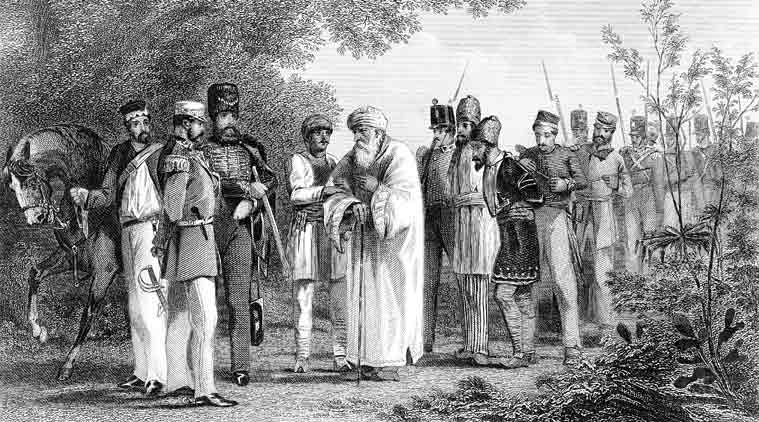
The King of Delhi is brought by guards before Captain Hodson, after the capture of Delhi by the British army during the 1857 rising. (Source: Hulton Archive/Getty Images)
Title: Muslim Cosmopolitanism in the Age of Empire / Author: Seema Alavi / Publisher: Harvard University Press / Pages: 504 / Price: Rs 495
Muslim Cosmopolitanism in the Age of Empire is an engrossing, wide-ranging and beautifully written account of an emerging Muslim political imagination in the 19th century. Through an examination of five extraordinary figures, Sayyid Fadl, Rahmat Allâh Kairanawi, Haji Imdadullah Maki, Nawab Siddiq Hasan Khan and Maulana Thanseri, Seema Alavi brings alive the variegated, improvisatory and inventive character of Muslim politics and theology, as it struggled to come to terms with new imperial forms. Each of these figures is deeply fascinating in their own right, chosen in part for the extraordinary geographical range of their influence. There is Sayyid Fadl, who is memorialised in Malabar, but whose political activity and theological influence extended to Egypt, Yemen and the seat of the Ottoman Empire itsef; Thanseri participated in the production of new knowledge forms in the Andamans; and Kairanawi’s pedagogical innovations in Mecca became the inspiration for Deoband. Each of these figures could constitute a lifetime of study and Alavi carries her deep learning lightly and well.
But Alavi’s intellectual ambitions are considerably larger than the study of five figures. She wants to demonstrate the ways in which new forms of material culture, print media and transnational merchant networks were opening new vistas of knowledge production and circulation. At one level, the 19th century witnessed in the Ottoman and Mughal worlds something Europe had experienced at least three centuries earlier: the ways in which print cultures and merchant networks transformed theological debates by democratising them. These combined with existing religious and ethnic networks (for instance, the Hadrami diaspora, that provided a crucial link between Yemen, Hyderabad and Malabar) to create new political forms. She shows how the end of the Mughal Empire created new political opportunities to replace an Indo-Persianate intellectual formation with a more Arabic engagement within Indian Islam, facilitated by the existence of the British Empire itself.
But, most ambitiously, Alavi challenges staple assumptions about Islamic political thinking. These include, among other things, the idea that the Caliph remained central to the Muslim political imagination. Alavi debunks this notion, arguing that much of the political thought in the period was about desacralising the Caliph. It was, rather, devoted to exploring other political forms, including the authority of the Sayyid, perhaps best captured in Fadl’s career.
Second, she argues that pan-Islamic engagement was not incompatible with particular territorial loyalties. She shows how so much political and theological effort was being expended to prove the idea that loyalty to the British Empire was not incompatible with Islamic allegiances. In a way, it seeks to demolish the canonical image created by W.W. Hunter’s Indian Musalmans, which centred on the idea that Indian Muslims would remain a political threat to any territorial political formation because their allegiances were transnational. She builds on Ayesha Jalal’s somewhat overstated thesis that pan-Islamism was a British phobia. Third, she seeks to show how political loyalty to territorial forms combined with the creation of a new cosmopolitanism, where the field of thought and action transcended the boundaries of one empire and spilled into the other. And in a theme with the most contemporary resonance, she demonstrates the symbiotic love-hate relationship between the empires and newly emerging theologies. On the one hand, empires feared and demonised new movements like Wahabism; on the other hand, they consistently used them for political ends. If you want to understand the contradictory nature of the engagement of modern empires with Islam, this book provides a fascinating historical guide.
There will be much to quarrel with in a book this rich. The use of the term “cosmopolitan” is misleading and under-theorised. Sure, these are figures that operate on a large geographical canvas, but they could be remarkably insular. Take for instance Kairanawi’s Izharul Haq, which was not an exemplar of modern scientificity as Alavi claims. It was a mean-minded polemic that sought to demolish the authenticity of Christian and Jewish revelation, while establishing the superiority of Islam. It is true, as Alavi argues, that the Muslim political imagination was compatible with a variety of political forms. But she skirts over the thorny question: in the process of producing new interpretations, new forms of authority, new codes of conduct for Muslims straddled in and between empires, what were the kinds of exclusions being produced? How does the language of purity, a recurring theme, sit with the discourse of cosmopolitanism? It is not a cosmopolitanism that is attuned to difference. Alavi’s generosity has opened a fascinating vista of scholarship, but it also prevents her from asking somewhat nastier questions about the evasive exclusions and silences in the figures she studies.
Pratap Bhanu Mehta is president, Centre Policy Research, New Delhi
source: http://www.indianexpress.com / The Indian Express / Home> Lifestyle> Books> Book Review / by Pratap Bhanu Mehta / June 06th, 2015
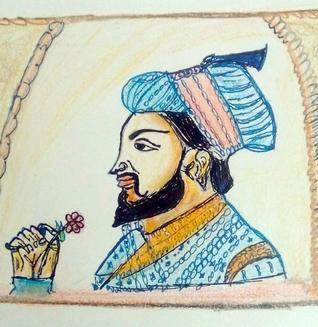
The pathos of Princess Jahanara’s life is reflected in her grave too
Jahanara Begum led a life of hardships and now more than 300 years after death her agony continues as her grave lies neglected with the Archaeological Survey of India (ASI) and the Nizamuddin Dargah Committee washing their hands off the matter. The ASI says guards are there only to protect the tomb from vandals while the Nizami family, trustees of the shrine of Hazrat Nizamuddin, contend that the ASI is the caretaker since the grave comes under the Ancient Monuments Preservation Act. As it cannot circumvent this it is just a helpless onlooker. But the fact remains that the grave needs repairs and clearing of waste left behind by pilgrims to the adjacent shrine, most of whom don’t even know who Jahanara was!
Illustration by Vinay Kumar
It’s not so much grass that grows on Jahanara Begum’s grave these days as shrubs. Her wish to be buried in a “kuccha” grave was duly fulfilled though a sarcophagus protects it from the elements, open as it is to the sky but situated in an enclosed chamber with perforated marble screens, south of the Dargah of Hazrat Nizamuddin Auliya. Still, when one sees it, one is reminded of the Persian poet Sadi’s poignant lines :
“I saw some handful of the rose in bloom with bands of grass suspended from a dome/I said, ‘What means this worthless grass that it should in the rose’s fairy circle sit?”/Then wept the grass and said, ‘Be still and know the kind their old associates ne’er forgo/Mine is no beauty here or fragrance-true. But in the garden of the Lord I grew.” No wonder grass springs up like hope eternal even on old forgotten monuments, where no roses may bloom. Grass is never a deserter. That was why Shah Jahan’s eldest daughter wanted it to grow on her grave.
Forced spinsterhood found an outlet in poetry and both Jahanara and her sister Roshanara gave vent to their feelings in verse. Persian was the language employed, as Urdu was considered the camp language and was yet to take over its predominant position. Persian similes and metaphors, like the jam (wine cup), the shama (lamp), the moth, the mythical mountain Kohkaf and the bulbul were hardly considered alien at a time when the ambience at the Mughal court was the same as that of Persia, Arabia or Turkey. As a matter of fact, even present day Urdu poetry waxes eloquent on them – and who doesn’t enjoy this escape to a romantic past, so far removed from the mundane image of the modern age when Kohkaf has been identified as the Caucasus mountain?
Even such a selfless person as Jahanara must have no doubt yearned for someone, who could be the master of her heart. Her emotions are portrayed in her poetry, which is that of a pious woman deeply attached to her Maker. She was also a great lover of gardens and laid the Begum Bagh in Delhi, in which was also situated the Begum Sarai. Outside the bagh was the Chandni Chowk, which was also her creation. After Aurangzeb came to power Jahanara preferred to stay with her father, who was held captive in the Agra Fort for seven years until his death on 16th January, 1666. She became a recluse after that and patronized mystics and mendicants until her own death. As per her wishes, she was buried in the tomb she had built for herself in 1681, next to the shrine of the saint she held in high regard.
The hollow sarcophagus is the receptacle, in which the grass grows in accordance with her epitaph. “Let naught cover my grave save the green grass, for grass will suffice as covering for the lowly.” And yet she was the one, who was once the virtual ruler of Hindustan and whose “pandan kharch” (betel leaf expenses literally but pin-money in this case) which was met by the revenue of two flourishing ports of the Mughal empire. Sleep well, gentle princess!
When Rudyard Kipling visited her grave in the 19th Century he couldn’t help comparing her to Christina Georgina Rossetti, the celebrated sister of Dante Gabriel Rossetti (1828-1882) writer of the famous poem “The Blessed Damozel”. Christina too died a spinster in 1894 when the last of the Mughal princess were still alive in the Mori Gate. Hence Kipling’s poignant comparison of the green grass growing over their lowly graves, with Christina’s words ringing in his ears; “Be the green grass above me/With showers and dewdrops wet…/I shall not hear the nightingale/Sing on as if in pain/And dreaming through the twilight/That doth not rise nor set/Haply I may remember/And haply may forget.” Few indeed forget Christina Rossetti after visiting her last resting place! The same is true of Jahanara.
source: http://www.thehindu.com / The Hindu / Home> Features> MetroPlus / by R. V. Smith / June 21st, 2015
There has always been a rage of the three Khans in Bollywood, i.e Shahrukh, Salman and Aamir. From romancing heroines to doing action roles to breaking records with the 200 crore club, they have done it all!
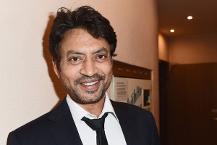
However, the entrant in the Khan club has left the audience flabbergasted! Irrfan Khan’sJurassic World has broken all records by giving a humongous opening of $511 million worldwide. This is the biggest opening ever!
He plays the role of Simon Masrani, the owner of the dinosaur park in Jurassic World. Irrfan is believed to have maximum screen time a Bollywood actor has every had in a Hollywood film.
His impeccable performance in the film has been appreciated worldwide. Irrfan is now prepping up for Dan Brown’s Inferno in Budapest. It is a complete new high for this brilliant actor!
source: http://www.timesofindia.indiatimes.com / The Times of India / Home> Entertainment> Hindi> Bollywood / TNN / June 18th, 2015
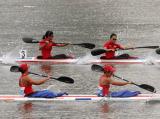
Bilquis Mir, the first Kashmiri Muslim woman to become coach of Indian canoe team, will once again be at the helm of affairs of the national side in the International Canoe Federation (ICF) championship to be held in Italy in August this year.
“I am happy to be chosen as coach of Indian team for the International Canoe Federation (ICF) championship to be held in Milan, Italy from August 19 to 23,” 29-year-old Mir told PTI.
“I will also take part in coaching camp of the senior team of India for ICF championship in SAI, Bhopal from July 18 to August 18,” Mir said.
Selected for the third time as a coach to train the players, she believes Indian team can make a big lead in the championship. “I am confident that India will make a big lead,” she said.
Mir was the first Kashmiri woman to become a national Kayaking and Canoeing coach. She was also inducted into the International Panel of Elite Referees — the first Indian woman to get the honour. She was also honoured with the state award for outstanding sportsperson in 2010.
She also holds the feat of being the first Indian to be selected as the International Technical Official for canoeing at All Africa Games 2011.
It was in 2007, the sports planners appointed her as the coach for the national team, which was a rare honour for a woman of J&K.
“I was the first woman from Jammu and Kashmir to become the national coach of canoeing team from 2007 to 2010,” she said.
“I feel happy to represent India as a coach. It is honour for me,” Mir said, adding “I started my career in 1997. It was not easy to reach here. I braved huge opposition but remained consistent and today I am here.”
The canoe champion credits her family, especially her mother, for supporting her in her sporting success.
“It was my family that stood behind me firmly. What I am today it is because of them. They supported me at every point.
“You know the situation Kashmir has gone through during all these years. It was difficult for me but motivation and support of my family is foundation stone of my success,” she said.
Hailing from Srinagar, Mir represented India in World cup in Hungary and is a national medalist since 1998.
“I passed my coaching course from Hungary with excellent grades. And it proved a milestone in my life. Plus Sports Authority of India and J&K youth services and sports helped me when I was in Hungary for coaching course,” she said.
Mir, who recently won the J&K state award for outstanding sportsperson, was just 10 when she started canoeing. And since then there is no looking back.
She plans to set up a kayaking and canoeing club in Kashmir and she is confident that her team can win medals in 1000m singles, 1000m doubles and 200m doubles.
When Zafar Iqbal speaks about hockey, you have to listen closely. The former national captain and coach, who led India at the 1984 Los Angeles Olympics and who was part of the 1980 team that won the last Olympic gold medal for the country, spoke to TOI Sports on the state of the sport, the reason why Indian hockey has not matched its past glory, the differences from when he was a player and more.
“When I first went to Argentina I did not know that hockey was that big there. There were 75 men’s clubs just in Buenos Aires! Before we went to Moscow for the 1980 Olympics,” said Zafar Iqbal. (TOI Photo)
Excerpts:
Star Sports has been running a catchy advertisement on TV in the build-up to the Hockey World League. Do you think more of the same can act as a boost to the team and create awareness?
Definitely, it would do a lot of good. Earlier, there was a lot of coverage of Indian hockey, during my playing career. Nowadays, there is hardly any if you were to compare. In my days, if there was any tournament played in the country, all the newspapers covered it. The Beighton Cup, Gold Cup, Agha Khan, Obaidullah Gold Cup, MCC and what not. But today there is hardly any coverage. Its more commercialised. So its good to see TV commercials showcasing the achievements of the current team. It will do a lot of good. People will go through the present hockey situation and naturally they will divert their minds towards hockey rather than purely cricket or a few other games.
What impact do you think sponsorship such as that of Hero MotoCorp and other companies would have had on Indian hockey during your time?
There was no need for sponsorship in the 1970s, ’80s or prior to that because hockey was very popular. People were following it deeply, in the sense that what was happening to the team when it went to tour Europe, Australia and the like. As I said, there was a lot of coverage back then. But for the last 20-odd years there has hardly been any coverage. That has had an impact, I would say. It has also killed this game.
That said, you have to be competitive with other sports. If you want to live upto the expectations of people, you have to perform. Slowly, over time, we could not do much as desired with the people of our country. Earlier, we were winning a lot and we never started focusing when he started losing in international hockey, such as in ’62 or ’72. We never bothered. We felt that ‘okay, we will recover’.
At the same time, the other countries have progressed like anything. They concentrated on everything, they encouraged different levels of hockey. Look at Holland, Germany, Spain, Argentina. I don’t think we planned our game in a manner that we should have, just going and playing without any game plan prior to a tournament. In the 1978 World Cup in Buenos Aires, I remember though we were defending champions, there was hardly any planning. Our coach, Mr RS Gentle, never bothered. Players were going here and there. Just before a match we would assemble and the coach would say ‘okay, you are playing and you are not’ and that was it. You cannot survive that way in such big competitions. That was a big blunder on our part. We never focused on how to improve our game when we started losing. Be it ’68 or ’72, we won bronze medals but never thought that we have to bounce back or looked at what was wrong with our system. This is my reading for the last 40 years.
Now we are focusing and planning and the team is playing much better. We didn’t to that. It was like ‘okay, we’re playing against Spain? No problem, chak de fattey sher de putter! Bharat maata ki jai!‘. That was our attitude, instead of looking at what we should be planning for. There wasjosh but no proper planning.
And what if there had been proper planning?
Then we would have performed much better! Lose or win, a team should have planning that is inserted in the minds of players, that this is how we should play against Germany, this is their weak point and strong point, this is how we should defend. We would go out and do it, but not in the manner in which our opponents were planning.
You say that today there is planning, so what is lacking in our hockey?
There are many reasons. Funding, development, a proper system, lack of enough quality players. We have talent, of course. We have some fine players. Sometimes there is an open goal that is missed, a pass is deflected, a pass is not good enough. You can look at it in many ways. There is no doubt that our players are getting more confident, though they may not as good as an Ashok Kumar, Dhyan Chand or Ajit Pal Singh, BP Govinda….
Or a Zafar Iqbal….
(Laughs) It may not just be about individuals. Game-wise, they are doing pretty well. Overall the structure needs working, which will take time.
Are foreign coaches making a difference?
There is an impact, there are some good strategies, but not as much as we would like. Maybe its because of a lack of quality players. We are lacking a big talent pool. If you compare us to Australia, Germany, Holland or England, even Argentina, they have many quality players. Of course we have world class players too, but not as many.
Initially, I was very much in favour of foreign coaches. The feeling was that they should come here and teach us some strategy and game plans. But for whatever reason, I have not been impressed with the last three of four coaches. Jose Brasa was okay, Michael Nobbs had some good ideas. Paul Van Ass was a good player in his time and will give his best. But whether they have enough quality players is also a question that must be asked.
Which reflects on the system….
Yes, and many changes have taken place to international hockey. In my opinion, it will take time. Competitions like the WHL and such will have an impact. But at the same time, in general people are not very enthusiastic about hockey. We need more reporting, more awareness. Hockey’s progress in our country is not very fast. It is growing slowly. Aisa nahin hai ki you can capture world hockey in the next five years. There is a big gap between us and the top teams. We are bad at some basics, such as trapping. Our base is lopsided, its not systematic.
You know, when I first went to Argentina I did not know that hockey was that big there. There were 75 men’s clubs just in Buenos Aires! Before we went to Moscow for the 1980 Olympics, we were at the NIS Patiala where we were told that the surfaces there were very fast. One day, the authorities there shaved off all the grass and then ran a roller over the turf, and then put cow dung all over. Their logic was that the surfaces in Moscow would be something like this! Then we landed in Moscow and saw synthetic Poligrass surfaces and were stunned.
It has been said that Indian hockey failed to adapt to the changes, such as the more aggressive, fast European style of play as well as to the turf variations. Do you agree?
It is a wrong perception. If you are a quality player, you will do well anywhere. That is the hallmark of a very good player. I saw the Pakistan team which like us had no experience playing on astro turf, do so well. The fund distribution system has not helped. The government gives Rs 150 crore to hockey, which SAI then has to distribute between so many federations. Some of the federations don’t get much out of this stock. Hockey India has had to drop tours because of a lack of funding.
That said, the Hockey India League has helped. Our youngsters get to play with good foreign players. They are finding themselves playing with and against someone like Jamie Dwyer. That pushes them.
Which of the current lot excites you?
We have good players. Rupinder Pal Singh is good, so is Gurbraj Singh. When I was a selector for three years, Gurbraj was not playing for the country. He was removed but I kept insisting that this boy be selected. He is very confident. Then he came back and has been playing for the last four years. Sardar Singh is slowing down, but he is a good player. We need quality players in the front line.
Do we have enough goal scorers?
Not like before, when you could easily identity scorers. But this team is playing good hockey.
There seems to a perceived weakness in the mind, particularly when it comes to final moments. It seems like the team starts to get the jitters….
Nothing like that. We have strong players, physically and mentally. Their defence is okay, they are sustaining the pressure.
What are your expectations of the team at the 2016 Rio Olympics?
For us, the WHL is only a test of where we stand. Just to qualify doesn’t mean you have won the gold. In 2012 right here in Delhi, when we won the final of the Olympic qualifiers, I was asked whether we could win an Olympic gold. My response was that this is just a small wall, and that we must jump much higher walls in London. The Olympics is a different level. Looking at Rio 2016, I think India will finish somewhere between sixth and tenth. I’m not saying we cannot do something special, but that is a realistic expectation. Of course, we can do something special and reach the semi-finals. It is possible, but the team needs a very positive outlook. They must play fearlessly.
Which Indian who you played with most impressed you?
Mohammed Shahid was a great player. It was largely because of him that we won that 1980 Olympic gold. If he hadn’t played so well we would have lost. Opponents used to put two men to mark him, he was that good. Nobody could stop him. He would leave the Australians in a tizzy. Shahid had jugglery. By nature, he was like that. If I want to play like that, I cannot. He had that exceptional advantage. That was his flair. He would suddenly break and opponents would fall here and there and he would zoom past them. That was his class.
source: http://www.timesofindia.indiatimes.com / The Times of India / Home> Sports> Hockey / by Jamie Alter, TNN / June 19th, 2015
The observance of the death anniversary of Shah Jahan and Mumtaz Mahal still fascinates people
The 360th Urs or death anniversary of Shah Jahan was observed at the Taj Mahal last week, but there were ripples of it in Delhi too with a busload of people reaching there to pay homage to the Emperor. Mohammad Saquib of Suiwalan was one of them. He has been attending the Urs for years as one of his ancestors was among the artisans who worked on the inlay work at the mausoleum, or so he claims. Another interested visitor was Shahnawaz Khan of Basti Nizamuddin who went for the first time to offer fateha in observance of a vow. Earlier Khan Abdul Haye Khan was a regular Delhiwallah who never missed the Urs. Abdul Haye was a Pathan who was very fond of fishing. One remembers that in 1966 during the monsoon he sat down on the rear side of Etmad-ud-Daulah to fish in the Yamuna, which was in flood and whose waters were beating against the mausoleum where rests the father of Nur Jahan and grandfather of Mumtaz Mahal. A rohu caught by Abdul Haye was so big that it sufficed for dinner for the whole family when cooked in Matia Mahal.
Shah Jahan like the unlucky Mohammad bin Tughlak was fond of Yamuna fish and so also presumably Mumtaz Mahal, but he did not drink wine till the age of 23 when he was persuaded by his father, Jahangir to do so. He however, never drank after the death of Mumtaz at Burhanpur on 16th June 1631. Accordingto Dr Ishwari Prasad, Shah Jahan died in January 1666 aged 74. Why his Urs was celebrated in mid-May is not understandable unless the date is fixed according to its proximity to Mumtaz Mahal’s death or some lunar calculation or as per the convenience of the khadims (caretakers). One remembers attending an Urs in 1958 when among those who prayed for the Emperor’s soul was Nawabzada Farouqur Rehman Khan of Datoli. Earlier the Nawab of Chhatarhi, Chief Scout of India and Freemason Grandmaster, had offered his obeisance. The first Urs of Shah Jahan, a year after his death, was presided over by Prince Muezzim, eldest son of Aurangzeb, who came from Delhi partly on horseback and partly in a horse-driven carriage, past Akbar’s Tomb at Sikandra, where he dismounted to offer fateha at the grave of his great-great grandfather. Aurangzeb came a month later. The same thing happened at the first Urs of Mumtaz Mahal at the Taj after Shah Jahan’s death.
A special feature of the Urs of Shah Jahan, which was later merged with the Urs of Mumtaz Mahal, is the laying of a gigantic multi-coloured Hindustani Chadar at the grave. This was offered on Friday May 17, with the Urs continuing on the subsequent Saturday and Sunday. Entry to the Taj was free from the afternoon of Friday (which is usually a closed day for visitors). The shehnai was played, along with the naqarra drum, at the top of the main entrance to the monument and on the following days the big kettle drums were beaten to mark the occasion, as in Mughal times when Shah Jahan is believed to have once remarked to Mumtaz: “Naqqare tumhari amadh ka ailan karenge aur tum Manno Malika kehlaugi” (The drums will announce your arrival and you dear will be called Emperess). Not much information is available of the first Urs of Shah Jahan but the one for Mumtaz Mahal is recorded, as follows, by father in his 1977 memoirs: “The celebrations traditionally begin with the washing of the tombs of the Emperor and his wife with rose water and the lighting of ‘agarbattis’. Prayers are offered with and flowers and cloth ‘chadars’ — one of them on behalf of the Department of Archaeology — are placed on the graves.
Occasionally a visitor whose prayers have been heard sends a ‘chadar’ as a token of thanksgiving. Atop the gate facing the mausoleum sit shehnai players and as evening advances, qawwalis in praise of the dead couple attract a big audience from neighbouring Tajganj, where reside the descendants of the builders of the monument. In keeping with tradition, food is distributed to the poor. The entire cost of the Urs is borne by the khadims from offerings made at the tombs. The first Urs of Mumtaz Mahal was performed by Shah Jahan himself in 1631. The Emperor wore a white dress and the nobles were in mourning habit. A covering with strings of pearls worth several lakhs of rupees was spread over the tomb. Prayers were offered for the soul of the queen and fateha was performed. Asif Khan, father of Mumtaz Mahal, was assigned a prominent place at the ceremony. A lakh of rupees was sanctioned for the ceremony, Rs 50,000 of it was given in alms to the poor.”
This time the Urs followed the recent earthquake which did not have any significant effect on the monument, except Sahilion-ki-Burj. Believe it or not, Mufti Ehsan Sahib of Mehrauli thinks Shah Jahan and Mumtaz Mahal always protect those who come to offer homage to them.
source: http://www.thehindu.com / The Hindu / Home> Features> MetroPlus> Society> Down Memory Lane / by R.V. Smith / May 24th, 2015
One-of-its-kind silver ‘zarih’ is being made in Lucknow to commemorate the ‘wiladat’ (birth anniversary) of Bibi Sakina, great grand daughter of Prophet Muhammad and daughter of Imam Hussain, the martyr of Karbala, celebrated on 19 Rajab, falling this year on May 9. Zarih is lattice work, often gilded, that encloses an Islamic tomb. Handcrafted by 10 skilled artisans for past six months, it is replica of the original zarih in Syria.
The estimated cost of the lattice made of 25kg pure silver is Rs 15 lakh, an amount collected from donation at Hazrat Abbas dargah. It is 3 feet wide, 4.5 long and 3.5 feet high and has Quran verses and story of Bibi Sakina’s pilgrimage carved on it in Arabic.
Once construction work is complete the existing zarih made of plain iron will be replaced with the silver one to enclose the holy shrine of Bibi Sakina situated on the premises of Dargah Hazrat Abbas in Rustam Nagar.
One of the most revered shrines in Lucknow built in 1819 this Dargah is perhaps the oldest shrine of the Shia Muslims in the city, popular among non-Muslims too.
Speaking to TOI, member Hazrat Abbas Dargah committee Arif Hasan said, “Donation was received from members of all communities.”
Artisan Nisar Hussain said, “Though original zarih in Syria is placed on a stone we will be installing the zari on a wooden platform.”
Plan is to make a 100gram gold crown embellished with multicolored semi-precious stones to be placed next to the zarih.
source: http://www.timesofindia.indiatimes.com / The Times of India / Home> City> Lucknow / by Uzma Talha, TNN / May 01st, 2015