The Rs 15-crore, 40,000 sqft modern facility that can accommodate 300 people was opened last week.
Yusuffali M A and Punalur Somarajan bring two wheelchair-bound inmates to the prayer hall of Gandhibhavan.
Kochi:
In September 2016, after laying the foundation stone of his proposed mall in Thiruvananthapuram, Lulu Group chairman and managing director Yusuffali M A visited Gandhibhavan, a destitute home for senior citizens and children in Pathanapuram, Kollam. The sight of elderly women left orphaned by their children troubled the UAE-based businessman, who runs 255 stores and shopping malls in the Gulf and other parts of the globe.
“He could not fathom how aged mothers could be abandoned in a destitute home by their children. And this troubled him no end,” a confidant said. The next few months and years saw Yusuffali visiting the inmates of Gandhibhavan at regular intervals and supporting them with their medical, food and other requirements. In the process, he supported the home with around Rs 7.5 crore for the medical, food, and clothing needs of the inmates.
Around the same time, Yusuffali also got personally involved in setting up a three-storey elderly home for the women of Gandhibhavan. The Rs 15-crore, 40,000 sqft modern facility that can accommodate 300 people was opened last week. Gandhibhavan, founded by Dr Punalur Somarajan, a public figure who lost his mother early in his life, will be run as earlier with Yusuffali as its mentor.
Gandhibhavan building
inauguration of the new building, constructed over three years, was also unique: it was carried out by three aged mothers of the care home, and no politician was invited. The ‘griha pravesh’ (housewarming) was completed when Yusuffali and Somarajan helped two inmates in wheelchairs into their respective rooms. The billionaire has also provided adjustable side-rail beds, furniture, two lifts, a laboratory, pharmacy, library, prayer rooms, dining hall, a doctor’s consulting room, and modern waste-management facility, among others, for the elderly home.
“The responsibility of taking care of aged parents rests with their children. Only 15 women of Gandhibhavan are unwed. The remaining women had grown-up children, who had abandoned them. I built the new facility so that their sunset years will be spent at a good place and in abundance,” Yussufali said at the opening of the new home.
source: http://www.newindianexpress.com / The New Indian Express / Home> States> Kerala / by Express News Service / January 12th, 2023
During his tenure as Viceroy General of India, Charles Hardinge, the 1st Baron Hardinge of Penshurst, came in touch with many practising hakims and vaidyas while opening medical colleges in India.
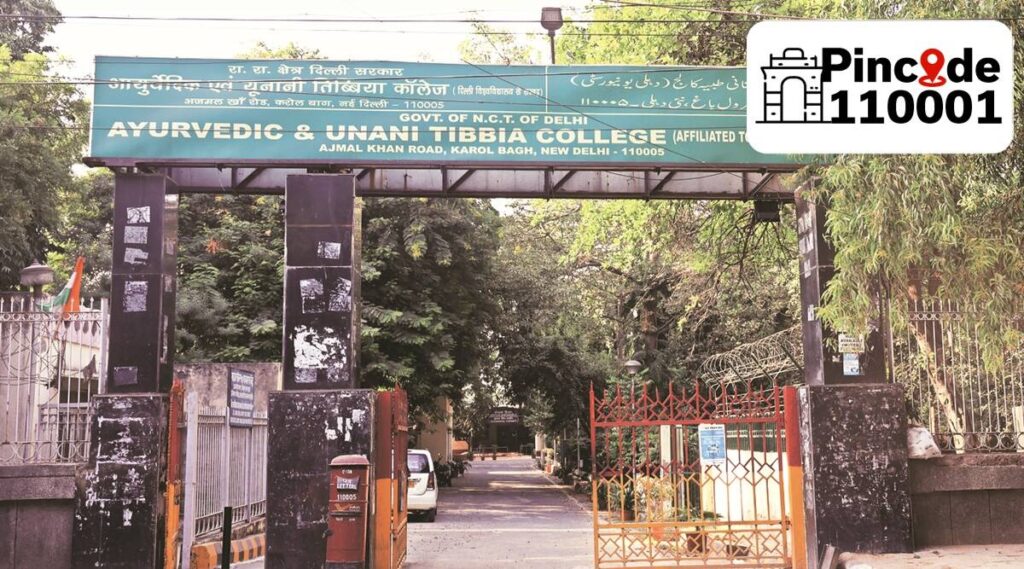
Ayurvedic and Unani Tibbia College in Karol Bagh. (Express Photo by Amit Mehra)
During the middle of the 18th Century, India had physicians from diverse backgrounds including vaidyas and hakims who practised Ayurveda and Unani respectively, and freely borrowed medicine recipes from each other. But, with the arrival of the British, both practices were sidelined.
During his tenure as Viceroy General of India, Charles Hardinge, the 1st Baron Hardinge of Penshurst, came in touch with many practising hakims and vaidyas while opening medical colleges in India. It was his friendship with Hakim Ajmal Khan, a practising Unani medical physician from the lineage of hakims of Mughal rulers, that made him lay the foundation stone of the Ayurvedic and Unani Tibbia College in 1916.
Prior to the college, currently situated in Karol Bagh, Hakim Ajmal Khan and his two elder brothers Hakim Abdul Majid Khan and Hakim Mohamed Wasal Khan worked under their father, Hakim Gulam Mehmood Khan, in their house, Sharif Manzil, in Chandni Chowk’s Ballimaran. Their father ran a small Unani school, named Unani Madrasa Tibbia, where they practised and taught Unani and Ayurvedic medicine to young scholars.
Hakim Ajmal Khan’s grandfather, Hakim Sharif Khan, was a physician to Mughal Emperor Shah Alam and had built Sharif Manzil, after which the family came to be known as “Sharifi”. Hakim Sharif Khan’s ancestors had come to India during the reign of Babar and were of imminent importance during Shah Jahan’s rule. They were then known as the aristocrats of Delhi and enjoyed a high social status.
Speaking with The Indian Express, the great grandson of Hakim Ajmal Khan, 80-year-old Masroor Ahmed Khan, said the Unani Madrasa Tibbia was opened in 1882. “We have 300 years of history and were known as royal hakims. When the Britishers came, they were bringing a new ordinance under which Allopathy medicine was going to be promoted more and Unani, Ayurveda were being sidelined. Until then, the education of Unani medicine was not institutionalised. Fearing that their practices will fade out, they started a college from Sharif Manzil,” he said.
Masroor added that he is the first in his family to not practise medicine.
He said the three brothers taught at Sharif Manzil and after the death of his two elder brothers, Hakim Ajmal Khan continued as the head of the college and raised the quality of the institution. “His popularity grew further, and he went on to become chief physician to the Nawab of Rampur. He was also a consultant for the royal families of Patiala, Jind, Gwalior, Gaikwad,” said Masroor.
The Unani Madrasa Tibbia was flourishing alongside Hakim Ajmal Khan’s popularity, and he then decided to buy land to build a new college for which a board of trustees was formed. With some influence and a promise that a wing of the hospital will be dedicated to Lady Hardinge, the trust received land from the British India government. The land in Karol Bagh was granted to the Anjuman-I-Tibbia on February 14, 1916, by the imperial Delhi Committee.
The foundation stone was laid on March 29, 1916, by Lord Hardinge after the board sent him a letter inviting him for the same.
Masroor said it was Hakim Ajmal Khan’s nationalistic approach because of which he named the college Ayurvedic and Unani Tibbia College, where 99% practitioners were of Unani medicine and only 2-3% of Ayurveda. “Hakim Ajmal Khan was also one of the founders of Jamia Millia Islamia and he was the only Muslim to chair a session of the Hindu Mahasabha. He was elected as president of the Indian National Congress from 1921-22 and also became president of the Muslim League and the All India Khilafat Committee,” said Masroor.
During his Khilafat movement days, Hakim Ajmal Khan had corresponded with Mahatma Gandhi to inaugurate the college, which the latter agreed to, and launched it on February 13, 1921.
Much before the Parliament, North and South avenues and India Gate, the college was an architectural marvel in the newly founded capital of India. The buildings represent a mix of Indian and Mughal architecture and house classrooms, laboratories, hospital pharmacies, hostels, office and staff quarters.
Hakim Ajmal Khan also helped in developing the college of more than 50 acres and also established a garden of herbs on the road across the college. The garden has now been named after him as ‘Ajmal Khan Park’ and is maintained by the MCD. The road has also been named after him – Ajmal Khan Road is now a popular shopping area of Delhi.
During the Partition, a majority of hakims of the family left for Pakistan and the college was taken over by Hakim Jamil Khan, son of Hakim Ajmal Khan, and while he was using the college as his own personal space, the then education minister Maulana Abul Kalam Azad decided to take over the college and run it as a government institution.
The matter reached the Supreme Court, which announced that the college will be a government run institution. The college is now being run by the Delhi government and admits students through the NEET exam.
According to college principal Mohammed Zubair, a total of 75 seats are through NEET. He said the college also provides courses in BUMS and BAMS and MD.
He added that post Covid, the perspective of students and patients in general has changed and a large number of students have opted for these courses. “We had students even before Covid but now a number of students who have done courses in physiotherapy and have done their BSc have come to study here.”
Not only this. Mohammed Zubair said a large number of patients too still believe in Unani and Ayurvedic medicine. “We have a footfall of 1,000 patients in our OPD. We also provide minor surgeries. The Delhi government had also established the Ayush Centre in our college where we admitted 989 Covid patients,” he said.
According to writer and historian Sohail Hashmi, there are a lot of people in smaller towns and remote places, where allopathy hasn’t reached or is not enough, who opt for traditional systems of medicines including Ayurveda, Unani and Siddha.
“Once we were colonised, it was then that our traditional systems were discarded. Colonisation colonised our minds. The Indian system of Ayurveda and Unani function on the basis of five groups of illnesses; so did Hippocrates’ four humors theory. There are a whole lot of commonalities in what Hippocrates discovered and it came to India from Greece via Iran and Arabia,” he said.
source: http://www.indianexpress.com / The Indian Express / Home> Cities> Delhi / by Ankita Upadhyay / New Delhi – November 13th, 2022
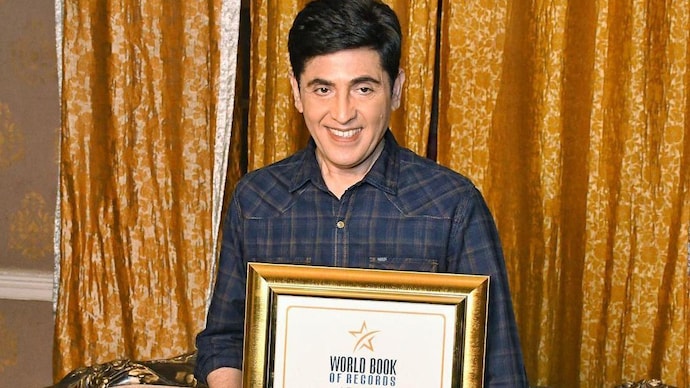
Aasif Sheikh has been honoured by the World Book Of Records for playing 300 different characters on Bhabiji Ghar Par Hai. The actor shared his picture with the certificate on social media.
Aasif Sheikh holding his certificate from World Book of Records.
Who doesn’t love Bhabhiji Ghar Par Hai’s Vibhuti Narayan Mishra? With his quirky ways of flirting with the neighbour’s wife to portraying different hilarious characters, Vibhuti is the show’s favourite. Did you know that Aasif Sheikh, who plays the role of Vibhuti, has also portrayed 300 different characters on the show? The actor has now been bestowed with a special certificate from the World Book of Records, London, for crossing 300 characters in Bhabiji Ghar Par Hain.
Aasif Sheikh Honoured by World Book of Records
Aasif Sheikh has won a million hearts with his constant hard work and amazing comic timing. He has now received a special award for portraying various characters on Bhabhiji Ghar Par Hai. Aasif posted his picture with the certificate on his Instagram account and wrote, “Thank you guys for making it happen. Crossed 300 different characters in bhabhiji ghar par hai (sic).” In the picture, the actor looks elated holding his certificate while wearing a blue check shirt.
Saumya Tandon is ‘Super, Super Proud’ of Aasif Sheikh
Saumya Tandon, who earlier played the role of Anita bhabi on the show congratulated Aasif Sheikh and commented, “Huge Congratulations, no one else deserves this more than you. It’s all the years of hard work , labour of love and passion for your craft. Super proud (sic).”
About Aasif Sheikh
Aasif started his journey in 1984 with India’s first TV serial Hum Log. He then appeared in a number of TV shows and Bollywood films. The actor featured in popular shows such as Yug, Champion, Tanha, Muskaan, Gul Sanobar, Chandrakanta, Yes Boss, Dill Mill Gayye, CID and Chidiya Ghar to name a few.
source: http://www.indiatoday.in / India Today / Home> News> Television> Celebrity / by Grace Cyril, Mumbai / October 21st, 2021
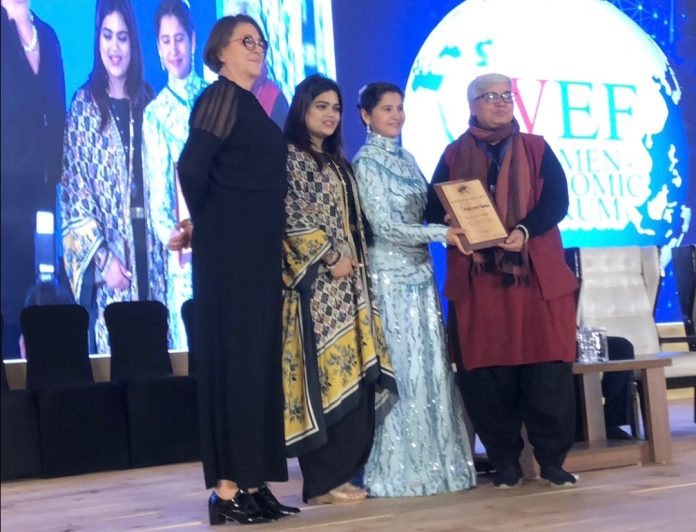
Anhad’s founder Shabnam Hashmi receiving Woman of the Decade award
84th Global Edition of Annual Women Economic Forum 2022 (WEF) – G100 Meetings in Delhi, India was inaugurated on 27th and the deliberations will continue till 31st December 2022 at JW Marriott Hotel, New Delhi Aerocity. India.
The summit coincides with the Presidency of India at the G20.
Shabnam Hashmi , a well known social activist and founder of Anhad was invited to speak in the Plenary session on the second day of the summit on human rights .
Dr. Harbeen Arora Rai, Founder & President, G100 , ALL Ladies League (ALL) | Women Economic Forum (WEF), WICCI, Women’s Indian Chamber of Commerce and Industry conferred on Shabnam Hashmi the “Woman of the Decade” award.*
The WEF together with participants hopes to influence and shape global policies in order to extend more support for women in all walks of life globally.
Presented by Women’s Indian Chamber of Commerce and Industry (WICCI), and held along with the G100 India meetings, the theme for this edition of the Women Economic Forum (WEF) is “Bridge the Gap: Agenda for G20.”
As an outcome, it will launch 100 recommendations that will be presented to the G20 leaders, UN bodies, governments and stakeholders globally to make gender equality a priority for all in this decade.
G100 is a group of influential global women leaders including Nobel Laureates and Heads of States who have come together with the purpose to make gender equality a reality in this decade and fulfil the vision of the UN SDGs by 2030. G100 is supported by the G100 Denim Club, group of leading 100 He for She champions from across the world who are supporting this epic endeavour.
The G100 is holding 100 global meetings worldwide. G100 missions have taken place in Switzerland (UN), Netherlands, Belgium, USA (UN-NY), UAE, UK, Spain, Romania, Malta, Portugal, Sweden, Malaysia, Indonesia, Singapore, Thailand and continue in 8 Balkan Countries, Ivy Leagues-USA, Turkey, France, Bangladesh, Egypt and the gala event in India.
source: http://www.muslimmirror.com / Muslim Mirror / Home> Indian Muslim> Positive Story / by Muslim Mirror Network / December 28th, 2022
When the English imprisoned Abu Zafar Sirajuddin Muhammad Bahadur Shah Zafar (1775-1862), the last Indian Moghul Emperor, in the Jail of Rangoon in 1857, instead of Indian Flag, Union Jack started hoisting at Dehli’s Red Fort and Queen Victoria became the full-fledged ruler of India without any obstacle, at that time, many country patriots came into field united to fight against the British rule.
Maulana Muhammad Qasmi Nanautavi (1832-1879) was one of them too.
In 1857, one Fatwa for Jihad against the English was issued.
The Fatwa carried the signature of 34 prominent Ulama. One among them was Maulana Nanautavi himself. As other elders had participated in the Jihad of Shamli in 1857, Maulana Nanautavi also had participated personally with his colleagues. Briefly in the battle of Shamli, Nanautavi and his colleagues got defeated to British forces.
He was a far sighted scholar. He comprehended that the British has not only occupied India and would attack the Indian culture, but even the faith of Indians would be at risk. Therefore, while on the one hand, he started fighting against the English, he began debating with clergyman on the other. But to that time, the freedom wasn’t destined for India, so he didn’t succeed in the mission.
In this situation, intending to free India from the British rule, in the company of some friends, Maulana Nanautavi adopted another policy to establish a Madrasa on 21st May, 1866 (a famous learning centre of Indian Subcontinent, Darul Uloom, Deoband) beneath a pomegranate tree in Chattah Masjid of Deoband. So that the trained products of the Madrasa would sacrifice themselves to preserve the country and Islam both in British India. Alhamdulillah, Nanautavi succeeded in his mission and a good number of Darul Uloom’s product gave sacrifices for the sake of Indian freedom and Islam.
The noted Islamic scholar Maulana Manazir Ahsan Gilani (1892-1956) quoted in his book, “Ihaatae Darul Uloom Men Beete Huwe Din” (The Days Passed in the Campus of Darul Uloom) from his teacher and the first graduate of the seminary, Shaikhul Hind Mahmood Hasan Deobandi (1851-1920) saying:“Did my teacher (Maulana Muhammad Qasim Nanautavi) establish this seminary only for the teaching and learning? The seminary was established before me, as far as my knowledge goes, my teacher established this one in 1866 to compensate the defeat of 1857 from the British. I have chosen the same mission for which it was established before me.”
Very few people know the fact: “In the meeting of Jamiat Ulama-e-Hind at Kolkata in 1926, the participants included graduates of Darul Uloom, Deoband and they supported the group which called for complete independence of India from the British rule.
Indian National Congress was to declare complete independence as its goal three years later, in its session at Lahore.” (Wikipedia, Darul Uloom Deoband)The famous freedom fighter, Frontier Gandhi, Khan Abdu Ghaffar Khan (1890-1988), who visited Darul Uloom, during his visit to India in 1969, had said, “I have had relation with Darul Uloom since the time, Shaikhul Hind Maulana Mahmood Hasan, was alive. Sitting here, we used to make plans for the independence movement, as to how we might drive away the English from this country and how we could make India free the yoke of slavery of the British Raj. This institution has made great efforts for the freedom of this country.” (Wikipedia, Darul Uloom Deoband)Due to the great interest in India’s freedom struggle, Shaikhul Hind became an icon of Indian independence movement. Though he was a teacher of Darul Uloom, but made much effort to start an armed revolution against British rule from the both inside and outside India.
He started a programme to train volunteers and his students in the seminary from India and abroad for that goal. The most eminent among those who joined the movement were his students: Maulana Ubaidullah Sindhi (1872-1944), Maulana Husain Ahmad Madani (1879-1957), Maulana Muhammad Mian Mansoor Ansari etc.Shaikhul Hind sent Maulana Sindhi to Kabul and Ansari to the North-West Frontier Province to mobilize the popular support and recruit volunteers. And he with Maulana Husain Ahmad Madani travelled to Hijaz (KSA) to secure Turkish support. Getting the Turkish governor, Ghalib Pasha’s signature on a declaration of Jihad against the British, he planned to return to India via Baghdad and Bluchistan to start the rebellion.When Shaikhul Hind planned to return, the Silken Letter Movement was captured by Punjab CID.
Due to this movement, Shaikhul Hind was arrested in Hijaz. He was imprisoned in Malta, where he was tortured mercilessly, for more than three years.
Here it seems necessary to mention that what was the Silken Letter Movement. Shaikhul Hind wanted an armed revolution against the British rule, as I mentioned. So, he needed arms and ammunition. He and his colleagues, therefore, travelled to different countries to seek support from the anti-British countries; such as Afghanistan, Turkey and Russia. During the visiting different countries, letter exchanged between Shaikhul Hind and his colleagues, containing the outlines of the plan to recruit the volunteers for army and to establish a national government were written on silk piece of cloth. That is why the movement was known as the Silken Letter Movement/Tahreeke Reshmi Rumal (in Urdu)/Silk Letter Conspiracy (according to British government).When he returned to India, after release, was conferred upon by the title of Shaikhul Hind, leading leader of India.
Now he issued a Fatwa making it a duty of all Indian Muslims to support and participate with Mahatma Gandhi (1869-1948) and the Indian National Congress, who had prescribed a policy of non-cooperation and mass civil disobedience through non-violence.
He died on November 30, 1920 wishing to get martyrdom for India’s freedom.
Though Shaikhul Hind was no more, but he left a good number of students, who followed the footprint of their elders and worked tirelessly for the freedom of India.
Maulana Ubaidullah Sindhi (1872-1944), a 1891’s graduate of Darul Uloom, was also among them. He was the most active and prominent member of India’s freedom movement. He was among those leaders of Darul Uloom who left India, following the commandment of Shaikhul Hind, during World War 1, to get support of the anti-British central powers for an armed revolution against British rule.
Maulana Sindhi reached Kabul to rally the Afghan Amir Habibullah Khan.
After a period of time, he offered his support to Raja Mahendra Praratab’s plans for revolution in India with German support. He joined the Provisional Government of India formed in Kabul on 1st December, 1915. In this government, he was nominated the Minister for India. It was declared a revolutionary government in exile, which was supposed to take the charge of independent India, if the British government has been overthrown according to the plan. But unfortunately, in 1919, the provisional government was dissolved under the diplomatic pressure to Afghanistan.
He stayed in Afghanistan for 7-year nearly.
Then visiting Soviet Russia,he reached Turkey, where he issued the charter for the independence of India from Istanbul.
He left Turkey for Hijaz and remained there until 1929. He journeyed from a country to country for the sake of India’s independence. He died on 22nd August, 1944, at Deenpur in Pakistan.
Shikhul Islam Maulana Husain Ahmad Madani (1879-1957) was also one of the Shaikhul-Hind’s students and graduate and latter Professor of Hadith at Darul Uloom, Deoband.
Though he had been not convicted, but he accompanied Shaikhul Hind to Malta voluntarily, to take care of him. He stayed in Malta three years upto the release of Shaikhul Hind. Returning to India, he actively became involved in the freedom struggle. He had been imprisoned several times by the British authority for his participation in the freedom movement. It was he who dared to issue a Fatwa in the meeting of Indian National Congress at Karachi that working as British army and police is Haraam. After this Fatwa, he was rewarded two years rigorous imprisonment. He never stepped down from the freedom struggle movement, until India got freedom.
At the time of independence, the Muslim League and the Indian National Congress were at logger heads on partition of united India. On that occasion, Madani opposed the partition thoroughly. He journeyed the different provinces of India along with Maulana Abul Kalam Azad (1888-1958) and Mahatama Gandhi to assure the people safety and security and tried his level best to stop them to migrate from India to Pakistan. Many people targeted him, but he never conformed to the opinion of the partition.
After the independence, he was served a ministry, but he refused and restricted himself under the four walls of Darul Uloom and Jamiat Ulama-e-Hind for teaching and social works.
Like Madani and Sindhi, there were hundreds of Darul Uloom’s graduates, who actively took part in the freedom struggle of India. To mention the works of those patriots, the volumes and volumes are required.
It’s sorrowful matter that historians of modern India ignored completely the role played and efforts made by Darul Uloom for India’s freedom struggle. Today, most of the people aren’t aware of this historical institution. Some people know that Darul Uloom is a conservative seminary that produces merely Maulanas or a factory that only issues Fatwaas. And some say that Darul Uloom is “a Station of Terrorism” and “it produces terrorists”. This one is a famous opinion among Hindu fundamentalists, while the fact is otherwise as I stated in the essay.
It’s a bird’s eye view of the role of Darul Uloom, Deoband in India’s freedom struggle.
One who is interested on the topic, should go through the book, “Taarikhe Darul Uloom” (History of Darul Uloom).
May Allah accept the works of the seminary!
source: http://www.millattimes.com / Millat Times / Home> Special Column / by Khursheed Alam Dawood Qasmi , Email: qasmikhursheed@yahoo.co.in / August 15th, 2022
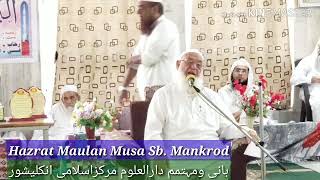
The founder and rector of Darul Uloom Markaze Islami, Ankleshwar, Maulana Moosa Makrod was almost 80 years old. He was very active in performing his day-to-day duty at the time. In spite of old age, he seemed very fit and energetic. He never complained of any sickness. However, suddenly, a message was circulated on the WhatsApp on 31st July 2020 informing that he has been sick since two days and his health condition is deteriorating. Following the illness of a few days, he passed away on 5th August 2020 at 04:00 in the morning. The news of his death spread like jungle fire. For his dear and near ones as well as the graduates of Markaze Islami, this news was very shocking and heartbreaking. May Allah grant him Jannah!
Maulana Makrod was a humble, polite, sociable, good conduct, pious, simple and kind-hearted. There is a Hadith of our beloved prophet Muhammad (SAWS): “The believer is naively noble.” (Sunan Tirmidhi: 1964) It means that a believer is a simple and kind-hearted, therefore, he can be deceived due to his gentlemanly belief in other people. This Hadith was very much applicable to Sheikh Makrod in my opinion.
The Almighty Allah has bestowed him with the great love and affection for Islamic scholars and pious people. He loved them very much. He used to invite the scholars and pious people in Markaze Islami. Whenever any scholar visited any institution of the vicinity, he tried his level best to bring them in Markaz. His habit of presenting himself among those scholars was as a faithful student before a kind teacher. It doesn’t matter either they are aged or young. He would arrange the food to host such guests from his home.
Due to Maulana Makrod’s love for the scholars, Maulana Moinuddin Gondavi (May Allah grant him Jannah!), former Sheikhul Hadith of Madrasah Imdadia, Muradabad, UP, decided to stay at Markaze Islami for a long period of time, when he had to settle down in Gujarat for his treatment. Maulana Makrod took care of him as long as he stayed at Markaz, until he breathed his last and was buried in the campus of Markaz. Maulana Gondavi felt very much comfortable during his stay at Markaz. Maulana Makrod had special love for Maulana Gondavi. I remember there was a gathering of Nikaah for Maulana Makrod’s late son: Maulana Ismail Makrod (1974-2018) (May Allah grant him Jannah!) in the Masjid of Ravedra, a village in Bharuch district. Maulana Moinuddin addressed the gathering before Nikaah. He mentioned a certain story and the tears started rolling on his cheeks. Maulana Moosa Makrod stood at once, took out the handkerchief from his pocket and started wiping his tears.
Maulana Makrod was very punctual of Salah. Be it rain, summer or winter season, in spite of his old age, he used to perform Salaah in Markaz’s Masjid. Occasionally, he used to awake the students of Markaz for Fajr Salaah. Early in the morning, he used to reach the office on the time as well. He used to complete the day-to-day affairs on the time. He was accustomed to reach the office in the morning and remained until the morning session was over for the lunch. Then he left for the home to have lunch. At Zuhr Salaah time, again he was present in the Madrasah for Salaah. Following Salaah, he sat in the office again to settle the works. Whatever was the burden of the duty, but he never expressed the tiredness. Always he was happy and active to perform his duty.
When the afternoon session was over, he used to go to the Masjid following Adhan. He performed Asr Salaah in Markaz’s Masjid. Following Salaah, commonly, he used to sit with the final year students in the Masjid and had discussion with them. He used to guide and train those students.
Maulana Makrod and his son Maulana Ismail Makrod used to treat me like a member of their family. I will always remember their kindness. Whenever there was a programme in Markaz, they used to give me chance to let me prove my mettle. They encouraged me for whatever good work I did. Whenever there was a function in the campus of Markaz, frequently they give me chance to run it. Once I got chance to run the annual function which was presided by Sheikh Tariqat Maulana Qamruz Zaman Allahabadi (May Allah protect him!).
Whenever there was a programme in an institution, Maulana Makrod mostly used to send me to participate. After coming back from the programme, he used to call me in the office to know the programme’s details. In this way, I had chance to visit several institutions in Gujarat. Whenever any new book or a magazine came in the office, he used to give me to read and write the letter of thanks to the sender.
Following my arrival in Zambia with his suggestion, I was in touch with him continuously. He and his beloved son Maulana Ismail Makrod were very delighted after knowing the educational and social works in Zambia. Maulana Ismail Makrod insisted me several times to visit Ankleshwar. When I planned to visit India in November 2011, he asked me visit Ankleshwar. I had no any option, but to follow his suggestion. When I phoned Maulana Moosa Makrod, he also invited me to come to Ankleshwar. I reached Ankleshwar. My family and I stayed at their bungalow as they had arranged our stay there. We were welcomed and hosted by them with open arms. They insisted me to stay at least a week. They treated me as a family member. I stayed two-three days and came back, due to the lake of time.
The kindness, sympathy, humanity, morality and sincerity I found in him, are hardly found in this age. Anyway, now Maulana Makrod and his son Maulana Ismail Makrod have left for heavenly abode. I am sure that the thousands of the students who learned at Darul Uloom Markaze Islami will remember them. They will make Duaa for them, In Shaa Allah.
The Almighty Allah had decided the same time for Maulana Moosa Makrod so he passed away at the appointed time without late. The Almighty Allah says: “For every people there is an appointed time. So, when their appointed time will come, they cannot be late for a moment, nor will they get ahead.” (Aaraaf: 34) He spent a number of years serving at Markaze Islami. He founded this institution as a small Madrasa and latter it became like a fruit bearing tree. Thousands of students benefited from this institution and a lot are still benefiting. It is the duty of the graduates of Markaz to make Duaa for him!
Maulana Makrod’s Birth:
Maulana Makrod was born on 22nd November 1939 at his native place called: “Diva” in Bharuch district of Gujarat. His father’s name was Maulana Ismail Makrod, who was working in Durban city of South Africa. He passed away and was buried in Durban. May Allah grant him Jannah!
Educational Journey:
Maulana Makrod received his basic education at his hometown Diva. For the further education, he got admission in Jamia Husainia Rander, Surat in 1952. He completed his Fazilat course 1959 from Jamia. He learnt Sahihul Bukhari from Maulana Ahmad who was a student of Sheikhul Islam Mualana Husain Ahmad Madani. May Allah grant them Jannah!
Following graduation from Jamia, Maulana Makrod left for Darul Uloom, Deoband to benefit from the elder scholars of Darul Uloom. He remained almost two years in Deoband. He used to participate particularly in the lectures of Allahmah Ibrahim Baliawi, Allamah Fakhruddin Muradabadi, Qari Muhammad Tayyib (May Allah grant them Jannah!) etc. While being in Deoband, he used to take part in the special gathering of elder scholars of Darul Uloom to benefit from them.
Oath of Allegiance and Khilafah
The first and foremost, Maulana Makrod took the oath of allegiance to Maulana Maseehullah Khan of Jalalabad, UP. Following his death, Maulana Makrod again took the oath of allegiance to Maulana Moinuddin Gondavi (Ex-Sheikhul Hadeeth: Madrasah Imdadia, Muradabad, UP). After his death, Maulana Makrod joined Maulana Qamruz Zaman Allahabadi (Hafizahullah!). He was blessed with Khilafah from Maulana Allahabadi and Maulana Muneer (Hafizahullah!).
His Survivor:
Allah the Almighty has blessed Maulana Makrod with three sons and four daughters. His son Maulana Ismail Makrod, deputy rector of Darul Uloom Markaze Islami and director of MIERC, Ankleshwar passed away on 17th November 2018 in a car accident. He was very much hopeful about Maulana Ismail that he would shoulder the responsibility to take Markaz ahead. But Allah Ta’ala had decided something else. As long as Maulana Ismail was alive, he assisted him in most of the activities. Maulana Moosa Makrod was much grieved after his death. Whenever I talked to him after the death of Maulana Ismail Makrod, he used to talk about him.
Following the death of Maulana Ismail Makrod, he was survived by his wife, two sons and four daughters. One of his sons is Mr. Iqbal Moosa Makrod who was resident in Leister, UK. But after his younger brother’s death, he came back to his hometown and started serving in Darul Uloom Markaze Islami to assist his elderly father and he is still serving. May Allah accept his services and grant him the best reward!
Maulana Makrod’s another son is Mr. Zubair Moosa Makrod who is settled in New York, USA with his family. One of his daughters is Bilqis Yusuf Topia, a house wife and a resident of Gloucester, England with her family members. The second daughter is Nafisah Saeed Hejazi who is a resident in New York, USA with her family members. The third daughter is Hajirah Javed Jogiat who is resident in UK with her family members. His last born daughter is Khadiajah Saeed Patel. She is resident in New York, USA. May Allah keep them happy and well!
Maulana Moosa Makrod’s Services in Educational Field
Career and Practical Life
After coming back from Deoband, Maulana Makrod taught seven years in the Maktab of Diva. Then he established a Maktab namely: Maktab Noorul Islam in 1975, in Ankleshwar Musafir Khana. Then he established Darul Uloom Markaze Islami in Ankleshwar in 1984. Then he also established a school in Goya Bazar of Ankleshwar namely Markaz Islami School. Then he established Markaze Islami Education and Research Center in the campus of Darul Uloom Markaze Islami in 2003 to equip newly graduate Ulama from different Madaaris with English language and computer science.
Establishment of Darul Uloom Markaze Islami:
Maulana Moosa Makrod offered his services in several fields. I am trying to present his services in the field of education briefly. His great and memorable service is establishment of Darul Uloom Makraze Islami. He ran this institution beautifully from the first day it was founded as its rector until he breathed his last. Briefly, I am going to shed light that when, how and why this institution was established? Then the services of this institution will be also presented to let the readers know the background of establishment of this institution.
Darul Uloom Markaze Islami, Ankleshwar is a well-known institution in Gujarat. Maulana Moosa Makrod used to tell about the foundation of this Darul Uloom that he left his village’s Maktab and started a stationary shop in Ankleshwar. Then he was suggested by his teacher, Maulana Saeed Ahmad, Rector: Jamia Husainia, Rander to start a Maktab in Ankleshwar and teach the children basic of Islamiyyat along with running his shop. Following the suggestion, he started a Maktab: Noorul Islam in Ankleshwar Musafir Khana in 1975 and started teaching along with running his shop.
After few years, due to the growing number of the pupils, Musafir Khana was not enough to accommodate all the pupils. Then with suggestion of some his friends, he decided to arrange a piece of land and found an institution. With the help of Allah, he was successful in arranging the land for Madrasah nearby the GGCL (Gujarat Gas Company Limited) in Ankleshwar. In 1405=1984, the foundation stone was laid by two great personalities of the time, Maulana Ahmad Raza Ajmeri, (Ex-Sheikhul Hadith: Darul Uloom Ashrafiyyah, Rander, Surat) and Maulana Moinuddin Gondavi (Ex-Sheikhul Hadith: Madrasah Imdadia, Muradabad) and the institution was named: Darul Uloom Markaze Islami.
After the foundation, Sheikh Ahmad Raza Ajmeri took care of Markaz as its patron. Following his death, Maulana Moinuddin was made the patron. After his death, Sheikhe Tariqat Maulana Qamruzzaman Allahabadi was made the patron of Markaz. From the foundation day, the institution is progressing by leaps and bounds. May Allah arrange the better substitute for Markaz and may it continue progressing.
Markaze Islami provides the education from the basic classes of Urdu to the final year of Alimiyyah Course. With a bit changing in the known syllabus of Darse Nizami, the English language and the computer science have been included up to the 4th standard as this is the crying need of the time. Up to now, almost 500 students have completed their Aalimiyyah course form this institution and they are serving within and outside the country. May Allah accept their services!
The memorization of the holy Qura’an is called Hifz. If a person has memorized the whole Qura’an from cover to cover, he is called Hifzul Qura’an. There is a Hifz Department in Markaz as well. There are 11 Hifz classes running under 11 expert teachers of Hifz. There are about 260 pupils in Hifz Classes currently. Almost 536 pupils have completed Hifz course up to now from Markaz.
It is essential to recite the holy Qura’an with correct pronunciation of the Arabic alphabets caring the rules of Tajweed. If a person fails to recite the Holy Qrua’an with Tajweed, he is sinner. Maulana Moosa Makrod was very careful about it, so he established a department for Tajweed and Qira’at. The department has produced 120 students who completed Hafs, 94 students who completed Sab’ah and 42 students who completed Thalathah and 9 students who completed Ashrah Kabeer and received the certificates of Qaari. These students are serving within the country and abroad as the teachers, Imams etc.
Realizing the interest of the graduating students in Islamic Jurisprudence, “Department of Specialization in Islamic Jurisprudence” (Iftaa) was introduced in 2010. Following the admission in the department, the students get expertise and proficiency in Fiqh. Up to now, 29 students have completed the course and were granted the certificates of Mufti. The statistics mentioned here are according to the annual report of 1440 AH.
For the perfection of the writing and speaking skills of the enrolled students, there are three Anjumans (Students’ unions) working under the supervision of the teachers. Under those unions, weekly programmes are held regularly. Under “Anjuman Tarbiyatut Talbah”, the pupils practice to develop their oratory and writing skills in Urdu language. For practice to develop their Arabic speaking and writing skills, they participate in the weekly progrmme held under “Al-Nadi Al-Adabi”. Under “Anjuman Tahseen Al-Qura’an Al-Kareem” the pupils practice how to recite the holy Qura’an beautifully applying the rules of Tajweed, they get trained for Khutbah of Jumah and to lead Salah etc.
Maulana Moosa Makrod established this institution with few pupils and the teachers in 1984. The Almighty Allah accepted this institution and currently about 550 pupils are getting free education and they are trained for good moral and character. After graduation, they play a constructive role in guiding the public to follow the straight path as the responsible citizens. To educate and train the students, there are 44 teachers who are working day and night. There are also 15 other auxiliary staff providing additional duties as cook, launderer, cleaner etc. All these are happening with Allah assistance, the good arrangement by the rector and the generous public donations. May Allah accept their services and grant them abundant reward! May Allah protect this institution from all types of evils!
Establishment of Markaze Islami School:
None can deny the need of Islamic school in this current age; rather the thinkers, writers and scholars are writing and speaking on the need of the establishment of Islamic schools. They ask the Muslim community, the organizations and the trusts to found Islamic school if they have resources to bear the expenses. Al-Hamdulillah, Maulana Moosa Makrod realized this need of the community decades ago and established an Islamic school namely: Markaze Islami Gujarati School, under the management of Darul Uloom Markaze Islami in Goya Bazar of Ankleshwar. The pupils are receiving modern education in Islamic environment. The school is recognized up to the 10th standard from the Gujarat government. Almost 432 pupils are learning under 15 qualified teachers. Following completion of the school, the pupils go to the different colleges and universities for higher modern education, Al-Hamdulillah.
Establishment of Markaze Islami Education & Research Center (MIERC)
The significance and need of English language in the modern age to understand the newly invented things or for preaching the true messages of Islam are not hidden for any sensible person. That was the reason that Maulana Moosa Makrod sent his son Maulana Ismail Makrod Delhi to learn English language in Markazul Ma’arif Education & Research Center. When he came back after learning English language, he tried to expand the chain of Markazul Ma’arif and requested his father to found an institution like that to educate newly graduated Ulama.
Maulana Moosa Makrod also realized the fact that thousands of Ulama are graduating each year from different Madaaris. One Markazul Ma’arif is not enough to meet the need; but establishing more institutions like that is crying need of the hour so that more Ulama after equipping with English language, can address the need of the people and can preach Islamic messages simply as English is easily understood. So, he got ready to establish an English Department. But before establishing, he thought proper to seek the opinions of the scholars, then finally to go ahead following their opinions. The scholars responded in affirmative and acknowledged the need of the English language. Then Maulana Moosa Makrod finalized to materialize this programme under the campus of Darul Uloom Markaze Islami.
Foundation of the Center
After getting positive replies, he started planning to found a center for the said purpose. According to the plan, he founded the institution namely: Markaze Islamic Education and Research Center, in 2003, under the management of Darul Uloom Markaze Islami within its campus. It was first time in the history that a two-year Diploma in English Language & Literature course was introduced in the campus of a Madrasa. Maulana Ismail Makrod was given the charge as director to run it. After the entrance exams, the newly graduated Ulama from different Madaris, who had interest in preaching the true messages of Islam as well as learning English language, were selected as the students of the first batch. Then the center started functioning practically.
The Services of the Graduates of the Center
A good number of Ulama graduated from different Madaaris try to get admission in this department being keen to learn the English language. The department is equipping the Ulama with English language and literature as well as computer science for last 17 years. In this period, the number of the students who have graduated from this institution is 270. Most of those Ulama are busy in teaching. Dozens of those Ulama are serving in other countries like: England, America, Canada, South Africa, Zambia, Zimbabwe, Botswana, Australia etc. May Allah accept their services and make it continuous charity for the both Maulana Moosa and Maulana Ismail Makrod! May Allah grant them Jannatul Firdaus!
source: http://www.millattimes.com / Millat Times / Home> Opinion / by Khursheed Alam Dawood Qasmi / December 06th, 2022
This sleepy north Indian town is all set to become a major pilgrimage centre for Shia Muslims following the chance discovery of a tomb said to belong to Imam Sayyid Mash-had Ali, a son of Imam Ali Raza, the eighth descendant of Prophet Muhammad. Samana is located 28 kilometers from Patiala in the Indian state of Punjab.
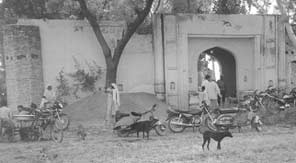
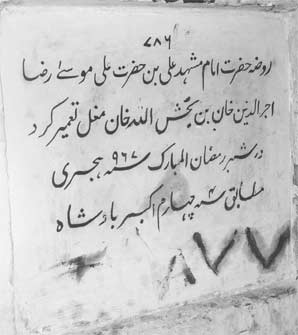
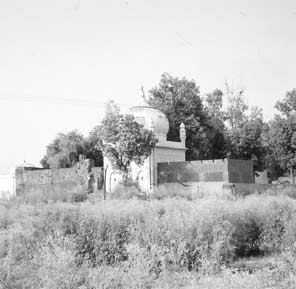
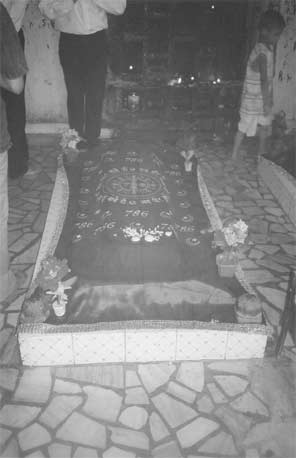
Front gate to the graveyard,Rear side of the graveyard,The grave and the epitaph planted in the wall facing the grave. a. (http://www.imamjawad.net/htm/ara/ library/mosoa_imam_jawad/m2_ 3.htm#m4).
According to scholars of Muslim history, the discovery of the mazar is significant in that there is no mazar of any Imam in South Asia.
Scholars are of the view that Imam Sayyid Mash-had Ali was buried here about 1200 years ago and the town of Samana also takes its name from his mother. Facts related to this have been confirmed with old religious books, sources claimed. But we do not find “Mash-had” as one of the sons of Imam Ali Raza who, according to historical sources, had only two sons: Ali (the ninth Imam) and Moosa. According to some sources, he also had a third son called Yahya. (http://www.imamjawad.net/h
The Samana tomb was discovered by chance during the visit of Lahore High Court Judge, Shabbar Rizvi, about three months ago, when the stone at the shrine was cleared. Judge Rizvi, whose family emigrated from Samana at the time of Partition, told the local administration that a great saint lies buried at the place and he asked them to clear the place. Upon clearing it the inscription emerged.
Since its discovery, the mazar has been thronged by a host of important Shia dignitaries, including clerics from Lucknow and diplomats from the Iranian embassy in Delhi. They are now working on plans for its restoration and renovation.
A team comprising of Lucknow’s Maulana Kalbe Jawwad and two functionaries of the Iranian Embassy in Delhi accompanied by Dr Nasir Naqvi, a teacher of Punjabi University, visited the tomb. The Iran Cultural House in Delhi is planning to hold a seminar on this discovery in Chandigarh.
Maulana Kalbe Jawwad informed MG that while visiting Delhi recently he was told that there existed a tomb of a “saint” who is said to be a pedigree of the Eight or the Ninth Imam of the Shiites. During his visit to the place, he was told that Sayyids were living at the place but after Partition it was ruined as the Muslim inhabitants emigrated to Pakistan. Sikh Nihangs told him that they tried to build a Gurudwara on the spot but whenever they erected any structure it crumbled. Owing to superstition, they left the place untouched and asked the Punjab Waqf Board to grant them some other land and the same was granted to them at a distance of 200 meters from the site of the grave. Maulana Jawwad added that the tomb exists from the time of Emperor Akbar. He said that he would be leaving for Iran on 11 July to track the history of the tomb and if proved it would be the greatest religious site of Muslims in the Subcontinent as there is no proof that any descendant of the Prophet is buried in South Asia.
Maulana Jawwad also said that he is thinking of facilitating the transfer of about 5000 Shiite families to Samana in order to inhabit the place and take care of the tomb.
In Samana, Sant Kirpalji of Gurudwara Thada Saheb (situated at a distance of a kilometer from the tomb) told MG that the Sikh order called “Buddha Dal” took care of the tomb after Partition. Earlier the place was served by Thambi Baba who disappeared one day. Now a Brahmin called Mangat Ram takes care of the place and keeps it clean out of love. Sant Kirpalji also said that he has seen a book in Urdu about the history of Samana. According to him Persians of “Samanat” caste came here and inhabited the place centuries ago. They were cloth merchants.
According to Sant Kirpalji and others in the area, the important tomb belongs to “Chauda Peer” (Wide Saint) who is considered the most important saint in the area. The adjacent tomb, according to them, belongs to his brother or wife. A third tomb to the right belongs to his maternal uncle who is addressed by the villagers as “Imam Saheb” or “Bada Peer” (Big Saint). Around 80 kela land (about 320 bighas) is attached to the tomb but most of it has been usurped by the villagers. Only five kelas is left for the tomb which is used for agriculture and the income is utilised for the upkeep and repair of the tomb. Sant Kirpalji keeps a separate register for this purpose.
The tomb is located in a large compound which is about four kilometers outside Samana town. It has an impressive Mughal style gate but the structures inside are in need of urgent repair. A number of graves are found all over the place (see sketch where G denotes graves; 1 is for Chauda Peer’s grave, 2 for his brother or wife’s grave, and 3 for the grave of his maternal uncle). The Persian epitaph planted in the wall facing the grave seems to be recent and made by a novice (see above). It reads: “Tomb of Hazrat Imam Mash-had Ali son of Hazrat Ali Moosa Raza. Built by Ajruddin Khan Mughal son of Bakhsh Allah Khan in the month of Blessed Ramadan 967 Hijri corresponding to Year 4 of Emperor Akbar.”
The Chief Minister of Punjab, Captain Amrinder Singh, has ordered the concerned authorities to start working on the site immediately so that it could be declared a sacred place.
Additional reporting and photographs by Nadim Ahmad, Samana and Rizvi Syed Haider Abbas, Lucknow
source: http://www.milligazette.com / The Milli Gazette Online / Home / by Zafarul Islam Khan / June 16-30, 2005
December 19 is celebrated as ‘Mewat Day’, for it was on this day in 1947, soon after the partition of India, that Mahatma Gandhi’s appeal to the Meo Muslims living in what is today the border areas of Haryana, UP, and Rajasthan, made them shun their desperation to move to Pakistan.
The community members were all packed with some belongings after facing harassment and violence at the hands of officials in the post-partition mayhem that had gripped both India and Pakistan. Lakhs of Mewatis got together and declared they would go to Pakistan when Mahatma Gandhi came on the scene. He assured to protect the life and property of Mewatis and give them full respect.
At the time of the partition of India, Mewat, Gurgaon, and Faridabad of Haryana were ruled by the British, and Alwar, Bharatpur of Rajasthan by the kings. At the time of partition, like other parts of the country, Mewat also saw communal violence.
At this stage freedom fighters Abdul Hai, Himmat Khan, and a few other Muslim leaders came to know of a conspiracy to force Mewati Muslims to leave India for Pakistan and they met Mahatma Gandhi and invited him to visit Mewat.
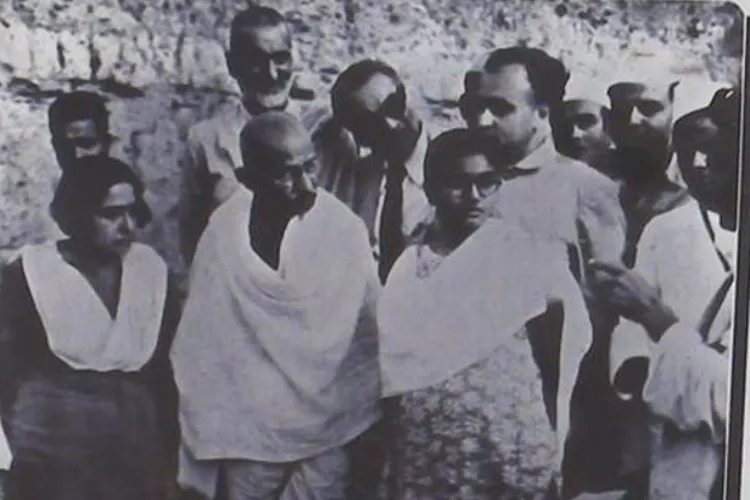
Mahatma Gandhi reached Ghaseda village of Mewat on 19 December 1947. He was accompanied by many leaders including the then Chief Minister of Punjab Gopi Chand Bhargava, Ranbir Singh Hooda, father of former Chief Minister Bhupinder Singh Hooda.
Mahatma Gandhi’s speech on 19th December 1947 in the village of Ghaseda before lakhs of Mewatis is historic. He said, “Today my sayings do not have the same power as it would have earlier.
“But what I say any as much impact as it would have earlier, today not a single Muslim would need to leave the Indian Union, nor would any Hindu-Sikh be required to leave their homes in Pakistan and seek refuge in the Indian Union.
A sorrowful Bapu said: “My heart is filled with sorrow after hearing what is happening here. All around arson, looting, killing, coercive religious conversion and kidnapping of women, and demolishing temples, mosques and gurudwaras is madness. If this is not stopped, both communities will be annihilated.”
Historian Siddiq Ahmed Meo, who has 10 books on the history of Mewat to his credit, says, “Gandhiji also read out the complaints sent to him by Mewati Muslim representatives to the assembled crowd.”
He assured the Mewatis that they would be given full respect. If any government official commits any atrocity with the Mewatis, then the government will take strict action against him. Gandhiji said, “I will be happy if my words can console you a little.”
He expressed grief over the Muslims who were expelled from the princely states of Alwar and Bharatpur.
Gandhiji said in his speech, “A time will come in India when all hatred will be buried in the ground and both societies will be able to live in peace.”
Mewat’s social worker Fajruddin Besar says, after Gandhiji’s assurances, the Muslims reversed their decision. “If they were not stopped at that time, there would be not a single Muslim in Haryana and Rajasthan today.” He says Gandhiji did a big favour to the Muslims by stopping them from going to Pakistan. “Today, Muslims in India are living a life of more peace and respect than in Pakistan. In Pakistan, there is always fighting among Muslims.”
In 2007, chief minister Bhupinder Singh Hooda declared Ghaseda an ideal village and renamed it Gandhi Gram Ghaseda. He also released about Rs 10 crore for development works in the village.
This year Congress leader Rahul Gandhi will also reach the village on December 22 and celebrate Mahatama Gandhi’s visit to the village on that day.
source: http://www.awazthevoice.in / Awaz, The Voice / Home> India / by Yunus Alvi, Nuh (Haryana) / December 19th, 2022
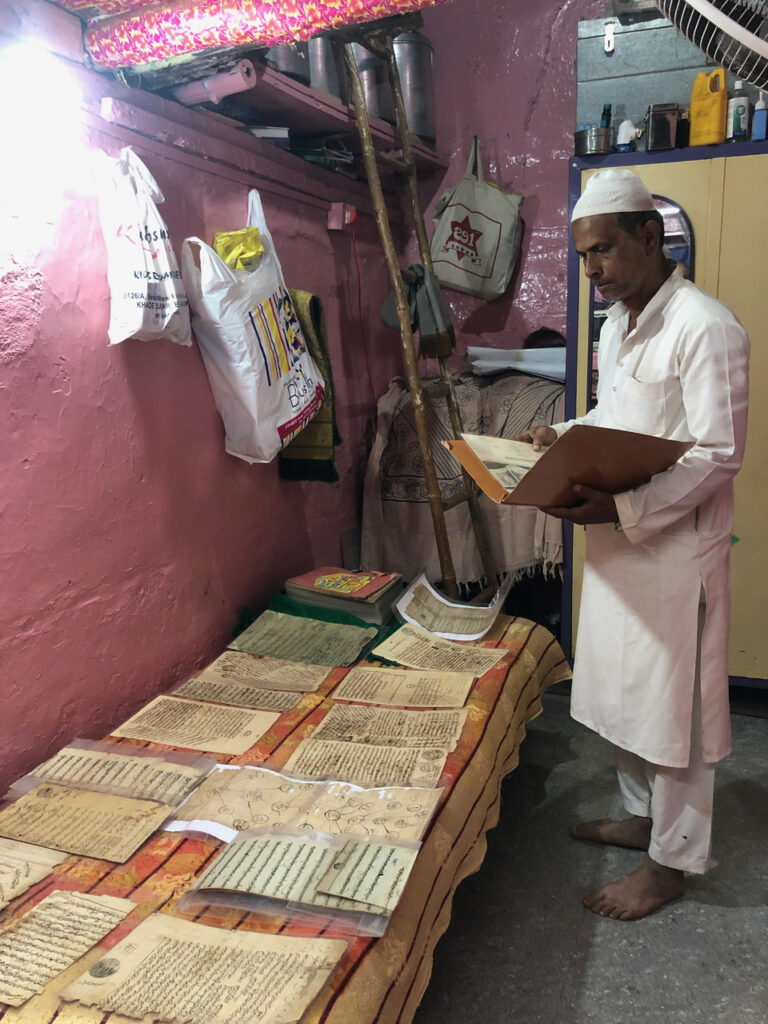
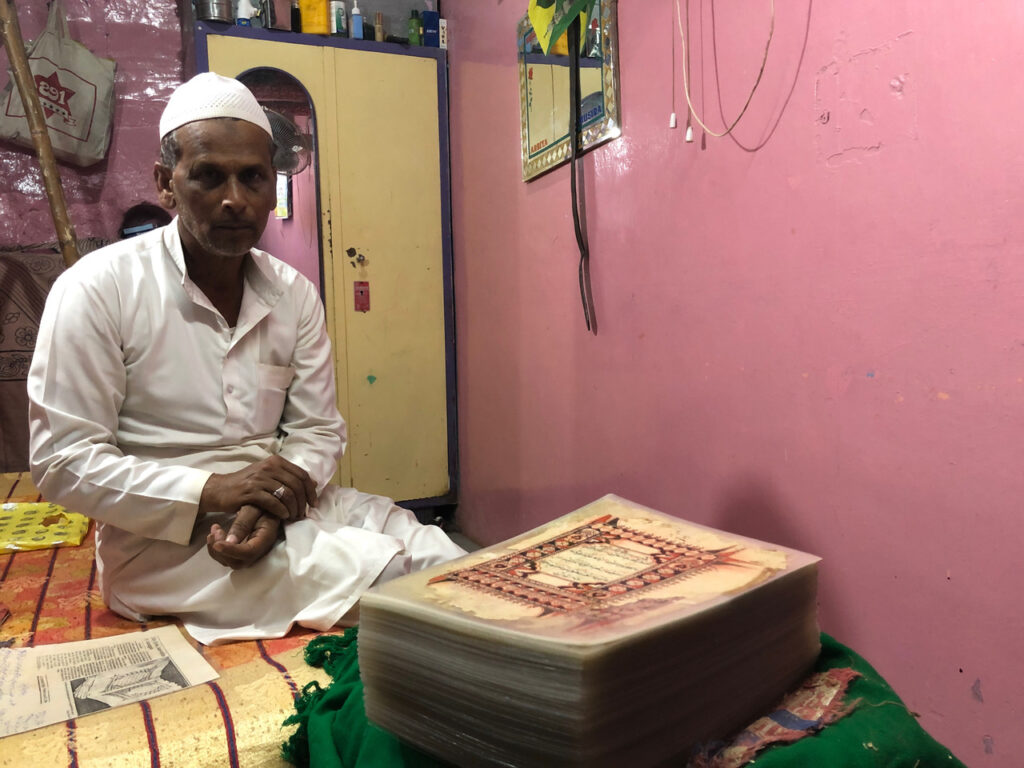
The dargah Hazrat Syedina Shaikh Badruddin Shah Arif Chishti is in possession of several archival records, but its real claim to fame is a copy of the Holy Quran calligraphed by Mughal Emperor Aurangzeb Alamgir.
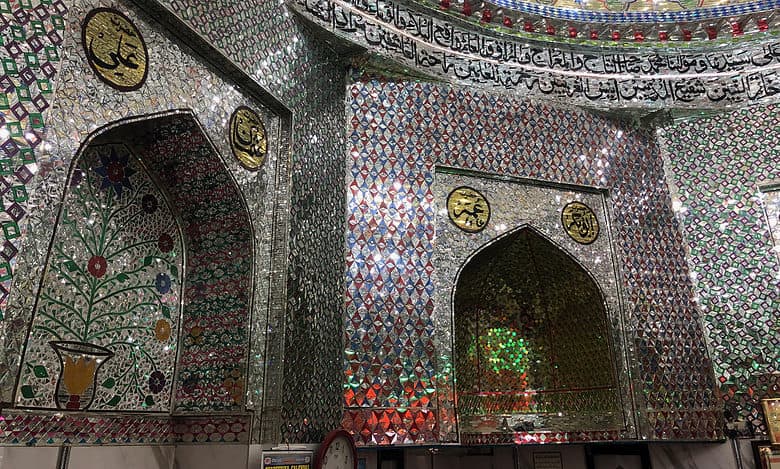
The shrine of Shaikh Badruddin Chishti in Belgaum recently underwent renovation with some scintillating Persian glass work. (Image: Shafaat Shahbandari).
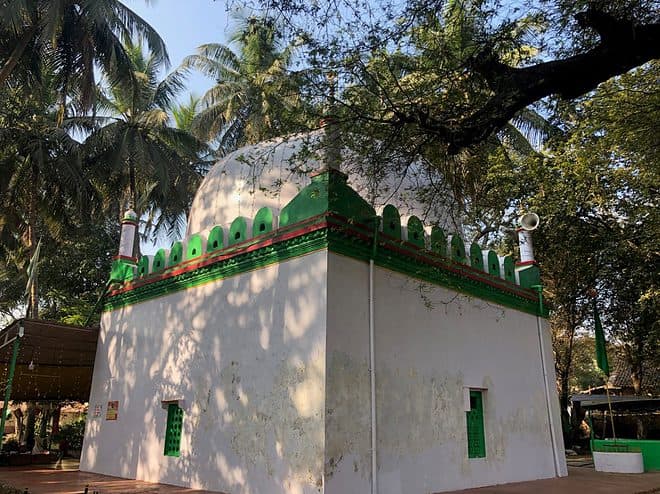
The historic town of Belgaum is home one of Karnataka’s oldest Dargahs. Located within the ancient fort of Belgaum, the dargah Hazrat Syedina Shaikh Badruddin Shah Arif Chishti is believed to be more than eight centuries of old.
Among the first sufi saints to settle in the region, Shaikh Badruddin travelled across south India spreading the message of peace and harmony. The historic tomb in Belgaum is still a great symbol of harmony in the city.
“Hazrat Syedina Shaikh Badruddin Shah Arif Chishti arrived in Deccan more than 800 years ago. He travelled extensively across southern India to spread the message of peace and love. He was among the first sufi saints to settle down in this region,” said Rafeeq Ahmed Ghawwas, caretaker of the Dargah in Belgaum.
Located in the historic Belgaum Fort, the mausoleum of Shaikh Badruddin Chishti was revered by rulers from various dynasties irrespective of their faith. (Shafaat Shahbandari)
Origins
Originally from Delhi, Shaikh Badruddin he was a disciple of Hazrat Shaikh Qutubuddin Bakhtiyar Kaki, who was a 12th century saint and scholar based in Delhi. According to Ghawwas, Shaikh Badruddin migrated to the Deccan in Belgaum on the advice of his spiritual master. He was the one who introduced the Chishti order of the revered saint Khwaja Muinuddin Chishti in the south.
“Our ancestors were the disciples of Shaikh Badruddin and we have been in the service of this place since the earliest times. I took over as the caretaker of this dargah from my uncle Khattal Ahmed, who had taken over from my father Abdur Raheem Mujawar. Before him our grandfather Ebrahim Ahmed was the caretaker, who took over from his father Shaikh Jangu Mian,” said Ghawwas, who has been the caretaker of the dargah for more than 30 years.
Venerated by kings, ministers and commanders of all faiths, the dargah and the saints of this order have had close ties with several dynasties across its history of almost 800 years.
Ghawwas with some prized remnants of Maratha, Mughal and Adil Shahi heritage. (Shafaat Shahbandari)
The Aurangzeb connection and the Quran
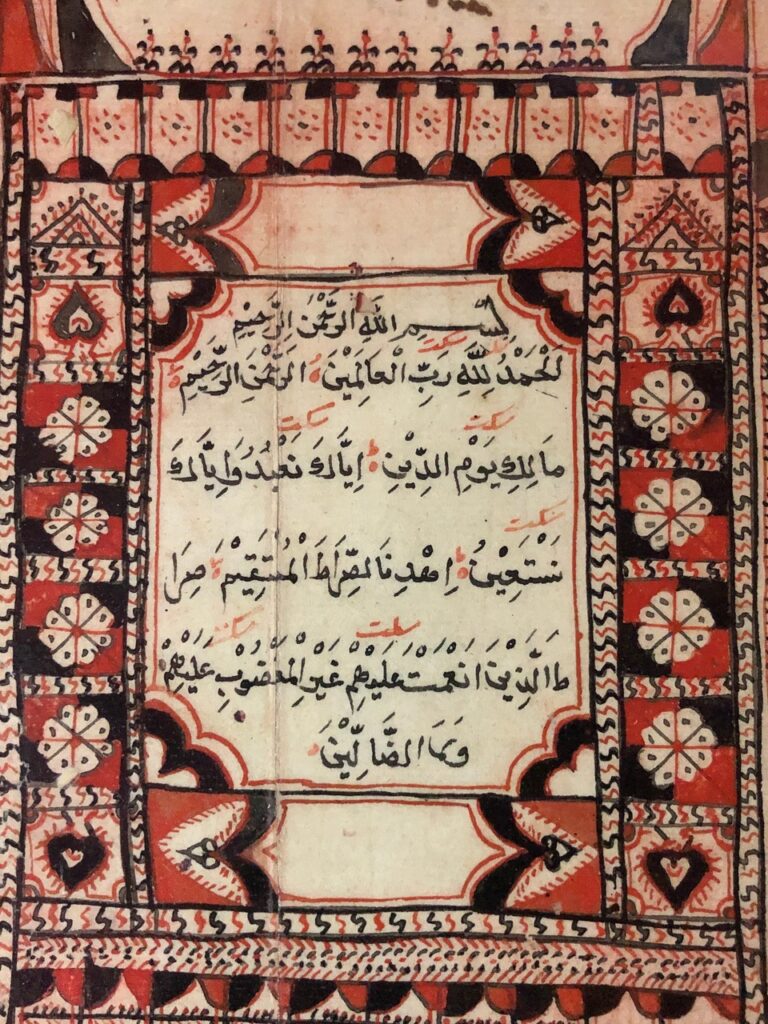
More interestingly, the dargah Hazrat Syedina Shaikh Badruddin Shah Arif Chishti is in possession of several archival records that reflect its rich and vibrant history. And among its biggest inheritances is a 16th century copy of the Holy Quran that was calligraphed and gifted by the sixth Mughal Emperor Aurangzeb Alamgir.
Rafeeq Ahmed Ghawwas with his prized possession – a 17th century calligraphed copy of Quran. (image: Shafaat Shahbandari)
“The emperor had actually gifted the copy to the dargah of Khwaja Muinuddin Chishti in Ajmer, but we are not sure how and when it reached into the possession of our ancestors. We feel fortunate to have this blessed copy and we are doing our best to preserve it for posterity,” added Ghawwas, who has preserved the copy with great care.
According to local history, after his travels across South India, Shaikh Badruddin arrived in Belgaum and settled within the premises of the then newly built fort. The fort was originally built in 1204 AD by Raja Jaya Raya of the Ratta Dynasty and Shaikh Badruddin lived here until his death in 1251 AD.
This mausoleum was built in the early 16th century by the Adil Shahi general and the then governor of Belgaum Asad Khan Lari. The structure has been preserved with some renovation and restoration. Recently, the interiors of the dargah went through a facelift with Iranian glasswork adorning the walls, the dome and the ceilings.
Throughout its long history in Belgaum, the has received patronage from the rulers irrespective of their faith. The caretaker is in possession of several firmans and sanads issued by the Maratha rulers who venerated Shaikh Badruddin and offered their patronage.
The ornamented page of the calligraphed work representing the first chapter of the Holy Quran. (Image: Shafaat Shahbandari)
“This dargah has always been the abode of peace and harmony and we are continuing with our age-old motto of love for all,” added Ghawwas.
source: http://www.siasat.com / The Siasat Daily / Home> News> Bangalore / by Shafaat Shahbandari / December 13th, 2022
Ayeera Chisti, the first Kashmiri girl to win a medal at the World Wushu Championship
Ayeera Chisti, the Wushu wonderkid from the Kashmir valley added another feather in her rising career by winning a bronze medal at the World junior Wushu championship this weekend.
With this achievement she has become the first girl from Jammu and Kashmir to win a medal at this prestigious championship.
Among the first to congratulate her was JK Sports Council.
The 8th world junior Wushu championship was held in Banten, Indonesia from December 2 to 11.
Speaking to Awazthevoice.in, Ayeera’s coach, Asif said, “This is just the beginning. This is the result of years of hardwork, dedication, patience and discipline. There are many targets we have to achieve”.
Before departing for the championship, Ayeera had exuded confidence of doing well at the event. “I will come back with a medal”, she had told Awazthevloice.in.
The 11th class student of Amira Kadal Higher Secondary School, Srinagar had already etched her name in history books by becoming the first girl from Srinagar to represent the country in the world championships.
Khelo India congratulated Ayeera on becoming the first girl from JK to win a medal at this level.
Ayeera had lost to Malak Ossama of Egypt in the semifinal.
She had earlier defeated her rival from Macau in the last-eight stage.
The Indian contingent finished with a record eight medals, including three golds in the championship. Apart from the yellow metal, India also won three silvers and two bronze medals.
source: http://www.awazthevoice.in / Awaz, The Voice / Home> Sports / by Nakul Shivani, New Delhi (headline edited) / December 12th, 2022