Category Archives: World Opinion

Winners of 2nd National NGO Awards

INDIA :

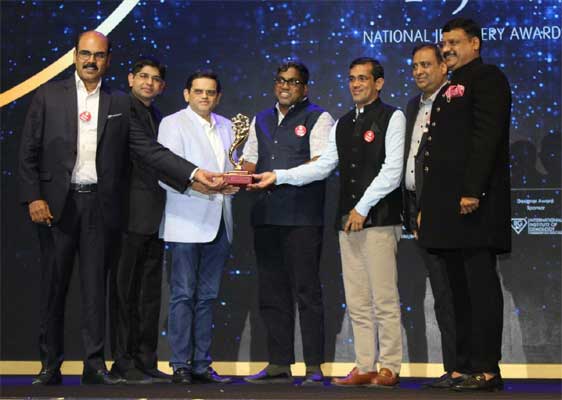
300+ NGOs & Changemakers honoured with the 2nd AMP National Award for Social Excellence 2022!
 

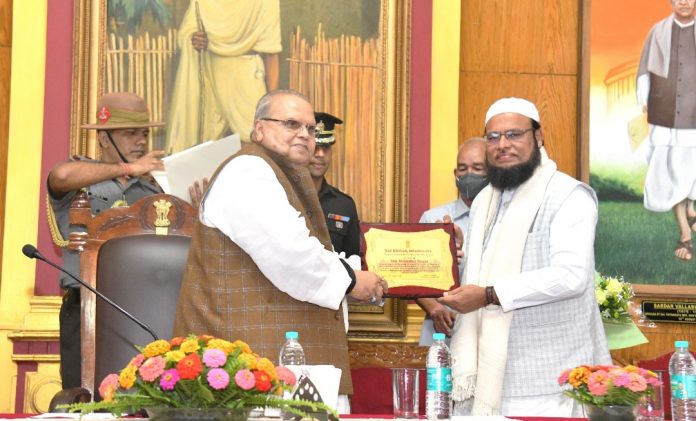
Lifetime Achievement Award presented to Maulana Arshad Madani, renowned Islamic Scholar and President of Jamiatul Ulema Hind, for his immense contribution to the welfare of the people of the country cutting across Community and Religious lines.

Monday, 15th August 2022:

Winners of 2nd AMP National Awards for Social Excellence (NASE) 2022 was announced yesterday, on the evening of Independence Day, 15th August in an eagerly awaited function graced by honourable guests and large gathering of participants from across India.

More than 2000 NGOs and individuals were nominated, out of which close to 380 were shortlisted for the various Awards.

The Lifetime Achievement Award was presented to Maulana Arshad Madani, renowned Islamic Scholar and Principal – Darul Uloom Deoband, for his immense contribution to the welfare of the people of the country cutting across Community and Religious lines.

The Omar Khatani Special NGO Award was given to Sofia Educational and Welfare Society.

14 National level NGOs and 82 State level NGOs were given Best NGO Award. 88 NGOs from different states who performed well but could not make it to the Best NGOs list were given Special Jury Awards

Following are the NGOs (in alphabetical order) who were given the Best NGO Award;

  • Al-Ameen Mission
  • Association of Muslim Doctors (AMD)
  • Hamdard National Foundation
  • Human Welfare Foundation
  • Islamic Centre of India
  • Issa Foundation
  • Jamiat Open School (Jamiat Ulama E Hind Initiative)
  • Millat Foundation for Education Research and Development (MFERD)
  • Modern Educational Social & Cultural Organization (MESCO)
  • Rahman Foundation
  • Rising Beyond The Ceiling
  • Sahayata Trust
  • Society For Bright Future (SBF)
  • Zakat Foundation of India


Apart from NGOs, 116 individuals were honoured with the AMP NASE Change Maker Awards. These are the individuals who went beyond their personal and social limitations and made a difference in the lives of the underprivileged. Some of the notable Change Makers who have been honoured are;

  • Dr Ruha Shadab
  • Prof Farzana Mahdi
  • Dr Aqsa Sheikh
  • Mohammed Atique Sb.
  • Rifat Jawaid
  • Alishan Jafri
  • Ismat Ara
  • Khalida Parveen
  • Khushboo Khan


Er. Syed Sadatullah Husaini, President, Jamaat-e-Islami Hind (JIH) and a Special Guest at the function said “We should emulate the Quranic & Prophet Muhammad’s teachings (PBUH) and work for the welfare of all, irrespective of caste, creed and religion”.

He further said we need to bring Creativity and Innovation in solving people’s problems so that we are able to deliver the benefits to a larger section of the population with lesser resources and in quicker turnaround time.

Dr. Farah Usmani, International Health & Development Expert and Founder – Rising Beyond The Ceiling who works for removing gender biases in India and raise the visibility of women achievers said “Women just need one mentor or a support to encourage them in their quest for excellence. We just need to involve them in various social welfare endeavours and they will be able contribute significantly to the Family and the Society’s growth.” 

Mr. Aamir Edresy, President – AMP, in his keynote address said “The main reason to honour the NGOs and Changemakers doing excellent work is to reach out to them and connect with them for larger welfare goals”.

He further said the AMP believes in Collaboration rather than Competition and added that we would like to learn from the successes of other NGOs working at the local level and help them in implementing the various successful projects of AMP in their geographies so maximum people can benefit.

Mr. Farook Siddiqui, Project Head – NGO Connect and the driving force behind the Awards along with his team, hosted the felicitation programme. He said AMP has been working on NGO Connect since last 5 years and implementing its 3Es projects in – Education, Employment Assistance and Empowerment domains. We decided to honour the NGOs & Changemakers as they are like the Gems & Jewels in the progress of our Nation.

The 10-member jury which selected the winners were led by Dr. Rihan Khan Suri, Pro Vic-Chancellor – Delhi Skill & Entrepreneurship University (Govt. of NCR, Delhi) & Mirza Mobin Beg, Sr. AMP Member and In-charge & Jury Co-ordinator – AMP NASE Awards 2022.

Access the complete list of winners at;
https://ampindia.org/AMP_National_NGO_Award_2022

The Felicitation and Awards programme would not have been possible without the hard work of the AMP NGO-Connect team and the numerous AMP State & Chapter Heads and coordinators as well as the AMP Central Office staff from Mumbai.

About AMP: 

Association of Muslim Professionals (AMP) is a non-profit organization of professional Muslims who have come together to perform their bit for the welfare of the of the Society and the Nation through Educational and Economic Empowerment. AMP is a Section 8 Company (Non-Profit) registered under Companies Act 2013, with the Ministry of Corporate Affairs (MCA).

The above objectives are achieved by providing assistance to needy Individuals – Females & Males, irrespective of Caste, Creed and Religion.

source: http://www.ampindia.org / AMP, Association of Muslim Professionals / Home / August 15th, 2022

Rare manuscripts at Telangana institute to get new life with Iran’s help

Hyderabad, TELANGANA :

Telangana and Iran entered for the repair, conservation, digitalization and cataloguing of Urdu and Persian historical manuscripts and documents.

Hyderabad: 

The Telangana State Archives and Research Institute on Wednesday entered into a Memorandum of Understanding (MoU) with Noor International Microfilm Centre, Culture House of the Islamic Republic of Iran, New Delhi for the repair, conservation, digitalization and cataloguing of Urdu and Persian historical manuscripts and documents, a common heritage between India and Iran.

The Telangana State Archives and Research Institute has a collection of rare and historical records dating back to 1406 A.D. pertaining to the Bahmani, Qutb Shahi, Adil Shahi and Mughal dynasties that ruled over the region.

The Institute houses more than 43 million documents, of which eighty percent of the records are in the classical Persian and Urdu languages owing to them being the official languages of the erstwhile dynasties of the Hyderabad Deccan region.

The records also include the original copies of GOs, gazettes etc of unified Andhra Pradesh from 1956 to 2014.

India and Iran have enjoyed a shared history which has influenced both cultures and civilisations. The documents housed in the Telangana State Archives are important historical artefacts of both countries.

This initiative, carried out by the Noor International Microfilm Centre which is housed in the Culture House of the Embassy of the Islamic Republic of Iran in New Delhi, will bring millions of historical documents to life, and give future generations a glimpse of the state’s rich heritage.

It will also be a valuable asset for scholars from other countries who collaborate with Telangana State Archives for their research on the medieval and modern history of India and Telangana.

The entire process will be done at no cost to the state and will be entirely borne by the Government of the Islamic Republic of Iran.

The MoU exchange ceremony took place at T-Hub Phase 2.0, in the presence of Telangana IT minister K.T. Rama Rao and Ambassador of the Islamic Republic of Iran, Dr Ali Chegeni

source: http://www.siasat.com / The Siasat Daily / Home> News> Telangana / by News Desk / September 07th, 2022

Watch Mahboob Khan’s journey: A hidden gem in India’s combat sports

Hyderabad, TELANGANA :

Hyderabad: 

Although known primarily for its food and culture, Hyderabad is fast emerging as a centre for Mixed Martial Arts (MMA). All over the country, those looking to make their mark in the sport make the city their home as the Hyderabad MMA Gym on Kali Khabar Road in Chaderghat churns out well-rounded, technically sound fighters. The man responsible for this, Head Coach Shaik Khalid, creates fighters adept at grappling and striking.

Among his earlier students is India’s first gold medallist in the sport, Mahboob Khan. Originally from Gulbarga, Karnataka, he moved to Hyderabad with his family at the age of 10. To help make ends meet, he began working from a very young age at an onion shop in Madannapet. His work ethic improved even further as helped provide for his family.

But a chance visit to Shaik Khalid’s gym would change his life as Khalid recognized that Mahboob incorporated the same discipline from his previous jobs into his training.

Seeing this potential, Khalid asked Mahboob to quit his job and paid for his daily expenses. The result has been a gold medal on the international stage and more than 10 within the country’s domestic scene. He hopes to also make a professional debut soon. Do check out Siasat.com’s mini-documentary about Khan’s journey.

source: http://www.siasat.com / The Siasat Daily / Home> News> Hyderabad / by Daneesh Majid / September 05th, 2022

Remembering Muslim Heroes Of Indian National Army

INDIA :

On this day, 80 years ago, in 1942, Rash Behari Bose founded the Indian National Army (INA) also known as the Azad Hind Fauj, which he later handed over to Subhash Chandra Bose. Rash Behari Bose continued to serve as the INA’s supreme advisor under Subhash Chandra Bose.

The Muslims of India, especially those settled in Rangoon and surrounding areas gave their lives and fortunes to the INA for the sake of the freedom of India. The efforts by Muslim soldiers and the business community at times made Subhash Chandra Bose praise them in unprecedented words. It’s a well-documented fact that numerous Muslim troops and officers are said to have received from Netaji the Tamgha-e-Sardar-e-Jang, Tamgha-e-Vir-e-Hind, Tamgha-e-Bahaduri, Tamgha-e-Shatru Nash, Senad-e-Bahaduri, and other decorations.

Following is the list of 12 such people who became legends due to their contribution and struggle in the INA.

Captain Abbas Ali

Freedom Fighter Captain Abbas Ali was born in Bulandshahar district of Uttar Pradesh on January 3, 1920. Abbas fought for the liberation of our country as a captain in the Indian National Army. Capt. Abbas was inspired by the speech of Subhas Chandra Bose in 1943 and decided to commit his life to our country’s freedom. Abbas was detained by the British Army and given a life sentence. But after India became independent, the death penalty was revoked. Captain Abbas Ali breathed his last on 11 October 2014 at Aligarh.

Abdul Habeeb Yusuf Marfani

Memon Abdul Habeeb Yusuf Marfani was a freedom fighter and businessman from the Dhoraji town of Saurashtra, Gujarat. On July 9, 1944, when Subhas Chandra Bose founded INA in Rangoon, Marfani was the first to come forward to contribute financially to the Azad Hind Bank. Soon, the box swelled with contributions from Indian expats in Rangoon and Singapore. Yusuf Marfani was so close to Netaji that he gave Rs 1 crore in cash and Rs 3 lakh in jewellery in 1944, which would be worth almost Rs 800 crore today.

Abid Hasan Safrani

Zain Al-Abdin Hasan was born to an anti-colonist family in Hyderabad on 11th April 1911. He became acquainted with Subhas Chandra Bose when the latter was addressing a meeting of Indian prisoners of war In Germany. Abid became Bose’s close aide and was given the title of a Major in the INA. On the suggestion of Abid, the INA adopted “Jai Hind” as its slogan. After independence, he joined the Civil Service in 1948 and retired as the Ambassador to Denmark in 1969. Aged 73, He passed away in 1984 in his hometown.

M.K.M Ameer Hamza

M.K.M. Ameer Hamza also known as Hamza “Bhai” was born on 22 January 1918 at Ramanathapuram, Tamil Nadu. Ameer Hamza was a member of Subhas Chandra Bose’s Indian National Army and a liberation fighter from Tamil Nadu. As a teenager, he travelled to Burma for trade and there he supported and donated millions of Rupees to INA. The British government detained and questioned him for supporting Netaji’s Army. In his final years, he suffered from poverty and struggled. On January 1, 2016, Ameer Hamza passed away.

General Shah Nawaz Khan

Azad Hind Fauj officer Shah Nawaz Khan was born in Rawalpindi, British India. He joined the INA after the arrival of Subhash Chandra Bose in South-East Asia. Shah Nawaz led the INA troops into North-Eastern India, capturing Kohima and Imphal, which were thereafter held by the INA under Japanese authority. He also created history by being the first Indian to hoist the Tricolor at Red Fort after taking down the flag of the British Empire. Post-independence Shah Nawaz was active in politics, elected four times Lok Sabha from Meerut.

Major General Mohammed Zaman Kiani

Major General Mohammed Zaman Kiani served in the British Indian Army before transferring to the Indian National Army (INA), under the command of Subhas Chandra Bose, where he oversaw the 1st Division. After graduating from the Indian Military Academy with the Sword of Honor, he enlisted in the Punjab regiment. His efforts to the Azad Hind were eventually recognised, and the Indian government posthumously gave him the Netaji Medal. He died on June 4, 1981.

Colonel Nizamuddin

Nizamuddin, whose birth name was Saifuddin, was born in 1901 in the village of Dhakwan (in the current Uttar Pradesh district of Azamgarh. Saifuddin left his house when he was in his early 20s and sailed from Calcutta to the metropolis to join the British army. While he was serving in the colonial army He overheard a British army general urging white soldiers to let the Indian sepoys die but to save the donkeys to carry food for the rest of the force. He shot the officer out of rage at the callousness and injustice of the comments and then fled to Singapore. Nizamuddin was employed as a driver of Subhash Bose, driving the leader everywhere. He also battled alongside Netaji in the forests of Burma between 1943 and 1944 against the British Army (now Myanmar). He was shot three times in 1943 after jumping in front of him (Netaji) and saving his life. He was given the nickname of “colonel” lovingly by Netaji himself.

Colonel Habib ur Rahman

Colonel Habib ur Rahman who co-founded Azad Hind Fauj alongside General Mohan Singh was put in command of the Administration branch at the organization’s headquarters. He oversaw a mission to Burma. Netaji was given the position of Officer in Charge of the Training School after taking over the command of the Azad Hind Fauj. He also took his oath as a minister on October 21, 1943, the day Azad Hind Sarkar was established. Later, he was also named the Deputy Chief of Army Staff, and on August 18, 1945, he accompanied Netaji on his last known trip.

Colonel Inayatullah Hasan

General Mohan Singh named Inayatullah Hasan as the director of Azad Hind Radio. He created well-known nationalistic radio plays that compelled All India Radio to air a competing storyline in India. Later, Netaji named him the head of the training division, where he instructed citizens, including women and children, in the use of weapons.

Colonel Shaukat Ali Malik

The first national flag to fly over free Indian land was flown by Colonel Shaukat Ali Malik. At Moirang in Manipur on April 14, 1944, Malik, the commander of the Bahadur Group of the Azad Hind Fauj, raised the flag. Moirang was the first region in India to be taken over by the INA and the first location on the Indian subcontinent that the Azad Hind Government controlled. Malik received the Sardar-e-Jung for leading his soldiers in this capture. After establishing a civilian administration, intelligence agents were dispatched inside enemy territory. One of the highest military honours of Azad Hind Fauj, the Tamgha-e-Sardar-e-Jang, was bestowed upon him by Netaji.

Colonel Mehaboob Ahmad

The connection between Azad Hind Sarkar and Azad Hind Fauj was Colonel Mehaboob Ahmad. He served as Major General Shahanwaz Khan’s counsellor throughout the campaigns in Arakan and Imphal

Karim Ghani

Before Netaji arrived from Germany, Karim Ghani, a Tamil journalist who resided in Burma, served as the leader of the Indian Independence League. He took an oath to serve as one of the six advisors when Azad Hind Sarkar was established. Karim Ghani served as Dr Ba Maw’s parliamentary secretary in Burma prior to the Second World War. He served as the manager of “The Muslim Publishing House,” the editor of the Malayalam daily Malayan Nanban, and the editor of the Malay edition of Dawn, under the name Sinaran, as president of the All Malaya Muslim Missionary Society (AMMMS) and a representative in a number of other organisations, Ghani was also active in the Muslim League.


Written by Talha Hussain Gulbargavi for Kalam Research Foundation.

source: http://www.thecognate.com / The Cognate / Home> History / by Talha Hussain Gulbargavi / September 02nd, 2022

Meet Haji Shariatullah who was source of inspiration for freedom fighters

BRITISH INDIA:

His preachings and Farazi movement not only helped the people in fighting against the anarchy, but also provoked the desire for freedom among them

 Haji Shariatullah

Haji Shariatullah, who militantly led Farazi Movement that stood as a source of inspiration for several revolutionaries in the Indian Freedom Struggle, was born in 1780 in Bahadur / Banderlakola village, Faridpur district in Bengal. His father Abdul Zaalib was a weaver.

When Haji Shariatullah was 18 years old, he went on a pilgrimage to Makkah, where he studied spiritual scripts extensively and became a scholar.

In Makkah, Haji Shraiathullah met Syed Ahmed Barelwi, the founder of the Wahabi movement and the warrior Syed Mir Nisar Ali (Titu Mir) who added militancy to the Wahabi movement in India. The trio decided their path of movement before leaving for India. As a result of their decisions, Haji Shariatullah reached Faridpur in 1802.

After returning to the motherland, he settled in Nawabari Village near Dhaka (presently the capital of Bangladesh). While imparting spiritual knowledge, he used to encourage the people towards the movement to emancipate the country from the yoke of British Raj. His movement was known as the ‘Farazi Movement’ and his followers were known as ‘Farazis’ in the history.

When he travelled extensively in Bengal, he saw the woes of peasants and artisans who were being exploited by the officials of the East India Company, Zamindars and the Mahajans. Haji Shariathullh decided to liberate the people from these problems and took to the path of revolution. He garnered support from the farmers, artisans and different classes of people. Haji Shariathulla fought on behalf of the people, against the English rulers, Zamindars and English plantation owners and succeeded several times.

As Shariatullah was very cautious in legal matters, the Courts and the laws could not trouble him. Haji Shariatullah’s preachings and Farazi movement not only helped the people in fighting against the anarchy, but also provoked the desire for freedom among them. Farazi movement was active for about half a century and later it continued to influence the freedom movement for another half a century. Haji Shariatullah, the guiding light of the Farazi movement, passed away in 1839.

Syed Naseer Ahamad is a Telugu writer and journalist who has written several books on the role of Muslims in the struggle for the freedom of India. Many of his books have been translated into other languages. He can be contacted at naseerahamedsyed@gmail.com and cellphone number 91-9440241727.

source: http://www.siasat.com / The Siasat Daily / Home> Opinion / by Syed Naseer Ahamed / posted by Sameer / September 02nd, 2022

Renowned historian and academician Prof. B Sheikh Ali passes away in Mysuru

Mysuru, KARNATAKA :

pix: facebook.com

Mysuru:

Prof B Sheikh Ali, a veteran historian, academician and former Vice-chancellor of Goa and Mangaluru Univeristiy  has passed  away at a private hospital in the city on Thursday. He was 98.

He was a resident of third Cross, seventh main, Saraswatipuram in the city.

He is survived by his son, daughter and relatives and friends. The mortal remains will be taken to Muslim Hostel, Saraswatipuram, Mysuru for Deedar, followed by burial at main Khabrasthan behind Mysore Jail at Tipu Circle.

Sheikh Ali, B was an eminent historian and his contribution to the theory of history and its application to the ground realities of Karnataka is marvelous.

He was a student of University of Mysore and retired from the same institution as a professor of History.

A brief  profile

Academic Distinctions

1. B.A. (Hons.) of Mysore University, I Rank, Gold Medalist, 1945.
2. MA. II Rank, Mysore University, 1946.
3. Ph.D., Aligarh Muslim University, 1954.
4. Ph.D., London University, 1960.
5. General President, Indian History Congress, 47th session, 1986.
6. President, Indian History Section, XXVIII International Congress of Orientalists, Canberra, Australia, 1971.
7. Founder President of Karnataka History Conference.
8. President, South India History Congress, 1985.
9. Delegate to the International Seminar at Ankara, Turkey, 1982.
10. Delegate to the International Seminar at Sofia, Bulgaria, 1986.
11. Delegate to the International Seminar, Moscow, Soviet Union, 1989.
12. Delegate to the International Seminar at Ras-al-Khairna, UAE, 1990.
13. Invited as Consultant to set up Indian Studies Departments and to teach at the University of Georgia, U.S.A. 1976-7.
14. Author of over 100 papers and 40 books.

Awards Conferred

1. Golden Jubilee Award of Mysore University for research in Humanities and Social Sciences.
2. Rajyotsava award of Karnataka State as Distinguished Educationist.
3. Mythic Society of India Award as Distinguished Historian.
4. Maulana Jauhar Award, 2003.
5. Sir Syed Award by American Federation of Muslims of Indian Origin (AFMI) -2004.
6. Canara Bank Award.
7. D.Litt. (Han. Causu) Kannada University, Hampi, 1998.
8. D.Litt. (Hon. Cause) Karnataka State Open University, Mysore.
9. D.Litt. (Han. Causa) Tumkur University, Tumkur.
10. D.Litt. (Han. Causa) University of Mysore, Mysore.
11. Government of Karnataka Award for Social Service.
12. Al-Ameen All-India Community Leadership Award, 2008.

Membership of Prestigious Bodies

1. Member, South and West Asian Regional Branch of the International Council of Archives, New Delhi.
2. Member of the Review Commission of the Karnataka Universities, Bangalore (1992-1994).
3. Member, Indian Historical Records Commission, New Delhi.
4. Member, All India Educational Movement, New Delhi.
5. President of the Cell to draft a project for a new University for the Muslim, New Delhi.
6. Former Member, Dr. Zakir Hussain Memorial Trust, New Delhi. (Prime Minister of India is its Chairman).
7. Member of the Value-Orientation of Education Committee, Planning Commission, New Delhi.
8. Founder Vice-Chancellor of two new Universities, Mangalore and Goa.

Abroad Tours

Great Britain, France, Germany, Switzerland, Portugal, Soviet Union, United States of America, Canada, Turkey, Egypt, Saudi Arabia, United Arab Emirates, Australia, Malaysia, Brunei and Singapore.

Social and Educational Activities 

As the Founder President of Sultan Shaheed Educational Trust, Mysore he established the following institutions.

a) Deeniyat Madrasa : Ghousianagar, Mysore.
b) Belagodu Abdul Sattar Nursery School: Ghousianagar, Mysore.
c) Sultan Shaheed Lower Primary School: Urdu Medium, Ghousianagar, Mysore
d) Sultan Shaheed Higher Primary School: English Medium, Ghousianagar, Mysore.
e) Sultan Shaheed Women’s Tailoring Centre: Ghousianagar, Mysore.
f) Sultan Shaheed Women’s Craft Centre: Ghousianagar, Mysore.
g) Sultan Shaheed Clinic for Women and Children (Charitable): Ghousianagar, Mysore.
h) Azad National Nursery School: Radhakrishna Nagar, Mysore.
i) Azad National Lower Primary School: (Kannada Medium), Radhakrishna Nagar, Mysore.
j) Maulana Azad Girls High School: (English Medium), Radhakrishna Nagar, Mysore.
k) Maulana Azad B.Ed., College: Radhakrishna Nagar, Mysore.
l) Maulana Azad D.Ed., College: Radhakrishna Nagar, Mysore.
m) Maulana Azad AFMI PUC College: Radhakrishna Nagar, Mysore.
n) Maulana Azad Hostel for Girls: Radhakrishna Nagar, Mysore.
o) School for Challenged Children: Ghousianagar Mysore.

He was president of Mountain View chain of institutions in Chikmangalur, Karnataka, where in a sprawling campus of 35 acres of land classes run from Nursery to Degree level with 2500 children with facilities of Hostel both for boys and girls.

As the President of Muslim Education Society in Mysore, he established a dozen Nursery and Primary Schools which have now been upgraded to First grade College level.

He was also president of Central Muslim Welfare Council, Mysore, and  instituted Micro-Finance Credit Scheme benefiting hundreds of poor Muslim women and their families, together with coaching classes both for High School and PUC classes.

He was Editor-in-Chief of Premier Urdu print media of Karnataka, Daily SALAR and Weekly SALAR.

As the President of the New Muslim Hostel Mysore, he completed the following projects:

a. Utility Block
b. Dormitory Block
c. Prayer Hall
d. Commercial Complex, 1st Main, Saraswathipura, Mysore, facing western side.
e. Another Commercial Complex on the same road facing eastern side.

Publications :

He authored  following books:

1) A Leader Reassessed, Life and work of Sir Syed Ahmed Khan: Mysore, 1999.
2) Abul Kalam Azad, Vision and Action: Hyderabad, 2008.
3) Tipu Sultan, a Study in Diplomacy and Confrontation: Rao and Raghavan, Mysore, 1982.
4) Tipu Sultan: National Book Trust of India, New Delhi, 1972.
5) Tipu Sultan, a Great Martyr: Bangalore University, 1993 (Edited).
6) British Relations with Hyder Ali: Rao and Raghavan, Mysore, 1963.
7) Dr. Zakir Hussain, Life & Times, a Comprehensive Biography: Vikas, New Delhi, 1991.
8) Education and National Development: Translation of Dr. Zakir Hussain’s Talimi-Quthbat: New Delhi, 1993.
9) A Great Teacher: Life & Work of Dr: Zakir Hussain: Prasaranga, Mysore, 1997.
10) Makers of Indian Literature series, Dr. Zakir Hussain: (Co-author with Khursheed Alam Khan), Sahitya Akademi, New Delhi, 1991.
11) History: Its Theory and Method: Macmillan Company of India, 1978.
12) Islam, A study in Cultural Orientation: Macmillan Company of India, New Delhi, 1982.
13) Essence of Islam: Mysore, 2004.
14) Comprehensive History of Karnataka: Vol. IV & V Hampi, 1998.
15) Gangas of Talkad: Volume under History of Karnataka, Prasaranga, University of Mysore, Mysore, 1975.
16) The Hoysala Dynasty (Edited): Prasaranga, University of Mysore.
17) A Short History of World Civilization; Prasaranga, University of Mysore.
18) Essentials of Indian Culture Prasaranga University of Mysore.
19) History of Modern Asia: Mysore, 1976.
20) History of South India: Prasaranga, University of Mysore, 1977.
21) Approaches to Harmony, Mysore University, 1994 (Edited).
22) Goa Wins Freedom: Reflections and Reminiscences: Goa, Daman and Diu Silver Jubilee Celebration Volume, Edited, Goa University Publication Series, Goa University, Bambolim, Goa, 1986.
23) Javeed Nama of Allama Iqbal: (English Translation), Knowledge Society Publications, Mysore, 2008.
24) Moulana Jalaluddin Rumi: Knowledge Society Publications, Mysore, 2008.
25) Imam Ghazali: Knowledge Society Publications, Mysore, 2009.
26) Hafiz-e-Shiraz: Knowledge Society Publications, Mysore, 2009.
27) Shaikh Sa’di: Knowledge Society Publications, Mysore, 2009.
28) Umar Farooq: Knowledge Society Publications, Mysore, 2010.
29) Moulana Altaf Hussain Hali: Knowledge Society Publications, Mysore, 2010.
30) Mirza Asadullah Khan Ghalib: Knowledge Society Publications, Mysore, 2011.
31) History of Bahmani and Bijapuri Rulers: Mysore Book House, 2011.
32) My life, (Autobiography): Knowledge Society Publications, Mysore, 2009.

Urdu Publications

1) Hind ki Maya Naz Hastiyan: Urdu, Development Bureau, New Delhi, 1992.
2) Roshan Nuqoosh : Tamilnadu Urdu Publications, Madras, 1995.
3) Irtikh-e-Kayinath aur Insan: Urdu Development Bureau, New Delhi, 1998.
4) Alam-e-Islam-ke-Jawahar-pare: Urdu Vols. Dar-ul-Umoor, Mysore, 2004.
5) ilm-e-Tarikh kay Mukhtalif Goshe : Dar-ul-Umoor, Mysore, 2008.
6) Armughan-e-Salar : Salar Publications, Bangalore – 2008.
7) Anwar-e-Iqbal: Salar Publications, Bangalore – 2011.
8 Noor-e-Baseerath: (26 Special Numbers) (1997-2008).

source: http://www.muslimmirror.com / Muslim Mirror / Home>Obituary / by Muslim Mirror Staff / September 01st, 2022

Canadian city Markham names street after A.R. Rahman

Chennai, TAMIL NADU :

The celebrated music composer says the honour has made him more committed to working hard.

After Markham, a city in Canada, honoured A.R. Rahman by naming a street after him, the celebrated music composer said he now feels more committed to working hard and inspiring people.

Rahman, who completed three decades in the Indian film industry earlier this month, penned a note of gratitude for the authorities of Markham in Ontario, Canada, on Twitter.

“I never imagined this ever in my life. I am very grateful to all of you, the Mayor of Markham, Canada (Frank Scarpitt) and counsellors, Indian Consulate General (Apoorva Srivastava) and the people of Canada…” his tweet reads.

“I feel like this gives me immense responsibility to do much more and be inspiring, not so get tired and not to retire yet. Even if I get tired I’ll remember that I have more things to do, more people to connect, more bridges to cross,” the multiple award-winning musician said.

The 55-year-old, currently in Canada for his musical tour, also shared pictures from the inauguration ceremony on the microblogging site on Sunday. The city of Markham had announced that a street would be named in Rahman’s honour back in November 2013.

“The name AR Rahman is not mine. It means merciful. The merciful is the quality of the common God we all have and one can only be the servant of the merciful. So let that name bring peace, prosperity, happiness and health to all the people living in Canada. God bless you all,” he added.

Rahman also thanked the people of India and his collaborators. “I want to thank my brothers and sisters of India for all the love. All the creative people who worked with me, who gave me the inspiration to rise up and celebrate hundred years of cinema; with all the legends included. I am a very small drop in the ocean,” the composer said.

His upcoming releases include films such as “Cobra” and “Ponniyin Selvan: I”.

source: http://www.telegraphindia.in / The Telegraph Online / Home> Entertainment /by PTI / New York / August 30th, 2022

CP Rizwan, electrical engineer from Kerala is UAE’s T20 captain for Asia Cup

Thalassery, KERALA / U.A.E :

CP Rizwan moved to the UAE in 2014 after not getting a Ranji Trophy game. Will be special if we get to play against India, he says.

From not being able to get a game for his state in the Ranji Trophy to leading a national team, Rizwan’s cricketing fortunes have changed for the better.

CP Rizwan’s cricket career didn’t really take off and the electrical engineer from Kerala, like many from his state, migrated to the gulf after landing a job in Sharjah.

Eight years later, the 34-year-old has made it big – on the field. On Thursday, the Emirates Cricket Board named Rizwan the skipper for the Asia Cup qualifiers. If Rizwan’s United Arab Emirates (UAE) win the qualifiers, they will be in the same group as heavyweights India and Pakistan.

“It will definitely be special if we qualify and get to play against India. But we just want to focus on one step at a time,” Rizwan told The Indian Express The UAE, Kuwait, Hong Kong and Singapore will be fighting for the one spot available in the group stage.

From not being able to get a game for his state in the Ranji Trophy to leading a national team, Rizwan’s cricketing fortunes have changed for the better.

Rizwan, leg-spinner turned batsman, hails from Thalassery, a cricket hub with a history that dates back to the British Raj. He made a name for himself in age-group cricket and represented Kerala in U-19 and U-23 levels. He also toured South Africa with a Kerala team that included the likes of Sanju Samson. But he could not progress further because he took a break from the sport to complete his engineering degree. He tried to make a comeback after completing his studies but was not able to replicate his age-group success at the senior level. He was named in the Ranji Trophy squad but remained on the bench.

Migrating to the UAE for a job also gave Rizwan’s cricket career a new lease of life, and it has reached new heights now. On Sunday, he walked out to lead the UAE against Kuwait in their first qualifier game.

Last year, Rizwan scored his first international century (109) in an ODI against Ireland when the team was under pressure at 51 for 3. He added 184 runs for the fourth wicket along with Muhammad Usman. The two centurions helped the UAE chase down 270 with six wickets in hand and an over to spare.

“I am happy and honoured to lead the UAE national team. We have been doing well in T20 tournaments. Our players play a lot of T20 games here in the domestic circuit also. But having said that, we have to execute the skills in the right way on the given day,” Rizwan said.

In former India all-rounder Robin Singh, the UAE have an experienced coach to guide their newly-appointed skipper.

“We have been working really hard under coach Robin Singh. He is a person with a great work ethic and that quality has rubbed on to the players also. We have been training well and hopefully, everything will fall into place,” Rizwan, who has played 29 ODIs and seven T20Is for UAE, said.

The electrical engineer, who graduated from Cochin University of Science and Technology, had an opportunity to return home when he got a job with the postal department but he decided against moving back.

His performances in the domestic matches in UAE for teams like Yogi Group, Bukhatir XI and Interface, eventually opened the doors to the UAE national team. After fulfilling the requirement of residing in the UAE for four years, Rizwan made his debut for his adopted country in an ODI against Nepal in January 2019.

“Yes, it could be said that my decision (to stay in the UAE) has been vindicated. I just want to say thanks to all the coaches, friends, family and relatives and the almighty who helped me in this journey,” said Rizwan.

Biju George, the former India women’s fielding coach, has seen Rizwan from his under-23 days for Kerala.

“Rizwan is a fully dedicated player. He is a confident and street-smart player, I think, he can be an asset to the UAE team as their captain,” George said.

The UAE opted for split captaincy and Ahmed Raza, who was the captain in all formats, now leads the team in ODIs.

source: http://www.indianexpress.com / The Indian Express / Home> Sports> Cricket / by Narayanan S, Kochi / August 22nd, 2022

Nawab Mir Osman Ali Khan: The other side of his persona

HYDERABAD :

The 7 th and the last Nizam of Hyderabad Nawab Mir Osman Ali Khan (Born: 6-4-1886; Died: 24-2-1967) was said to be the richest man in the world and was known for his noble deeds and rich contributions in various fields such as education, medicine, engineering, social service, architecture, heritage, poetry, art and culture. He ascended the throne on 29 August 1911 at the age of 25 and ruled the Hyderabad State between 1911 and 1948. It is amazing that he used Jacob diamond, a 185 carat gem the size of a lime worth 50 million pounds equal to around Rs. 480.00 crores in Indian currency, as a paperweight. It is said that despite of his enormous wealth, he used to spend very little for his own self and led a simple life. He never indulged in extravaganza and denounced all kinds of luxuries. This couplet reflects the persona of Nizam, a well known poet himself:

“Tumhari umar youn hi raayegaan guzri hai ay Osman
Na tum ko dast ghaib aayaa na tum ko keemiya aayee.”

People are benefitted even today with what he left behind him. Be it Osmania University or Osmania Hospital, Charminar Nizamia Tibbi Hospital, NIMS, Assembly building premises, Jubilee Hall, Hyderabad Museum (State Museum), High Court Building, Kacheguda Railway Station, Begumpet Airport, Asafia Library (State Central Library), Moazzamjahi Market, State Bank of Hyderabad (now merged in SBI) , Osman Sagar, Himayat Sagar, Nizam Sagar, Nizam Sugar Factory, etc. He constructed Hyderabad House in Delhi now used for diplomatic meetings by Govt. of India, Rubaat in Saudi Arabia for the convenience of Haj and Umrah pilgrims from Telangana and parts of Karnataka and Maharashtra – part of erstwhile princely State of Hyderabad. He was a great visionary and is called “Architect of Modern Hyderabad.” One would wonder on coming to know that the Nizam had provided financial aid for construction / reconstruction and maintenance of the worship places of not only Muslims but also of Hindus, Sikhs, Christians and Parsees apart from extending monthly honorarium to the priests of a number of temples, churches, Imams and Moazzans of mosques within and outside the country. Notable among them is Balaji Temple in Tirupati of Andhra Pradesh now popularly known as Tirumala Tirupati Devasthanam (TTD), Sitarambagh Temple, Hyderabad, Yadagirigutta temple in Bhongir, Thousand Pillar Temple at Warangal, grand mosques at Makkah and Madinah. He had also extended monetary contribution for construction of Hindu Banaras University, Andhra University, University of London, etc. His farmaans releasing financial aid to these places of worship and Universities are still available with Archives Department in Hyderabad.

It is not known how many devotees or those who are associated with the famous TTD or other such temples today are aware of this fact or for that matter even very few Muslims knows that the Nizam shouldered the maintenance responsibility of Holy mosques of Makkah and Madinah and bore the expenses thereof. King Saud of KSA visited Hyderabad in 1954 to meet the Nizam and thanked him personally for his monetary help. Likewise, it is doubtful whether the products of Banaras Hindu University and Andhra University or those who are associated with these Universities have ever taken pains to know the important contributions of the Nizam for their establishment. He funded for compilation of Indian epic “Mahabharatha”. He sanctioned scholarships to the students pursuing their studies abroad without any discrimination. Sarojini Naidu, freedom fighter was one of the beneficiaries. He sanctioned establishment of Hyderabad Telugu Academy in 1940. People from all walks of life lived together peacefully and happily during his reign. He never discriminated anybody on the basis of religion, caste or creed. He gave equal rights and respect to one and all. The following verses of his poetry endorse this:

“Aish wa ishrath ki hai jo dhoom Dakan mein Osman

Sab ye kahte hain tere bakht ki bedari hai

Zamana kehta hai laag Osman
Har ek ko aas hai tere hi dar se.”

It is said that the Nizam was a very kind hearted king, he could not endure the hardship and sufferings of his people. One day he visited Osmania hospital to console a patient where he saw a poor man with no legs crawling over the earth. This miserable condition of the poor man pained him very much. Soon after initiating necessary consultations and discussions in this regard, he immediately purchased the land at Panjagutta and arranged for construction of orthopedic hospital with an estimated cost of Rs. 30 lakhs, now known as Nizam Institute of Medical Sciences (NIMS). Similarly the Great Musi floods of 1908 locally known as “Thugyani Sitambar” (in which about 50,000 people said to have died, the floods razedover 80,000 houses making a fourth of the population shelterless) prompted the Nizam to invite Sir M. Visvesvarayya, an Indian Civil Engineer and a Statesman to advise and assist in the reconstruction of the city and to devise measures for the prevention of the recurrence of such a terrible catastrophe. Thus, the twin lakes of Hyderabad viz. Osman Sagar and Himayat Sagar were built up.

The pity is when he negated the proposal of merging the Princely State of Hyderabad into Indian Union, Operation Polo widely known as “Police Action’ took place in 1948 during the subsistence of “Stand Still Agreement” and none came to his rescue. The Nizam said to be very close to Mahatma Gandhi, but, unfortunately the latter was already gunned down, by then. The Nizam was completely betrayed and left alone. The plight reflects in the following verses of his own poetry (Ghazal) :-

“Is se bhi bud naseeb hai Osman koi bhala
Jo shaqs haer pher mein duniya ke rahgaya
Osman hamara rang badalta kabhi nahin
Paband apni wiza ke apne chalan ke hain
Thu jaanta hai unko matlab ke hain ye Osman
Aghyaar se tho har aan hashiyaar raha karna
Osman thu kar chuka hai hazaron ka imtehaan
Besharam hoon jo ke aise bahut kam bashar mile.”

Princely State of Hyderabad amalgamated into Indian Union in September 1948. The Nizam was appointed as Raj Pramukh of Hyderabad State by the Government of India in Jan, 1950. Even after the end of his kingdom, the Nizam continued to support all the social, educational and welfare activities. He donated 5 tons of gold to the Union Government during the war with China in 1965 (Sino-Indian War). Yet, he is termed anti-national, anti-people and discriminative by fascist forces with biased mind. The above are just a few of his priceless and precious achievements and contributions narrated here out of many. Otherwise the list is very huge. Unfortunately, many of his contributions and generous deeds seems to have been suppressed selectively, of which the people obviously are unaware of and projected the Nizam otherwise with distorted facts. Here, the following verses of his poetry stand testimony to the situation:

“Naheen kuch aetebaar ohad wa paymaa
Wafa ki kya ummeed is bewafa se
Ye housla ye kaleja ye dil hamara hai
Ke baare ishq tumhara hamee uthathe hain
Andaaz ye sitam ke tujhe the kahan naseeb
Meri wafa ne tujhe jafakaar kar diya.”

A demand is made every year to declare September 17 as a ‘Liberation Day’ on the pretext that Telangana is liberated from the clutches of the private army of Razakars led by Qasim Razwi and Nizam’s army who jointly said to have committed excesses on unarmed and innocent citizens of Hyderabad State between 1946 and 1948, which is certainly condemnable. It means prior to and till 1946 ever since he accede the Kingship in September, 1911 i.e. for 35 years of his long rule, there were no complaints. And these disturbances erupted in his last period of tenure perhaps due to various circumstances and factors prevalent during that period in the country and which were beyond control. Indian independent struggle was at peak, widespread riots, rampant bribery and chaos in the Nizam Government weakened the grip of Nizam over administration, the seeds of hatred were being sown under the guise of Arya Samaj Vyayama Shalas in Hyderabad State against the Government to destabilize it which led to communal violence in the hitherto peaceful living people cutting across their religious beliefs and practices which is known for “Ganga Jamuni Tahzeeb”. Coupled with Razakars brutalities then, it has ultimately led to revolt against Nizam and his rule from within the State. However, history is evident that there was no such kingdom in India or elsewhere then, which was spotless and entirely free from such instances of hatred and bloodshed. And not to speak of the World’s largest democracy we are living in today where communal clashes, murders, rapes, large scale robberies, white collar scams and so on have become the order of the day. Gandhi is abused and Godse is praised by the so called nationalists. Nizam was not a foreigner nor had he invaded Hyderabad State. What is going on today, it seems, the Nizam sensed it during his lifetime itself and predicted thus :

Mizaaje yaar mein jaaniye kya ab samaayee hai

Ke mere roobaru meri buraayee hothi jaathi hai”

In yet another stanza he writes (at the face of the fascists) :

“Na aaya aur kuch hum ko agar aayee wafa aayee

Magar haan tujh ko ay zaalim sitam aaya jafaa aayee

Ilaahi, khair ho badle huve hain yaar ke tewar

Sitam aayaa, ghazab aaya, bala aayee, qaza aayee.”

The unparalleled services rendered by the Nizam for the cause of people, society and the nation as a whole can not be ignored under the pretext of the riots perpetrated by Razakars, which neither can be attributed to him in the light of his above multi facet and true secular characteristics with undisputed patriotism.

Narrating an event where Nizam had complied with the Order of the Independent High Court with due respect to the judiciary, which ruled in favour of his family with regard to award of enhanced compensation in some property dispute, the Chief Minister of Telangana, Mr. K. Chandraserkhar Rao, has praised the Nizam on the floor of Assembly and declared that he is proud of his King H.E.H. the Nizam VII Mir Osman Ali Khan for his splendid works done for the welfare of people. However, a real tribute to Nizam’s golden era in recognition of the yeomen services rendered by him for the cause of humanity and the society at large in all spheres of life shall be to observe his birth anniversary the 6 th April of every year at Government level officially, as a mark of respect.

Let me conclude with Jigar Muradabadi’s following couplet of poetry:

Un ka jo kaam hai’ woh ahle siasat jane: Mera paighaam mohabbat hai jahaan tak pahunche.” (What their job is, let the politicians be bothered about.My message is ‘love’, may it reach the whole world)

***

shaikismail358@gmail.com

Courtesy: Shoukath-e-Osmania, Pundit Sunderlal Committee Report and other source of information.

source: http://www.muslimmirror.com / Muslim Mirror / Home> Indian Muslim> Positive Story / by Shaik Ismail / August 19th, 2022

These 85 soldiers started the 1857 Revolt

On 24 April, 1857, Colonel G.M.C Smith of 3rd Regiment, Light Cavalry, at Meerut asked his troops to load the cartridges in Enfield rifles. 85 out of the 90 Indian troops of the Regiment declined receiving the cartridges on account of usage of beef or pig fat in those. All the 85 Indians were sentenced to prison and their case was forwarded to Major General Hewit.

We are publishing the name of all these 85 Indian sepoys who defied the English command and thus triggered the first national war of Independence from Meerut.

  1. Mataa-Deen (Havildar)

Naiks:

  1. Sheikh Peer Ali
  2. Ameer Qudrat Ali
  3. Sheikh Hasan ud-Deen
  4. Sheikh Noor Muhammad 

Sepoys:

  1. Sheetal Singh
  2. Jehangir Khan 
  3. Meer Mosim Ali
  4. Ali Noor Khan
  5. Meer Husain Bakhsh
  6. Muttra Singh
  7. Narain Singh
  8. Lal Singh
  9. Sewdeen Singh
  10. Sheikh Husain Bakhsh
  11. Sahibdad Khan
  12. Bishan Singh
  13. Baldeo Singh
  14. Sheikh Nandoo
  15. Nawab Khan
  16. Sheikh Ramzan Ali
  17. Ali Mohammad Khan
  18. Makhan Singh 
  19. Durga Singh 
  20. Nasurullah Begh
  21. Meerahib Khan 
  22. Durga Singh (2nd)
  23. Nabi Bakhsh Khan
  24. Jurakhan Singh 
  25. Nadju Khan
  26. Jurakhan Singh (2nd)
  27. Abdullah Khan
  28. Ehsan Khan
  29. Zabardast Khan
  30. Murtaza Khan 
  31. Burjuar Singh
  32. Azimullah Khan 
  33. Azimullah Khan (2nd)
  34. Kalla Khan 
  35. Sheikh Sadullah
  36. Salar Bakhsh Khan
  37. Sheikh Rahat Ali
  38. Dwarka Singh 
  39. Kalka Singh 
  40. Raghubir Singh
  41. Baldeo Singh 
  42. Darshan Singh 
  43. Imdad Husain 
  44. Peer Khan 
  45. Moti Singh 
  46. Sheikh Fazal Imam
  47. Sewa Singh 
  48. Heera Singh 
  49. Murad Sher Khan
  50. Sheikh Aram Ali
  51. Kashi Singh 
  52. Ashraf Ali Khan 
  53. Qadardad Khan
  54. Sheikh Rustam
  55. Bhagwan Singh 
  56. Meer Imdad Ali
  57. Shiv Baksh Singh 
  58. Lakshman Singh
  59. Sheikh Imam Bakhsh
  60. Usman Khan 
  61. Maqsood Ali Khan
  62. Sheikh Ghazi Bakhsh
  63. Sheikh Ommaid Ali
  64. Abdul Wahab Khan
  65. Ram Sahai Singh
  66. Parna Ali Khan 
  67. Lakshman Dubey
  68. Ramswaran Singh
  69. Sheikh Azad Ali
  70. Shiv Singh
  71. Sheetal Singh
  72. Mohan Singh 
  73. Vilayat Ali Khan 
  74. Sheikh Muhammad Ewaz
  75. Indar Singh 
  76. Fateh Khan 
  77. Maiku Singh 
  78. Sheikh Qasim Ali
  79. Ramcharan Singh 
  80. Daryao Singh 
  • The list is an indication of Hindu Muslim unity during the war of Independence. 

source: http://www.heritagetimes.in /Heritage Times / Home> Featured Posts> Freedom Movement / by Mahino Fatima / July 30th, 2021