Sahil had a love for vehicles since childhood but he started getting fond of vintage cars when he bought one and got it restored.
New Delhi:
Syed Sahil Agha, a resident of Abul Fazal Enclave in Delhi’s Okhla, has more than 50 American, British cars as also the cars of the erstwhile Rajas and Nawabs in his collection.
Sahil had a love for vehicles since childhood but he started getting fond of vintage cars when he bought one and got it restored.
People would look in awe every time he drove out in his car. Soon enough, another connoisseur of vintage cars, bought his car and paid him a good sum for it. Sahil invested that money into buying two more vintage cars.
Gradually, he fell in love with these cars and started collecting them. Today, his collection of more than 50 vintage cars, includes a Singer 6 of 1931 and Standard Sports of 1929, which are the only two in the whole world.
Apart from these, Sahil also owns a 1947 V12 Lincoln, a Mustang and many special sports cars.
Sahil also included the cars of many rajas and maharajas in this journey to preserve vintage cars.
He believes that awareness should be raised amongst people to save such vehicles. He also helps the owners of such vintage cars in fixing them.
Agha says his motive is to preserve these cars which were usually scrapped, he does so by buying and restoring them. He believes that these cars are a part of India’s history which cannot be brought back once extinct.
Sahil is a graduate from Jamia, Delhi and has done his Post Graduate Diploma in Acting from Shri Ram Bhartiya Kala Kendra, Delhi. He is the son of senior journalist Mansoor Agha.
source: http://www.ummid.com / Ummid.com / Home> India> Life & Style / by IANS / October 21st, 2022
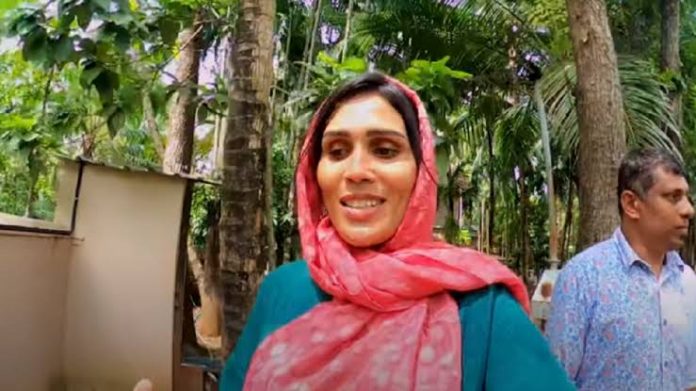
A Muslim woman from Kerala, Naaji Noushi’s decision to travel solo in her four-wheel car to watch the FIFA World Cup in Qatar shows her craziness towards the game of football and of course her madness towards travelling behind the wheel on hitherto uncharted routes.
As the World Cup fever is slowly gripping people and football fans, Noushi, an avid traveller, YouTuber and vlogger, commenced her journey to Qatar by driving a Mahindra Thar from Kannur, Kerala the other day.
Transport Minister Antony Raju flagged off the trip in the presence of village panchayat authorities, reports PTI. It was a dream come true for this soccer crazy woman who has always loved to take adventurous trips.
After reaching Mumbai via Coimbatore, she and her Thar, which is fondly named “olu” (means woman in local parlance), would land in Oman by ship. From there, she would travel via road and would cover Arab countries including UAE, Bahrain, Kuwait and Saudi Arabia before reaching Qatar, which plays host to the FIFA World Cup this time.
Noushi said it may be for the first time that a woman from Kerala was undertaking an overlanding trip to the GCC nations and that too to watch the football world cup. “My plan is to enter Qatar by December 10 and watch the finale.
I am so excited about this trip. I am a hardcore Argentina fan and Lionel Messi…really want to see my favourite team lifting the cup,” she said. She will continue her stay in Qatar till December 31, according to the report.
Noushi said the trip was expected to be a complete van-life experience as all essential cooking articles were stocked in the vehicle. It is also planned to park the vehicle near toll plazas and petrol pumps and stay within it during nights.
She said she has an Oman driving licence, which has already been converted into an international one.
“I am a person who has been dreaming to see an Indian team playing the FIFA World Cup. Through this innovative trip, I am trying to be a part of the gala by reaching there in an Indian-made vehicle,” she said.
Noushi, who has completed her Plus-Two, married Noushad, an NRI, at a young age and became a mother at the age of 19. Describing the family as the pillar of support, she said her husband and children were her actual cheerleaders and were encouraging her to travel more.
Noushi has already completed four travel series including an all-India trip to Ladakh and shared the photos and videos through her social media pages. Noushi said her youngest child is just two years old but her mother is taking care of her children when children when she is away for travel.
“If a woman like me- a homemaker, a wife and a mother of five- can realise my dreams, any ordinary woman in Kerala can chase her dreams confidently,” she said. — PTI
source: http://www.muslimmirror.com / Muslim Mirror / Home> Indian Muslim> Women / by PTI / October 20th, 2022
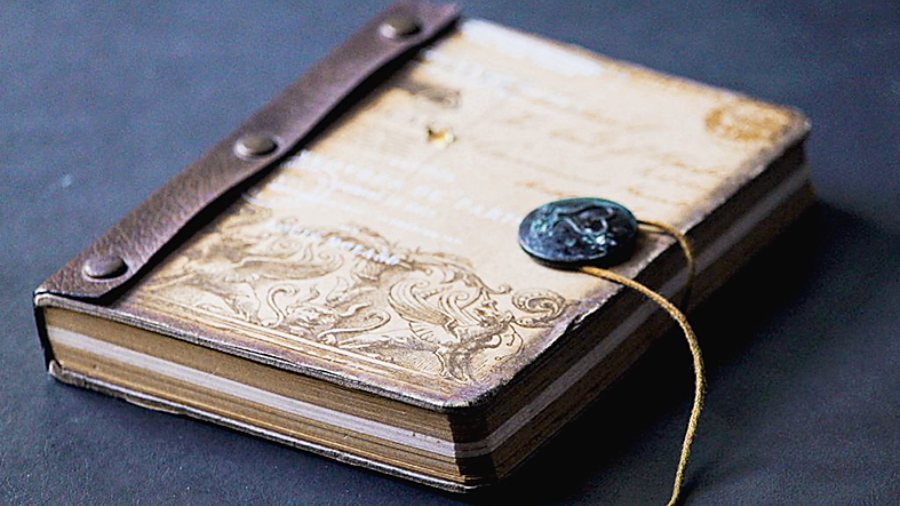
Written almost a hundred years ago in a far-off land, this diary of a young Muslim woman anticipates our present situation of religious intolerance.
Book:A Long Way From Hyderabad: Diary Of A Young Muslim Woman In 1930s Britain
Author: Muhammadi Begum
Publisher: Primus
Price: Rs. 1,150
Diaries are like portmanteaus that have a habit of gathering diverse and often disparate genres within the folds of personal jottings.
Muhammadi Begum’s diary is a veritable mixed bag as her daily observations of the social life of the English university town, Oxford, are imbued with her Hyderabadi ruminations — the practical, poetic and philosophical musings of a young Muslim woman of Hindustan.
Located in Britain of the 1930s, the diary is both a historical journal with an ‘interwar’ and ‘pre-Independence’ air and a domestic memoir full of ‘homely’ quotidian details.
Daniel Majchrowicz’s helpful introduction delineating Muhammadi Begum’s contribution to the genre of female travel literature, and Kulsoom Husein’s familial account recalling the posthumous discovery and subsequent translation, provide rich intellectual and social contexts for understanding this thoughtfully edited and well-produced work.
But diaries are eccentric and whimsical texts, which refuse to tell well-ordered tales. While the reader impatiently waits for the classroom experiences of this outstanding student who had won a scholarship from the government of the Nizam of Hyderabad to study at Oxford from 1934 to 1937, the diary refuses to move beyond the author’s travails over her private tuitions which she took for qualifying the Responsions, the erstwhile Oxford entrance examination!
What could be the reasons for Muhammadi Begum not keeping a diary after she joined St. Hugh’s can only be guessed at as the reader has to be satisfied with the detailed entries for one year which begin with a visit to London and end with a trip from Europe. And although the ending shows that she was an independent and a self-sufficient mother, she repeatedly asserts that her self-confidence was firmly anchored in happy conjugality.
Since diaries often masquerade as unposted letters, Muhammadi Begum’s cross-cultural reflections serve an unstated epistolatory purpose within the testimonial turn of the form. Paralleling her actual letter-writing activity, an enterprise which she and her husband were forever engaged in, the enthusiastic entries regarding conversations, expeditions and explorations add novelty to an otherwise quotidian account of the uncertain and strapped situation of an overseas student’s life in England.
There are important takeaways from this unfinished work. As part of the burgeoning female form, there are noticeable introspective beginnings in the areas of freedom and tolerance. Critically speaking, beginnings don’t necessarily mark a break from the past but indicate an intention towards the meaning-making process.
Likewise, in this diary, beginnings are often ruptured by their collision and collusion with tradition and continuity. Yet, they produce meaningful differences.
For instance, the author’s analysis of English piety and Hindustani prejudice is startlingly relevant for our present times. Despite being a practicing Muslim and a devout believer, she notes the sincerity of English religiosity as against the practice of paying “lip service to ritual” observable in Hindustani compatriots. This difference prompts her to remark that people “at home” know “how to make an uproar and create a public scene over some minor issue”. She then rhetorically asks, “Don’t we realize that the need for sanctity near places of worship has to go with a willingness to educate the public?”
Written almost a hundred years ago in a far-off land, this diary of a young Muslim woman anticipates our present situation of religious intolerance. Or is it that our intolerance has been around for a much longer time?
source: http://www.telegraphindia.com / The Telegraph Online / Home> Culture> Books / by Sharmila Purkayashtha / September 09th, 2022
As a sweet little six-year-old, when Zain Samdani saw his mother taking care of the household like a pro, he decided to lend her a robotic hand. In all his innocence, he went up to her and said, “I will build you a robot that can do everything.” Today, the same boy has grown into an entrepreneur whose invention goes behind the peripheries of any household.
Meet Zain | (Pic: Zain Samdani)
He won the Young Entrepreneur Award from the Indian Business Forum, Riyadh in January 2018
But before the result came the hard, gruelling work of learning everything there is to learn about robotics.
Born in Hyderabad and brought up in Saudi Arabia, Zain started by reading. And then some. Then came a series of instruction videos and only after he turned 14 came his first robotics kit. In 2013, he pursued the PSSO Robotics Programme at the King Salman Science Oasis in Riyadh apart from participating in international competitions. He topped it off with pursuing online courses leading up to the summer of 2015.
But it is usually when pain hits home that you really put your power into play. And that’s what happened with Zain. “A distant uncle of mine was paralysed and what upset me was that there was hardly any technological help that could be rendered to help him move around. In a quest to help my uncle, I decided to create ExoHeal,” says the youngster.
Zain with Sundar Pichai
Started in May 2016, this start-up offers a modular robotic device based on the concept of neuroplasticity. There are two gloves — one that is sensory and one that is robotic. The sensory one goes on the good hand and the robotic on the other. When you move the good hand, the paralysed hand is almost forced to mimic the action which actually tricks the brain into believing that the paralysed hand is actually okay, forming new neural connections. With consistent usage, movement may gradually be restored in the paralysed hand.
In 2016, his working prototype helped his uncle and since then, the Ashoka Young Changemaker has been trying to perfect the device. He has been adding little touches and enhancements like going wireless, with the help of Bluetooth and radio waves, and the latest, launching an app. “Because of the lockdowns, patients are unable to travel to their physiotherapists and hence, the app helps the doctor track the progress of their patients in real-time,” he explains. The app has a list of exercises the patient can choose from. With the team of five and machine learning, they are trying to adjust the level of assistance offered with the involvement of the doctors so that the latter puts only that much effort as is required from him.
Selected as a Global Teen Leader by We Are Family Foundation in New York, USA in March 2019
Dr KV Rao Scientific Society in Hyderabad has also been of mighty help to this entrepreneur who is pursuing his Higher Secondary Course from the National Institute of Open Schooling due to medical reasons.
The Society started supporting his project in November last year. Currently, the 3D printed model is ready and they hope to conduct clinical trials for further validation. By the way, this innovation has been to the Google Science Fair twice (2016 and 2019) and both times, Zain was the Global Finalist. Even Google’s CEO Sundar Pichai has tried them out too. Now, how’s that for some validation?
www.zainsamdani.org
source: http://www.edexlive.com / edexlive, The New Indian Express / Home> Start-Up / by Seema Rajpal, EdexLive / June 09th, 2021
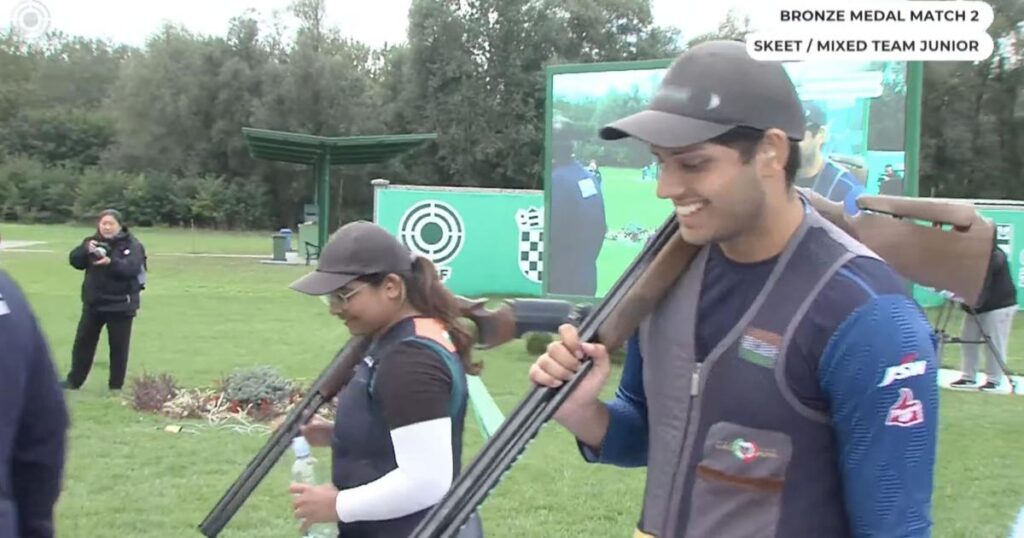
Muffadal Zahra Deesawala and Bhavtegh Singh Gill won India’s third medal of the International Shooting Sport Federation Shotgun World Championship in Osijek, Croatia. The duo picked up a bronze in the Skeet Mixed Team Junior event here at the Olympic Shooting Range ‘Pampas’ on Tuesday.
They beat the American pair of Aidin Burns and Mikena Grace Fulton 5-1 in the second bronze medal match. They were declared winners by Golden Hit after Bhavteg and Mufaddal shot seven out of eight targets in the last series, enough to ensure that the Americans cannot win the series after Burns missed one out of his four targets.
The first pair to six points usually wins the match but the Indians were up 5-1 already and a tied last series would have given the Indians the point needed to win.
Deesawala and Gill finished sixth in the qualifiers shooting a combined 132 out of 150 targets. Deesawala shot 62 out of 75 and Gill shot 72 out of 75 shots to secure the last position for the bronze medal matches.
The British pairing of Mitchell Brooker Smith and Sophie Herrmann won the Gold in the event beating Haolei Zhao and Dan Wang of China 6-4.
Areeba Khan, on Tuesday, had won India’s second medal of the World Championship after the Junior Men’s Trap Team had won a gold.
Bhowneesh Mendiratta had also won a Paris Olympic quota, India’s first for the 2024 Games, earlier in the championship. He finished fourth in the event.
source: http://www.scroll.in / Scroll.in / Home> The Field> Shooting World Championships / by Scroll Staff / October 04th, 2022
At the 2022 International Shooting Sport Federation (ISSF) Shotgun World Championship, which was held on Monday in Osijek, Croatia, Indian shooter Areeba Khan took home the silver medal in the individual women’s junior skeet event.
Areeba Khan hit 29 of her 40 shots in the final, missing her final attempt, while Sophie Herrmann of Great Britain scored 30 shots to win the gold.
Raveca-Maria Islai of Romania took home the bronze medal after striking 20 shots, while Muffaddal Zahra Deesawala of India placed fourth after hitting 12 targets.
After Shapath Bharadwaj, Shardul Vihan, and Arya Tyagi won gold in the junior trap men’s team competition, this is India’s second medal in the shotgun competition.
After a shoot-off, Areeba Khan came in third place in the qualifying round. She then won her ranking match to advance to the final.
The 19-year-old Indian shooter competed for India’s junior women’s skeet squad in 2021, which won a gold medal.
No Indian shooter qualified for the ranking matches in the junior men’s individual skeet later in the day.
In qualifying, Bhavtegh Singh Gill, Abhay Singh Sekhon, and Ritu Raj Bundela came in at positions 32, 33, and 36, respectively. The ranking matches are limited to the top eight competitors.
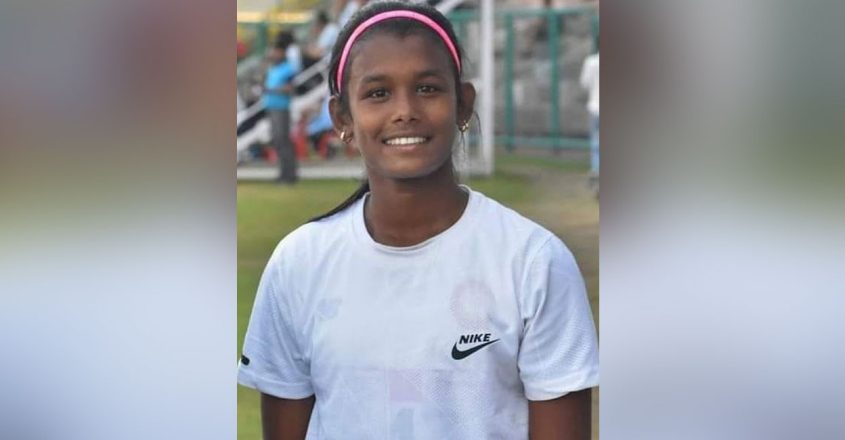
Mubssina Mohammed, a 16-year-old from Lakshadweep, has won India a silver medal in the girls’ Long Jump event at the 4th Asian U18 Athletics Championships that began Thursday in Kuwait.
It is the first-ever Asian-level athletics medal won by an athlete from Lakshadweep.
Mubssina jumped 5.91m to finish second behind Uzbekistan’s Sharifa Davronova (6.06m) and ahead of Hong Kong’s Wai Yin Jia (5.81m).
Last month, the talented athlete from the Minicoy islands created history by winning Lakshadweep’s first-ever national-level medal in athletics.
She had clinched gold in Long Jump (5.90m) at the Youth National Championships held in Bhopal.
Mubssina is coached by Ahmed Jawad Hassan, who discovered her at a local sports festival.
India also clinched a pair of gold medals and a bronze on the opening day.
In boys’ shot put, Akash Yadav (19.37m) took gold while his teammate Siddharth Choudhary (19.00m) claimed silver.
In boys’ 1500m, Amit Chaudhry of India was placed first after clocking 4:04.59.
source: http://www.onmanorama.com / OnManorama / Home> Sports / by Onmanorama Staff / October 14th, 2022
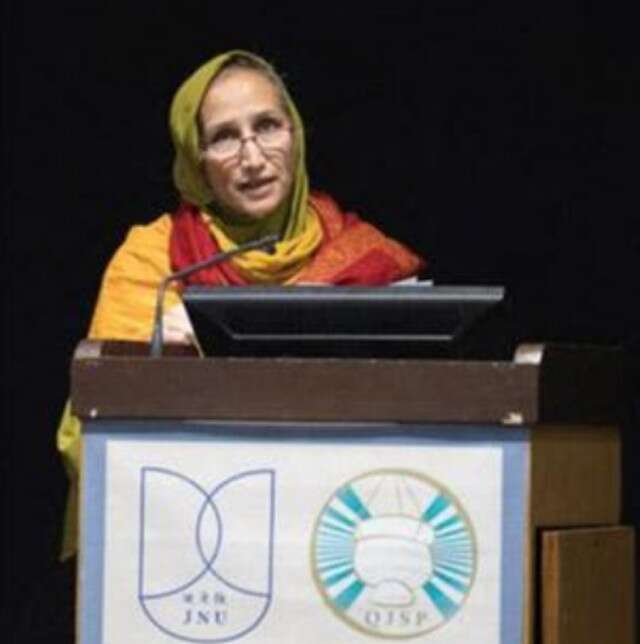
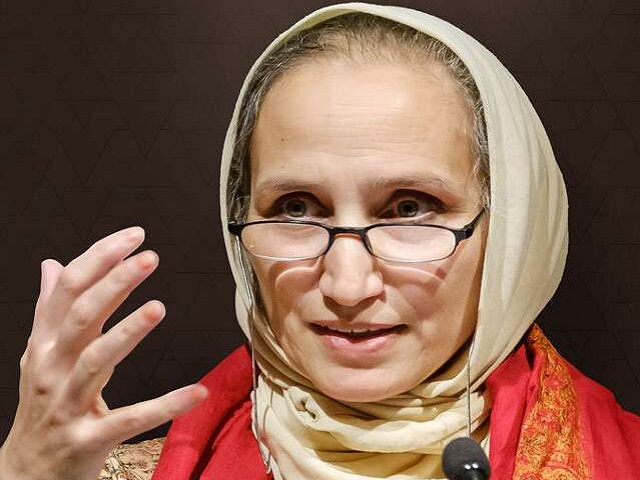
Dr Tahera Qutbuddin, a professor of Arabic Literature at the University of Chicago, recently became the first person of Indian-origin to win the 15th Sheikh Zyed Book Award. The award is considered to be the Nobel Prize of the Arab world.
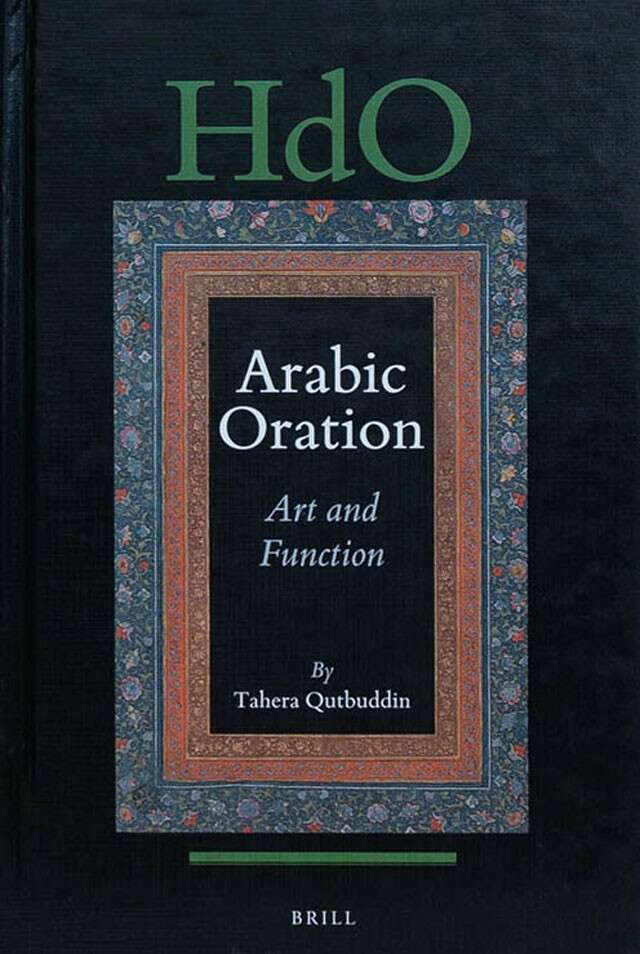
Dr Qutbuddin, who was born in Mumbai and was educated until class 12 in India, also serves on the editorial board of NYU Abu Dhabi’s Library of Arabic Literature. She won the award for her latest book, Arabic Oration – Art and Function, published by Brill Academic Publishers of Leiden in 2019.
In the book, she puts forth a comprehensive theory of Arabic literature in its foundational oral period dating the seventh and eighth centuries AD. She discusses it’s influence on modern-day sermons and lectures as well.
Having completed her higher secondary from Sophia College in Mumbai, Dr Qutbuddin pursued her BA from Ain Shams University, Cairo and got her PhD and MA from Harvard University, USA.
In a recent interview with a portal, she said that although she has lived away for many decades in Egypt and now the US, her roots are vital to who she is, and Indian culture is part of the fabric of her being.
“It (Mumbai) is the place of my childhood memories, of playing in the monsoon rains and eating mangoes in the summer. I come back to Mumbai often. I love my Mother India, and pray for her security and progress, and for harmony and love between the many beautiful communities that call her home,” she said.
According to her bio, her research “focuses on intersections of the literary, the religious, and the political in classical Arabic poetry and prose.”
She is the recipient of several prestigious fellowships, including support from the Franke Institute of Humanities, the American Council of Learned Societies, the Carnegie Corporation of New York, and the John Simon Guggenheim Foundation.
source: http://www.femina.in / Femina / Home> Trending> Achievers / by Shraddha Kamdar / April 30th, 2021
Prof. Wazahat Hussain, a leading professor from the Aligarh Muslim University (AMU) has won an international award for Traditional, Complementary, and Alternative Medicine.
Husain, a retired chairman of the Department of Botany at the AMU, won the Second Sheikh Zayed International Award on Monday in an event arranged by the Zayed Charitable and Humanitarian Foundation.
pix: thenortherngazette.com
The Foundation is a UAE-based non-governmental, non-profit organisation that invests in developing human capital to improve the quality of life, according to the Foundation’s website.
The award aims to give recognition to eminent academics and scientists of Traditional Complementary and Alternative Medicine (TCAM ) globally, and TCAM physicians from the UAE, for enhancing TCAM knowledge and practices, and contributing to the improvement of quality of life for humanity, the organisation said.
A plant taxonomy expert, Husain has been conferred Lifetime Achievement Awards twice, once jointly by the University Grants Commission (UGC) and the AYUSH ministry and then by the Wildlife Institute of India and Department of Wildlife Sciences, AMU.
Speaking to PTI, Prof. Husain stated that he was honoured to be representing AMU and India at the pinnacle of his academic career.
Academics do not work for recognition, but when they come, they must be accepted with humility. I dedicate this award to my university and my country, Prof Husain said.
According to WHO, traditional medicine is the sum total of the knowledge, skill, and practices specific to indigenous experiences and beliefs which are used in the maintenance of health, while alternative or complementary medicine refers to a broad set of healthcare practices that are not part of a country’s own tradition or conventional medicine and are not fully integrated into the dominant healthcare system.
source: http://www.freepressjournal.in / The Free Press Journal / Home / by PTI (headline edited) / October 11th, 2022
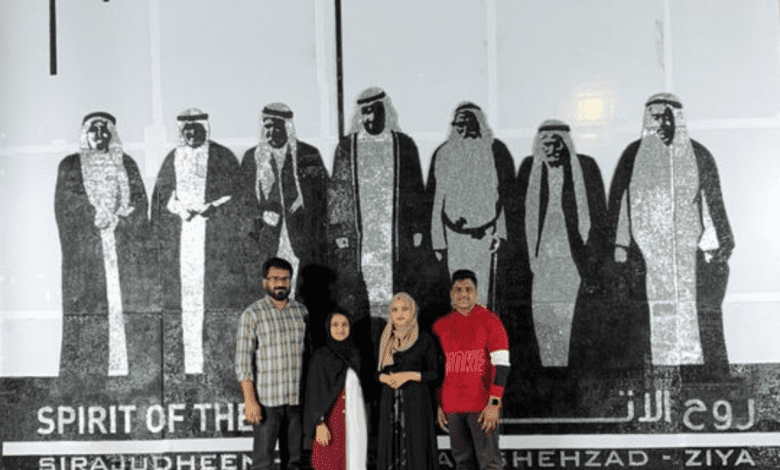
The art was created with plywood sheets, screws, and spray paint. It is constructed of 20 frames and three lakh screws. The installation weighs 460 kilogrammes, is 444 centimetres tall, and is 555 centimetres wide.
Giant screw art piece featuring the UAE’s ‘Spirit of the Union’ picture, as well as the Expo 2020 Dubai emblem.
An Indian family in the United Arab Emirates (UAE) has created a giant screw art piece featuring the UAE’s ‘Spirit of the Union’ picture, as well as the Expo 2020 Dubai emblem. The three lakh screw art piece has been inscribed in the Arabian Book of World Records as the world’s largest screw art.
According to Gulf News, EA. Sirajudheen, a 45-year-old and his 39-year-old wife Badariya, both from Kerala, chose to make the massive art piece as a homage to the UAE on its 50th National Day.
Sirajudheen was a former aeronautical engineer who transitioned to business after moving to the UAE 24 years ago and is now the owner of Brightway Tyres and Auto Service in Abu Dhabi.
The art was created with plywood sheets, screws, and spray paint. It is constructed of 20 frames and three lakh screws. The installation weighs 460 kilogrammes, is 444 centimetres tall, and is 555 centimetres wide.
According to the couple, the Guinness World Record was for a piece of art that used 250,000 screws. They said that they first utilised sticker printouts of the photos to adhere to various portions of the boards, and then used hand drills to repair the screw. After being spray-painted with black, red, green, and gold paints, the boards were assembled to form the full-frame.
The couple has two children, 14-year-old Shehzaz and 11-year-old Zia, who helped their parents in the massive screw art. The family finished the project in one month.
Zenith Wheel Alignment, the art piece, is now on show at the Abu Dhabi Malayali Samajam in Musaffah, after the National Day exhibition. The duo stated that they wanted to show their artwork to a larger audience at the Sheikh Zayed Festival in Al Wathba.
source: http://www.siasat.com / The Siasat Daily / Home> Kerala / by News Desk – Sumaya Junaid Ahmed / January 07th, 2022