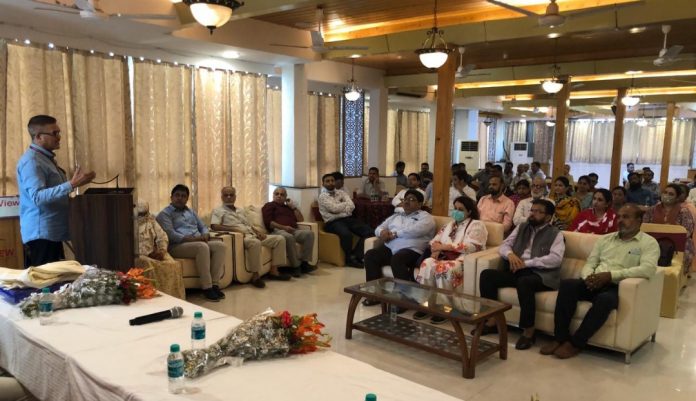
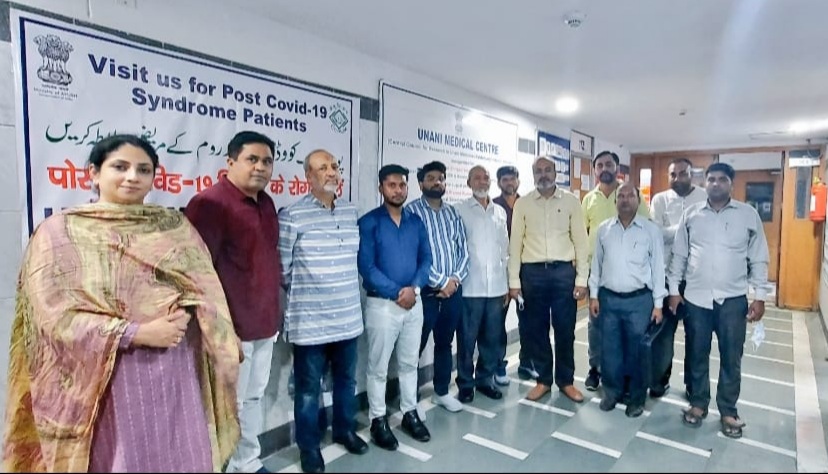
Dr. Syed Ahmad Khan, who retired on May 31, 2022 as a Deputy Director, Incharge, Unani Medical Centre at Safdarjung Hospital in New Delhi, was honoured during a farewell function hosted by the Central Council for Research in Unani Medicine (CCRUM). His contributions to the cause of Unani medicine were lauded by all who spoke. They claimed that Dr Khan’s devotion and dedication set an example for others.
The function was conducted under the dynamic leadership of Prof. Asim Ali Khan, Director General, CCRUM, Ministry of Ayush at Hotel River View, Okhla on May 30, 2022. It was organised by Dr Rahat Raza, Deputy Director In charge, RRIUM, New Delhi.
Dr. Syed Ahmad Khan served for over 30 years in CCRUM and discharged his duty at various levels from Research Officer (Unani) to Deputy Director.
He was felicitated by the senior officials. He superannuated from the service as Deputy Director Incharge of the Unani Medical Center at Safdarjung Hospital.
Prof. Khan praised Dr Syed Khan on his contributions and dedication to the Unani medical services, and wished him well in his future endeavours.
Officers and personnel from CCRUM attended the farewell party and showered Dr. Khan with praise.
Dr. Khan is the General Secretary of the All India Unani Tibbi Congress, a non-profit organisation dedicated to advancing the cause of Unani medicine and serving as a watchdog for Unani doctors. The organisation monitors the AYUSH ministry’s actions and intervenes if there is any mistreatment of Unani medicine. Since his election as general secretary, Dr Khan has been a driving force behind this organisation. By conducting seminars and conferences, the organisation has helped to popularise Unani medicine in the country and abroad.
source: http://www.muslimmirror.com / Muslim Mirror / Home> Health> Positive Story / by Special Correspondent / June 02nd, 2022
Shamnad was not just an expert in intellectual property rights, but a relentless crusader who worked towards ensuring diversity and representation of marginalised communities in legal practice.
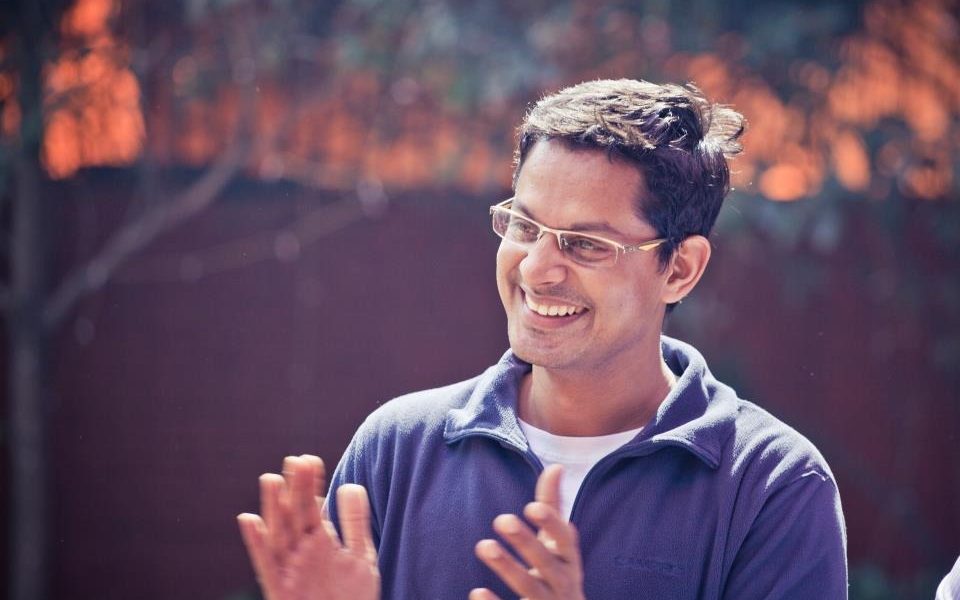
The untimely and tragic death of professor Shamnad Basheer was a bolt from the blue for many of us. As I scuttled to get more information on what initially seemed impossible to believe, I realised that apart from the loss of a friend, the country had also lost one of its finest legal minds. Globally renowned for his expertise in the field of intellectual property rights (IPR), Shamnad was found dead in his car near Bababundangiri in Chikkamagaluru of Karnataka.
As news of his death spread and tributes started pouring in all over my social media timeline, there remained no doubt that his sudden demise was a great loss to the legal fraternity and academia across the globe. Shamnad was a relentless crusader, working day in and out to ensure diversity and representation of marginalised communities in the field of law and legal practice. An alumni of the National Law University, Bangalore and Oxford University, Shamnad was a man on a mission as he championed many causes ranging from internet equality, fairness in IPR, public interest litigation, judicial accountability, to the rights of sexual minorities, visually impaired and physically disabled persons.
For me, Shamnad was more a social justice warrior than a globally-known IPR expert. He was not just the force behind Increasing Diversity by Increasing Access to Legal Education (IDIA), but also Access to Legal Education for Muslims in India (ALEM India).
I first heard of him in 2009, when he wrote a blog about remarks made by then Supreme Court judge Markandey Katju. In open court, Justice Katju equated a young Muslim sporting a beard with a Taliban militant. That year, Justice Katju had rejected an appeal of a Muslim student that he should be permitted to sport a beard in his convent school. Rejecting the plea the judge had remarked that, “We don’t want to have Talibans in the country. Tomorrow a girl student may come and say that she wants to wear a burqa. Can we allow it?”
According to Shamnad, “notwithstanding the merits of the case”, Justice Katju’s comments were “callous and insensitive” and he was “unfit to be an impartial judge”. Back then, Shamnad was the HRD ministry’s professor of intellectual property law at the National University of Juridical Sciences (NUJS), Kolkata. In the conclusion of his blog, he wrote:
“The Supreme Court bench may have been right in denying admission to Salim’s SLP. However, in view of Justice Katju’s statements made in open court that equated every bearded Muslim with a Taliban, the possibility of bias against a community cannot be ruled out. And the Chief Justice must not only censure such remarks, but take immediate steps to have this case reheard before another bench. For justice must not only be done, but also be seen to be done!”
Years passed by, and I kept reading his insightful articles and commentaries in various newspapers and websites. He was prolific, writing on a range of issues related to law, policy and public good. In 2015, a common friend (Tarunabh Khaitan) connected us, asking me if I would be interested in helping Shamnad’s team at IDIA to reach out to the Muslim community. Having admired Shamnad’s writings, the opportunity to work with him was like a dream come true. I readily agreed and eventually, we became good friends.
Shamnad Basheer at a panel discussion of intellectual property rights. Photo: Flickr/World Intellectual Property Organisation CC BY NC ND 2.0
Diversifying the legal field
More than anything, he was always on the lookout for ways and means to ensure that IDIA reaches the remotest parts of the country. To contextualise the need of diversity in national law schools, let me quote a study conducted by the students of NLS Bangalore in 2016. According to the study:
“While the students are somewhat evenly divided across sexes, the income, caste and religion statistics are telling of what constitutes ‘merit’ in this country. While 15% of the students reported their family’s annual income to be above Rs 36 lakh per annum, more than 50% reported an annual income of more than Rs. 12 lakh per annum. Eighty two percent were Hindus and the next largest religious group was the wealthy Jain community (5%), which constitute less than 0.5% of India’s population. On the other hand, Muslims, who constitute 14% of India’s population, make up only 0.5% of that of NLS. The NLS also has predominantly upper-caste students at 65%, with about 27% identifying as Brahmins.”
Similarly, another report found:
“In the last 15 years i.e., from 2000 onwards, only one Dalit advocate has been designated senior by the Supreme Court, and only two from the Muslim Community. The Advocates from backward States like Uttar Pradesh, Chhattisgarh, Jharkhand or Bihar have not been designated at all. The Advocates from rural background are totally ignored. Even with regard to a progressive State like Karnataka, only one Advocate has been designated after a gap of 25 years. It is relevant to mention that in the last round of designation, out of five advocates designated, four of them belonged to one caste.”
Despite being an extremely busy person, Shamnad believed in and practiced mentoring and coaching young minds, individually and personally. Few years ago, when I visited his flat in Bangalore, he was helping two students who were staying at his house to prepare for the CLAT exam. Both belonged to an unprivileged background, a common thread among the spectrum of students whom IDIA supported. A glance at IDIA scholars, like visually impaired Najrul Islam from Siliguri, West Bengal, who studies at the National Law University, Delhi (NLU) or Meraka Mani from Srikakulam district of Andhra Pradesh, currently studying at IFIM Law College, Bangalore, Aparna Amnekar from Nagpur, Maharashtra, a student of Government Law College, Mumbai, Sonia Sabu of Ernakulam district in Kerala, studying at NLIU, Bhopal and Vinatoli of Dimapur (Nagaland), studying at NUJS Kolkata shows an incredible initiative founded and run by him, with diversity and representation at its core.
Learning from IDIA’s experiment and under the guidance of Shamnad, ALEM India was started last year. The initiative tries to ensure access for socio-economically disadvantaged Muslims and improve their representation in Indian law schools.
Personally coaching legal professionals
His objective was not just to coach students for national law schools or produce batches of successful lawyers and legal professionals. He wanted to prepare young minds who are competent yet socially committed. It is hardly a surprise that IDIA produced graduates like Yogendra Yadav, better known as Yogi. The son of a manual labourer (working in Alang, Gujarat) and a resident of Pitij village in Chhatra district of Jharkhand, Yogi graduated from the National University for Study and Research in Law (NUSRL), Ranchi in 2017. He is currently a lawyer in the Ranchi high court. He worked as a newspaper hawker in and around his village from a very early age and it is while distributing newspapers that he got to know about IDIA and CLAT.
In the recently concluded Lok Sabha elections, he contested as an independent candidate. Explaining his rationale to contest the election, Yogi told Bar & Bench, “IDIA always encouraged me to take up community causes and help as best as I could, They were training me to become a CHAMP and this is all part of that.” I clearly remember Shamnad informing us of Yogi’s inspiring story with pride. “Yogendra Yadav, our IDIA Scholar makes his Political Debut!,” read the email he had sent to some of us.
Shamnad was also keen to highlight IDIA scholars to people working in different walks of life, not just those in the law and judiciary. In 2017, got in touch with me to invite the anti-manual scavenging activist and convener of the Safai Karmachari Andolan, Bezwada Wilson, to deliver the key note address at the IDIA conference on creativity and leadership.
Bezwada Wilson. Photo: PTI
“We share the same set of ideals in terms of empowering the marginalised and building a more inclusive India,” he had written to Bezwada, copying me in the email. Bezwada’s key note, according to Shamnad was “a provocative address”. A year later, he also wrote an article on Bandicoot, a robot to replace manual scavenging. He noted:
“Bandicoot is not just a clever idea; it is a game changer, and dare I say a life saver! Putting some teeth back into India’s constitutional promise of “equality” for Dalits and other marginalized sections who’ve had to clean our crap for years. Only a few days ago, the Delhi high court ruled on a case involving the death of two manual scavengers; making the government pay for its murderous negligence!”
His latest email to me was in July this year, a heart breaker titled: “Deeply Disappointing News: 7 IDIA Scholars Still Without Committed Donors!”. “I am deeply saddened to bring you this disheartening message. Unfortunately, of the 12 IDIA scholars that gained admission to leading law schools this year, we found donor support (covering all expenses) for only 5 of our scholars. Which means 7 of our kids are left behind and it will be a struggle to put them through law school without some promise of a committed donor (or donors),” read his email. Little did I know then that this was going to be his last email to me.
Now that Shamnad is gone and we cherish his memory, our duty is to ensure that we carry forward the work he initiated, in the same spirit that he always professed. And that, I believe, would be our real tribute to him.
source: http://www.thewire.in / The Wire / Home> Law> Rights / by Mahtab Alam / August 11th, 2019
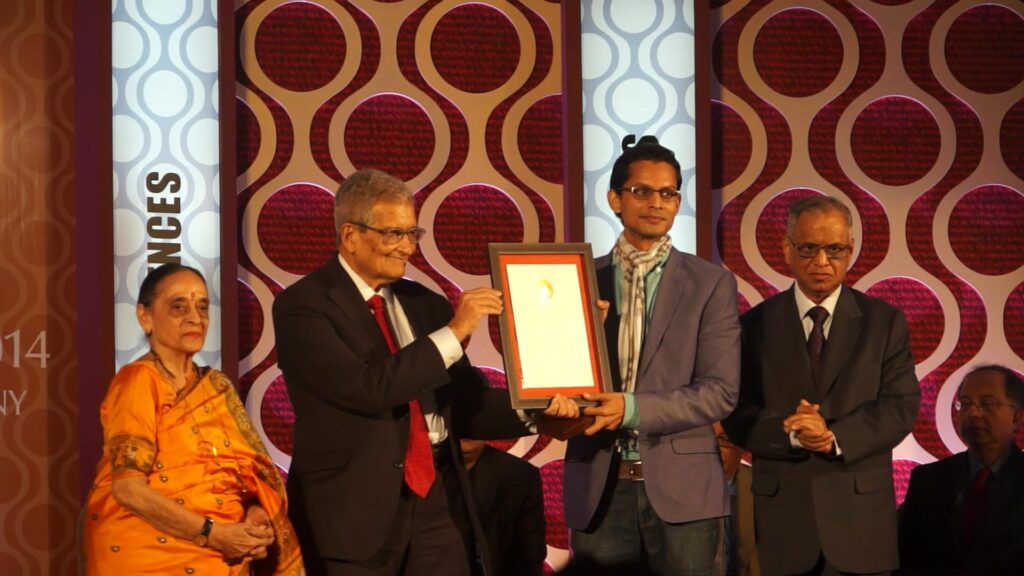
Photo of Shamnad receiving the Infosys Prize (Humanities) in 2014 from Mr. Amartya Sen / pix: shamnad.com
Bengaluru :
Indian Institute of Science (IISc) professor Jayant Haritsa and Intellectual Property (IP) academic and consultant professor Shamnad Basheer, both from Bengaluru, are among six winners of the Infosys Prize for this year.
Each prize, comprising a purse of Rs.55 lakh, a 22-carat gold medallion and a citation, is awarded by Infosys Science Foundation, a not-for-profit trust, set up by the global software major and funded by a corpus of Rs.100 crore ($16 million), contributed by the IT firm, its trustees and co-founders in 2009.
“Haritsa, computer science and automation department professor at IISc, has been awarded the prize under the Engineering and Computer Science category for his contribution to the design and optimisation of database engines,” the Foundation said in a statement here Thursday.
Haritsa also heads the supercomputer education and research centre at the institute.
Basheer, founder of SpicyIP, India, bagged the prize for his contribution to the analysis of a range of legal issues, including pharmaceutical patent injunctions and enforcement in the Humanities category.
As India’s premier blog on IP and innovation law and policy, SpicyIP does accurate reporting of IP developments across the country.
Basheer is also founder and managing trustee of Increasing Diversity by Increasing Access (IDIA) in Bengaluru.
Shubha Tole, associate professor at Mumbai-based Tata Institute of Fundamental Research (TIFR), got the prize under the Life Sciences category for her contribution to studying the hippocampus and amygdale centres of learning and memory in the brain.
“Tole’s work can lead to a better understanding of human behaviour, cognition and emotions,” the statement noted.
Tole is also a principal investigator at the TIFR’s biological sciences department.
Massachusetts Institute of Technology (MIT) adjunct professor Madhu Sudhan has been awarded the prize under the Mathematical Sciences category for his seminal contribution to probabilistically checkable proofs and error-correcting codes.
As a principal researcher at Microsoft Research in New England in the US, Sudan also heads the electrical engineering and computer sciences (EECS) department and computer science and artificial intelligence laboratory (CSASIL) at MIT in Boston.
Council of Scientific and Industrial Research (CSIR) senior scientist Srivari Chandrasekhar at the Hyderabad-based Indian Institute of Chemical Technology (IICT) has bagged the prize under the Physical Sciences category for his contribution to the synthetic organic chemistry with special focus on the synthesis of complex molecules from natural sources.
Abdul Latif Jameel Professor of Poverty Alleviation and Development Economics at MIT, Esther Duflo, got the prize under the Social Sciences category for her pioneering contribution to development economics, including the work related to India and Africa.
Duflo is also founder-director of Abdul Latif Jameel Poverty Action Lab in the US.
“The Foundation has been able to recognise some of the best researchers of our time through the prize. Their contributions are an inspiration to students and professionals and have the potential for real-time impact on individuals and society,” Infosys co-founder and Foundation president N.R. Narayana Murthy said on the occasion.
A panel of jurors, comprising renowned scientists and professors from the world over, evaluated the noted winners.
The Infosys Prize jury chairs are Pradeep Khosla, Nobel Laureate Amartya Sen, Inder Verma, Srinivasa S.R. Varadhan, Shrinivas Kulkarni and Kaushik Basu.
President Pranab Mukherjee will award the winners and felicitate them Jan 5 in Kolkata.–-IANS
www.shamnad.com
source: http://www.muslimmirror.com / Muslim Mirror / Home> Exclusive Reports> Indian Muslims> Youth / November 15th, 2014
When the businessman, Yusuff Ali, paid a visit to the palace in 2012 Marthanda Varma had expressed his wish to gift the car to him. A year later Varma died (December 16, 2013) and the transfer was delayed due to many reasons.
Earlier, the German luxury carmaker Mercedes-Benz came back to Marthanda Varma with an offer of two new high-end cars, but the royal entity refused to part with his favourite vehicle. (SOURCED.)
Marthanda Varma’s favourite car — a 1955-model Benz nicknamed “Mile a Minute,”– will soon join the fleet of well-known business tycoon MA Yusuff Ali. Varma was the patriarch of the erstwhile Travancore royal family.
The royal family and Uthradam Tirunal Marthanda Varma Foundation have said the late royal figure’s announcement in 2012 in this connection will soon be fulfilled. Many vintage car collectors and businessmen have eyed the vehicle for quite some time. Even the German luxury carmaker Mercedes-Benz came back to him with an offer of two new high-end cars, but the royal entity refused to part with it.
What is amazing is that the old beauty had travelled 40 lakh miles, a rare achievement for a vehicle. People close to the royal family said he bought the car when he was 38, in 1955, and he drove a major portion of the miles it covered on his own and the rest as a passenger. Built in Stuttgart in Germany, Varma bought it for ₹12,000 and got it registered in Karnataka, CAN 42. It got its nickname “Mile a Minute” after it used to cover one mile in one minute.
When the businessman, Yusuff Ali, paid a visit to the palace in 2012 Marthanda Varma had expressed his wish to gift the car to him. A year later Varma died (December 16, 2013) and the transfer was delayed due to many reasons. Though delayed, the royal family members decided to fulfil his desire and informed the business magnate about it. He is yet to react to the royal offer.
The car is with his son Padmanabha Varma and in good road condition. Benz had presented many honours to the car and some of them are placed in front of the car and bonnet, said royal members. Palace old timers say even on his sick bed Varma used to watch his trusted companion. “He was so attached to it and looked after it as his progeny,” said one of them. A multinational businessman, Yusuff Ali, owns the Lulu group. He had a miraculous escape after his chopper crash-landed in Kochi last April.
source: http://www.hindustantimes.com / Hindustan Times / Home> Top News> India News / by HT Correspondent / April 04th, 2022
One such is a miniature version that can be worn as an amulet
Ramzan marks the revelation of Koran and families go into a huddle reading it through the night. The Abul Kalam Azad Oriental Research Institute in Public Gardens is now hosting an exhibition of copies of some rare Korans.
One of them has been created in Hyderabad with Persian and Urdu translation and explanatory passages on the side. Another Koran is a miniature version which could be worn as an amulet. “This is among the 5,000 Koran amulets commissioned by Hasan Nizami, a legatee of Nizamuddin Aulia of Delhi. It is a priceless object as very few are in circulation,” informs S.M. Ahmed Ali of the institute.
Then there is a Koran which is a gift of Reza Shah Pehlavi, first Shah of the House of Pahlavi of the Imperial State of Iran, when his wife visited the city in 1960. It has the Persian translation along with the Arabic original.
A few facsimile copies show how different writing styles have evolved. A 7 th century Koran in Kufic script is without the diacritical marks. “This is one of the earliest copies and unique. It will be difficult to read as we are used to seeing the sound markers,” adds Mr. Ahmed.
source: http://www.thehindu.com / The Hindu / Home> News> National> Telangana / by The Hindu Bureau / Hyderabad – April 14th, 2022
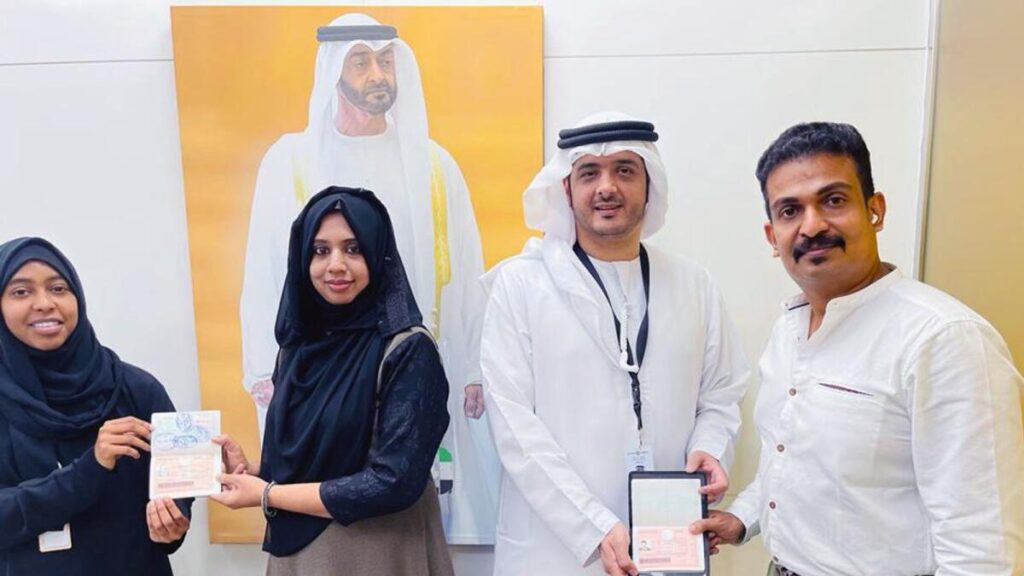
Abu Dhabi-based dentist couple Abdul Rahiman Nizar and Simi are the latest recipients of the 10-year UAE Golden Visa.
Abu Dhabi :
Abdul Rahiman Nizar gained popularity for amassing a rare collection of all the teeth extracted so far in his career.
Abu Dhabi-based dentist couple Abdul Rahiman Nizar and Simi are the latest recipients of the 10-year UAE Golden Visa.
Dr Nizar has served in Abu Dhabi for 20 years, including 18 years at Ahalia Group. However, the Indian doctor gained popularity for amassing a rare collection of all the teeth extracted so far in his career.
“Teeth are the strongest part of your body. I have always liked teeth. And once into my job, I started collecting it. Soon, it became a hobby. And I began to have a varied collection, which has been helping students in their dental studies,” said Dr Nizar, who is from Kerala, India.
“Over the years, I have collected nearly 15,000 teeth. I clean each tooth with antimicrobial hydrogen peroxide and then treat it with disinfectant. Once dried, I preserve them in a box. I am aiming to see my name in record books,” said the general practitioner dentist.
Dr Nizar urges people to take care of their teeth and visit a dentist every six months.
“Early detection of any tooth decay will help to avert a situation of tooth extraction. I always try to save a tooth and opt for extraction only as a last resort,” he said.
Dr Simi, who works at Al Mafraq Medical Centre in Baniyas, has also been collecting teeth.
“We are very excited to have bagged the Golden Visa. During this pandemic, both of us served the community, sacrificing our off days,” Dr Simi said.
The couple have four daughters: Grade 12 student Neha, Naila in Grade 8, Naima in Grade 3 and Naira is eight months old.
Dr Nizar, who also holds a 10-year US visa, added: “We plan to spend the rest of our lives in the service of Abu Dhabi. I thank the leadership for this honour and our hospital for the support in building our careers.”
source: http://www.khaleejtimes.com / Khaleej Times / Home / by Ashwani Kumar / September 29th, 2021
A student with high functioning autism and has been breaking academic records since his high school days.
Manipal Academy of Higher Education student Aman Maqbool has been breaking academic records since his high school days. Supplied photos
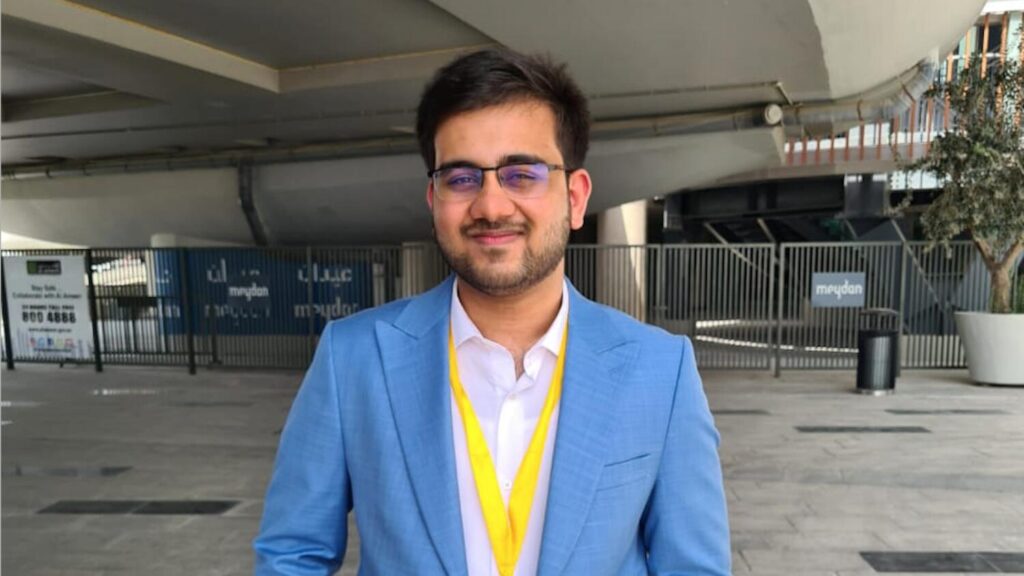
Indian student of determination Aman Maqbool is the latest recipient of the UAE Golden Visa.
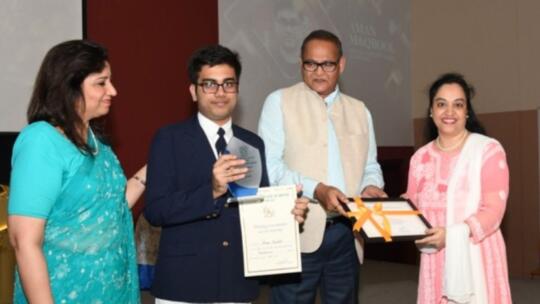
A 20-year-old student of Manipal Academy of Higher Education (MAHE), Aman is a student with high functioning autism and has been breaking academic records since his high school days.
Aman first made headlines , including a report in Khaleej Times, after scoring an impressive 94.2 per cent in his Central Board of Secondary Education (CBSE) Grade 10 examinations.
A former student of Delhi Private School, Sharjah, Aman has found immense support from his family, teachers, and counsellors at school and university.
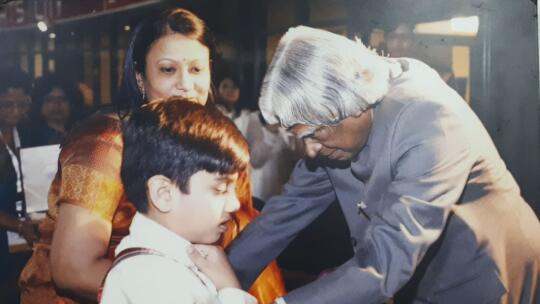
Aman Maqbool with former Indian President A.P.J. Abdul Kalam
“He scored 95 per cent in his Grade 12 CBSE examinations,” his father Maqbool Ahmed told Khaleej Times. Aman is a BSc information science and technology student at MAHE Manipal, Dubai campus.
“After Grade 10, he chose commerce. He decided to pursue a BSc in computer science since computers are his passion,” added Ahmed, a Kerala native.
The family, including Aman’s most significant pillar of support – his mother Anitha and younger brother Ayaan, have been UAE residents for over two decades. “Aman is very passionate about studies. He loves going to campus and loves learning and studying,” said his mother.
“We did not think he would get the golden visa. I applied on behalf of Aman because it was a token of appreciation for all the hard work he has put into his studies,” said his father. While Aman is brilliant and has a photographic memory, he struggles to communicate in a manner that is considered “socially acceptable”.
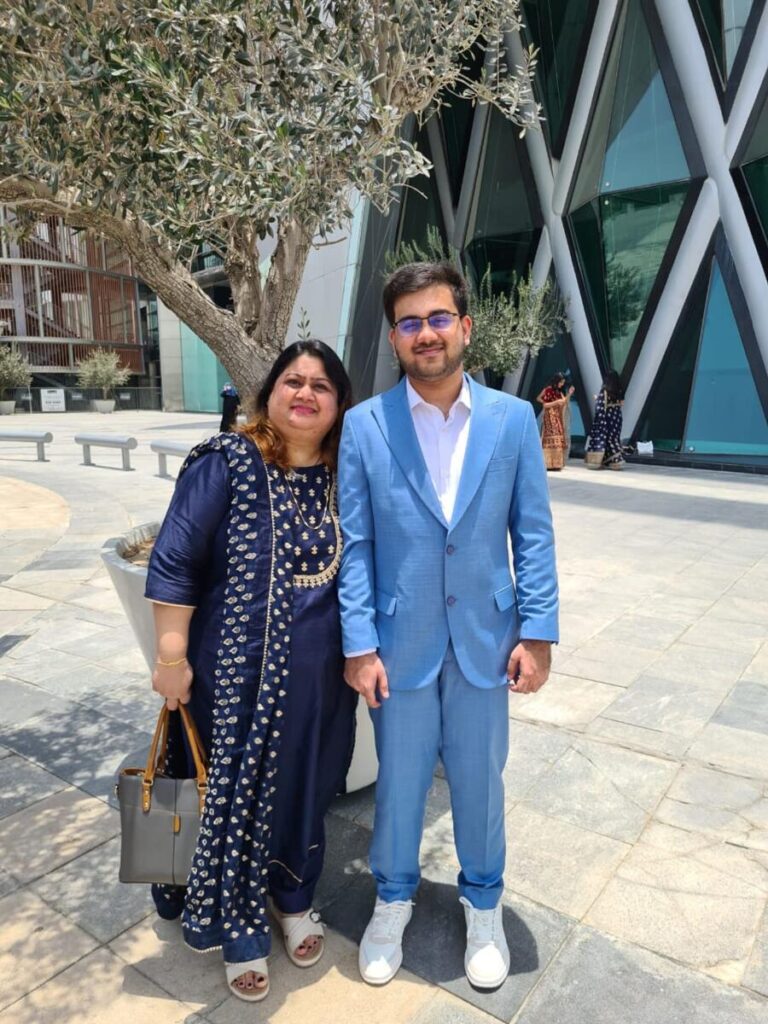
Aman Maqbool with his mother
Aman was diagnosed with high-functioning autism aged three to four years old, said Anitha. “He studied in Delhi Private School all his life before moving to MAHE for higher education. Our aim now is to help Aman become a lot more independent,” she added.
He underwent several speech and functional therapies as a child, including brain gym. “For children with autism, every action and word is a form of therapy. Aman is also active in sports, cycling, swimming, and exceptional musical skills. He plays the keyboard very well,” said Ahmed.
“What’s important for Aman is that he has a never-give-up attitude and is extremely hard working. We are sure he will reach much greater heights,” said his parents.
Aman receives an award.
Commenting on Aman’s impressive achievements, Nasreen Bahar, the inclusion champion at DPS, Sharjah, told Khaleej Times, “Aman has been a student with DPS since KG1. I worked with him after he reached Grade 6. He has a lot of potentials. He is academically gifted and well-versed in music. He can recall any day of the calendar day and date from the 1970s to 2030.” While his social skills are not indicative of his intelligence, Nasreen remembers Aman getting along well with his peers at school.
Similarly, Kritika Mathur, the deputy manager at the office of student affairs (student engagement and inclusion), said, “I’ve been working with schools for ten years now, and I’ve come across multiple stories of children who have family support and students who do not have family support. Aman has several major challenges, but his family efforts are solid, and his parents are determined.”
She added, “They are not victimising themselves in any way. They work with Aman to achieve his dreams. At present, Aman is going through several changes as he grows older. However, his parents are so forthcoming with these changes.”
Mathur said her message to all families with children of different abilities is that the issue is ‘not what’s happening with their child. “Parents need to educate themselves on how to grow with their child of determination,” she added.
source: http://www.khaleejtimes.com / Khaleej Times / Home> UAE> Education / by Dhanusha Gokulam / March 12th, 2022
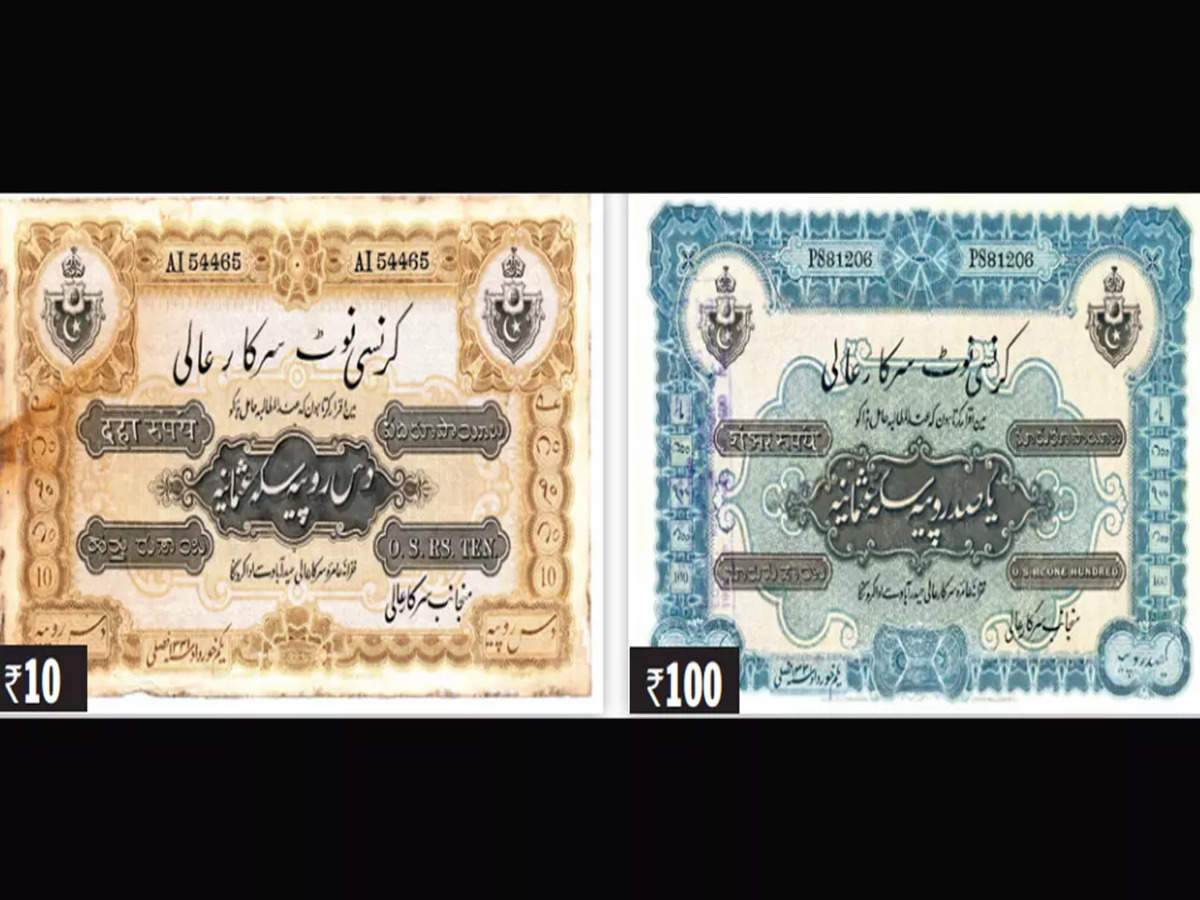
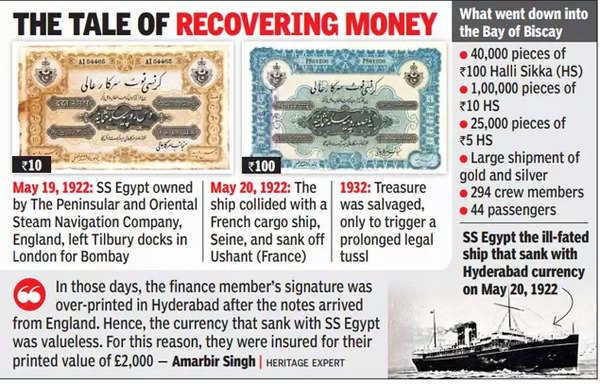
The Hyderabad currency comprised 40,000 pieces of 100 Halli Sikka (HS), 1,00,000 pieces of 10 HS, and 25,000 pieces of of 5 HS, totalling 1,65,000 pieces
After the ocean liner, SS Egypt , sank in the Celtic Sea on May 20, 1922, the events that unfolded over the next 17 years forced the Nizam VII, Mir Osman Ali Khan, to shift the printing of Hyderabad currency from England to Nashik.
On this day (May 19) 100 years ago, SS Egypt owned by The Peninsular and Oriental Steam Navigation Company, England, left Tilbury docks in London for Bombay (Mumbai). It had 44 passengers and 294 crew members, besides a large shipment of gold and silver and 1. 6 lakh pieces of Hyderabad currency, which had a face value of Rs 51,25,000.
The next day (on May 20, 1922), the ship collided with a French cargo ship and sank off Ushant in France. The Hyderabad currency shipped by Waterlow and Sons to the princely state of Hyderabad too went down into the sea. The treasure was salvaged a decade later in 1932, only to trigger a prolonged legal tussle.
“The Hyderabad currency comprised 40,000 pieces of Rs 100 Halli Sikka (HS), 1,00,000 pieces of Rs 10 HS, and 25,000 pieces of Rs 5 HS, totalling 1,65,000 pieces. The face value was Rs 51,25,000,” eminent numismatist and heritage expert . Amarbir Singh told TOI, adding that since the currency notes were unsigned, they did not legally carry value.
“In those days, the finance member’s signature was over-printed in Hyderabad after the notes arrived from England. Hence, the currency that sank with SS Egypt was valueless. For this reason, they were insured for their printed value of £2,000,” Amarbir said.
Stating that few of the notes salvaged had made their way to Hyderabad, resulting in a spate of legal fights, Amarbir said the issue was closed 17 years after the notes were printed which entailed seven years of negotiation and litigation.
“The government of Hyderabad decided it would be safer to print currency in India. The outbreak of World War II shortly after proved it was indeed a wise decision,” Amarbir said, explaining how the princely state changed location of currency printing from England to India.
The Hyderabad government requested Waterlow to destroy the notes and ordered a replacement stock from the printers, with the same series repeated, but in a slightly different type of font used in the serial number to indicate the difference. These were received and duly circulated, and the matter was regarded as closed, he said.
source: http://www.timesofindia.indiatimes.com / The Times of India / Home> City> Hyderabad> News> City News> Hyderabad News / by Syed Akbar, TNN / May 19th, 2022
A view of the dargah of Moinuddin Chishti in Ajmer
Ajmer’s dargah of Moinuddin Chishti is undergoing massive restoration work
The dargah of Moinuddin Chishti, fondly remembered as Khwaja Garib Nawaz, or the benefactor of the poor, in Ajmer, will, in two years’ time see a restoration and an incorporation of modern facilities. Considered a holy place of hope, where people from different denominations believe their prayers will be answered, the dargah was built in the 13th century. The tomb was constructed in wood, later covered with a stone canopy. In 1579, Akbar reconstructed the sanctum sanctorum and built the dome. It was renovated in later years by Jahangir, Shah Jahan, and Jahanara.
The project, a part of the CSR wing of Hindustan Zinc Limited, is headed by architect Surbhi Gupta, a heritage management consultant. At present, the dargah that was organically built with various materials, ranging from brick and marble to sandstone, is seeing restoration and redevelopment of the interiors of the Mehfil Khana, widening of gates, structural consolidation, facade work in the courtyards, cleaning of stone surfaces, and new terracing in lime concrete.
“There is no single language of design or material as the dargah was never planned systematically,” says Surbhi, working on one of the most important pilgrimage sites of South Asia with members of her studio Rasika that specialises in heritage management.
The square structure of the royal darbar (Mehfil Khana),was built in 1888 AD. She says it “has been painted over as a part of living tradition. The idea is to bring out its character as a space meant for performances. The architectural character needs to be revived to bring back the original identity of the structure. The patterned ceiling will be designed on the lines of Kashmiri Khatambandh (a woodwork ceiling with a carved geometric pattern), and Mughal stone inlay flooring,” says Surbhi.
Work is also going on at the famous Shahjahani Gate, built by the Mughal emperor Shahjahan to mark the expansion of the dargah complex beyond the Buland Darwaza.
The project — under the Swacch Bharat Abhiyan — also revolves around sanitation, cleanliness, and waste management within the dargah’s periphery. The work entails providing clean drinking water for pilgrims, building toilets, and kiosk management.
“Every day, seven tonnes of rose petals are wasted. For the flower-waste disposal, a compost waste converter has been installed.” As the Khwaja was known far and wide for his large-heartedness and hospitality, the dargah distributes degh ka khana (food from a cauldron) comprising rice, almonds, cashew nuts, raisins and ghee. “The food is prepared in two big deghs , which were made during Mughal emperor Akbar’s reign. A retort packaging machine (sterile packaging of plastic and foil) has been installed to increase the shelf life of food from three hours to three months.”
Feeding into the Swacch Bharat Abhiyan, Surbhi says that her team is working on the revival of wudu (Islamic ritual purification) points so that pilgrims can wash their hands, face and feet before offering namaz. Right now, the overflow leads to a cesspool of water. “We are also building newer ones that are aesthetic as well as functional,” says Surbhi, who from her days in college at CEPT, Ahmedabad, has been interested in heritage structures.
She chose Chunnamal ki haveli in Old Delhi, as a research project. “On the ground floor were shops, first and second floors were residential spaces. It had five chowks (internal courtyards). And it was built as an organic edifice over many decades during the 18th century,” she says.
Meanwhile, she hopes to look at the parts around the dargah. “The approach street is famous for food, craft and gota work done on the chadar laid at the dargah by devotees. We have proposed a facilitating centre that includes a large shopping space, kiosk, and toilets inside the complex,” she says.
source: http://www.thehindu.com / The Hindu / Home> Society> History & Culture / by Madhur Tankha / Septemeber 03rd, 2019
People Welfare Front’s candidate for Palayamkottai K.M.A. Nizam of MDMK. — Photo: A. Shaikmohideen; Fatima Babu, MDMK candidate for Thoothukudi.
A social worker for Thoothukudi and a retired teacher for Nagercoil
The Marumalarchi Dravida Munnetra Kazhagam, a constituent of Desiya Murpokku Dravida Kazhagam – People’s Welfare Front, has fielded party’s Tirunelveli city district secretary K.M.A. Nizam, popularly known among the Palayamkottai residents as ‘Nizam Maama.’
Though he has not contested any election in the past, Mr. Nizam, a Grade I contractor, has held various positions in the party and is quite popular among the residents of Palayamkottai, thanks to his ‘helping tendency,’ especially to the needy.
When over 3,000 government employees and the teachers laid siege to the Collectorate recently as part of their Statewide indefinite strike, Mr. Nizam provided them lunch – both vegetarian and non-vegetarian, tea and dinner for two days.
Whenever he is approached for providing lunch for the participants of conferences, seminars in colleges here, he would oblige gleefully, saying that those who teach the younger generation should not be allowed to run from pillar to post for their professional needs.
Mr. Nizam will take on DMK’s T.P.M. Mohideen Khan and AIADMK’s A. Thamizh Magan Hussein.
The MDMK has nominated former MLA T. Sadan Thirumalaikumar, a doctor, at Sankarankovil (reserved) segment. He was elected to the Assembly from neighbouring Vasudevanallur (reserved) constituency in 2006 and had unsuccessfully contested the Lok Sabha polls at Tenkasi (1991 and 2014), Assembly polls at Rajapalayam (1996) and Assembly by-poll in Sankarankovil (2012).
Nagercoil
Marumalarchi Dravida Munnetra Kazhagam has fielded a retired teacher, Rani Selwyn, in Nagercoil constituency.
Ms. Rani is the State deputy secretary of the party’s women’s wing. She unsuccessfully contested for the post of Nagercoil Municipal Chairperson in 1986 and 1996.
The party has fielded 68-year old Sampath Chandra, chairman of the Kanyakumari District Central Cooperative Bank, in Colachel constituency.
Tuticorin
Marumalarchi Dravida Munnetra Kazhagam , a strong ally of DMDK –PWF, has fielded Fathima Babu (64), former Associate Professor of English, St. Mary’s College, in Thoothukudi. Ms. Babu is a familiar face in Thoothukudi. She is a social worker and an environmental activist. Thoothukudi Mayoral election during 2011 saw Ms. Babu as one of key contenders.
She has held various responsibilities such as Executive Committee Member of Thoothukudi Town Beautification, Senate member of Manonmaniam Sundaranar University, and State Convener of Fishermen Movements of Tamil Nadu and Puducherry. This candidate was conferred with ‘Greenpeace International Award’ in recognition of her efforts to protect the planet’s environment. Thoothukudi district administration honoured her at the Republic Day celebration in 2011 for outstanding social service.
source: http://www.thehindu.com / The Hindu / Home> News> National> Tamil Nadu / by Madurai Bureau / Tirunelveli / April 17th, 2016