Category Archives: World Opinion

U.S. Special Coordinator for Tibet Uzra Zeya to visit India and Nepal

Bihar,INDIA / North Carolina / Washington, U.S.A. :
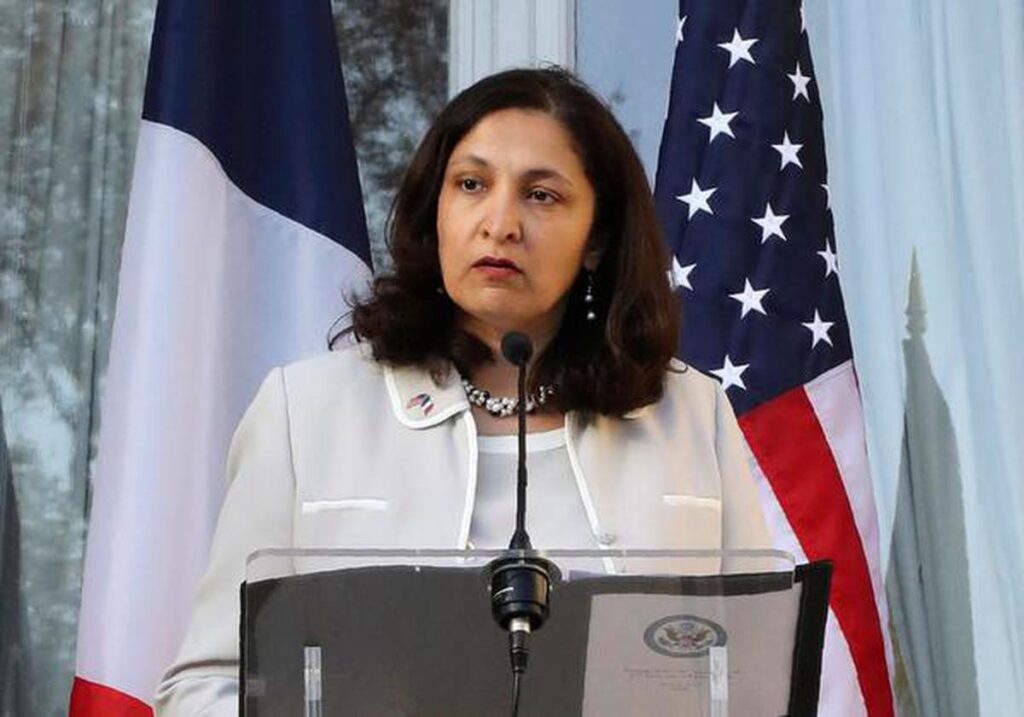
U.S. Special Coordinator for Tibetan issues Uzra Zeya. File | Photo Credit: AFP

U.S. Special Coordinator for Tibetan issues Uzra Zeya will travel to India and Nepal this week to deepen cooperation on human rights and democratic governance goals with the two nations, the State Department has announced.

Ms. Zeya, the Under Secretary for Civilian Security, Democracy and Human Rights and an India-American, is expected to visit Dharamsala in Himachal Pradesh during her visit to India.

Dharamsala is home to the Dalai Lama and the Tibetan Government-in-exile.

“Under Secretary for Civilian Security, Democracy and Human Rights and U.S. Special Coordinator for Tibetan Issues Uzra Ms. Zeya will travel May 17–22 to India and Nepal to deepen cooperation on human rights and democratic governance goals, and to advance humanitarian priorities,” the State Department said on May 16.

“She will also discuss partnering with India and Nepal during this Year of Action for the Summit for Democracy. The delegation will include U.S.AID Deputy Assistant Administrator for Asia Anjali Kaur,” it added.

It will be the first high-level contact between the U.S. and the Tibetan leadership after Joe Biden became President in January last year.

In New Delhi, people familiar with the development said last month that Ms. Zeya will hold talks with the Dalai Lama and other senior leaders of the Tibetan Government in exile in Dharamsala, signalling the Biden administration’s commitment to the Tibetan cause.

Last month, Tibetan exile leader Penpa Tsering paid a visit to Washington D.C. and met Ms. Zeya. Tsering — the elected head of Tibet’s India-based exile Government the Central Tibetan Administration — had also met House Speaker Nancy Pelosi and other congressional leaders.

China considers the 14th Dalai Lama as a political exile who has attempted to split Tibet from China under the guise of religion.

According to the people cited above, key issues relating to the Tibetan cause are likely to figure in the talks.

As the U.S. Special Coordinator for Tibetan issues, Ms. Zeya has been coordinating the Biden administration’s policies, programmes and projects relating to the Tibetan cause.

Ms. Zeya was sworn-in as the Under Secretary for Civilian Security, Democracy, and Human Rights by Secretary of State Antony Blinken on July 14 last year.

On December 20, she was concurrently appointed as the U.S. Special Coordinator for Tibetan issues.

The U.S. has been consistently supporting the Tibetan cause notwithstanding China’s strong objection.

In 2020, the U.S. came out with legislation reaffirming the absolute right of Tibetan people to choose a successor to the Dalai Lama and the preservation of Tibet’s environment.

After the U.S. Congress passed the legislation, China had accused Washington of meddling in its internal affairs.

China has been insisting that the selection of the next Dalai Lama has to be decided within Chinese territory and that it has to have a say in the matter.

The issue of a successor to the 14th Dalai Lama, who has been living in exile in Dharamsala since 1959, gained traction as he turned 86 in July last year.

Mr. Blinken had met a representative of the Dalai Lama during his visit to New Delhi last year.

source: http://www.thehindu.com / The Hindu / Home> News> International / by PTI / Washington, May 17th, 2022
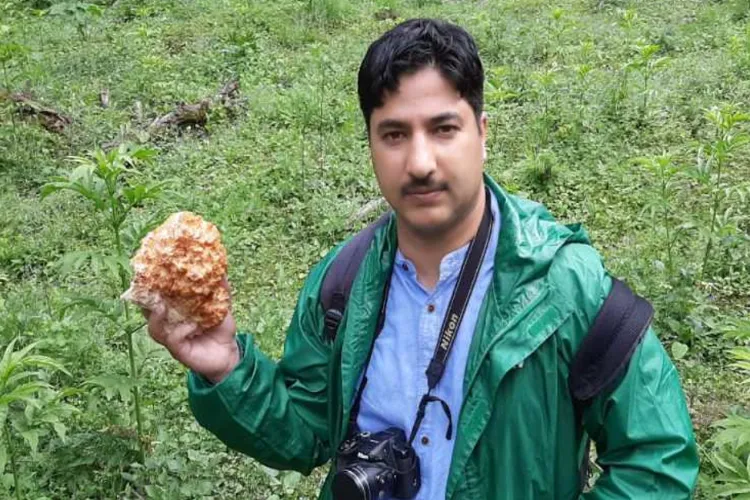
Rouf Hamza has documented 100 mushroom varieties of Kashmir

JAMMU & KASHMIR :

Dr. Rouf Hamza Boda
Dr. Rouf Hamza Boda

Srinagar:

Dr. Rouf Hamza Boda has documented 100 indigenous and yet little known varieties of mushrooms in the Valley to earn the sobriquet of ‘Mushroom Man of Kashmir’. This includes the most expensive fungi in the world – Gucchi (Morel) – and the exotic Porcini.

Dr Boda is the author of Nano Mushroom Identifier, a Book that is beginners’ guide on mushroom cultivation. He belongs to Doru Shahabad of Anantnag and works as a lecturer in Government Higer secondary School, Verinaag in South Kashmir.

He says, “Since I come from a village (Doru Shahabad, Anantnag), I used to be part of the mushroom hunting groups in spring. I used to collect mushrooms in wicker baskets. Along the way, I often saw mushrooms of various shapes and sizes. Sometimes, seeing the large size of mushroom was intimidating.”

His childhood exposure made his pursue a Master’s degree in Botany and, he followed it up with a doctoral research on Mushrooms.

“My guide, Dr. Abdul Hamid Wani inspired me to research on wild mushrooms. I am the first person in the valley to research on wild mushrooms,” he says.

In his research paper, he has documented about 100 mushrooms from forest areas in South Kashmir and evaluated them for antioxidants. Rauf Hamza Boda says, “I have documented their nutritive value, cultivation pattern and studied their classification.”

He said that all mushrooms are fungi and they produce spores similar to pollen or seeds that are spread by wind. A mushroom mature only after this process is completed.In nature the mushroom grow in soil or on wood.

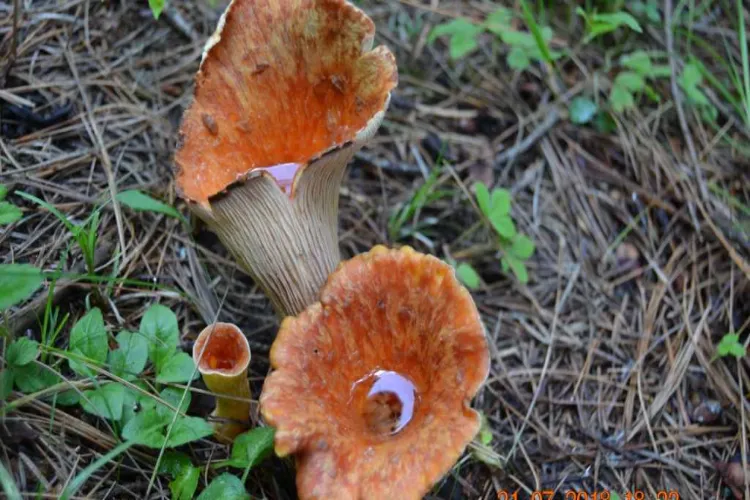
A local variety of mushroom on South Kashmir jungles

Mushrooms grow well on a pine tree. Hamza explains: “Mushroom extracts water and some minerals from the soil and gives it to the roots of these trees and the tree undergoes photosynthesis. This in turn produces many sugars for the mushroom.”

He says Kashmir has many naturally growing types of mushrooms, some of which are edible, including well-known species such as buttons, oysters, porcini and chanterelles, he said.

However, there are inedible ones too that can cause abdominal pain, or vomiting if eaten. Some can even prove fatal.

He says mushrooms are today known for their significant health benefits as these contain a variety of medicinal properties. “Mushroom is a low calorie food. It is rich in many health-boosting vitamins, minerals and antioxidants. Mushrooms have been recognized as an important part of the diet.

For example, mushrooms exposed to ultraviolet light are a good source of vitamin D, an important component in bone and immune health. In addition, many of them have anti-cancer properties.”

However, he pointed out that climate change and urbanization have affected many mushroom species. As a result, there has been a gradual decline in the mushroom production including that of Gucchi mushrooms.

“I have been tracking them for the last 10 years. It is estimated that their production has decreased as a result of climate change, deforestation and habitat destruction. Similarly, other mushrooms that grow in early spring, such as the monkey cap, are beginning to disappear. Earlier, they were seen in March and April.

He said that mushroom growing is a profitable venture for anyone who has the basic knowledge about the technique and art of growing mushrooms.

source: http://www.awazthevoice.in / Awaz, The Voice / Home> Youth / by awazthevoice.in / May 03rd, 2022

Danish Siddiqui, three other Reuters photographers win Pulitzers for images of India’s Covid crisis

NEW DELHI / JAMMU & KASHMIR / INDIA

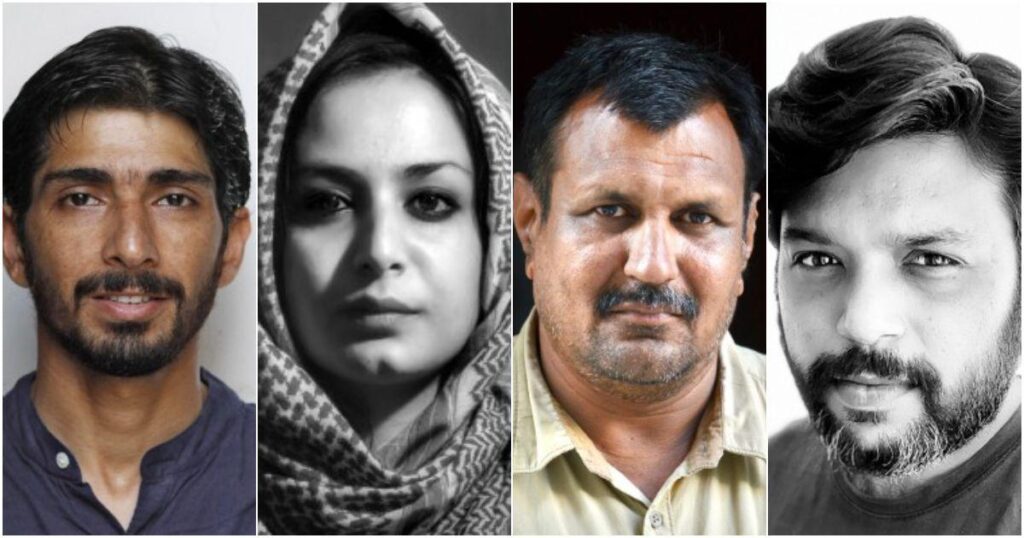
The late Siddiqui, Adnan Abidi, Sanna Irshad Mattoo and Amit Dave won the prestigious prize for feature photography.

Reuters photographers Adnan Abidi, Sanna Irshad Mattoo, Amit Dave and Danish Siddiqui. | The Pulitzer Prizes

Reuters photographers Adnan Abidi, Sanna Irshad Mattoo, Amit Dave and the late Danish Siddiqui won the 2022 Pulitzer Prize for feature photography on Monday for their coverage of the coronavirus crisis in India.

Siddiqui, 38, was killed while covering a clash between Afghan security forces and Taliban fighters near a border crossing between Afghanistan and Pakistan on July 16.

The jury said that the prize was awarded to the four photographers for their images of the crisis that “balanced intimacy and devastation, while offering viewers a heightened sense of place”.

This is Abidi’s third Pulitzer. Siddiqui had also won the prize before, in 2018.

_____

Twitter

______

Reuters Editor-in-Chief Alessandra Galloni said that the world was “jolted awake” to the scale of India’s Covid-19 outbreak after the news agency’s photographers documented it.

“To have Danish’s incredible work honoured in this way is a tribute to the enduring mark he has left on the world of photojournalism,” Galloni said in a statement.

A mass cremation of victims who died due to the coronavirus disease is seen at a crematorium ground in New Delhi on April 22, 2021. Reuters/Danish Siddiqui

While Abidi is based in New Delhi, Mattoo is a photographer from Kashmir. Dave is based in Ahmedabad, from where he covers local and national news assignments for Reuters.

The body of a person, who died from the coronavirus disease, lies on a funeral pyre during a mass cremation at a crematorium in New Delhi on May 1, 2021. Reuters/Adnan Abidi

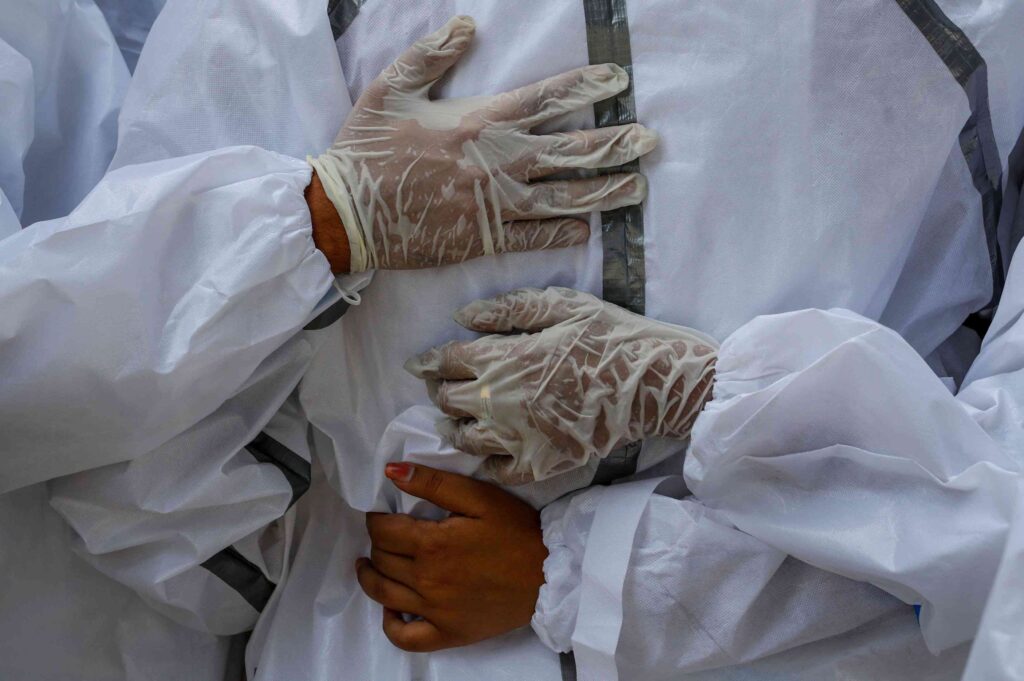
Family members embrace while wearing personal protective equipment as they mourn a male relative, who died from the coronavirus disease, during his cremation ceremony in New Delhi on April 21, 2021. Reuters/Adnan Abidi

Other winners

The New York Times won three Pulitzer Prizes and was named as a finalist in five other categories on Monday.

The Washington Post won the award in the public service category for its “compellingly told and vividly presented” account of the attack on Capitol Hill in Washington on January 6, 2021.

The journalists of Ukraine were also awarded a special citation for their coverage of the Russian invasion.

American journalists Corey G Johnson, Rebecca Woolington and Eli Murray of the Tampa Bay Times were awarded the Pulitzer for their investigative reporting.

The three had exposed highly toxic hazards inside Florida’s only battery recycling plant that forced the implementation of safety measures to adequately protect workers and nearby residents.

Novelist Joshua Cohen was awarded the Pulitzer in the fiction category for his book The Netanyahus. The book is based on the life of Benzion Netanyahu, the father of former Israeli prime minister Benjamin Netanyahu.

The Pulitzer Prize in music was awarded to Raven Chacon for his composition Voiceless Mass.

See the full list of winners here.

source: http://www.scroll.in / Scroll.in / Home> Latest> Media Matters / by Scroll Staff / May 10th, 2022

Interview: Shoeb Farooq, Business Head, Triumph Motorcycles India

NEW DELHI :

Triumph India has plans to assemble the upcoming Tiger 660 in India. More than 50 percent sales of Triumph are coming from CKD models, and the brand is eyeing to close around 1,200 units.

Over 50% of our sales volumes are coming from CKD models

Over the last 12 months (November 2020 to October 2021), there has been about 10% de-growth in the Indian premium motorcycle segment (usually 500cc and above engine size, and costing more than Rs 5 lakh), but Triumph Motorcycles India grew by about 30% in this period. “We are confident of holding on to this growth over the next few months as well,” Shoeb Farooq, business head, Triumph Motorcycles India, tells FE’s Vikram Chaudhary.

He adds that the Trident, its entry-level 660cc motorcycle, has brought in a new set of customers to the brand. Excerpts:

What all reasons do you attribute to Triumph Motorcycles India’s growth in a shrinking market?

The basic strength of Triumph lies in its product, and we have been pretty aggressive in our product strategy, right from the BS4-to-BS6 transition to now. We have continuously built on our product range; we have 15 models right now, which is one of the largest in the premium motorcycle segment in India.

We have also entered a new territory, which is the 660cc motorcycle segment, and this has given us a completely new set of customers. We also have a very strong dealer network.

Then we aligned our global launches with India launches, and if a product is launched globally we try to ensure that within a few months it is available in India as well.

All these things put together have given us robust growth in a shrinking market.

How many motorcycles have you sold in the last 12 months?

We have sold about 1,050 units in the last 12 months, but in our financial year (which runs from July to June) we will close around 1,200 units.

This will be one of our best sales performances in India.

Did the chip shortage create supply challenges for you?

It’s not just the chip shortage, but also the container shortage (motorcycle parts come to India in shipping containers) that is a challenge, but we are trying to ensure minimum waiting period for our customers.

Have you become India’s largest premium motorcycle player, or is it still Kawasaki?

The premium motorcycle market size in India is close to about 4,500 units, and we represent a quarter of that.

The focus is not about becoming number one, but to create unique post-purchase experiences for our customers, by taking care of all their needs, from curated rides and track days and even choice in terms of riding gear.

Has the Trident become your largest selling single model, considering that it is the most affordable and must have gotten a new set of customers to Triumph India?

We are averaging close to 30-odd unit sales of the Trident motorcycle every month in India, which is about 30% of our monthly sales; our Classic motorcycle range together contributes another 30%, and the remaining is contributed by the Street Triple, the Rocket and the Tiger.

The average age of the Trident buyer is also lower than buyers of other Triumph models.

Going forward, we are getting more products on the 660cc platform, including the Tiger 660, and this will attract a lot of first-time buyers to the premium motorcycle segment.

The 660cc segment has also gotten us some buyers from tier-2 and tier-3 cities, and this is expected to only grow with more models in the 660cc range.

The Trident is assembled in India. Will the Tiger 660 also be assembled in India?

Yes we plan to make it in India; now with the Trident, more than 50% of our sales volumes are coming through CKD models.

source: http://www.financialexpress.com / Financial Express / Home> Express Drives> Auto> Bike News / by Vikram Chaudhary / November 29th, 2021

Brahmaputra devoured Abdul Barek’s land and made him run to glory

Kamrup District, ASSAM :

Abdul Barek

The saying that ‘Necessity is the mother of invention’ is so much actualized by Assam’s long-distance runner Abdul Barek. In his case, the ‘necessity’ was the money he desperately needed to buy food and books after his family farmlands were washed away by the mighty Brahmaputra

“It was not out of love for a particular sport… I was born and brought up in a self-sufficient family in a rural hamlet in the Kamrup district. However, when our farmlands were eroded by the Brahmaputra, we were left with nothing for sustenance. The little produce from our livestock was not enough for the family. I was in standard IX when for the first time I participated in a Rongali Bihu Marathon in a nearby locality and came first in it to win prize money of Rs 1,000. Well, that was a lot of money for me! I could buy my school uniform and books with it.

 “Now that I’ve discovered a way of earning and my family was in a very bad financial shape, I have started looking to every marathon event as a means to earn. I participated in every known event and would look for all the prize money up for grabs. Gradually, I developed a yearning for winning all possible cash prizes in marathons in Assam and the Northeast. And, for that, I started practicing regularly and improving my performance with each run,” Barek told Awaz-the Voice.

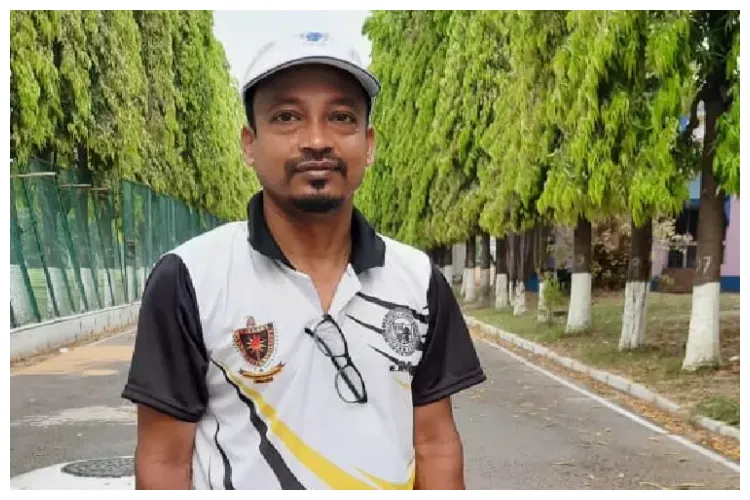
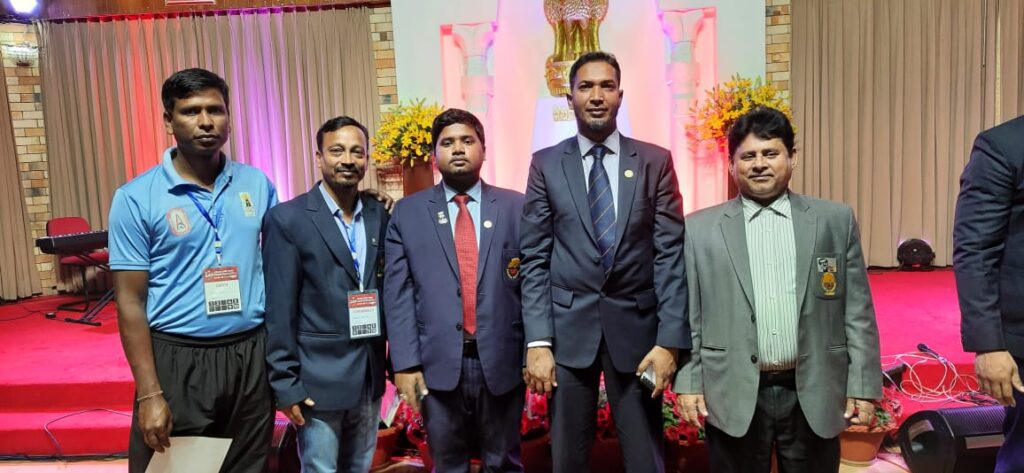
Abdul Barek (second from left) with fellow sportspersons from Railways

Barek craved newer heights in the no-cost sport. Having bagged scores of medals and trophies at state and national levels, his campaign culminated in the World Railways Athletics Meet at Denmark in 2005 where he emerged 10th in the individual event and third in the team event of the marathon championship. He is the first-ever sprinter from NF Railway to participate and win a medal in World Railways Meet.

 “My success lies in my perseverance. I’ve never compromised with my practice. My job with NF Railway has helped me a lot because I don’t have to forgo practice due to household work as I did in the past … I would like to thank former international athlete Tayabun Nisha for suggesting my name to the Indian Railways which promotes sports. I had also appeared in interviews with Central Excise and Indian Army,” Barek explained.

On his success, Barek said: “Practice, rest, and nutrition are the key to performance. There was hardly any infrastructure during our times. But, after the 2007 National Games, we’ve got a whole lot of infrastructure and necessary facilities including coaches. However, the problem now is that our young players have lost interest in sports. The smartphone and fast food have spoiled a generation. Most of the youngsters nowadays munch on fast food, and keep themselves glued to their mobile phones when they should be at the playground.”

Abdul Barek in the international Railways sports meet

Regarding his food habits, Barek is a follower of cricketer MS Dhoni; both love to drink milk as an energy booster. “I used to drink a lot of milk. My father used to tell us to drink milk instead of water and that I used to do. I don’t like fast food and I’ve always preferred vegetables with our staple rice.” Barek also lamented that the urban youth were reluctant to do hard work. “Since I am based out of Guwahati and I am associated with an athletic academy, I always wanted to groom some good athletes. But, what pains me is that the rural youths can’t sustain long-term coaching and urban youths are reluctant to do hard work. A few very talented youngsters from Baihata Chariali and Morigaon were training under me for some time. But, they could not sustain the tough regime and left. One basic requirement of a marathon runner to be successful is to run at least 200 km a week which is divided into a scientifically designed schedule.”

source: http://www.awazthevoice.in / Awaz, The Voice / Home> Youth / by Imtiaz Ahmed, Guwahati / May 04th, 2022

Just like old times

Bengaluru, KARNATAKA :

Musical duo Lucky Ali and Mikey McCleary, who first worked together on O Sanam, is collaborating again after almost 11 years for an album, Intezaar, the first song of which is out and trending.

Singer Lucky Ali. (File | PTI)

Bengaluru :

Lucky Ali turns to music to express himself. He might never be in a hurry to create tunes, but Ali makes sure the wait is worth it. The singer is now out with his latest album Intezaar, which has touched over 2 million views.      

Ali’s loungey music has always been popular among music lovers and Intezaar has something to it that makes it a crowd-puller too. The music of the album is by composer and long-time associate Mikey McCleary. The first time McCleary and Ali worked together was for the singer’s first album Sunoh in 1996, which created magic with the song O Sanam. The duo subsequently went on to work on many projects but is back together after a long break.

Ali says this is the first of many songs that is going to be out. “It’s an album, but we’ll be releasing one song at a time,” says Ali, adding that the composition was done a while ago but they were waiting for the right time to release it. The lyrics are by IP Singh which was a ‘new experience’ for Ali. “IP brings in more depth and has worked around the tunes,” he adds. 

When the seasoned musical duo took a break from working together, 63-year-old Ali says it gave him time to explore live shows. “Music took me to live experiences where I overcame stage fright. Performing live was a new experience all together,” says Ali. 

Meanwhile, McCleary has been a shining star in the Bollywood music scene, whose last project was in Priyanka Chopra and Farhan Akhtar-starrer The Sky is Pink. This song, for McCleary, has been about revisiting some of his older ideas. “Intezaar was actually an idea that we had worked on around 10 years ago. I was going through some of the older works and found a rough outline.

After developing the work, I showed it to Lucky who really liked it,” says McCleary, speaking to CE from New York. “I loved working on it because even if it is not a fast track, there is an uplifting feel to it. It’s a nice track that feels appropriate for the times we live in,” he adds. 

In times where remixes are trending, McCleary’s music, especially his remix of Khoya Khoya Chand for the movie Shaitan in 2011, has revamped the notion of remixing old classics. “My interest in classics, like Hindi film songs from the ’50s and ’60s, came from my wife (Diksha Basu, an author), who used to play Geeta Dutt’s classics. She encouraged me to experiment with that and I started doing that as a passion project,” says McCleary.

source: http://www.newindianexpress.com / The New Indian Express / Home> Cities> Bengaluru / by Monika Monalisa, Express News Service / May 02nd, 2022

Jamia Markaz student grabs International Quran Award

Kozhikode, KERALA :

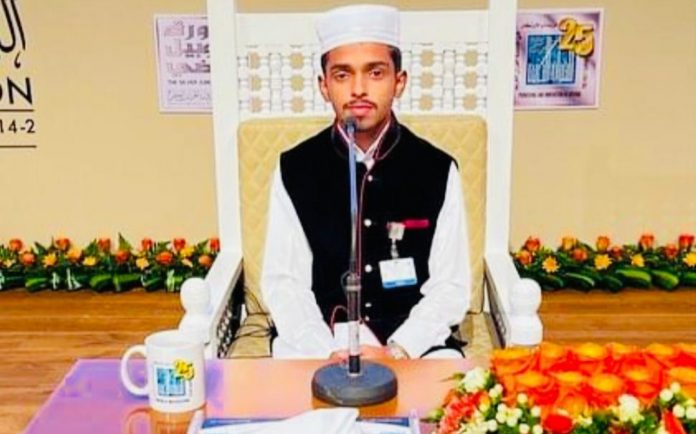
Hafiz Zainul Abid

Kozhikode:

Hafiz Zainul Abid, a student of Jamia Markaz, Kozhikode has won the 6th rank in Dubai international Holy Qur’an Award.

The silver jubilee contest was presided over by His Highness Sheikh Mohammed bin Rashid Al Maktoum, Ruler of Dubai, where Hafiz Zainul Abid represented India from Kerala. He is the disciple of Sheikh Aboobakar Ahmed in Kozhikode Jamia Markaz studying Shariah and BA English.

Contestants from 65 countries worldwide have participated in the event, which started on 3rd April 2022. The contest is the largest Qur’an award in its kind in the world providing the biggest cash prize to the winners; 2.5 lakh dirhams to the first prize winner. Zainul Abid, only one contestant represented India won 6th Rank bagged 55,000 dirhams as cash prize along with certificates. .

Mr. Abid also participated in various international contests including the Tanzania international Holy Qur’an Award last year.

source: http://www.muslimmirror.com / Muslim Mirror / Home> Education> Postitive Story / by Muslim Mirror Network / April 29th, 2022

Mangaluru: Gulbarga University to confer honorary doctorate on Yenepoya Abdulla Kunhi

Mangaluru, KARNATAKA :

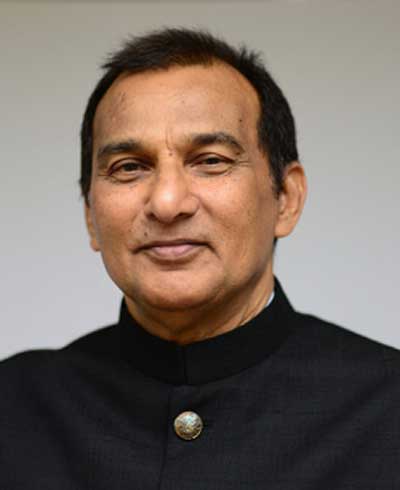
Gulbarga University has selected Yenepoya Abdulla Kunhi, chancellor of Yenepoya University, managing director of Yenepoya Group of Institutes and social and religious leader for an honorary doctorate.

The 39th and 40th convocation of the university will be held together and three people each have been selected for honorary doctorate. The honorary doctorate on Yenepoya Abdulla Kunhi will be conferred on the 40th convocation considering his immense achievements in the educational sector.

He has served as the trustee of Islamic Academy of Education, promoter of the Centre for Development Studies, president of Yenepoya Moidin Kunhi Memorial Educational and Charitable Trust, president of Malja-Ul-Islam English medium school, vice president of Badria Educational Institute, president of Takwa Open university, trustee of P A Education trust, president of Yenepoya Institute of Medical Sciences, partner in Moidin Kunhi and Company, managing director of Canara Wood and Plywood Industries, trustee of Yenepoya Saw Mills, convener of Yenepoya Vineers, partner in Yenepoya Transport company, partner in Yenepoya hotels, partner in Yenepoya Builders and Developers, president of Yenepoya Energy Private Limited and SLV Power Private Limited, chief promoter of Yenepoya Football Club, vice president of Islamic Trust, president of Malja-Ul-Islam Orphanage, president of Masjid Zeenath Baksh and Idga Juma Masjid, president of Islamic Cultural Centre, president of Karnataka Muslim Jamat, Dakshina Kannada district unit etc.

Yenepoya Abdulla Kunhi stays at Vas Lane in city his wife P K Nasreen. His two sons and two daughters are also serving in the Yenepoya group of organizations.

source: http://www.daijiworld.com / Daijiworld.com / Home> National-World / by Daijiworld Media Network – Mangaluru (EP) / April 25th, 2022

Atiqa Bano’s Meeras Mahal heritage museum to be refurbished

Sophore (Suvyyapur) Town (Baramulla District), JAMMU & KASHMIR :

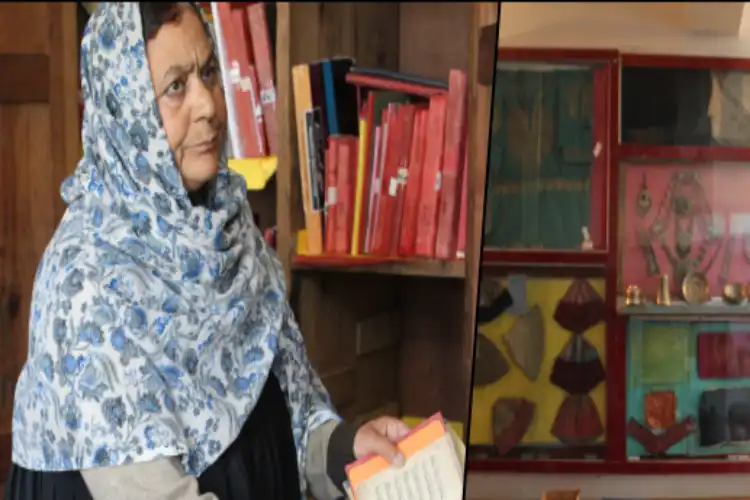
Atiqa Bano
Atiqa Bano

Atiqa Bano’s vision that the generations to come must know how people lived in Kashmir over centuries had made this retired Kashmiri educationist collect ancient households articles like hey mats (Waguv), multipurpose earthen pots, wooden doors, latches, and possibly all things used by humans over two centuries and create the first-ever private museum in the Valley.

Called “Meras Mahal” (The palace of heritage), it houses more than 5,000 artifacts reflecting the social and cultural life of Kashmir over two centuries.

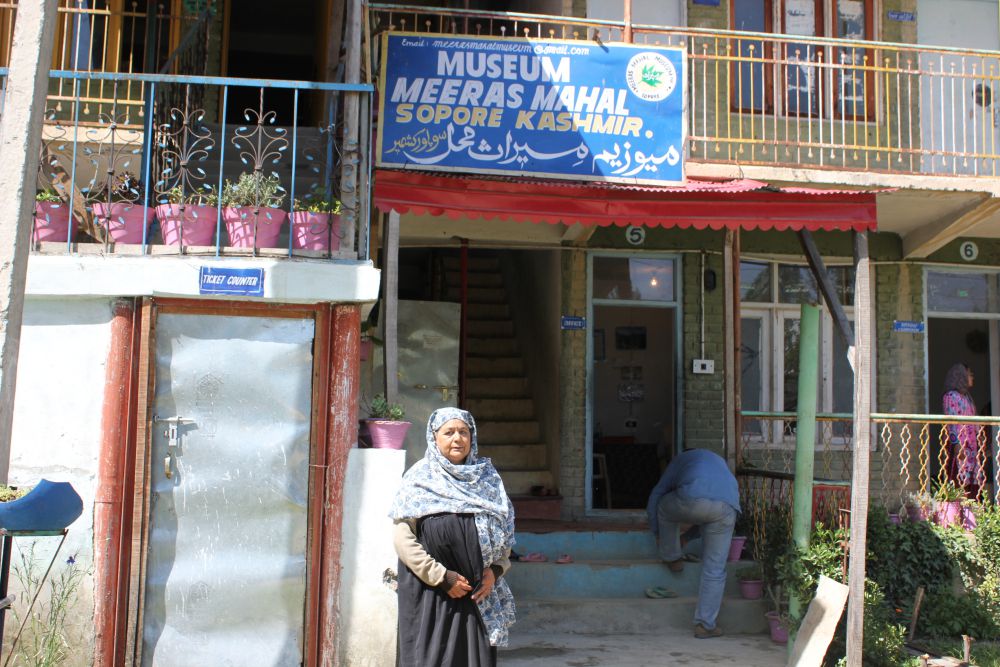
Atiqa Bano standing in front of Meeras Mahal

Atiqa Bano passed away in 2017 and her family continued to struggle to maintain it and not let forces of Nature damage this treasure trove. However, they always lacked resources for this gigantic task.

Finally, Atiqa Bano’s love of her labour is all set for a major revamp and scientific conservation as this historic treasure had attracted the attention of the Indian National Trust for Art and Heritage (INTACH), J&K Chapter.

Atiqa Bano, an educationist, had made great efforts to collect the exhibits over two decades after she retired from the J&K Government services in 1998. A woman of strong resolve, Atiqaji, as she was popularly called, had taken to looking after her father after her mother’s death. She had chosen to remain single and devote her life to education, women’s welfare, and society.

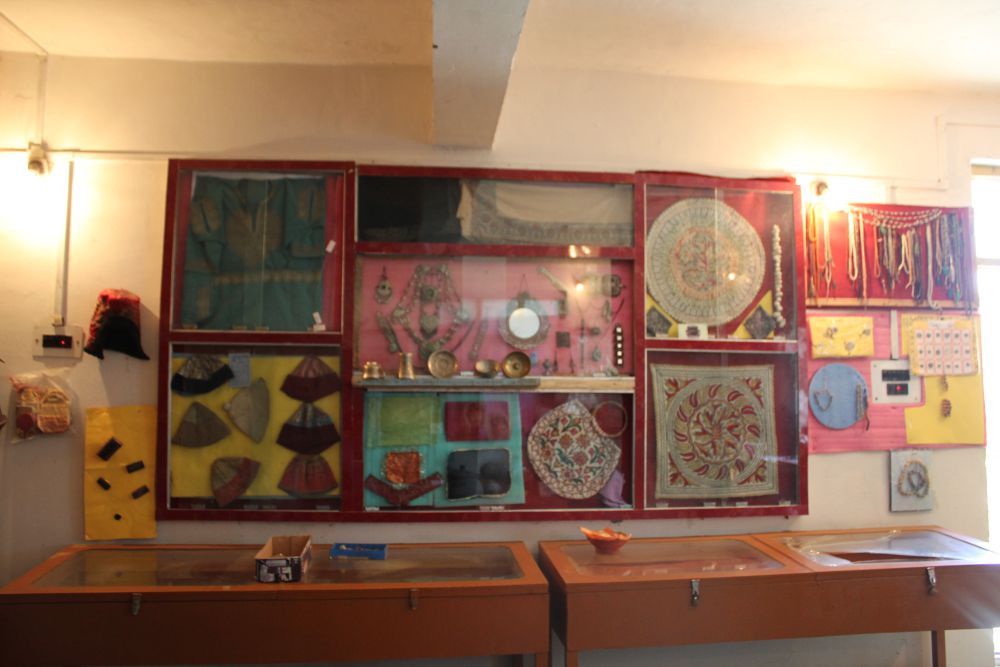
Household items on display in Meeras Mahal

It was during her campaigns for women’s empowerment that she was drawn to the collection of rare kitchenware, old ornaments, agricultural tools, clothing, earthenware, and manuscripts lying around in many Kashmiri households. It dawned upon her that with the changing times, all these human inventions would be lost to time if not preserved for posterity.

She started collecting artifacts in 2002 and continued her mission till her death.

Atiqa Bano is gone from this world, but her memory and work is commemorated for posterity, and, as she wished, for the generations to come.

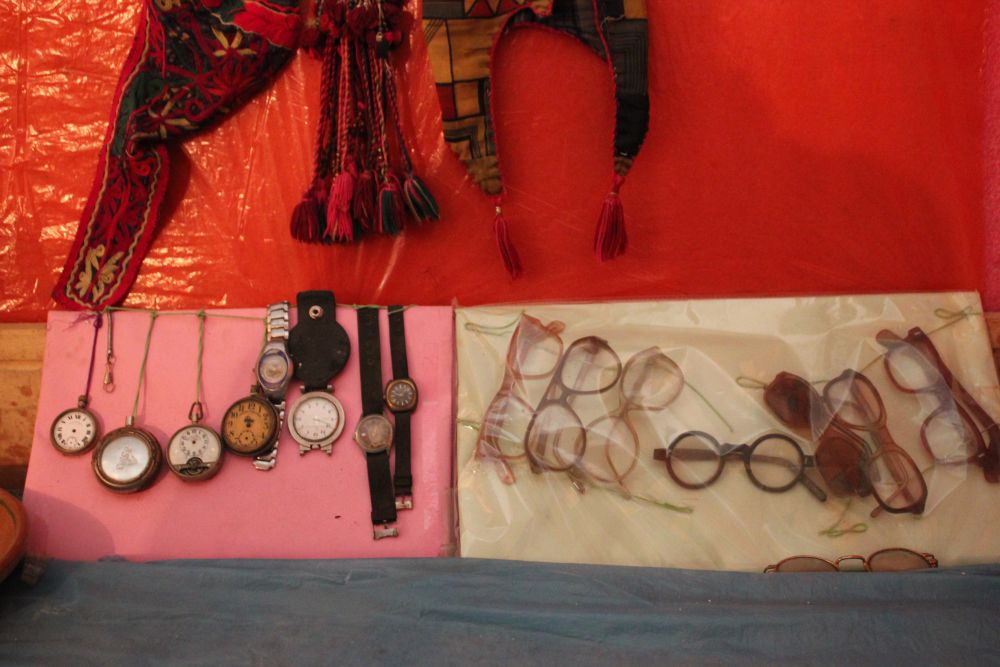
A collection of watches and eye glasses on display at Meeras Mahal

Realizing the importance of Atiqaji’s rich heritage collection, the J&K Chapter of INTACH and HELP Foundation have taken up the gigantic task of rejuvenating  Meeras Mahal.

Saleem Beg, head of the INTACH, J&K Chapter, said, “Saima Iqbal and INTACH team are digitizing, curating and contextualizing the rich collection of vernacular objects after preventive conservation. The museum will have a thematic display demonstrated through sketches and write-ups supported by an elaborate digital presence.”

Saima Iqbal said, the work, supported by ALIPH- an international alliance for the protection of heritage in conflict areas, is getting streamlined. She stated that a team comprising a web designer, photographer, conservator, curator, and illustrator is working in tandem as all are interdependent and need to work in sync.

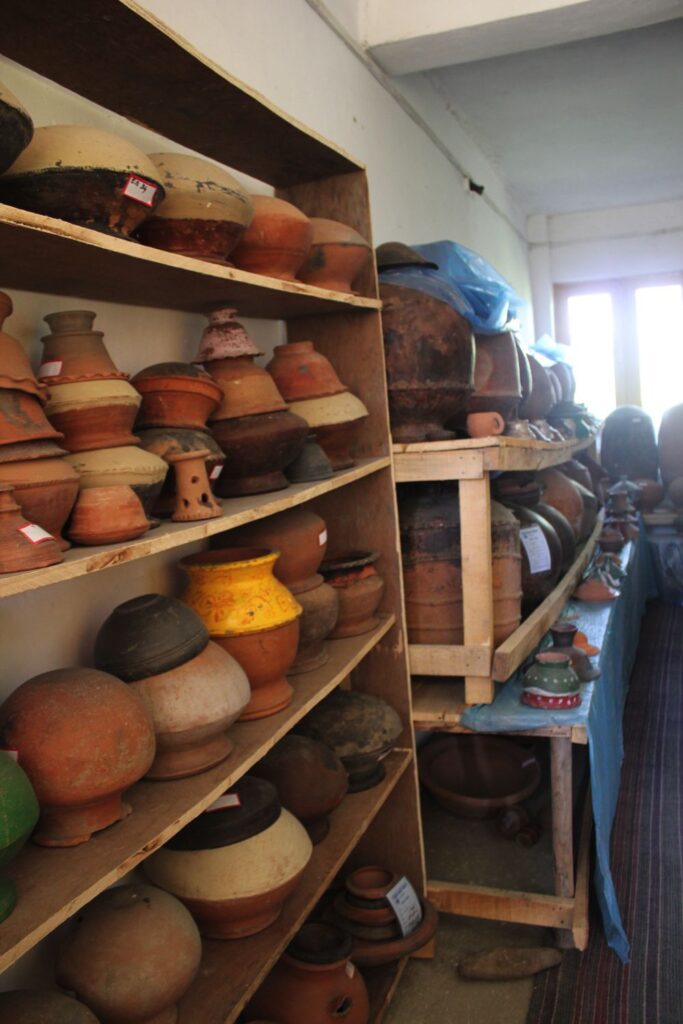
Earthenware used in Kashmiri households in Meeras Mahal

“I have to say that the challenges are many and we are making the best use of available meager resources here but the passion is alive and the project will be a great success”, she said.

“The first article preserved in the museum is Kondul, an earthen bowl that holds smoldering embers in Kangri, a personal and portable heating device of Kashmiri, said Muzamil Bashir Masoodi, Caretaker or (Honorary) President of the five-member Trust of prominent literary personalities, constituted to look after the museum.

Muzamil, who is also Atiqa Ji’s nephew had been taking a keen interest in maintaining and preserving the rare articles of the museum. The initially preserved items also included hand-written books of Ghulam Mohammad Hanfie, a scholar, Ateeqa Ji’s grandfather.

“All the items are counted one by one like 10 different Charkhas (spinning wheels) are counted as 10 separate items”, explained Muzamil.

The museum was initially set up in their private B. Ed College, Kashmir Women’s College of Education, at Noorbagh, Sopore. It was shifted in 2012 and called Meeras Mahal to a Hostel building of the College, at Highland Colony, where the rare items are “stored” due to the paucity of space.

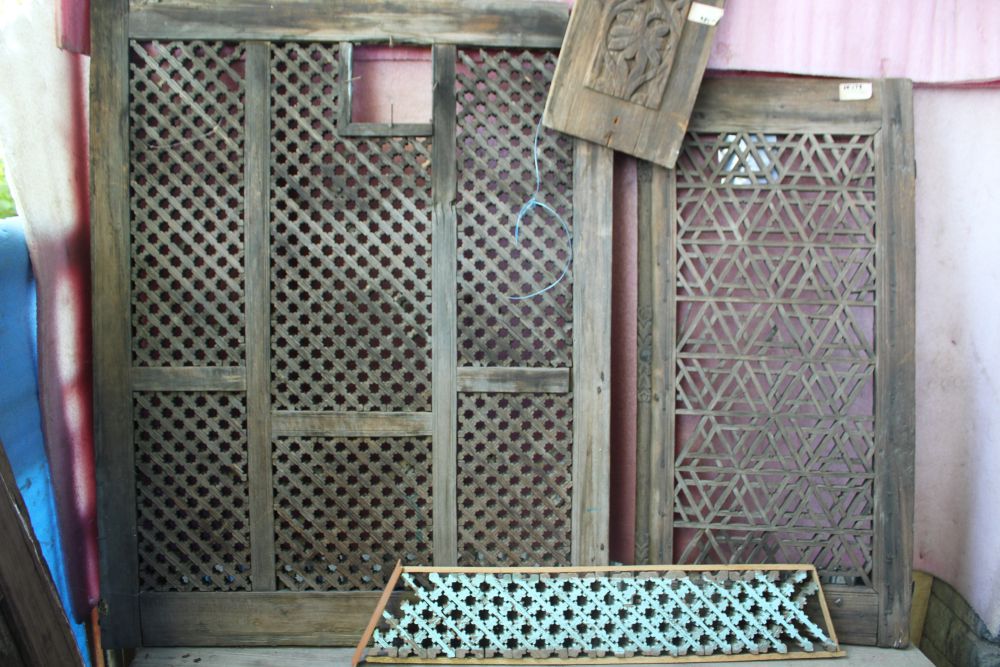
Doors and windows used in Kashmiri architecture

Muzammil said that “we cannot provide the normal gap of at least two feet between the items”, which makes it difficult to maintain the entire treasure. “There has been no support from the Government”, he said. He said so far he has been getting a token amount from the college funds for maintaining the museum.

“During the Covid restrictions, when everything was closed, we managed to be in the museum to provide basic maintenance,” Muzamil said. He had submitted a detailed project report, for conservation and preservation of the museum to the UT Government in 2019.”

Nothing has came his way so far.

source: http://www.awazthevoice.in / Awaz, The Voice / Home> Culture / by Ehsan Fazli, Srinagar / April 11th, 2022

Khassa brings alive the century-old legacy of the Royals

Hyderabad, TELANGANA :

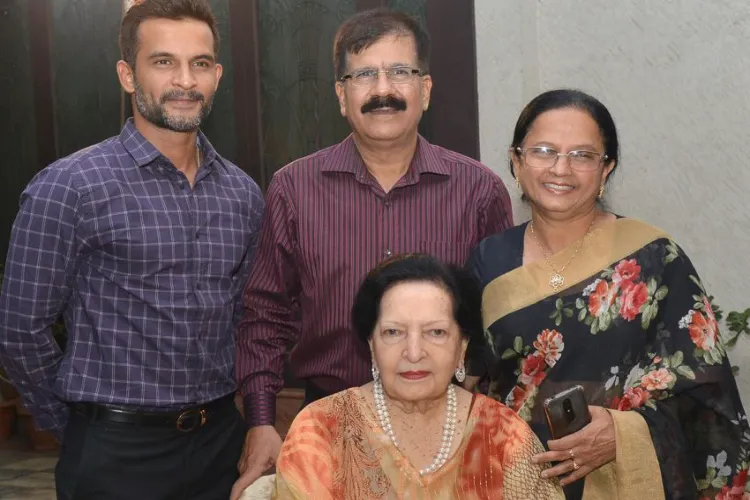
Shahmnoor Jahan with her family

Whether it is a hundred-year-old dish Kuzi or Fish Salad or Badam Ka Kund or the Noorani Seviyaan, Shahnoor Jehan, the descendent of a Sultan of Yemen, dishes out these mystic 100-year old cuisines for the connoisseurs and the gourmands.   

Even as the erstwhile nawabs of India deal with the loss of their titular legacy, tables laden with succulent meats, and the foods flavoured with freshly ground spices and their untranslatable code of tehzeeb- their last standing bastions of power, wealth, and heritage – Shahnoor Jehan, whose grandmother Muzaffar Unissa Begum hailed from the family of the Sultan of Yemen, has kept it alive.

Meeting this soft-spoken lady was a quiet grounding experience given her repertoire of knowledge on food. 

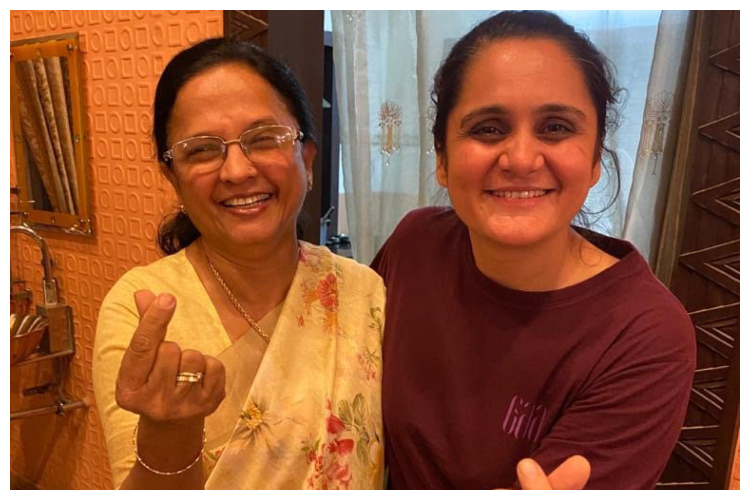
Shahnoor Jehan with her daughter

Daughter of an IAS officer and wife of a very supportive businessman Adil Mirza, Shahnoor Jehan was also encouraged by her adorable children Shohrab Mirza and Nimrah Mirza to use her knowledge and the knowhow inherited from her blue-blooded family and preserve the 100-year-old recipes for posterity. Khassa, a food brand, is a reality because of the support Shahnoor Jehan got from her family.

Shahnoor Jehan says, “There’s a certain etiquette that embraces all nawabi culture. It’s not so much about the commonality of ingredients or dishes but the way the food is prepared and served and the way we host our guests. And for these families, it’s comforting if you understand that,” she says. “Khassa is just that.”

In earlier days people never said “food is ready’ while inviting guests to the table,; they would say but said “Khassa Taiyaar Hain.” Shahnoor Jehan has preserved her well-guarded recipes dating back to several generations.

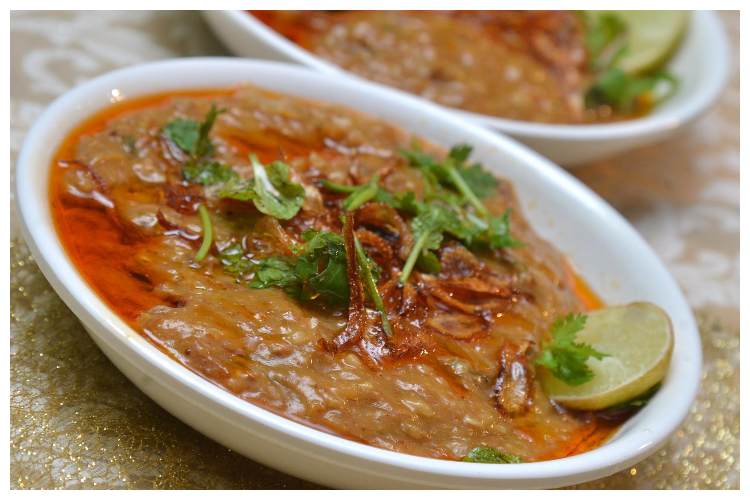
A dish from Shahnoor Jahan’s cook book

Her cookbook which she has preserved to date from her school days takes on a narrative beyond food; it’s about legends, anecdotes, and antiquities that comprise heritage. It is this inherited legacy that has made her take up cooking as a passion and make it her business. “I think cooking was a hidden talent in me. Most of the time friends appreciating my cooking made me ponder over the possibility of taking it up as my profession and when my kids and family support came, I converted my culinary skills into a startup.”

“Till I got married, I never had any experience of cooking; it was only an interest. It was my grandmother and mother who inspired me initially and the realization and confidence that I can cook well came with the appreciation I got from my friends and family who eagerly awaited the indulgence. The original cuisine is slowly fading away. I kept up the tradition of preparing dishes on charcoal and grounding spices made by hand..”   

Begum Shahnoor Jehan the granddaughter of Nawab Ahmed Baig and her Grandmother Muzaffar Unissa Begum shares a princely legacy of the Sultan of Yemen and her food is an amalgamation of Mughal, Turkish and Arabic and influences of Hyderabadi cuisine.

She has infused local foods like rice, wheat, and meat dishes and the skilled use of spices herbs, and natural edibles in Khassa,

Owner of brand Khassa, Shahnoor Jehan serves cuisines like mutton haleem, mutton Shikamaru, dum ka murgh, or whether it is her signature dish a hundred-year-old dish called the Kuzi- leg of mutton cooked in pure almonds, saffron, and spices like black pepper enriched further with dry fruits, sugar candy ( Rock Mishri ) saffron, and silver foil are steeped in history.

Shahnoor Jahan’s recipies

While Khassa has been in the limelight for its iconic Kuzi, mutton roast or the kebabs like Shikampoor Shahnoor has also drool-worthy desserts to her credit that you can never say ever! Whether they are the innovative desserts like the Noorani Seviyan or the most rich ones like the Badam ka Kund– a traditional Hyderabadi dessert rich in almonds infused with saffron and cooked for hours together to get that creamy finish.   

Says Shahnoor Jehan some of the recipes are native but they have been prepared and perfected down the generations at Shah Manzil, which is the present-day Raj Bhavan (the official residence of the State Governor). They have been part of Shahnoors family legacy for generations over a hundred years of age Adds Shahnoor my maternal Grandmother Muzzafar Unissa Begum, the daughter of the Sultan of erstwhile Yemen, and her grandfather Nawab Ahmed Baig, the son of late Shehzoor Jung, was influenced prominently by the flavours of Yemen, where she was from. I picked up most of her techniques and recipes which were well guarded and preserved by Shahnoor Jehan’s mother Faiq Jehan Till date Shahnoor continues to preserve the diaries and books belonging to her royal family. She adds that while her mother has been an inspiration for her she did pick up a few techniques from her mother-in-law Shaheda Begum she adds. 

Today this luxury dining has come alive with her cuisine “Khassa” which is offered to her customers by way of food based on orders from her customers. It is indeed a luxe dining experience as nothing is too extravagant at her end whether it is the use of the saffron or the almonds, or whether it is the use of gold and silver foil, they season most of her meals. Only the finest cuts of meat make it to your orders. Whether it is ordering the mutton roast -chunks of meat soaked in sauces, ginger garlic paste, pepper, and roasted or whether it is Kairi Ka Do Pyaaza chunks of meat cooked alongside with raw mangoes spices and silky onion gravy a seasonal specialty. 

Shahnoor says some of her dishes are cooked languorously , sometimes for entire day-the dum (where food is cooked for hours over low heat in lagan and smoked with the piece of burning coals placed on top to flavor the food , and these remain her techniques of choice.

Shahnoor Jahan with Khassa

In the earlier days, the chefs or the bawarchis at her Shah Manzil sometimes specialized in just one dish. Kitchens were considered laboratories, and chefs artists were encouraged to experiment innovate and create. Today we are preserving this past heritage as an agenda. She recalls the Nawabs of yore were patrons of food, helping the food to evolve Now dining With The Khassa brings back some of the grandeur and is a beautiful reminder of the lavish brilliance of nawabi food.

Says Shahnoor Jehan we want to bring a culinary slice of Yemen and the Nawabs of Hyderabad at Khassa with dishes that resonate with our philosophy of cooking with the choicest of ingredients.

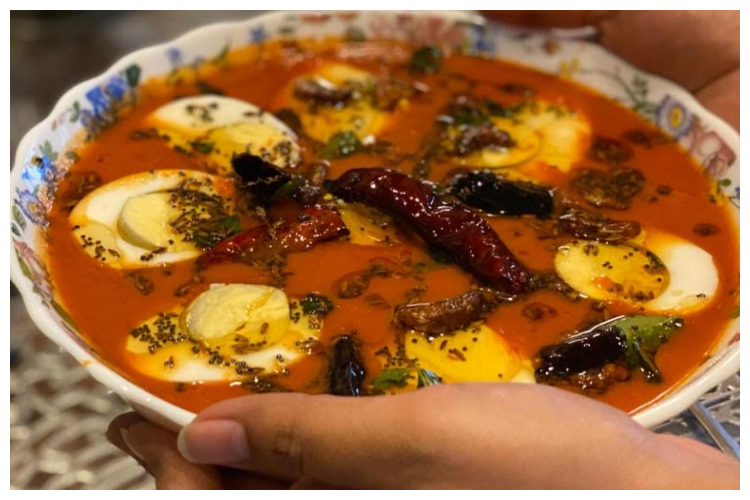
Her spread in her menu looks fit for a king. There are Shammi Kebab-succulent pieces of tender lamb cooked with spices a melt-in-the-mouth experience and the Mutton Shikampur, the iconic kebabs from the royal kitchens of Hyderabad. The main course consists of Tamatar ka Kut a classic Hyderabadi dish and a rich tomato gravy topped with mild temperate spices and boiled eggs. Mutton Dalcha, is an age-old recipe of mutton cooked with lentils and bottlegourd. There are classic dishes such as Chicken or Mutton Korma cooked in rich gravy sauce or the traditional Kairi Do Pyaza a tangy lamb preparation. Her signature dishes include Haleem, Kuzi, Fish Salad Mutton Roast, Dum Ka Murgh, or the Dum Ka Raan all slow-cooked in mild spices.

Also, there are desserts to die for whether it is the Zafrani Badami Kheer, Sheer Khorma, or the Qubani ka Meetha.

Khassa indeed brings the hidden treasures of food that is heavy on aroma and boasts of rich flavours that will hit the spot if you’re looking for a feast.

www.khassabyshahnoorjehan.com

source: http://www.awazthevoice.in / Awaz, The Voice / Home> Culture / by Ratna G. Chotrani, Hyderabad / April 17th, 2022