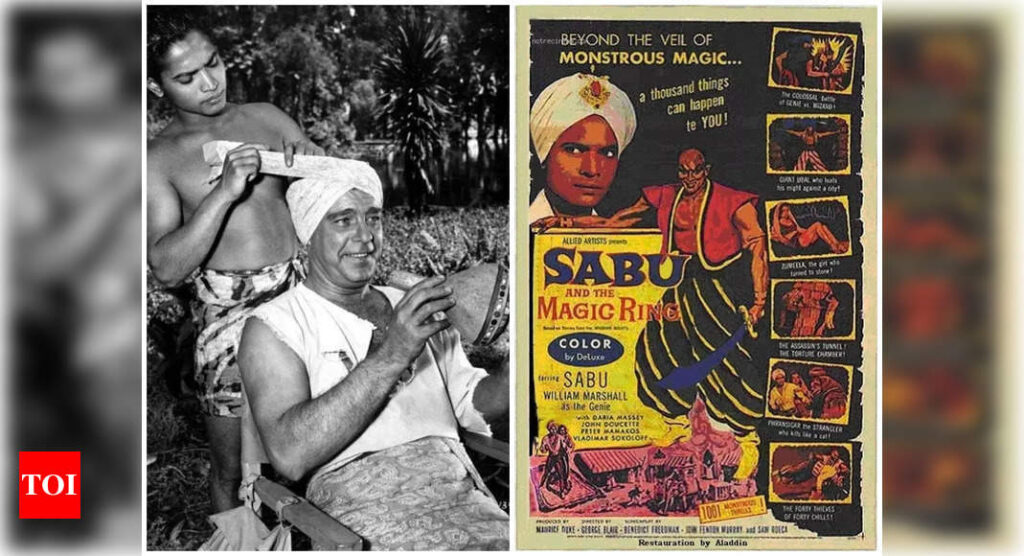
Sabu Dastagir, or Selar Sabu, might be an overlooked name in Indian Cinema’s vibrant history but many wouldn’t be aware that he was perhaps the first actor to find bonafide success in Hollywood. These are the early 1930s that we refer to, much before the likes of Om Puri, Saeed Jaffrey, Irffan Khan or even Priyanka Chopra made their mark on the foreign shores.
Born in the Mysuru kingdom of the pre-independent India to the then king’s official mahout, Sabu was spotted at the age of 13 by director Robert Flaherty (or his wife, some sources claim) who would later cast him in the screen adaptation of Rudyard Kipling’s Toomai and the Elephants (from the Jungle Book). While portions of the film were shot in Mysuru, the rest of the film was shot in London which meant that Sabu was flown over, along with his brother, to England where he is said to have attended school for a brief period.
But this was only the beginning for Sabu Dastagir as he chanced upon more such golden opportunities with projects like ‘The Drum (1938), wherein he played prince Azim, or Zoltan Korda’s ‘The Thief of Baghdad’ in 1940 in which he played Abu, the outwitter who ultimately saves the princess. ‘The Thief of Baghdad’ won the Oscars for Cinematography, Art, and Special Effects while ‘The Drum’ ended up causing riots in Mumbai for its subservient attitude towards the British in the film.
Around the time of ‘The Thief of Baghdad’s release, the second World War was looming large over the entire world, and Sabu, during its peak, had just completed shooting for ‘Jungle Book’ in Hollywood.
He would go on to serve the American military and become an integral member of more than 40 air missions across the pacific as their tail or machine gunner. Along with the acting accolades he had received till then, Sabu also became a decorated military officer after being awarded the Flying Cross.
Sabu would then continue residing in the United States of American and become the face of the “Empire Movies” with several hits like ‘White Savage (1942)’, ‘Cobra Woman (1944)’, ‘Man-Eater of Kumaon (1948), and many more to his name.
It was on the sets of ‘Song of India’ in 1949 that he met actor and future wife Marilyn Cooper for the first time.
Sabu Dastagir breathed his last on 2nd December, 1963 in California, despite being in the pink of his health at the time.
source: http://www.timesofindia.indiatimes.com / TimesofIndia.com / Home> Entertainment> Kannada> Movies / by Swaroop Kodur / September 07th, 2021
South Africans across the board voted for Sooliman, putting Deputy Chief Justice Raymond Zondo in second place.
Johannesburg:
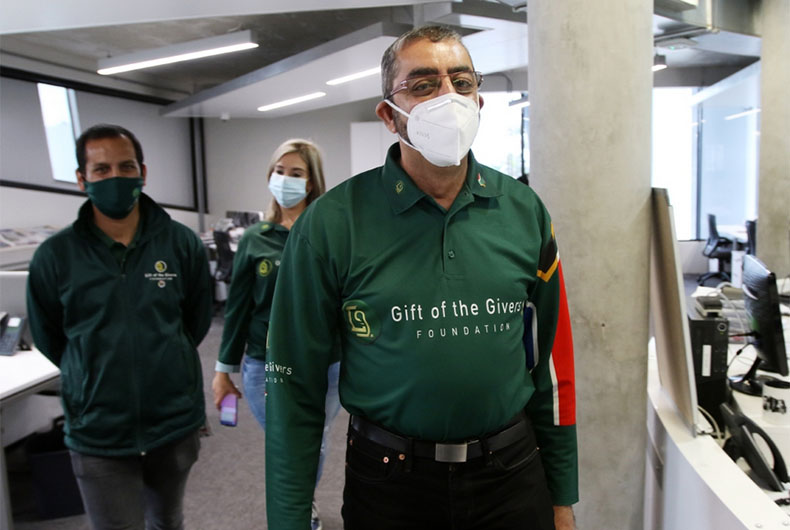
Indian-origin philanthropist and founder of disaster relief group ‘Gift of the Givers’, Dr Imtiaz Sooliman has won the prestigious South African of the Year Award run by the Daily Maverick newspaper.
South Africans across the board voted for Sooliman, putting Deputy Chief Justice Raymond Zondo in second place. Zondo heads the Commission of Inquiry into State Capture, which investigates fraud and corruption in the public sector, including state organs.
Dr Sooliman, in his acceptance speech at the Al Quds Mosque in Cape Town on Friday, called on Muslims worldwide to engage in caring for all communities to change Islamophobic perceptions.
“About Gift of the Givers”
Dr Sooliman started ‘Gift of the Givers’ after his religious mentor in Turkey, Muhammed Safer Dal Effendi, asked him to do so in 1994.
Since then, the charitable and relief organisation has undertaken relief work in more than 44 countries after natural disasters such as earthquakes as well as assisting people in war-torn countries.
Besides the Middle East, Eastern Europe and many countries in Africa, ‘Gift Of The Givers’ teams have also assisted during natural disasters in India and Pakistan.
“Utlization of Zakat”
Relying almost entirely on donations and the obligatory ‘Zakat’ paid by Muslims, ‘Gift of the Givers’ has provided almost 4 billion rand (USD 260 million) worth of aid to drought-stricken areas, ranging from mobile hospitals, food hampers, and digging boreholes.
The doctor recalled how Sheikh Muhammed Safer Dal Effendi, his religious leader in Turkey, had instructed him to establish the organisation ‘Waqful Waqifin‘, which translates to ‘gift of the givers’ from Arabic.
“My son, the Sheikh said, you will serve all people, of all religions, of all races; all colours, all cultures; all classes, of any geographical locations and of any political affiliation, but you will serve them unconditionally. You will expect nothing in return, not even a thank you,” recalled Dr Sooliman, who practises medicine.
“When we go into an area to do our work, we don’t look at their belief systems. Whether they are Hindu, Muslim or Christians, whatever they may be, we don’t go to be judgemental about anyone,” he said.
“This award came by South Africans who had voted across cultures, across religions, across people who do not have any faith too, but all of them were willing to vote for me,” Dr Sooliman said this symbolised that people in their souls, support goodness.
“Other Awards”
Dr Sooliman is recognised internationally for his works, winning scores of awards and accolades over the decades, lauded by South African and foreign heads of state for his organisation’s assistance during times of crises.
Dr Sooliman has also received National Orders, South Africa’s highest civilian honour, and earlier this year was named Social Justice Champion by the University of Stellenbosch in Western Cape province.
Dr Imtiaz Sooliman was born on March 07, 1962 in Potchefstroom. He completed his high school education at Sastri College in Durban, Natal in 1978, and later qualified as a medical doctor by obtaining his MBChB at the University of Natal.
source: http://www.ummid.com / Ummid.com / Home> India> Life & Style / by ummid.com with inputs from PTI / December 26th, 2021
The revolt of 1857-58 is largely considered and is widely seen as a ‘Popular Uprising’. The uprising had centres spread across North India as well as Central and Western India. The uprising in different centres had its own leaders. The most important names associated with the uprising that comes in one’s mind are those of the Indian soldier Mangal Pandey at Barrackpore, Rani Laxmibai at Jhansi, Veer Kunwar Singh at Arrah, Maulvi Ahmad Shah at Faizabad, Tantia Tope at Kanpur, Begum Hazrat Mahal at Lucknow.
Peer Ali Khan
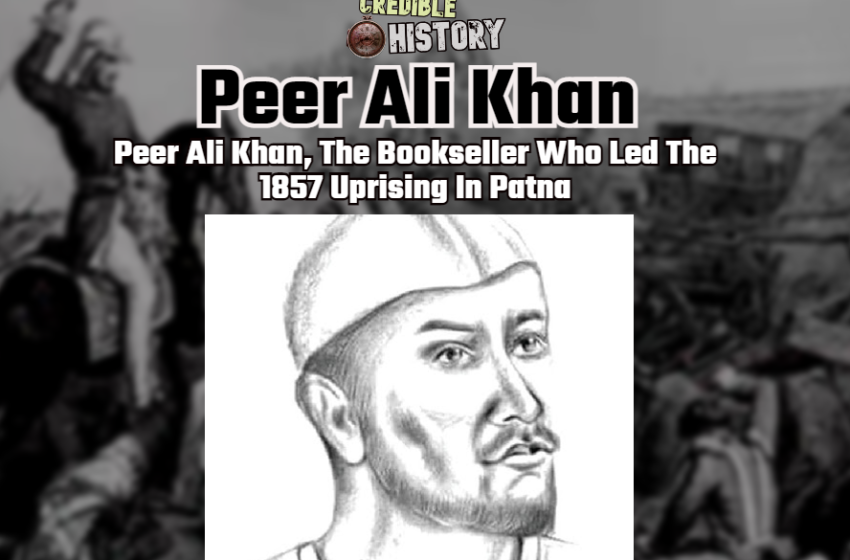
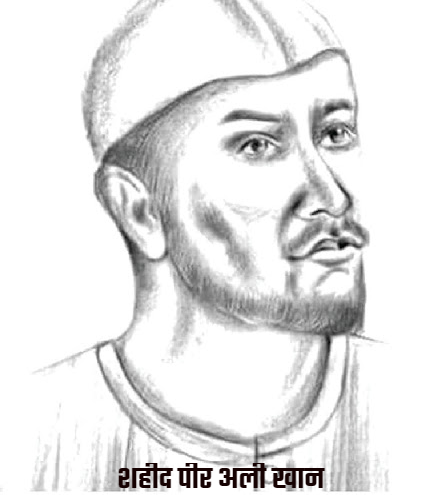
At the same time, there are many heroes who are largely unheard of or are often forgotten. One such name is that of Peer Ali Khan, a bookseller who led the uprising in Patna. Peer Ali Khan has been described as the “Chief Rebel of the city”[1] by William Tayler who was the Commissioner of Patna between 1855 and 1859.
Peer Ali Khan was born in Muhammadpur in Azamgarh district of Uttar Pradesh. Around the age of seven he ran away and arrived in Patna. In Patna he was provided shelter and refuge by a zamindar who brought him up along with his son and educated him.[2]Peer Ali Khan owned a bookshop in Patna. The bookshop became the meeting point for rebels and also a contact point for rebels and the disenchanted Indian soldiers in the British Army.
According to William Tayler:
“Peer Ali was a native of Lucknow, but had resided for many years at Patna; he was by trade, a Book-seller, and I strongly suspect that he may have originally established himself here, for the express purpose of carrying on the intrigues which issued in this abortive out-break.”[3]
Peer Ali secretly distributed important leaflets, pamphlets and coded messages to the rebels.
He regularly organised campaigns against the British, and became the leader of the July 1857 upsurge in Patna.
William Tayler in his narration of the events of 1857 in Patna says:
“Two days before the emeute at Patna, which will be described in a subsequent chapter, Ahmed Oollah’s father, Illahee Buksh, the blind man, whom I have above mentioned, sent a message to apprise me, that the leader of the Rebels, Peer Ali Khan, was collecting arms and men”.[4]
Uprising in Patna
The uprising in Patna took place on the 3rd of July 1857 and it was carried out by Peer Ali and the other rebels.
The rebels led by Peer Ali first attacked the house of a Roman Catholic priest in the heart of the city but the priest escaped. They then shot and killed Dr Lyell who was the principal assistant to an opium agent. When a reinforcement of British soldiers was sent to the scene of attack some of the rebels were shot and killed whereas others fled.
“The most serious affair at Patna, however, occurred about the close of the period to which this chapter more particularly relates. At about eight o’clock in the evening of the 3d of July, a body of Mohammedans, variously estimated from eighty to two hundred, assembled at the house of one of their number, one Peer Ali Khan, a book-seller, and proceeded thence to the Roman Catholic Church and mission-house in Patna, with two large green flags, a drum beating, and cries of ‘Ali! Ali!’ The priest, whom they probably intended to murder, fortunately escaped. They emerged into the street, reiterated their cries, and called on the populace to join them. Dr Lyell, principal assistant to the opium agent, immediately went to the spot, accompanied by nine Sikhs. He rode ahead of his support, was shot down by the rioters, and his body mangled and mutilated before the Sikhs could come up. A force of Sikhs and nujeebs speedily recovered the unfortunate gentleman’s body, killed some of the insurgents, and put the rest to flight.”[5]
In the aftermath of the attack, Peer Ali’s house was searched by the British, where they found and seized arms and a number of letters. He was designated as the leader of the upsurge by William Tayler.
William Tayler describes it as follows:
“Somewhat later in the day, the deputy Magistrate, Moula Buksh to whom the Magistrate had entrusted the investigation of the case, came to me in great triumph with some murderous looking arms and implements (among which was an English fencing mask) and a large packet of letters, all of which had been found in the house of Peer Ali Khan, the leader of the outbreak and Captain of the rebels;”[6]
“The letters discovered in his house serve to show, that, for several years past, he had been in correspondence with different parties, principally with one “Musee” ool “zuman”, a Lucknow man, who followed the same trade, and that he had, in communication with these parties, deliberately discussed and matured seditious plans against the British Government.”[7]
Thereafter, Peer Ali Khan and the other rebels were arrested and tried. Most of the rebels were hanged within hours of sentencing. Peer Ali who was believed to be the murderer of Dr Lyell was also handed death sentence for his overall role as the leader in the uprising of 3rd July 1857.
“….. numerous accomplices were seized during the next few days, and among them, after a short resistance, in which he was wounded, Peer Ali himself; ample evidence was, by the exertions of Moula Buksh, obtained, convicting these men of active participation in the outrage, 21 were hanged, 23 imprisoned.”[8]
He refused amnesty
After being sentenced to death, Peer Ali was offered amnesty in lieu of providing more evidence and information regarding the nature of the uprising, but nothing could break him. History therefore stands witness to the fact that this ordinary bookseller did not concede to the demands of the British and refused the amnesty. He accepted the gallows rather than a life of disgrace.
William Tayler goes on to note:
“After capital punishment had been pronounced upon him, I sent for him (as I generally did with such criminals) and questioned him in my private room, in hopes of eliciting some further information regarding the plot.
Heavily fettered, his soiled garments stained deeply with blood from a wound in his side, confronted with myself and several other English gentlemen, the last hope of life departed, not for a moment did he betray agitation, despondency, or fear.”[9]
Declining the pardon being offered, Peer Ali proclaimed:
“On being asked whether he could do anything to make it worth while to spare his life, he answered with supreme coolness and some contempt: “There are some cases in which it is good to save life, others in which it is better to lose it”. He then taunted me with the oppression I had exercised, and concluded his speech by saying, “You may hang me, or such as me, every day, but thousand will rise in my place, and your object will never be gained.””[10]
William Tayler seems to be in awe of Peer Ali and says:
“….. men, whose unconquerable fanaticism renders them dangerous enemies, and whose sternresolution entitles them, in some measure, to admiration and respect”.[11]
The Hanging
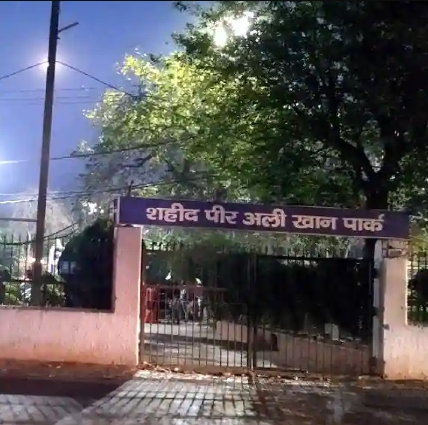
On 7th July 1857, Peer Ali was hanged in full public view in Patna. In present day Patna a children’s park opposite the DM’s office near Gandhi Maidan has been named the Shaheed Peer Ali Khan Park by the Govt. of Bihar to commemorate the sacrifice of this ordinary bookseller whose deeds made him extraordinary and memorable. The park is considered to be the place where Peer Ali was hanged in 1857.
Naming a park after a forgotten hero of the 1857 uprising goes a long way in making him and his contribution known to the people. Moreover, reading and writing about Peer Ali khan made me realize once again and ever more that our freedom is very hard earned. We cannot take it for granted. I and we all need to cherish it, nourish it and strengthen it.
[1] William Tayler, Our Crisis Or Three Months at Patna during the Insurrection of 1857, (2007 Reprint), Khuda Bakhsh Oriental Public Library, Patna, p.4
[3] William Tayler, Our Crisis Or Three Months at Patna during the Insurrection of 1857, (2007Reprint), Khuda Bakhsh Oriental Public Library, Patna, p.45
[4] William Tayler, Our Crisis Or Three Months at Patna during the Insurrection of 1857, (2007 Reprint), Khuda Bakhsh Oriental Public Library, Patna, p.30
[6]William Tayler, Our Crisis Or Three Months at Patna during the Insurrection of 1857, (2007 Reprint), Khuda Bakhsh Oriental Public Library, Patna, p.44
7William Tayler, Our Crisis Or Three Months at Patna during the Insurrection of 1857, (2007 Reprint), Khuda Bakhsh Oriental Public Library, Patna, p.45-46
8William Tayler, Our Crisis Or Three Months at Patna during the Insurrection of 1857, (2007 Reprint), Khuda Bakhsh Oriental Public Library, Patna, p.44
[9] William Tayler, Our Crisis Or Three Months at Patna during the Insurrection of 1857, (2007 Reprint), Khuda Bakhsh Oriental Public Library, Patna, p. 44
[10] William Tayler, Our Crisis Or Three Months at Patna during the Insurrection of 1857, (2007 Reprint), Khuda Bakhsh Oriental Public Library, Patna, p.44-45
[11] William Tayler, Our Crisis Or Three Months at Patna during the Insurrection of 1857, (2007 Reprint), Khuda Bakhsh Oriental Public Library, Patna, p. 45
source: http://www.thecrediblehistory.com / Credible History / Home> English> Freedom Movement> Others / by Kanupriya Gautam / October 20th, 2021
__________________
Kanupriya Gautam : Kanupriya has done her Master’s in Modern Indian History from University of Delhi and has deep Interest in History, Politics and Literature.
source: http://www.thecrediblehistory.com / Credible History / Home> English> Freedom Movement / by Kanupriya Gautam / October 20th, 2021
Bihar,INDIA / North Carolina / Washington, U.S.A. :
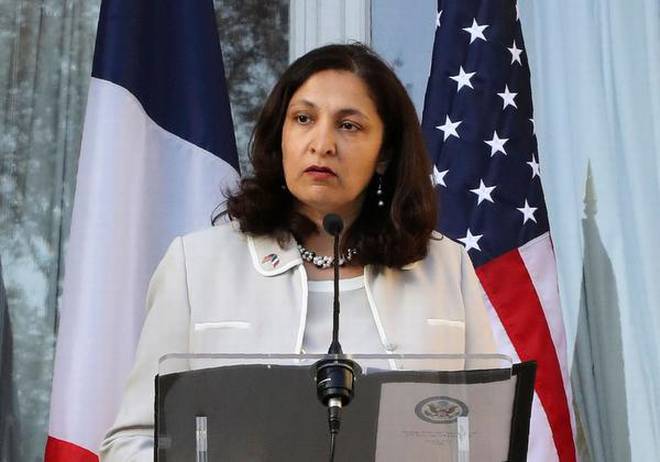
File photo of Uzra Zeya. | Photo Credit: AFP
The coordinator’s role involves promoting “substantive dialogue” between the Chinese government and the Dalai Lama.
U.S. official Uzra Zeya has been appointed the country’s new Special Coordinator for Tibetan Issues. She will hold the position concurrently with her current role as Under Secretary for Civilian Security, Democracy, and Human Rights, Secretary of State Antony Blinken said via a statement.
The coordinator’s role involves promoting “substantive dialogue” between the Chinese government and the Dalai Lama. The coordinator is also supposed to promote the unique identity of Tibet, safeguards human rights of Tibetans and coordinates U.S. policy on Tibet.
“Specifically, she [ Ms. Zeya] will promote substantive dialogue, without preconditions, between the Government of the People’s Republic of China (PRC) and the Dalai Lama, his representatives, or democratically elected Tibetan leaders in support of a negotiated agreement on Tibet,” Mr Blinken said in a statement, as part of a list of activities Ms Zeya would undertake in her new role.
In addition to her responsibilities around promoting human rights and preserving the distinct heritage of Tibetans, Ms. Zeya “ also will promote activities to protect the environment and sustainably manage the water and other natural resources of the Tibetan plateau,” Mr Blinken said.
The position, which was established by U.S.’s Tibetan Policy Act (2002), had been lying vacant for much of the Trump administration, i.e., from January 2017 to October 2020, when State Department official Robert Destro was appointed to the role.
Ms. Zeya was born in North Carolina to parents who emigrated from India. She quit the State Department during the Trump administration (2018), speaking and writing, after her departure, of the decline in diversity at the top levels of the administration.
Ms. Zeya has worked at the U.S. Embassy in New Delhi as a politicial-minister counselor, in addition to deputy chief of mission and charge d’affaires in Paris and postings in West Asia and North Africa.
source: http://www.thehindu.com / The Hindu / Home> News> World / by Srriram Lakshman / December 20th, 2021
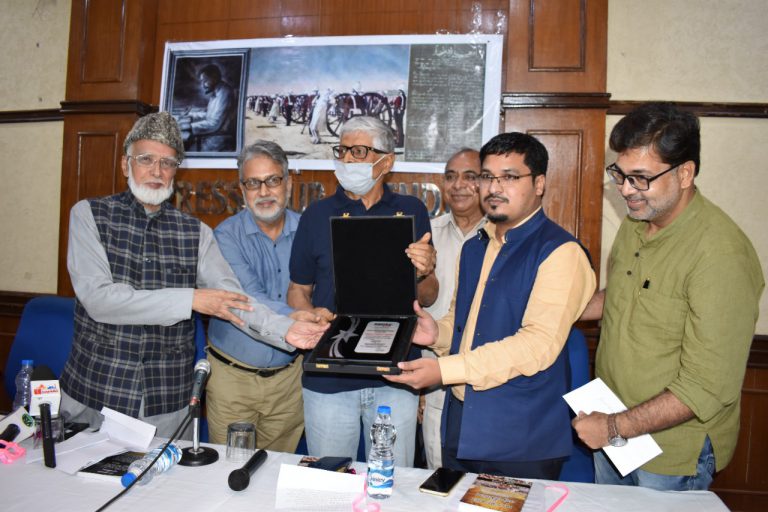
Shams Tabrez Qasmi, the CEO and the chief editor of Millattimes, has been honoured with “Amar Shaheed Molvi Baqar Award 2021”.
The award is in the memory of the martyr and celebrated Urdu journalist Molvi Muhammad Baqar (1780-1857). The award was conferred upon him on 16th September 2021 in a programme held at the premises of the Press Club of India (PCI), 1 Raisina Road, Near Kirshi Bhawan, New Delhi-1 in the presence of the office bearers of the PCI and a good number of the journalists.
The award was presented to Mr. Qasmi in the recognition and appreciation of his commitment, dedication and continuous efforts in the field of journalism.
Millattimes, from its day one, had been covering the issues ignored by the mainstream media, specially the issues of the minority communities and the other weaker sections of the society.
The Award was sponsored by Media 24×7 and Abdul Sattar Memorial Educational Society.
The programme, wherein the award was presented, was held from the Press Club of India (PCI) to commemorate the 164th death anniversary of the Martyr of the first War of Independence 1857 and the famous Urdu journalist Maulvi Muhammad Baqar.
It was addressed by a galaxy of journalists like Mr. Jai Shankar Gupta, Member of Press Club of India, Satish Jacob, former BBC journalist, Meem Afzal, ex-MP, Ismail Zafar Khan, SK Pande, Arvind Kumar Singh, Qurban Ali, Maroof Raza, Masoom Moradabadi and others, besides chief guest Prof. Azra Mosavi, a direct descendant of Maulvi Muhammad Baqar’s grand family from AMU, Aligarh.
Congratulations to Shams Tabrez Qazmi (@ShamsTabrezQ) & Swati Mathur (@SwatiMathurTOI) for winning the award for best journalist in commemoration 1857 martyr, journalist Molvi Mohammad Baqar. A special function for the 164th death anniversary of First War of Independence was held pic.twitter.com/oTsNRCTft9
The Press Club of India resolved in its meeting held on 6th September 2021, in the presence of its President, Mr. Umakant Lakhera, Secretary General Mr. Vinay Kumar and other members, like Mr. A. U. Asif, Press Club of India’s executive member, to commemorate the death anniversary of the Martyr of the first War of Independence 1857 and the famous Urdu journalist Maulvi Muhammad Baqar.
It was also decided that an award after his name will be presented to two journalists every year along with an amount of 21,000-00 Indian Rupees.
According to the resolution, this programme was held on 16th September 2021 and two dynamic, youth, budding and promising journalists: Maulvi Shams Tabrez Qasmi, a Darul Uloom Deoband Alumnus and the Chief Editor of Millattimes and Swati Mathur, a JNU Alumnus and a reporter with The Times of India were felicitated with the award named after him.
मिल्लत टाइम्स के चीफ एडिटर शम्स तबरेज़ का़समी (@ShamsTabrezQ) और टाइम्स ऑफ इंडिया की पत्रकार स्वाती माथुर (@SwatiMathur06) प्रेस क्लब ऑफ इंडिया की ओर से अमर शहीद मोलवी मुहम्मद बाकिर पुरस्कार से सम्मानित । pic.twitter.com/yUVVmsWdtO
The Press Club of India (PCI), as stated at its website, is basically a meeting point for the journalists. The idea to set up the Press Club of India was first conceived by eminent journalist and editor Mr Durga Das in the early 1930s. When he had visited London as the editor of the Associated Press of India, he had chance to visit the London Press Club as well. It became a motivator for him to replicate the model in Delhi.
Eventually the Press Club of India was founded on December 20, 1957 and incorporated as a company on March 10, 1958. Mr Durga Dass, the then Editor of The Hindustan Times was elected its first president and Mr D R Mankekar, a veteran journalist, became the first secretary general of the Club.
Now, it is an important and oldest body of the Indian journalists which is run by the elected President, Secretary general and members.
Moulvi Muhammad Baqar, a scholar, a journalist and an Indian independence activist, was born in 1780 in Delhi. He received his basic education from his father. For further studies, he got admission in Delhi College. Following his graduation, he was appointed as a teacher in Delhi College in 1828. He served as a teacher for six years.
Along with being one of the best editors, he was a successful reporter as well.
He launched a weekly newspaper namely “Dehli Urdu Akhbar” in 1835. It survived for almost 21 years and proved to be a milestone in the field of the Urdu Journalism. With the help of this weekly, he played a significant role in social issues. The weekly brought political awakening in masses and united them against the tyrant British rulers.
It is a fact that Maulavi Muhammad Baqar always advocated for the unity among the Muslims and Hindus as he thought that it is necessary to get rid of British rule.
He was arrested on 14th September 1857 for revolt. On 16th September 1857, he was tied to the mouth of a cannon. Then he was fired mercilessly by Major William SR Hudson.
Thus he became the first journalist to be executed following rebellion in 1857 by the then tyrant British government ruling over India.
Mr. Qasmi, who was felicitated with Amar Shaheed Molvi Baqar Award, is fond of learning, reading and writing from his early age. He has penned more than one thousand articles and essays on religious, social and political issues. He is one amongst the few journalist of the new generation taken seriously in India. He is known as a courageous, bold and fearless journalist.
Being a student in the DUD, he wrote columns for Weekly “Aalmi Sahara” and Daily “Azizul Hind”. It was an honour for him that on 6th December 2014, Dr. Aziz Burney published his article on Babri Masjid in his daily newspaper Azizul Hind as editorial.
When he reached capital city Delhi, he started his career as the editor of known New Agency: “INS”. In 2015, he was offered to write a column for the daily newspaper “Khabren”, New Delhi.
Mr. Qasmi launched a News Portal namely “Millattimes.com” in January 2016.
Officially it was inaugurated by Maulana Sayyid Muhammad Rabey Hasani Nadavi, President: All India Muslim Personal Law Board in Mumbai. Currently it is most read and visited Urdu news portal from India. Along with Urdu language, Millat Times is also providing its services in English and Hindi languages. Its YouTube Channel is also available, where the ignored issues by mainstream media are discussed.
He has interviewed several towering personalities like Mr. Iqbal Ahmad Ansari, ex-Chief Justice of Patna High Court and General Zamiruddin Shah, ex-VC of Aligarh Muslim University to let the viewers know their lives, services and views on several topics.
The area of his main interest is issues of Indian Muslims, current affairs of the Muslim World and the Middle East.
On this auspicious occasion, I congratulate Mr. Qasmi from the bottom of my heart! Congratulations! I hope Millattimes, as a media house, will continue offering its services and covering the issues, under Mr. Qasmi’s able leadership, which are commonly ignored by the mainstream media houses. ****
Email: qasmikhursheed@yahoo.co.in
source: http://www.millattimes.com / Millat Times / Home> Opinion / by Khursheed Alam Dawood Qasmi / Millat Times Staff / September 19th, 2021
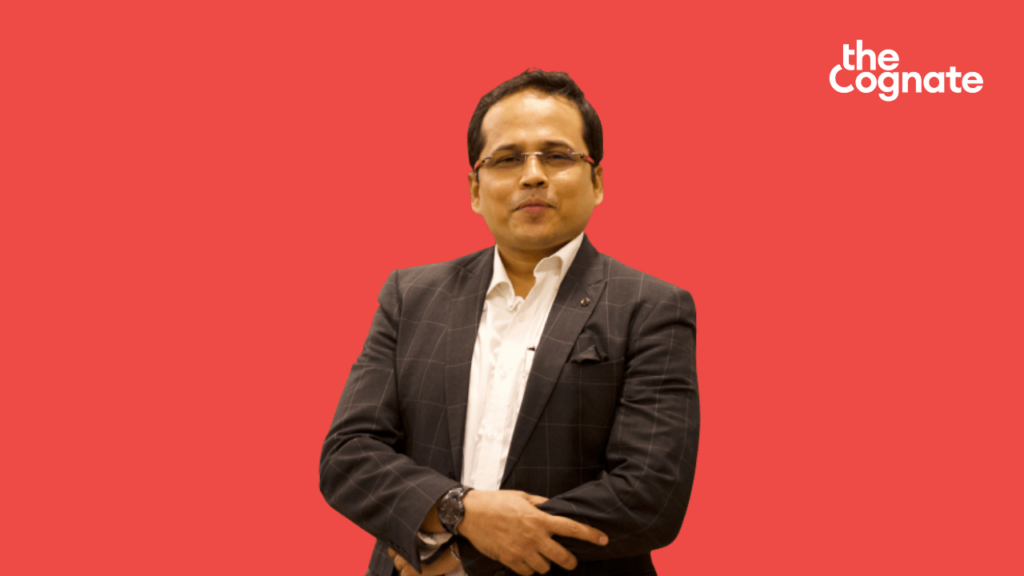
Bengaluru-based author and coach Mohammed Ali Athar Ahmed, also known as MD Ahmed, entered the Guinness World Records for memorising the most number of three-digit flashcards.
Ahmed bagged the world record for recalling 32 three-digit flash numbers. The previous record was held by an Iranian (30 three-digit cards).
Ahmed is highly trained in memory techniques and also trains others to use such techniques. He decided to attempt a Guinness World Records title to help inspire others who are also interested in memorising as a skill and sport, Guinness World Records noted.
A Neuro-Linguistic-Psychology (NLP) practitioner, Ahmed is the author of the book “Hidden Secrets Of The Topper’s Mind”.
source: http://www.thecognate.com / The Cognate / Home> News / by The Cognate News Desk / December 10th, 2021
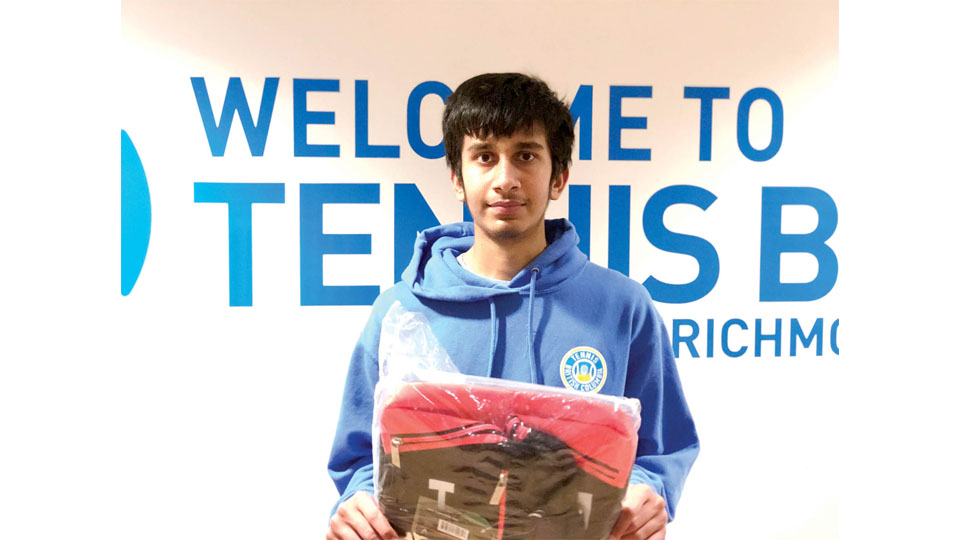
Mysuru boy, 14-year-old Mustafa Raja won his first U-18 Tournament in Vancouver, Canada, today. Mustafa, seeded fifth in the Tennis BC U18 4 Star Tournament, held his nerves at crucial moments, saving two match points in the finals, winning the tournament defeating the top seeded player Denny Bao 2,6; 7,6(7) and 6,1.
By virtue of this win, Mustafa became the top player in his age category in British Columbia and Top 4 in Canada.
Mustafa trains at the Tennis Centre in Surrey, Vancouver and studies at the Sullivan heights Secondary School.
Mustafa has had a good year, he was the Provincial Champion in U-14 category and was also the Canadian National Champion.
Mustafa used to train at the Nagaraj Tennis Centre at SJCE College Campus and is alumni of Excel Public School, Mysuru.
source: http://www.starofmysore.com / Star of Mysore / Home> Sports / December 13th, 2021
Diabetic people with foot sores, fearing limb amputations can heave a sigh of relief as a team of Aligarh Muslim University (AMU) scientists lead by Prof Asad Ullah Khan of the Interdisciplinary Biotechnology Unit has developed a novel ‘Nano-Composite based Photo-Dynamic Therapeutic Approach to treat Chronic Diabetic Foot Ulcers’.
Their remarkable patented study, data and work accepted for publication in the peer-reviewed ‘Scientific Report’ of the Nature Publishing Group has been successful on animal models. The technology successfully treated foot ulcers in diabetic rats.
“Anatomical and physiological similarities prompted us to investigate a large range of mechanisms for assessing this new treatment therapy on animal models with no toxicity before applying it to humans. We are content to have successfully treated foot ulcers in diabetic rats which were not treated by any available antibiotics due to the multi-drug resistant strain mediated infection”, said Prof Asad.
According to him the animal models were cured in a span of 14 days through the newly developed technology.
“Our team has been involved in proving the efficacy of the treatment for the last two years. The study is on its way for human trials”, added Prof Asad.
He pointed out: “Independent studies reveal that across the world, a limb is amputated every few minutes and this actuality becomes even more unsparing when you learn that most of these amputations are the result of diabetic foot ulcers. Therefore, it is of paramount importance to come up with a pertinent treatment for saving limbs and lives”.
“It is hoped that this novel technology will become the final finding for the pursuit of the much awaited treatment for diabetic foot ulcers. We are longing for the world to find out that there is more to the prevention of this infection than just offloading wounds, removing dead skin and tissue, applying dressings and checking blood glucose and other health issues”, said Prof Asad.
source: http://www.amu.ac.in / AMU, Aligarh Muslim University / Home> AMU News / Public Relations Office / Aligarh, December 13th, 2021
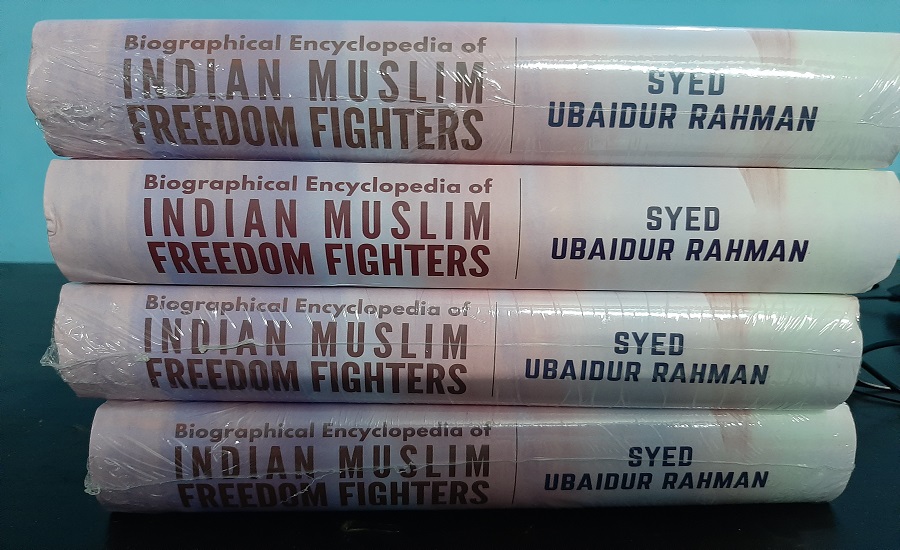
‘Biographical Encyclopedia of Indian Muslim Freedom Fighters’ is an exhaustive work that brings to the fore many unknown facets of the freedom movement beginning with Faraizi Movement to 1857 Mutiny and to later part of the freedom movement.
BE it 1857 Mutiny or the later freedom movements, Muslims have played leading role in all such efforts. British officials and historians have accused Muslims for the 1857 Ghadar. To be true, both British historians and officials have named Muslims as the most important rebels and termed the Mutiny as a sinister plot by Muslim ulema and mujahideen to reclaim their lost powerhouse in India.
Here are excerpts from a chapter on Imam Baksh Sahbai, a great scholar of his time:
Imam Bakhsh Sahbai was one of the most renowned scholars of the 19th century Mughal India. He was among the best scholars of the Persian language and had earned respect as poet and litterateur of the Persian language. At a time when Urdu had almost replaced Persian as lingua franca in much of north India, he was still one of the greatest supporters of the Persian language and spent all his resources in its propagation.
He authored more than thirty books on Persian and Urdu literature that includes three books that were part of the curriculum in the famed Delhi College. He was reportedly appointed a professor of the Persian language there. However, he had a tragic end when after the 1857 Mutiny he and his entire family, including his two sons, who were also renowned scholars in their respective fields, were hauled, taken to Yamuna and shot dead from point blank range. At least 21 members of his family were slaughtered in this most horrendous fashion.
Imam Bakhsh Sahbai was among the most respected scholars of the time and, therefore, every prince wanted to study under him. He was very close to Ghalib, Zauq, Mufti Sadruddin Azurdah, Fazle Haq Khairabadi and even the last Mughal Emperor Bahadur Shah Zafar. Many top scholars of the time were taught by him not just at Delhi College but also at his home. However, the slaughter of his family members including his two sons, and digging of his home by the British thugs had shocked the people of Delhi even during the worst phase of brutality. This digging of his house and the complete destruction of his library also destroyed much of his work. The destruction of his massive library that he had built over a period of decades must have been a huge loss for academia and scholarship. This is the reason that not much has survived on him.
Some twenty years after his macabre killing, when a Hindu disciple of Sahbai, Munshi Deen Dayal thought of collection and publication of his he couldn’t lay his hands on anything substantial. There was not much available on his life or work. Whatever he could gather, he published it in three volumes as Kulliyat-e-Sehbai.
Sahbai was born in the year 1805 in a respected family of Delhi. His father, Maulana Muhammad Bakhsh settled in Delhi from Thanesar, Punjab. Sahbai’s elder brother Hakim Peer Bakshi was a famed physician of his time. His early education was under Maulvi Abdullah Khan. Sehbai had two sons, Muhammad Abdul Aziz and Molwi Abdul Karim Soz. Both were accomplished scholars and well-known poets. Both were killed along with their father and other relatives after 1857 Mutiny.
While in the mid-19th century the power of Mughal Empire had diminished and its influence confined to the Old Delhi quarters, the capital of the Mughal empire still boasted a huge galaxy of scholars, poets and artists of all sorts. There is no denying the fact that the biggest draw of all were the poets and intellectuals. Altaf Husain Hali said that Ghalib, Zauq, Sahbai and Azurda made the capital one of the best places for the scholars and academics. “There gathered at this time in the capital, Delhi, a band of men so talented that their meetings and assemblies recalled the days of Akbar and Shah Jahan”, wrote Hali.
Hali, who had merely heard the stories of high standards of scholarship in Delhi, its great scholars and poets and great madrasas dotting the town, escaped Panipat and came on foot to Delhi. He eventually got admitted to one of the best madrasas of the town and started frequenting the classes of great scholars of his time before his family tracked him down eventually. However, much before that happened, he had got admission in ‘very spacious and beautiful’ madrasa of Husain Bakhsh and had begun his studies there. He says that he was witness to ‘this last brilliant glow of learning in Delhi, the thought of which now makes my heart crack with regret’.
William Dalrymple while describing the destruction and killing in Delhi in the aftermath of Mutiny says:
Worse still was the slaughter in Kucha Chelan, where an estimated 1,400 Delhiwallahs were cut down. Here Nawab Muhammad Ali Khan had attempted to resist the plundering and had shot dead three British soldiers who had climbed over his haveli wall and entered his zenana. Their companions went back to get the rest of their regiment, and returned with a field gun with which they blew the haveli apart.
Sahbai was respected by fellow scholars including Mughal Emperor Bahadur Shah Zafar, who himself was a top of the line poet and whose respect for scholars and poets was legendary. While Sahbai is not known to have directly fought in the 1857 Mutiny, however, what is known is that he was with Bahadur Shah Zafar and supported his revolt. This was the reason that the rampaging British forces, full of feeling of retribution and revenge were led to his home and the homes of other supporters of Mutiny. These spies were paid Rs 2 for every such input.
When after relentless killing and rapine the British and their allies got tired of killing and bayoneting the inhabitants, they marched forty survivors out to the river Yamuna, lined them up below the walls of the Fort, and shot them. Among the dead were some of top of the line scholars who would have been the pride of the place for any world class capital. While writing about this ghastly massacre Mirza Zahir Dehlavi says, “They were well-known and well-off people, men who were the pride of Delhi…They had had no parallels in their own day, nor will we ever see their like again.’
Mirza Zahir Dehlavi in his Dastan-e-Ghadar writes:
“For example, there was Miyan Amir Panja-kash, the great calligrapher, who had no one comparable to him on this earth. Then there was one of our greatest poets, Maulvi Imam Bakhsh Sahbai and his two sons, and Mir Niyaz Ali, the celebrated story teller of Kucha Chelan. About fourteen hundred people of that Muhalla were killed. Some were arrested and taken through the Rajghat gate to the river side and there they were shot. The bodies were all thrown into the river. Meanwhile, many of their women were so disturbed by what they saw that they left their homes with their children and jumped into the wells. For months afterwards, all the wells of Kucha Chelan were stacked with dead bodies. My pen refuses to describe this further.
“One of the survivors of Sahbai’s family was his nephew Qadir Ali who apparently lived with him in Delhi. He is reported to have told his escape to the Delhi historian Rashid ul-Khairi. “Delhi resembled a place of Judgment. A huge number of prisoners were being shot as hanging them was ‘tiresome’ for their killers.
As the soldiers readied their guns a Muslim officer came forward and told us that ‘your death is imminent. You will be shot to death immediately, so those people who know swimming should immediately jump in the river to survive.’ I knew swimming and was good at it, but Mamun Sahib [Sahbai] and his son, Maulana Soz, didn’t know how to swim. I was not ready to abandon Mamun Sahib and my cousins but he forced me to do so. Ultimately, I jumped in the river and swam away. I kept looking back, and after I had gone fifty or sixty yards, I heard the gunshots and saw the line of people falling dead”.
_______
Excerpted from: Biographical Encyclopedia of Indian Muslim Freedom Fighters by Syed Ubaidur Rahman; ISBN: 81-88869-51-1, PP 626 (Hard Bound), Price Rs 1195, Publisher: Global Media Publications, Tel: 9818327757
__________
source: http://www.clarionindia.net / Clarion India / Home> Books / by Syed Ubaidur Rahman / December 13th, 2021
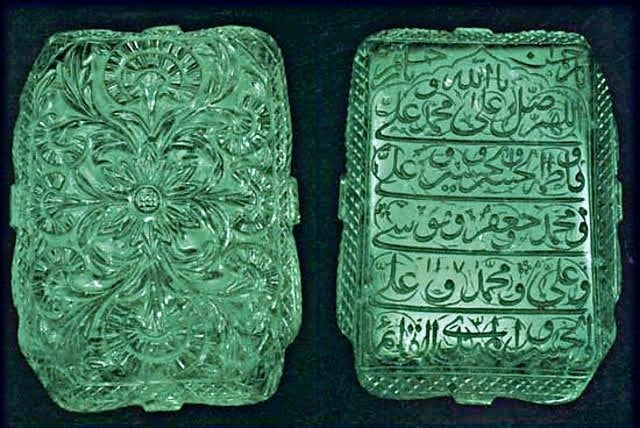
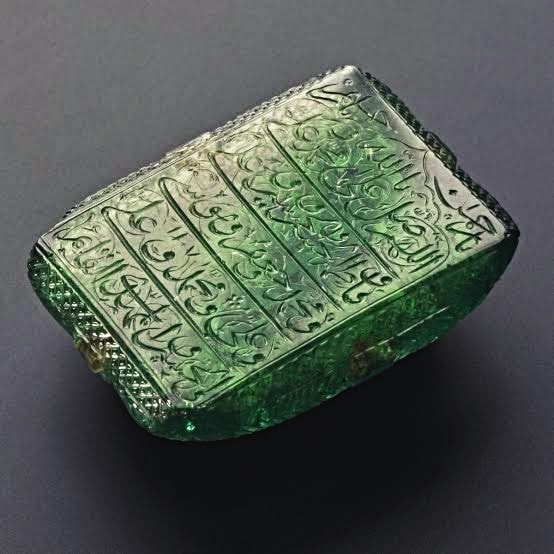
Emperor Aurangzeb’s 217.80 carat Shia amulet is world’s largest engraved emerald
The largest engraved emerald gemstone in the world – The Mogul Mughal Emerald, weighing 217.80 carats.
This emerald tablet dates back to the year 1695. It belonged to the Mughal Emperor Aurangzeb who reigned between 1658-1707 and is adorned with the names of the Fourteen Infallible Guides: the Prophet Muhammad, Fatima al-Zahra and the Twelve Imams of Ahl al-Bayt ending with “wal-Mahdi al-Qaim.”
The gem is on display as part of the Al Thani Collection at the Museum of Islamic Art, Doha, Qatar, after it was acquired from Christie’s for $2.2 Million USD.
Emperor Aurangzeb’s 217.80 carat Shia amulet is world’s largest engraved emerald
The translation of the inscription reads: ‘O Merciful One, O Compassionate One, O God. God bless Muhammad and ‘Ali and Fatima and al-Husayn, and al-Hasan and ‘Ali, and Muhammad and Ja’far, and Musa and ‘Ali, and Muhammad and ‘Ali and al-Hasan and the Steadfast [al-Qaim] al-Mahdi.
source: http://www.therahnuma.com / The Rahnuma Daily / Home / August 19th, 2021