Category Archives: World Opinion

A new species of fruit fly named after Siruvani

Siruvani, TAMIL NADU / Aligarh, UTTAR PRADESH :
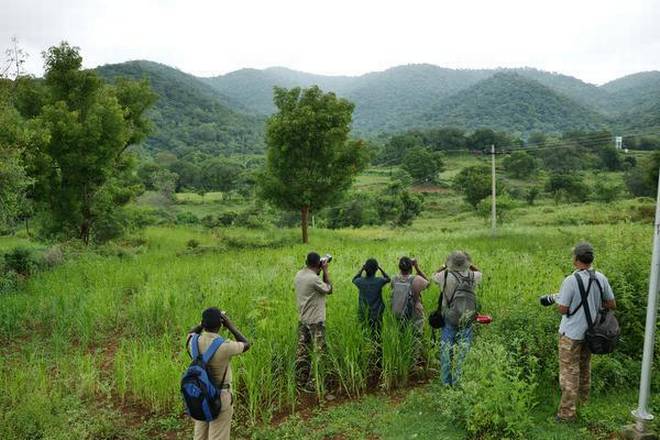
A team of naturalists participating at a forest department survey   | Photo Credit: Special Arrangement

A new species of fruit fly discovered for the first time has been named after Siruvani in the Western Ghats

A fruit fly has created a buzz with its maiden show in Siruvani, a biodiversity hotspot of the Western Ghats. It turns out to be a new species that has been reported, named, and documented for the first time ever. The fruit fly is now scientifically named as Euphranta siruvani, after the place where it was first collected.

A research student at Annamalai University, H Sankararaman, first spotted this unusual visitor on a light trap which he had set up to capture moths at a non-forest space near Siruvani. “The fruit fly was attracted towards light and I was lucky enough to have spotted it. It has a distinct V-shaped black band on its forewing,” recalls Sankar.

Euphranta siruvani   | Photo Credit: Magnolia Press. Zootaxa

The discovery now appears in Zootaxa journal in a paper authored by David K J and Sachin, K, ICAR-National Bureau of Agricultural Insect Resources (NBAIR), Bengaluru, DL Hancock from the UK, Sudhir Singh from Forest Research Institute, Dehradun and H Sankararaman from Annamalai University. According to David, there are 104 recognised species in the genus Euphranta that are distributed across the world. “Of this, 14 are recorded so far from India. The discovery of Euphranta siruvani is the brand-new addition to the checklist.”

“This fruit fly is a rare species and a valuable addition to the diversity,” says David K J, scientist at ICAR-NBAIR, one of the National Institutes with several taxonomists of international repute. “We first check with the regional/world catalogue, then refer to available literature, and connect with authorities around the world over mail before confirming it as a new species,” explains David.

A species can be named after the ‘type locality’ (the place from where the holotype was collected), a specific characteristic feature, after the collector or after an eminent taxonomist for his contributions. In this case, they chose the place, a thriving ecosystem of rich fauna and flora and also the source of drinking water for Coimbatore.
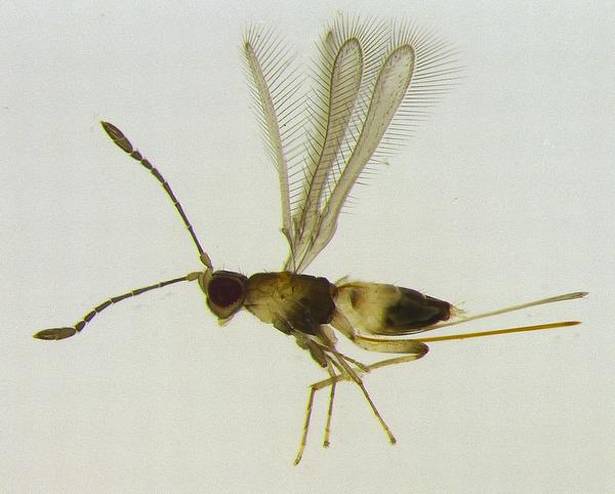
Omyomymar hayati   | Photo Credit: Magnolia Press. Zootaxa

Apart from the fruit fly, additionally a brand new fairy fly species was found at Siruvani. The species Omyomymar hayati is named after Professor Mohammad Hayat of Aligarh Muslim University for his contributions to insect taxonomy.

“I have described several species after the type locality for example Acidoxantha galibeedu in 2014 based on specimen collected near Coorg. Later, I had collected the same species from other parts of Karnataka and Kerala. Similarly, may be the E.siruvani can be seen across the Western Ghats and Kerala in South India. We have to study further to understand its distribution,” explains David, who has identified and described 28 new species of fruit flies of India.

The genus Euphranta comprises many fruit/seed infesting species, including Euphranta cassiae that feeds on the pods of Kanikonna (Cassia fistula) trees. “There are 5,000 species of fruit flies across the world. In India, we have nearly 290 species so far; we keep adding to the list.”

K D Prathapan, an expert on beetles, who works at Kerala Agricultural University, says fruit flies have an average lifespan of three to four weeks. “By infesting fruits, they damage the reproductive capacity of plants. Some species breed in bamboo shoots. And then there are cucurbit fruit flies that are pests of cucurbits such as cucumber, gourds, and pumpkins.”

The study of fruit flies is important for the agricultural economy, as they infect mangoes, melons, gourds, and guavas, says Sankararaman. “It lays eggs in fruits and the larvae feed on the pulp. We are yet get insights about the biology of the species discovered in Siruvani.”

K Mohan Prasath, founder of Act for Butterflies, says there are also many parasitic insects that are helpful to farmers in pest control. Mohan and his team have compiled a list of over 1,000 species of moths across Tamil Nadu and plan to bring it out in a book form soon. “We hope such discoveries build interest in entomology that covers insects, butterflies, and moths. Identification of new species is especially relevant now as there is habitat destruction of many species because of climate change.”

source: http://www.thehindu.com / The Hindu / Home> Sci-Tech> Environment / by K Jeshi / January 12th, 2021
The merchant who bought a mosque

NEW DELHI :

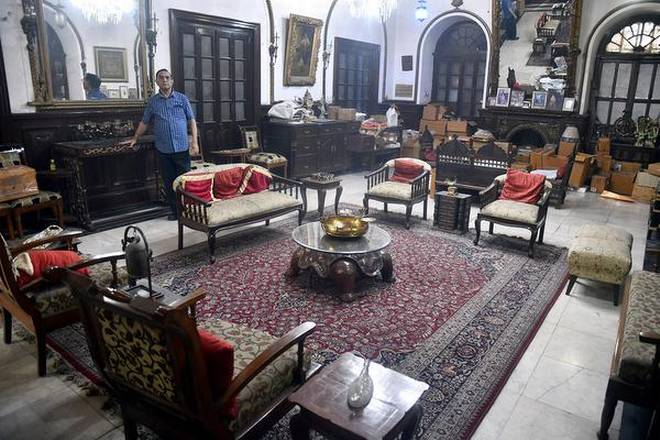
Chunnamal Haveli carries many fascinating tales about the change in lifestyle and architecture of Delhi after 1857

Chunnamal Haveli carries many fascinating tales about the change in lifestyle and architecture of Delhi after 1857

The redone arterial road of Shahjahanabad has attracted attention towards conserving the historical architectural facades of several buildings along the stretch that connects Sri Digambar Lal Jain Mandir to Fatehpuri Masjid.

Along with the facades of heritage homes, there is an urgent need to conserve family and lifestyle histories as part of intangible heritage. In this regard, Lala Chunnamal, the largest living mansion on the iconic street, illustrates a fascinating account.

The Chandni Chowk and surrounding lanes and by-lanes represent, along with several other layers, the lifestyles of the landed elites, merchant classes and evolving middle-class professionals. Several mansions reflect the Mughal period and the British rule in Delhi. Many of these families aligned with the Mughals for practical reasons and changed their allegiance to the new British masters, impacting the nature of lifestyles and architecture.

‘Lalacracy’ era

The period and predominance of merchants and the new landed class in different cities have been described as ‘Lalacracy’ by eminent historian Narayani Gupta in Delhi Between Two Empires 1803-1931: Society, Government and Urban Growth.

Built in 1864, the Chunnamal Haveli continues to be used by Lala’s sixth-generation descendant Anil Pershad and his family. A successful trader, Chunnamal was primarily a cloth merchant (indicative of the exact location of the house in Katra Neel) and had significant trade links in Kolkata, and a summer home in Shimla.

Soon after 1857, Lala Chunnamal bought a large part of the present-day Chandni Chowk and the Fatehpuri Masjid in an auction for a pittance. “Most mosques were closed for a couple of years after the rebellion; many Muslims fled the city. My grandfather, a practical businessman, watched out for the shops around the mosque. The family-owned shops built Shivalayas, dharamshalas and drinking water kiosks in Shahjahanabad, Mehrauli, Nangloi, etc. So why could he not manage a mosque,” remarks Pershad.

He says the family owned the shops from the erstwhile Majestic cinema to the Baptist Church and the area behind the present Bhagirath Palace. “After some years, the family returned the Fatehpuri mosque to the Muslim community. The British recognised the gesture and gave us some villages as a gift,” adds Pershad.

Unlike many others, knowingly or inadvertently, the Chunnamal family saved a mosque from being demolished or turned into a bakery shop or a garrison for the armed forces when the British took over after the First War of Independence.

The grand mansion integrated sturdy cast-iron balconies and spun spiral staircases, wooden Venetian windows, and used stained glass. The interiors characterise Indo-Western aesthetics decor like the famed Osler glassware chandeliers for candles, Belgian mirrors, European furniture, clocks, telephones, fireplaces, and even maintenance tools for the fireplace. Sophisticated crafts to embellish the interiors include clay tiles from Sindh that provide a carpet look. The gold-plated stucco work in the ceiling is offset with natural indigo. The roof is decorated with ceiling cloth that displays the best of Indian crafts.

Ice emerged as a much-wanted product since the British required it to cool their drinks and water. Chunnamal owned the famous Baraf Khana or the ice-making unit in North Delhi, the Old Subzi Mandi and Pul Bangash. “Twice-elected to the Municipal Corporation, he was one of the few Indians who were granted membership of the exclusive Delhi Gymkhana Club during the British days,” remembers Pershad. He was also a member of the Roshanara Club, Delhi Race Club and the National Sports Club.

High life

The Chunnamal family bred horses, some were housed in their home stables, while others were in the Delhi Race Club. Members of the family rode horses from Chandni Chowk to New Delhi. A special place for the family was their Rambagh Garden near the Roshanara Club. Viceroys visited, Indira Gandhi came to dine, and the family participated in horse races, including winning the Aminabad horseshow in Lucknow. Some members of the family even came to be members of the secret society of the Freemasons, who continued to meet in the Qudsia Bagh in Civil Lines.

The courtyard hosted gatherings of courtesans, which women of the family watched from behind the bamboo curtains. Pershad’s daughter-in-law Swetcha Pershad described how female service providers like washerwomen and barbers transmitted ‘news’ from one zenana or women quarters to other havelis. The hustle-bustle of the home saw the women under the guidance of a Parsi governess acquire skills in cooking western dishes, accessing recipes from the Woman & Home magazine launched in the 1920s.

Organisations like the UNESCO and urban governments in different parts of the world attempt to formulate policies to balance development with preserving historic urban landscapes. They involve stakeholders, incentivise owners of heritage homes to retain facades while making the inside of dwellings modern.

The remaking of the Chandni Chowk requires holistic policies and their execution before many of more than 30 private-public owned heritage buildings are replaced by buildings that do not go with the character of the historical landscape.

(The author is an expert on cultural heritage)

source: http://www.thehindu.com / The Hindu / Home> News> Cities / by Navina Jafa / October 10th, 2021

An empire’s fall: cause and effect

DELHI / INDIA :

History proved beyond doubt that every Empire that evolved and flourished across centuries created its own grave-diggers. As is the case, the historians of all hues since the 18 Century have debated the causes of the decline of Mughal Empire. The notion of decline envisages a prior state of perfection, efflorescence, harmony, and cohesion, in contrast to corruption, moral degradation, and loss of ethical values, principles, and customs. Hence, historians wish to understand the phenomenon of change and its causes. For instance, social decay, deterioration of the previous order, and belief and long spells of chaos and disorder are considered the causes of such decline.

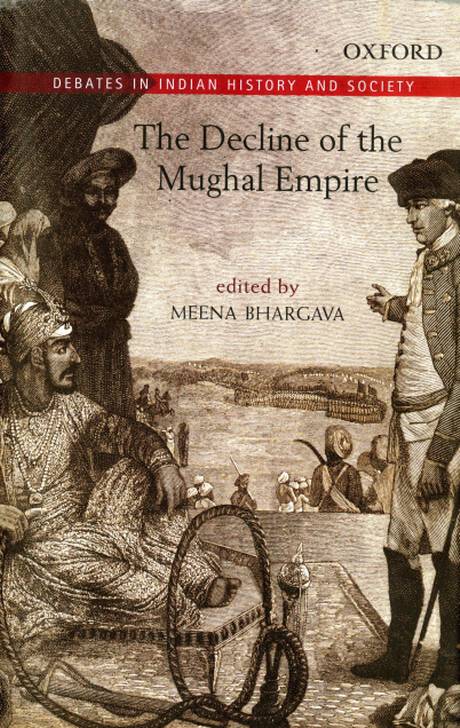
The OUP’s The Decline of the Mughal Empire, edited by Meena Bhargava provides a series of coherent answers to this question through a collage of ideas brought forth by many eminent historians as part of its Debates in Indian History and Society series. While there were divergent views and debates among historians about the withering of the “mammoth imperial banyan tree”, this collection attempts to focus on different paradigms or assumptions that have shaped interpretations on the decline of Mughal Empire.

According to the authors, the causes of the decline of the Mughal Empire can be grouped under the following heads: a) deterioration of land relations; b) emergence of regional powers as successor states; c) selfish struggle of nobles at the court; d) lack of initiative in modern weapons; e) lack of control over the bankers of the state and above all f) Aurangzeb’s Deccan campaign.

Unlike Emperor Akbar who preferred paying his officials’ salaries directly from the state treasury, his successors Shahjahan and Aurangzeb opted for jagirs (temporary allotment of lands to officials for their services – which may be according to the satisfaction of the Emperor) and Paibaqi (revenue from reserved lands which was sent to the central treasury). While the jagirdars tried to extract as much from the land by oppressing the peasants within a short period, the zamindars (who were given powers to manage the lands belongs to the state by managing the peasants and delivering the state’s prescribed share to the treasury) became a subordinate class within the ruling elite of the Mughal Empire. There was a constant clash of interest between the nobles at the Emperor’s court and zamindars. Consequently the main danger to law and order came from zamindars who refused to pay the revenue and had to be cowed down or destroyed by force.

The politics that emerged upon the collapse of the Mughal Empire was two kinds. In one class the ‘succession states’ like Hyderabad, Bengal and Awadh, which were really fragments of the Empire, had to stand on their own as the central government decayed and became powerless to assist or assert. In the second category were the Maratha confederacy, the Jats, the Sikhs and the Afghans. Their origins as polities were independent of Mughal Empire.

Mysore under Hyder Ali and Tipu Sultan stood outside these two categories, and was in some ways most remarkable. It made a conscious attempt to implant Mughal administrative institutions in an area that had only been nominally a part of Mughal Empire. At the same time, it was the first state in India to make a beginning towards modernisation, first and foremost in the realm of the military and in the manufacture of weapons, but also in commerce, where the English East India Company’s practices were sought to be imitated.

The nobles found that their careers were not linked to talent and that loyal and useful service was ‘no security against capricious dismissal and degradation’. Their (selfish) struggle necessarily ranged them in factions, each group or bloc trying to push the fortunes of its members and hinder the success of its rivals. However, only some of them could establish their dominance . In order to sustain their power in court, these nobles had surreptitious relations with regional governors, zamindars and other chieftains. It is the case of Mushid Quli of Bengal who through his clout among the nobles at the court, effected reforms in revenue which ultimately led to the formation of a new, regional ruling group.

The period of imperial decline coincided with the increasing involvement of banking firms in revenue collections at regional and local levels. It brought bankers, more directly than before, into positions of political power all over India. In contrast to their earlier policies, the bankers extended trade and credit transactions to newcomers, the Dutch and the English. Ironically, the Jagat Seths (Imperial Treasurers) who helped the East India Company to overthrow Nawab Sirajuddaula, were cut to size by the same Robert Clive who stopped the allowance of Seths as ministers of the Nawab in 1770. Ultimately, they ceased to be Company Bankers by 1772.

In a sense, the Deccan Campaign became Aurangzeb’s Waterloo. In his eagerness for further expansion, Aurangzeb exposed to incessant raiding districts in the Deccan that were formerly secure from outside attack. Unlike Emperor Akbar, who assimilated Rajputs within his kingdom, Aurangzeb was unable to effectively assimilate the Maratha, Bedar, Gond or Telugu warrior chiefs formerly living in areas beyond the reach of direct administration by a Muslim state as imperial elites. Failure to sustain imperial officers in the province resulted in intensified disorder and defiance of imperial authority. Even though they were stationed in the Deccan, the Mughals failed to defeat the Marathas. It was these protracted wars that produced the signs of decline, namely an imbalance between the number of jagirdars and the jagirs available, peasant revolts and disloyal nobility. Together with the emergence of regional dynastic rulers who pioneered processes of growth and regeneration, the Mughal Empire did not fall — it was simply swallowed by a larger political organism. The Company was waiting on the wings to gobble them up whole soon.

For students of history, this attempt is really an opportunity to understand the inherent contradictions that prevailed under the Mughal Empire, which ultimately led to the emergence of British colonial rule in India.

THE DECLINE OF THE MUGHAL EMPIRE: Edited by Meena Bhargava; Oxford University Press, YMCA Library Building, 1, Jai Singh Road, New Delhi-110001. Rs. 795.

source: http://www.thehindu.com / The Hindu / Home> Books> Reviews / y V.B. Ganesan / July 28th, 2014

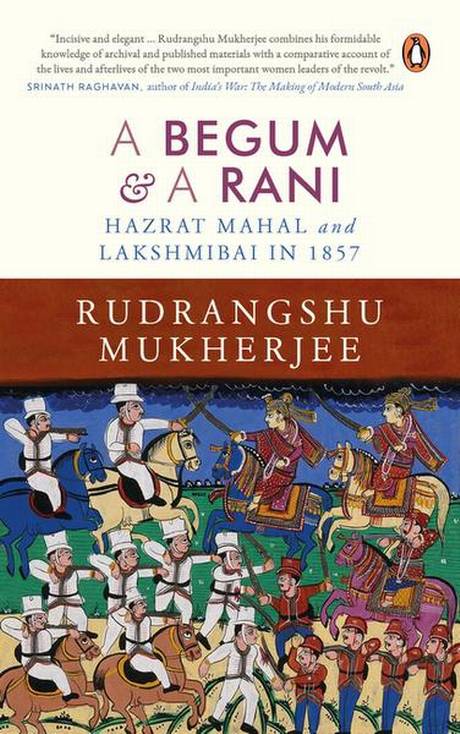
A Begum & A Rani: Hazrat Mahal and Lakshmibai in 1857’ review: Giving an obscure figure of the 1857 revolt her rightful place

Awadh, UTTAR PRADESH:

Juxtaposing the life of Begum Hazrat Mahal, who worked behind the scenes, with one of the most well-known heroes of the time, Rani Lakshmibai

The villain in Rudrangshu Mukherjee’s A Begum & A Rani: Hazrat Mahal and Lakshmibai in 1857 is certainly the British, but it is also time and memory. Mukherjee places Begum Hazrat Mahal, an obscure figure who was integral to the mobilisation of the 1857 revolt — taught to students as “India’s first war of independence” — alongside Rani Lakshmibai, whose life has spurred not just biographies but hagiographies, calcified by myth and movies, the 2019 Kangana Ranaut shriek-historical, Manikarnika: The Queen of Jhansi, notwithstanding.

The book, divided into four parts — Origins, Rebellion, Leadership, Afterlife — is attempting two important correctives.

The first is to give Begum Hazrat Mahal of Awadh her rightful place in history. Daughter of an African slave, she was briefly married to Awadh’s king Wajid Ali Shah, then divorced and left behind in Awadh, as Shah moved to Calcutta after the British annexed Awadh in 1856. She helped mobilise the military and administration of Awadh, which became the war theatre’s centrepiece after Delhi was vanquished by the British. This story is also important to counter the narrative that the 1857 revolt was a pastiche of mindless and uncoordinated violence, because it was meticulously planned. Mukherjee quotes generously, indulgently, with page-long historical anecdotes which could have been paraphrased or woven into the narrative. There are too many anecdotal jolts for a seamless read.

Eventual move

The second objective is to inject some history into the hagiography of Rani Lakshmibai. Mukherjee notes how she wasn’t the ready rebel we think of today. That she even wrote to British officials asking for help, declaring her support to their regime, and it was only when she was pushed against circumstances that she eventually took to the battlefield with vigour, dying in it, memorialised by it.

This is a clever framing here that Mukherjee employs, because there isn’t enough information on Hazrat Mahal to carry an entire book by itself. There isn’t even an available description of how she looked. Her role in the rebellion is behind-the-scenes, and her obscurity is thus, double.

To resurrect her, by pairing her with the most coveted figure of the rebellion — Rani Lakshmibai — is thus necessary, because Mukherjee gets to not just tell their stories, demystified or dusted, but to speak to the larger villainy of historic memory — who gets written about and why?

Putting it in context

Mukherjee is a master of context, providing a sense of the time, even as he is hazy on the details of main events, recounting them as historical facts and not narrations, preferring a depth of detailing around the event over the grip of a historical plot. That said, a map would have been helpful to make sense of the geographic dump of names.

It must be noted, though, that Lakshmibai and Hazrat Mahal never met, and in the 140-page book, their paths, and the paths of their rebellion also don’t cross, as if they were happening in different times, different places.

Sometimes, as a result, the book feels disjointed — that the only reason for having these two stories together is not that they will tangle, but that through comparison, each one’s story deepens, darkens.

Placing these figures side by side, the urge to compare them comes but naturally. Mukherjee’s insistence on Hazrat Mahal’s oblivion comes short of calling her more important and interesting than Rani Lakshmibai. That Rani Lakshmibai fought on the battlefield while Hazrat Mahal fled to Nepal is enough to deify the former, and forget the latter, he finds unfair. That Lakshmibai and her son were receiving pensions from the British government, while Hazrat Mahal who died in obscurity and her son, both refused it, he finds telling. That history is besotted with blood, he finds tragic. That historians can puncture history’s myopia, he finds hopeful. Thus, this book.

A Begum & A Rani: Hazrat Mahal and Lakshmibai in 1857; Rudrangshu Mukherjee, Penguin Random House India, ₹699.

The writer is a critic with a weekly online newsletter titled prathyush.substack.com

source: http://www.thehindu.com / The Hindu / Home> Books> History> Reviews / by Prathyush Parsuraman / October 02nd, 2021

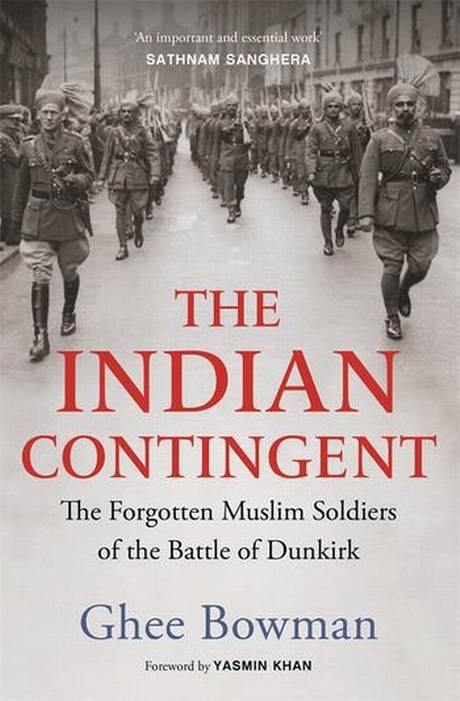
‘The Indian Contingent: The Forgotten Muslim Soldiers of the Battle of Dunkirk’ review: Force K6 in a colonial war

INDIA (Pre-Partition) :

Tracking soldiers from the subcontinent who fought on the battlefields of Europe

Whether it’s Dunkirk or Iwo Jima, we tend to associate World War II with other countries. India, of course, was in the midst of the struggle for independence during the years of the war. But, since the country was a British colony, it was also dragged into the war not just in terms of materials being shipped. A crucial factor were the soldiers from India who fought on the battlefields of Europe but remain unknown.

Multiple threads

Of late, we have had books on the Indian participation in World War II and here is another which looks at soldiers from undivided Punjab who arrived in France in 1939 and returned to find their country on the verge of Partition.

Ghee Bowman’s The Indian Contingent: The Forgotten Muslim Soldiers of the Battle of Dunkirk focuses on a group called Force K6, who were largely from the northwest provinces, now in Pakistan. They were part of the mule transport companies, which helped the British army transport supplies in areas where trucks could not reach. During the Battle of Dunkirk, some of these men were captured but many escaped to Britain and were relocated to various parts of the U.K. where they helped in the infantry training.

Bowman doesn’t lump all the individuals together into one unit. Each person has a story and he unravels the multiple threads till the reader gets a complete picture of the “poets and musicians, cooks and carpenters and a veterinarian… writers, cinema lovers, boyfriends and parents” — as author Yasmin Khan puts it in the Foreword — who comprised the Force K6.

On the one end you have poetry-writing Aurangzeb who died as an 18-year-old in Wales and is still remembered in his village in Pakistan; at the other is mule driver Mahmud Khan who is captured by the Germans, forced to join the Indian Legion, seduces his German officer’s daughter and a male orderly and escapes to Switzerland.

Forming bonds

Bowman also tracks the lives of the men in “obscure corners of the British Isles” where they “formed strong bonds with farmers, children and women”. Some of these bonds resulted in children and the story of Jeff Shapland who finds out about his father Jamal Khan much later in life is moving. Shapland recounts being singled out for his dark looks — at Leeds University South Asian men would talk to him in Hindi or Urdu and his landlady in Bristol wouldn’t let him eat in the common dining room, he was abused and punched by students at his school in Leicester —and how he came to accept himself.

There is a lovely little nugget of jemadar Malik Mohammed Khan visiting a school to hear Welsh folk songs and teaching the children a Punjabi lullaby that went ‘Sunate Sunate Sunate Krishna’. There are also anecdotes from those who were children at that time about their interactions with these soldiers.

In his Prologue, Bowman writes, “This book aims to reclaim them from the backwater and reinstate them in the mainstream: part of the current of recognition of Commonwealth and global contributions to the Second World War.” He has, indeed, succeeded in this.

The Indian Contingent: The Forgotten Muslim Soldiers of the Battle of Dunkirk; Ghee Bowman, Pan Macmillan, ₹699.

krithika.r@thehindu.co.in

source: http://www.thehindu.com / The Hindu / Home> Books> Review / by R. Krithika / October 02nd, 2021

Benevolent Kerala parliamentarian is beacon of light for poor tribal pupils

KERALA / Dubai, UAE :

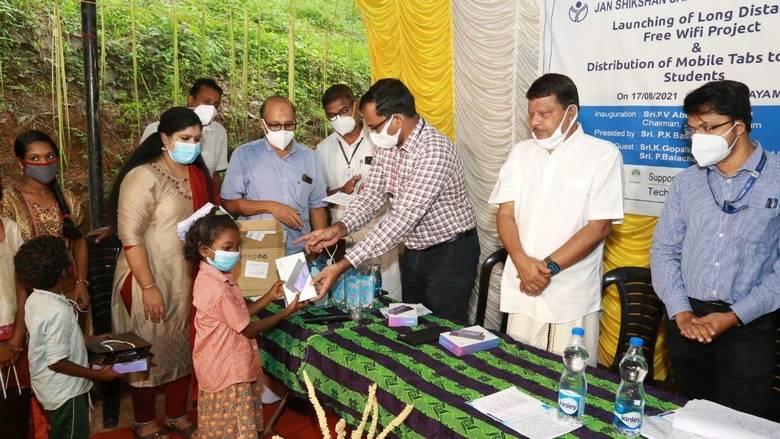
P.V. Abdul Wahab, the IUML leader, successfully implements Indian government’s development plan in Malappuram district.

It’s a dawn of a new era for a group of poor tribal pupils amid these unprecedented viral times at Nilambur taluka — a cluster of villages — in north Kerala’s Malappuram district.

They are back to learning and continuing their school education, which have been suspended since March 2020, when the Covid-19 pandemic struck and resulted in the closure of schools.

Many of the pupils had virtually forgotten in-classroom teaching.

To make matters worse, they were cut off from the rest of the world because of the unavailability of Internet connectivity and lack of smartphones.

P.V. Abdul Wahab, a sitting member of the Rajya Sabha (RS) — the Upper House of Indian Parliament — and a non-resident Indian (NRI), who has been living in the UAE for the past four decades, told that their education suffered since March 2020.

“Some of them could barely remember the names of their schools because the prolonged break had almost wiped out their memories of the campus,” he said.

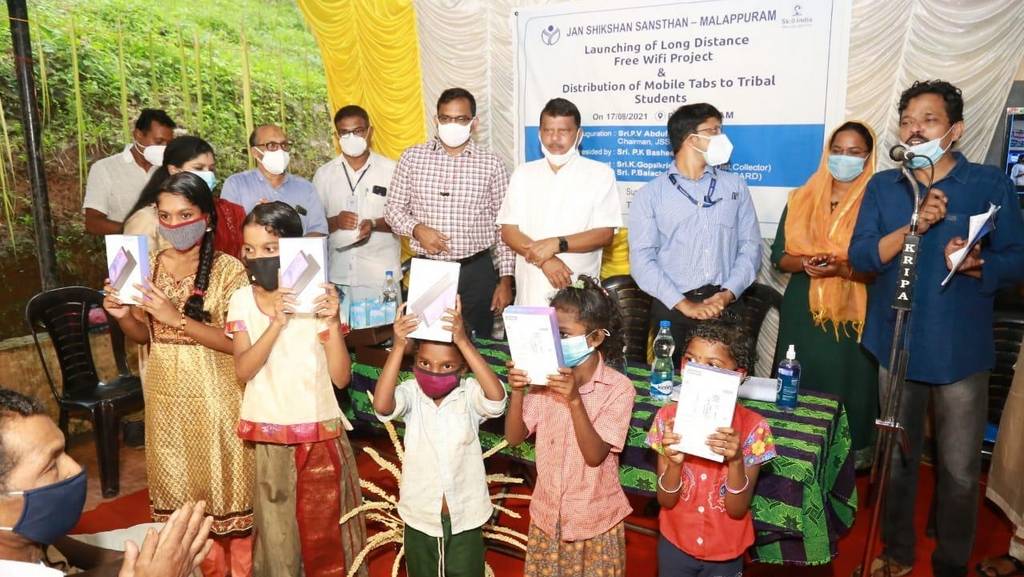
Wahab, who belongs to the Indian Union Muslim League (IUML), which is a potent political force in the district, has arranged for the distribution of Internet-enabled tablets for the tribal pupils under the Indian government’s Jan Shikshan Sansthan (JSS) initiative.

He has been a three-term RS MP and heads the JSS initiative in the district.

So far, around 150 tablets have been given to the tribal pupils, who are overjoyed at being able to reconnect the world at large and continue with their education.

Wahab has been involved with the tribal villages of Karulai gram panchayat as part of the Indian government’s Saansad Adarsh Grama Yojnna, a developmental scheme, and has adopted four villages in the district.

“They live in the middle of the forest in small houses and most of them are unemployed,” Wahab said.

“The only source of economic sustenance is the forest produce that the male tribals collect and sell. Healthcare facilities are abysmal and most of them lack basic amenities such as access to electricity or even telephones,” he added.

The tribal villages are neither well-connected with other parts of the district or the southernmost Indian state and a majority of the locals don’t want to venture out for jobs.

The tribals of Nilambur are a rare exception to Kerala, whose ambitious and enterprising people have been heading out to other parts of India, Arabian Gulf or across the world for better financial prospects.

“But we’re trying to provide employment opportunities for them through specialised training in the hospitality, plumbing and electrical industries,” said Wahab, who has four-decade-long experience in the Middle East, and enjoys a filial bond with Nilambur.

In the UAE, he established the Bridgeway group of companies and along several other firms in his native India; his sons now look after the businesses.

He said the boost on the telecom and education fronts in these tribal villages because of the JSS, which helped instal over 10 basic towers to ensure 5 GHz wireless connectivity to the settlements. “The project aims to create a sustainable social and economic ecosystem for tribal people through a high-speed internet connection,” said Wahab. “It offers a total solution for the digital affairs of the inhabitants of the colonies. This allows them to interact directly with stakeholders and other public servants,” he added.

In the pre-Covid-19-pandemic era, tribal pupils only had access to single-teacher primary schools. The teacher taught all subjects and took four classes simultaneously.

After Grade IV, the tribal pupils would drop out because they were reluctant travel outside their native village.

To make matters worse, the devastating Kerala floods in 2018 and 2019 also destroyed half a dozen computers, a printer and a projector in the school.

The natural disaster was followed by the contagion, which struck a rude jolt as it denied poor tribal pupils’ basic education.

However, the sufferings appear to be a thing of the past, as the poor tribal children can look to a better and prosperous future, thanks to Wahab’s initiative to make the government’s scheme a roaring success.

source: http://www.khaleejtimes.com / Khaleej Times / Home> World> Rest of Asia / by Nithin Belle, Pune / August 26th, 2021

UAE: Expat of 44 years recalls Dubai’s journey from creek town to cosmopolitan city

Bhatkal, KARNATAKA / Dubai, UAE :

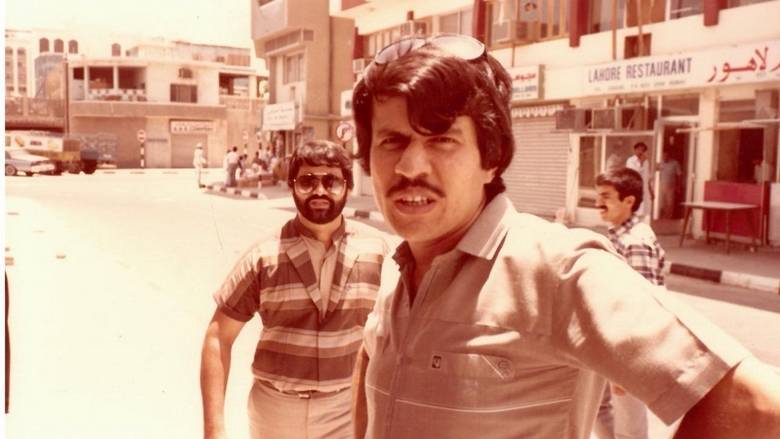
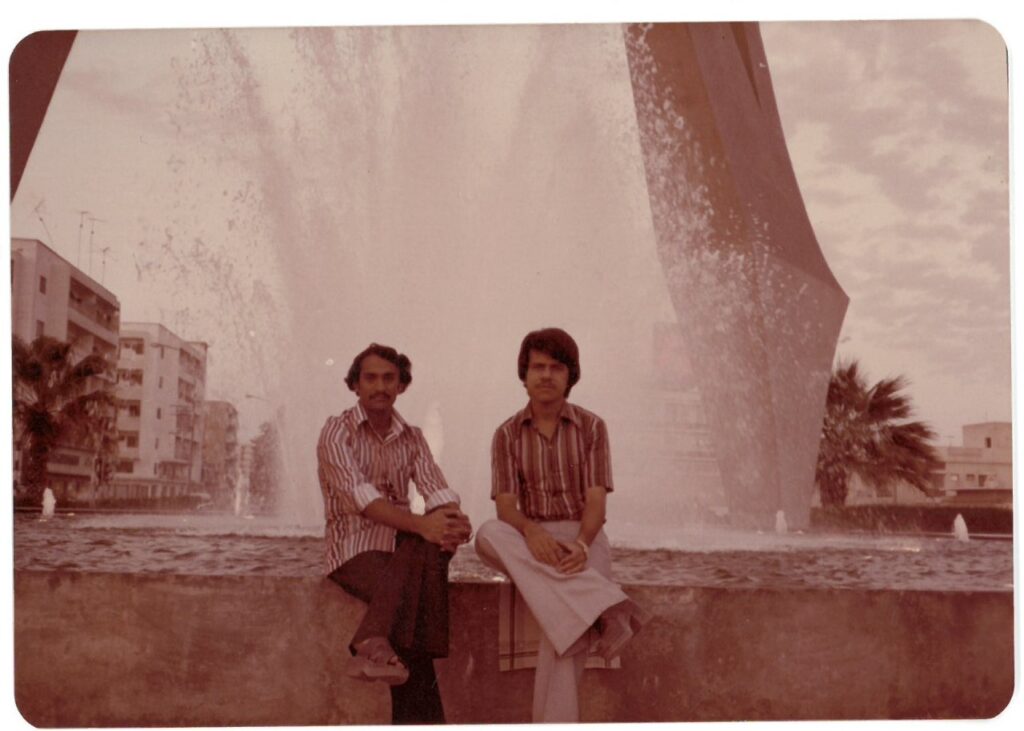
(supplied photos)

Dubai was a drastically different city four decades ago — and Amjad Shahbandari has seen it all.

These days, first-time visitors to Dubai marvel at the sight of the towering Burj Khalifa. But back in the 1980s, Indian expat Amjad Shahbandari experienced the same feeling when he saw the Dubai World Trade Centre and Deira Clocktower.

In the olden days, Dubai was a drastically different city — and Amjad has seen it all.

Four decades ago, a person could buy a car load of fruits and vegetables from Al Hamriya Market for just Dh25. High-rise buildings were a rarity. A taxi from Dubai to Abu Dhabi cost just Dh5.

But now, Amjad, a resident of 44 years, is bidding goodbye to his second home today.

“When I came to Dubai, I never had any idea as to how long I will live in this city. And now, life will be tough after staying here for almost all my life,” he said.

Hailing from Bhatkal, a coastal town in the southern state of Karnataka, India, Amjad arrived in Dubai on August 15, 1977. At the time, only a few Indian cities had connectivity to Dubai and some were layover destinations for international carriers.

“I flew from Bombay by Biman Bangladesh Airlines and it was the first of day of the holy month of Ramadan that year. The food provided by the airline crew was very tasty. And that may be a reason people from India travelled by Biman,” Amjad said.

He recalled being stuck at the Dubai airport for a few hours because none of his cousins or friends came to pick him up.

“The moment any traveller lands in Dubai, their eyes search for the Burj Khalifa. The feeling was the same for the mighty World Trade Centre and the Deira Clocktower back then,” he said.

After working a few odd jobs, Amjad got a job as an accountant at Fugro Middle East in 1978 and later served as the public relations officer for the company. Having worked at the same company for 43 years, Amjad is now saying goodbye.

“Leaving a place like Dubai is a grief that cannot be expressed in words,” he said. “It can just be felt and I am quite sure many have experienced this grief.”

Remembering the good old days

People who lived in Dubai decades ago never could have imagined what the city is now, Amjad said.

“It is something only His Highness Sheikh Mohammed bin Rashid Al Maktoum, Vice-President and Prime Minister of the UAE and Ruler of Dubai could have visualised,” he said. “Back then, none of us had the slightest of idea that from just a creek town, the city would have towers ascending and tearing through the clouds.”

The lifeline of the city back then was the abra — the main public transport available at the time.

“The taxis were very cheap and people were dependent mostly on abra rides to cross the creek,” he said.

Amjad had a few relatives in Abu Dhabi, and travelled by taxi once a month to visit them.

“People shared taxis in the 1980s to go to Abu Dhabi and it was just Dh5 for a one-way travel. The journey to the Capital felt long and tiring. But after the massive world-class infrastructure developed in the country, travelling to Abu Dhabi is just a cake walk,” he said.

Amjad, who received his driving license in 1984, said the process was stressful, but having a license was a matter of prestige.

“It took about eight months to get my driving license, as we got the assessment dates once every three to six months,” he said.

Moreover, there were no driving schools and those who wanted to learn how to drive had to take private classes.

Expecting the unexpected

In the 80s, Amjad said he and other Dubai residents thought the housing and commercial rent may decline in the coming years, but it never happened.

“We always thought the rent will decrease, but it never did. The development was lightning fast and the thought that rents might decrease vanished,” he said.

The landscape of Dubai changed every decade, he added.

“Dubai is different every 10 years. Before, it was just the World Trade Centre that was visible from afar, and now it’s hundreds of buildings,” he said.

At the time, there were only two malls.

“Wafi Mall and Al Ghurair were the two favourite places of residents and if you see now, there are countless malls,” he said.

A city for sports and art

Expats from India, Bangladesh and Pakistan frequented cricket matches at the Sharjah Cricket Stadium. Amjad still remembers the semi-final match between India and Pakistan during Rothmans Four-Nations Cup at the venue.

“March 22, 1985 was one of the most exciting days. We had been to the match and the Kapil Dev-led team was all out for 125,” he said.

After watching the first innings, he and his friends returned home disheartened with no intention of watching the second half.

“It was a Friday and it was our rest day. When we had been out in the evening, everyone was in a jovial mood as the Imran Khan-led side was all wicket down at 87 runs,” he said. “Witnessing such important events in this country cannot be forgotten.”

In addition to sports, Amjad said he has seen many cultural events, including performances by Indian poets Kaifi Azmi and Anjum Rehbar.

An ardent reader of Khaleej Times, Amjad added that he has proudly preserved the first edition of the paper.

Khaleej Times is a gift to the UAE. It was the first English paper and expats depend on it for authentic and clear news,” he said.

He has also collected currencies of almost every nation as well as a few thousand telephone cards, 600 of which are Etisalat cards. “I have a few albums with currencies of every nation. It was a hobby and then developed into a passion.”

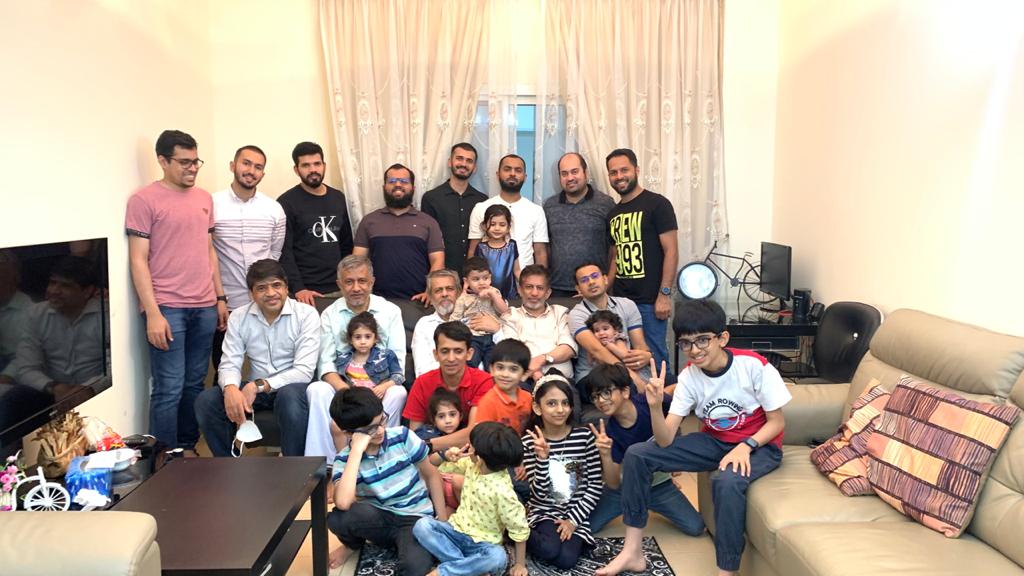
Amjad, who has three sons and a daughter, is flying to Mangalore, but plans to visit his second home regularly.

ayaz@khaleejtimes.com

source: http://www.khaleejtimes.com / Khaleej Times / Home> Year of the 50th / by SM Ayaz Zakir / September 23rd, 2021

Mysuru Lad Emerges Canadian National Champion – 2021

Mysuru, KARNATAKA / Vancouver, CANADA :

Vancouver:

Mysuru-boy Mustafa M. Raja, who won the Provincial Championships in British Columbia last month and was selected for the Nationals to be held in Montreal, Quebec, did well and emerged National Doubles Champion. Mustafa also came third in Singles.

The 14-year-old played consistent tennis all week at the 14-and-under Nationals held at the Carrefour Tennis Centre from Sept. 20 to 26.  Tournament was held outdoors on clay courts.

In the Doubles finals, Mustafa and his partner Eric defeated Owen and Scotty. Mustafa and Eric came back from one set down and held their nerves to win the Nationals with the score of 2,6 6,4 and 10-7.

In the Singles, Mustafa lost to Adam in the semi-finals but won the match for the third spot against Andy Kepche with the score of 6,1 and 6,1 to get the third spot.

Mustafa, representing British Columbia, also won silver in the team standings of the provinces. 

Mustafa was awarded a trophy for the National Doubles Champion, trophy for the third place in Singles and a silver medal for the provincial standings. With this performance, Mustafa will break into top 5 Singles rankings in Canada. Mustafa trains at the Tennis Centre in Vancouver and goes to Sullivan Heights Secondary School.

Mustafa, son of Murtuza Raja and Farida Raja, earlier train at the Nagaraj Tennis Centre in Mysuru for seven years and attended Excel Public School in Mysuru.

source: http://www.starofmysore.com / Star of Mysore / Home> Sport / October 01st, 2021

JMI student Kaif Ali wins Commonwealth Secretary-General Innovation Award for Sustainable Development

NEW DELHI :

Emerging innovator Kaif Ali, a student of the Faculty of Architecture & Ekistics, Jamia Millia Islamia(JMI) won the prestigious Commonwealth Secretary-General Innovation Award for Sustainable Development-2021.

He is the only Indian amongst 15 awardees from 54 Commonwealth countries to win the prestigious award for his contribution towards Covid19, refugee shelter crisis, and climate change.


Each winner of the award received a trophy, 3,000 pounds (3,00,000 INR approx.) in prize money and the opportunity to scale up their innovations in collaboration with partners and mentors across the Commonwealth.


Kaif has invented low-cost portable housing for Covid-19 quarantine and shelter from extreme weather conditions like earthquakes and flooding.

His design has been recognised by the UN under the top 11 emerging innovation start-ups solving climate challenges.


JMI Vice Chancellor Prof. Najma Akhtar congratulated Kaif for the achievement and said that the university is proud of him. “We expect that it will motivate other students of the university to work hard, think out of the box to get noticed and contribute in nation building”, Prof. Akhtar said.


During the pandemic, Kaif researched how architecture could prevent the spread of disease. He designed a prefabricated sustainable shelter, SpaceEra, that would not only help reduce transmission of the virus but could also house refugees worldwide in the future.


“Winning the Commonwealth Innovation Award lifts my confidence to a greater level and motivates me to work even harder than yesterday and innovate unprecedented solutions toachieve a sustainable future. I pledge to become the voice of the youth transforming the Commonwealth and to Be the Change!”, Kaif said.

source: http://www.jmi.ac.in / Jamia Millia Islamia / Public Relations Office, JMI / September 30th, 2021

AMU scientist’s discovery can make infertile land cultivable

Aligarh, UTTAR PRADESH :

AMU scientist's discovery can make infertile land cultivable

Aligarh :

A faculty member of Aligarh Muslim University (AMU), in association with German researchers, has discovered a new protein in plants that will ‘improve the salt stress tolerance of crops.’

This will enable farm land with high salinity soil amenable to cultivation.

Dr Tariq Aftab, assistant Professor, Department of Botany, AMU, together with other collaborators from Germany, have identified a new protein and named it ‘HvHorcH’.

This protein plays an important role in conferring salt stress tolerance in barley plants. Salt stress tolerance of crop plants is a trait with increasing value for future food production.

According to an official release from AMU, the research work has been carried out at Leibniz Institute of Plant Genetics and Crop Plant Research, Gatersleben, Germany during the assignment to Dr Aftab as visiting scientist.

After several years of further studies and repeat trials, the report has been published in the International Journal of Molecular Sciences.

Dr Aftab said that the identification of this protein will open new horizons in developing stress-resilient crop plants. “Global climate change, which is predicted to be accompanied by prolonged and intensified drought periods, is likely to aggravate this situation even further.

Intensified irrigation attempts to combat drought ultimately increase soil salinity and thus eventually impede farmland cultivation when salinity reaches threshold levels that can no longer be tolerated by crop plants.

“It is therefore an eminent goal for a global sustainable food supply to improve the salt stress tolerance of crop plants in order to push these thresholds of soil salinity upwards so that more farmland with high-salinity soil will still be amenable to agriculture,” he explained.

source: http://www.awazthevoice.in / Awaz / Home> Education / September 26th, 2021