This is the ninth part of the series called ` Scientist Says’ where we bring for our readers the significant research works of young scientists in various fields.
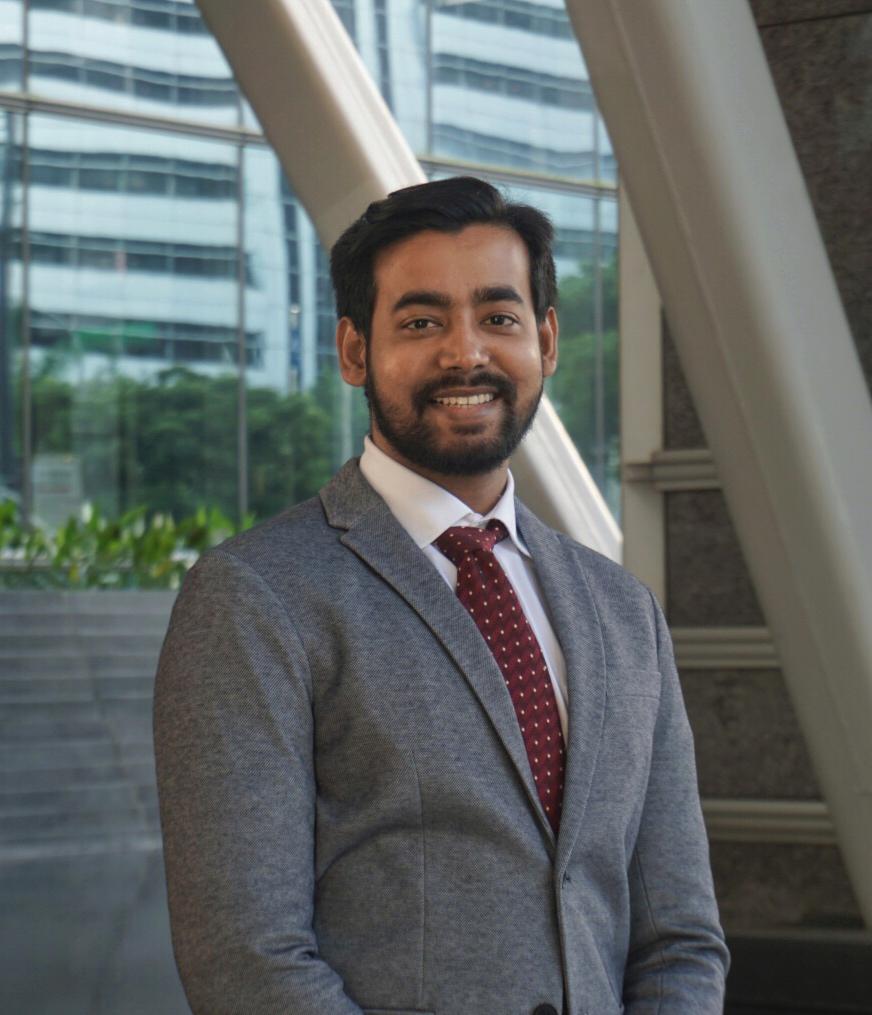
Dr. Nahid Kaisar is currently working as a postdoctoral fellow in Academia Sinicia, Taiwan. He completed his PhD in Material Science and Engineering from National Taiwan University of Science and Technology, Taiwan. His work is published in several international journals and he has also presented his work in several conferences in USA and Japan. He has also patented his research work for future commercialization.
Here are the excerpts of an interview of Dr. Kaisar with Rashida Bakait of India Tomorrow.
Q. Please briefly explain your research.
Ans: I am working on the development of nanomaterials and their applications on Lithium-ion battery and Lithium-Sulfur battery. I completed my PhD on the development of Li-S battery, which is also known as next-generation battery technology. We have worked in direct collaboration with industries who manufacture battery for electric car and other applications, which makes the research work more challenging. While working on the materials and its application, always keep in mind about the market viability and industry viability.
At this moment we have well developed Li-ion, Li-polymer battery technology which has wide range of applications that include electric vehicles, consumer electronics and grid technology. But the energy density does not satisfy the current demand. We are doing research on the Li-S battery, which has five times higher energy density and discharge capacity than the current Li-ion battery.
Petrochemical industry produces plenty of Sulfur as by-product, which makes Sulfur abundant element and sulfur is environment friendly compared with the heavy metals used in Li-ion battery. A successfully commercialize Li-S battery not only increase the battery energy density but lower the battery cost.
Q. What was the objective of your research?
Ans: The main objective of my research work on Li-S battery technology is to develop a successful product that is cheaper than recent Li-ion battery and at the same time exhibits higher energy density. The main aim of my research work is to develop a successful Li-S battery that will help to replace the use of toxic heavy metals (like Co, Mn, Ni) which has adverse effects on the environment.
Q. When did you begin and complete your research?
Ans: I started my research in the year 2016 as a graduate student in National Taiwan University of Science and Technology, where I worked on the thin film technology. Later, in 2017 I started working in Academia Sinica, one of the premier research institutes in Taiwan. I completed my Ph. D in April 2020. Later, in the month of May 2020 I started working as a postdoctoral fellow in Academia Sinica.
Q. What were the findings of your research?
Ans: There are two aspects of my research work:
Material development: I do research on the design and synthesis of nanomaterials for various applications that include energy storage system. I keep in mind that the synthesis process must be market friendly and easy to process in industry.
Energy storage: Li-S battery face drastic capacity and active materials loss after few charge-discharge cycles. I have successfully developed new materials and battery technology that have successfully stabilized the battery performance.
Q. Any scholarships or awards for research?
Ans: I have been awarded National Taiwan University of Science and Technology graduate scholarship. I have also been awarded CTCI outstanding research award in 2020 for outstanding research work during PhD.
Q. How do you think your research would be beneficial to the industry or society?
Ans: LI-S battery technology is a new topic of research compared to Li-ion battery. My research work adds few innovative research ideas to the field that would help in the development of a commercial product.
Q. Any new research you are working on now.
Ans: Currently, I am working on the development of new anode materials for Li-ion battery. Presently, commercial Li-ion batteries use graphite as anode material, which has lower discharge capacity and low conductivity. I am doing research on new materials that can replace the state-of-the-art graphite while exhibiting similar performance.
Q. How do you think your research can be carried forward?
Ans: Research is a never-ending process. We need to design industry feasible synthesis process for battery materials using safe and non-toxic materials. We need to collaborate with battery management system that will help to produce an outstanding product. There is a need of strong collaboration between academic and industry to achieve a fruitful product.
Q. Please give few tips and suggestions for the budding scientists.
Ans: All the students who are looking forward to start research journey, should focus on finding an outstanding supervisor. Your supervisor will be the key in success during your research career. University and country play a secondary role.
source: http://www.indiatomorrow.net / India Tomorrow / Home> Education / by Rashida Bakait, India Tomorrow / May 28th, 2021
This is the tenth part of the series called ‘Scientist Says’ where we bring for our readers the significant research works of young scientists in various fields.
Dr. Rizwan Nabi completed his Ph.D in June 2020 at IIT Bombay (India) under the supervision of Prof. Gopalan Rajaraman. Presently, he is working as a Research Associate “European Research Council Fellow” in the Department of Chemistry at The University of Manchester. He talks about his research with Rashida Bakait of India Tomorrow.
Q. Please briefly explain your research.
Ans. My research broadly focuses on the Single-Molecule Magnets. Single-Molecule Magnets (SMMs) are the metal-organic compounds (complexes) which show magnetic relaxation of purely molecular origin below a certain blocking temperature . In this temperature range, a SMM exhibits magnetic hysteresis of purely molecular origin. In contrast to conventional bulk magnets and molecule-based magnets , collective long-range magnetic ordering of magnetic moments is not necessary. Organometallic molecules have emerged as clear front-runners in the search for high-temperature single-molecule magnets. Within this family of structurally similar molecules, significant variations in their magnetic properties are seen, demonstrating the importance of understanding magneto-structural relationships to develop more efficient design strategies. Efforts in this field primarily focus on raising the operating temperatures of single-molecule magnets to liquid nitrogen temperature or room temperature in order to enable applications in magnetic memory. Apart from the higher blocking temperature, efforts are being made to develop SMMs with high energy barriers to prevent fast spin relaxation. Recent acceleration in this field of research has resulted in significant enhancements of single-molecule magnet operating temperatures to above 70 K.
Q. What was the objective of your research?
Ans. The Main objective of my research is to check the stability and hence magnetic properties of the SMMs on different surfaces like Au(111) and many other surfaces like MgOAg(100), carbon based surfaces (graphene and graphite). Here we are trying to develop an ab initio spin dynamics methodology and check if it is capable of quantitative prediction of relative relaxation rates in the Raman/Orbach regions. The ultimate goal of our study is to develop a SMMs which can be fully modified to develop a high density data storage memory devices, qubits or spintronic devices. The ultimate miniaturization of classical memory devices lies in the use of atoms or molecules to store binary data. Single molecule magnets (SMMs), molecules that exhibit slow magnetic relaxation and memory effects, provide a flexible platform for realizing high-density data storage.
Q. When did you begin and complete your research?
Ans. I started my research after joining Indian Institute of Technology, Bombay in July 2014 as a Ph.D student in the department of Chemistry. I completed my Ph.D in June 2020.I have completed my Ph.D at IIT Bombay (India) under the supervision of Prof. Gopalan Rajaraman. My research lay emphasis on describing magnetic properties in 3d and 4f SMMs on different surfaces such as Au (111), MgO/Ag(100), and studying cobalt complexes for spin filtering purposes. Currently, my research interests revolves around computational study of the chemical control of the vibronic coupling of SMMs. Fortunately, recent theoretical efforts have begun to establish robust and systematic methodologies to treat these problems, targeting a new approach of engineering spin−phonon coupling.
Q. What were the findings of your research?
Ans.Our group looks into the stability of SMMs on surfaces which is a great challenge itself if one wants to develop memory devices from the SMMs. Our findings are published in peer reviewed journals like American Chemical Science (ACS) and Royal Society of Chemistry (RSC), where we have discussed how challenging it is to study these SMMs on various surface. We have reported Lanthanide complexes as molecular dopants for realizing air-stable n-type graphene logic inverters with symmetric transconductance which is published in the Journal of Material Horizon . Also, we are the first to report a large molecule with 19 Metal ions on gold surface using DFT calculation as Deciphering the origin of variation in the spin ground state and oxidation state of a {Mn19} cluster on Au (111) surface: is the Au (111) surface innocent. This study is published in the Journal of Chemical Communication which is a Royal Society of Chemistry Journal.
Q. What was the conclusion of your research?
Ans. In order to develop memory devices from SMMs one needs to check the stability of these SMMs on various surface for the purpose of device fabrication. There are tremendous SMMs which are stable as pristine molecules but loose SMM features upon grafting which can be due to various reasons like charging effect of surfaces, change in the geometry of the molecules on surface, spin-phonon interactions etc. Thus, while fabricating one needs to be sure enough about these challenges and how to stabilize these molecules on surface.
Q. Any scholarships or awards for research?
Ans. I have been awarded European Research Council award as a Post-Doctoral Fellow at The University of Manchester (UK).
Q. What challenges did you face?
Ans.Challenges are an integral part of the research. There are many things associated with the research apart from the things which one learns from the books or some other sources. One needs to be fully motivated to work as a researcher. You may feel down at times but you need to have guts to work and find the loopholes. It’s never a well beaten path to walk on, one needs to set his/her target and work day and night to get that achieved. You need to balance your social life and life as a researcher which is quite challenging itself were many people fail. I have faced problems in designing a DFT protocol for stabilizing these molecules on particular surfaces, which is not an easy task to do with DFT. You never know which surface will suit your molecule unless you do some calculations, thus your study may be time consuming since lot of problems need to be addressed.
Q. How do you think your research would be beneficial to the industry or society?
Ans. Modern magnetism or SMMs is in general quite a fascinating field, which aims at developing memory devices which can be used for the high density data storage, qubits and quantum computing. Once the stable SMMs have been obtained at room temperature (which is yet a dream to be achieved), this will revolutionise the modern data storage limits and also the future aspects of the super computers. Modern electronic gadgets (cell phones, laptops and iPad) will be improvised when the SMMs will be stabilized at the room temperature. This way our study would be beneficial not only to the industry but also to the common people.
Q. Any new research you are working on now?
Ans. Currently, the core objectives of my research programme are to develop a modern theory of solid state vibronic coupling and to determine how vibronic interactions can be controlled with chemistry. This can be achieved by undertaking an integrated computational and experimental research programme in tandem.
Q. How do you think your research can be carried forward?
Ans. Designing molecules with better SMM features using the state -of –the- art principle and targeted design criteria together with the knowledge of DFT and ab initio studies can help to reach a particular target of obtaining memory devices. Moreover, the stability at room temperature by increasing the blocking temperature and effective energy barrier to the relaxation of magnetization can help better to move this study to next levels. Also, stability on a particular surface will produce better results.
Q. Please give few suggestions for the budding scientists.
Ans. I would suggest budding scientists to not to lose hope in any circumstances. Work hard and maintain consistency in research. Challenges may come but we need to face them with a smile.
source: http://www.indiatomorrow.net / India Tomorrow / Home> Education / by Rashida Bakait, India Tomorrow / June 12th, 2021
This is the eleventh part of the series called `Scientist Says’ where we bring for our readers the significant contributions of young scientists in various fields.
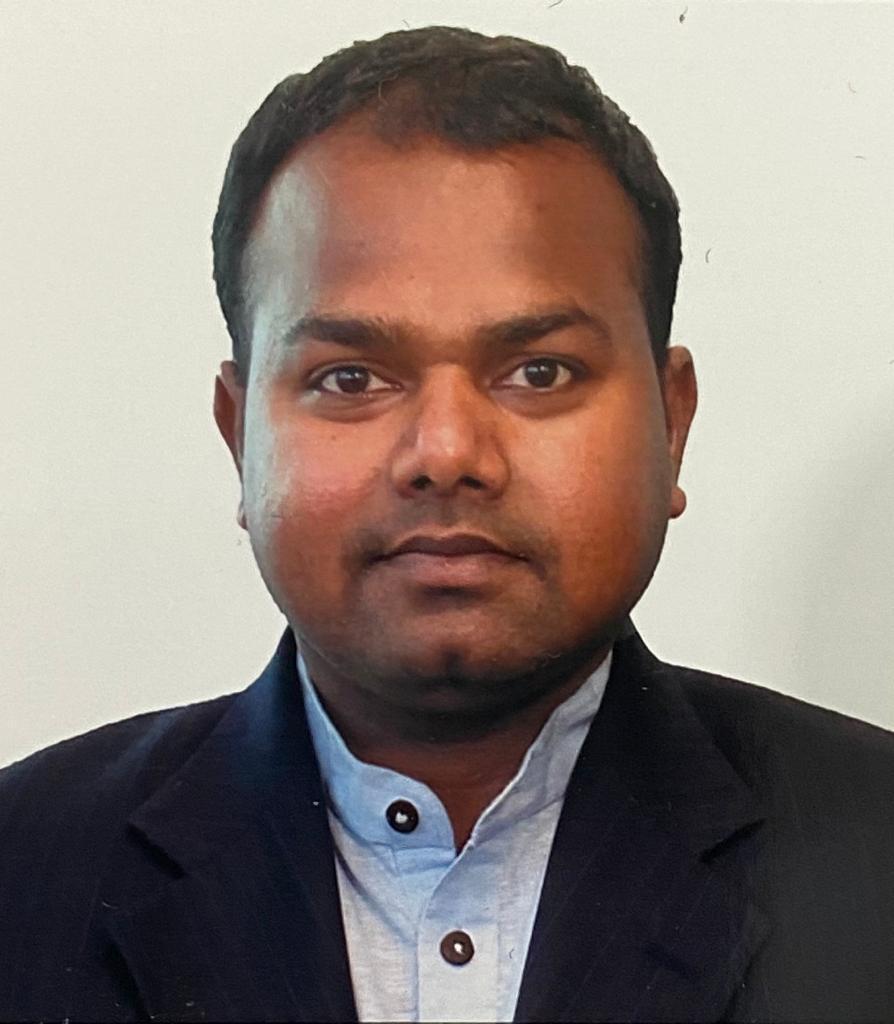
Dr. Mohammed Ataur Rahman completed his B.Sc (H) & M.Sc., chemistry from Jamia Millia Islamia, New Delhi in the year 2003-2008.
Dr. Rahman started his research journey in the year 2009 with Dr. Jhillu Singh Yadav ( Bhatnagar fellow and former Director of CSIR-IICT) group in Semiochemical division.
After completing his Ph.D in the year 2015 December, he joined as a Research Scientist in one of the pharmaceutical companies in Hyderabad. In the year 2016, he was conferred with Postdoctoral position in the group of Professor Andrew G. Myers, at CCB-department, Harvard University, Boston, USA. He worked with Professor Andrew G. Myers from August 2016 to July 2019. In the year 2019 September, he joined New York University, Abu Dhabi, UAE as a Postdoctoral Research Associate with Professor Alan Richard Healy.
Currently, he is working on Asymmetric Synthesis and its application to synthesize Polyketide natural products. Dr. Rahman has published 15 research papers in reputed international scientific journals and he is sharing inventorship in three international patents.
He shares his significant research works with Rashida Bakaitof India Tomorrow. Here are the excerpts of the interview.
Q. Please briefly explain your research.
Ans. My scientific journey began at CSIR-Indian Institute of Chemical Technology (IICT), Hyderabad. At IICT, my initial research began with the development of eco-friendly cost-effective pest-control method to control the pests in the agricultural field as an alternate method of pest control. These eco-friendly pest-controlled method is called as “Pheromone Technology’’. The “Pheromones” are the mixture of chemicals which are released by the male insect to attract the female partner for mating. The whole idea for this technology was to mimic the exact blend ratio of the particular pheromone compound which is released by the male insect and replacing it with artificial pheromones. With the help of artificial pheromones, the female partner of the insect is attracted and is trapped by specially designed trappers. We have developed pheromones for different types of crops such as sugar cane, cardamom, coconut, brinjal, tomato, paddy, ground nuts, cotton etc. This technology is very popular among farmers in South India especially in Andhra Pradesh, Telangana, Tamilnadu and Kerala.
But my PhD topic was different from the above Pheromone work. I started my Ph.D, with Dr. Jhillu Singh Yadav, he was the former director of my institute, CSIR-IICT. The topic of my Ph.D was – total synthesis of biologically active natural products- especially macrolide natural product, which is a potent class of compound having several distinct biological activities such as anti-cancer, anti-biotics, anti-inflammatory, immunosuppressants etc. My research was focused on the discovery of new synthesis routes for macrolide anti-biotics. During my Ph.D. I have synthesized more than five different macrolide natural products which are quite useful entities for antibiotics, which can be further studied to find new drug candidates.
Q. What was the objective of your research on natural products?
Ans. The objective of my research was to learn the nature of macrolide natural product and its chemistry for the discovery of new class of compounds which can be a potential antibiotic. In the year 2016, I joined Professor Andrew G. Myers research group as a Postdoctoral Fellow in the department of chemistry and chemical biology, Harvard University. It helped me to learn more about the biological applications of macrolide. Professor Myers was working on discovery of new macrolide antibiotics, which would be effective against gram positive and gram-negative pathogens. As we all know that Azithromycin is the commercial antibiotics which is mostly used against gram-positive pathogens. The main drawback for the antibiotics is that the bacteria develop its resistant mechanism against the drugs. Therefore, we have to come up with a new drug candidate to kill the resistant bacteria. Keeping these things in mind Professor Myers have set up a Macrolide Pharmaceutical company to study & discover a new class of macrolide antibiotics which can be effective against gram-positive as well as gram-negative pathogens. In 2016, I joined as one of the members of forty scientists who are working on this project. In the span of eight years, the Myers group have synthesized approx. 2100 of new macrolides. Out of 2100 new macrolides, we were lucky to find 100 best drug candidates which successfully passed the phase II clinical trials. I have synthesized over 150 new analogues of macrolides and three compounds out of 150 analogues showed best results. There are five patents for this work and I am sharing inventorship in two patents.We are hoping that this will be the future antibiotics.
Q. When did you begin and complete your research on natural products?
Ans. I started my doctoral research on natural products in the year 2009. In 2011, I registered my Ph.D in AcSIR- Academy of Scientific and Innovative Research at CSIR-IICT, Hyderabad, under the supervision of Dr. Jhillu Singh Yadav. I completed my Ph.D degree in the year December 2015.
Q. Can you please list some of the findings of your research works?
Ans. The findings for both the research works are as below:
As we all know chemical pesticides used in agriculture are very toxic and are not ecofriendly as it kills all kinds of insects. Pesticides also contaminate the fruits and vegetables. Long term use of such chemical pesticides will make land infertile and make nitrogen fixation slow. Therefore, to overcome those environmental issues, the new Pheromone Technology is developed. Pheromone Technology is an ecofriendly method to trap the insects. It is insect specific therefore, it does not disturb those insects which are beneficial to plant for pollination such as honey bee, butterfly, etc. Therefore, with the help of this technology farmers are growing healthy crops in some parts of South India.
We all know currently, at least 700,000 people die each year due to drug-resistant diseases, including 230,000 people who die from multidrug-resistant tuberculosis. More and more common diseases, including respiratory tract infections, sexually transmitted infections and urinary tract infections, are untreatable. Lifesaving medical procedures are becoming much riskier, and our food systems are increasingly precarious. Therefore, the newly discovered macrolide antibiotics will be a potential candidate to reduce the death rate due to multidrug-resistant organisms.
Q. What was the conclusion of your research on antibiotics?
Ans. The molecular mass of macrolide antibiotic “Azithromycin” is high, more than 650, therefore, it’s very hard for the molecule to penetrate the bacterial cell. The bacterial cell wall consists mainly of peptidoglycan (PG), a mesh of polysaccharide strands. Therefore, it’s very hard for Azithromycin to penetrate the bacterial cell to stop its protein synthesis. To overcome with these issues, we have synthesized new macrolide antibiotics with lower molecular mass by keeping intact its biological activity. The smaller molecular mass macrolide penetrates the bacterial cell and stops the protein synthesis there. Our newly discovered macrolide antibiotic worked successfully against the gram-negative and gram-positive pathogens. I hope that in future, the Macrolide Pharmaceuticals formulates its own molecules as new candidates of antibiotics which will work against the broad spectrum of resistant pathogens which are life threatening.
Q. Any scholarships or awards for your research?
Ans. I received funding from department of biotechnology, New Delhi, India for Ph.D (2009-2015) and Project Associateship. In 2016-2019, I was awarded scholarship from the Harvard University, Boston, USA. Currently, I am working as a Postdoctoral Research Associate and I am receiving scholarship from New York University Abu Dhabi, UAE.
Q. What challenges did you face?
Ans. Doctor of philosophy is a long process, it requires a lot of patience and motivation. This journey will never be smooth, we have to motivate ourselves by being positive. I started my research in natural product chemistry. Natural products are chiral molecules, their synthesis involved multiple steps and therefore, designing a synthetic route to achieve the target, selection of right reagent and condition for chiral functional group transformation is very important. In multi-step synthesis, designing a feasible synthetic route, choosing right condition, optimizing synthetic plan of each step with best knowledge of literature reports, revising the synthetic plan is very important. Sometimes, ideas would fail and new strategies needed to be designed to proceed and solve issues. Initially, I had a lot of failure reactions which demotivated me but “be positive’’ attitude helped me a lot to achieve my goals and I could finish more than five natural products’ synthesis during my Ph.D.
Q. How do you think your research works would be beneficial to the industry or society?
Ans. We all know chemistry exists everywhere, human life depends on chemistry. Chemistry has its own subclass organic, inorganic, material, polymer, agricultural, pharmaceuticals etc., each class of chemistry has its own importance for the society. Here, I am talking about my perspective of chemistry, organic chemistry and its synthesis. Organic synthesis has its own benefits for the society with its application ranging from pharmaceuticals, agrochemicals, pheromone chemicals, pesticide industry, dyes, cosmetics, high energy material which are used in defence sector, making diagnostic tools for sugar monitoring, high technology materials used in mobiles, computer and sensors and in aerospace etc.
The pheromone technology is an ultimate application to control the pests in the agricultural field. It is a green technology, eco-friendly, cost-effective and most reliable. These technologies are widely used worldwide. The pheromone techniques are quite popular in the Europe and America.
The current development on macrolide antibiotics, by our team at Myers Lab in collaboration with Macrolide Pharmaceuticals, will help the society to manage the antibiotic crisis in the coming decade. As per my personal observation, after COVID-19, the next health crisis would be due to antibiotics, and this would be a result of the excessive misuse of antibiotics. It develops its own resistant mechanism and restrict the effectiveness of antibiotics.
Q. Any new research you are working on now? Ans. After completion of post-doctoral study from Harvard University, I joined New York University, Abu Dhabi, UAE as a Postdoctoral Research Associate with Professor Alan Richard Healy, in the year 2019. My current research focuses on asymmetric synthesis and I am working on finding the new asymmetric methods for the carbon-carbon, carbon-nitrogen, carbon-oxygen and carbon-halogen bond formation. These methods and its synthetic tools will be used for the synthesis of polyketide such as macrolide natural product as a clinical candidate for antibiotics. Our main aim is to use our own developed chemistry and apply them for synthesis of polyketide natural product. After developing these methods, we will use our chemistry to automate the synthesis as the nature does, like biosynthetic pathways.
Q. How do you think your research can be carried forward? Ans. Organic synthesis is an art of science. It creates new materials. We all know chemistry exists everywhere, human life totally depends on chemistry. Chemistry has its own subclass and each class is very important for the society. Here, I am talking about Organic Chemistry and its synthesis. Organic synthesis in general has its own advantages for the society with its applications, ranging from pharmaceuticals, agrochemicals, pheromone chemicals, pesticide industry, dyes, cosmetics, high energy materials which is used in defense sector, making diagnostic tools for sugar monitoring. My new finding of new class of macrolides can be studied further to address the real crisis of antibiotics in future.
Q. Please give few suggestions to the budding scientists.
Ans. Research is a continuous journey. We have to keep ourselves motivated to achieve goals and reach our destination. We have to be ready to accept the real scientific challenges and try to solve and address those issues. My advice to the young scientists is to be positive and keep learning new scientific techniques which will help answer problems. You have to read a lot and keep yourself updated with the current literature and findings. Do not be upset with the failures, as failures also teach you. All the best for the budding scientist.
source: http://www.indiatomorrow.net / India Tomorrow / Home> Education > Featured / by Rashida Bakait / June 09th, 2021
Prestigious American College of Cardiology, medical organization of America conferred an FACC degree on Dr Abdul Razak U K, cardiologist of Manipal Kasturba Hospital considering his valuable medical service.
Razak hails from Majoor, Kaup taluk, Udupi and is the son of Haji Bavu Beary and Nabisabi. He is the son-in-law of well-known social worker Haji K Aboobacker and resides in Udupi at present.
source: http://www.daijiworld.com / Daiji World.com / Home> Mumbai / by Rons Bantwal, Daijiworld Media Network – Mumbai (EP) / June 11th, 2021
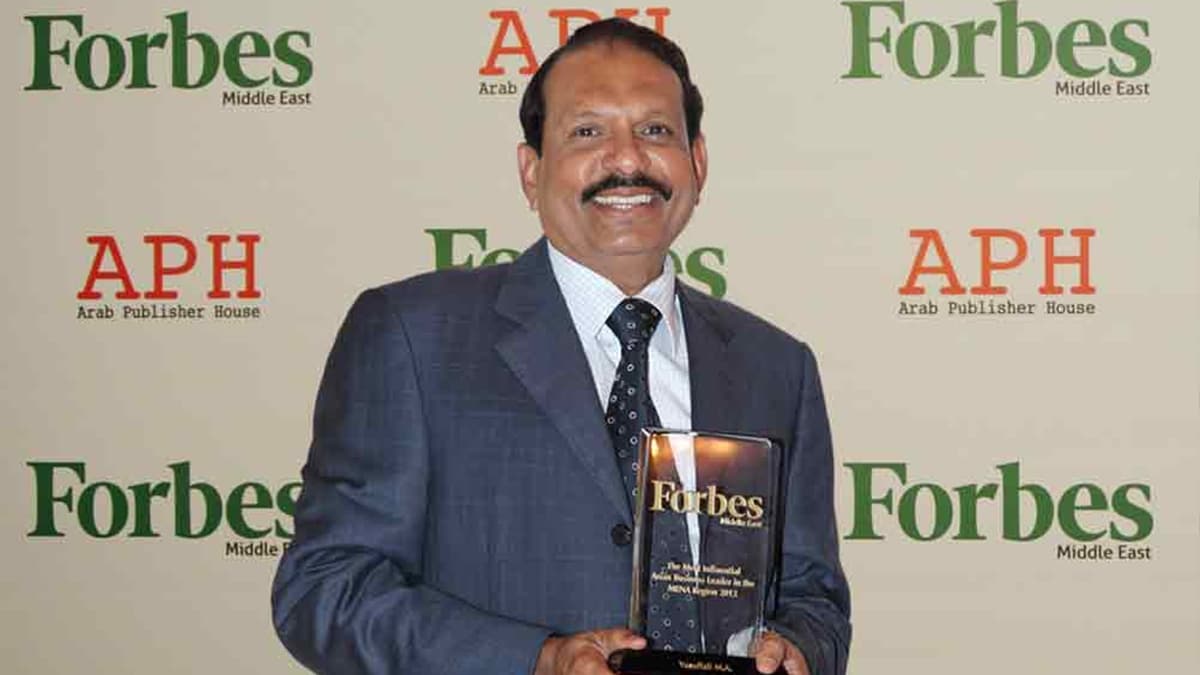
Yusuffali MA is a UAE-based Indian businessman. He is a billionaire who operates the Lulu Group that owns Lulu Hypermarkets and shopping malls.
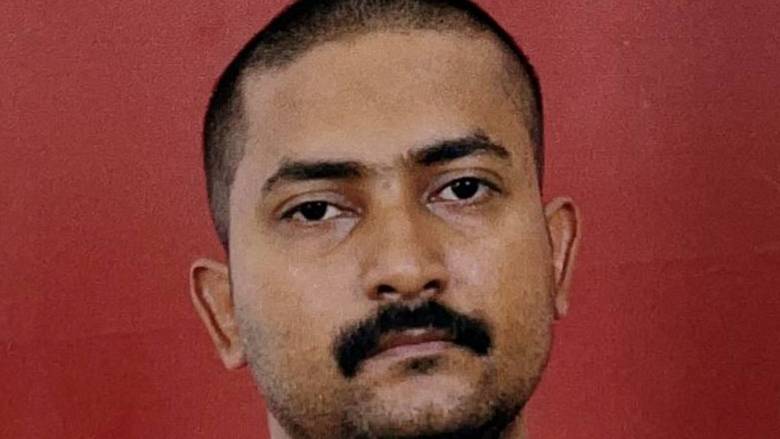
It was nothing sort of rebirth for Becks Krishnan, serving a death row in UAE when his 500,000 Dirhams (around Rs 1 crore) compensation was paid in full and the man hailing from Kerala was released. The generous compensation was paid by Yusuffali MA, the chairman and managing director of LuLu Group.
Krishnan was sentenced to death by UAE’s Federal Supreme Court. He had been found guilty of killing a young Sudanese boy when he recklessly drove his car and rammed a group of children in September 2012. Ever since the sentence, the family had been trying for his release. But that required a hefty compensation to be paid. This is where Yusuffali stepped in.
In his career as a business tycoon, Yusuffali has headed the Abu Dhabi Chamber of Commerce and Industry (ADCCI). He is the only non-Arab to be elected to the director board of ADCCI for three consecutive terms.
He has been a key mediator in the Kochi Smart City project between the Kerala government and the Dubai-based TECOM Group. Apart from his role in business, he has also organised several relief measures in India, notable among those are during the Lathur earthquake in Maharashtra, the Gujarat earthquake, and the Uttarakhand floods.
Yusauffali was conferred with Padmashree by President Pratibha Devi Singh Patil in 2008 for his achievements in business and industry. He was the first non-resident Indian (NRI) from the Gulf and the Middle East countries to be awarded Padmashree. Previously, he had been given the Pravasi Bharatiya Samman Award by late President APJ Abdul Kalam in 2005.
The UAE government in April awarded him with its highest civilian award for his noble and charitable contribution to the community. After accepting the award, Yusauffali said, “I first arrived in Abu Dhabi 47 years ago with dreams and hopes. I faced a lot of challenges and ups and downs in my life, but, today, I have reached this stage by the grace of Almighty God and the wholehearted support from the Royal Family of the UAE.”
Securing the release of Krishnan, Yusuffali simply “thanked the almighty and the benevolence of visionary rulers of UAE” for the decision, and wished him a happy and peaceful life ahead.
source: http://www.indiatoday.in / India Today / Home> Business / India Today Web Desk, New Delhi / June 04th, 2021
The 45-year-old had been languishing in jail awaiting capital punishment with all hopes quashed.
It is quite literally a second lease of life for Becks Krishnan. The Indian expat, who was on death row in the UAE for causing the death of a young boy in a road accident, can finally see the outside of a jail cell following the intervention of NRI businessman M.A. Yusuff Ali.
The 45-year-old had been languishing in jail awaiting capital punishment with all hopes quashed. But he got a second lease of life, thanks to the efforts of Yusuff Ali, chairman of Lulu Group.
Krishnan was sentenced to death by the UAE Supreme Court after he was found guilty of causing the death of a young boy. He had rammed his car into a group of kids in September 2012.
Ever since, his family and friends have been relentlessly trying for Krishnan’s release without any success, especially as the victim’s family had already gone back and settled in Sudan, putting an end to any kind of discussion or pardon.
As a last attempt, the Krishnan family approached Yusuff Ali, who went about getting the details of the case and got in touch with all stakeholders. At one point, Yusuff Ali flew down the victim’s family from Sudan to Abu Dhabi for a month and held extensive discussions to arrive at a compensation amount and secure pardon for Krishnan.
Ultimately, in January this year, the victim’s family agreed to pardon Krishnan, and Yusuff Ali paid Dh500,000 as compensation in the court to secure the early release.
source: http://www.khaleejtimes.com / Khaleej Times / Home> News> Crime and Courts / by James Jose, Dubai / June 03rd, 2021
In 1984, Dr Ismail started his first polyclinic in Karama, which soon became a familiar name for patients from South Asian communities in Dubai.
UAE resident Dr Ismail Kazia and his family are among the latest recipients of the coveted Golden Visa, thanks to his service in the field of medicine.
Hailing from Bhatkal, a coastal town in the state of Karnataka, India, Dr Ismail came to Dubai in 1982, at a time when only a few localities existed, together with a few hospitals and clinics. Karama has been his home ever since.
The doctor took up a post at an American clinic — but though he was “offered a good salary compared to other hospitals”, he said he soon realised there was a specific need for a clinic in Karama.
In 1984, he started the Dr Ismail Polyclinic in Karama, which soon became a familiar name for patients from the Indian, Pakistani, Bangladeshi and Nepali community in Dubai.
“We are very blessed and thankful for the Golden Visa, which is valid till May 2031,” he said, adding, “A few doctors in my hospital have also been granted the visa for their service during the pandemic.”
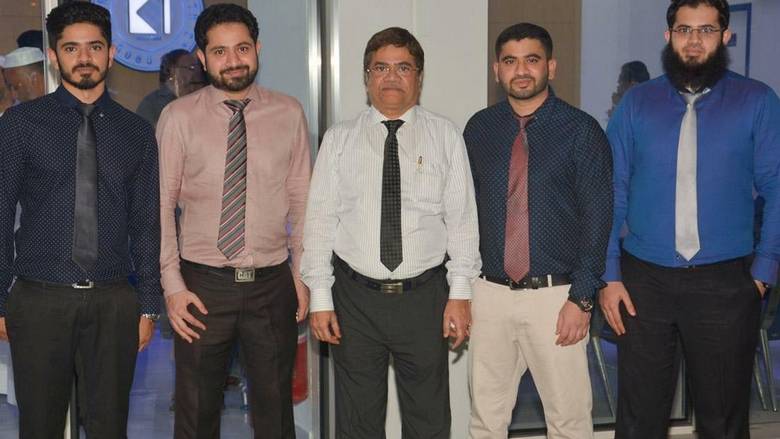
Dr Ismail has four sons, all of whom have followed him into the medical profession to become doctors themselves.
The eldest, Dr Mohammed Dawood Kazia, holds a Doctorate of Medicine (DM) in Gastroenterology, while his second son, Dr Mohammed Nooh Kazia, works as an endodontist at their polyclinic in Karama.
The third son, Dr Sheesh Kazia, is presently working at Kanachur Medical College in Mangalore, Karnataka — while his younger brother, Dr Mohammed Yusha Kazia, completed his MBBS recently.
Dr Ismail also has a son-in-law, Dr Anas Mohtesham, who works at the Royal Wing of Rashid Hospital.
The oldest, Dr Dawood Kazia, said: “It’s a blessing to work here in Dubai. My brothers, who are presently in India, have also been granted Golden Visas by the authorities. My younger brother Dr Sheesh will also join us in the coming days. We thank the authorities for recognising the efforts of doctors.”
Dr Ismail now has a day surgical centre in Karama along with six polyclinics at various locations in Dubai. He also has clinics at labour camps in Al Quoz, Jebel Ali and Sonapur, which are dedicated to the treatment of labourers at minimal charges.
He has reportedly offered his services to people of over 80 nationalities, something he considers a bit of a personal achievement, given that there are over 200 nationalities residing in Dubai.
ayaz@khaleejtimes.com
source: http://www.khaleejtimes.com / Khaleej Times / Home> News / by SM Ayaz Zakir, Dubai / June 06th, 2021
Seher Latif also worked in multiple international projects including Sense 8.
Seher Aly Latif, producer of Swara Bhasker starrer Bhaag Beanie Bhaag, passed away on 7 June of a cardiac arrest. She was reportedly admitted to Mumbai’s Lilavati hospital for renal failure. Seher also worked as the casting director for Maska, Shakuntala Devi, and Durgamati: The Myth among others.
Director Neeraj Udhwani, who worked on Maska with Seher, confirmed the news to Indian Express. “It’s unbelievable. It’s so hard to process. Last week only I donated blood for her and I was told she was recovering. And this morning, I got to know about it. She had an infection due to which she suffered renal failure. She was admitted to the hospital last weekend. Doctors had put on her antibiotics, and we thought she was recovering,” he said.
Seher is remembered fondly by many people who’ve worked with her. About his experience of working with Seher, Neeraj said, “Her default expression was a smile. You would always find her smiling. She was one of the nicest, kindest people I ever met.”
Nimrat Kaur, who played the lead in Lunchbox, tweeted a picture of Seher with her cat and wrote, “One of the kindest, most loving people Mumbai gifted my life with. Still trying to process this unreal news…. Travel on into the light my dearest, sweetest Seher. The unpredictable, ghastly shortness of life remains baffling…Await to meet you on the other side.”
(Photo Courtesy: Twitter)
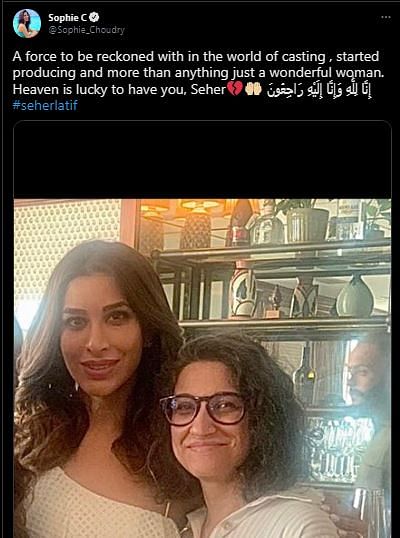
British singer Sophie Choudry tweeted, “A force to be reckoned with in the world of casting , started producing and more than anything just a wonderful woman. Heaven is lucky to have you, Seher.”
(Photo Courtesy: Twitter)
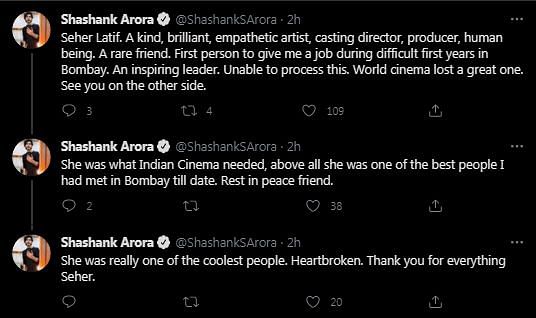
Made In Heaven actor Shashank Arora wrote a heartfelt tribute to the producer. “She was what Indian Cinema needed, above all she was one of the best people I had met in Bombay till date. Rest in peace friend,” he tweeted.
(Photo Courtesy: Twitter)
Seher Latif. A kind, brilliant, empathetic artist, casting director, producer, human being. A rare friend. First person to give me a job during difficult first years in Bombay. An inspiring leader. Unable to process this. World cinema lost a great one. See you on the other side,” he also wrote.
Seher’s repertoire also contains international projects including Eat Pray Love, Viceroy’s House, McMafia and Sense 8. She also founded Mutant Films with producer Shivani Saran in 2016. She is survived by her husband and parents.
source: http://www.thequint.com / The Quint / Home> Quint Entertainment> Celbrities / by The Quint / June 08th, 2021
Young Eshal’s great achievement was recorded in the International Book of Records of 2021.
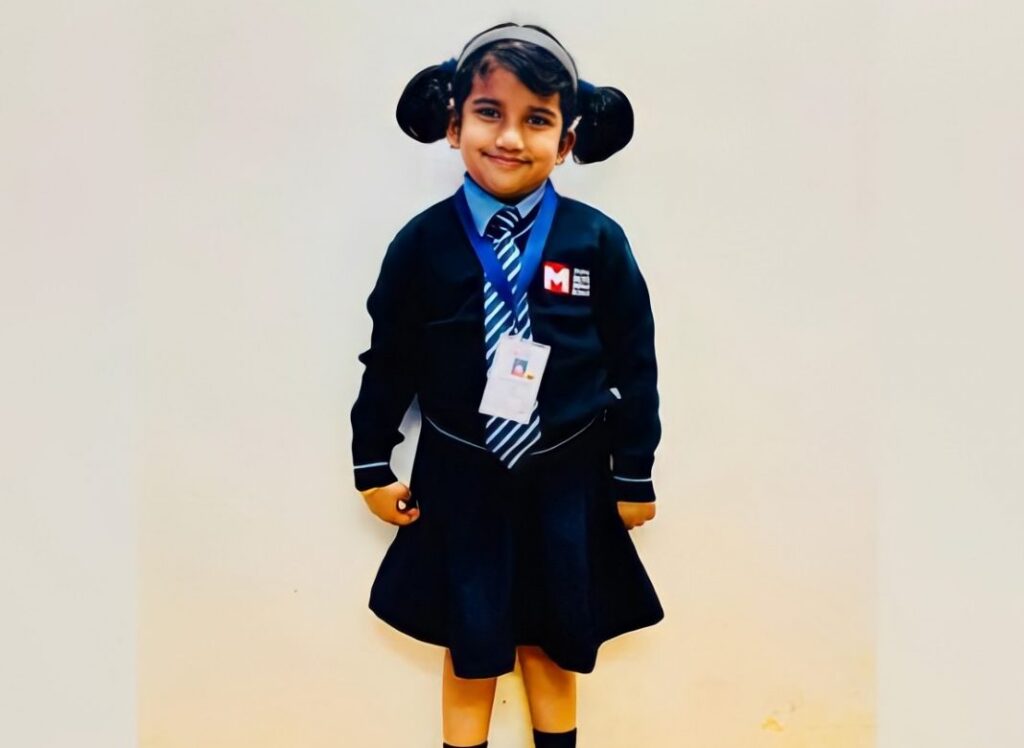
At just four years old, little genius Eshal Marwa Firos Khan set the world record for reciting all the elements in the Periodic Table in just 2 minutes and 28 seconds.
The kindergartener at Doha Modern Indian School didn’t only learn all the elements of the periodic table by heart, but also recited them in record-breaking time, earning her a spot in the International Book of Records on March 26, 2021.
“The World Record of “FASTEST RECITATION OF PERIODIC TABLE BY A KID” is achieved by ESHAL MARWA FIROS KHAN on 26th March 2021 from Doha, Qatar,” the organisation said.
“4 years 8 months Eshal recited all the elements of periodic table in 2 minutes 28 seconds and has set a new world record for International Book of Records,” it added.
Now, Eshal holds the record for “Fastest Recitation of Periodic Table By a Kid,” making her family and wider community in Qatar proud.
But that’s not the little girl’s only achievement.
Eshal is also documented in the India Book of Records and Champions Book of Records for identifying 55 critical human body parts, eight planets of the solar system, and 14 prime ministers of India in the shortest possible time.
Highlighting the girl’s achievement, the school extended their gratitude and pride towards her teachers for their support and guidance.
“On behalf of our esteemed Principal, Senior Leadership Team, Management, Staff and Students of DMIS we wish her further success and greater glory in the years to come,” said DMIS.
source: http://www.dohanews.co / Doha News / Home> Family Life / by Menatella Ibrahim / May 02nd, 2021
Aligarh Muslim University (AMU) has seen unprecedented number of cases and deaths during the second wave of Coronavirus pandemic
Bareilly , UTTAR PRADESH / Jubail, SAUDI ARABIA :
Rehan Alam Siddiqui
Aligarh:
At a time when universities across the country are been adversely affected by the pandemic, Rehan Alam Siddiqui, a Non Resident Indian (NRI) based in Jubail, Kingdom of Saudi Arabia (KSA) has donated Rs 15 lakhs to Aligarh Muslim University (AMU) to set up an oxygen generation plant at its Jawaharlal Nehru Medical College (JNMC).
Aligarh Muslim University (AMU) has seen unprecedented number of cases and deaths during the second wave of Coronavirus pandemic which is yet to be brought under control.
As per the last update , as many as 18 working faculties besides a number of other retired professors and serving employees have become victim of the deadly virus so far.
“Alarming death toll”
The alarming death toll has sent shock-waves leading to apprehensions that a deadlier ‘AMU strain’ of the virus is wreaking havoc. It was also reported that for the first time in the history of the university, the AMU cemetry is running short of space and old graves are now being dug up to bury the dead.
Against this backdrop the university had issued appealed to the government and other public and private organisations and individuals for help and support.
True well wisher of AMU”
Rehan Siddiqui obliged and donated the huge sum to his alma mater. Extending gratitude on the largesse, AMU Vice Chancellor, Prof Tariq Mansoor said:
“Mr Rehan is a true well wisher of the university, whose donation will be very beneficial to upgrade the existing health infrastructure for an effective Covid Response”.
“We at AMU are making all possible efforts to contain the spread of this pandemic and Mr Siddiqui’s donation will go a long way in serving the sick and the distraught with the lifesaving oxygen supply”, he added.
Born and brought up in a middle-class family in Bareilly (UP), Rehan Siddiqui has emerged as one of the fastest growing businessmen and industrialists in the Eastern Region of KSA.
Rehan Siddiqui is promoting better relations of the Indian community with the Indian consulate in KSA. He also organises cultural and academic programmes.
“Rs 3L donation by TSA”
In another development, members of the Technical Staff Association (TSA), Aligarh Muslim University (AMU) donated Rs 3 lakhs to facilitate Medical Attendance Scheme (MAS) to purchase equipments to be used for the treatment of registered employees and to strengthen the MAS Covid Response team.
The cheque was handed over to the university officials after the TSA members, Faisal Rais (TSA President), Abid Ali Zaidi (TSA Secretary General) and Kamran Husain (TSA Treasurer) met the Vice Chancellor, Prof Tariq Mansoor and Registrar, Mr Abdul Hamid (IPS).
source: http://www.ummid.com / Ummid.com / Home> India / by ummid.com News Network / May 31st, 2021