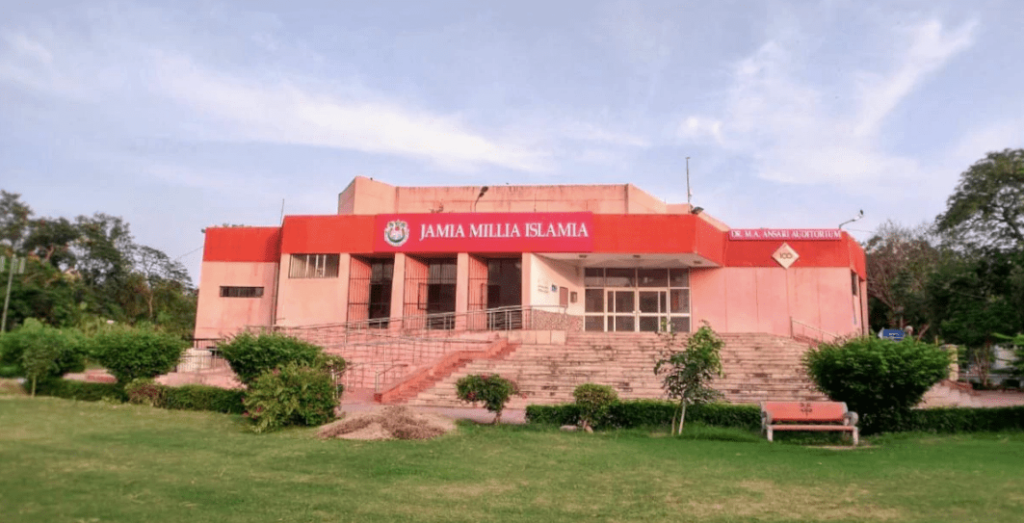
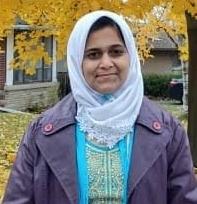
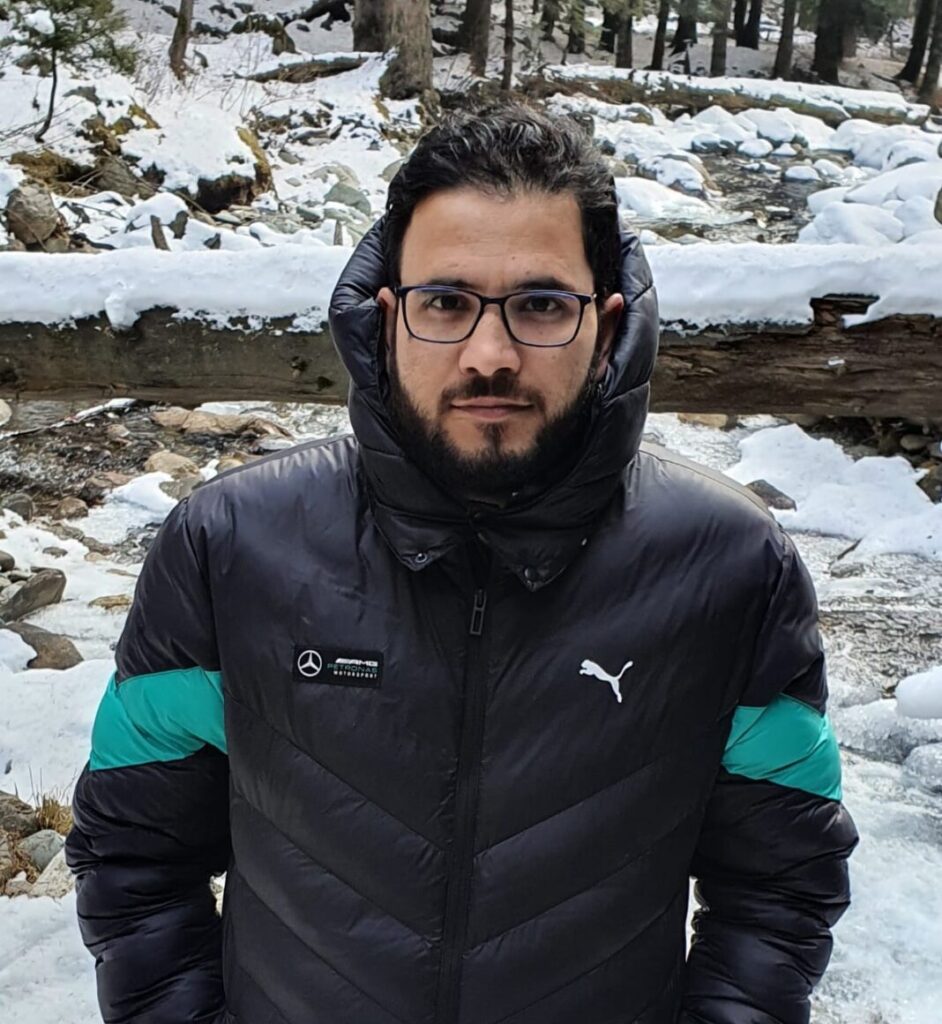
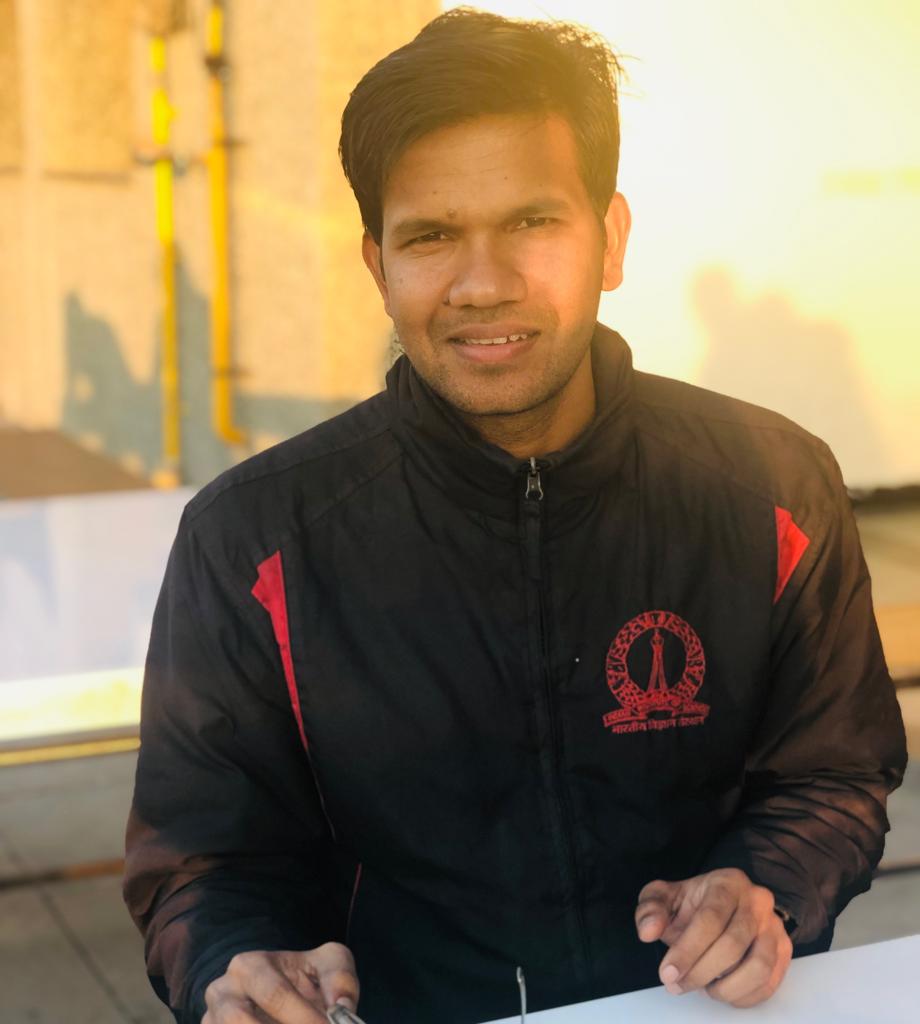
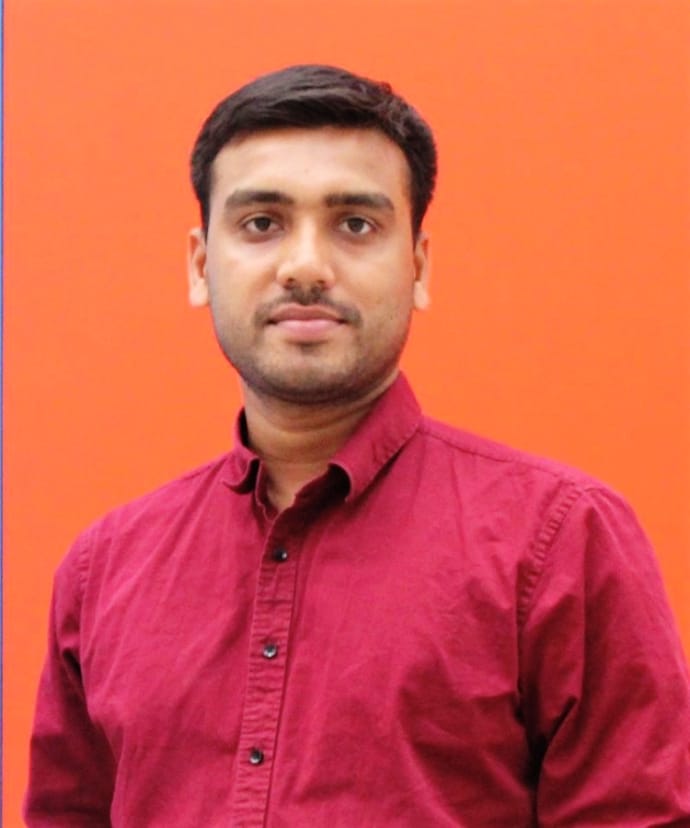
Dr Mohammad Askandar Iqbal and his team at the Department of Biotechnology, Jamia Millia Islamia(JMI), discovered the antagonistic roles of CBX2 and CBX7 genes in regulating glucose utilization in breast cancer cells. The discovery has enabled them to identify drugs that could be more effective in treating breast cancer patients with higher CBX2 and lower CBX7 expression.
Using a large amount of diverse molecular data from more than 3000 breast cancer patients along with gene silencing experiments, Dr Iqbal’s team identified the pro-cancer role of CBX2 and the anticancer role of CBX7, based on their effects on glucose metabolism in breast cancer.
Dr Iqbal and team also found that breast cancer patients with higher CBX2 and lower CBX7 expression in their tumors showed lesser survival probability compared to those having the reverse trends of expression of these two genes.
Highlighting the biological relevance of findings, CBX2 gene was found to be expressed at higher levels in breast cancer compared to normal breast tissue, whereas, the exact opposite trend was observed for CBX7. Further, the study reported that more deadly cancer tends to express higher levels of CBX2 and lower CBX7.
This research entitled “Multiomics integrative analysis reveals antagonistic roles of CBX2 and CBX7 in metabolic reprogramming of breast cancer” is published in Molecular Oncology, one of the most reputed journal worldwide in the field of oncology- a branch of medical science dealing with the study of cancer.
his is the first part of the series called-Scientist Says-where we would be presenting research works of young scientists in various fields.
Khadija Kanwal Khanum has done her PhD and Postdoctoral fellow from Indian Institute of Science (IISc), Bengaluru, India (2010-2018). Presently, she is a postdoctoral fellow at the University of Waterloo, Waterloo, Canada. She shares with Rashida Bakait of India Tomorrow, her significant studies and research on “Solar Cells’’.
Q. What was the topic of your research at IISc and a brief explanation about the same?
Ans. The broad topic of my doctoral and postdoctoral research at Indian Institute of science, Bengaluru, was fabrication, characterization and analyses of organic and hybrid photovoltaics (solar cells) to enhance the solar cell’s device performances. Specifically, the title of my doctoral thesis was “Morphological Architecturing of electroactive materials in organic electronics”. In this research, organic and organic-inorganic (hybrid) semiconductor/electroactive materials are used, instead of inorganic semiconductor materials/silicon to fabricate the solar cells. The organic and hybrid materials compare to the inorganic materials/ silicon counterparts are lab synthesized materials with ability to easily tailor the band gap (as semiconductors), and require less energy during their solar cell fabrication hence cost-effective. However, these organic and hybrid solar cells have till now reported, less power conversion efficiency, PCE (>25%) and are less stable in environment and therefore, require extensive research before their wide commercialization.
Q. What was the aim behind your research?
Ans. In this research, a different fabrication procedure was used called Electro-spinning, in order to enhance the light absorption as well as increase the charge (electron-hole) separation in the solar device, thereby increasing its PCE.
Q. What kind of new aspects were highlighted in your research?
Ans. The highlighting parts of the research were 1).The active layer of the solar cell which is generally in a thin film form was modified to fiber and various other forms such as network (Khanum and Ramamurthy, 2016), photonic (Khanum et al., 2017), two and three-dimensional triangles (Khanum and Ramamurthy, 2018) and spike-spheres (Khanum et al., 2015) structures using electrospinning/ electrospraying method. 2). The modified active layers assisted in improving the solar devices’ light absorption by 19 – 31% and PCE by 23 – 68%.
Q. When did you begin and complete your research?
Ans. I joined IISc as a doctoral student, in Aug 2010 and subsequently took few advance and elective courses in polymer science and technology, nanotechnology, vacuum systems, sensors and material characterization for one year, in order to gain knowledge and understanding of the above subjects, which helped me in my research. I started my research sometime around June 2011, submitted my doctoral thesis in July 2015, defended the thesis in July 2016, and continued the research as research associate and postdoctoral fellow till Mar 2018.
Q. What kind of challenges you faced?
Ans. Since organic electroactive materials used in this research are conjugated small molecules and polymers possessing, low molecular weight than conventional polymers hence, fiber formation using electrospinning was difficult. Therefore, lot of optimization of the electrospinning process parameters and modifications of the organic and hybrid materials used such as; preparation time, concentration and solvent used had to be meticulously carried out, during solar cells fabrication. Additionally, maintaining inert atmosphere both, during fabrication and characterization of solar cells required lot of patience and cautions, making this study iterative and time-consuming. For instance, it took almost two years in this study, to obtain first few successful solar cell devices.
Q. Any scholarships or awards for research?
Ans. For my PhD and postdoctoral research, major part of the funding was received as scholarship from Ministry of Human Resource Development (MHRD) and Institute (IISC) research associate fund while during last 15 months; I received scholarship from my Ph.D and Postdoctoral advisor from his project grant. I received few awards and grants to present the research work in various international conferences; Manish Narayan memorial award from Department of Materials Engineering, IISc in 2014, Indian Institute of Science support and grant in 2014 and 2015, Department of Science and Technology (DST) young scientist in 2016 and International Workshop on Advanced Materials (IWAM), Ras Al Khaimah, UAE travel grant in 2016 and 2018.
Q. How do you think your research would be beneficial to industry/ society?
Ans. Energy from sun that strikes the earth in a year is enormous, precisely equals to 3 x 1024 J, or about 10, 000 times more than current global energy consumption. Covering 0.1% of the earth’s surface with 10% efficiency solar cells would suffice the energy demand of the whole world (Siddiki et al., 2010). Therefore, my research of improving the light absorption and PCE of organic and hybrid solar cells through morphological architecturing would be one of the smart tools that can be used to trap and utilize the renewable and sustainable energy resource (solar energy).
Q. What was the conclusion of your research?
Ans. In conclusion, in this research `Electrospinning Processing Technique’ is evaluated as one of the novel processing techniques for morphology patterning, leading to improvements in structural, optical and opto-electrical properties of organic and hybrid electroactive materials. Further these electroactive materials based on morphological patterning were also evaluated as organic solar cells with 19 – 31% increment in light/ optical absorption and 23 – 68% enhancement in PCE (Khanum and Ramamurthy, 2016; Khanum et al., 2017; Khanum and Ramamurthy, 2018).
Q. How do you think your research can be carried forward?
Ans. The research could be extended in studying the life stability and field performance of these solar cells. The research could also be extended by using electrospinning processing technique to generate more morphological structures than studied in this research (mentioned in Q3’s reply) and evaluate their properties in the field of photovoltaics/solar devices. The already generated morphological structures such as network, photonic, two and three-dimensional triangles and spike-spheres structures are made up of organic electroactive materials and can be explored in the field of sensors and medical applications as in drug delivery and as tissue scaffolds, therefore the feasibility in these areas could also be one of the future direction.
Q. Can you brief us about your current research?
Ans. Yes, my research at University of Waterloo, Canada is on nanocomposites materials employed in power industry. As the World’s energy demand seems to be all time high and increasing, the focus of research is now more on renewable and sustainable energy. The power industry needless to mention, acts as a bridge between all types of energy generation and the consumers. In my present work, the importance of nanocomposites materials and its processing with respect to power industry are researched. Nanocomposites are remarkable class of materials, consisting of various types of nanofillers which act as reinforcement in the matrix and thus enhance the desired properties. These nanomaterials have to be dispersed homogeneously in the matrix to gain optimized effects and therefore require special processing tools. Therefore, in this research, processing of various polymer nanocomposites of silicone filled with Silica and Alumina fillers are studied.
Q. Apart from your main research topic, would you like to list any other work you collaborated and worked on?
Ans. Yes, besides fabrication, characterization and analyses of organic and hybrid solar cells, I collaborated and worked on few other interesting topics such as– Developed silk and melanin nanofibers mats for the bio-application such as scaffolds for tissue engineering, evaluated the effectiveness of non-water based cleaning mechanisms for photovoltaic (PV) systems. Studied the influence of dust density and composition on performance of PV systems using Infrared (IR) radiation and assessed magnetic materials and their integration in fibre reinforced polymer composites for structural applications.
source: http://www.indiatomorrow.net / India Tomorrow / Home> Education / by Rashida Bakhait, India Tomorrow / March 17th, 2021
In his career spanning over 60 years, Shah Manzoor Alam moved to Hyderabad in 1950 when job openings appeared in the Osmania university (OU).
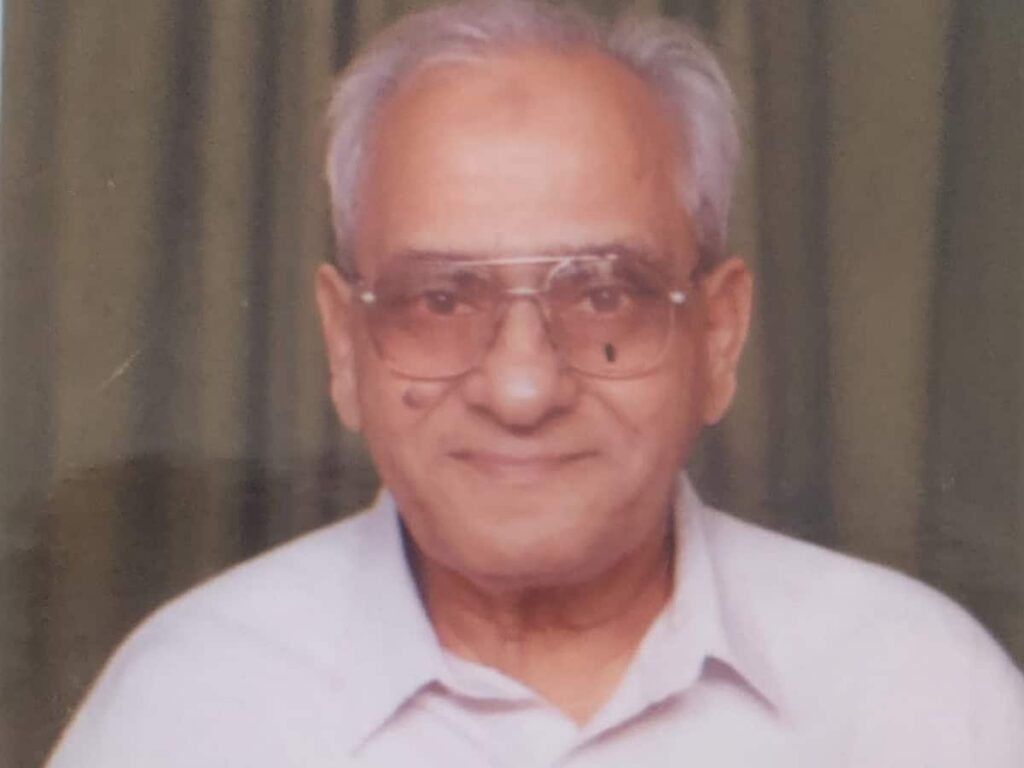
Former vice-chancellor of Kashmir University, Srinagar and the former head department of geography Osmania University, Shah Manzoor Alam, 93. (Photo supplied)
Hyderabad:
Renowned professor—former vice-chancellor of Kashmir University, Srinagar and the former head department of geography Osmania University, Shah Manzoor Alam, 93, has passed away of a cardiac arrest on Tuesday evening at his residence in Hyderabad.
A native of Ghazipur, Uttar Pradesh, Alam did his early schooling in Gorakhpur. He did his bachelor’s and masters in arts from Aligarh Muslim University (AMU).
In his career spanning over 60 years, Shah Manzoor Alam moved to Hyderabad in 1950 when job openings appeared in the Osmania university (OU) and joined the university as lecturer in geography in evening college.
In the mid-1960s, he became the head of the geography department in the arts college of the Osmania University (OU). Subsequently went to the United Kingdom to do a Doctor of Philosophy (PhD) from Edinborough.
In the year 1972, Manzoor Alam was invited to Australia as a visiting professor and later to New Zealand in 1974.
Shah Manzoor Alam was a vice chancellor (VC) of Kashmir university, Srinagar from 1984-1987.
In 1992 he was invited by the Al-Imam Mohammed ibn Saud university, Riyadh to work on the scientific significance in selected Quranic verses.
He was responsible for establishing a trust called Mustafa Educational Network trust. The trust had brought out a set of 30 monographs related to different aspects of Islam.
In 2004, he was key to establishing the Indian school of excellence trust that would provide quality education combined with human values at an affordable cost. A school under this trust was set up at Tolichowki and became functional in June 2004.
Professor Alam lost his wife to heart disease in 1998, lost his only son Shah Shahab Alam to lung cancer in 2013. In spite of these severe personal losses, his strong faith kept him going till he breathed his last on the evening of June 22 due to cardiac failure.
Professor Shah Manzoor Alam is survived by three daughters Rana Siddiqi (USA), Rumana Ahmed (Hyderabad), Rubab Ali Fareed (USA).
MANUU pays tributes
Maulana Azad National Urdu University (MANUU) on Thursday paid rich tributes to Professor Shah Manzoor Alam.
Prof Manzoor Alam was also closely associated with MANUU in it’s formative years as the member of it’s first executive council. He played an important role in the development of MANUU in its initial days.
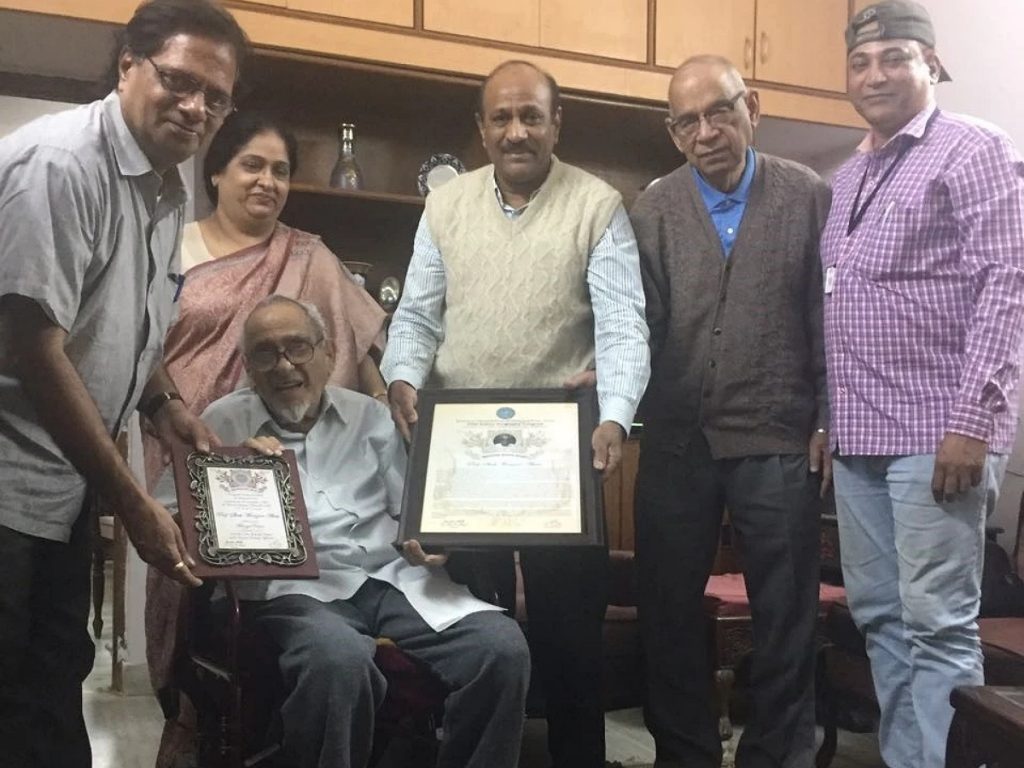
Prof Alam who was also the founder director of centre for area studies on the Indian ocean region, OU was also awarded the prestigious, ‘BHOOGOL RATNA AWARD’ for 2017 by NAGI (National Association of Geographers India), New Delhi, during the 39th, Indian geography congress (IGC) held at Osmania University.
Shah Manzoor Alam awarded the prestigious, ‘BHOOGOL RATNA AWARD’ for 2017 by NAGI (National Association of Geographers India), New Delhi
Professor S M Rahmatullah, Vice-Chancellor and Professor Siddiqui Mohd Mahmood, Registrar in their message expressed their condolences to bereaved family members.
source: http://www.siasat.com/ The Siasat Daily / Home> News> Hyderabad News / by Sakina Fatima / June 25th, 2021
This is the sixth part of the series – `Scientist Says’ – where we bring for our readers the significant and commendable research works of young scientists in various fields.
Dr. Imtiyaz Ahmad Bhat started working as a researcher in the year 2013 with Prof. P.S Mukherjee lab, Inorganic and Physical Chemistry department, IISc Bangalore. He completed his Ph.D in 2018 and worked as a Research Associate in the same department. Currently, Dr. Imtiyaz is working as a post-doctoral fellow in King Abdullah University of Science and Technology (KAUST), Saudi Arabia. He shares his significant research works withRashida Bakait of India Tomorrow. Here are the excerpts of the interview.
Q. To begin with, please explain in brief to our readers about `Supramolecular Chemistry’ and the research works associated with the subject.
Ans. Nature has inspired scientists to exploit the potency of weak non-covalent interactions to form complex functional Supramolecules, with wide range of applications, which led to the birth of a new field of chemistry called ‘Supramolecular chemistry’ i.e. chemistry ‘beyond molecule’. Supramolecules are large complex molecules formed upon aggregation of smaller constituent building blocks through non-covalent interactions by a process called ‘self-assembly’. ‘Self-assembly’ is a spontaneous process where components, either separated or linked, reversibly form complex ordered aggregates without any external direction. Supramolecular chemistry has emerged as a broad field and has given rise to vast number of diverse structures by using a variety of non-covalent intermolecular interactions.
Over the past two decades, various methodologies of co-ordination driven self-assembly for the rational design of polygons and 3D supramolecular including tetrahedra, cubes, octahedra, cuboctahedra, and others have been developed. Enzymes, which are nature’s molecular containers, possess molecular pockets capable of binding substrates through non-covalent interactions and catalyze many important enzymatic reactions. Over the last two decades, with the advent of co-ordination driven self-assembly, the focus has greatly shifted to exploiting weak metal–ligand coordination for the self-assembly of molecular containers from individual components. The simple yet dynamic nature of coordination driven self-assembly has led to the construction of various capsules and cages with nanometre-size cavities capable of various applications. The shape and size of inner cavity of the coordination cages, even those not possessing definite covalent interactions between the catalyst and substrate, play a paramount role in altering the reactivity and properties of the contained molecules.
The central theme of my doctoral research interest in IISc has been in the area of co-ordination driven supramolecular chemistry, arguably one of the hottest areas of chemical sciences. In my research work at IISc Bangalore, I was specifically engaged in developing novel coordination cages possessing confined cavity and demonstrate their applications in cavity directed catalysis and stimuli-responsive targeted drug delivery.
Besides this, my current research focus at King Abdullah University of Science and technology, Saudi Arabia as Post-doctoral fellow is to design and synthesize the Imine-based macrocycle which will act as Non Adaptive Crystal Systems (NACs) and will eventually be used for separation of hydrocarbon and their derivatives. These Imine based macrocycles offer plenty of merits, such as easy preparation, low cost, high recyclability, chemical resistance, and thermal stability and hence makes them ideal material for industrial application.
Q. What was the objective of your research?
Ans. The supramolecular coordination complexes are obtained by mixing soluble metals as acceptors and ligand precursors as donors which spontaneously form metal-ligand bonds to generate a single thermodynamically-favoured product. Over the past two decades, various methodologies of coordination driven self-assembly for the rational design of polygons and 3D supramolecules including tetrahedra, cubes, octahedra, cuboctahedra, and others have been developed. My aim was to examine the self-assembly of pyridine and pyrimidine based ligands with square planar Pd(II) and Pt(II) metal ions to get the water soluble supramolecular structures with intrinsic hydrophobic cavity. These supramolecules with intrinsic hydrophobic cavity have a potential to function like the naturally found catalysts i.e enzymes by mimicking the cavity driven enzymatic reactions.
Q. When did you begin and complete your research?
Ans. I started in 2013 as a PhD student in Prof. P. S. Mukherjee lab at IISc Bangalore. Currently. I am working as a post-doctoral fellow in King Abdullah University of Science and Technology (KAUST), Saudi Arabia.
Q. What were the new findings of your research?
Ans. I could successfully synthesize and characterize various water soluble supramolecular structures with different shapes like sphere in sphere, tubes, tetrahedron, molecular barrels etc. and sizes. The tetrahedral cage with confined space was used as supramolecular catalyst to promote the Michael Addition Reaction of Indole and various nitro-styrene derivatives in water. The hydrophobic cavity of water soluble barrel like structures was successfully utilized to encapsulate curcumin and increased its solubility, enhanced its stability against UV light and thus acted as a safe aqueous carrier of curcumin to HeLa cancer cells. Also, an unusual supramolecule with triangular orthobicupola geometry was obtained, which is the first example of its type reported so far. The confined pocket of this cage with unique structural topology has been successfully used for the catalytic intramolecular cycloaddition reaction of substrates containing less reactive alkyne dienophile.
Q. What was the conclusion of your research?
Ans. In conclusion, we could successfully synthesize and characterize a giant double layered spherical structure with 24 Pd (Palladium) ions and 24 Pyrimidine based ligands. The strategy used here for the synthesis of double-shell superstructure establishes new guidelines for the creation of novel complex architectures. To further explore Pyrimidine as donors, various ligands with Pyrimidine as donors were synthesized and their self-assembly with cis-blocked Pt acceptor has led to formation of tube and tetrahedral cage structures. The tetrahedral cage with confined space was used as supramolecular catalyst to promote the Michael addition reaction of indole and various nitro-styrene derivatives. We were able to synthesize and characterize a water soluble barrel and cylindrical assemblies.The hydrophobic cavity of water soluble barrel was successfully utilized to encapsulate curcumin and increased its solubility, enhanced its stability against UV light and thus acted as a safe aqueous carrier of curcumin to HeLa cancer cells. The cylindrical assembly obtained was found to adopt an unusual triangular Orthobicupola geometry, which is the first example of its type reported so far. The confined pocket of this cage with unique structural topology has been successfully used for the catalytic intramolecular cycloaddition reaction of substrates containing less reactive alkyne dienophile.
Q. What kind of challenges did you face?
Ans. Challenges and difficulties are the inherent part of the research and researchers have to find ways to overcome them and materialize their tasks. It was really a herculean task in characterizing these supramolecular structures. However, patience and positive attitude helped me to keep trying and I could finally characterize them well and obtained their crystal structures. As a beginner, I struggled with writing my results and presenting them in scientific journals.
Q. Any scholarships or awards for research?
Ans. My Research Associateship was extended for one more year in IISc for completing research within five years. In 2019 I received Irish research post-doctoral fellowship in Trinity College, Dublin
Q. How do you think your research would be beneficial to the society or industry?
Ans. The 3D metallo-supramolecular architectures with confined cavity have been exploited for many applications such as- guest encapsulation, catalysis and drug delivery etc. we were able to show that organic chemical reactions can be performed in water using these water soluble supramolecular structures. Barrel shaped molecules are highly promising which possess large open windows along with large confined cavity. Our approach provides one of the elegant and efficient methods to design such barrel shaped architectures and their use to perform the catalytic organic transformation in aqueous medium. A lot of effort is going on in the scientific field to design new such systems and utilize them for various applications. The importance of this field could be easily reflected from the 2016 Nobel Prize which was awarded for novel findings in supramolecular chemistry.
Q. How do you think your research can be carried forward?
Ans. The features of coordination driven self-assembly like high directionality, intermediate bond enthalpy and vast diversity of organic ligands make it unique over the other non-covalent self-assembly approaches. The coordination-driven self-assembly was initiated by Lehn and Sauvage and pioneered the field with the introduction of various architectures ranging from ladders, helicases, rings, knots, rotaxanes, catenanes, and several other architectures. Later on, other scientists have taken the field to newer heights by developing novel methodologies and approaches to design and synthesize various discrete metal-organic architectures of distinct shapes, sizes and functionalities. The breadth of coordination driven self-assembly has continuously increased with the introduction of numerous functional supramolecules each year and it keeps on growing with every passing day.
Q. Any new research you are working on now?
Ans. My current research focus at King Abdullah university of Science and technology, Saudi Arabia as Post-doctoral fellow is to design and synthesize the Imine based macrocycle which will act as Non Adaptive Crystal Systems (NACs) and will eventually be used for separation of hydrocarbon and their derivatives. These Imine based macrocycles offer plenty of merits, such as easy preparation, low cost, high recyclability, chemical resistance, and thermal stability and hence makes them ideal material for industrial application.
Q. Give few suggestions to budding scientists.
Ans. For those who have decided to take research as their career, I would like to suggest them that patience is the key and keep learning from the mistakes as this is how it works in research. As a researcher, update yourself with the current literature related to your field that will help you to give new directions to your ongoing projects. Time management is crucial. Plan your experiments in advance so that you are confident about tasks you will be performing. Wishing goodluck to all budding scientists.
source: http://www.indiatomorrow.net / India Tomorrow / Home> Education> Featured / by Rashida Bakait, India Tomorrow / April 28th, 2021
This is the seventh part of the series called `Scientist Says’ where we bring for our readers the significant and commendable research works of young scientists.
Dr. Mohammed Kausar Raza completed his M.Sc. in Inorganic Chemistry from Jamia Millia Islamia, Delhi and began his Ph.D. in the year 2015 with Prof. Akhil Chakravarthy lab, Inorganic and Physical Chemistry Dept., IISc, Bangalore. After completing his Ph.D in the year October 2019, he joined California Institute of Technology (Caltech) in the United States as a postdoctoral research fellow in January 2020. He shares his significant research works with Rashida Bakait of India Tomorrow. Here are the excerpts of the interview.
Q. Please give a brief explanation of your research.
Ans. My research interest mainly focuses on to locate the lesions with the help of [4Fe4S] cluster and their treatment using Pt-based anticancer agents. The research area is divided into two parts: (i) Investigating the chemical role of [4fe4S] cluster in eukaryotic proteins through electrochemical and biochemical studies. (ii) Use of Pt-based complexes for chemo phototherapeutic treatment of cancer.
Cancer is considered as one the deadliest diseases which has been outspreaded in various parts of the human body. Various methodologies have been implemented till date to fight against the proliferation of cancerous cells, namely, Chemotherapy (mainly Pt-based anticancer drugs), Photodynamic Therapy (which involves photosensitizer, light, molecular oxygen), etc. To fill the pitfalls of the conventional chemotherapeutic and photodynamic therapeutic drugs including the NER machinery and less tissue penetration respectively, during my PhD research at Indian Institute of Science, Bangalore, I combined these two well known modalities, i.e.; chemotherapy and photodynamic therapy (PDT) by tuning the structural properties of Pt-based complexes to kill the cancer cells selectively. The idea was to develop the series of conjugates bearing the structural framework as of the conventional chemotherapeutic anticancer drug, cisplatin and BODIPY dyes for PDT activity. In photodynamic therapy, the growth of cancer cells can be terminated in the presence of light which generates ROS (reactive oxygen species) capable of cleaving the DNA of the tumor cells and in turn causing the cell death. The cell imaging is beneficial to track the anti-cancer drug inside the body. The combination of the Pt metal which encrusted the path for DNA cross-linking and the BODIPY motif attached which aided in cell imaging and killing of cancer cells in the presence of light, comes out as a new scope to design the more efficient photodynamic chemotherapeutic anticancer agents.
Earlier in my PhD, I have made efforts to treat the cancer, now I am exploring my research to detect the lesions through DNA mediated charge transport chemistry. It focuses on assessing the functional role of iron sulfur [4Fe-4S] in eukaryotic DNA replicative and repair proteins. We perform the electrochemical investigation to detect the tumor/disordered sites using DNA mediated electron transfer.
Q. When did you begin and complete your research?
Ans. My research started with my master dissertation work in the year 2014. I started working as a PhD researcher in the January 2015 and successfully submitted my thesis in Oct. 2019. Now, I have been doing research as a postdoctoral fellow in the field of biochemistry since January 2020.
Q. What was the objective of your research?
Ans. Since a variety of anticancer drugs are known to treat numerous kinds of cancers, namely colorectal cancer, breast cancer, oral cancer, and lung cancer etc. My aim was to design and synthesize a drug in such a way which is highly selective towards killing the cancer cells without harming the normal living cells. We intended to approach a dual action mechanism of platinum based anticancer drugs for real time tracking and selective cancer cell death.
Q. What were the findings of your research?
Ans. We prepared a series of mono-functional Pt-based complexes capable of binding with DNA for the treatment against cancer. We have mainly designed the mitochondrial targeting anticancer drugs, as mitochondria is known as the powerhouse of the cell and it lack NER machinery. Major outcome of our studies is in the form of a indigenously synthesized prodrug which have 100-fold better anticancer activity than FDA approved Photofrin drug. Moreover, this drug can be tracked inside the cell which is not the case with any of the FDA approved platinum based anticancer drugs. We have conducted the in-vivo anticancer studies of these drugs in the living mice models using photodynamic chemotherapeutic dual action mechanism and obtained promising results which is turned out to be a patent in this emerging field. This work was done with the collaboration in the department of biological sciences at IISc.
Q. What was the conclusion of your research?
Ans. My work presents a thorough investigation on the Pt-based anticancer drugs derived from cisplatin motif. Appendment of BODIPY moieties as florescent probes aided in cell imaging and production of ROS to kill the cancer cells in presence of light. The in-depth photophysical investigation of our Pt based complexes revealed their properties to absorb visible light and made them suitable for real time tracking. This study provides further scope for combinatorial research that includes photodynamic therapy and DNA cross linking ability of the monofunctional Pt (II) drugs (chemotherapy) against cancer. Finally, the in vivo assay results on mice showed significant arrest of tumor growth and its shrinkage in size thus giving new insights in the chemistry of platinum-based PDT agents.
Q. What kind of challenges did you face?
Ans. In my masters, I have pursued a research project in coordination chemistry. I have learned various synthetic procedures to synthesize a variety of transition metal complexes and carried out an in-depth characterization using various spectroscopic techniques. Then I joined a bioinorganic chemistry lab, where the challenge was to design the metal complexes with a sharp focus on its pharmacology (pharmacokinetics) by implementing a cost-effective methodology. Also, the fluorophore motifs incorporated in the structure must have the significant absorption and emission photophysical properties which can aid the drug in penetrating deep inside the body. It was achieved after studying the UV-Vis properties of the drugs. Developing a drug performing a dual action mechanism in treating cancer cells was itself a challenge. Furthermore, I joined a biochemistry lab at Caltech, moving from bioinorganic to biochemistry was another major challenge, where I had to learn the new techniques and methods prior to performing the experiments and analyzing the outcomes.
Q. Any scholarships or awards for research?
Ans. As the recognition of my doctoral work, I received the prestigious Carl Storm International Diversity (CSID) fellowship for Gordon Research Conference (GRC), Metal in Medicine, USA. I am also a recipient of “Government of India International Travel Research Award (DST), CSIR Travel Research Award, ICMR Travel Research Award, SBIC Student Travel Grants for ICBIC-19 in Interlaken, Switzerland. I received fellowship from MHRD and CSIR for the five year during my Ph.D.
Q. How do you think your research would be beneficial to the society or industry?
Ans.Cancer counts among the second deadliest diseases in the world. Among all types of cancer, about 30% of India’s affected population accounts for oral cancer only. Among the various therapies established for cancer treatment, photodynamic therapy is well known for the treatment of oral cancer. My research on Pt based drugs will provide a new insight and scope to combine the two therapies and kill the tumor with notable potency. Our mice model demonstrated an excellent efficacy of our drug inside the living being. These new findings can lead to investigate the drug-tumor interaction inside the human body. Implementation of our Pt based prodrugs will provide a new way to treat the cancer. Moreover, commercializing these drugs may reduce the cost of treatment. In addition, it’s manufacturing at industrial level will increase the employment for several educated and skilled people in our country.
Q. Any new research you are working on now?
Ans. Currently, I am working on the DNA mediated charge (electron) transfer chemistry. My aim is to investigate the rapid communication among DNA-processing proteins for repairment through DNA-mediated redox signaling. These DNA-processing enzymes bear an iron-sulfur [4Fe4S] cluster which performs common redox switch on binding with DNA and gives rise to DNA-charge transport chemistry. It mainly focuses on the electrochemical investigation of the chemical role of the [4Fe4S] cluster in eukaryotic DNA primase and the polymerase. Importantly, electrochemistry on the DNA-modified electrodes facilitates reaction under aqueous, physiological conditions with a sensitive electrical measurement of binding and activity.
Q. How do you think your research can be carried forward?
Ans. Organelle targeting is an emerging field and needs thorough investigation to study the action of metallodrug inside the biological systems. Introducing selectivity in structural framework of the drugs towards single organelle targeting can make the drug more potent and viable. Other metals are also prominent on anticancer platform, so it is possible to design and synthesize such cost effective and biocompatible metal ligand frameworks which is capable of performing multiple actions with significant potency. The preliminary in vivo results and pharmacokinetics suggested that a detailed study need to perform so that it can be taken to clinical trial.
Q. Give some suggestions to the budding scientists.
Ans. Academia is a never-ending journey full of exciting adventures. It should be spent with utmost pleasure and satisfaction while enjoying science. One should be able to eminence both the personal affairs and professional business. Be clear and rational. Do not hesitate while expressing and talking about yourself, be it stress or mental health imbalance. Also, create another world outside the lab and explore it. Hone your communication skills. In academia, communication is the key to success Always indulge in a teamwork, moreover, in order to be an interdisciplinary scientist, be open to accept and request for collaboration. Do something different which no one thinks is important and invest your efforts and time in it. Learn broadly. Be bold. Be passionate. Establish a name for yourself. Above all, perhaps, to be successful in academia you need to develop your persistence and preserve your creativity no matter what. The key to unlocking the untapped potential is to create and build a path conducive to novelty in science. Make your research plans wisely and execute them in a disciplined way. Always remember, slow and steady wins the race.
source: http://www.indiatomorrow.net / India Tomorrow / Home> Education / by Rashida Bakait, India Tomorrow / May 01st, 2021
This is the fifth part of the series called `Scientist Says’ where we bring for our readers the significant and commendable research works of young scientists.
Dr. Ahamed Irshad is a research associate in the department of chemistry, University of Southern California, Los Angeles. He has been associated with National Science Foundation, US Army, and Department of Energy on various battery projects. He has authored several articles in international journals published by American Chemical Society, Royal Society of Chemistry and Electrochemical Society. He served as the topic editor for Journal of Energy and Power Technology, and reviewer for international journals. He is also a recipient of Cottrell scholar award, Bristol-Myers-Squibb fellowship, Dr. J. C. Gosh medal, and Indian Academy of Science award. He shares some of his significant research works with Rashida BakaitofIndia Tomorrow.
Q. Please briefly explain your research.
Ans: My research interest is on developing novel materials for electrochemical energy conversion and storage devices. The research area can be broadly classified into two: (i) hydrogen fuel production from water and (ii) high energy batteries for electric vehicles.
The first project on hydrogen fuel was carried out during my PhD at Indian Institute of Science, Bangalore. Hydrogen is considered as a fuel for the future. While burning petrol or diesel release huge amount of greenhouse gases, the only by-product of hydrogen fuel is water. Currently, hydrogen is produced from methane by steam-methane reforming. This method also produces CO2 and hence cannot be counted as a green method. My research topic was on utilizing carbon free, inexpensive, and abundant water (H2O) molecules as the hydrogen source and use electricity to split water. The process requires energy close to 237 kJ mol-1 or theoretical voltage of 1.23 V. However, practical voltage is as high as 1.8-2 V due to sluggish kinetics. This limits the efficiency to 65-70 % and necessitates expensive catalysts such as IrO2 or RuO2. My research goal was to design and develop highly active, low-cost, and stable cobalt and nickel-based catalysts to improve the efficiency. The use of inexpensive catalysts would also reduce the overall cost and make hydrogen an attractive fuel.
The battery research was done in collaboration with US Army and Department of Energy at University of Southern California, Los Angeles. There is a growing demand for high energy batteries for electric vehicles. Current lithium-ion battery (LIB) technology has limited range (200-300 miles) and high cost of $130/kWh. In addition, LIBs use toxic cobalt-based materials. In recent years, lithium sulfur (Li-S) batteries have emerged as a promising substitute to LIBs due to its five times high energy density. In addition, sulfur is earth abundant and less expensive. Commercialization of Li-S batteries is still hindered by its inability to charge/discharge quickly for several cycles. This has been attributed to high internal resistance and dissolution of soluble polysulfides. We proposed an electrode design with different carbons to reduce the resistance and developed an interlayer to improve the cyclability.
Q. What was the objective of your research?
Ans: Although water electrolysis is used to produce high purity hydrogen, its widespread deployment is impeded by the high cost. My goal was to develop cost-effective and robust catalysts based on nickel and cobalt instead of expensive platinum (Pt), ruthenium (Ru), and iridium (Ir) . I also wanted to investigate the key factors that affect the stability and activity. Similarly, Li-S battery technology has a high potential to replace LIBs(Lithium batteries). My primary objective was to identify the fundamental origin of the high internal resistance in Li-S batteries using a technique called electrochemical impedance spectroscopy. It was also intended to develop an advanced electrode structure to reduce the resistance that would allow to charge and discharge battery fast. Then again, we proposed a novel interlayer to stop soluble polysulfides diffusing from cathode to anode.
Q. What were the new findings of your research?
Ans: We prepared a series of novel materials such as cobalt-phosphate, cobalt-acetate, manganese-phosphate, etc. for water electrolysis. Our electrochemical quartz crystal microbalance studies suggested that the cobalt-phosphate catalysts are not stable at high voltage. In addition, the catalyst deposition was slow due to poor solubility of Co2+ in phosphate. We proposed the catalyst preparation from an acetate solution because the solubility of Co2+ in acetate is high and a large quantity of materials can be prepared in a short time. Cobalt-acetate also exhibited higher activity than cobalt-phosphate. In the case of Li-S battery, we used electrochemical impedance spectroscopy to probe the internal resistance. Our studies indicated that the high resistance originate from poor interparticle contact and sluggish battery reaction kinetics. When we added high surface area carbon, battery performed much better than before due to improved interparticle contact and high number of reaction sites. Adding an interlayer between electrodes stopped diffusion of soluble polysulfides. As a result of advanced cathode design and additional layer, our Li-S battery could be charged and discharged quickly for several cycles.
Q. What kind of challenges did you face?
Ans: The ideal catalyst should have high activity, stability, and preferably made of earth abundant, inexpensive, and non-toxic materials. It was a great challenge to incorporate all the features in a single material. For instance, cobalt-phosphate was very active but not stable. Low-cost manganese-phosphate didn’t show any catalytic activity or stability whereas highly expensive iridium-phosphate exhibited highest activity. Among all the materials tested, we identified cobalt-acetate as the most promising catalyst that showed high activity, stability, and relatively low cost. In the case of Li-S (Lithium-Sulfur) battery testing, identifying the key factors affecting the battery performance was a bit challenging. Impedance spectroscopy aided us to isolate a few factors that affected battery performance significantly. Fabrication of electrodes with different compositions and optimizing the electrode design was a herculean task.
Q. Any scholarship or award for research.
Ans: The battery project was financially supported by various federal and private agencies such as National Science Foundation, US Army, Department of Energy, and a battery startup called STAQ Energy. I was awarded the prestigious Cottrell award by the US National Science Foundation (NSF) and Research Corporation in 2020. I am also a recipient of Dr. J. C. Gosh gold medal in Physical Chemistry and Bristol-Myers-Squibb fellowship. The Council of Scientific and Industrial Research (CSIR), India, provided me fellowship for five years during my PhD. I also received Indian Academy of Science fellowship.
Q. How do you think your research would be beneficial to the society or industry?
Ans: There is a gradual increase in the CO2 and other greenhouse gases in the atmosphere. The transport sector contributes almost 30 % of the greenhouse gases. Moreover, the petrol and diesel price keep increasing every day, and these fuels will run out soon. It is the time to look for clean fuel like hydrogen. My research findings on low-cost catalysts will reduce the hydrogen fuel price and improve the efficiency of electrolyzer. It is also possible to interface the electrolyzer with solar panel or wind turbine to store renewable energy. Similarly, high energy batteries are essential for electric vehicles and portable applications. Our results on Li-S batteries will advance the battery technology beyond lithium-ion battery and reduce the weight and cost of car batteries. The use of high energy batteries will increase the driving range as well. These batteries will be useful for drones and other aerial vehicles also.
Q. When did you begin and complete your research?
Ans: I have been doing battery research since I joined USC in 2017. My PhD started in 2011 and I submitted thesis in 2016. During five years of PhD, I entirely focused on developing catalyst for hydrogen production.
Q. Any other new research you are working on now?
Ans: Currently, I am investigating materials for fluoride-ion battery. In this case, the negatively charged fluoride ions are the charge carriers instead of positively charged lithium ions in lithium-ion battery. This is a new concept that has not been well explored. Another project is on alkaline batteries that are suitable for large scale stationary energy storage. I also continue to work on Li-S batteries for electric vehicles.
Q. How do you think your research can be carried forward further?
Ans: We have an extensive collaboration with scientists and research groups across the world. Currently, we are trying to utilize the technology and skills from different groups to understand the detailed molecular and crystal structure of the catalyst. This would allow us to establish structure-property relationship in these catalysts and investigate the fundamental reaction mechanism. We also communicated with battery companies and federal agencies to examine the feasibility of commercialization of our battery technology.
Q. Tips and suggestions for the budding scientists.
Ans: Career as a scientist is challenging yet a very rewarding experience. To be successful, you need to nurture scientific curiosity, creativity, deep passion, and perseverance. Always make sure that you learn the basic concepts thoroughly and keep yourself updated with scientific literature. Use the early years’ research career to learn as many techniques as possible that will help to tackle many scientific problems in future. Don’t hesitate to expose yourself to different ways of thinking by discussing ideas with peers, gaining experience in different research groups, and creating a network of friends. Communication is also important. You should learn to give presentations and write papers to share your research outputs with others. Just like in any other career, life as a scientist will have many ups and downs, but it’s your choice to scream or enjoy the journey.
source:http://www.indiatomorrow.net / India Tomorrow / Home> Education> Featured / by Rashida Bakait, IndiaTomorrow.net / April 16th, 2021
An excerpt from ‘A Map of Longings’, by Manan Kapoor.
Agha Shahid Ali.
In Delhi, Shahid also became aware of the city’s Mughal and colonial history, and was impressed by its architecture. In the early ’60s, the Mexican poet Octavio Paz had visited New Delhi and had been charmed by its architecture. He wrote numerous poems about the city and about all that he had witnessed here. He found Delhi’s “aesthetic equivalent” in “novels, not in architecture”, and to him, wandering the city was “like passing through the pages of Victor Hugo, Walter Scott, or Alexandre Dumas”.
Paz’s gaze, wherever he went, was directed inwards. For him, all the experiences, including the splendour of the Mughal architecture that attracted him, were revelatory and enlightening in one way or the other. In his book In Light of India, he called Delhi’s architecture “an assemblage of images more than buildings”. It was quite the same for Shahid who, after nineteen years, had returned to the city of his birth.
He was a student at Delhi University, which wasn’t too far from Old Delhi or what was once known as Shahjahanabad, the walled city of Delhi constructed by Shah Jahan – the emperor who “knew the depth of stones, / how they turn smooth rubbed on a heart. / And then? Imprisoned / with no consoling ghosts…”
The tomb of Amir Khusro at Hazrat Nizamuddin in Delhi was a place that had attracted Paz. In “The Tomb of Amir Khusro”, he wrote: “Amir Khusru, parrot or mockingbird: / the two halves of each moment, muddy sorrow, voice of light. / Syllables, wandering fires, vagabond architectures.”
The tomb attracted Shahid as well when he visited the dargah in Delhi almost a decade later: “I come here to sing Khusro’s songs. / I burn to the end of the lit essence… / The muezzin interrupts the dawn, calls / the faithful to the prayer with a monster-cry: / We walk through the streets calligraphed with blood.”
In Delhi, Shahid found poetry at each turn. In an interview with First City in 1991, he said: “For me the lanes of Delhi, particularly the ones leading to and from the Jama Masjid, hold a dazzling value. When I used to go to Kareem restaurant or was having nihari or kulfi on the steps of Jama Masjid, I used to imagine that I was living in the days of Ghalib.”
Unlike Paz, who as an outsider in Delhi could only adore the architecture, Shahid also saw history in the city. Although he had been exposed to the historical forces that had shaped Kashmir, it was in Delhi that he discovered, for the first time, history in brick walls, minarets and on the streets. In “The Walled City: Seven Poems on Delhi”, he wrote about Jama Masjid:
Imagine: Once there was nothing here. Now look how minarets camouflage the sunset.Do you hear the call to prayer? It leaves me unwinding scrolls of legend till I reach the first brick they brought here. How the prayers rose, brick by brick?
Shahid’s poetic concerns were largely a constant for most of his life, and are palpable in these early poems. His engagement with history, which he deals with as both an insider and outsider, reflects his tenderness and the experience of a poet who belongs to multiple worlds and none at the same time.
For the next three decades, he wrote about loss and the memory of loss, the burden of history and injustices of all kinds. The seeds of these poetic concerns were sown during his childhood, mostly at home. However, they were nourished in Delhi, by the city’s air and its history, which Shahid couldn’t ignore.
In the poems from Bone Sculpture and In Memory of Begum Akhtar, Shahid emerges as a poet who feels deeply about South Asian culture as well as politics. Both the collections are influenced by Delhi and reflect an understanding of history. From a very young age, he was aware of the historical movements, the revolutions and leaders who had shaped the world he lived in.
In time, he established his position as a poet of witness with the publication of his poem “After Seeing Kozintsev’s King Lear in Delhi”, which talks about the last Mughal emperor Bahadur Shah Zafar. In the poem, Shahid makes a conscious choice as he turns from King Lear and looks at Zafar, turning away from fiction towards fact, from the stories of the colonisers to the histories of the colonised.
This turn marks an important moment in Shahid’s poetry, and it is from here that his poems and sensibility come to be defined by a certain post-colonial outlook, where he sheds light on those whom history had ignored:
I think of Zafar, poet and Emperor, being led through this street by British soldiers, his feet in chains, to watch his sons hanged.
In exile he wrote: “Unfortunate Zafar spent half his life in hope, the other half waiting. He begs for two yards of Delhi for burial.”
He was exiled to Burma, buried in Rangoon.
In the late ’60s, when Shahid joined Hindu College, the syllabus was still under a colonial shadow and predominantly included English writers like John Milton, Shakespeare, Thomas Hardy and the Romantic poets. Although he had read all their works and admired most of them, Shahid’s language was very different from the poets that were taught to him.
Shahid once said that he was often aware that the music of his language was different, that he was able to bring certain flavours to English poetry in India for the first time, which he believed was a result of the combination of Hindu, Muslim and Western cultures in him, and the fact that he had a “natural and profound inwardness with them”.
His use of these cultures was not exotic – unlike, say, Eliot importing the word “shantih” in “The Waste Land”. Shahid felt them in three languages and didn’t have to “hunt” for subjects. In an essay written much later, he reflected on English poetry in India and said that Satyajit Ray had accomplished what he had because Ray was using a specifically Indian idiom for the first time on celluloid.
“I can use the Indian landscape, and the subcontinent’s myths and legends and history from within, and I can do so for the first time in what might seem like a new idiom, a new language – subcontinental English.”
Salman Rushdie’s case was similar. Ray, Rushdie (as well as Shahid when it came to English subcontinental poetry) had an abundance of history, tradition and what seemed like an endless river of subjects that they could explore. Shahid had, in fact, acknowledged that if the novel had done it, poetry couldn’t be far behind.
Little did he know that along with poets like Arun Kolatkar and AK Ramanujan, he would become a proponent of English writing in the Indian subcontinent, a poet who had tradition and the flavour of the soil in his bones. In an essay written much later, he reflected on how the English language was changing in the subcontinent:
The colonisers left fifty years ago, and subcontinental writers, particularly poets, can breathe greater confidence into Indian English (as Walt Whitman did into American English) not only because they belong to what, with qualifications, is the international-ism of the English language (in this context, note the awarding of the Nobel Prize to Patrick White, Wole Soyinka, Nadine Gordimer, and Derek Walcott) but because, by re-creating the language, by infusing into it all the traditions and forms at their command, they can make subcontinentals feel that they do not have to seek approval for any idiosyncrasy in syntax and grammar from the queens, Victoria or Elizabeth (the second, of course). As a matter of fact, for all kinds of reasons, it is gratifying to give an insult to the English language.
By the ’60s and ’70s, some young Indian English poets had started emerging on the literary scene, much of which had to do with Purushottama Lal, the founder of Writers’ Workshop, Calcutta. The publishing house started by Lal, which operated out of the library of his residence in Calcutta, had turned into a platform for publishing Indian writing in English. It published the first works of such poets as Nissim Ezekiel, Vikram Seth, Ruskin Bond and AK Ramanujan. Lal also published Shahid’s first two collections of poetry, Bone Sculpture and In Memory of Begum Akhtar.
Yet, in the ’90s, Shahid wrote in an essay that the “Indo-English scene” during those decades was “thoroughly empty and corrupt” and that “in some quarters” it continued to remain the same, singling out Lal’s publishing house, which he said had been functioning as a near vanity press.
In his essay “Indian Poetry in English”, Shahid wrote, “Educated Indians generally speak three languages, write in two, and dream in one – English.” Although they were written in English at a time when the chutnification, or what he called the biriyanisation, of the language hadn’t taken place, Shahid’s poems were indeed very Indian in nature and in terms of the subjects they dealt with.
The English language came to him naturally, while his ideas were deeply rooted in the culture of the subcontinent. Shahid’s English wasn’t the Queen’s “propah” English but a product of the biriyanisation of the language. Although as a poet he was slowly learning, poems like “Bones”, “Introducing”, “The Walled City” and others not only marked the beginning of a poetic career but also a poetic style that was steeped in a sense of loss, language and the history of the subcontinent. When at last, in the late ’60s, he met Begum Akhtar, his appreciation for the traditions of the subcontinent grew and his poetry changed in unimaginable ways.
Excerpted with permission from A Map of Longings: The Life and Works of Agha Shahid Ali, Manan Kapoor, Vintage.
source: http://www.scroll.in / Scroll.in / Home> Book Excerpt / by Manan Kapoor / June 03rd, 2021
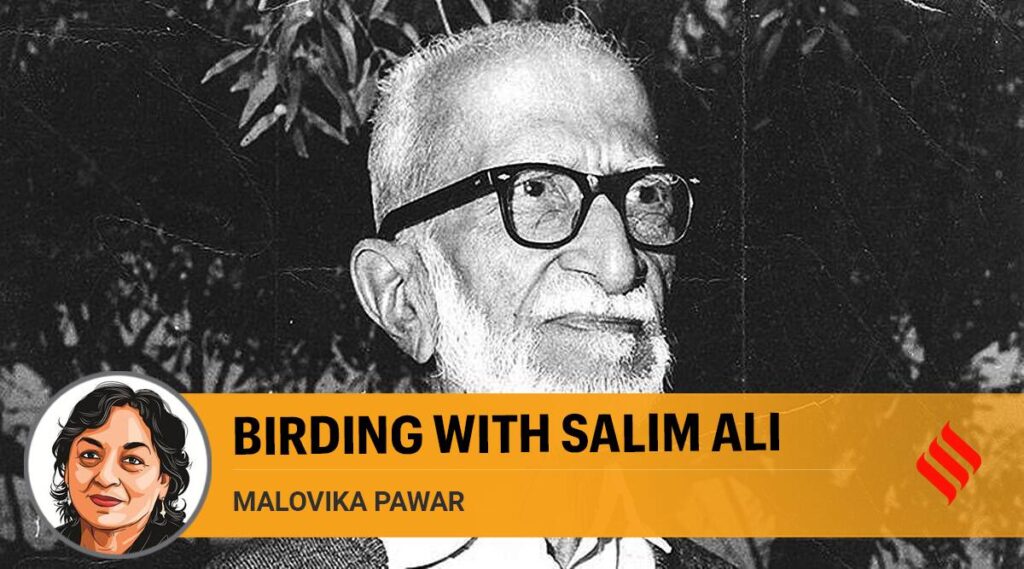
Glossier, more attractive birding books have been published in the 80 years since Ali’s guide first appeared, but it remains indispensable.
The first edition of Salim Ali’s book appeared in 1941. (Source: Wikimedia Commons)
It is a small book, my copy of Salim Ali’s The Book of Indian Birds — a hardcover version, bound in green, a mere 187 pages. I have the 1979 edition. The cover is long gone, leaving behind a few tatters of the original, but I am hard put to think of a book I have treasured and used as much. The book and an old pair of Bushnell binoculars acquired some 20 years ago are a part of my essential travelling kit, as essential as a toothbrush and comb.
The first edition of the book appeared in 1941. Jawaharlal Nehru , a keen nature lover, gifted a copy to his daughter while lodged in Dehradun jail.
Ali was quite matter-of-fact in his autobiography, The Fall of a Sparrow. According to him, the book was “acknowledged as largely responsible for creating and fostering much of the interest in birds and birdwatching seen in the country today”. Indeed, for people of a certain generation, no other guide has been valued and loved in the same way, and even among Ali’s other classic works, it is this book that has iconic status among Indian birdwatchers. While setting off on a birding trip, we would ask each other: “Have you taken your Salim Ali?” Or: “Oh, no, I forgot my Salim Ali.” It was always the small green book that we were talking of. It is the essential — the foundational — field guide for Indian birders. It is now in its 13th edition. No other book can take its place.
I came to birdwatching by serendipity. No one on either side of my family was even remotely interested in birds. By a throw of the dice, I was allotted Bharatpur for my district training in the IAS. The Keoladeo Ghana National Park beckoned. I was hooked. Ali, who had done more than anyone alive to create this “Garden of God” out of a Maharaja’s private wetlands reserve, was still alive, and visited a few times while I was there. Two bird guides, Sohan Lal and Bholu Khan, still active today, were being trained by him and other naturalists. They were to mature into fine birding guides, much in demand.
The Book of Indian Birds is where we learned our basic vocabulary of birdwatching. For instance, we learned that “pied” meant black and white, that “rufous” meant reddish-brown as in rust or oxidised iron, and that “fulvous” indicated tawny. Every carefully chosen word signified something. The clarity and the precision of expression meant that in a short half-page entry, we would have all the necessary information about a species. Each write-up was organised around five or six points — size, field characters or appearance, distribution, habits, food, call and nesting. Size was always charmingly described as myna plus, or house crow minus, or with reference to a sparrow, a bulbul or other common bird. Under “field characters”, Ali beautifully and accurately described the appearance: Colour of the feathers, the shape of the bill, silhouette in flight. A crimson-breasted barbet was “heavy-billed”, a blue-throated barbet “a gaudily coloured, dumpy green, arboreal bird” and the common grey hornbill a “clumsy brownish-grey bird”. Birds are described variously as handsome, squat, soft-plumaged, lively, dapper, dainty, spruce, slim, perky, well-groomed. The common roller or blue jay (neelkanth) is described as a “striking, Oxford and Cambridge blue bird”.
People who have always noticed the easy readability of the prose might not be aware that Ali himself gave credit to his wife, Tehmina, for ironing out the “stilted passages” and for “moderating the language”. He did not fail to praise her “remarkable feeling for colloquial English prose style”.
My Salim Ali bears the marks of the trajectory of my life, where I went, what I did. It is not merely well-worn and well-thumbed, with an unravelling spine and precarious binding; it also bears the added signs of pickle stains and tick marks in ink and pencil. Like me, it has seen better days. I know that many bird guides have been subsequently published with much better production values and better colour plates. I am aware that many of the illustrations in the Salim Ali book are decidedly not true to life. For instance, never did a rosy pastor look as pink in real life as it does in the book. But this is mere quibbling. The core and kernel of the book is that it communicates to us so successfully the magical universe of the birds of India.
The international jury which selected Ali for the J Paul Getty Wildlife Conservation Prize of the World Wildlife Fund in 1975 said in its citation: “Your message has gone high and low across the land and we are sure that weaver birds weave your initials in their nests, and swifts perform parabolas in the sky in your honour.”
On his 34th death anniversary on June 20, it is time to remember the book that Ali gave us, which took us on this magical journey to the birds.
This column first appeared in the print edition on June 19, 2021 under the title ‘Birding with Salim Ali’. The writer is a former IAS officer.
source: http://www.indianexpress.com / The Indian Express / Home> Opinion> Columns / by Malovika Pawar / June 19th, 2021
The award is given by a US-based non-profit entity Sir Syed Education Society of North America (SSESNA)
Aligarh:
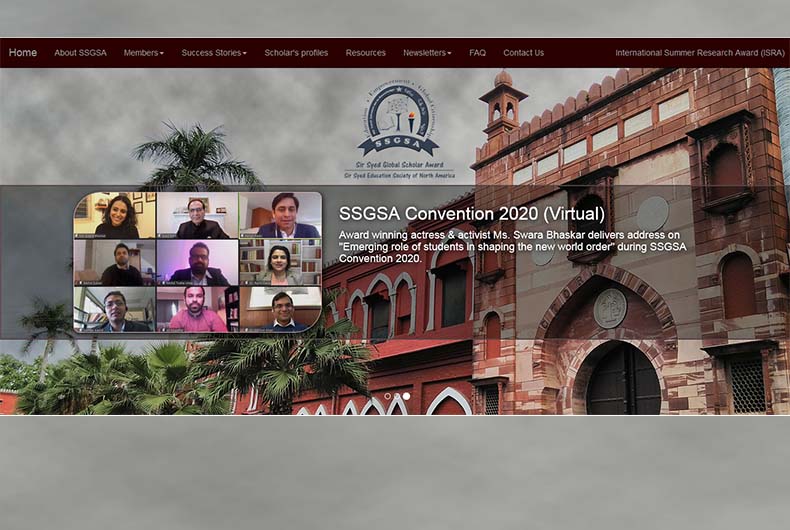
Twenty-eight students from various departments of Aligarh Muslim University students (AMU) have been selected for the prestigious Sir Syed Global Scholar Award (SSGSA) for the academic session 2021-22.
The award is given by a US-based non-profit entity Sir Syed Education Society of North America (SSESNA).
Announcing the award, Salman Bin Kashif, Chair, SSGSA Programme and a past beneficiary of the programme, said:
“The quality of applications continues to improve each year. In the coming years, it will serve the students well if they go the extra mile in building their overall profiles through projects and internships while being diligent in learning the fundamental concepts of their respective subjects. We will continue to strive for expanding our programme”.
He said a record number of applications were received from the faculties of Arts, Commerce, Humanities, Science, Medicine, Life Sciences and Engineering and Technology.
“Experts from each discipline evaluated the applications independently and the shortlisted students were invited for an online interview as a part of a rigorous selection process”, he said.
Kashif said that several faculty members from prestigious universities in the US, who were on the interview panels this year included Dr Farhan Ahmad (Honeywell International Inc), Prof Abrar Alam (Arkansas State University), Prof Nawab Ali (University of Arkansas), Prof Asim Ansari (Columbia University), Dr Ruchi Dana (Dana Corporation), Dr Shabih Hasan (Delos), Prof Syed Hashsham (Michigan State University), Prof Shakir Husain (Youngstown State University), Dr Afzal Hussain (Aligarh Muslim University), Prof Asad Ullah Khan (Aligarh Muslim University), Dr Sayeed Mohammad (Fractionation Research Inc), Dr Ahsan Munir (Vertex Pharmaceuticals, Inc), Prof Sultana Nahar (Ohio State University), Prof Bushra Sabri (Johns Hopkins University), Prof Yasmin Saikia (Arizona State University) and Prof Samina Salim (University of Houston).
“SSGSA Merit List”
Kashif said that the Final Merit List was compiled by taking into account various evaluation criteria like the CGPA, projects, internships and extracurricular activities.
“All the selected SSGSA scholars will be provided personalized mentorship, financial aid for the required standardized tests (GRE/GMAT, TOEFL/IELTS), and university application fees for up to five universities. The applicants who could not make it to the final list will be offered mentorship and guidance by the organization so that they can also continue with their academic goals”, he said.
“List of Past SSGSA Scholars”
Kashif said that the list of more than 120 past SSGSA scholars is also available on the SSGSA website: “www.ssgsa.us“. Many of the SSGSA alumni have successfully graduated with Masters and PhD degrees and are professionally placed across the globe, and some of them are currently volunteering for the SSGSA programme.
The selected SSGSA scholars are Aafiya (Physics), Ayush Agrawal (Mechanical Engineering), Sehrish Akhtar (Physics), Danish Alam (Physics), Ayesha Nasir Alavi (Law), Mohammad Anas (Computer Engineering), Bushra Ansari (Biochemistry), Mohd Mushfique Javed Ansari (Architecture), Samina Irshad Ansari (Psychology), Heena Aslam (Electrical Engineering), Mohd Abdul Baseer (Physics), Mohammad Fahad (Electrical Engineering), Aqib Faraz (Commerce), Ifrah Farid (Biochemistry), Harshul Gupta (Physics), Arsalan Hameed (Computer Engineering), Saman Jafri (Biotechnology), Faisal Jamal (Biochemistry), Faraha Javed (Medicine), Shahrukh Khan (Electrical Engineering), Tayyibah Khanam (Electrical Engineering), Yusra Meraj (Electronics Engineering), Madiha Noman (English), Kunwar Muhammed Saaim (Computer Engineering), Saba Sarwar (Computer Science), Md Showgat Jahan Shourave (Economics), Mohd Talha (Physics) and Amber Tanweer (Law).
The SSGSA core team, consisting of the present Chair Salman Bin Kashif (Clemson, South Carolina, USA), founding members Syed Ali Rizvi (Boston, Massachusetts, USA), Dr Saif Sheikh (Chicago, Illinois, USA), Dr Rehan Baqri (Boston, Massachusetts, USA), Dr Shaida Andrabi (Srinagar, Kashmir, India), and former chairs Dr Mohsin Khan (Providence, Rhode Island, USA), Ali Muzaffar (Atlanta, Georgia, USA), and Dr Wasikul Islam (Geneva, Switzerland), expressed gratitude to Prof Asad U Khan, Prof M M Sufyan Beg and Omar Peerzada for their help to SSGSA activities on campus.
source: http://www.ummid.com / Ummid.com / Home> Education & Career / by Ummid.com News Network / June 11th, 2021
This is the fourth part of the series named `Scientist Says’, where we bring for our readers some of the significant and commendable research works of young scientists in their respective fields.
Dr. Nafisa Begam completed her Ph.D. in the year 2016 at the Indian Institute of Science(IISc), Bangalore. Presently, she is working as Alexander von Humboldt postdoctoral research fellow at the Institute of Applied Physics, University of Tuebingen, Germany. She shares her significant research works with Rashida Bakait of India Tomorrow. Here are the excerpts of the interview.
Q.Please give a brief explanation about your research works.
Ans: During my PhD, in the group of Prof. J K Basu, Department of Physics, IISc. Bangalore, I characterized polymer nanocomposites with a desire to create novel materials with unique and remarkable physical properties (such as electrical, optical properties sometimes with high temperature resistance) but considerably lighter weight, compared to their conventional metal-based counterparts. Polymer nanocomposites is a material where organic/inorganic particles, rods or cylinders of nanometer dimensions (i.e. nanofillers) are embedded in a polymer matrix. I investigated several experimental parameters (e.g. temperature) that influence the processing of these composites and studied their dynamics using state-of-the-art technique- coherent X-ray scattering.
Besides the above-mentioned research, I have currently deviated my work towards bio-physics. Now I am studying structure and dynamics of proteins, in the University of Tuebingen (the Schreiber group), Germany, as an Alexander von Humboldt postdoctoral research fellow, including steering biochemical reactions rates, sensing, or signaling.
Q.What was the aim behind your research works on `polymer nanocomposites’ and dynamics of protein?
Ans: During my masters, I experienced several experimental techniques in the department of physics, Indian Institute of Technology, Kharagpur. I was inspired by the quality of work being done there and decided to carry out research in the field of experimental physics. As I got into the laboratory of Prof. J K Basu, conducting extra-ordinary researches in the field of soft matter physics, especially polymer nanocomposites, for my Ph.D research, I started my work aiming that I will have a contribution in this field. The worldwide application and interest in the research of polymer nanocomposites led me to choose this system and explore the underlying physics behind its unique properties.
The aim of my studies on structure and dynamics of proteins is to understand the behaviour of protein-based systems such as egg white which are versatile products in our daily life, food industry, biotechnology, medicines and also in condensed matter physics. I study the temperature sensitivity on protein systems as it is highly impactful on proteins’ applications in bio-physics, foods, and their functions in intracellular organizations.
Q.What kind of new findings were highlighted in your research works?
Ans: My research work on microscopic dynamics of nanoparticles inside polymer matrix revealed an anomalous temperature dependent viscosity which enhances under confinement as well as with reducing temperature due to the presence of hydrodynamic slip at nanoparticle-polymer interface. This work highlights that the interface slip present in a polymer nanocomposites can alter the properties significantly with respect to their pure polymer properties. My work was published in various reputed journals such as, American Chemical Society, Royal Society of Chemistry, Nature Communications (Nature), Polymer (Elsevier), American Institute of Physics and American Physical Society.
I would also like to share my recent, very interesting, investigation on the gelation process, i.e. the cooking of egg white which reveals how the structural growth occur and the transparent egg white forms a turbid and solid gel. During this process, the proteins in the egg white denature and form a network structure due to heating. Understanding such gelation mechanism not only has important implications for food science, but also for polymer, soft matter Physics, and biophysics researchers. Due to the special interest of this system and the importance of the sophisticated technique used, this study has been highlighted in American Physical Society, and various press release in Germany, and UK.
Q.What kind of challenges did you face?
Ans: Researchers struggled to understand the dynamics of nanoparticles in polymers or complex protein based systems, particularly at the length scales of hundreds of nanometers to micrometers, relevant for the taste buds of our tongue. We tackled this problem with a powerful tool: coherent X-ray scattering. In order to examine the exact molecular structure of the material, short-wave radiation such as X-ray light is necessary, which penetrates the opaque systems and whose wavelength is no longer than the structures to be examined. Such a sophisticated technique is only available in few synchrotron radiation sources, e.g. Petra III (DESY, Germany), ESRF (Grenoble, France). This facility is provided to a very few research groups every year through exclusive review process by the synchrotron experts.
Q.Any scholarships or awards for research?
Ans: I was honored by the Prof. Anil Kumar Memorial Medal for best PhD thesis 2016-2017 (in experimental Physics, IISc. Bangalore), India. Recently, I received the Alexander von Humboldt postdoctoral research fellowship since February 2019 in Germany.
Q.How do you think your research would be beneficial to the society or any other industry?
Ans: During my PhD, I worked on the characterization of polymer nanocomposites which is a new class of materials with unique properties such as electrical, optical, thermo-mechanical properties. By doing so I could contribute to the understanding of the materials used in various applications, e.g. high quality food packaging, coating, painting, electronic devices (solar cells) and automotive industries.
As far as my recent research on protein dynamics is concerned, it is expected to have benefits in condensed matter physics, food industry as well as our daily diet. For example, the famous “spring egg” is cooked at temperatures between 63 oC and 66 oC, resulting very soft and transparent gel. My research will contribute towards understanding the underlying mechanism behind such gel properties and hence helping to produce food gels of desired properties.
Q.When did you begin and complete your PhD/research?
Ans: I started my Ph.D on polymer nanocomposites in the group of Prof. Jaydeep K Basu, department of Physics, Indian Institute of Science, Bangalore in August 2011 and finished in July 2016. Presently, I am doing my postdoctoral research work on the protein dynamics.
Q.What was the conclusion of your research on polymer nanocomposites?
Ans: I observed that the nanoparticle-polymer interface nature plays a crucial role in deciding the microscopic dynamics of these materials and hence their thermo-mechanical and rheological properties. My research shows the tunability of the dispersion of nanoparticles and how it influences the relevant physical properties in a polymer nanocomposite. This outcome could have potential in processing high quality materials in various application field, e.g. in automotive industry, an appropriate polymer nanocomposite can significantly enhance the fuel efficiency.
Q.How do you think your research works can be carried forward?
Ans: Polymer nanocomposites is a broad field. It can be carried out further in many directions. For example, to completely understand the dynamical behavior of the nanoparticles inside polymer, it is needed to investigate the systems by varying the nanoparticle/polymer interactions over a broad range. It would be interesting to study the microscopic dynamics of such systems. In addition to that, model a system which can represent the thin film behavior and explore the confinement effect using simulations to understand the observed experimental phenomena microscopically.
My present work on protein dynamics has tremendous potential for researchers working in the area of soft condensed matter physics, food science, biotechnology, medicines as well as the understanding proteins’ functions in living organizations i.e. in biology. Proteins’ functions are not fully understood due to their complexity and technological limitations. Our study is one among the first investigations along this line and we expect it to pave the way for future experiments to shed light on processes in proteins highly relevant for the food industry and soft matter physics. This work can be continued by employing this newly developed experimental technique to investigate other relevant proteins and materials making foams, gels etc. in one of our primary interesting fields, food industry.
Q.Apart from the above-mentioned research works, would you like to share any other new research works you are working on now?
Ans: Currently, I am working on the dynamics of a chocolate melt at temperatures close to human body temperatures. This work is expected to have potential impact on colloidal physics as well as the chocolate industry by providing information over the parameters to control the chocolate quality.
Q.Lastly, please give few suggestions to the budding scientists.
Ans: Research is entirely different from the usual courses or subjects we study where we can easily acquire information from the available sources, whereas in research one has to tackle an unknown problem which requires a deeper and thorough understanding of the related subject/field. You might fail or succeed. Research requires patience to continue after learning from the failed attempts. Failing in one research attempt is most probable but that is the only way to learn and a way to move forward towards success.
source: http://www.indiatomorrow.net / India Tomorrow / Home> Education> Featured / by Rashida Bakait , India Tomorrow / April 10th, 2021