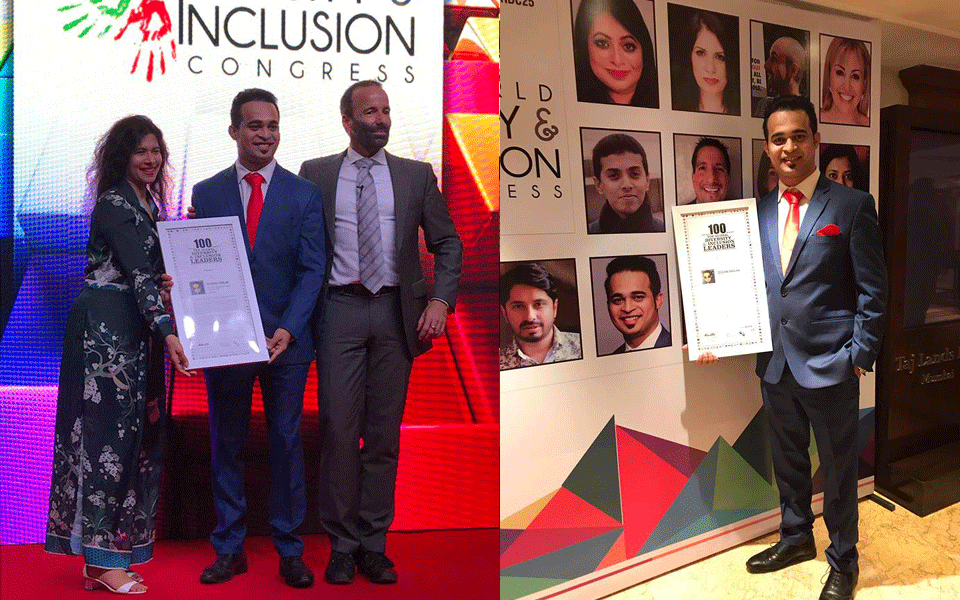
Tibetan spiritual leader Dalai Lama and Maulana Wahiduddin Khan, right, in New Delhi [File: Mohd Zakir/Hindustan Times via Getty Images] / pix: aljazeera.com
Ninety-six-year-old Khan, who authored more than 200 books including a two-volume commentary on the Holy Quran, died on Tuesday.
Indian Islamic scholar and peace activist Maulana Wahiduddin Khan has died in the capital New Delhi after contracting novel coronavirus, his family members announced on Tuesday.
Ninety-six-year-old Khan was recently admitted to a hospital in New Delhi after testing positive for COVID-19.
“The great Islamic scholar Maulana Wahiduddin Khan breathed his last, late this evening. Doctors failed to revive his sinking heart. Pray for his maghfirat [penitence] and high station in Paradise. Amin,” Zafarul Islam, Khan’s eldest son, tweeted on Tuesday.
The author of more than 200 books, Khan has been honoured with several awards. This year, he was awarded the Padma Vibhushan, India’s second-highest civilian honour.
___________________
Twitter
Zafarul-Islam Khan @khan_zafarul . 2H
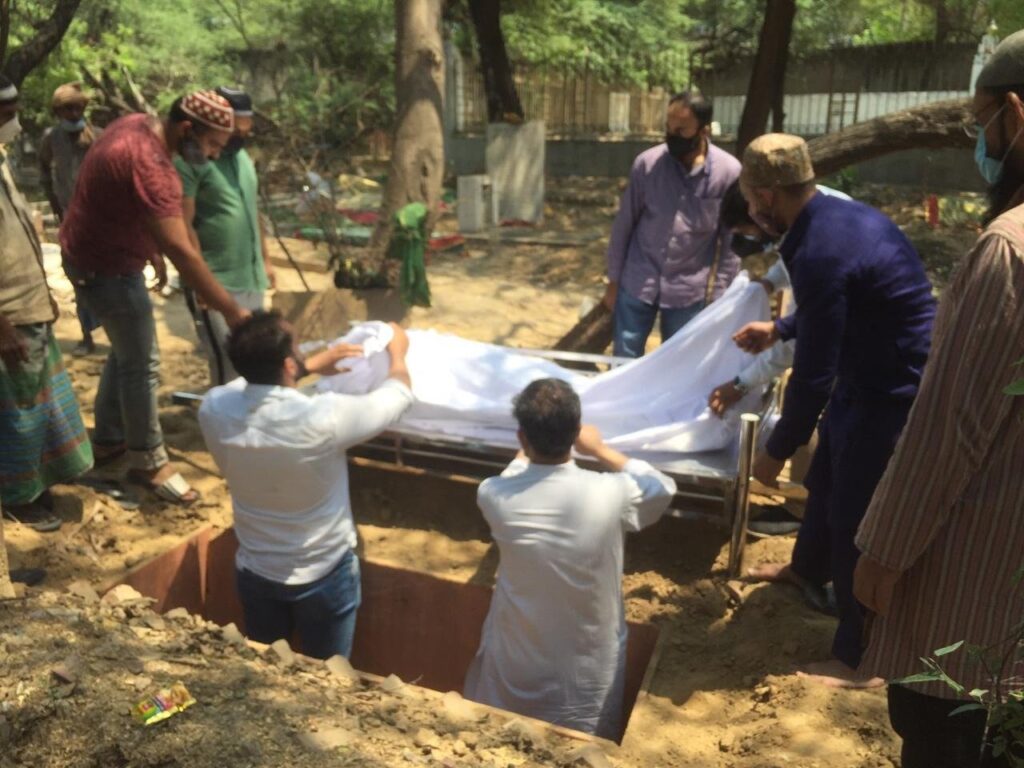
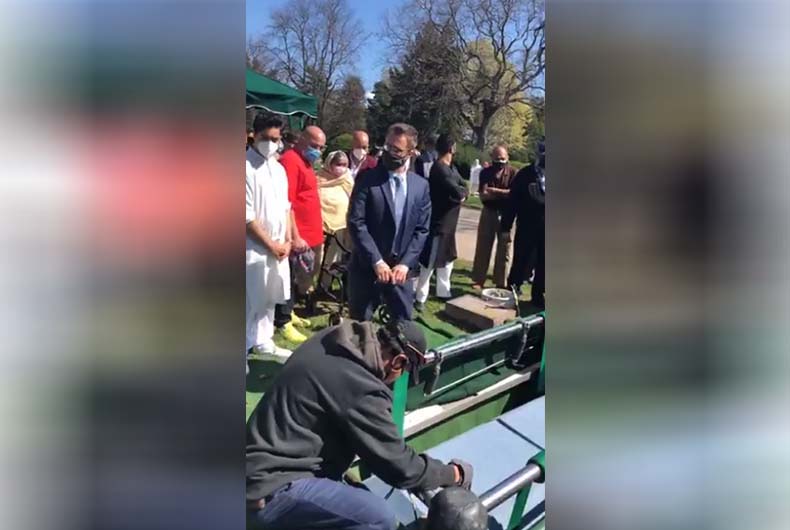
Islamic scholar Maulana Wahiduddin Khan was buried at noon today in Panjpeeran Qabristan near Basti Hazrat Nizamuddin. Buried in same qabristan are his mother Zaibunnisa n wife Sabi’a Khatoon. Seen are his grandsons lifting his body to place in grave. Pl pray for his maghfirat.
2:06PM – Apr 22, 2021
____________
Born in Azamgarh, India, in 1925, Khan has been internationally recognised for his contributions to world peace.
In 2009, Georgetown University in Washington, DC’s list of 500 Most Influential Muslims of 2009 named him “Islam’s spiritual ambassador to the world”.
In 2001, he established the Centre for Peace and Spirituality to promote and reinforce a culture of peace. Khan went on a 15-day Shanti Yatra (peace march) through the western Maharashtra state in the wake of the demolition of the 16th-century Babri Mosque by Hindu hardliners in the state of Uttar Pradesh in 1992.
He also wrote a two-volume commentary on the Holy Quran.
Indian Prime Minister Narendra Modi said he was “saddened” by the news of Khan’s loss.
“He will be remembered for his insightful knowledge on matters of theology and spirituality. He was also passionate about community service and social empowerment. Condolences to his family and countless well-wishers. RIP,” Modi wrote on Twitter.
Indian President Ram Nath Kovind said he was “deeply grieved” by the demise of Khan, saying: “Maulana Wahiduddin made significant contributions to peace, harmony and reforms in the society. My deepest condolences to his family and well-wishers.”
source: http://www.aljazeera.com / Al Jazeera / Home> News / source: News Agencies / April 22nd, 2021
The Issa brothers own the Euro Garages chain of petrol stations as part of their EG Group business
The Issa brothers, whose parents moved to the UK from Gujarat in the 1970s, own the Euro Garages chain of petrol stations as part of their EG Group business.
London:
Indian-origin billionaire brothers Mohsin and Zuber Issa have acquired a popular British fast food chain, Leon, as part of what they described as their goal to grow their foodservice operations in Britain.
The Issa brothers, whose parents moved to the UK from Gujarat in the 1970s, own the Euro Garages chain of petrol stations as part of their EG Group business. Last year, they acquired leading UK supermarket chain Asda from US owners Walmart as part of the strategy to expand their non-fuel business.
Leon, Founded by John Vincent, Henry Dimbleby and chef Allegra McEvedy in 2004, pitches itself in the category of “naturally fast food” with a focus on creating a healthy menu that tastes good, in a sustainable way. The acquisition is said to be worth an estimated 100 million pounds.
“Leon is a fantastic brand that we have long admired. As established entrepreneurs in the foodservice retail market ourselves, we have a huge admiration for the business that John and the Leon team have built over the years, and firmly believe that their culture and values closely align with our own,” said Mohsin and Zuber Issa, co-founders and co-CEOs of the EG Group.
“The acquisition of Leon presents EG Group with a fantastic opportunity to further develop the menu offer, the various concession formats including drive-throughs, and will enable us to significantly build on the existing network by exploring opportunities across our own sites along with other strategic locations,” they said.
With an extensive network of over 70 restaurants, Leon has 42 company-owned restaurants operated on leasehold locations, with a strong presence in London as well as other large cities across the UK.
In addition, it has 29 franchised sites at key strategic transport hubs (mainly airports and train stations) across Britain and five other European markets, principally the Netherlands. Leon has also made itself accessible to consumers at home and generates significant revenue from its branded cookbooks, own brand groceries and provision of home delivery ready meals.
“In some ways this is a sad day for me, to part company with the business I founded 17 years ago in Carnaby Street (London). But I have had the pleasure of getting to know Mohsin and Zuber across the last few years. They have been enthusiastic customers of Leon, going out of their way to eat here whenever they visit London,” said John Vincent.
“They are decent, hard-working business people who are committed to sustaining and further strengthening the values and culture that we have built at Leon, a business that has my dad’s name above the door.
“Mohsin and Zuber will not just be superb custodians of the Leon brand, through EG Group they have the vision, investment appetite, foodservice expertise and network scale to take Leon to many more people and places,” he said, adding that he is confident the brand will “flourish” and expand its appeal outside of London under the new ownership.
Prior to the addition of the Leon store network, EG Group said it already operates over 700 foodservice outlets in the UK and Ireland of which 310 operate from standalone premises.
Despite the impact of COVID-19, the company said its foodservice business accounted for 46 per cent of the gross profit of the UK and Ireland division in 2020. The group’s foodservice brand portfolio includes other third-party brands such as Starbucks, KFC, Burger King, Greggs, Sbarro, Cinnabon and Subway.
The Issa brothers added: “EG Group continues to identify innovative partnerships and acquisitions that complement our existing consumer offer and enable us to stay at the forefront of consumer trends, particularly in foodservice.
“Our equity investment in Leon is to strengthen our own participation in the fast-growing contemporary foodservice segment. This acquisition aligns with our commitment to being a committed foodservice operator globally, delivers financial benefit to our underlying business, and supports broader commercial strategies to be able to better realise further growth opportunities.”
Founded in 2001 by the Issa family, the EG Group employs over 44,000 people working across more than 6,000 sites across Europe, US and Australia. The brothers, Mohsin and Zuber, were each conferred with a CBE in the Queen’s Birthday Honours List 2020, for their contribution to business and charity.
(This story has not been edited by NDTV staff and is auto-generated from a syndicated feed.)
source: http://www.ndtv.com / NDTV / Home> Indians Abroad / by PTI / April 19th, 2021
Shakir, who is a resident of Areekode in Malappuram district, Kerala, built a miniature soft top Mahindra jeep for his children and the video of his creation is now making rounds on the internet.
While it’s common for parents to buy kids their favourite toys, a Kerala man went out of his way to build a miniature jeep for his children to play with.
Shakir, a resident of Areekode in Malappuram district, built a miniature soft top Mahindra jeep for his children and the video of his creation is now making rounds on the internet.
The jeep, which is a replica of a Mahindra Jeep, is powered by a 1000 watts motor and comes complete with a manual gearbox, power steering, detachable soft top and headlights. It took Shakir around a year to finish the project.
In the video, Shakir explained that though he completed the project over 5-6 years ago, it was only now that the miniature jeep went viral.
The jeep, which reportedly has a driving range of approximately 60-70 km, cost him around Rs 1.5 lakhs.
source: http://www.indianexpress.com / The Indian Express / Home> Trending> Trending in India / by Trends Desk, New Delhi / April 19th, 2021
The Luqma Studio started by Safa Society provides a platform for like-minded women to network and exchange ideas.
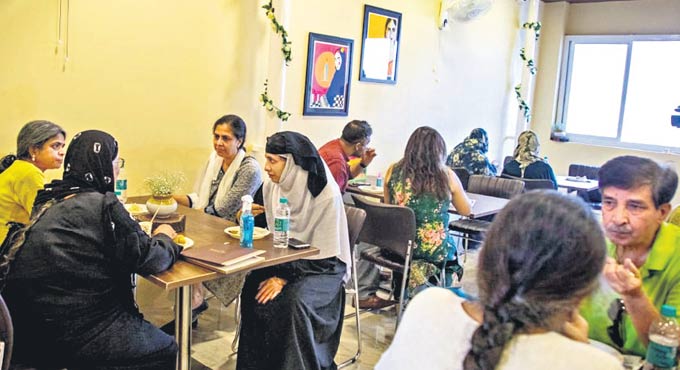
There aren’t many places for women to hang out and unwind in Hyderabad. But now, they can boast of a women-only space. Yes, Darulshifa, the heart of the old city, offers such a legroom for them. At Luqma Studio, they can let their guard down and relax — leaving their worries behind.
The unique initiative is the brainwave of Safa Society, the city-based NGO, which aims at socio-economic empowerment of women. The one-of-a-kind studio provides a much-needed platform for women to engage in dialogue, network and exchange ideas. No, Muslim women are not making a beeline to the studio as yet. That will take some time but the very idea of women-only area has gone down well with the fair sex.
Those who dropped in at the inauguration of the studio, along with the Luqma kitchen, last week were pleasantly surprised at the idea of women having a place of their own. “Don’t we need such a place in the #MeToo era,” remarked a young woman pleading anonymity.
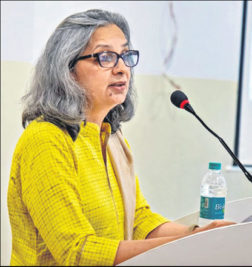
The all-female studio is well-furnished and has room for about 25 persons. The pink-coloured walls are decked up with art portraits of women. Adjacent to the studio is the spacious Luqma kitchen, the food brand of Safa, aimed at turning ordinary women into foodpreneurs. “We want Muslim women to make use of the studio and engage in meaningful discourse. They can also showcase their talent here,” says Safa Society president, Rubina Nafees Fatima.
Rubina Nafees Fatima
The studio can be an oasis for women seeking rest and relaxation. They can order something sizzling from the kitchen next door and chit-chat leisurely, something the presence of men would hinder. The homely ambience only adds to the pleasure. There will be special events with prominent women from different fields addressing them on a range of subjects.
There are many myths about Muslim women. What adds to the confusion is people judging them through the prism of stereotypes. “Women from different communities can now intermingle and discover each other,” says Rubina.
With its safe and supportive environment, will Luqma Studio open up new vistas for women?
source: http://www.telanganatoday.com / Telangana Today / Home> Features> My Hyd / by J S Ifthekhar / April 04th, 2021
The former India international defender passed away at the age 89 on Friday…
Former India international footballer Ahmed Hussain breathed his last at the age of 89 on April 16 in Bengaluru. The Olympian footballer had tested positive for COVID-19.
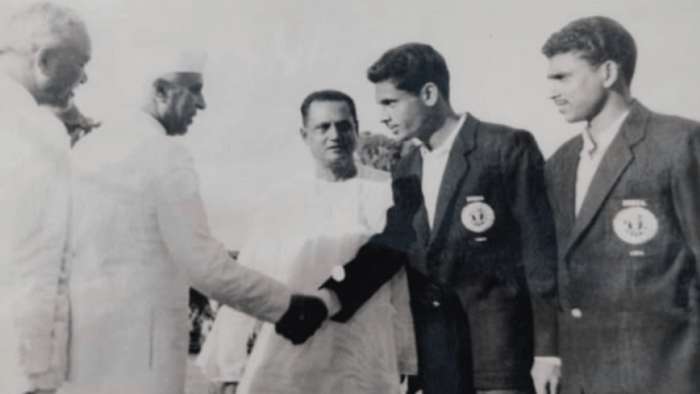
Born in 1932, Hussain started his career with Hyderabad City Police. While playing for the club he was selected in the Indian squad which took part in the 1951 Asian Games held in New Delhi and won the gold.
A defender, Hussain was also a part of the Indian Olympics football team that put on a fantastic show in Melbourne (1956) where they thrashed Australia 4-2 to eventually finish fourth in the tournament.
Hailing from Hyderabad, the footballer was incredibly talented and was an integral part of the Hyderabad side which won the Santosh Trophy in 1956 and 1957.
Other than Hyderabad City Police, the India international had also plied his trade with Kolkata football giants Mohun Bagan and Mohammedan Sporting Club. In his career, he had won three Durand Cups and six Rovers Cups.
After retiring from football, he took up coaching and joined the Sports Authority of India (SAI). He was posted in Bengaluru where he eventually settled down.
Speaking to Telangana about Hussein his former teammate and Olympian SS Hakim said .“Hussain was one of the giants of the Indian football team. He was one of the greatest stopper backs of the country. Despite his glorious achievements he never received any honours from the government. He truly deserved a Padma Sri.’’
Ahmed Hussain’s death is a great loss for the Indian football fraternity.
source: http://www.goal.com / Goal / Home> India / by goal.com / April 17th, 2021
Image for representational purpose only. | Photo Credit: AFP
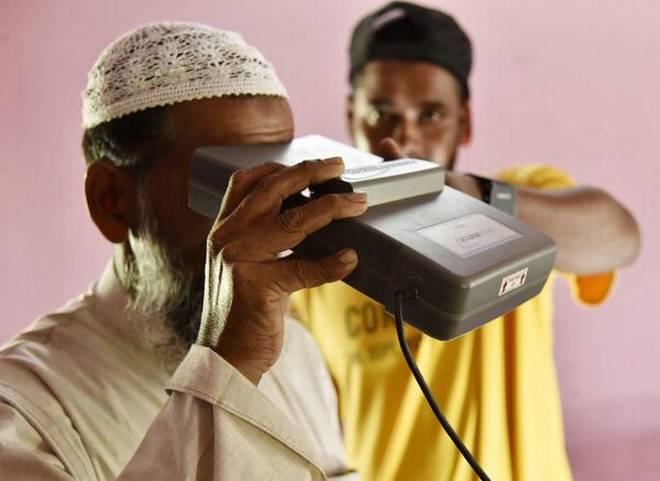
The exercise, viewed as ‘mini-NRC’, aims to distinguish three categories of indigenous Muslims from their migrant Bengal-origin counterparts
The Janagosthiya Samannay Parishad, Assam (JSPA) on Thursday launched a portal for conducting the first-ever census of Assamese Muslims for distinguishing them from their migrant, Bengal-origin or Bengali-speaking counterparts.
The JSPA represents three categories of Assamese Muslims — Goriya who converted from various indigenous groups and tribes, Moriya whose ancestors were brought by the Ahom kings to make weapons and utensils and Deshi who converted specifically from the Koch-Rajbongshi community.
The three-month exercise, seen as a small-scale version of the National Register of Citizens (NRC), has a cut-off period corresponding with the British annexation of Assam in the early 1800s. The JSPA considers the pre-British rule Muslims of Assam as indigenous, which is why the Jolahas — converts from among tea plantation workers who were brought from central India by British planters — have been kept out of the census.
Released in August 2019, the NRC had excluded 19.06 lakh of 3.3 crore applicants for lack of documents establishing them as the citizens of India. The cut-off period for the NRC was March 24, 1971, as prescribed by the Assam Accord of 1985 for detecting and deporting foreigners or “illegal immigrants”.
“We launched the portal jspacensus.com portal today [April 15] to coincide with the Assamese New Year and hope to complete the exercise by the end of 2021,” JSPA’s chief convenor Syed Mominul Aowal said.
The portal has a list of documents that applicants have to upload for registration. They include voter card, Aadhaar card and PAN of each family member (non-mandatory for minors), a certified copy from village head, municipal board, town committee or any other competent authority as well as a certified copy from JSPA-empanelled organisations listing all members of an applicant’s family.
The portal also lists 17 organisations recognised or empanelled with the JSPA and their phone numbers to be contacted for any issues with registering online. These organisations include Desi Janagostiyo Manch, Assam, Axomiya Muslim Kalyan Parishad, Khilonjiya Axomiya Musolman Unnayan Parishad and Hodow Khilonjiya Muslim Oikyo Manch.
The JSPA has also provided a helpline and the phone numbers of all its affiliate organisations for guiding the indigenous Muslims in getting themselves registered.
“This exercise was necessary as some migrant Muslims have undertaken an initiative to bring all Muslims living in Assam under one umbrella. Our religion and names may be the same but the indigenous Muslims have a distinct identity, given by the Ahom and Koch kings,” Mr. Aowal said.
According to the 2011 census, Muslims account for 34.22% of Assam’s population. The JSPA claims Assam today has about 1.4 crore Muslims, of whom 40 lakh are indigenous Muslims.
source: http://www.thehindu.com / The Hindu / Home> News> National / by Special Correspondent / Guwahati – April 15th, 2021
Watch Video: Dr Abidullah Ghazi laid to rest in Chicago
Ambehta (Sahranpur District),(formerly United Provinces) UTTAR PRADESH / INDIA, Chicago, U.S.A. :
Dr Abidullah Ghazi’s wife Dr Tasneem and others at the funeral ceremony held in Chicago on Monday afternoon.
The 85-year-old founder of Iqra International Educational Foundation was ailing since last few years and died on Sunday.
Chicago:
Dr Abidullah Ghazi – Scholar, Poet, Author, Philosopher and Activist, was laid to rest in the afternoon Monday April 12, 2021 in Chicago.
The 85-year-old founder of Iqra International Educational Foundation was ailing since last few years and under medication at a Chicago hospital-cum-rehab. He passed away in the wee hours of Sunday April 12, 2021.
He is survived by his wife, three sons and two daughters.
Immediate family members, including his wife Dr Tasneema Ghazi and children, were present when he was buried at Chicago cemetery on Monday.
The funeral that lasted for more than one and half hours was limited only to the immediate family members due to the Coronavirus pandemic.
Dr Abidullah Ghazi was born to Maulana Hamid Al Ansari – freedom fighter and a renowned journalist of his time, on July 6, 1936 in India. His mother had died when he was still in her early age. Under the guardianship of his grandmother, he was admitted in Jamia Millia at the age of 08.
Later he completed M A (Political Science) and BTh from Aligarh Muslim University (AMU). He went on to do M A in Economics from the London School of Economics and later wrote thesis on the revivalist views of Raja Rammohan Roy for his Ph.D. at the Ivy League, Harvard University.
Dr Ghazi also published, ‘Zikr-e-Saman Izaraan’, an anthology of Urdu poems.
After completing his education he first migrated to the United Kingdom and then to the United States where he stayed till his last breath.
Dr. Ghazi, who had also done Ph.D. in comparative religions from Harvard University, was a fixture in America’s Muslim community and a pioneer in providing quality Islamic education to our children.
Dr Ghazi was the author and editor of over 150 text and support books on Islamic syllabus designed with his wife Dr Tasneema Ghazi especially for Muslim children living in Western countries or studying in English-medium schools.
He had established Iqra Foundation in Mumbai which is run and taken care of by his younger brother Salman Ghazi and his wife Uzma Nahid.
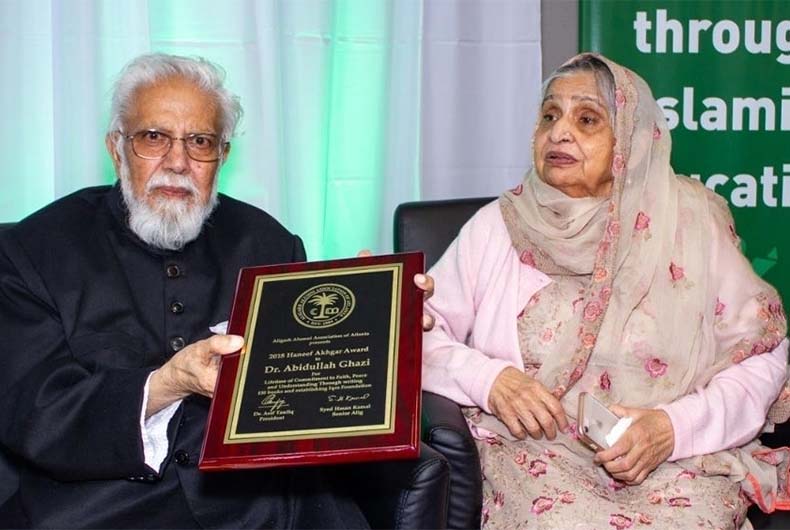
Dr Abidullah Ghazi was named by the Royal Islamic Strategic Studies Centre as being among the 500 Most Influential Muslims in the World. Besides, Dr. Ghazi was also the recipient of numerous awards notably the Citizen’s Award, the Ronald Regan Award, Nishan-e-Imtiaz (Order of Excellence) from Pakistan, a Certificate of Welcome from the City of Los Angeles many others.
Condolences pour in
Condolences are pouring in from different circles and by prominent people who termed the demise of Dr Abidullah Ghazi a great loss not just for the Muslims in the United States but also for those living in other parts of the world, especially India.
“Dr Ghazi, a prominent alumnus, enriched cerebral legacy of Aligarh Movement. He was among a bunch of highly motivated, adventurous persons who broke barriers and went on to distinguish themselves in their chosen fields,” AMU Vice Chancellor, Prof Tariq Mansoor said.
Extending condolences to the bereaved family of the deceased, the Vice Chancellor said:
“I shared a warm personal rapport with Dr Ghazi. The AMU fraternity will always carry Dr Ghazi’s memory in hearts.”
In his condolence message, renowned literary personality Hashmat Sohail said:
“It’s hard to believe Dr. Ghazi is no longer with us. I spent many years together. He will be remembered forever in the worldwide literary community.”
Ali Khan, President and Founder of Urdu Semaj Chicago, in his condolence message said:
“He was a legend in our community and a very genuine, Urdu lover People from Chicago will especially miss the late Dr. Abid Ghazi This is a total loss for us. He was devoted and inspirational leader for the whole community.”
http://www.iqra.org
source: http://www.ummid.com / Ummid.com / Home> India>Life & Style / by ummid.com news network / April 13th, 2021
Renowned Islamic scholar, mufti and former principal of Jamia Mohammadia Mansoora, Malegaon Dr Fazlur Rahman Madani passed away Friday due to COVID-19. He was 72.
Dr Fazlur Rahman Madani breathed his last at Iqra Hospital in Malegoan at around 2 am. According to his son, the renowned scholar was admitted in a hospital after he was tested COVID positive about a month ago. Although he was discharged last week, his health, however continued to deteriorate.
Born in Balrampur District of Uttar Pradesh, Dr Fazlur Rahman Madani obtained his PhD from the Islamic University of Madinah, with a specialisation in fiqh (Islamic jurisprudence).
Dr Fazlur Rahman was survived by his three sons and three daughters. His wife passed away three years ago.
source: http://www.thecognate.com / The Cognate / Home> News / by Shaik Zakeer Hussain / March 26th, 2021
Shaikh Dr Wasiullah Abbas is a renowned Islamic scholar from India. A graduate from the Islamic University of Madinah and Umm Al Qura University in Makkah, he is a teacher of Tafsir, Principles of Tafsir, Hadith and Principles of Hadith in Umm Al Qura University, a position he has held since 1979.
He also delivers lectures on Sahih al-Bukhari and Sunan Abu Dawood in Arabic and general Islamic lectures in Masjid al-Haram in Makkah where Abdullah Ibn Abbas (RA) used to deliver his talks.
Early Life and Education
Dr Wasiullah Abbas was born in 1948 in Basti district, in a small town of Bherabhoj, renowned for producing many Islamic scholars of repute. His father’s name was Muhammad Abbas Khan, his grandfather’s name was Ahmad Khan, and his great grandfather’s name was Khushhaal Khan. Dr Wasiullah’s grandfather Ahmad Khan was the chief of his town.
Dr Wasiullah received primary education from Shaikh Muhammad Saleem, a well-known Islamic teacher who was a student of Madrasah Rahmaniyyah. He later moved to the town of Yusufpur and enrolled in Madarsa Darul Huda and did his further studies in Jamia Rahmaniyyah in Banaras.
In 1966, the Jamia Salafia, one of the largest Islamic universities was established in the city Banaras. One of the scholars, who attended the inauguration of the university was Shaikh Abd al-Aziz ibn Baz. On Shaikh ibn Baz’s direction, four students were selected from both Jamia Salafia and Jamia Rahmaniyyah to study at the Islamic University of Madinah. These four students were Dr Wasiullah Abbas, Shaikh Abdul Hameed Rahmani, Shaikh Abdus-Salam Madani and Shaikh Abdur-Rahman al-Bastawi.
Islamic University of Madinah and Umm Al Qura University
At the Islamic University of Madinah, Dr Wasiullah Abbas obtained a bachelors degree in Dawah and Ilm Usool Ad-Deen (Principles of the Religion), from the department of Tafsir and Hadith.
After successfully completing the bachelors (undergraduate) program at the Islamic University of Madinah, Dr Wasiullah Abbas travelled to Makkah for higher (post-graduate) studies.
Here, he completed his Masters and PhD (doctorate) programs in Makkah, with a specialization in Hadith. He completed his PhD (doctorate) program in the year 1981, which was the year in which Umm Al Qura University was established in Makkah. Prior to this, the structured study in Makkah – “adDirasaat al-Ulyaa” (the higher studies programs), the Faculty of Shari’ah, and the Faculty of Tarbiyyah – were under the administration of King Abdulaziz University in Jeddah.
Teaching
During his time as a PhD student, he was appointed as a teacher at the Mahad at Masjid al-Haram. He continued teaching with this position for many years, after completing his PhD. Later, he was selected as a professor in Umm Al Qura University in Makkah, where he continues to hold a teaching position in the department of “al-Kitaab (the Qur’an) and the Sunnah” in the Faculty of Da’wah and Usool-ud-Deen, lecturing on numerous subjects related to the science of Hadith.
The Shaikh also holds a teaching chair in Masjid al-Haram, with authorization attained from the “General Director of the Affairs of the Grand Mosque in Makkah and the Prophet’s Mosque in Madinah. His chair is located in the “Mataf” (the area of Tawaaf around the Kabah), between the doors of Bab al-Malik Fahad (King Fahad Gate) and Bab al-Umrah, where he continues to teach five days a week between the Maghrib and Isha prayers.
Books
Among the books Dr Wasiullah Abbas authored are as follows: “ad-Du’afaa’ wal-Matrookoon wal-Majhooloon fee Sunan an-Nasa’i” (The Weak, Abandoned, and Unknown [Narrators of the Ahadith] in Sunan an-Nasa’i). This was Shaikh’s Masters thesis.
Tahqeeq (Verification) of the book “Fadaa’il as-Sahaabah” (Virtues of the Companions [of the Prophet Muhammad (SAWS)] of al-Imaam Aboo Abdullaah Ahmad ibn Muhammad ibn Hanbal ash-Shaybaanee (RH) [d.241H]. This was Shaikh’s PhD (doctorate) thesis.
Tahqeeq of the book “al-‘Ilal wa Ma’rifatur-Rijaal” ([The Science of] Defects [in the Asaaneed of the Ahaadeeth] and [the Science] of Narrators [of the Ahaadeeth]) as narrated by al-Imaam Aboo Abdur-Rahmaan Abdullaah ibn al-Imaam Ahmad ibn Hanbal (RH).
Tahqeeq of the book “Bahrid-Dam feeman Takallama feehi al-Imaam Ahmad bi-Madh aw Dham” (The one [i.e. Narrators of Ahaadeeth] al-Imaam Ahmad [ibn Hanbal (RH)] Spoke about with Commendation or Disparagement) of al-Imaam Jamaalud-Deen Yoosuf ibn Hasan ibn Ahmad ibn Hasan ibn Abdul-Haadee as-Saalihee, well-known as Ibnul-Mibrad al-Hanbalee (RH).
Tahqeeq of the book “al-‘Ilal wa Ma’rifatur-Rijaal” ([The Science of] Defects [in the Asaaneed of the Ahaadeeth] and [the Science] of Narrators [of the Ahaadeeth]) as narrated by al-Imaam Aboo al-Fadal Saalih ibn al-Imaam Ahmad ibn Hanbal (RH).
Tahqeeq of the twelfth volume of the book “Ittihaaf al-Mahrah bil-Fawaa’id al-Mubtakarah min Atraaf al-Ashrah” of al-Imaam al-Haafidh Shihaab-ud-Deen Aboo al-Fadal Ahmad ibn Alee ibn Hajar al-Kunaanee al-Asqalaaanee (RH) [d. 852H], upon request from “Markaz Khidmatis-Sunnah was-Seerah an-Nabawiyyah”31 of Madinah, Saudi Arabia.
Tahqeeq of the fifth volume of the book “Lisaan al-Meezaan”32 of al-Imaam al-Haafidh Shihaab-ud-Deen Aboo al-Fadal Ahmad ibn Alee ibn Hajar al-Kunaanee al-Asqalaaanee (RH) [d. 852H], upon request from “Markaz Khidmatis-Sunnah was-Seerah anNabawiyyah” of Madinah, Saudi Arabia.
“al-Masjid al-Haraam: Taareekhuhu wa Ahkaamuh” (The Grand Mosque in Makkah: Its History and Its Rulings).
“Ilal al-Hadeeth wa Dawruhu fee Hifdhis-Sunnah” ([The Science of] Defects [in the Asaaneed of the Ahaadeeth] and its Role in Protecting the Sunnah).
“Tahqeeq al-Kalaam fee Wujoobil-Qiraa’ah Khalf al-Imaam” (Verification of the Speech Regarding the Obligation of Reciting [Sooratul-Faatihah] Behind the Imaam [in the Salah]) of ash-Shaykh al-Allaamah al-Muhaddith Abdur-Rahmaan al-Mubaarakpooree (RH) [d.1353H]. This book has been translated from Urdu into Arabic by the Shaykh and he has added his annotations upon it.
“Khuluq al-Muslim fee Daw’il-Kitaab was-Sunnah” (Manners of the Muslim in Light of the Qur’an and the Sunnah).
“al-Musaafahah bil-Yadil-Yumnaa” (Greeting with the Right Hand [Upon Saying Salaam]) of ash-Shaykh al-Allaamah al-Muhaddith Abdur-Rahmaan al-Mubarakpuri (RH) [d.1353H]. This book has been translated from Urdu into Arabic by the Shaikh and he has added his annotations upon it.
“Fiqh Ahlil-Hadeeth: Khasaa’isuhu wa Mumayyizaatuhu” (Jurisprudence of the People of the Hadith: Its Unique and Exclusive Aspects).
“at-Ta’reef bi-Kutub Taraajimir-Ruwaat” (The Introduction to the Books [which Contain] Biographies of the Narrators [of Ahadith]).
Family
Dr Wasiullah Abbas is married and has five sons and five daughters.
References
Biography of Allamah Dr Wasiullah Abbas by Umm-Ul-Qura Publications.
Dr Wasiullah Abbas On Social Media
source: http://www.thecognate.com / The Cognate / Home> Biography / by Shaik Zakeer Hussain / March 31st, 2021
![Tibetan spiritual leader Dalai Lama and Maulana Wahiduddin Khan, right, in New Delhi [File: Mohd Zakir/Hindustan Times via Getty Images]](https://www.aljazeera.com/wp-content/uploads/2021/04/GettyImages-163399715.jpg?resize=770%2C513)