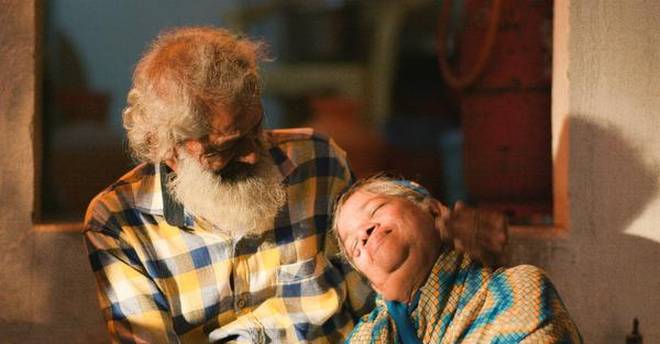
still from Insha Allah | Photo Credit: Special Arrangement
SPP Bhaskaran’s ‘Insha Allah’ now awaits a theatrical release after doing the rounds at film festivals
“Insha Allah is dedicated to the late Jabaramma,” says director Seerkatchi Pakhil Pandian (SPP) Bhaskaran, with a tinge of sadness in his voice.
Jabaramma ran a mess at the scenic Pillayarpuram near Coimbatore, the location where he shot his film. “She served all three meals for my entire team during our 30-day shoot there. I wrote a character based on her during my stay there, and even nudged her to play the role. Although she was shy to face the camera, Jabaramma learnt acting at a workshop done by the late Arunmozhi and his team during our shoot, and she performed confidently,” recalls Bhaskaran.
Insha Allah made it to the official selection in over 30 international film festivals, and won as many as seven awards for direction, cinematography, and other categories. “The reception has been overwhelming, especially at the Ubud International Film Festival and Accolade Global Film Competition,” he says.
An outsider’s perspective
Though Bhaskaran had to trim its runtime to 84 minutes for an international audience, he has now had the luxury of retaining some of the omitted scenes for theatrical release. “We were all set [for release] after we got the Censor Certificate. We timed it as an Eid release, but now because of the second wave we have to wait and watch,” he adds.
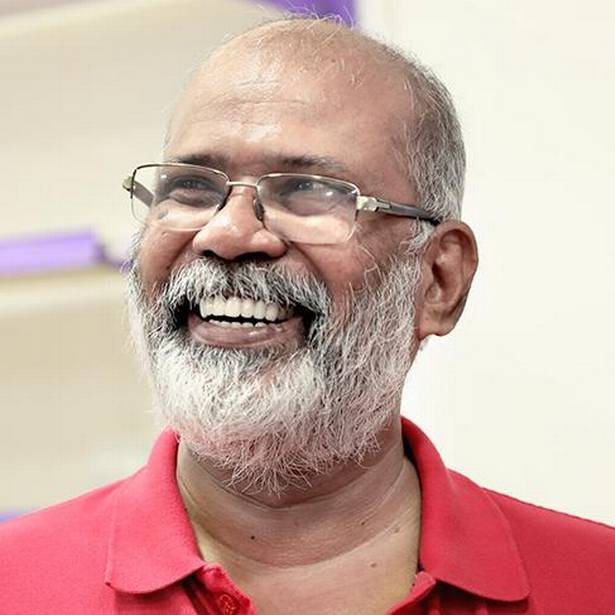
SPP Bhaskaran | Photo Credit: Special Arrangement
Insha Allah follows the happenings in a middle-class Muslim society, and is inspired from the short stories of authors Thoppil Mohammed Meeran (AnbirkkuMuthimai Illai) and Firdous Rajakumaran (Ranam). It also encapsulates the director’s observations of the Muslim community as an outsider. “I spent over six months at Karumbukadai, a Muslim locality in the city to understand the everyday happenings,” Bhaskaran says.
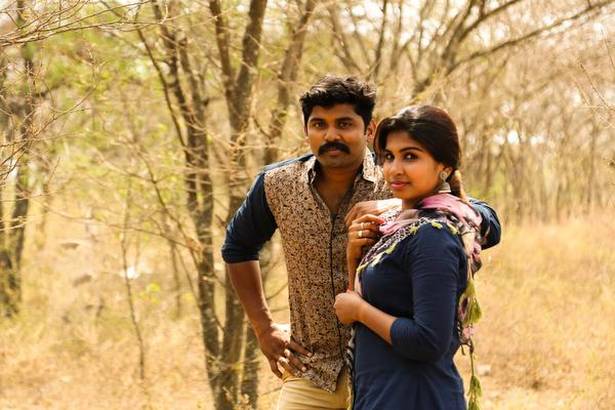
A still from Insha Allah | Photo Credit: Special Arrangement
The film is produced by his friend Shahul Hameed (under his banner Nesam Entertainment) who runs an electrical motor manufacturing unit. Bhaskaran chose death as the film’s central theme and wrote a script that touches upon the five tenets of Islam: daily prayers, giving alms(zakat), fasting during Ramadan, pilgrimage to Mecca (Haj) and profession of faith.
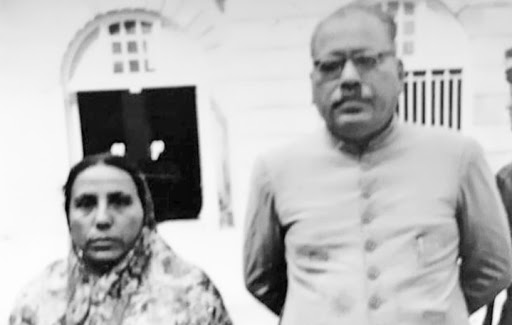
The protagonist is an ambulance driver played by Mogly K Mohan (who has been a part of films like Kirumi, Bakrid and Master). Poet Vikramathithan (who played a supporting role in director Bala’s award-winning film Naan Kadavul) and his wife Bhagvathi Ammal play an elderly couple in the movie. Some of the NGOs like Jeevasanthi, which performs the last rites for unclaimed bodies, and New Generation Trust — which builds homes for abandoned women, most of whom are divorcees — are also a part of the narration.
As for his experience with the community, Bhaskaran adds, “It was heart-warming. I have also filmed at the Cheraman Juma Masjid, which is believed to be the first mosque in the country. It is located at Kodungalloor in Kerala. There is also footage of the 800-year-old mosque at Keeranur, near Palani. The film is an outsider’s view of the community.”
source: http://www.thehindu.com / The Hindu / Home> Entertainment> Movies / by K Jeshi / Coimbatore – May 05th, 2021
“If you try to understand what Islam is and what Islam teaches, it’s just the opposite of what you hear in the media,” said Dr. Zia Usman, owner of Rogers Park Animal Hospital in Chicago.
Dr. Zia Usman is a rarity within the U.S. veterinary profession.
Not only does the Indian-born and -trained veterinarian own a companion animal practice on Chicago’s North Side, Dr. Usman is also a Muslim.
Such a combination is unusual among first-generation immigrants who are followers of Islam, according to Dr. Usman’s colleague, Riaz H. Siddiqi, a professor at Truman College in Chicago and president of the Muslim VMA.
The association believes approximately 500 Muslim veterinarians are in the United States. Dr. Siddiqi thinks most of them are employed in academia, research, industry, or government, where they are likely to be inspectors in slaughterhouses. Few Muslim veterinarians in the United States work with pets, he said, but this is more a matter of economics, not any Islamic taboo.
“Many of us who come here, we have families, and we’re in a hurry to find a job quickly, and we don’t have the time or money to go through the certification process,” Dr. Siddiqi explained.
Growing up in India, Dr. Usman was expected to become a physician like his father, yet his “heart was inclined toward animals,” he said, so he enrolled at the Ranchi College of Veterinary Science and Animal Husbandry in Bihar.
Two years after graduating in 1970, Dr. Usman immigrated to America. His first job was as a laboratory animal technician at the University of Illinois Biological Resources Laboratory in Chicago.
In time, Dr. Usman passed the AVMA Educational Commission on Foreign Veterinary Graduates certification program, became assistant director of laboratory animal resources at Northwestern University College of Medicine, and got his veterinary license. In 1992, he left laboratory animal medicine to open a private practice in Chicago, allowing him to work with pets and educate the public about Islam.
The Muslim community is well-established in Chicago, but Sept. 11 raised its visibility and put Islam in a negative light. “Now people know more about Muslims and Islam, and, unfortunately, they’re not knowing in the proper way,” Dr. Usman said. The media portrays Muslims as terrorists when “it’s just the opposite,” he said.
Muslims understand why Islam is one of the world’s fastest-growing religions, according to Dr. Usman. Islam, he said, is a peaceful religion that details man’s obligations to animals, especially the slaughter of food animals. Muslims are admonished not to slaughter an animal in front of other animals, for instance, and to end an animal’s life quickly and with as little pain as possible. There are even instructions on how a Muslim is to hunt humanely. “Every step of the way, we have religious guidance,” Dr. Siddiqi noted.
A common misconception is that Muslims shun dogs as unclean animals. Neither Dr. Usman nor Dr. Siddiqi is an Islamic scholar, but they say their faith does not prohibit Muslims from dog ownership. In fact, Dr. Usman owned a German Shepherd Dog as a teenager. “That was my baby,” he recalled. “I would take care of him and cook for him.”
Dr. Usman cited a popular account in the Hadith—a collection of narratives based on the words and deeds of the prophet Muhammad and, in addition to the Quran, one of Islam’s primary sources for instruction. According to the story, a man took pity on a thirsty dog by giving it water from a shoe. “Allah approved of his deed and made him to enter Paradise,” the story goes.
When Dr. Usman came to America, he didn’t know what to expect. So in 1999 he helped found the Muslim VMA to give Muslim veterinarians coming to the United States information he didn’t have. In addition to providing career advice, the association helps Muslims find halal food, that is, sources providing food that complies with Islamic dietary laws. The Muslim VMA wants to eventually start its own halal certification program.
Dr. Siddiqi said the association is planning to hold a meeting in Chicago of Muslim veterinarians and is hoping to network with human physicians to strengthen efforts at preventing the spread of zoonotic diseases.
source: http://www.avma.org / AVMA / Home>> JAVMA News / February 10th, 2010 / by R Scott Nolen / February 01st, 2010
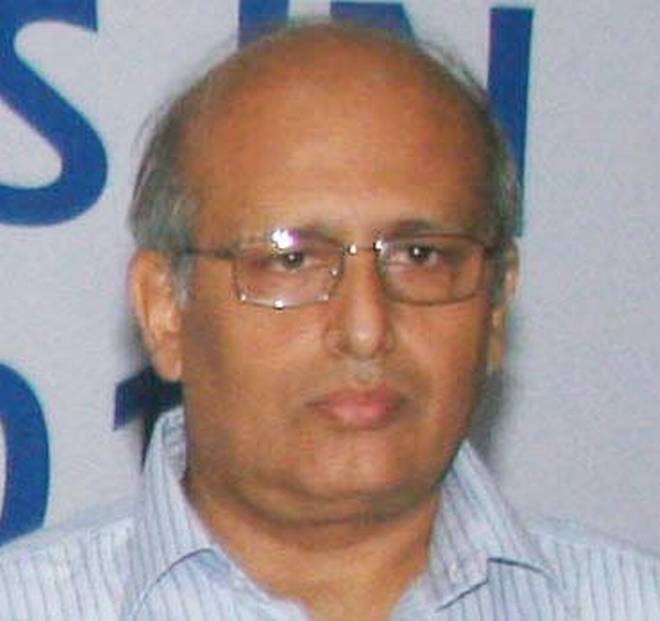
Virologist Shahid Jameel. File | Photo Credit: Eswarraj R
The eminent virologist did not give any reasons for his departure
Shahid Jameel, eminent virologist and head of the advisory group to the Indian SARS-COV-2 Genomics Consortia (Insacog), resigned from his post on Friday.
Dr. Jameel confirmed to The Hindu that he’d quit but did not give any reasons for his departure.
Multiple scientists who are part of Insacog — a group of 10 laboratories across the country, tasked with tracking evolving variants of the coronavirus — told The Hindu that Dr. Jameel’s decision appeared to be sudden as he hadn’t communicated reasons for his resignation to consortium members but one of them cited “government pressure” as a potential reason.
Dr. Jameel, who is Director, Trivedi School of Biosciences at Ashoka University has been critical of aspects of the government’s handling of the pandemic.
On May 13, in an invited opinion piece for the New York Times, Dr. Jameel summarised India’s response to the multiple waves and the uneven vaccination rollout and concluded by saying “scientists were facing stubborn resistance to evidence-based policy-making. On April 30, over 800 Indian scientists appealed to the Prime Minister, demanding access to the data that could help them further study, predict and curb this virus. Decision-making based on data is yet another casualty, as the pandemic in India has spun out of control. The human cost we are enduring will leave a permanent scar.”
The Insacog, setup in December, faced initial challenges with funds and equipment but since March has considerably accelerated sequencing samples from all over the country for variants. It has been tracking international variants of concern as well as discovered the so called ‘Indian variant ‘ (B.1.617) that is believed to be instrumental in India’s devastating second wave.
source: http://www.thehindu.com / The Hindu / Home> News> National / by Jacob Kohsy / New Delhi – May 16th, 2021
The Maulavi of Faizabad managed to keep the city free from British rule for almost a year until his death at the hands of British agents on June 5, 1858.
Faizabad (Ayodhya District), UTTAR PRADESH :
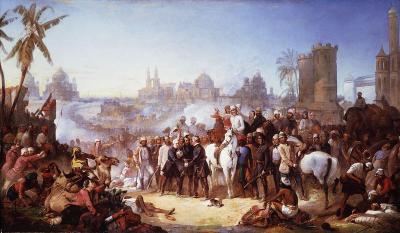
The Relief of Lucknow, 1857, by Thomas Jon Barker. Photo: Wikimedia Commons
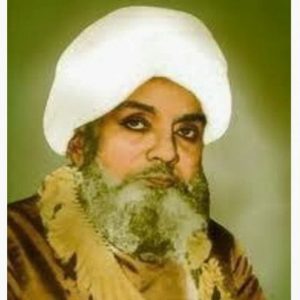
Ahmadullah Shah, born in 1787, more famously known as Maulavi of Faizabad, was one of the leading figures of the great Indian revolt of 1857. In the Awadh region, Maulavi Ahmadullah Shah was known as the ‘Lighthouse of Rebellion’. Hailing from a noble warrior family of Awadh in Faizabad, he grew up to be a political leader committed to armed revolutionary insurrection against British rule in India.
During the freedom struggle, Maulavi made Faizabad the centre and launched revolts in all of the Awadh region. He made the local mosque Masjid Sarai located in Chowk area of Faizabad his headquarters. As he liberated Faizabad and the larger part of Awadh region, he used the premises of this mosque to hold meetings with rebellion leaders.
Maulavi Ahmadullah Shah kept Faizabad free from British rule for almost one year, until his death at the hands of British agents on June 5, 1858.
According to researcher and historian Ram Shankar Tripathi, “With being a practicing Muslim, he was also the epitome of religious unity and Ganga-Jamuna culture of Faizabad. In the revolt of 1857, royalties like Nana Sahib of Kanpur, Kunwar Singh of Arrah fought alongside Maulavi Ahmadullah Shah. Maulavi’s 22nd Infantry Regiment was commanded by Subedar Ghamandi Singh and Subedar Umrao Singh in the famous Battle of Chinhat.”
Tripathi narrates, “Maulavi wanted Raja Jagannath Singh of Pawayan, a zamindar in district Shahjahanpur of Uttar Pradesh, to join the anti-colonial war. On June 5, 1858, with prior appointment, he went to meet Raja Jagannath Singh in his fortress-like house. On arriving at the gate, he was greeted with a volley of gunshots from Jagannath Singh’s brother and retainers. The Maulavi breathed his last on the spot.”
“The martyr’s head was severed and carried in a piece of cloth with blood still oozing from it to the district magistrate, Shahjahanpur, by the zamindar. The district magistrate was at lunch with his friends. But the depraved feudal lord rushed in and presented the severed head of the hero on the dining table of the district magistrate. With a reward of Rs 50,000, he returned home, flying atop the flag of loyalty.”
According to another historian Roshan Taqui, “Maulavi use to bring out revolutionary pamphlets mobilising the masses to do ‘Jihad’ against the British. Maulavi was arrested by the British in January 1857 and was held captive in Faizabad, but three months before the revolt broke out in Lucknow on June 3, he escaped and launched a war against the British in Awadh region including Faizabad, Lucknow and Shahjahanpur.”
“During the revolt, the revolutionaries appointed him as chief of 22nd Infantry Regiment that fought the famous battle of Chinhat in Ismailganj of Lucknow on June 30, 1857, against British forces led by Henry Lawrence. Britishers were badly defeated in this war,” informed Roshan Taqui.
British officers like George Bruce Malleson and Thomas Seaton have made mentions about courage, valour, personal and organisational capabilities of Maulavi Ahmadullah Shah. Malleson has repeatedly mentioned Ahmadullah in the History of Indian Mutiny, a book written in six volumes covering the revolt of 1857.
source: http://www.thewire.in / The Wire / Home> History / by Arshad Afzal Khan / June 05th, 2018
Vidarbha has been a fertile soil for many social reformers and intellectuals. It has played an active role in the nation’s destiny and its social, cultural and political rivulets have flown into and enriched the great sea of national civilization. One such luminary who emerged from Yavatmal was Kazi Syed Karimuddin. He rose to be a great criminal lawyer of the region and played a critical role in the drafting of the Indian constitution.
Kazi Karimuddin was born on 19 July 1899, at Darwah in Yavatmal district of Maharashtra to Kazi Syed Nasiruddin and Dayanath Begum. He had his school education at Mohamedan High School, Amravati. He graduated from Morris College, Nagpur and obtained his postgraduate degree in economics from Aligarh Muslim University. He later qualified for law. He married Qadirunnisa Begum (May 24, 1926) .
Kazi Karimuddin had an active presence in social, legal, judicial and political circles in Yavatmal. He was Vice Chairman, District Council (1924-28) Sub-judge (1928-31) President, Anjuman Middle School (1932-37) and Public Prosecutor (1939-45). He was member of Constituent Assembly (1947-50) and of Madhya Pradesh Assembly (1947-52) (at that time Madhya Pradesh was known as the Central Province). Following that, he was a member of the Rajya Sabha (the upper house of the Indian Parliament) from 1954 to 1958. He died on 14 September 1977.
Kazi Karimuddin moved an amendment in the Constituent Assembly on the lines of American Constitution to make right to privacy a fundamental right but Dr. B.R. Ambedkar gave it only reserved support. Article 20 provides that no person shall be convicted of any offence except for violation of a law in force at the time of the commission of the act; that no person shall be prosecuted and punished for the same offence more than once; and that no person accused of any offence shall be compelled to be a witness against himself.
Endowed with rare forensic skills, Kazi Karimuddin’s vast experience and insights gave him an uncanny knack for unraveling the anatomy and pathology of crimes. He was always apprehensive of the pervasive scope of the intrusive lens of the state as well as private agents. He considered privacy a vital constituent of a healthy constitutional polity since India’s large population of minorities had become vulnerable due to the emerging communal situation.
He wanted that the following be added as clause (4) in article 20: “ The right of the people to be secure in their persons, houses, papers and effects against unreasonable searches and seizures shall not be violated and no warrants shall issue but upon probable cause supported by oath or affirmation and particularly describing the place to be searched and the person or things to be seized.”
He said: “This is very important amendment. You will be pleased to find that this finds place as article 4 in the American Constitution and in the Irish Constitution there are clauses (2) and (5) which are similar and in the German Constitution there are article 114 and 115 on the same lines. In the book of Dr. Ambedkar—Minorities and States—on page 11, item No. 10, a similar provision has been made. What is the situation in India today? …Arrests are made without warrant and searches without justification. We are being governed by lawless laws and there is no remedy for the redress of grievances on account of unauthorized arrests and searches.”
Dr. Ambedkar pointed out that this clause was already in the Criminal Procedure Code, and was therefore a part of Indian law, but also acknowledged that it may be desirable in the interests of personal liberty to ‘place these provisions beyond the reach of the legislature’. Despite Ambedkar’s support the amendment was negatived.
However the Karimuddin amendment in the Constituent Assembly re-emerged through the process of judicial engineering in Kharak Singh v. State of U.P where the court discussed the relationship between surveillance and personal liberty (personal liberty being guaranteed by the Constitution) and found that unauthorised intrusion into a person’s home would interfere with her right to personal liberty. The court recognised “the right of the people to be secure in their persons, houses, papers, and effects” and declared that their right against unreasonable searches and seizures was not to be violated.
Kazi Karimuddin was also the key persona in the deliberations on the Uniform Civil Code in the Constituent Assembly. He argued: “The people outside and the members of the Constituent Assembly must realize that a Muslim regards the personal law as part of the religion and I really assure you that there is not a single Muslim in the country—at least I have not seen one—who wants a change in the mandatory provision of religious rights and personal laws, and if there is anyone who wants a change in the mandatory principle, or religion as a matter of personal law, then he cannot be a Muslim.”
Kazi Karimuddin had three sons and five daughters. Though he was a staunch opponent of the UCC, he was a very progressive and forward-looking Muslim who educated his children at the country’s premier educational institutions. Since Yavatmal did not have adequate facilities for higher learning, he sent his daughters to Hyderabad to pursue postgraduate courses at Osmania University which was a renowned educational hub for women.
His sons-in-law also excelled in their respective fields: Nizamuddin Ahmed (LLM) was trained in UK in Labour Law and retired as Deputy Commissioner- Labour, Maharashtra; Syed Mukassir Shah was former Chairman of the Andhra Pradesh Legislative Council; Justice M.M. Qazi was former Chairman of the Maharashtra Administrative Tribunal and retired judge of Bombay High Court; and Dr Mirza Basheer Baig was an orthopedic surgeon (FRCS) in UK.
The life of Kazi Karimuddin serves as a beacon to modern day Muslims who are now at the most challenging crossroads in history.
source: http://www.muslimmirror.com / Muslim Mirror / Home> Indian Muslim / by Moin Qazi / May 13th, 2021
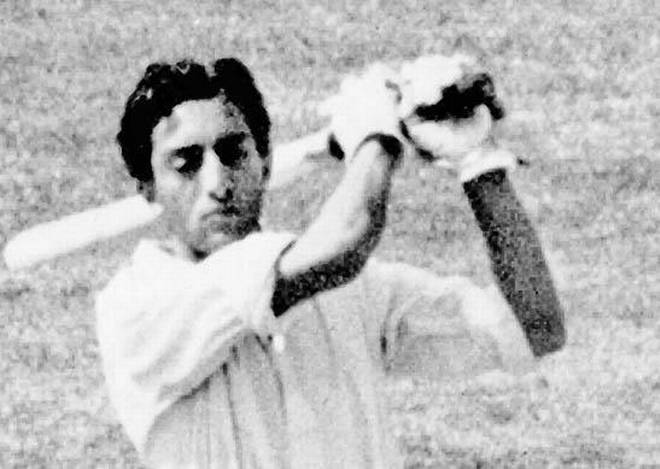
The Nawab of Pataudi. It was one of India’s greatest triumphs…with a most remarkable man leading the way… (Published in The Sportstar on October 19, 1985) PHOTO: THE HINDU ARCHIVES
Cricket and music? Yes, they are perfectly in tune with each other
It was January 1973. India was playing England in a Test series. Ajit Wadekar was leading India, while Tony Lewis was the English captain. The Nawab of Pataudi had been inducted into the team after a fine show in a tour match. The two teams had wound their way to Chennai (then Madras) for the third Test. The series was tied one-all. And the match at Chepauk was crucial.
But this story is not about cricket and the unflappable Pataudi’s exploits with the bat or of Wadekar’s marshalling of his troops on a turning Chepauk pitch. In those days, Test cricket was played over six days with a rest day after three days. I was a student of the Indian Institute of Technology, Madras. The institute had a music club (still does), and a violin concert by Lalgudi Jayaraman had been organised for Sunday evening.
The ace violinist had just begun his concert and essayed the varnam, when suddenly there was a minor commotion at the entrance. In walked Pataudi with Tony Lewis (Monday was a rest day). They proceeded to the front row, where two seats had been hastily vacated for them, and sat in rapt attention while Lalgudi, after a courteous bow to acknowledge their presence, proceeded with his concert. We later learned that Tony Lewis was a part-time musician and violinist, and Pataudi wanted to expose him to how India had adapted this instrument for its classical music.
Even in those pre-WhatsApp days, word of the great man’s presence in the Central Lecture Theatre spread like wildfire on the campus and the hall which had till then only a sprinkling of listeners, fast filled up and was soon overflowing. Concert over, Pataudi and Tony Lewis exchanged a few pleasantries with the maestro and left.
I dare say that Pataudi had unwittingly acted as a catalyst to convert quite a few of the Pop, Rock, Blues and Jazz aficionados among the young IITians to serious listeners of Indian classical music.
srinivasan.bhashyam@gmail.com
source: http://www.thehindu.com / The Hindu / Home> Opinion> Open Page / by S. Bhashyam / May 09th, 2021
Iqtidar Alam Khan’s Latest Books on India’s Medieval History Unearth Hidden Secrets
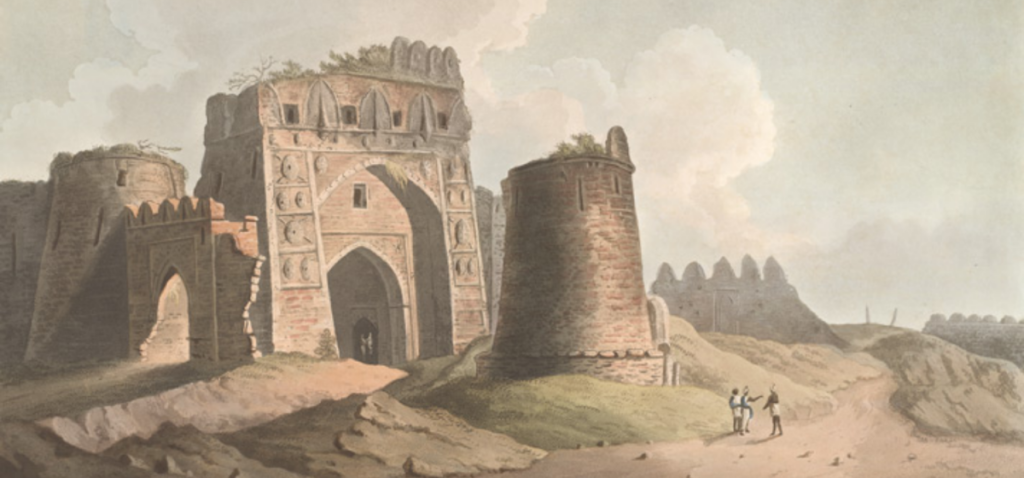
A painting of west gate of Firozabad fort, near Delhi. This fort was built by Feroz Shah Tughlaq in the 1350s, but destroyed by later dynasties. Photo: Wikipedia/Public domain
Iqtidar Alam Khan’s first slim book, a biography of Humayun’s brother Mirza Kamran was published in 1964; his latest book, slightly bulkier than the first, has been published in early 2021 when he is nearing 90, with nearly a dozen authored and edited volumes in-between. Quite an emphatic comment on how prolific he has been in his distinguished career as a historian of medieval India! Add a very distinct quality of the huge range of themes and the empirical solidity of his researches and one begins to appreciate the indelible imprint on the study of medieval Indian history he has left for his own and future students.
Professor Iqtidar Alam Khan was an alumnus and later faculty of the department of history at Aligarh Muslim University when it shone like the pole star in the study of medieval Indian history under the leadership of frontline scholars like Professors Mohammad Habib, Nurul Hasan, K. A. Nizami and Irfan Habib; he himself added to its lustre, evident in his extensive explorations of different facets of his discipline. This, when he always avoided drawing attention to himself.
The range of his explorations is amazing: biographies of two Mughal nobles, “Turko-Mongol theory of kingship” which had a decisive influence on Mughal notion of sovereignty, the system of revenue assignment of Akbar.
The classic essay on “Akbar’s nobility and the evolution of his religious policy”, which was a sort of watershed intervention in 1968 in that it set new terms for the study of the Mughal “religious policy” and has stood the test of time, some feeble recent challenges notwithstanding, the pioneering studies of gunpowder, guns and artillery and not least the bringing to attention some Persian language texts. However, all this work pertained to the Mughal period of Indian history.
Attention to detail
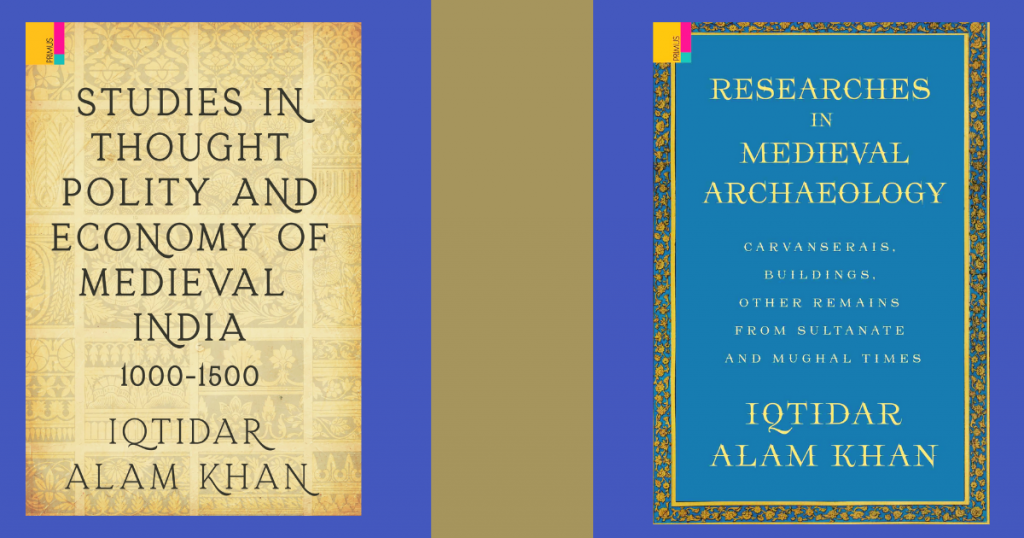
This current year has, however, revealed two hitherto unknown facets of his scholarship with the publication of two books in quick succession, both by the venerable publishers, Primus: Studies in Thought, Polity and Economy of Medieval India 1000-1500 and, hard to believe, Researches in Medieval Archaeology.
The first brings to us his mastery of various themes from the Delhi Sultanate era with the same eye for empirical soundness of every detail as his works on the Mughal period, though still tied to the Court and its outliers except for a revisit to Alberuni’s ‘concept of India’.
It is the second work that takes us literally to the ground level, taking us through the dust and grime of small buildings, remains of centuries-old Sarais (inns), waterworks, indigo vats, dykes and fascinatingly the ‘city’ built by Sultan Muhammad bin Tughlaq which he had named Swargduari, Gateway to Heaven, in district Etah in present day Uttar Pradesh.
Traveling in ramshackle vehicles for nearly two decades, Professor Khan along with his team, dedicated himself to recovering and recording the remains of small, virtually forgotten buildings of various kinds – calling them monuments would be grandiose – in every little detail of location, dimensions, recoverable history from texts and from folklore. It was remarkable labour of love where his age and family’s pleas could not hold him back.
The introduction, besides bringing the reader up to date on the theoretical backdrop of archeological study makes the valuable plea that one should embark on field exploration only after running through all the relevant textual material available for imparting completeness to the exploration.
While for all the sites studied included in the book have almost every kind of technical detail have been recorded, the last and longest chapter, dealing with Sarais is the most fascinating in that it opens up a number of windows to the social history of the period. It reveals that the state took upon itself the task of promoting travel as well trade, and at a certain stage postal service, by constructing inns and rest houses all along the trade routes. The task of constructing inns starts as early as Asoka’s time, for it is mentioned in one of his edicts, but later history on the theme is obscure.
In medieval India, references to these, along with milestones, kos minars resume from Sher Shah’s time and continue into the 18th century. The title Sarai is scattered all over the land with prefixes like Ber Sarai, Arab ki Sarai, Katwaria Sarai, Sarai Kale Khan and numerous others in Delhi itself, not to forget the Mughal Sarai, its history now erased through political diktat.
The very spread of these is suggestive of both the extent of travel and trade and state’s assumption of responsibility for providing security and patronage for it. The lodging and boarding at Sarais were often complementary and at times chargeable.
Luckily for the historian, the travelers at times left some graffiti on the walls noting their identity, several of which have been copied in the book. Where boarding was provided, separate kitchens were run for the Hindu and the Muslim travelers, suggesting that they came from both communities and shared the space but maintained differences in food, which was recognised and accepted by the state.
It also suggests that the difference did not turn into hostility. The book reproduces one graffiti in Devnagari on the wall of a mosque by one Kishan Das wald (son of) Maha Nand Kambu of Agra; he had obviously found shelter at least for a night at the mosque which he appears to have gratefully recorded; this reminds Professor Khan of Goswami Tulsi Das’ reference to “sleeping at a mosque”!
These two books, the second one, in particular, is a delightful revelation of an attractive aspect of an extremely reticent scholar of great eminence: dedication without seeking recompense in the form of the fanfare of recognition, but pure dedication to the unearthing of history’s hidden secrets without a trace of prejudice or preference. Dedication that cuts across compartmentalisation of Delhi Sultanate versus Mughal Empire, economic history versus political history, archeology versus textual narratives and so forth. A dedication that does not tire with age.
We are grateful to Professor Ali Nadeem Rezavi, who as head of the department of history and in-charge of its section of archeology persisted with Iqtidar Alam Khan to collect all his scattered data and reproductions of photographs of remains and graphs prepared to put together in a book; we owe a big debt to him for succeeding in the effort.
Harbans Mukhia taught medieval history at JNU.
source: http://www.thewire.in / The Wire / Home> Analysis> Books> History / by Harbans Mukhia / May 11th, 2021
What started as documenting his own life in Europe while pursuing his Masters gradually gained direction and came to focus on wildlife photography.
Hyderabad:
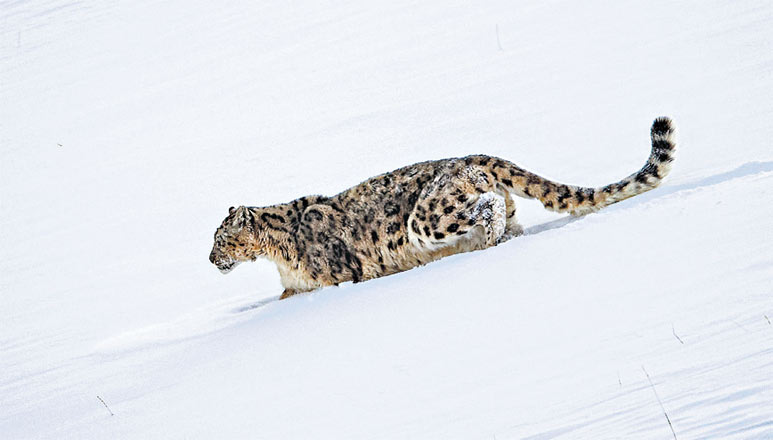
His photographs of a snow leopard from Spiti, Himachal Pradesh broke the internet, literally. Yet the man is still calm, unassuming.
Ismail Shariff, Hyderabad-based nature and wildlife photographer, is known to wildlife and photography enthusiasts as the ‘Snow Leopard Man of India’. His long and passionate association with photography began in his student days. What started as documenting his own life in Europe while pursuing his Masters gradually gained direction and came to focus on wildlife photography.
Picking up his first camera in 2005, Ismail was treated to the magnificent sight of a huge male tiger in 2008 while on a trip to the Kanha National Park in Madhya Pradesh. That was the defining moment of his life. “It became one of the reasons for me to move back to India to pursue of wildlife photography and tourism here,” he said.
Ismail, an alumnus of the Hyderabad Public School, Begumpet, has been part of nine snow leopard expeditions in the last seven years with the recent one being in 2020, apart from several other wildlife expeditions. The first thing that strikes his mind about snow leopards is the long fluffy tail, blue eyes, thick fur and a true-blue cat attitude. Snow leopards are one of the world’s most elusive animals and the most common way to spot one is high up on the mountain ridges. After an hour or more of patient stalking in Spiti in 2017, he finally spotted a snow leopard passing by. The shots he posted on various wildlife photo websites are trending even today.
“I was obsessed with snow leopards ever since a photograph taken in 2012 by Dhritiman Mukherjee, India’s leading wildlife photographer,” said Ismail, adding that seeing the mysterious ghost of the mountains for the first time in Hemis National Park, Ladakh, was an unforgettable experience in itself.
Ismail said the snow leopard is a notoriously elusive creature. It is also listed as “Vulnerable” on the IUCN Red List since the global population is estimated to be between 4,000 to 6,000. India is believed to have less than 1,000. That adds stars to his journey from just another photographer to being called the Snow Leopard Man of India.
“There were struggles. My parents were expecting me to get a corporate job. But I chose photography as my career. It was tough initially, since you’ve to invest a lot of time and money with very uncertain returns to make a name. But at the end of the day, if you want to be successful, you have to be willing to work hard, even if it means making more than a few sacrifices along the way,” said Ismail, a Computer Science engineer from Central European University, Budapest, Hungary.
He moved to Paris to work there for two and half years before wildlife photography took over him.
Ismail, who has had solo photography exhibitions on Snow Leopards even in Los Angeles and New York, also indulges in fine art printing. He also works with the Snow Leopard Trust in helping raise funds for their conservation efforts.
source: http://www.telanganatoday.com / Telangana Today / Home> Hyderabad / by Sowmya Sangam / May 01st, 2021
Dr. Shamsheer Vayalil, Chairman and Managing Director of VPS Healthcare, donated AED1 million to the ‘100 Million Meals’ campaign, the first humanitarian campaign of its kind in the Arab world to provide food parcels for disadvantaged individuals and families across 30 countries in the Middle East, Africa, Asia, Europe and South America this Ramadan.
Dr. Shamsheer Vayalil’s contribution is part of the large response from companies, businessmen and community members in the UAE and abroad in support of the campaign, which was announced by His Highness Sheikh Mohammed bin Rashid Al Maktoum, Vice President, Prime Minister and Ruler of Dubai.
Given the influx of donations, from philanthropist individuals and companies, the ‘100 Million Meals’ campaign fully achieved its goal of 100 million meals within 10 days of its launch.
Dr. Vayalil said, “At VPS Healthcare, we are proud and privileged to be a part of this distinguished programme. It is in line with our motto to giving back to society and helping the needy.”
The 100 Million Meals campaign is managed by Mohammed bin Rashid Al Maktoum Global Initiatives, in cooperation with the UN World Food Programme, Mohammed bin Rashid Al Maktoum Humanitarian and Charity Establishment, Food Banking Regional Network, and local food banks and humanitarian and charity institutions in beneficiary countries.
Donations to the campaign can be made on www.100millionmeals.ae, by contacting the campaign call centre on the toll-free number 8004999, via the designated bank account through Dubai Islamic Bank (AE08 0240 0015 2097 7815 201), and by sending the word “وجبة” in Arabic or “Meal” in English by SMS on specified numbers via the Du or Etisalat networks in the UAE.
source: http://www.wam.ae / Home> Emirates> English / April 24th, 2021
Kenihama Village (Budgam District) , JAMMU & KASHMIR :
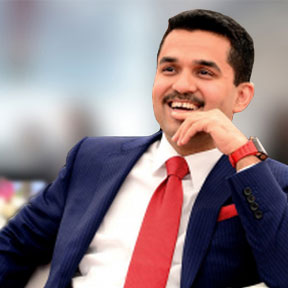
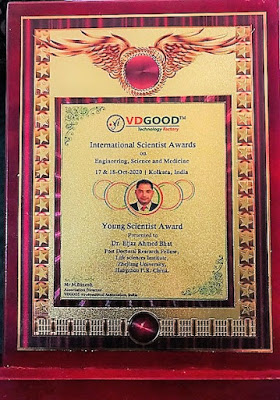
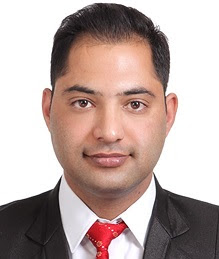
Dr. Eijaz Ahmed Bhat has been conferred with International Scientist Award (Young Scientist Award) at the 11th International Scientist Awards-2020 for Engineering, Science and Medicine held by VDGOOD TECHNOLOGY FACTORY.
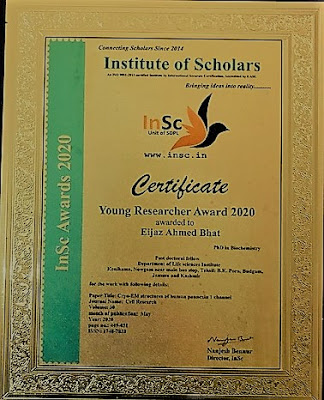
Dr. Bhat was also conferred with Young Researcher Award 2020 for his work published in Nature Cell Research by the Institute of Scholars, Bangalore.
Dr. Eijaz Ahmed Bhat is currently working as Postdoctoral fellow in Life sciences Institute, School of Medicine, Zhejiang University, China. He did his Masters in Biochemistry from Aligarh Muslim University (AMU), Department of Biochemistry. He then moved to South Korea for higher studies. He earned his PhD in Biochemistry from Yeungnam University, School of Natural Sciences, Department of Biochemistry, South Korea, in August 2018. Dr. Eijaz was awarded the Yeungnam University Post Graduate Scholarship. He has also served as a Vice president of Yeungnam University International Students Association (YUISA).
After completing his doctorate, Dr. Eijaz Ahmed Bhat joined as a postdoctoral research fellow in Zhejiang University, China, Life Sciences Institute, School of Medicine. His research interests include Study of proteins related to various signalling pathways, especially TRAF signaling; and Apoptosis, inflammation and other pathways. He also worked on very important membrane proteins in cell signalling and explored their molecular mechanism of action by using a powerful toll such as Cryo-EM or X-ray crystallography techniques.
Dr. Eijaz has more than 20 publications to his credit in International peer-reviewed journals having high impact factors like Nature Cell Research, Nature Cell Discovery, Scientific Reports, Frontiers in Microbiology, International Journal of Molecular Sciences, International Journal of Biochemistry and Cell Biology, Molecular and Cellular Biochemistry etc. He serves as an editorial board member and reviewer of many reputed journals like Translational Oncology (Elsevier), Cancer Treatment and Communication (Elsevier), Biochemistry and Analytical Biochemistry etc.
He is serving as Brand Ambassador of Bentham science publishers in India since 2019.
Early Life and Education
Dr. Eijaz Ahmed Bhat was born and brought up in a small village Kenihama in Budgam district of Jammu & Kashmir. He began his early education at Government Middle School, Kenihama, where he spent four years. His better performance at the school prompted his teachers to advise his parents to send him in the private school called Bright Mission School in Kanipora, one of the leading private schools at that time. He continued to excel in academic and was attracted toward research.
Later, he joined the Government Higher Secondary School in Kanipora. He was considered one of the best students in his school as well as village. He topped in both 9th and 10th standard in his school, and was greatly praised by his for the success. After completing his 10th standard, he again joined a private school called Fayaz Education Higher Secondary School at Faiz Abad Nowgam. He got admission in medical subjects here. He also qualified the Jammu Kashmir Common Entrance Test held in 2007, but later on left it as his interest lay in research field.
Ejaz then decided to go for research in Biochemistry. He gave entrance test in Sri Pratap College, Srinagar (Kashmir Division), and was opted for biochemistry, chemistry and botany subjects in the college. He was considered one of the best students in his college. He profoundly remembers his teachers Mr. Bashir, Mr. Ejaz Rizvi and Dr. Manzoor Lone, who lovingly guided him in every way possible. Apart from studies, Ejaz also actively participated in sports activities, especially volleyball and cricket, in the college.
After completing graduation, he decided to do post-graduation study outside the state. It was quite challenging for him to get a seat in Department of Biochemistry, Aligarh Muslim University, Aligarh. He gave the national level entrance test and got selected achieving 14th rank in biochemistry department, which had only 18 seats.
During his post-graduation, Ejaz presented the seminar lectures on the topic Systemic Lupus Erythomatosis (SLE). He also presented the postal presentation on the topic of Alpha 2 Macroglobulin as a drug delivery system. He also represented AMU at many national level conferences and seminars.
At a time when people of Jammu & Kashmir are facing political challenges and being viewed with suspicion for no reasons, Dr. Ejaz Ahmed Bhat has indeed made the nation and his state proud by emerging as a role model and inspiration for the youth. We, at IndianMuslimObserver.com, heartily congratulate for making J&K and India proud. May he continue with his excelling spree in the future as well!
[Danish Ahmad Khan is Founder-Editor of India’s First Online Muslim Newspaper – IndianMuslimObserver.com. He can be reached at indianmuslimobserver@gmail.com]
source: http://www.indianmuslimobserver.com / Indian Muslim Observer / by Danish Ahmad Khan / February 05th, 2021