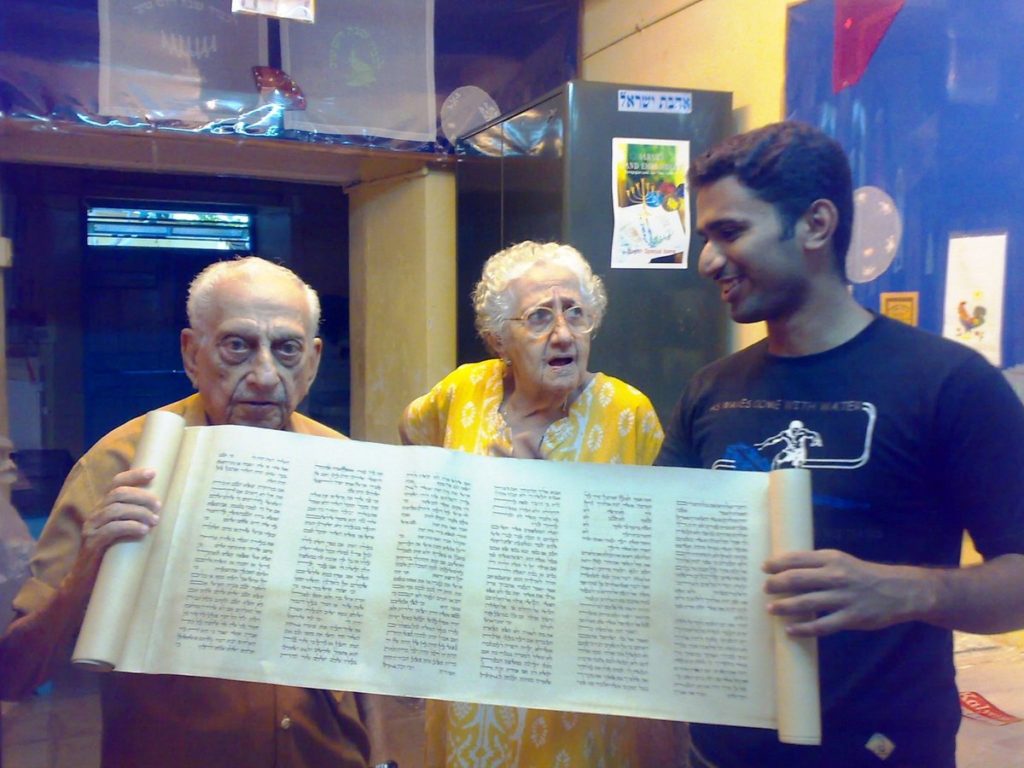
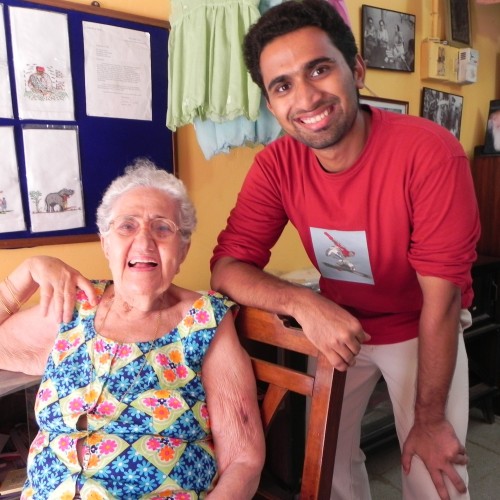
Thoufeek Zakariyah, Sarah Cohen and Isaac Ashkenazi inspecting a Torah that Thoufeek designed.
Down in the heart of “God’s Own Country,” as the Indian state of Kerala is affectionately known, an Indian Muslim calligrapher is using his skills in the art of the ink flourishes to bridge Jewish and Muslim communities.
Thoufeek Zakriya is an Indian Muslim from the city of Cochin who does calligraphy in a number of languages, including Arabic, Samaritan, Syriac and Sanskrit. More interestingly, he is a Muslim who does masterful Hebrew calligraphy.
While studying in madrasa, he learned that the Jewish people were considered by Islam to be ahl al-kitab (“People of the Book”), which sparked a curiosity in him to learn more about this religious community. His curiosity led him to find a copy of the Gideon’s Bible, which had a page with prayers in 23 different languages. He decided to find what encompassed the Hebrew word for God, so using the page as his “Rosetta Stone” he was able to decipher what letters entailed the Hebrew name for the Lord.
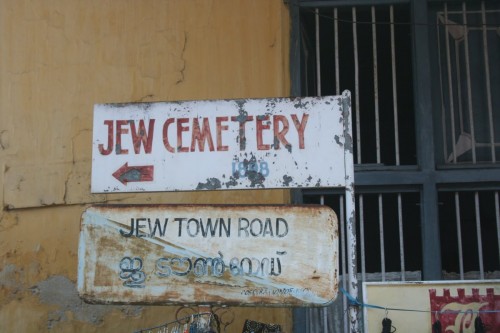
Jewtown – home of the tiny yet historic community of Jews in Cochin
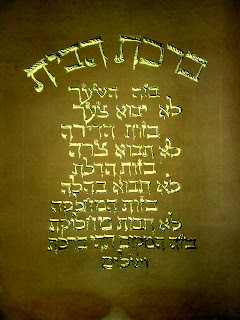
Thoufeek became more interested in Judaism and Hebrew calligraphy, and reached out to the tiny yet historic Jewish community in Cochin . Thoufeek purchased some Hebrew texts he found at a streetside book shop and he went about learning the Hebrew alphabet. His studies in Hebrew led him to begin crafting calligraphy of Jewish prayers such as the Birkat haBayit (prayer for the home) in golden resplendent brilliance.
Birkat HaBayit, the blessing for the home.
Thofeek even began creating calligraphic replicas of the Torah.
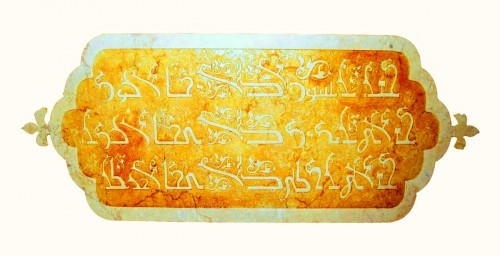
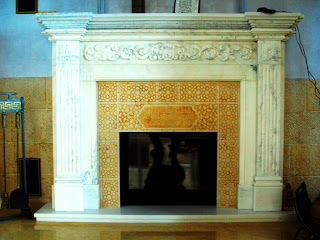
More importantly, Thoufeek does something very unique: he has crafted Hebrew calligraphy in the ancient Kufic Arabic script. Such work is a rarity in the calligraphic world, and his innovations in the Kufic/Hebrew calligraphy has brought Thoufeek accolades from admirers from all over the world. Zakriya has been commissioned as far away as Ukraine and the United States to create works that combine Arabic calligraphy with Jewish prayers.
Birkat Kufic in Jerusalem Stone. The Hebrew letters here are turned into the Kufic Arabic script.
Thoufeek’s work and his dedication to study Jewish history and culture led to a close friendship between him and Cochin’s Jewish community, including his warm friendship with the community’s matriarch Sarah Cohen. Cohen has hosted Thoufeek for Passover seders and other Jewish holiday celebrations.
Thoufeek with Sarah Cohen
I met Thoufeek at Sarah Cohen’s embroidery shop, where she stitches yarmulkes and other Jewish-Indian embroideries. As we sat sipping tea and eating watermelon squares and black helwa (sweets), she remarked that she considers him to be like a grandson and a real mensch.
Birkat Kufic in stone. The Hebrew letters here are turned into the Kufic Arabic script
Thoufeek Zakriya is a wonderful symbol of India’s legendary tolerance for religious communities. “At a time when Jews and Muslims are sadly seen as natural adversaries, Thoufeek’s Hebrew calligraphy emerges as yet another example of Muslim-Jewish amity from India,” says Dr. Navras Aafreedi, an Assistant Professor in the School of Humanities and Social Sciences at Gautam Buddha University. Professor Aafreedi studies Jewish communities of India, and noted that Zakriya is the only known Muslim Hebrew calligrapher in India
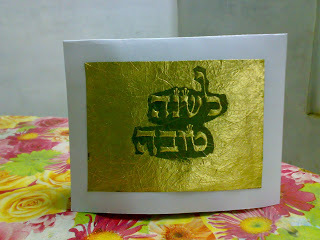
Card for Rosh Hashanah reading, “Good New Year.”
“Thoufeek’s work shows us that the way to peace is through the exploration of each other’s culture and the commonalities between them,” says Dr. Aafreedi, “His work is a reminder of the shared cultural and religious heritage of Jews and Muslims, which definitely needs to be brought into sharper focus in such a manner that it overshadows the disputes, conflicts and differences.”
Photographs courtesy: Paul Rockower & Thoufeek Zakariya
This article first appeared in Huffington Post, and has been republished here in arrangement with the author. Follow Paul Rockower on Twitter: https://twitter.com/levantine18
source: http://www.thebetterindia.com / The Better India / Home> The Better Home / by Paul Rockower / January 02nd, 2013
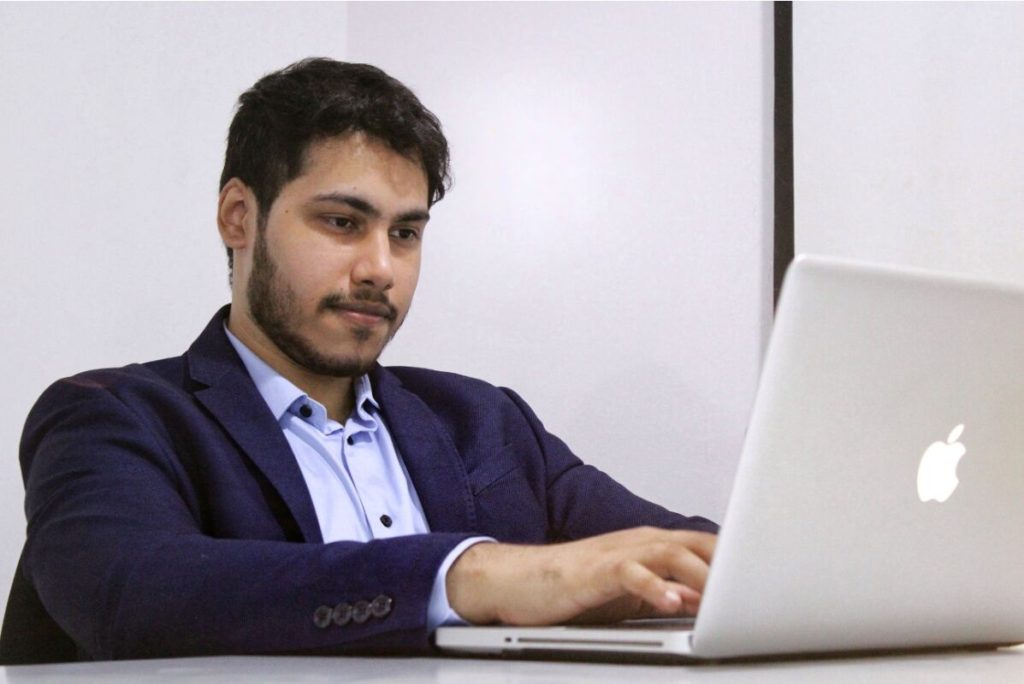
At age 24, this college dropout helps companies like Airtel, Truecaller and Justdial protect their users’ personal data. Incredibly, however, he learnt all the necessary skills not through formal courses, but research on Google!
Meet Ehraz Ahmed, a 24-year-old, independent data security researcher from Mysuru, Karnataka, who since last year has protected the data of 700 million users by helping companies like Airtel, Justdial and Truecaller detect major flaws in their data security architecture. Simultaneously, he runs a fintech and a web security company.
What’s particularly remarkable about this first-year engineering college dropout is that he learnt all the necessary skills not through formal courses, but research on Google. A real online prodigy, Ehraz is looking to protect the data of 1 billion users by the end of this year. So, how did this ethical hacker and serial entrepreneur get to where he is today?
Early Days
“I began using computers when I was just 10. I remember accompanying my brother to the local cyber cafe paying Rs 30 an hour and playing games like Counter Strike or browsing the internet. Besides playing games, I was exploring different facets of the online world from social media sites like Orkut to finding ways of building a website because my elder brother was a web developer. I would peek into the source code of the websites he built and try to learn things independently through Google. Whatever I have learnt about computers, web security and the online world is through Google,” Ehraz tells The Better India.
It was while playing Counter Strike with his friends when Ehraz found his first opportunity at entrepreneurship. Understanding the craze for the game amongst his friends, at age 14 Ehraz started a game server hosting venture. However, besides providing online gaming servers for players to connect and play the game for just Rs 200 per player, his venture also began offering web hosting services to different websites.
The reason he ventured into the world of entrepreneurship this early was because of a few tragedies in his life. As an 8th grader, he recalls witnessing his brother meet with a serious road accident. Two years later, his father suffered a heart attack.
“My interest in my venture had dimmed after my father’s heart attack. I lost interest in my studies as well. That’s when I put everything on hold to make a fresh start. I wanted to stand on my own feet by doing something better and more significant than what I was doing. These incidents made me realise the value of time and money. Life is short and there is so much left to do not just for yourself but others as well. Nonetheless, by this time, I had grown into a competent web developer, picked up real-life entrepreneurial skills and began understanding some of the basic nuances of data security,” he recalls.
Meanwhile, by the early 2010s, discussions surrounding data security in the online world had begun to take off in India. One day during high school, he read a post on Facebook by a security researcher who was listed in Google’s Hall of Fame for finding a flaw. This researcher was even paid for it. This inspired him to learn how he could do the same.
That’s when he began targeting companies that offered bug bounties to hackers who would help them find flaws in their data security architecture. By the age of 16, Ehraz got listed in 50 Security Researcher’s Hall of Fame for finding security breaches in companies like Facebook, Microsoft, Apple, Adobe, Blackberry, Soundcloud, and EBay. These Halls of Fame are listings compiled by major tech companies of online security researchers who helped find these flaws.
Besides recognition and a certificate, there was monetary compensation involved which depended on the magnitude of the flaw found. In India, however, he observes that the concept of bug bounties are still very new and not many companies operating here have that facility for freelance security researchers.
His first hall of fame listing was on Facebook, where he discovered a cross-site scripting vulnerability that could have allowed attackers to steal a user’s browser cookies. With this, any hacker could log in to a user’s account without a password and users are vulnerable to extortion and blackmail.
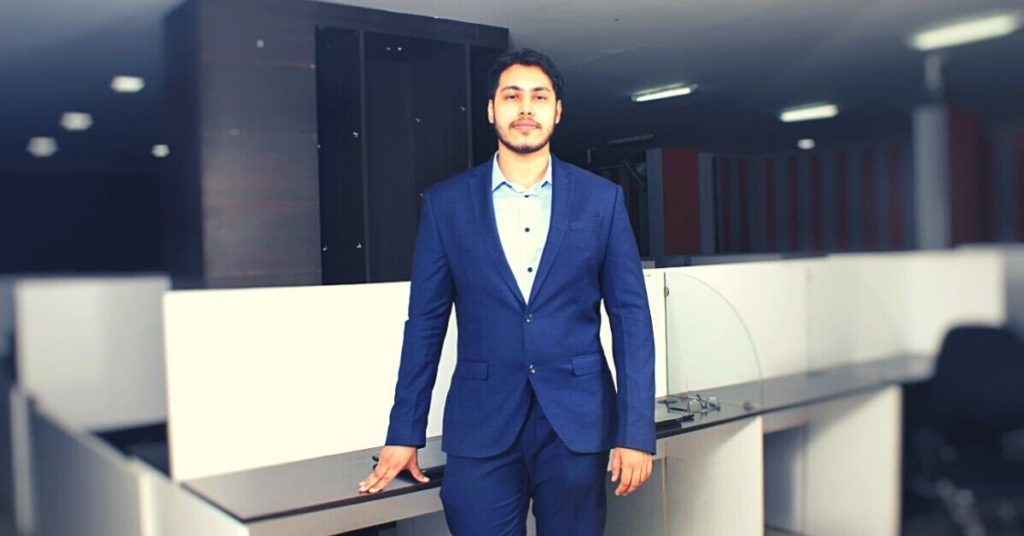
Ehraz Ahmed: The ethical hacker who has helped companies like Airtel address their user data vulnerabilities.
Serial Entrepreneur
“Although I was good at finding security flaws, I was not making enough money from it. Not all companies offer bug bounty programs, while only a few provide monetary rewards. But most of them do acknowledge your efforts in finding that flaw,” he says.
Looking for ways to make money, one day he found someone trading in the financial markets talking about making money in a Facebook post. It piqued his interest and he began exploring this field. Ehraz admits that it took him a while to figure out how it all works because he was sifting through hundreds of blogs.
“It wasn’t the most efficient way of learning, but I wasn’t interested in studying courses. My interest lay in obtaining that raw information about how to navigate this world. In the initial years, I lost a lot of money trading from my brother’s account. Since I was still under 18 during my PUC days, I couldn’t really open my own trading account,” he recalls.
By the time he enrolled into an engineering college at the age of 20, in Mandya, to pursue a course in computer science engineering, he started a fintech company called Voxy Wealth Management that engaged in offering financial advice and analytic services to traders and other consumers who wanted to manage their stock portfolios.
But travelling 80 km up and down from Mysuru to Mandya everyday, attending classes and running a fintech company was becoming very stressful. Although he finished his first semester with good marks, when the time came to enroll for the second semester, he began questioning why he was studying these heavy theoretical courses.
“What am I learning all this for? Completing these courses felt like climbing a mountain, reaching the top and then seeing nothing. I had already begun earning money through my company. Meanwhile, I was already getting job offers because of the work I had done detecting security flaws across different websites. I eventually figured out engineering college wasn’t meant for me and before the second semester in 2017, I decided to drop out to start a web security company as well,” says Ehraz.
After launching Voxy Wealth Management, he started Aspirehive—a web security company that offers solutions for small and medium-sized companies—in December 2017.
Unfortunately, as he was making his way simultaneously in the world of financial markets and web security, another tragedy struck home.
In April 2018, his elder brother met with another road accident. He suffered an injury and upon recovery, his brother expressed a desire to start a company together. Following this conversation, he began work on launching a new company called StackNexo.
The premise for StackNexo is to offer all web services and solutions on a single platform. He describes it like an Amazon for users wanting to start their own website.
“We seek to provide all necessary services for starting your own website on one platform instead of compelling you to visit different websites for domain services, hosting services, etc. This is for entrepreneurs or users looking to start their own website without the necessary IT expertise. I have partnered with 20 companies like Stackpath, Cloudflare and Google to integrate their services on our web platform. I have spent over a year developing this platform and our plan is to launch the company in two months,” he says.
Protecting people’s data
While working on all these companies, Ehraz also began reading news of major data breaches in Indian companies last year. Using his expertise, he decided to help.
His work commenced in August 2019, and by December he had safeguarded user data of over 700 million users. In Airtel, for example, which is India’s second-largest telecom network, Ehraz had found a security flaw that could have allowed hackers to steal sensitive data of 320 million users. By December, he had discovered and reported data breaches to 10 companies, including Truecaller, Justdial and Nykaa.
By the end of this year, his objective is to protect the data security of 1 billion users. His work in this regard hasn’t stopped. Most recently, he detected and reported a major security flaw in a company called Thrillophilia that risked sensitive data of 2 million users.
“We don’t fix data breaches, but find them, report and notify the said company via email. With Airtel, for example, I began scanning their My Airtel app. I found a very simple flaw in the their application programming interface (API), which hackers could exploit to gain access into users’ personal data (address, location, IMEI, sex) through their mobile number. It took me just 15 minutes to find this flaw and access all this confidential data. Honestly, I was shocked to find such a basic flaw. Moreover, I am an Airtel user and it scared me how vulnerable their data was to this breach. With a user’s IMEI number, hackers can organise spear phishing attacks into your system using just a simple SMS,” he says.
With Truecaller, he had found a vulnerability on the app’s backend attached to the user’s profile picture. With this breach, if a user is trying to find out about who’s calling from an unknown number, a hacker could mine their location, figure out their IP address and their identity. As a result of this breach, nearly 150 million users were at risk here. Another major Indian company he assisted was Justdial, which has over 165 million users.
Through the breach he detected, hackers could log into a user’s Justdial account, access their JD pay (their payment gateway) and divert payments away from a particular merchant into another account. He approached the company and got this major flaw fixed.
Most small companies/startups, he believes, don’t focus on data security, and instead look towards getting the venture off the ground and earning all the money back that was invested. But these breaches are not restricted to small startups.
Just a couple of weeks ago, Big Basket suffered a major data breach.
“Government must make data security auditing mandatory. Secondly, we don’t have the legal architecture in place for independent security researchers like me to disclose to companies about major flaws in their data security. Indian companies, particularly the major ones, don’t have a responsible disclosure policy in place. Without such a policy, companies get intimidated when we find flaws and begin questioning us even though our intentions are good. There are no laws to govern and protect security researchers like us. International companies, meanwhile, are a lot more accessible and we can easily help them find flaws without any threat of a blowback. Indian companies have to start promoting bug bounty programs so that independent researchers can help them find flaws,” he says.
After all, there isn’t a bigger commodity out there than user data.
(Edited by Yoshita Rao)
source: http://www.thebetterindia.com / The Better India / Home> The Better Home / by Rinchen Norbu Wangchuk / November 30th, 2020
Ballia District, UTTAR PRADESH / Kalimpong, WEST BENGAL / Birmingham, UNITED KINGDOM :
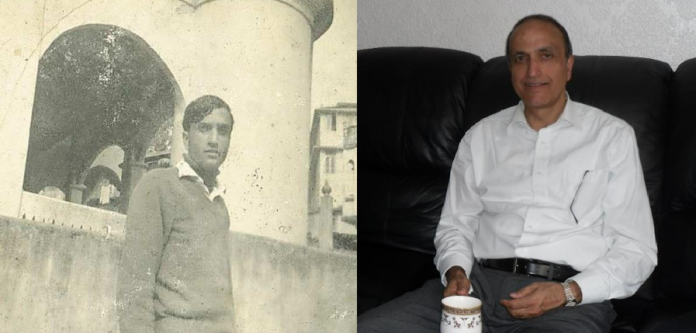
Professor Ataullah Siddiqui passed away on the night of 8 November 2020 aged 66, after battling cancer courageously for six months, at his home in Birmingham, UK. His sad demise has brought about a huge loss to not only the Muslim world but the world at large – to all concerned about a meaningful dialogue amongst communities whose relationships are so much mired in past memories of distrust and conflict. Tributes paying their last respects and condolences to the family members have been pouring in from all over the world. Some have written that with his passing ‘the world of British Muslim Studies [has] lost one of its most thoughtful founding scholars’ and described him ‘as an academic who did not seek distinction or accolades, but who selflessly and reliably supported the work of others’, as ‘someone who embodied the spirit of self –sacrificial and humble service – and whose legacy needs to be kept alive’. Another well-known scholar in his obituary describes him as ‘an efficient educator whose contribution to the Muslim community worldwide has been huge’, as a ‘credible scholarly, patient, insightful, caring, very respectful to women, humble and hardworking man’, as a gentleman in the true sense of the word: kind, compassionate, considerate, who never had a bad word to say about anyone’, ‘an immensely kind, gentle, humble, upright, deep and a wonderful human being’ and a ‘great soul’.
In a memorial meeting conducted over Zoom yesterday, a person who attended his funeral described the testimony of the common note of most of the attendees about him being one of the best role models of a good da’i. In an age where we are flooded with information and yet are deprived of the ‘reality’; where relations only tend to gravitate in one direction and any form of disagreement is intolerable, leading to the disintegration of trust and even society at large, in an almost civil war-like situation, Professor Siddiqui was nothing less than a beacon of hope for the future of communities. I should not thus fail to share some of his own views on the three basic beliefs that constitute the core of the Islamic faith which all would do good to know.
First is the concept of the Oneness of God and devotion to it alone. Nothing should stand in the way of sincere loyalty, honour and pursuit of this goal. God alone becomes the centre of all activity and devotion, and any deviation from this goal towards false values – which may include the love and adoration of wealth, power and prestige – becomes shirk and idolatry.
Corresponding to this is the second belief that God is not a passive God but involved in the world and provides constant guidance to human beings. God has not only provided human beings with intellect to understand nature and discover the world around them but also revealed to them the purpose of human creation and responsibility in the world so that they may wonder, reflect and acknowledge the beauty and worth of being part of Creation. This has been done through individuals gifted with outstanding character and conviction. They are the prophets, the final such individual being the prophet Muhammad (may the peace and blessings of God be upon him). The prophets have not been sent to human beings as fallen and hopeless. In fact, human beings are made the crown of God’s creation, and given the status of vicegerents on earth with intellect, free will and ability to communicate through speech.
Thirdly, the human body, the material part which will perish one day also houses the spirit which continues its journey even after the body perishes. Muslims believe that all good and bad deeds make an impact on the individual’s soul, which then carries its deeds with it and is accountable to its Creator.
These three concepts; of the Oneness of God, the office of prophethood and the accountability of the soul – tawhid, risalah, akhirah form the crux of the Muslim faith.
Professor Siddiqui strived to live his entire life in complete accordance with these beliefs constantly. He always reminded us that ‘good intentions change acts of habit adah into acts of worship ibadah’. Every aspect of his own life – through which he touched the hearts of thousands all over the world – including his livelihood, his love and care for all, and particularly his contribution to the field of his research on building trust and relations where it is fast disappearing between communities and individuals that already know each other – were performed with the pure motive of carrying out God’s commandment. He was a perfect da’i in the sense that he did not wish to impose his views on anyone else but make it, to put it in his own words – ‘dual tracked, multi-focal and multi-layered’. ‘We are in reality, living a “hyphenated” coexistence where multiple communities are at different stages of engagement, with their own pasts and carrying their own memories’.
For those who may have not known him personally, he was not only one of Britain’s, but Europe’s, and even the world’s leading scholars on Islam, particularly in the field of religious pluralism and interfaith dialogue. His father, Maulana Md. Sibghatullah Siddiqui and mother Zafrun Nisa, hailed from the Ballia district of Uttar Pradesh and migrated to Kalimpong quite early in their life. Maulana Sibghatullah Siddiqui himself was an epitome of humility and self–sacrificial service who dedicated his entire life to the welfare of the Muslim community of Kalimpong, guiding them spiritually and keeping them united and free from all forms of sectarian factionalism that plagues communities today. Professor Ataullah Siddiqui began his humble educational career in the hill town of Kalimpong and from a very early age was actively involved in initiating the translation of the writings of key Islamic thinkers of the time into the Nepali language with the help of some of the best scholars of the region.
In 1982 he left for the UK to join the Islamic Foundation as a Research Fellow, an organization that he remained loyally associated with till the end of his life, contributing significantly to its academic life as well that of the British Muslim community. He completed his PhD in Theology in the subject ‘Christian Muslim Dialogue in the Twentieth Century’ from the University of Birmingham. He played a pivotal role in the establishment of its sister institute, the Markfield Institute of Higher Education, from conceptualizing and designing its curriculum for doctoral, postgraduate and undergraduate degree programs, to its administration as its Director from 2001- 2008. He taught in the Institute as Reader, and later Professor, of Religious Pluralism and Inter-Faith Relations. He also held several honorary posts as Visiting Fellow and Visiting Professor at the University of Leicester, York St. John’s University, Gloucestershire University to name only a few.
Among his chief achievements during this phase was becoming the founder President and Vice-Chair of the ‘Christian Muslim Forum’ launched by the then Archbishop of Canterbury Rowan Williams and was also the founder member of the Leicester Council of Faiths. He published several important books on the subject and contributed regularly to some of the most prestigious journals internationally.
In 2007 he was appointed by the British Government to submit a report on the state, and recommendations towards improvement, of the study of Islam as an academic subject in Universities throughout Britain. At a time when the relationship between communities are growing more and more estranged because their memories are vested with perceptions as well as misperceptions, concordances as well as conflicts, he was found the most suitable person to carry on this task of building bridges. The report titled, ‘Islam at Universities in England: Meeting the Needs and Investing in the Future’, also known as the Siddiqui Report, was the fifth of its kind to be tabled in the British Parliament, preceded by the Reay Report (1909), Scarbrough Report (1947), Hayter Report (1961) and the Parker Report (1986); all four are significant to students interested in the field of Orientalist Studies. In the wake of catastrophic events like 9/11 and 7/7, the Siddiqui Report was one with great responsibility and a genuine vision for a pluralist society.
Now that we have lost this great and humble soul and deep mind, it is for all people committed to a vision of a future built on peace and coexistence, tolerance and respect for all communities and most important of all, committed to dialogue, not diatribe, to carry on his spiritual legacy.
Let us make our own humble supplication and petition to the Almighty to keep alive the memory of this gentle soul in our hearts, give solace to his family in the UK and in India, and raise his ranks in Jannah.
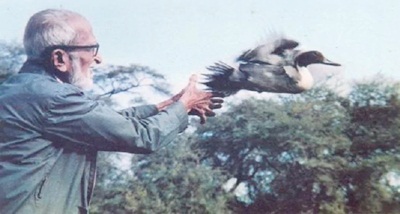
Today is the Birth Anniversary of renowned ornithologist Salim Ali. Born in Mumbai on 12th November in 1896, Sálim Moizuddin Abdul Ali was not only a bird lover but also a naturalist. He is often referred to as the ‘Birdman of India’. He was the first Indian to conduct systematic bird surveys across India and wrote several books that popularized ornithology in India. His research work is considered highly influential in the development of ornithology. He was a well-known environmental crusader who often stood for protecting the wildlife.
Salim Ali played a pivotal role in establishment of Bharatpur Bird Sanctuary (Keoladeo National Park) and prevented the destruction of what is now the Silent Valley National Park. Along with Sidney Dillon Ripley, he wrote the landmark ten-volume Handbook of the Birds of India and Pakistan, a second edition of which was completed after his death.
He was awarded the Padma Bhushan in 1958 and the Padma Vibhushan in 1976, India’s third and second highest civilian honours respectively. Besides the Padma Bhushan and the Padma Vibhushan, Ali received the Gold Medal of the British Ornithologists’ Union in 1967. He was the first non-British citizen to receive the honour.
source: http://www.newsonair.com / All India Radio (AIR), News Services Division / Home> News Highlights / November 12th, 2020
Allah Baksh Sumroo, a premier of Sindh province—equivalent to the current post of a chief minister—was a committed patriot, whom the Muslim League hated to the extreme. Sumroo’s story directly challenges the ongoing communal and divisive rhetoric where Muslims are projected as a comprador class that was wholeheartedly behind the Muslim League’s two-nation theory.
______________________________
The narrative that all Muslims got together to seek India’s partition on the basis of the two-nation theory is now a few decades old. It has acquired salience again, with some hyperventilating neo-nationalists reiterating that all Muslims are traitors as they joined Muhammad Ali Jinnah and his Muslim League to divide India. These people forget that a large number of Muslims, who consciously decided to stay back, had a choice—either to leave and be Pakistanis or stay back in India and choose their homeland. Many opted for the latter. A similar choice was made by many Hindus who decided to stay back in Pakistan. However, staying back in a democratic, secular and plural India was different from opting for a regressive and sectarian Islamist Pakistan. The future of both, who stayed behind, has proved that so tellingly.
Unfortunate political developments and the prevalent communal rhetoric in India has forced me to go back to the history afresh. There is a concerted campaign to malign all Indian Muslims as leftover Pakistanis, who are enemies within the country; the narrative is that these fifth columnists should be shunted out to Pakistan in the so-called national interest. But merely indicting all Muslims for the sake of petty majoritarian politics goes against the facts of history.
We are a nation obsessed with history, more often concerned with correcting the presumed historical wrongs than learning anything from the past. With this compulsive preoccupation, some of us live perpetually in the past. Even so, most people believe that Maulana Azad, an Independence-era leader, fought a lone battle for a united India, while a majority of Indian Muslims vouched for Muhammad Ali Jinnah, the founder of Pakistan, and his Muslim League. This has no factual basis and any extent of living in the past will help unravel actual facts.
To put the record straight, some unsung heroes from our recent history should be talked about. There are many historical characters that were crucial to countering the politics of hate and division of the country around the time of partition. Among them was Allah Baksh Sumroo, who served as a premier of the Sindh province—equivalent to the current post of a chief minister—for two terms between 1938 and 1942. Sumroo was a committed patriot, whom the Muslim League hated to the extreme. He belonged to a feudal Sindhi family but was known for a frugal living and commitment to democratic values. Sumroo wore khadi even as a young man of twenty. We hear about using flags as a power symbol so often these days, but he never used a flag on his official car even in those feudal and colonial times.
What is important to remember today is his commitment to undivided India. Sumroo emerged as a major challenge to the divisive politics of communalists of all hues, particularly the Muslim League. Azad was undoubtedly a national face, espousing composite nationalism, but he actually derived strength from such regional but powerful voices like Sumroo.
To go into the details of his massive anti-Muslim League politics would require a much longer discussion. Let me just refer to one of the most important episodes in the history of our sad partition of the country. The Muslim League passed a resolution recommending the creation of an independent state of Muslims on 23 March 1940 at Lahore. Soon, Sumroo organised a huge conference of patriotic Muslims between 27 and 30 April 1940 in Delhi, called the Azad Muslim Conference. According to some estimates, there were not less than seventy-five thousand people who gathered from all over India to condemn the Muslim League for its divisive politics.
Most of these people came from a large number of political and social organisations, largely representing the backward and artisanal sections of the Muslim society. This representation at the conference was an indicator that the Muslim League spoke for the ashraf, or the privileged sections of the Muslim society while the majority of Muslims—the ajlaf, or the backward sections—remained almost untouched by the League’s rhetoric. The British identified a collaborative section of the Muslim community, helped in forming the Muslim League but this section largely represented the affluent—the zamindars, and business and professional classes. The leadership that emerged in the League had little clue to the highly differentiated Muslim society they claimed to represent. Azad could see this early. Referring to Indian Muslims at the time, he wrote in his weekly Urdu language newspaper, Al Hilal, in 1912:
The most unfortunate part of their life is that they have a section of elite who are in the forefront and leading them. Those are the self-proclaimed leaders of the community. They have put the crown on their own head, with their own hands, instead of the masses doing the same. They indulged in all sorts of exhibitionism of power and the worst is show of their wealth. And by so doing they had converted the millat [class] of downtrodden men in their community as their slaves and camp followers. And now if anyone tries to question their validity as leaders or defy them, they are successfully suppressed and annihilated by those selfish leaders; as they have the power of money.
Sumroo’s presidential address at the Azad Muslim Conference in April 1940 also exposed the misplaced arguments of the League, particularly in the name of religion and culture. All through his speech he spoke extensively on the shared history and heritage, stressed on the compositeness of Indian nation and nationalism and emphasised that the compact between diverse communities cannot be severed. Strongly condemning the two-nation theory exponents, The Sunday Statesman of 28 April 1940 quoted him saying in his speech:
A majority of the 90,000,000 Indian Muslims who are descendants of the earlier inhabitants of India are in no sense other than the sons of the soil with the Dravidian and the Aryan and have as much right to be reckoned among the earliest settlers of this common land. The nationals of different countries cannot divest themselves of their nationality merely by embracing one or another faith. In its universal sweep Islam, the faith, can run in and out of as many nationalities and regional cultures as may be found in world.
He underlined the long history of shared heritage of Hindus and Muslims, as mentioned in a Hindustan Times report on the same day:
It is a vicious fallacy for Hindu, Muslim and other inhabitants of India to arrogate to themselves an exclusively proprietary right over either the whole or any particular part of India. The country as an indivisible whole and as one federated and composite unit belongs to all the inhabitants of the country alike and is as much the inalienable and imprescriptible heritage of the Indian Muslim as of other Indians.
Sumroo made these detailed references to the shared history and intermixing of Hindu and Muslim cultures over the centuries to counter both the League as well as those who were arguing for Hindutva majoritarianism. He was aware, like Azad, of the forces which threatened the future of united composite India. Sumroo needs to be talked about today more seriously to counter all those who threaten fellow Muslim citizens to go to Pakistan.
In his address, Sumroo provided a counter for another argument put forth by neo-nationalists today—that Muslims asked for Pakistan and once it was granted by dividing the country, all of them should have moved there. This would have settled the issue forever. All those who make such insinuations today need to know what popular Muslim leaders like Sumroo said of the creation of Pakistan:
It was based on false understanding that India is inhabited by two nations, Hindu and Muslim. It is much more to the point to say that all Indian Mussalmans are proud to be Indian nationals and they are equally proud that their spiritual level and creedal realm is Islam. As Indian nationals—Muslims and Hindus and others, inhabit the land and share every inch of the motherland and all its material and cultural treasures alike according to the measures of their just and fair rights and requirements as the proud sons of the soil.
Azad, too, sent a message of support to the Azad Muslim conference as he was not able to attend it. He expressed his solidarity with the conference and wished that the deliberations would be fruitful for the great cause of the freedom of the country and the Muslims.
This fight for composite and inclusive Indian nationalism, which looks so alarming and threatening today, is more than few decades old. Azad and Sumroo challenged these regressive and divisive forces in the 1930s and 1940s. They almost took the battle to the enemy’s camp by organising a huge conference in Delhi, which unnerved the Muslim League leadership. Sumroo was assassinated in 1943. It was suspected to be the League’s handiwork.
We can comprehend his stature and the sense of loss on his death by reading some of the reactions in contemporary press and also the pain expressed by several nationalist leaders. The Hindustan Times described him as follows:
… finest of Sindhis, one of the truest of Musalmans, one of the noblest sons of India who loved his peasants for he loved the land; and he used to wear khaddar even in the twenties, for he loved the poor. Both the Hindus and Muslims looked up to him as a leader … He had an all-India mind and in the midst of division and strife, pinned his faith on an independent united India, and dreamt the dream of the united State of Asia in the years to come …
His murder was seen as a national calamity by several papers. The Amrita Bazar Patrika called him “one of the most vigorous personalities, endowed with a high sense of duty and rare courage of conviction, who easily commanded the respect and admiration of all, even of those who differed from him on some or the other public questions.” Commenting on his death, the newspaper added, “A life so full of promise has been cut short. And India is much poorer today by the death of the young man of 42 whose sturdy patriotism and devotion to duty would be cherished long after the present unhappy situation has ended and India has come into her own.”
The right wing in India often says that Subhas Chandra Bose, a leader of the anticolonial struggle, did not find his rightful place in Indian history. I find it politically motivated and not really a sincere observation. It is people like Sumroo, who seem to be lost in our history records, even in the writings of the so-called liberal and Marxist historians, except for a chapter in a book by Shamshul Islam titled Muslims Against Partition of India.
Another prominent Muslim voice from the past, who can rightfully represent our composite nationalist ethos is Saifuddin Kitchlew, a Kashmiri freedom fighter whose family moved to Punjab. It was his arrest along with Dr Satyapal, a political leader, that triggered the protests leading to the Jallianwala Bagh massacre in 1919. Most of us are oblivious to his contributions as well. Kitchlew had also mourned the loss of Sumroo saying:
At this critical period of the freedom movement in the country the death of a man like Mr Allah Baksh is a thundering blow to the forces of nationalism. Mr Allah Baksh was a thorough going nationalist. Mr Allah Baksh is dead but his work will remain.
It is necessary to know about such men and women from our past as their profiles directly challenge the ongoing communal and divisive rhetoric where Muslims are projected as a comprador class that was wholeheartedly behind the League’s two-nation theory. Azad was surely the prime political figure, an Islamic scholar, who stressed on the composite nationalism. However, he was not fighting a lone battle against the Muslim League, as Jinnah wanted the British and the Muslims to believe. He was hated and derided as a show boy of the Congress party, precisely to show that most of the other Muslims and their leaders were with the idea of Pakistan. This falsehood needs to be exposed, particularly in the midst of the ongoing divisive politics.
S IRFAN HABIB is a historian and author. He was earlier the Maulana Azad Chair at the National University of Educational Planning and Administration, New Delhi.
source: http://www.caravanmagazine.in / The Caravan / Home> Commentary – History / by S Irfan Habib / July 28th, 2020
Aimed at helping the visually impaired, it fits into a smartphone’s port
Four students from the Indian Institute of Technology – Madras have come together to develop a handy device for the visually impaired.
The assistive device fits into the port of a smartphone and helps them to type, learn and read braille content. It also allows them to self-navigate through space and recognise people and objects.
Four students — Sundar Raman P., Adil Mohammed K., Shivam Maheshwari and Andrea Elizabeth Biju — got together to develop the device. While Sundar is a final-year electrical engineering student, Adil and Shivam are pursuing second- and third-year engineering design. Andrea is a second-year student of aerospace engineering.
The students improvised on an existing product that allows the visually impaired to read PDF files on their phone. But it is a cumbersome exercise as the reader must carry a separate device. Sundar said the aim was to leverage the smartphone’s capability, as most people carry one today.
The team came up with Cube, a compact device that fits into the smartphone’s charging port or earphone jack. It has four refreshable braille cells (24 dots) on one side and a camera on the other.
The camera on the device, along with the smartphone’s camera, is used to capture and process (computer vision) a wide field of view to provide the user navigation information through tactile braille cells about the proximity and nature of the obstacles.
The refreshable braille cells project symbols to convey time, proximity to obstacles etc. and help in learning and typing on the smartphone in braille.
Currently, the visually impaired rely on slow audio feedback to type. But Cube intends to change that, said Sundar. The device can be folded to the back of the phone using a flexible connector.
Vishnu Suresh, a fourth-year student of Integrated MA in English Studies, who tried it out, said being able to type on the phone was like typing on a braille typewriter. “It has a keyboard through which we can type the way we type on a braille typewriter. It is perfect,” he said
source: http://www.thehindu.com / The Hindu / Home> News> Cities> Chennai / by R Sujatha / Chennai – November 26th, 2020
Reigning champion Mohsin Ahmed of Bengaluru has established lead at the end of the first scoring round of the eighth edition of the annual global contest Indian Crossword League, popularly called IXL.
Ahmed is followed by Chennai’s Ramki Krishnan at the second position. Ramki has won the contest four times in the last seven editions, an IXL release said on Sunday.
Three overseas players Sowmya Ramkumar (3rd), Philip Coote (6th) and Koh Ting Sween Kenny (7th) have also made it to the top 10.
The contest, which was open to Indians across the world earlier, has been thrown open to foreigners from this edition, the release said.
There will be eight more weekly online rounds before the offline ‘Grand Finale’ to be held in Bengaluru, the date for which will be decided later.
The top 30 participants on the cumulative leader board will take part in the final.
Started in 2013, IXL has been acknowledged as one of its kind by the Limca Book of Records, the release said.
source: http://www.deccanherald.com / Deccan Herald / Home> City> Top Bengaluru Stories / by PTI / September 07th, 2020
Nasheet Shadani is one of the handful ‘creative strategists’ Facebook employs around the world. He is also a great lover of the Urdu language and runs a unique platform called Ishq Urdu on, where else, Facebook, with 254,000 followers. The Cannes award-winning adman who has worked with ad agencies like McCann, Grey and Ogilvy and Mather tells Grin why he is dedicating his life to reviving the medieval Indian language of great poets.
From Shadani’s Project Urdu.
There are around 70 million Urdu speakers in the world — most of them in South Asia. ‘But most websites, blogs represent Urdu in a very boring way. Most are just e-books, directly uploading content from books. Many thought that Urdu is a language spoken by some kind of obscure species. There was no curation and at times it gave an impression that it is indeed spoken by obscure species. The need to modernize the language in terms of visual look and feel as well as curation was badly needed,’ says Shadani. Several great Indian poets including the 17th century maestro Mirza Ghalib wrote in Urdu.
Shadani grew up speaking the language in Old Delhi and studied fine arts at the Jamia Millia Islamia university. He learnt Urdu calligraphy while he was working on a project called Save Calligraphy and redesigned Ogilvy’s logo in Urdu which won awards at the Cannes Lions Festival in design.
Ogilvy in Urdu.
‘This made me realize how culturally rooted works with a good cause can make a huge difference. Soon, I started immersing myself in the language which was followed by a series of discoveries. From thoughtful Urdu poetry to Angaray (which was the start of ‘Progressive Writers Movement’) to Bollywood , I started feeling an urge to share this knowledge with friends through my personal Facebook profile,’ Shadani, who soon moved onto to creating Ishq Urdu.
The project took off the ground in August 2015 with the goal to make people realize that they are already speaking Urdu in their day to day routine and listening to Urdu all the time through Bollywood songs and dialogues. ‘Most people think that Urdu is limited to its poetry but the truth is that Urdu has an entire ecosystem around it. To help solve this problem, we came up with our first campaign Bollywood Without Urdu where we removed Urdu words from iconic Bollywood songs and dialogues to highlight the importance of Urdu in our day to day life,’ says Shadani. For instance, the famous dialogue Mogambo khush hua would not sound the same without the Urdu word khush in it.
Shadani says he is touched when Urdu lovers from all across the globe connect with him and share their stories which pushes him towards his goal of making the language cool, contemporary and relevant in today’s world.
~
source: http://www.grin.news / Grin.news / November 22nd, 2017
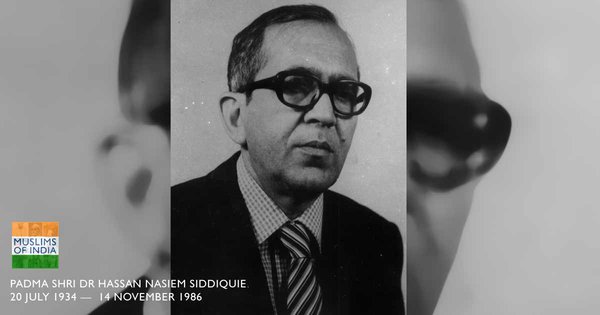
A scientist, a visionary, a family man. He was responsible for pioneering research work in the field of Marine Geology.
Dr. Siddiquie was born on 20 July 1934 to M. A. Siddiquie, a civil surgeon, and his homemaker wife Ahmedi Begum in Bijnor, Uttar Pradesh in India. The eldest of 6 sons and two daughters, he completed his intermediate studies from Osmania University (Hyderabad) then went on to acquire BSc and MSc (Geology) degrees from Aligarh Muslim University (Aligarh). He started his career at a young age, as a geologist with Geological Survey of India, Kolkata. After 17 years of service in GSI, he was offered the position of Head of Geological Oceanography Division in CSIR’s National Institute of Oceanography in Goa. Here he served in various capacities and later became Director in 1985.
After an impeccable career and service to the nation, he passed away on 14th November 1986 after a massive heart attack. He is survived by his wife Talat and three children.
Dr. Siddiquie left behind a legacy of extensive research and survey work done in the exploration of petroleum and minerals, infrastructure development, exploration of polymetallic nodules, studies on sediments, studies on Foraminifera, paleoclimatic studies and Antarctica He was associated with several oil projects which included piping, route identification, bathymetric and shallow seismic surveys for ONGC and Oil India. He is also credited with the initiation of managanese nodule program in India and this coordinated program was reported to have earned India a place among the seven registered Pioneer Investors of the International Seabed Authority of the United Nations.
He served as the deputy leader of the first Indian expedition to Antarctica and he coordinated the marine science programs for Dakshin Gangotri, the permanent Indian station in the southernmost continent. He authored several peer-reviewed research papers and articles throughout his career.
For his work and efforts he was awarded the Shanti Swaroop Bhatnagar Prize (1978), the Padma Shri (1983), National Mineral Award and the State Award of the Government of Goa (1986 Posthumously).
H. N. Siddiquie was the member/ fellow of various boards and councils including the elected member of Indian National Science Academy and the National Academy of Sciences, India. Indian Geophysical Union has instituted the Dr. H. N. Siddique Memorial Lecture series in his honor.
A tall, handsome man of friendly demeanor; he had an impressive personality. He was also very religious and adhered to the tenets of Islam. A mentor and inspiration to many; he is still remembered, admired and respected by all who met him.
The National Academy of Law Studies and Research (NALSAR), Vice-Chancellor Professor Faizan Mustafa, has been elected president of the consortium of national law universities.
The consortium unanimously elected him president at its annual meeting.
Professor Poonam Saxena, Vice-Chancellor, NLU Jodhpur, was elected Vice President; Professor Vijender Kumar, Vice-Chancellor, MNLU, Nagpur, as convener, admission test for common law (CLAT) 2021; and Professor VC Vivekanandan, Vice-Chancellor, HNLU, Raipur, as a member of the Executive Committee for CLAT-2021.
After Mustafa virtually accepted his new role, he thanked the members for having confidence in him. He thanked the outgoing President, Professor V. Vijaykumar, for his visionary leadership.
Mustafa also thanked Professor Paramjit S. Jaswal, the outgoing vice-president, for his contributions to the issues fought by the consortium and his interventions in the executive committee and meetings of the governing bodies.
He seeks continued support and protection for Vijayakumar, who will continue as a member of the executive committee in his half-time position. The new executive committee will meet soon to finalize the details of CLAT-2021.
The governing body considered and approved the report of the grievance committee chaired by former Chief Justice of India Judge S. Rajendra Babu.
The members also thank Balraj Chauhan, Convener-CLAT 2020, for the successful completion of the process in an unprecedented year of Covid-19.
In his report, Chauhan gave details on CLAT-2020 and thanked the president and the members of the executive committee and governing body.
The governing body also appreciates the efforts of Mustafa, who fulfilled the duties of the secretary in the unusual circumstances of the sudden decision of the National Law School of India University to abandon CLAT 2020.
Mustafa said in his report that as many as eight meetings of the executive committee and six meetings of the governing body were held between September 3 and November 12 and that all decisions were taken in a consultative manner.
He also appreciated the efforts made by Sudhir Krishnaswamy to implement the reforms until the 3rd of September in the format of the CLAT paper and all other related matters.
Out of the 23 NLUs in the country, 22 students are increasing via CLAT.
source: http://www.deccan.news / Deccan News / Home> Local / November 14th, 2020