Hasan joins Jennifer Aniston, Reese Witherspoon, Steve Carell and others, who return from the inaugural season of The Morning Show.
Hasan Minhaj will play the role of Eric, a charismatic rising star on the show. (Photo: Hasan Minhaj/Instagram)
Comedian and actor Hasan Minhaj has been cast in the second season of Apple TV+’s drama series The Morning Show, according to Deadline. Minhaj, known for his Netflix talk show The Patriot Act, stand-up special Homecoming King and The Daily Show, joins Jennifer Aniston, Reese Witherspoon, Steve Carell and others, who return from the inaugural season.
Deadline reports Minhaj will play the role of Eric, a charismatic rising star on the show. His other acting credits include Most Likely to Murder and The Spy Who Dumped Me.
Developed by Kerry Ehrin, the series is inspired by the book Top of the Morning: Inside the Cutthroat World of Morning TV by political commentator Brian Stelter.
The Morning Show is about the world of morning news and revolves around Alex Levy (Aniston), who is one of the two hosts of the titular morning news programme. Her career is endangered when the show’s co-host Mitch Kessler (Steve Carrell) is fired amid sexual harassment allegations. She also faces competition from Witherspoon’s Bradley Jackson, a field reporter.
The Morning Show Season 1, which premiered in November 2019, received mostly positive reviews, scoring 61 per cent on review aggregation site Rotten Tomatoes. The critical consensus read, “Though The Morning Show at times feels more like a vanity project than the hard-hitting drama it aspires to be, there is pleasure to be had in watching Jennifer Aniston and Reese Witherspoon give it their all.”
source: http://www.indianexpress.com / The Indian Express / Home> Entertainment> Web Series / by Entertainment Desk, New Delhi / November 14th, 2020
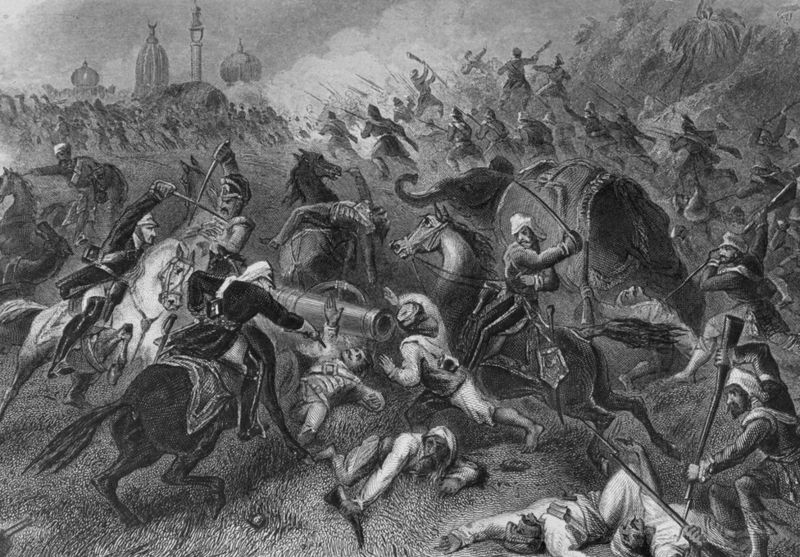
An old woman wearing green clothes, which fully covered her body (Burqa), carrying sword and gun, and riding a horse used to exhort the residents of Delhi to fight against the British forces during the summers of 1857. This old woman used to gather civilians behind her and attack the British forces stationed at ridge and Kashmiri Gate. People could never know her whereabouts. Out of nowhere, she used to appear on a horse and after the attack would disappear.
In a letter dated, 29th July, 1857, Lieutenant Hudson wrote to Deputy Commissioner of Ambala that this Muslim woman was very dangerous. The woman was weird and incited the Delhites to revolt against the British. She led the people into the skirmishes and was an able commander, who could manage untrained civilians into war against the trained British army. Hudson further noticed that she was excellent at fighting with swords and shooting with guns. She killed many British soldiers during the different skirmishes.
Hudson paid a tribute to the bravery of this woman by comparing her with Joan of Arc of France. He contended that the courage, leadership and valour of this green wearing Muslim woman was no less than Joan of Arc.
During one of the battles at the ridge in Delhi she fell from the horseback and was captured. Army General, looking at an old Muslim woman, felt unthreatened and ordered her release when Hudson intervened. Hudson told the General that this woman was the actual commander of the Indians and hence really dangerous. Afterwards, it was decided that the old woman would be shifted to a prison in Ambala.
This brave old woman was shifted to Ambala in July, 1857. Neither we know her name nor we have any idea of what happened to her in Ambala but surely this old Muslim woman clad in a green burqa is one of those unsung heroes of the 1857 who ignited a flame which later liberated India from the foreign rule.
source: http://www.heritagetimes.com / Heritage Times / Home> / by Saqib Salim / October 07th, 2020
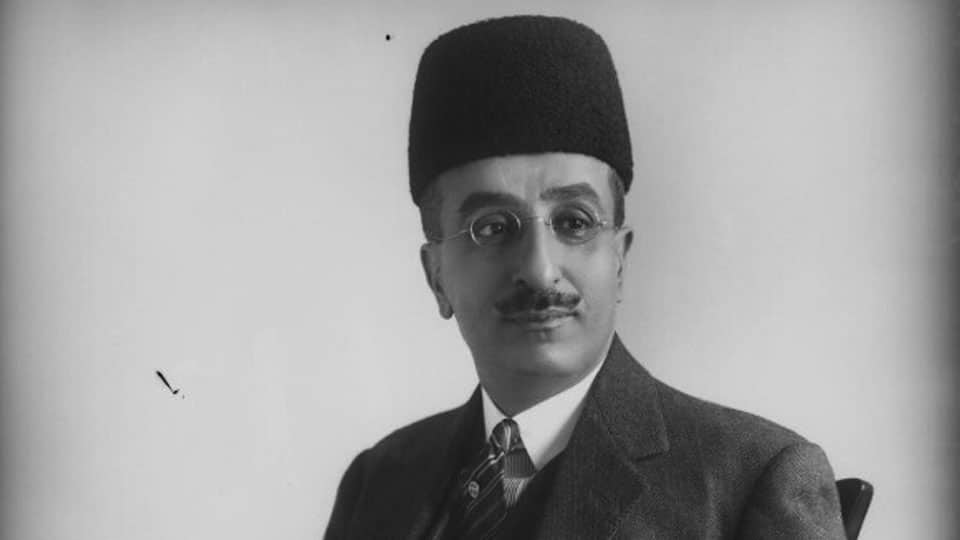
October 24th was the 137th birth anniversary of Sir Mirza Ismail, one of the Dewans of the erstwhile Mysore State who later went on to become the Dewan of the Princely States of Jaipur and Hyderabad too.
To mark this event, the Anjuman-E-Hadiqatul Adab, Mysuru, conducted a webinar that was well-received by the large number of viewers who logged in. I can say with some confidence that the Anjuman requires no introduction to most Mysureans because it is well-known for the annual Eid Milan get-together which it has been hosting over the past fifteen years to promote communal harmony and camaraderie among people of different faiths.
This event is as old as my column is because it is with my report of the first Eid Milan, which I filed for Star of Mysore, that my column was born! However, this year’s Eid Milan unfortunately could not be conducted because COVID-19 wiped out all celebrations from the entire face of this earth. Let’s all hope that things will change for the better before it is time to hold the Eid Milan next year.
Niranjan Nikam, the well-known senior journalist, who again does not need any introduction to most Mysureans, was the principal speaker at the webinar. He spoke on ‘The Unknown side of Sir Mirza Ismail,’ a topic which I suggested because I felt that by being slightly unusual, it would certainly be a crowd-puller! And Niranjan rose up to the expectations of his large virtual audience admirably well. Through some very painstakingly collected and well-curated references, Niranjan brought out many very interesting anecdotes from the life of Sir Mirza which were very noteworthy because I don’t think they are known to present day Mysureans.
Although it is understandable and expected too, that any speaker worth his salt will come well-informed and well-prepared for his talk, it quickly became evident to me that Niranjan was privy to much inside information which left me more than a little amazed. Take for instance the revelation that upon his death, the body of Sir Mirza that had already been interred was once again exhumed when there was a hue and cry from many grieving members of the public that they did not get a chance to see it and pay their last respects to their dear leader.
The body was once again displayed on a platform of sand for many more hours till late in the night and till all the people assembled there were satisfied that they had paid their homage to the man before it was interred into the grave once again. I have never heard of anything like this having happened, anywhere in the world in connection with the death of any public figure. DVG, the well-known Kannada writer, in his account about Sir Mirza has said that among the mourners was a frail old lady who was weeping bitterly saying that Sir Mirza, once while on his morning rounds, in response to her humble plea summoned one of the municipal engineers and ordered him to immediately provide a water tap to the street she lived in!
R.K. Narayan, the famous writer says in his autobiography, ‘My Days’ on page 138 that when his writing was not very paying, with him having got just 40 pounds for his book ‘The Dark Room’, it was Sir Mirza who got him a free railway pass and a government grant and commissioned him to write his book on Mysore, which Narayan was keen on writing.
As Niranjan’s talk progressed, the pieces of a most interesting jigsaw puzzle began to fall in place one by one. Niranjan revealed that his wife Pamela and he were associated for over ten months with the production of a book on Agha Aly Asker, the paternal grandfather of Sir Mirza, written by Sir Mirza’s very charming and graceful nephew Maj. Mohammed Mirza’s wife Syeda Mirza who stays in Bengaluru. The book which the speaker had brought with him, says that Sir Mirza who shared a very close working association and more significantly a very intimate friendship with the then Maharaja of Mysore, Sri Nalwadi Krishnaraja Wadiyar, would not have been a part of the history and growth of Mysore if his very enterprising grandfather, Agha Aly Asker, as a sixteen-year-old lad had not overheard a conversation between two people who were sipping tea in a chaikhana at his hometown, Shiraz in Iran. Learning that there was a great demand for Arab horses in the court of the Maharaja of a distant kingdom called Mysore, he decided to try his luck in selling them where they were in demand. So, he wasted no time in buying two hundred fine steeds and setting sail with them to India from Iran in the year 1824. The most surprising fact is that every one of those two hundred horses survived this long and arduous journey over sea and land, reaching Bangalore, alive and kicking!
The man who sold the horses to the Maharaja endeared himself to his customer and settled down in Bangalore which soon became his ‘Karmabhumi’ according to the writer Syeda Mirza. At that time Mummadi Krishnaraja Wadiyar, the then Maharaja of Mysore was about to become a victim of the very vicious Doctrine of Lapse imposed on Indian royalty by a very scheming British regime by which it could annex any kingdom if the ruler did not have a direct heir. It is reported that Agha Aly Asker became very close to the Maharaja because he could through his good relationship with Sir Mark Cubbon, the British Commissioner, get the Crown to restore the kingdom’s reins into the Maharaja’s hands, which understandably must have been a very difficult task. Meanwhile Sir Mark Cubbon commissioned Aly Asker to build more than a hundred bungalows around High Grounds, Richmond Town and the Bangalore Cantonment, many of which still stand in testimony to his abilities. We also have the Ali Asker Road named after him in Bengaluru on which his own house too still stands, although in a very vestigial state.
The close relationship between his family and the Mysore royal family continued down the line with his grandson, Sir Mirza Ismail becoming the classmate of the young Maharaja Sri Nalwadi Krishnaraja Wadiyar at the private royal school that was being run in the Summer Palace in Bangalore. Sir Mirza, who graduated from the Central College, Bangalore in the year 1905 and held many high posts was the first Indian to become the Private Secretary to the Maharaja. At the age of forty-two, he also went on to become the youngest Dewan of the State of Mysore in the year 1926 after A.R. Banerjee relinquished office.
His love for Mysore was so intense that in a speech that was aired on All India Radio, which can still easily be found on its archives in the internet, Sir Mirza says: I want Mysoreans to wash with Mysore soap, dry themselves with Mysore towels, clothe themselves in Mysore silk, ride Mysore horses, eat abundant Mysore food, drink Mysore coffee, sweetened with Mysore sugar, equip their houses with Mysore furniture, light them with Mysore lamps and write on Mysore paper!
Sir Mirza in his autobiography, ‘My Public Life’ says that the passing away of his dear friend, the Maharaja was the greatest sorrow that he had known! Towards the last phase of his active public life Sir Mirza seemed to have lapsed into a slightly disillusioned frame of mind. Here in Mysore he was seen by his detractors as a Muslim who was unusually close and influential with a Hindu Maharaja only because of his childhood friendship. At Jaipur he was seen as anti-Hindu while at Hyderabad he was seen as anti-Muslim because he did not support its existence as an independent State, without integration into the Indian Union!
It is said that once when the Maharaja and he were doing their morning rounds together on horseback, Sir Mirza, for reasons best known to him, expressed his desire to step down from his post. The Maharaja smiled and pointing towards the Chamundi Hill said: “You can do it when I go there.” He meant the cremation ground at the foot of the hill! And, that is how it was. Sir Mirza’s death came calling at the age of seventy-five while he was still very active. His demise was mourned not only here at home but across the world too, with newspapers in many countries writing about his very productive life.
Reporting on Sir Mirza’s resignation as Dewan of Mysore, The Ceylon News on May, 12th, 1941 said, Truth is a paradox and so is greatness. Sir Mirza too was a man of paradoxes. He was an autocrat with democratic instincts. A dictator with a weakness for having a constitution. A capitalist with socialist leanings. An idealist with an intense practical outlook. A dreamer with the astute mind of a businessman. A most charming man but a very stern and strict official. A perfect host but an indifferent friend. And he had no bosom friends, except the late Maharaja of Mysore!
The most amazing thing that Niranjan revealed in his talk was that the grand-old-man of India, Sir C. Rajagopalachari, fondly known as Rajaji, the first Indian to become the Governor General of India, at the time of the imminent partition told Sir Mirza to accept the invitation of Mohammed Ali Jinnah and go over to Pakistan. When a shell-shocked and very outraged Sir Mirza angrily asked him why, he said, “that way we will have someone in Pakistan who will love India and thus ensure that the Pakistanis too will do the same!” A wry but a terrific compliment indeed !
e-mail: kjnmysore@rediffmail.com
source: http://www.starofmysore.com / Star of Mysore / Home> Columns, Over A Cup of Evening Tea / November 07th, 2020
Premji pipped HCL Technologies’ Shiv Nadar, who had earlier topped the list collated by Hurun Report India and Edelgive Foundation, by a wide margin.
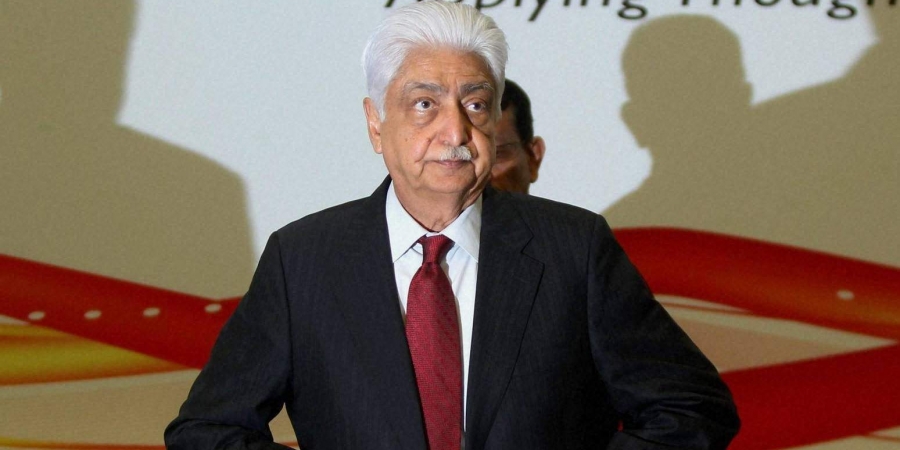
Wipro Chairman Azim Premji (File Photo | PTI)
Mumbai :
IT major Wipro’s Azim Premji donated Rs 22 crore a day or Rs 7,904 crore in a year to emerge as the most generous Indian in FY20 and top a list of philanthropy.
Premji pipped HCL Technologies’ Shiv Nadar, who had earlier topped the list collated by Hurun Report India and Edelgive Foundation, by a wide margin.
Nadar’s donations stood at Rs 795 crore for FY20 as against Rs 826 crore in the year-ago period.
Premji had donated Rs 426 crore in the previous fiscal.
Richest Indian Mukesh Ambani of Reliance Industries retained the third spot among the list of givers by donating Rs 458 crore as against Rs 402 crore a year ago, it said.
The raging pandemic had the corporate honchos repurposing their donations to fight the COVID infections, and the top giver on this turned out to be Tata Sons with a Rs 1,500- crore commitment, followed by Premji at Rs 1,125 crore and Ambani’s Rs 510 crore.
A bulk of the corporate commitments seemed to be given to the PM-CARES Fund, with Reliance Industries committing Rs 500 crore, and Aditya Birla Group donating Rs 400 crore, the report said.
It can be noted that Tatas’ commitment also includes a Rs 500 crore donation to the newly created fund.
Premji’s generosity pulled the total donations up by 175 per cent to Rs 12,050 crore in FY20, the list said.
Azim Premji Endowment Fund owns 13.6 per cent of the promoter’s shareholding in Wipro and has the right to receive all money earned from promoter shares, the report said.
The number of individuals who have donated more than Rs 10 crore increased marginally to 78 from the year-ago period’s 72, the report said.
With a donation of Rs 27 crore, Amit Chandra and Archana Chandra of ATE Chandra foundation are the first and only professional managers to ever enter the list.
The list has three of Infosys’ co-founders with Nandan Nilekani (Rs 159 crore), S Gopalkrishnan (Rs 50 crore) and S D Shibulal (Rs 32 crore).
The list of 109 individuals who have donated over Rs 5 crore has seven women, led by Rohini Nilekani’s Rs 47 crore.
Education is the highest beneficiary sector with 90 philanthropists, led by Premji and Nadar, donating Rs 9,324 crore, the report said, adding healthcare came second with 84 donors and was followed by disaster relief and rehabilitation with 41 donors.
The financial capital led by donor count at 36, followed by New Delhi at 20 and Bengaluru at 10.
E-commerce firm Flipkart’s co-founder Binny Bansal was the youngest donor at 37 with a commitment of Rs 5.3 crore and the average age of the donors on the list was 66 years, it said.
source: http://www.newindianexpress.com / The New Indian Express / Home> Business / by PTI / November 10th, 2020
The qorma is the king of Indian curries. The word qorma has its etymological root in the Turkic ‘qavirma’, which denoted a method of frying and was adapted in Persian, Arabic and Urdu.
Turkic qavirma is also the source of the Turkish qavurma. The qavurma is a fried and braised meat dish found in Turkish cuisine. It is not to be confused with qovurma, a similar meat stew found in Azerbaijani cuisine, which often includes dry fruits and sour grape juice (verjuice), and sometimes vegetables too. Qovurma, in contrast, is a dry meat dish, which sometimes uses preserved meat chunks or mincemeat, and is served with pilaf (pulao) or yoghurt. There are several variations of qavurma. Sabzi qovurma, or lamb stew with herbs, is a blend of Persian and Turkic cooking. Turşu qovurma combines lamb with preserved lemons and dried apricots and is flavoured with turmeric, while nur qovurma features lamb and pomegranate.
Persian cuisine has khoresh, khormeh or ghormeh – a basic stew with vegetables, herbs and kidney beans. The Persian khormeh uses yoghurt and almonds. It has a mild flavour, a thick, creamy texture and base tones of spices and herbs. Across the border, Afghan cuisine has kormeh, a meat curry that gets a slightly sour taste from the use of the limu omani or dried lemons. The use of lemon juice is incidentally also advocated in old Rampur cookbooks.
It can be hard to trace precise culinary trails, which meander and weave through regions and times. It is possible that sometime in the 18th century, in Mughal kitchens, the meat stew from Persian cuisine assimilated spices, yoghurt, almonds, garlic and other ingredients. This resulted in a thick, spicy curry, with fried onions giving it a classic aroma. Even today, fried and crushed or ground onions with whole spices form the foundational flavour of the Indian qorma. Thus, qorma is named after a style of cooking which involved braising meat over high heat followed by long slow cooking. In India, the technique of dumpukht, or slow-cooking the meat by sealing the pan, is used to prepare the meat.
Some food writers claim that a Persian meat curry dish (possibly khormeh) was imbued with Indian masalas through the collaboration of Rajput cooks and Mir Bakrawal, the superintendent of Mughal kitchens. It is sometimes even said that the dish was named after a Rajput clan – Kurma. This origin myth for qorma is highly suspect as no reference to qorma is found in the Ain-i-Akbari or the Nuskha-e-Shahjahani written during the time of the early Mughal emperors.
There are, however, a number of qaliya recipes to be found there. Food historian Neha Vermani writes: “In the Mughal context, the earliest reference to qorma which I am aware of, comes from aristocratic cookbooks produced during Shah Alam’s reign.” Possibly the qaliya and do pyaza metamorphosed over the years into the Indian qorma in Mughal kitchens.
It would be safe to assume that by the end of the 18th century, the qorma was on the royal menu. As the Mughal Empire disintegrated, it was carried to cultural centres across the subcontinent. The iconic recipe certainly graced the dastarkhwan,the royal table, of the last Mughal emperor, Bahadur Shah Zafar. Munshi Faizuddin Dehlvi, writing with startling detail about the court of Bahadur Shah Zafar in Bazm-e Akhir, mentions the qorma in the list of dishes at the royal tables.
There are essentially three main variants of the qorma in the subcontinent – the north Indian qorma with yoghurt, almonds, cashews and/or cream; the Kashmiri version that uses fennel seeds, turmeric, tamarind and dried cockscomb flowers; and the South Indian qorma with a pronounced coconut taste. Under the rubric north Indian qorma, there are two styles: Mughlai and Awadhi. According to Lizzie Collingham, the author of Curry: A Tale of Cooks and Conquerors, Awadhi cooks added cream to the Mughal qorma and turned it into a sumptuous shahi qorma.
Rampur Qorma: Reflections of Tarana Husain Khan
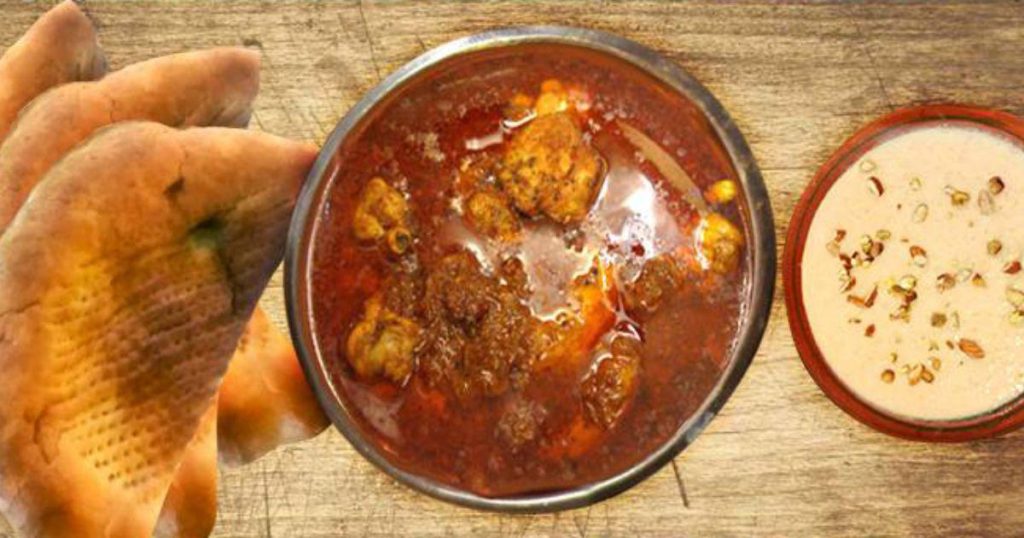
The Nawab’s kitchen had a specialist khansama, or head cook, who only cooked qorma. A manuscript authored by Nawab Kalbe Ali Khan (1865-1887) describes qorma murgh. Chicken is marinated in yoghurt and spices (cumin, coriander seeds, cardamoms, cloves, ginger and chillies); onions are fried to golden brown and the chicken added to it along with saffron water. The use of powdered almond distinguished it from the qaliya, a basic meat curry with turmeric which might contain vegetables.
Rampuri qorma has a distinctive taste – a meaty flavour with few aromatic masalas and, occasionally, cream. It is not a complicated dish to cook, but balancing the flavours and rounding the sharp edges of the spices requires mastery. Most khansamas never reveal their spice mix or the ginger-garlic-onion proportions.
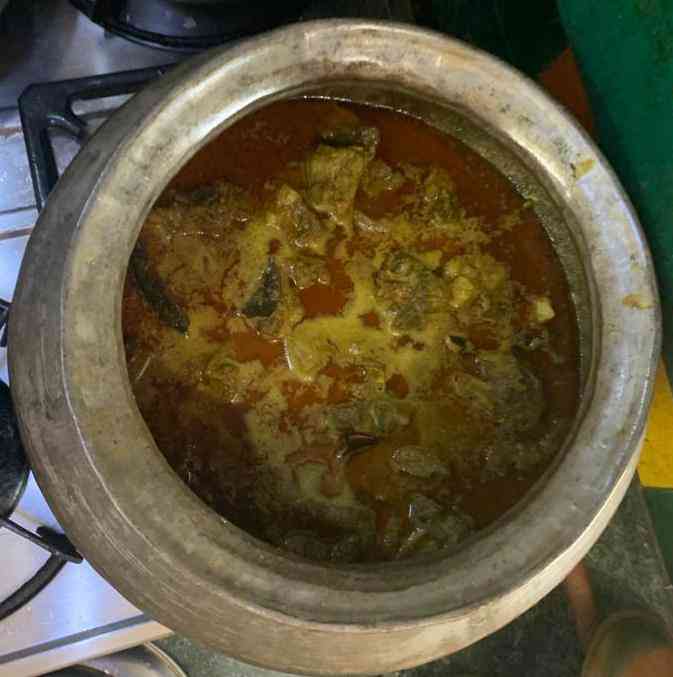
Rampur Qorma being cooked in a degh. Courtesy: Tarana Husain Khan.
An old khansama revealed the secret of the legendary Rampur qorma to me: add the stock from the leg bones of a goat to the gravy. I tried this technique once – it was tedious, but it changed the dimensions of taste. I would highly recommend using mutton stock for special occasions.
Rampur survived the devastation post-1857 and invited chefs and artists from the fallen kingdoms of Delhi and Awadh. At that time, the Rampur cuisine already had its basic meat curries as well as the tribal qaliya. There are several types of qaliyas described in late 19th-century manuscripts, showing its popularity and versatility. The Delhi and Awadh cooks collaborated with their Rampur counterparts to craft the inimitable Rampuri qorma.
Qorma served with pulao is still the benchmark of culinary skills in Rampur, but the boundaries between qorma and qaliya have become blurred. Taar roti, which was originally a qaliya with turmeric, has become a kind of faux qorma with the addition of fried onions – the sine qua non of the latter dish. The qorma served at elaborate dinners often has a significant amount of turmeric, which would be sacrilege in Mughlai and Awadhi cuisines. Interestingly, royal and aristocratic families do not use turmeric in their qorma, but the practice has become popular across all other strata. The Rampuris love the vermillion-red colour of the curry and appreciate a certain sharp flavour added by the turmeric. Though I prefer the more rounded taste of qorma sans turmeric, when I am in an adventurous mood, I put in a little haldito jazz things up.
Awadhi Qorma: Recollections Of Rana Safvi
In my childhood, qorma was associated with guests, festivities and celebrations. Our daily meals consisted of qaliya, or mutton cooked with vegetables. This menu choice ensured that vegetables were consumed daily.
Though chicken qorma is popular today, chicken was not always the preferred meat. Those were also the days when chicken was quite expensive (weight-for-weight) compared to mutton, and it was thus a delicacy. Murgh ka qorma was the ultimate dish cooked for a guest. All this was before the late Padmashree Dr BV Rao revolutionised the poultry industry. He established Venkateshwara Hatcheries Pvt Ltd in Pune in 1971 and is still remembered as The Father of the Indian Poultry Industry.
To this day, I associate chicken with feasts. I even prefer the desi variety over the farm-grown, as the latter is too bland. The epicures of Awadh, too, probably found chicken bland, for Abdul Halim Sharar writes in Guzishta Lucknow (a book about Lucknavi culture first published in serial form between 1913 and 1920) that the chickens used to be fattened with musk and saffron pills until their flesh was scented with these two substances. Since nobody can afford musk- and saffron-fed chicken, to ensure that the meat is not bland, it is best to marinate it in a garlic, salt and yogurt mix for a few hours and then sauté it in the masala before adding water for the curry, so that the masala seeps in.
Chicken was not the only meat that was used for qorma. Game meat (especially venison, quail and partridge) was also very popular, as hunting was a popular pursuit of the landed gentry before it was banned. Now, farm-grown quail is available and bater ka qorma is gaining in popularity. But one must remember that quail is a very delicate meat, so the masalas have to be minimal in order not to drown out the flavour. Indeed, while cooking any qorma, it is essential to remember this fact. Too often, the meat in the qormas is overpowered by the masalas. The special taste of Awadh is in the delicate flavouring as compared to the robust taste of Delhi cuisine.
I was accustomed to using very minimal garam masala. When I got married, that turned out to be boon – or I would have had to reinvent my recipes. My husband is allergic to cardamom, which almost led to a disaster. My wedding was held at home, as was usual in those days. Tents and shamianas would be erected on people’s lawns, as hotel weddings were unheard of. The cooks were called from Lucknow. I remember the old khansama sitting near my mother a couple of days before the wedding and presenting her with a list of ingredients to be bought. When he gave the amount of cardamom to be bought, my mother said, “That won’t be added to any food as my son-in-law-to-be is allergic to it.” I will never forget the look on the khansama’s face when he replied, “Begum sahib, had you told me earlier, I would not have come. What face will I show the world when they see that the qorma has no elaichi in it?” My mother had to coax him not to leave in a huff, persuading him that the taste was in his skill of using right proportions, roasting the masalas, marinating the meat and not in the blighted cardamom! The khansama then took it on as a personal challenge and the qorma turned out to be superb.
There is rarely any cardamom in my kitchen even now. I believe that the taste of the dish comes from the amount of time spent in roasting the masalas well – not in drowning it in oil and garam masalas.
To come back to the qorma, a feast would be considered complete only when there were at least two types of qorma, zarda (a sweet rice) and pulao, as well as at least two varieties of kababs and sheermal (a flatbread). This formula also meant that at least three types of meat such as mutton, fish and chicken were offered. Again, there would be adjustment in the masalas depending on the meat. Ginger paste continues to be used for meats with strong smell and those that are tough to digest. Fish, on the other hand, requires a delicate hand when using masalas.
There were cooks of yore who specialised solely in cooking qormas. In The Classic Cuisine of Lucknow: A Food Memoir by Nawab Jafar Hussain (Sanatkada Publications), there is an interesting anecdote. In 1925, Nawab Jafar Hussain – a descendent of the nawabi aristocrats of Lucknow – came across a cook named Mohammad Hussain who belonged to a family of cooks from the royal period. When the Nawab sahib asked him what he could cook: “He replied in the typical Lakhnavi tone of voice, ‘Sir, qorma and chapati. Besides this, what else is there in food? I will feed you only this. I do not know how to cook anything else.’” Nawab sahib immediately employed him and he stayed with him until his death in 1931. Before you wonder at this, let me add what Nawab sahib pointed out: “In the period of approximately five years, every day, for both meals, he cooked qorma and I never felt even a twinge of monotony.”
Though such artists are hard to come by, it is possible to cook a decent qorma if one uses the spices from scratch. That means you roast and grind all the garam masalas, coriander, etc. fresh just before starting to cook. There must be many people who remember the storeroom with their mothers sitting in front of it, getting the masalas taken out and ground fresh daily. The khansamas would grind it on a huge sil (grinding stone) with a batta (stone). The garam masalas were dry-roasted and then pounded separately in an imam dasta (mortar and pestle) and then strained. In those days, hardly any house used powdered masalas.
Another important point to be noted is that the meat (if it is mutton) should be from the raan (leg). The pieces in Lucknow would be cut with artistry and called katoris (bowls) – for they did not have bone and would curl up into a round shape in the curry. Today, when we ask the butcher for boneless mutton, he tells me to show him a boneless goat. These butchers lazily chop the meat instead of cutting along the grain.
While cooking, special care must be given to ensuring that the onions are fried just right, as the base of the qorma comes from the paste of fried onions. If it is too brown, the curry will taste bitter and have a dark colour; if it is not fried well and left a little raw, the colour of the qorma will be pale. The trick of a khushrangqorma (the bright reddish-brown hue) is in the way the onions is fried and the masala is sautéed. I learned these tricks as a young girl around the wood fire chulha (stove) in my grandparents’ kitchen, while my grandmother would describe the cooking process. I share this family recipe for you to try. Of course, as you start cooking, you will learn to make your own adjustments.
Awadhi Murgh Qorma
Our Family Recipe
Ingredients
1 whole chicken, cut in curry pieces (cleaned; no skin or offal)
(Note: marinate chicken for at least 2 hours in 1 tsp salt, lemon juice & 1 tsp of ginger-garlic paste)
1 large onion, finely sliced
3 tbsp oil
2 tbsp curd
1 tbsp ginger paste
1 tbsp garlic paste
1 tbsp coriander powder, lightly roasted on a griddle
½ tsp garam masala, freshly ground or powdered
¼ tsp whole peppercorns
3 cloves
2 green cardamom
2 bay leaves
2 drops kewra
1 cup water
¼ cup fresh cream, well beaten
Salt and chilli to taste
A few strands of saffron, soaked in 1 tbsp of warm milk
Method
Add the cloves, peppercorns, cardamom and bay leaves. Toss in the onions and fry until golden brown. This takes about 4-5 minutes on low heat.
Remove the onions and spices from the oil, making sure the oil is drained back into the cooker and set aside. Remove bay leaves. The rest should be ground to a fine paste.
Shake off excess water from the chicken. Add the pieces to the oil and fry lightly.
Add the ginger and garlic pastes, chilli and coriander powder. Sauté, adding dashes of curd at intervals to prevent the mixture from sticking or burning. This process will continue for at least 10 minutes
When the oil separates from the masala, add the garam masala, salt, paste of fried onions and bay leaves. Stir for a minute. Add the water and cook until the meat is tender. Keep the flame low and the pot covered.
Strain the cream if you are using fresh cream from home, so that it is smooth consistency. Add cream, saffron and let it simmer for two minutes.
Add 2 drops of kewra water (mixed in 1 tbsp of water) before serving.
Please note: Do not garnish the dish with green coriander leaves. That garnish is reserved only for qaliya.
Our thanks to Neha Vermani for her careful reading and suggestions on an early draft.
This article is part of the project “Forgotten Food: Culinary Memory, Local Heritage and Lost Agricultural Varieties in India”, curated by Tarana Husain Khan and edited by Siobhan Lambert Hurley and Claire Chambers. It has been funded by Global Challenges Research Fund through the Arts & Humanities Research Council in the United Kingdom. Read the other parts here.
source: http://www.scroll.in / Scroll.in / Home> Forgotten Food / by Tarana Hussain Khan and Rana Safvi / November 07th, 2020
Jamia Millia’s Prof. Imran Ali adjudged India’s number 1 scientist by University of Stanford
The list has been published in the globally renowned journal PLOS Biology. Prof. Ali is at 24th rank in the world while number one in the country. PLOS Biology has published the list of 68,80,389 (Sixty Eight Lakh Eighty Thousand Three Hundred Eighty Nine) scientists excelling in different scientific fields in the research paper entitled “Updated science-wide author databases of standardized citation indicators” authored by John P A Ioannidis et al, an India Today report added.
Apart from Prof. Ali many elite researchers from Jamia Millia Islamia secured top 2% position in the list of 60 lakh plus Global Scientists. Prof. Faizan Ahmad, INSA Senior Scientist at the Centre for Interdisciplinary Research in Basic Sciences has been adjudged as 4th top scientist in the country in the field of Biophysics. Other elite scientists from the university who secured their names in the coveted 2% top scientists list are as follows:
Prof. Mohammad Sami, Centre for Theoretical Physics: All India Rank: 10 in Nuclear & Particle Physics
Prof. Anjan Ananda Sen, Centre for Theoretical Physics: All India Rank: 31 in Nuclear & Particle Physics
Prof. Sharif Ahmad, Department of Chemistry: All India Rank: 1048 in Polymers
Prof. Haseeb Ahsan, Faculty of Dentistry, All India Rank: 377 in Biochemistry & Molecular Biology
Prof. Sushant Ghosh, Centre for Theoretical Physics; All India Rank: 782 in Nuclear & Particle Physics
Prof. Tabrez A. Khan, Department of Chemistry; All India Rank: 831 in Environmental Sciences
Dr. Rafiq Ahmad, Ramalingaswami Fellow, Centre for Nanoscience and Nanotechnology; All India Rank: 1182 in Analytical Chemistry
Dr. Atiqur Rahman, Department of Geography, All India Rank: 1219 in Geological & Geomatics Engineering
Dr. Abid Haleem, Department of Mechanical Engineering, All India Rank: 1422 in Business & Management
Dr. Arun Kumar, Department of Physics, All India Rank: 1540 in Energy
Prof. Tokeer Ahmad, Department of Chemistry: All India Rank: 1687 in Materials
Dr. Md. Imtaiyaz Hassan, Centre for Interdisciplinary Research in Basic Sciences; All India Rank: 1746 in Biophysics
Professor Najma Akhtar, Vice-Chancellor, Jamia Millia Islamia expressed her happiness and congratulated all the scientists as they brought laurels to the University exactly when it was celebrating 100th years of its foundation. This array of scientists once again proved that JMI is excelling well in both high-quality research and teaching, she said.
source: http://www.varthabharati.in / Vartha Bharati / Home>India / by Vartha Bharati / November 06th, 2020
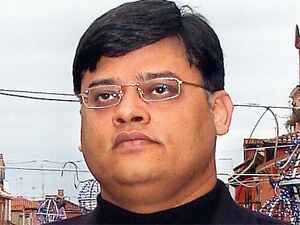
Former Indian Administrative Services officer Sabahat S Azim’s biggest challenge when he launched affordable healthcare chain Glocal Healthcare Systems was to prove that he could make the hospitals profitable.
Former Indian Administrative Services officer Sabahat S Azim’s biggest challenge when he launched affordable healthcare chain Glocal Healthcare Systems was to prove that he could make the hospitals profitable.
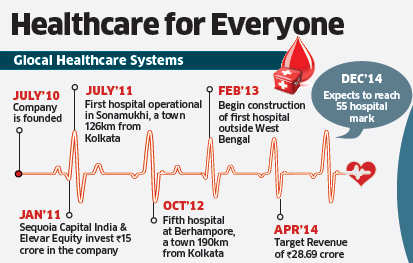
Within six months of launching the first Glocal hospital in July 2011 in Sonamukhi, a town 126km from Kolkata, the hospital had reached break-even. A model that the 37- yearold entrepreneur has now replicated in each of his other four hospitals. “They have proved that social good and profit can go hand in hand,” says Sandeep Farias, Founding Partner of Elevar Equity, which invested Rs 15 crore in the company along with Sequoia Capital India in January 2011. Most other hospitals that also offer affordable healthcare take up to two years to become profitable according to industry estimates.
Glocal is now expanding operations beyond West Bengal with plans to open 50 hospitals in Uttar Pradesh, Bihar, Chhattisgarh, Jharkhand and Orissa by December 2014.
It was the untimely death of his father that led Azim, a trained medical doctor, to launch Glocal in July 2010. “My father died due to unnecessary treatments. I thought, if this can happen to me, a doctor and an IAS officer, what about others?” says Azim, who found an early supporter in M Damodaran, the former Chairman of Securities and Exchange Board of India (Sebi), who became the Chairman of the venture. Azim has known Damodaran since his time as Secretary to the Chief Minister of Tripura, a position he held between 2004 and 2006.
“He is my first sounding board for any idea. When I think of introducing something new, my first thought is ‘how will Mr Damodaran react?’” he says. At Glocal, his team has come up with a protocol-driven model, where the computerised system will help the doctor automate diagnosis of 42 diseases, ranging from ischaemic heart disease to malaria, which they identified as affecting 95% of the patients.
Other affordable ventures are also attempting to cater to the semi-urban and rural market. Like Glocal, eight-yearold Vaatsalya also sets up hospitals (smaller than 100 beds) in small cities and towns with a focus on primary and secondary care. However, Vaatsalya leases out pre-existing hospitals and other buildings and upgrades them to high-quality hospitals. Azim, a fan of Fountainhead—Ayn Rand’s paean to individualism, wanted to design a hospital with just essential infrastructure.
Timely backing from investors helped convert the idea into a business. “I had a 30-minute meeting with Sabahat and he spoke about focusing on a limited set of diseases that constitutes 95% of healthcare issues in the country. I was hooked by this powerful idea,” says Elevar’s Farias.
Sequoia’s Managing Director GV Ravishankar says Glocal fit their requirement of backing good entrepreneurs in large and attractive markets. Glocal charges patients around onefifth of the fees a hospital with similar infrastructure would otherwise charge. It charges Rs 10,000 for a caesarean section, which costs about Rs 50,000 in other private hospitals.
Azim points out that he is able to charge lower fees due to lower cost of infrastructure and by eliminating unnecessary procedures. While a typical 100-bed hospital is about 70,000 square feet in size, Glocal has been able to restrict it to 30,000 square feet thus keeping cost of construction lower. At around Rs 8 crore for a 100-bed hospital, a Glocal hospital is built at about 50% of the cost of a private secondary hospital. The company aims to reach over Rs 28 crore in revenue in fiscal year 2014. As Azim begins Glocal’s expansion beyond West Bengal, he is not resting on his laurels. “It has been exciting so far but there is much more work to do,” he says.
source: http://www.economictimes.indiatimes.com / The Economic Times / Home> Business News> Rise> Entrepreneurship / by Radhika P Nair, ET Bureau / January 25th, 2013
At the end of the PowerPlay overs, RCB’s Mohammed Siraj had figures of 3-2-2-3 against Kolkata Knight Riders (KKR) in the IPL.
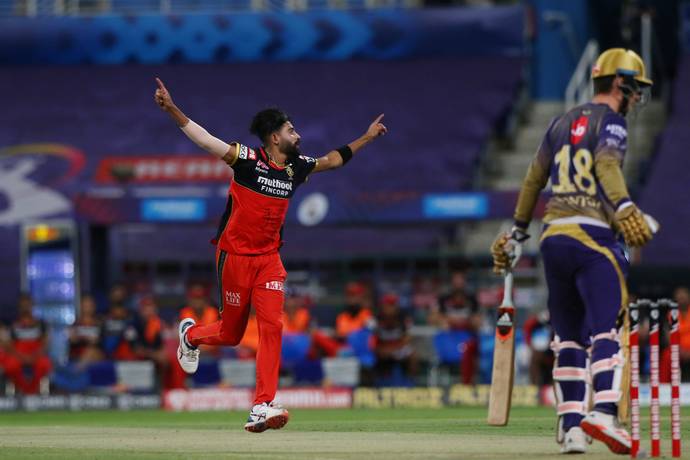
RCB’s Siraj celebrates the wicket of KKR’s Tom Banton. – BCCI/IPL
Royal Challengers Bangalore (RCB) pacer Mohammed Siraj returned to the line-up and made a telling difference with the ball in the Indian Premier League (IPL) match against Kolkata Knight Riders (KKR) in Abu Dhabi on Wednesday.
Siraj dismissed Rahul Tripathi (1) and Nitish Rana (0) off successive deliveries in his first over before accounting for Tom Banton (10) in his second. At the end of the PowerPlay, his figures read 3-2-2-3 as KKR was left reeling at 17/4.
The 26-year-old became the first bowler to bowl two maidens in an IPL game. He finished with figures of 4-2-8-3.
Siraj made a comeback into the team after he had been hit for 44 runs (2 fours, 4 sixes) in his three overs in the defeat to Kings XI Punjab (KXIP) in Sharjah last week. He was then dropped for the next game against Rajasthan Royals.
Before the match against KKR, the Hyderabad cricketer had three wickets in as many outings this season.
On Siraj’s inclusion in place of Shahbaz Ahmed, RCB director of cricket operations Mike Hesson said, “We thought Siraj was a good option on this surface. We thought he could get a wicket or two with the new ball but not three.”
source: http://www.sportstar.thehindu.com / Sportstar / Home> IPL 2020 News / by Team Sportstar / October 21st, 2020
Under the aegis of the Dronacharya awardee coach, Indian rowing team has won as many as 156 international medals.
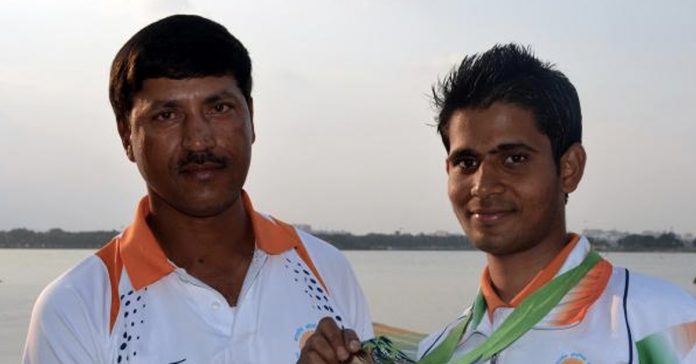
Ismail Baig (Source- Telangana Today)
When Indian rowers brought back three medals (1 gold, 2 bronze) from the Asian Games in Jakarta, there were plenty of speculations around the future of former foreign coach Nicolae Gioga. After the Romanian left, the Rowing Federation of India (RFI) decided to not hire any foreign coaches. In the meantime, national coach Ismail Baig was given the responsibility to take care of the seniors.
The Dronacharya awardee coach guided the team in the Asian Rowing Championships in Cheongju (South Korea) last year, where the Indian won one gold, two silver and two bronze medals. Under the aegis of this 54-year-old coach, India won as many as 156 international medals, including two Asian Games gold, ever since he took over as Indian coach in 1999.
Baig, who has trained many Asiad and Asian medallists at Hussain Sagar Lake in Hyderabad for close to two decades, claims “I accidentally became a coach at the age of 26,” in an exclusive conversation with The Bridge .
Tracing back his journey, Ismail was a part of the Indian army and since it was compulsory to take up sports in the army, Ismail was actively participating in boxing. However, he didn’t find much interest in the sport so when the rowing coach in Bengaluru asked Ismail to take up this sport, he didn’t hesitate. “At that time there were no facilities in Bengaluru, therefore, I was sent to Pune in 1987 and after rigorously being a part of the game, I fell in love with rowing,” said Ismail.
In 1989, he participated in his first national championships and in his maiden appearance, Ismail bagged a bronze in the Coxed Four event. Two years later, in 1991, Ismail converted the bronze into gold. However, the 1991 nationals was the end of his playing career, he took up NIS coaching course and at 26 years he became a coach.
Ismail was sent back to Bengaluru to train the state team. However, there he found a dearth of facilities and broken oars. His skills and experience, however, made the cut as Karnataka won the gold in Chandigarh nationals against the big teams in 1992. “Our technique and training was successful and then onwards, we started bringing medals at every national tournament our team took part in,” Ismail adds.
Before the Asian Games in 1998, RFI appointed Ukrainian Dmitri to be the coach of the Indian national team. Dmitri, was closely following Ismail and he asked Ismail to join the team as the assistant coach. It was Ismail’s first big breakthrough as a coach to be a part of the Indian team. Following the Asian Games in Bangkok in 1998, Ismail was appointed as the chief coach in 1999. “The Asian Championship in Japan was my first outing as an independent coach, and there we won 3 silver and 1 bronze medals,” said Ismail.
As the coxless pair finished second in Asian Championship and after Japan’s withdrawal, the rowers qualified for the 2000 Olympics in Sydney for the first time in history. The Indian camp was also shifted from Pune to Hyderabad. “I can proudly say that I have been the coach of the Indian team in all the Olympics our team has participated in,” quips Ismail.
It was under Ismail’s stewardship. India clinched silver in Asian Games as Bajranglal Takhar (single sculls) stood second in the 2006 Asian Games in Doha, Qatar. In 2010, the record was bettered with the team winning a gold, three silver and one bronze medals at the Asian games. The medal spree continued in 2014 and 2018 as well by the likes of Sawarn Singh, Dattu Baban Bhokanal, Om Prakash, Sukhmeet Singh, who were all trained by Ismail.
source: http://www.thebridge.in / The Bridge / Home> Coach’s Corner / by Md Imtiaz / October 11th, 2020
Corona pandemic began to spread across the heart of the city, Deira, here, one of the oldest districts and was categorized as a hotspot of infection. The Dubai government immediately decided to lockdown the whole area followed by a seal down for about two months to contain the spread of the virus (strict prohibitory orders were issued to restrict the residents from moving out of the area and non-residents from travelling to the area).
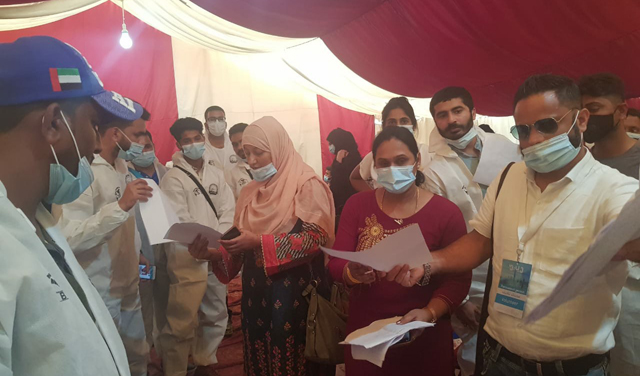
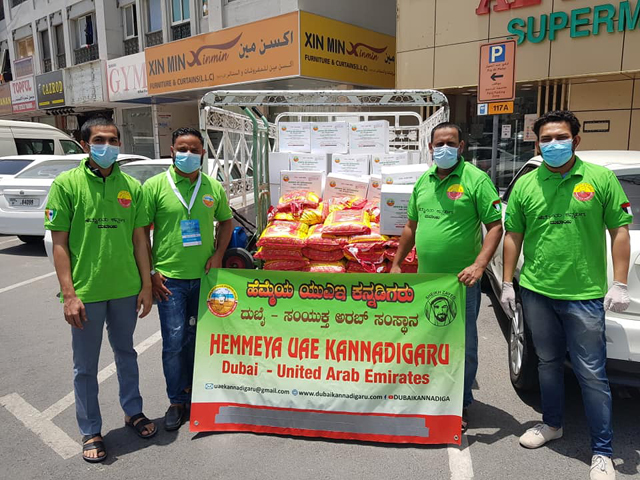
During this period the Dubai Health Authority along with Dubai police set up the required programme to contain the spread of the virus and Dubai Hemmeya UAE Kannadigaru (HUK) was exclusively chosen for the volunteering work. It included the supply of food, essentials, medicine and transport of people for COVID testing, isolation, transfer to the hospital (also reaching out to all Kannadigas who sought support). The works under the leadership of Rafeeqali Kodagu, HUK was acknowledged and well appreciated by the UAE rulers, Dubai government, Dubai police, Dubai health authorities, the general public and hailed as corona heroes. To date, the relief work continues.
The pandemic severely affected businesses. Hundreds of Kannadigas lost their jobs, their earnings. Job seekers who were on a visit visa to UAE were stuck indefinitely. The Dubai Hemmeya UAE Kannadigaru team flung into action when they started getting distress calls from bachelors and families seeking urgent help. Mohammad Mustafa, a businessman and philanthropist and other members of HUK opened their hearts and started contributing to the relief fund called Hemmeya UAE Kannadigaru Sahaya Hastha (helping hand). The needy were provided with a food kit lasting a month, medicine, household essentials, air tickets amounting to 16 lac Indian Rupees with the help and support of donors.
The team of Kannada doctors under the initiative of Kannadathi Dr Savitha Mohan treated several patients at this critical time free of cost, free clinic and online consultation. All corona related health tips and guidance were provided from time to time.
Several categories of people were looking for urgent repatriation to India which included pregnant women, patients with critical illness, senior citizens, job seekers, students, tourists, employees who lost their jobs and their families. Spending each day was an expensive affair and the financial and mental situations were worsening. The HUK team again extended their helping hand by associating with the organizers of Vande Bharat Mission by providing complete information to passengers, also arranging exclusive chartered flights and took care of the entire process from registration to take-off of the respective flights. They also enquired about their arrival and well being.
Kannadigas from all walks of life volunteered to help. They brought their own vehicles and their friends to distribute food and medicines to the needy at their places. Special mention goes to Nawaz Kundapura, Harish Kodagu, Cleevan Udupi, Abdul Hadi Bhatkal, Suhail Mangaluru, Noufal Dakshina Kannada, Nizar Kasaragodu Kannadiga, Fayaz Kundapura, AbrarShivamogga, Hadiya Mandya, Mamatha Sharjah, Senthil Bengaluru, Mohiyuddin Hubli, Sayyed Shivamogga, Vinod D’Souza Mangaluru, Rafeeqali Kodagu who worked relentlessly day and night across seven emirates (states) of UAE to ensure that the relief work goes in full scale wiping the tears of the people.
Hemmeya UAE Kannadigaru has always been the voice for Kannada and Kannadigas in UAE. Their heart also follows and responds to the issues and development related to Kannada and Karnataka.
They have conducted Dasara sports meet, Kannada Rajyotsava, multi-religious Ifthar programme, Sankranthi, Christmas, Republic Day talent show bringing together all the Kannadigas to celebrate the Kannada culture and heritage. They also honor national and international sportspersons, poets, philanthropists, cine and music artistes, Indian defense staff who have brought name and fame to Karnataka.
The job seekers from Karnataka are getting the essential information, guidance through job fairs, workshops, recruitment roadshows, and job groups. Kannadiga businessmen and the Kannadiga job seekers are provided a platform to interact and recruit the candidates. Also, Kannadiga business forum, an exclusive group for Kannadiga businessmen and entrepreneurs is setting new heights through active participation and flow of business.
HUK is on the forefront to extend help during natural calamities of flood, earthquake and also initiates blood donation camps. They also organize guided excursions and tours across UAE.
Team Hemmeya UAE Kannadigaru Sudeep Davanagere (president), Mamatha Raghavendra Mysuru (vice-president), Senthil Bengaluru (chief secretary ), Rafeeqali Kodagu, Mamatha Sharjah, Pallavi Basavaraj Davanagere, Dr Savitha Mohan Mysuru, Anitha Ram Bengaluru, Vishnu Murthy Mysuru, Hadiya Mandya, Shankar Belagavi, Mohiudeen Hubli, Vageesh Mysuru were supported by 50 other members.