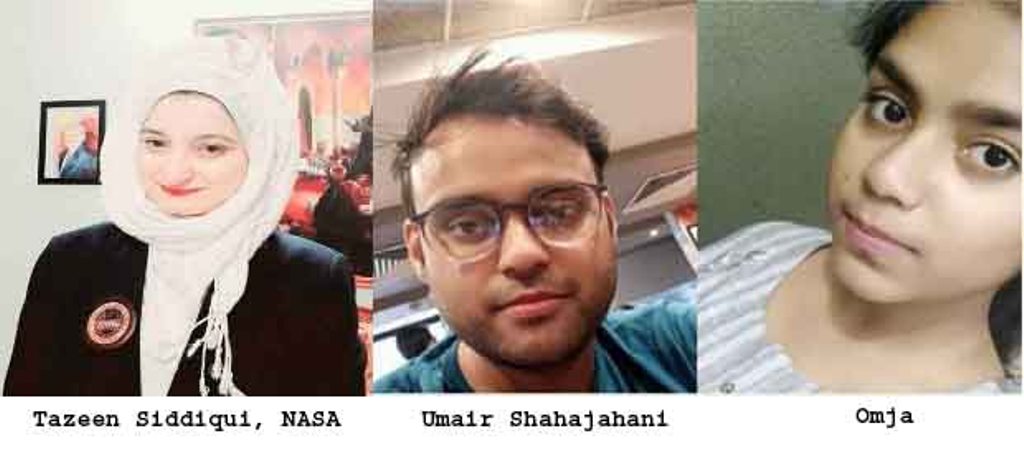
‘Team blaze’ comprising Aligarh Muslim University (AMU) students, Umair Shahajhani (Z H College of Engineering and Technology) and Omja (Senior Secondary school Girls) won the ‘Judges Choice Award’ of the international NASA Space App Challenge 2020.
The AMU team had participated in the global hackathon from their home computers to tackle one of the most pressing worldwide issues: The Covid-19 pandemic, said Tazeen Siddiqui, Lead, NASA space App Challenge. The event was judged by two ISRO scientists, Mr Uzair Mujeeb and Syed Shadab.
The ‘Team blaze’ is one of the two teams from AMU to have won the award. The other team, ALTAIR lead by AMU students Ayesha Samdani (MBBS), Mohd Zakir Husain (MBBS), Aman Ahmad Khan (MBBS), Abdullah Samdani (BA LLB) and Faisal Jamil, a BTech student from the Maulana Azad National Institute of Technology, Bhopal, Madhya Pradesh also won the ‘Judges Choice Award’ for presenting a solution in response to the NASA’s Challenge ‘A One Health Approach’.
ALTAIR members through their presentation shed light on how improved air quality has been an unintended but welcome consequence of the lockdown to contain the coronavirus. They gave an analysis of the air quality of the pre and post lockdown periods in the Indo Gangetic region of Northern India. Their study gave details about how an improvement in the air quality benefited the health of people.
The team members also coded an Air Quality Index (AQI) Calculator to measure AQI of a certain region, which is helpful in giving health and cautionary statements and providing guidance to common people on pollution related health issues.
source: http://www.amu.ac.in / Aligarh Muslim University / Home> AMU News / by Public Relations Office, AMU / October 09th, 2020
Head of the Indian school in Benghazi, Tabassum Mansoor, led the negotiations with militants in Libya
Tabassum Mansoor
After almost a month of tense negotiations, the hostage situation involving seven Indians in Libya came to an end with their release on October 11.
In the absence of a resident Ambassador in the country, the delicate task of ensuring the safe release of the Indians workers with Al Shola Al Mudea energy company, fell to Tabassum Mansoor, the Principal of the city’s Indian school and a long-term resident of Bengazhi.
The seven men were abducted by militants at Asshwerif while they were on their way to the airport in Tripoli on September 14. A source with knowledge of the operation said the rescue would not have been possible but for Ms. Mansoor, who carried out negotiations with the militants through the Libyan authorities and tribal elders.
Ms. Mansoor, 59, who was born in Gorakhpur, has been in Benghazi for more than three decades. She has mentored the Indian school in Benghazi and it has emerged as the only Indian-led English-medium educational centre in the city.
Recognition for her long-standing commitment to education amid difficult circumstances came from the Libyan authorities when she was inducted as a member of the National Education Council of Libya. Her work in the larger Indian community first came into the spotlight for her efforts during the 2011 evacuation of nearly 3,000 Indians from Benghazi when the city witnessed intense fighting between pro- and anti-Qadhafi forces.
This time too, Ms. Mansoor swung into action when requested by the Indian authorities.
“I can’t explain the terrible time we have been through. We had initially given up hope of seeing Umed again. But it was at that time that we found strength and support from Tabassumji. The Indian Embassy in Tunis provided excellent diplomatic support, but Tabassum Madam handled the local negotiations to free our people,” said an emotional Firoz, brother-in-law of Umed, one of the seven Indians, in an online interview.
Local recognition helped
The local recognition helped the principal in the talks to ensure the safe release of the Indians. Ms. Mansoor declined to speak about her role when The Hindu reached out to her. But a source familiar with the developments said the negotiation with the militants was extremely risky as they are known to be unpredictable. As the negotiations reached their conclusion, Ms. Mansoor went personally to Brega with Libyan security officials where the captors handed over the Indians.
The Libyan support to the Indian-led initiative were lauded by the External Affairs Ministry which expressed “sincere thanks to the Libyan authorities and the tribal elders from the region”.
source: http://www.thehindu.com / The Hindu / Home> National / by Kallol Bhattarcherjee / New Delhi – October 14th, 2020
Gujarat, INDIA / Blackburn (Lancashire) UNITED KINGDOM:
Mohsin Issa, 49, and brother Zuber, 48, stunned the City by being named as lead bidders for fight to buy Asda
Walmart, chain’s US owner, announced they had accepted bid from duo today but will retain a minority stake
Last stage of extraordinary rags to riches story that began with them taking over single petrol station in Bury
It comes more than a year after planned merger between Asda and Sainsbury’s was torpedoed by regulators
Two self-made billionaire petrol tycoon brothers have agreed to buy Asda from Walmart for £6.8billion to bring the supermarket back under British control.
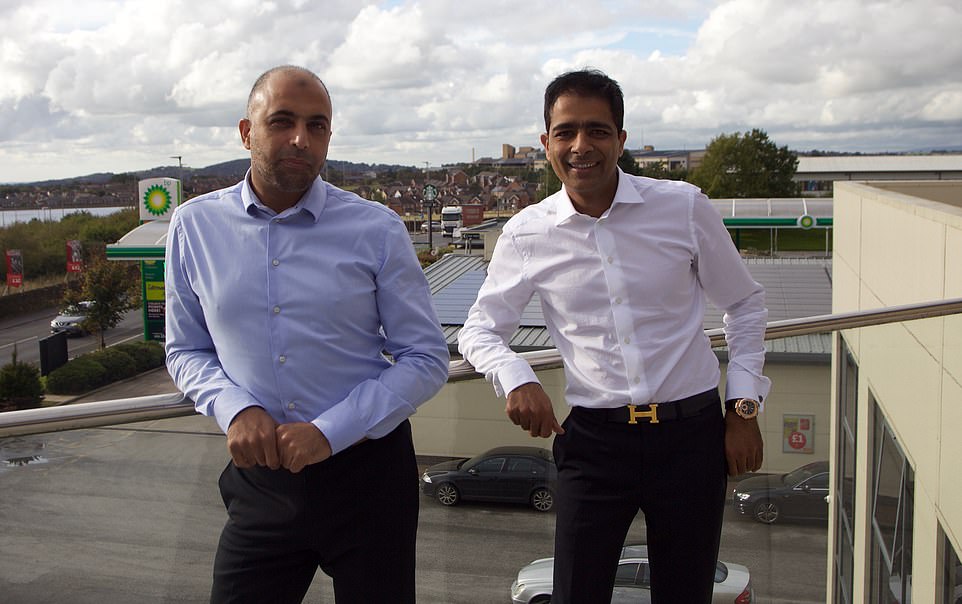
Mohsin Issa, 49, and his brother Zuber, 48, from Blackburn, stunned the City by being named as lead bidders to take over the retail giant alongside private equity firm TDR Capital, and concluded the deal today.
The new owners have committed to keeping the retailer’s headquarters in Leeds and said they will invest to grow its convenience and online operations. Walmart will retain a minority stake in Asda as part of the agreement.
It is the latest stage in the brothers’ extraordinary rags to riches story, which saw them turn a single petrol station in Bury into an empire of 5,900 branches.
The duo, whose parents came to Britain from India ‘with nothing’, built EG Group – previously known as Euro Garages – from one site bought for £150,000 in 2001 into a £9billion giant employing 44,000 staff.
Today’s deal comes more than a year after a proposed merger between Asda and UK supermarket rival Sainsbury’s was torpedoed by regulators.
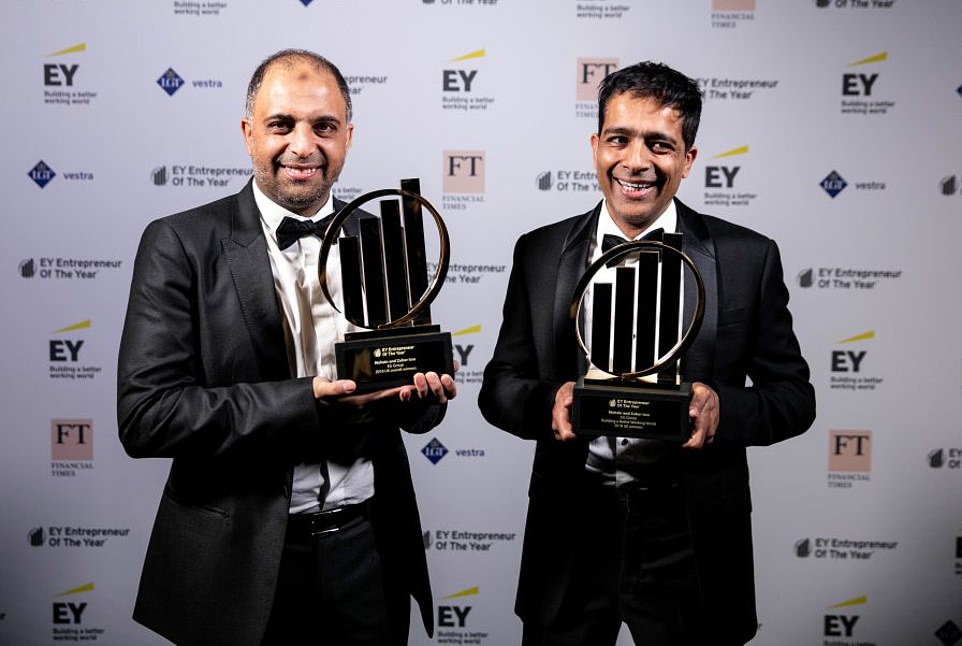
Mohsin Issa, 49, (left) and his brother Zuber, 48, whose parents came to Britain from India ‘with nothing’, today emerged as the winners of the battle to buy Asda The brothers holding trophies at an awards ceremony in London in 2018, which saw them named EY Entrepreneur of the Year
___________________________________________
The billionaire Issa brothers brothers and the rise and rise of EG Group
1970s – Mohsin and Zuber Issa’s parents arrive to the UK from Gujurat, India and the brothers are born not long afterwards in Blackburn, Lancashire.
They work at their parents’ petrol station before it closes.
2001 – The brothers buy their first filling station in Bury, Greater Manchester.
2015 – Private equity firm TDR Capital acquire a 50% stake in their Euro Garages chain.
2017 – Euro Garages buys EFR Group, a Dutch-based forecourt operator, and is renamed EG Group. The new company buys 1,000 garages from Esso in Germany.
2018 – EG Group announces it will buy 800 Kroger convenience stores in the US before buying 1,200 sites in Italy from Esso. Later that year it buys 97 fuel stations in the Netherlands and 540 from the Australian retailer Woolworths.
2019 – In another US expansion, EG buys 54 Fastrac sites in the US and 69 from Certified Oil.
2020 – EG becomes KFC’s largest franchisee in Europe after buying 145 KFC outlets in the UK & Ireland.
___________________________________________
Asda has seen its fortunes improve recently with trading strengthening through 2020, as shoppers have spent more money on groceries during the pandemic.
In the quarter to June, Asda saw online sales double but the new owners will be tasked with expanding its digital business further to take advantage of soaring demand and make ground on rivals, such as Tesco, who have a larger slice of the market.
The new owners will also face the challenge of keeping prices low amid tough economic conditions for shoppers and potential new tariffs on EU-imported foods, with the other big four supermarkets all announcing a raft of price cuts in recent months.
EG Group has sealed the deal after its offer was favoured by Walmart ahead of a move by US private equity firm Apollo.
Last week, a third bid from Lone Star Funds, fronted by former Asda executive Paul Mason, was dropped after failing to meet the price of its rivals during the latter stage of bidding.
Walmart sought a sale after the UK’s competition regulator blocked its merger with Sainsbury’s amid fears the move would push up prices and reduce product quality.
The US grocery started new discussions over a sale of Asda in February, but saw these halted due to disruption as a result of the coronavirus pandemic.
However, the auction process restarted in July as Walmart sought to exit the UK, 21 years after first purchasing the Leeds-based retailer.
Blackburn-based EG Group, formerly known as Euro Garages, already runs forecourt convenience stores for Spar and French hypermarket chain Carrefour.
The deal will have to pass through regulators, although it is expected to be given the green light.
Last week, EG Group announced a trial involving three ‘Asda on the Move’ convenience stores at its petrol forecourts.
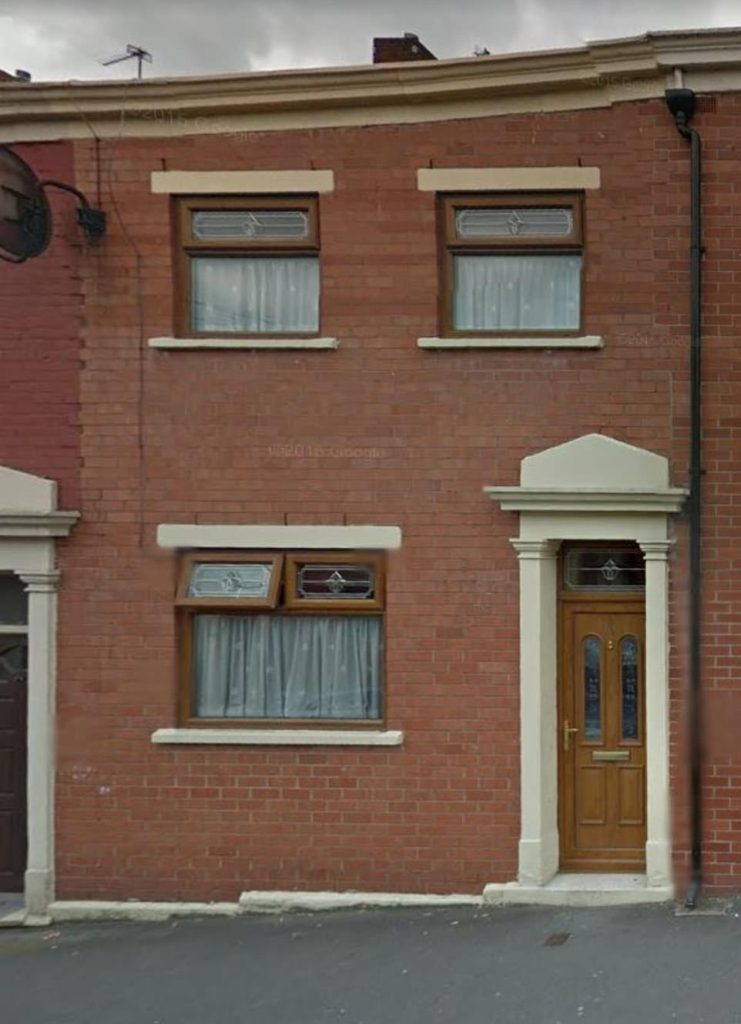
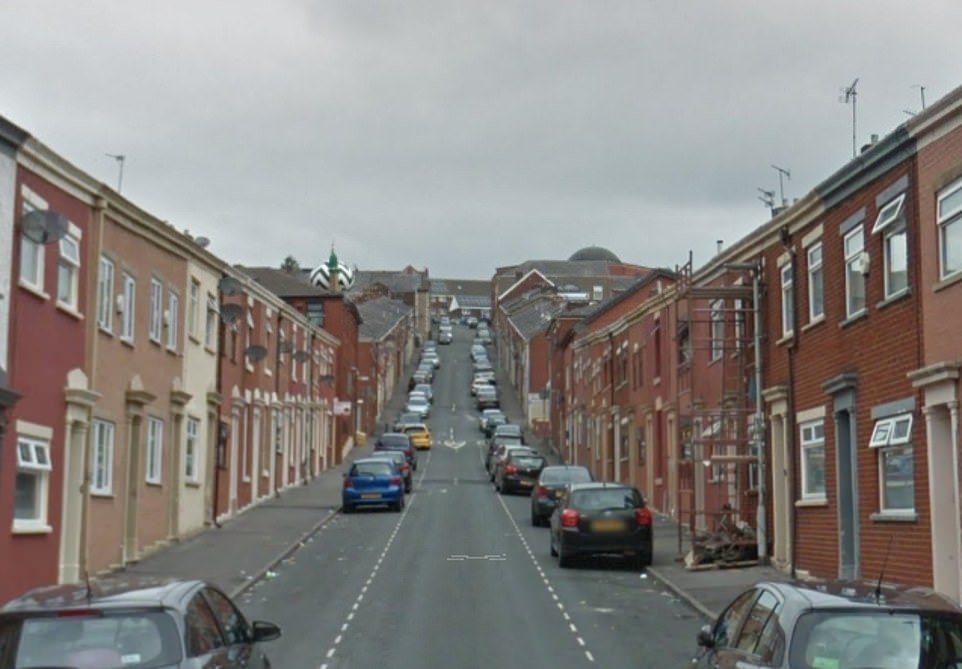
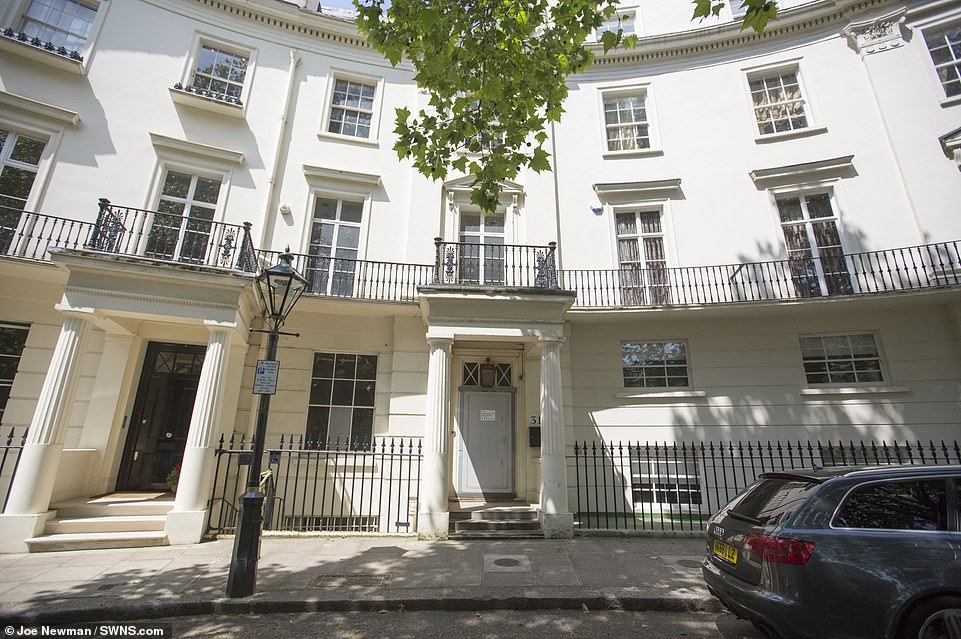
The £115,000 terraced house where the brothers grew up in Blackburn. They were born in the town after their parents moved from Gujurat, India A wider view of the road in Blackburn where the brothers grew up. Their company is still based in the town They are now worth an estimated £3.56bn, including a £25m Kensington townhouse (pictured) and a private jet that is kept in a hangar at Blackpool Airport alongside Donald Trump’s personal helicopter
______________________________
Asda history: How Britain’s third-largest supermarket began as a Yorkshire family butcher
1950s: The Asquith family (W.R. Asquith) open a butcher’s shop in Knottingly, West Yorkshire, which was eventually expanded to seven shops.
1958: They travel to the USA to visit Piggly Wiggly, probably the world’s first supermarket.
1963: The Asquiths open the UK’s first self-service supermarket in Wakefield, West Yorkshire.
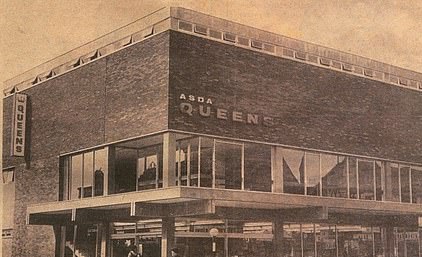
The first Asda supermarket, which was opened in 1965 in Wakefield, West Yorkshire
965: Peter Asquith built his first new supermarket from scratch, next to a large car park, knowing that cars would change the way people shop. Associated Dairies were employed to run the in-store butchery operation and the name Asda was born by combining ASquith and DAiries.
1966: Asda becomes the first major food store to sell general merchandise.
1968: Associated Dairies buys out the Asquith Brothers.
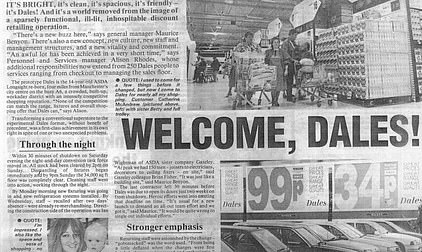
A newspaper article about one of the first ever Asda stores
1999 Asda is bought by Walmart.
2020 (February): Walmart says it is looking for a buyer.
______________________________
The Issa brothers are now worth an estimated £3.56bn, including a £25m Kensington townhouse and a private jet that is kept in a hangar at Blackpool Airport alongside Donald Trump’s personal helicopter.
They are also building five identical mansions just three miles from the £115,000 Blackburn two-up two-down where they were raised. Mohsin is expected to live there with his wife, Shamim with whom he shares two grown-up children.
As the children of immigrants who moved to Blackburn from Gujurat, India, in the 1970s, Mohsin and Zuber Issa – who were born in the former mill town – quickly learned the importance of hard work.
Their first experience of business was selling petrol from their parents’ filling station, where they would have their big idea that would revolutionise the industry and make their millions.
Petrol sales were in decline and fuel duty on the rise, cutting into already wafer-thin fuel margins and leading to hundreds of operators leaving the market.
At the time most garages – if they sold food at all – offered a measly selection of pre-packaged sandwiches, crisps, sweets and chocolate.
But the Issas realised fuel sales still had a purpose in creating a captive market at petrol stations, who could then be offered appetising food rather than the gruel offered elsewhere
The brothers struck franchise agreements with brands including Starbucks, Subway and KFC, before embarking on a buying spree to snap up sites that had previously become vacant.
They now own Europe’s largest forecourt operator, Euro Garages, which in 2019 reported revenues of more than £17.9bn.
The firm is now the largest Subway franchisee in Europe and earlier this year bought a group of 146 KFC stores.
Describing the secret of their success, Zuber told the Financial Times: ‘We wanted to create a destination where you could get fuel, food-to-go and shopping.
‘This is the formula and it works.
‘We were fortunate that the big players were leaving the market just as we were growing.’
TDR Capital – a London investment firm behind We Buy Any Car and David Lloyd gyms – bought a 50% stake in EG Group in 2015. The Issas retain the remaining 50%.
This prompted a debt-fuelled buying spree that saw the brothers buy thousands of new sites and expand into eight other countries around the world.
‘They never in their wildest dreams would have imagined 5,500 gas stations in nine markets,’ senior executive Ilyas Munshi told the American trade magazine CSP last year.
‘If they had only 20 sites, they would have felt they had done their job.’
As proud Lancastrians, the brothers have insisted on keeping EG Group’s headquarters in Blackburn, and recently unveiled a new £35m headquarters.
‘People are always asking when we will move to London or Manchester,’ Zuber told the FT.
‘But the quality of life here is great. A lot of people do a few years in London then come to the North West.
‘They want to raise a family and have less pressure. We have got a lot of fantastic people that way.’
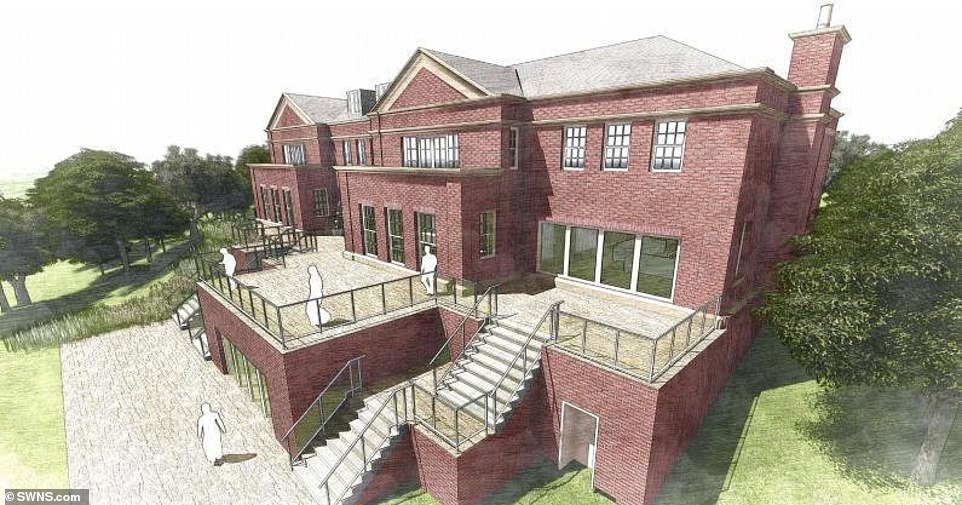
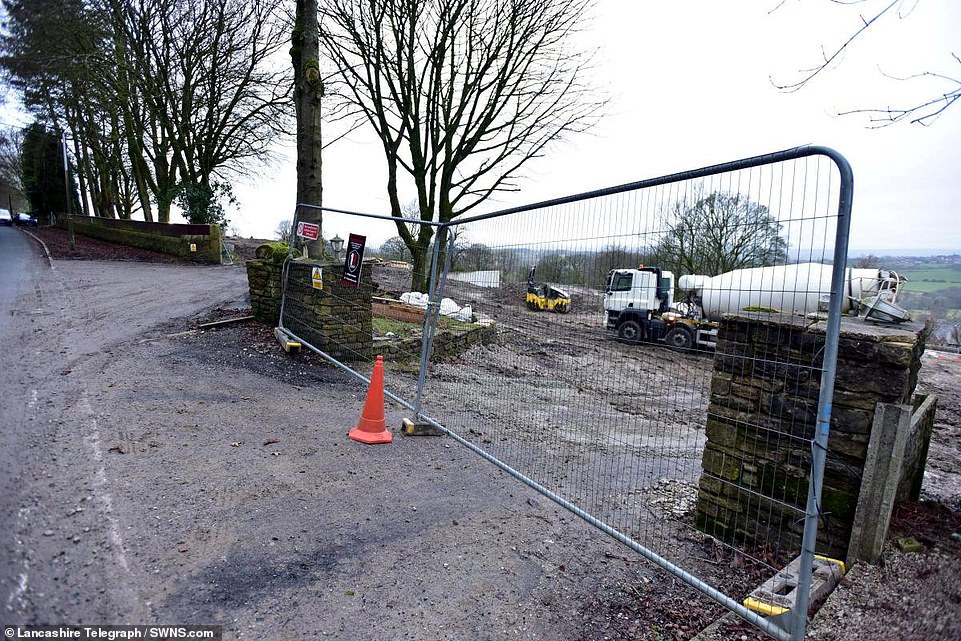
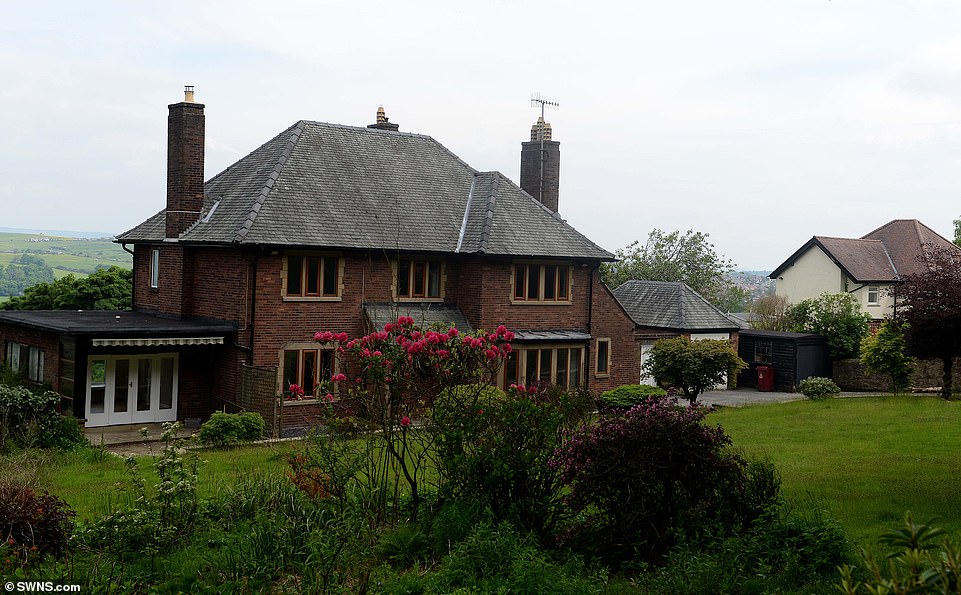
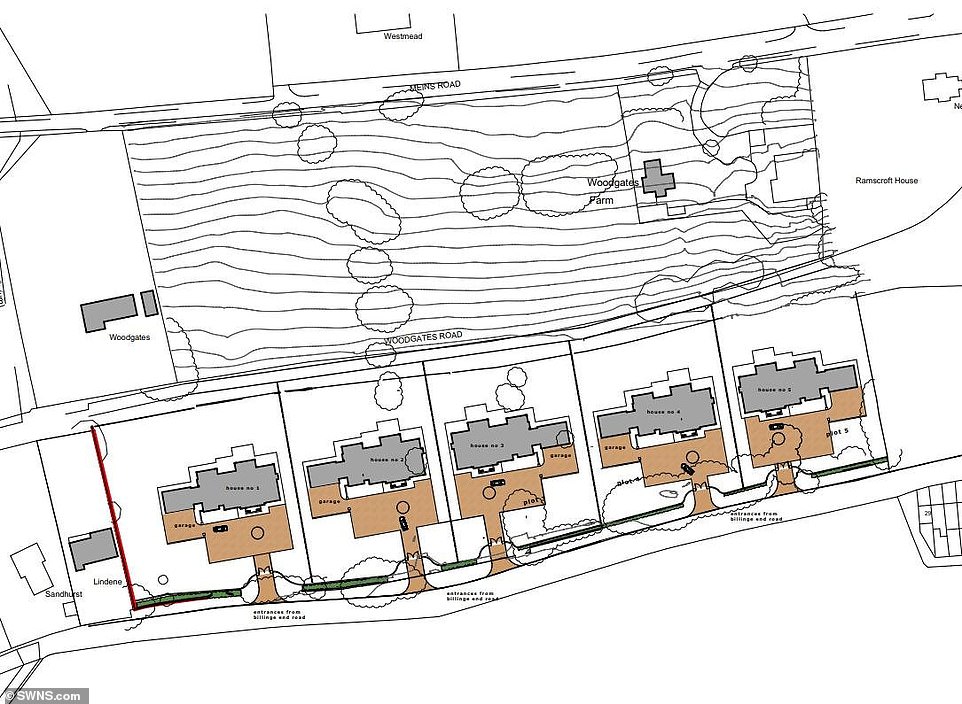
Architect’s plans for one of the five new homes that the brothers are building in countryside near BlackburnPlans for the large houses, which are located on a quiet rural road outside Blackburn where houses sell for up to £1 million, were lodged in April 2018. They are currently a building site Pictured: The homes on Billinge End Road, Blackburn, Lancashire, that was demolished in order to make way for the new houses
Mohsin has a wife Shamim, and their son and a daughter both work for EG. Both brothers rarely give interviews and have adopted a low-key public profile.
They are now building five identical ‘super-sized’ homes three miles from their childhood home.
Despite the fierce opposition, which saw the council face 30 letters of complaint, eight old houses have now been demolished and builders have laid foundations for the five 5,000 sq ft mansions.
Plans for the large houses, which are located on a quiet rural road outside Blackburn where houses sell for up to £1 million, were lodged in April 2018.
They sparked an uproar, with the properties described as ‘not in fitting with the local area’ as the homes stand over 4.5 metres taller with 1,500 square metres of floor space.
But planning permission was granted and pictures taken earlier this year showed builders had already moved in.
In 2017, the pair purchased a £25million mansion in Knightsbridge, which estate agents said could be worth £80million when planned renovations are carried out according to estate agents.
Their Grade II listed Georgian house is also at the centre of a long-running planning row.
The previous owner began digging a basement and left a vast 30ft-deep crater the size of two tennis courts, described by horrified neighbours to ‘Hitler’s bunker’.
When finished the luxury 22,000 sq ft home will have a huge underground car park, a swimming pool, spa, and cinema.
The brothers donate 2.5% of their earnings to charity through the Issa Foundation, which funds hospitals and provides free breakfasts for children in Lancashire.
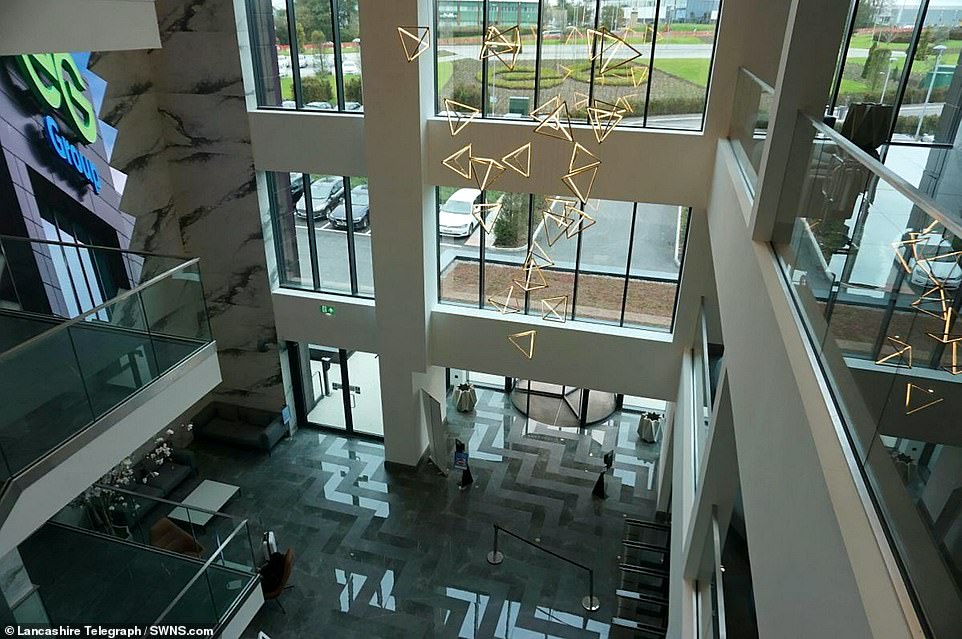
The five new homes will stand over over 4.5 metres taller that the old homes with 1,500 square metres of floor spaceThese new photos show the EG Group’s gargantuan new premises in Blackburn, Lancashire, where the Issa’s were born and raisedBuilding took three years and staff began working there in August, although due to current social distancing only half can be there at once
source: http://dailymail.co.uk / Mail Online / Home> News / by Rory Tingle for Mail Online / October 02nd, 2020
The life and times of Delhi’s leading poets of the Mughal era and their enrichment of a syncretic language
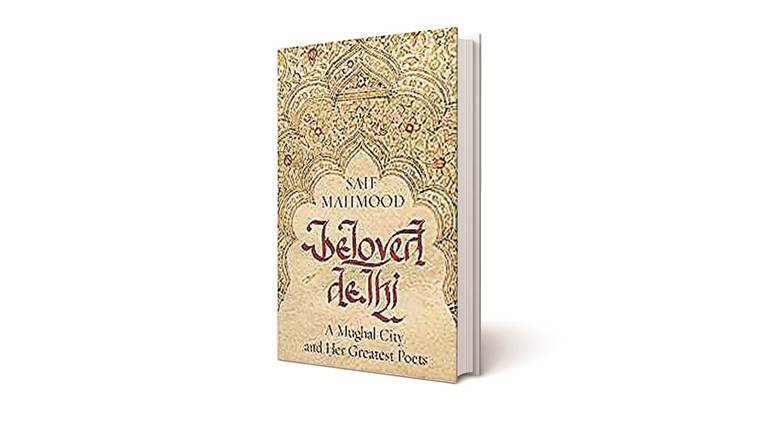
Beloved Delhi: A Mughal City and Her Greatest Poets
Beloved Delhi: A Mughal City and Her Greatest Poets Saif Mahmood Speaking Tiger 367 pages Rs 599
Shaikh Mohammad Ibrahim Zauq, the poetry ustaad of the last Mughal Emperor, Bahadur Shah ‘Zafar’ saw, in his lifetime, the Mughal Empire brought to its knees (though not formally ended — Zauq, perhaps mercifully, died three years before the ‘Ghadar’ of 1857, the uprising that was to so impact the fabric of Delhi’s social, cultural and literary life). But an impoverished Mughal court and an equally penurious north Indian aristocracy meant that many of Zauq’s contemporaries drifted south to Hyderabad, where there was still patronage to be sought and stipends to be earned. Zauq, however, when asked why he did not migrate to the Deccan, had famously remarked, “In dinon garche Dakan mein hai bohot qadr-e-sukhan/ Kaun jaaye Zauq par Dilli ki galiyaan chhor kar?” As Saif Mahmood translates this in his book Beloved Delhi: “Although poetry is greatly valued in the Deccan these days, Zauq, who would trade that for the lanes of Delhi?”
It is this — the connection between Delhi and her Urdu poets, an almost umbilical cord that binds the city to her greatest bards — that forms an important theme in Mahmood’s book. Beloved Delhi has, as its subtitle, A Mughal City and Her Greatest Poets, and those words describe the book perfectly: it is about the Mughal city of Delhi — not the city before or after the Mughals (though there is a fleeting mention of those as well), and about its greatest poets of the 18th and 19th centuries.
Mahmood examines the life and work of eight of Delhi’s greatest Urdu poets, against the backdrop of the city. Mirza Mohammad Rafi Sauda, Khwaja Mir Dard, Mir Taqi Mir, Mirza Asadullah Khan Ghalib, Momin Khan Momin, Bahadur Shah Zafar, Shaikh Mohammad Ibrahim Zauq and Nawab Mirza Khan Daagh Dehlvi are the eight poets who form the subject of Mahmood’s book. For each poet, Mahmood begins with a biography (often preceded by a description of the current state of the poet’s grave or former home). The biography is followed by an insight into the most relevant aspects of the poet’s work — Sauda’s satire, Zauq’s use of everyday language, Momin’s sensuality, Ghalib’s often cryptic verses, and so on. Finally, there are selected verses (with translations) by each poet.
There are several reasons to recommend Beloved Delhi. Firstly, it’s a well-written, readable book that manages to strike a balance between being informative on the one hand and unintimidating, entertaining, even witty on the other. Mahmood handles with commendable skill a subject that is often perceived as unapproachable by those not familiar with the Urdu script, or who are daunted by the more Persianised form of the language. But it’s also a subject that is regaining popularity and Mahmood’s translations, his occasional helpful notes, and the very fact that he takes care to bring in popular connections — Hindi film music’s use of couplets and ghazals from classical poets, for example, or ghazals rendered by popular singers — helps make this poetry more relatable.
Also playing a major role in making the poetry easier to relate to is Mahmood’s approach to the lives of the men who wrote that poetry. He uses various sources — autobiographies, reminiscences of contemporaries, memoirs, correspondence, even the poetry they penned— to bring alive the men behind the verses. Sauda, so acerbic that his satire repeatedly got him into trouble. Mir, the mad egoist, who willingly wrote poetry in exchange for groceries. Momin, a brilliant hakim as well as a great poet. Ghalib, so addicted to gambling that it brought him into repeated conflict with the law (which, Mahmood, himself a lawyer, points out as being reflected in the many legal and judicial terms — muddai, talab, hukm, faujdaari, giraftaari, etc — that Ghalib uses in his poetry). Mahmood even busts some myths, such as the authorship of popular works attributed to poets like Zafar and Ghalib.
And there is Delhi. The Delhi of mushairas. A city where fakirs and courtesans could be heard singing Ghalib’s ghazals, where a language born out of a syncretic confluence of cultures and traditions was nurtured even through the turbulence and horror of 1857 and its aftermath. As much as he brings alive the eight poets he focusses on, Mahmood brings alive the Delhi that was so beloved to them.
Madhulika Liddle is a Delhi-based writer
source: http://www.indianexpress.com / The Indian Express / Home> Lifestyle> Books / by Madhulika Liddle / May 18th, 2019
Researchers from four universities in West Bengal have been looking for fossils in the sediments of Chotanagpur plateau for almost a year
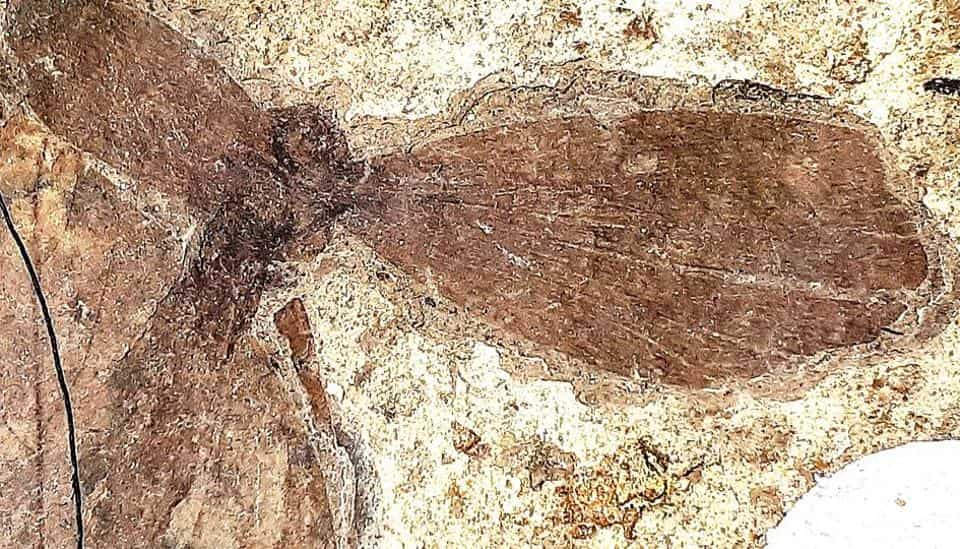
The dragonfly is around 3cm long and has a wingspan of around 2.5cm. This is, however, much smaller than the fossils of giant dragonflies, which have been found elsewhere in the world. (Sourced)
A team of scientists from West Bengal has discovered the first dragonfly fossil in India from Jharkhand’s Latehar district. The fossil is at least 2.5 million years old. A paper on the finding was published in the October 10 edition of Current Science journal.
“This is the first dragonfly fossil from India. It is a well-preserved one. The fossil belongs to the late Neogene period, which dates between 2.5 million and five million years ago,” said Subir Bera, a professor with the Centre for Advanced Study of the Botany department, University of Calcutta.
Researchers from four universities in West Bengal have been looking for fossils in the sediments of Chotanagpur plateau for almost a year. In January 2020, they dug the dragonfly fossil from a depth of around 5m below the soil surface.The team has also found fossils of various insects, fishes and leaves of some flowering plants.
The research was headed by Mahasin Ali Khan, assistant professor of Botany at Sidho-Kanho-Birsha University.
“The nearest living member of the fossil is Libellula depressa, a species of dragonfly that is found in any tropical country, including India,” said Manoshi Hazra, one of the team members and the first author of the research paper, which has been published in Current Science.
As dragonflies spend most of their lives near fresh water bodies, the scientists said that millions of years ago a freshwater body might have existed there, which has now dried up. The other fossils of plants and fishes, which the scientists have found, also support the theory.
“The very fact that the team has found the fossil of an adult dragonfly from the sedimentary bed is very interesting. Usually the prospect of finding an immature dragonfly from the sedimentary bed is huge because dragonfly-larvae live underwater. The prospect of finding insect fossils from sedimentary beds and coal beds is huge, but unfortunately little work has been done in India in this regard,” said TK Pal, a former scientist of the Zoological Survey of India.
source: http://www.hindustantimes.com / Hindustan Times / Home> Kolkata / by Joydeep Thakur / Hindustan Times, Kolkata / October 08th, 2020
Parvez Ali Khan’s restaurant in Armenia’s capital Yerevan is delivering packages of cooked food to those forced to flee their homes in the Nagorno-Karabakh region.
Patiala (PUNJAB)INDIA / Yerevan, ARMENIA :
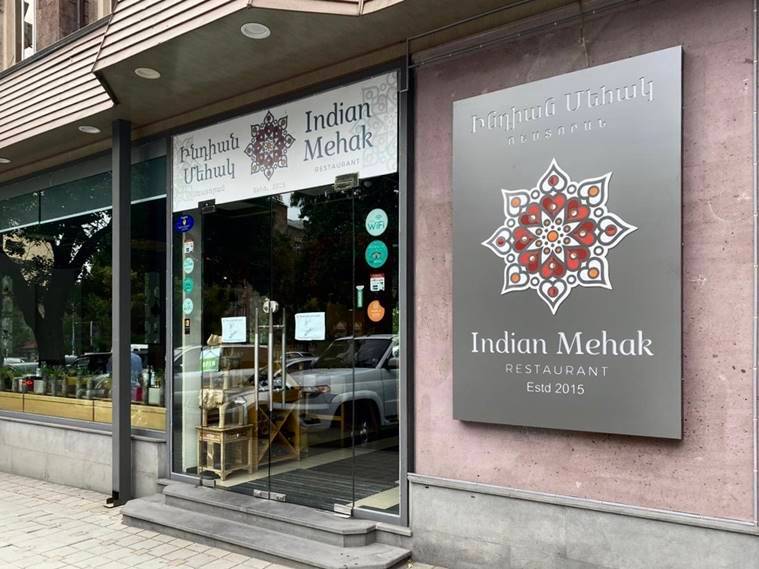
When fresh clashes erupted between Armenia and Azerbaijan in Nagorno-Karabakh in the South Caucasus approximately two weeks ago, Parvez Ali Khan knew that he had to do something for the country that he now calls home. Khan, a 47-year-old from Patiala, India, had moved to Armenia five years ago with his wife and two daughters, in the hope of economic prospects and now runs Indian Mehak Restaurant and Bar, a two-year-old establishment located in the heart of capital Yerevan, just minutes away from Republic Square.
Parvez Ali Khan runs Indian Mehak Restaurant and Bar in Yerevan, Armenia. (Photo credit: Aqsa Khan)
Since fighting broke out on September 27, Armenian officials have said that the total military death toll has gone up to 244 as of October 6, according to a Reuters report, making it one of the most violent clashes in the region since the 1990s. It is unclear how many people have been forced to leave Karabakh since the fighting began, but social media posts and witness reports suggest the numbers are high.
“I must have seen approximately 30,000 refugees in Yerevan,” Khan says. On October 4, on the restaurant’s Facebook page, the family announced that they were providing freshly-cooked Indian food to people who had fled the Nagorno-Karabakh region and were seeking refuge in the capital. “We are Punjabis and we help people wherever we are. We have always done it,” Khan says.
Since the clashes have intensified, Armenians across the country have stepped in to help in whatever way they can, and Khan says he wanted to do his bit. So he turned to the resources he had easy access to—his restaurant’s kitchen. People from the Nagorno-Karabakh region who were seeking refuge in Yerevan were being given dry ingredients, with no access to facilities where they could cook, Khan says.
Overnight, he turned his kitchen into a space where his staff could prepare hundreds of food packages to distribute in the capital. “I had some savings that I had kept aside to open a restaurant in Prague. That didn’t materialise due to the coronavirus outbreak. So I am using those funds for this.”
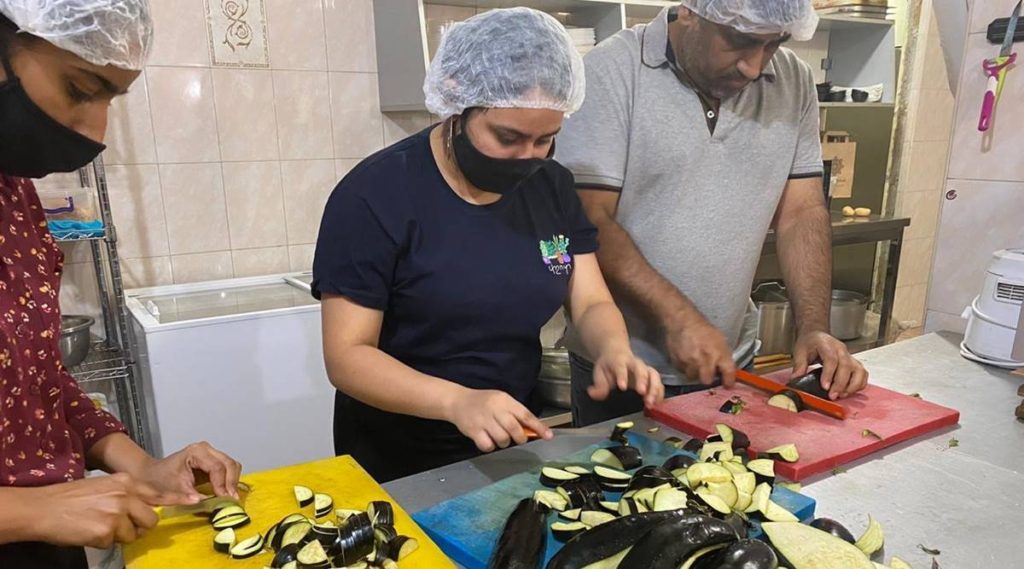
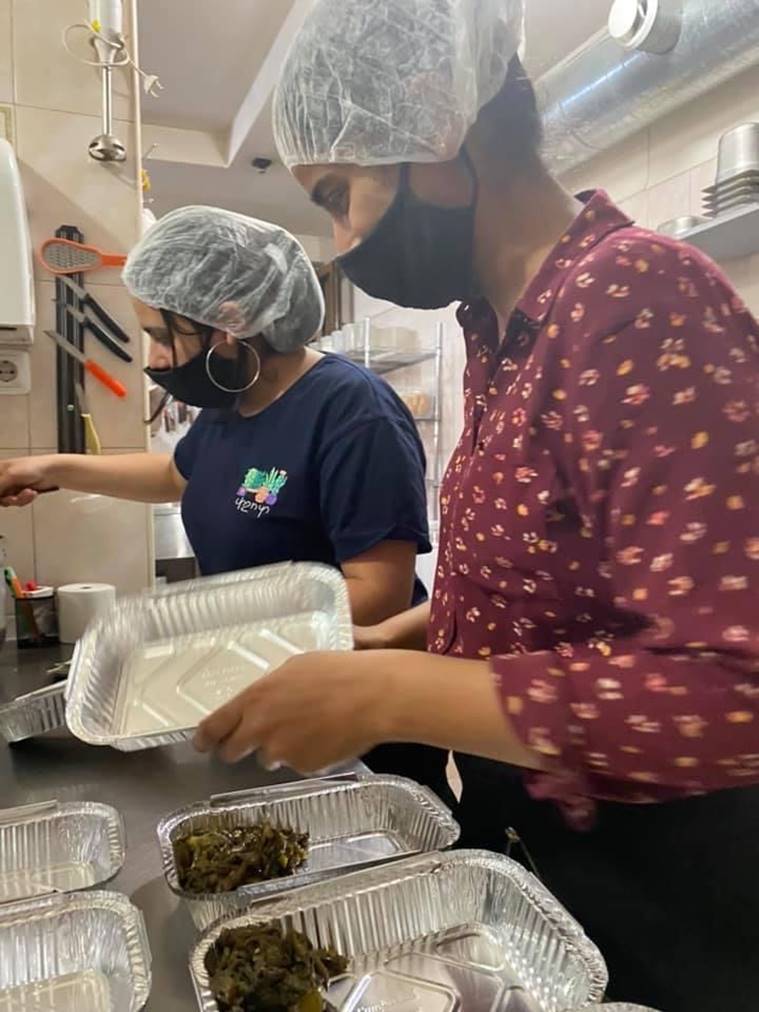
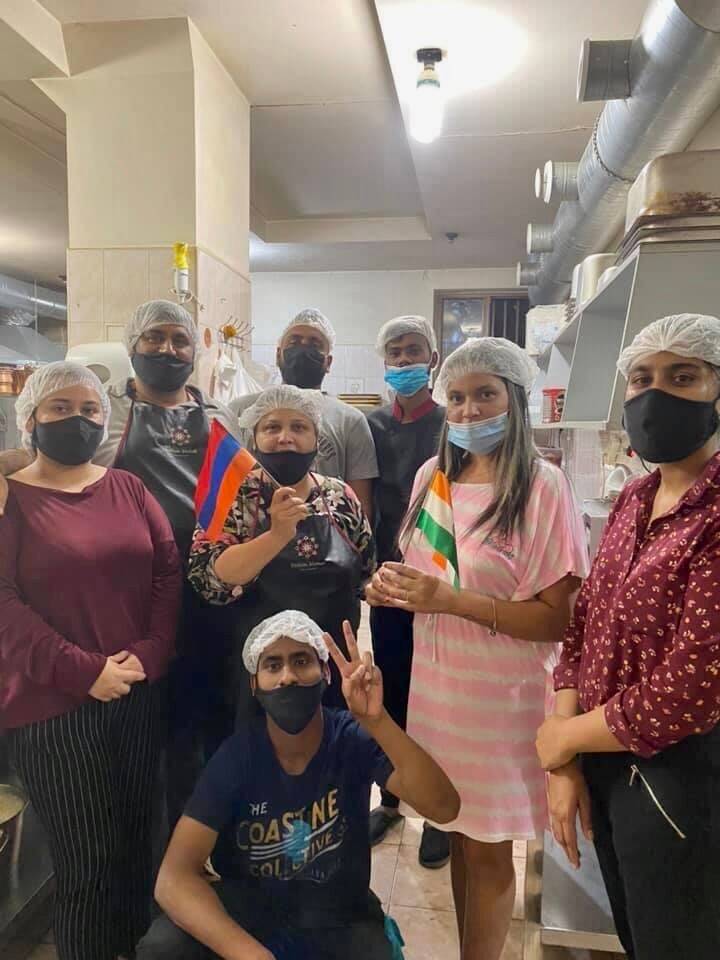
“We started on October 4, and it just blew up,” says 20-year-old Aqsa, Khan’s elder daughter. “We knew there were refugees, but we didn’t know there were so many.” Since then, Khan and his family, along with four employees, have been working 12-hour shifts to prepare boxes with rice and naan, chole-bhature, vegetable dishes with potatoes, brinjal etc., all cooked using less spice than what is customary in Punjabi cooking, to suit the preferences of Armenians.
Aqsa Khan (right) and her sister Alsa pack prepared food in their restaurant’s kitchen. (Photo: Aqsa Khan)
But the family doesn’t think they are doing anything unusual. “There is a lot of unity in Armenia,” Aqsa explains, pointing to citizens who have come together to donate whatever was possible—from money to essentials. “We were thinking about how we could help. So we first posted on the Facebook page about donating proceeds from delivery and take-out orders. But then we saw that the refugees didn’t have access to fresh food and we thought this was more impactful.”
Employees at Indian Mehak Restaurant and Bar in Yerevan, Armenia, work round the clock to prepare food packages. (Photo: Aqsa Khan)
Aqsa says that the family found inspiration for the initiative when a local resident approached the restaurant asking for dry ingredients that she could use to prepare food for children to whom she was providing shelter. The family offered cooked Indian food instead. “We thought that we would be doing it for 25 to 30 people only,” says Khan. But the family soon realised that there were many more who needed their assistance.
Aqsa and her sister Alsa, 18, then took to Facebook and announced that the restaurant was offering Indian food to whoever was coming in from Artsakh, another name for Nagorno-Karabakh. “On the first day, some 400 people asked for help,” says Khan. “It grew from there,” Aqsa adds.
As their social media post has spread, the Khans’ phones haven’t stopped ringing. While some callers have been requesting for food packages, many others have reached out to the restaurant to offer assistance in any way they can. “Women are calling us to ask if we need help in the kitchen. People are bringing their cars to help distribute the food,” says Khan.
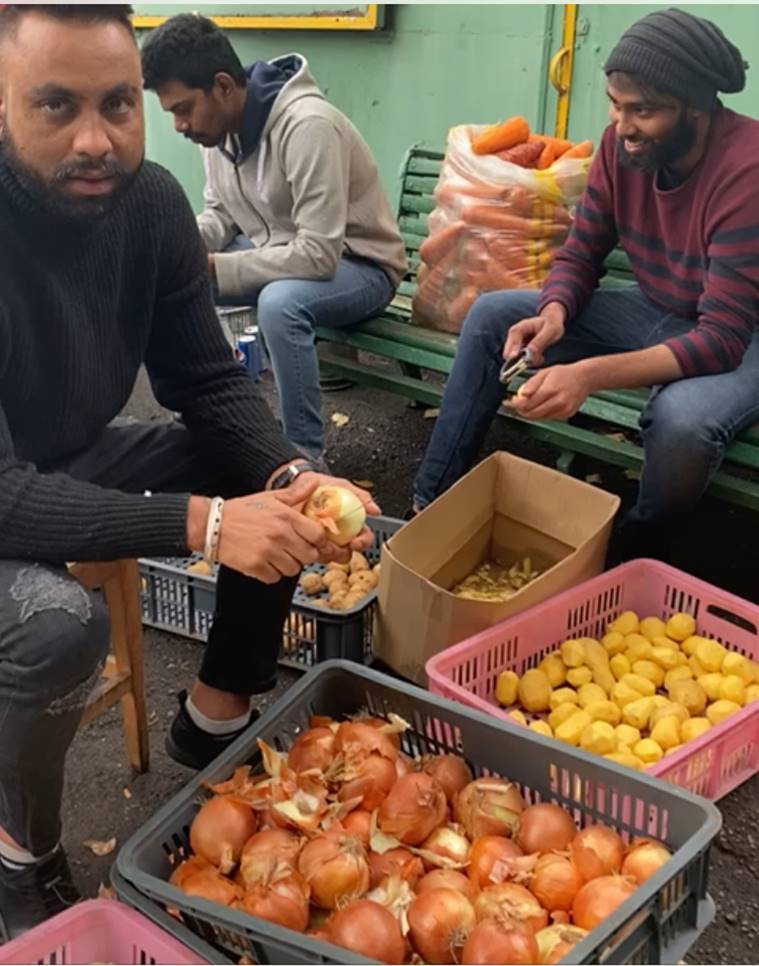
Recently, a volunteer delivered food from the restaurant all the way to Hrazdan, a town some 50 kms away, where some residents of Nagorno-Karabakh have sought refuge. Another volunteer has helped deliver food to Tsaghkadzor, a town a little further away. While the Khans are cooking the dishes, four Armenians have stepped in to help package the food and deliver it across Yerevan.
“Now refugees are calling us directly, as are organisations who are helping them. Some hotels who have been hosting refugees have also asked us to provide (food packages) for one meal a day,” says Aqsa. “I have never seen anything like this.”
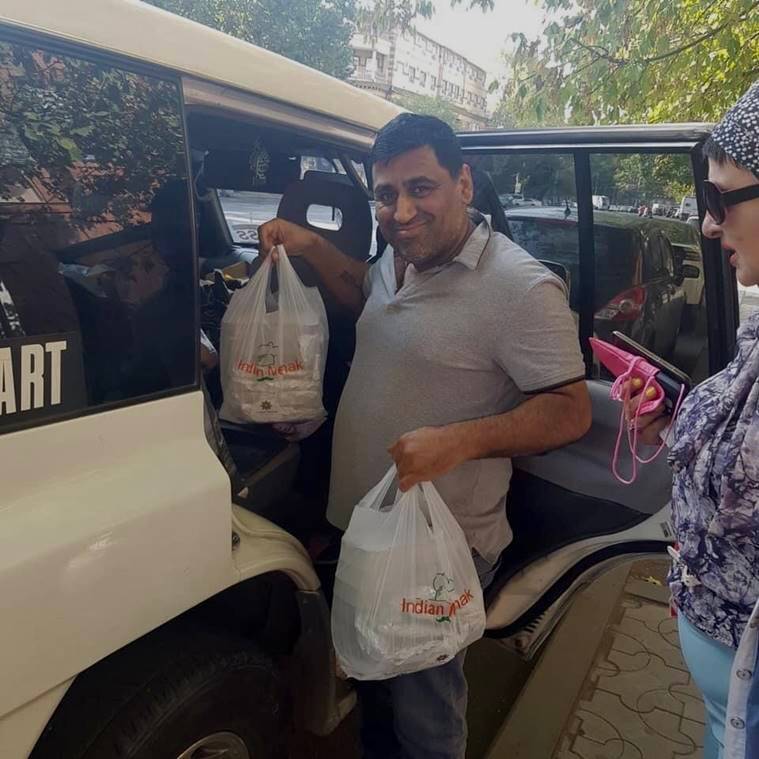
Parvez Ali Khan helps load food packages into a waiting van outside his restaurant in Yerevan, Armenia. (Photo: Aqsa Khan)
Since the initiative is only a few days old, for now, Khan is making use of his restaurant’s supplies to prepare these food packages. The restaurant has found an outpouring of support from people across Armenia and even those in the diaspora. Many have left them messages of gratitude, promising to visit the restaurant when they can. “After the war, I will visit your restaurant and celebrate our victory,” says one message on their Facebook page, with hundreds of others in a similar vein.
There aren’t too many Indians in Armenia, says Khan, and his establishment is among the few prominent Indian restaurants in the country. In Yerevan alone, he believes, there must be around 100 Indian families, with approximately 4,000 Indian students studying medicine, scattered in universities across the country. Following the Indian government’s operation of Vande Bharat flights to help citizens overseas return home during the coronavirus pandemic, many have temporarily left.
The Khan family and their employees pose with the Indian and Armenian national flags in their restaurant’s kitchen in Yerevan, Armenia. (Photo credit: Indian Mehak Restaurant and Bar)
Over the past five years, Khan says his daughters have developed a fondness for Armenia. During their years at school and college in the country, they have made friends, learnt the language and the culture and have adapted well here, while holding on to their Indian citizenship. “They like the country.” The family has been working non-stop to prepare the food packages and they don’t have too much time for more questions. For Aqsa, Nagorno-Karabakh is as much a cause as it is for her Armenian friends and she is doing whatever she and her family can to assist the country that is now home.
source: http://www.indianexpress.com / The Indian Express / Home> World / by Neha Banka, Kolkata / October 07th, 2020
Fashion, as we know it, is one of the most influential industries in the world.
Bengaluru :
Fashion, as we know it, is one of the most influential industries in the world. And when brands not only make top quality products but also come full circle and give back to the community through their choices, they become good influencers of fashion.
Kulsum Shadab Wahab, based in Bengaluru, is a philanthropist recognised by Chime for Change, a global campaign founded by Gucci, which features 25 women activists from around the world working to advance gender equality.
A true fashion enthusiast, she believes in altering the perception of high fashion through inclusivity. Ara Lumiere, an initiative by her Hothur Foundation, works with acid attack survivors in making avant-garde head gears. Worn by the likes of pop star Katy Perry, Ara Lumiere’s head gears have won many international awards. They have also collaborated with Shah Rukh Khan’s Meer Foundation to create awareness on skin banking.
Ara Lumiere X Dhruv Kapoor bucket hat collection
The spring summer ’21 edition of Ara Lumiere, in collaboration with ace designer Dhruv Kapoor (Ara Lumiere X Dhruv Kapoor), which was made out of diligence, love and hope by the survivors, was recently unveiled at the first-ever digital Milan Fashion Week.
Showcased through a short film, the gender neutral collection features embroidered bucket hats in sheer organzas and taffetas, handcrafted and hand embroidered by the brave acid attack survivors. All proceeds have gone into the rehabilitation of the survivors, where fashion has acted as a powerful tool in empowering these women.
The government’s leather ban in 2015 destroyed jobs for leather work artisans, mainly from marginalised communities. A fight for justice against caste and ostracised communities got artist-activist Sudheer Rajbhar to develop a new recycled material – one that is made from waste but close to leather in its texture and durability – to celebrate and conserve crafts from a banned industry. This is how Mumbai-based Chamar Studio was conceived.
Says Rajbhar, “Chamar was once used as a slur and we have tried to end that. Our brand’s promoters in Germany, the USA and France tell us the name sounds like a mix of ‘Chanel’ and ‘Shalimar’ and associate it with luxury.” These bags, which come in striking bold colours, are high on functionality, design and skilled craftsmanship and proudly stand at par with any global luxury brand. These timeless pieces are waterproof, cruelty free and vegan as well.
Brands with a cause make us believe that fashion can be something bigger, more than just a style statement. Along with creating high quality products that are recognised globally, fashion also puts out good into the world. Whether it is supporting a cause or sourcing sustainable material, these brands are definitely the game changers of fashion today.
(The writer is a lifestyle consultant and mindful fashion advocate)
source: http://www.newindianexpress.com / The New Indian Express / Home> Cities> Bengaluru / by Sarayu Hegde / Express News Service / October 01st, 2020
Birmingham City University launched its new Master’s Degree in Advancing Diabetes Care in partnership with the University Hospitals Birmingham Diabetes Team this week.
Representational image.(Bloomberg file)
Around 100 Indian students have enrolled for a UK university’s newly-launched online course focussed on supporting people living with diabetes and leading new research into the condition.
Birmingham City University launched its new Master’s Degree in Advancing Diabetes Care in partnership with the University Hospitals Birmingham Diabetes Team this week. The course is aimed at helping healthcare professionals develop specialist skills and techniques to enhance the level of care provided to people living with diabetes. The first cohort of students taking up their places on the course are based in India and are sponsored by Mumbai-headquartered pharmaceutical company Lupin Pharmaceuticals.
“When I was an undergraduate student of medicine, at that point in time in India we used to read about diabetes in the subcategory of lifestyle diseases. Now we have seen the spread of this disease across all age groups, impacting people with different social backgrounds,” said Dr Shishank Vikram, Consul General of India, Birmingham.
“At this particular juncture the launch of the MSc is a very important step which will go a long way in not only providing quality training but in the exchange of best practice between the two sides. The students that are joining this course are all medical doctors and I wish them the best,” he said.
According to figures quoted by the university, India is home to nearly 77 million people with diabetes and the course has been designed to further research and development into diabetes care, particularly with COVID-19 causing a disproportionate mortality rate for people with diabetes. It is open to healthcare professionals including general practitioners (GPs), hospital-based doctors, specialist nurses and practice nurses, midwives, dietitians, podiatrists, pharmacists, psychologists and other roles across healthcare sectors.
“By providing training to medical doctors who specialise in diabetes care, we know what this is going to do, is to reach out to those communities who are most impacted by diabetes,” said Professor Philip Plowden, Vice-Chancellor at Birmingham City University. “The skills and knowledge that you develop on this course are going to result in evidenced-based effective diabetes care. We know the impact of this is going to be felt for generations,” said Plowden.
Professor Wasim Hanif, Professor of Diabetes & Endocrinology, Consultant Physician, & Head of Service in Diabetes at University Hospital Birmingham, said the reason the new course is important is that there are currently 463 million people living with diabetes globally.
“Globally every seven seconds somebody dies from diabetes, including in countries like India. To give you some perspective on these things, every day nearly 12,000 people die from diabetes. The aim of this course is to try and give the most advanced skills to healthcare professionals trying to manage diabetes,” he said.
The university says it hopes the brand new course will meet the needs of interdisciplinary healthcare practitioners working in partnership with people living with diabetes.
source: http://www.hindustantimes.com / Hindustan Times / Home> Education / by Press Trust of India / posted by Akhilesh Nagari / October 04th, 2020
Freedom fighter Captain Abbas Ali who was part of the Indian National Army (INA) died of a cardiac arrest today at the Jawaharlal Nehru Medical College here.He was 94 and is survived by son Qurban Ali and two daughters.
freedom fighter capt abbas ali passes away
Aligarh (UP):
Freedom fighter Captain Abbas Ali who was part of the Indian National Army (INA) died of a cardiac arrest today at the Jawaharlal Nehru Medical College here.
He was 94 and is survived by son Qurban Ali and two daughters.
“He will be laid to rest later this evening at Qila Road graveyard,” a family member said.
An alumnus of Aligarh Muslim University (AMU), Ali had joined the British Indian Army in 1939, shortly before the outbreak of World War II. In 1945, when Subhash Chandra Bose raised the banner of armed revolt, Abbas left the British army and joined the INA.
Shortly thereafter, he was arrested, court marshaled and sentenced to death. When India gained independence, he was released from prison before the death sentence was meted out. Abbas Ali joined politics under the influence of socialist party leaders including Ram Manohar Lohia, Acharya Narendra Dev and Jai Prakash Narain. In 1966, he was appointed State General Secretary of Sanyukt Socialist Party.
He was appointed as a member of the national executive of the Socialist Party. He was arrested again during the national Emergency under the Defence of India Rule (DIR) and remained behind bars during the entire period of emergency. In 1977, when emergency was lifted and his party merged with the Janata Party, he was elected to Uttar Pradesh Legislative Council and was appointed as the first President of Uttar Pradesh Unit of the Janata Party.
Shortly before his death, while attending a public function at Aligarh on the eve of 15th August, Captain Ali had said, “There is only one unfulfilled wish of my life and that is that the true story behind the last few days of my leader Subhash Chandra Bose should see the light of the day. “West Bengal Chief Minister, Mamta Banerjee has assured me that she will leave no stone unturned to unravel the mystery behind his death”, he had said.
source: http://www.indiatvnews.com / India TV / Home> English News> India / by PTI / October 11th, 2014
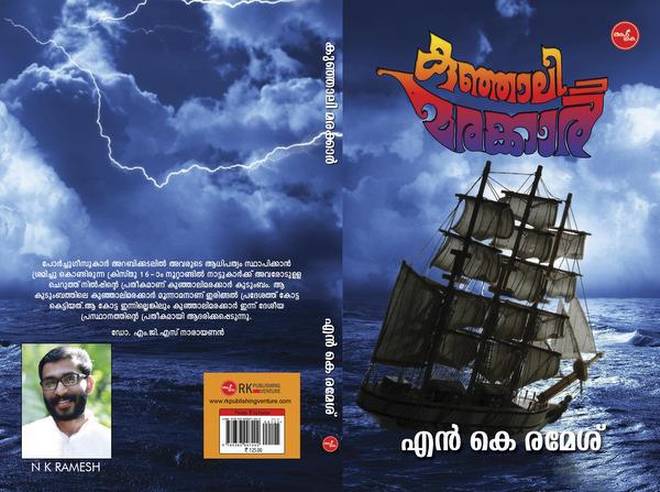
Illustrated book on legendary hero Kunjali Marakkar brought out for children
The popular witticism – when the going gets tough, the tough get going – has literally set off a young anthropologist- cum- archaeologist to author a book for children on Kunjali Marakkar, the legendary hero of the 16th century.
For N.K. Ramesh, a guide at the Kunjali Marakkar Memorial Museum at Vadakara, it was an opportunity to trace the history of the four Kunjali Marakkars, when his contract was terminated after the museum was closed to the public from March.
“Certainly a difference existed between writing for children and for adults. So I put down a simple narration and included illustrations based on important events during the period of Kunjali Marakkar and also a picture of a mural painting of a sea war,” he says.
Kunjali Marakkar was a honorific title given to the Muslim naval chief of the erstwhile Zamorin of Calicut. “The four Kunjali Marakkars who were the naval commanders of Zamorin fought against the Portuguese from 1507 to 1600. In fact, the Kunjali Marakkars were maritime merchants and supporters of Arab trade who lived in the coastal regions of Kayalpattinam, Kilakarai, Thoothukudi, and Karaikal. But they shifted their trade to Kochi and then migrated to Ponnani after Portuguese trade interference,” Mr. Ramesh says.
He took about four months to pen the book with 104 pages. The book has already hit the stands although the official launch has been deferred in view of the COVID-19 protocol.
Historian M.G.S. Narayanan has given an introduction to the book on Kunjali Marakkar, whose battles against the Portuguese were portrayed as a symbolic national movement.
The book also delves into the objective of the construction of a fort by Pattu Marakkar, the third Kunjali Marakkar, at Iringal (Kottakkal) in 1571 and the political dispute between his nephew Mohammed Marakkar, who became the fourth Kunjali Marakkar, and the Zamorin.
Later, the Zamorin joined hands with the Portuguese to defeat the last Kunjali Marakkar. The fort was also demolished and Kunjali executed by the Portuguese. The decline of Kunjali Marakkar, he says, led to establishment of Dutch Dominion and later British rule in India.
Mr. Ramesh, who holds a postgraduate degree in anthropology from Kannur university and Post M.Sc. Diploma in Museology from Aligarh Muslim University, has been credited with numerous discoveries, including the unearthing of Palaeolithic tools from north Malabar.
For a living, the 34-year-old is now engaged in de-husking at farms and odd jobs at Nadapuram and adjoining areas.
source: http://www.thehindu.com / The Hindu / Home> News> States> Kerala / by Biju Govind / Kozhikode – September 15th, 2020