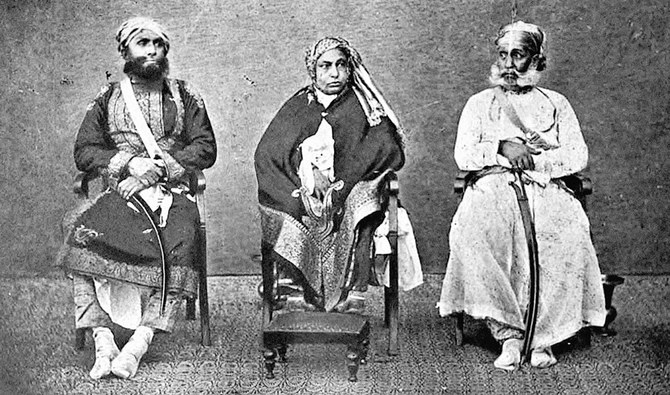
Sikandar Begum with her prime minister, left, and second minister. The photo was published in “A Pilgrimage to Mecca” (1870). (The Asiatic Society of Bombay via AN)
One of the most interesting aspects of Sikandar Begum’s account is her open criticism of Ottoman governance in Makkah
Imprecise library records obscured access to the original Urdu manuscript for decades
Warsaw :
History recently came to life in a manuscript with royal stamps discovered in the archives of SOAS University of London. The historic find? A tantalizing insight into the journey of the first ruler from the Indian subcontinent to set out for Hajj.
In November 1863, the ruler of the princely state of Bhopal, Sikandar Begum, began the sacred pilgrimage many other sovereigns of her time could not make for fear of losing power — in the 19th century, sea travel from India to Makkah meant long months of absence from the throne. Unlike them, Sikandar was safe. Her Hajj included a mission to compile a travelogue for those who guaranteed her reign.
Bhopal had gained independence from the declining Mughal Empire under Dost Mohammad Khan, a Pashtun warrior who, in the early 18th century, founded the Muslim state in today’s Madhya Pradesh. Under British rule, for more than a century the country was led by four women. Sikandar, who ruled from 1844 to 1868, was the most reform-oriented of them. She reorganized the army, appointed a consultative assembly and invested in free education for girls. She was also the first Indian ruler to replace Persian with vernacular Urdu as the official language.
In late January, SOAS librarians came across a title recorded in their archives’ catalogue as “‘Journal of a trip to Mecca’ by Skandar Baigam, Ra’isah’ of Bhopal. Bound manuscript in Urdu. Written at the suggestion of Major-General Sir Henry Marion Durand, 1883.”
“I was really intrigued that such a beautifully bound-in-silk manuscript with obvious royal stamps in its colophon could be linked to such an opaque and short library record,” SOAS Special Collections curator Dominique Akhoun-Schwarb told Arab News.
“It quickly became obvious that there was a bit more story and depth behind the note ‘written at the suggestion of Major-General Sir Henry Durand,’ when the author was a queen herself, a pioneer, since she was the first Indian ruler to have performed the Hajj and authored an account of her pilgrimage.”
The imprecise note had for decades obscured access to the text for researchers. A deformed transliteration of Sikandar’s name had compounded the issue.
Until the chance discovery a few months ago, all scholarship on the Bhopal ruler’s pilgrimage had to rely on two translations of the text as the original Urdu version had been missing for some 150 years. One was the abridgment of Sikandar’s account in Persian, compiled by her daughter, Shah Jahan Begum. The other one, “A Pilgrimage to Mecca, was an English translation by Emma Laura Willoughby-Osborne, wife of a British political agent in Bhopal, which was published in 1870, two years after Sikandar’s death. The two texts are quite different.
In the English version, Sikandar quotes a letter she received from Durand, the British colonial administrator mentioned in the SOAS record, and his wife: “He was anxious to hear what my impressions of Arabia generally, and of Mecca, in particular, might be. I replied that when I returned to Bhopal from the pilgrimage, I would comply with their request, and the present narrative is the result of that promise.”
The letter is nowhere to be found in the Persian text.
A preliminary reading by Arab News of the Urdu manuscript, which has been digitized by SOAS, reveals that Durand’s letter is mentioned in the very first pages of the text. The correspondence and accuracy of other parts, however, are not immediately obvious.
In the preface to “A Pilgrimage to Mecca,” Osborne said that the Urdu manuscript consisted of “rough notes” demanding some arrangement. According to Dr. Piotr Bachtin, from the Department of Iranian Studies of the University of Warsaw, who studied female pilgrimage of the era and translated the Persian version of Sikandar’s account, the English translator’s note immediately raises questions regarding Osborne’s interference in the text.
Osborne’s assurance that the only license she had allowed herself had been the “occasional transposition of a paragraph” seems to be an understatement. It appears that the text was heavily edited. Bachtin suggested that Sikandar might have been a “reporter” entrusted with a specific task and became an “incidental informer” in the service of the British Empire.
The most interesting aspect of the travelogue, which the manuscript may verify, was Sikandar’s political involvement with and open criticism of Ottoman governance in Makkah. One of the most prominent instances of Sikandar’s criticism is the following:
“The Sultan of Turkey gives thirty lakhs of rupees a year for the expenses incurred in keeping up the holy places at Mecca and Medina. But there is neither cleanliness in the city, nor are there any good arrangements made within the precincts of the shrines,” Sikandar wrote, adding that had the money been given to her, she would have made arrangements for a state of order and cleanliness. “I, in a few days, would effect a complete reformation!”
Sikandar’s political commentary is completely missing from the Persian version of her text. “Only in the English translation did she openly criticize both the Pasha and the Sharif of Makkah, going as far as to say that she would have managed Makkah better herself!” Bachtin said, “However, we must remember that her book was commissioned by Sir Henry Marion Durand. For me, this paradoxical dynamic is particularly interesting.”
With the original manuscript now available to researchers, further study should soon reveal how much of the Hajj account was informed by the colonial circumstances Sikandar faced at home, and to what extent it was guided by her own ambitions to be a modern and reformist Muslim ruler.
source: http://www.arabnews.com /Arab News / Home> Latest News> Middle East / by Natalia Laskowska / August 02nd, 2020
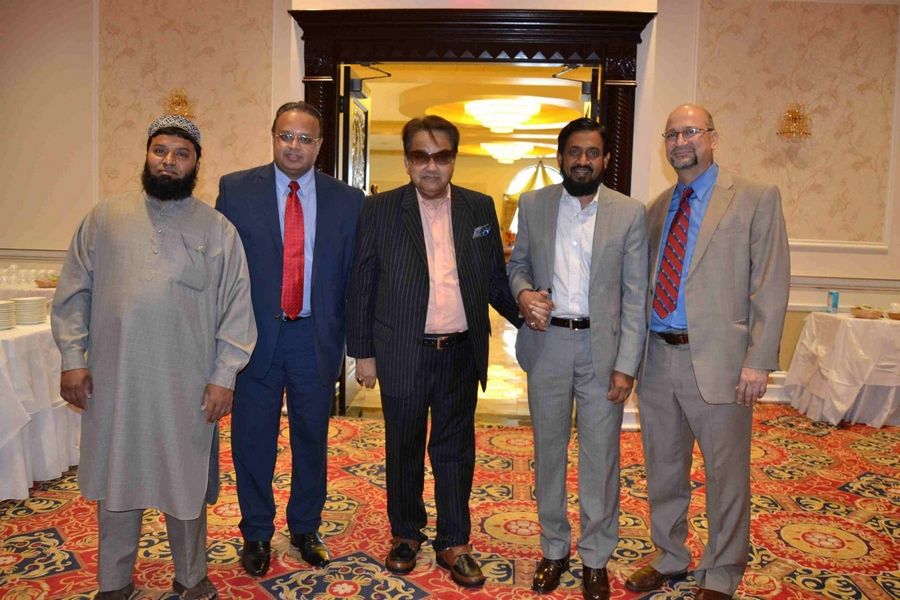
Khan Lateef Mohammed Khan, center, the editor-in-chief of the Munsif Daily, passed away Aug. 6 in Chicago. (Courtesy of Syed Ullah)
Lateef Mohammed Khan, who spent his life defending Urdu through journalism, books and lectures, died Aug. 6 at a local Chicago hospital. The 80-year-old worked in journalism for more than three decades, getting his start at the Munsif Daily, an Urdu language newspaper.
The Munsif Daily is an Urdu language newspaper published from Hyderabad in India. Its editor-in-chief was Khan Lateef Khan till yesterday. The Munsif Daily Is the largest circulated Urdu newspaper in South Asia. The paper was owned by Mahmood Ansari, when Masood Ansari fell seriously ill, the newspaper was sold to Khan Lateef Khan in 1996, who became editor-in-chief. He started the first Urdu satellite TV channel in India.
He was chairman of the Sultan ul Uloom Education Society. Khan was known for bringing in a revolutionary change in Urdu publications in the city by reintroducing the Munsif newspaper in color print 23 years ago.
Ali Khan, president and founder of Urdu Semaj Chicago, shared his condolences and said, “He was a legend in our community and a very genuine, gracious man in person and an acclaimed columnist. Sad to hear of his passing away today. This is a total loss for the whole community.”
Many renowned personalities including Dr. Qutub Uddin, Iftekhar Shareef, Azeem Quadeer, Saleem Abdul Rehman, Ishaan Ahmed, Kaleem Hasan, Omer Haqqani and many others paid tribute to his service.
Khan’s funeral services will be at the Muslim Community Center in Chicago after Friday prayers. He will be buried in Chicago.
source: http://www.dailyherald.com / Daily Herald / Home / by Syed Ullah / August 07th, 2020
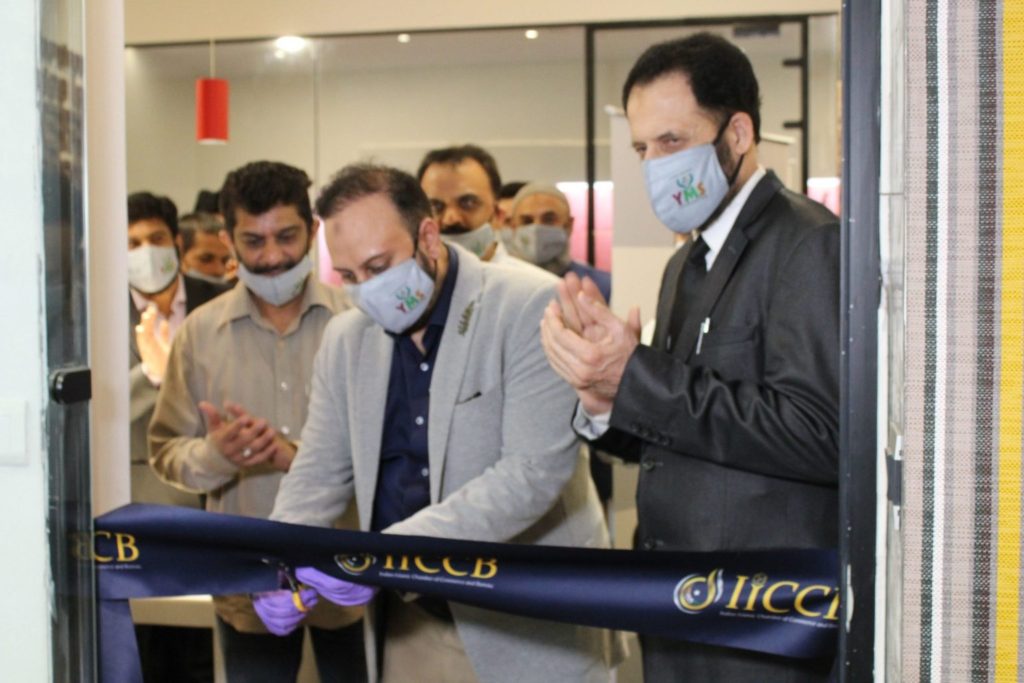
The Indian Islamic Chamber of Commerce and Bureau (IICCB) was launched on Thursday to provide support to Muslim businesses and entrepreneurs with resources, mentorship, networking and finance.
IICCB is a business chamber registered under The Indian Trust Act and is headquartered in Bangalore, with chapters in multiple states across India and in countries like the US, UK, Saudi Arabia, UAE and Canada.
The chamber aims to create a body of freelancers, SME’s, MSME’s, large corporates, professionals, consultants, start-ups, small entrepreneurs and to offer an industry-wide exchange of business ideas, exchange of opportunities, collaborations/partnerships, trade, investments, exchange of services, project funding, agent sourcing, overseas business expansion, rising funds, provide consultation, freelancing services & other advisory services to its members, according to Mr. K.M. Noorul Ameen, founder and patron the organisation.
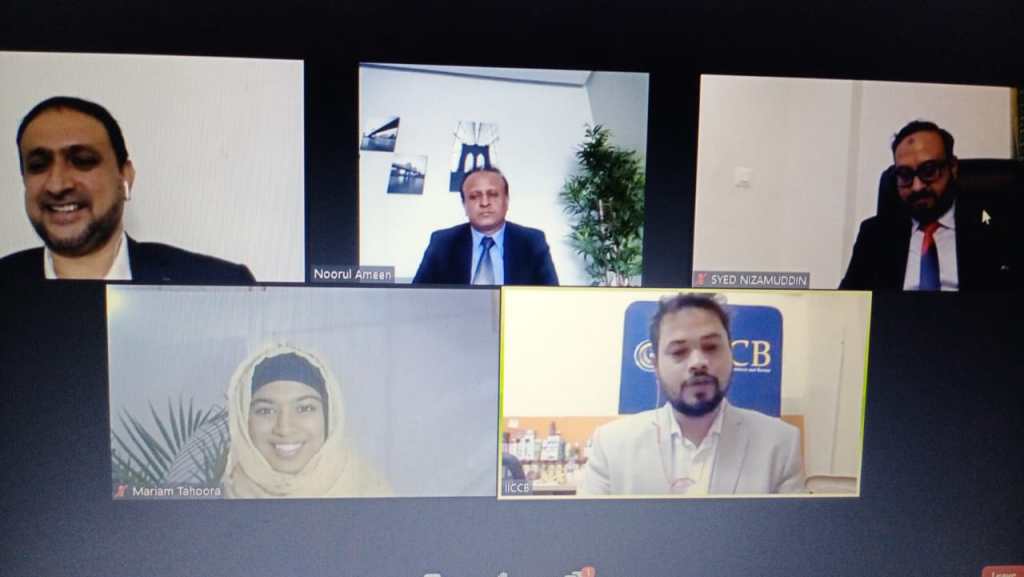
Considering the ongoing coronavirus pandemic, it was a virtual launch with over 400 attendees belonging to different backgrounds ensuring diversity.
The launch was led by Mr. Noorul Ameen who spoke at length about IICCB and its mission.
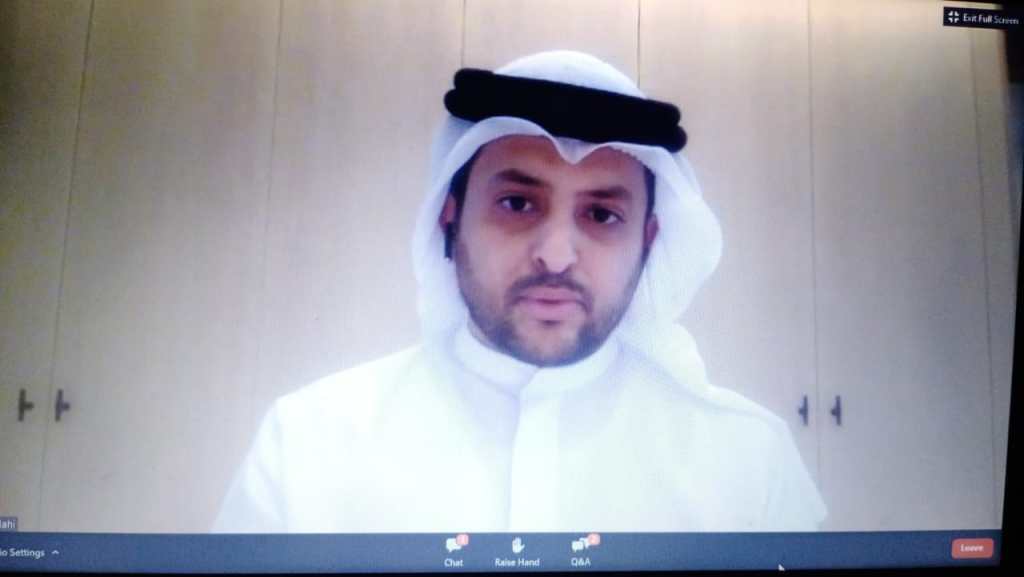
Ahmed Sultan Bin Harib Al Falahi, UAE Commercial Attaché to India.
Ahmad Sultan Bin Harib Alfalahi, UAE’s Commercial Attaché to India was the Guest of Honour for the event who expressed hope that the presence of a business chamber like IICCB in India will further enhance ties between India and UAE.
IICCB also aims to create awareness of business opportunities and promote ideas for national and international collaboration among its members.
The organisation is taking in registrations for new members on its website.
source: http://www.thecognate.com / The Cognate / Home> Business / by The Cognate News Desk / July 30th, 2020
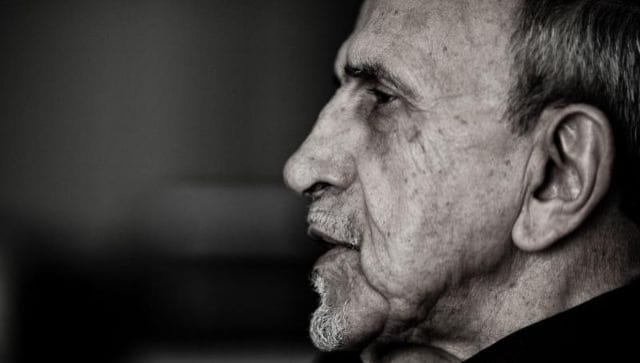
For an ephemeral form such as live theatre, where the works of most masters, especially theatre directors, disappear in the mist with their passing, it’s heartening that Ebrahim Alkazi’s legacy has been preserved for a posterity he had emphatically staked a claim to more than a half-century ago.
The grand old man of Indian theatre has passed into eternal incandescence, joining the extended roster of eminent luminaries who have left us this year. The extraordinary Ebrahim Alkazi wore many hats – unparalleled theatre doyen, a driven connoisseur of the arts, cultural ambassador – and leaves behind a staggering legacy as one of the most distinctive architects of 20th-century Indian theatre. He was 94, and the high point of his career in the performing arts was arguably his 15-year tenure as the director of the National School of Drama (NSD), from 1962 to 1977. Such was his trailblazing contribution to theatre and its practice, that the Sangeet Natak Akademi accorded him their highest honour, the Akademi Ratna, for lifetime achievement in 1967. No person below the age of 50 is ordinarily considered for this: Alkazi was just 42 when he received it, and remains one of its youngest recipients.
Alkazi grew up in a household of nine children. His family migrated from sun-kissed Unaizah in Saudi Arabia to salubrious Pune, where he was born in 1925, coming of age during World War II. He juggled Arabic tutelage and lessons on the Quran at home with convent education in English and French at the historically significant St Vincent’s High School. “That [blend] had its limitations but it opened up a whole world for me, almost half of mankind,” he told television anchor Syed Mohd Irfan. It was a charmed childhood in which books were never out of reach. From staging one-act plays at school, Alkazi moved to mature productions like Salomé and Othello at St Xavier’s College, with the charismatic Oxford-returned Sultan ‘Bobby’ Padamsee’s Theatre Group. The latter’s untimely demise in 1946 saw Alkazi take over the reins of the group; he later married Padamsee’s sister, Roshen.
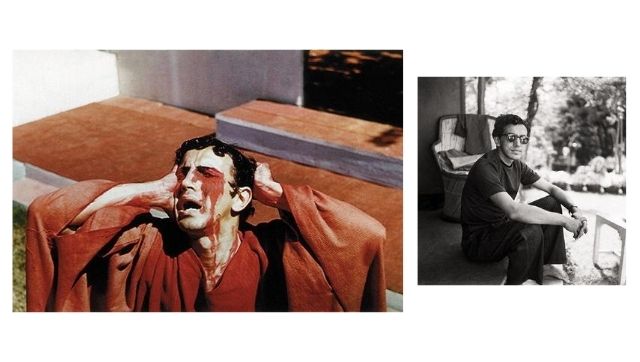
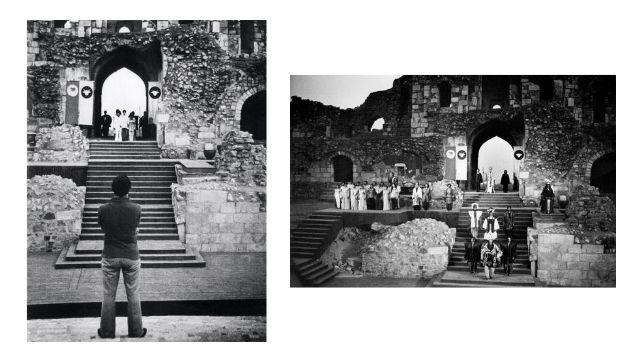
(Left): Alkazi as Oedipus in Oedipus Rex | Theater Group’s production, Bombay, 1954
In the 1950s, after a somewhat unsatisfactory stint as an acting student at the Royal Academy of Dramatic Arts, he returned to an India on the cusp of a first-wave cultural renaissance. “[RADA was] a rather closed institution, one which had not opened itself out to living theatre movements in other parts of the world,” he said in The Journal of South Asian Literature. That said, his own output as director with Theatre Group, and later Theatre Unit, was primarily productions of European and American plays in English. Working out of a bustling Mumbai terrace, his erstwhile collaborators included Gerson da Cunha, Satyadev Dubey, Usha Amin and Alaknanda Samarth.
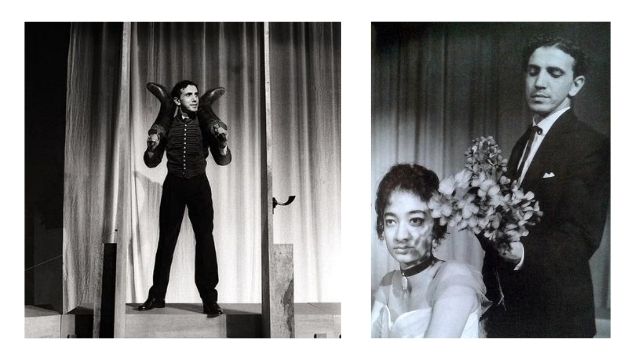
One show particularly memorable was Alkazi’s 1959 production of August Strindberg’s Miss Julie, based on a blue-blooded woman’s tryst with her intensely impassive valet, in which he starred opposite Samarth. In Shanta Gokhale’s The Scenes We Made, Samarth remembers the play as a series of heightened, distanced, restrained images: “the final exit, an excruciatingly slow, steady walk on high heels through a guillotine-like door on to a ramp horizontal to the lit cyclorama.” Alkazi’s signature tools and approaches were crystallised during this phase. “I acquired administrative skills, learnt to employ ancient Indian arts like Iyengar Yoga and Kathakali in the practice of theatre, communicated a sense of social responsibility to my troupers who learnt to value their group activity as professional, meaningful, relevant, transformative,” he told journalist Sunil Mehra, of this decade-long inning of innovation and consolidation.
(Right): Alkazi in Shanta Gokhale’s The Scenes We Made.
Alkazi was hand-picked by the government to lead the Akademi’s newly formed drama school in Delhi, but after declining several times, he finally took over as NSD’s director in 1962, succeeding Satu Sen, the pioneering lights technician from Bengal. “They gave me a carte blanche to take charge, laying out the red carpet,” he remembered. Under Alkazi, the foundation for the NSD’s multi-pronged pedagogical programme was set in stone. It presented a coalescing of a Western approach to drama with India’s ‘theatre of roots’. And, as a director with a constant supply of dedicated actors, students and alumni (some of whom joined the school’s professional repertory company) alike, he was able to add substantially to his own distinguished oeuvre.
Some of his best-known works were staged in historical monuments and attracted audiences from a wide cross-section of society, from ticket-paying middle-class audiences to Prime Minister Jawaharlal Nehru, who was astounded by this rooted-yet-global brand of Indian theatre. His prized troika of productions include Mohan Rakesh’s Ashadh Ka Ek Din, Girish Karnad’s Tughlaq and Dharamvir Bharati’s Andha Yug, one of his earliest NSD stagings in which he commandeered what was essentially a radio play to create a spectacle in the mould of classical Greek theatre, with the bolstered ruins of Feroze Shah Kotla providing a staging of multiple levels, and unmistakable political echoes. The play placed Alkazi firmly on the national stage, even if the plays didn’t really cross over. When asked by Irfan about why the works did not ‘reach the people’ they were ostensibly intended for, he replied dismissively: “That’s their fault. We toured a lot with it.” Even in its large open-air spaces, the notion of the NSD as an insulated echo chamber set root in the Alkazi era.
Alkazi directing Dharamvir Bharati’s Andha Yug at the ruins of Feroze Shah Kotla.
Among the many illustrious graduates of the NSD who benefited directly from his tutelage, were actors like Naseeruddin Shah, Om Puri, Pankaj Kapur, Rohini Hattangadi and Surekha Sikri; and directors like Sai Paranjpe, Prasanna, Neelam Mansingh Chowdhry and Om Shivpuri — all stalwarts of the theatre business spanning generations and sensibilities. In his memoir, And Then One Day, Shah writes, “In Alkazi I had at last found an inspiring teacher, one who liked and appreciated me and didn’t make me feel like a fool, one who was interested in helping me improve my mind, and pushed hard to make me realise the potential he perceived in me.”
In the initial years, Alkazi had his students dig up the backyard of the rented house in New Delhi’s Kailash Colony, that the school operated from, to create a performing stage. Later, he designed two new theatres at the NSD’s present location at the Bahawalpur House, the former residence of the Nawab of Bahawalpur in Delhi. A 200-seater studio theatre, and the open-air Meghdoot Theatre, under a banyan tree, both of which are now housed in a complex christened the E Alkazi Rangpeeth in 2017, to mark 50 years of their inception.
In 1977, Alkazi resigned from the directorship of the school that had become synonymous with his identity. In Anil Dharker’s Icons, da Cunha describes the ‘abdication’ as “a casualty of the bureaucracy and the lobbies he had successfully skirted for many years [also known as] the notorious Delhi Syndrome.” There was an emergent tribe of detractors who enumerated the chinks in his armour, from an unmistakable hubris to an autocratic administrative flair to the creative belligerence and brute stamina that he brought to the rehearsal room, albeit in the kind of controlled environment that his protégés and imitators were loathed to replicate. Shah places his mentor’s processes in the context in an interview, “Any theatre activity is not a democratic process. There has to be a leader, so the charge that Alkazi was autocratic is baseless. Rather than his so-called elitism and arrogance, his students have inherited his discipline, dedication and ability to work himself to the bone. NSD has never quite been the same, his successors unable to shrug off the ghost of Alkazi that hovers around all the time.”
In Mehra’s 1996 article, director Anuradha Kapur says, “Undeniably, he professionalised theatre. One’s differences may be ideological vis-a-vis his characters’ sexual politics, motivations. But then he was a creature of his time.” On his perceived non-combativeness during the Emergency, Alkazi said, “Cheap sloganeering is not the work of academic institutions,” calling attention instead to the political subtext of the plays he staged around then. In 1975, he had said, “I think there is a very close connection between politics and theatre, between social conditions and theatre. I think theatre needs to play an even more active part in shaping the way people live, in creating a progressive form of government which is meaningful to large numbers of people.”
Of course, the closing of a chapter marked the beginning of another innings that took up much of the maestro’s later decades. With Roshen, he founded the Art Heritage Gallery in Delhi the same year he bid adieu to theatre (although there would be an ill-fated comeback). The full extent of his journey was the subject of a travelling exhibition and book, The Theatre of E. Alkazi – A Modernist Approach To Indian Theatre, put together by his daughter, theatre director Amal Allana, and her husband, the stage designer Nissar Allana. As this writer had written about the showcase, “Panels emblazoned The Alkazi Times present the signposts of Alkazi’s life as news clippings, interspersed with actual microfiche footage — ascensions of kings and prime ministers, declarations of war and independence, and even snapshots from theatre history. It is certainly monumental in scale, full of information about Alkazi’s genealogy, childhood, education and illustrious career. While there is the slightest whiff of propaganda, it is whittled down by Allana’s skills as a self-effacing raconteur during the talks. Her accounts are peppered with heart-warming personal anecdotes that give us a measure of the real person behind the bronzed persona.”
For such an ephemeral form as live theatre, the works of most masters, especially theatre directors, disappear in the mist with their passing. It’s heartening that Alkazi’s legacy has been preserved for a posterity he had emphatically staked a claim to more than a half-century ago.
— All images via Facebook
source: http//www.firstpost.com / Firstpost / Home> Art & Culture> News / by Vikram Phukan / August 05th, 2020
Baroda, MADHYA PRADESH / Paris, FRANCE / London, UNITED KINGDOM :
If the proposal is passed, it will be the first time that non-white people will be featured on British coins or notes.
Born in Moscow to an Indian father and an American mother, Noor’s family moved to London and then to Paris during the First World War. (Source: Wikimedia Commons)
British media reported this week that Rishi Sunak, the Chancellor of the Exchequer, is considering a proposal to feature historical figures from the Black, Asian and minority ethnic (BAME) community of the country on a set of coins titled ‘Service to the Nation’.
If the proposal is passed, it will be the first time that non-white people will be featured on British coins or notes. The plan has been submitted to the Royal Mint, which is to come up with proposals and designs.
Zehra Zaidi of the advocacy campaign ‘Banknotes of Colour’, along with a group of historians and MPs, had written to the Chancellor proposing some historical figures. Among them were the Indian-origin British spy Noor Inayat Khan, as well as Khudadad Khan, the first soldier of the British Indian Army to receive the Victoria Cross. Khudadad Khan, who belonged to the Chakwal district of Punjab in present-day Pakistan, died in 1971.
The continuing Black Lives Matter protests in the United States , triggered by the killing of George Floyd by a police officer in Minneapolis in May, which have put a spotlight on the lack of BAME representation in the UK, and have compelled authorities to take appropriate steps.
Who was Noor Inayat Khan?
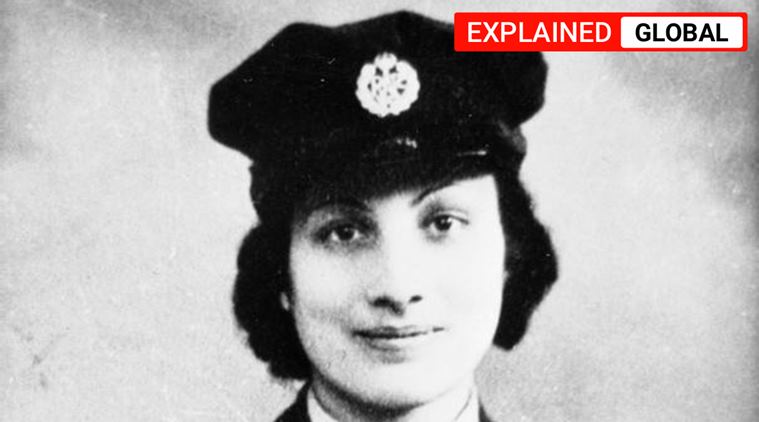
Born in Moscow to an Indian father and an American mother, her family moved to London and then to Paris during the First World War. Although Noor started working as a children’s writer in Paris, she escaped to England after the fall of France (when it was invaded by Germany) during the Second World War.
In November 1940, she joined the Women’s Auxiliary Air Force, an arm of the UK’s Royal Air Force to train as a wireless operator. She then did a stint at the secret intelligence organisation set up by Winston Churchill called Special Operations Executive (SOE).
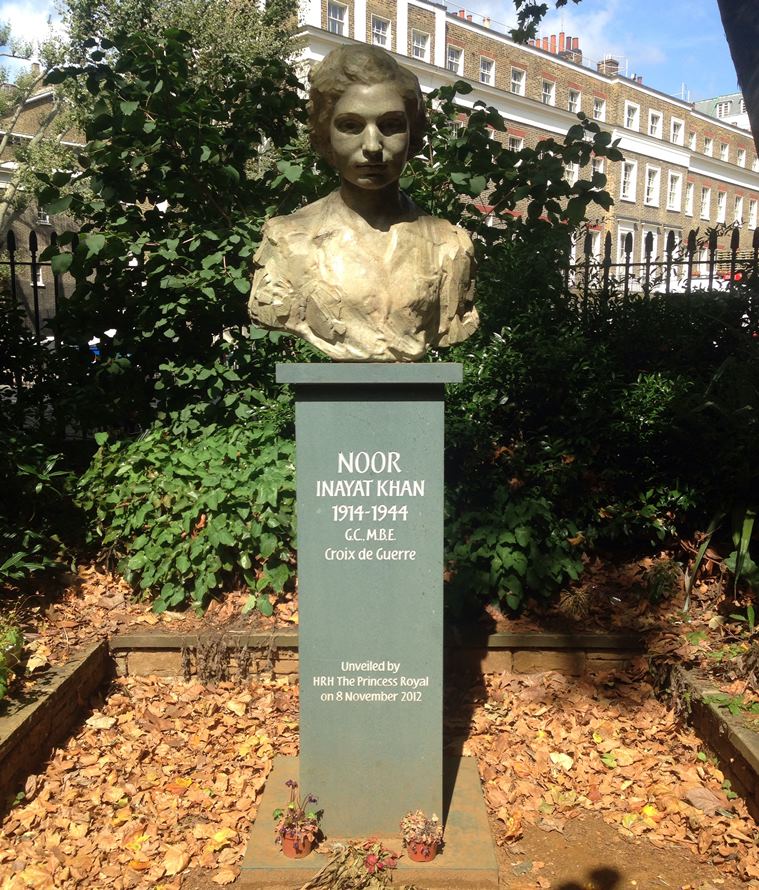
A bust of Noor Inayat Khan in Gordon Square, London. (Source: Wikimedia Commons)
She became the first radio operator to be sent to Paris to work for SOE’s Prosper resistance network under the codename Madeleine. She was just 29 then, and had signed up for a job in which people were not expected to be alive for longer than six weeks.
Even as many members of the network were being arrested by the Nazi secret police Gestapo, Noor chose to stay put — and spent the summer moving from one place to another, sending messages back to London, until she was arrested in 1943.
She was executed at the Dachau concentration camp in southern Germany near Munich. Noor was awarded the highest honour in the UK, the George Cross, in 1949, and the French Croix de Guerre with the silver star posthumously.
What was Noor’s connection to India?
She was connected to India through her father Inayat Khan. He was founder of the Sufi Order of the West, which is now known as the Inayati Order. He had migrated to the West as n Hindustani classical musician, and then moved to teaching Sufism.
Inayat Khan was born in Baroda. His maternal grandfather was the noted musician Ustad Maula Bakhsh Khan, who founded the music academy Gyanshala, which now serves as the Faculty of Performing Arts at Maharaja Sayajirao University. Maula Bakhsh’s wife, Qasim Bibi, was a granddaughter of Tipu Sultan of Mysore.
Inayat returned to India in 1926 and chose the site of his burial at the Nizamuddin Dargah complex in New Delhi. The Inayat Khan dargah still stands in a corner of the complex.
Besides being a GC, what other honours has Noor received?
In 2014, Britain’s Royal Mail had issued a postage stamp in honour of Noor as part of a set of 10 stamps in the ‘Remarkable Lives’ series. In 2012, a memorial with a bust of Noor was unveiled in London by Princess Anne. Shrabani Basu, author of ‘Spy Princess, The Life of Noor Inayat Khan’, and Chair of the Noor Inayat Khan Memorial Trust, had campaigned for the memorial.
In February 2019, Noor’s London home at 4 Taviton Street in Bloomsbury, the house that she left for her final mission, was honoured with a blue plaque. She was the first Indian-origin woman to be awarded the plaque.
How has Noor been represented in popular culture?
Various documentaries on women agents and the SOE have featured her story, such as Netflix’s ‘Churchill’s Secret Agents: The New Recruits’. In 2018, a play titled ‘Agent Madeleine’ premiered at the Ottawa Fringe Festival.
In 2012, Indian producers Zafar Hai and Tabrez Noorani obtained the film rights to the biography by Basu. In the film ‘Liberté: A Call to Spy’, an American historical drama, actor Radhike Apte played the role of Noor. The film had its world premiere at the Edinburgh International Film Festival last year.
source: http://www.indianexpress.com / The Indian Express / Home> Explained / by Surbhi Gupta / New Delhi / July 29th, 2020
AHMAD ZAIDI, who is originally from Aligarh, Uttar Pradesh, and is a 1985 Electrical Engineering graduate from the Thapar Institute of Technology, Karnal, Haryana, epitomizes a brilliant success story in United States.
Zaidi is currently a vice-President at the world-renowned hi-tech giant, the Intel Corporation in the Silicon Valley in California, US. He is among the very select band of bright young minds who migrated to US from India looking to contribute to the development of high technology and to making America great and India proud.
Zaidi holds nine patents in the field of microprocessor design and architecture. In US he earned a master’s degree in electrical engineering from Virginia Polytechnic Institute and State University, Blacksburg, Virginia, in 1987.
In 2009, Zaidi was presented an award by the Malaysian minister for setting up the Embedded Silicon Design Center in Penang, Malaysia. In addition, he and his teams have been honored with multiple technical awards, including an Intel Software Quality Award in 2011 and an Intel Achievement Award in 2012.
Ahmad Zaidi is vice president of the Platform Engineering Group and general manager of the Embedded Subsystems and Intellectual Property (IP) Blocks Group at Intel Corporation. He is also responsible for Security Silicon Engineering and manages Security CPU and IP engineering for the Intel Security Group. He leads an organisation that spans sites in the United States, Malaysia, Israel, Poland and India, and is responsible for delivering hardware, software, firmware IP subsystems and soft IP blocks for Intel products across all product segments. His group is chartered with delivering IP in areas such as audio, voice, speech, sensors, security, Input/Output (I/O) technologies and software related to storage, communications and manageability.
Since joining Intel in 1987 as an engineer in the microprocessor unit at Cupertino, CA, Zaidi has progressed rapidly and has held a number of senior technical and management positions in microprocessor design, embedded systems and communications. Before assuming his current position, he was the general manager of the Chipset and System-on-Chip (SoC) IP Group where he was responsible for delivering chipset hardware, firmware and software for Intel’s client platforms in addition to leading the development of reusable IP blocks for Intel products across all segments.
Prior to that, Zaidi was the general manager at Intel Corporation of the Embedded and Communications Silicon Engineering Group, where he led a cross-geography team responsible for delivering SoC and chipset products for the embedded and communications market segment. Earlier in his Intel career, Zaidi served as director of the Silicon Engineering, Infrastructure and Network Processor divisions and as engineering manager on the first Intel® Itanium® processor.
Ahmad Zaidi lives in Cupertino, CA with his wife and two children. His father was an engineering manager at the Fertilizer Corporation in Paniput, Haryana. As a young man, Zaidi grew up in Paniput.
source: http://www.clarionindia.net/ Clarion India / Home> Indian Muslims / by Kaleem Kawaja, Clarion India / July 18th, 2020
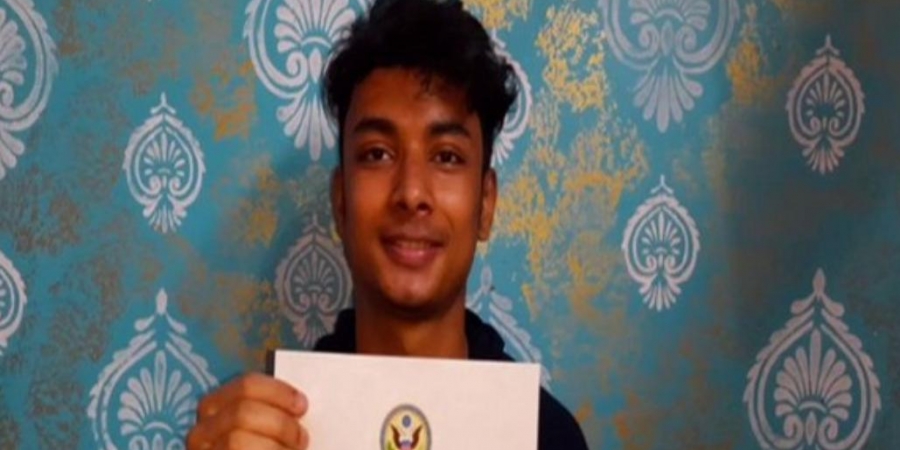
Mohammad Shadab expressed the desire to work at the United Nations as a human rights officer.
Mohammad Shadab, son of the motor mechanic wishes to work at the United Nations. (Photo | ANI)
Aligarh :
The son of a motor mechanic in Aligarh, who had received a scholarship, topped at his high school in the United States.
Mohammad Shadab, son of the motor mechanic, said, “Last year, I received the Kennedy-Lugar youth exchange scholarship worth Rs 20 lakh from the US government. Following this, I went to the States to pursue my high school education.”
Out of 800 students, Shadab was also selected Student of the Month at his school. On his achievement, he said, “It was an achievement for me to be awarded this tag.”
“I have worked really hard to top the high school,” Shabad said.
Shadab said, “The condition at home was not good and it is still not that good. I want to support my parents and make them feel proud.”
He also thanked the Indian government. “I am thankful to the Indian government for making me the flag-bearer in another county and choosing me for this scholarship.”
Shabad’s father, Arshad Noor, who is working as a motor mechanic for the past 25 years, said, “We had sent him to the US for his education and I am happy that he topped at the school.”
On being asked about his son, Arshad said, “I want my son to become an IAS officer and serve the country.”
But Shadab expressed the desire to work at the United Nations as a human rights officer.
source: http://www.newindianexpress.com / The New Indian Express / Home> Good News / by ANI / July 20th, 2020
After all those days of hate, there was redemption for Tablighi Jamaat in the end. Some say it was in keeping with what Quran teaches.
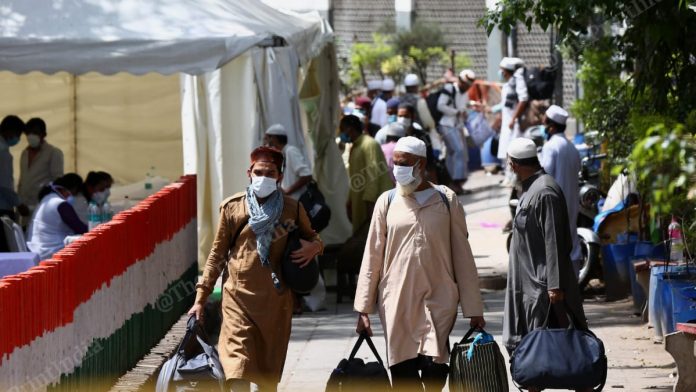
Nearly 4,000, including foreigners, had attended the Tablighi Jamaat event in Delhi (representational image) | Photo : Suraj Singh Bisht | ThePrint
Elisabeth Kubler-Ross’s seminal work, Death and Dying, describes the five distinct stages of grief: denial, anger, bargaining, depression and acceptance. While the Swiss-American psychiatrist was speaking about the series of emotions terminally ill patients go through, the first of the five stages that she postulated possibly holds true for a section of India’s people when the country was trying to come to terms with COVID-19 in the initial days of the pandemic.
The spread of the virus in the early months had then exposed the country’s second-largest religious group to a vulnerability born out of denial. Indiscretion and reckless behaviour by members of the Tablighi Jamaat had purportedly led to a spurt in coronavirus-positive cases, not only in Delhi but also in many other parts of the country.
An international gathering of Tablighis — preachers or a society to spread the faith —had taken place in New Delhi’s Nizamuddin area in March 2020, drawing hundreds of foreign nationals from Thailand, Nepal, Myanmar, Indonesia, Bangladesh, Malaysia, Sri Lanka and Kyrgyzstan. Despite a government order prohibiting large gatherings, more than 4,500 people had assembled at the Tablighi Jamaat Markaz (headquarters).
Media reports had quoted government sources as saying that since 1 January 2020, over 2,000 foreigners from 70 countries had arrived in India to participate in Jamaat activities. As the Covid-19 lockdown came into force on 25 March 2020, over 1,000 were left stranded in Nizamuddin.
Within days, a state of panic had set in as reports of Covid-19 deaths and positive cases started coming in from various parts of the country. By early April, private television news channels had begun insisting that over 30 per cent of the corona-positive cases had the “Tablighi Virus.”
Political factors were at play too. The country was already in ferment over the Citizenship Amendment Act and the National Register of Citizens.
The Tablighis’ state of alleged ignorance was dubbed a “Himalayan” blunder as a heavy dose of media onslaught, Islamophobia and blame game followed. As Najmul Hoda, a Chennai-based IPS officer, lamented on his Facebook wall, Covid-19 looked like a common cold in comparison to the plague of communal hatred.
Tablighi virus, Corona Jihad, stories of discrimination, Quran, divine injunction, Muslim society, deadly virus, Covid-19, Muslim clergy, Indian Muslims, social distancing, community prayers, letter of appreciation.
Political factors were at play too. The country was already in ferment over the Citizenship Amendment Act and the National Register of Citizens. Shaheen Bagh and its women protesters were making international headlines and the February 2020 riots in Delhi had deepened the sectarian divide, exacerbating religious tensions. It was in this situation that the Tablighi Jamaat held its congregation. According to data shared by Equality Labs (a digital human rights group) with TIME magazine, the hashtag ‘Corona Jihad’ appeared nearly 300,000 times.
The online attack became more and more vicious as reports of people leaving for different parts of the country from the Markaz poured in. For days, “Tablighi virus” and “Corona Jihad” trended on Twitter. Our entire focus shifted from fighting and containing COVID-19 to fighting the Tablighis and the Muslims, who the general population started equating as one and the same. Those were the initial days of our COVID-stricken lives, unsure of what awaited us and we were quick to blame the Markaz for all our misery.
The usual practice of portraying Muslims as the other came into play, as did indulging in victimhood.
In the midst of this Islamophobic onslaught, many articles and tweets expressed fears of a Muslim apartheid. The usual practice of portraying Muslims as the other came into play, as did indulging in victimhood.
“Social media, as ever, remained truculent and toxic. Generally speaking, Muslims continue to use social media space to indulge in their victimhood addiction,” observed Najmul Hoda.
While the community needed to address the elephant in the room and could not be absolved of its responsibility for wrongful acts by the Tablighis, the polarised discourse that was unleashed in mainstream media impacted the psyche of the general population. Most Muslims came out against the Jamaat, but the entire community was still clubbed together and labelled the “Superspreader”.
But the way the Tablighi Jamaat’s role and, by extension, of the entire Muslim population’s involvement in the spread of the virus was covered by the mainstream media, it suddenly felt that Covid-19 had a religion.
The Tablighis were guilty for sure for the congregation of thousands of people despite the prohibitory orders, and of not reporting cases, but the wave of hatred failed to see that the Tablighi Jamaat is not the sole representative of India’s 170 million Muslims and its actions should not be linked with the larger community. It is also pertinent to note that the Tablighi Jamaat preaches a narrow interpretation of Islam to some sections of Muslim society.
But the way the Tablighi Jamaat’s role and, by extension, of the entire Muslim population’s involvement in the spread of the virus was covered by the mainstream media, it suddenly felt that COVID-19 had a religion.
Soon, stories of discrimination against the poorer sections among Muslims started coming out. NDTV reported how vendors in Mahoba district of Uttar Pradesh were allegedly targeted and stopped from selling vegetables by people who accused them of being members of the Tablighi Jamaat and of spreading the coronavirus.
Old sociological problems, such as overcrowded ghettos, lack of hygiene and low levels of awareness, became handy tools again to stigmatise the community.
The Bharatiya Janata Party (BJP) MLA from Deoria in Uttar Pradesh, Suresh Tiwari, warned people against buying vegetables from Muslims. The defiant leader was later asked to explain his comment by his party chief.
A video shared widely on Facebook and on Twitter purportedly showed Muslims intentionally sneezing on each other. It was later debunked by the fact-checking website AltNews.
Tablighi virus, Corona Jihad, stories of discrimination, Quran, divine injunction, Muslim society, deadly virus, Covid-19, Muslim clergy, Indian Muslims, social distancing, community prayers, letter of appreciation
Several video clips purportedly showing COVID-positive members of the Tablighi Jamaat misbehaving with hospital staff and other patients found space on prime-time debates. Old sociological problems, such as overcrowded ghettos, lack of hygiene and low levels of awareness, became handy tools again to stigmatise the community.
The reaction from the community was at times defiant, while some took to social media to counter the hate being peddled with tweets that were either equally toxic or full of self-pity.
A closer look at the role the Muslim clergy played reveals a far more constructive engagement than what has been projected by the mainstream media.
It was at this point that the Muslim clergy, intellectuals and other community leaders stepped in. On 2 April, seven signatories — Dr. Zafarul Islam Khan, Chairman, Delhi Minorities Commission; Prof. Akhtarul Wasey, President, Maulana Azad University, Jodhpur; Prof. Mohsin Usmani Nadwi, President, Human Welfare Society; Prof. A.R. Kidwai, Director, K.A. Nizami Center for Quranic studies, AMU; Masoom Moradabadi, Secretary, All India Urdu Editors Conference; Zaheeruddin Ali Khan, Managing Editor, Daily Siasat, Hyderabad, and Prof. Iqtedar Mohd. Khan, Deptt. Islamic Studies, Jamia Millia Islamia, Delhi — issued an appeal to the government to take into consideration the “genuine constraints faced by certain people.” They argued that it was not a time to find fault. “Any attempt to give it a sectarian twist would weaken our battle against the deadly virus,” they said.
A closer look at the role the Muslim clergy played reveals a far more constructive engagement than what has been projected by the mainstream media. As early as 6 March, Maulana Khalid Rasheed Firangimahli, Lucknow-based Imam, Eidgah, had asked mosque-going Muslims to take preventive measures against Covid-19, and told them to avoid congregations and coughing and sneezing in public.
Firangimahli was among many religious heads across the country who issued fatwas saying that the fight against the coronavirus was a religious obligation.
A broad consensus that was worked out decided against special Eid prayers at Eidgahs and at mosques, etc. Islamic seminaries, such as the Darul Uloom, Nadwa and Deoband, issued fatwas asking the faithful to offer Eid prayers at home.
A major challenge came during the month-long period of Ramadan — that began in the last week of April — in terms of enforcing social distancing and avoiding guests at the breaking of fast (iftar) and at community prayers (tarahwih), etc. But enforcing a sense of discipline among 170 million people sharply divided on sectarian and linguistic lines was done with remarkable ease and voluntary compliance.
As Ramadan is closely followed by Eid, suspension of the customary Eid prayer posed another hurdle. However, a broad consensus that was worked out decided against special Eid prayers at Eidgahs (where special Eid prayers are held) and at mosques, etc. Islamic seminaries, such as the Darul Uloom, Nadwa and Deoband, issued fatwas asking the faithful to offer Eid prayers at home.
The results were so good that Uttar Pradesh Chief Minister Yogi Adityanath called up Firangimahli in Lucknow and congratulated him, saying that Eid prayers throughout the state had been observed without any incident of the virus spreading. The state government also issued a letter of appreciation.
Those members of the Tablighi Jamaat who had tested positive for the virus, and have since been cured, came forward in huge numbers to donate their blood plasma — containing anti-viral antibodies — and helped cure many affected people.
Eid ul-Fitr 2020 saw the largest ever participation of women in family prayers. That prompted Najmul Huda, the IPS officer, to say “thanks” to the virus for bringing gender equality to every Muslim home. “May it get institutionalised. Corona, I can’t really say thank you to you, but it’s thanks to you,” he wrote .
There were other positives too. Charity acted as a great succor as appeals were issued to channelise Ramadan and Eid shopping for the needy. Maulana Naeem Ur Rahman Siddiqui, secretary of the Islamic Centre of India, claims that zakat — or charity — saw a rise of over 50 per cent as compared to the previous year.
Not to forget, the redemption and acknowledgement that came after all those days of hate. If the members of the Tablighi Jamaat were guilty of ignorance in the initial phase of the pandemic, they turned adversity they had wrought upon themselves into opportunity in the form of penance. Those who had tested positive for the virus, and have since been cured, came forward in huge numbers to donate their blood plasma — containing anti-viral antibodies — and helped cure many affected people.
Some say it was in keeping with what the Quran teaches — that divine injunction is not for returning evil with good, but with the best. It says: “Good and evil are not equal. Repel (evil) with what is best, and you will see that the one you had mutual enmity with, will become the closest of friends.” (41:34)
Rasheed Kidwai is Visiting Fellow at Observer Research Foundation (ORF). He tracks politics and governance in India. Naghma is Senior Fellow at ORF. She tracks India’s neighbourhood — Pakistan and China — alongside other geopolitical developments in the region. Views are personal.
This article was first published by ORF.
source: http://www.theprint.in / The Print / Home> Opinion / by Rasheed Kidwai and Naghma Sahar / July 12th, 2020
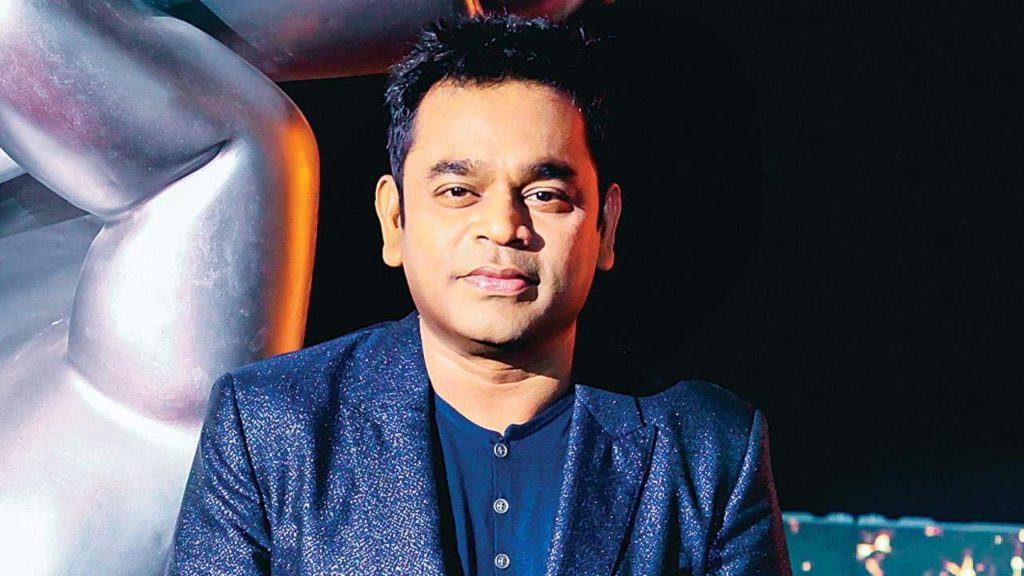
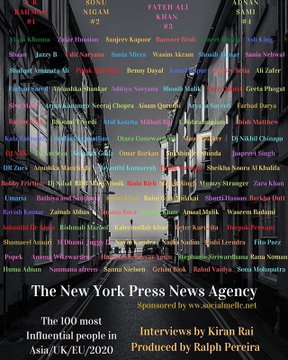
A.R. Rahman has been named the most influential person in Asia by the New York Press News Agency. The others in the list of 100 include Shruti Haasan, Benny Dayal, Sania Mirza, Saina Nehwal and Wasim Akram.
The Isaipuyal’s current release ‘Dil Bechara’ touted as the last movie of Sushant Singh Rajput is streaming on Disney Plus Hotstar. His upcoming films include Mani Ratnam’s multistarrer ‘Ponniyin Selvan’, Vikram’s ‘Cobra’, Sivakarthikeyan’s ‘Ayalaan’ and Dhanush’s Bollywood venture ‘Atrangi De’.
The multifaceted Shruti Haasan who is currently starring in ‘Laabam’ with Vijay Sethupathi has posted a video on her social media page expressing her thanks for the recognition. She has written “I’m so honored to be voted one of the 100 most influential people in Asia 2020. Interviewed by Kiran Rai @kiran_rai99. Talking about a whole bunch of fun things !! Stay tuned”.
source: http://www.indiaglitz.com / IndiaGlitz / Home> Tamil > Cinema News / July 16th, 2020
A city-level task force of medical experts, philanthropists, social activists and Medical College Alumnus Association has been set up to fight against the coronavirus pandemic.
The task force monitored by Mohammed Asif Hussain Sohail, Chairman of Sakina Foundation and President of Telangana Parents Association For Child Rights and Safety. This force also includes a group of 25 national and international organisations, Doctors Association and doctors from other countries like Dr. Aslam of America whose roots are in Hyderabad. They have come together on a single platform to combat coronavirus.
This programme has been named as ‘Hyderabad COVID Task Force.’
Member of Hyderabad COVID Task Force, Mohd Asif Hussain Sohail said, “The idea of setting up the task force was conceptualised seeing the pain and sufferings of the Hyderabadis for medical treatment, ration and food especially funerals. The Task Force aims to serve the people who are facing difficulties during the pandemic. Hyderabad Covid Task Force is going to conduct awareness on Covid-19 pandemic in colonies particularly in the city’s slums. They will provide aid to COVID-19 patients for the medical treatment, food for patients and their attendants in hospitals. It will also help the family also organise final rides, land for the burial, final ablution and even for the other community people of the deceased persons died to COVID-19,” Asif Hussain told Siasat.com.
As a large number of people in the city are also being suffering from a viral fever which has created panic among them and they are going for COVID-19 tests. In this situation the Hyderabad COVID Task Force team is undertaking the awareness programmes, counselling for corona patients, checking peoples’ medical need and etc. in each locality with volunteers and also providing online consultations with doctors and giving a medication,” said Asif Sohail.
“Each organisation had at least 50 volunteers who are working in various parts of city. Under this, the Sakina foundation is working on a pilot project which identifies the poor and needy people, their health issues and helps them with food, medication, and funerals for their deceased ones,” he added
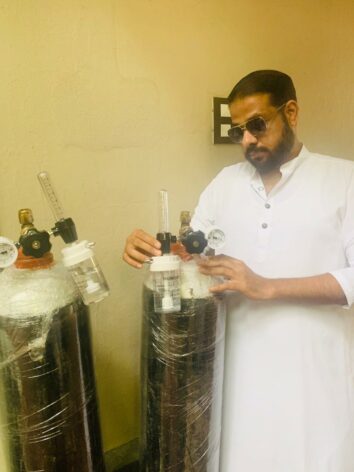
He also said that he is also supplying free Oxygen cylinders with Pulse oximeters for suspected carriers and positive cases under home isolation care by providing PPE (Personal Protection Equipment) among the deceased members during the funeral.
The organisation remains connected through a zoom call with Dr. Aslam from USA, who initiated and coordinated with other doctors, philanthropists and organisations from the USA — including DAAME (Deccan Alumni Association Middle East), DAA (Deccan College of Medical Science Alumni Association) and etc.
Asif Sohail coordinated all the doctors, NGOs, activists, and philanthropists based in Hyderabad.
source: http://www.siasat.com / The Siasat Daily / Home> News> Hyderabad / by Mohammad Hussain / July 10th, 2020