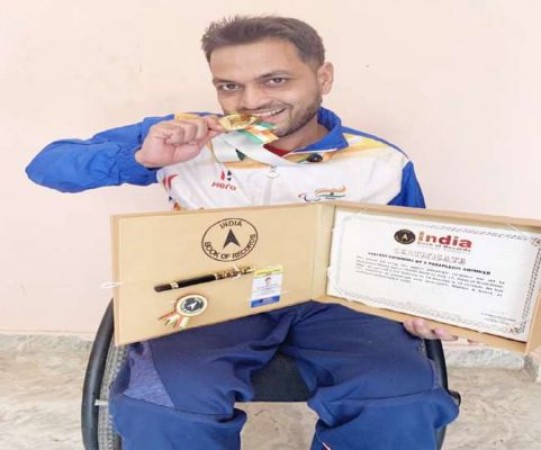
National-international para swimmer Mo Shams Alam has registered his name in the India Book of Records, performing excellently. On December 8, 2019, 24 general and differently abled swimmers took part in the Misri Lal Smriti Open Swimming Championships organized by Bihar Swimming Association at Ganga on Law College Ghat in Patna. Shams completed the first place by completing two km of swimming in 12 minutes 23 seconds. Mohammad resident of Rathaus village of Bisfi Block Shams (33), son of Naseer, says that after getting the name in the India Book of Records, now the Asian Book of Records, Limca Book of Records and Guinness World Record will apply for registration. In the Lok Sabha elections 2019, the commission made them brand ambassadors.
Did not lose courage, started working hard: Even after half of the body is paralyzed, Shams has received five dozen medals from district to international level. In the year 2010, while studying mechanical engineering, there were complaints of spine pain. Operation was done in a hospital in Mumbai. Five months later, the operation took place in another hospital. In the year 2012, the doctors said to be Divyang. Days passed with the help of wheelchairs. But, I did not lose courage. Started working hard in swimming. He wishes to pursue disabled sports talents in rural areas.
Participated in competitions in several countries: Shams, who won the title in Florida in the US in Para Swimming, has won several awards including gold medal in Para Swimming Competition in different parts of the country. Black belt shams in martial arts In the year 2018, he was selected for the Global Sports Mentoring Program organized under the joint aegis of the US Government Department of Sports and Tennessee University of America.
Record Rate Record: In the year 2017, the Umoja Beach Festival organized by a Travels Company in Goa set a record by swimming eight km in four hours and four minutes. At the Para World Series Swimming Championships held in Berlin in July 2017, with 634 players from 54 countries, they achieved seventh rank in the S5 category in performance. Participated in the wheelchair rugby championship of Patna as captain of Bihar team in August 2017. Participated in the Asian Para Games to be held in Jakarta in the year 2018. The year 2017 was conferred by the Bihar Divyang Sports Academy and the Bihar Government in the same year at the Sports Honor ceremony in Patna.
source: http://www.english.newstracklive.com / NewsTrackLive.com / Home> Sports / by Harshita Jain / June 25th, 2020
“To live like a TIGER for a day is far better than to live like a jackal for a hundred years.” – Tipu Sultan
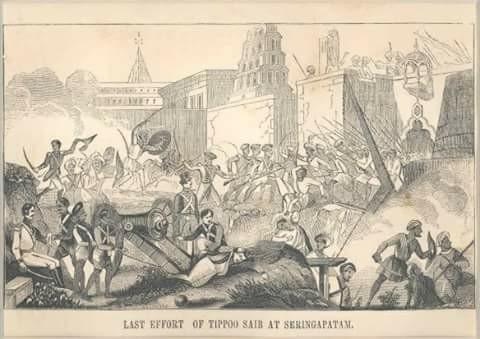
Today marks the 221th death anniversary of Sultan Fateh Ali Khan Tipu, better known as Tipu Sultan the Muslim warrior-king of Mysore, who died fighting the British today, May 4th 1799. Tipu ruled the kingdom of Mysore, which he inherited from his father Haidar Ali. His bravery, valour and skills were so talked about that French commander-in-chief Napolean Bonaparte once sought an alliance with the ruler of Mysore.
Tipu Sultan was born as Sultan Fateh Ali Sahab Tipu on November 10, 1750 in Devanahalli, present-day Bangalore. He was born to Fatima Fakhr-un-Nisa and Hyder Ali, the Sultan of Mysore. Tipu Sultan succeeded his father in 1782. The 18th-century ruler is popularly known as the Tiger of Mysore and Tipu Sahib.
We, as a citizen of India pay heartfelt tribute to Tipu Sultan, the Tiger of Mysore on his 221th death anniversary and salute his valour against the British forces. He was considered to be the first Indian freedom fighter, was a great patriot of India, who fought whole life against the British occupation and colonialism. He was glorified as India’s original Missile man by Ex-President of India A.P.J. Abdul Kamal. Tipu Sultan is revered as a pioneer in the use of rocket artillery. Sultan’s rockets were the first iron-cased rockets successfully deployed for military use. He deployed the rockets against advances of British forces and their allies during the Anglo-Mysore Wars. The rockets used during the Battle of Pollilur in 1780 and Siege of Seringapatam in 1799 were said to be more advanced than the British had previously seen.
Tipu’s portrait is in a NASA facility. It shows his passion and willingness towards scientific and technological advancements as well as innovations. It is said that Tipu was fascinated by western science and technology.
Admired by Abdul Kalam, Ex-President of India
After becoming President, in 2006, Kalam sent a top Defence scientist to Srirangapatana in Karnataka to study Tipu Sultan’s efforts to use rockets against the British over 200 years previously.
At the end of his visit to various sites associated with Tipu Sultan’s rocket launching activities at Srirangapatna, then Chief Controller of Research and Development at Defence Research and Development Organisation (DRDO), A Sivathanu Pillai declared, “There is no doubt that this is the birthplace of rocketry.”
“Now, I will report to the President what I have seen here (Srirangapatna). He (Kalam) is a rocket scientist. Naturally, he is interested to know,” Pillai had said.
After this visit, Pillai said he would recommend President Kalam to build consensus in the community of rocket scientists that Srirangapatna was the birthplace of rocketry by holding seminars and other initiatives.(courtesy: The Quint)
Tipu’s startup hubs and rockets
“Tipu Sultan was perhaps the first ruler to understand that there was a marked difference between Europe of the 1700s and 1790s, thanks to scientific innovations,“ says aerospace scientist Roddam Narasimha, who has been studying Tipu’s rockets for many years now. “He realised the power of technology , combined with discipline, and set up four innovation hubs (like modern-day tech parks) in Bengaluru, Chitradurga, Srirangapatna and Bidanur. He called them Taramandalpets.”(courtesy: The Economics Times)
He was the only Indian ruler who understood the dangers the British posed to India, and fought four wars to oust them from India – in that sense, he could be called the first freedom fighter in the subcontinent. He fought four wars against British colonialism with heroism, valour, and bravery, moreover to the last. He sacrificed his life for the nation and martyred a historical and brave death.
Tipu was a generous patron of several Hindu temples, including the Sri Ranganatha temple near his main palace at Srirangapattana, and the Sringeri Math, whose swami he respected and called Jagadguru. The Editor of Mysore Gazetteer Prof. Srikantaiah has listed 156 temples to which Tipu’s regularly paid annual grants. His progressive measures in the administration were equally commendable.
His reign is remembered for many technological and administrative innovations. Among them was introduction of new coin denominations and new coin types. He also introduced a luni-solar calendar. During his rule, he introduced a land revenue system which gave a boost to the Mysore silk industry and helped in establishing Mysore as a major economic power.
In the Fourth Anglo-Mysore War between 1798-99, he was defeated when the forces of the British East India Company, the Marathas and the Nizam of Hyderabad came together. He was killed on May 4, 1799, while defending his fort of Srirangapatna, present-day Mandya in Karnataka.
Md Irshad Ayub, Founding English Editor at Millat Times
http://www.heritagetimes.in / Heritage Times / Home / by Team HT / May 02nd, 2020
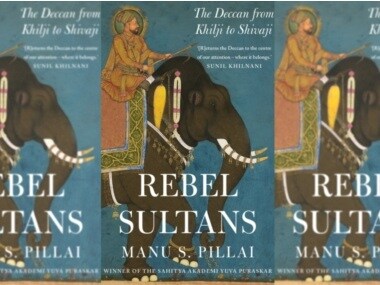
In Rebel Sultans, Manu S Pillai traces the history of the Deccan from the end of the 13th century to the dawn of the 18th, punctuated by tales of drama, betrayal and murder.
Editor’s note: The Deccan, miles away from the empire of the Mughals, was eyed with envy by rulers such as Aurangzeb, so much so that it is said to have contributed to his downfall. Its kingdoms had much to offer; in their courts were Persians and Marathas, in their ranks were African nobles, and in their treasuries were gold and fortunes.
In Rebel Sultans, Manu S Pillai traces the history of the Deccan from the end of the 13th century to the dawn of the 18th. He tells the story of the Vijayanagar empire, the court of the Bahmani kings, and the Rebel sultans — punctuated by drama, betrayal and murder. The book features characters such as Malik Ambar, Chand Bibi and Krishnadeva Raya, and is published by Juggernaut Books.
The hero of the Deccan had skin the colour of coal. Emperors snarled at him from afar, while enemies at home rattled in fear when he marched into their neighbourhoods. Many were those who despised him, but many more still were the masses who discerned in him a champion. His story was certainly unusual, though he was neither the first of his people to serve in the Deccan, nor extraordinary in his antecedents. And yet he emerged as the strongest of them all, reigning indeed as king in all but name. ‘He has a stern Roman face,’ wrote one traveller, ‘and is tall and strong of stature’ though his ‘white glassy eyes’, it was added, ‘do not become him.’ His charities were legendary, as was the valour of the men who pledged themselves to his service. When at last he died, not on the battlefield but secure in a formidable fortress, the Mughals admitted that this enemy was ‘an able man. In warfare, in command, in sound judgment, and in administration he had no rival or equal… He kept down the turbulent spirits of [the Deccan], and maintained his exalted position to the end of his life, and closed his career in honour. History,’ the obituary concludes, ‘records no other instance of an Abyssinian slave arriving at such eminence.’ It was high praise, coming as it did from the imperial court, where two generations of emperors revealed nothing but spite for the man called Malik Ambar.
The Deccan, as we know, had long attracted foreigners to its shores, offering them wealth and a future in these eastern lands. Persians arrived, as did Arabs and Central Asians. Some graduated to princely ranks, while others soared to gratifying aristocratic heights. But among the legions of men absorbed by the Bahmanis and their heirs were also Africans who came primarily from the land we now call Ethiopia. And they too would thrive in the Deccan far above the stations where they began their lives. Some were associated with tales of treachery – Mahmud Gawan’s confidant, who struck his seal on the forgery that delivered him his death warrant, was a habshi (an African) as was his executioner. When Yusuf Adil Shah died, one of the regents who ruled in the name of his son was a black man from Ethiopia – the latter was stabbed to death for displacing Westerners and favouring the Sunni faith. When years later Chand Bibi was imprisoned, her liberator who briefly stood at the forefront in Bijapur was a habshi, as was the man Ibrahim Adil Shah II rejected after eight years of living under his guard. In Ahmadnagar, during the wars of succession in the 1590s, one ruler, whose reign lasted less than a year, found himself without support from his nobles because his mother was ‘a negress’, though when Chand Bibi was besieged by the Mughals, the man who led Bijapur’s and Golconda’s troops to her rescue was also a habshi called Suhail Khan. And many years later, on the eve of the final Mughal conquest of the Deccan, in Bijapur once again would rise a habshi exercising as a short-lived vizier the full and tragic authority of power.
The habshis had almost all of them begun their careers as slaves. And there certainly was a thriving market for men from Ethiopia in the courts and demesnes of the east. Writing as early as the 14th century, Ibn Batuta reports how habshis were ‘guarantors of safety’ for ships sailing in the Indian Ocean, with such fearsome reputations that ‘let there be but one of them on a ship and it will be avoided by… pirates’. Centuries later a Portuguese missionary noted how ‘all the country of Arabia, Persia, Egypt, and Greece are full of slaves’ who made for ‘great warriors’. In India too, this was true. The favour and affection shown by Raziya Sultan in the 1230s to Jamal al-Din Yakut, an Abyssinian warrior, provoked a rebellion and contributed to her brutal murder in Delhi at the close of that decade. At the end of the 14th century, a habshi servant of the Delhi Sultans had established a near-sovereign state in Jaunpur, in present-day Uttar Pradesh, which sustained itself till 1479. Firoz Shah Bahmani in the early 15th century had habshis in his harem, while in that same century a 1487 coup by Africans in the court of the ruler of Bengal led to the rise of a short-lived ‘Habshi Dynasty’ hundreds of miles away, on the other side of the Indian subcontinent. The exquisite Siddi Saiyyed Mosque in Ahmedabad was built by a habshi in 1572, and generations later the Mughal emperor Aurangzeb would appoint the African lord of the fortress of Janjira his naval commander, allocating to him an annual grant of 400,000 rupees to maintain the imperial fleet. In the old quarter of Delhi there is even an area by the name of Phatak Habash Khan, named, evidently, after a habshi courtier who bid farewell to the Deccan, embracing the cause of the Mughal emperor.
While these are episodes that stand out, where Africans from humble origins arrived at positions of honour and power (and sometimes infamy), the beginning of their journeys on this path were never happy. The habshis were often taken as children and sold at a price to be transported abroad. Ethiopia, at the time, was called Abyssinia in the trading world, and the very word ‘habshi’ is a derivation denoting the origins of these slaves. Malik Ambar, too, emerged from this commercial exchange of human goods. Born around 1548 into the Oromo tribe, he was captured as a boy and sold to an Arab for 20 gold ducats. In Baghdad he passed, temporarily, into the hands of another owner, who then sold him to the man who would bring him to India – and to his destiny. It was this master who educated him, though by now he had renounced his name, Chapu, and converted to Islam. ‘Whether he assumed a Muslim identity at the time as an act of genuine faith or simply as a practical matter of assimilation is not known.’ But it certainly helped him in his life ahead, to share faith with the powerful kings and noblemen of the east, in whose service lay his ascent.
Around 1571, now in his early 20s, Ambar, as he was known, arrived in the Deccan where his long-time master sold him to the peshwa (chief minister) of Ahmadnagar. The sale itself was not unusual – though his master had brought him up, the ‘bottom-line was never in dispute: Ambar was property’ and not ‘an heir or son’. However, the man who had just purchased the slave must have opened Ambar’s eyes to a world of possibilities, for the peshwa was himself black and had arrived in the Deccan under similar circumstances. He would, in due course, be assassinated, but to Ambar it must have been clear that in India it was possible to rise beyond slavery and to come into great power and wealth – he himself was merely one of a thousand habshis the peshwa possessed.
Rebel Sultans by Manu S Pillai is published by Juggernaut Books
source: http://www.firstpost.com / FirstPost / Home>Living News / by Manu S Pillai / June 21st, 2018
First free community chartered flights benefit 395 Indians stranded in UAE due to COVID-19
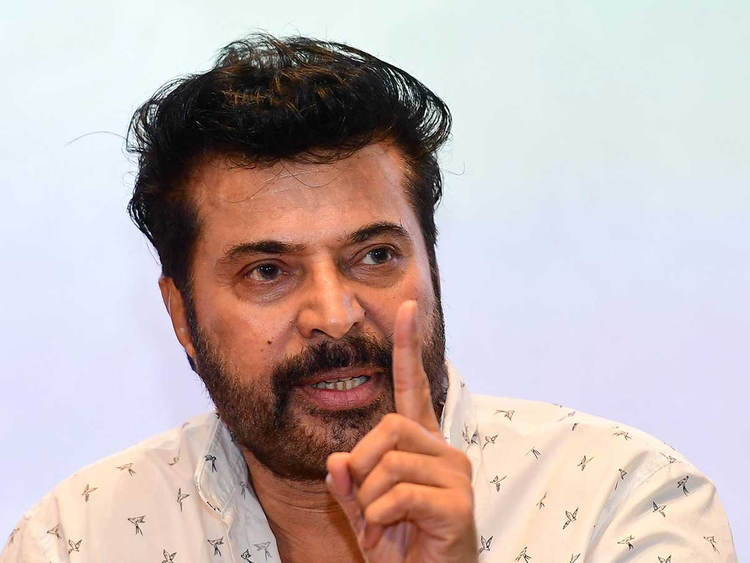
South Indian superstar Mammootty in Dubai, / earlier.Image Credit: Virendra Saklani/Gulf News
Dubai:
For the first time, two free community chartered flights repatriated 395 stranded Indians in the UAE to their hometowns in Kerala today.
While one flight was organised by Malayalam TV channel Kairali TV, under the leadership of its chairman superstar Mammootty, the other one was sponsored by the community group Overseas Malayali Association (Orma).
Kairali TV flew 215 stranded Malayalis home on an Air Arabia flight from Sharjah to Thiruvananthapuram at 6pm today, said E.M. Ashraf, the channel’s Middle East director for news and programmes. “Under the COVID-19 relief programme Kaikorthu Kairali, we had announced 1,000 free flight tickets to Keralites stranded in the Gulf countries. While we had given away some tickets to deserving candidates, we decided to also charter some flights from the UAE,” he told Gulf News on Sunday morning.
At least four free chartered flights are being planned for repatriation from the UAE with the contribution of several community members, businessmen and actors apart from Mammootty.
“We have also received the support from community groups in the UAE such as the Indian Social Centre in Ajman and MAS in Sharjah for organising today’s flight,” said Ashraf.
He said the channel had invited applications from the most deserving members of the community and a committee shortlisted the passengers from stranded visit visa holders, those who lost jobs, elderly patients and the like.
First from Dubai
While several community organisations in the UAE have chartered flights to repatriate stranded Indians, with some offering free tickets and subsidised fares, the first free chartered flight for repatriation by any Indian community group was the one arranged by Orma from Dubai to Kannur on Sunday.
Also on Sunday, a GoAir flight flew home 180 stranded Malayalis hailing from various districts of Kerala, said N.K. Kunhammed, a coordinator of the flight and a delegate of the Loka Kerala Sabha (LKS), a global body of expatriate Malayalis.
He said priority was given to stranded labourers, part-time maids, visit visa holders, pregnant women and families in distress.
Rajan Mahe, an invitee of LKS, who also coordinated the flight, said the group had been trying to arrange free chartered flights for some weeks under the initiative ‘Fly with Orma Care’.
“With the support of the Indian Consulate in Dubai, and the offices of the Kerala chief minister and Assembly speaker, we finally managed to make all the arrangements,” Mahe added.
He said the state government would facilitate the transportation of the repatriated passengers to their respective districts once they land in Kannur International Airport.
“We have arranged dinner for them through the Kannur local administration. If there are people who need further help to reach home from there, we will arrange that also,” he added.
Vipul, the Consul General of India in Dubai, appreciated the charity initiatives.
“I understand that both of these are free chartered flights that will be of great help to the community, especially in this hard economic times due to the COVID-19 pandemic,” Vipul said, appreciating the efforts of all those who had contributed to sponsor the tickets for distressed Indians.
Distressed passengers express gratitude
Distressed and stranded Indians who got a chance to fly home for free on Sunday’s chartered flights expressed their gratitude towards those who had organised these flights.
Sahira Beevi / Image Credit: Supplied
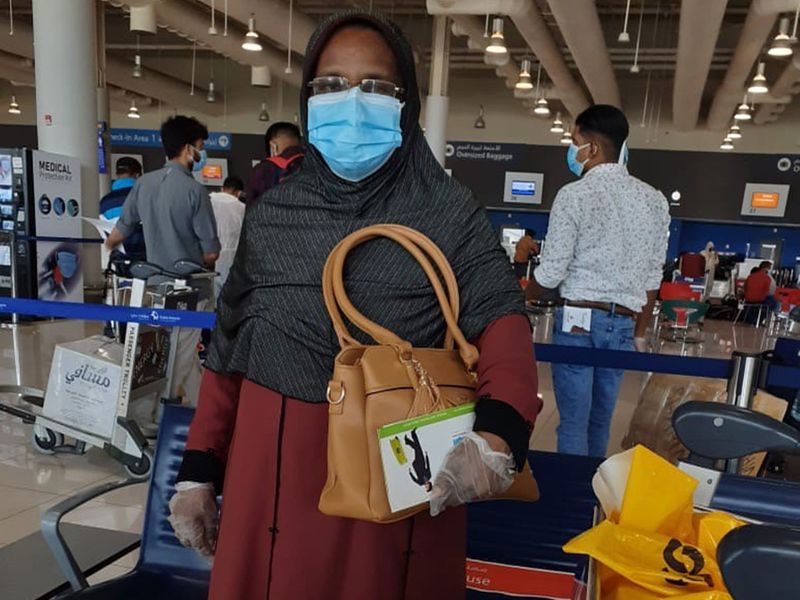
Sahira Beevi, who had come to Dubai after her son had fractured his leg, following a fall at a worksite, was among the stranded visit visa holders who were were being flown home by Orma.
“I struggled a lot because my son had already lost his job and was facing Dh30,000 in overstay fines. I had approached many associations for help. It was one Ansari and Orma members who helped us,” she told Gulf News.
“I am thankful to Orma for sending me home. I hope they will help repatriate my son also. He will be able to fly only when his condition improves a bit. He will try for repatriation along with my niece, who had also lost her job and came back on visit visa.”
She also thanked Emirates Companies House for presenting her a ‘Gulf Gift Box’ containing goodies that the company was gifting to returning expatriates.
Two other passengers on the same flight were Nafeesa Kutty and her daughter-in-law Majida Farsana, who had come on visit visas five months ago.
“She came looking for a job and I tagged along. But we didn’t expect the situation to change so fast. She didn’t get any job and my son’s salary was cut. Finally, we have to go back like this. We are thankful to Orma for helping us fly home for free,” she said.’
Gineesh Oliyil and colleagues / Image Credit: Supplied
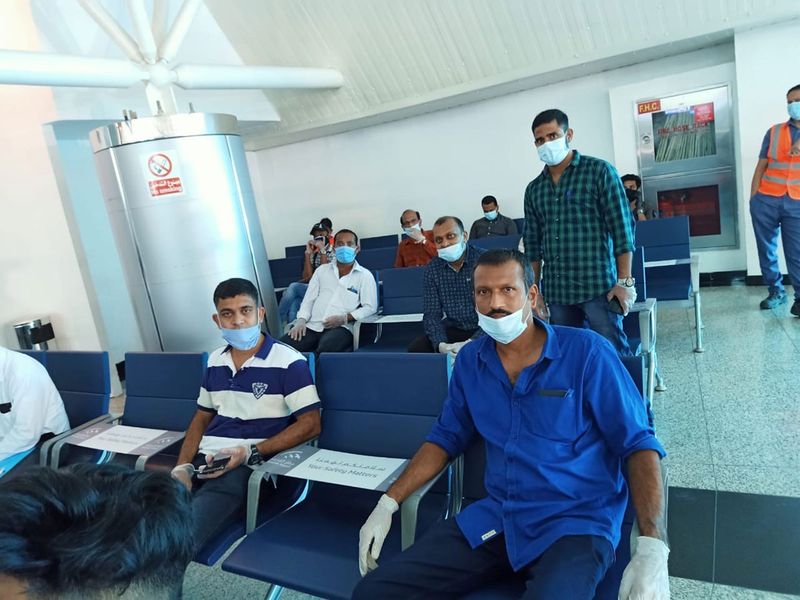
Gineesh Oliyil, an employee of a four-star hotel in Sharjah, and six of his colleagues who have been left unpaid for three months, were among the lucky passengers on the Kairali flight.
“We served people quarantined in the hotel for a month. But, the hotel was shut in April and we have not been paid since then. We were only provided two meals per day.”
He said the members of MAS Sharjah supported them with food kits and also helped them register for the free chartered flight arranged by Kairali TV.
“We somehow wanted to reach home in these uncertain circumstances. We are grateful to MAS Sharjah and Kairali TV for helping us. The free chartered flight is a great initiative that is benefitting many distressed people like us. This is the first time we are hearing about such an initiative and I hope they will fly home more distressed people, including our remaining colleagues.”
Saravan KH / Image Credit: Supplied
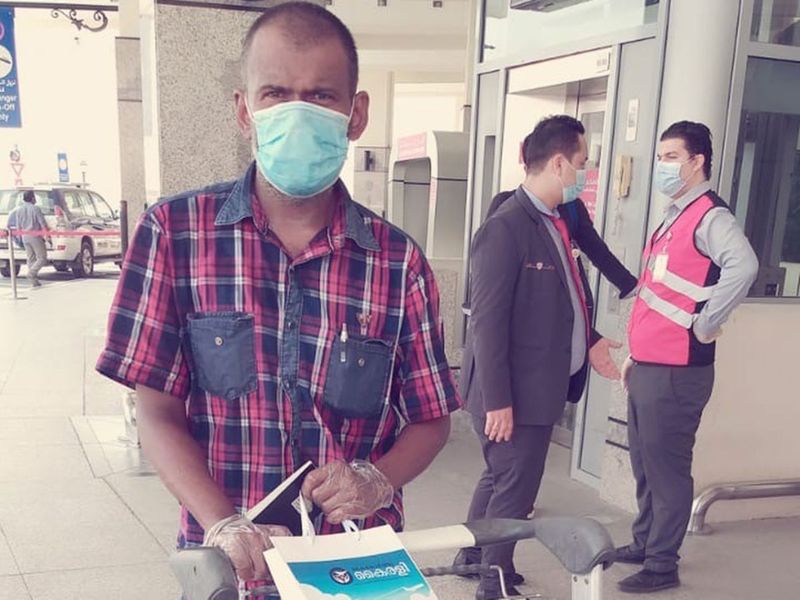
Another passenger on the same flight was Saravanan K.H. He said he was hospitalised for a month after he had a fall in the washroom of his labour accommodation.
“Doctors said my brain was affected due to the head injury and I needed help to move around. It was Shameer from my native place who helped me after I got discharged, at a time when nobody dared take care of a patient.”
He said he had approached many groups to fly home for further treatment and physiotherapy. “Finally, Shameer managed to register me on the Kairali flight and their help has come as a big boon for me,” said Saravanan.
source: http://www.gulfnews.com / Gulf News / Home> UAE / by Sajila Saseendran, Senior Reporter / June 21st, 2020
The Kashmiri photojournalist has received the Anja Niedringhaus Courage In Photojournalism Award and been booked under the UAPA. She continues to tell stories from one of the most militarized zones in the world.
Afew days after 5 August 2019, when the Union government revoked Kashmir’s special status, 26-year-old photojournalist Masrat Zahra hopped on to her scooty and rode to Anchar, a locality in Srinagar’s Soura. The region had been plunged into a communication blackout, curfew imposed, military presence heightened and people detained as some of the mainstream media pushed the narrative of normalcy.
Soura was seen as a pocket of resistance—protests and rallies were commonplace.
When Zahra reached, Friday prayers had just ended and the protests began almost instantly—residents raised flags, chanted slogans and began to march towards the main road, Zahra recalls. “From the other end, the (Armed) Forces began to fire tear-gas shells and pellets; there was smoke everywhere. Smoke from the tear-gas shells, and from the cardboard people lit on fire to protect themselves,” says Zahra. “A few pellets hit me as well but did not penetrate (the skin) since I was further away,” she adds. Zahra began taking photographs with her DSLR from behind a tree.
Suddenly, she saw a young woman emerge from among the smoke and protesters. Her face was covered in salt (which helps neutralize the effect of tear gas) and she was screaming in Kashmiri, “Come out, the forces have entered. We have to save ourselves!”, to the other men of the locality. For Zahra, this was a powerful visual. “Meri nazron se, I saw a courageous girl with anger in her eyes. It was so stunning in that moment,” she says.
It was a memory and photograph that endured. Zahra, who describes herself as “the only woman photojournalist in Kashmir”, reporting the conflict from close quarters, is driven by the need to inspire women. Documenting their role and space in Kashmir as more than grieving mothers or devastated kin presents a break from what Zahra calls “the male gaze with which Kashmir was previously seen”.
A woman in Kashmir puts salt on her face to neutralize the effect of tear gas shells fired by the forces. Credit: Masrat Zahra
In a span of two months, Zahra has been awarded for her work by an international forum and booked by the cyber police under the Unlawful Activities (Prevention) Act (Uapa) for uploading “anti-national” posts on social media. On 11 June, she was honoured with the Anja Niedringhaus Courage In Photojournalism Award by the International Women’s Media Foundation (IWMF)—named after German photojournalist Anja Niedringhaus, who was killed in Afghanistan in 2014.
“This award was for my work. When I was charged under Uapa, they didn’t even acknowledge I was a journalist, they called me a ‘Facebook user’,” she says. “But the outpouring of support has made my mother, who was initially reluctant about my profession, come around to accepting it.” So far, Zahra’s work has appeared in The Washington Post, TRT World, Al Jazeera, The New Humanitarian and several other media outlets.
The photojournalist grew up in the 1990s, at the height of militancy in Kashmir. As a young girl, she recalls looking out from her school bus at military personnel, jackboots entering her home during cordon and search operations, taking officers around the house when ordered. “We would talk to our friends about it in school the next day—yesterday the army men came to our home with guns, you know! We had no idea at the age of 8 or 9 what those operations were, we only found out much later,” she says.
A resident of the old town in Srinagar, Zahra is no stranger to clashes, rallies and funeral processions. As she grew older, she began noticing that every photojournalist in the field was male: “They were telling intimate stories even of women and I would wonder, is this profession made only for men?” She recalls she had no role models to cite to explain her aspirations to her reluctant family. She studied for the journalism entrance test in secret, heading for the exam amidst curfew the city.
“When I was in college (Central University of Kashmir), I would go on assignments with my friend, who was already a journalist. I learnt on the field from a group of photojournalists. Some of the first few things they taught me are things that have stayed with me even today,” she says. “They taught me not to take photographs from the protester’s side, otherwise we would get hit by pellets or bullets, we had to be alert to stones and slingshots, they taught me where to hide, where to get the most powerful shots,” adds Zahra.
She is driven by the conviction that as a Kashmiri, she is able to provide more authentic accounts of her home and people. “When everyone is supposed to be celebrating Eid with their families, I report clashes,” says the photojournalist, describing a time in 2018 when she was hit with pellets on the forehead. “But I know I will not stop doing my work, especially at a time like this when the authorities are trying to muzzle journalistic voices in Kashmir.”
Since 5 August, the government has not allowed high-speed internet access in the valley. Functioning on 2G speeds for nearly a year has made work difficult, particularly during a pandemic. In a region like Kashmir, Zahra maintains, social distancing is a distant dream. On 20 May, for instance, a gunfight between the Armed Forces and militants left a trail of tragedy—at least 15 homes were completely destroyed. “A 12-year-old boy died—small rooms packed with so many people grieving,” says Zahra. “Everyone says stay home, stay safe, but if homes are destroyed, where are people supposed to stay?” she asks.
Still, she has been reporting through the pandemic. Zahra files stories from the media facilitation centre for journalists set up by the government, where they are granted internet access for a few hours of the day. This, she says, increases the risk of contracting the coronavirus, given the number of people using the limited systems available.
But Zahra says nothing can deter her—not being “falsely branded a mukhbir” (informer), not “intimidation by the State” and certainly not any form of discrimination. “I remember on one of my first assignments covering clashes, a boy told me to go home because I will get hurt.
“It has always made me wonder, do male photojournalists not get hit by pellets? Would they not bleed the same way I do? Why must I leave?”
source: http://www.livemint.com / Live Mint / Home> Explore> Lounge> Features / by Asmita Bakshi / June 20th, 2020
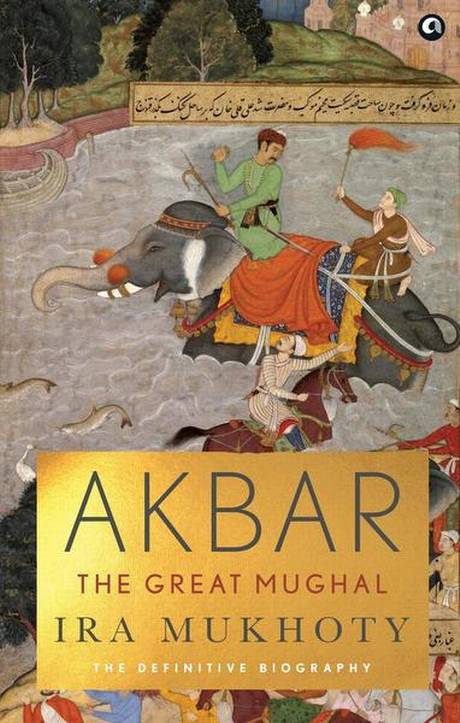
In Ira Mukhoty’s narrative, Emperor Akbar is an able reformer, the earliest advocate of inter-religion dialogue, and marked for greatness because of his quality of empathy
Charismatic, curious, catholic, compassionate — Emperor Akbar (1542-1605) has long exercised the imagination of Indians of all hues. For the lay person, he is the lumbering giant with the booming voice and grand moustache as depicted by the actor Prithviraj Kapoor in K. Asif’s magnum opus Mughal-e-Azam (1960); while ostensibly a love story between Akbar’s son, Salim, and Anarkali, the film belongs to the father in the eponymous role of the Great Mughal.
For the liberals, Akbar is the embodiment of pluralism, multiculturalism and the earliest advocate of inter-faith dialogue.
For the right-wing ultra-nationalists he is the most ‘tolerable’ of all the Muslim rulers for his reverence for all faiths and abolition of the religious tax, jiziya, from non-Muslims.
An Indian icon’
From school textbooks to the Akbar-Birbal qissa-kahani to popular culture, Akbar has consistently remained an Indian icon.
Several books too have been written on him, both by the professional historian and by non-academic but extremely engaged and passionate writers. In the latter category are two recent books, both eminently readable and both written by journalists: the simply-titled Akbar by Shazi Zaman and Allahu Akbar: Understanding the Great Mughal in Today’s India by Manimugdha Sharma. Ira Mukhoty’s gargantuan book is nevertheless a welcome addition.
However, her assertion that “few full-length biographies have been written in recent times” is not entirely true. One is also wary of the sub-title; “definitive” biography sounds like a publisher’s overkill, for a book’s size alone (over 600 pages) cannot define its scope nor ward off any future explorations on the subject.
Given the absence of Endnotes, Bibliography and Index in the uncorrected proof copy sent for review, one is unable to fully gauge the extent of sources and primary texts studied by the author and whether, if at all, she has accessed Persian sources that have largely been beyond the reach of non-academic writers relying as they do on English translations.
One is, however, struck by two curious omissions by the author. One: footnotes to indicate where quoted matter is sourced from.
Two, a similar omission in the photographs of Mughal miniatures; more detailed captions and information about sources would have been helpful given, especially, that the book focuses on the role played by the royal ateliers (tasvir khanas) in chronicling the lives of the royal patrons and leaving behind a vast visual archive of Mughal history, a rich load that is now being mined by art historians as a supplement to recorded history.
Access to a king
Mukhoty’s strength as a writer lies in her ability to recreate a scene, flesh out characters, find the human element, in a word, narrate history.
Her previous book, Daughters of the Sun: Empresses, Queens and Begums of the Mughal Empire, contained ample evidence of her sophisticated prose and her felicity in providing a luminous account of the many women who lived in the shadow of their men yet led remarkable lives during the Mughal period. Here, too, she impresses with her ability to make history accessible in ways that professional historians sometimes don’t, or can’t.
Mukhoty shows her mettle as a narrator virtually from the opening paragraph where she describes two young hostages, a young Akbar and his sister, on their way to meet their uncle Kamran: “In the frigid mid-winter of 1544, two children were sent north from Kandahar to Kabul, 500 kilometres away. While the snow fell silently and relentlessly on a desolate landscape, the small party stumbled on through the mountain passes and ravines, their horses’ steaming breath loud in the night.”
She goes on to chart the growth of that terrified child upon whom the weight of being Emperor of Hindustan is thrust at the tender age of 13 when his father, Humayun, dies unexpectedly: “In fact, Akbar was a distracted, undisciplined, rambunctious child and youth who, in the parlance of the twenty-first century, may have suffered from an attention-deficit disorder. So unruly and self-willed was Akbar that no tutor was able to hold his attention and he grew up effectively unschooled and practically illiterate.”
Pioneering genius
And yet this young emperor would evolve into a fine human being, a patron of the arts, initiator of some of the greatest works of translation not to mention a pioneer in ship-building, metallurgy, alchemy, military technology as well as administrative reforms. Mukhoty shows us the man behind the emperor who brought in the largest territory — after Ashoka and his Mauryan empire — under his control.
Despite Akbar’s intellectual curiosity, his epiphany at the age of 36, his visionary idea of sulha kul (universal peace), it is his compassion and empathy that marks him for greatness. As he said in one of his proclamations: ‘The best prayer is service to humanity.’
Akbar The Great Mughal: The Definitive Biography; Ira Mukhoty, Aleph, ₹999.
The reviewer is a writer, translator and literary historian.
source: http://www.thehindu.com / The Hindu / Home> Books> Reviews / by Rakshanda Jalil / June 13th, 2020
Habib Tanvir travelled through the interiors of Chhattisgarh, meeting and working with local village artists, and used folk traditions in his plays.
YouTube screengrab of Habib Tanvir
Director, actor, playwright, poet, Habib Tanvir was a man of many colors, all rolled into one. His vibrant personality and talent are fondly remembered by many in theatre and cinema. Tanvir’s plays like Agra Bazaar, Jis Lahore Ni Dekhya, Charandas Chor, Gaon Naam Sasural Mor Naam Damaad, among many others are widely recognised as classics of contemporary Indian theatre.
Actor Naseeruddin Shah once said that he cites the example of Habib Tanvir as one of those who has guided actors even in their darkest of days. “When I interact with newcomers, I have the example of people like Habib Tanvir, Girish Karnad, Om Puri, Shyam Benegal, Satyadev Dubey. When I was a youngster, they were idols for me” he said.
“I remember Tanvir ji as a very witty man, he would make everyone around him laugh. He would always tell us important things during the production very casually. The first time I met him was when Agra Bazaar was staged at Delhi’s Indraprastha College for women. He had this enigmatic quality that would leave all of us in awe. He would sit in a corner, engrossed in work but would keep a keen eye on everything and everyone. It’s like he would make a small tilt of the head and would know what is going on in the rehearsals. There was an energy about him all the time,” actor Sayani Gupta told ThePrint, remembering her experiences while working with the legendary playwright.
Born on 1 September, in Raipur, Chhattisgarh, Habib Ahmed Khan changed his name to Tanvir after he started writing poetry. After having studied in Aligarh Muslim University, he moved to Bombay in 1945 where he got actively involved with the Indian Peoples’ Theatre Association and the Progressive Writers Association, as a writer, actor and journalist. Nine years later he moved to Delhi, where he delivered his major productions.
In 1959, Tanvir founded the Naya Theatre group, which produced plays using folk performances by native tribal artists of what is now Chhattisgarh. As a writer and director, Tanvir spent years researching folk traditions in drama, music and story-telling. He travelled through the interiors of Chhattisgarh meeting and working with local village artists, and used folk music in his productions.
He was the recipient of a Sangeet Natak Akademi Award in 1969, Jawaharlal Nehru Fellowship in 1979, Padma Shri in 1983 and Padma Bhushan in 2002, among other national and international awards during his lifetime.
On his death anniversary, ThePrint looks back at three of his famous plays.
Agra Bazaar
When Tanvir moved to Delhi in 1954, the theatre scene in the national capital was dominated by groups that focused on the 19th and 20th century European models of theatre. His Agra Bazaar stood in complete contrast, in terms of content and form.
Agra Bazaar is a homage to Nazir Akbarabadi, an 18th-century Urdu poet who wrote in a style that was disregarded by poetic norms of his times. Tanvir cast a mix of people — educated middle-class actors, street artists and even regular residents of Okhla village in Delhi and used street language in his play. In fact, the play was first not staged in a confined area or a closed space, but in an actual bazaar.
Gaon Naam Sasural, Mor Naam Damad
Habib Tanvir once said , “This play was like a milestone in my theatre journey and this play also helped me to give a way to my next production, Charandas Chor.”
Gaon Naam Sasural, Mor Naam Damad, first directed by Habib Tanvir in 1973, is a light comedy and folk tale. The story starts with the harvest season festival of Chher-Chhera and revolves around the love of two youngsters, Jhanglu and Manti.
The comedy kicks in when Jhanglu pretends to be a brother-in-law to Manti, and uses tricks to elope, after her father fixes her marriage with an old village head. The folk songs of Chhattisgarh are a part of the play throughout.
Charandas Chor
In 1975, Tanvir wrote and directed Charandas Chor, which won him an award at the Edinburgh festival in 1982. The play, an adaption of a classical Rajasthani folktale by Vijayadan Detha, is based on the life of a thief, Charan, and a foolish policemen.
Even though Charan is a habitual thief, he is a man of a strange sort of integrity, and the audience sympathises with him. In an attempt to outsmart the police, Charan enters a Guruji’s ashram and expresses his desire to become a disciple. The guru extracts four vows from him, and how he navigates life by trying to live by those vows forms his struggle.
source: http://www.theprint.in / ThePrint / Home> Features / by Bismee Taskin / June 08th, 2020
Mohd Habib was a lethal striker of the ball in the 60s and 70s. — File Photo
Known for his nimble footwork, the diminutive Hyderabadi was also referred as Indian Pele.
Hyderabad:
He was the Bade Miyan of the hollowed Calcutta ‘maidan’. The name of Mohammed Habib stands out amid the galaxy of stars that twinkled on these grounds.
Known for his nimble footwork, the diminutive Hyderabadi was also referred as Indian Pele. His exploits with the ball for 17 long years (1966 to 1983) in the City of Joy brought him many laurels. The huge crowd, the pressure, and the fan following are still fresh in Habib’s memory. “It was the good old days. I loved the game and it was one of the best moments of my career,’’ said Habib, who is now afflicted with Parkinson’s disease.
Residing in Toli Chowki, Habib is a forgotten hero in Hyderabad. “No one knows me,’’ he said with a smile, a few years ago. In a marked contrast, he is a hero worshipped in Kolkata. Nevertheless, his contribution to Indian football is immense.
Now in his 70s, Habib’s famous number 10 jersey evoked nostalgic memories. As a multi-dimensional player, he was a sensation. Skillful and hard-working, Habib was excellent as a striker and a midfielder. As former Indian striker Shabbir Ali said Habib had the elegance, vision, passing, ball control, and technique. “He was a livewire on the ground. He had exceptional fighting qualities. That stood him apart from other players,’’ he said.
Habib said he enjoyed the game. “The roar in Eden Gardens was amazing. It was all about handling the pressure. I cherished challenges.’’
Victor Amalraj, the former Indian midfielder, said Habib had the ability to dodge past three or four players before scoring a goal. “He was an attacking midfielder keeping the forwards busy. He was also capable of playing upfront as he had the speed and dribbling skills. He was a lethal striker. He had a good header too as he leapt high to nod the ball in. He was a true professional. I was lucky to play alongside him and also captain him,’’ said Amalraj.
Habib was a hugely popular player and he commanded a huge market like his brother Akbar. He was considered a big catch with all the big three — East Bengal, Mohun Bagan and Mohammedan Sporting — angling for him.
Although his longest stint was with East Bengal, Habib’s memorable moments came for Mohun Bagan when the club played against the star-studded Pele-led Cosmos team in 1977. That particular match was a huge one for this Hyderabad striker as he struck a goal in the two-all drawn match. It earned plaudits from none other Pele. “I remember getting the ball in my zone. I turned and struck the ball in. There was a huge roar and a hug from Pele himself. That night after the match, he asked me why I’m not playing in European league as a professional. I said I’m a professional here.’’
Hailing from a family of footballers with all six brothers excelling in the game, Habib said it was proud to have so many players from one family. “Azam, Moinuddin, Fareed, Akbar, Jaffar and I all played big-time football.’’
Although he made a big mark in Calcutta, Habib also played for India with great distinction. He was a member of the Nayeemuddin-led Indian team that won the bronze medal in the 1970 Bangkok Asian Games. “I think I was fortunate to play in three Asian Games. Remember India had a glorious history. Today, the Indian football team is languishing. Other nations like South Korea, Japan, Iran, Iraq, China have marched ahead of others. They have made huge strides in world football while we are struggling in Asian football. The Indian football players cannot match the speed and stamina of some of the teams of the Asian countries,’’ said Habib, who later on shone as coach after quitting the game.
He was honoured with the Arjuna Award. Now, suffering from Parkinson’s disease, he is virtually confined to his house.
source: http://www.telanganatoday.com / Telangana Today / Home> Sports> Football / by N Jagannath Das / June 07th, 2020
The family-owned Mezhukkattil Mill, which manufactures edible coconut oil, stuck in through logistical and procurement issues to meet demand across the globe.
Mezhukkattil Mill executive director Ubais Ali (third from right in the front row) with his employees | By special arrangement
Kochi :
This is a rare Covid business story from Kerala — one about the grit and determination of a medium-sized edible oil mill in Aluva, near Kochi, to keep its mills running during the lockdown as its workers had no option but to stay put.
The decision was also fashioned by the demand surge during the early days of the pandemic when imminent lockdowns across the globe led to panic buying.
For Ubais Ali, executive director of the family-owned Mezhukkattil Mill, which manufactures coconut oil, it did not require theoretical lessons in business management or post-Covid strategies being peddled by major consultancies across the world.
All Ubais did was spot an immediate business opportunity when essential products began flying off the shelves across continents in the middle of March. He was alerted by business associates in the UAE, Saudi Arabia, Oman, Kuwait, Qatar and Bahrain that edible coconut oil, just like any other food item, was selling fast, with a large number of non-traditional users turning to this cooking medium.
But just as he began exploring the opportunity, lockdown was enforced in India on 24 March.
Ubais had about 50 workers in his factory premises who had no option but to stay put, but he had to contend with logistical issues.
“When the national lockdown began, we had three containers stuck at the Kochi International Container Terminal. Even the big players in the food processing sector were caught unawares as the clearing and forwarding agents of Kochi decided against taking any risk,” Ubais says.
“I had no option but to keep the mill running at full capacity with three eight-hour shifts as the big brands like Lulu said their malls (in the Middle East) were facing total depletion of stock. I had to take a chance or lose this opportunity forever.”
The logistical troubles
Such was the demand that towards the end of March, during the first phase of the lockdown, Ubais had to augment his supply line of six truckloads of copra, from Tirupur district in Tamil Nadu, with well over a dozen containers from Indonesia and Philippines.
That posed its own challenges. For one, the executive director had to battle for lorry passes from supply officers at the taluk level and also for inter-state travel permits.
Then the State Trading Corporation (STC) refused to issue the company with a no-objection certificate (NOC) for the import of raw materials to bridge the gap caused by the shortfall in the indigenous copra supply.
Ubais first attempted to sort this out through the Federation of Indian Exporters Organisation, of which he is a member, but eventually it required the direct intervention of the Director General of Foreign Trade (DGFT).
K.M. Harilal, joint DGFT, Kochi, said: “Though food processing units had an exemption from the lockdown, none were functioning in the first week. Ubais came to us with a peculiar problem, as he was not getting the mandatory clearance from STC for imports. As the company’s normal channel via Chennai was not fruitful I got through to my boss in Delhi who got in touch with the STC chairman and the NOC came through.”
But all the clearances in the world would not have helped in a city known for the sincere hands-down approach of workers during hartals and the lockdown, an occasion that demanded stricter adherence to stay away from work.
The export trouble
As if procuring raw material wasn’t hard enough, exporting the coconut oil provided an equally tough task, mainly due to confusion at the Cochin Port, the region’s main export transit point.
The Cochin Customs Brokers Association passed a resolution on 31 March that it would not move containers. It also sought clarification from the chief minister regarding anomalies in the notifications issued by the central and state governments.
The Ministry of Shipping had notified normal operations of ports and customs. It was the ministry’s advisory that all cargo, both general as well as essential, be cleared. The Kerala government, however, brought out an advisory that no one should be attending office except those specially notified. The state’s focus then was on health and avoiding any threat of contracting Covid.
Although the Cochin Customs Association withdrew its resolution following instructions from the customs commissioner, the overall sentiment among its members was more in line with the state government directive on ensuring personal safety.
As a result, there were no clearing agents ready to move the coconut oil consignments.
It posed a major hurdle for Ubais as based on demand from clients, his oil mill had lined up over a dozen containers for export by the end of April first week.
Finally, one agent, George Forwarders, expressed willingness to move the containers provided they did not face hassles from any departments. The mill and the agent both received a shot in the arm — one of the clients, to be precise the personal staff of M.A. Yusuff Ali, the UAE-based Indian billionaire businessman and owner of LuLu Group, promised to monitor all local clearances in Kochi.
The result: The first lot of three containers were moved in early April.
In all, between 25 March and 30 April, Mezhukkattil Mill imported 20 containers of raw materials for exports. And between 12 containers that came under the head of direct exports and seven containers of deemed exports, this little known company from Aluva managed to export 19 containers of finished products, earning around $ 6,68,000 (over Rs 5 crore) in foreign exchange.
The lessons for big business
For Mezhukkattil Mill, which was the largest supplier of coconut oil for soap and surfactant giants as also hair and skin oil in the 1990s, with a client list comprising Tata Oil Mills, Hindustan Lever, Wipro, among others, the lockdown has marked its coming of age. The mill had switched to manufacturing edible coconut in the decade between 2005 and 2015.
The company’s makeover as a manufacturer of only edible oil products is now complete. It now ships its oil for various brands such as Lulu Muscat Hypermarket LLC, Royal Mark Foods and Eastern Condiments in Oman and Panten Mee in Taiwan.
As the country looks to get its act together on the manufacturing front, stories from even small companies like Mezhukkattil could prove inspirational. Surely, instances like this depicting small and medium-sized companies punching way above their weight by pouncing on opportunities in a pandemic-struck market should stir the big players out of the present clime of gloom.
source: http://www.theprint.in / The Print / Home> Economy / by Vinod Mathew / June 02nd, 2020
Titled ‘Anam’, Saumitra’s upcoming film is about a 21-year old girl who does stunts as a sport. The film is inspired by the life of Anam Hashim, a female bike stunt performer and rider.
The tagline of the film reads ‘a bike doesn’t know your gender’. The story is conceptualized by Anam and penned by Namneesh Sharma.
Director Saumitra Singh, who had earlier helmed the award-winning short films The Wallet and Painful Pride, is gearing up for his feature debut.
Titled Anam, Saumitra’s upcoming film is about a 21-year old girl who does stunts as a sport. The film is inspired by the life of Anam Hashim, a female bike stunt performer and rider.
The tagline of the film reads ‘a bike doesn’t know your gender’. The story is conceptualized by Anam and penned by Namneesh Sharma. While the cast is yet to be locked, an A-list actor will be a part of it, the makers shared.
“I have been working on this idea for quite some time now. However, I was busy making and promoting my two short films but been working on Anam simultaneously. The script has come out well and I can’t wait to start making it,” Saumitra says.
In 2015, Anam became the youngest woman to ride to Khardung La mountain pass on a TVS scooty for the Himalayan Highs initiative. Her achievement was included in the India Book of Records.Speaking about her journey, Anam shares, “While growing up as a kid, I always was someone who was inclined towards cycles, bikes and cars. Eventually, I discovered my love for bikes and stunts through the internet.
My journey began by trying to learn how to do wheelies on others bike and it gave me enough confidence to even get my own bike. While I was finishing my 12th, I was very sure of what I wanted to do in life, stunt riding/street bike freestyle.”
source: http://www.newindianexpress.com / The New Indian Express / Home> Entertainment> Hindi / by Express News Service / May 29th, 2020