Category Archives: World Opinion

Kerala girl sketches Spanish street, wins hearts

Thrikkakara,  KERALA :

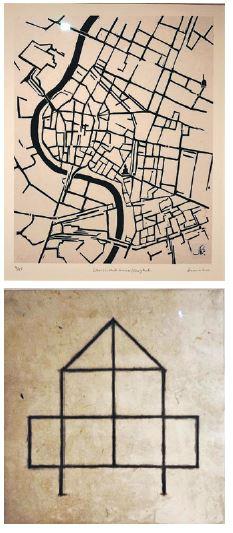
The pencil sketch of a Spanish street during the COVID-19 epidemic drawn by Shehana Fathima.

Work depicted an ‘eerie’ locality during the pandemic

For Shehana Fathima, a 20-year-old engineering student from Thrikkakara, the evening of March 24 will always be memorable.

Just an hour before the Prime Minister announced a 21-day nationwide lockdown, the budding artist posted on Instagram a pencil sketch that portrayed two artistes serenading an eerily empty Spanish street from their balconies even as quarantined neighbours emerged on their balconies to enjoy the music.

The video of noted Spanish pianist Alberto Gestoso and saxophone player Alex Lebron Torrent performing Canadian singer Celine Dion’s My Heart Will Go On in the middle of March had gone viral.

Musicians take notice

The youngster was on cloud nine when hardly a couple of hours later she posted the image, both the musicians praised her work, with Mr. Torrent even promising to repost it from his Instagram account.

Shehana Fathima working on her latest picture.

Later, the partner of one of the artistes also personally messaged her.

“The video was going around for a while, and that inspired me. It took me a day to complete the picture. Actually, I don’t know how to draw buildings, and I simply replicated the scene from the video,” said Ms. Shehana, a self-taught painter who is still basking in the glory of completely unexpected adulations.

Hoping to go further in the world of arts, she is now using the lockdown period to master digital drawing tools.

Other mediums

Having started with painting two years ago, the youngster has since then moved on to other mediums and a wider canvass.

“I plan to conduct an exhibition and even a workshop once I have enough collection of works,” Shehana Fathima said.

source: http//www.thehindu.com / The Hindu / Home> News> States> Kerala / by M. P. Praveen / Kochi – April 10th, 2020

Before being angry at Tablighis, remember the coach who put India on global sporting scene

Hyderabad, TELANGANA / NEW DELHI :

Mohammad Ilyas Babar was a staunch supporter of the Tablighi Jamaat. He also spotted, trained and took Padma Shri Olympian Sriram Singh to dizzying heights.

Ilyas Babar | Commons

Citizens of India may be angry with the Tablighi Jamaat , but let’s not forget at least one member of the Jamaat had put India on the global sporting scene with distinction. 

India’s celebrated athletics coach late Mohammad Ilyas Babar was a staunch supporter of the Tablighi Jamaat. He also spotted, trained and took Padma Shri Olympian Sriram Singh to dizzying heights. Sriram won a gold medal in 800 metres in two successive Asian Games and finished a creditable seventh in the Montreal Olympic Games in 1976.

Not many would know that Babar was a commerce graduate and champion athlete of the Osmania University in Hyderabad. But after he passed out from the National Institute of Sports in Patiala with the first batch of NIS coaches in 1961, he made Delhi his base.

Rajputana Rifles in Delhi hired Babar as the athletics coach, where he spotted Sriram Singh in 1967. And the rest, as they say, is history.

Babar at the Markaz

Whenever Babar was not on the tracks with Sriram and other top Indian athletes, he would be at Delhi’s Nizamuddin. He would teach underprivileged children at the Markaz and spend hours at the teashop then run by a man called Sami.

As a young runner, I was also under Babar’s tutelage. But he never ever discussed his religious views with us. In fact, it was Sami who told us that Babar Sahib used to teach at the Markaz.

Babar was a fakir in the sense that he never sought wealth. On the contrary, he spent whatever he had on Sriram and other athletes, even at the cost of his own three children.

Going to the Olympics

During the Olympic games, we asked him to go to Montreal to be with Sriram for the greatest race of his life. But he made up his mind to go only after Sriram Singh ran a brilliant race in heats on 23 July 1976.

Through the good efforts of then foreign secretary Jagat Mehta, we got a passport for Babar in a few hours and he was on board a flight to Montreal on 24 July. He saw Sriram’s final race on 25 July and was back at Nizamuddin by the evening of 27 July. In Montreal too, he stayed two nights in a masjid.

Babar never missed a namaz. When Sriram was training on the lawns at Rajpath, Babar would spread his janamaz and offer prayers under a jamun tree.

In the current coronavirus context, it feels sad that everyone at Nizamuddin or anywhere else with similar religious leanings is being painted with a brush of hatred. But before we do that, let us think of Babar and thousands of others who served the community with distinction. 

The author is a sports columnist and senior freelance journalist. Views are personal.

source: http://www.theprint.in / The Print / Home> Opinion / by Norris Pritam / April 07th, 2020

The Delhi prof who said tombs & mosques were not just ‘Muslim’, but ‘Indian Muslim’

NEW DELHI :

In the anxiety to label Indian architecture as Hindu, Buddhist, British imperial and Islamic, the buildings lost some of their power to evoke wonder and surprise.

Qutub Minar in New Delhi | Commons

In the 1950s and ’60s, visitors to Delhi’s Qutub Minar often saw a crowd of schoolchildren following an unlikely Pied Piper, a frail man in a white kurta and pyjama, wearing a Gandhi cap, and giving them their first lesson in art history. Mohammad Mujeeb was one of those iconic professors who communicated just as easily with schoolchildren as he did with college students and his colleagues. He instilled in them a love for historic cities, made them see the places as works of art.

In those years, the Delhi skyline and groundline were dominated by monuments. For many families, these landscapes were synonymous with Sunday picnics. For art historians, these spaces became popular hunting grounds, and a number of case studies on architecture took shape in the 1970s.

But the lay reader was more familiar with surveys of Indian architecture. Of these, Percy Brown’s books were the most sought after. His volumes, Indian Architecture (Buddhist and Hindu), and Indian Architecture (The Islamic Period), published in 1942, contain a mine of information. However, because he divided the theme in a binary, he missed out on capturing the special quality of the 14th-17th centuries — the cosmopolitanism in architecture — when rich and powerful rulers, irrespective of religion, engaged skilled artisans and engineers from across south and west Asia to design beautiful public spaces.

Architectural crossover 

In that era of increasing globalisation, artisans met and exchanged recipes for architectural design, and travelled great distances, confident of their patronage. Guilds from the Middle East were employed to design the great pillars of Yorkminster, and Indian stone-masons learned structural engineering from Uzbek architects. Chinese porcelain gave its name to the funerary monument Chini Ka Rauza (China Tomb) in Agra. British tourists to Italy brought back fragments of Roman sculpture to display proudly in their country estates, while Feroz Shah Tughlaq had two Ashoka pillars (only no one knew what they were) ferried to Delhi from Meerut and Topra (Haryana), to embellish his mosque and his estate on the Ridge.

James Fergusson, in the mid-19th century, had sought to make sense of the myriad buildings in India. He found it simplest to classify them by ‘style’. Function, it was assumed, shaped the form, and buildings were labelled ‘Buddhist’, ‘Hindu’ or ‘Islamic’. The term ‘Indo-Saracenic’ was coined to describe styles with elements of both, as well as for the British imperial style, which deliberately included decorative Indian elements. In this anxiety over labels, the buildings lost some of their power to evoke wonder and surprise, to speak to the hearts and minds of the people.

Indian-Muslim architecture

Both mosques and tombs adopted from and adapted to the local environment, which is why Mujeeb insists that they be described not as ‘Muslim’ but as ‘Indian Muslim’. They, and other public areas — streets and walled gardens — made for beautiful cities, with a quality of repose and of camaraderie. Soaring arches and minars (towers) connected the earth to the sky, to heaven. (Mujeeb was too much of a rationalist to fall for the belief that djinns lived in historic buildings and could fulfil people’s prayers.)

Communal practices do shape houses of worship — and there is a fundamental difference of form between a congregational masjid (‘beauty without mystery’) and a mandir, where there is mystic communion between deity and worshipper. As for the tomb: “[It] was a symbol of unifying life, death and eternity; primitive beliefs associated with kingship gave the royal tomb a mysterious significance…The tomb of a ruler was the expression of personality, of a force which the community needed to maintain its self-confidence in a world of conflicts,” Mujeeb wrote  in The Indian Muslims (1967). He was not averse to sounding tongue-in-cheek while describing Humayun’s mausoleum: “There is nothing we know of Humayun that would justify our regarding him as an outstanding personality; his tomb is much greater than he.”

The urban architecture of early modern India has some of the features of Persian or Turkish cities, but is most similar to those of Rajput kingdoms, contemporary with those of the Mughals. Both were shaped by the climate, conditioned by topography, the fact that they were built by skilled stone-masons rather than brickworkers, and by the deliberate choice of Indian ornamental motifs.

The Indian-Muslim architect rejoiced in being “free from the beginning, free from fear and hatred, from law and custom, from the conflicts of ideals and interests. There were no limits fixed except those of his own aptitude and means, and the nature and availability of structural material.” They created an architecture that was not just frozen music, but also frozen poetry. It was both the architecture of Urdu poetry and the poetry of our architecture that made cities in India the grandest in the early modern age.

This article is the seventh of an eight-part series on ‘Reading A City’ with Saha Sutra on www.sahapedia.org, an open online resource on the arts, cultures and heritage of India. 

Dr Narayani Gupta writes on urban history, particularly that of Delhi. Views are personal.

Read the series here.

source: http://www.theprint.in / The Print / Home> Opinion> Sahapedia / by Narayani Gupta / January 12th, 2020

Wipro, Azim Premji Foundation commit Rs 1,125 cr to tackling coronavirus

Bengaluru, KARNATAKA :

WiproMPOs03apr2020

IT major Wipro Ltd, Wipro Enterprises Ltd and Azim Premji Foundation, have together committed Rs 1,125 crore towards tackling the unprecedented health and humanitarian crisis arising from the COVID-19 pandemic.

“These resources will help enable the dedicated medical and service fraternity in the frontline of the battle against the pandemic and in mitigating its wide-ranging human impact, particularly on the most disadvantaged of our society,” the companies  said in a statement.

Of the Rs 1,125 crore, Wipro Ltd’s commitment is Rs 100 crore, Wipro Enterprises Ltd’s Rs 25 crore, and that of the Azim Premji Foundation is Rs 1,000 crore. These sums are in addition to the annual CSR activities of Wipro, and the usual philanthropic spends of the Azim Premji Foundation, the statement added.

Integrated action will be taken for a comprehensive on-the-ground response in specific geographies, it said.

source: http://www.deccanherald.com / Deccan Herald / Home> Business> Business News / by DHMS, Bengaluru / April 02nd, 2020

Ajmal Sabu from Kerala on creating the video of Donald Trump supposedly crooning ‘Mappilapattu’

Changanassery (Kottayam District), KERALA :

Ajmal Sabu | Photo Credit: Special arrangement

The editor-cinematographer has a popular Instagram page ‘cuts.zzz’ dedicated to such mash-up videos

Perhaps one of the most forwarded videos on social media during this lockdown has been US President Donald Trump ‘singing’ Mappilapattu. In this video, which has got 4.25 lakh views on Instagram page, ‘cuts.zzz‘, the president is depicted singing a traditional folk song of the Muslim community in Kerala, with Indian Prime Minister Narendra Modi, First Lady Melanie Trump, Ivanka Trump, Jared Kushner, and thousands of people cheering him on.

The “mash-up video” features the filmi version of the popular Mappila song, ‘Aminathathede Ponnumolaanu’, from the Malayalam movie Honey Bee 2.5, sung by actor-director Lal. The mastermind behind the video is editor-cinematographer-director Ajmal Sabu. With accolades coming in from the world over for his editing skills in creating the impression that Trump himself is singing those lines, the 24-year-old is on a high. The viral video has so far got over eight lakh views on Facebook as well.

____________________________________

Instagram

https://www.thehindu.com/entertainment/movies/ajmal-sabu-from-kerala-on-creating-the-video-of-donald-trump-supposedly-crooning-mappilapattu/article31227192.ece

____________________________________

“I didn’t expect such a reach for the video. I am getting messages from across India and even abroad,” says Ajmal over phone from his home at Changanassery in Kottayam district. He adds, “My professional commitments have been stalled due to the lockdown. So, instead of wasting time I thought of doing something interesting. I came across this song in a video my friend had sent me. I was hearing that version of the song for the first time and felt that I should put it to use somewhere. As the ‘Namaste Trump’ event at Sardar Patel Stadium in Ahmedabad, Gujarat, was a much-discussed event, I thought of giving it a try. And it clicked!” says the 24-year-old.

Mass appeal

Ajmal started his Instagram page for mash-up videos two years ago and most of them have gone viral. There are over 50 videos on the page, with another popular one being American wrestler and WWE superstar Big Show and WWE’s chief branding officer Stephanie McMahon supposedly saying the dialogues of Nakulan (Suresh Gopi) and Ganga (Sobhana) from an iconic scene in the Malayalam movie, Manichitrathazhu.

_________________________________________

Fact file
  • An alumnus of Maya Academy of Advanced Cinematics in Pune, from where he learnt animation, VFX and post production, Ajmal started out as a cinematographer with a Marathi film, Dhap. He was an assistant director in the Malayalam films Kappirithuruthu and Love Action Drama. He has also been a spot editor and is much sought-after in Malayalam film industry for making promo cuts, teasers and trailers of movies. He has directed short films and has done cinematography and editing in music videos, short films, documentaries and ad films.
  • He is all set to turn independent as an editor and cinematographer with a Malayalam film. “If the lockdown wasn’t there, the shoot would have begun on April 10. It is a good project and I still can’t believe that I am doing it,” he says.

__________________________________________

The first mash-up video he created was of the Joker-Batman scene from The Dark Knight with dialogues from Maheshinte Prathikaram, picturised on Soubin Shahir and Alencier. Among other videos that fetched lakhs of likes are those of Bruno Mars dancing to the tune of ‘Margazhiye malligaye’ from Megham, Rihanna’s video with the track of Popy umbrella ad, scene from Guardians of Galaxy with dialogues from Aniyathipravu and Modi’s speech at a rally with lottery announcement.

Ajmal says that there is no short cut to creating these videos. “It takes several hours to mix and match the scenes. I spent seven to eight hours on the Trump video alone. If you are taking a song or dance number, matching rhythm and steps are not that difficult. But the toughest part is lip sync. It is possible to experiment with all videos. However, you have to keep on trying to get the perfect match,” he says, adding, “At the same time you shouldn’t compromise on humour.”

source: http://www.thehindu.com / The Hindu / Home> Entertainment> Movies / by Athira M / Thiruvananthapuram – April 01st, 2020

Samima Khatun’s journey inspires Bengal village

Nischintapur Village (East Burdwan District) WEST BENGAL / Aligarh, UTTAR PRADESH  :

Burdwan :

Samima Khatun, the daughter of an imam from West Bengal’s East Burdwan district, has been awarded a travel grant to present her paper at an international conference in London.

The conference is co-organized by Imperial College London and University College London.

The grant is nearly 200,000 worth in Indian rupees. It was never easy for a girl belonging to a lower-middle-class Muslim family to come this far.

She is scheduled to deliver a paper titled Exploring the Thermodynamics And Conformational Aspects Of Sulindac And Chlorpromazine Binding With BSA at the 26th International Conference on Chemical Thermodynamics: ICCT-2020 that is going to be held between July 19 to 23 in London.

The travel grant is sponsored by Nature Research, under its subfield, the Communications Journals, which offers it in three subjects: Biology, Chemistry, and Physics. She was awarded the Communications Chemistry grant which is given to only one candidate all over the world in the field of Chemistry.

Three grants, each of €2,500 (approximately 200,000 rupees), are available to promising early-career scientists whose research is focused upon one of the three subject areas covered by the journals to support the costs of traveling to and participating in a conference.

Nature Research is a multidisciplinary research journal, originally from Nature—the leading international weekly journal of science first published in 1869 having its principal offices in London, New York, Berlin, Shanghai and Tokyo, and offices in cities worldwide. It publishes primary research, reviews, critical comment, news and analysis on scientific innovations, discoveries and it has nine million visitors every month to its official site.

The 29-year-old woman is from Nischintapur village in East Burdwan’s Khandaghosh locality. Samima did her matriculation and higher secondary from Al Ameen Mission. Then she completed her B.Sc, M.Sc in Chemistry at Aligarh Muslim University. Last year she was awarded doctorate under the supervision of Professor Riyazuddeen, Department of Chemistry, at the same university. She also worked as a Research Associate in a CSIR Project in the Department of Chemistry, University of Delhi.

Currently, she works as an assistant professor in the Department of Chemistry, at Aligarh Muslim University on a contractual basis.

Apart from all this, she is also a devout practicing Muslim. She wears scarf and offers five times prayer. Samima, the second daughter of Sk Rahamat Ali, has four other siblings and the younger sister is preparing for government jobs after graduation in Psychology from AMU.

The 57 years old Ali, a graduate in Political Science from the University of Burdwan, runs a small stationery shop at a nearby village, Khejurhati, were he used to be the imam of the village mosque for 700 rupees a month remuneration. But for the last two years because of his age problem, he only runs the shop.

During her doctorate studies, Samima married Tahasin Mondal, a fellow scholar in the Department of Sanskrit of Aligarh Muslim University in 2017.

While speaking to Twocircles.Net she shared that it was because of her father and husband that she could reach where she is now. She had experienced poverty from childhood as her father was jobless despite graduating with a good score. Their remote rural area lacked jobs.

She says her real strength was her determination to fulfill her father’s dream and her desire to achie something noble in life.

“My dreams come true partially when my parents sent me to Al Ameen Mission where I got admission with very nominal monthly fees, 120 rupees per month. The secretary of the mission agreed to admit me because of my zeal for study, for he could read my dreams in my eyes and that’s why he even paid me 1,250 a month until I started getting stipends. It was because of him that I came to this stage of success.”

Neither her family, religion, nor her villagers were any hindrances for her education. It is normally difficult for a Muslim girl to stay away from home for long.

Besides her parents’ support, Samima balanced the practice of her faith with the demands of a modern educated girl. She has now become a role model for local Muslim girls and their parents, who now send their girl children for higher studies.

“I was never told either by my parents or by any of my villagers that I should not leave home for education. Rather my father paid extra care to send me first to the Mission when I was in the ninth grade. He only spent his earnings only for the education of his daughters and not for his son. It was later followed by my co-villagers and they started sending their girl child outside the home for their education.”

Asked whether her in-law’s had any problem with her education and staying outside, she replied, “Not at all. Like my family, my husband, my in-laws have told me to do whatever I wish to pursue and forbade me to worry about it.”

To another question her future plan, she said, “I want to go back to my home state once I get a government job there. I have many wishes to follow for my community as it is lagging in all sorts of fields, especially for Muslim women whose condition is worst.”

Her message to Muslim women, “No one can change your life except your self-respect, hardworking, proper education. So have it, do it, grab it. You women! Change your life by yourself.”

Source: twocircles.net

source: http://www.mattersindia.com / Matters India / Home> Profiles> 2020> January / by Mirza Mosaraf Hossain / Burdwan, January 06th, 2020

Mirza Waheed And Santanu Das Win The Hindu Prize 2019

Srinagar, JAMMU & KASHMIR / London, UNITED KINGDOM  :

MirzaWaheedMPOs27mar2020

The Hindu Prize for Fiction and Non-fiction for 2019 have just been announced. Mirza Waheed for Tell Me Everything (Context) and Santanu Das for India, Empire, and First World War Culture: Writings, Images and Songs (Cambridge University Press) have been awarded the literary prize, in the fiction and non-fiction categories, respectively, by the jury.

The citation for Waheed’s award read: “An extraordinary work of fiction whose complexity, depth and narrative mastery would be hard to match in contemporary world literature.” According a report in The Hindu, the panel described the book as “a compelling novel, both a narrative tour de force and an exploration of a profound existential and moral conundrum.” The fiction jury panel had Navtej Sarna, Nilanjana Roy, Pradeep Sebastian, J Devika and Rajeswari Sunder Rajan.

The citation for Das’ award read “a sensitive exploration of the human dimensions of a major modern war that reshaped global politics and culture in fundamental ways,” and “helps to re-examine the scholarly and popular imaginations of the First World War which have tended to ignore the involvement of close to over a million Indians in it, and in particular, the tens of thousands among them who lost their lives.” The non-fiction jury panel included Kamini Mahadevan, Chandan Gowda, Harsh Sethi, Rustom Bharucha and Shiv Visvanathan.

The shortlist for the awards announced earlier included (apart from the winning books):

Fiction: The Assassination of Indira Gandhi by Upamanyu Chatterjee, The Queen of Jasmine Country by Sharanya Manivannan, Latitudes of Longing by Shubhangu Swarup and Heat by Poomani, tr. Kalyan Raman.

Non-fiction: Early Indians by Tony Joseph, Polio by Thomas Abraham, The Transformative Constitution by Gautam Bhatia and The Anatomy of Hate by Revati Laul.

The Hindu, in its report on the award , has also said that “The prize is usually awarded at a ceremony during The Hindu’s annual literature festival Lit For Life. However the 2020 edition had to be cancelled due to a challenging environment. An award ceremony to be held on March 28 was also cancelled because of the COVID-19 pandemic. The Hindu Lit For Life will be back in January 2021″.

source: http://www.silverscreen.in / SilverScreen India / Home> News / by Silver Screen India Staff / March 26th, 2020

Bhopal biker Asif Ali bags nationwide championship title

Bhopal, MADHYA PRADESH :

(source: Times of India)

Bhopal :

Biker Asif Ali, who hails from state capital Bhopal, was lately awarded the nationwide championship title of 2019 at a perform organised in New Delhi. Asif gained 5 of the six titles organised in 2019 by the Federation of Motorsports Membership of India (FMCI). He was awarded title within the Group B scooters’ upto 210 cc class.

 
Union sports activities minister Kiren Rijiju awarded Asif the trophy at a perform organised lately. In 2019, the nationwide championships had been organised at six totally different locations. These had been Indore (first place), Pune (first runner-up), Nashik (first place), Coimbatore (first place), Mangalore (first place) and Bangalore (first place).

 
In October, Asif made the nation proud after securing second place within the worldwide class class of the Vespacrossitalia Race of the Nation championship organised in Italy. Individuals from Italy, France Spain, Austria, Germany and different nations took half within the occasion.

 
Winner of a number of nationwide titles, Asif is into racing for the previous 20 years. “I had began driving in 2000. After years of battle and a few championships, an organization signed me on as their skilled rider,” stated Asif.

Again when he began out, he stated there was restricted entry to information in regards to the sport. “Although we had trainers to assist us study, on the finish of the day, they too had been our competitors, so that they did not inform us every thing they knew. The one method we learnt was by observing our fellow riders and making use of the methods whereas driving on our personal,” he defined.

 
He stated the Web has contributed in a giant strategy to the recognition of racing. “Younger riders can study new abilities and worldwide methods simply from video browsing apps, and even corporations establish and sponsor new expertise by social media platforms,” Asif stated, including, “Having an organization again you is commonplace as of late.”

 
He added that his want is to share his experiences with others who want to be part of the journey sports activities. “I’ll carry on taking part in nationwide and worldwide occasions. Nevertheless, I’m all the time open to offer tricks to newcomers who want to be part of this sport. All they want is a ardour for this sport,” stated Asif.

source: http://www.stacknews.in / Stack News / Home> Auto / by Stack News Team / March 26th, 2020

Marredpally, nursery of baseball

Kazipet (Warangal), / Hyderabad, TELANGANA :

VS Jagannadham’s passion for baseball made him mentor many a player who went on to take part in national and international tournaments.

Coach L Rajendra giving tips to the young trainees at Marredpally playground. — Photo: N Jagannath Das

The legendary ML Jaisimha and Marredpally are synonymous with cricket. But, Marredpally has another unsung hero in VS Jagannadham, popularly known as ‘Jagan Sir’. The 89-year-old coach was instrumental in popularising many a sport, particularly hockey and baseball, at Marredpally playgrounds (MPG), opposite Shenoy Nursing Home, in Secunderabad.

MPG is still the nursery of baseball of the State. Today, this ground has produced 30 internationals, including seniors, juniors and sub-juniors. An early morning visit to this ground, one can see young baseball players practising with L Rajender.

But it was Jagannadham and Rajender who planted the roots of the game at this place. Rajender says it was Jagan’s drive that helped the game to grow in the State. “It all started when Secunderabad players felt ignored by Hyderabad while selecting the State team.

So, it was then decided to form a baseball team at Marredpally as Jagan sir was also passionate about this game. He encouraged the softball players to switch to baseball. We were lucky to have a sincere coach in Jagan,” says Rajender.

The State association was formed in 1985 in the undivided Andhra Pradesh. “We had our own initial problems. Luckily, the ground was available but, most importantly, late L Venkatram Reddy, then director of sports of GHMC, extended his support. He gave the required permissions and also donated the baseball equipment,” adds Rajender.

Rajender had to double up his duty as a coach and player. “Those days there were no coaches to train the baseball team in the State. So, having played softball at the senior level, I knew some of the rules of baseball though. It was slightly different. But we could quickly adapt to the new version,” shares Rajender.

Apart from Rajender, players like BY Phani Raj, V Aravind, Srikanth Goud, Srinivas Prasad, Dilip V Rao, Sanjay, D Dharmesh Yadav, Syed Farooq Kamal, C Sudhir Reddy and S Venkatesh who took active interest in the game. They went on to represent the State in the Nationals in the ’80s and the ’90s. In fact, Rajender led the Indian team in the Asian Baseball Championship in Japan that had Phani Raj and Aravind also.

Aravind points out that there was less patronage of the game in the State. “It was a struggle but we took it as a challenge and with the help of Jagan, the game caught the attention of young players,” he says.

Baseball, which is the top sport of the United States, is, in a way, a bit expensive sport. According to Venkatesh, most of the equipment was imported and it continues to be so. “A slugger (bat) starts from Rs 3,000, the gloves around Rs 1,500. We had to raise funds to purchase the equipment. The game is very exciting. It requires good power, endurance and speed,” adds Venkatesh.

In this game, the pitcher plays a vital role. Rajender says that the State was fortunate to have an ace pitcher in Phani Raj, Srikanth Goud and Preet Anand. “They were accurate and fast,” says Rajender. For Phani Raj, it was all about a good swing of the arm. “I somehow mastered the art of pitching the ball. The team depended a lot on my form,” says Phani.

The Indian training camps were held and foreign coaches like Sang Kyu Park (Korea) and Fuku shima (Japan) were invited by the Amateur Baseball Federation of India to conduct the camp here.

Later on, Srikanth Goud and Uday Goud played for the country with distinction. Under Srikanth’s captaincy, India won the first-ever bronze in Asia Baseball championship held at Philippines. AP won the first-ever national championship in 1994 but thereafter they could not repeat that performance. The game is now popular in northern States like Punjab, Delhi and Chandigarh.

R Harinarayana observes that many youngsters keenly watch the Major League Baseball (MLB) matches of the USA. “That we can see a few enthusiasts is because of the MLB. They throng to the grounds on week days,” says Harinarayana.

Young players like Noah and Nathan have played Little Leagues in Korea. A few women like BMR Vinila, Ramya Reddy played for India in World Cup 2004, Shaheen Begum in World Cup 2008, G Sai Architha Reddy in the World Cup in Korea, and Asia Cup in Hong Kong in 2018. Shaheen Begum is incidentally the first woman qualified umpire in international baseball tournaments from the State.

source: http://www.telanganatoday.com / Telangana Today / Home> Sport> Other Sports / by N. Jagannath Das / March 22nd, 2020

AMU Research Scholar Selected To Attend 70th Lindau Nobel Laureates Meet

Aligarh, UTTAR PRADESH  :

Mantasha Idrisi, a PhD student from the Department of Chemistry, Aligarh Muslim University (AMU), has been selected to attend the 70th Lindau Nobel Laureates meeting. She is among the 20 Indians who have been selected to attend the meet.

A total of 660 young scientists and researchers from 101 countries will attend the meet.

New Delhi:

Mantasha Idrisi, a PhD student from the Department of Chemistry, Aligarh Muslim University (AMU) , has been selected to attend the 70th Lindau Nobel Laureates meeting. She is among the 20 Indians who have been selected to attend the meet.

On her selection, Mantasha said, “It is a lifetime opportunity to meet and discuss my research with the stalwarts in their respective fields”.

A total of 660 young scientists and researchers from 101 countries from all over the world have been selected to meet 70 Nobel Laureates for cross-generational and interdisciplinary exchange at Lindau in Germany from June 28 to July 3.

The meeting will help her in exploring different approaches, developing interaction with diverse groups of researchers and stakeholders and bringing new ideas to AMU on her return, said Omar Peerzada, Public Relations Office, AMU.

She will also present a report of the meeting at the Department of Science and Technology, Government of India in New Delhi.

Last year, in the 69th Lindau Nobel Laureates meet, Mohammad Adnan , a PhD student from IIT Delhi was selected. Mohammad Adnan, who completed his schooling from Azamgarh, had finished his B.Sc from AMU and had topped the M.Sc. examination in 2015.

Every year since 1951, Nobel Prize winners in chemistry, physics, physiology and Medicine meet at Lindau to discuss the issues of importance in their respective fields with students from around the world.

source: http://www.ndtv.com / NDTV / Home> Education / by Maitree Baral / March 13th, 2020