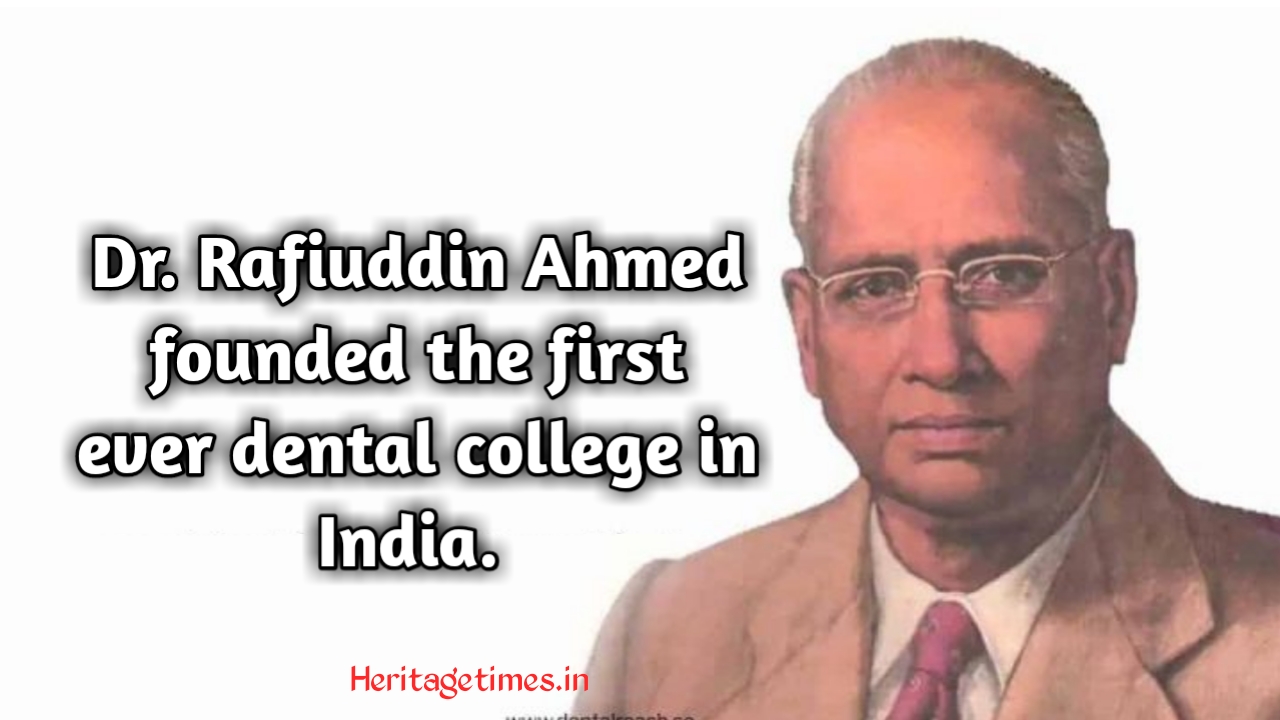
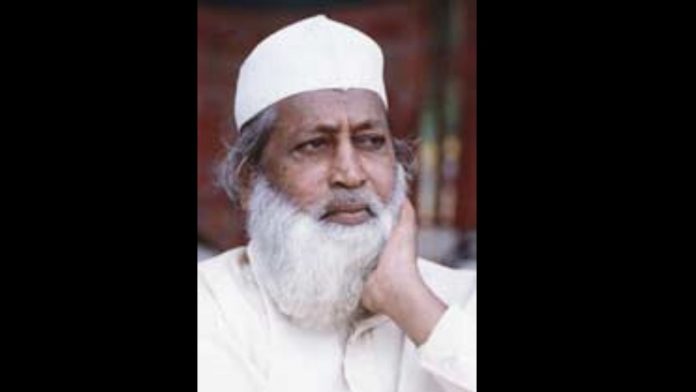
The beginning of this decade, 2020 marks the centennial anniversary of the very reputed Institute, R. Ahmed Dental College in Calcutta, West Bengal, India which was established solely by the effort of the “Father of modern dentistry” of India, Dr Rafiuddin Ahmed in the year 1920.
Dr Rafiuddin Ahmed established the Indian Dental Journal in 1925 and served as an editor till 1946. He published the first student handbook in Operative dentistry in 1928.
It was due to his constant efforts and endless endeavour that the year 1946 witnessed the formation of the Bengal Dental Association which was later renamed as the Indian Dental Association, as it is known today.
Dr Rafiuddin has an exemplary achievement in his professional career. After completing his alma mater from Aligarh Muslim University, He earned his D.D.S (Doctor of Dental Surgery) degree from the University of Iowa School of dentistry, USA in 1915. During the world war- I, he worked at the Forsyth Dental Infirmary for children in Boston, Massachusetts.
In 1919, a year after the war ended, he returned to India to open a dental institute in Calcutta. Initially, the college was run on an experimental basis with only eleven students from 1920 to 1923. Dr R Ahmed took the responsibility of teaching the student both theoretical and practical alongside other dedicated teachers. By 1928, this college was a well- organised institution for scientific dental education in India.
In 1947, Dr Ahmed was awarded a fellowship at the international college of dentistry. He also received a fellowship at the royal college of Surgeons of England and the Pierre Fauchard Academy in 1949.
The founding father of IDA became a minister of the Bengal Government and supervised the Department of Agriculture, Community Development, Co-operation, Relief and Rehabilitation until 1962.
This great personality is an epitome of excellence. His entire life revolved around providing services to the communities. His contribution in the field of dentistry is something to be remembered and truly appreciated. Dr R. Ahmad proved to be an all-rounder. He wasn’t just a dentist, but also was a publisher, an editor, a dedicated teacher, a minister, a president (of IDA). These are just to name a few.
The distinguished achievements of this great personality was recognised by the Government of India and in 1964 Dr Rafiuddin was awarded with the prestigious Padma Bhushan, making him the first Indian Dentist to be honoured with the third highest civilian award of the republic of India.
source: http://www.heritagetimes.in / Heritage Times / Home> Education / by Dr.Zareen Fatima / January 24th, 2020
Indian American Muslim Council (IAMC), an advocacy group dedicated to safeguarding India’s pluralist ethos, on April 14, marked the birthday of B R Ambedkar which is a national holiday popular as Bhim Jayanti in India.
On the occasion of Bhim Jayanti, IAMC also welcomed the first ever congressional resolution introduced by Representative Ro Khanna, who is the Congressman representing 17th District of California. In his resolution, Khanna has honored Dr B R Ambedkar by highlighting that in this Dalit history month, even in a dark time of Covid, it is inspirational to know that we can find the light of hope in our history as the chief architect of our Constitution had envisioned: labor reforms, codification of gender equality, and the successful inclusion of Article 17 in the Constitution of India to abolish untouchability and its practice in any form.
IAMC endorsed the resolution urging all Indian Americans to join in to celebrate the towering historical figure that Ambedkar was – a fearless feminist and caste abolitionist – whose contributions to the fields of economics, philosophy, religious, jurisprudence, and democracy remain unparalleled, even today. The resolution is also endorsed by Equality Labs and South Asian Americans Leading Together (SAALT),
“We are forever grateful to Babasaheb Ambedkar for his fearless struggle against systemic oppression, and for his phenomenal contributions in ensuring India’s Constitution celebrates the diverse nature of India,” said Ahsan Khan, President of IAMC.
Speaking about the recent arrest of Anand Teltumbde and Gautam Navlakha in the 2018 Bhima Koregaon case, Khan stated that both the leaders have been indicted based on “fabricated evidence.” The case originated from the annual celebratory gathering at Bhima Koregaon to mark the 200th year of the Battle of Bhima Koregaon victory. Khan added that both Teltumbde and Navlakha were not even present in the event and this is “a clear case of a brazen ‘witch-hunt’ that is reflective of a fascist model of governance.”
Khan opined that in order for us to continue with the legacy of Ambedkar’s lifelong battle to protect basic civil liberties and secular principles, we must “recommit ourselves to the founding vision of the Indian Constitution through liberty, equality and justice for all.”
source: http://www.twocircles.net / TwoCircles.net / Home> Dalit> India News> Indian Muslim> Lead Story / by TCN News / April 15th, 2020
Prof Zubair Meenai of the Department of Social Work, Jamia Millia Islamia (JMI) has been awarded the Shastri Indo Canadian Collaborative Institutional Research Grant, 2019-20. He shall collaborate with Prof Christine Walsh of the University of Calgary, Canada to conduct research on “Care Reforms in India: Operationalising the ‘Best Interest of the Child’ in the Child Protection Decision Making System”.
A team of researchers from India and Canada shall be focusing on the research during the two year grant.
Prof. Zubair Meenai’s team includes Prof. Sheema Aleem and a research scholar whereas the Canadian team headed by Prof. Christine Walsh includes Prof. Dorothy Badres and Angelique C. Jenney of the University of Calgary, Canada.
Prof. Meenai is also the Director of Centre for Early Childhood Development and Research of the university.
source: http://www.jmi.ac.in / Jamia Millia Islamia / Home / by Ahmed Azeem / April 16th, 2020
When CIPLA started producing generic medicine, the US complained of patent-violation. Indira Gandhi stood by CIPLA. It is ironical therefore that the US should now dial India for supply of HCQ
Khwaja Abdul Hamied was a great fan of Mahatma Gandhi
The manner in which Muslims are being demonised in this country by a section of the media and Bhakts of the BJP, here is a story that should uplift the hearts of almost everybody else.
In the 1920s, a rich man in India put his son on board a ship from Bombay to the United Kingdom in order to acquire a law degree and become a barrister, as was fashionable among all privileged families in the country at the time. The boy, however, did not want to be a lawyer; his heart was in chemistry, a pursuit without a seeming future in those days.
But his father gave him little choice, so while he waved to his father as his ship pulled away, Khwaja Abdul Hamied was already running over other plans in his mind while standing on the deck. He jumped ship halfway through the seas to land in Germany which, in the early decades of the last century, was leading in the study of chemistry and chemicals. He acquired a degree, married a German Jew who was also a communist – two communities the Nazis hated the most. But before they could be caught by Adolf Hitler’s Gestapo, they escaped from Germany and safely reached India.
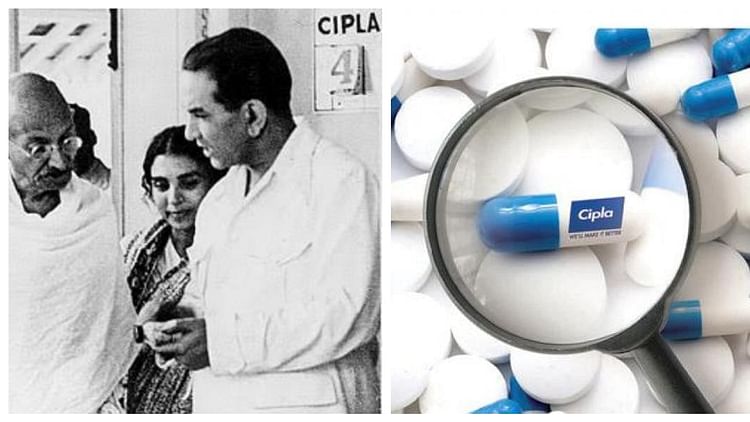
With his vast knowledge of chemicals, Khwaja Hamied set up the Chemical, Industral and Pharmaceutical Laboratories in 1935 which was shortened to CIPLA decades later after Independence.
Khwaja Hamied was a great fan of Mahatma Gandhi and Pandit Jawaharlal Nehru and got down, in true nationalist spirit, to producing cheaply priced generic drugs for the common people. These included not only medicines for malaria and tuberculosis but also other respiratory disorders, cardiovascular diseases as well as routine and mundane ailments like diabetes and arthritis.
Sometime in the 1970s, Cipla (so renamed in the 1980s) began to manufacture a drug called Propranolol, patented by a US pharmaceutical giant from Brooklyn in New York, that was used in treating blood pressure, migraines and heart ailments, among others. In a bipolar world at the time, the US was no friend of India and a real superpower. Unlike Donald Trump, it did not need to issue threats for any country in the world to comply to its diktats.
The US complained to the Indian government. But unlike Narendra Modi last week, the then Prime Minister Indira Gandhi did not immediately cave in. She sent for Yusuf Hamied, Khwaja’s son, himself a chemistry graduate from Cambridge, who had by then taken over the running of the company. When Mrs Gandhi asked how he could violate the patent law on drugs and get India into trouble, Yusuf told Mrs Gandhi the story of his father and why he had set up the company – to bring low priced quality drugs to the poor.
When he had handed his company to his son, Khwaja had told Yusuf just one thing – remember why this company was founded. “Unlike other pharmaceutical companies around the world, we are not here to make profits but to bring relief and healthcare to the poor who may otherwise have to die for want of quality drugs.”
That is all he was doing, Yusuf told an impressed Mrs Gandhi who could empathise with the concern for the poor. And she turned down the US’s command to India to stop producing the drug, knowing it could have consequences. Americans hated her for this and other acts of defiance, but she always had the interests of her own fellow citizens on top priority.
On Yusuf’s suggestion she also had the patent law on drugs changed to not include the drug per se, only the process of manufacture as inviolable, so that Cipla could go ahead and produce as many low-priced generic drugs for the poor as possible. Since then Cipla has also produced a low-cost drug to treat HIV and expanded operations into several developing countries, including African nations, where most HIV and poor patients existed at one time.
This then is the company which produces hydroxychloroquine used in the treatment of malaria, lupus and rheumatoid arthritis which now has been exported in such large numbers to the United States under threat by a weaker Trump administration, depriving poor Indians of the same.
Even before Trump had bullied India into exporting the drug, Dr Hamiduddin Pardawala, the infectious diseases specilast at the Saifee Hospital in Bombay, had told some of us to note carefully that countries where malaria (and perhaps tuberculosis) was common were suffering less from Coronavirus than those where malaria was almost non-existent.
So where is malaria almost non-existent? The US, UK, Israel, France, Germany, Spain, Canada etc. In other words, countries which have suffered the maximum infestations. When I think of Germany, I wonder where these nations, who are profusely thanking India now for supplying HCQ to them, would have been today if Khwaja Hamied and his wife had been caught by the Gestapo and sent off to the concentration camps.
That goes even more forcefully for the bigots of this country, who have so demonised the Muslims and communalisedthe disease. There is something like karma in this world, even if not you but your future generations have to pay for it. Many of them might have got malaria in the past and been prescribed with HCQ that would have helped them develop the anti-bodies to resist COVID-19.
Many possible afflictions among them will need treating with this drug. Unknowingly, they may have taken many other generic drugs manufactured by this “Muslim’ company and owe the Hamieds a debt of gratitude for keeping their blood pressure under control and diabetes counts in check.
I would like to call this poetic justice without gloating over the fact. No other company in India, and certainly not the world, has done as much to bring affordable health care to poor Indians as has Cipla – and it has not been stingy about its research, often providing pharmaceutical ingredients and processes to other drug companies in the country to manufacture their own.
When India was partitioned Mohammad Ali Jinnah, who was also a Bombay resident and part of the same social circles as the Hamieds, offered Khwaja an honourable move to Pakistan. The Hamieds were sure where their sympathies lay – with Gandhiji – and chose to stay back in India.
There are Muslims and then there are Muslims like the Tablighee Jamaatis of this particular Nizamuddin meet (not others who cancelled their own meets across the country in wake of the pandemic; even the Tablighi Jamaat was denied permission to hold a similar congregation in Mumbai) just like there are Hindus and Hindus, who kill other Hindus because they do not agree with bigotry.
It is not right to target all Hindus for the acts of a few crazy cult members among them. Similarly, a handful of Tablighi Jamaatis do not a whole community make.
We must stop demonising all for the acts of a few.
source: http://www.nationalheraldindia.com / National Herald / Home> India / by Sujata Anandan / April 12th, 2020
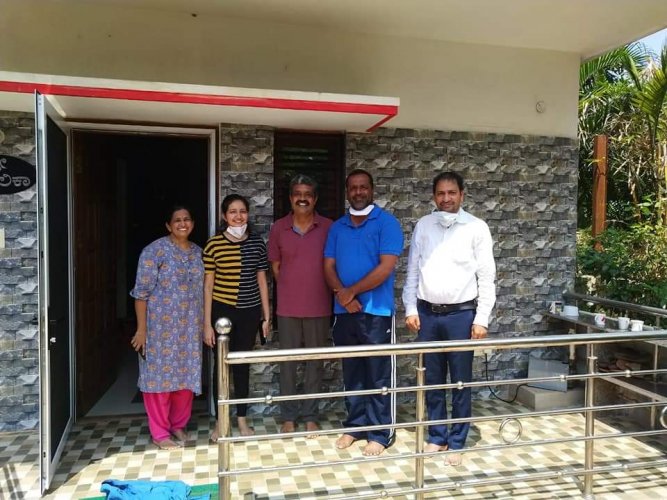
MLA U T Khader with the family of Shree Madhu Bhat at her house in Kulai in Mangaluru. (DH Photo)
Mangaluru MLA U T Khader has helped a PhD scholar, who had arrived in India from Italy, to reach her home at Kulai in Mangaluru from Bengaluru on Sunday.
Shree Madhu Bhat, a PhD student at the University of Turin in Italy, had arrived in Delhi in a special flight arranged by the Government of India.
“After completing the quarantine period in Delhi, she was brought to Bengaluru in a special bus arranged by the central government on April 11. However, she could not reach Mangaluru owing to non-availability of any mode of transportation. Her parents had contacted district administration seeking help and also me through a common friend. When I received the information, I was in Bengaluru and brought her in my car,” Khader said.
She is the daughter of Shivaram Bhat and Shailaja Bhat.
After completing the quarantine period, she along with others were sent in a special bus to their respective states on April 8.
The bus had travelled via Uttar Pradesh, Madhya Pradesh, Andhra Pradesh, and reached Bengaluru on April 11.
The MLA had shared a photograph of the family of Shree Madhu Bhat on his Facebook page.
source: http://www.deccanherald.com / Deccan Herald / Home> State> Mangaluru / by Naina J A / DHNS, Mangaluru / April 13th, 2020
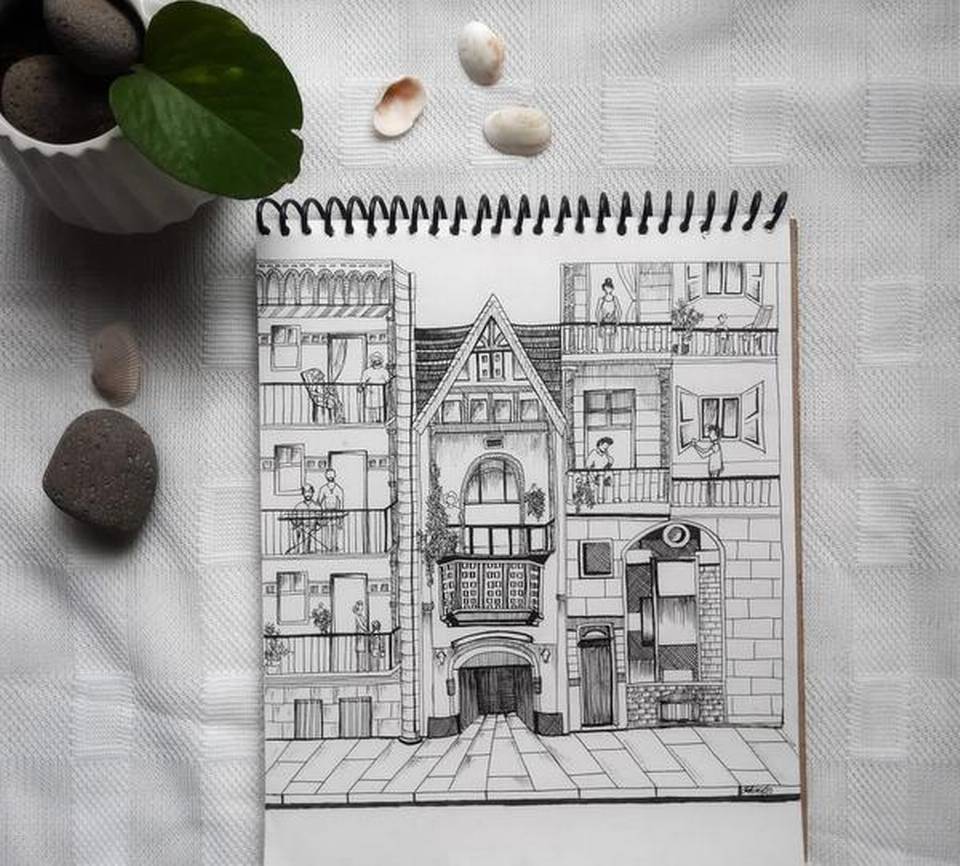
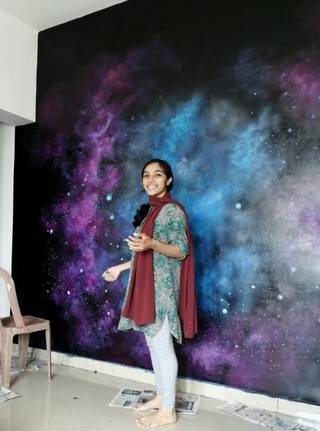
The pencil sketch of a Spanish street during the COVID-19 epidemic drawn by Shehana Fathima.
Work depicted an ‘eerie’ locality during the pandemic
For Shehana Fathima, a 20-year-old engineering student from Thrikkakara, the evening of March 24 will always be memorable.
Just an hour before the Prime Minister announced a 21-day nationwide lockdown, the budding artist posted on Instagram a pencil sketch that portrayed two artistes serenading an eerily empty Spanish street from their balconies even as quarantined neighbours emerged on their balconies to enjoy the music.
The video of noted Spanish pianist Alberto Gestoso and saxophone player Alex Lebron Torrent performing Canadian singer Celine Dion’s My Heart Will Go On in the middle of March had gone viral.
Musicians take notice
The youngster was on cloud nine when hardly a couple of hours later she posted the image, both the musicians praised her work, with Mr. Torrent even promising to repost it from his Instagram account.
Shehana Fathima working on her latest picture.
Later, the partner of one of the artistes also personally messaged her.
“The video was going around for a while, and that inspired me. It took me a day to complete the picture. Actually, I don’t know how to draw buildings, and I simply replicated the scene from the video,” said Ms. Shehana, a self-taught painter who is still basking in the glory of completely unexpected adulations.
Hoping to go further in the world of arts, she is now using the lockdown period to master digital drawing tools.
Other mediums
Having started with painting two years ago, the youngster has since then moved on to other mediums and a wider canvass.
“I plan to conduct an exhibition and even a workshop once I have enough collection of works,” Shehana Fathima said.
source: http//www.thehindu.com / The Hindu / Home> News> States> Kerala / by M. P. Praveen / Kochi – April 10th, 2020
Mohammad Ilyas Babar was a staunch supporter of the Tablighi Jamaat. He also spotted, trained and took Padma Shri Olympian Sriram Singh to dizzying heights.
Ilyas Babar | Commons
Citizens of India may be angry with the Tablighi Jamaat , but let’s not forget at least one member of the Jamaat had put India on the global sporting scene with distinction.
India’s celebrated athletics coach late Mohammad Ilyas Babar was a staunch supporter of the Tablighi Jamaat. He also spotted, trained and took Padma Shri Olympian Sriram Singh to dizzying heights. Sriram won a gold medal in 800 metres in two successive Asian Games and finished a creditable seventh in the Montreal Olympic Games in 1976.
Not many would know that Babar was a commerce graduate and champion athlete of the Osmania University in Hyderabad. But after he passed out from the National Institute of Sports in Patiala with the first batch of NIS coaches in 1961, he made Delhi his base.
Rajputana Rifles in Delhi hired Babar as the athletics coach, where he spotted Sriram Singh in 1967. And the rest, as they say, is history.
Babar at the Markaz
Whenever Babar was not on the tracks with Sriram and other top Indian athletes, he would be at Delhi’s Nizamuddin. He would teach underprivileged children at the Markaz and spend hours at the teashop then run by a man called Sami.
As a young runner, I was also under Babar’s tutelage. But he never ever discussed his religious views with us. In fact, it was Sami who told us that Babar Sahib used to teach at the Markaz.
Babar was a fakir in the sense that he never sought wealth. On the contrary, he spent whatever he had on Sriram and other athletes, even at the cost of his own three children.
Going to the Olympics
During the Olympic games, we asked him to go to Montreal to be with Sriram for the greatest race of his life. But he made up his mind to go only after Sriram Singh ran a brilliant race in heats on 23 July 1976.
Through the good efforts of then foreign secretary Jagat Mehta, we got a passport for Babar in a few hours and he was on board a flight to Montreal on 24 July. He saw Sriram’s final race on 25 July and was back at Nizamuddin by the evening of 27 July. In Montreal too, he stayed two nights in a masjid.
Babar never missed a namaz. When Sriram was training on the lawns at Rajpath, Babar would spread his janamaz and offer prayers under a jamun tree.
In the current coronavirus context, it feels sad that everyone at Nizamuddin or anywhere else with similar religious leanings is being painted with a brush of hatred. But before we do that, let us think of Babar and thousands of others who served the community with distinction.
The author is a sports columnist and senior freelance journalist. Views are personal.
source: http://www.theprint.in / The Print / Home> Opinion / by Norris Pritam / April 07th, 2020
In the anxiety to label Indian architecture as Hindu, Buddhist, British imperial and Islamic, the buildings lost some of their power to evoke wonder and surprise.
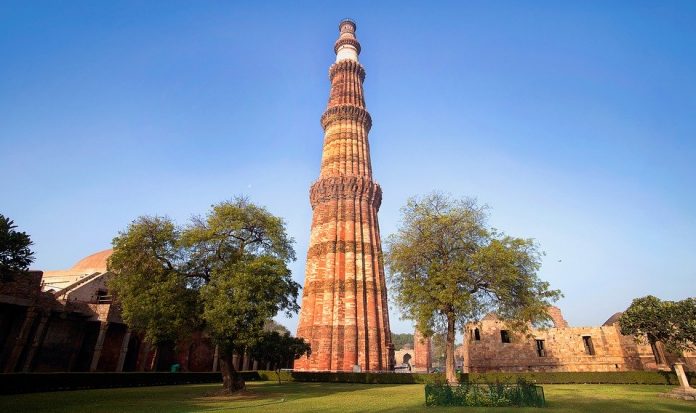
Qutub Minar in New Delhi | Commons
In the 1950s and ’60s, visitors to Delhi’s Qutub Minar often saw a crowd of schoolchildren following an unlikely Pied Piper, a frail man in a white kurta and pyjama, wearing a Gandhi cap, and giving them their first lesson in art history. Mohammad Mujeeb was one of those iconic professors who communicated just as easily with schoolchildren as he did with college students and his colleagues. He instilled in them a love for historic cities, made them see the places as works of art.
In those years, the Delhi skyline and groundline were dominated by monuments. For many families, these landscapes were synonymous with Sunday picnics. For art historians, these spaces became popular hunting grounds, and a number of case studies on architecture took shape in the 1970s.
But the lay reader was more familiar with surveys of Indian architecture. Of these, Percy Brown’s books were the most sought after. His volumes, Indian Architecture (Buddhist and Hindu), and Indian Architecture (The Islamic Period), published in 1942, contain amine of information. However, because he divided the theme in a binary, he missed out on capturing the special quality of the 14th-17th centuries — the cosmopolitanism in architecture — when rich and powerful rulers, irrespective of religion, engaged skilled artisans and engineers from across south and west Asia to design beautiful public spaces.
Architectural crossover
In that era of increasing globalisation, artisans met and exchanged recipes for architectural design, and travelled great distances, confident of their patronage. Guilds from the Middle East were employed to design the great pillars of Yorkminster, and Indian stone-masons learned structural engineering from Uzbek architects. Chinese porcelain gave its name to the funerary monument Chini Ka Rauza (China Tomb) in Agra. British tourists to Italy brought back fragments of Roman sculpture to display proudly in their country estates, while Feroz Shah Tughlaq had two Ashoka pillars (only no one knew what they were) ferried to Delhi from Meerut and Topra (Haryana), to embellish his mosque and his estate on the Ridge.
James Fergusson, in the mid-19th century, had sought to make sense of the myriad buildings in India. He found it simplest to classify them by ‘style’. Function, it was assumed, shaped the form, and buildings were labelled ‘Buddhist’, ‘Hindu’ or ‘Islamic’. The term ‘Indo-Saracenic’ was coined to describe styles with elements of both, as well as for the British imperial style, which deliberately included decorative Indian elements. In this anxiety over labels, the buildings lost some of their power to evoke wonder and surprise, to speak to the hearts and minds of the people.
Indian-Muslim architecture
Both mosques and tombs adopted from and adapted to the local environment, which is why Mujeeb insists that they be described not as ‘Muslim’ but as ‘Indian Muslim’. They, and other public areas — streets and walled gardens — made for beautiful cities, with a quality of repose and of camaraderie. Soaring arches and minars (towers) connected the earth to the sky, to heaven. (Mujeeb was too much of a rationalist to fall for the belief that djinns lived in historic buildings and could fulfil people’s prayers.)
Communal practices do shape houses of worship — and there is a fundamental difference of form between a congregational masjid (‘beauty without mystery’) and a mandir, where there is mystic communion between deity and worshipper. As for the tomb: “[It] was a symbol of unifying life, death and eternity; primitive beliefs associated with kingship gave the royal tomb a mysterious significance…The tomb of a ruler was the expression of personality, of a force which the community needed to maintain its self-confidence in a world of conflicts,” Mujeeb wrote in The Indian Muslims (1967). He was not averse to sounding tongue-in-cheek while describing Humayun’s mausoleum: “There is nothing we know of Humayun that would justify our regarding him as an outstanding personality; his tomb is much greater than he.”
The urban architecture of early modern India has some of the features of Persian or Turkish cities, but is most similar to those of Rajput kingdoms, contemporary with those of the Mughals. Both were shaped by the climate, conditioned by topography, the fact that they were built by skilled stone-masons rather than brickworkers, and by the deliberate choice of Indian ornamental motifs.
The Indian-Muslim architect rejoiced in being “free from the beginning, free from fear and hatred, from law and custom, from the conflicts of ideals and interests. There were no limits fixed except those of his own aptitude and means, and the nature and availability of structural material.” They created an architecture that was not just frozen music, but also frozen poetry. It was both the architecture of Urdu poetry and the poetry of our architecture that made cities in India the grandest in the early modern age.
This article is the seventh of an eight-part series on ‘Reading A City’ with Saha Sutra on www.sahapedia.org, an open online resource on the arts, cultures and heritage of India.
Dr Narayani Gupta writes on urban history, particularly that of Delhi. Views are personal.
IT major Wipro Ltd, Wipro Enterprises Ltd and Azim Premji Foundation, have together committed Rs 1,125 crore towards tackling the unprecedented health and humanitarian crisis arising from the COVID-19 pandemic.
“These resources will help enable the dedicated medical and service fraternity in the frontline of the battle against the pandemic and in mitigating its wide-ranging human impact, particularly on the most disadvantaged of our society,” the companies said in a statement.
Of the Rs 1,125 crore, Wipro Ltd’s commitment is Rs 100 crore, Wipro Enterprises Ltd’s Rs 25 crore, and that of the Azim Premji Foundation is Rs 1,000 crore. These sums are in addition to the annual CSR activities of Wipro, and the usual philanthropic spends of the Azim Premji Foundation, the statement added.
Integrated action will be taken for a comprehensive on-the-ground response in specific geographies, it said.
source: http://www.deccanherald.com / Deccan Herald / Home> Business> Business News / by DHMS, Bengaluru / April 02nd, 2020
The editor-cinematographer has a popular Instagram page ‘cuts.zzz’ dedicated to such mash-up videos
Perhaps one of the most forwarded videos on social media during this lockdown has been US President Donald Trump ‘singing’ Mappilapattu. In this video, which has got 4.25 lakh views on Instagram page, ‘cuts.zzz‘, the president is depicted singing a traditional folk song of the Muslim community in Kerala, with Indian Prime Minister Narendra Modi, First Lady Melanie Trump, Ivanka Trump, Jared Kushner, and thousands of people cheering him on.
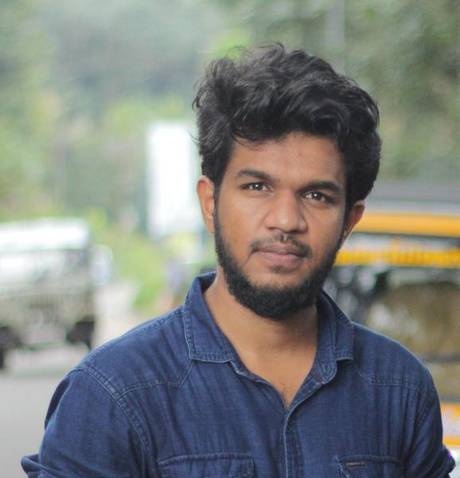
The “mash-up video” features the filmi version of the popular Mappila song, ‘Aminathathede Ponnumolaanu’, from the Malayalam movie Honey Bee 2.5, sung by actor-director Lal. The mastermind behind the video is editor-cinematographer-director Ajmal Sabu. With accolades coming in from the world over for his editing skills in creating the impression that Trump himself is singing those lines, the 24-year-old is on a high. The viral video has so far got over eight lakh views on Facebook as well.
“I didn’t expect such a reach for the video. I am getting messages from across India and even abroad,” says Ajmal over phone from his home at Changanassery in Kottayam district. He adds, “My professional commitments have been stalled due to the lockdown. So, instead of wasting time I thought of doing something interesting. I came across this song in a video my friend had sent me. I was hearing that version of the song for the first time and felt that I should put it to use somewhere. As the ‘Namaste Trump’ event at Sardar Patel Stadium in Ahmedabad, Gujarat, was a much-discussed event, I thought of giving it a try. And it clicked!” says the 24-year-old.
Mass appeal
Ajmal started his Instagram page for mash-up videos two years ago and most of them have gone viral. There are over 50 videos on the page, with another popular one being American wrestler and WWE superstar Big Show and WWE’s chief branding officer Stephanie McMahon supposedly saying the dialogues of Nakulan (Suresh Gopi) and Ganga (Sobhana) from an iconic scene in the Malayalam movie, Manichitrathazhu.
_________________________________________
Fact file
An alumnus of Maya Academy of Advanced Cinematics in Pune, from where he learnt animation, VFX and post production, Ajmal started out as a cinematographer with a Marathi film, Dhap. He was an assistant director in the Malayalam films Kappirithuruthu and Love Action Drama. He has also been a spot editor and is much sought-after in Malayalam film industry for making promo cuts, teasers and trailers of movies. He has directed short films and has done cinematography and editing in music videos, short films, documentaries and ad films.
He is all set to turn independent as an editor and cinematographer with a Malayalam film. “If the lockdown wasn’t there, the shoot would have begun on April 10. It is a good project and I still can’t believe that I am doing it,” he says.
__________________________________________
The first mash-up video he created was of the Joker-Batman scene from The Dark Knight with dialogues from Maheshinte Prathikaram, picturised on Soubin Shahir and Alencier. Among other videos that fetched lakhs of likes are those of Bruno Mars dancing to the tune of ‘Margazhiye malligaye’ from Megham, Rihanna’s video with the track of Popy umbrella ad, scene from Guardians of Galaxy with dialogues from Aniyathipravu and Modi’s speech at a rally with lottery announcement.
Ajmal says that there is no short cut to creating these videos. “It takes several hours to mix and match the scenes. I spent seven to eight hours on the Trump video alone. If you are taking a song or dance number, matching rhythm and steps are not that difficult. But the toughest part is lip sync. It is possible to experiment with all videos. However, you have to keep on trying to get the perfect match,” he says, adding, “At the same time you shouldn’t compromise on humour.”
source: http://www.thehindu.com / The Hindu / Home> Entertainment> Movies / by Athira M / Thiruvananthapuram – April 01st, 2020